8 Fun Games to Play With Your Dog
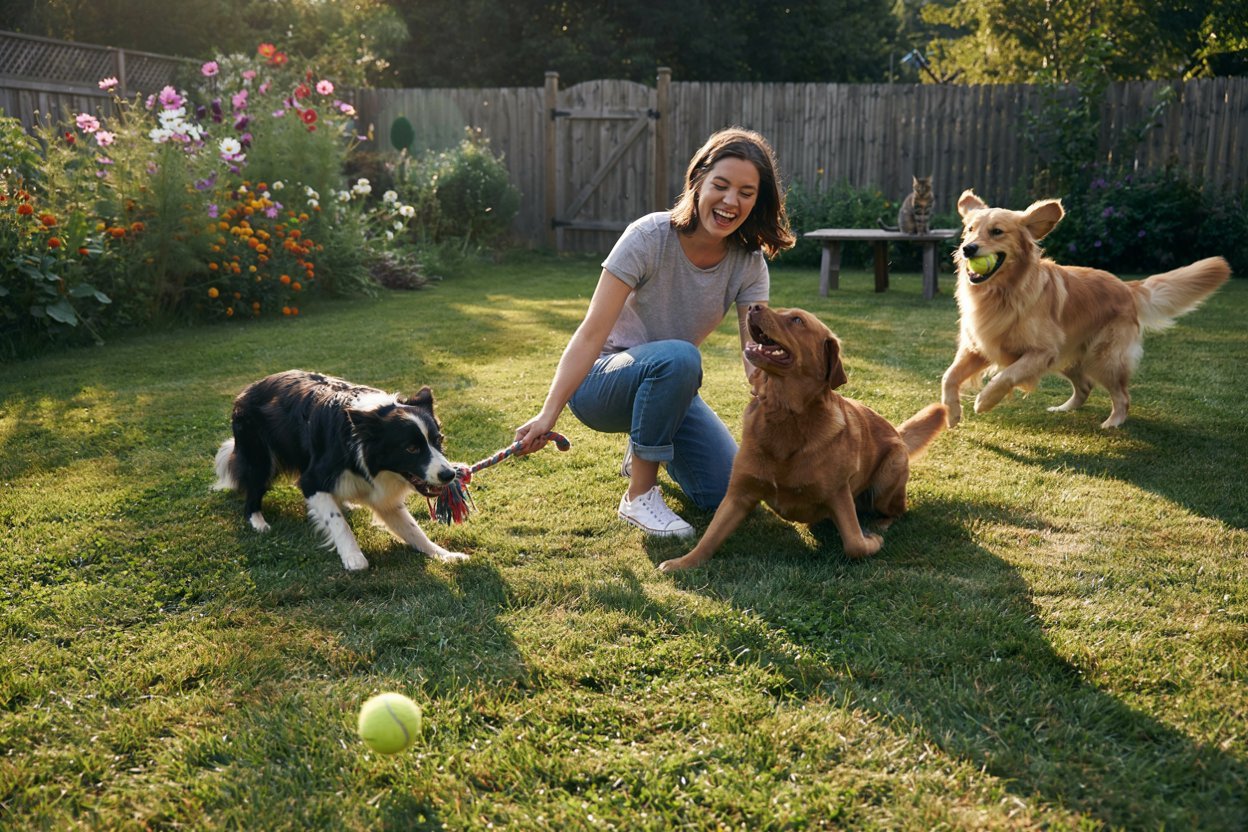
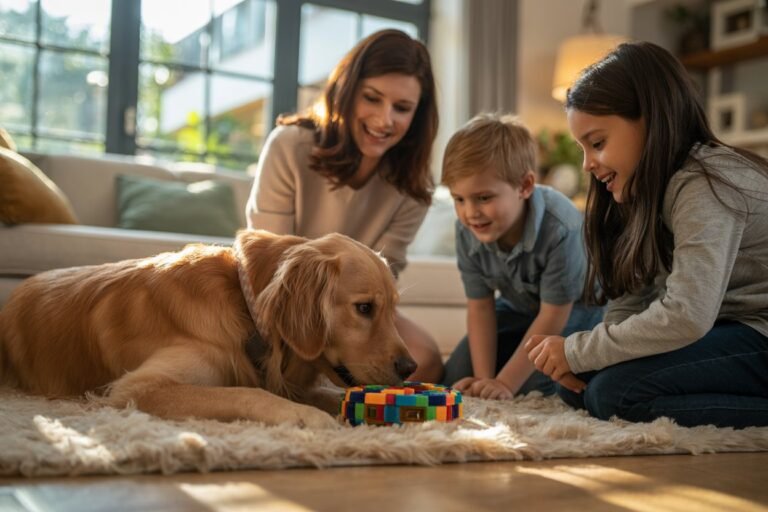
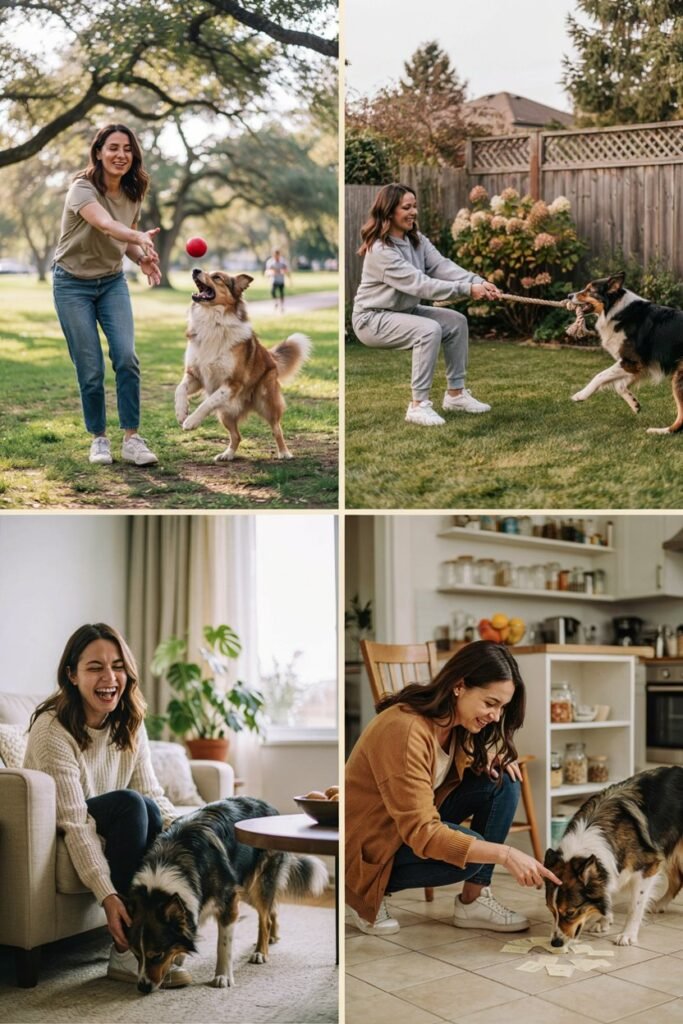
There are few things that make me smile more than watching my dog get excited when it’s time to play.
It doesn’t matter if we’re in the backyard, at the park, or simply in the living room on a rainy afternoon.
The moment I grab a favorite toy or say, “Ready to play?” that wagging tail starts going a mile a minute.
For a long time, I thought playing with my dog simply meant throwing a tennis ball over and over again.
While he certainly loved chasing it, I eventually realized that he enjoyed games that challenged his brain just as much as games that got him running.
Adding different games into our daily routine completely changed how we spent time together.
He became more focused during training, seemed happier around the house, and looked forward to our play sessions even more.
I also noticed something I didn’t expect. Playing together wasn’t just good for him. It became one of my favorite parts of the day too.
Dogs don’t care how expensive a toy is or whether you’ve planned the perfect activity. They simply enjoy spending time with the people they love.
Even ten or fifteen minutes of interactive play can help burn energy, reduce boredom, build confidence, and strengthen the trust between you and your dog.
The best part is that you don’t need a huge backyard or fancy equipment.
Most of the games in this guide can be played using everyday household items or a simple dog toy you probably already own.
Whether you have a playful puppy, an energetic adult dog, or a gentle senior who still enjoys a little fun, these games can easily be adapted to match your dog’s age, personality, and energy level.
Let’s start with three of my favorite games that never seem to get old.
Why Playing With Your Dog Every Day Matters
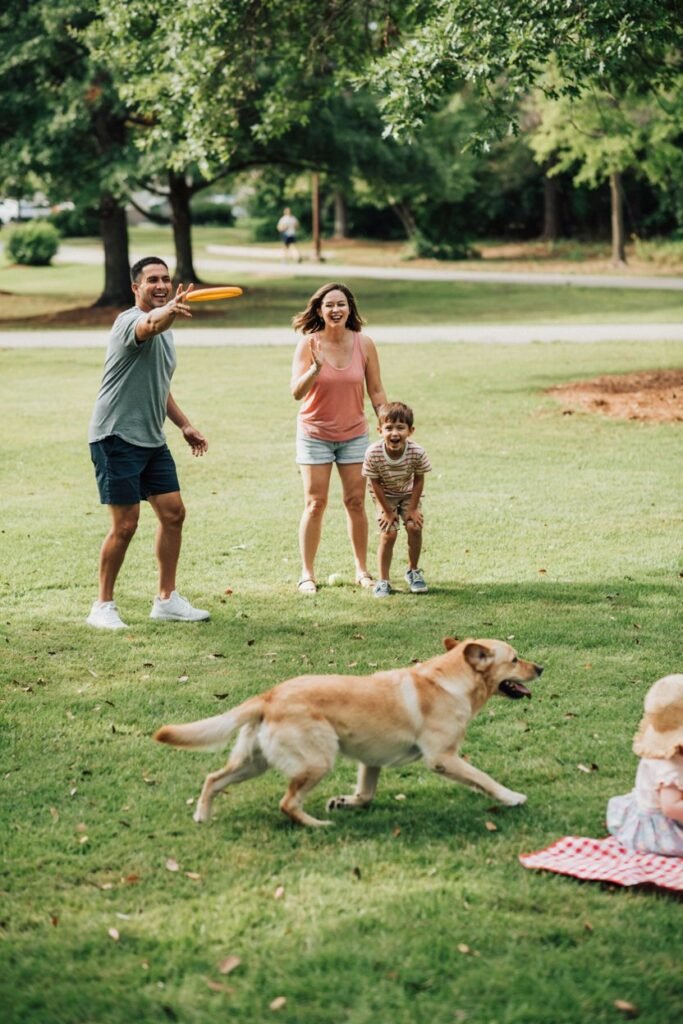
It’s easy to think of playtime as something that’s simply fun, but it’s actually one of the most important parts of your dog’s overall well being.
Daily games provide much more than exercise. They give your dog a chance to think, solve problems, build confidence, and enjoy quality time with you.
Regular play can help:
- Burn off excess energy.
- Reduce boredom and destructive behavior.
- Improve listening and focus.
- Strengthen your bond.
- Build confidence in shy dogs.
- Encourage healthy exercise.
- Support mental stimulation.
- Reduce stress and anxiety.
- Keep your dog socially engaged.
One thing I’ve learned is that dogs don’t measure happiness by how long you play. They remember how much fun they had with you.
Even a quick game before work or after dinner can become the highlight of your dog’s day.
Before You Start Playing
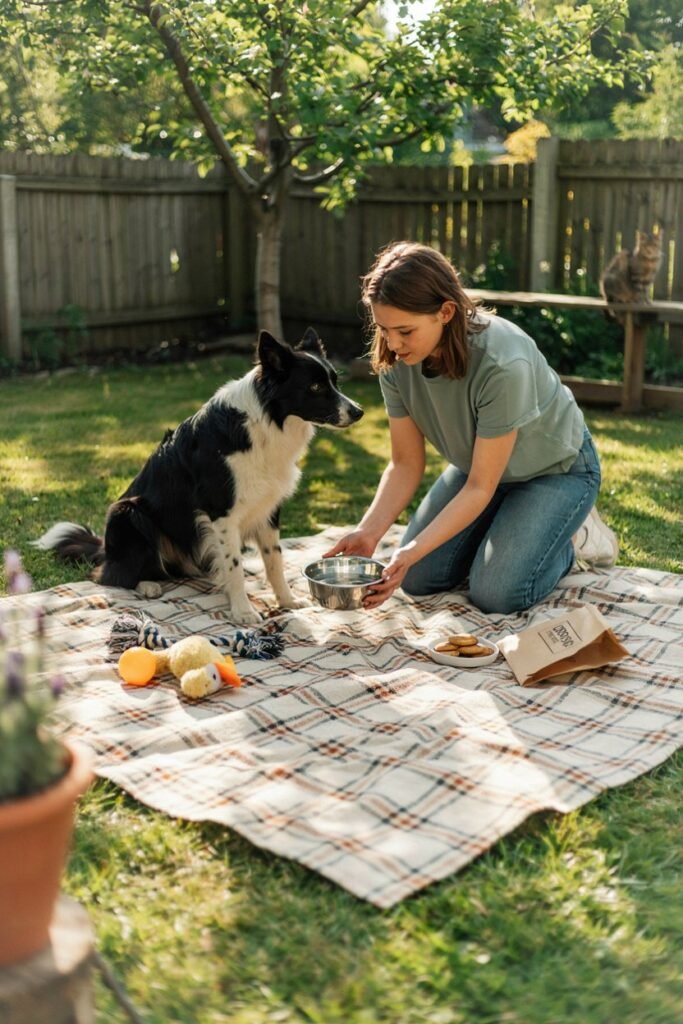
Every dog enjoys different types of games, so don’t worry if your dog isn’t interested in every activity on this list.
Pay attention to what makes their tail wag.
Some dogs love running.
Others prefer sniffing.
Some enjoy solving puzzles.
Others simply want to spend time close to you.
Always choose games that match your dog’s age, health, and personality.
A young Border Collie may happily play for an hour, while an older Bulldog may prefer several shorter sessions throughout the day.
Always bring fresh water, take breaks when needed, and stop if your dog appears tired or uncomfortable.
Remember, the goal isn’t to exhaust your dog.
The goal is to make spending time together enjoyable.
1. Classic Fetch With a Fun Twist
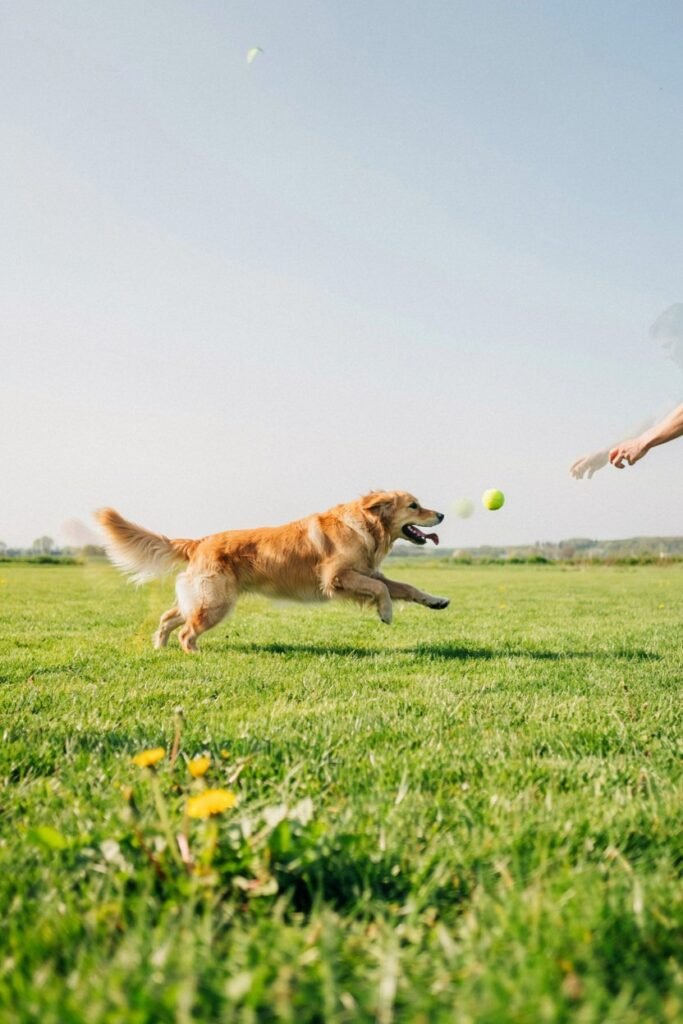
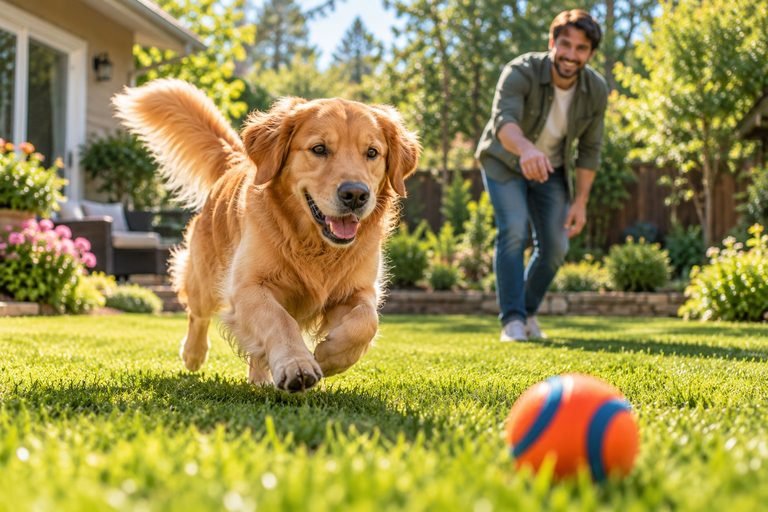
Almost every dog owner has played fetch at some point, but making a few small changes can turn this classic game into something much more exciting.
Instead of throwing the ball in exactly the same direction every time, mix things up.
Why Dogs Love It
Fetch satisfies your dog’s natural instinct to chase moving objects while providing plenty of exercise.
Adding variety keeps the game exciting because your dog never knows exactly where the next throw will go.
How to Make Fetch More Fun
Try:
- Throwing the ball uphill.
- Bouncing it off safe surfaces.
- Using different toys each round.
- Asking your dog to sit before each throw.
- Changing directions unexpectedly.
- Playing in different parks.
You can even hide the ball behind a tree or bush so your dog has to search before bringing it back.
Best For
- Retrievers
- Labradors
- Golden Retrievers
- Border Collies
- Active family dogs
Safety Tip
Avoid throwing balls repeatedly on hard concrete, as sudden stops can put extra strain on your dog’s joints.
Playtime Tip
End the game while your dog is still excited instead of waiting until they’re completely exhausted. They’ll look forward to the next session even more.
2. Hide and Seek
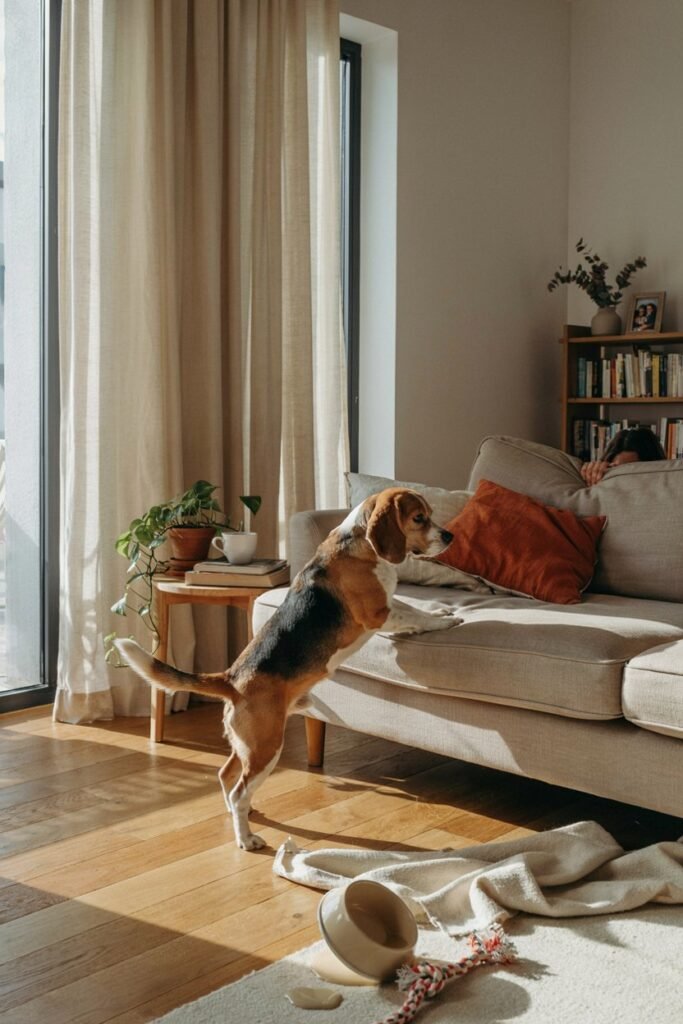
This game isn’t just for children.
Dogs absolutely love using their noses and problem solving skills to find their favorite person.
It’s one of the easiest games you can play almost anywhere.
Why Dogs Love It
Your dog gets to combine scent tracking, listening, and searching, making it both mentally and physically rewarding.
Finding you always feels like winning a game.
How to Play
Ask your dog to stay.
Walk into another room or hide behind furniture.
Call your dog’s name once.
Let them search until they find you.
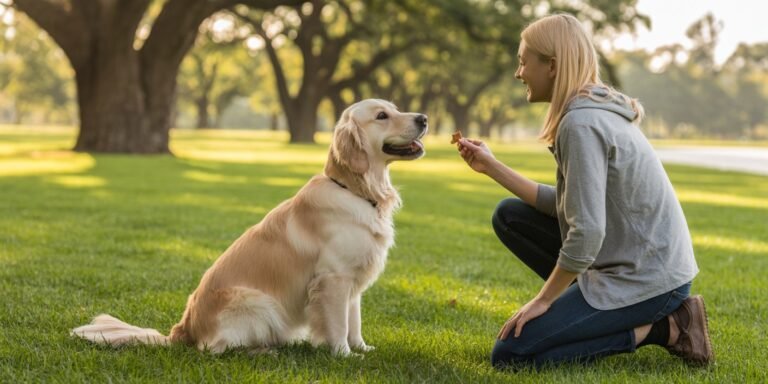
Celebrate with praise, cuddles, or a favorite treat.
As your dog gets better, choose more creative hiding spots.
You can also let another family member hide while your dog searches.
Best For
- Puppies
- Indoor play
- Rainy days
- Curious dogs
- Dogs that love treats
Safety Tip
Choose safe hiding places that won’t encourage your dog to jump onto unstable furniture or squeeze into tight spaces.
Playtime Tip
If your dog struggles at first, make the hiding spots easier. Success builds confidence and keeps the game fun.
3. Tug of War
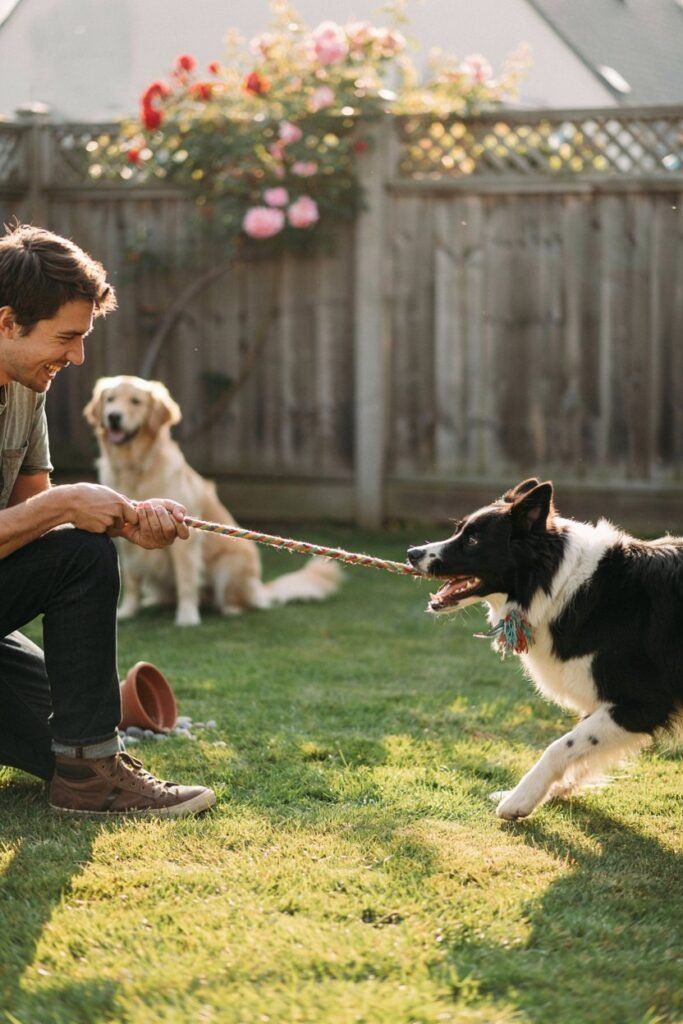
Many people worry that tug of war encourages aggressive behavior.
When played correctly, it’s actually an excellent game that teaches self control and strengthens your relationship.
My dog gets incredibly excited the moment the tug toy comes out, but he also knows the game pauses if he forgets his manners.
That simple rule has made tug one of our favorite training games.
Why Dogs Love It
Tug satisfies natural instincts to grab, pull, and engage with moving objects.
It also allows your dog to interact directly with you instead of simply chasing a toy alone.
How to Play Safely
Use a durable tug toy.
Let your dog grab one end while you hold the other.
Encourage gentle pulling.
Every few moments, ask your dog to “drop it.”
Reward them immediately by restarting the game.
This teaches impulse control while keeping the game exciting.
Best For
- Strong breeds
- High energy dogs
- Working breeds
- Dogs that enjoy interactive play
Safety Tip
Never jerk the toy sharply or lift your dog off the ground.
Keep the game controlled and stop immediately if teeth accidentally contact your hands.
Playtime Tip
Let your dog win occasionally. Carrying their “prize” around the yard builds confidence and makes the game even more rewarding.
4. Treasure Hunt
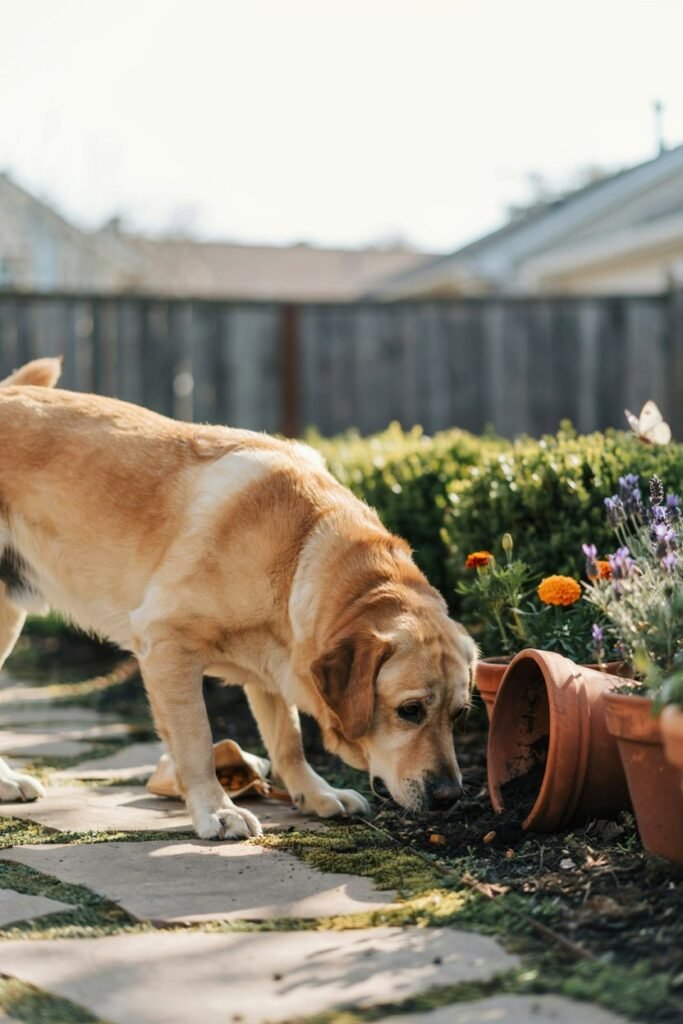
If there’s one game that never seems to lose its excitement, it’s a treasure hunt.
Dogs are natural scavengers, and giving them the chance to search for hidden rewards taps into instincts they’ve been using for thousands of years.
The first time I tried this with my dog, I simply hid a few treats around the living room while he waited in another room.
I honestly expected the game to last a minute or two. Instead, he spent nearly fifteen minutes carefully sniffing every corner, checking behind furniture, and proudly finding every last treat.
It quickly became one of our favorite rainy day activities.
Why Dogs Love It
Unlike games that rely mostly on running, a treasure hunt challenges your dog’s brain and nose at the same time.
Every successful find gives your dog a little confidence boost and encourages them to keep searching.
How to Play
Start with easy hiding spots where your dog can quickly find the treats.
Once they understand the game, make it more challenging by hiding treats:
- Under plastic cups
- Behind chair legs
- Inside cardboard boxes
- Under small towels
- Around tree trunks
- Between garden plants
- On safe outdoor steps
Give your dog a cue like “Find it!” and let them explore at their own pace.
Best For
- Food motivated dogs
- Curious breeds
- Puppies
- Rainy day indoor play
- Dogs that enjoy sniffing
Safety Tip
Only hide treats in places that are completely safe for your dog to reach.
Avoid electrical cords, cleaning supplies, or areas where they might knock something over.
Playtime Tip
Occasionally replace treats with one of your dog’s favorite toys so they never know what exciting surprise they’ll discover next.
5. Build a Backyard or Indoor Obstacle Course
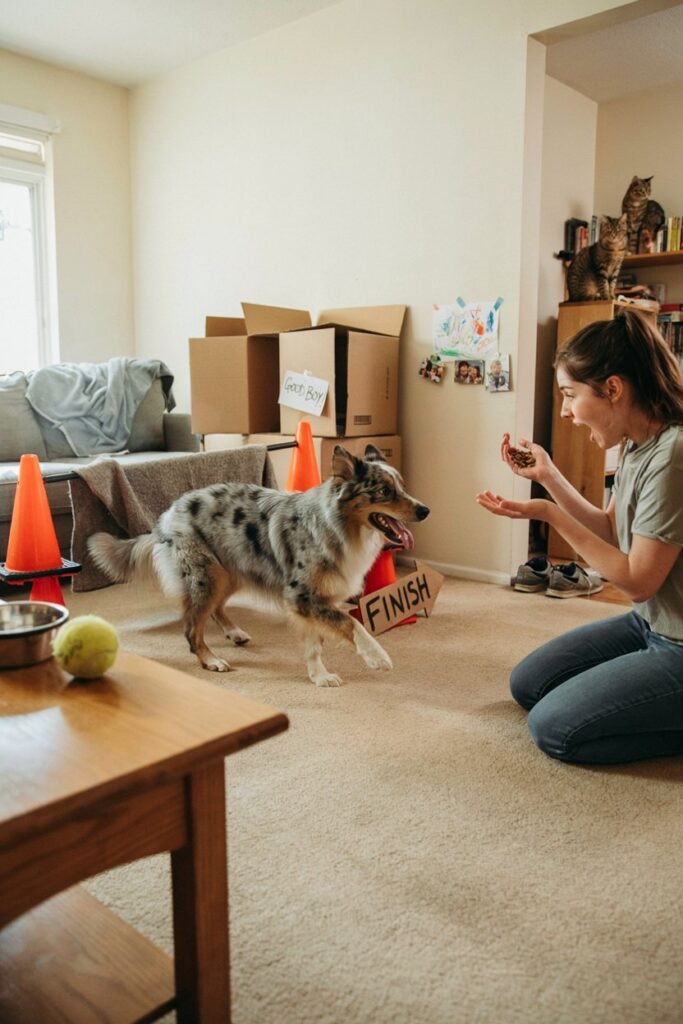
You don’t need expensive agility equipment to create an adventure your dog will love.
Some of the best obstacle courses are made using items already sitting around your home.
Every time you rearrange the course, it becomes a brand new challenge.
Why Dogs Love It
Obstacle courses combine movement with thinking.
Your dog has to pay attention, remember directions, and carefully navigate each challenge while staying focused on you.
How to Set It Up
Use simple household items like:
- Chairs for weaving
- Cardboard boxes to walk around
- Blankets draped over chairs as tunnels
- Pillows to step over
- Laundry baskets as markers
- Pool noodles for low jumps
- Hula hoops to walk through
Guide your dog through each obstacle using treats and plenty of praise.
As they gain confidence, rearrange everything to create a completely different course.
Best For
- Active breeds
- Intelligent dogs
- Dogs that enjoy training
- Apartment living
- Families with children
Safety Tip
Keep jumps very low and avoid slippery floors. The goal is confidence and fun, not speed.
Playtime Tip
Let your dog stop and investigate new obstacles instead of rushing through the course. Exploring is part of the game.
6. Bubble Chase
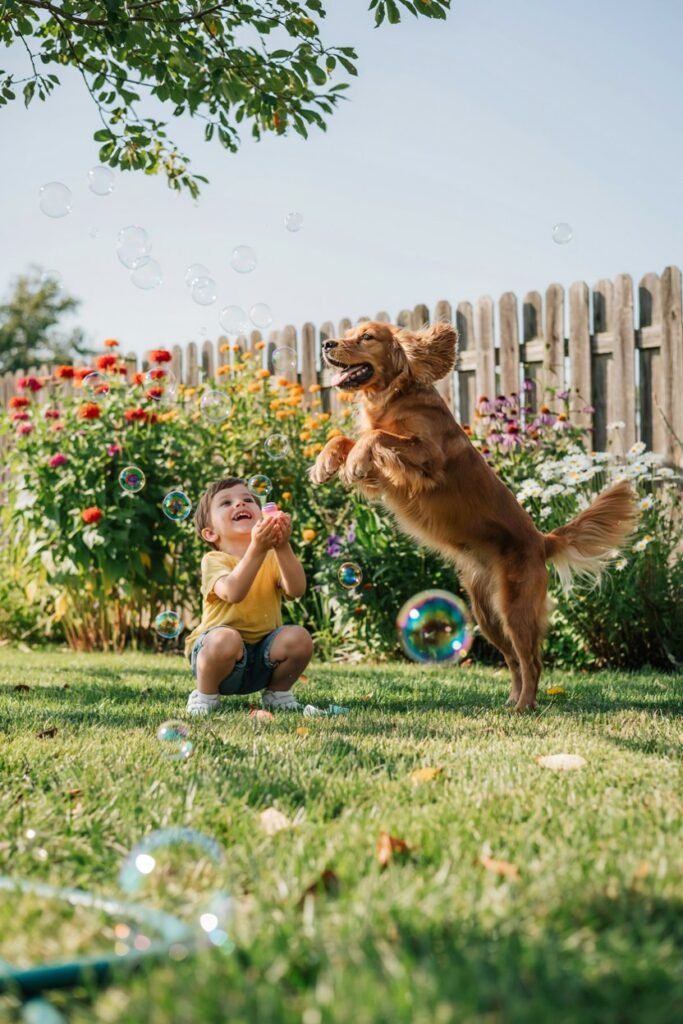
This is one of the easiest games to set up and almost always gets a hilarious reaction.
The first time I blew dog safe bubbles for my dog, he looked completely confused.
Within seconds he was happily bouncing around the yard trying to catch every floating bubble.
Watching his excitement was just as entertaining for me as it was for him.
Why Dogs Love It
Bubbles move unpredictably, encouraging your dog to chase, jump, and stay focused.
Since every bubble floats differently, the game never feels repetitive.
How to Play
Use bubbles specifically made for dogs.
Blow a few bubbles into the air and encourage your dog to chase them.
Allow plenty of space for running and turning safely.
Keep sessions short to prevent your dog from becoming overly excited.
Best For
- Puppies
- Young adult dogs
- High energy breeds
- Backyard play
Safety Tip
Only use pet safe bubble solution. Regular children’s bubble solution isn’t made for dogs and shouldn’t be swallowed.
Playtime Tip
Play during the early morning or late afternoon when the weather is cooler and the sunlight makes the bubbles easier for your dog to see.
7. The Muffin Tin Challenge
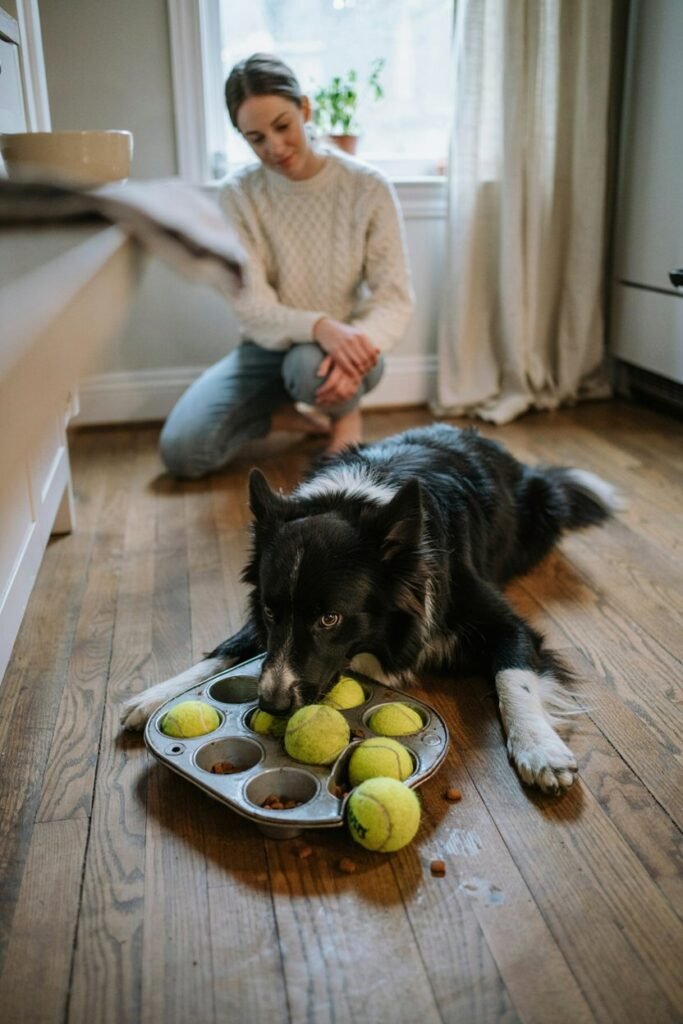
One of the simplest games you can make at home is also one of the most rewarding for your dog.
All you need is a muffin tin, a few treats, and some tennis balls.
The first time I introduced this game to my dog, I expected him to solve it in seconds.
Instead, he carefully sniffed each cup, nudged the tennis balls with his nose, and proudly celebrated every treat he uncovered.
It was fascinating to watch him think through the challenge rather than rushing.
Why Dogs Love It
This game encourages your dog to use problem solving skills, patience, and their incredible sense of smell.
Instead of simply eating a treat, they have to figure out how to access it, making every reward feel earned.
How to Play
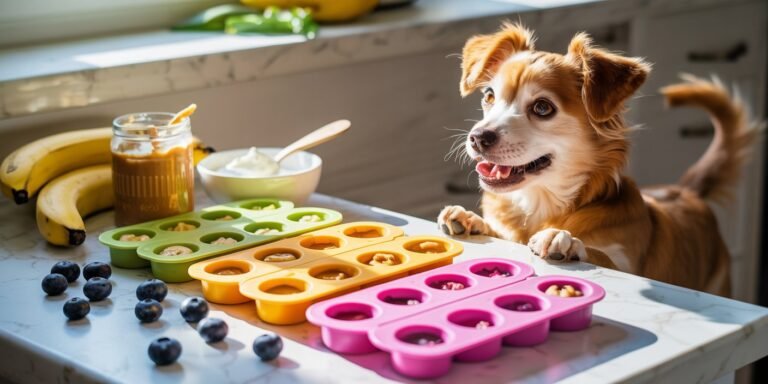
Place several treats inside different cups of a muffin tin.
Cover each cup with a tennis ball or another dog safe ball that’s large enough not to become a choking hazard.
Set the muffin tin on the floor and encourage your dog by saying, “Find it!”
Allow them to sniff, paw, and move the balls until they discover the hidden treats.
Once they master the game, increase the difficulty by hiding treats in fewer cups so they have to search more carefully.
Best For
- Curious dogs
- Food motivated breeds
- Indoor enrichment
- Rainy day activities
- Dogs that enjoy puzzle games
Safety Tip
Always supervise your dog during the game and make sure the balls are too large to swallow.
If your dog tends to chew household items, replace the tennis balls with sturdy dog safe alternatives.
Playtime Tip
Switch up the rewards occasionally by hiding a favorite toy instead of treats to keep your dog excited about the challenge.
8. Find the Favorite Toy
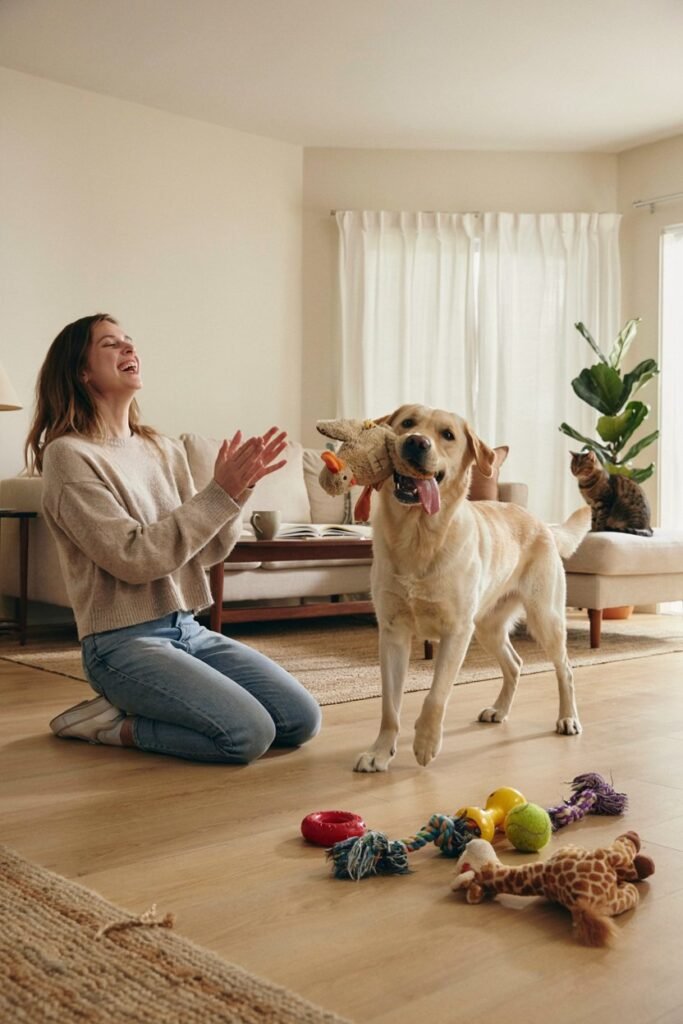
Most dogs can learn the names of their favorite toys surprisingly quickly.
Turning that skill into a game is a wonderful way to exercise their memory while having fun together.
This game has become one of my favorites because it combines training, scent work, and problem solving all at once.
Why Dogs Love It
Searching for a familiar object gives your dog a clear goal while encouraging them to think instead of relying on pure energy.
Each successful search builds confidence and strengthens communication between you and your dog.
How to Play
Start with one toy your dog knows well.
Show them the toy and clearly say its name.
Place it a few feet away and ask them to “Find your ball” or “Find your teddy.”
Reward them when they pick up the correct toy.
As they improve, place several toys on the floor and ask them to retrieve one specific item.
Eventually, hide the toy in another room and let your dog search for it.
Best For
- Intelligent breeds
- Puppies
- Adult dogs
- Dogs that enjoy learning
- Families looking for interactive games
Safety Tip
Use soft, undamaged toys that are easy for your dog to carry.
Avoid toys with loose stitching or small pieces that could come off during play.
Playtime Tip
Celebrate every successful find with plenty of praise.
Your excitement makes the game even more rewarding for your dog.
Common Playtime Mistakes to Avoid
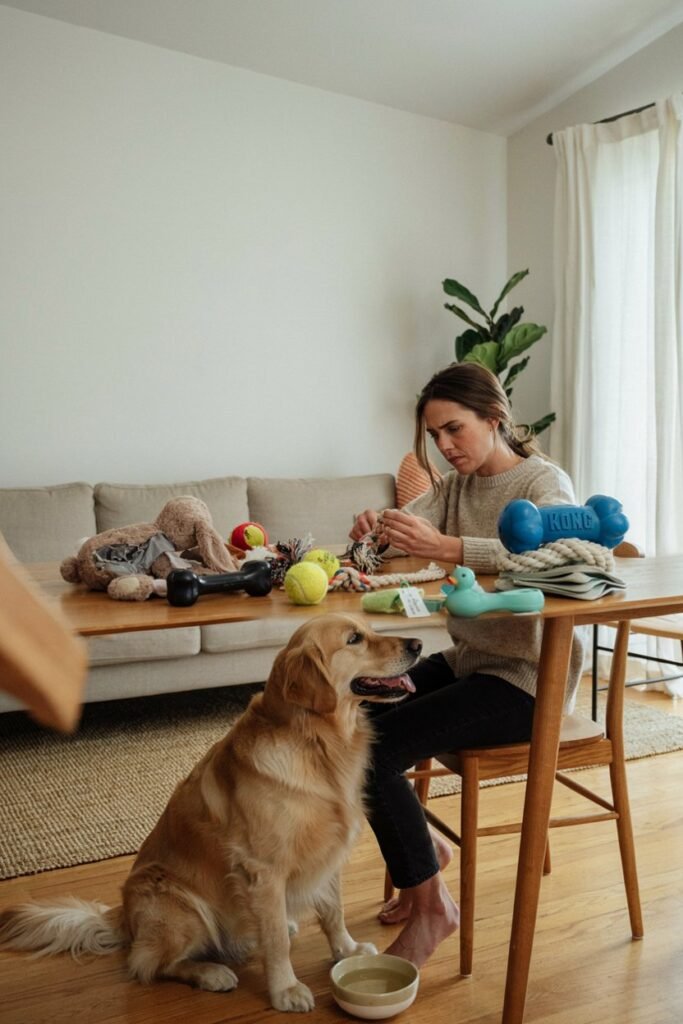
Playing with your dog should always leave them feeling happy, confident, and eager for the next game.
These common mistakes can take the fun out of playtime if you’re not careful.
Playing Too Long
More isn’t always better.
Many dogs enjoy several short play sessions much more than one long session that leaves them completely exhausted.
Watch your dog’s energy level and finish while they’re still having fun.
Forgetting Water Breaks
Whether you’re indoors or outside, always offer fresh water before, during, and after active games.
Hydration is especially important during warm weather.
Using Damaged Toys
Broken tennis balls, torn ropes, cracked plastic toys, and loose stuffing can quickly become safety hazards.
Check your dog’s toys regularly and replace anything that’s worn out.
Always Playing the Same Game
Even your dog’s favorite game can become predictable if it’s the only thing you ever play.
Rotate activities throughout the week to keep your dog mentally engaged.
Ignoring Your Dog’s Mood
Some days your dog may want to run around the yard.
Other days they may prefer a quiet sniffing game or gentle tug session.
Pay attention to their body language and let it guide your playtime choices.
Playtime Pro Tip
You don’t need expensive toys to create memorable moments with your dog.
Many of the best games use simple household items, your imagination, and a little enthusiasm.
What your dog remembers most isn’t the toy itself. It’s spending quality time with you.
The Best Toys for Interactive Play
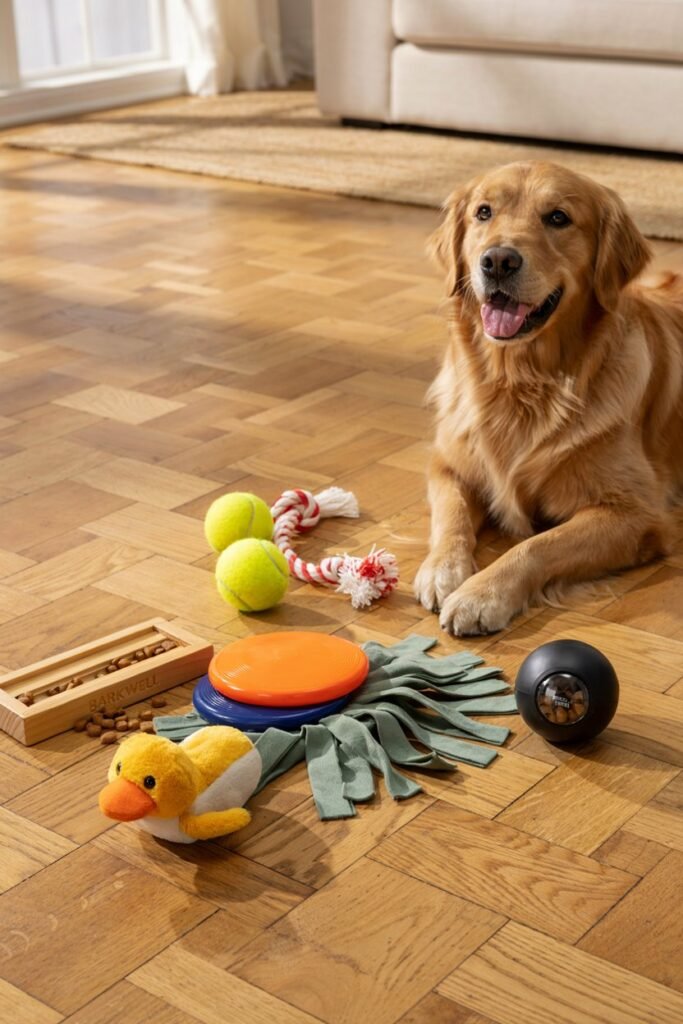
While you don’t need lots of equipment to enjoy quality playtime, having a few reliable toys makes it easier to keep games interesting.
Some of my favorites include:
Tennis Balls
Perfect for fetch, treasure hunts, and simple training games.
Rope Tug Toys
Ideal for controlled games of tug while encouraging interaction between you and your dog.
Frisbees
Great for athletic dogs that enjoy running and jumping in open spaces.
Puzzle Feeders
Excellent for combining mealtime with mental stimulation.
Snuffle Mats
A fantastic choice for dogs that love using their noses to search for hidden treats.
Durable Stuffable Toys
Perfect for independent play and keeping your dog occupied while solving a challenge.
Rather than buying dozens of toys, choose a handful of high quality options and rotate them every week.
Your dog will stay much more interested when toys regularly feel “new” again.
A Simple Weekly Play Schedule
If you’re wondering how to fit these games into your routine, here’s an easy plan that works for many families.
Monday
Classic Fetch
Tuesday
Hide and Seek
Wednesday
Treasure Hunt
Thursday
Obstacle Course Challenge
Friday
Tug of War
Saturday
Bubble Chase or a visit to the park
Sunday
Find the Favorite Toy or Muffin Tin Challenge
Mix and match the games depending on your dog’s mood, energy level, and the weather.
Keeping the schedule varied helps prevent boredom while giving your dog something new to look forward to each day.
Frequently Asked Questions
How long should I play with my dog each day?
Most dogs enjoy at least 20 to 30 minutes of interactive play each day.
Highly active breeds may need more, while puppies and senior dogs often benefit from several shorter sessions instead of one long one.
Can indoor games replace outdoor exercise?
Indoor games are excellent for rainy days or busy schedules, but they shouldn’t completely replace regular walks and outdoor adventures.
Dogs benefit from fresh air, new smells, and exploring different environments.
What if my dog gets bored quickly?
Try rotating games instead of repeating the same activity every day.
Introducing something new every few days helps keep playtime exciting.
Are these games suitable for puppies?
Yes.
Simply keep sessions short, avoid activities that involve high jumping, and choose toys that are appropriate for your puppy’s size and age.
My dog doesn’t like fetch. What should I do?
That’s perfectly normal.
Not every dog enjoys chasing a ball.
Some dogs prefer scent games, tug of war, puzzle toys, or hide and seek.
Experiment with different activities until you discover what your dog enjoys most.
Should I use treats every time we play?
Not necessarily.
Treats are a great way to teach new games, but praise, petting, favorite toys, and enthusiastic encouragement can be just as rewarding once your dog understands the activity.
Final Thoughts
One of the greatest gifts we can give our dogs isn’t an expensive toy or a giant backyard. It’s our time.
I’ve found that the moments my dog remembers most aren’t the longest walks or the fanciest gadgets.
They’re the simple games we play together, the excitement of finding a hidden treat, the joyful sprint after a ball, or the proud look on his face after learning something new.
Those small moments build trust, strengthen communication, and create memories that make everyday life more enjoyable for both of us.
You don’t need to play every game on this list to make a difference. Start with one or two that suit your dog’s personality and your daily routine.
As you discover what your dog enjoys most, you’ll naturally create play sessions that both of you look forward to.
At the end of the day, your dog isn’t keeping score or expecting perfection.
They’re simply happy to spend time with the person they love most.
Whether you have five minutes before work or a relaxed afternoon at home, a little play can go a long way toward keeping your dog healthy, confident, and truly happy.