
3 Ingredient Cooked Dog Food Recipe With Turkey, Rice and Pumpkin
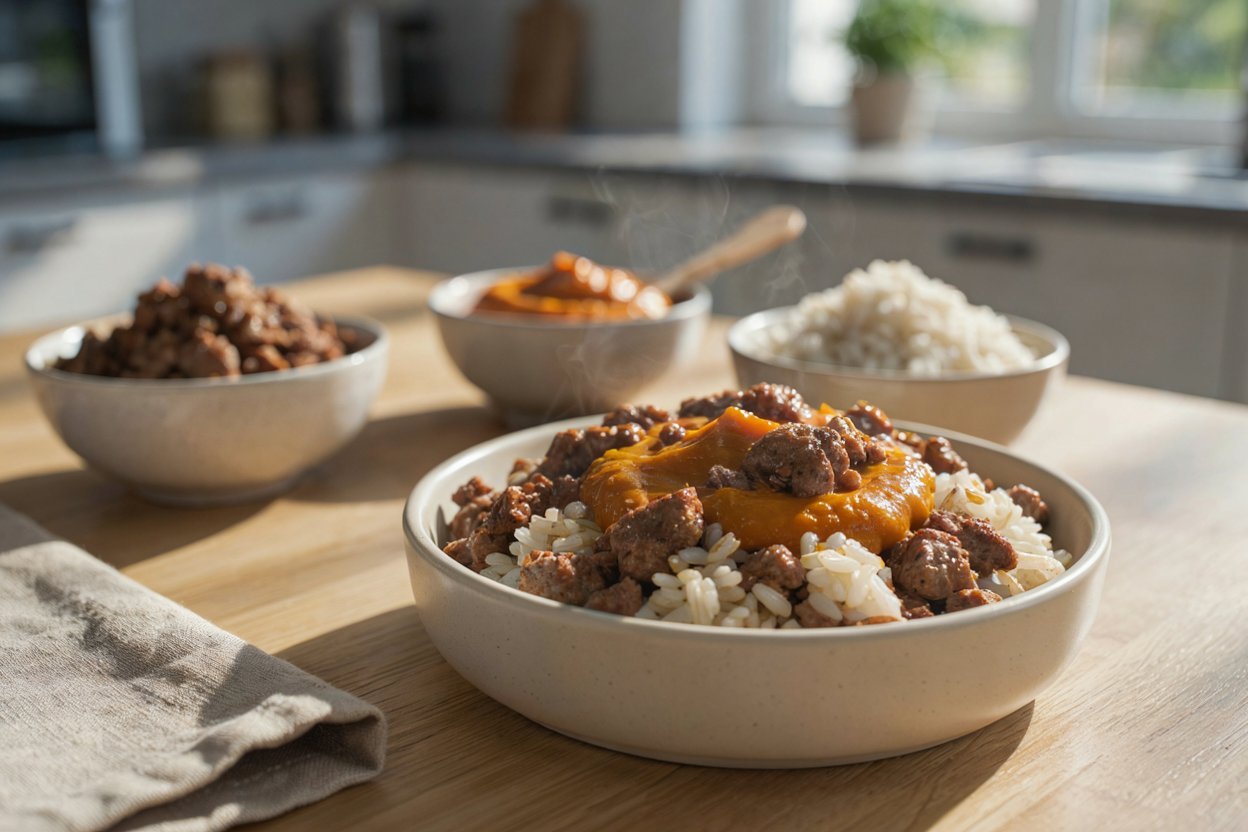
Three simple ingredients, cooked together, is really all this recipe takes: lean ground turkey, white rice, and plain pumpkin puree.
It’s straightforward enough for a first attempt at homemade dog food, uses ingredients most grocery stores carry year round, and comes together without any special equipment.
This isn’t positioned as the healthiest dog food you could possibly make.
It’s positioned as something simpler than that: a transparent, recognizable, easy to prepare meal, along with the practical guidance you need around portions, storage, substitutions, and where the nutritional limits of a recipe this simple actually are.
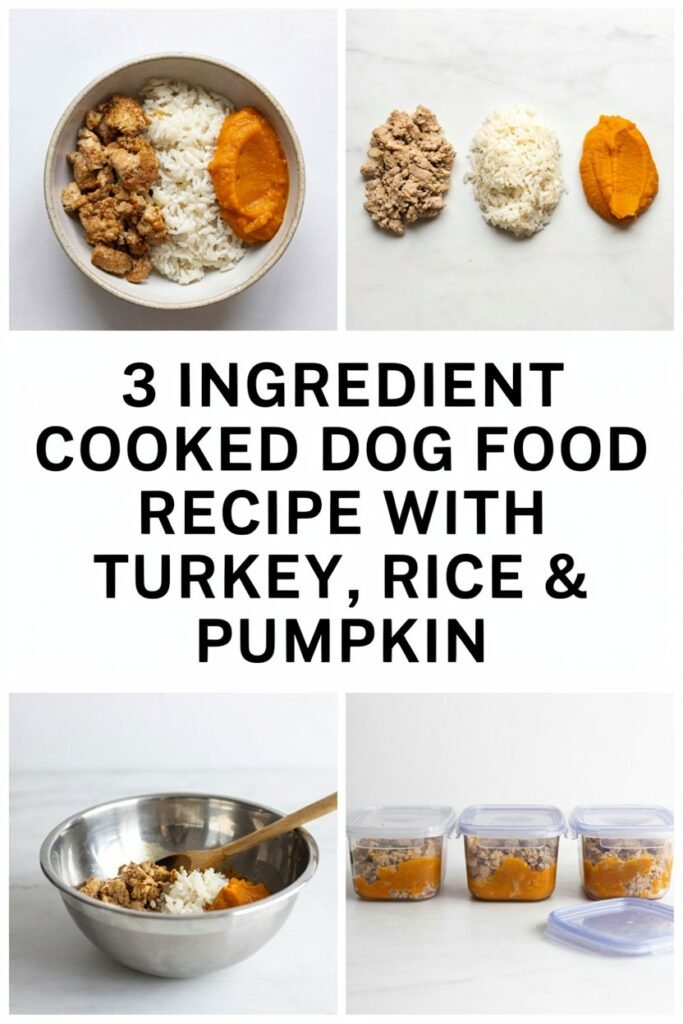
If you want to explore homemade feeding further, a few related guides are worth keeping open alongside this one.
Homemade dog food with vet approved ingredients covers what a truly balanced homemade diet needs beyond just picking safe ingredients, 7 high protein homemade dog food recipes and 3 simple farmer’s dog food recipes offer more variety once you’re comfortable with the basics, simple homemade dog food recipes for beginners is a good next stop if this is your first time cooking for your dog, and human foods dogs can safely eat is useful if you’re also wondering what’s safe to share from your own kitchen more broadly.
Disclaimer: This post may contain affiliate links, which means I may earn a small commission at no extra cost to you. Always consult your veterinarian before introducing new foods or making changes to your dog’s diet.
Amazon Shopping List You Need
- Nonstick Cooking Pot with Lid
- Glass Meal Prep Containers with Lids
- Digital Kitchen Food Scale
- Stainless Steel Dog Food Bowls
- Silicone Freezer Storage Molds
- Airtight Food Storage Container
- Dog Multivitamin Supplement Powder
Why Make Homemade Dog Food With Three Ingredients?
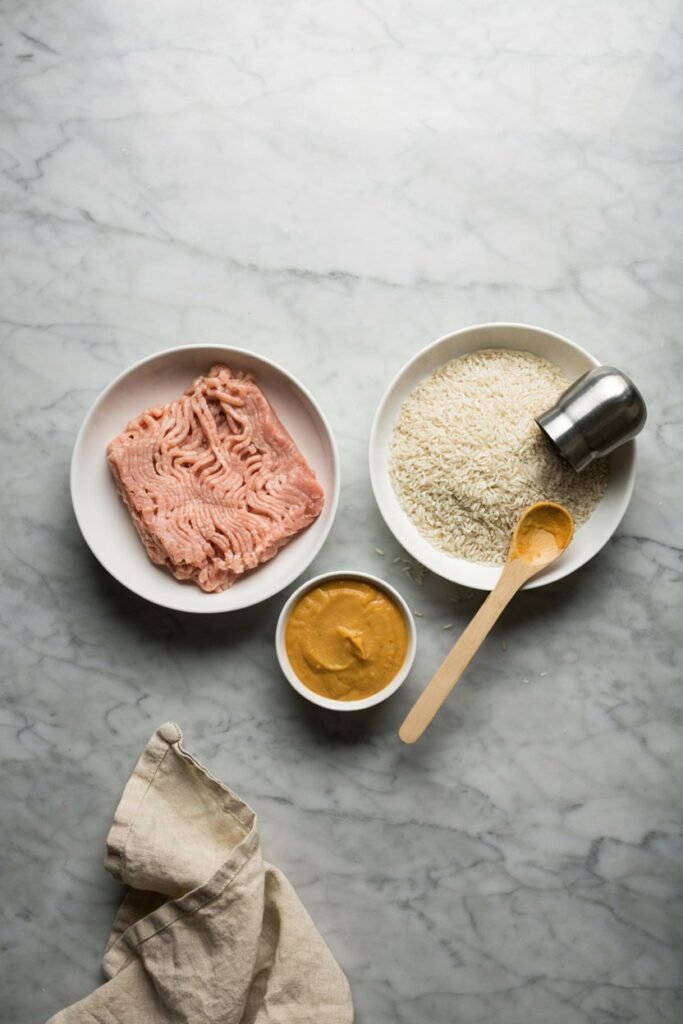
The appeal here is genuinely just simplicity.
Three ingredients means total transparency about what’s going into the bowl, an easy recipe to batch cook on a weekend, and simpler portioning than a recipe with a dozen moving parts.
It also means freshly cooked food rather than something sitting on a shelf.
What it doesn’t automatically mean is nutritional completeness.
Simple and complete are two different things, and that distinction runs through the rest of this guide rather than getting buried at the bottom.
3 Ingredient Cooked Dog Food Recipe
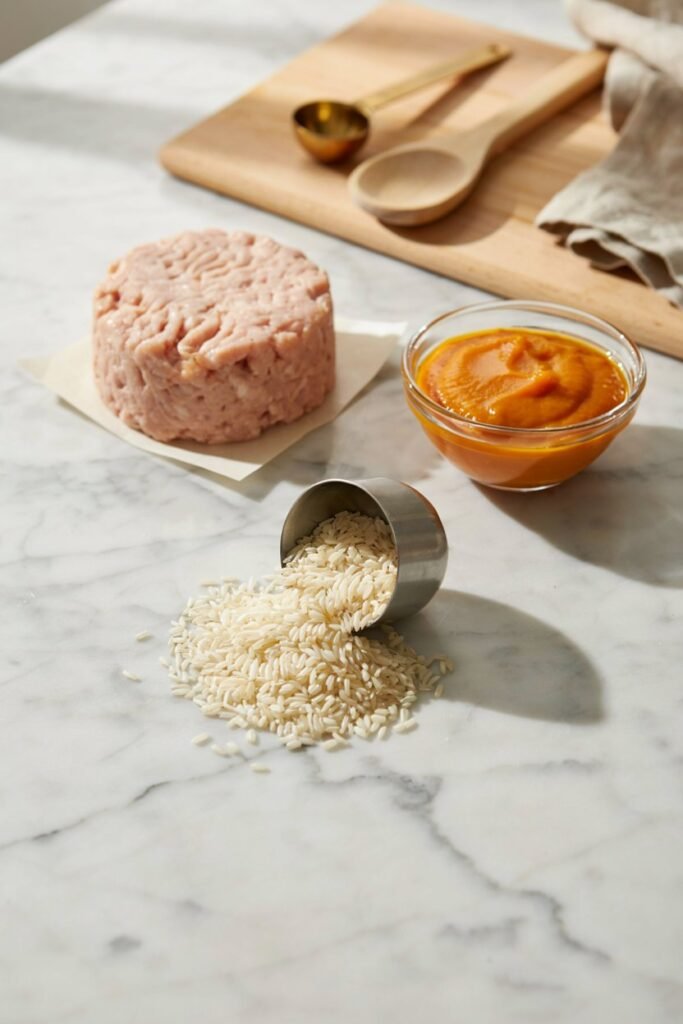
Yield: About 6 to 8 servings, depending on your dog’s size
Prep Time: 10 minutes
Cook Time: 25 minutes
Total Time: About 35 minutes
Storage: Refrigerate up to 4 days, freeze up to 3 months
Ingredients
- 2 pounds lean ground turkey
- 2 cups white rice, uncooked
- 1 cup plain pumpkin puree
Important: Make sure you’re using plain pumpkin puree, not pumpkin pie filling.
Pie filling contains added sugar and spices that aren’t appropriate for dogs.
Why These Three Ingredients?
Ground Turkey
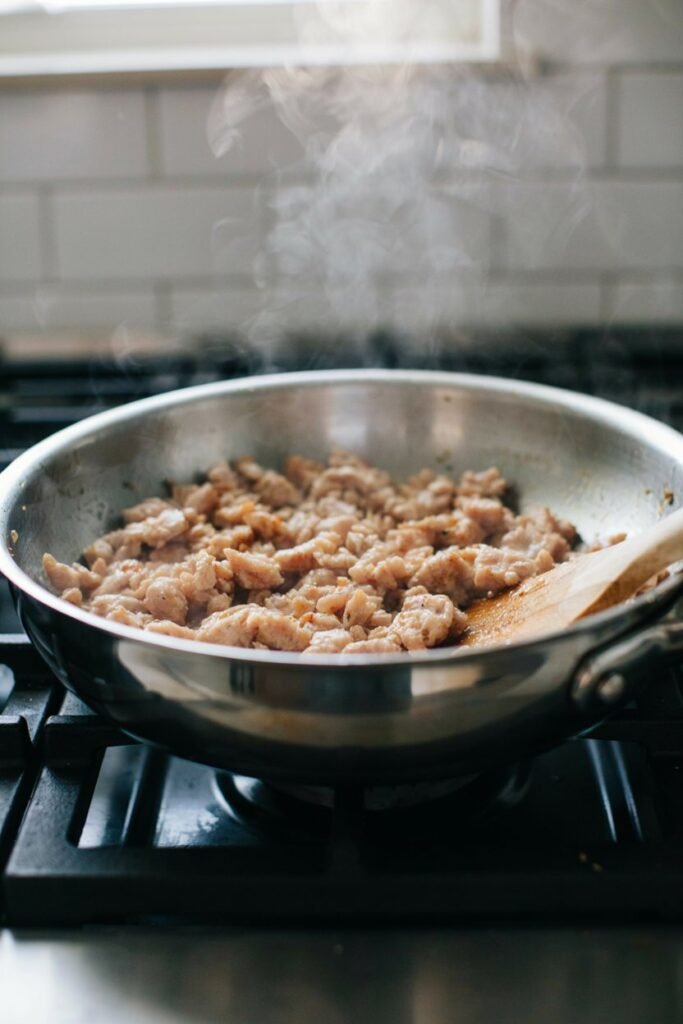
Lean turkey works well in a simple homemade recipe because it’s easy to find, easy to cook evenly, and generally gentle on digestion.
It should always be cooked thoroughly and completely plain, with no salt, garlic, onion, butter, heavy sauces, or seasoning blends of any kind added during cooking.
White Rice
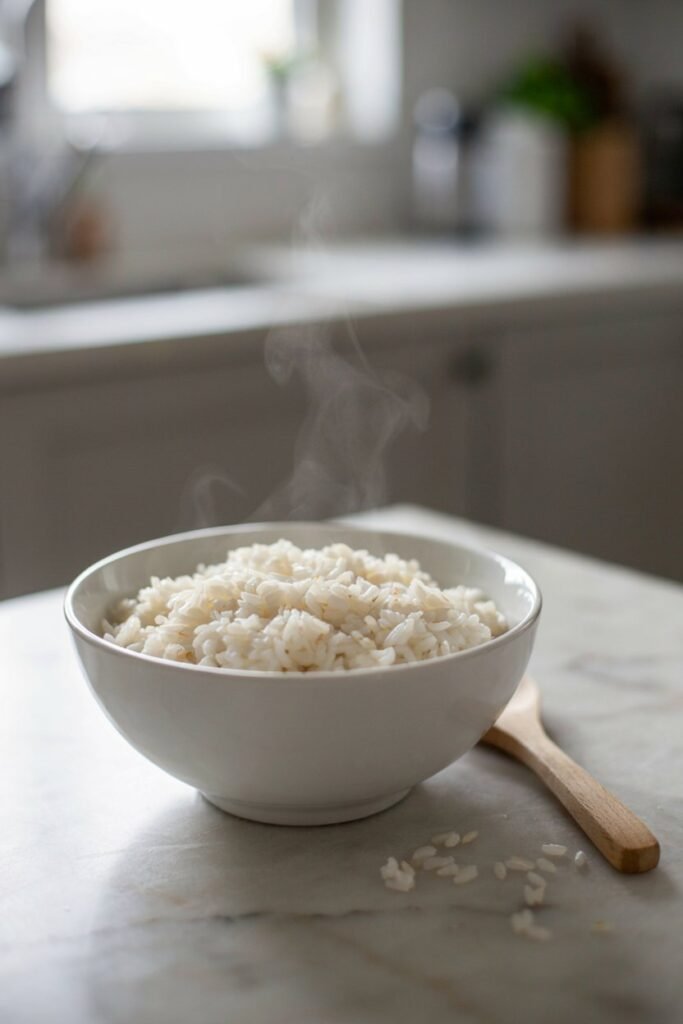
Rice serves as the carbohydrate base of the meal, providing digestible energy and making the finished dish more filling.
Plain cooked white rice is a common choice in simple homemade dog meals specifically because it’s gentle on the stomach, including for dogs with sensitive digestion.
Pumpkin
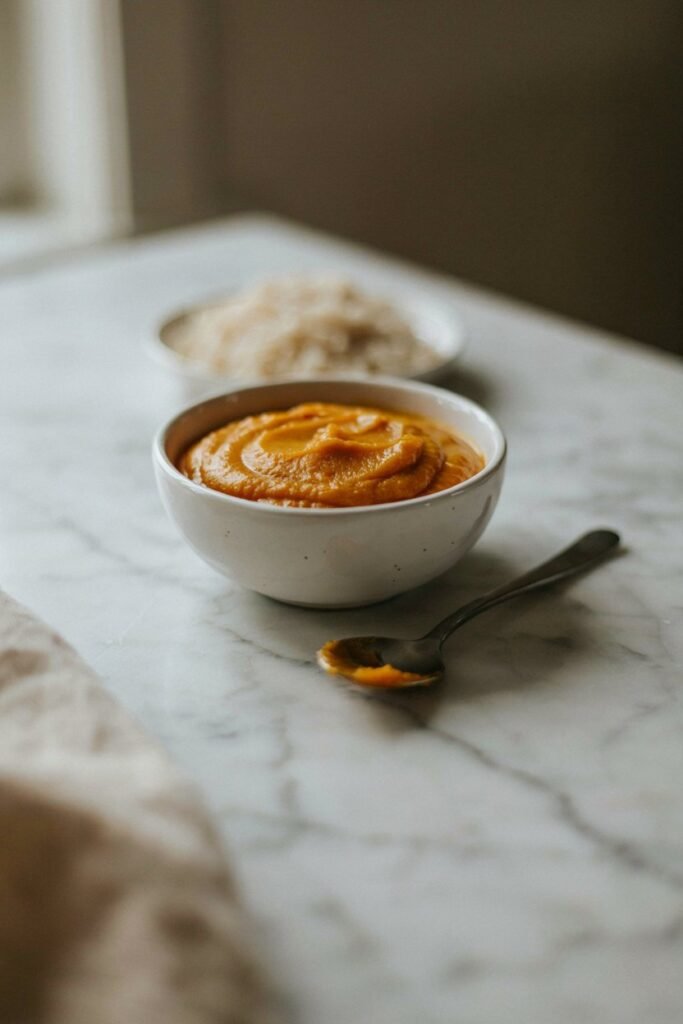
Plain pumpkin contributes both fiber and moisture, helping tie the whole mixture together into something soft and easy to eat.
More pumpkin isn’t automatically better here. Keeping the ratio balanced matters more than maximizing any single ingredient.

How to Make It
Step 1: Cook the Turkey
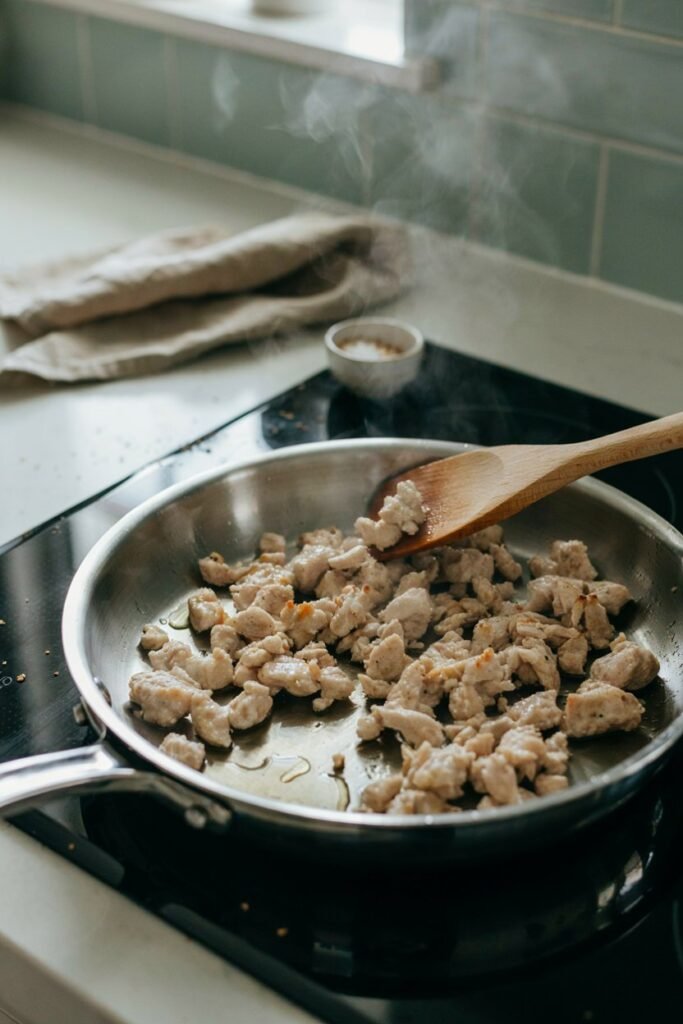
Place the ground turkey in a skillet or saucepan over medium heat and cook it thoroughly, breaking it into small pieces as it browns.
Keep the turkey completely plain and do not add salt, oil, butter, onion, garlic, or seasoning.
Once fully cooked, drain away any excess fat and set the turkey aside to cool slightly.
Step 2: Cook the Rice
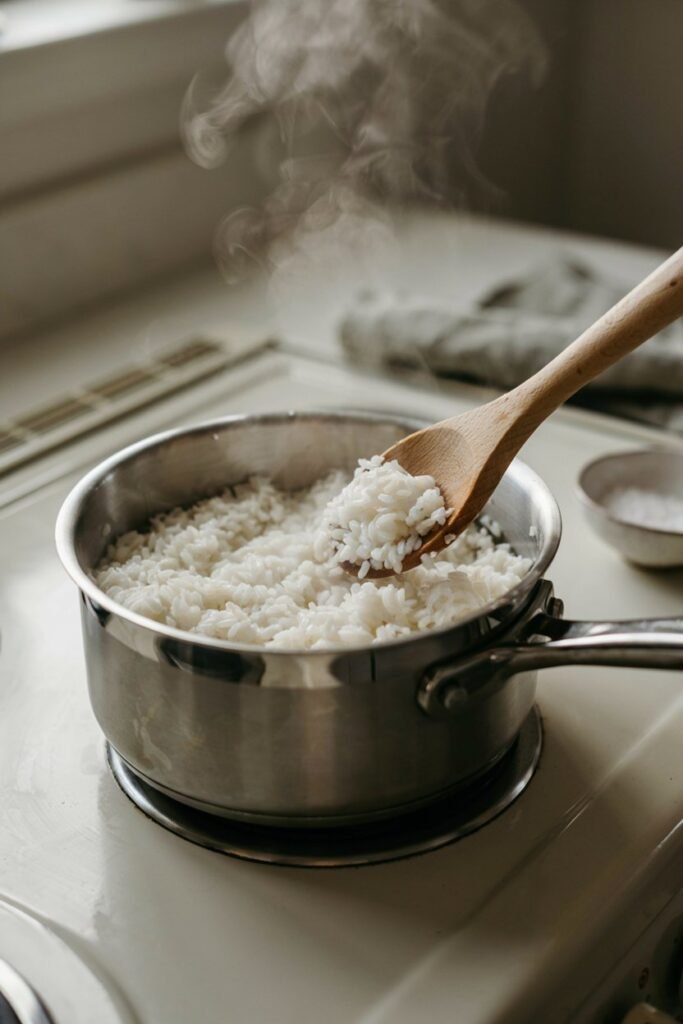
Prepare the rice separately according to the package directions until it is tender and fully cooked.
Use plain water rather than salted water, seasoned broth, or stock.
If you use broth, check the ingredients carefully to make sure it contains no onion or garlic.
Step 3: Add the Pumpkin
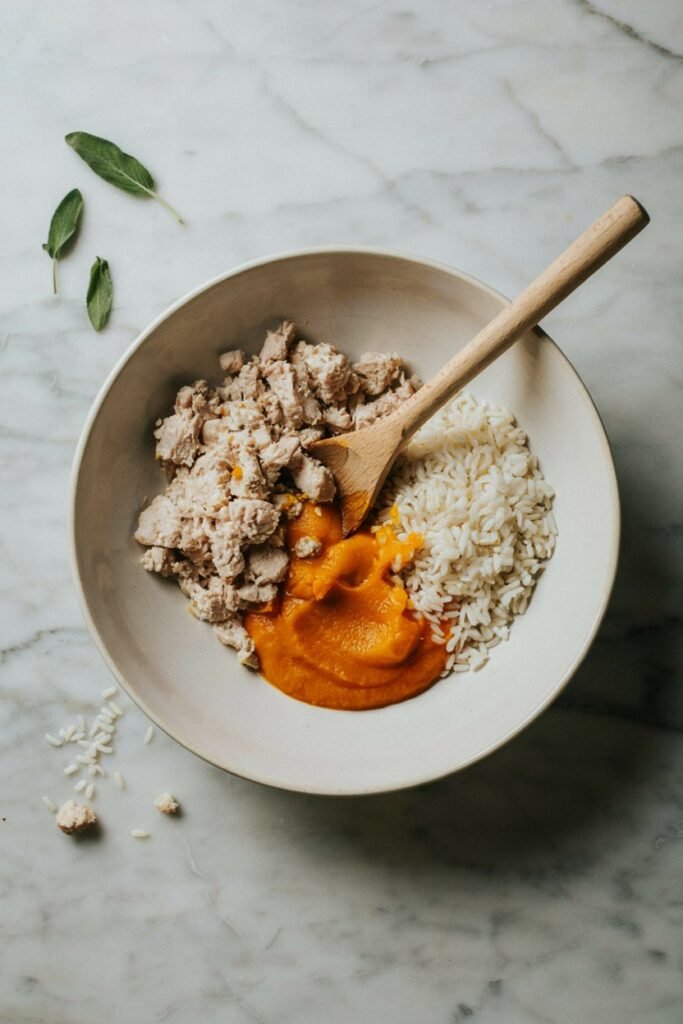
Transfer the cooked turkey and rice to a large mixing bowl.
Add the plain pumpkin and stir everything together until the ingredients are evenly distributed.
Make sure the pumpkin is plain puree rather than pumpkin pie filling, which can contain added sugar and spices.
Step 4: Cool Before Serving
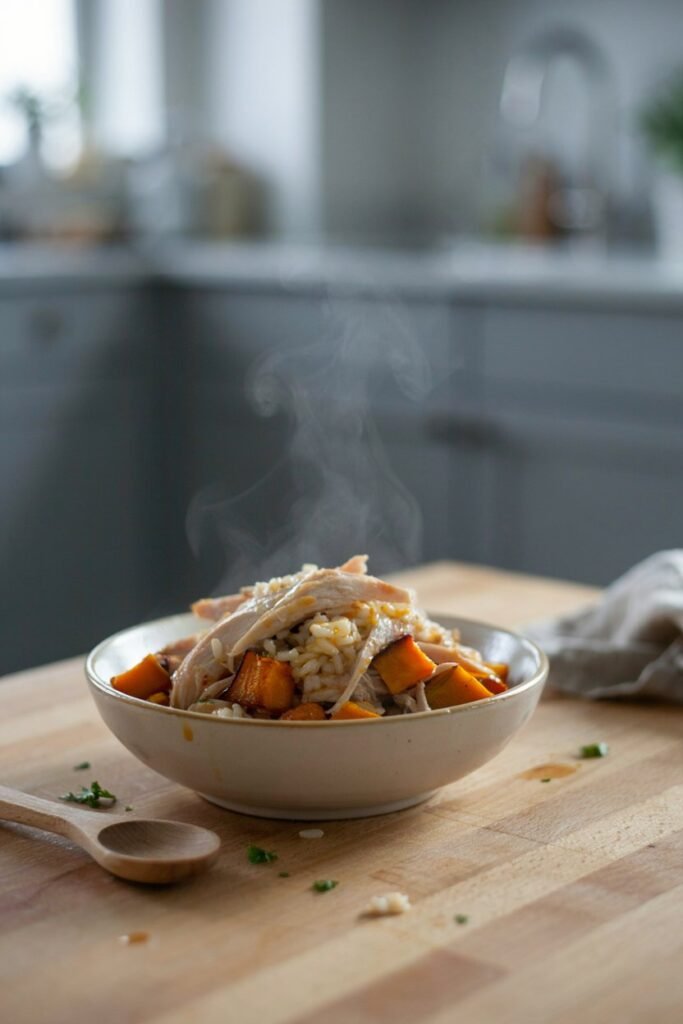
Allow the mixture to cool completely or reach a comfortable serving temperature before giving it to your dog.
Avoid serving homemade food while it is still hot.
Step 5: Portion and Store
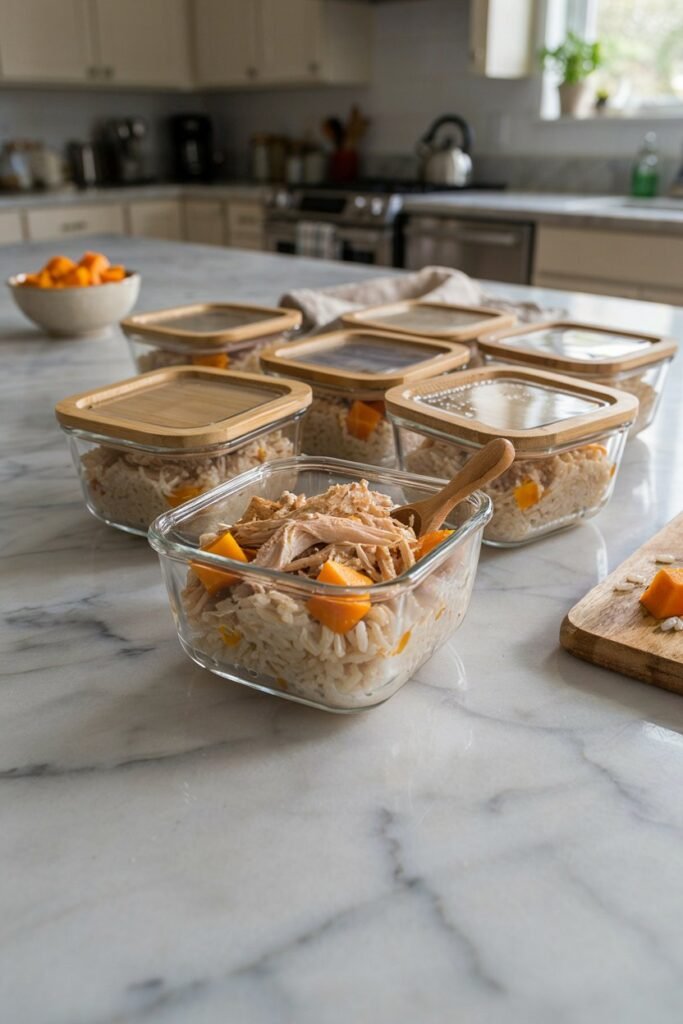
Divide the finished meal into individual portions as soon as it has cooled.
This makes daily feeding easier and prevents you from repeatedly opening, warming, and cooling one large container.
Store portions in airtight containers in the refrigerator or freeze them for longer storage. Thaw frozen portions in the refrigerator before serving.
How Much Homemade Dog Food Should You Feed?
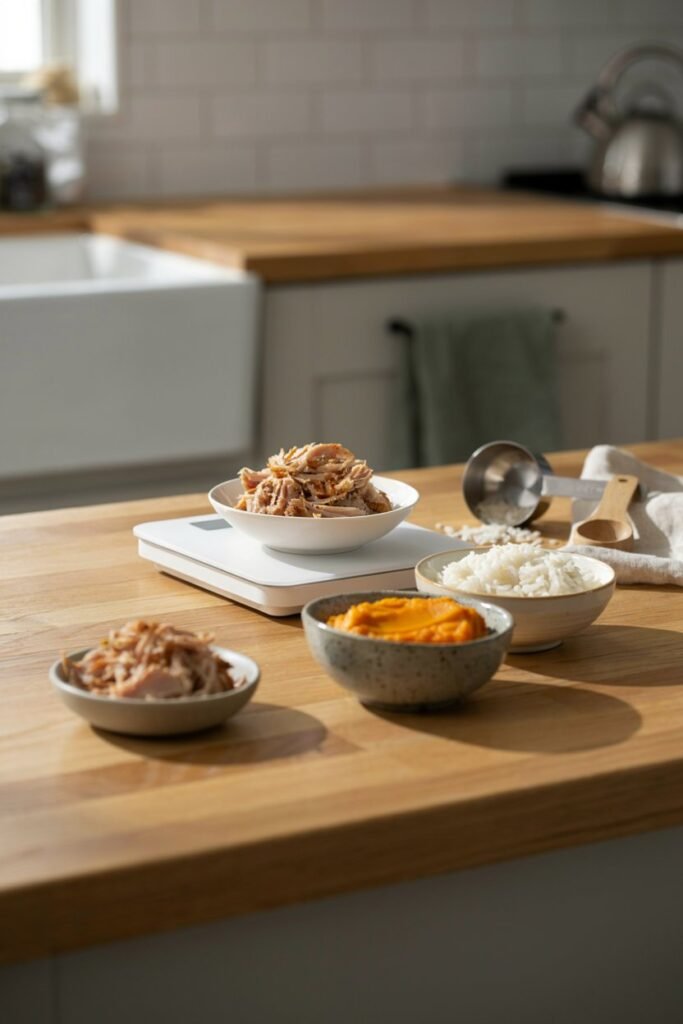
There’s no single “feed one cup per 20 pounds” rule that works safely for every dog, and treating one as universal can genuinely mislead readers.
Feeding amounts depend on your dog’s weight, age, activity level, breed, body condition, existing diet, treat intake, and individual calorie requirements.
| Dog Size | Starting Portion Approach |
|---|---|
| Small dogs | Begin with a small portion and adjust based on calorie needs |
| Medium dogs | Divide the daily amount across meals |
| Large dogs | Use calculated calorie needs rather than a fixed cup rule |
| Puppies | Use veterinary guidance for growth requirements |
This table is meant as a starting framework, not a veterinary feeding prescription.
When in doubt, your veterinarian can help calculate a more precise daily calorie target based on your dog’s exact weight and activity level.
Is Three Ingredient Homemade Dog Food Complete and Balanced?
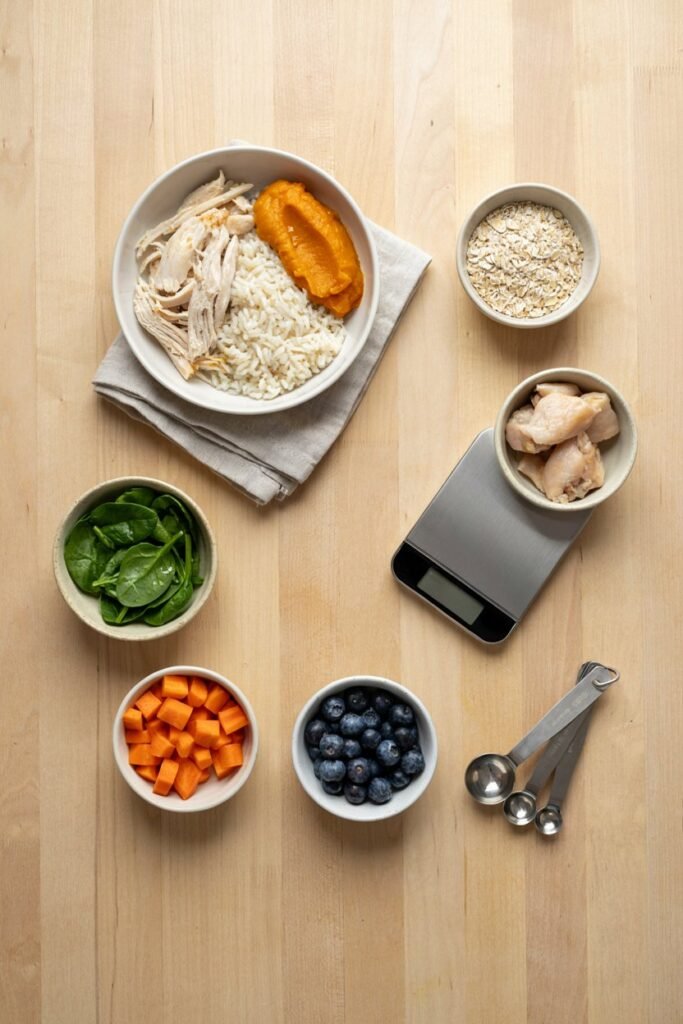
This is the most important section in this guide.
A recipe containing turkey, rice, and pumpkin shouldn’t be presented as a nutritionally complete long term diet, and it isn’t one.
Dogs require appropriate amounts of protein, fat, essential fatty acids, calcium, phosphorus, vitamins, minerals, and a range of trace nutrients, all in specific proportions that three whole ingredients alone don’t reliably cover.
This recipe can be genuinely useful as an occasional meal, a topper, or a short term homemade option depending on your individual dog.
Feeding it, or any homemade recipe like it, as the sole long term diet requires proper nutritional formulation, ideally with a veterinarian or a board certified veterinary nutritionist involved in the process.
Can Puppies Eat This Recipe?
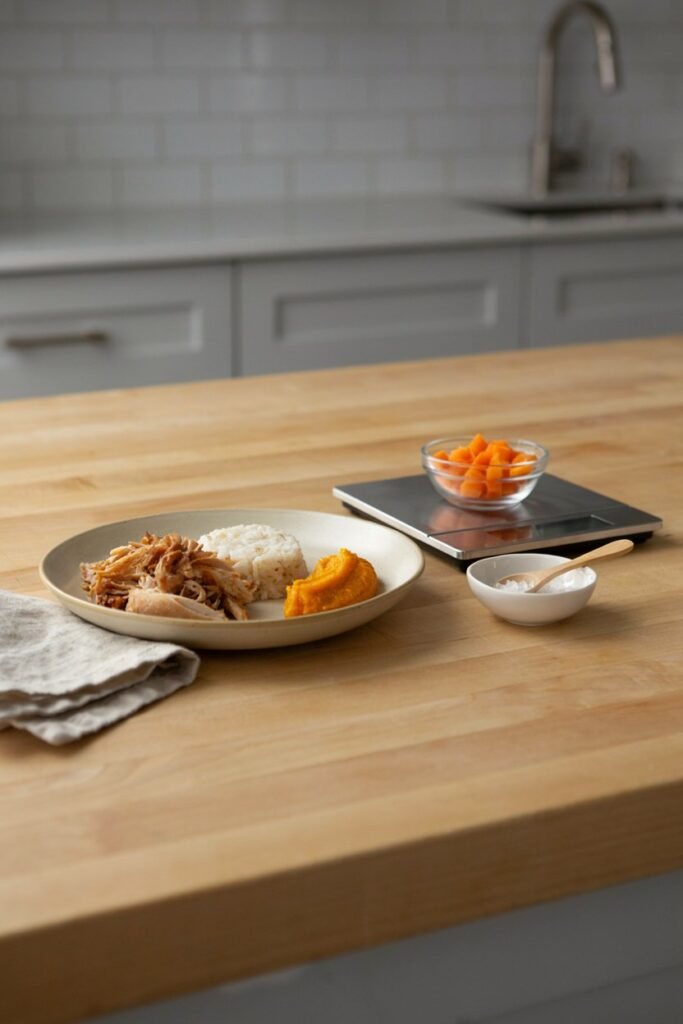
Not automatically as a full diet.
Puppies have different nutritional requirements because they’re actively growing, and large breed puppies in particular have specific considerations around calcium and growth rate that this simple recipe doesn’t account for.
A straightforward adult dog recipe like this one shouldn’t quietly become a puppy’s complete diet without professional guidance first.
Can Senior Dogs Eat It?
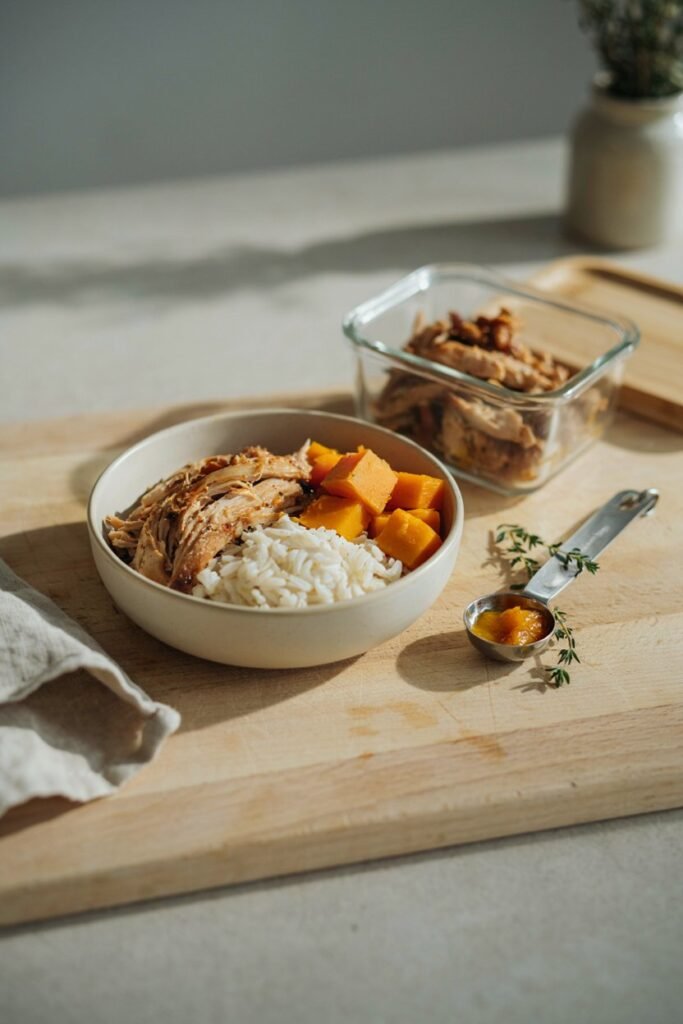
Often, yes, though senior dogs may have different needs depending on their weight, activity level, dental health, kidney health, digestive tolerance, and any existing medical conditions.
As with adult dogs generally, this recipe works better as an occasional meal or supplement than as a universally appropriate everyday diet for every senior dog.
Easy Ingredient Substitutions
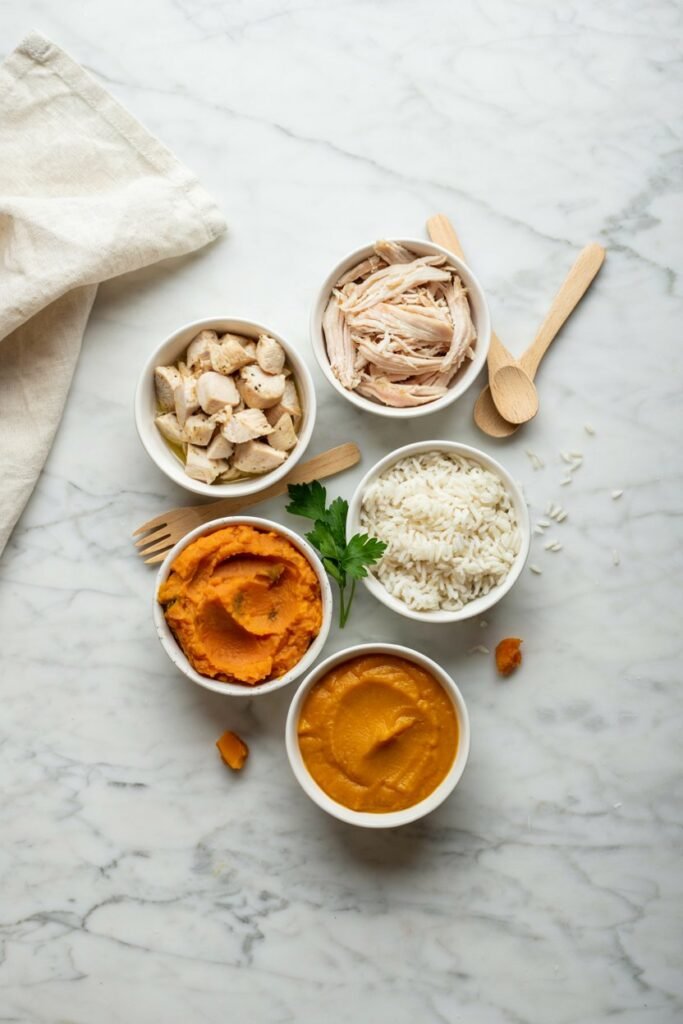
Turkey to chicken. Use plain cooked lean chicken in the same quantity.
White rice to sweet potato. Cook thoroughly and mash before mixing in.
Pumpkin to another fiber source. Approach this one carefully, since substitutions change the overall nutritional composition of the meal.
If you’re using this recipe as anything more than a simple supplemental meal, it’s best not to make extensive substitutions without reconsidering the balance of the whole dish.
Ingredients You Should Never Add
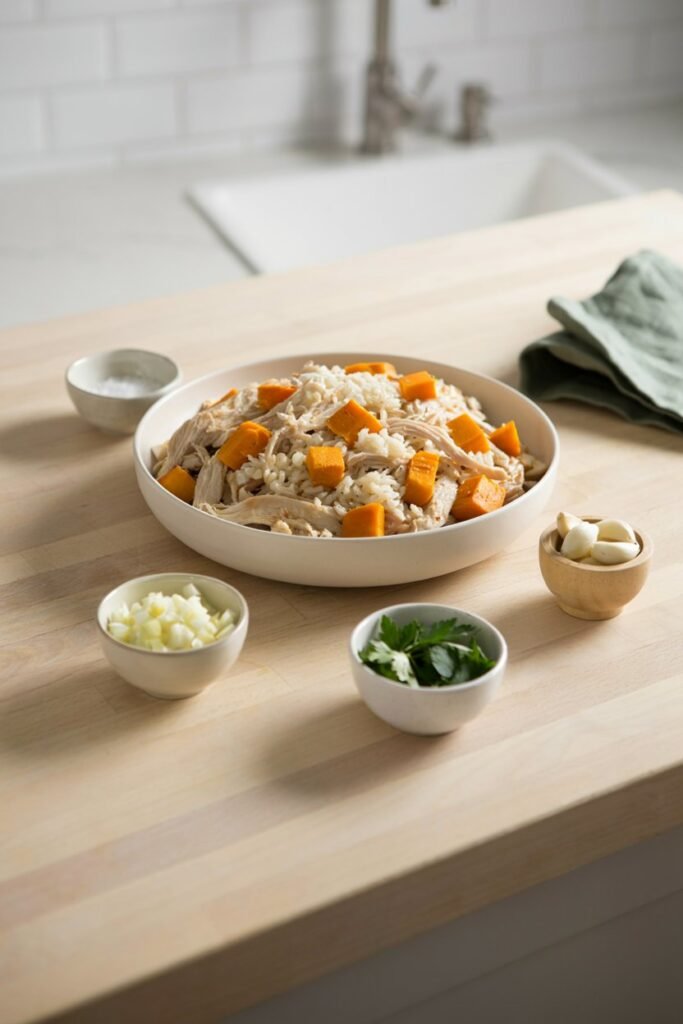
- Onion, garlic, and chives damage red blood cells and can cause anemia, even in small amounts.
- Excess salt and seasoning mixes offer no benefit and can be genuinely harmful in larger quantities.
- Rich sauces often hide salt, onion, or garlic even when the main ingredient looks harmless on its own.
- Xylitol containing products cause a dangerous, rapid drop in blood sugar.
- Cooked bones can splinter and cause internal injury.
- Excessively fatty ingredients can trigger digestive upset or worse in some dogs.
It’s a common assumption that because a meal is homemade, everything already in your kitchen must be safe to add.
That isn’t true, and this list is worth keeping somewhere visible while you cook.
How to Store Homemade Dog Food
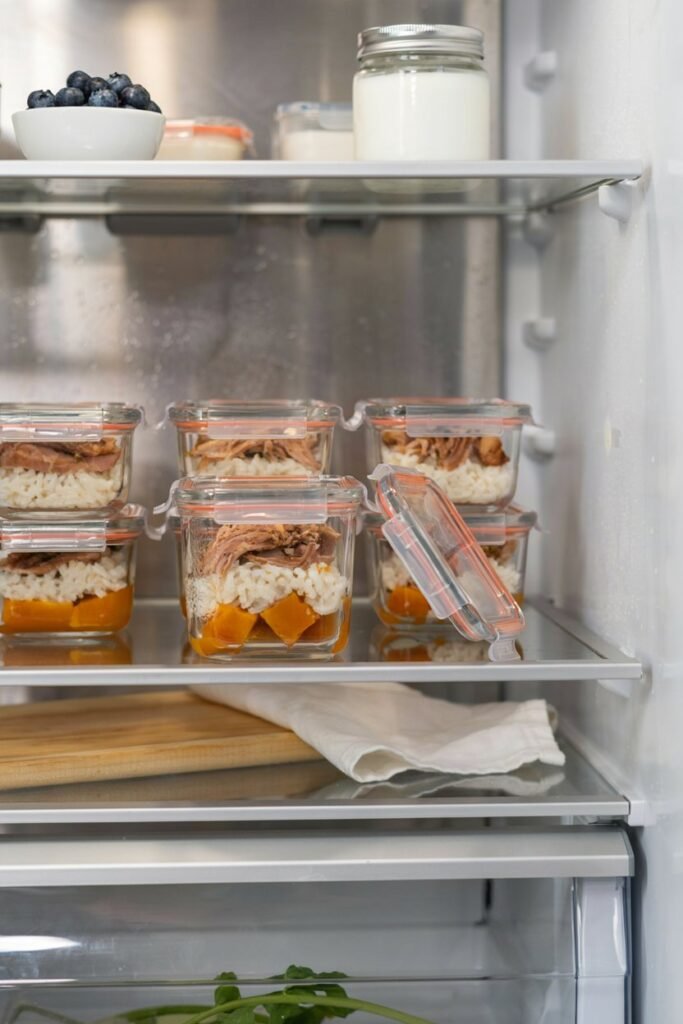
Refrigerator. Store in clean, airtight containers and use within about 4 days.
Freezer. Batch freezing individual portions makes homemade dog food far easier to manage day to day, since you’re only thawing what you actually need.
Thawing. Thaw safely in the refrigerator overnight rather than leaving food sitting out at room temperature for extended periods.
Reheating. Warm the food gently and always check the temperature before serving it.
When to throw it away. If the food has been in the refrigerator longer than about 4 days, or shows any off smell or texture, it’s better to discard it than risk feeding something questionable.
How to Transition Your Dog to Homemade Food
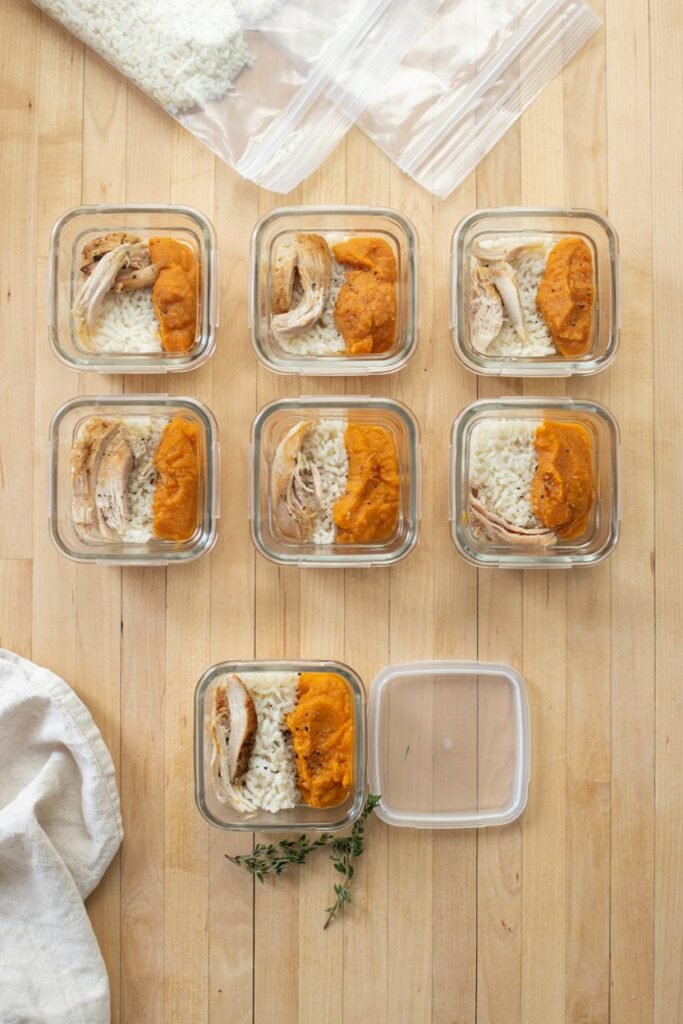
Rather than suddenly swapping your dog’s regular food for this recipe all at once, a gradual transition over about a week is generally easier on their digestive system.
Watch for loose stool, vomiting, reduced appetite, gas, changes in energy, or other unusual reactions throughout the process.
If symptoms are significant or persistent, that’s a sign to contact your veterinarian rather than continue adjusting the ratio on your own.
Common Mistakes to Avoid
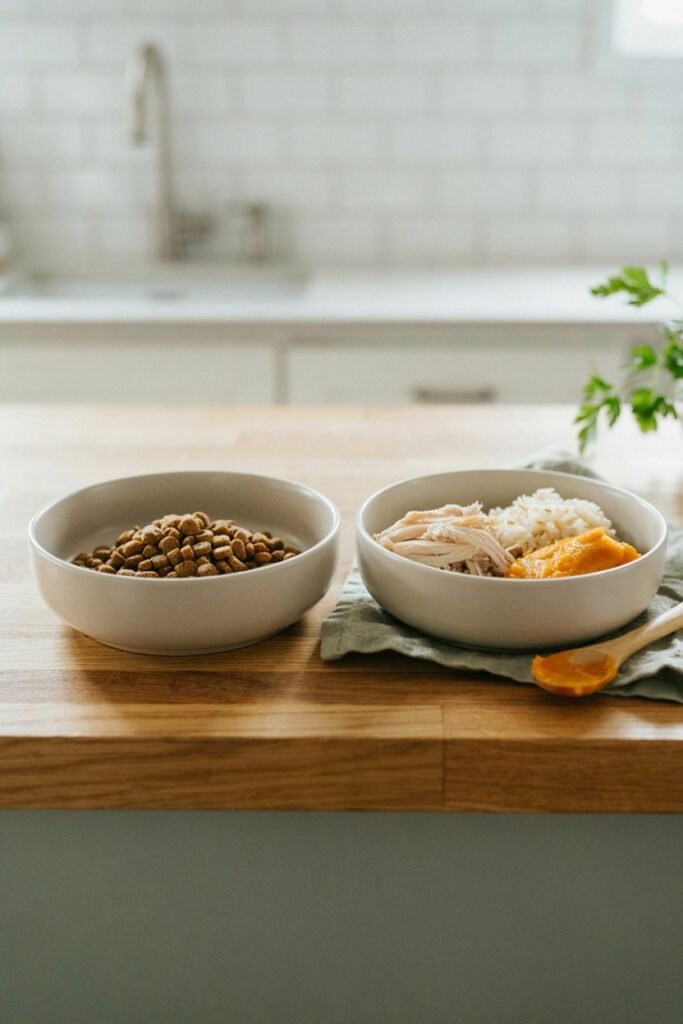
Adding seasoning. Dogs don’t need or benefit from the same seasoning people enjoy in their own food.
Using pumpkin pie filling. It isn’t the same thing as plain pumpkin puree, and the added sugar and spices aren’t appropriate for dogs.
Guessing at long term nutritional balance. Three ingredients don’t automatically add up to a complete diet, no matter how wholesome each one is individually.
Feeding too much. Homemade food can still contribute a significant number of calories, and it’s easy to overfeed without realizing it.
Making huge batches. If the food won’t be used safely within its storage window, freezing individual portions is the better call from the start.
Changing several ingredients at once. If your dog develops any digestive issues, having changed multiple things at the same time makes it much harder to identify the actual cause.
My Best Tips for Making Homemade Dog Food Easier
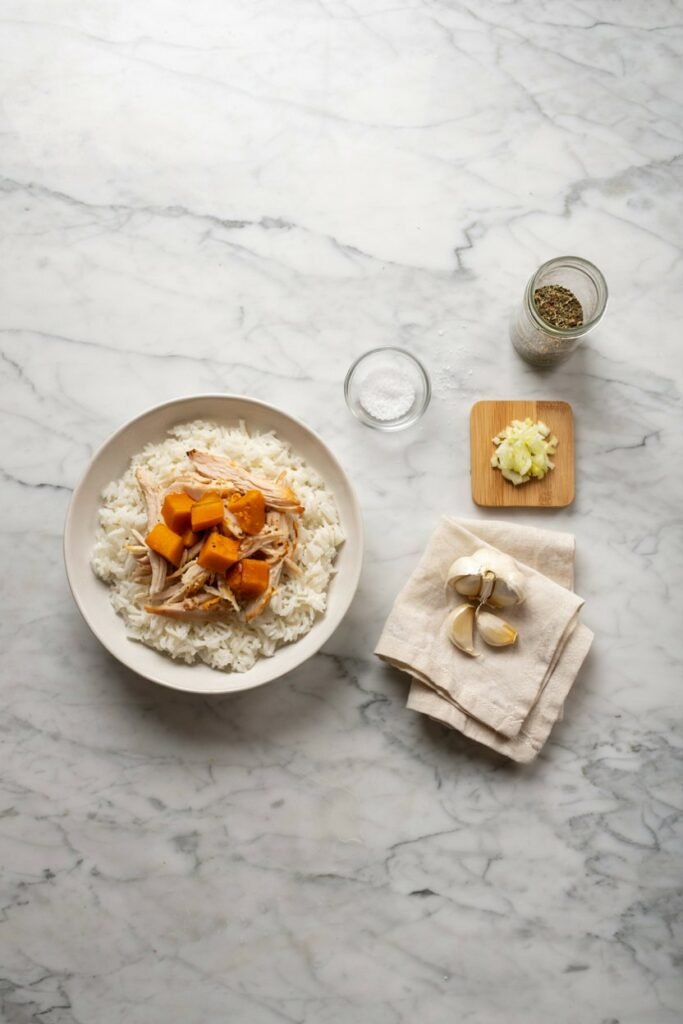
I like setting aside one afternoon on a weekend to cook a full batch rather than making this recipe fresh every few days.
Once everything is cooked and cooled, I divide it straight into individual containers, label each one with the date, and put whatever won’t be eaten within the next few days directly into the freezer.
That one step alone makes homemade feeding feel far more manageable during a busy week, since dinner is already portioned and ready to go rather than something else to prep from scratch.
Frequently Asked Questions
Can I feed this three ingredient dog food every day? It can be fed regularly as a topper or supplemental meal, but as a sole, long term diet it should be reviewed and properly formulated with a veterinarian’s input.
Can I use chicken instead of turkey? Yes, plain cooked lean chicken works as a direct substitute in the same quantity.
Can I use brown rice? Yes, though brown rice takes longer to cook and has a slightly different texture and fiber content than white rice.
Can I freeze homemade dog food? Yes, portioning it into individual servings before freezing makes future meals much easier to manage.
How long does homemade dog food last in the refrigerator? Generally about 4 days when stored in a clean, airtight container.
Can puppies eat homemade dog food? In appropriate, professionally reviewed amounts, yes, but this particular recipe shouldn’t become a puppy’s regular diet without veterinary guidance first.
Can senior dogs eat this recipe? Often, yes, though individual health conditions in older dogs can change what’s appropriate, so it’s worth checking with your vet if your senior dog has any ongoing health concerns.
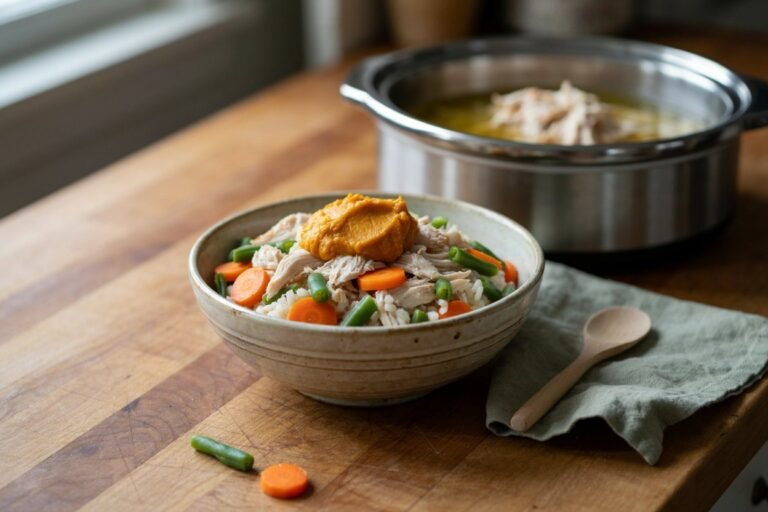
Can I add vegetables? Small amounts of dog safe vegetables like carrots or green beans can be added, though doing so changes the recipe beyond its original three ingredients and their nutritional balance.
Can I use canned pumpkin? Yes, as long as it’s plain canned pumpkin puree rather than pumpkin pie filling.
Can I add eggs? Yes, a fully cooked egg can be mixed in for additional protein and healthy fat if you’d like to expand the recipe slightly.
Is homemade dog food healthier than commercial dog food? Not automatically. It depends entirely on whether the specific recipe is nutritionally complete, not simply on the fact that it was made at home.
Does this recipe contain all the nutrients my dog needs? No, not on its own for long term feeding. It’s a simple, transparent meal option, not a substitute for a professionally formulated complete diet.
Final Thoughts
A three ingredient cooked dog food recipe is appealing because it’s simple, recognizable, and easy to prepare on almost any weeknight.
The value here isn’t in pretending that three ingredients can replace every carefully formulated commercial dog food on the market.
The real value is in giving you a genuinely straightforward homemade option, while being honest about when that simplicity works well and when it’s time to bring in more formal nutritional guidance instead.



2 Comments