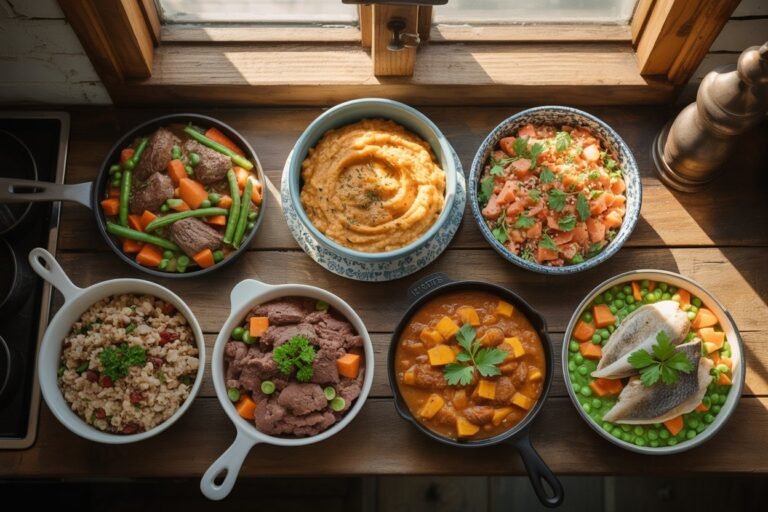
Chicken Bone Broth Recipes for Dogs
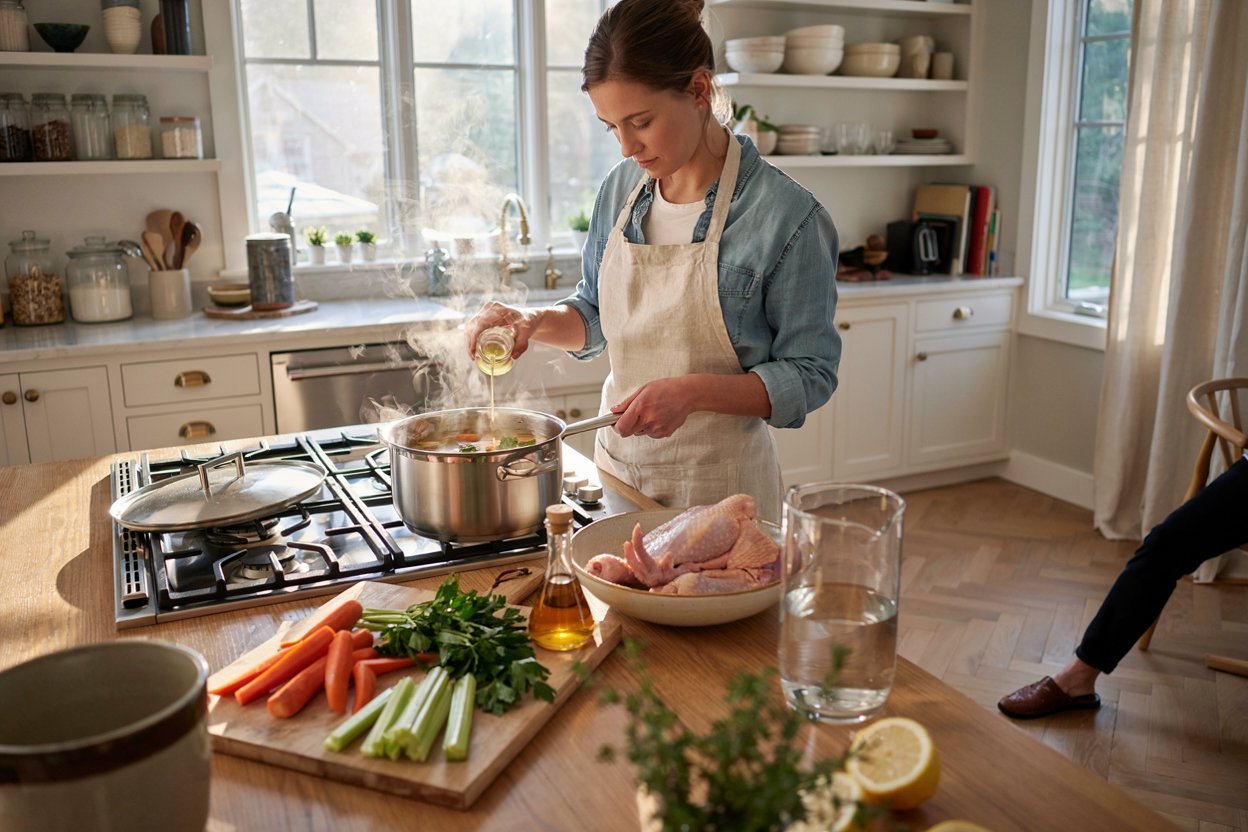
The first time I made chicken bone broth for my dog, I wasn’t trying to make a trendy homemade treat.
My older dog had been recovering after a stomach upset and wasn’t interested in eating his regular meals.
A friend suggested adding a little homemade bone broth to his food, and the difference surprised me.
The warm aroma actually encouraged him to eat again, and it quickly became something I kept in my freezer year round.

Since then, I’ve made more batches of this than I can count, for picky eaters, for hot summer days as a frozen treat, and just as a simple way to add a little extra flavor and hydration to my dog’s regular meals.
This guide covers everything I’ve learned along the way, safe ingredients, step by step instructions, several variations, and the mistakes I made early on so you don’t have to repeat them.
Note that bone broth is meant to be a supplement to your dog’s diet, not a replacement for a complete meal, and if your dog has a medical condition, it’s always worth checking with your veterinarian before adding anything new.
Can Dogs Have Chicken Bone Broth?
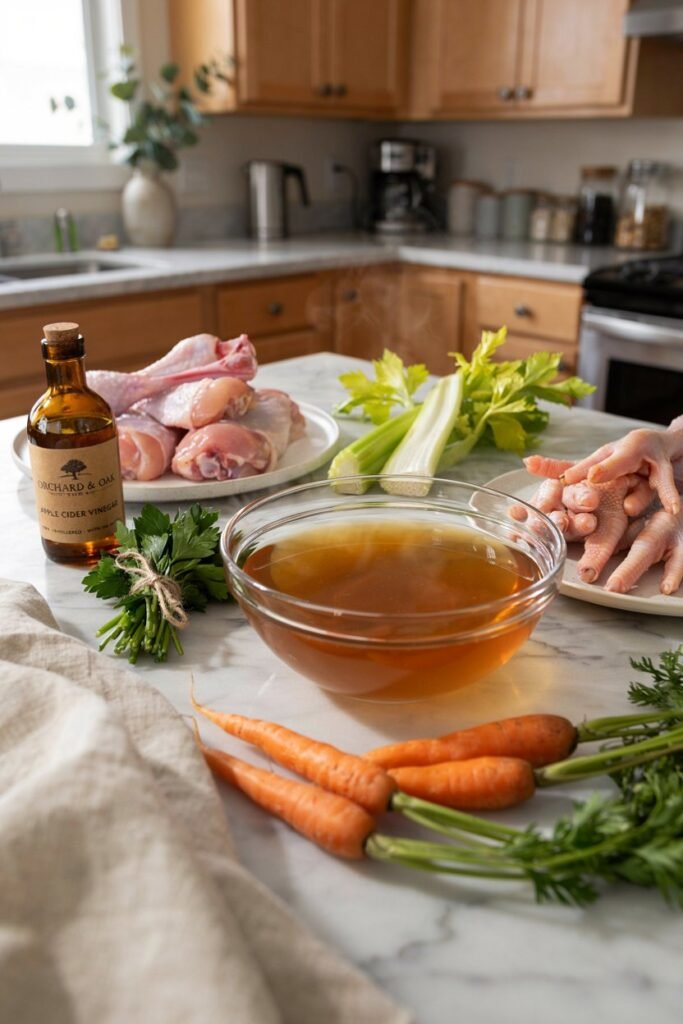
Yes. Homemade chicken bone broth can be a healthy addition to your dog’s diet when it’s made without onion, garlic, excessive salt, or seasonings.
The broth needs to be completely strained so no cooked bones remain in the final product, since cooked bones can splinter and become a choking or internal injury risk.
The broth itself, not the bones, is what your dog actually eats.
Why Make Homemade Instead of Store Bought?

I switched to homemade after checking the label on a store bought broth I’d been giving my dog and realizing it contained onion powder, something I hadn’t thought to look for.
That one label check changed how I’ve fed my dog ever since.
With homemade broth, you control exactly what goes in, which means no preservatives, no hidden onion or garlic, and noticeably lower sodium than most shelf stable versions.
It also tends to be cheaper, especially if you’re already saving chicken bones and scraps from meals you’re cooking for yourself, and you can easily customize it around your own dog’s allergies or sensitivities.
| Homemade | Store Bought |
|---|---|
| No preservatives | Often contains preservatives |
| No onion or garlic | Some brands contain onion |
| Fresh ingredients you control | Shelf stable ingredients |
| Lower sodium | Often higher sodium |
| Generally less expensive | Generally more expensive |
Health Benefits Of The Ingredience
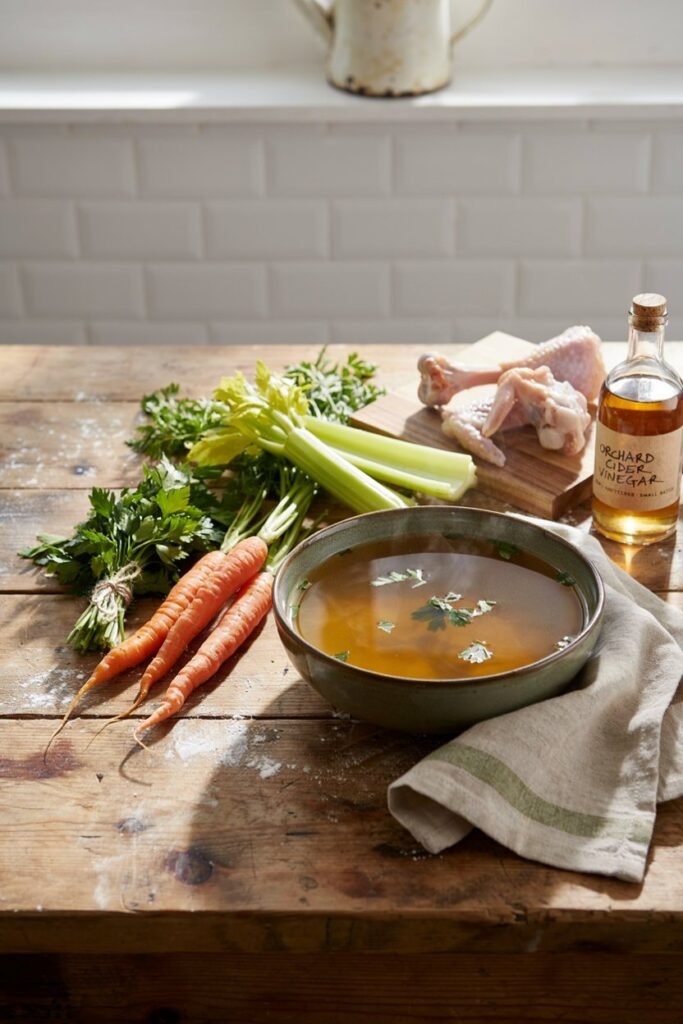
Supports joint health. Simmering bones for a long period draws out collagen and gelatin, compounds commonly associated with joint and connective tissue support, which is part of why I started making a batch specifically for my older dog.
Helps with hydration. For dogs who are picky about drinking enough water, warm broth poured over food or offered on its own can encourage them to take in more fluid.
Encourages appetite. This was the original reason I started making it. A warm, savory smell can motivate a sick or recovering dog to eat when regular food isn’t appealing.
Gentle on sensitive stomachs. Warm, simple broth is often easier to tolerate than richer foods, which is why many owners introduce it slowly after a stomach upset, ideally with guidance from their vet.
Adds flavor to dry food. A splash over kibble makes meals more appealing, especially for older dogs whose sense of smell has started to fade.
Freezes into treats. Poured into small molds and frozen, bone broth becomes a refreshing treat on a hot day.
Ingredients You Need
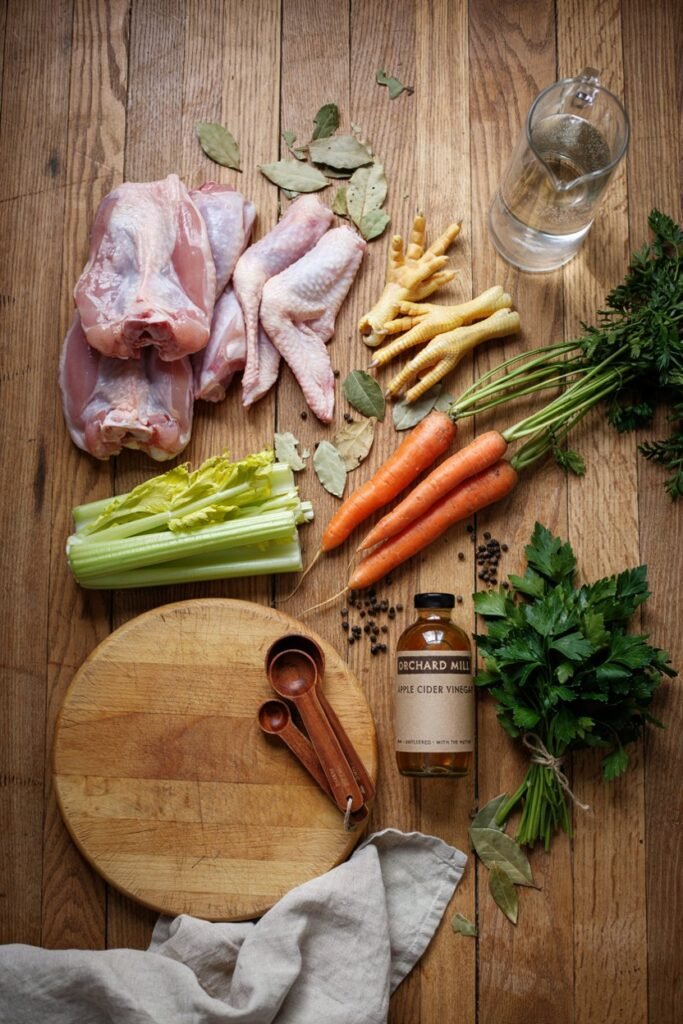
Chicken bones. Use raw chicken backs, carcasses, necks, or feet.
Avoid using already cooked bones from a meal, since cooking makes bones brittle and more likely to splinter once they’re chewed or handled, even though in this recipe they’re strained out before serving.
Apple cider vinegar. Many recipes include a small splash because the mild acidity may help draw minerals out of the bones during the long simmering process.
Water. Filtered water is ideal, since it keeps the finished broth as clean and neutral as possible.
Optional vegetables. Carrots, celery, and parsley are commonly added for extra nutrients and flavor.
Ingredients to never include: onion, garlic, leeks, and chives all belong to the allium family and are toxic to dogs, so keep them out of any batch you’re making for your pet, even if you’d normally add them to broth for yourself.
Equipment Needed
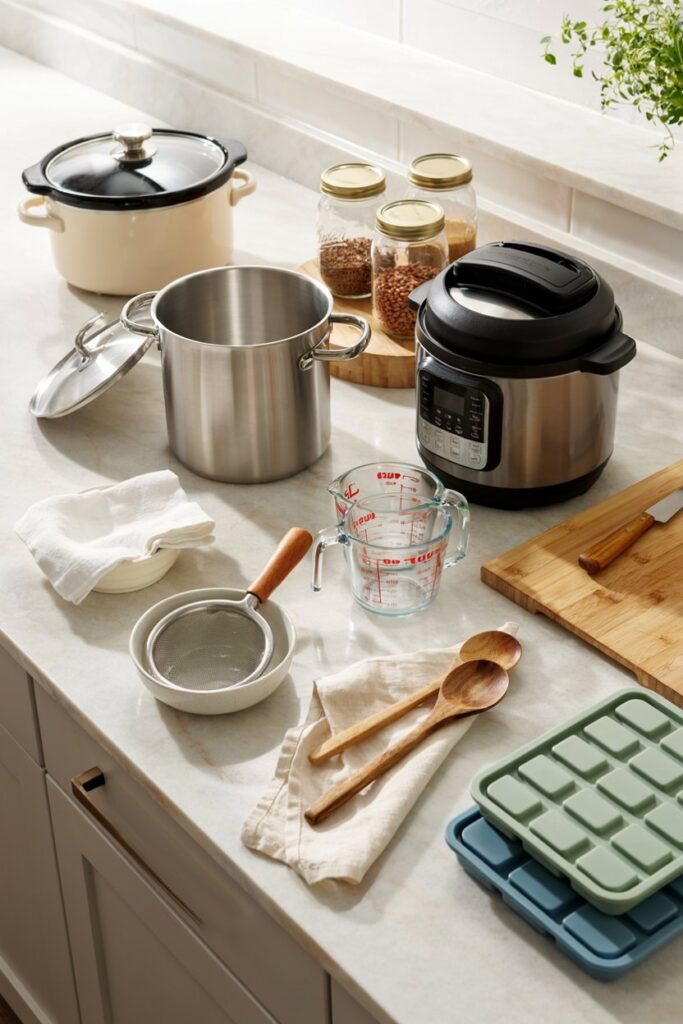
- Slow cooker or Instant Pot
- Large stock pot, if simmering on the stovetop
- Fine mesh strainer or cheesecloth
- Storage containers or mason jars
- Silicone freezer trays for portioning
Step by Step Recipe Guide
Step 1: Prepare the bones

Place chicken bones into a large stock pot and cover completely with water.
Add a splash of apple cider vinegar and let the pot sit for about 30 minutes before turning on the heat.
This resting time gives the vinegar a head start on drawing minerals from the bones.
Step 2: Simmer low and slow
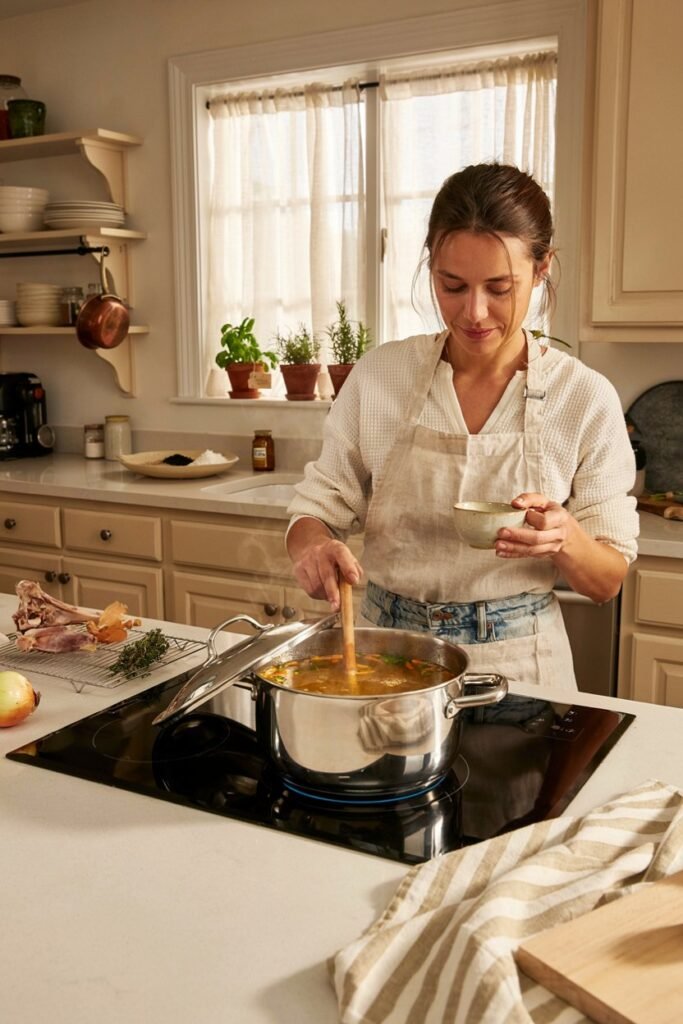
Bring the pot to a very gentle simmer, not a rolling boil, and let it cook for 12 to 24 hours.
Low, slow heat is what actually breaks the bones down and extracts the collagen, while boiling too aggressively can make the broth cloudy without adding any real benefit.
Step 3: Add vegetables near the end

If you’re using carrots, celery, or parsley, add them in the final hour of cooking so they don’t turn to mush and lose their nutrients.
Step 4: Strain thoroughly

Once cooking is done, strain the broth through a fine mesh strainer, and ideally through cheesecloth as well, until no bone fragments or solids remain. This step matters more than any other for safety.
Step 5: Cool and portion

Let the broth cool to room temperature before transferring it to storage containers or freezer trays. Skim any excess fat off the top once it’s chilled, if desired.
Common mistake to avoid: rushing the simmer time. I made this mistake on my very first batch, cooking it for only two hours because I was impatient, and ended up with a thin, watery broth that didn’t gel at all once refrigerated.
Instant Pot Version

An Instant Pot cuts the total cooking time down significantly, which is what I use now on weeks when I don’t have 24 hours to spare.
- Add chicken bones, a splash of apple cider vinegar, and enough water to cover the bones without exceeding the max fill line.
- Seal and cook on high pressure for 3 to 4 hours.
- Allow a natural pressure release, then strain thoroughly before cooling and storing.
Slow Cooker Version

This is the version I use most often, since I can start it before bed and it’s ready by the next evening.
- Add chicken bones, a splash of apple cider vinegar, and water to cover.
- Cook on low for 18 to 24 hours.
- Strain thoroughly, cool, and store.
Variations

Once you’ve got the basic method down, it’s easy to build a small rotation instead of making the exact same batch every time.
Classic chicken bone broth. Just bones, water, and a splash of vinegar.
Chicken and carrot broth. Add sliced carrots in the final hour for natural sweetness.
Chicken and pumpkin broth. Stir in plain pumpkin puree after straining for extra fiber.
Chicken and turmeric broth. A small amount of turmeric is sometimes added for its anti inflammatory reputation, but check with your vet on an appropriate amount for your dog’s size before including it.
Chicken feet bone broth. Chicken feet are especially rich in collagen and make a noticeably thicker, more gel like broth.
Chicken liver broth. Adding a small piece of liver deepens the flavor, which can help tempt picky eaters.
Low fat broth. Skim thoroughly and use leaner cuts like backs and necks rather than fattier pieces.
Frozen broth cubes. Portion into ice cube trays for easy, pre measured servings.
Senior dog recipe. Lean toward the collagen rich chicken feet version, since joint support tends to matter most for older dogs.
Puppy friendly recipe. Stick to the classic version with no added extras, and introduce it in small amounts to confirm it agrees with a young, developing digestive system.
Serving Guide

| Dog Size | Serving |
|---|---|
| Under 10 lbs | 1 to 2 tablespoons |
| 10 to 25 lbs | 2 to 4 tablespoons |
| 25 to 50 lbs | About 1/4 cup |
| Over 50 lbs | About 1/2 cup |
These are general starting points, and every dog is different, so it’s worth adjusting based on your own dog’s needs and checking with your veterinarian, especially if your dog has an existing health condition.
Storage Tips
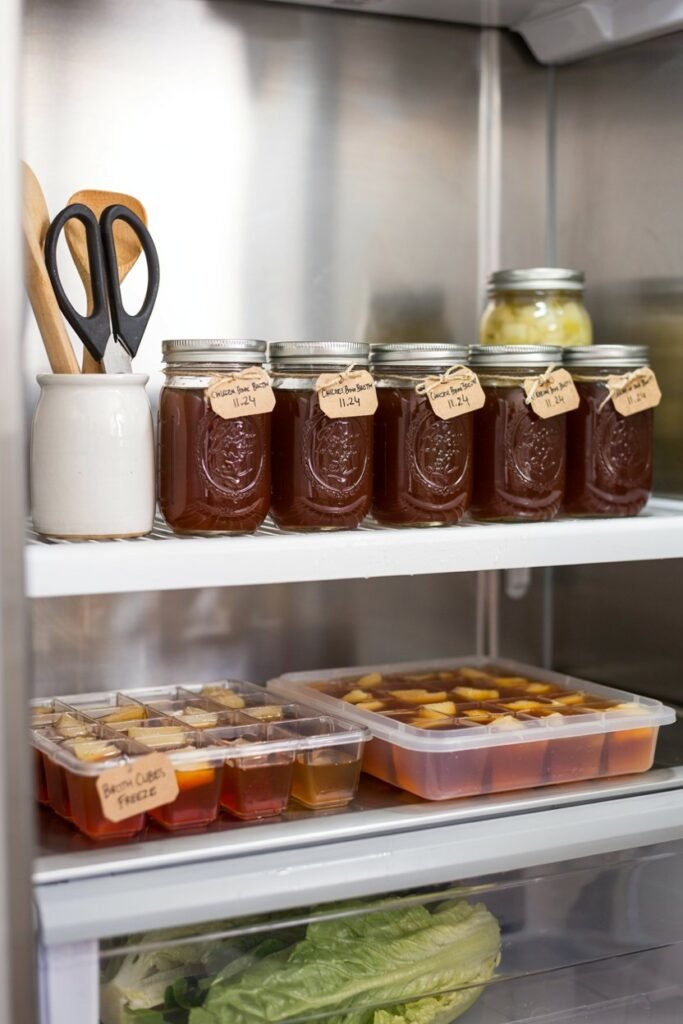
Refrigerated broth keeps for about 4 to 5 days in a sealed container.
For longer storage, freeze it in mason jars (leaving room at the top for expansion), silicone molds, or ice cube trays, where it will keep for up to 3 months.
I portion mine into ice cube trays specifically because it makes measuring out a single serving effortless.
To thaw, move a portion to the refrigerator the night before, or warm gently on the stove.
Common Mistakes
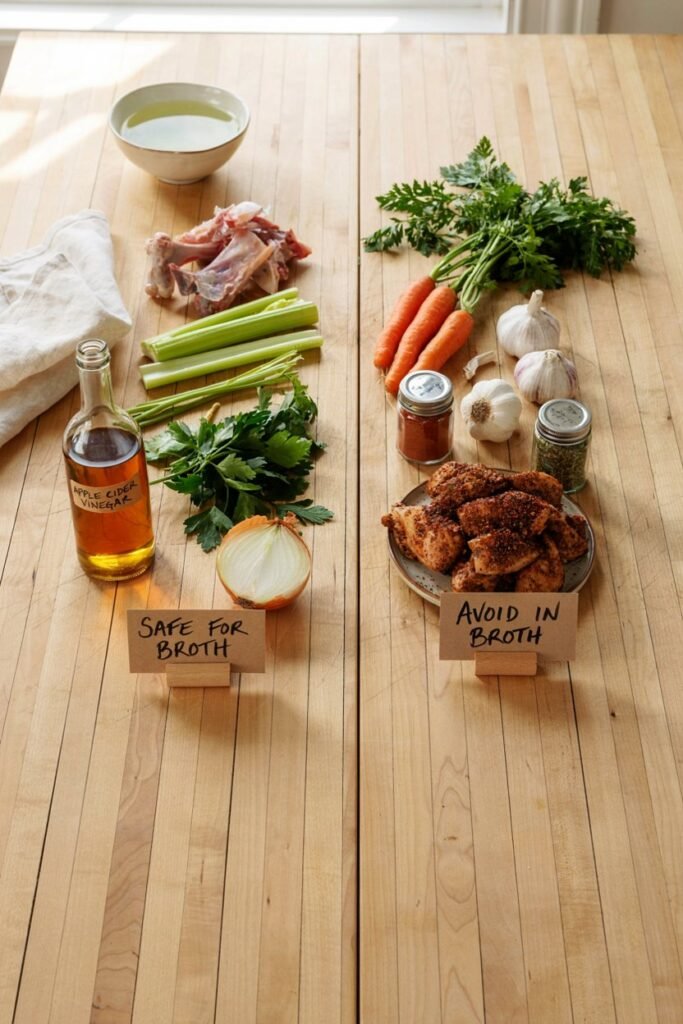
- Adding onion or garlic, even in small amounts
- Adding salt or seasoning blends meant for human cooking
- Leaving bone fragments in the strained broth
- Cooking for too short a time, resulting in thin, watery broth
- Boiling aggressively instead of maintaining a gentle simmer
- Using a seasoned rotisserie chicken carcass, which often contains salt, garlic, or onion powder in the seasoning
Best Ways to Use Bone Broth

- Pour over dry kibble to add moisture and flavor
- Freeze into a lick mat for a slow, enriching treat
- Freeze into small cubes as a hot weather treat
- Mix with plain rice for a bland, gentle recovery meal
- Stir into homemade dog food
- Offer during recovery from illness, with your veterinarian’s guidance
- Use to encourage a dog who isn’t drinking enough water
- Stuff into a hollow enrichment toy and freeze
Recipe Card
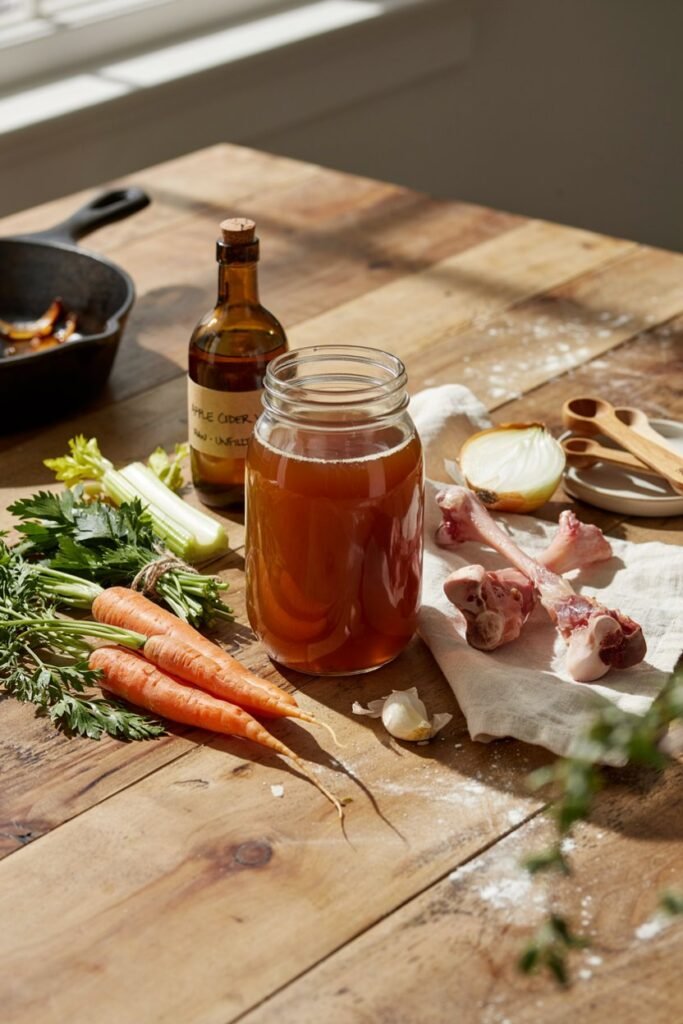
Prep time: 10 minutes, plus 30 minutes resting Cook time: 12 to 24 hours (stovetop or slow cooker), or 3 to 4 hours (Instant Pot)
Yield: About 8 cups of broth
Ingredients:
- Chicken bones (backs, necks, carcass, or feet)
- Water, enough to cover the bones
- 1 to 2 tablespoons apple cider vinegar
- Optional: carrots, celery, parsley
Instructions:
- Cover bones with water, add vinegar, and let sit 30 minutes.
- Simmer gently for 12 to 24 hours, or pressure cook for 3 to 4 hours.
- Add optional vegetables in the final hour, if using.
- Strain thoroughly through a fine mesh strainer or cheesecloth.
- Cool, portion, and store.
Notes: Never include onion, garlic, leeks, chives, salt, or seasoning blends.
This broth is meant as a supplement to your dog’s diet, not a replacement for a balanced meal, and it’s always worth checking with your vet before introducing anything new, especially for dogs with existing health conditions.
Frequently Asked Questions
Can puppies have chicken bone broth? Generally yes, in small amounts, but it’s worth checking with your vet first since puppies have more sensitive digestive systems than adult dogs.
Can I use rotisserie chicken bones? It’s best to avoid seasoned rotisserie chicken, since the seasoning blend often contains salt, garlic, or onion powder. Stick to plain, unseasoned bones instead.
Can I freeze bone broth? Yes, it freezes well for up to about 3 months in ice cube trays, silicone molds, or sealed jars with room left for expansion.
How long does homemade broth last in the refrigerator? About 4 to 5 days when stored in a sealed container.
Can dogs have bone broth every day? Many owners do offer it daily in small amounts as a topper, but it’s worth checking with your vet, especially for dogs with kidney issues or other conditions that require dietary management.
Can cats eat this recipe too? Plain chicken bone broth without onion, garlic, or seasoning is generally fine for cats as well, though portion sizes should be much smaller given their size.
Can I use chicken feet in this recipe? Yes, chicken feet are especially rich in collagen and produce a thicker, more gel like broth once chilled.
Should I skim the fat off the top? It’s a good idea, especially for dogs who are overweight or prone to digestive upset, since a layer of fat can be harder to digest in larger amounts.
Is apple cider vinegar necessary? It’s not strictly required, but many recipes include a small amount because the acidity may help extract more minerals from the bones during the long cook time.
Can I make this in a pressure cooker? Yes, an Instant Pot or other electric pressure cooker cuts the cook time down to about 3 to 4 hours instead of the much longer stovetop or slow cooker method.
Final Thoughts
Making homemade chicken bone broth has become one of the simplest ways I add variety to my dog’s meals.
It takes very little hands on effort, freezes beautifully, and lets me know exactly what’s going into the bowl.
Whether you use it to soften dry food, encourage a picky eater, or simply offer an occasional homemade treat, having a batch ready in the freezer makes mealtime a little more special.