
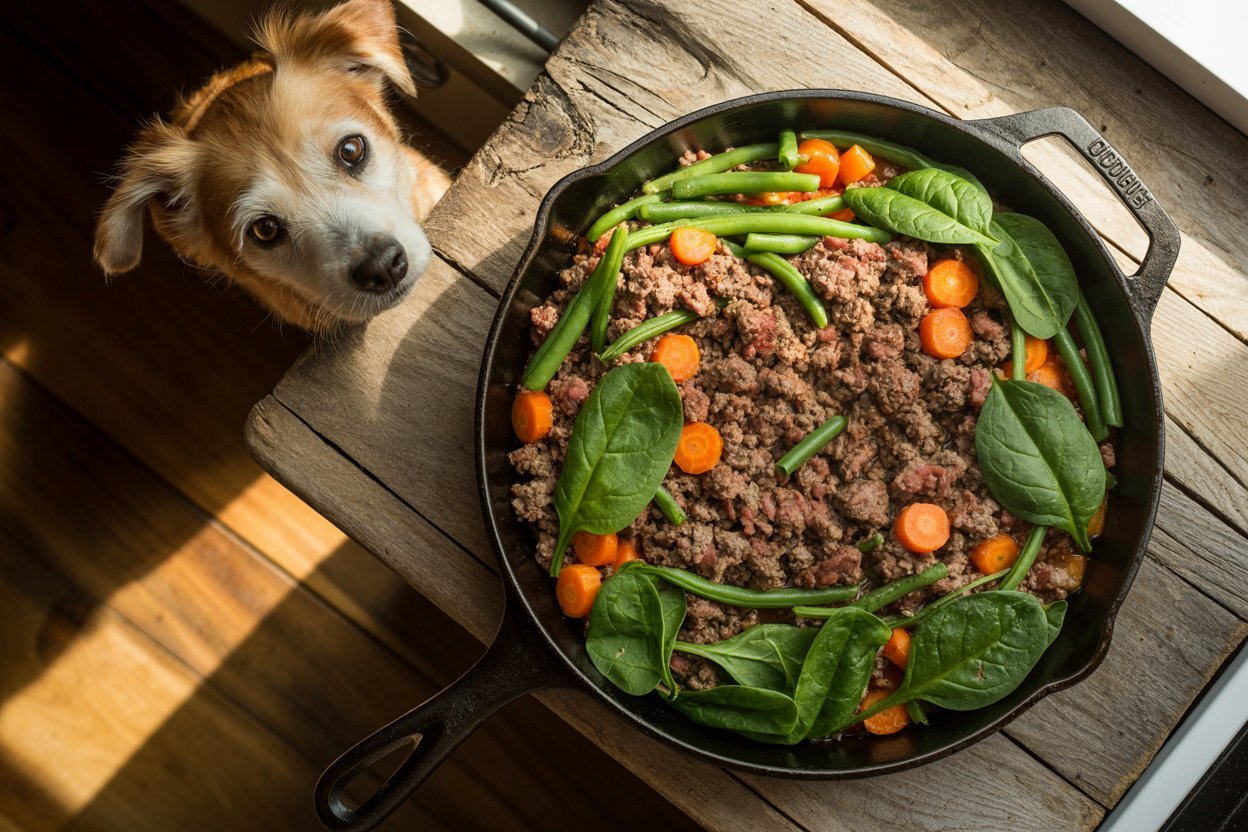
Feeding your dog well shouldn’t feel complicated, but with so many processed options on the market, it’s easy to lose sight of what truly matters — real, nourishing ingredients that support long-term health.
Over time, I started paying closer attention to what was actually going into my dog’s bowl, and that shift completely changed the way I approached feeding.
This beef and vegetable skillet for dogs came from that intention. It’s a simple, balanced meal built around whole foods that provide essential nutrients without unnecessary additives.
The combination of quality protein, fiber-rich vegetables, and healthy fats supports everything from energy levels to digestion and coat health.
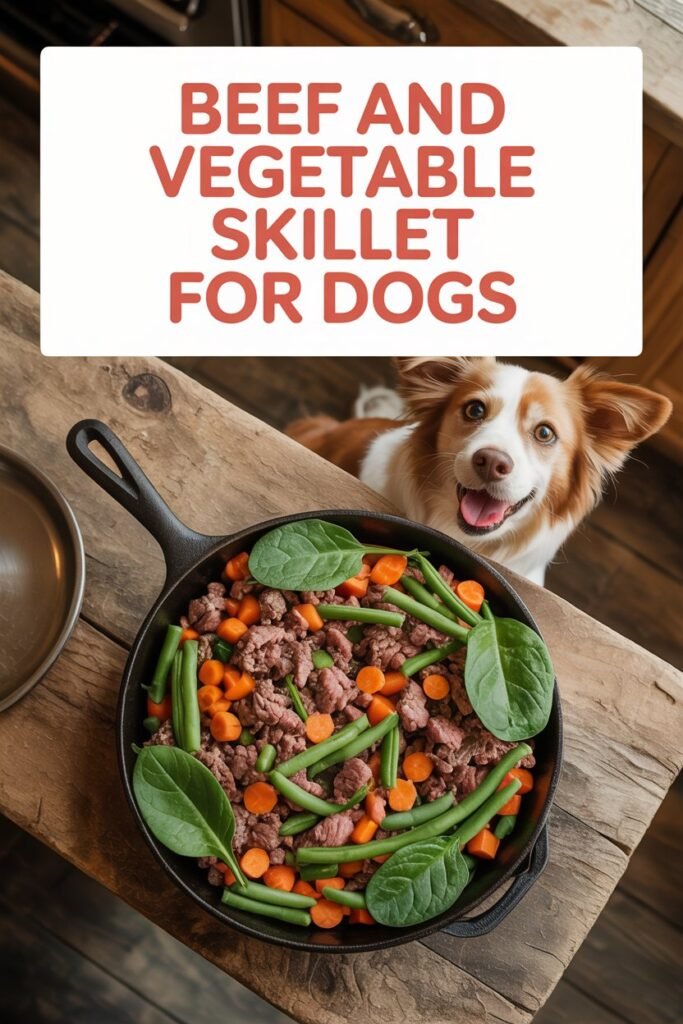
What makes this recipe stand out isn’t just its nutritional value — it’s how practical and sustainable it is in everyday life.
It doesn’t require complicated prep or hard-to-find ingredients, yet it delivers the kind of quality most dog owners are looking for when they want to feed more consciously.
If you’re looking for a smarter, more transparent way to nourish your dog, this is a strong place to begin.
Why I Started Making Homemade Dog Meals
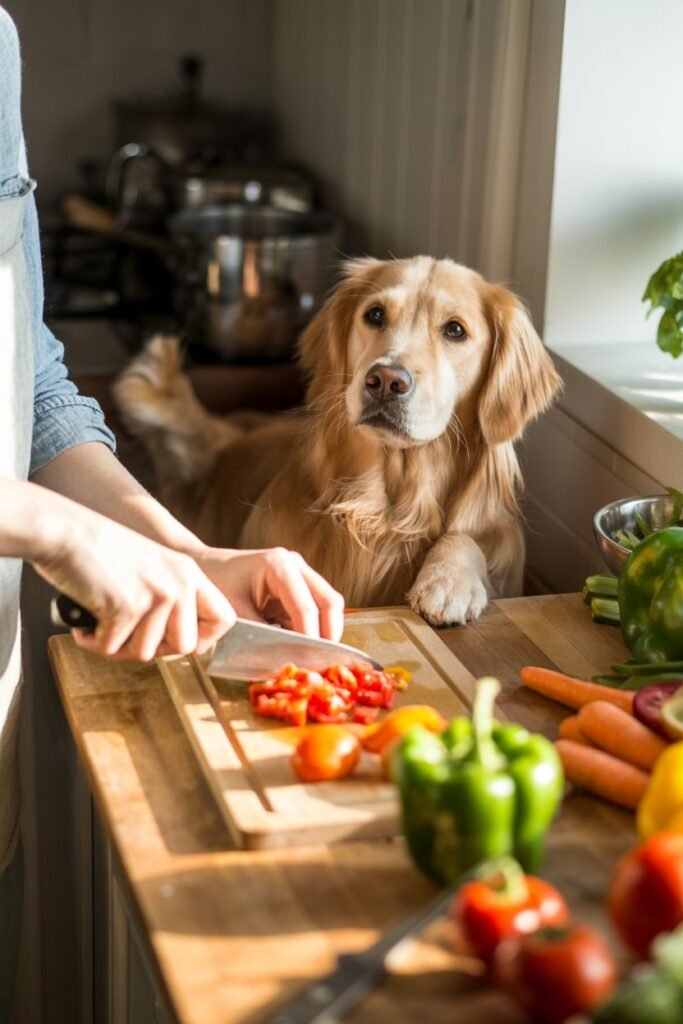
The more I paid attention to ingredient labels, the more I realized how many commercial dog foods rely on fillers, by-products, and heavily processed components.
While not all store-bought options are bad, I wanted a level of control and clarity that I simply couldn’t get from a bag or can.
So I started small — not a complete overhaul, just incorporating fresh, whole ingredients alongside my dog’s regular meals.
What stood out to me wasn’t just the simplicity of it, but how quickly I began noticing subtle changes.
Energy levels felt more consistent throughout the day. Mealtimes became something my dog genuinely looked forward to, not just routine feeding.
Even small things like coat texture and digestion seemed to improve over time.
What made the biggest difference, though, was the mindset shift.
Instead of relying entirely on processed food, I began thinking of my dog’s meals the same way I think about my own — focused on balance, quality, and long-term health.
This approach doesn’t have to be extreme or complicated. Even adding one homemade meal like this beef and vegetable skillet into your routine can be a meaningful step toward more intentional feeding.
What Makes This Beef and Vegetable Skillet So Nutritious
What I’ve learned over time is that a good homemade dog meal isn’t just about using fresh ingredients — it’s about building a balanced combination that actually supports your dog’s body.
This beef and vegetable skillet works so well because every ingredient has a purpose.
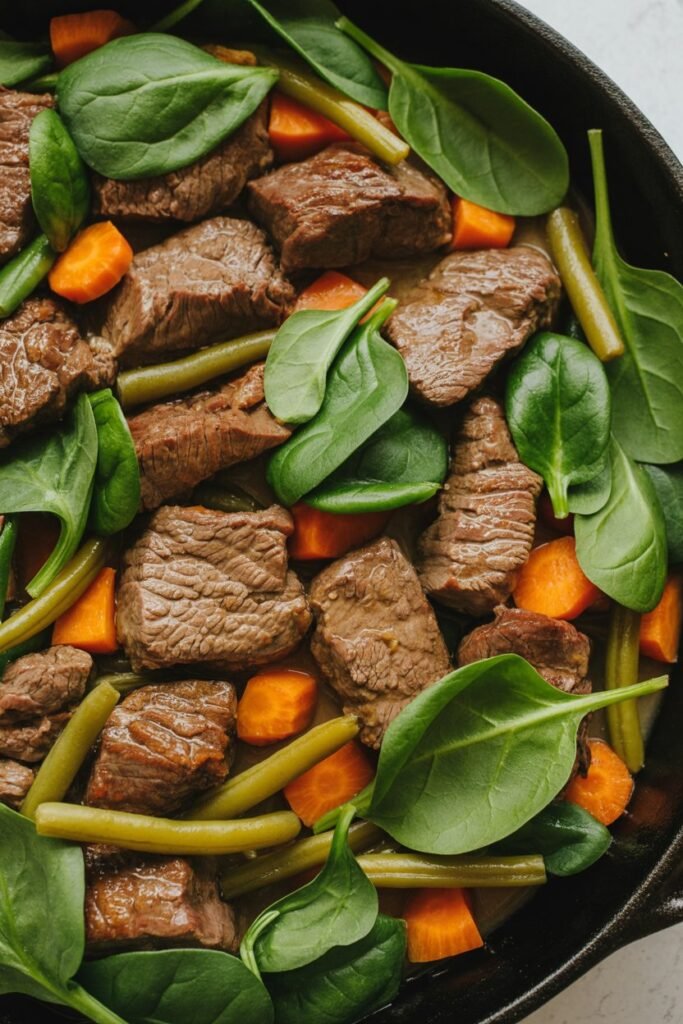
The lean ground beef is the foundation.
It provides high-quality protein that helps maintain strong muscles and supports overall energy. I always go for lean cuts because too much fat can be hard on a dog’s digestive system.
Then come the vegetables, which are just as important. Carrots add natural sweetness, but more importantly, they’re rich in beta-carotene, which supports eye health and the immune system.
Green beans are one of my favorites because they’re low in calories but high in fiber, making them great for digestion and weight management.
I also like adding a handful of spinach. It’s packed with iron and essential vitamins, and since you only need a small amount, it’s an easy way to boost the nutritional value of the entire meal.
To bring everything together, a small amount of olive oil helps support healthy skin and a shiny coat, while also improving nutrient absorption.
What makes this combination stand out is how simple it is. There’s no need for complicated formulas — just a thoughtful mix of protein, vegetables, and healthy fats that work together to support your dog’s daily health in a natural way.
Ingredients You’ll Need
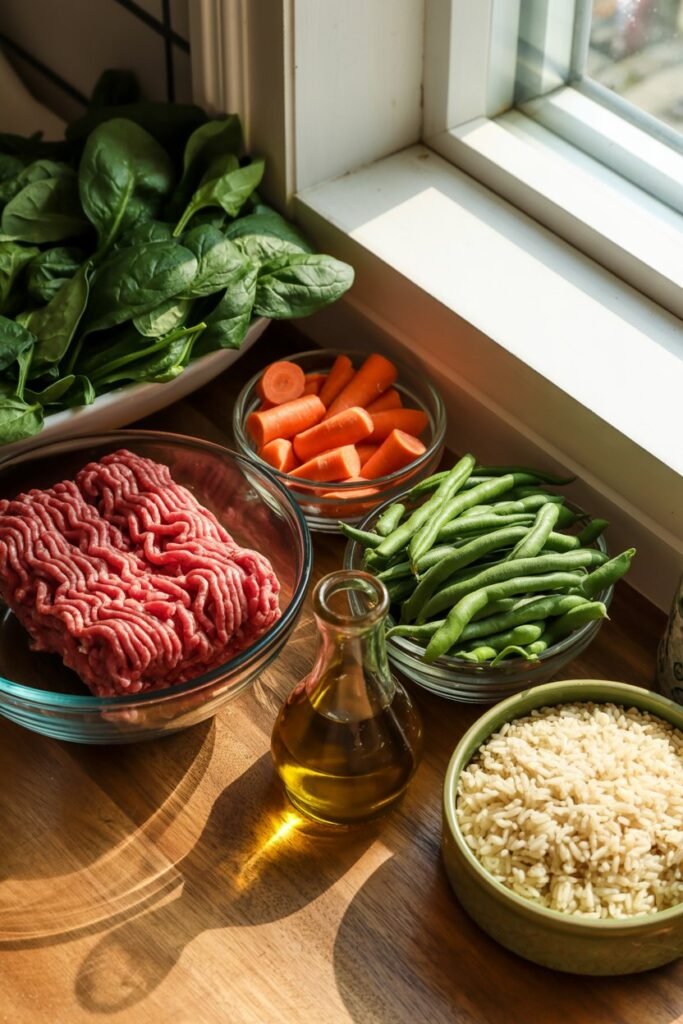
One thing I’ve learned from making homemade dog meals is that simplicity is what makes it sustainable.
You don’t need a long list of complicated ingredients — just a few high-quality basics that come together to create a balanced, nourishing meal.
Here’s exactly what I use for this beef and vegetable skillet:
- 1 pound lean ground beef
- 1 cup chopped carrots
- 1 cup green beans (chopped)
- 1 handful fresh spinach
- 1 tablespoon olive oil
- ½ cup cooked brown rice (optional, depending on your dog’s needs)
I like this combination because it’s easy to find, budget-friendly, and flexible.
If I already have these ingredients in my kitchen, I know I can put together a healthy meal without overthinking it.
One important thing I always keep in mind: everything should be plain and unseasoned.
No added salt, no spices, and definitely no onions or garlic, as those can be harmful to dogs.
If you’re just starting out with homemade meals, sticking to simple, recognizable ingredients like these makes the process feel a lot more manageable — and much easier to stay consistent with.
How I Make It (Step-by-Step)
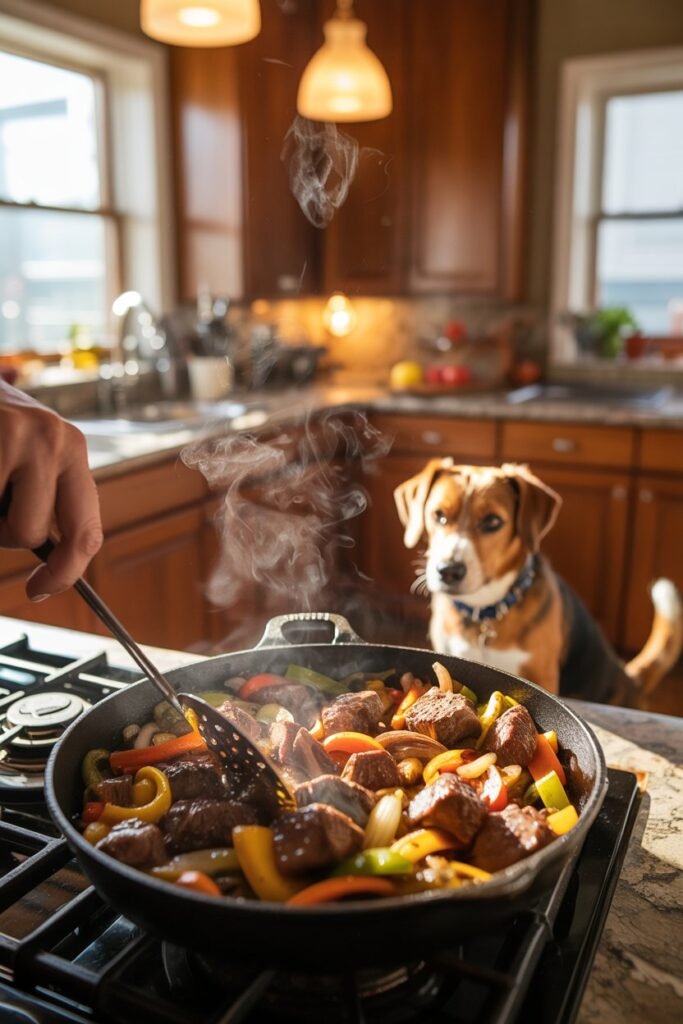
What I like most about this recipe is how quick and straightforward it is.
There’s no complicated prep or special cooking skills needed — just a simple process that fits easily into a normal day.
Here’s exactly how I make it:
- I start by heating the olive oil in a large skillet over medium heat.
- Then I add the ground beef and cook it until it’s fully browned, breaking it apart as it cooks.
- Once the beef is ready, I toss in the chopped carrots and green beans. I let them cook for about 5–7 minutes until they start to soften but still have a bit of texture.
- After that, I add the spinach last, letting it wilt into the mixture.
- If I’m using brown rice, I stir it in at this stage and mix everything together evenly.
- Finally — and this is important — I let the food cool completely before serving it to my dog.
The whole process usually takes me around 15 to 20 minutes, which makes it realistic even on busy days.
Over time, this has become one of those recipes I can make without thinking too much, and that’s what makes it easy to stick with.
Portion Sizes and Feeding Tips
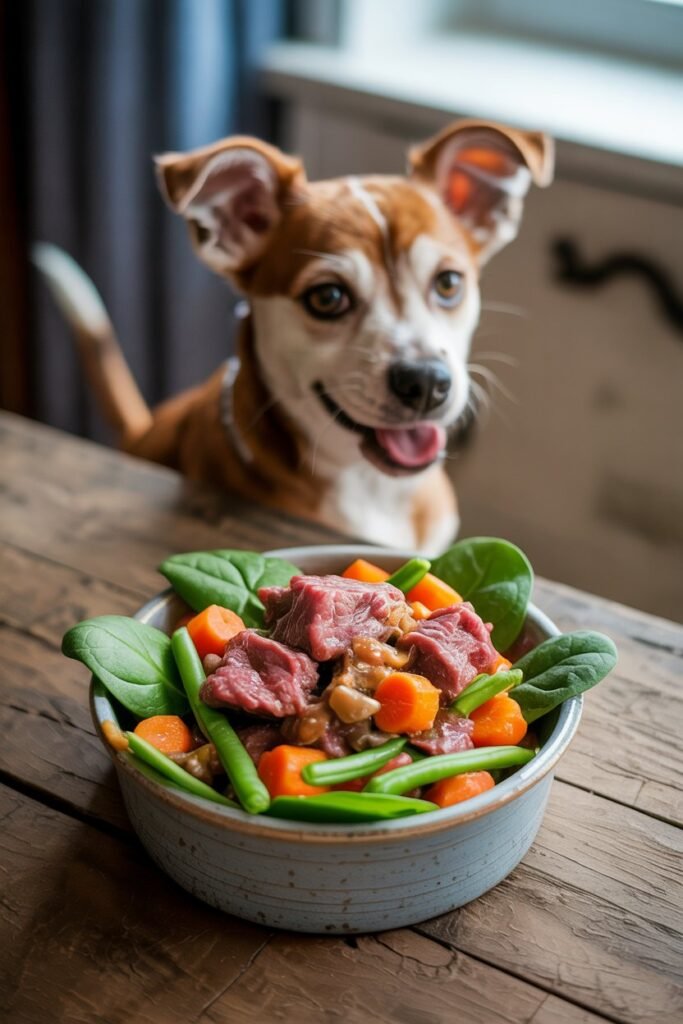
One thing I didn’t fully understand at the beginning was how important portion control is when it comes to homemade dog meals.
Even when the food is healthy, giving too much or too little can affect your dog’s weight, energy, and overall balance.
What worked best for me was starting with general guidelines and then adjusting based on how my dog responded over time.
Here’s a simple way to approach it:
- Small dogs: about ¼ to ½ cup per meal
- Medium dogs: about ½ to 1 cup per meal
- Large dogs: about 1 to 2 cups per meal
These aren’t strict rules — they’re starting points. I always pay attention to things like activity level, age, and body condition.
A more active dog may need slightly more, while a less active one may need less.
Another thing I’ve learned is to introduce homemade meals gradually.
Instead of switching all at once, I mix a small portion into my dog’s regular food and slowly increase it over a few days.
This helps avoid any digestive issues and makes the transition smoother.
At the end of the day, feeding isn’t just about the recipe — it’s about observing your dog and adjusting in a way that keeps them healthy, energized, and comfortable.
Important Safety Tips Every Dog Owner Should Know
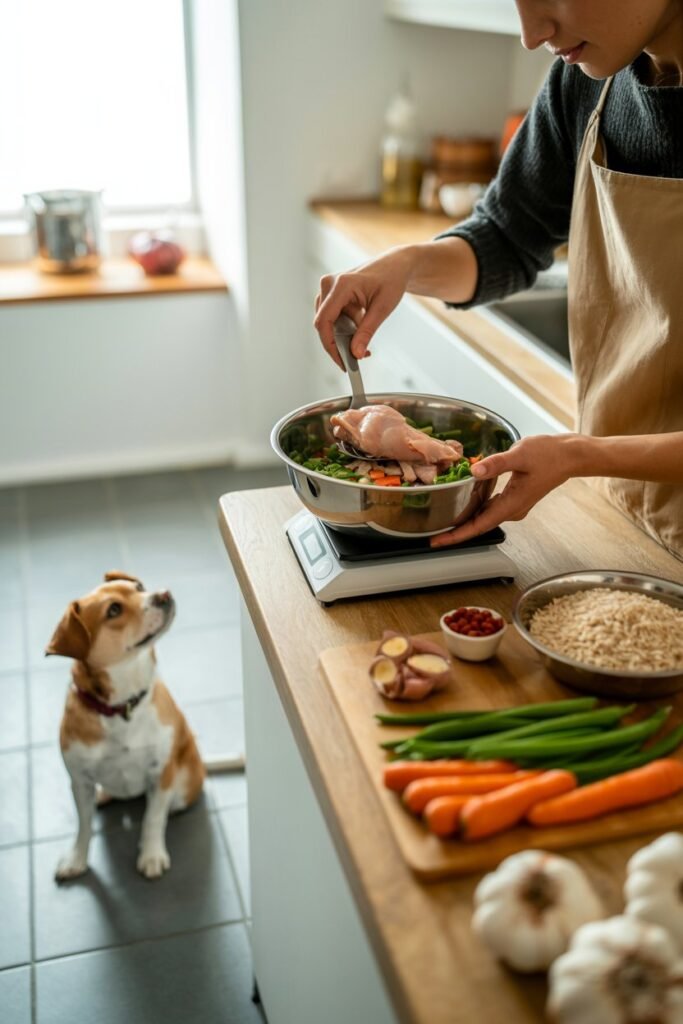
As simple as this recipe is, this is the part I take most seriously.
When you’re cooking for your dog, small mistakes can make a big difference, so being mindful of what goes into the meal is essential.
The first rule I always follow is keeping everything plain and dog-safe.
Ingredients that are perfectly fine for us — like onions, garlic, or heavy seasoning — can be harmful to dogs, even in small amounts.
So I never add salt, spices, or anything extra beyond the basics.
I also pay close attention to the type of beef I use.
Lean ground beef works best because excess fat can lead to digestive issues or unnecessary weight gain over time. Keeping it simple and balanced is key.
Another thing I’ve learned is to introduce new foods gradually. Even healthy ingredients can upset your dog’s stomach if added too quickly.
I always start with small portions and watch for any changes in digestion, energy, or behavior.
And while homemade meals are a great addition, I don’t rely on guesswork for long-term feeding.
If you’re planning to fully transition your dog to homemade food, it’s always a smart idea to check in with a veterinarian to make sure all nutritional needs are being met.
Taking these precautions doesn’t make things complicated — it just ensures that what you’re feeding is not only healthy, but also safe and supportive in the long run.
How I Store and Prep It for the Week
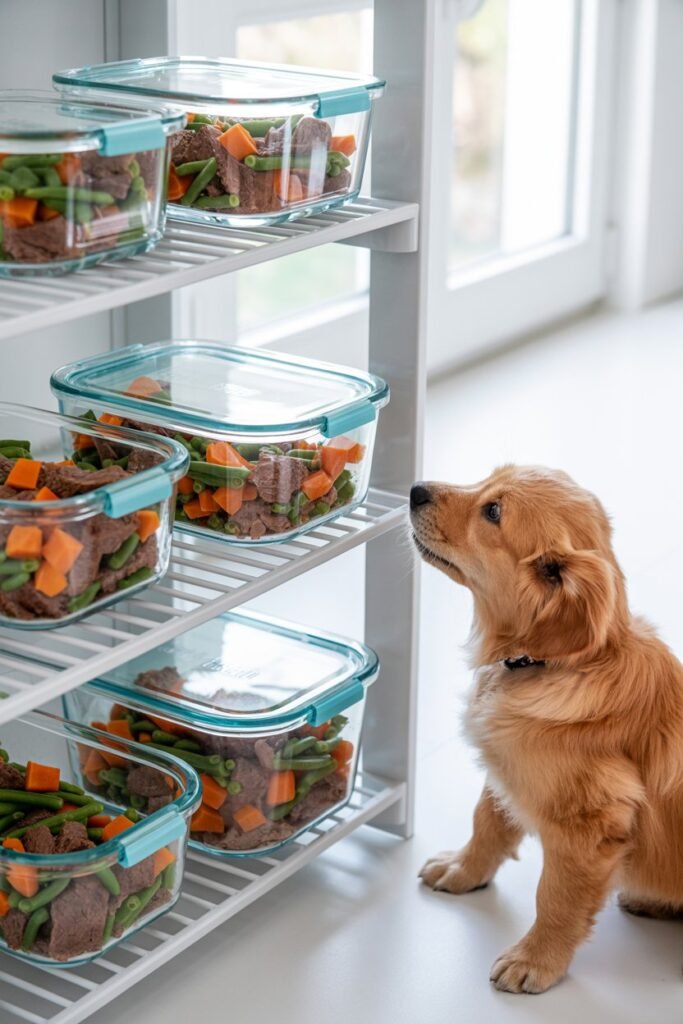
One of the biggest time-savers I discovered is batch cooking.
Making a few days’ worth of meals at once means I don’t have to cook every day, which makes sticking to a homemade routine much easier.
Here’s how I handle it:
- I store the cooked skillet in airtight containers in the fridge for up to 3–4 days.
- For longer storage, I freeze portions in individual containers or freezer bags for up to 2 months.
- When serving, I always reheat gently and let it cool completely before giving it to my dog. Never serve it piping hot, as that can burn their mouth.
I also like to prep the vegetables in advance — chopping carrots, green beans, and spinach ahead of time saves minutes during the week.
Even a little bit of prep makes the whole process feel manageable, especially when life gets busy.
Batch cooking has made this recipe not just healthy, but realistically sustainable in my daily routine.
Can You Customize This Recipe?

One of the things I love most about this skillet is how flexible it is.
Over time, I’ve learned that small swaps or additions can keep meals interesting for my dog while still staying balanced and nutritious.
Here are a few variations I often use:
- Protein swaps: Ground turkey or chicken can replace beef if you want a leaner option or just a change of flavor.
- Vegetable variety: Zucchini, peas, or pumpkin all work well and provide different nutrients.
- Carbohydrate alternatives: Sweet potatoes or quinoa can replace or complement brown rice for a different texture and nutritional profile.
The key is always to make sure everything is dog-safe, unseasoned, and introduced gradually. I usually mix in small amounts of new ingredients first and monitor how my dog responds.
Customizing keeps the meals exciting, helps cover a broader range of nutrients, and makes homemade feeding feel sustainable — rather than repetitive — in the long run.
Final Thoughts: Why This Meal Became a Staple in My Routine
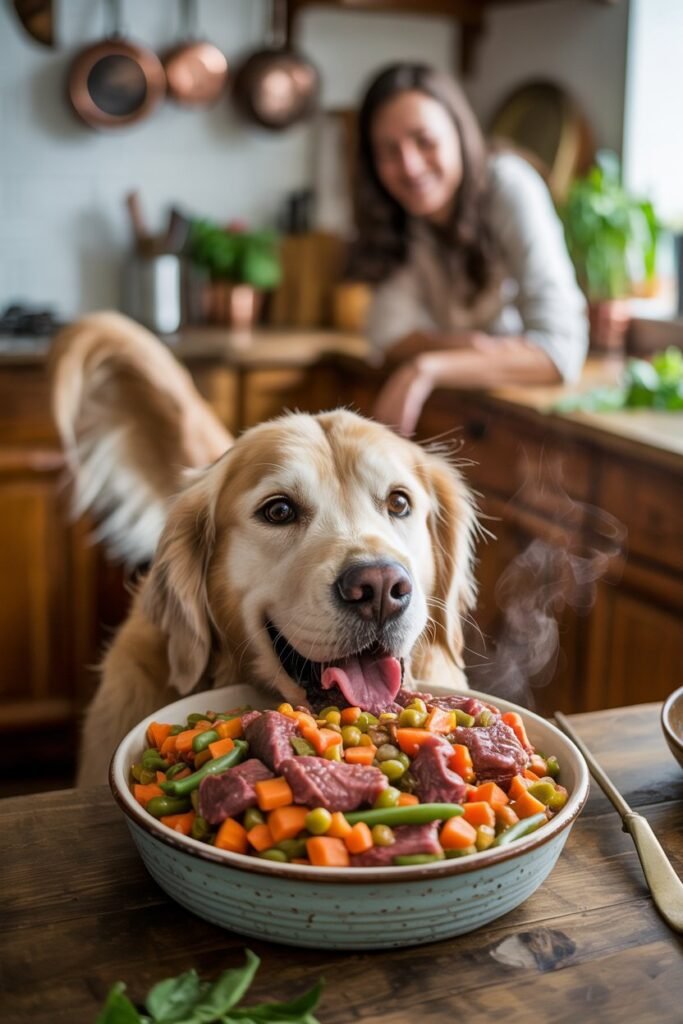
This beef and vegetable skillet isn’t just a recipe — it’s part of how I take care of my dog in a more intentional way.
It’s simple, balanced, and nourishing, but more importantly, it gives me peace of mind knowing exactly what’s going into the bowl.
I love that it doesn’t require complicated ingredients or hours in the kitchen.
Even on busy days, I can put together a wholesome meal in under 20 minutes, or prep several days’ worth ahead of time.
Over time, I’ve seen the benefits in my dog’s energy, digestion, and overall enthusiasm for mealtime.
If you’ve been thinking about improving your dog’s diet, starting with a recipe like this is a practical, realistic step.
It’s not about perfection — it’s about making small, consistent choices that prioritize health, quality, and well-being.
In my experience, once you try a simple, balanced homemade meal like this, it becomes less about cooking and more about caring — and that’s what makes all the difference.