
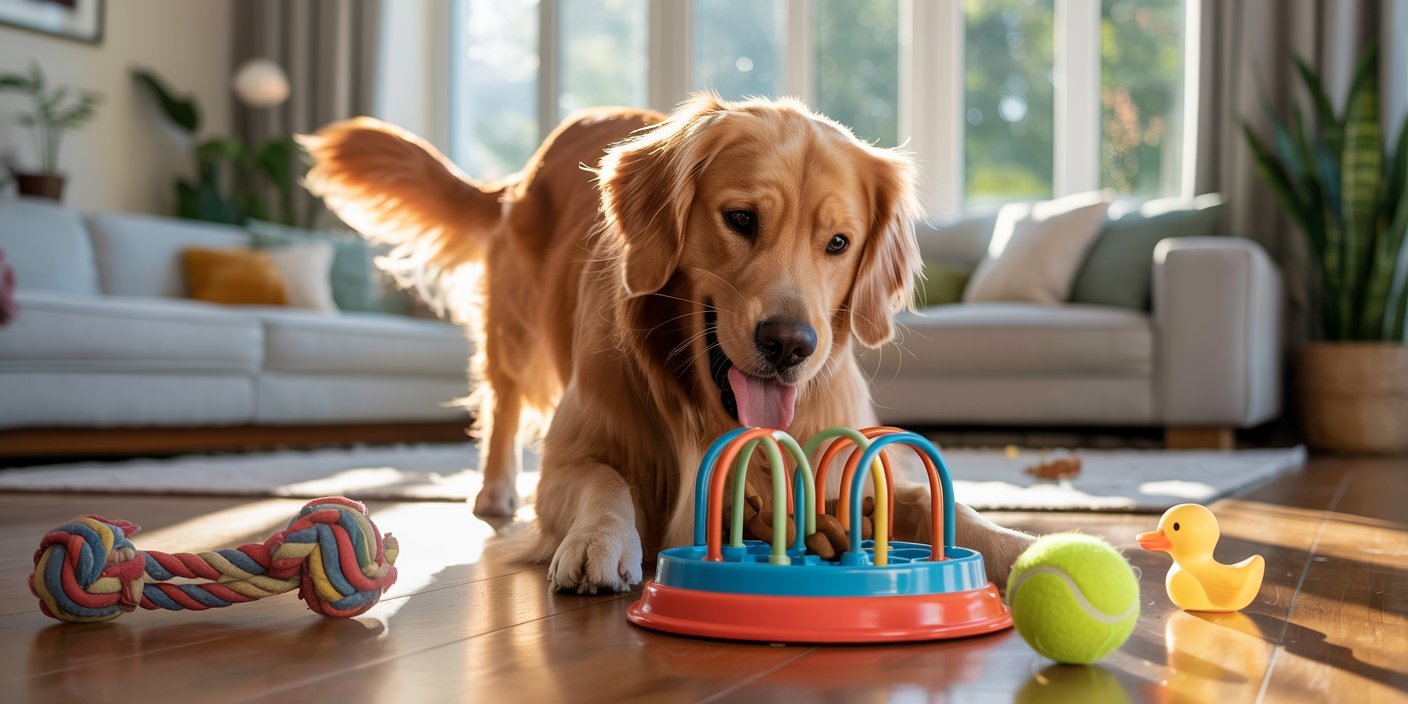
I didn’t really understand how important mental stimulation was for dogs until I noticed something off in my own routine.
Walks were happening, meals were on time, toys were everywhere — yet my dog still seemed bored, restless, and sometimes a little destructive.
That’s when it clicked for me: physical exercise alone wasn’t enough. What my dog really needed was mental work too.
Just like us, dogs need their brains engaged to feel calm and satisfied. When they don’t get that stimulation, it often shows up as chewing, barking, digging, or endless pacing.

The good news is that mentally stimulating your dog doesn’t have to be complicated, expensive, or time-consuming.
Most of the things that made the biggest difference for us were simple changes I could fit into normal daily life.
In this post, I’m sharing super easy, practical ways to mentally stimulate your dog using everyday moments, basic tools, and a better understanding of how dogs think.
These ideas are gentle, effective, and perfect for busy dog owners who want a happier, more balanced pup without overthinking it.
Why Mental Stimulation Is Just as Important as Physical Exercise

I used to think long walks were enough, but I noticed my dog still seemed restless and bored.
That’s when I realized: dogs need their brains exercised just like their bodies.
Mental stimulation taps into a dog’s natural instincts — problem-solving, sniffing, and decision-making — giving them purpose and satisfaction.
Without it, boredom can lead to chewing, barking, or pacing. Even a few minutes of brain work can leave a dog calmer and more focused than an hour of walking.
It’s not about tricks or complex routines; it’s about understanding how your dog thinks and giving them opportunities to engage naturally.
Once I added simple mental exercises into our day, the difference was immediate: a calmer, happier, and more content pup.
Simple Food-Based Games That Instantly Engage Your Dog’s Brain
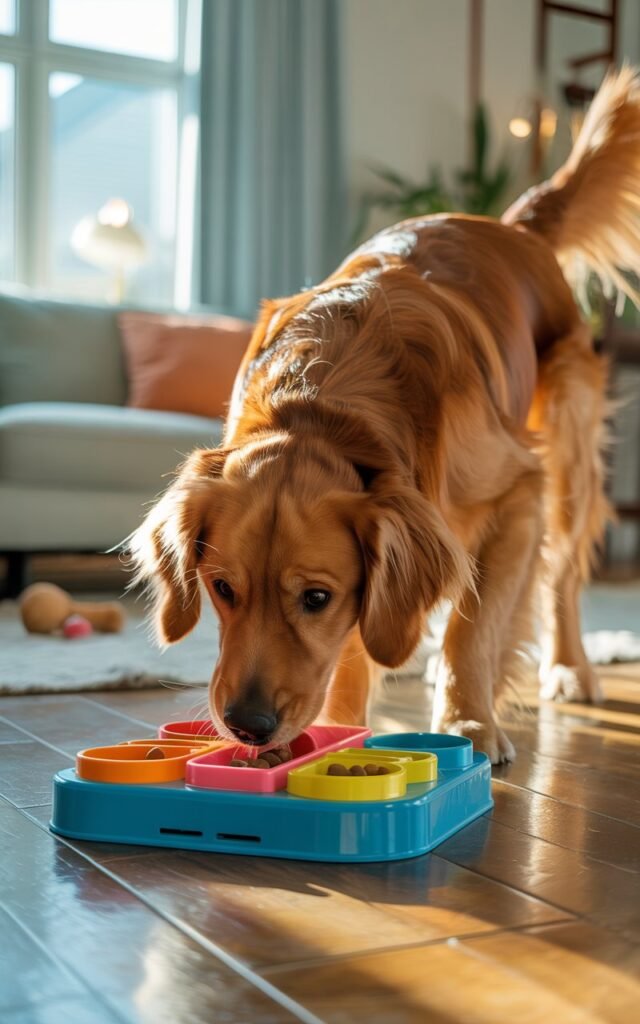
One of the easiest ways I started mentally stimulating my dog was through food. Meals don’t have to be just about eating — they can be opportunities for problem-solving, sniffing, and fun.
Using puzzle feeders or treat-dispensing toys, I noticed my dog stayed focused and satisfied for longer than with a normal bowl of kibble.
Even simple DIY ideas work. I hide small portions of kibble in a muffin tin under tennis balls or use a folded towel to make my dog “search” for treats.
These games encourage thinking, sniffing, and decision-making — all mental exercises that tire the brain faster than running around.
Slowing down mealtime also matters. Dogs who eat too quickly miss out on stimulation.
By turning eating into a mini-brain game, you give them a sense of accomplishment and help reduce boredom-driven behaviors like chewing or barking.
The key is to keep it short, simple, and consistent. A few minutes at each meal or snack can make a noticeable difference in energy, focus, and happiness.
Easy Training Games That Feel Like Play
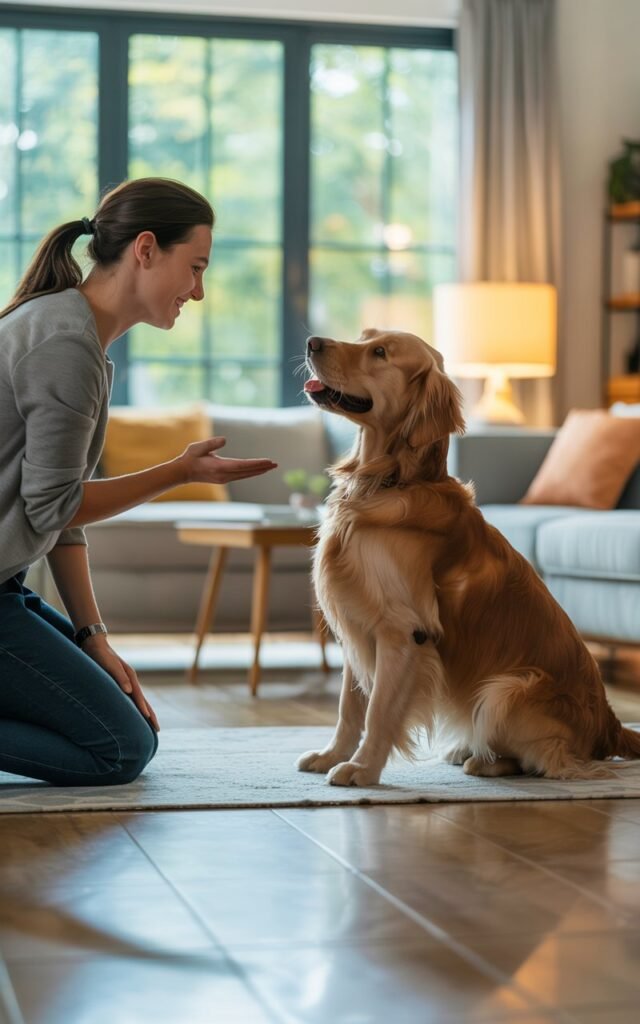
Training doesn’t have to be formal or stressful — in fact, the most effective mental stimulation often feels like play.
I started with short, fun sessions that lasted just a few minutes, and the results were immediate: better focus, more confidence, and less boredom.
Games like “find it” — where I hide a toy or treat and let my dog search — or teaching simple commands with rewards, turn learning into a game.
Even reinforcing basic obedience skills like “sit,” “stay,” or “come” can challenge their mind when done in short, interactive bursts.
The trick is to keep sessions light and positive. Dogs are far more engaged when they feel successful, so every small win counts.
Over time, these little training games became a highlight of our day — mentally stimulating, bonding, and fun all at once.
Scent Games That Tap Into Natural Dog Instincts

Dogs experience the world through their noses, and using scent is one of the most effective ways to challenge their brains.
I started with simple indoor games, like hiding treats in different rooms or under cups, and watching my dog track them down was incredible — focused, engaged, and satisfied.
Outdoor scent walks take this a step further. Instead of just walking, I let my dog explore at their own pace, sniffing everything along the way.
I’ve noticed that allowing them to follow their nose tires them out mentally far faster than a brisk run.
Even small activities, like scattering kibble in the grass or using scent-based toys, give your dog purpose and encourage problem-solving. These games tap into natural instincts, build confidence, and reduce boredom-driven behaviors.
Toy Rotation: How Fewer Toys Can Create More Interest

I used to think giving my dog every toy I could find would keep them entertained.
What I quickly learned is the opposite: too many toys can actually lead to boredom. When everything is always available, nothing feels special or challenging.
Toy rotation is simple. I keep a few toys out at a time and store the rest. Every few days, I swap them out.
Suddenly, the “old” toys feel new and exciting again. Puzzle toys, treat-dispensing balls, and interactive chew toys are especially effective for mental stimulation.
Rotating toys keeps your dog curious and engaged, turning playtime into a brain workout without extra effort. It’s a small change that has a surprisingly big impact on focus and satisfaction.
Turning Everyday Routines Into Mental Stimulation
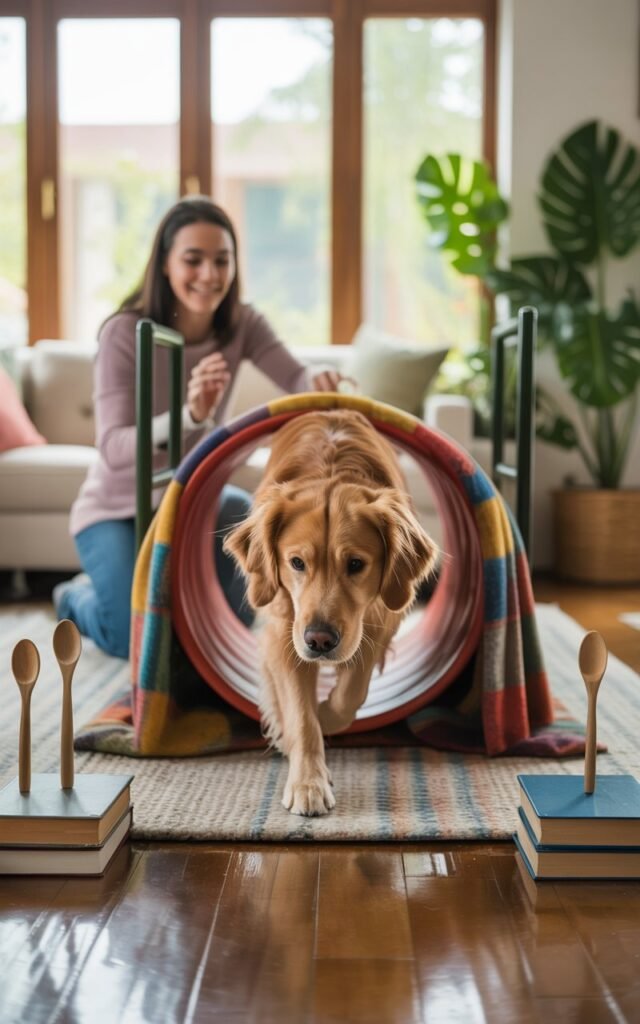
Mental stimulation doesn’t have to be separate from your normal day — some of the most effective exercises happen during routines you already do.
Mealtime, walks, and even simple chores can become opportunities for your dog’s brain to work.
During feeding, I incorporate small challenges, like scattering kibble in a shallow tray or hiding a few pieces under a towel.
This encourages problem-solving and keeps eating engaging. Walks also become mental workouts when I allow my dog to explore smells at their own pace or practice commands along the route.
Simple “stop and search” moments transform a regular stroll into a brain-stimulating adventure.
Even household chores can offer enrichment. For example, while tidying up, I let my dog find safe items I’ve hidden, or guide them through small obstacle courses using everyday furniture.
These mini exercises don’t take extra time but provide constant engagement, helping to prevent boredom and reinforcing focus, confidence, and calm behavior.
The key is consistency. Incorporating mental challenges into daily routines creates a happy, fulfilled dog without needing special tools or long training sessions.
Signs Your Dog Is Mentally Understimulated

Dogs can’t tell us when they’re bored, but their behavior often speaks louder than words. Noticing the signs early helps prevent frustration, destructive habits, and stress.
Some common clues include:
- Excessive chewing or digging: When a dog has extra energy and no mental outlet, they often redirect it toward furniture, shoes, or the yard.
- Restlessness or pacing: A dog who can’t settle may be craving a mental challenge, even if they’ve had plenty of exercise.
- Constant barking or whining: This can indicate boredom or frustration rather than simply attention-seeking.
- Overexcitement during short play sessions: Dogs who burn through toys or treats instantly might need more stimulating challenges that require thinking, not just physical energy.
Reading my dog’s body language is key. Alert eyes, perked ears, or repeated attempts to engage you or their environment often signal a need for brain activity.
Catching these behaviors early allows you to add simple mental exercises — like food games, scent trails, or short training sessions — before bad habits form.
A mentally engaged dog is calmer, happier, and more confident. Recognizing the signs is the first step toward creating a more balanced routine that meets both their physical and mental needs.
How Much Mental Stimulation Does a Dog Really Need?
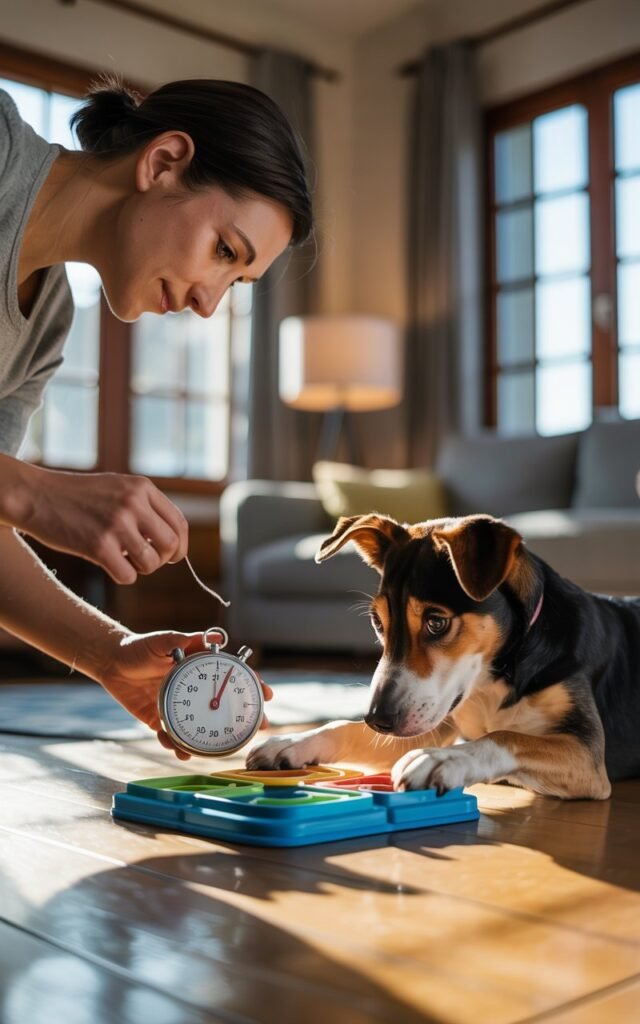
Every dog’s brain is different, and the amount of mental stimulation depends on age, breed, and energy level.
While there’s no strict rule, a few general guidelines help ensure your dog stays engaged without feeling overwhelmed.
- High-energy breeds: Dogs like Border Collies, German Shepherds, or Jack Russell Terriers need multiple short brain exercises daily. Even 10–15 minutes of food games, scent activities, or training sessions can prevent boredom and reduce destructive behavior.
- Moderate-energy breeds: Most companion breeds thrive on 5–10 minutes of mental stimulation a couple of times a day, combined with walks and playtime. Simple games, toy rotations, or short training sessions work perfectly.
- Puppies and senior dogs: Puppies have growing brains that need frequent, gentle challenges to build focus and confidence. Older dogs may benefit from shorter, slower-paced activities that keep their minds sharp without causing stress.
It’s also important to balance mental and physical exercise. A short walk followed by a brain game or a training session often tires a dog more effectively than long walks alone.
Watch for signs of overstimulation — if your dog becomes frustrated, loses interest, or shows stress, it’s time to pause and try again later.
With consistent, age- and breed-appropriate mental engagement, your dog becomes calmer, happier, and more satisfied — all without adding hours of extra work to your day.
Final Thoughts: Building a Calm, Mentally Fulfilled Dog
Mental stimulation doesn’t have to be complicated. Short food games, quick training sessions, scent activities, and toy rotations can all fit into daily life.
The goal isn’t perfection — it’s consistency. A few minutes each day keeps your dog’s brain active, reduces boredom, and creates a calmer, happier companion.
Small, regular challenges add up, and over time, you’ll notice a more focused, confident, and content pup.