How to Stop Your Dog from Jumping on Guests: The Leash Step-On Method
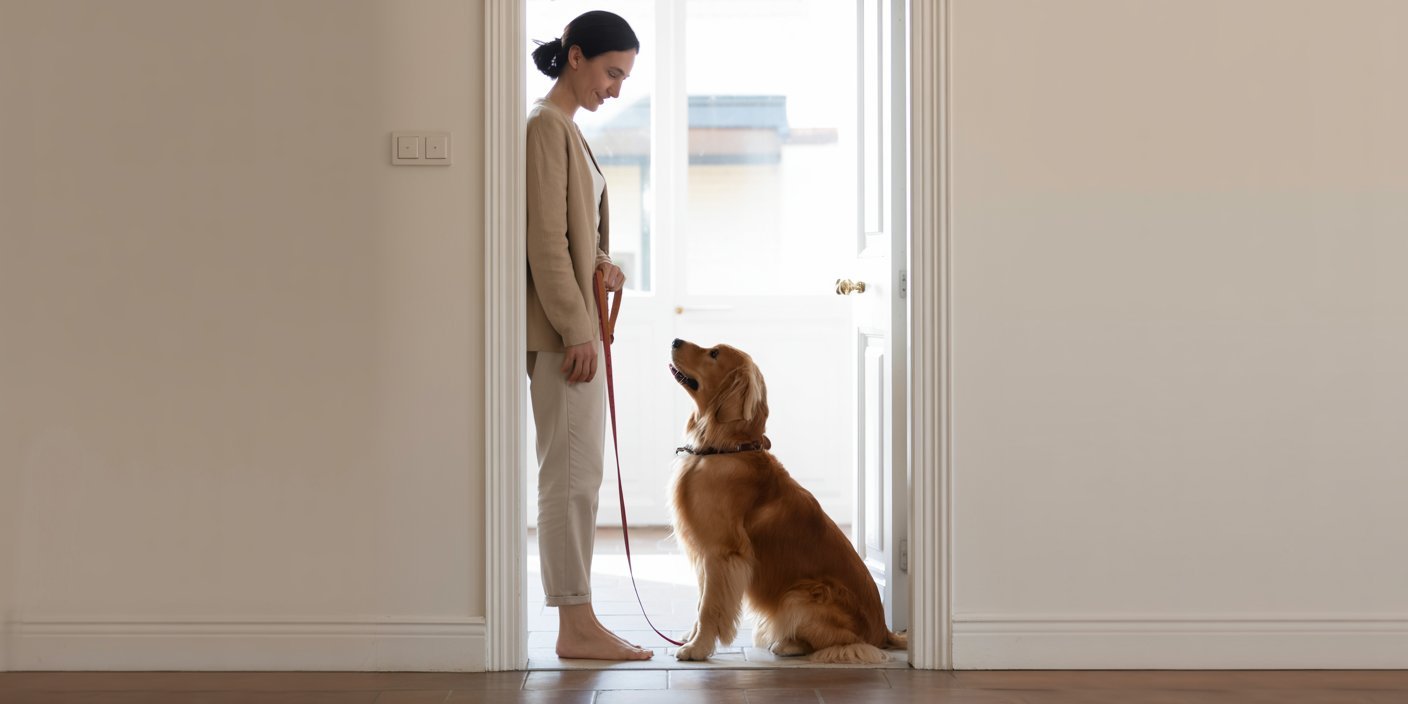
If your dog jumps on guests every time they walk through the door, you’re not alone.
I recently worked with a dog named Bobby, who was even at risk of being rehomed because of this exact behavior.
Jumping is a natural way for dogs to express excitement, but it can quickly become overwhelming or even unsafe for visitors.
I’ve tried many different approaches over the years, from purely positive reinforcement techniques to more corrective methods.
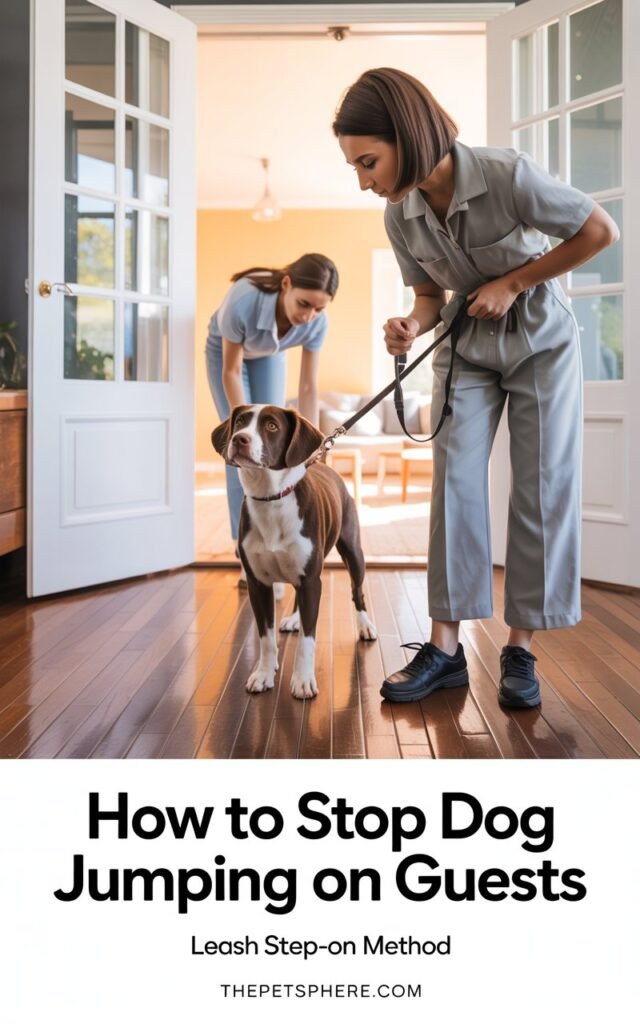
But my personal favorite—and the one I use most often—is the leash step-on method.
It’s effective, humane, and gives your dog the chance to self-correct, which is an important part of long-term learning.
In this post, I’ll break down exactly how to use this method step by step, how to prepare for guests, and how to reinforce calm behavior so your dog learns that jumping isn’t acceptable.
Step 1: Assess Your Dog’s Jumping Behavior
Before I start training, I always take a moment to understand why my dog jumps on guests.
Some dogs jump from excitement, others just want attention, and a few may even test boundaries.
Observing my dog carefully first has made all the difference in correcting this behavior.
What I look for:
- Who does my dog jump on—friends, family, or strangers?
- What triggers the jumping—doorbells, visitors, or excitement?
- How often and how intense is the behavior?
- Is my dog reactive or just overly excited when someone enters?
My quick tips for assessing behavior:
- Watch your dog’s body language to see if it’s excitement, anxiety, or attention-seeking.
- Record the behavior—sometimes patterns are easier to spot on video.
- Consider your dog’s age and breed; puppies and high-energy breeds need patience and consistent guidance.
Taking the time to assess my dog’s jumping has made the leash step-on method much more effective.
Once I understood why my dog was jumping, teaching calm, polite greetings became so much easier and less stressful for both of us.
Step 2: Prepare Before Your Guest Arrives
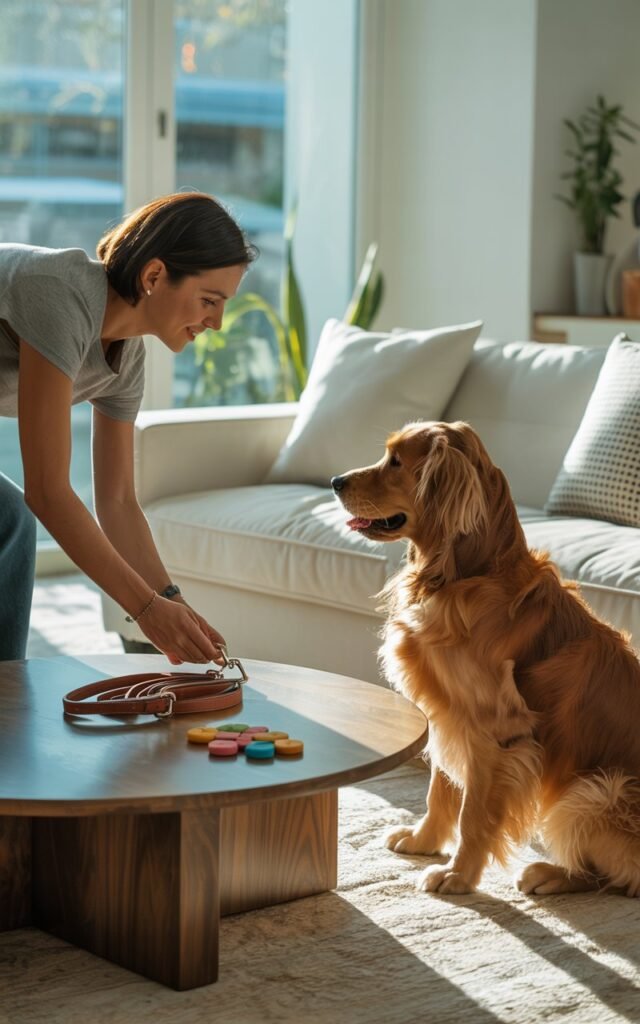
One thing I learned quickly is that preparing my dog before guests arrive is key to stopping jumping on visitors.
Most dogs jump out of excitement or anticipation, so setting up the environment ahead of time helps with dog behavior training and makes the leash step-on method more effective.
My preparation steps:
- Put my dog on a leash in a safe area near the door to control excitement.
- Have treats ready for positive reinforcement when my dog stays calm.
- Give a quick reminder of basic commands like “sit” or “stay” for polite greeting training.
- Remove objects or toys that could distract or overstimulate your dog.
By preparing before visitors arrive, I can guide my dog calmly and prevent jumping before it starts.
This setup makes guest greeting training much smoother and helps teach my dog polite, calm behavior every time someone enters the house.
Step 3: Implement the Leash Step-On Method
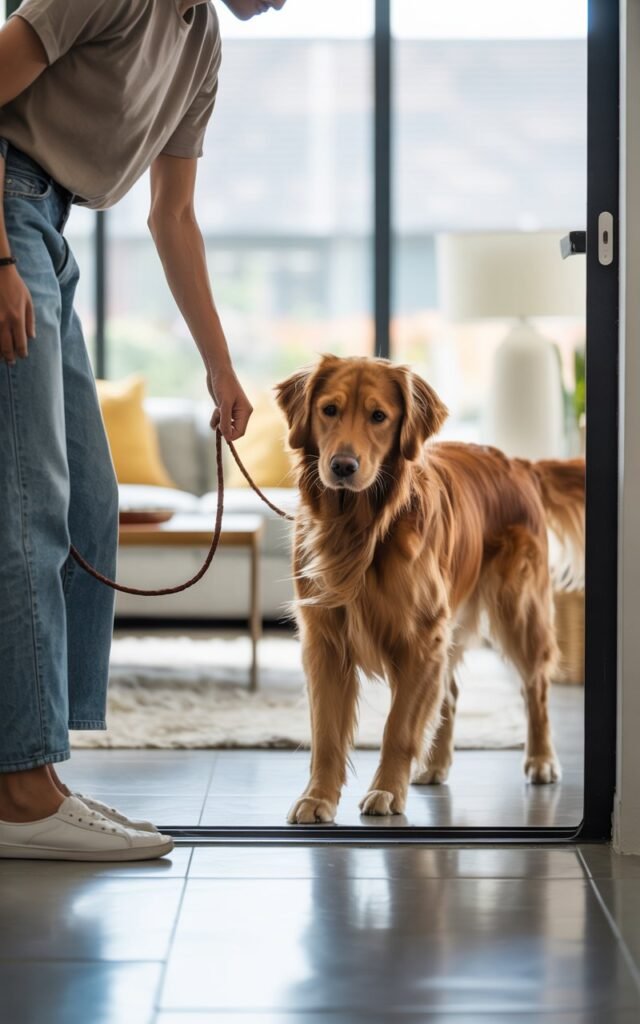
Once my dog is on a leash and the environment is ready, I start using the leash step-on method—one of the most effective techniques for stopping dogs from jumping on guests.
This method is simple, safe, and perfect for dog behavior training and polite greeting training.
How I implement it:
- I keep my dog on a short leash near the door for control during guest arrival training.
- When my dog tries to jump, I gently step on the leash to limit movement and keep them grounded.
- I calmly give a command like “sit” or “stay” to redirect their focus toward calm greeting behavior.
- The moment my dog stays calm with all four paws on the floor, I reward them with a treat and praise for positive reinforcement in dog training.
Key tips for success:
- Be consistent every time guests arrive—dogs learn fastest with repeated jumping behavior correction.
- Maintain a calm tone; excitement or frustration can confuse your dog during visitor greeting training.
- Start with one guest at a time before progressing to larger groups.
The leash step-on method is highly effective for teaching dogs not to jump on visitors, reinforcing polite behavior, and making dog greeting training stress-free for both your dog and your guests.
Step 4: Reward the Calm Behavior
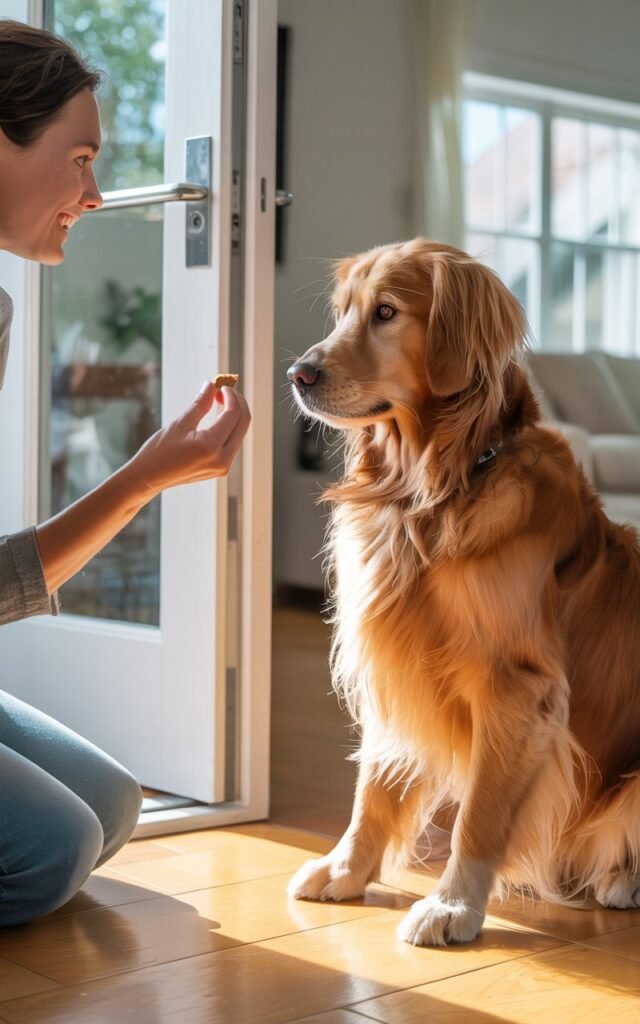
The key to teaching your dog not to jump on guests is reinforcing the behavior you want to see.
I always make it a point to reward calm behavior immediately, so my dog understands that keeping all four paws on the floor earns praise and treats.
How I do it:
- As soon as my dog stays calm and sits or stands politely, I give a treat and verbal praise.
- I use consistent cues like “good calm” or “thank you” to signal that polite behavior is correct.
- I gradually increase the time my dog must stay calm before getting a reward to build self-control and patience.
Tips for success:
- Always reward immediately—timing is critical for effective dog training.
- Keep treats small and high-value to motivate your dog during visitor greeting training.
- Combine with the leash step-on method for faster results in stopping jumping on guests.
Rewarding calm behavior consistently reinforces polite greeting habits and helps your dog learn that excitement doesn’t get attention—calmness does.
Over time, this makes guest greeting training much easier and stress-free.
Step 5: Manage Excitement After the Guest Arrives
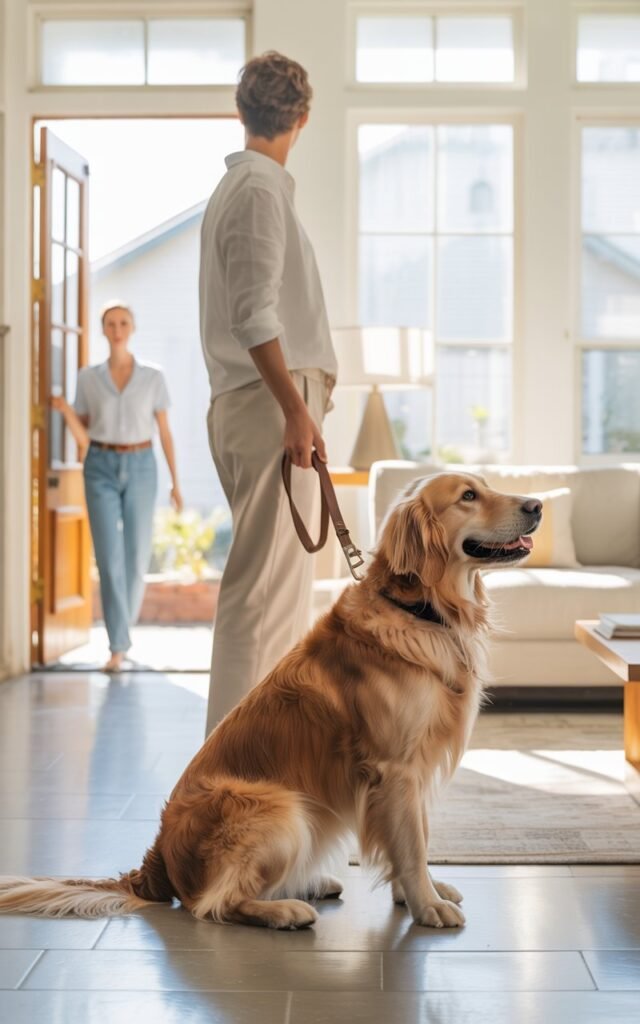
Stopping your dog from jumping doesn’t end when the guest walks in.
I’ve learned that managing post-arrival excitement is crucial for effective dog behavior training and teaching dogs polite greetings.
How I handle it:
- Keep my dog on a leash or in a designated area until they settle, helping with visitor greeting training.
- Encourage calm greetings by having my dog sit or stay while the guest interacts.
- Reward calm behavior with treats and praise, reinforcing that polite behavior gets attention, not jumping.
Tips for success:
- Avoid giving attention while your dog is jumping, barking, or overly excited—wait for calm behavior for positive reinforcement dog training.
- Use consistent commands like “sit” or “stay” to maintain structure during dog greeting training with guests.
- Gradually allow more freedom as your dog learns to greet visitors politely without jumping, improving guest arrival behavior.
Managing excitement after guests arrive helps reinforce long-lasting polite greeting habits, making dog visitor training easier, safer, and stress-free for both your dog and your guests.
Step 6: Why the Leash Step-On Method Works
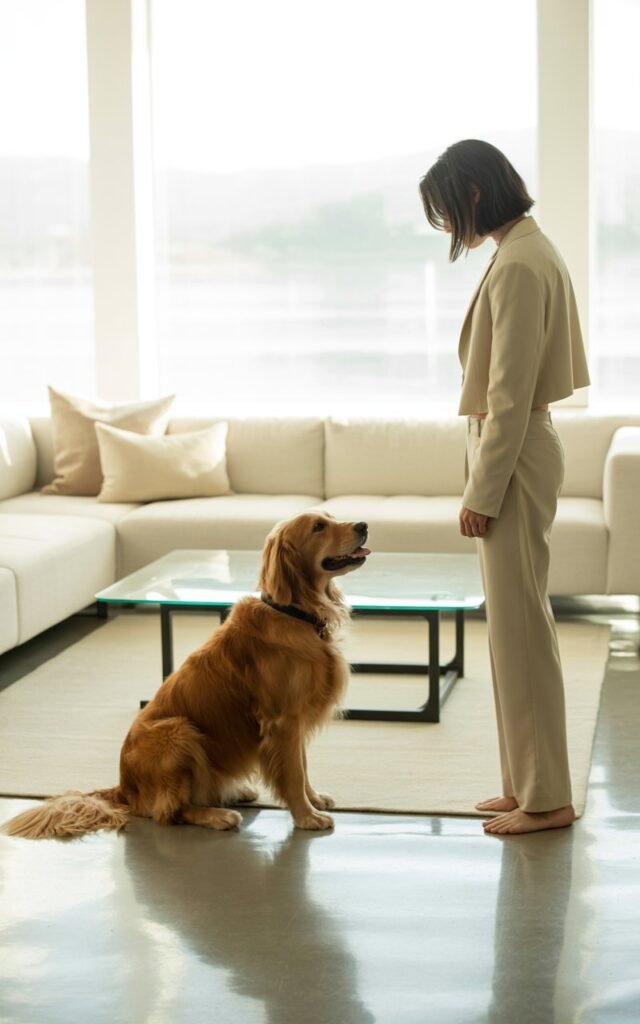
The leash step-on method has been a game-changer in my dog training routine, especially for teaching dogs not to jump on guests.
This method works because it provides clear, gentle boundaries while giving your dog consistent feedback about acceptable behavior during visitor greeting training.
Why it’s effective:
- Immediate feedback for jumping dogs: Stepping on the leash limits jumping in real time, helping dogs connect their actions with consequences during jumping behavior correction.
- Reduces overexcitement at the door: Keeping your dog grounded prevents high-energy reactions during dog greeting training.
- Reinforces calm and polite behavior: When paired with treats and praise, dogs learn that calm greetings get attention, not jumping.
- Safe and controlled approach: The leash gives you control over your dog’s movements, making polite greeting training safe for both your dog and your guests.
- Works for all dogs: Effective for puppies, high-energy breeds, or even adult dogs struggling with door greeting manners.
I’ve seen firsthand that using the leash step-on method consistently builds self-control, polite greeting habits, and proper manners, making every visit calmer, safer, and more enjoyable for both my dog and my guests.
Step 7: Be Consistent and Patient
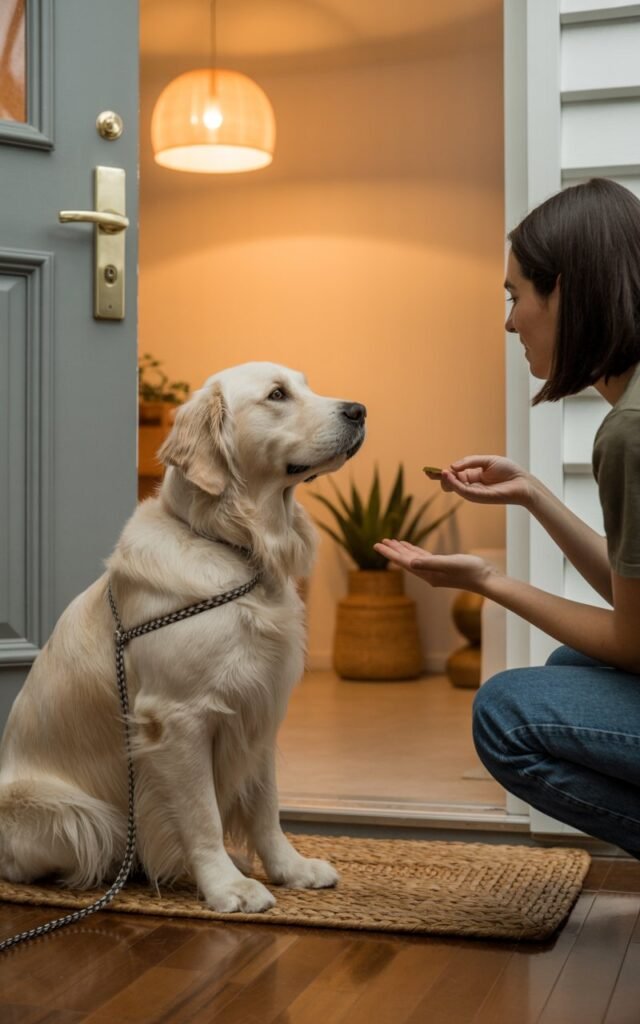
Consistency is the key to successfully teaching your dog not to jump on guests.
I’ve learned that even with the best methods, progress only comes when you apply training every single time a visitor arrives.
How I stay consistent:
- Use the leash step-on method with every guest, every time.
- Apply the same commands like “sit” or “stay” for dog greeting training.
- Reward calm, polite behavior consistently with treats and praise for positive reinforcement training.
- Avoid giving attention for jumping—this prevents mixed signals.
Tips for success:
- Be patient; some dogs take longer to learn polite visitor greetings.
- Keep training sessions short but frequent to reinforce learning.
- Track progress to see improvement in jumping behavior correction over time.
With consistency and patience, your dog will learn proper manners, remain calm when guests arrive, and you’ll have stress-free visitor greeting training that lasts long-term.
Step 8: Practice Regularly with Different Guests
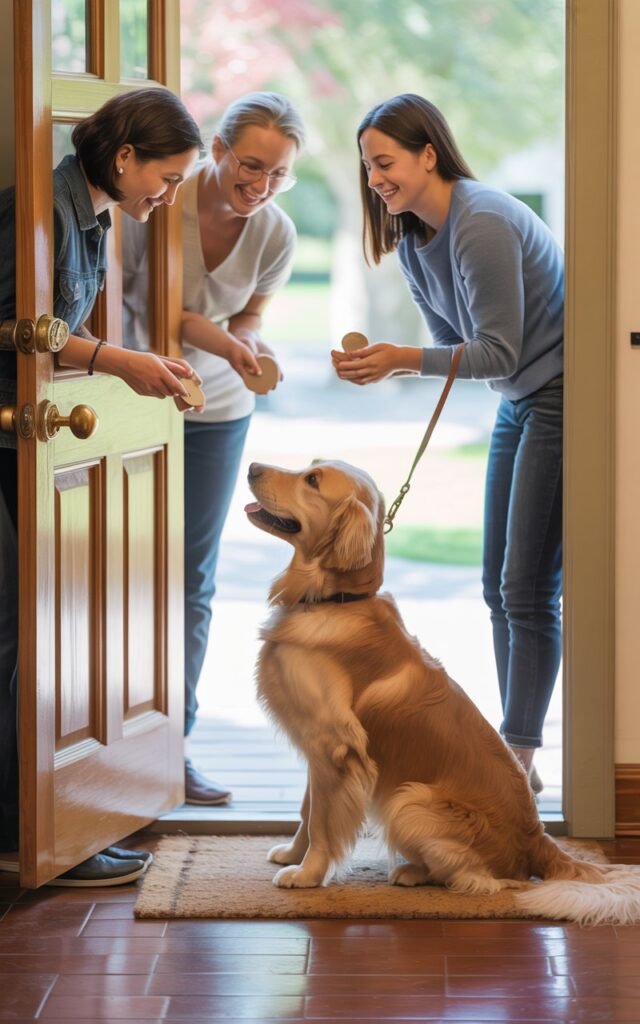
One thing I’ve found essential is practicing with a variety of guests.
Dogs can behave differently depending on who’s at the door, so using the leash step-on method consistently with friends, family, or strangers helps reinforce calm, polite greetings in every situation.
How I practice:
- Invite different people over to simulate real-life scenarios for dog visitor training.
- Keep my dog on a leash and repeat commands like “sit” or “stay” during each visit.
- Reward calm, polite behavior with treats and praise for positive reinforcement dog training.
Tips for success:
- Start with one guest at a time before moving to multiple visitors.
- Maintain consistency in commands and rewards to prevent jumping behavior regression.
- Gradually allow your dog more freedom once they consistently greet politely without jumping.
Regular practice with different visitors ensures your dog learns long-lasting polite greeting habits, making every home visit calm, safe, and stress-free.
Final Thoughts: Control Without Stress
If your dog jumps on guests, the leash step-on method is one of the most effective and humane ways to regain control.
By combining gentle correction with immediate reinforcement, your dog learns long-term behavior that keeps everyone happy and safe.
Bobby didn’t jump once on his favorite trainer after just six attempts.
The transformation was incredible, and it required nothing more than a leash, timing, and patience.
If you’ve struggled with guests and an overly excited dog, give this method a try.
Consistency is key, and over time, your dog will learn to greet visitors calmly and politely.
And if this guide has helped you tackle jumping behavior, make sure to share for more dog training tips, behavior strategies, and practical advice to help your furry friend thrive.