Ingredients
Equipment
Method
- Cook the sweet potato. Peel the sweet potato and cut it into small cubes. Boil or steam for about 10–15 minutes, or until a fork slides through easily. Drain and allow it to cool completely.
- Mash the sweet potato. Mash the cooked sweet potato until smooth. Remove any firm pieces so the frozen treat has an even texture.
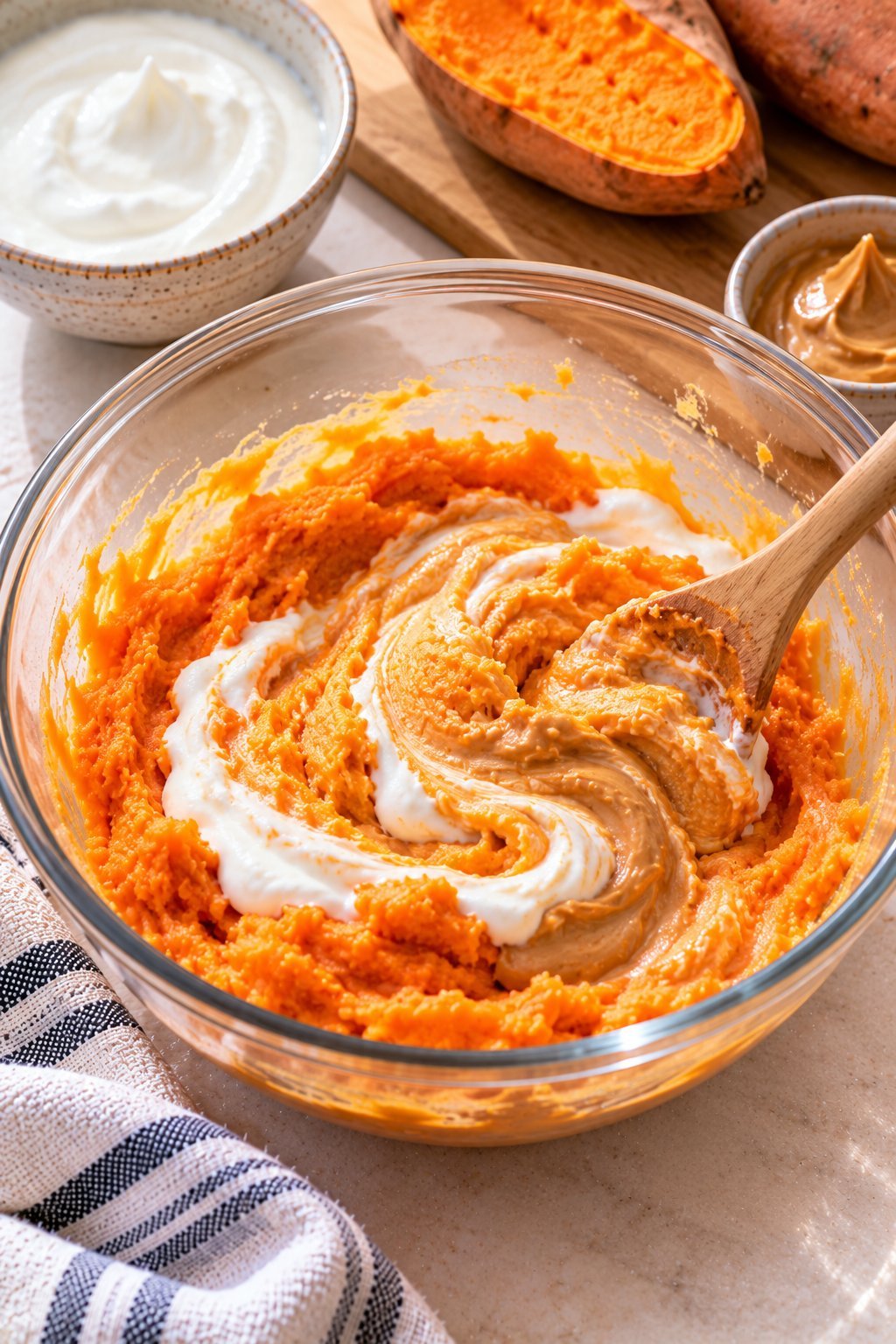
- Blend the ingredients. Add the mashed sweet potato, plain yogurt, and peanut butter to a blender or food processor. Blend until creamy. Add one tablespoon of water if the mixture is too thick to blend.
- Check the consistency. The mixture should be thick but easy to spoon into molds. Add a little more water only if necessary.
- Fill the molds. Spoon the mixture into a silicone mold or ice cube tray. Make small portions appropriate for your dog's size.
- Freeze until firm. Place the molds on a level freezer shelf and freeze for at least 3 hours, or until the portions are completely solid.
- Remove and store. Once frozen, pop the treats out of the molds and transfer them to an airtight freezer-safe container.
- Serve safely. Offer one small portion at a time. Let it soften slightly if it is too firm, and supervise your dog while eating.
Recipe Notes
- Choose safe yogurt: I use plain, unsweetened yogurt without xylitol or other sweeteners. Some dogs have difficulty digesting lactose, so start with a small amount and discontinue if it causes digestive upset.
- Check the peanut butter label: Always confirm that the peanut butter is xylitol-free. Avoid products containing chocolate or other ingredients unsafe for dogs.
- Cook the sweet potato thoroughly: Raw sweet potato can be difficult for dogs to chew and digest. Cooking it until tender makes it easier to mash and blend.
- Storage: Keep the treats frozen in an airtight container and use within about 2 months for best quality. Thaw only the portion you plan to serve, and discard any treat that has been contaminated or left out too long.
- Common mistake to avoid: Freezing the mixture before blending it smoothly can leave hard chunks in the finished treat. Mash the sweet potato well and blend everything before filling the molds.
- Serving tip: These treats are intended for occasional enjoyment, not as a meal replacement. Start with a small serving, especially if your dog has not tried yogurt or peanut butter before.
- Dietary considerations: Sweet potato contains carbohydrates, and peanut butter adds fat and calories. Keep portions small, particularly for dogs on weight-management diets or those with a history of pancreatitis. Ask your veterinarian whether these ingredients suit your dog's individual needs.