
DIY Farmer-Style Dog Food Recipe I Trust With My Own Home
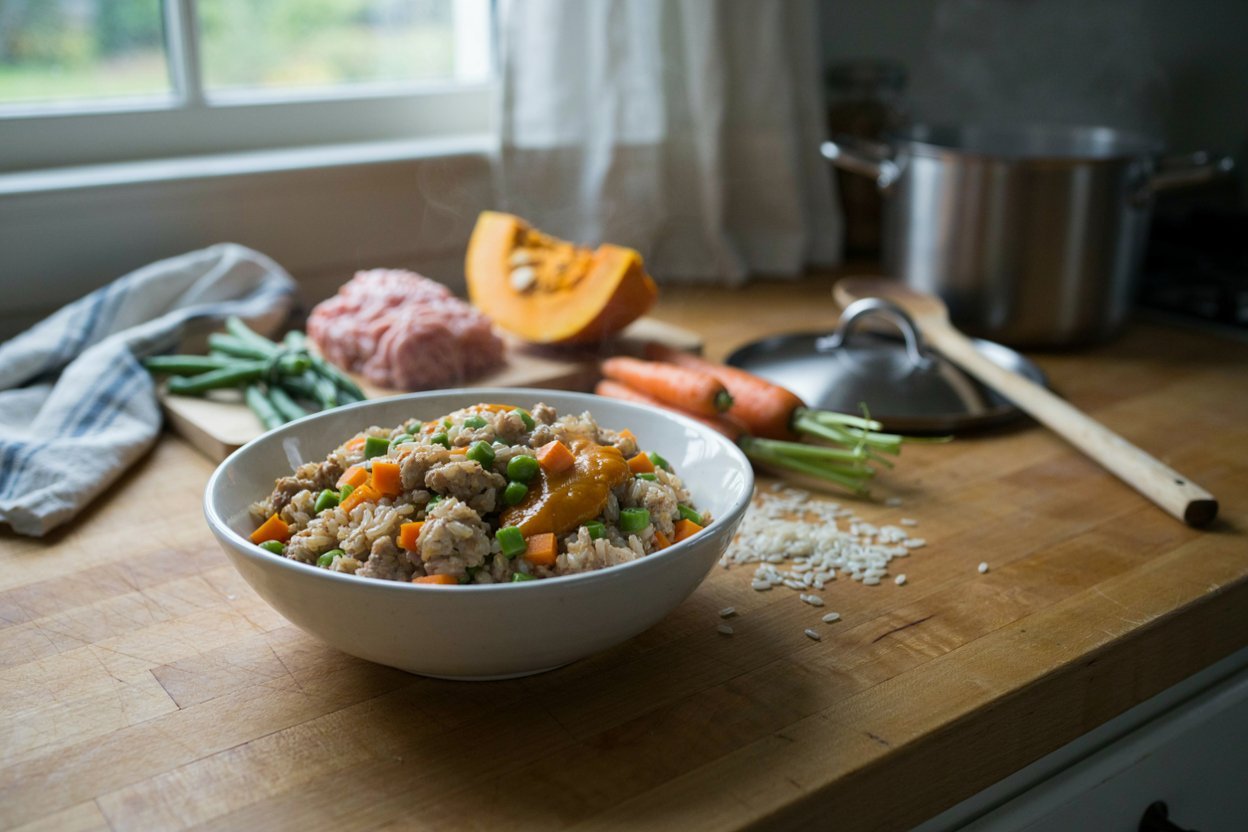
I’ve tried a lot of homemade dog food recipes over the years, some that lasted a single batch before I quietly went back to kibble, and a handful that actually stuck.
This one is the recipe that stuck. It’s not fancy, it doesn’t call for anything I can’t find at a regular grocery store, and it’s simple enough that I don’t dread making it on a Sunday afternoon.
What I like calling it, borrowing a bit from the fresh food delivery services that popularized this style of feeding, is a farmer-style recipe, meaning it leans on simple, whole ingredients cooked plainly rather than anything processed or pre-mixed.
If you want to build out your homemade cooking rotation beyond this one recipe, a few related guides are worth having open alongside this one.
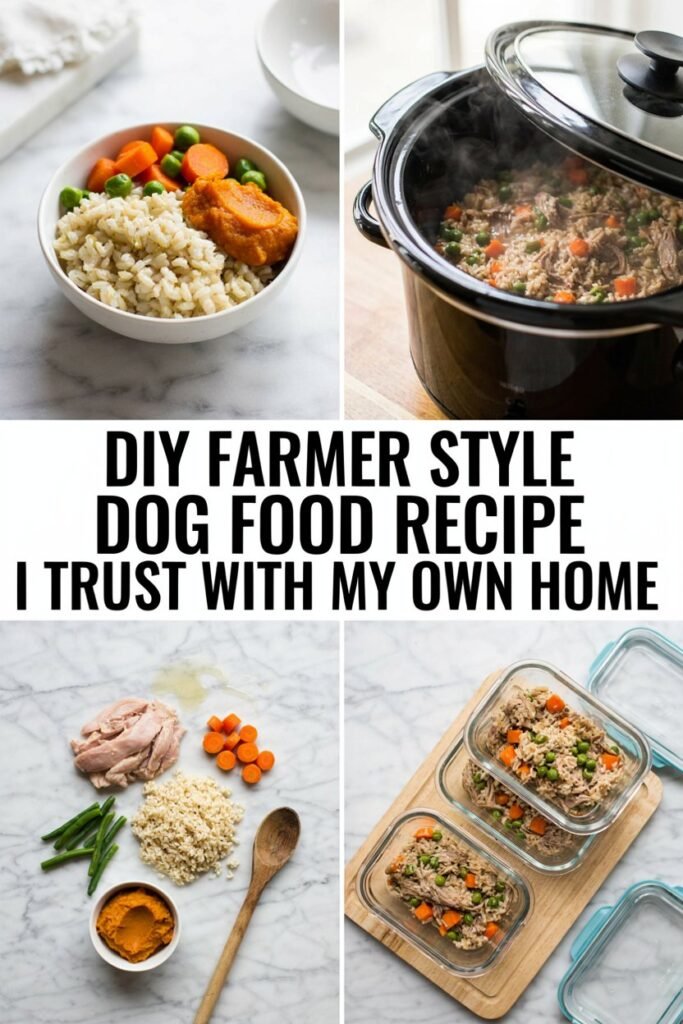
Homemade dog food with vet approved ingredients covers what a fully balanced diet needs beyond just picking good ingredients, 3 simple farmer’s dog food recipes offers more variations in this same style if you want to branch out, ground turkey dog food recipe for beginners and homemade turkey dog food recipe for beginners offer other simple starting points, one pot homemade dog food recipes for beginners is worth a look for an even simpler cooking method, healthy homemade dog meals you can make at home covers how to adjust a meal for specific health goals, simple homemade dog meals you can freeze pairs well with the batch cooking habits I mention below, and human foods dogs can safely eat is a good reference for what’s safe to share from your own kitchen more broadly.
Disclaimer
This post may contain affiliate links. As an Amazon Associate, I earn from qualifying purchases at no additional cost to you. I only recommend dog-safe ingredients and kitchen tools that I genuinely find useful for preparing homemade dog food. Homemade diets need to be nutritionally balanced for your dog’s individual needs, especially when fed long term. Consult your veterinarian or a qualified veterinary nutritionist before making homemade dog food a regular part of your dog’s diet.
Shop on Amazon With 50% Discount On Your Orders
- Digital Kitchen Scale – I use this to measure meat, vegetables, grains, and other ingredients accurately so each batch stays consistent.
- Freezer-Safe Meal Prep Containers – I use these to divide homemade dog food into individual portions and keep larger batches organized in the freezer.
- Stainless Steel Mixing Bowls – I use these whenever I prepare homemade dog food because they are durable, easy to clean, and useful for mixing larger batches.
Why This Became the Recipe I Actually Trust
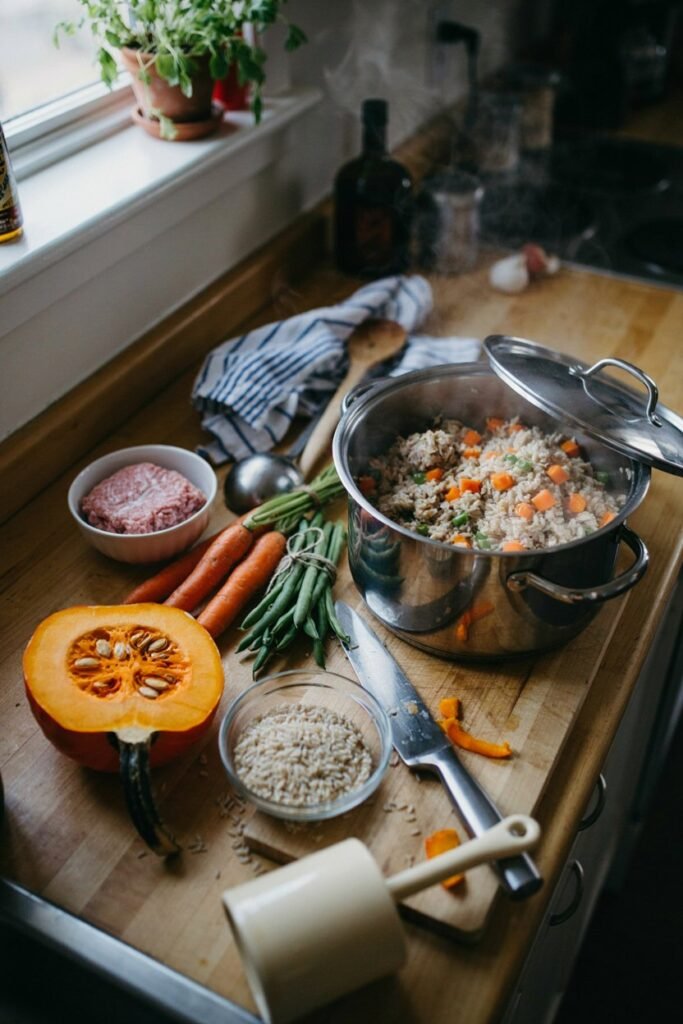
I didn’t land on this recipe right away. Early on, I tried versions with long ingredient lists, specialty supplements I had to order online, and prep steps that took most of an afternoon.
None of that lasted, not because the food wasn’t good, but because I simply didn’t keep up with it once the initial motivation wore off.
What finally stuck was scaling everything back to ingredients I already buy regularly, a process I can do without much thought, and a batch size that actually lasts long enough to feel worth the effort.
That’s really the whole philosophy behind this recipe. It doesn’t need to be impressive to be trustworthy. It needs to be something I’ll actually keep making.
Before You Start
As with any homemade recipe, it’s worth being upfront that this one isn’t automatically a complete, nutritionally balanced diet suitable for daily, long term feeding just because it’s made from real, whole ingredients.
Dogs need appropriate amounts of protein, fat, carbohydrates, calcium, phosphorus, essential fatty acids, vitamins, minerals, and a range of trace nutrients, all in specific proportions that a simple recipe doesn’t fully provide on its own.
I use this one as a regular, several times a week meal rather than my dog’s absolute only food, and if you’re considering using something like this as a full replacement for commercial food, working with a veterinarian or a board certified veterinary nutritionist is genuinely worth doing first, since a recipe I trust for my own dog isn’t the same thing as a professionally formulated plan for yours.
Understanding the Ingredients
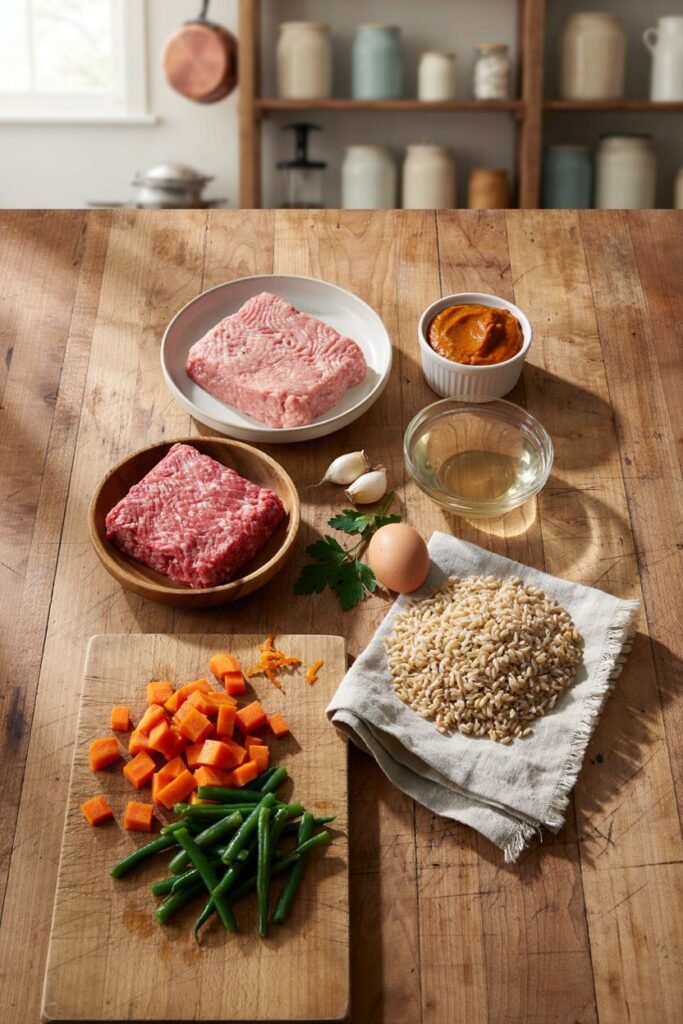
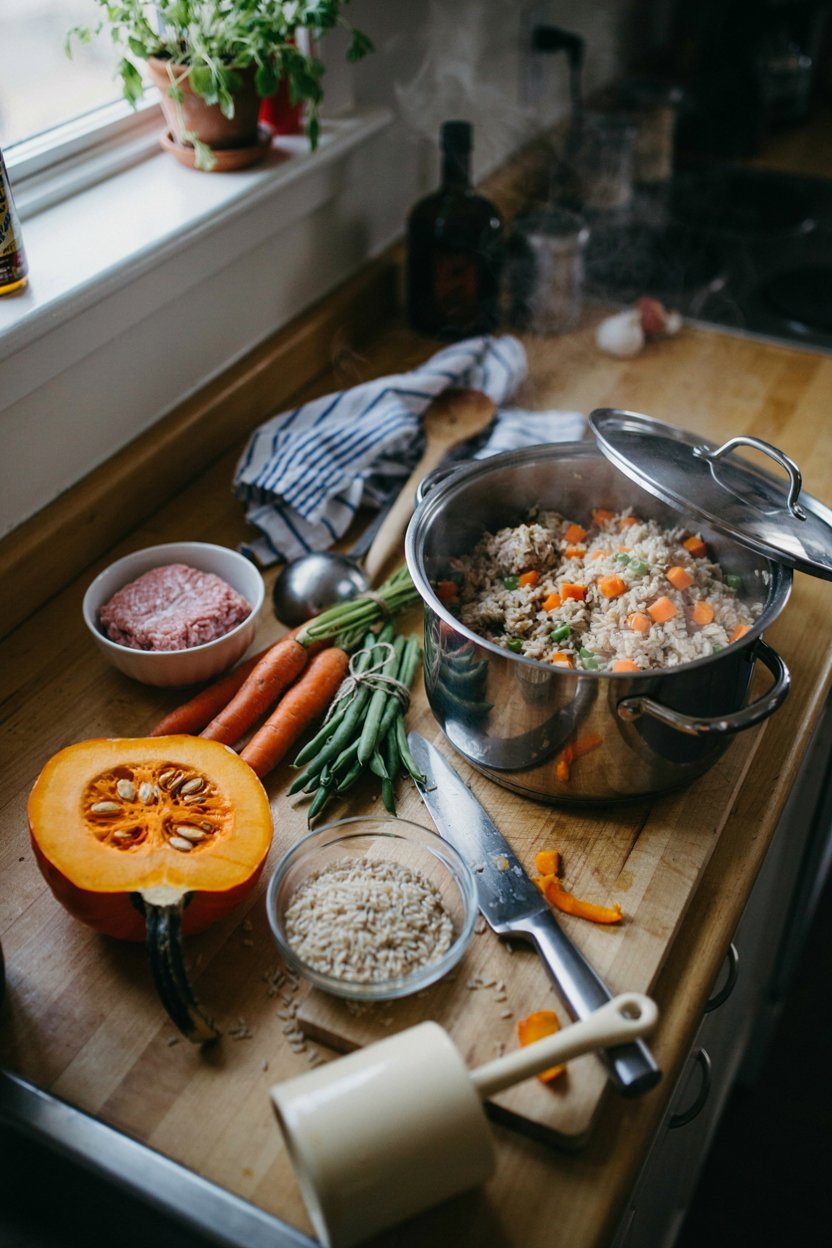
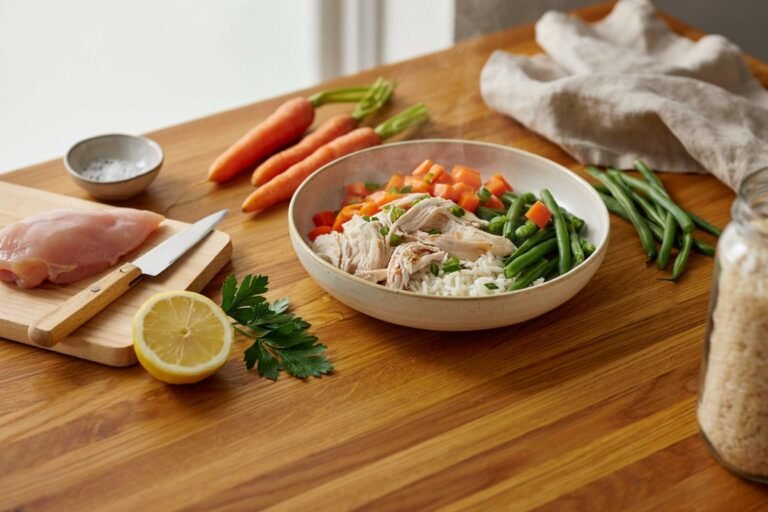
Ground turkey or lean beef. I rotate between these two depending on what’s on sale that week, and honestly, my dog doesn’t seem to have a strong preference either way. Turkey keeps things lean, while beef adds a bit more richness on weeks I want something heartier.
Brown rice. This has been the carbohydrate in this recipe since the very first batch, mostly because it’s cheap, reliable, and I’ve genuinely never had a bad experience with it upsetting my dog’s stomach.
Carrots and green beans. These two show up because they’re the vegetables I always have on hand, whether fresh or frozen, and they hold up well through cooking without turning to mush.
Plain pumpkin puree. I started adding this after a rough stomach week a while back, and it’s stayed in the rotation ever since, mostly out of habit at this point, though it genuinely seems to help keep things settled.
Low sodium broth. I make my own most weeks by simmering the bones and scraps from whatever chicken I’ve already cooked for myself, which keeps this recipe cheaper and means I know exactly what’s in it.
Egg. Added at the end, off the heat, mostly because it’s an easy way to boost the protein without adding another separate cooking step.
Ingredients I Never Add
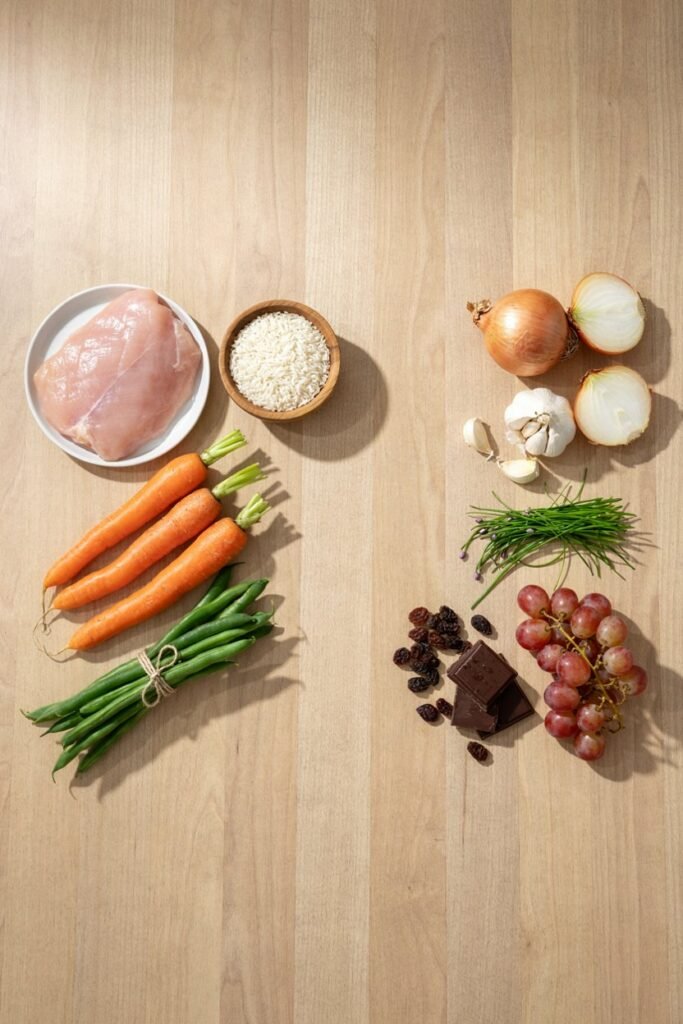
Onion, garlic, chives, excessive salt, seasoning blends, rich sauces, xylitol, grapes, raisins, chocolate, and cooked bones have no place in this recipe, full stop.
I’ve gotten careless before and used a broth I hadn’t actually checked the label on, and it was enough of a scare that I now read every label, every single time, even on brands I’ve used before.
DIY Farmer-Style Dog Food Recipe
Yield: About 8 to 10 servings, depending on your dog’s size Prep Time: 10 minutes Cook Time: 30 minutes Total Time: About 40 minutes Storage: Refrigerate up to 4 days, freeze up to 3 months
Ingredients
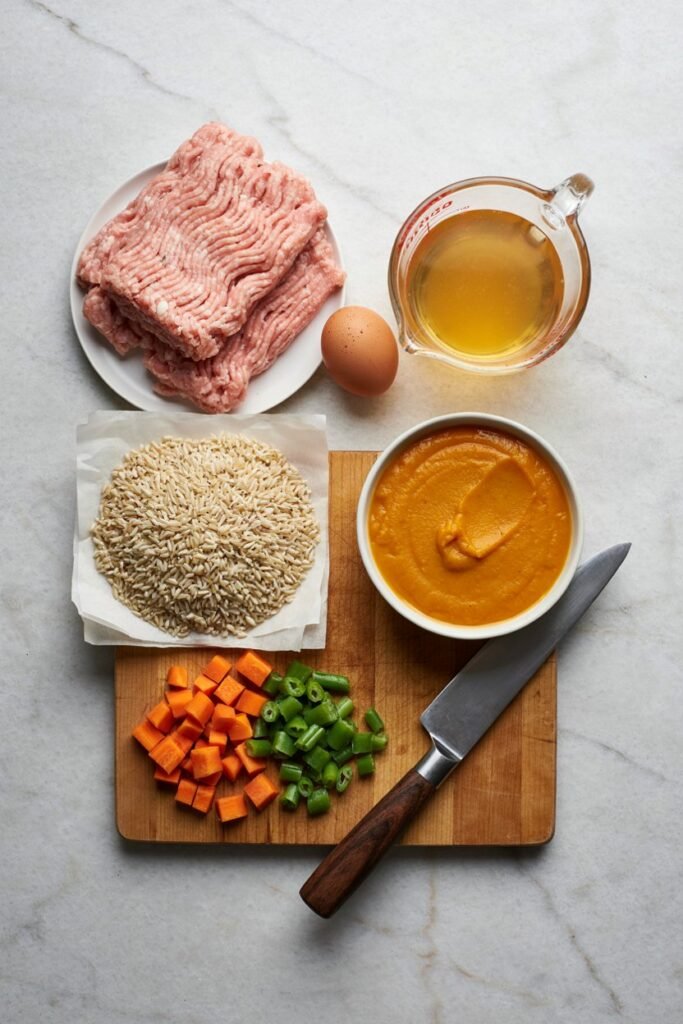
- 2 pounds ground turkey or lean ground beef: Use whichever is more affordable or available. Both provide quality protein, with turkey offering a leaner option.
- 1½ cups uncooked brown rice: Provides carbohydrates and helps make the meal filling and satisfying.
- 1 cup chopped carrots: Adds fiber, beta carotene, and natural sweetness.
- 1 cup chopped green beans: Provides fiber, vitamins, and minerals while adding variety to the meal.
- ½ cup plain pumpkin puree: Adds moisture and fiber. Add it near the end of cooking for the best texture.
- 3 cups low sodium broth: Helps cook the rice and brings the ingredients together. Use homemade broth or carefully check store bought broth to make sure it contains no onion or garlic.
- 1 egg: Adds additional protein and nutrients. Scramble it separately and stir it into the finished meal after cooking.
How I Make It
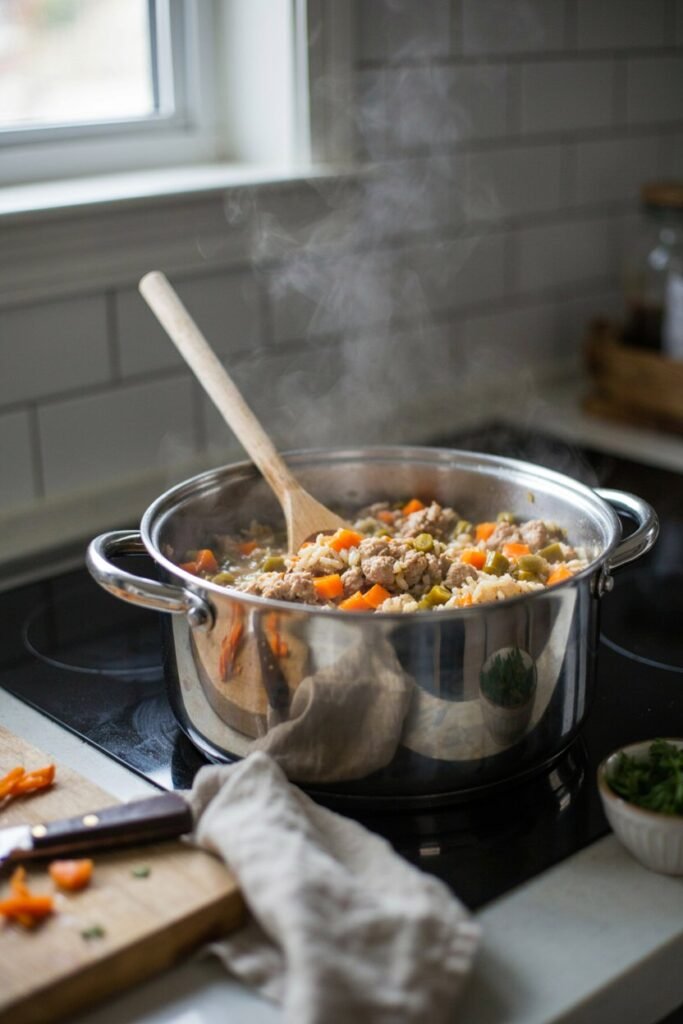
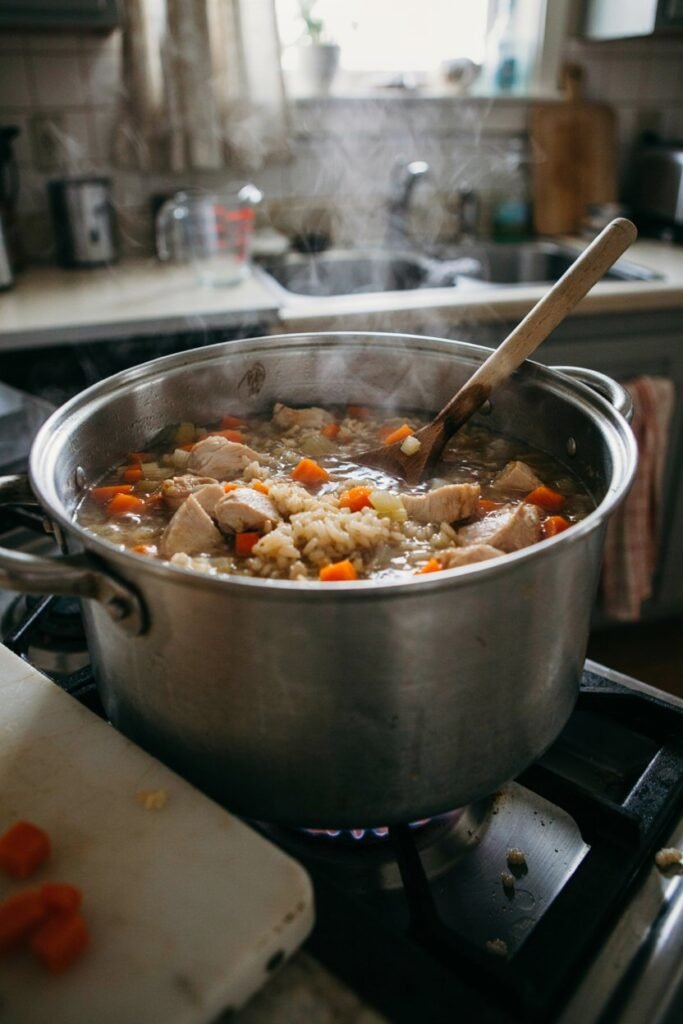
- I brown the meat first in a large pot, breaking it apart as it cooks, with nothing added.
- Once it’s mostly cooked through, I add the rice, carrots, and green beans directly into the same pot.
- I pour in the broth, give everything a stir, bring it to a gentle simmer, then cover and reduce the heat to low.
- I let it cook for about 25 minutes, stirring occasionally so the rice doesn’t stick to the bottom, until the rice is tender and most of the liquid has absorbed.
- I stir in the pumpkin puree right at the end, off the heat, since I’ve found it holds its texture better this way than cooking down with everything else.
- I let the whole pot cool completely before doing anything else with it.
- Once it’s cooled, I scramble the egg separately and stir it in last.
- Then I portion everything into containers for the fridge and freezer.
A Few Things I’ve Learned Along the Way
I used to add the egg too early, straight into the hot pot, and it never quite came out right, more like scrambled bits scattered through the food than something evenly mixed in. Stirring it in once everything’s fully cooled fixed that completely.
I also learned the hard way that walking away from the pot for too long during the simmer leads to rice stuck to the bottom, which is annoying to clean and means I’ve lost some of the batch.
A quick stir every five minutes or so during that stretch has saved me more than once.
How Much I Serve
My dog is a medium sized, moderately active adult, and I feed him based on his weight and how much exercise he’s had that week, adjusting slightly rather than measuring out the exact same amount every single day.
There’s genuinely no single serving size that works for every dog, since it depends on weight, age, activity level, body condition, and the rest of their diet.
If you’re not sure where to start, your vet can help you land on a calorie target that actually makes sense for your specific dog, rather than guessing from a chart.
How I Store It
I keep about four days’ worth in the fridge in a couple of airtight containers, and everything else goes straight into the freezer in individual portions.
Frozen batches hold up well for a few months, though I try to work through them within two just so nothing sits around too long.
I thaw whatever I need in the fridge overnight rather than leaving it out on the counter, and I warm it slightly before serving, mostly because my dog seems to prefer it that way over something cold straight from the fridge.
How I Transitioned My Dog to This Recipe
I didn’t switch all at once. I mixed a small amount into his regular food for the first couple of days, then gradually increased the ratio over about a week, watching his stools the whole time for anything that looked off.
He handled it fine, though I know that’s not guaranteed for every dog, so if yours shows any loose stool, vomiting, excessive gas, or a drop in appetite during the transition, it’s worth slowing down or checking in with your vet rather than pushing through.
Easy Swaps I’ve Made Over Time
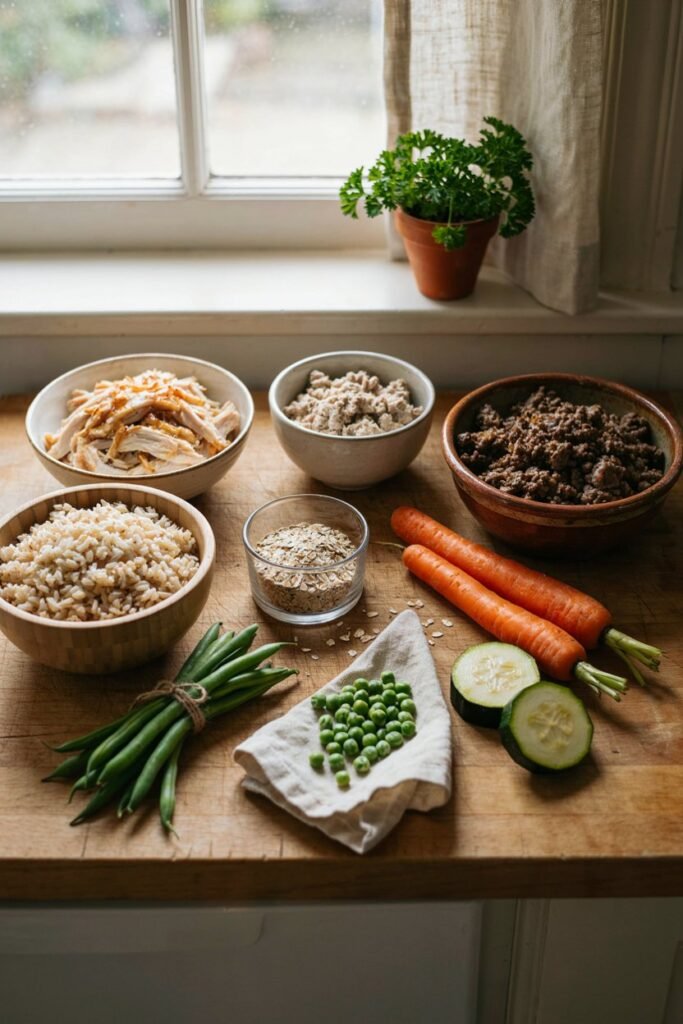
Turkey or beef to chicken. Works exactly the same way, and honestly it’s what I use most weeks now since it’s usually the cheapest option.
Brown rice to oats. I’ve swapped this in a handful of times, mostly when I was out of rice and didn’t want to make a special trip, and it worked just fine.
Carrots and green beans to whatever’s in the freezer. Peas, zucchini, whatever I have really. I don’t stress much over the exact vegetable mix at this point.
Good Ingredients I Look For
Named animal proteins. Turkey, beef, and chicken all tell me exactly what’s going into the pot, which matters more to me than any specific brand or marketing claim.
Fiber rich vegetables. Carrots, green beans, and pumpkin have all earned a permanent spot in my rotation, mostly through trial and error rather than research.
Digestible carbohydrates. Rice has never given my dog any trouble, which is really the main thing I care about at this point.
Broth I’ve actually read the label on. Every single time, no exceptions, even for a brand I’ve bought a dozen times before.
Ingredients I Would Never Use
- Onion, garlic, and chives damage red blood cells and can cause anemia, even in small amounts.
- Excess salt and seasoning blends offer no benefit and can be genuinely harmful in larger quantities.
- Xylitol containing products cause a dangerous, rapid drop in blood sugar.
- Grapes and raisins can cause serious kidney problems, with no reliably safe amount.
- Chocolate is toxic even in modest amounts.
- Cooked bones can splinter and cause internal injury.
Mistakes I’ve Made So You Don’t Have To
Adding the egg too early. Covered this already, but it’s worth repeating since it was such an easy fix once I figured it out.
Not reading the broth label carefully enough. This is the one that actually scared me into being more careful across the board.
Making a single batch instead of doubling it. The extra effort is barely noticeable, and having more in the freezer means fewer cooking sessions overall.
Walking away during the simmer. A quick stir every few minutes prevents sticking and saves the batch.
Switching too fast the first time. I got a little impatient with the transition once, and it wasn’t a disaster, but it also wasn’t worth the discomfort it caused for a day or two.
Frequently Asked Questions
Can I feed this recipe every day? I use it as a regular, several times a week meal rather than the absolute only thing my dog eats, and I’d recommend checking with your vet if you’re considering it as a full time replacement for a commercial diet.
Is this recipe actually “farmer-style,” or is that just a name? It’s inspired by the general approach of fresh food delivery services, simple, whole ingredients cooked plainly, rather than being an official recipe from any specific brand.
Can I use chicken instead of turkey or beef? Yes, and it’s actually what I use most often now, since it’s usually the most affordable option week to week.
How long does this last in the fridge? About 4 days for me, stored in a clean, airtight container.
Can I freeze it? Yes, and I do, portioning everything into individual servings that hold up well for a couple of months.
Does my dog need a calcium supplement if I feed this regularly? If it’s an occasional meal or topper, generally not. If it becomes your dog’s primary diet, a vet recommended supplement is worth adding, since muscle meat alone doesn’t provide enough calcium on its own.
Can puppies eat this recipe? I wouldn’t recommend it as a puppy’s regular diet without a vet reviewing it first, since puppies have more specific nutritional needs during growth than my recipe was built around.
What if I don’t have pumpkin on hand? I’ve skipped it plenty of times when I ran out, and the recipe still works fine. It’s a nice addition, not a required one.
Is homemade food actually cheaper than store bought? For me, yes, especially since I make my own broth from scraps I’d otherwise throw away, though it depends a lot on local prices and what you’re comparing it against.
What made you finally settle on this recipe over all the others you tried? Honestly, it was the first one simple enough that I didn’t dread making it.
Everything else I’d tried before felt like a project. This one felt like just another thing I cook.
DIY Farmer Style Dog Food Recipe
Ingredients
Equipment
Method
- Cook the ground turkey in a large pot over medium heat, breaking it into small pieces as it cooks.
- Add the brown rice, carrots, green beans, and broth.
- Bring the mixture to a gentle boil, then reduce the heat and simmer until the rice is tender and the turkey is completely cooked.
- Stir in the pumpkin puree and mix until evenly distributed.
- Cook the egg separately without oil, salt, or seasoning. Allow it to cool slightly, then chop it into small pieces.
- Stir the cooked egg into the finished dog food.
- Allow the meal to cool completely before serving or portioning for storage.
- This is a farmer style inspired homemade dog food recipe, not an official recipe from any commercial fresh dog food company.
- Use broth that contains no onion or garlic, and avoid salt, seasoning blends, and cooked bones.
- Although this recipe uses wholesome ingredients, it should not automatically be considered a complete and balanced long term diet. If homemade food will make up a significant portion of your dog’s diet, have the recipe properly formulated for your dog’s individual nutritional requirements.
Final Thoughts
I don’t think this is the perfect dog food recipe, and I’m not sure there is one. What it is, for me, is the one I actually keep making, week after week, without it feeling like a chore.
That reliability is worth more to me at this point than chasing some theoretically more impressive recipe I’d probably abandon after a few tries.
If you’re looking for a place to start, start here, and adjust it as you go until it becomes the one you trust too.

One Comment