Healthy Apple & Carrot Chew Sticks for Dogs – Easy Homemade Treats
One of my favorite things about making homemade dog treats is knowing exactly what goes into every bite.
Instead of relying on long ingredient lists or wondering how long a package has been sitting on a store shelf, I can use simple, wholesome ingredients that I already trust in my own kitchen.
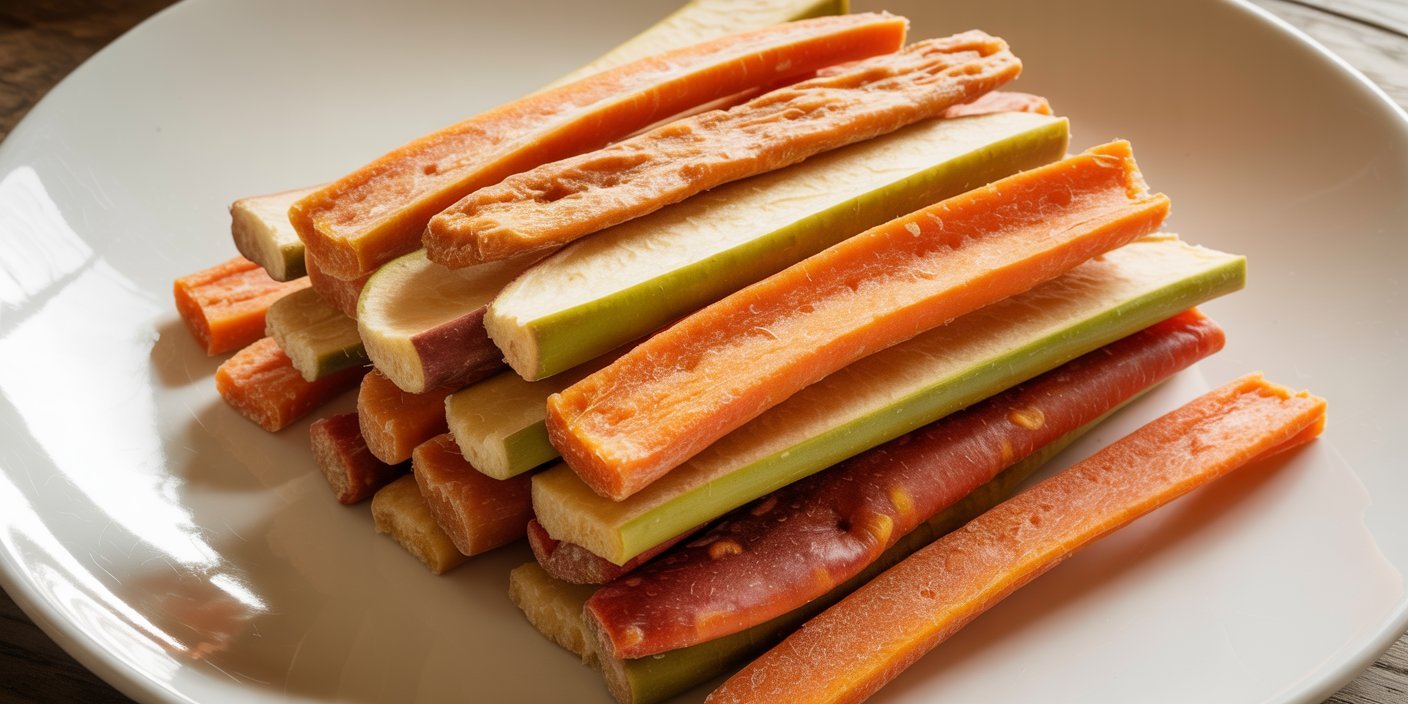
These apple and carrot chew sticks have become one of my go to recipes because they are easy to make, naturally sweet, and provide a satisfying chewy texture that many dogs enjoy.
They are perfect as a reward during training, a healthy snack between meals, or simply something fun to keep your dog happily occupied for a little while.
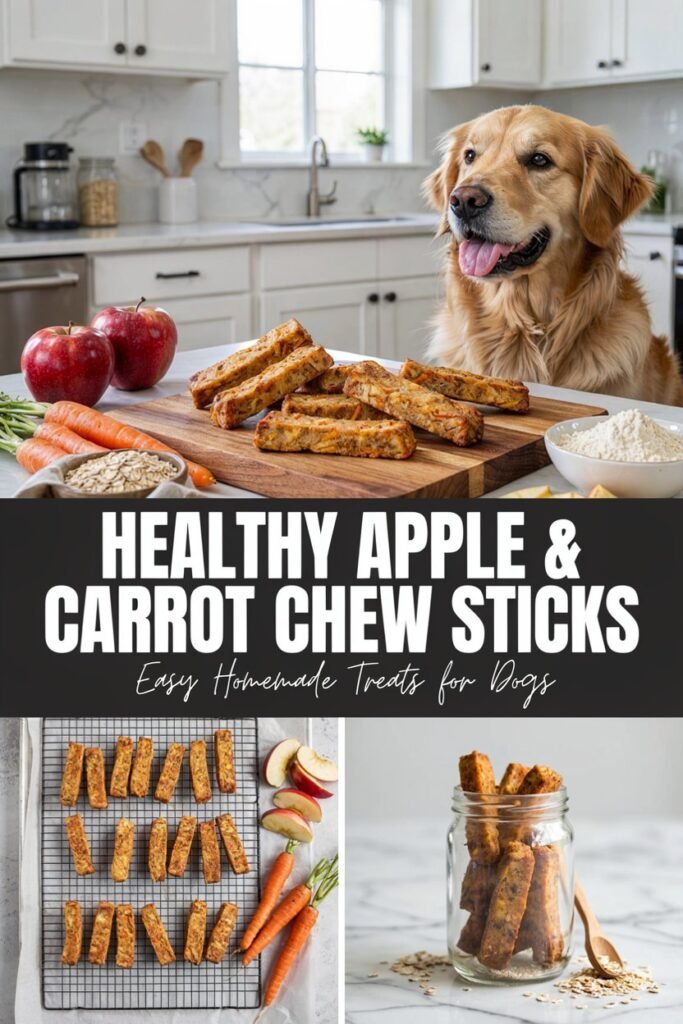
The recipe comes together with just a handful of everyday ingredients, making it an affordable alternative to many commercial dog chews.
It is beginner friendly, easy to prepare in larger batches, and freezes well, so you can always have homemade treats ready when you need them.
Best of all, these chew sticks are made without unnecessary fillers or artificial preservatives, giving you a nutritious homemade treat that most healthy adult dogs can enjoy with confidence.
Why I Keep Making These Apple & Carrot Chew Sticks
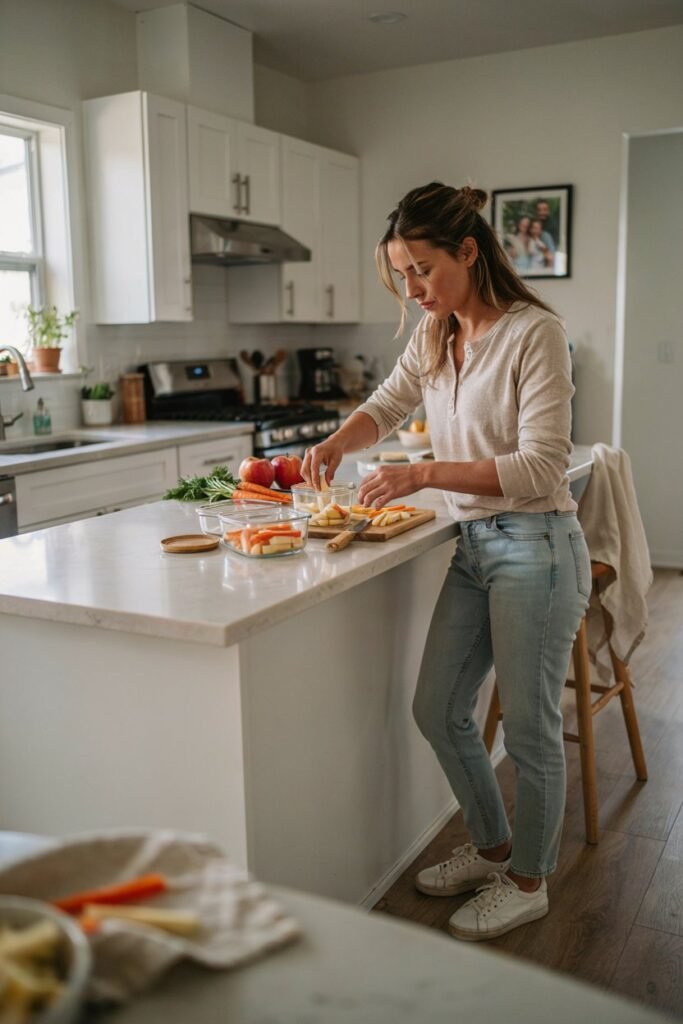
There are plenty of reasons this recipe has earned a permanent spot in my regular treat rotation.
A few pounds of apples and carrots cost a fraction of what a bag of specialty dog chews runs at the pet store, and one batch stretches across weeks when stored properly.
Dogs genuinely seem to enjoy chewing on these. The texture gives them something satisfying to work on, which is great for dogs that like to chew as a form of stress relief or mental stimulation.
They’re also excellent for meal prep. I can make a large batch on a Sunday afternoon, freeze most of it, and pull out a handful whenever I need training rewards or an afternoon snack for my dog.
Compared to many commercial treats, these are healthier since they skip added sugar, artificial coloring, and preservatives.
They’re also easy to customize once you understand the base recipe, so you can swap ingredients based on what your dog likes or what you happen to have on hand.
Are Apples and Carrots Good for Dogs?
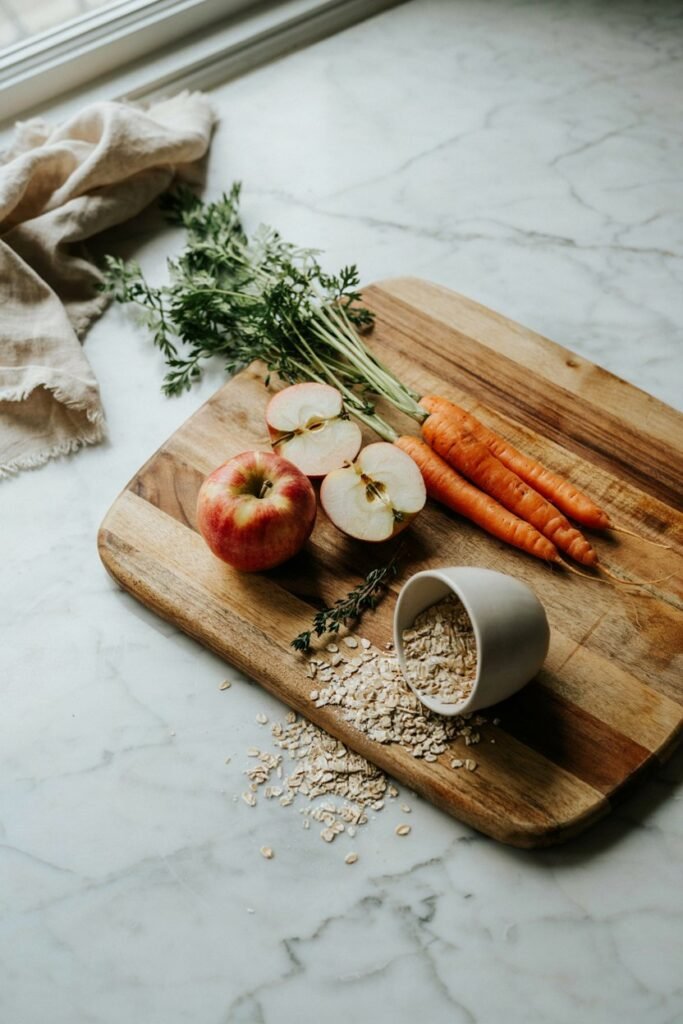
Both apples and carrots are commonly recommended as dog safe produce, and each brings something useful to the table nutritionally.
Apples
Apples are a good source of fiber, which supports healthy digestion, along with vitamin C for immune support.
They also have a high water content, which adds a bit of hydration to a treat, and their natural sweetness makes them appealing to most dogs without needing any added sugar.
Before using apples in this recipe, always remove the seeds and the core.
Apple seeds contain small amounts of a compound that can release cyanide when broken down, and while a dog would need to eat a large quantity of seeds for this to be dangerous, it’s best practice to remove them entirely rather than take the risk.
Carrots
Carrots bring vitamin A and beta carotene to the mix, both of which support eye health and immune function.
Their crunchy texture makes them satisfying to chew, and they’re naturally low in calories, which is helpful if you’re watching your dog’s weight.
Many owners also find that the act of chewing on something firm and fibrous like carrots offers a mild dental benefit by helping to scrape away plaque.
As with any treat, moderation is important. Treats, including these chew sticks, should only make up around 10 percent of a dog’s daily calorie intake, with the rest coming from a complete and balanced diet.
Ingredients
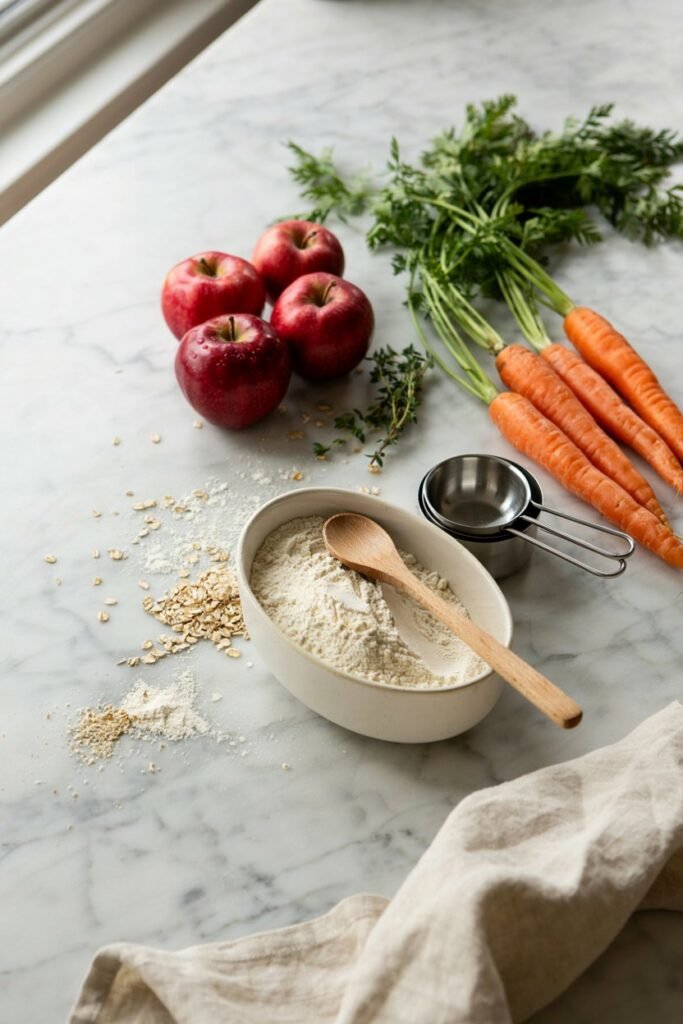
Apple
Choose a firm, slightly sweet variety such as Honeycrisp, Gala, or Fuji.
These varieties tend to hold their shape well and provide good natural sweetness without being overly tart.
Grate the apple finely so it blends smoothly into the dough, and be sure to squeeze out excess moisture afterward, since apples release a surprising amount of liquid once shredded.
Carrot
Fresh carrots work best for this recipe rather than pre shredded bagged carrots, which tend to be drier and less flavorful.
Fresh carrots grate more finely, blend more evenly into the dough, and give the finished chew sticks a better texture overall.
Oat Flour
Oat flour acts as the binder that holds everything together.
It absorbs the moisture from the grated apple and carrot, giving the dough enough structure to shape into sticks that hold together during baking.
Oat flour also happens to be a gentle, easily digestible option for most dogs, which makes it a good default choice for a base recipe like this one.
Kitchen Equipment
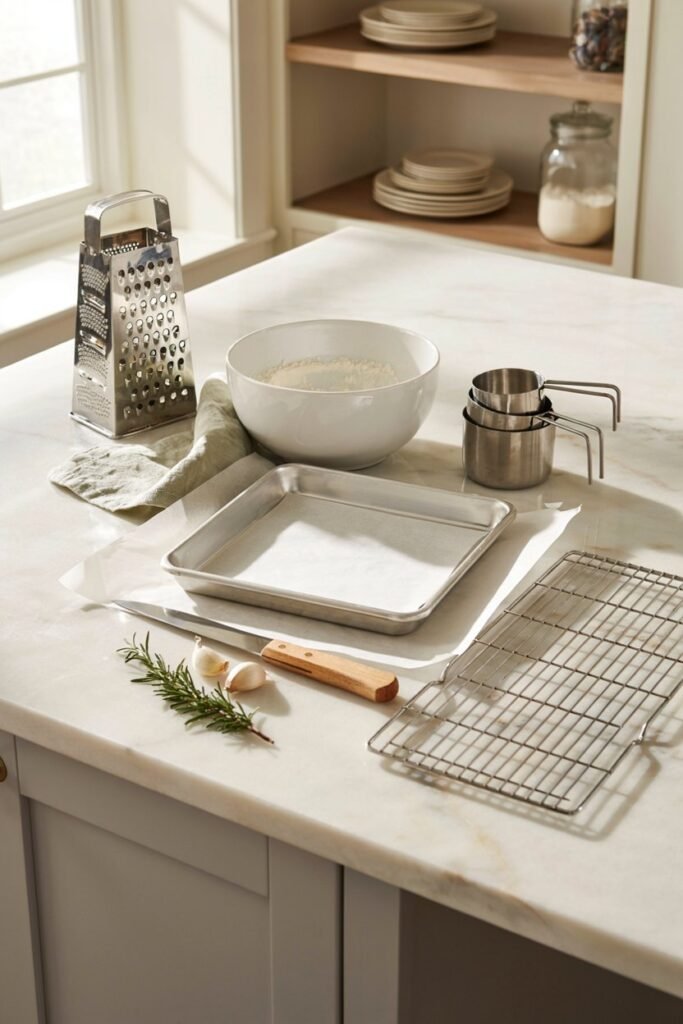
- Mixing bowl
- Box grater
- Baking tray
- Parchment paper
- Measuring cups
- Knife
- Cooling rack
Having everything laid out before you start makes the process go much faster.
The box grater does double duty for both the apple and the carrot, and parchment paper is worth using every time since it prevents sticking and makes cleanup nearly effortless.
Step by Step Instructions
Step 1: Grate the Carrots

Grate the carrots finely using a box grater.
Fine shreds blend better into the dough and help the chew sticks bake evenly, since larger chunks can create uneven texture and cause some parts of the stick to cook faster than others.
Step 2: Prepare the Apple
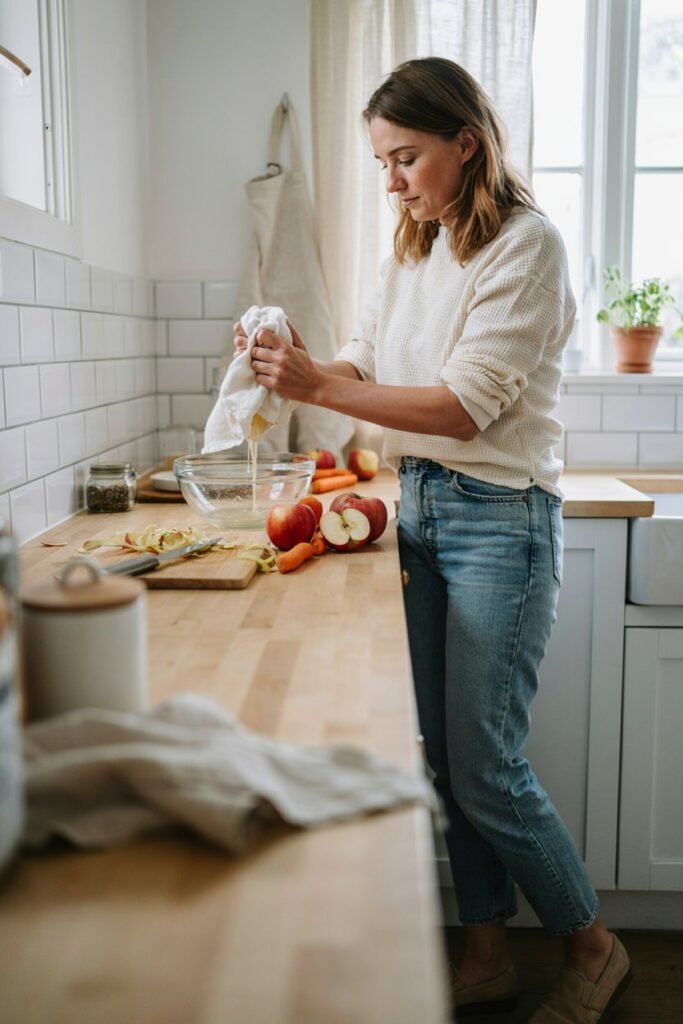
Grate the apple the same way, then place the shredded apple in a clean kitchen towel or cheesecloth and squeeze out the excess moisture.
Moisture matters here because too much liquid in the dough will prevent it from holding its shape, resulting in chew sticks that spread out and flatten during baking instead of keeping a firm, chewy structure.
Step 3: Mix the Ingredients

Combine the grated carrot, squeezed apple, and oat flour in a mixing bowl. Stir until a thick, workable dough forms.
The consistency should be similar to a stiff cookie dough, firm enough to hold its shape when rolled but not so dry that it crumbles apart.
Step 4: Shape the Sticks
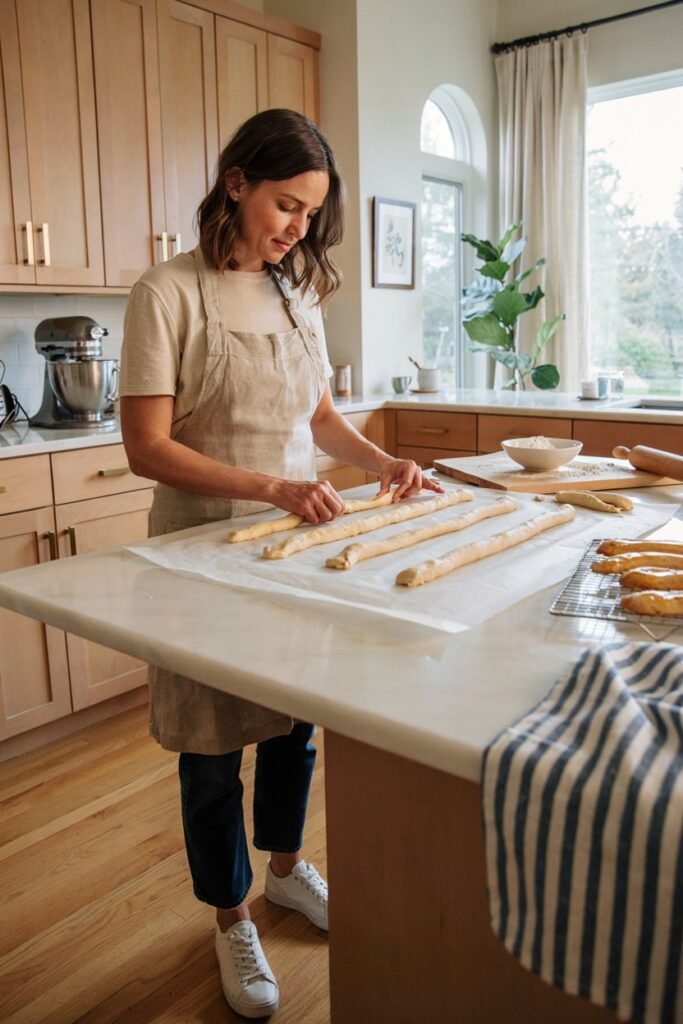
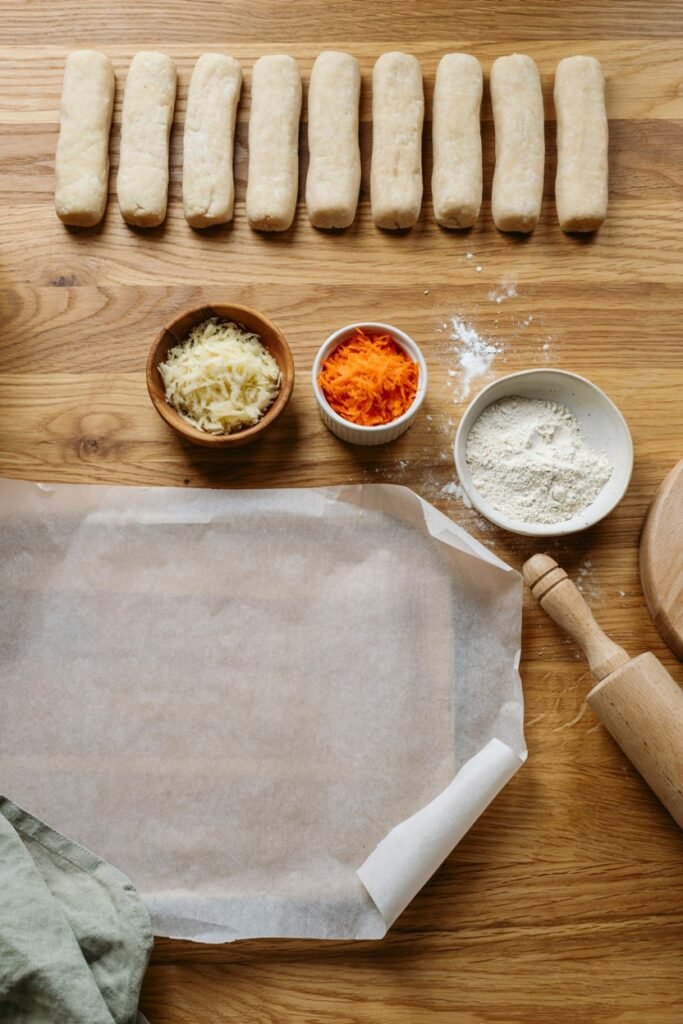
Divide the dough into small portions and roll each one into a stick shape, about the length and thickness of a finger.
Keeping the sticks a consistent, moderate thickness helps them bake evenly and gives your dog an appropriately sized chew that isn’t too large to safely gnaw on.
Step 5: Bake
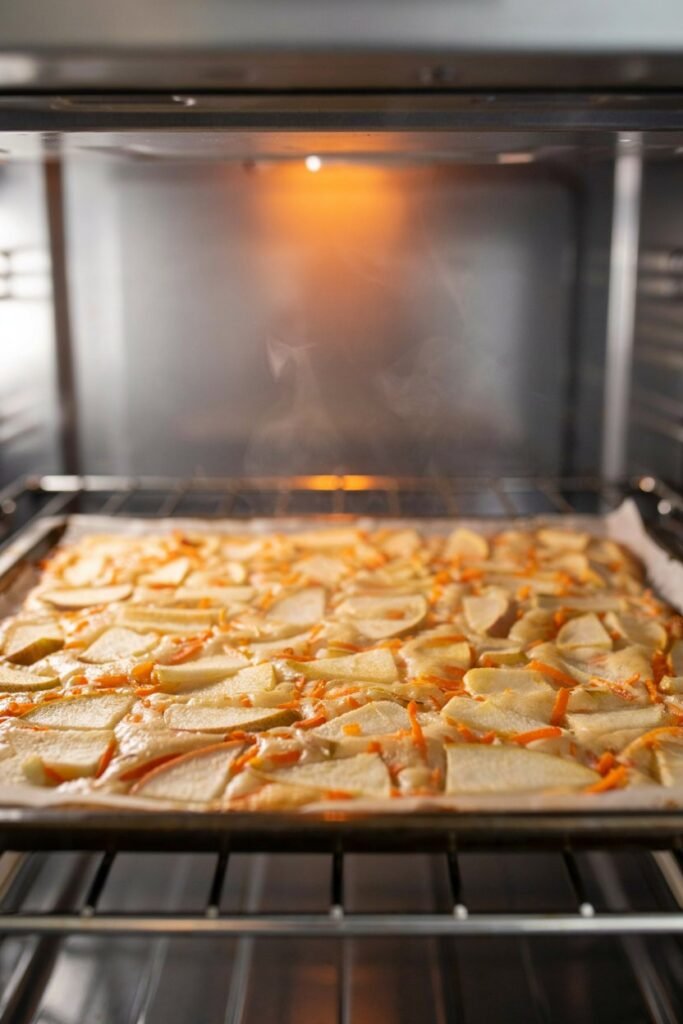
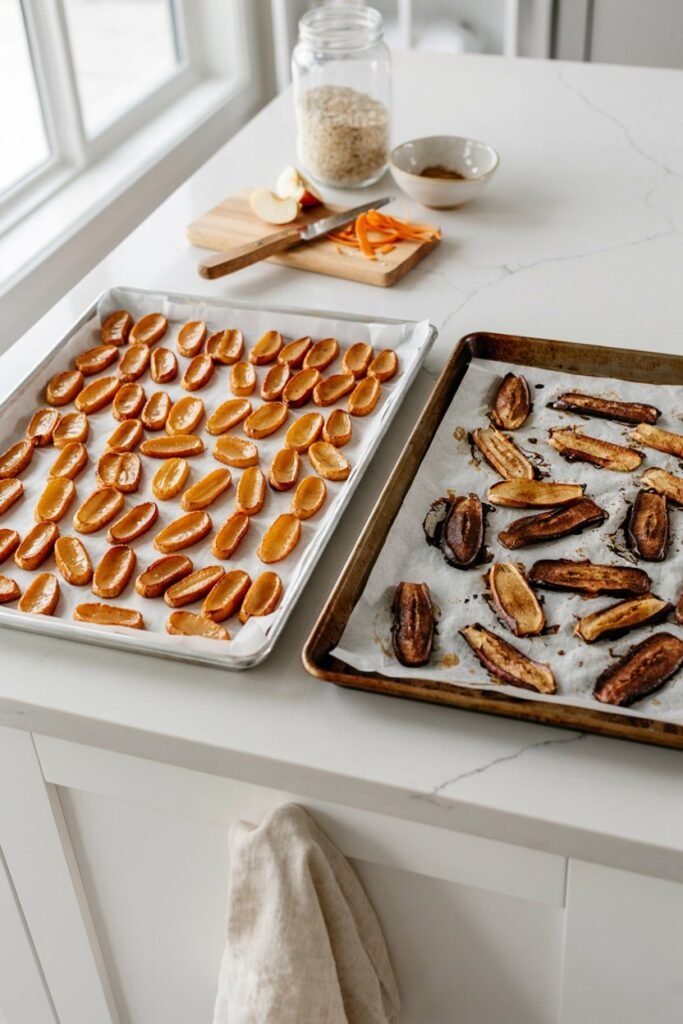
Place the shaped sticks on a parchment lined baking tray and bake at a low temperature, around 300 degrees Fahrenheit, for about 45 minutes to an hour.
You’ll know they’re done when they feel firm to the touch and have taken on a light golden color.
Baking low and slow helps draw out moisture gradually, giving the sticks a satisfying, crunchy chew rather than a soft, cake like texture.
Step 6: Cool Completely
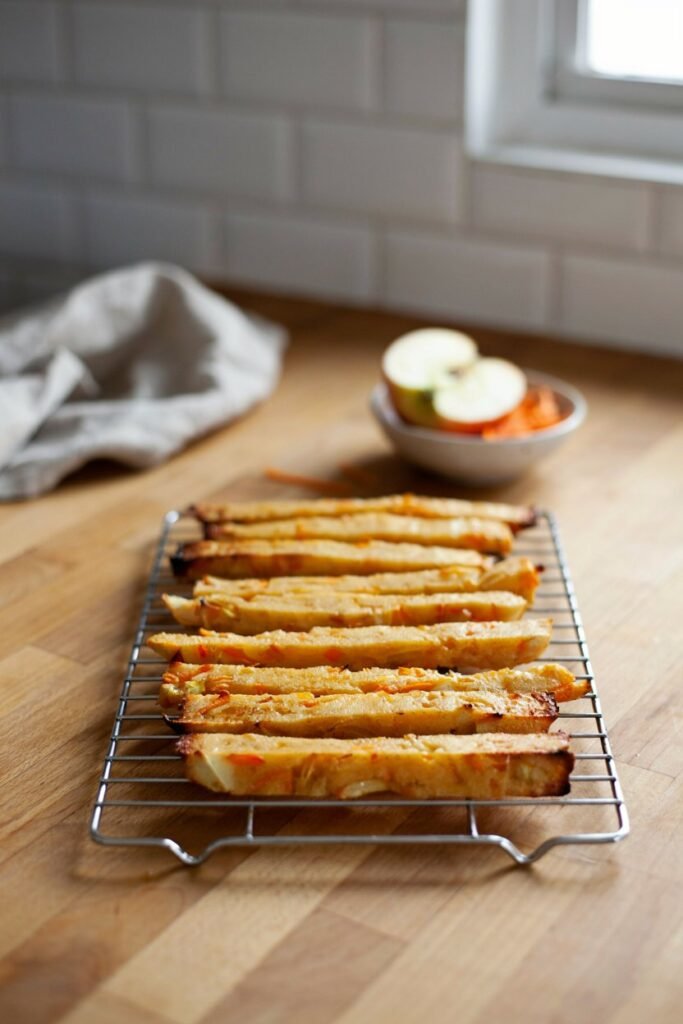
Transfer the baked chew sticks to a cooling rack and let them cool fully before serving or storing.
Cooling completely is important because the sticks continue to firm up as they cool, and packing them away while still warm can trap steam and lead to sogginess or early spoilage.
Expert Tips for Perfect Chew Sticks
- Squeeze as much excess moisture as possible from the grated apple before mixing.
- Avoid making the sticks too thick, since thinner sticks bake more evenly and dry out properly.
- Rotate the baking tray halfway through cooking for even browning.
- Allow the chew sticks to cool fully before storing to prevent sogginess.
- Always use parchment paper to prevent sticking and simplify cleanup.
- Bake low and slow if you want a crunchier, longer lasting chew.
Common Mistakes
Using Watery Apples
Some apple varieties release more liquid than others, and skipping the step of squeezing out moisture can leave you with a dough that’s too wet to hold its shape, resulting in flat, misshapen sticks.
Skipping Parchment Paper
Baking directly on a bare tray increases the chance of sticking, which can tear the sticks apart when you try to remove them and makes cleanup far more difficult.
Making Them Uneven
Sticks that vary widely in thickness will bake unevenly, leaving some pieces underdone while others risk burning by the time the thicker ones are finished.
Storing Before Cooling
Packing warm chew sticks into a container traps moisture inside, which can lead to a soft texture or premature spoilage, even in the refrigerator.
Recipe Variations
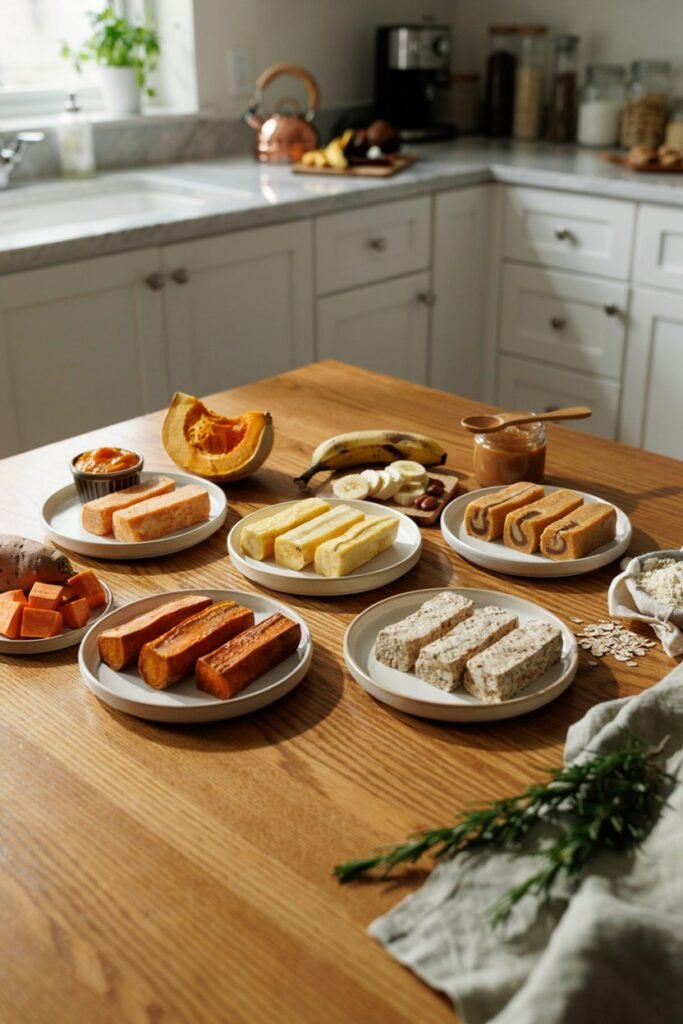
Apple Pumpkin Chews. Replace a portion of the grated apple with plain canned pumpkin puree for a softer texture and a boost of fiber.
Apple Peanut Butter Chews. Mix in a spoonful of plain, unsweetened, xylitol free peanut butter for a richer flavor dogs tend to love.
Apple Oat Chews. Increase the ratio of oat flour slightly for a heartier, more filling chew with a firmer bite.
Apple Sweet Potato Chews. Swap the carrot for finely grated sweet potato for a naturally sweeter, more vibrant colored treat.
Apple Banana Chews. Mash in a small amount of ripe banana along with the apple for extra natural sweetness and a softer finished texture.
Can Puppies Eat These?

Puppies can generally enjoy these chew sticks in moderation, though a few things are worth keeping in mind.
Very young puppies still developing their baby teeth may find the fully baked, firmer texture too tough, so consider offering a softer version by baking for a shorter time or at a slightly higher temperature to reduce overall firmness.
Always supervise puppies while they’re chewing, especially with a new treat, to make sure they’re chewing appropriately rather than trying to swallow large pieces.
If your puppy is on a special diet or has any health considerations, check with your veterinarian before introducing a new homemade treat.
Storage Tips
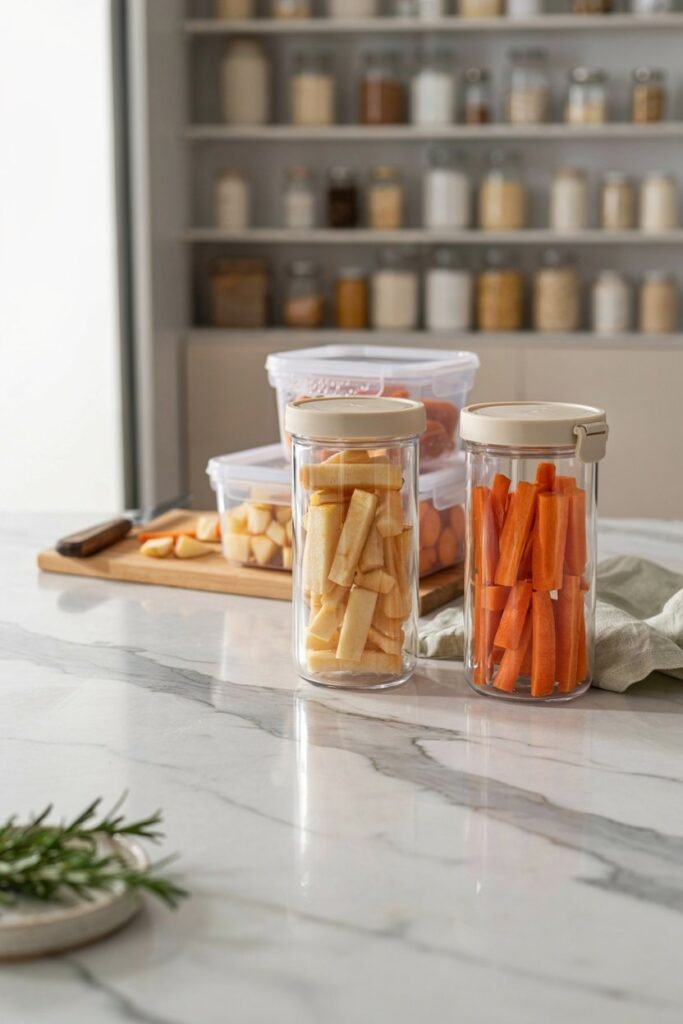
Counter. These chew sticks can sit out at room temperature in an airtight container for a day or two, though refrigeration is recommended for longer freshness.
Refrigerator. Store in an airtight container for up to one week.
Freezer. Store in a freezer safe bag or container for up to three months, which makes this recipe ideal for making in bulk.
Thawing. Move frozen chew sticks to the refrigerator a few hours before serving, or let them sit at room temperature for about twenty minutes.
Signs They’re No Longer Fresh. Discard any chew sticks that develop an off smell, visible mold, or an unusually soft or slimy texture.
Serving Suggestions
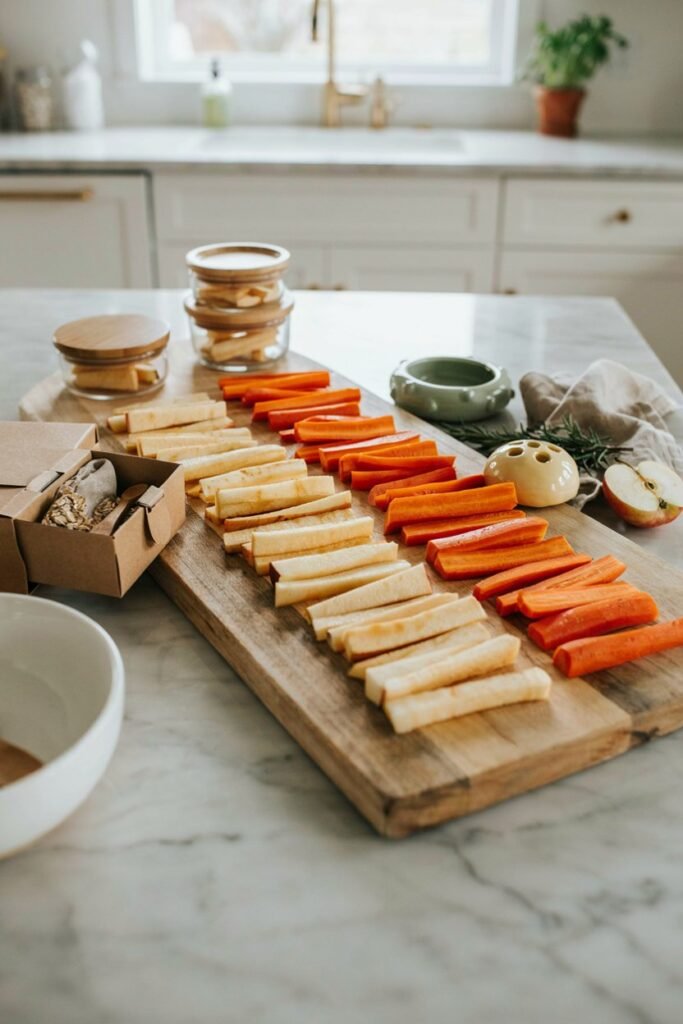
- Offer as a reward after walks
- Use as a training treat during practice sessions
- Stuff into enrichment toys for extra mental stimulation
- Freeze for a refreshing snack on hot days
- Pack a few for travel or road trips
- Use as a filler in puzzle feeders
Troubleshooting
Dough Too Sticky
Causes. Too much moisture from the apple or carrot, or not enough oat flour.
Solution. Add oat flour a small amount at a time until the dough reaches a firm, workable consistency.
Dough Too Dry
Causes. Too much flour added, or the apple wasn’t given a chance to release any moisture at all.
Solution. Add a small splash of water or a bit more grated apple until the dough comes together.
Chews Too Soft
Causes. Underbaking, or not cooling completely before storing.
Solution. Extend the baking time slightly and always let the sticks cool fully on a rack before packing them away.
Chews Burned
Causes. Oven temperature set too high, or baking time left unchecked for too long.
Solution. Lower the oven temperature and check the sticks a few minutes early the next time you bake a batch.
Dogs Won’t Eat Them
Possible Reasons. Some dogs are simply particular about new textures or flavors, especially the first time they encounter a homemade treat.
Solutions. Try breaking a stick into smaller pieces to make it less intimidating, or mix in a stronger flavored ingredient such as peanut butter to make the treat more appealing.
Frequently Asked Questions
Can dogs eat apples every day? In small amounts, most healthy dogs can have apples regularly, though they should remain an occasional treat rather than a daily staple.
Do I need to peel the apples? Peeling isn’t required. The skin is safe for most dogs and adds extra fiber, though you can peel them if your dog has a sensitive stomach.
Can I use baby carrots? Yes, though whole fresh carrots typically grate more finely and have a slightly better flavor.
Can I air fry these? Yes, an air fryer can work at a similar low temperature, though you’ll want to check on them earlier since air fryers often cook faster than a conventional oven.
Can I dehydrate them instead of baking? Yes, a food dehydrator can produce an even chewier, longer lasting texture, though it typically takes several hours longer than baking.
Why are my chew sticks soft? This usually points to excess moisture in the dough, either from not squeezing the apple thoroughly or from underbaking.
How long do homemade dog treats last? Generally about one week in the refrigerator or up to three months in the freezer, depending on the recipe and storage method.
Can I use whole wheat flour instead of oat flour? Yes, whole wheat flour can work as a substitute, though oat flour tends to be gentler on sensitive stomachs.
Can I make these grain free? Yes, a grain free flour such as chickpea flour or almond flour can typically be substituted, though the texture and baking time may vary slightly.
More Homemade Dog Treat Recipes
- Homemade Beef Bone Broth Gummies for Dogs
- Easy Frozen Coconut Dog Treats for Summer
- 3 Ingredient Peanut Butter Dog Gummies
- Simple Carrot Based Dog Treat Recipes for Beginners
- Homemade Banana Dog Treat Recipes
- Healthy Homemade Beef and Apple Stew for Dogs
- 7 Healthiest Homemade Dog Foods
Final Thoughts
These apple and carrot chew sticks are one of those homemade treats that combine simple ingredients with practical nutrition.
They’re easy to prepare in batches, easy to customize, and a satisfying way to give your dog a wholesome snack without relying on heavily processed commercial options.
Whether you bake them for everyday rewards or freeze extras for later, they’re a recipe that’s likely to become a regular part of your homemade dog treat collection.
As with any new treat, introduce these chew sticks gradually and consult your veterinarian before adding new foods to your dog’s diet, especially if your dog has allergies or an existing medical condition.