Homemade Dog Pill Pockets (Easy, Soft Treats to Hide Medicine)
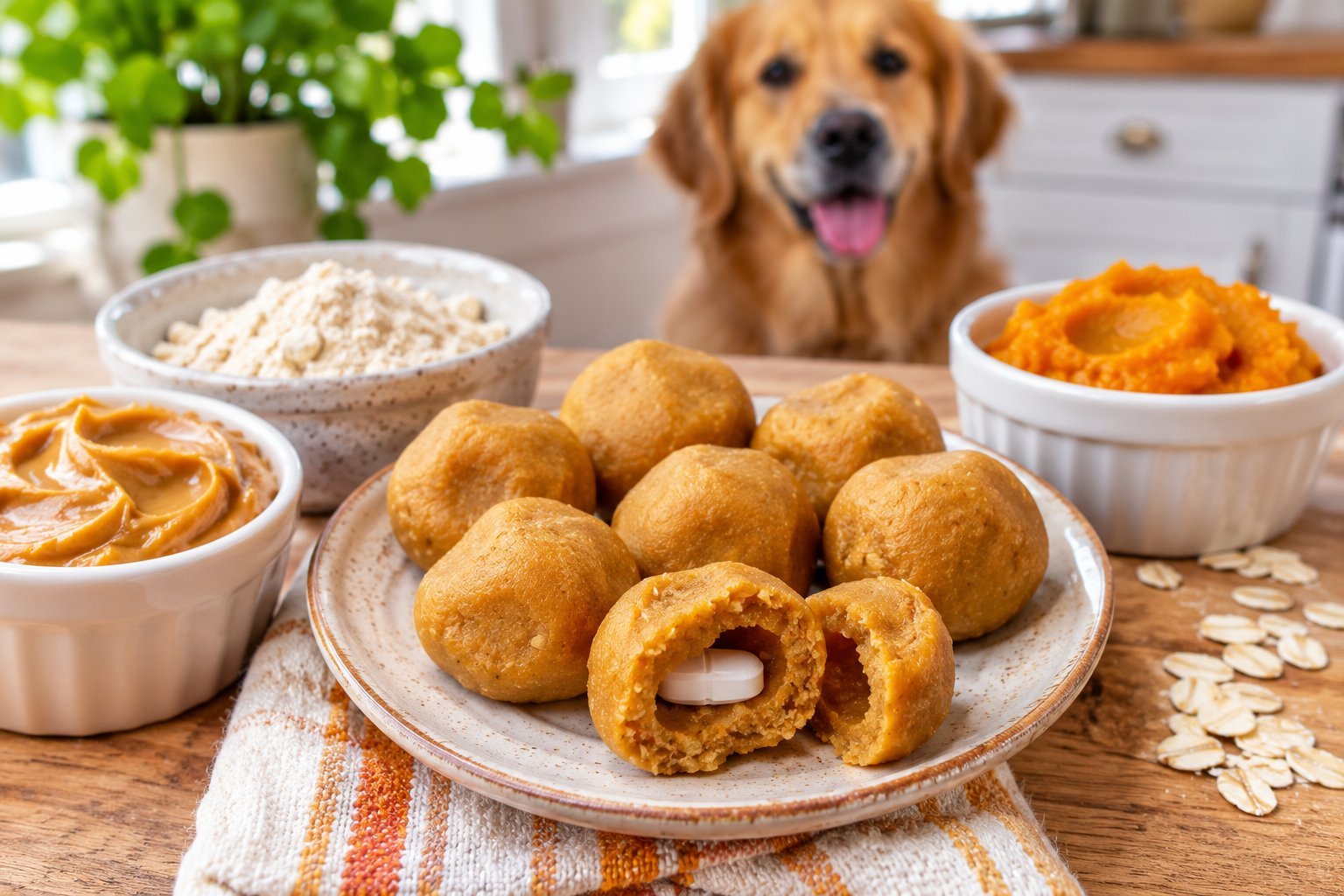
Giving a dog a pill can turn into a wrestling match, especially with a clever dog who spits out anything suspicious.
Pill pockets solve that by wrapping the medicine in a soft, tasty treat that most dogs swallow without a second thought.
Store bought pockets work well, but they can be pricey and aren’t always right for dogs with allergies.
The good news is that you can make your own in about 10 minutes, with a few simple ingredients.
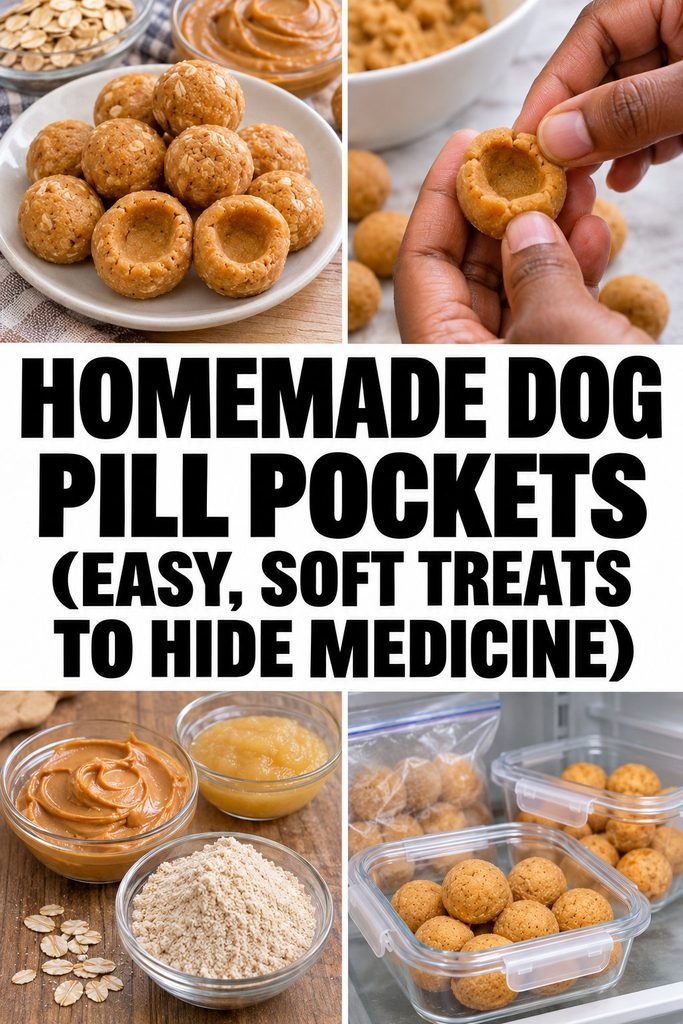
This guide gives you two easy homemade pill pocket recipes, one with peanut butter and one without, plus the safety rules that matter most when you hide medicine in food. Please read the safety section first.
Some medications shouldn’t be given with food, or with certain foods, and your veterinarian or pharmacist is the right person to ask.
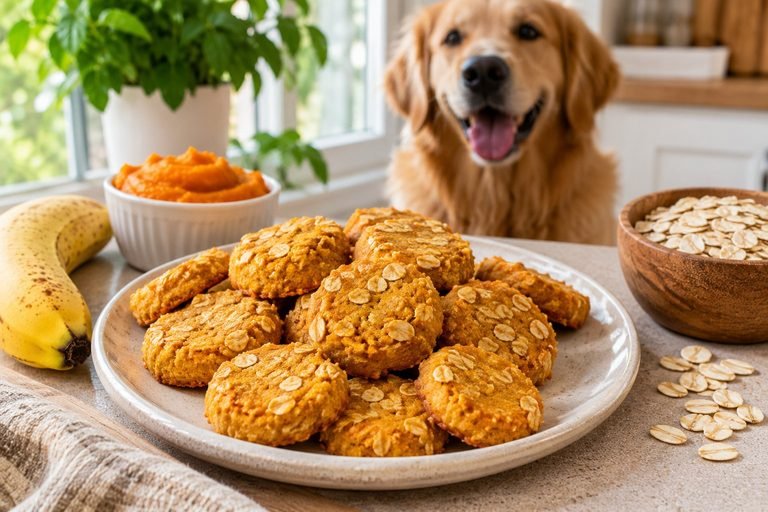
If you’re after treats that aren’t for medicine, see my Peanut Butter Banana Dog Biscuits and 3 Ingredient Sweet Potato Dog Cookies.
Important Safety Notes About Hiding Medicine
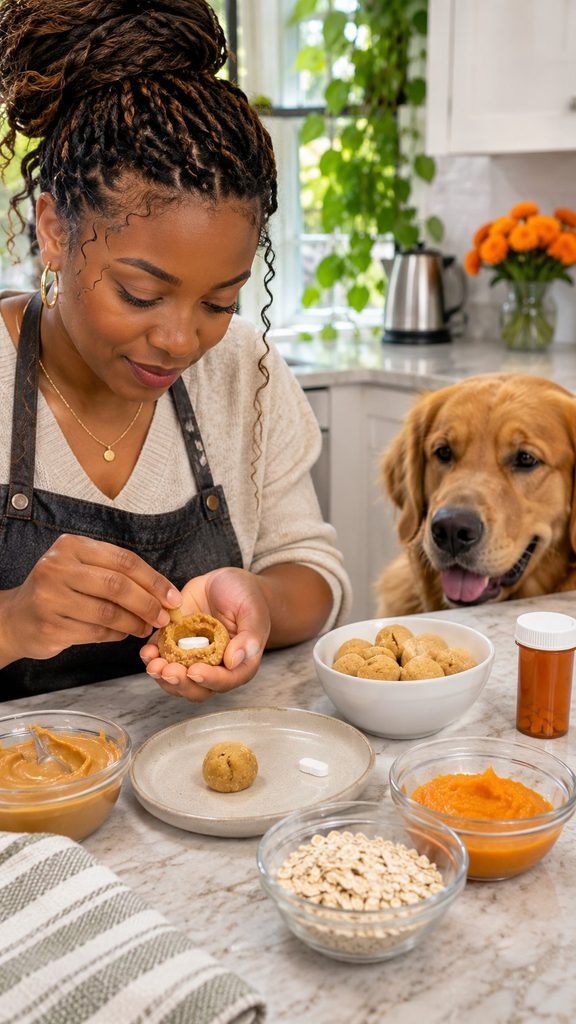
Ask your veterinarian or pharmacist first. Some medications must be given on an empty stomach, and others must not be given with dairy, high fat foods, or certain ingredients, since food can change how they work.
Ask whether your dog’s medication can be given in food, and what type of food is best.
Don’t crush or open pills unless told to. Some medications are coated or extended release, and crushing them can change how they work or make them taste bitter. Ask your veterinarian or pharmacist.
Follow the dose and schedule exactly. A pill pocket is just a delivery method, so give the full dose at the right time.
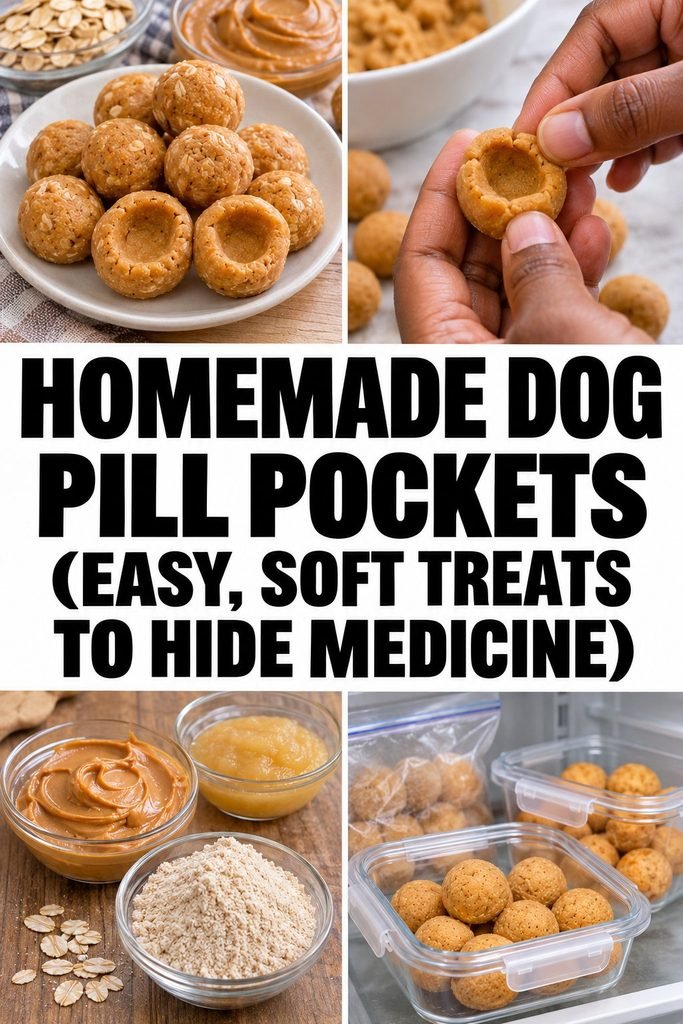
Check the pocket is fully sealed. The pill must be completely covered, so your dog doesn’t detect it.
Confirm your dog swallowed it. Some dogs eat the pocket and spit out the pill later. Check the floor, and watch for a minute or two.
Check labels for xylitol. Xylitol, sometimes listed as birch sugar, is highly toxic to dogs and appears in some peanut butters and other foods.
If your dog eats anything containing it, call your veterinarian or an emergency clinic immediately.
Skip dairy and fatty add ins unless your vet says it’s fine. Some antibiotics don’t work as well with dairy, and fatty foods can upset stomachs and trigger pancreatitis.
No onion, garlic, chocolate, raisins, grapes, or added salt. None belong in dog treats.
Consider allergies and special diets. Dogs on prescription diets, with food allergies, or with diabetes or kidney disease may need a specific type of food. Ask your veterinarian.
Count the calories. Pill pockets add up, especially if your dog takes medicine several times a day. Ask your veterinarian how to adjust meals.
Keep medicine out of reach. Store pills and pill pockets where dogs and children can’t get them.
If your dog has trouble taking medication in food, or won’t take it at all, call your veterinarian rather than skipping doses. There are other formats, including liquids, chewables, and compounded flavors.
What Makes a Good Pill Pocket?
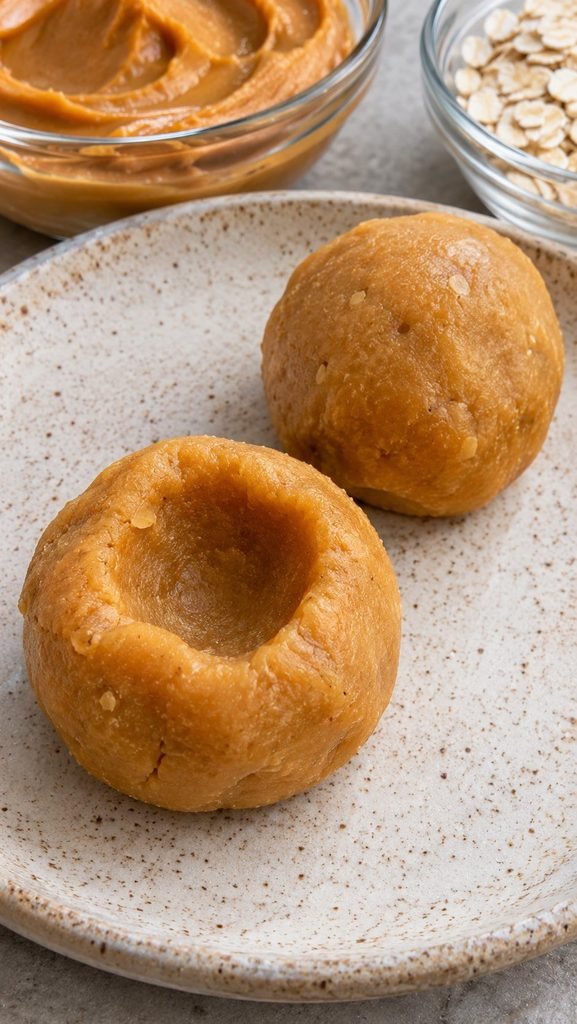
Soft and pliable. It should mold around the pill and stay closed.
Strong smelling. A tasty smell distracts dogs from the pill.
Small. Just big enough to hold the pill, so it’s swallowed quickly.
Sticky enough. The dough should seal when pinched, without falling apart.
Safe. Made with plain, dog safe ingredients.
Recipe One: Peanut Butter Oat Pill Pockets
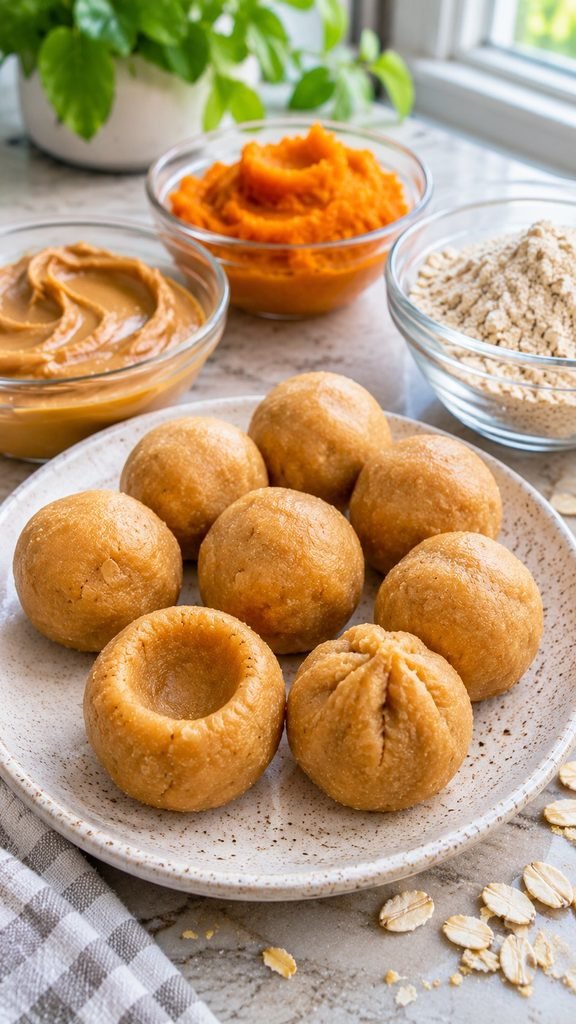
A soft, no bake dough with a flavor most dogs love.
Ingredients
- 1/4 cup natural, unsweetened, xylitol free peanut butter
- 2 tablespoons plain 100 percent pumpkin puree, or mashed ripe banana
- 1/3 cup oat flour, plus extra for dusting
- 1 to 2 teaspoons water, only if needed
How to Make Them
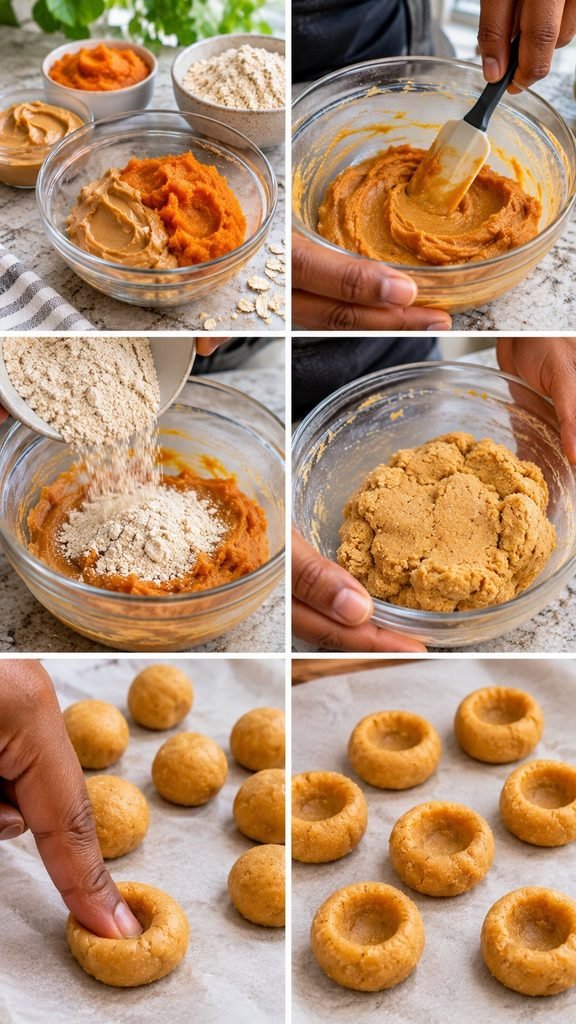
- Mix the base. Stir the peanut butter and pumpkin together until smooth. Warm the peanut butter for a few seconds if it’s stiff.
- Add the flour. Mix in the oat flour until a soft, pliable dough forms. It should feel like play dough, not sticky.
- Adjust the dough. If it’s too sticky, add a little more oat flour. If it’s crumbly, add a few drops of water.
- Portion. Pinch off small pieces, about the size of a large grape for most pills, or smaller for tiny pills.
- Shape. Roll each piece into a ball, then press a deep dent in the center with your finger or the back of a spoon.
- Add the pill. When it’s time for medicine, place the pill in the dent, pinch the dough closed, and roll it into a ball.
- Serve. Offer it right away, and watch your dog swallow.
Notes. Make the pockets ahead without the pill, and store them as described below. Never leave a pill in a stored pocket.
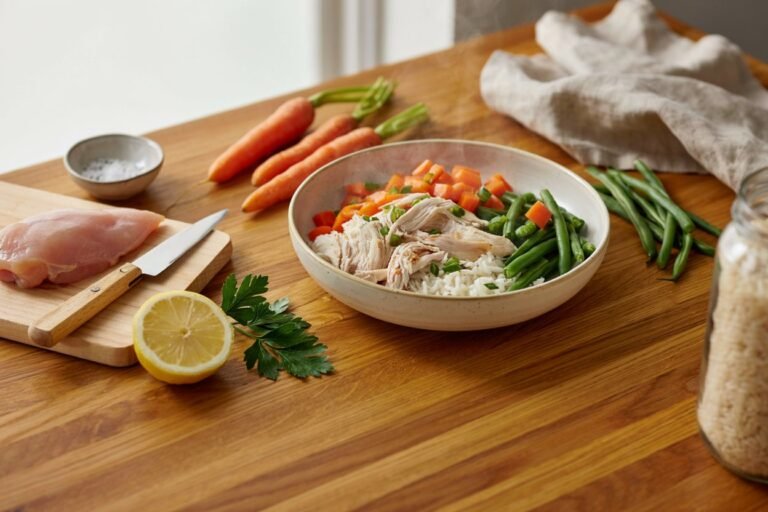
Recipe Two: Chicken and Sweet Potato Pill Pockets (Peanut Butter Free)
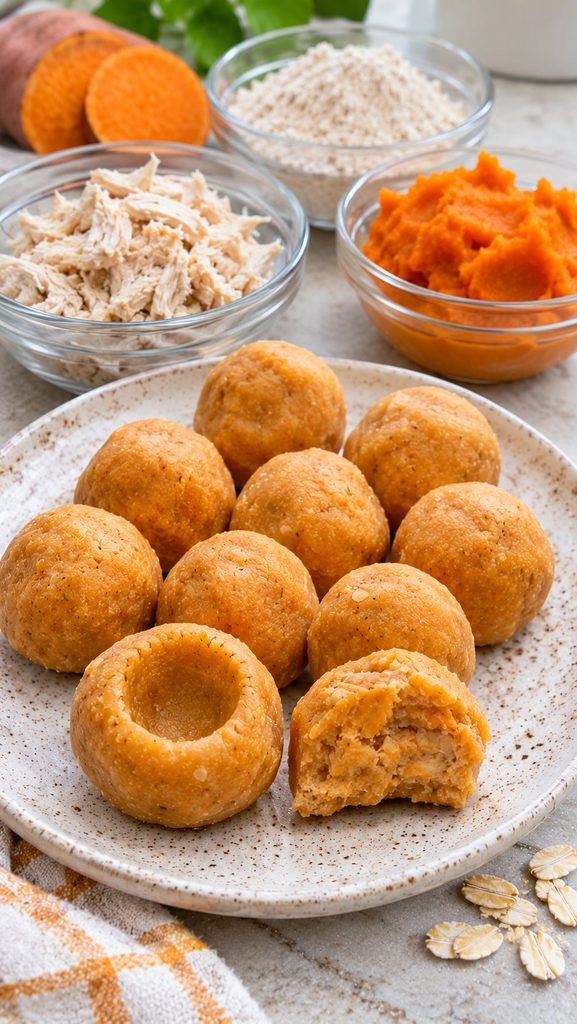
A good option for dogs who are allergic to peanuts, or who need a lower fat pocket.
Ingredients
- 1/4 cup finely shredded, plain, cooked chicken, with no skin, seasoning, or bones
- 1/4 cup plain, cooked, mashed sweet potato, cooled
- 1/3 cup oat flour, plus extra for dusting
How to Make Them
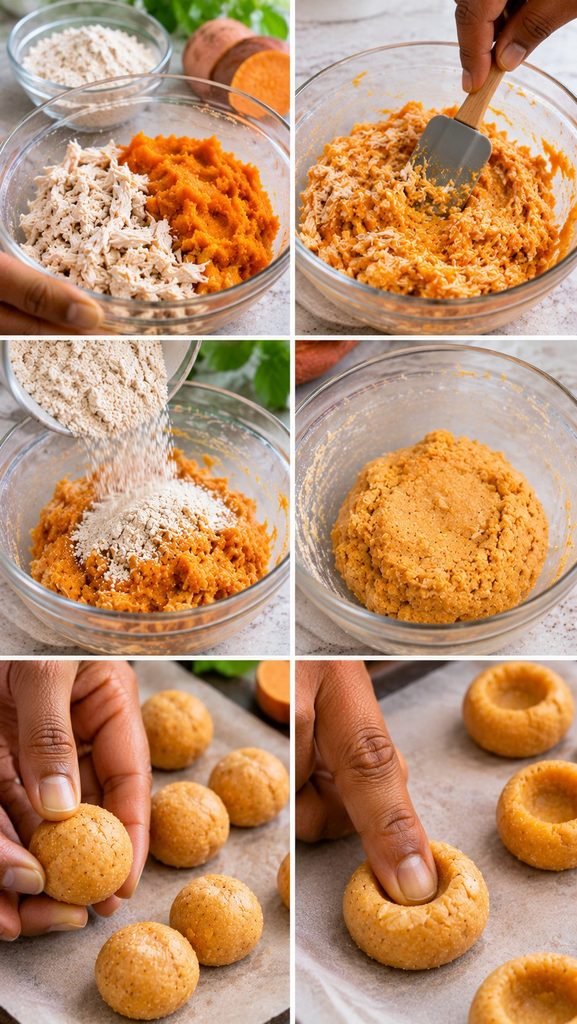
- Chop the chicken very finely. Use a food processor or a sharp knife until almost a paste.
- Mix. Combine the chicken and sweet potato until well mixed.
- Add the flour. Stir in the oat flour until a soft, pliable dough forms. Add a little more flour if it’s sticky.
- Shape. Pinch off small pieces, roll into balls, and press a deep dent in each.
- Add the pill. Place the pill inside when it’s time, then pinch closed and roll.
- Serve right away.
Notes. Use plain chicken with no onion, garlic, or salt. Store chicken based pockets in the refrigerator and use them quickly, as described below.
Using a Pill Pocket Step by Step
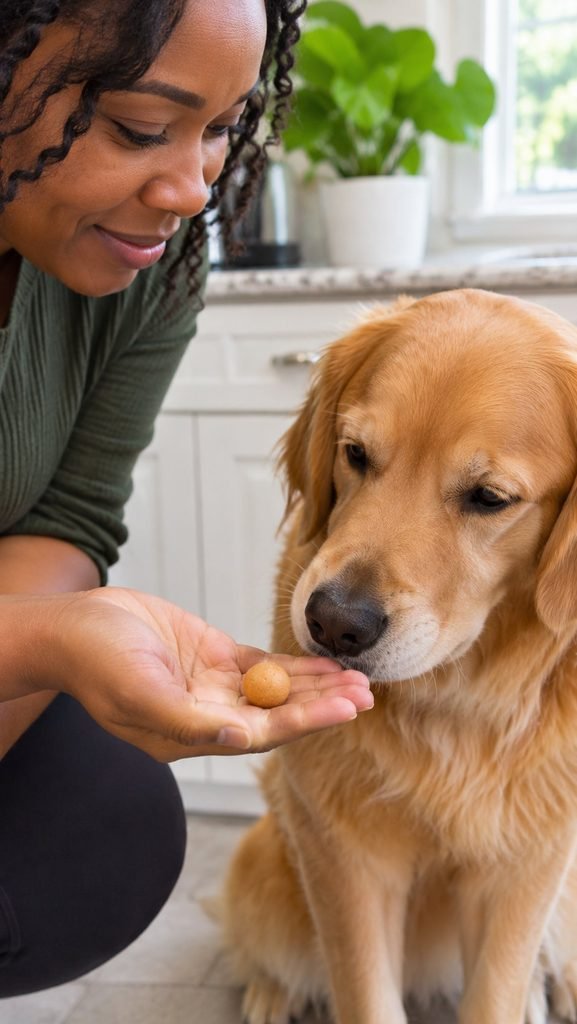
- Check the medication instructions. Make sure it can be given with food.
- Prepare a pocket. Press a dent, add the pill, and pinch closed.
- Make it smell good. Warm the pocket briefly in your hands, which brings out the smell.
- Offer without hesitation. Hold it out on a flat palm, and let your dog take it.
- Watch for swallowing. Confirm the whole pocket was eaten.
- Check the floor. Look for a dropped pill.
- Reward. Praise your dog calmly.
Tips for Dogs Who Are Suspicious
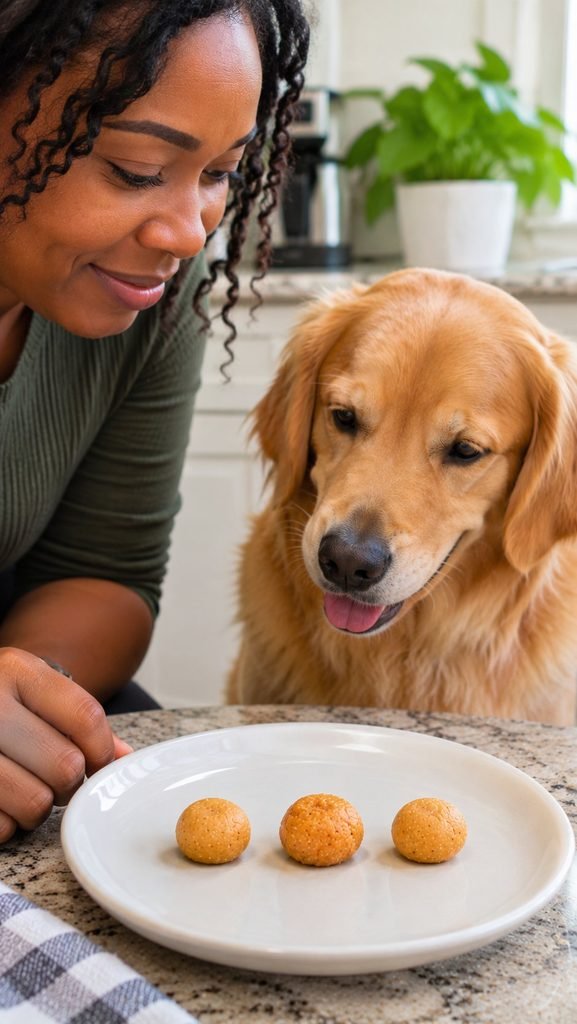
Use the “trick” method. Offer a plain pocket first with no pill, then a pocket with the pill, then another plain pocket. Your dog gobbles the first and last without suspecting the middle.
Use a smaller piece. Shape the pocket to the size of the pill so there’s less to chew.
Roll the pill in the center. Make sure no corner or edge is visible.
Vary the pocket. Some dogs tire of the same flavor, so alternate recipes.
Offer a small meal first. If your veterinarian says the medicine can be given with food, a little food in the stomach can help.
Hide in a meatball. Some dogs prefer a small meatball. See my Homemade Meatballs for Dogs, and make sure the recipe suits the medicine.
Try a different delivery. Ask your veterinarian about liquid medications or flavored compounded versions.
Stay calm. Dogs read your mood, so keep it casual.
Variations
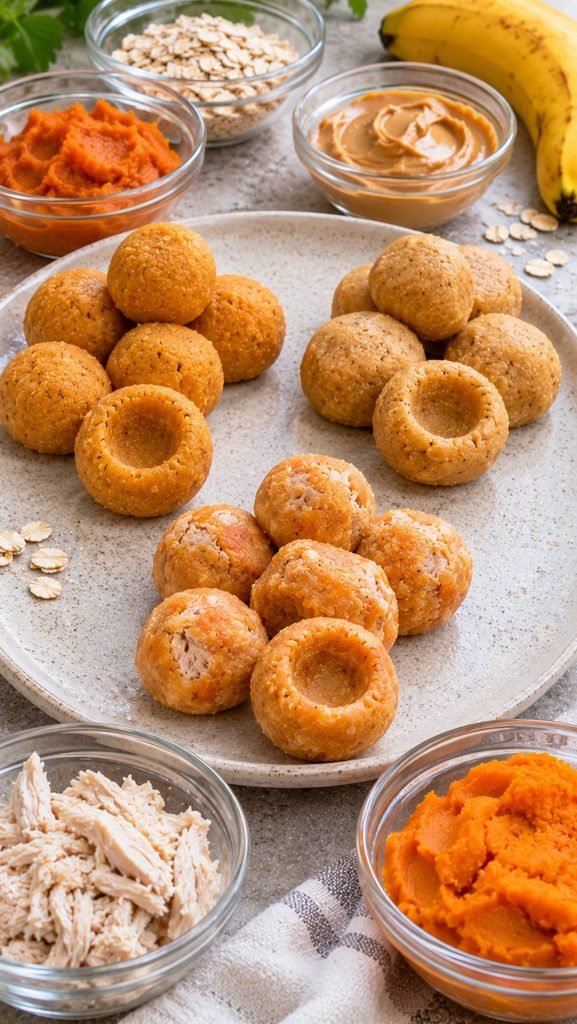
Pumpkin only. Use plain pumpkin puree and oat flour for a simple, low fat, mild pocket, though it may be stickier.
Banana pocket. Use mashed banana in place of the pumpkin in the peanut butter recipe.
Liver pocket. Some owners use finely mashed, cooked liver, though it’s very rich. Ask your veterinarian first, and use only small amounts.
Wheat free. Oat flour is wheat free. Ask your veterinarian about grain sensitivities.
Mini pockets. Use a tiny piece for small pills and small dogs.
Soft treat pockets. Make a batch of soft treats and press a pill into them. See my Blueberry Muffins for Dogs for soft options, and check the medicine allows it.
Common Mistakes to Avoid
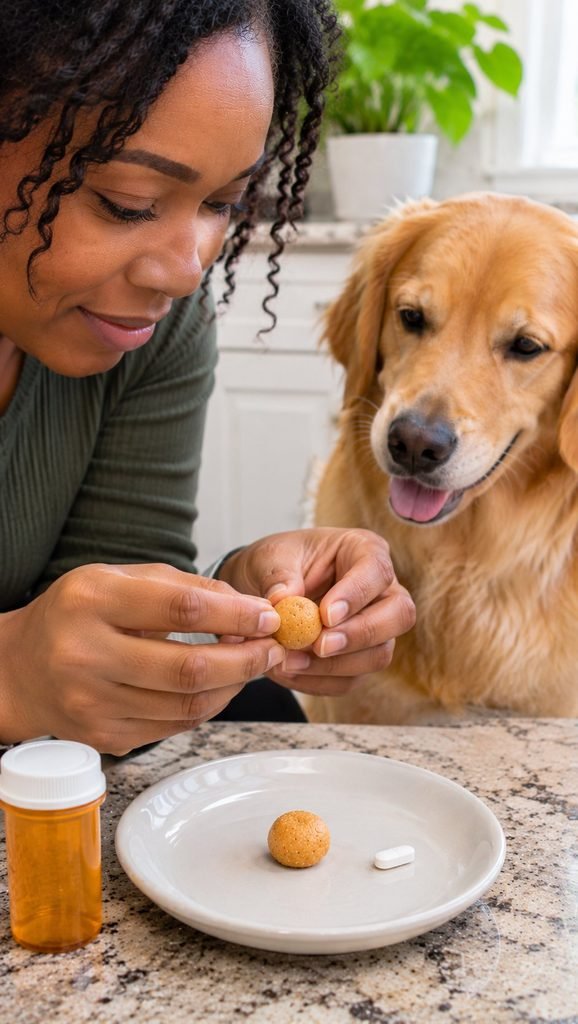
Not asking about food. Some medicines shouldn’t be given with food, or with certain foods.
Crushing pills without checking. It can change how the medicine works.
Making pockets too big. Your dog might chew and detect the pill.
Leaving the pill in a stored pocket. Add it only when you’re giving it.
Using peanut butter with xylitol. Always read the label.
Using dairy without checking. Some medicines don’t mix with dairy.
Skipping the swallowing check. Dogs sometimes spit out pills.
Overfeeding. Pockets add calories.
Using spoiled pockets. Throw away pockets that smell off or look moldy.
Storage
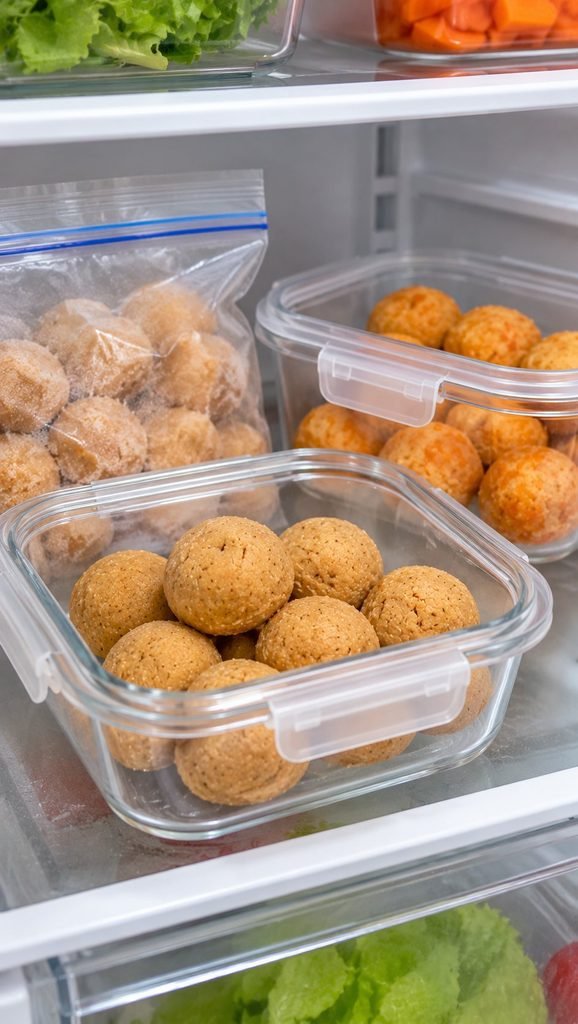
Peanut butter oat pockets. Store in an airtight container in the refrigerator for up to five days.
Chicken and sweet potato pockets. Store in the refrigerator for up to three days.
Freezer. Freeze pockets, without pills, in a freezer bag for up to three months. Thaw in the refrigerator, or at room temperature for a short time, before using.
Don’t store the pill in the pocket. Add the medicine just before giving it.
Check before serving. Discard any pockets with an off smell, mold, or unusual texture.
Frequently Asked Questions
Is it okay to hide a pill in food? Often, yes, but not always. Some medications should be given on an empty stomach or without certain foods. Ask your veterinarian or pharmacist.
Can I use cheese or peanut butter? Many owners do, but some medicines shouldn’t be given with dairy, and peanut butter is high in fat. Ask your veterinarian first.
What if my dog spits out the pill? Try a smaller pocket, the three pocket trick, or a different food. If your dog keeps refusing, call your veterinarian about other formats.
Can I make the pockets ahead? Yes, without the pill. Store them in the refrigerator or freezer.
Can I use these for capsules? Often, but some capsules shouldn’t be opened. Ask your veterinarian or pharmacist.
Are these safe for puppies? Ask your veterinarian first, since puppies have sensitive stomachs and specific medication needs.
Can I use human foods besides these? Only plain, dog safe options. Avoid onion, garlic, chocolate, grapes, raisins, xylitol, and heavily seasoned foods.
What if my dog is on a prescription diet? Ask your veterinarian which foods are okay, since added treats can affect the diet.
Can I make pill pockets for cats? Cats have different needs, and some foods aren’t safe for them.
Ask your veterinarian for a cat safe option, and see my Healthy Homemade Cat Treats for ideas to talk through.
Homemade Dog Pill Pockets Recipe Card
Prep time: 10 minutes
Yield: About 15 to 20 small pockets
Storage: Refrigerator, 3 to 5 days, or freezer, up to 3 months, without pills
Peanut Butter Oat Pill Pockets
- 1/4 cup natural, unsweetened, xylitol free peanut butter
- 2 tablespoons plain 100 percent pumpkin puree, or mashed ripe banana
- 1/3 cup oat flour, plus extra for dusting
- 1 to 2 teaspoons water, only if needed
Instructions
- Mix the peanut butter and pumpkin until smooth.
- Stir in the oat flour until a soft, pliable dough forms.
- Pinch off small pieces, roll into balls, and press a dent in each.
- When it’s time, place the pill in the dent, pinch closed, and roll.
- Offer right away, and confirm your dog swallowed it.
Notes
Ask your veterinarian or pharmacist whether your dog’s medication can be given with food. Don’t crush pills unless told to.
Check labels for xylitol. Pockets add calories, so ask your veterinarian how to adjust meals. Never store pills in pockets.
A Final Note on Homemade Pill Pockets
A good pill pocket makes medicine time calmer for you and your dog, but it only works when the medicine and the food are a safe match.
Check with your veterinarian, keep the pockets plain and small, and make sure your dog swallows every dose.
If you run into trouble, your veterinarian can suggest other options. For more ideas, browse my Homemade Meatballs for Dogs and my Peanut Butter Dog Cookies.
More Homemade Dog Treat Ideas
- Peanut Butter Banana Dog Biscuits
- 3 Ingredient Sweet Potato Dog Cookies
- Homemade Meatballs for Dogs
- Blueberry Muffins for Dogs
- Master Dry Mix for Dog Treats
For a wider look at feeding your dog well, check out 7 Healthiest Homemade Dog Foods.