Fresh Dog Food Recipes That Dogs Love: Easy Homemade Meals for Your Pup
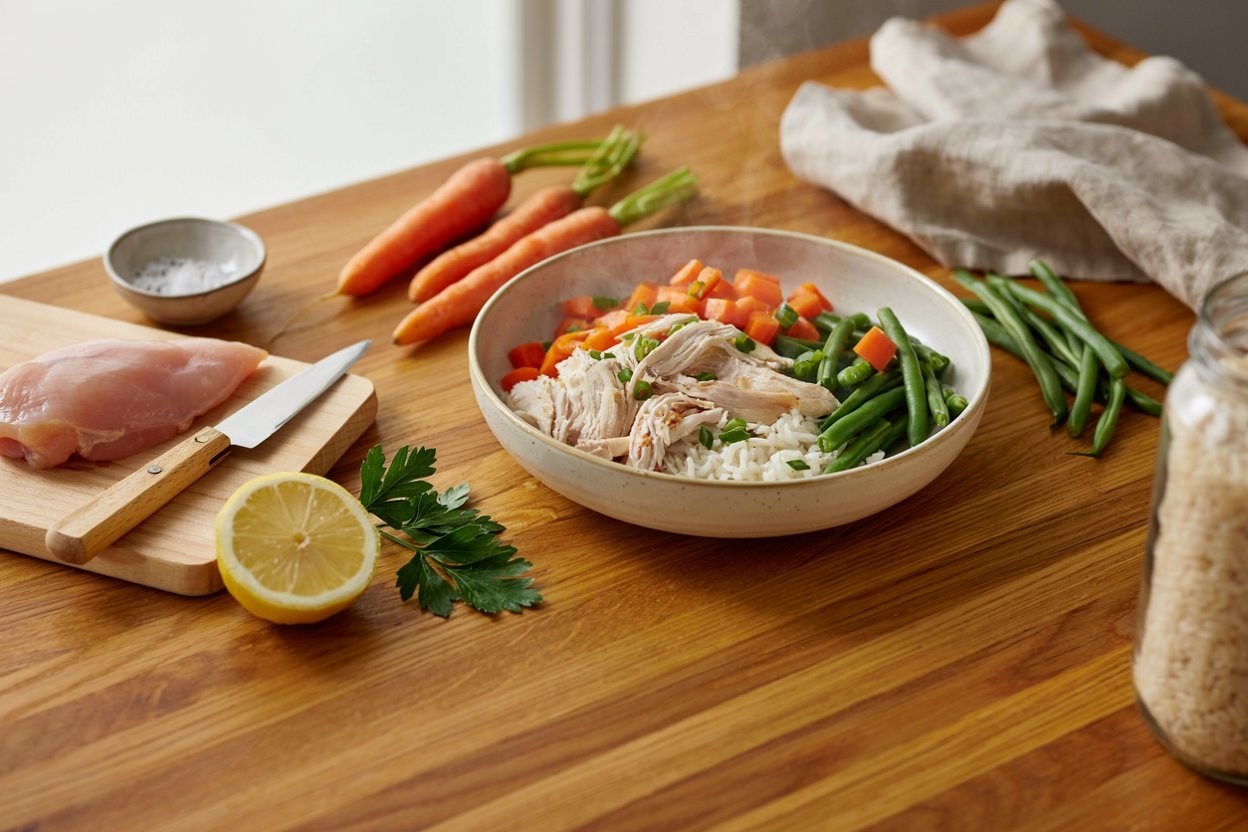
There’s something satisfying about opening the refrigerator and knowing exactly what went into your dog’s dinner.
When I started making fresh meals for my dog, I wanted recipes that were simple enough to prepare on a busy day but still looked and smelled like real food rather than another bowl of dry kibble.
Over time, that turned into a small rotation of go to meals built around a handful of proteins, a few reliable carbohydrates, and whatever vegetables happened to be on sale that week.
This guide covers ten of those recipes, along with everything else I wish I’d known before I started: how to build a genuinely balanced meal, which ingredients are safe, how much to actually serve, how to store everything without wasting food, and when homemade meals should stay an occasional addition rather than becoming a dog’s entire diet.
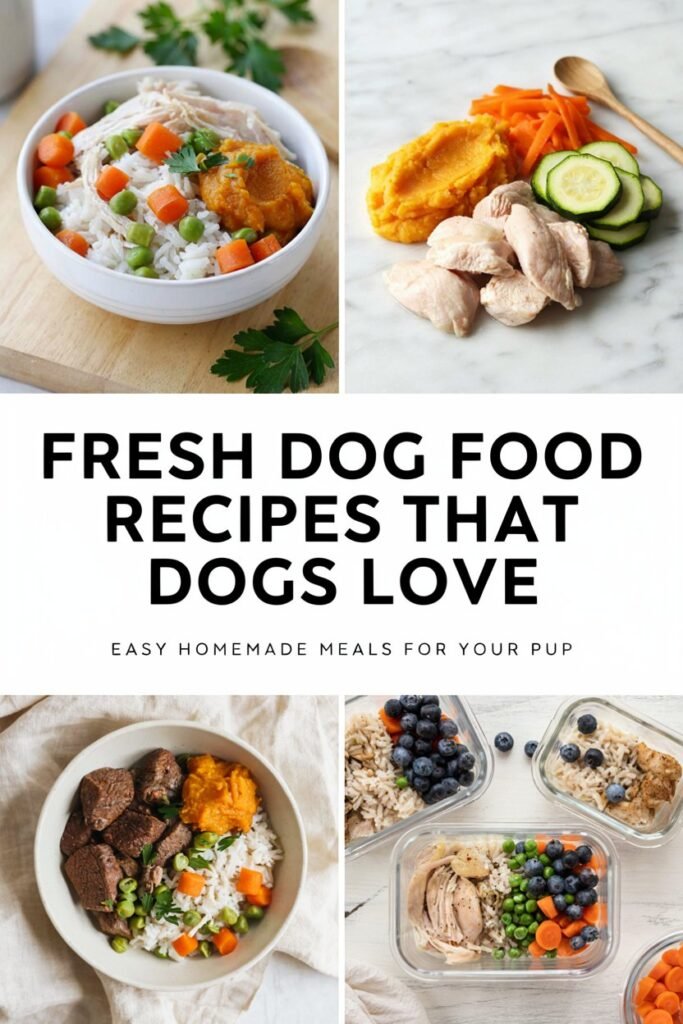
If you want to go deeper into any part of this topic, a few related guides are worth having open alongside this one. Homemade dog food with vet approved ingredients walks through what a truly complete diet needs beyond just picking healthy ingredients, 7 high protein homemade dog food recipes, 3 simple farmer’s dog food recipes, and 3 ingredient cooked dog food offer more meal ideas if you want additional variety, simple homemade dog food recipes for beginners is a good starting point if this is your first time cooking for your dog, healthy homemade beef and apple stew for dogs is a great slow cooked option, and human foods dogs can safely eat and 11 vet friendly frozen dog treat recipes round things out nicely if you’re also curious about treats and everyday food sharing.
Disclaimer
This post may contain affiliate links. As an Amazon Associate, I earn from qualifying purchases at no additional cost to you. I only recommend dog products and kitchen tools that I genuinely believe make preparing homemade meals easier and more enjoyable. The information in this article is for general informational purposes only. Always use dog safe ingredients and consult your veterinarian before making major changes to your dog’s diet.
Amazon Shopping List You Need
- Digital Kitchen Scale – I always use one to measure ingredients accurately.
- Food Processor – I use this to quickly prepare vegetables and other ingredients.
- Stainless Steel Mixing Bowls – I always reach for these when making homemade dog food.
- Glass Food Storage Containers – I use these to portion and store fresh meals.
- Silicone Freezer Trays – I love these for freezing convenient meal portions.
- Stainless Steel Dog Bowls – I always serve homemade meals in these.
- Airtight Food Storage Containers – I use these to keep dry ingredients fresh and organized.
Fresh Dog Food: What Makes a Good Homemade Meal?
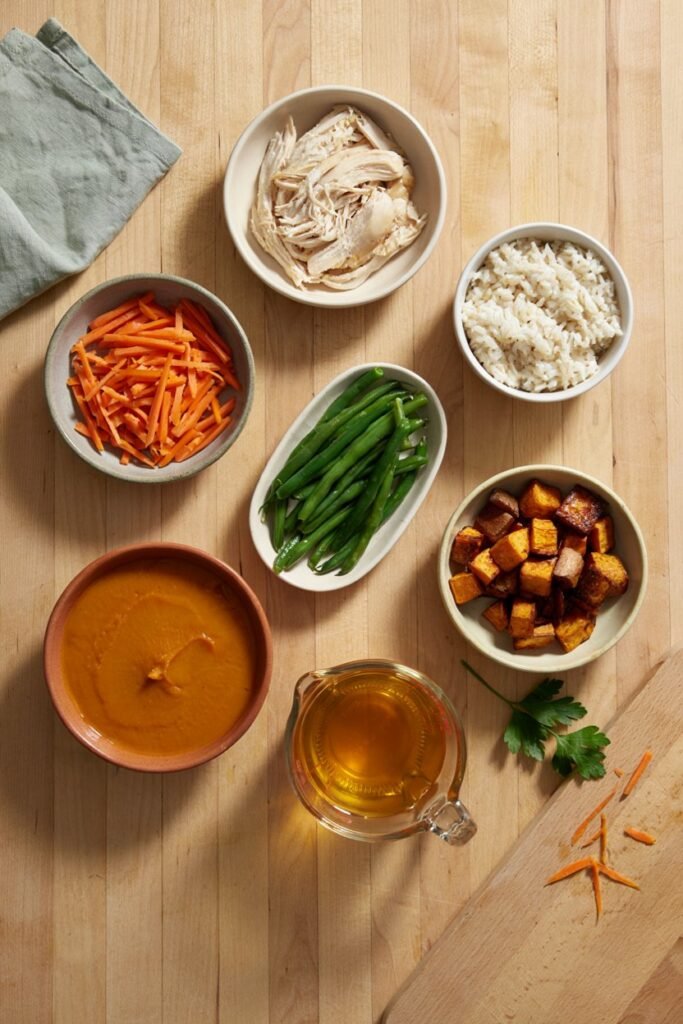
Before jumping into the recipes, it helps to understand what actually makes a homemade meal worthwhile.
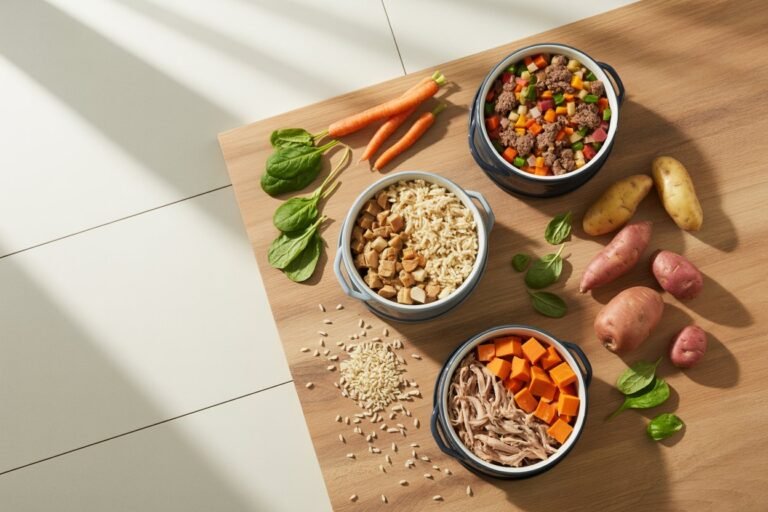
A good fresh dog food recipe generally includes a quality protein, a dog friendly carbohydrate, some vegetables, an appropriate fat source, and enough water or unsalted broth to keep everything moist and easy to eat.
Variety matters too, since rotating proteins and vegetables over time helps cover more nutritional ground than sticking to the exact same bowl every single day.
One thing I learned quickly is that putting chicken, rice, and vegetables into a bowl doesn’t automatically make a perfectly balanced dog meal.
I now think about homemade dog food more as a recipe that needs the right ingredients in the right proportions, rather than simply giving my dog whatever happens to be left in the kitchen.
Homemade doesn’t automatically mean nutritionally complete, and that distinction matters more the more often a recipe gets used.
How to Make Homemade Dog Food Safely
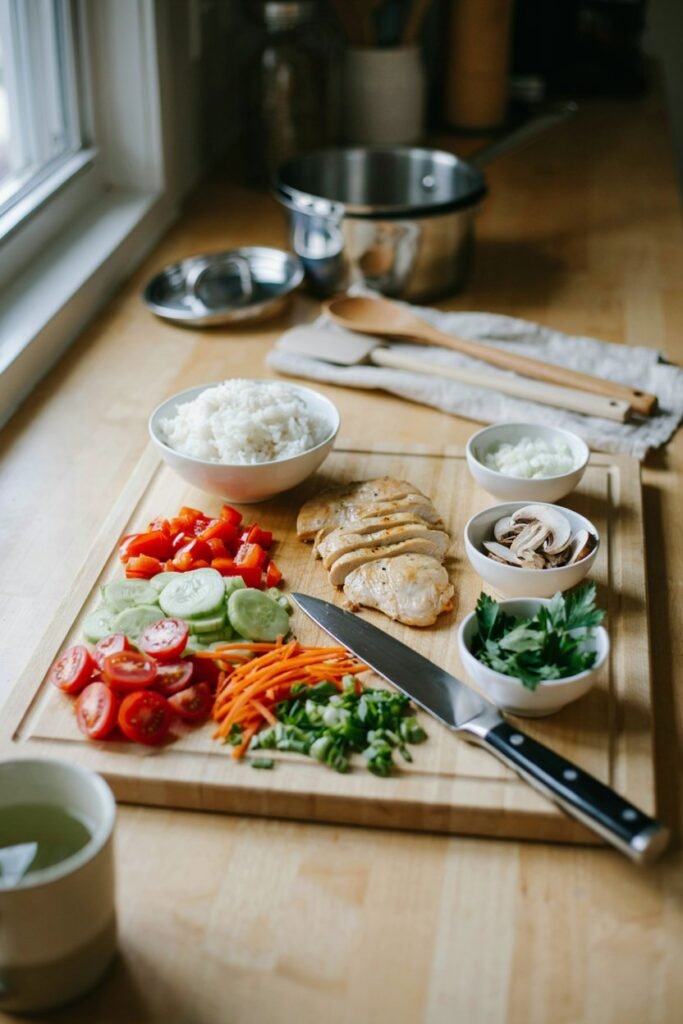
A few habits make homemade cooking safer across every recipe in this guide. Always cook meat thoroughly, and remove any bones before serving, since cooked bones can splinter.
Avoid excessive salt, onions, garlic, grapes, raisins, chocolate, and xylitol entirely, along with any heavily seasoned leftovers from your own dinner.
Never give cooked bones under any circumstances, and introduce new foods gradually rather than switching a dog’s entire diet overnight.
It’s also worth remembering that dogs have different nutritional requirements depending on their age, size, activity level, and overall health status, so what works well for one dog may need adjusting for another.
10 Fresh Dog Food Recipes
1. Chicken, Rice and Vegetable Dog Food
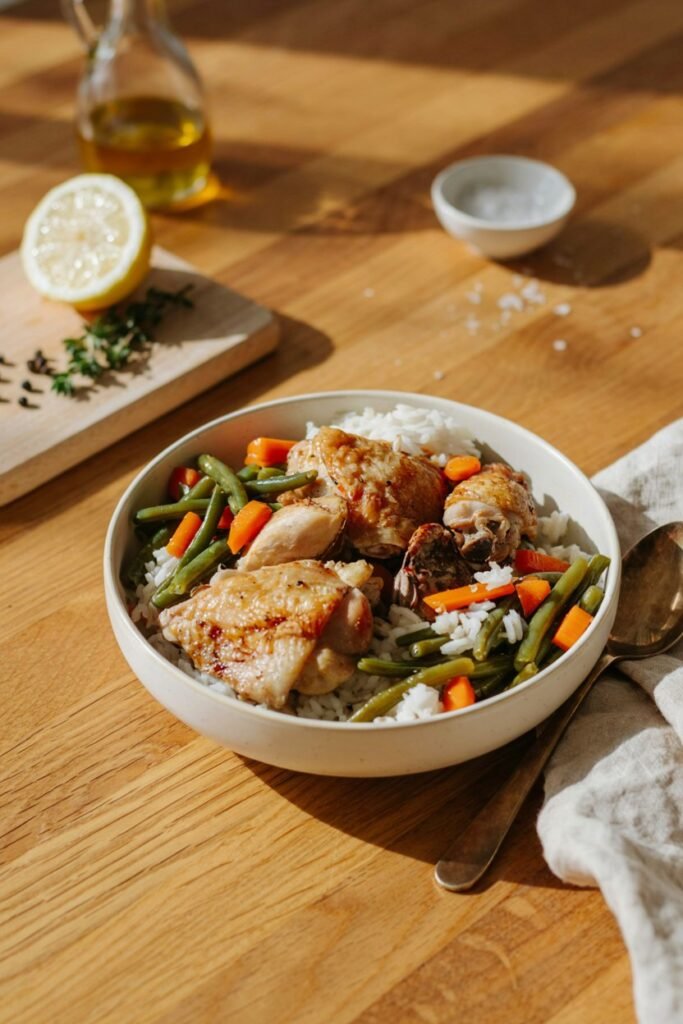
This is the recipe I come back to most often, mostly because my dog has never once turned his nose up at it.
Why My Dog Likes It The combination of tender chicken and soft rice seems to hit exactly the texture he’s looking for, and the vegetables add just enough variety that it doesn’t feel repetitive to him.
Ingredients
- 2 pounds ground or diced chicken breast. Chicken is the backbone of this meal, a lean protein that cooks quickly and gives the whole bowl its main flavor.
- 1.5 cups cooked white or brown rice. Rice adds bulk and a filling, easy to digest carbohydrate base that soaks up the flavor of the chicken nicely.
- 1 cup carrots, chopped. Carrots bring a bit of natural sweetness and color, along with fiber that helps round out the meal.
- 1 cup green beans, chopped. Green beans add volume and crunch without contributing many extra calories, which I like for keeping portions reasonable.
How I Make It
- Cook the chicken thoroughly in a large pot with nothing added.
- Steam or boil the carrots and green beans until tender.
- Cook the rice separately according to package instructions.
- Combine everything once cooled, mixing evenly.
How Much Should You Serve? Serving size depends on your dog’s size, age, and activity level rather than one fixed amount.
A smaller dog may only need a fraction of a cup, while a larger, more active dog could need considerably more.
Storage Refrigerate for up to 4 days, or freeze individual portions for up to 3 months.
My Tip I usually make a larger batch on Sunday because it saves me from cooking a separate meal for my dog during the week.
Once everything has cooled, I divide it into individual portions so I can grab exactly what I need each night.
2. Ground Turkey and Sweet Potato Dog Food
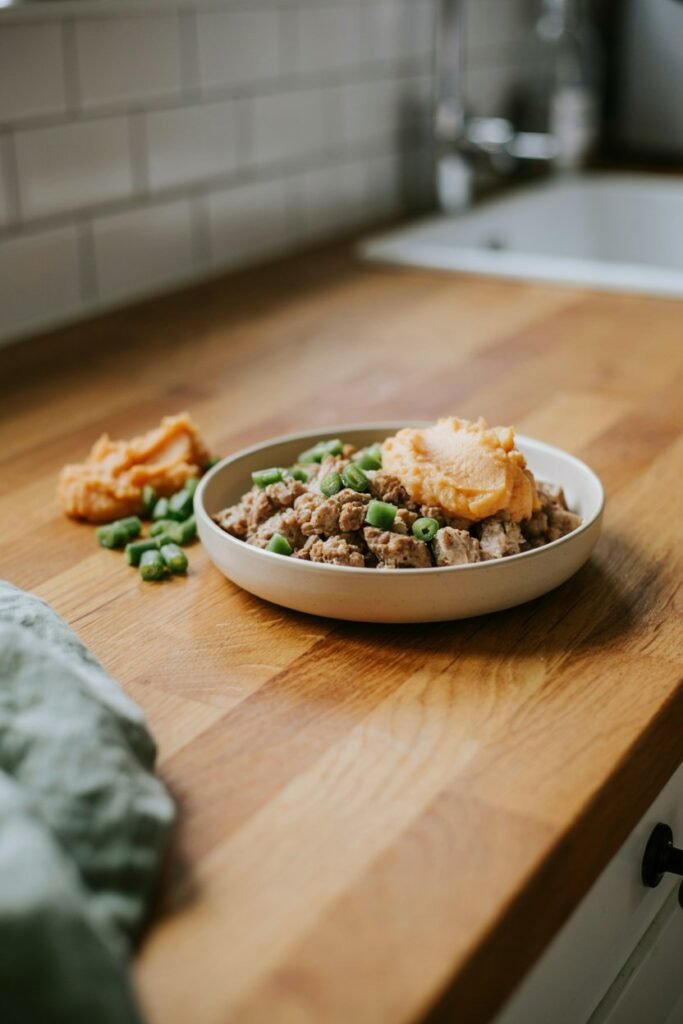
A simple, leaner alternative that works especially well for dogs who need to manage their weight.
Why My Dog Likes It The natural sweetness of the sweet potato seems to make this one feel like a treat, even though it’s really just his regular dinner.
Ingredients
- 2 pounds ground turkey
- 2 cups sweet potato, cooked and mashed
- 1 cup green beans, chopped
How I Make It
- Brown the turkey fully, draining any excess liquid.
- Boil the sweet potato until soft, then mash.
- Steam the green beans until tender.
- Combine everything once cooled.
How Much Should You Serve? Adjust based on your dog’s weight and activity level, keeping in mind turkey is leaner than chicken, so portions may need slight adjustment if you’re switching between the two.
Storage Refrigerate for up to 4 days, or freeze for up to 3 months.
My Tip I bake extra sweet potato whenever I already have the oven on for something else, which makes this recipe come together with almost no added effort.
3. Beef, Brown Rice and Carrot Dog Food
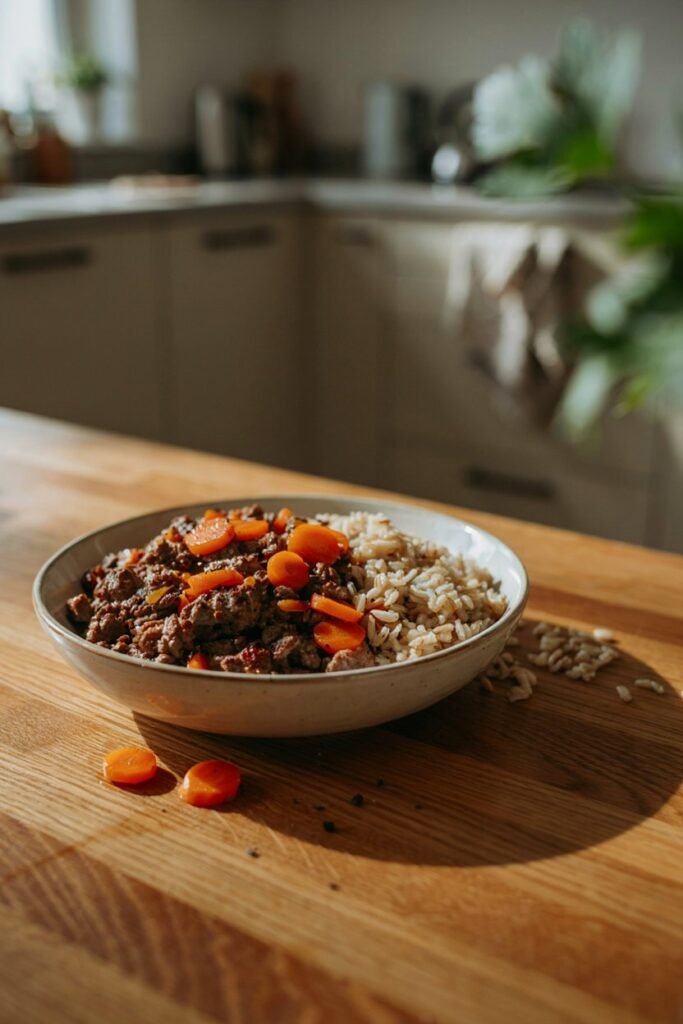
A heartier option for days when I want something a little richer in the rotation.
Why My Dog Likes It Beef has a stronger smell and flavor than chicken or turkey, and it’s noticeably his favorite of the three whenever I rotate proteins.
Ingredients
- 2 pounds lean ground beef
- 1.5 cups cooked brown rice
- 1 cup carrots, chopped
How I Make It
- Brown the beef thoroughly, draining off the excess fat, since beef tends to release more than chicken or turkey.
- Cook the brown rice separately until tender.
- Steam the carrots until soft.
- Combine everything once cooled.
How Much Should You Serve? Beef is generally richer, so I tend to serve slightly smaller portions of this one compared to the leaner recipes, adjusted to my dog’s size and activity level.
Storage Refrigerate for up to 4 days, or freeze for up to 3 months.
My Tip Draining the fat thoroughly makes a real difference in how well this one holds up in the fridge without separating.
4. Chicken and Pumpkin Homemade Dog Food
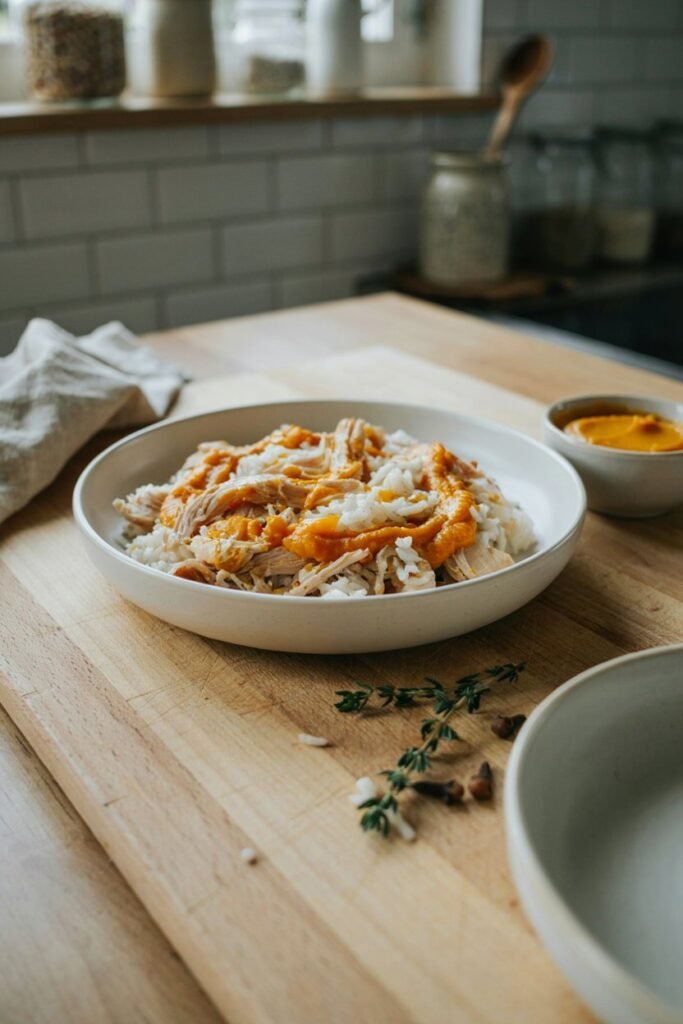
A gentler option I reach for whenever my dog’s stomach seems a little off.
Why My Dog Likes It The pumpkin gives this one a softer, almost creamy texture that seems easier on his stomach during a rough week.
Ingredients
- 2 pounds chicken breast, cooked and shredded
- 1 cup plain pumpkin puree
- 1 cup cooked white rice
How I Make It
- Cook the chicken thoroughly, then shred once cooled slightly.
- Cook the rice separately.
- Combine the chicken, rice, and pumpkin in a large bowl.
How Much Should You Serve? Serve in slightly smaller portions than usual if this is being used specifically to settle an upset stomach, and keep pumpkin as a smaller portion of the overall meal rather than the main component.
Storage Refrigerate for up to 4 days, or freeze for up to 3 months.
My Tip I keep a few cans of plain pumpkin puree in the pantry specifically for this recipe, since it always seems to come up right when I need it most.
5. Turkey, Oatmeal and Green Bean Dog Food
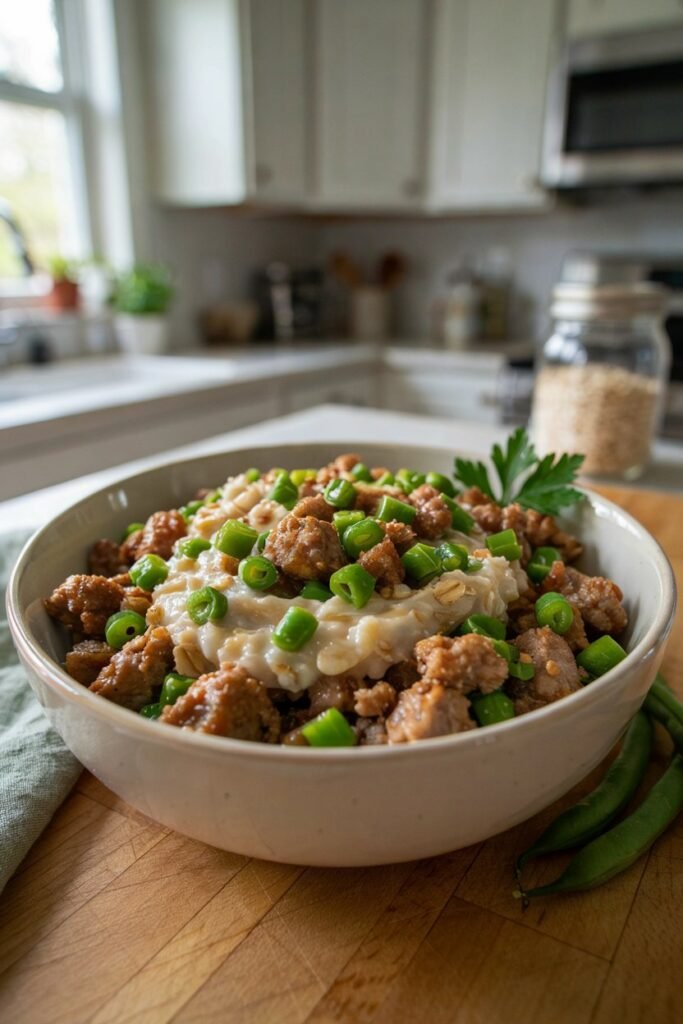
A different texture from the rice based recipes, and a good option for dogs who do better with oats.
Why My Dog Likes It The oatmeal gives this one a softer, almost porridge like consistency that feels different from the usual rice based meals.
Ingredients
- 2 pounds ground turkey
- 1 cup cooked oats
- 1 cup green beans, chopped
How I Make It
- Cook the turkey thoroughly, breaking it into small pieces.
- Cook the oats with water according to package instructions.
- Steam the green beans until tender.
- Combine everything once cooled.
How Much Should You Serve? Portion based on your dog’s weight and activity level, and note that oats are more filling by volume than rice, so you may find a slightly smaller serving goes just as far.
Storage Refrigerate for up to 4 days, or freeze for up to 3 months.
My Tip This is the recipe I make when I’m already cooking oatmeal for myself, since it’s easy to just make a larger batch and split it.
6. Salmon, Sweet Potato and Vegetable Dog Food
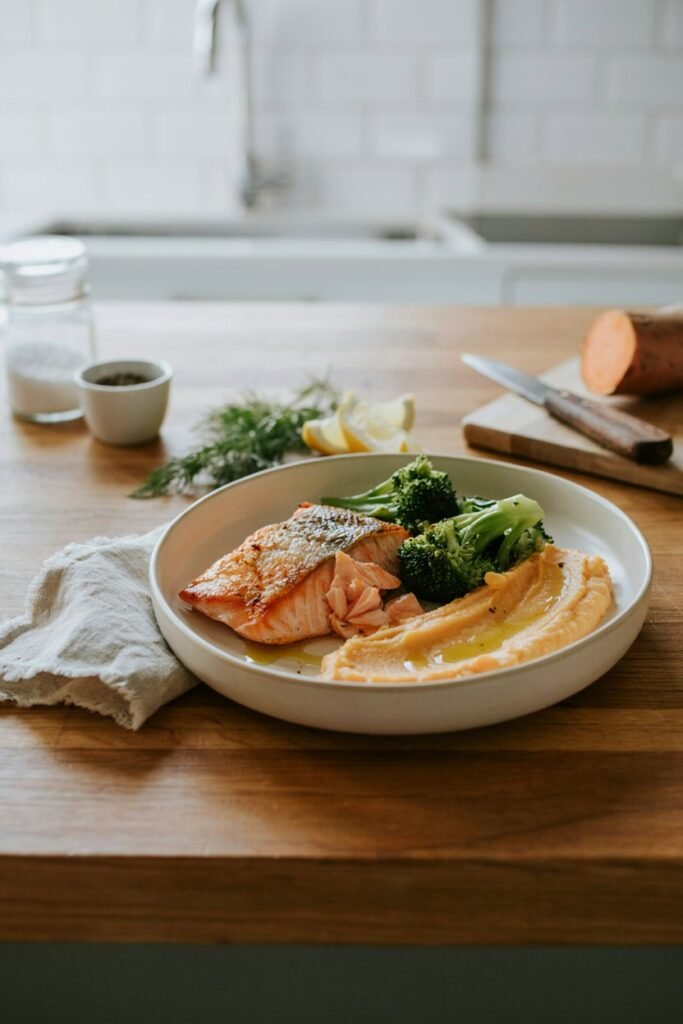
A good option for dogs who could use a coat and skin boost.
Why My Dog Likes It Salmon has a smell that seems to get him more excited than any other protein I cook, even before it’s fully done.
Ingredients
- 2 pounds salmon, fully cooked and deboned
- 1.5 cups sweet potato, cooked and mashed
- 1 cup broccoli, steamed and chopped
How I Make It
- Bake or poach the salmon fully, then remove every bone carefully.
- Flake the salmon into small pieces.
- Boil the sweet potato until soft, then mash.
- Steam the broccoli until tender.
- Combine everything once cooled.
How Much Should You Serve? Salmon based meals tend to have a shorter shelf life than poultry or beef, so I usually make a slightly smaller batch and portion accordingly.
Storage Refrigerate for up to 3 days, or freeze for up to 2 months.
My Tip Removing every bone carefully takes a bit more time than the other recipes, but it’s worth doing slowly rather than rushing through it.
7. Beef and Pumpkin Dog Food
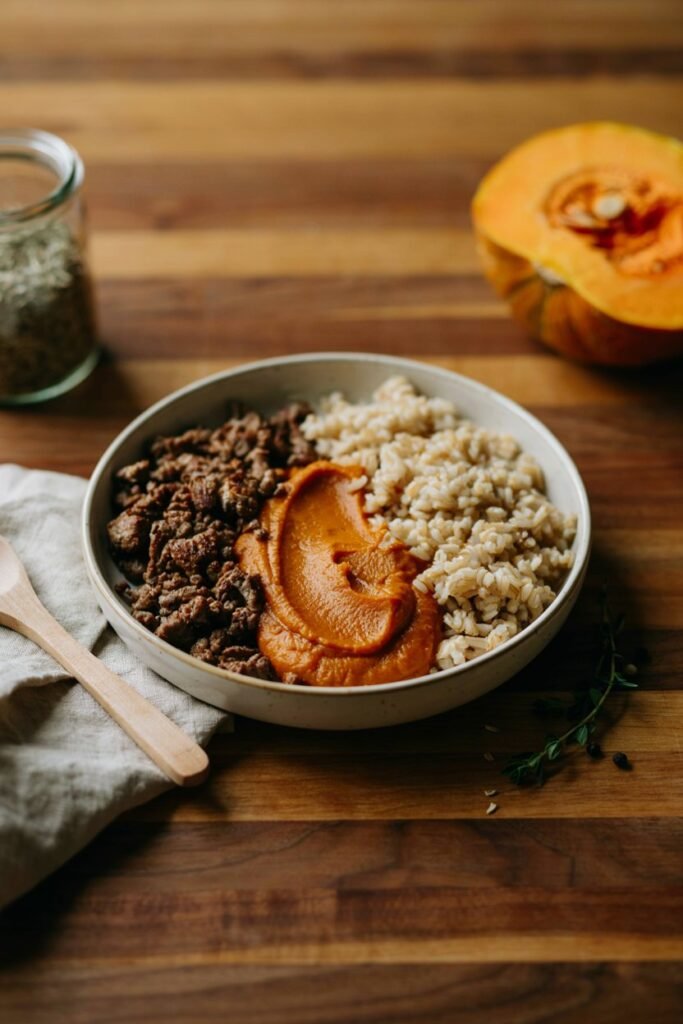
A hearty, simple recipe that portions well for several days at a time.
Why My Dog Likes It This one is rich enough that a smaller portion still feels satisfying, which makes it a good choice on days he’s had less exercise than usual.
Ingredients
- 2 pounds lean ground beef
- 1 cup plain pumpkin puree
- 1 cup cooked brown rice
How I Make It
- Brown the beef fully, draining excess fat.
- Cook the rice separately.
- Combine the beef, rice, and pumpkin once cooled.
How Much Should You Serve? Given how rich this one is, I tend to serve slightly smaller portions than the leaner recipes in this list.
Storage Refrigerate for up to 4 days, or freeze for up to 3 months.
My Tip I make this one specifically when I know I’ll be busy for a few days, since it holds up so well in the fridge without needing much attention.
8. Chicken, Quinoa and Vegetable Dog Food
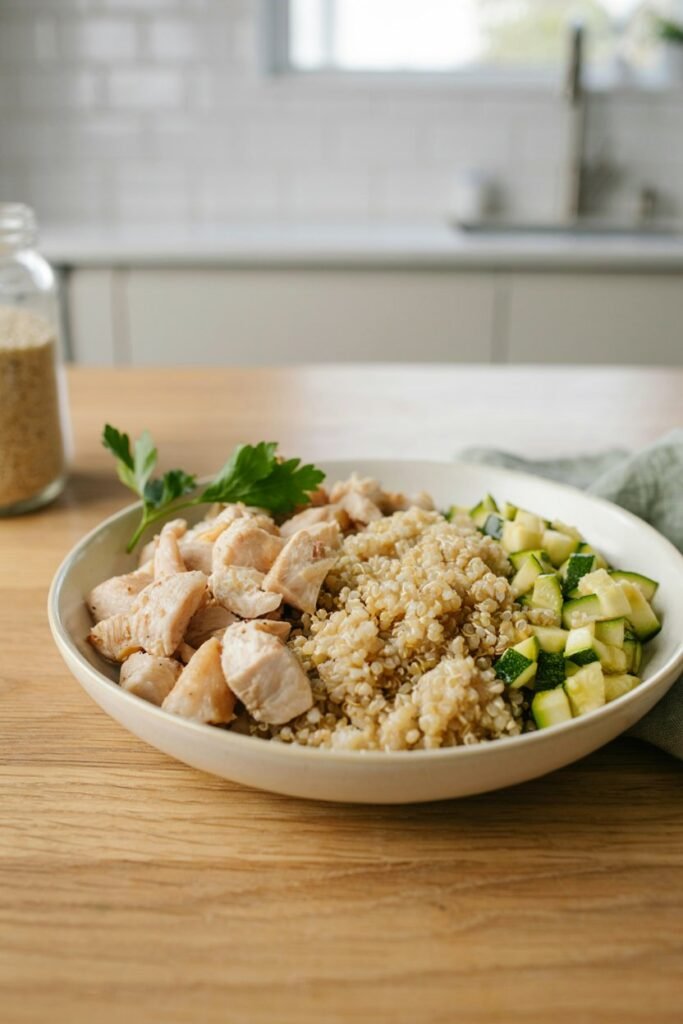
A good way to add variety beyond rice, with quinoa offering its own complete protein alongside the chicken.
Why My Dog Likes It The texture of quinoa is slightly different from rice, and it seems to keep this meal from feeling repetitive even after we’ve had chicken a few times that week.
Ingredients
- 2 pounds chicken breast, cooked and diced
- 1 cup cooked quinoa, rinsed thoroughly before cooking
- 1 cup zucchini, chopped
How I Make It
- Cook the chicken thoroughly, then dice into small pieces.
- Rinse and cook the quinoa according to package instructions.
- Steam the zucchini until tender.
- Combine everything once cooled.
How Much Should You Serve? Quinoa is more calorie dense than white rice, so I usually serve a slightly smaller portion of this one compared to the rice based recipes.
Storage Refrigerate for up to 4 days, or freeze for up to 3 months.
My Tip Rinsing the quinoa thoroughly before cooking makes a noticeable difference in flavor, since it removes the naturally bitter coating.
9. Turkey and Butternut Squash Dog Food
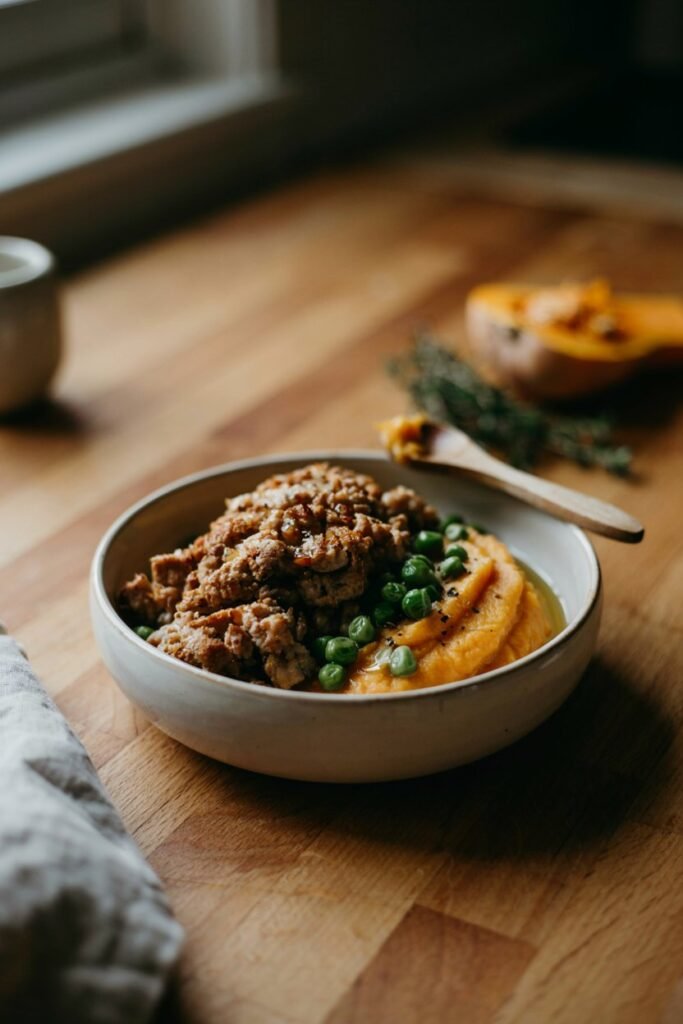
A good seasonal recipe that happens to be one of the prettiest meals in this whole rotation.
Why My Dog Likes It The butternut squash gets naturally sweet once roasted, and it seems to be one of his favorite textures out of everything on this list.
Ingredients
- 2 pounds ground turkey
- 1.5 cups butternut squash, cooked and mashed
- 1 cup peas
How I Make It
- Cook the turkey thoroughly, breaking it apart as it browns.
- Roast or boil the butternut squash until soft, then mash.
- Steam the peas briefly.
- Combine everything once cooled.
How Much Should You Serve? Adjust based on your dog’s weight and activity level, similar to the other turkey based recipes in this guide.
Storage Refrigerate for up to 4 days, or freeze for up to 3 months.
My Tip Roasting the squash instead of boiling it brings out more natural sweetness, which makes this one feel a little more special.
10. Homemade Dog Food Meal Prep Recipe
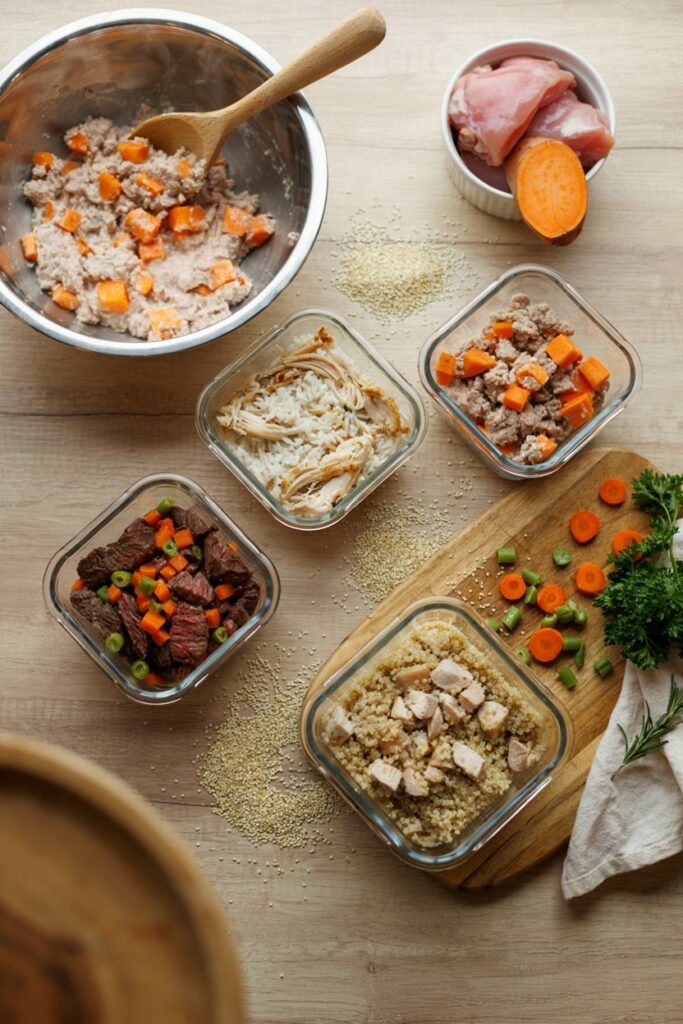
This one isn’t really a separate flavor combination so much as a method, and it’s genuinely the recipe I lean on most during busy weeks.
Why My Dog Likes It He doesn’t know the difference between a freshly cooked meal and a properly stored, previously frozen one, which is exactly the point of this approach.
Ingredients
- 4 pounds of your chosen protein (chicken, turkey, or beef)
- 3 cups of your chosen carbohydrate (rice, oats, or quinoa)
- 3 cups of your chosen vegetables
How I Make It
- Cook the protein first in one large batch, thoroughly and without seasoning.
- Prepare the carbohydrate and vegetables separately while the protein cooks.
- Let everything cool completely before combining.
- Divide into individual meal sized containers.
- Refrigerate what you’ll use within the next 4 days, and freeze the rest.
How Much Should You Serve? Portion each container based on your dog’s specific daily needs before freezing, which makes grabbing the right amount on a busy night effortless.
Storage Refrigerate for up to 4 days, or freeze in individual portions for up to 3 months.
My Tip I prefer making dog food in batches because cooking a separate meal every single evening becomes frustrating when I’m already preparing dinner for everyone else.
I usually cook the protein first, prepare the carbohydrate and vegetables separately, then combine everything once it has cooled slightly, so the whole process feels far less like a nightly chore.
How Much Homemade Dog Food Should You Feed?
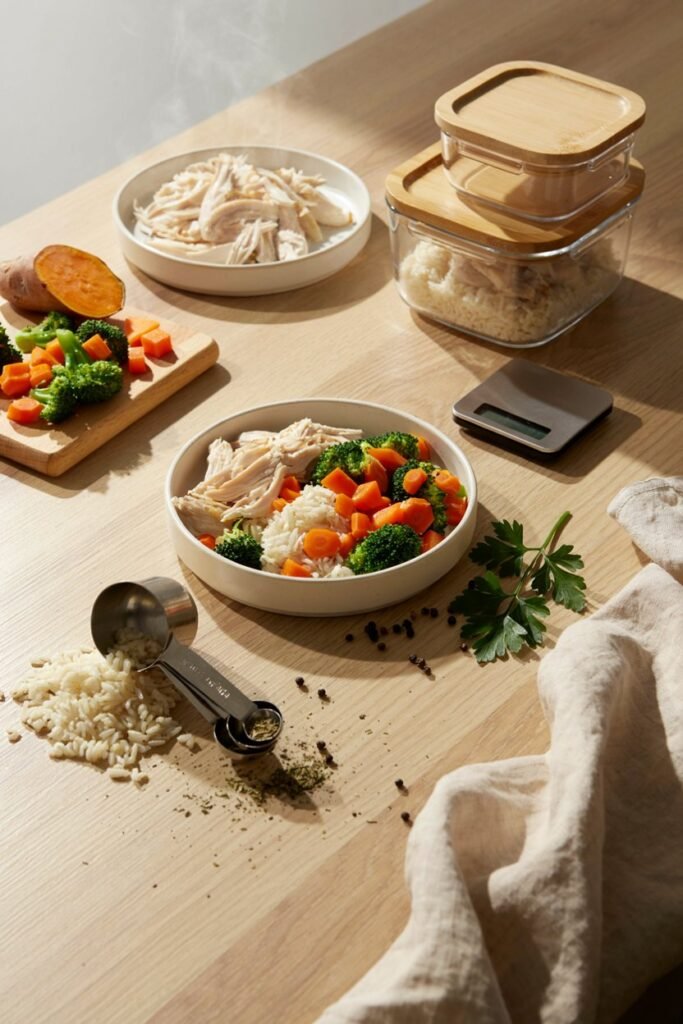
There’s no single serving size that works for every dog, and it’s worth resisting the urge to look for one universal number.
Feeding amounts genuinely depend on your dog’s weight, age, activity level, body condition, existing diet, treat intake, and individual nutritional needs.
Homemade food shouldn’t automatically become a dog’s entire long term diet without making sure it’s nutritionally adequate for daily feeding.
If you’re planning to replace your dog’s regular food completely rather than using these recipes as occasional meals, it’s worth consulting a veterinarian or a board certified veterinary nutritionist first, since a recipe blog post isn’t the same thing as a complete veterinary nutrition plan.
Ingredients Dogs Can and Cannot Eat
Dog Friendly Ingredients
Chicken, turkey, lean beef, salmon, and eggs all work well as protein sources. Rice, oats, sweet potato, and pumpkin serve as reliable carbohydrates.
Carrots, green beans, peas, and zucchini round things out with fiber and nutrients, and certain fruits can be added occasionally in appropriate amounts.
Foods You Should Never Add
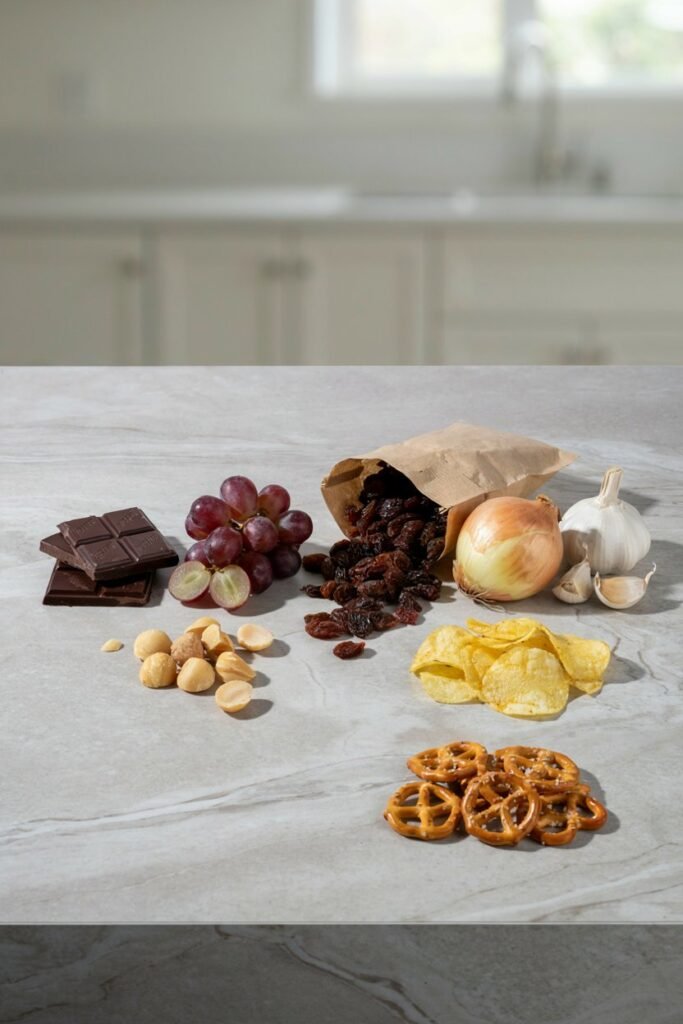
Chocolate, grapes, raisins, onions, garlic, xylitol, alcohol, and macadamia nuts should never appear in a homemade meal.
Cooked bones and excessively salty foods should also be avoided entirely, regardless of how small the amount seems.
How I Meal Prep Fresh Dog Food
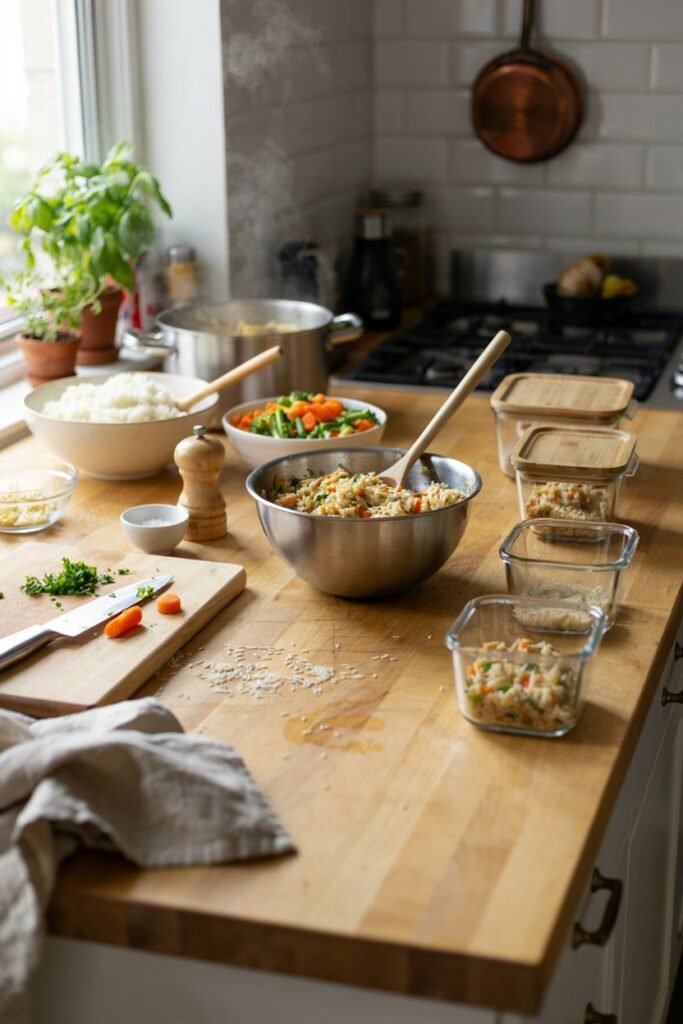
I prefer making dog food in batches because cooking a separate meal every evening becomes frustrating once I’m already juggling dinner for everyone else in the house.
My general routine is to cook the protein first, prepare the carbohydrate and vegetables separately while that’s happening, then combine everything once it’s cooled slightly.
From there, it’s just a matter of portioning into containers, labeling with the date, and deciding what goes in the fridge for the week versus what heads straight into the freezer.
It sounds like more steps written out than it actually feels like in practice once it becomes routine.
How to Store Homemade Dog Food
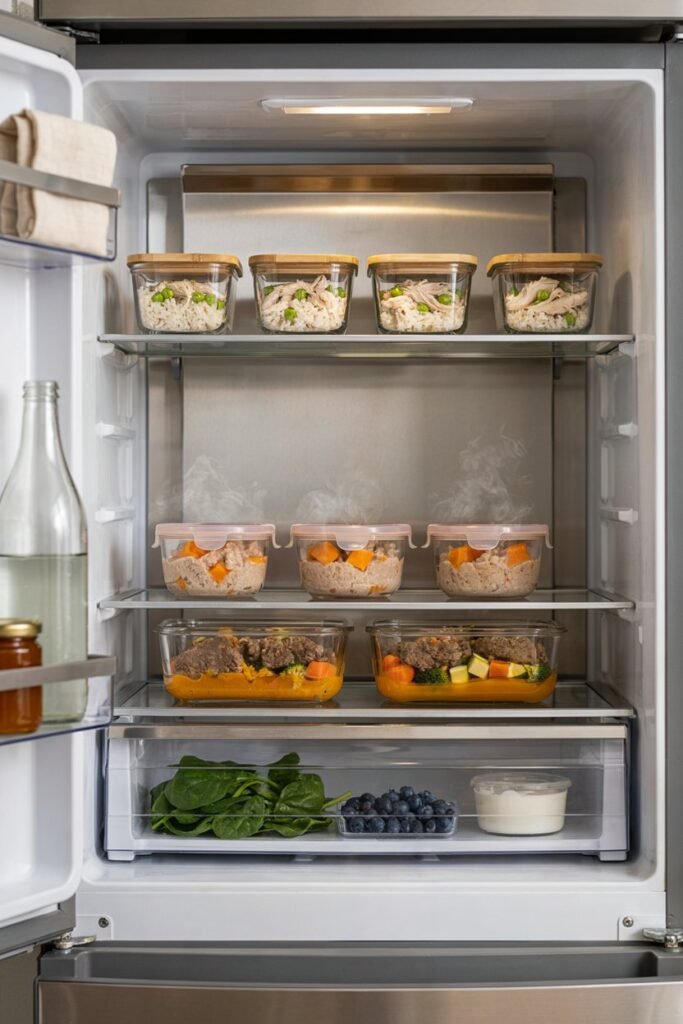
Refrigerator. Cool cooked food promptly and store it in airtight containers, generally using it within 4 days.
Freezer. Portion meals into individual servings before freezing so you’re only thawing what you actually need at a time.
Thawing. Thaw frozen portions in the refrigerator overnight rather than leaving food sitting out at room temperature for extended periods.
Reheating. Warm gently if desired, and always check that the food isn’t too hot before serving it.
How to Introduce Fresh Food to Your Dog
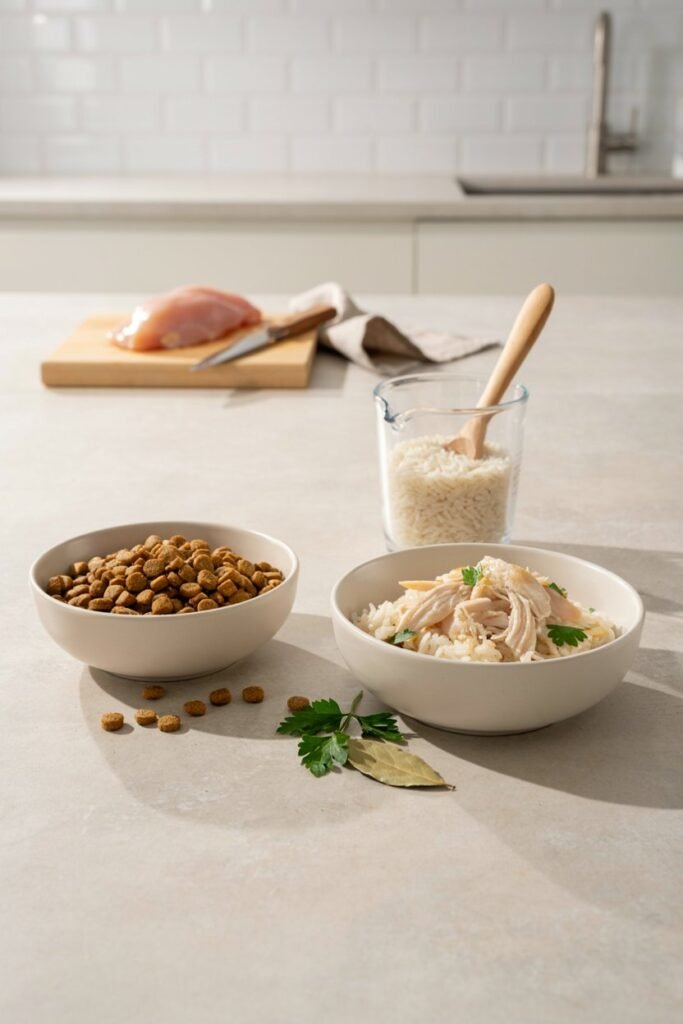
Suddenly replacing a dog’s normal diet with a large amount of unfamiliar food can cause digestive upset, so a gradual transition works better.
Start with a small portion of the new food mixed into their regular meals, then increase it gradually over about a week.
Watch for loose stool, vomiting, excessive gas, itching or other unusual reactions, and refusal to eat throughout the process.
If your dog develops concerning symptoms at any point, it’s worth contacting your veterinarian rather than continuing to adjust the transition on your own.
Frequently Asked Questions
Is homemade dog food healthier than kibble? It can be, but only when the recipe is properly balanced. Homemade food gives you more control over ingredients, though an unbalanced homemade diet can end up less healthy than a complete commercial food.
Can dogs eat homemade food every day? Yes, as long as the meals are nutritionally adequate for daily feeding, ideally with input from a veterinarian if it’s replacing commercial food entirely.
What meat is best for homemade dog food? There’s no single best option. Chicken and turkey are lean and easy to digest, beef offers more iron, and salmon adds omega fatty acids. Rotating between a few proteins tends to work better than relying on just one.
Can I mix homemade food with kibble? Yes, many owners use homemade meals as a partial addition to commercial food rather than a full replacement, which works well for a lot of dogs.
How long does homemade dog food last in the refrigerator? Generally about 4 days, with fish based recipes closer to 3 days given their shorter shelf life.
Can I freeze homemade dog food? Yes, portioning meals before freezing makes future feeding much more convenient.
Can dogs eat rice every day? Yes, plain rice is generally well tolerated, though rotating carbohydrates like oats or quinoa can add some nutritional variety over time.
Can I give my dog chicken and vegetables? Yes, as long as the chicken is fully cooked and unseasoned, and the vegetables are dog safe and properly prepared.
How do I know how much homemade food to feed my dog? Start with your veterinarian’s recommended daily calorie intake for your dog, then calculate how much of the homemade recipe fits within that total.
Do homemade dog food recipes contain all the nutrients dogs need? Not automatically. A recipe with several food groups is a good foundation, but true nutritional completeness usually requires proper formulation, especially for daily, long term feeding.
Final Thoughts
Making fresh food for my dog has become less about creating elaborate recipes and more about having a few simple meals I know I can prepare without making my daily routine complicated.
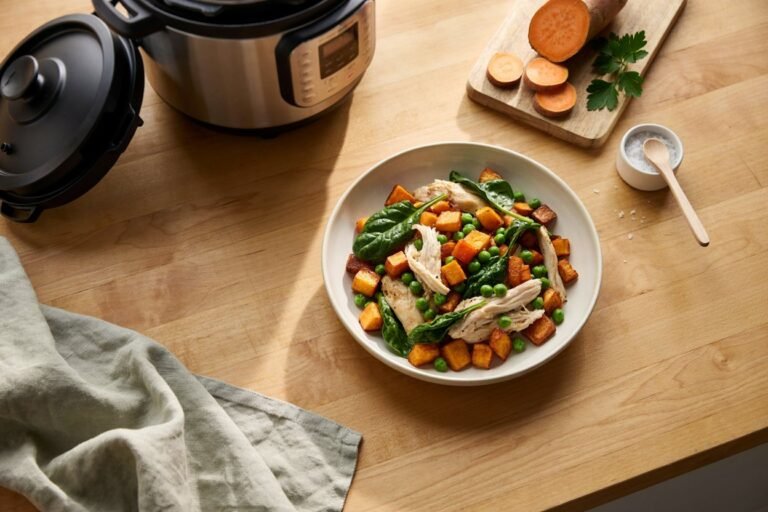
Some weeks I make a batch of chicken and rice, while other times I switch things up with turkey, sweet potato, or pumpkin.
The biggest lesson for me has been keeping the recipes simple while still paying attention to what my dog actually needs nutritionally, and letting that balance guide the rotation rather than chasing variety for its own sake.