
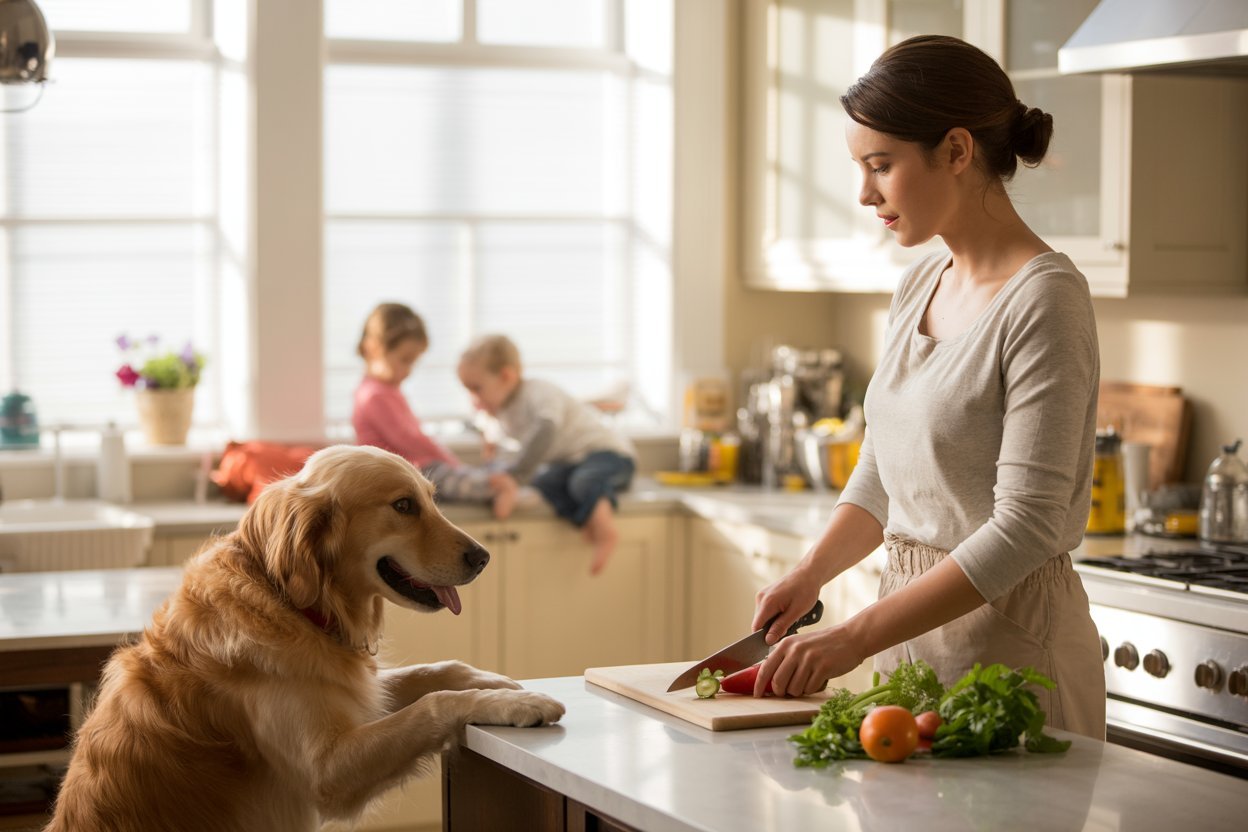
Some of the best moments in our home happen in the kitchen.
It’s usually a mix of chaos—my kids asking for snacks, my husband reaching for something “quick,” and our dog sitting right in the middle of it all, watching every single move like a food inspector.
And if you’re anything like me, you’ve probably paused mid-bite wondering… “Can my dog eat this too?”
I used to be super cautious (and honestly a little confused) about what human foods dogs can safely eat.
There’s so much mixed information online, and I didn’t want to risk upsetting my dog’s stomach or worse.
But over time—through daily routines, small experiments, and a lot of Googling—I found safe, healthy options that actually work.
Now, I don’t just feed my dog randomly. I’m intentional. I look for safe human foods for dogs, nutrient-rich snacks, and natural alternatives to processed dog treats that fit right into our daily life.

Whether we’re making breakfast, packing lunches, or winding down with dinner, I’ve learned how to safely share certain foods without stress.
And the best part? My dog gets excited, my kids feel involved, and I feel confident knowing I’m making healthy choices.
In this post, I’m sharing:
- Human foods dogs can safely eat
- Everyday kitchen staples that double as dog treats
- What I personally feed my dog (and how I prepare it)
- Important safety tips every dog owner should know
If you’ve ever searched for “what human food can dogs eat,” “safe fruits and vegetables for dogs,” or “healthy snacks for dogs at home,” this guide is for you.
1. Lean Proteins Dogs Can Safely Eat (And How I Serve Them at Home)

One thing I’ve learned from feeding my family every day is this—simple, whole foods always win, and that applies to our dog too.
Most evenings, while I’m in the kitchen cooking for my kids and my husband, I already know I’ll set aside a small portion for our dog.
Not seasoned, not fried—just clean, properly cooked protein.
Safe Lean Proteins for Dogs
These are the ones I trust and use regularly:
- Cooked chicken (boneless, skinless)
- Turkey (plain, no seasoning)
- Lean beef (well-cooked, no oil or spices)
- Eggs (boiled or scrambled without butter)
- Fish like salmon (fully cooked, no bones)
These are packed with high-quality protein for dogs, which helps with muscle growth, energy, and overall health.
How I Actually Serve It at Home
I don’t go out of my way to cook a separate meal—it’s all about being intentional with what I already have.
For example:
- When I boil chicken for dinner, I pull out a few plain pieces before adding salt or spices
- On busy mornings, I’ll boil eggs, and sometimes I share a small portion with our dog
- If we’re having grilled meat, I always keep a plain section aside
It’s become part of my routine now—almost automatic.
And honestly, my kids love it. They feel like they’re “feeding” the dog something special, even though it’s just real, healthy food.
Important Safety Tips (Don’t Skip This)
This is where a lot of people get it wrong:
- No seasoning – Avoid salt, garlic, onions, or spices
- No bones – Especially cooked bones (they can splinter)
- No fried food – Too much fat can upset your dog’s stomach
- Small portions only – These are treats, not full meal replacements
I always remind myself: just because it’s healthy for us doesn’t mean it should be given in large amounts to our dog.
2. Fruits Dogs Can Safely Eat (My Kids’ Favorite Way to Share Snacks)
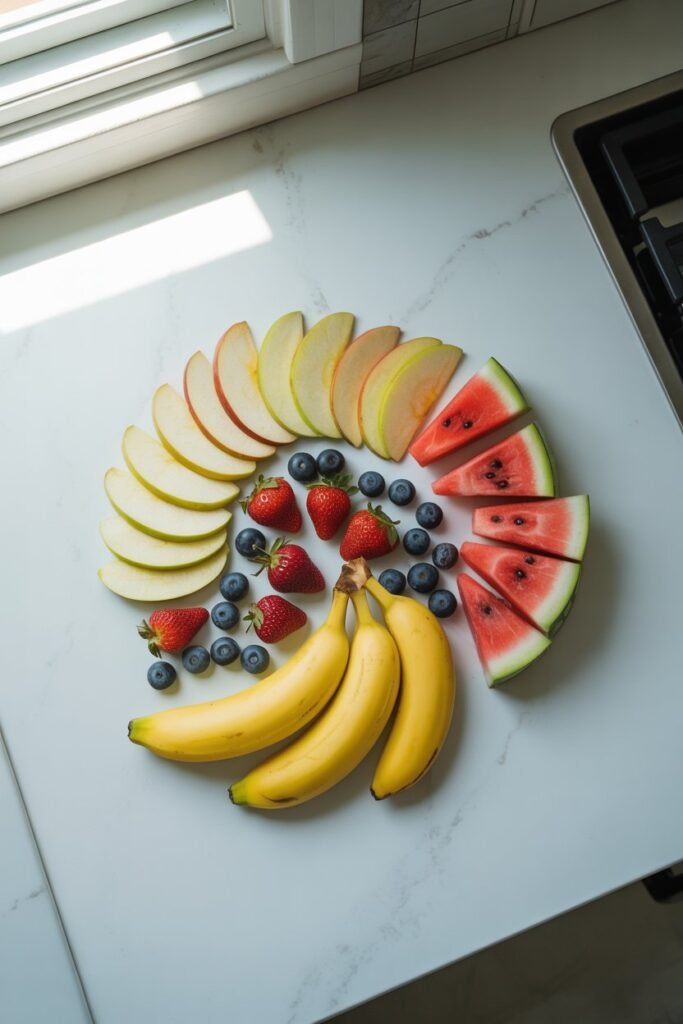
Snack time in our house is never quiet.
It’s usually me slicing fruits in the kitchen, my kids reaching in before I even finish plating, and our dog sitting patiently (but very alert), waiting for something to drop.
And honestly, this is one of the easiest times I safely share food with our dog—because some fruits are not only safe but actually healthy for dogs.
Safe Fruits for Dogs
These are the fruits I regularly give in small amounts:
- Apples (sliced, seeds removed)
- Bananas (soft and easy to digest)
- Watermelon (seedless and no rind)
- Blueberries (great as bite-sized treats)
- Strawberries (washed and cut small)
These are rich in vitamins, fiber, and antioxidants for dogs, which support digestion and overall health.
How It Happens in My Daily Routine
This is honestly the most natural part of our day.
When I’m prepping snacks:
- I slice apples and give a few small pieces to the dog
- If the kids are eating bananas, they always save a tiny bit to share
- On hot afternoons, we all snack on watermelon—and yes, the dog gets a few pieces too
It’s become a little family habit. The kids enjoy including the dog, and I use it as a chance to teach them what foods are safe vs. unsafe for dogs.
What I Always Avoid (Very Important)
Not all fruits are safe, and this is where you need to be careful:
- No grapes or raisins – These are toxic to dogs
- No seeds or pits – Apples seeds, cherry pits, etc. can be harmful
- No citrus in large amounts – Can upset your dog’s stomach
- No sugary canned fruits – Stick to fresh only
I keep it simple: fresh, clean, and in small portions.
Portion Control Matters
Even though these are healthy fruits for dogs, I don’t overdo it.
Too much fruit = too much sugar, even if it’s natural. For us, it’s just a few pieces here and there during snack time—not a full bowl.
3. Vegetables Dogs Can Safely Eat (Easy Add-Ons From Dinner Prep)

Dinner time in my house is always a full routine.
I’m usually in the kitchen chopping vegetables, my kids are moving in and out asking what’s cooking, my husband is checking what’s ready—and of course, our dog is right there, hoping something falls.
What I didn’t realize at first is that a lot of the vegetables I cook daily are actually safe and healthy for dogs too.
Once I learned that, it became so easy to include him without doing anything extra.
Safe Vegetables for Dogs
These are the ones I use all the time:
- Carrots (raw or cooked)
- Green beans (plain, no seasoning)
- Sweet potatoes (cooked, soft, no sugar)
- Cucumbers (fresh and crunchy)
- Pumpkin (plain, cooked or canned with no additives)
These are great sources of fiber, vitamins, and low-calorie nutrients for dogs, especially if you’re trying to maintain a healthy weight.
How I Use Them in My Daily Routine
This is probably the easiest category for me.
- When I’m chopping carrots, I give a few raw pieces as crunchy treats
- If I’m cooking green beans, I set some aside before adding salt
- Sweet potatoes? I always mash a small plain portion for the dog before seasoning the rest
- Sometimes I even mix a little pumpkin into his food for digestion
It doesn’t feel like extra work—it’s just being intentional while cooking what I already make for my family.
And honestly, my kids love handing over carrot sticks like it’s a special treat.
Why Vegetables Are So Good for Dogs
I started appreciating vegetables more when I noticed:
- They help with digestion and gut health
- They’re perfect low-calorie snacks for dogs
- They support weight management, especially for less active dogs
It’s one of the easiest ways to add nutrients without overfeeding.
Important Safety Tips
This part matters just as much:
- No onions, garlic, or mushrooms – These are toxic to dogs
- No seasoning or butter – Keep everything plain
- Cut into small pieces – Especially for smaller dogs
- Cook harder veggies – Like sweet potatoes, so they’re easier to digest
I keep reminding myself—simple is always better.
4. Grains and Carbs Dogs Can Eat (What I Share From Our Family Meals)
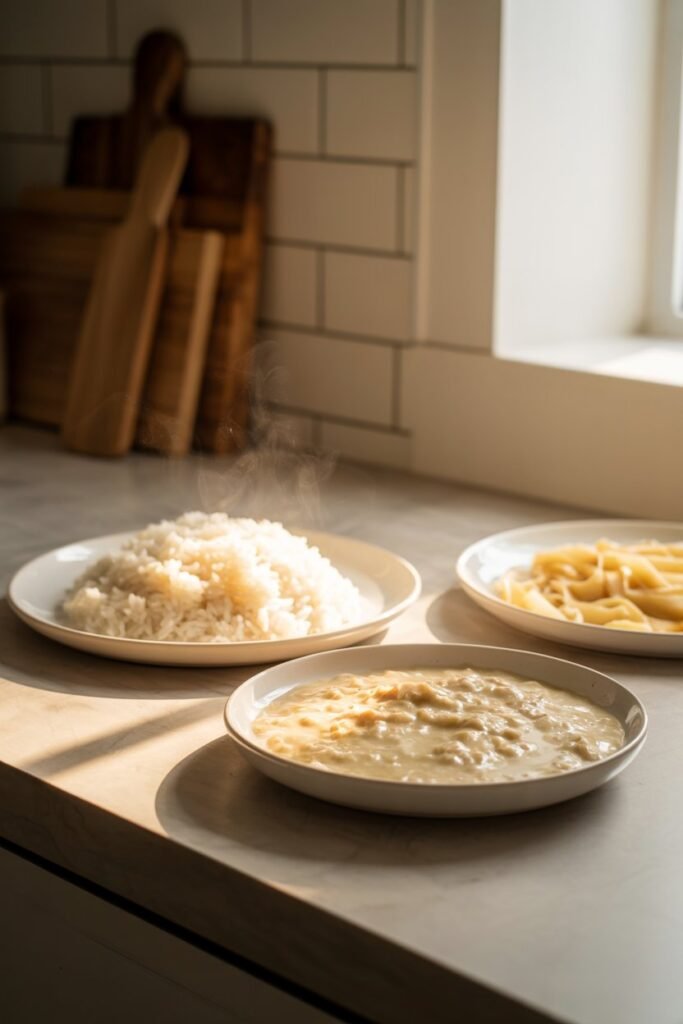
If there’s one thing that’s always in my kitchen, it’s carbs.
Rice, oats, bread—something is always cooking or already on the table.
Between feeding my kids and making sure everyone is full (including my husband after a long day), these are the foods we rely on the most.
And over time, I realized some of these same foods can be safely shared with our dog too.
Safe Grains and Carbs for Dogs
These are the ones I personally use:
- Plain white rice (fully cooked)
- Brown rice (in small amounts)
- Oatmeal (plain, no sugar or milk)
- Plain pasta (no sauce or seasoning)
- Bread (small amounts, plain and simple)
These provide energy-boosting carbohydrates for dogs, especially helpful for active dogs or when they need something gentle on the stomach.
How I Use Them at Home
This is honestly part of our everyday meals.
- If someone has an upset stomach (even the dog), I make plain rice—and I’ll share a small portion
- On slower mornings, I make oatmeal, and sometimes I set aside a plain spoonful
- If we’re having pasta night, I take a few plain pieces before adding sauce
It’s not about feeding leftovers randomly—it’s about setting aside safe portions before adding anything extra.
That small habit made a huge difference for me.
When These Foods Are Most Helpful
I’ve found carbs especially useful when:
- My dog has a sensitive stomach
- I want something filling but gentle
- I need a quick, safe add-on without overthinking
Plain rice, especially, has been my go-to during those “off” days.
What to Watch Out For
This is where it’s easy to make mistakes:
- No butter, salt, or sauces – These can upset your dog’s system
- Avoid sugary foods – No flavored oatmeal or sweet bread
- Limit portions – Too many carbs can lead to weight gain
- Watch for allergies – Some dogs don’t tolerate grains well
I treat carbs as a small addition—not the main focus of their diet.
5. Healthy Dairy Options Dogs Can Eat (And What I Personally Limit)
I used to think dairy was a complete no for dogs.
But then one morning, while I was making breakfast for my kids—yogurt, a little peanut butter, and some fruit—I noticed how curious our dog was.
That’s when I started looking into it more and realized: some dairy is actually safe for dogs… just not all of it, and definitely not in large amounts.
Safe Dairy Options for Dogs
These are the only ones I personally feel comfortable giving:
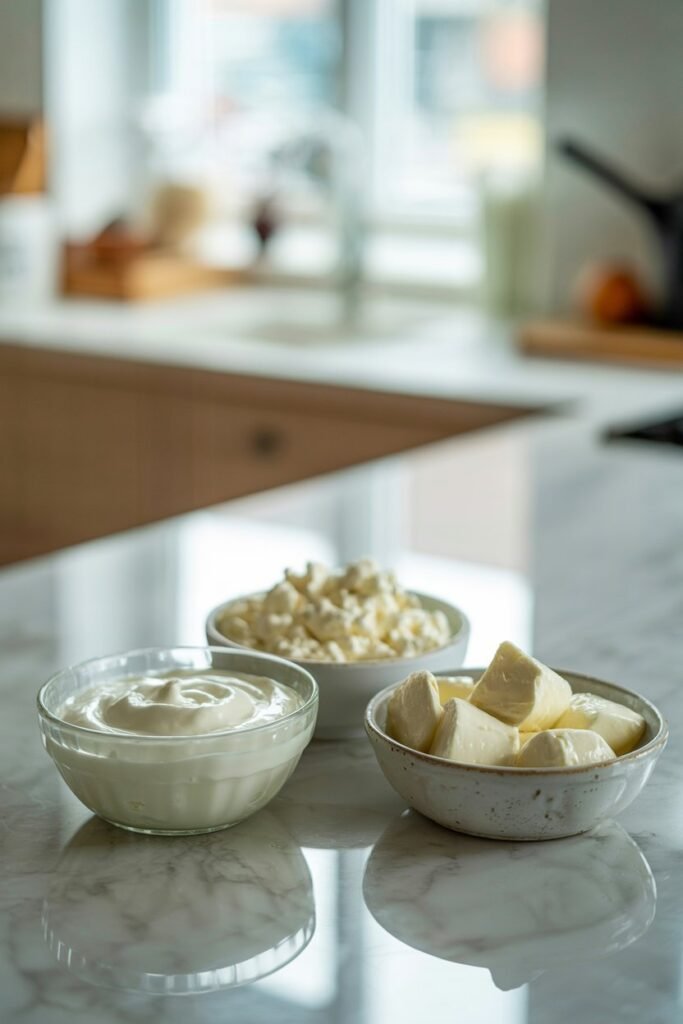
- Plain yogurt (unsweetened, no artificial sweeteners)
- Cheese (small cubes, mild types like cheddar)
- Cottage cheese (plain and low-fat)
These can provide calcium and protein for dogs, but only in moderation.
How I Use Dairy at Home
I keep this very simple and occasional.
- When I’m serving yogurt to my kids, I’ll give the dog a small spoon (plain only)
- Sometimes I use tiny cheese cubes as a high-value treat—especially when I want his full attention
- Cottage cheese is something I mix in once in a while, not daily
It’s more of a treat than a routine part of his diet.
What I Learned the Hard Way
Not all dogs handle dairy well.
Some dogs are lactose intolerant, which means too much dairy can cause:
- Upset stomach
- Gas
- Loose stool
So I always introduce it slowly and watch how my dog reacts.
Important Safety Rules
This is where you really need to be careful:
- No flavored yogurt – Avoid sugar and artificial sweeteners (especially xylitol—it’s toxic)
- No milk in large amounts – Harder for dogs to digest
- Keep portions very small – Think “treat size,” not servings
- Avoid processed dairy foods – Like ice cream or anything sugary
For me, dairy is just an occasional extra—not something I rely on.
6. Foods You Should NEVER Feed Your Dog (What I Strictly Avoid at Home)
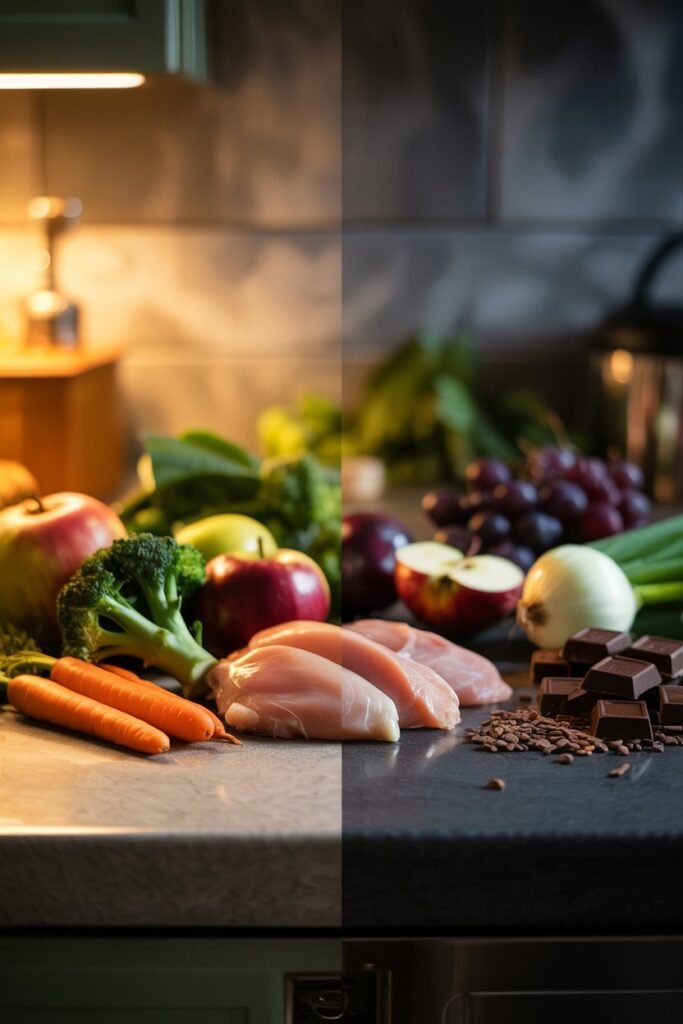
As much as I love sharing food with our dog during our everyday routines, there are some things I never, ever take chances with.
I learned this over time—sometimes from research, sometimes from small mistakes I quickly corrected—but now it’s a rule in my home: if it’s not 100% safe, it doesn’t get shared.
And honestly, with kids around, this section became even more important. I’ve had to teach them that not everything we eat is okay for the dog, no matter how much he begs.
Toxic Foods for Dogs (Never Feed These)
These are completely off-limits in my house:
- Chocolate
- Grapes and raisins
- Onions and garlic
- Avocado
- Alcohol
- Caffeine (coffee, tea, energy drinks)
- Xylitol (found in sugar-free gum, candy, peanut butter)
Even small amounts of these can be dangerous or toxic to dogs.
Real-Life Moments That Made Me More Careful
There was a time my kids almost gave the dog a grape during snack time—and that was my wake-up moment.
Now, I’m very clear about rules:
- No feeding the dog without asking me
- No sharing snacks directly from their plates
- Always check what the food is first
It’s become part of how we run things at home.
Hidden Dangers Most People Miss
This surprised me the most when I learned it:
- Seasoned foods – Even if the base food is safe, added spices can be harmful
- Cooked bones – They can splinter and cause choking or injury
- Fatty scraps – Can lead to digestive issues
- Artificial sweeteners – Especially xylitol (this is a big one)
Now, I don’t just look at the food—I think about how it was prepared.
My Personal Rule
If I didn’t prepare it myself or I’m not sure what’s in it, I don’t give it to my dog.
That simple rule has saved me from a lot of second-guessing.
7. Final Tips: How I Safely Share Human Food With My Dog Every Day
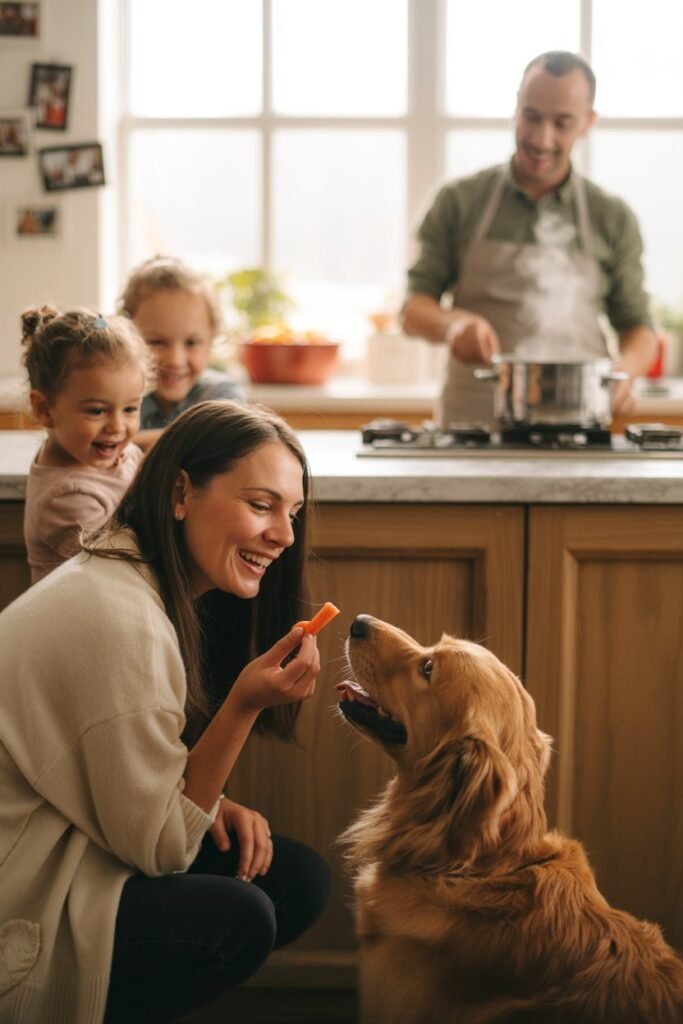
After going through all the foods that are safe and the ones to avoid, what really changed everything for me was not just what I feed our dog—but how I approach feeding in everyday life.
It’s not complicated. It’s actually very simple once it becomes part of your routine, just like it did in my home with my kids, my husband, and our daily meals.
1. I Always Prepare His Portion First
One habit that made a huge difference is this:
Before I season or finish cooking food for my family, I always set aside a plain portion for the dog.
Whether it’s chicken, rice, or vegetables, I take out a small serving first—no salt, no spices, nothing added.
2. I Treat Human Food as “Extras,” Not Meals
Even though there are many safe human foods for dogs, I never replace his regular dog food completely.
For me, these foods are:
- Treats
- Small add-ons
- Occasional snacks during the day
Not full meals.
3. I Keep Portions Small and Intentional
This is something I learned over time.
Even safe foods can become a problem if given too much. So I always:
- Give small bite-sized pieces
- Avoid overfeeding during snack time
- Balance treats with regular meals
4. I Involve My Kids (The Right Way)
This part is honestly my favorite.
My kids love including the dog in snack time, but I’ve taught them:
- Always ask before feeding him
- Only give approved foods
- No sneaky treats from their plates
It turned into a small family lesson about responsibility and care.
5. I Keep Things Simple at Home
I don’t stress about fancy recipes or complicated dog meals.
Most days, it’s just:
- A bit of boiled chicken
- Some carrots from dinner prep
- A few blueberries during snack time
- Plain rice when needed
Simple, clean, and consistent.
Final Thoughts
Learning what human foods dogs can safely eat made me more confident as a dog owner, but more importantly, it made our daily life easier.
Now, feeding our dog feels natural—just another part of our family routine. Nothing stressful, nothing overthought. Just real food, shared safely, in the middle of real life.
And every time I see my dog sitting happily in the kitchen with my kids running around and my husband laughing in the background, I’m reminded that it’s the small, simple habits that matter most.