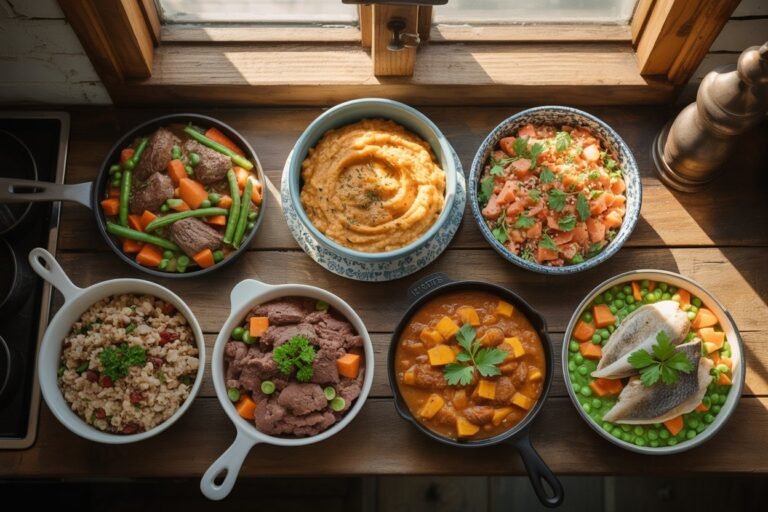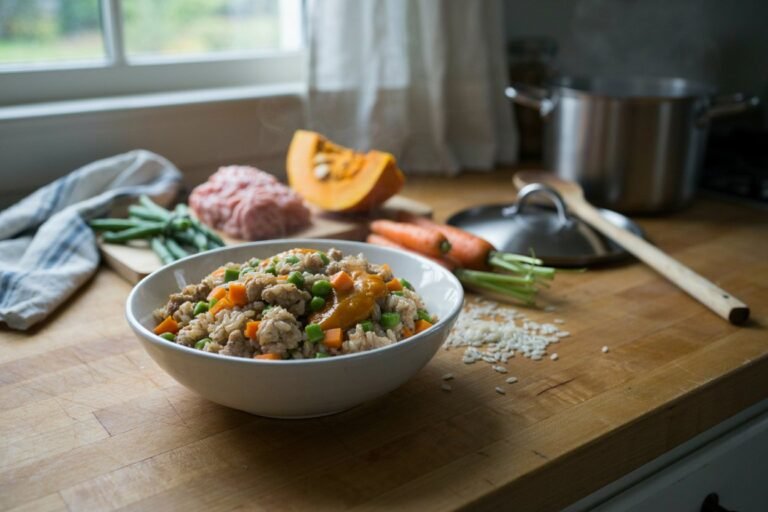
Beef and Vegetable Skillet for Dogs
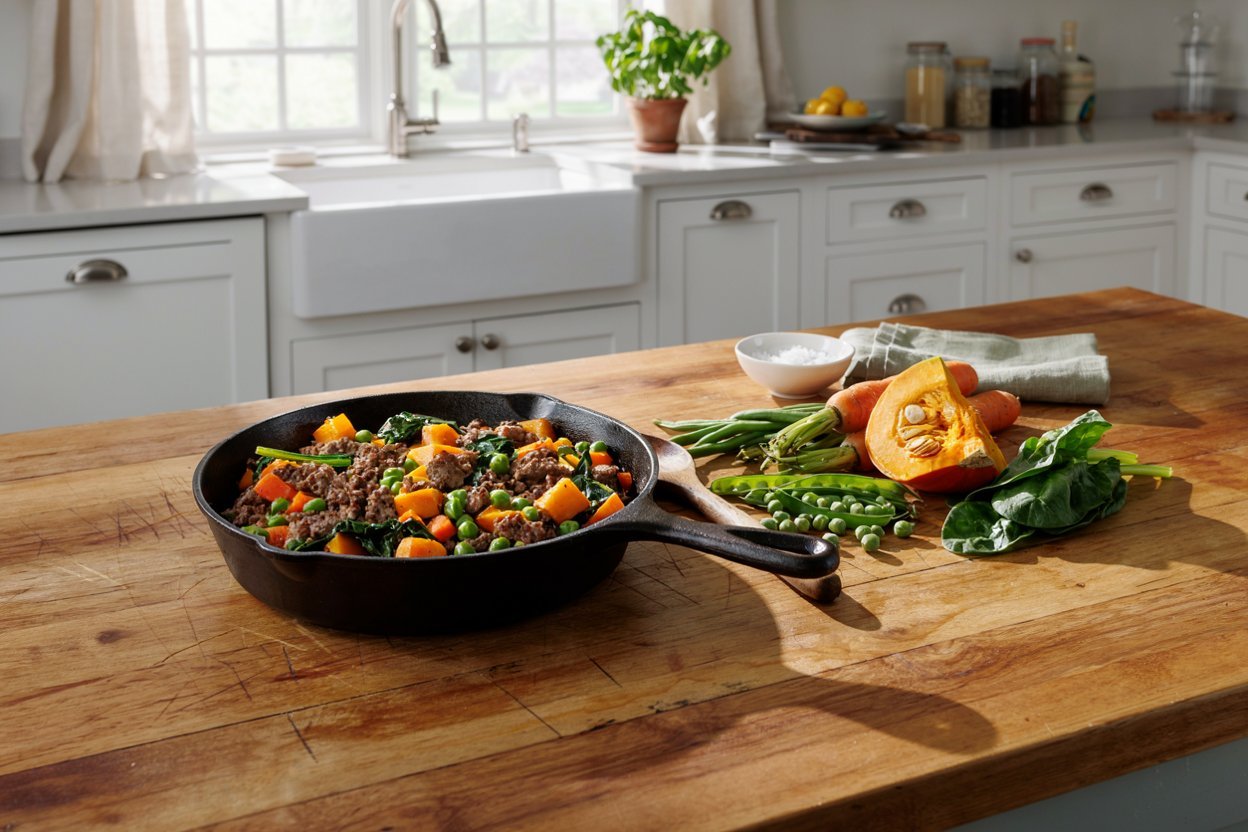
If you’ve ever looked at the ingredient list on a bag of dog food and wished it were a little simpler, you’re not alone.
Many pet owners want to know exactly what they’re feeding their dogs, and preparing a homemade meal is one of the easiest ways to do that.
A beef and vegetable skillet combines lean protein with fresh vegetables to create a wholesome meal that uses everyday ingredients you can easily find at the grocery store.
One of the things I appreciate most about this recipe is how flexible it is. Whether you’re making a fresh meal for your dog, preparing several portions for the freezer, or simply looking for a nutritious topper to mix with kibble, this recipe fits into almost any routine.
Everything cooks in a single skillet, which means cleanup is quick and the preparation doesn’t feel overwhelming, even on busy days.
The lean ground beef provides plenty of protein to help support healthy muscles, while colorful vegetables add fiber, vitamins, and minerals that contribute to overall well being.
Unlike many commercial foods, you won’t find artificial colors, unnecessary fillers, or ingredients that are difficult to recognize.
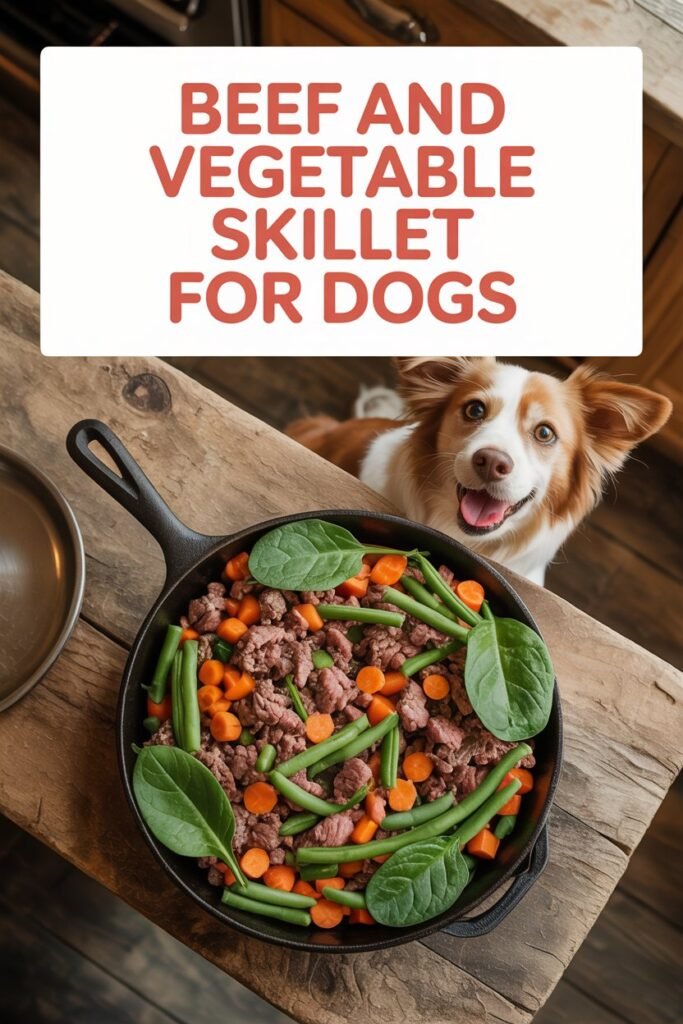
Another reason this recipe has become a favorite is that it’s easy to customize.
If your dog prefers certain vegetables or you have fresh produce that needs to be used, small adjustments are simple to make as long as you choose dog safe ingredients.
The recipe is forgiving enough for beginners while still producing a balanced, hearty meal that most dogs enjoy.
Although homemade meals can be a wonderful addition to your dog’s diet, it’s important to remember that recipes like this are generally best served as an occasional meal, meal topper, or as part of a veterinarian approved homemade feeding plan.
Dogs have specific nutritional requirements, and long term homemade diets should always be properly balanced with professional guidance.
Whether you’re preparing homemade meals for the first time or already enjoy cooking for your dog, this Beef and Vegetable Skillet is an excellent recipe to keep in your collection.
It’s nutritious, easy to prepare, stores well, and gives you complete control over every ingredient that goes into your dog’s bowl.
Disclaimer: This post may contain affiliate links, which means I may earn a small commission at no extra cost to you. Always consult your veterinarian before changing your dog’s diet or introducing homemade meals.
Amazon Shopping List You Need
- Large Nonstick Skillet Pan
- Wooden Cooking Spoon Set
- Glass Meal Prep Containers with Lids
- Digital Kitchen Food Scale
- Stainless Steel Dog Food Bowls
- Airtight Food Storage Container
- Dog Multivitamin Supplement Powder
Why You’ll Love This Recipe

There are plenty of homemade dog food recipes available, but this one stands out because it focuses on simple, nutritious ingredients that work together to create a satisfying meal without unnecessary complications.
Made with Everyday Ingredients
Everything in this recipe can usually be found at your local grocery store.
There’s no need to search for specialty ingredients or expensive supplements just to prepare a healthy homemade meal.
Rich in High Quality Protein
Lean ground beef is an excellent source of protein, helping support muscle maintenance while providing important nutrients such as iron, zinc, and B vitamins.
Packed with Nutritious Vegetables
The combination of carrots, green beans, peas, spinach, and pumpkin adds natural fiber along with vitamins and antioxidants that support overall health.
One Skillet Means Less Cleanup
Since everything cooks together in one pan, you’ll spend less time washing dishes and more time enjoying your day with your dog.
Great for Meal Prep
This recipe stores beautifully in both the refrigerator and freezer, making it easy to prepare several meals at once for the week ahead.
Easy to Portion
Whether you have a small dog or a large breed, the finished meal can be divided into individual portions based on your veterinarian’s feeding recommendations.
Beginner Friendly
Even if you’ve never made homemade dog food before, the straightforward cooking process makes this recipe approachable and easy to follow.
Free from Artificial Additives
Because you’re preparing the meal yourself, you know exactly what goes into every serving. There are no artificial preservatives, colors, or unnecessary fillers.
Perfect as a Meal or Food Topper
While many owners enjoy serving this as an occasional homemade meal, it also works wonderfully mixed into dry kibble to encourage picky eaters.
Is Homemade Beef and Vegetable Skillet Healthy for Dogs?
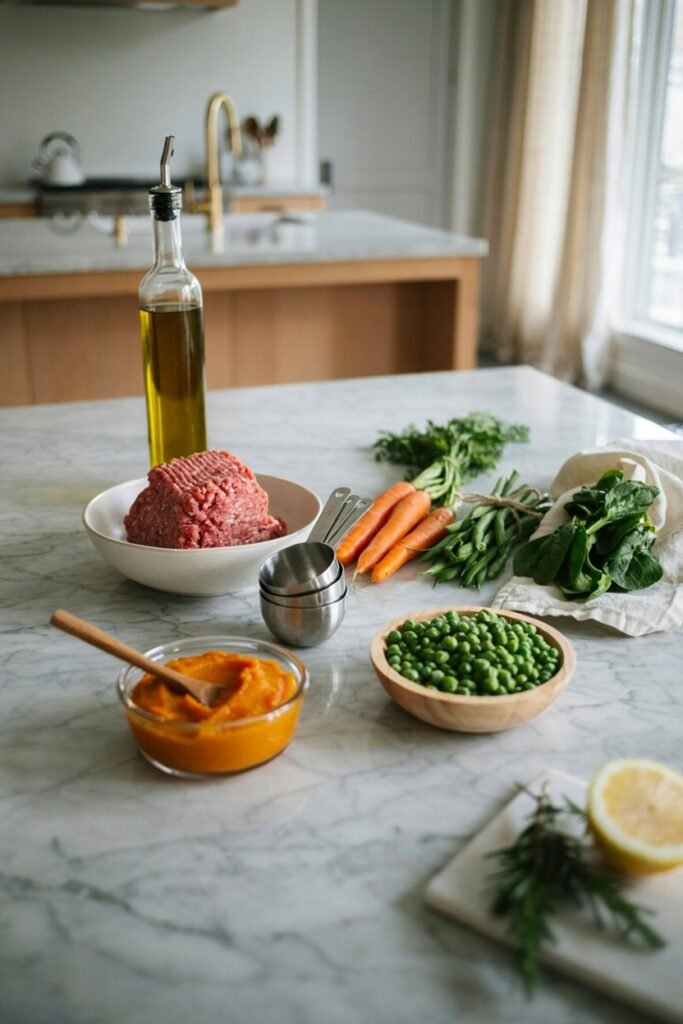
When prepared with dog safe ingredients, a homemade beef and vegetable skillet can be a nutritious addition to many dogs’ diets.
It combines lean protein with vegetables that naturally provide vitamins, minerals, and fiber while avoiding many of the highly processed ingredients found in some commercial foods.
Lean ground beef supplies essential amino acids that help maintain healthy muscles and support normal body functions.
It also provides important nutrients including iron, zinc, selenium, and several B vitamins that play a role in energy production and immune health.
The vegetables in this recipe contribute their own nutritional benefits.
Carrots are naturally rich in beta carotene, which the body converts into vitamin A to support healthy vision and immune function.
Green beans provide fiber that may help dogs feel satisfied while supporting healthy digestion.
Pumpkin is widely appreciated for its digestive benefits thanks to its natural fiber content, while spinach contributes vitamins A, C, and K along with beneficial antioxidants.
Another advantage of making your dog’s food at home is ingredient transparency.
You decide exactly what goes into the skillet, allowing you to avoid unnecessary preservatives, artificial flavorings, excessive sodium, and ingredients your dog may not tolerate well.
That said, homemade meals should be viewed with balance in mind.
Dogs require specific amounts of vitamins, minerals, calcium, phosphorus, essential fatty acids, and other nutrients that can be difficult to achieve consistently without proper planning.
For that reason, recipes like this are often best served as an occasional homemade meal, a nutritious topper, or part of a complete homemade diet designed with guidance from your veterinarian or a board certified veterinary nutritionist.
Always introduce any new food gradually over several days, monitor your dog for digestive changes, and provide fresh drinking water at every meal.
Ingredients You’ll Need
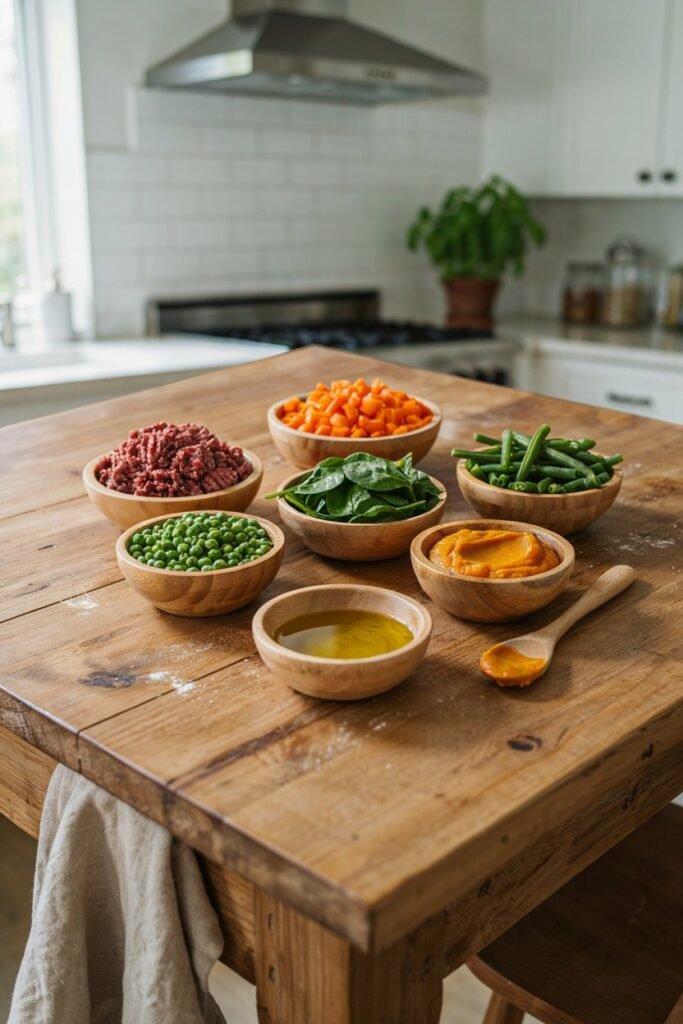
One of the best things about this recipe is that every ingredient serves a purpose.
Together they create a flavorful, nutrient rich meal while remaining simple enough for everyday cooking.
Lean Ground Beef
Lean ground beef forms the foundation of this recipe and provides the majority of the protein.
Choosing lean beef, such as 90% lean or higher, helps reduce excess fat while still delivering the amino acids dogs need to support healthy muscles, skin, and body tissues.
Ground beef is also an excellent source of iron, zinc, selenium, and vitamin B12.
These nutrients contribute to healthy red blood cells, immune function, and normal energy metabolism.
After browning the beef, draining any excess fat helps create a lighter meal that’s easier for many dogs to digest.
Carrots
Carrots add a naturally sweet flavor that many dogs enjoy while contributing important nutrients.
They’re especially rich in beta carotene, which supports eye health and immune function after being converted into vitamin A.
Their fiber content also supports healthy digestion, and because carrots are relatively low in calories, they add volume to the meal without making it overly rich.
Dice them into small pieces so they cook evenly and are easier for dogs of all sizes to eat.
Green Beans
Green beans provide fiber, vitamins, and a pleasant texture that blends well with the beef.
They’re naturally low in calories, making them a popular ingredient in homemade dog meals for pets that need help maintaining a healthy weight.
Fresh or frozen green beans both work well, though canned varieties should only be used if they contain no added salt or seasonings.
Pumpkin Purée
Plain pumpkin purée is valued by many dog owners for its digestive benefits.
Its natural soluble fiber may help support healthy digestion while adding moisture and a creamy consistency to the finished skillet.
Be sure to choose 100% plain pumpkin purée rather than pumpkin pie filling, which contains sugar and spices that are not suitable for dogs.
Peas
Peas contribute plant based protein along with vitamins A, C, and several B vitamins.
They also provide minerals such as manganese and potassium while adding a touch of natural sweetness that pairs nicely with the beef.
Frozen peas can be added directly to the skillet without thawing, making them a convenient option for busy days.
Spinach
Spinach adds color and extra nutrients, including vitamins A, C, and K, along with iron and antioxidants.
Because spinach cooks down significantly, a small handful blends easily into the skillet without overpowering the other ingredients.
Use spinach in moderation as part of a varied diet, and chop larger leaves into smaller pieces before adding them to the pan.
Olive Oil
A small amount of olive oil helps prevent sticking while providing healthy monounsaturated fats that support skin and coat health.
Only a modest amount is needed since the beef already contributes some natural fat.
Choose extra virgin olive oil if possible, and avoid adding excessive oil to keep the finished meal balanced.
Water or Unsalted Beef Broth
A splash of water or unsalted beef broth helps soften the vegetables as they cook while creating a little moisture throughout the skillet.
If using broth, always choose one that contains no onions, garlic, or added sodium.
Equipment You’ll Need
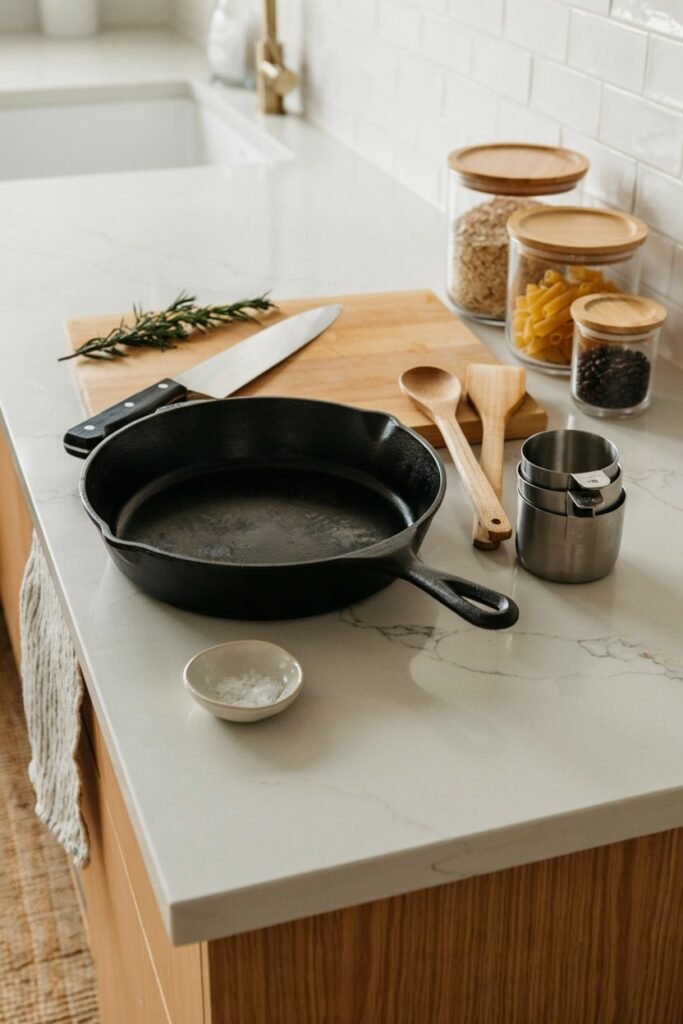
One of the reasons this recipe is so convenient is that it doesn’t require any special kitchen equipment.
If you regularly cook at home, you probably already have everything you need.
Large Skillet
A large nonstick or stainless steel skillet gives the ingredients enough room to cook evenly without overcrowding.
A skillet with higher sides works especially well since it holds the vegetables and liquid more comfortably as everything simmers together.
Wooden Spoon or Silicone Spatula
You’ll need a sturdy spoon or spatula to break the ground beef into small crumbles and stir the vegetables as they cook.
This helps distribute the ingredients evenly and prevents sticking.
Sharp Knife
Fresh vegetables cook more evenly when they’re cut into similar sized pieces.
A sharp knife makes preparing carrots, green beans, spinach, and any other vegetables much quicker and safer.
Cutting Board
Use a clean cutting board designated for vegetables, and always handle raw beef carefully to avoid cross contamination.
Wash your cutting board thoroughly with hot, soapy water after preparing the meat.
Measuring Cups and Spoons
Measuring ingredients keeps the recipe consistent every time you make it.
While homemade meals don’t need to be perfectly exact, consistent portions help ensure each batch cooks properly.
Airtight Storage Containers
Once the skillet has cooled completely, divide it into individual meal sized containers.
This makes serving much easier throughout the week and helps maintain freshness.
Step by Step Instructions
This recipe comes together in less than an hour, and most of the cooking time is hands off while the vegetables soften.
Take your time with each step, allowing the ingredients to cook evenly for the best texture and flavor.
Step 1: Prepare the Vegetables

Before turning on the stove, wash all of your vegetables thoroughly under cool running water. Peel the carrots if desired, then dice them into small, bite sized pieces.
Trim the green beans and cut them into short sections. Chop the spinach and measure the pumpkin purée so everything is ready before cooking begins.
Preparing all the ingredients ahead of time helps the cooking process move smoothly and prevents vegetables from overcooking while you’re still chopping.
Step 2: Brown the Ground Beef

Heat the skillet over medium heat and add the lean ground beef.
As the beef cooks, use a wooden spoon to break it into small crumbles. Continue stirring occasionally until the meat is fully browned and no pink remains.
Properly cooked beef should be evenly browned throughout and reach a safe internal temperature before serving.
If there’s noticeable grease in the skillet, carefully drain the excess fat before continuing. Removing excess fat creates a lighter meal that many dogs digest more comfortably.
Step 3: Add the Firm Vegetables
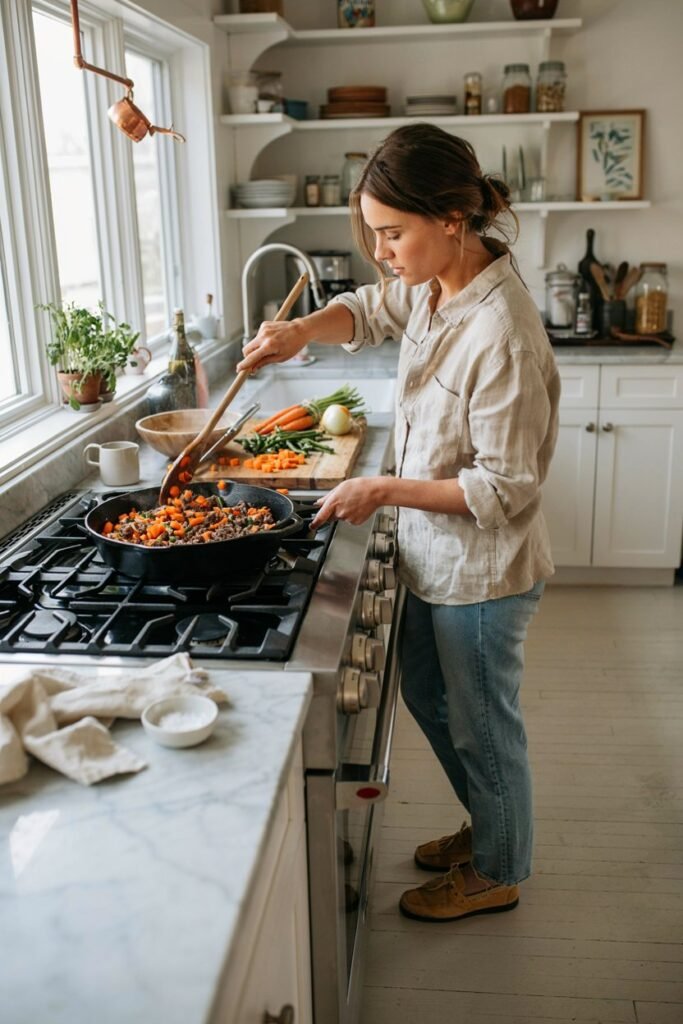
Add the diced carrots and chopped green beans directly into the skillet with the cooked beef.
Pour in a small amount of water or unsalted beef broth to create steam, then stir everything together.
Cover the skillet with a lid and allow the vegetables to cook for several minutes, stirring occasionally. The carrots should begin softening while still holding their shape.
Cooking the vegetables until tender makes them easier for dogs to chew and digest.
Step 4: Stir in the Remaining Ingredients
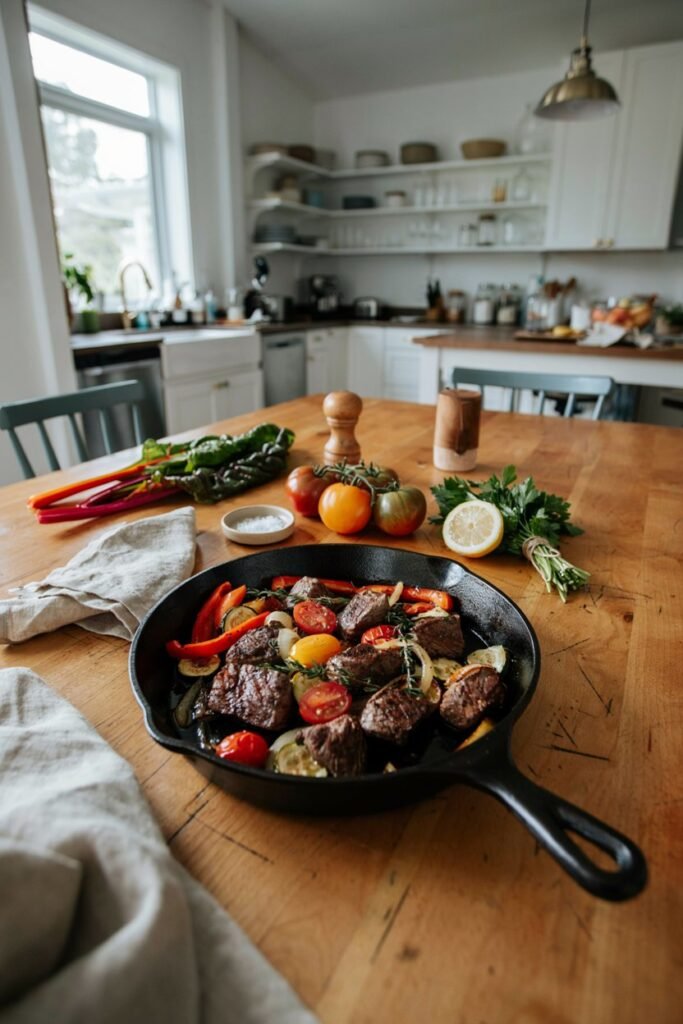
Once the carrots have softened, add the peas, pumpkin purée, and chopped spinach.
Mix everything thoroughly so the pumpkin coats the beef and vegetables evenly.
Continue cooking over low to medium heat for several more minutes. The spinach will wilt quickly, and the peas will warm through without becoming mushy.
At this stage, the skillet should look colorful, moist, and evenly combined without excessive liquid pooling in the pan.
Step 5: Allow the Mixture to Cool

Remove the skillet from the heat and let the food cool completely before serving.
This step is extremely important because freshly cooked food can retain heat much longer than expected, especially in the center of the skillet.
Cooling also allows the ingredients to absorb some of the remaining moisture, creating a thicker consistency that’s easier to portion.
Never serve homemade dog food while it’s still hot.
Step 6: Portion and Store
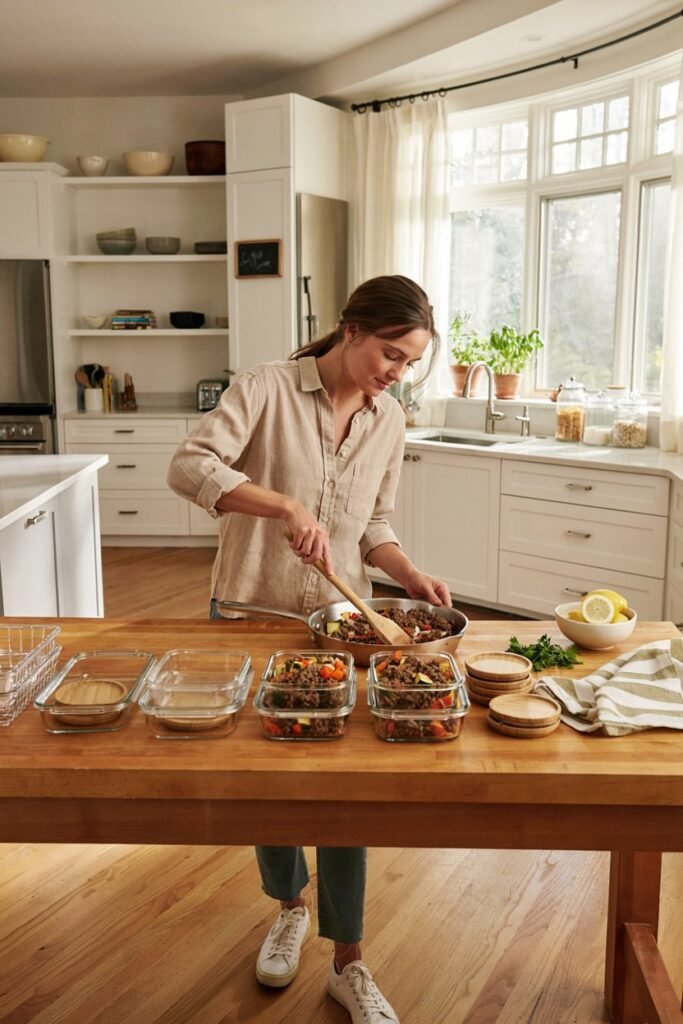
Once completely cool, divide the skillet into meal sized portions based on your dog’s size and feeding needs.
Store the portions in airtight containers in the refrigerator or freezer for convenient meals throughout the week.
Labeling containers with the preparation date makes it easy to keep track of freshness.
Expert Tips for the Best Results
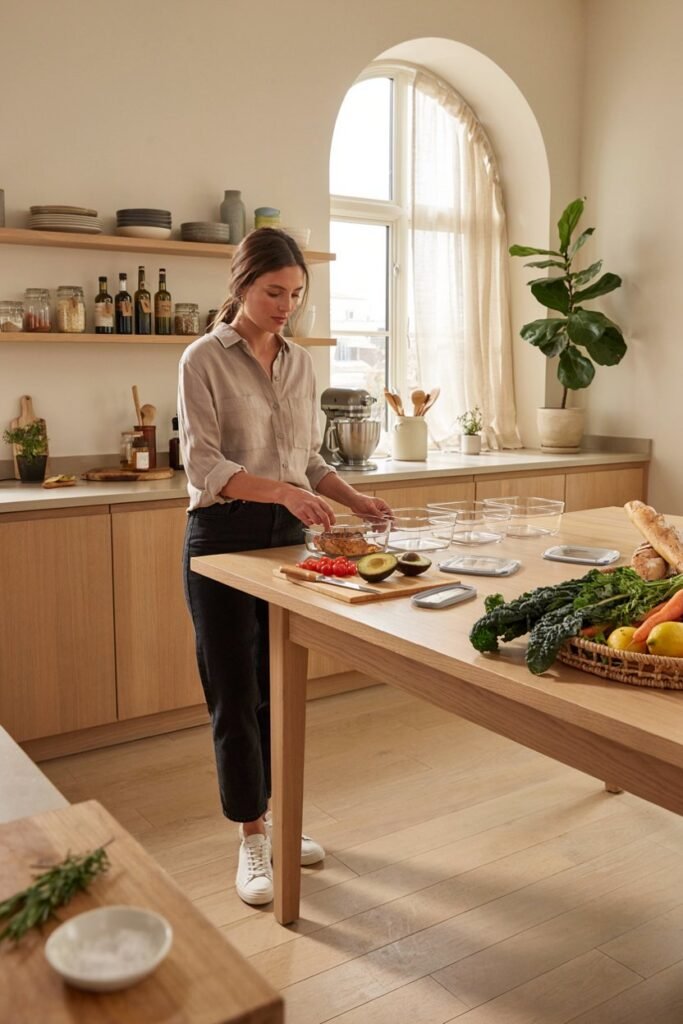
Small adjustments during preparation can make a noticeable difference in both the texture and quality of the finished meal.
Choose Lean Ground Beef
Ground beef that is at least 90 percent lean provides excellent protein while limiting unnecessary fat. Leaner beef also leaves less grease behind after cooking.
Cut Vegetables into Small Pieces
Uniform pieces cook at the same rate and are easier for dogs to chew. This is especially important for smaller breeds and senior dogs.
Cook Vegetables Until Tender
Soft vegetables are generally easier for dogs to digest than raw or undercooked vegetables.
Avoid leaving carrots or green beans too firm.
Avoid All Seasonings
Do not add salt, pepper, onion powder, garlic powder, butter, or spice blends.
Dogs don’t need these ingredients, and some seasonings can be harmful.
Drain Excess Fat
Even lean ground beef releases some fat during cooking.
Removing excess grease helps create a lighter, healthier meal.
Stir Frequently
Occasional stirring prevents sticking and helps distribute the vegetables evenly throughout the skillet.
Cool Completely Before Refrigerating
Allowing the food to cool naturally before storing helps maintain the best texture and prevents excess condensation inside storage containers.
Introduce Gradually
If your dog has never eaten homemade food before, start by mixing a small amount with their regular food over several days to reduce the chance of digestive upset.
Easy Recipe Variations
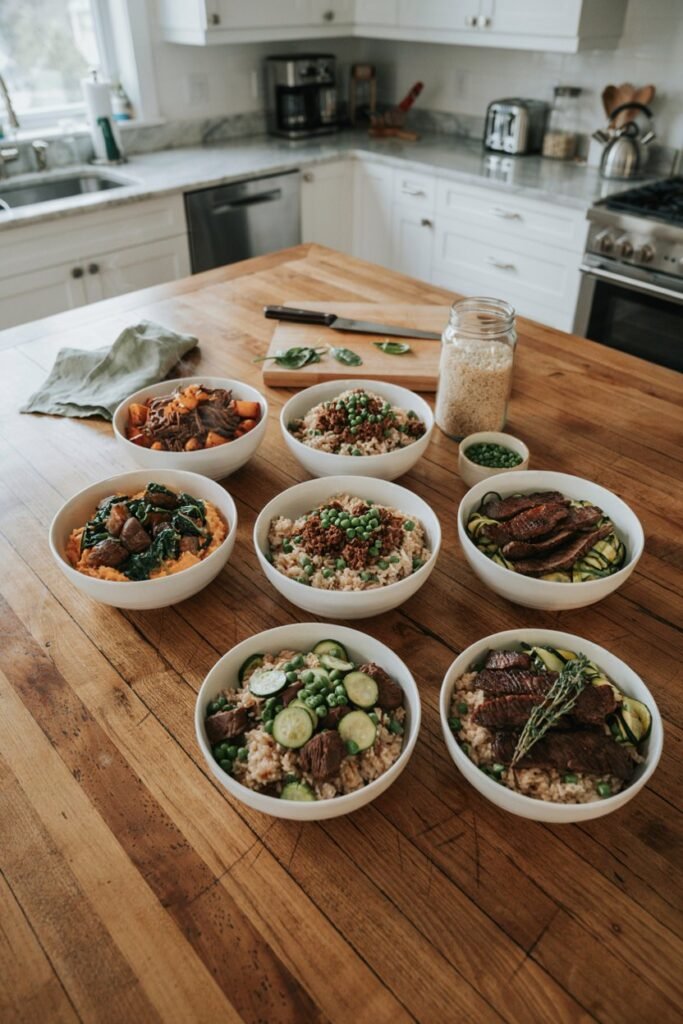
One of the best features of this recipe is how easy it is to customize while still using dog safe ingredients.
Beef and Sweet Potato Skillet
Replace part of the pumpkin with cooked sweet potato for extra fiber and a naturally sweet flavor.
Beef and Brown Rice Skillet
Add cooked brown rice to create a more filling meal that’s perfect for active dogs.
Beef and Quinoa Skillet
Cooked quinoa adds additional protein and texture while blending well with the vegetables.
Beef and Zucchini Skillet
Fresh zucchini cooks quickly and adds moisture without significantly increasing calories.
Beef and Broccoli Skillet
Small amounts of finely chopped broccoli provide additional vitamins and a slightly different texture.
Beef and Cauliflower Skillet
Cooked cauliflower blends well with the beef and creates another low calorie vegetable option.
Beef and Spinach Skillet
Increase the spinach slightly if your dog enjoys leafy greens, while still using it in moderation.
Dog Safe Vegetables You Can Add
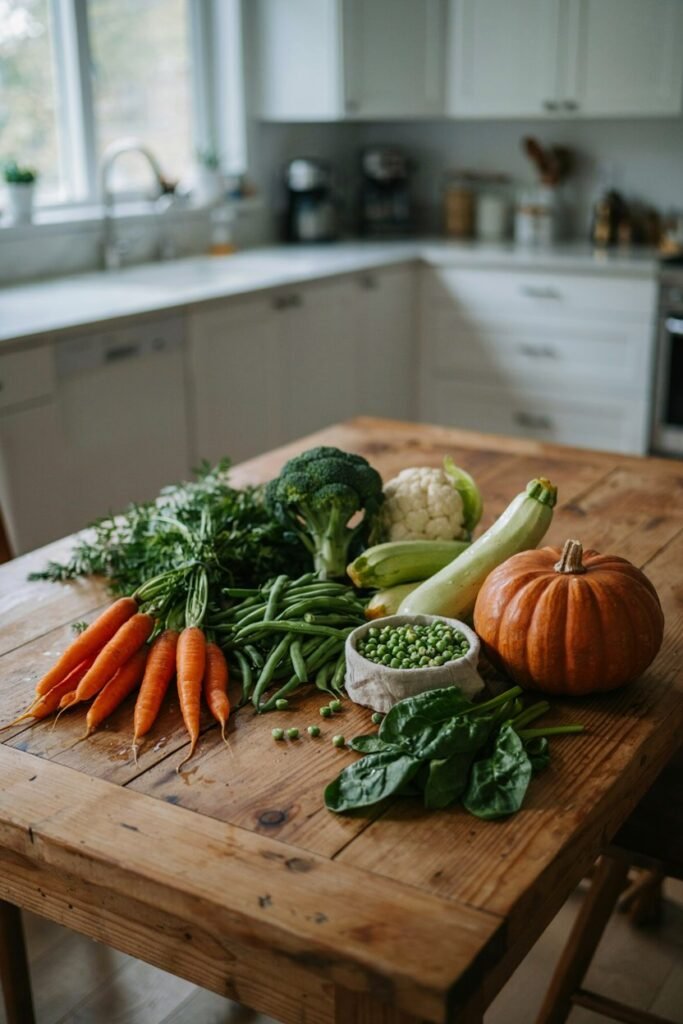
If you’d like to change the recipe occasionally, these vegetables are generally considered safe for most dogs when prepared plainly and served in appropriate amounts.
| Vegetable | Why It’s a Great Choice |
|---|---|
| Carrots | Rich in beta carotene and fiber |
| Green Beans | Low calorie and high in fiber |
| Pumpkin | Supports healthy digestion |
| Peas | Provide vitamins and plant protein |
| Sweet Potato | Excellent source of fiber and vitamin A |
| Zucchini | Low calorie and easy to digest |
| Spinach | Contains vitamins and antioxidants |
| Broccoli | Offers vitamin C and fiber in moderation |
| Cauliflower | Adds fiber and nutrients when cooked |
| Cucumber | Hydrating and low in calories |
| Celery | Crunchy source of fiber and vitamins |
Adding one or two different vegetables occasionally keeps homemade meals interesting without dramatically changing the nutritional profile.
Vegetables Dogs Should Avoid
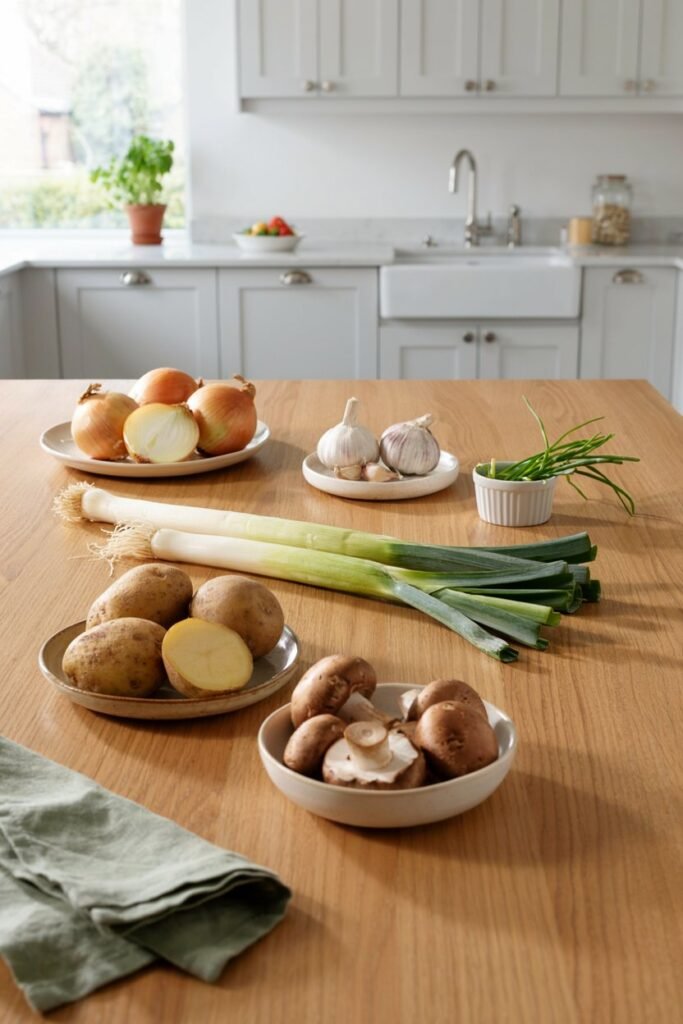
Not every vegetable that’s healthy for people is safe for dogs. Some contain compounds that can cause digestive problems or more serious health issues.
Avoid adding any of the following to homemade dog meals:
- Onions
- Garlic
- Shallots
- Leeks
- Chives
- Wild mushrooms
- Raw potatoes
- Large amounts of rhubarb
- Corn cobs
- Avocado pits and skin
Even small amounts of onions or garlic can be harmful to dogs, so always double check ingredient labels if you’re using broth or packaged products.
Can You Use Other Meats?
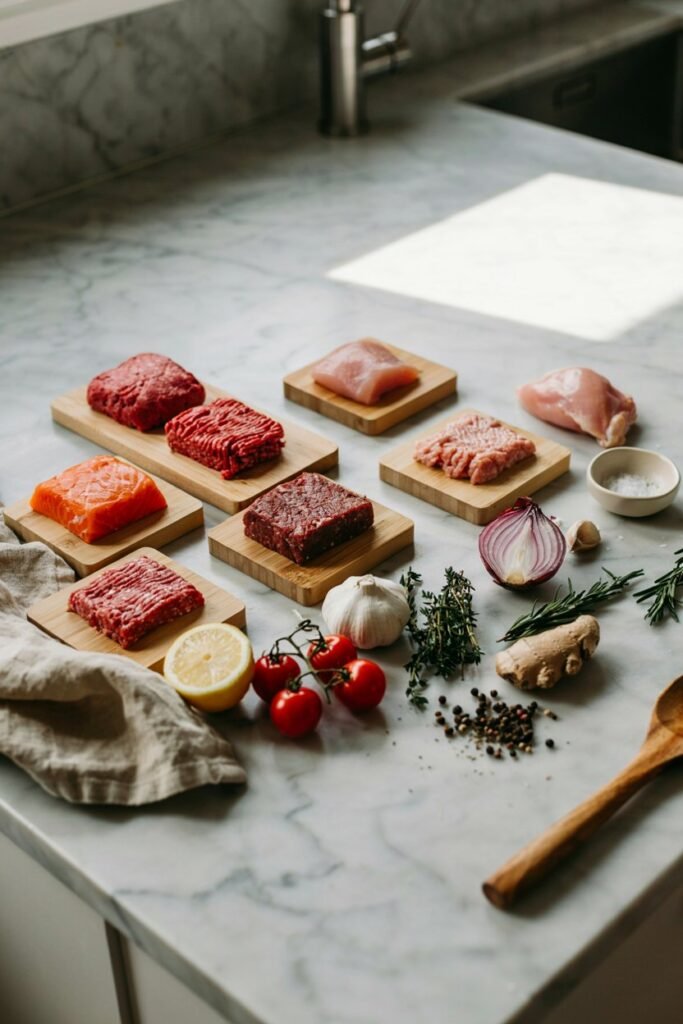
Absolutely. While lean ground beef is the star of this recipe, several other proteins can work well depending on your dog’s preferences and dietary needs.
Ground Turkey
A lean, easily digestible option that’s lower in fat than many cuts of beef.
Ground Chicken
An economical choice that provides excellent protein while creating a lighter meal.
Lean Pork
When cooked thoroughly and trimmed of excess fat, pork can be used occasionally as another protein source.
Lamb
Lamb offers a richer flavor that some dogs enjoy, although it’s naturally higher in fat and should be served in moderation.
Venison
A lean game meat that’s often recommended for dogs with sensitivities to more common proteins.
Salmon
Cooked, boneless salmon provides beneficial omega 3 fatty acids that help support healthy skin and a shiny coat.
Whichever protein you choose, cook it thoroughly, avoid seasoning, and remove any bones before serving.
Serving Suggestions
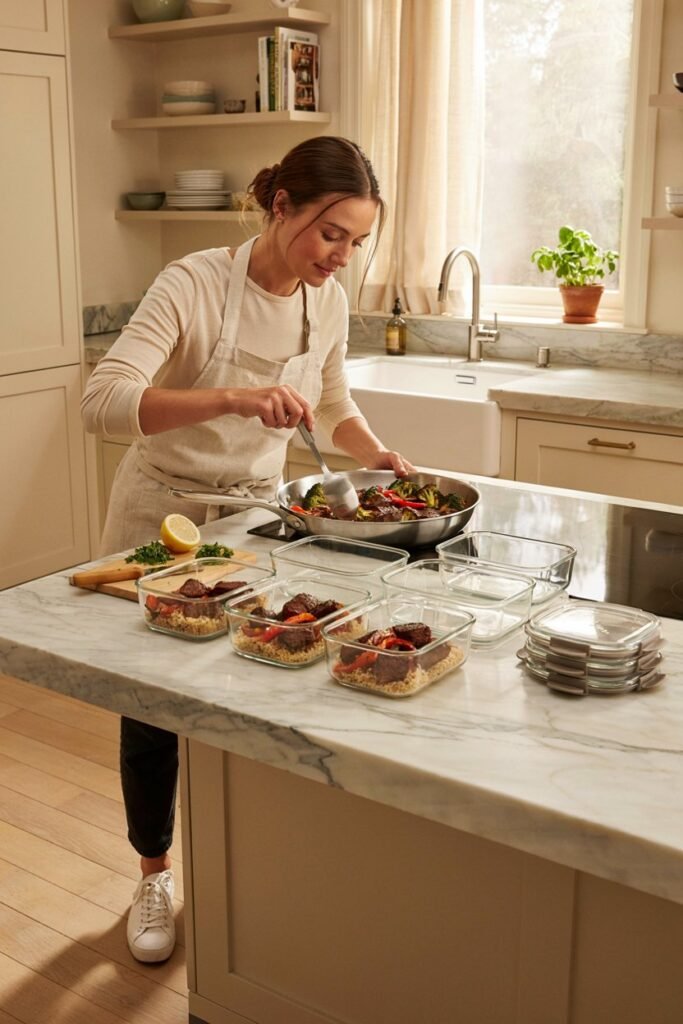
One of the best things about this Beef and Vegetable Skillet is its versatility.
Depending on your dog’s diet and your veterinarian’s recommendations, there are several ways to serve it throughout the week.
Serve as an Occasional Homemade Meal
Many dog owners prepare recipes like this as a fresh homemade meal to add variety to their dog’s routine.
If you’re feeding it as a complete meal, make sure it fits into a nutritionally balanced diet designed for your dog’s age, size, and activity level.
Use It as a Nutritious Food Topper
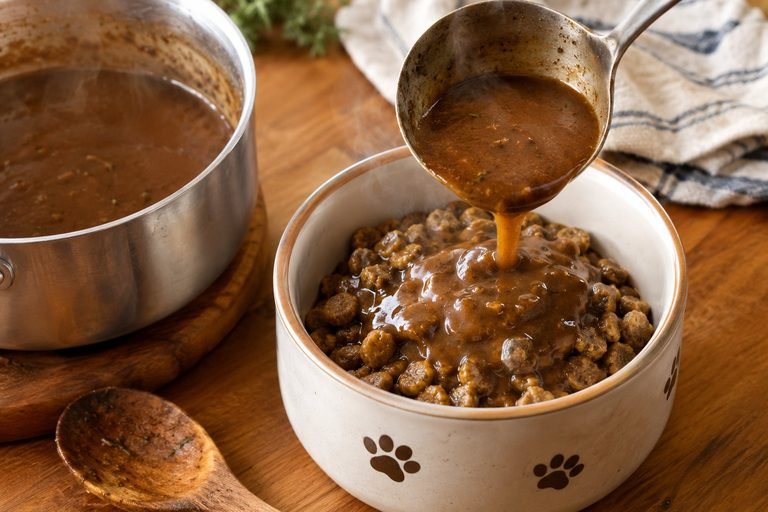
If your dog normally eats commercial kibble, adding a spoonful or two of this beef and vegetable mixture can make mealtime more exciting.
It also adds moisture and fresh ingredients without requiring a complete diet change.
Stuff It Into Enrichment Toys
Once completely cooled, the mixture can be packed into food puzzle toys or refillable rubber toys.
Chilling or freezing the filled toy can keep your dog occupied even longer while providing mental stimulation.
Freeze Individual Portions
Preparing several servings at once makes busy days much easier.
Simply thaw a portion overnight in the refrigerator before serving.
Mix with Cooked Grains
If your veterinarian recommends adding grains, the skillet pairs well with cooked brown rice, quinoa, or oatmeal.
Mixing grains into the beef and vegetables can stretch the recipe while adding additional texture.
Portion Guidelines
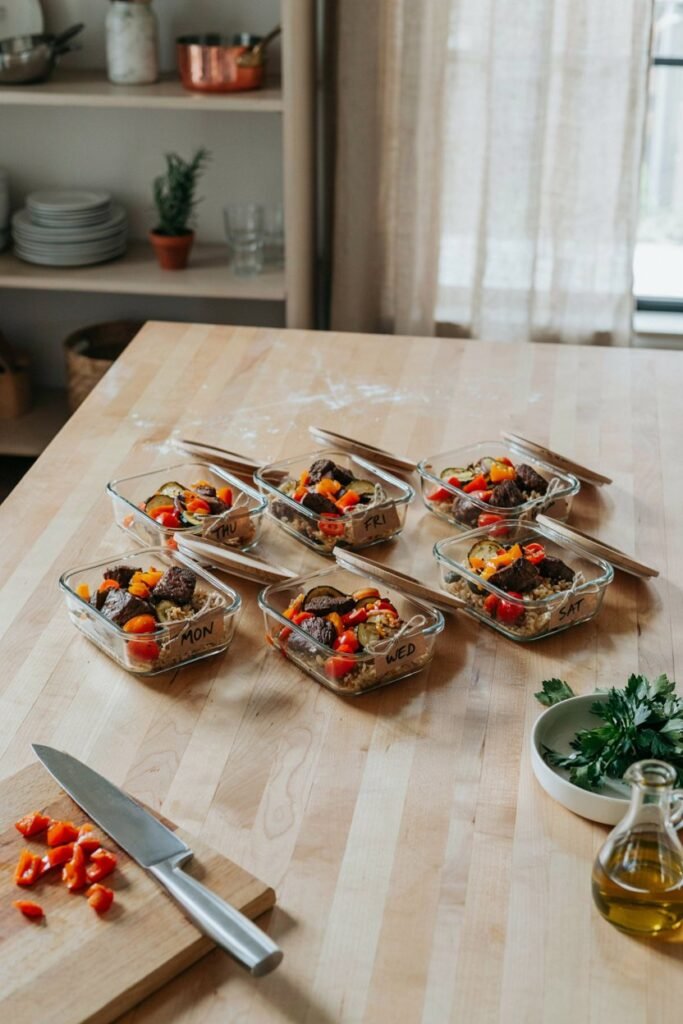
Every dog has different nutritional needs, so there isn’t a single serving size that’s appropriate for every pet.
The correct portion depends on factors such as:
- Age
- Breed
- Current weight
- Activity level
- Overall health
- Whether the recipe is served as a meal or food topper
A Chihuahua and a Great Dane obviously require very different amounts of food.
Puppies, senior dogs, pregnant dogs, and highly active working breeds may also have unique nutritional requirements.
If you’re unsure how much homemade food your dog should receive, consult your veterinarian before making significant dietary changes.
Whenever introducing homemade meals, begin with a small portion mixed into your dog’s regular food.
Gradually increase the amount over several days while monitoring digestion and overall comfort.
How to Store Beef and Vegetable Skillet
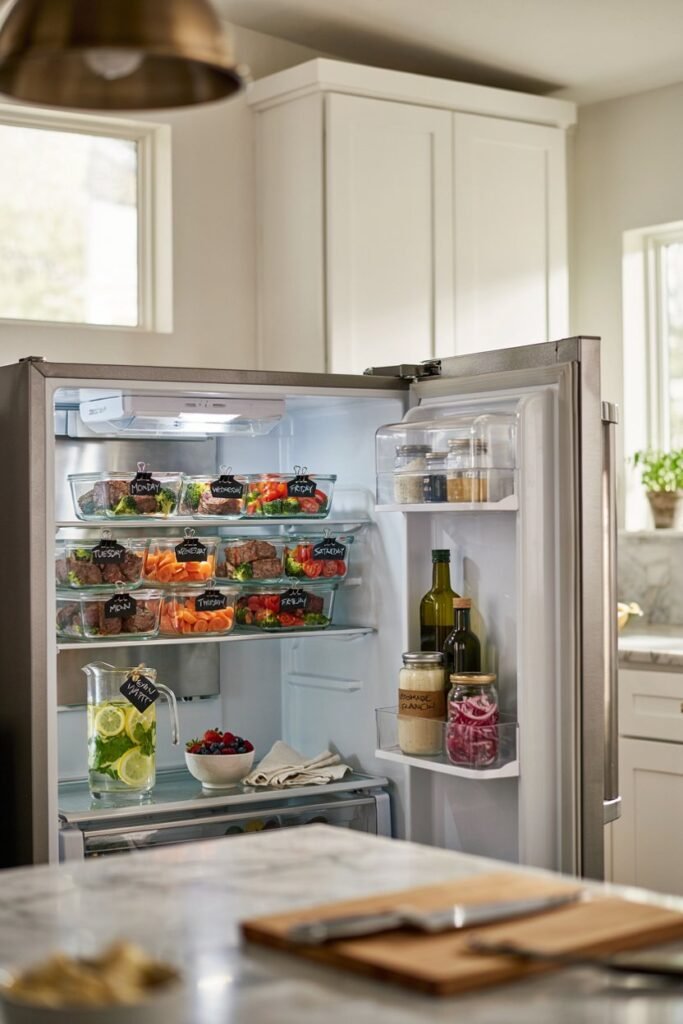
Proper storage helps keep the food fresh while reducing waste.
Refrigerator
Allow the skillet to cool completely before transferring it to airtight containers.
Store refrigerated portions for up to 3 to 4 days.
Avoid leaving homemade dog food at room temperature for extended periods.
Freezer
This recipe freezes extremely well.
Divide the cooled food into individual meal sized portions before freezing.
Frozen portions can typically be stored for up to 3 months while maintaining good quality.
Label containers with the preparation date so older portions are used first.
Thawing
Move frozen portions to the refrigerator the night before you plan to use them.
Avoid thawing homemade dog food on the kitchen counter.
Reheating
Most dogs enjoy this meal served cool or at room temperature.
If you’d like to warm it slightly, heat only until lukewarm and stir well to eliminate hot spots.
Always check the temperature carefully before serving.
Meal Prep Tips
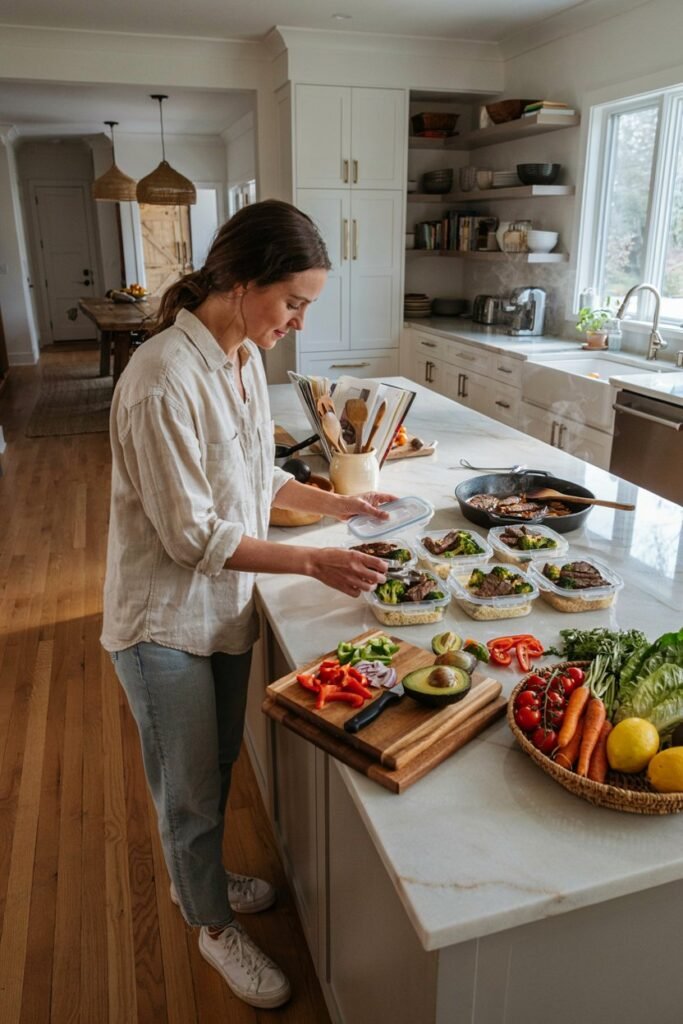
If you enjoy preparing meals ahead of time, this recipe fits perfectly into a weekly meal prep routine.
Double the Recipe
Cooking a larger batch takes very little extra effort and provides meals for several days.
Portion Immediately
Divide the cooled mixture into containers before refrigerating. This saves time later and makes feeding much easier.
Label Everything
Write the preparation date on each container so you always know which portions should be used first.
Rotate Vegetables
Changing one vegetable from batch to batch helps provide variety while keeping meals interesting.
Freeze Flat
If using freezer bags, flatten each portion before freezing. They thaw more quickly and take up less freezer space.
Common Mistakes to Avoid
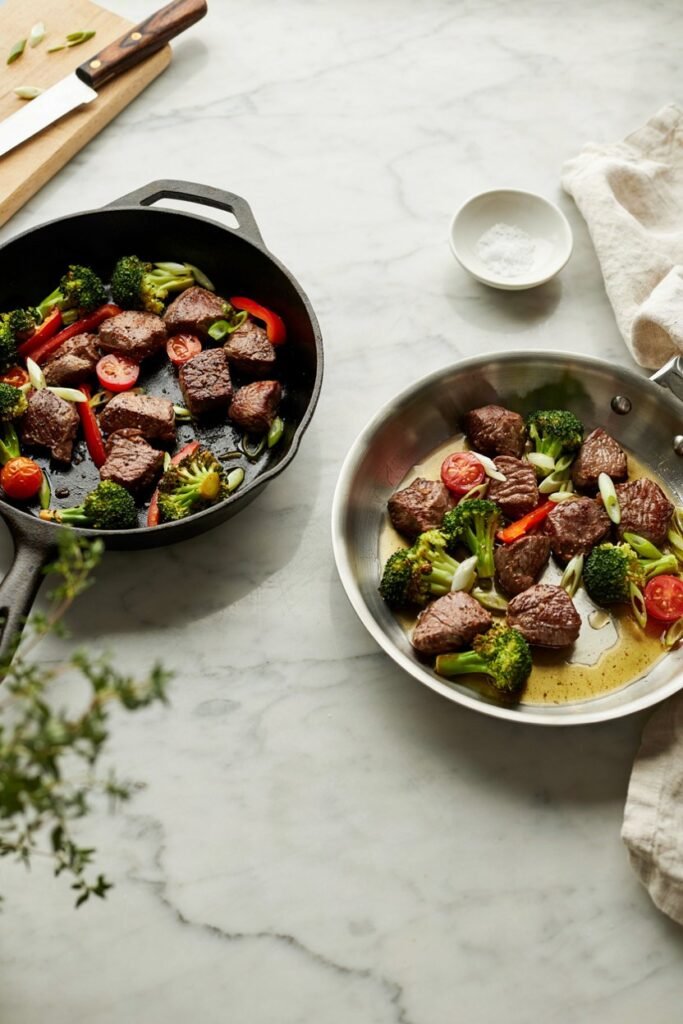
Homemade dog food is simple to prepare, but a few common mistakes can affect the finished meal.
Using Beef with Too Much Fat
Higher fat ground beef produces more grease and creates a richer meal that may not agree with every dog’s stomach.
Lean ground beef is usually the better choice.
Adding Seasonings
Salt, garlic powder, onion powder, pepper, and spice blends should never be added to homemade dog meals.
Dogs simply don’t need these ingredients.
Serving the Food Too Hot
Freshly cooked food can remain much hotter than it appears.
Always allow the skillet to cool completely before serving.
Overcooking the Vegetables
Vegetables should become tender without turning completely mushy.
Maintaining some texture creates a more enjoyable meal.
Skipping the Fat Drain
Even lean beef releases some grease.
Removing excess fat creates a lighter, healthier recipe.
Making Sudden Diet Changes
Introducing any new food too quickly can upset your dog’s stomach.
Gradual transitions are always the safest approach.
Troubleshooting

Even simple recipes can occasionally produce unexpected results. Fortunately, most issues are easy to fix.
The skillet looks watery.
Some vegetables naturally release more moisture during cooking.
Continue simmering uncovered for a few extra minutes until the excess liquid evaporates.
The mixture seems too dry.
Add a splash of water or unsalted beef broth while stirring until the desired consistency is reached.
My dog won’t eat it.
Some dogs need time to adjust to new foods.
Try mixing a small amount with their regular food before increasing the serving size gradually.
The vegetables are still firm.
Cover the skillet and cook for several additional minutes, stirring occasionally until they become tender.
The beef seems greasy.
Use leaner ground beef next time and be sure to drain the excess fat thoroughly after browning.
The food separated after freezing.
This is completely normal.
Simply stir the thawed portion before serving to redistribute the moisture.
Helpful Reminders Before Serving
Keeping a few simple safety tips in mind will help ensure every meal is both enjoyable and appropriate for your dog.
- Always serve the food completely cooled.
- Use only fresh, high quality ingredients.
- Never include onions, garlic, or heavily seasoned ingredients.
- Store leftovers promptly after cooling.
- Introduce new foods gradually.
- Keep fresh drinking water available at all times.
- Consult your veterinarian before making homemade meals a permanent part of your dog’s diet.
Frequently Asked Questions
Can puppies eat this recipe?
Puppies have different nutritional requirements than adult dogs.
If you’d like to feed homemade meals regularly, speak with your veterinarian to ensure their growing bodies receive complete and balanced nutrition.
Can senior dogs eat this meal?
Many senior dogs enjoy soft homemade meals because they’re often easier to chew than dry kibble.
Your veterinarian can recommend appropriate serving sizes based on your dog’s health.
Can I use frozen vegetables?
Yes.
Frozen vegetables are convenient, nutritious, and usually require very little preparation.
Avoid vegetables that contain sauces, butter, salt, or seasonings.
Can I substitute ground turkey?
Absolutely.
Ground turkey is one of the most popular alternatives to beef and creates a lean, protein rich meal.
Is pumpkin required?
Pumpkin adds fiber and moisture, but if you don’t have any available, you can replace it with cooked sweet potato or simply omit it.
Can I add rice?
Yes.
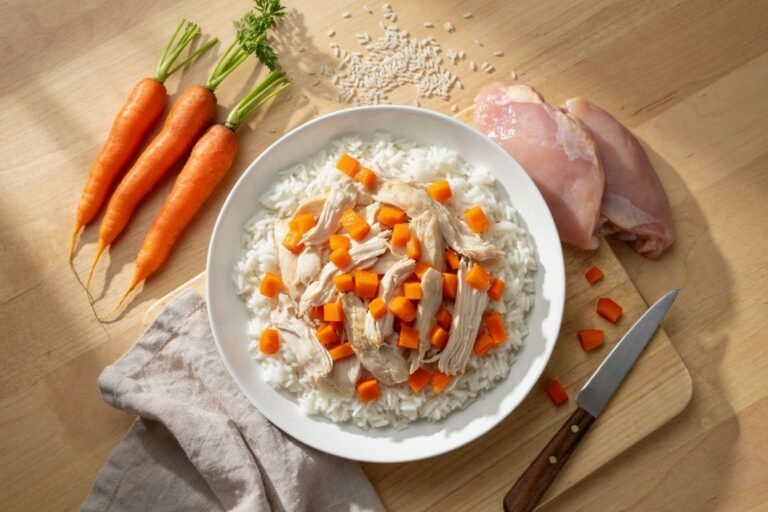
Cooked brown rice or white rice can be mixed into the skillet if your veterinarian recommends adding grains to your dog’s diet.
How often can I serve this recipe?
That depends on whether you’re using it as a meal topper, occasional homemade meal, or part of a veterinarian approved homemade feeding plan.
Can I freeze leftovers?
Yes.
The recipe freezes exceptionally well and is perfect for long term meal prep.
Can I cook the vegetables separately?
You certainly can, although cooking everything together allows the vegetables to absorb some of the flavorful beef juices.
Should I add supplements?
If homemade food becomes a regular part of your dog’s diet, your veterinarian may recommend specific supplements to ensure nutritional balance.
Final Thoughts
Preparing homemade meals for your dog doesn’t have to be complicated.
This Beef and Vegetable Skillet proves that a handful of fresh, wholesome ingredients can come together to create a satisfying meal that’s simple to make and easy to customize.
With lean ground beef providing high quality protein and colorful vegetables adding natural fiber, vitamins, and minerals, it’s a recipe that offers both convenience and nutrition without relying on artificial additives or unnecessary fillers.
Another reason this recipe deserves a place in your meal rotation is its flexibility.
Whether you’re looking for an occasional homemade dinner, a flavorful topper to make kibble more appealing, or a freezer friendly recipe that saves time during busy weeks, this skillet adapts to your needs.
Because the ingredients are easy to find and the cooking process is straightforward, even beginners can prepare it with confidence.
Remember that every dog is unique. Age, breed, activity level, allergies, and existing health conditions all influence nutritional needs.
Homemade recipes like this are a wonderful way to include fresh ingredients in your dog’s diet, but they work best when they’re part of a thoughtful feeding plan developed with your veterinarian, especially if you intend to feed homemade meals regularly.
If you’re searching for a dependable homemade recipe that’s nutritious, easy to prepare, and made with ingredients you recognize, this Beef and Vegetable Skillet is an excellent place to start.
Once you’ve made it, you’ll likely find yourself coming back to it whenever you want to treat your dog to a fresh, wholesome meal made with care.