Simple Dog Food Recipes for Beginners (Step-by-Step Guide)
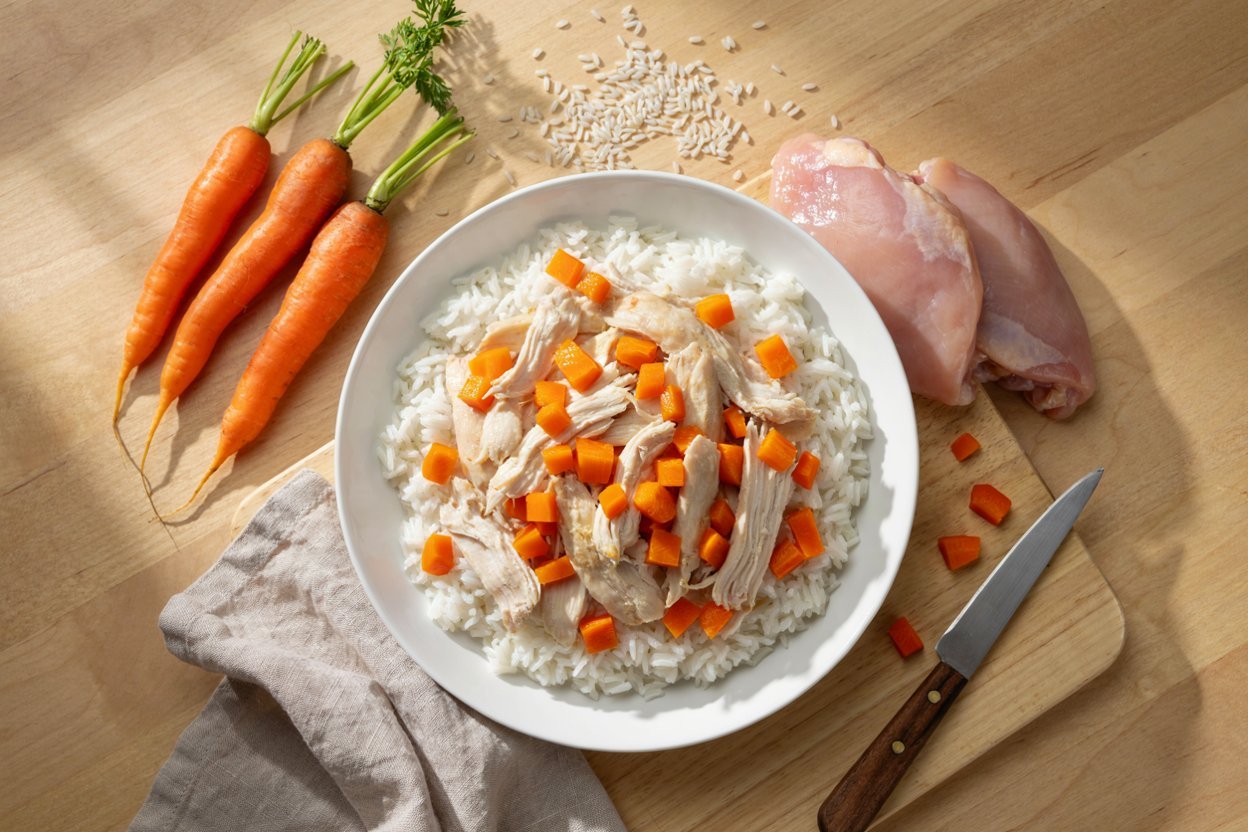
Every homemade dog food journey has to start somewhere, and it rarely starts with something complicated. Mine started with a single pot, a bag of rice, and a very simple question.
What is actually going into my dog’s bowl every day? That question is usually enough to send someone looking for a beginner recipe that is genuinely easy to follow from start to finish, without needing any special skills or equipment.
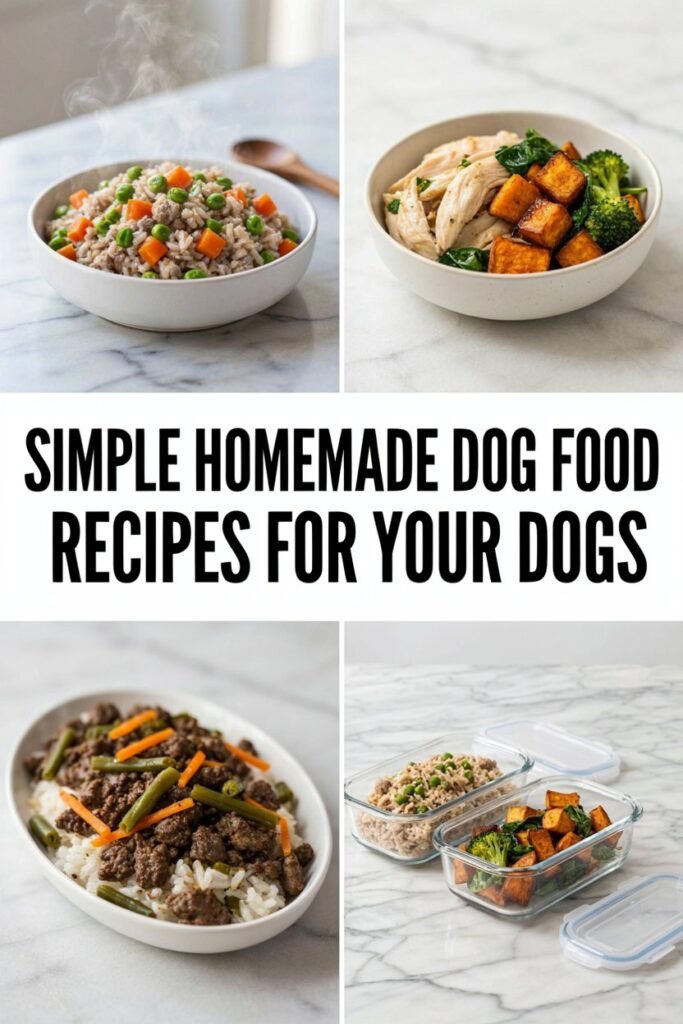
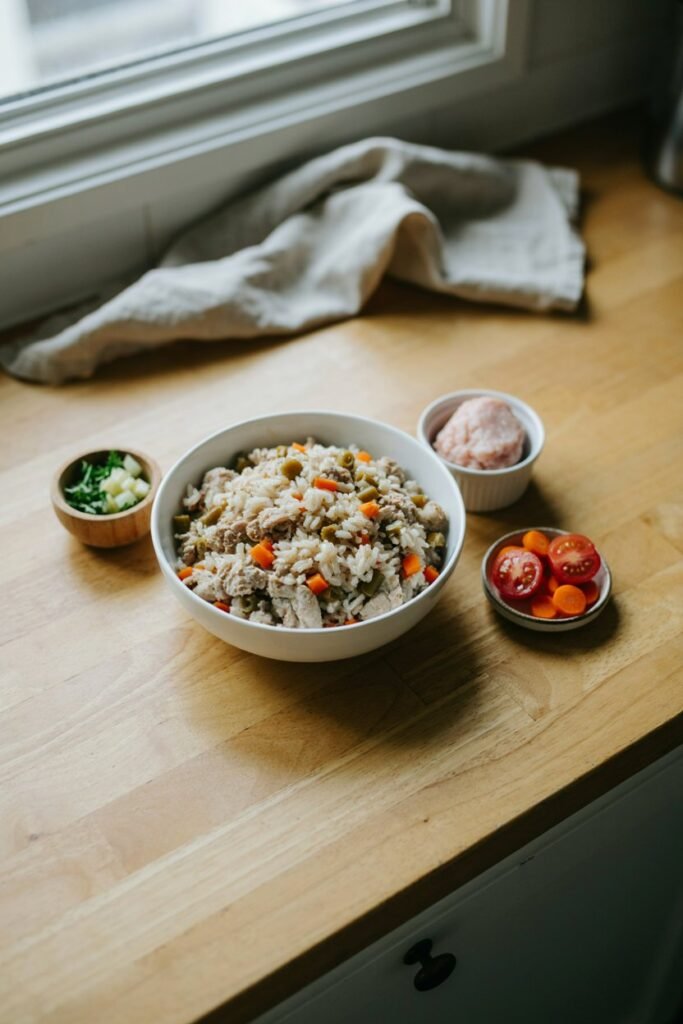
This post walks through one complete, step by step recipe built specifically with first timers in mind, a simple chicken and rice meal that uses four ingredients and comes together in under an hour.
Once you feel comfortable with this one, my full Farmer’s Dog copycat recipes guide has ten more variations to explore as you build out a rotation.
Disclaimer: This post may contain affiliate links, which means I may earn a small commission at no extra cost to you. Always consult your veterinarian before introducing homemade meals or changing your dog’s diet.
Amazon Shopping List You Need
- Large Nonstick Cooking Pot with Lid
- Digital Kitchen Food Scale
- Glass Meal Prep Containers with Lids
- Stainless Steel Dog Food Bowls
- Airtight Dog Food Storage Container
- Silicone Freezer Portion Trays
- Dog Multivitamin Supplement Powder
Why This Is the Right Recipe to Start With
Chicken and rice is often the very first homemade meal people make for their dogs, and there is a good reason for that beyond simplicity.
It is the same combination veterinarians frequently recommend for dogs recovering from an upset stomach, since both ingredients are gentle, easy to digest, and unlikely to cause a reaction even in dogs who have never eaten homemade food before.
It also teaches the core skills every other homemade recipe builds on. Cooking a protein through fully, cooking a carbohydrate separately, combining everything in the right ratio, and cooling it properly before serving.
Once those basics feel natural, moving on to more advanced recipes, like the ones in my homemade dog food recipes for large dogs guide, becomes a lot less intimidating.
A Quick Word Before You Start
This recipe is a great entry point, but it is intentionally simple, which means it is not a complete, long term replacement for a fully balanced commercial diet on its own.
If homemade food is going to become a regular part of your dog’s routine rather than an occasional meal, it is worth talking to your veterinarian about adding a calcium source and confirming the overall plan covers everything your dog needs over time.
Ingredients You’ll Need
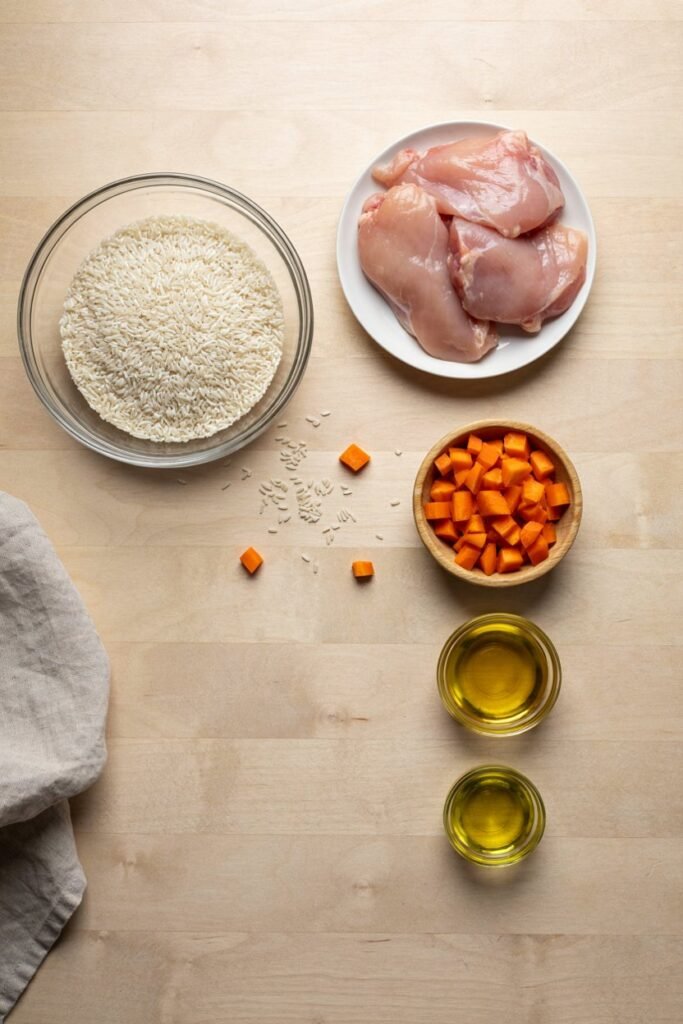
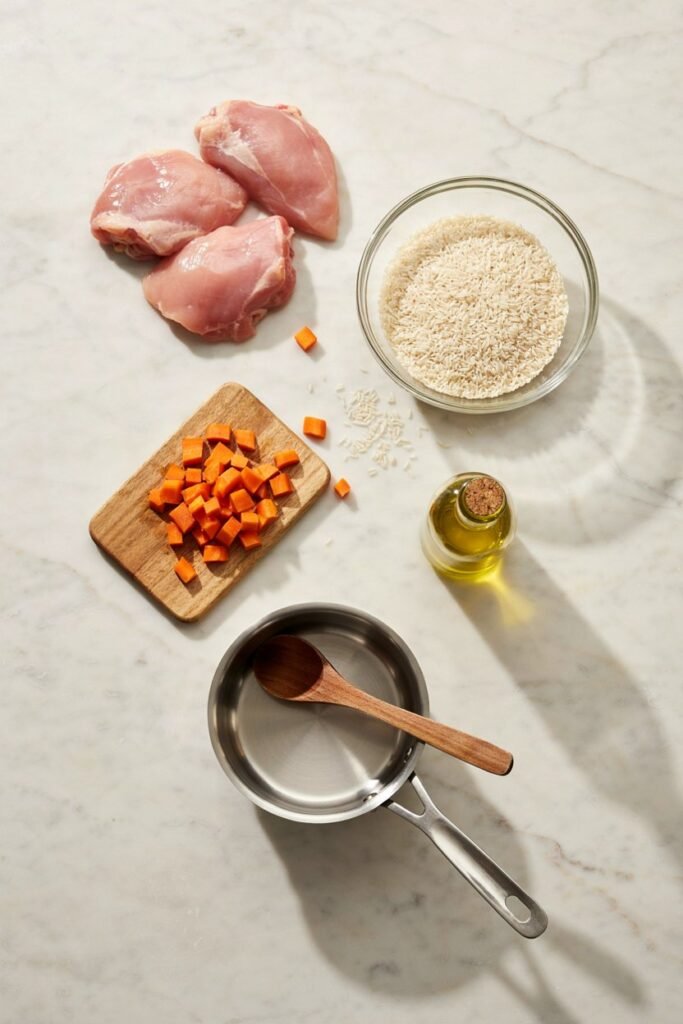
2 lbs boneless, skinless chicken thighs 2 cups white or brown rice, uncooked 1 cup carrots, finely diced 2 tablespoons olive oil
Chicken thighs are used here instead of breast meat because they stay moist through cooking and are harder to accidentally dry out, which matters a lot for a first attempt.
White rice is easier to digest and gentler on a sensitive stomach, while brown rice offers more fiber if your dog tolerates it well.
Carrots add a bit of texture, fiber, and beta carotene, and the olive oil helps round out the meal with a small, healthy source of fat.
How to Make It: Step by Step
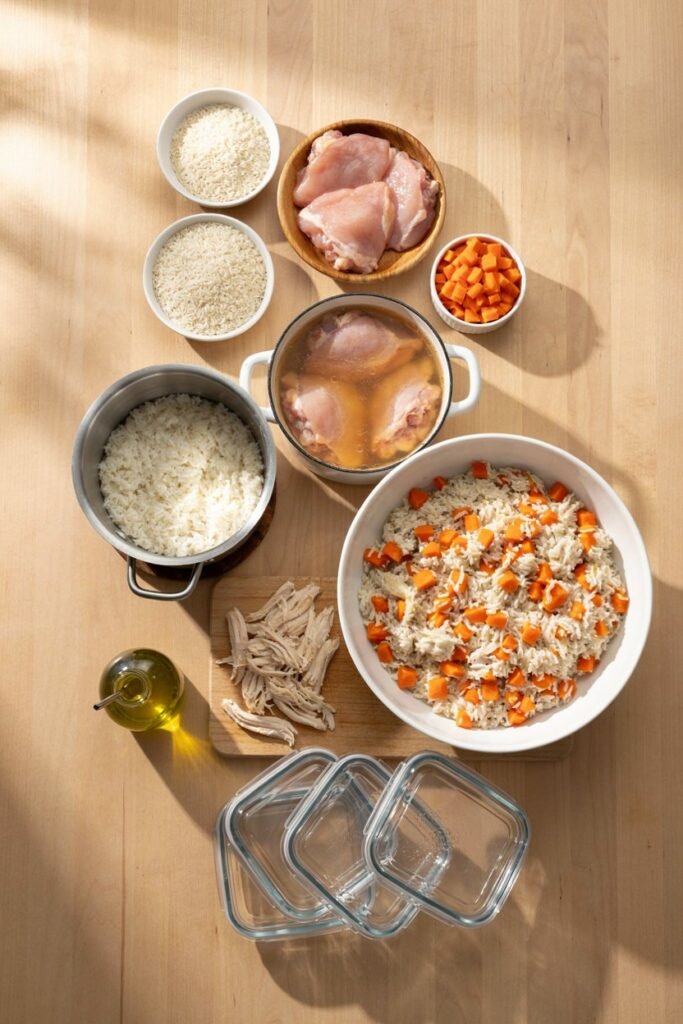
Step 1. Cook the rice. In a medium saucepan, cook the rice according to the package instructions using plain water, with no salt, butter, or seasoning added.
Step 2. Cook the chicken. While the rice cooks, add the chicken thighs to a separate pot with enough water to cover them. Bring to a gentle simmer and cook until fully cooked through, about 15 to 18 minutes.
Step 3. Steam the carrots. While the chicken and rice are cooking, steam the diced carrots until soft, about 5 to 7 minutes.
Step 4. Shred the chicken. Once the chicken is cool enough to handle, shred it into small, bite sized pieces using two forks.
Step 5. Combine everything. In a large bowl, combine the cooked rice, shredded chicken, and steamed carrots.
Step 6. Add the olive oil. Drizzle the olive oil over the mixture and stir everything together until evenly combined.
Step 7. Cool completely. Let the full mixture cool to room temperature before portioning, since serving warm or hot food can burn a dog’s mouth.
Step 8. Portion and serve. Divide the mixture into meal sized portions based on your dog’s size, and serve, refrigerate, or freeze the rest.
Storage and Feeding Tips
Refrigerate portions in an airtight container for up to four days, or freeze individual servings for up to three months. Thaw frozen portions in the refrigerator overnight rather than at room temperature.
As a general starting point, most adult dogs eating a fresh, home cooked diet need roughly two to three percent of their body weight in food per day, split across two meals.
A 25 pound dog, for example, typically needs somewhere around 1.5 to 2 cups per day, though this varies based on activity level and body condition. Check with your veterinarian for a more precise amount specific to your dog.
Easy Ways to Build On This Recipe
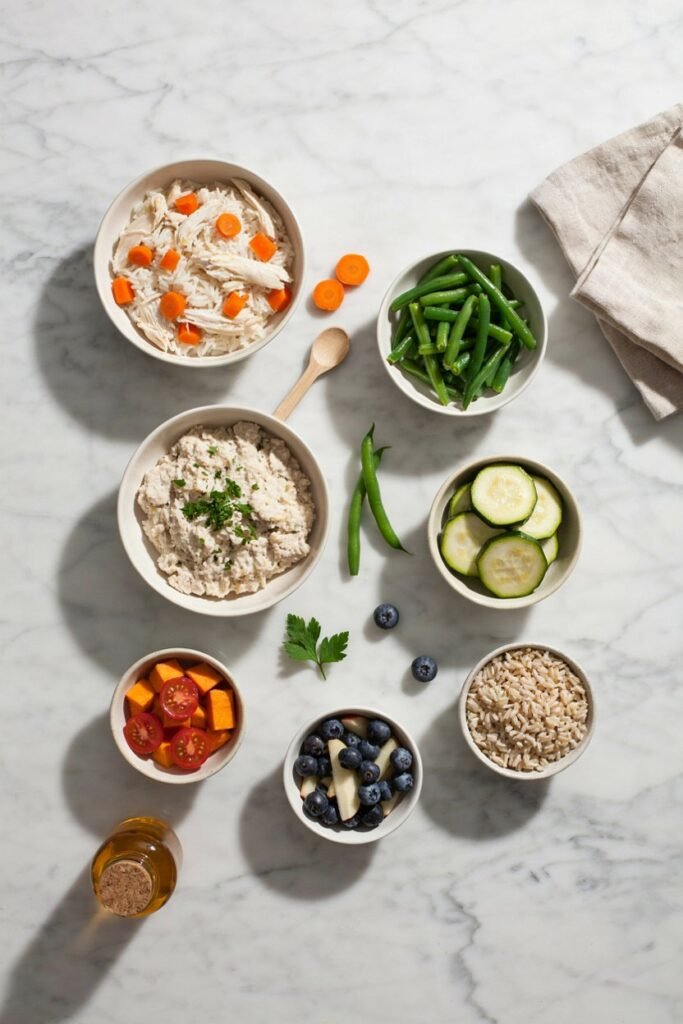
Once you feel confident with the basic version, there are a few simple next steps worth trying.
Try a different protein. My homemade turkey dog food recipe uses the same basic method with a different flavor profile, which is useful if your dog needs some protein rotation.
Make it freezer friendly. If batch cooking is your goal, my simple homemade dog meals you can freeze guide has additional tips for portioning and storing larger batches.
Scale it for your dog’s size. If you have a smaller dog, my homemade dog food recipes for small dogs post covers portion adjustments worth reading. For bigger breeds, the large dog recipes guide linked above is the better next stop.
Try a hands off cooking method. If you’d rather not stand over the stove, my easy crockpot dog food recipe walks through a similar meal made entirely in a slow cooker.
Keep it minimal. If you want to strip things down even further, my 3 ingredient cooked dog food recipes post has some of the simplest homemade options on the site.
Common Mistakes Beginners Make
Skipping the cooling step. Always let the food cool completely before serving to avoid burning your dog’s mouth. Adding salt, butter, or seasoning to the rice.
Keep it plain, since dogs don’t need the extra sodium or fat and some seasonings can be harmful. Guessing at portion sizes. Take the time to calculate an appropriate daily amount for your dog’s weight rather than estimating.
Switching too quickly from your dog’s current food. Introduce homemade meals gradually over seven to ten days to avoid stomach upset.
Treating this as a fully balanced long term diet without professional guidance. It’s a great starting recipe, but ongoing homemade feeding should be reviewed with your vet.
Frequently Asked Questions
Can I use brown rice instead of white rice? Yes. Brown rice offers more fiber, though white rice is easier to digest and often recommended for dogs with a sensitive stomach.
Is this recipe safe for puppies? Puppies have different nutritional needs, especially around calcium and phosphorus for bone development. Talk to your veterinarian before feeding this to a puppy.
How long does this take from start to finish? About 15 minutes of hands on prep and roughly 30 minutes of cooking time, most of which happens without much active attention needed.
Can I add vegetables other than carrots? Yes, green beans, peas, or zucchini are all gentle, dog safe additions that work well in this same basic method.
My dog seems uninterested, what should I try? Try warming the portion slightly, or stir in a small spoonful of low sodium broth right before serving to boost the aroma.
Simple Dog Food Recipe for Beginners
Ingredients
Equipment
Method
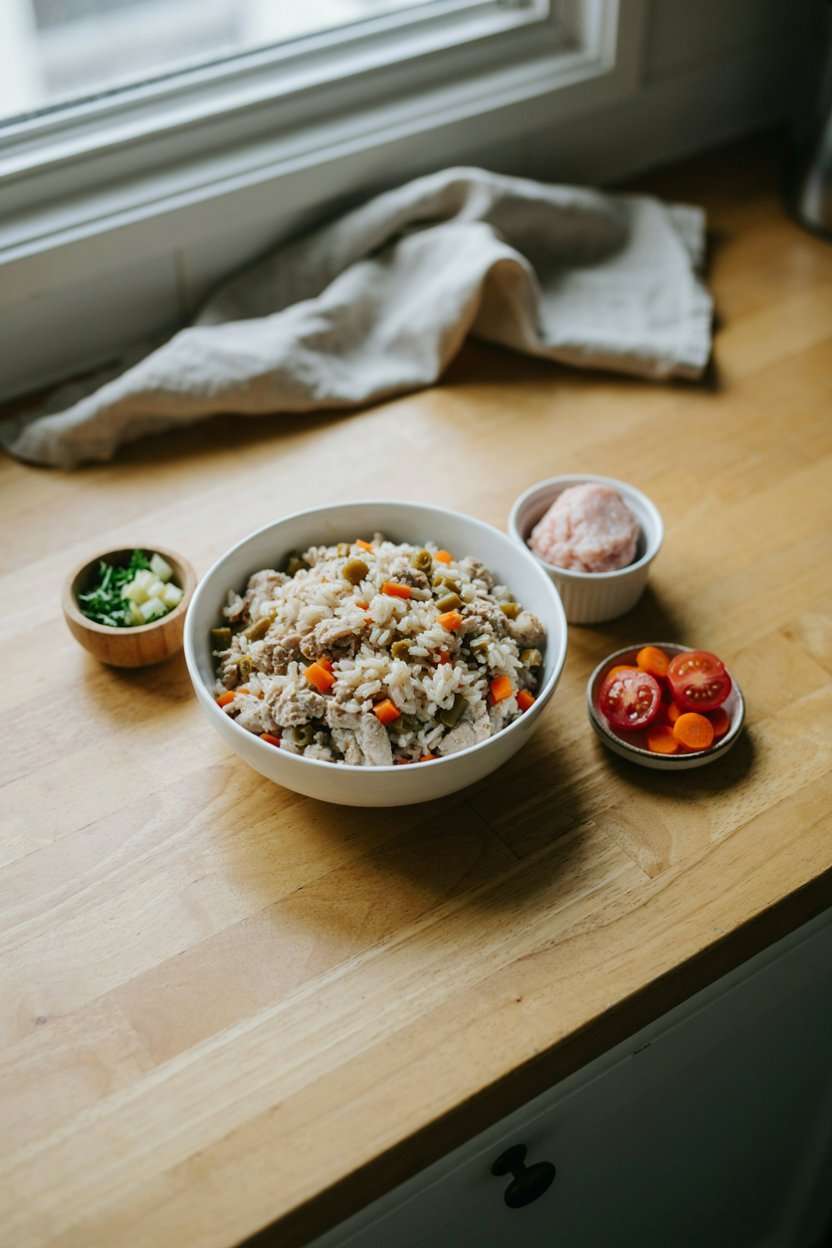
- Rinse the brown rice and prepare the carrots and green beans by washing and chopping them into small pieces.
- Add the ground turkey to a large pot and break it into small pieces.
- Add the brown rice, carrots, green beans, pumpkin puree, and water.
- Bring the mixture to a gentle boil, then reduce the heat.
- Cover the pot and simmer until the turkey is fully cooked, the rice is tender, and the vegetables are soft.
- Stir the mixture occasionally while it cooks to keep the rice from sticking.
- Remove the pot from the heat and allow the food to cool completely.
- Portion the cooled food according to your dog’s individual needs and serve.
- Use plain, unseasoned ingredients. Do not add onion, garlic, excessive salt, seasoning blends, or cooked bones.
- This beginner friendly recipe is best treated as an occasional homemade meal or topper unless it has been properly formulated to meet your dog’s complete nutritional requirements. Dogs have specific nutritional needs that cannot be reliably met by a simple meat, rice, and vegetable combination alone.
Final Thoughts
You don’t need advanced cooking skills or a long ingredient list to start making homemade meals for your dog.
This chicken and rice recipe is about as simple as it gets, and it gives you a solid, repeatable foundation to build from as you get more comfortable in the kitchen.
Start here, watch how your dog responds, and use the recipes linked throughout this post as your next steps.