At Home Dog Grooming Tools Worth Buying (And What to Skip)
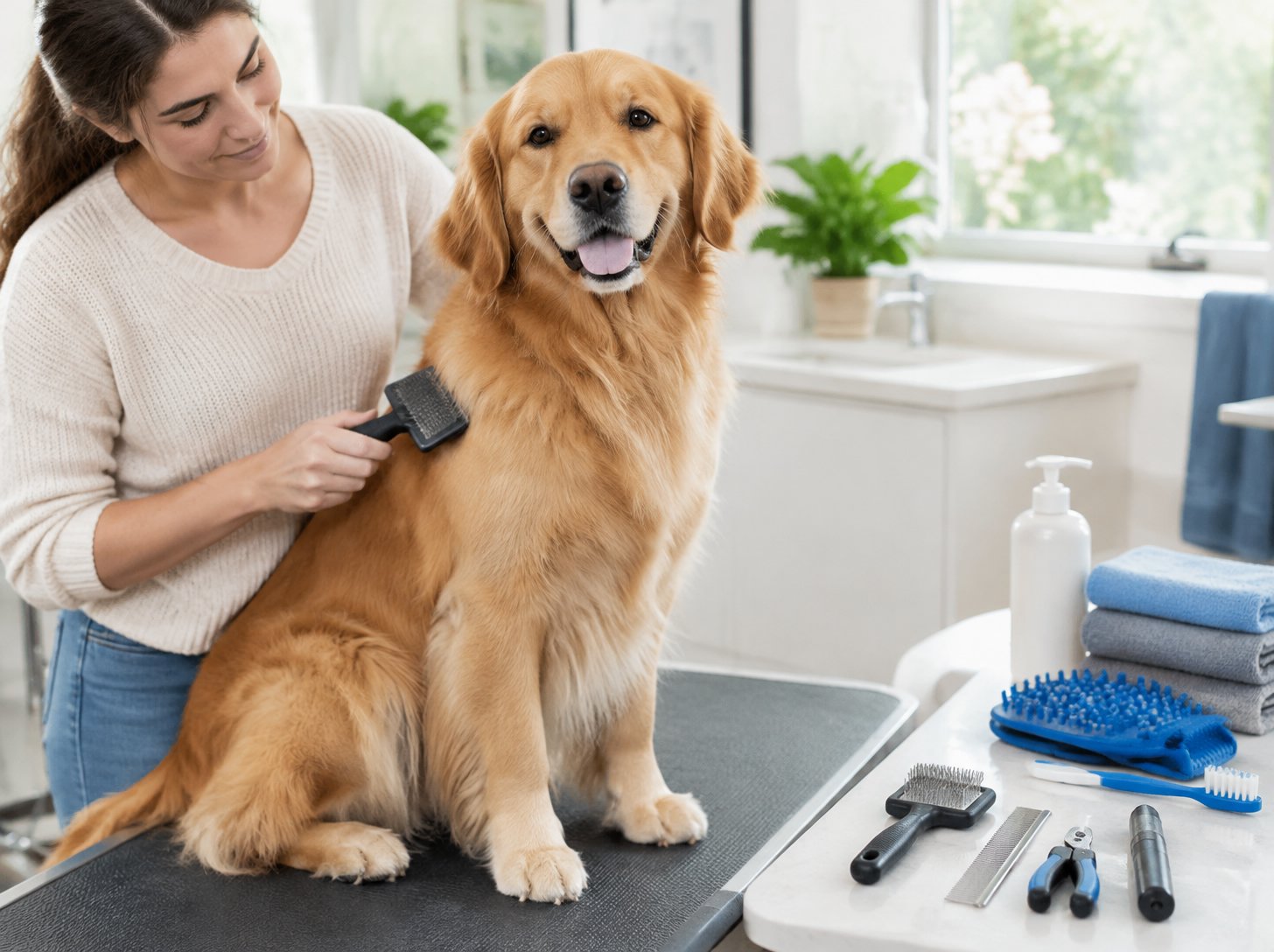
Grooming your dog at home saves money, keeps your dog cleaner and healthier between salon visits, and gives you regular chances to spot lumps, skin problems, and sore spots early.
It also turns into quality bonding time when your dog is comfortable with it. The trick is owning the right tools. Pet stores are full of gadgets, and many of them gather dust.
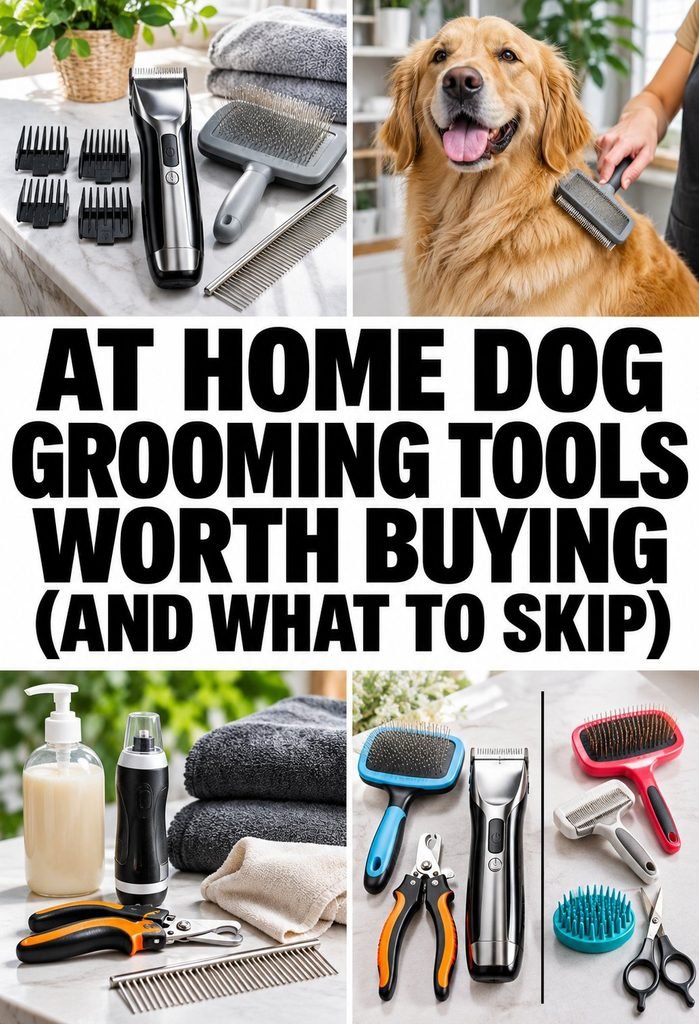
This guide covers the tools actually worth buying, how to match them to your dog’s coat, what to look for in each one, and what you can safely skip. I’m not recommending specific brands, since the best choice depends on your dog’s coat, size, and temperament.
Instead, you’ll learn what to look for so you can shop with confidence. If you’re new to caring for a dog at home, my First Week with a New Puppy: A Day by Day Survival Schedule is a good companion read.
Start Here: Know Your Dog’s Coat

The right tools depend on the coat, so figure this out first.
Short, smooth coat. Think Labs, Beagles, and Boxers. These need minimal tools, mostly a rubber brush or grooming mitt.
Double coat. Think Huskies, Golden Retrievers, and German Shepherds. They shed heavily and need an undercoat rake or deshedding tool.
Long or silky coat. Think Shih Tzus and Yorkies. They tangle easily and need a pin brush, a comb, and regular attention.
Curly or wooly coat. Think Poodles and doodles. They mat quickly and need a slicker brush, a metal comb, and often clippers.
Wire coat. Think many terriers. They may need a stripping tool or professional grooming for the correct texture.
If you’re unsure, ask your veterinarian or a professional groomer what your dog’s coat needs. Some breeds, especially double coated dogs, should not be shaved, so always check before clipping.
The Core Tools Worth Buying
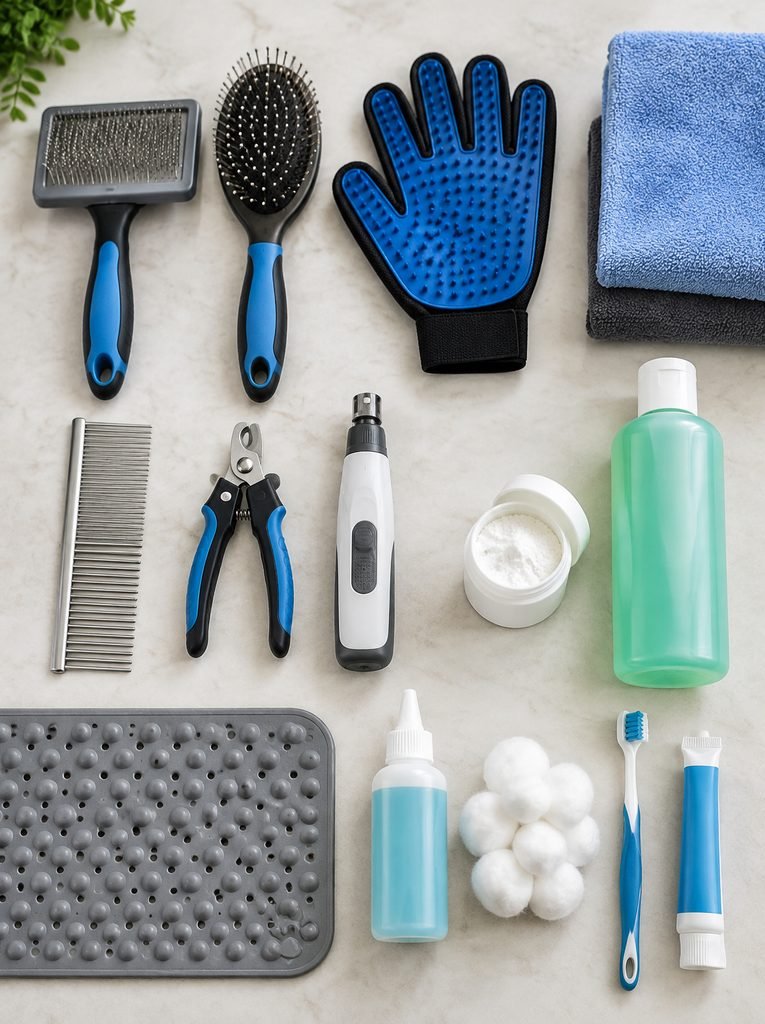
1. A Brush Matched to the Coat
This is the one tool every dog owner needs.
Slicker brush. Fine, bent wires remove tangles and loose hair from medium to long coats. Choose one with a comfortable handle and soft tips so it doesn’t scratch the skin.
Pin brush. Gentler, good for long, silky coats and finishing.
Bristle brush. Smooths and adds shine on short coats.
Rubber curry brush or grooming mitt. Great for short coats and for dogs who like a massage. Works in the bath too.
Undercoat rake. For double coated dogs, it reaches the dense undercoat. Use gentle strokes and don’t overbrush.
2. A Metal Comb
A comb is the tool that tells you the truth. If a comb can’t glide through the coat, there are still tangles.
A stainless steel comb with both wide and fine teeth works for most dogs, and it’s worth having even if your dog has a shorter coat, for checking behind the ears, under the legs, and around the tail.
3. Dog Nail Clippers or a Grinder
Overgrown nails can be painful and change how a dog walks.
Clippers. Scissor style or guillotine style both work. Choose sharp, sturdy blades and a comfortable grip.
Grinder. A quiet, rechargeable grinder files nails gently and is good for dogs who dislike clippers. Introduce the sound slowly.
Styptic powder. Keep it on hand in case you clip too close to the quick and cause bleeding.
If you’re nervous, ask a veterinarian or groomer to show you the right technique. Many offer quick demonstrations.
4. A Dog Specific Shampoo
Human shampoo has a different pH than dog skin, so use a shampoo made for dogs. Choose a gentle, fragrance light formula for most dogs.
For dogs with skin conditions or allergies, ask your veterinarian for a recommendation, as medicated shampoos should be used as directed.
5. Towels and a Quick Dry Option
Absorbent microfiber towels cut drying time and are easy to wash.
If you use a blow dryer, choose one made for dogs or use your own on the lowest heat and speed settings, kept moving and held at a distance, so skin never overheats.
6. A Non Slip Mat
A rubber mat in the tub or on the grooming surface helps your dog feel secure. Slipping is one of the biggest reasons dogs become afraid of bath time.
7. A Handheld Sprayer or Rinse Cup
A handheld sprayer with a gentle setting makes rinsing faster and more thorough. Leftover shampoo irritates skin, so a good rinse matters. A plain cup works if you don’t have a sprayer.
8. Ear Cleaner and Cotton Balls
Check ears weekly. Use a cleaner made for dogs and cotton balls or soft gauze, never cotton swabs in the ear canal. Dogs with floppy ears or lots of ear hair may need more frequent cleaning.
Redness, a strong smell, heavy discharge, or head shaking need a veterinary visit, not just cleaning.
9. A Dog Toothbrush and Dog Safe Toothpaste
Brushing teeth is one of the most valuable things you can do at home. Choose a soft dog toothbrush or finger brush and a toothpaste made for dogs.
Never use human toothpaste, which can contain ingredients that are harmful to dogs, including xylitol. Ask your veterinarian how often to brush and about dental checkups.
10. Grooming Scissors with Rounded Tips
Small, blunt tipped scissors are handy for trimming hair around the eyes, paws, and sanitary areas.
Rounded tips are much safer than sharp ones if your dog moves suddenly. Take extra care around the face and keep treats handy.
Tools That Are Nice to Have

Clippers. Worth it for dogs with coats that need regular trims, like many poodle mixes. Look for a quiet, cordless model with several guard sizes.
They take practice, so start with a simple trim and consider a lesson from a groomer.
A grooming table or arm. Helpful for large dogs, or for people with back trouble, since it keeps your dog steady at a comfortable height.
A dematting tool. Useful for stubborn mats, but use it carefully. Severe mats are often best handled by a groomer or veterinarian, because pulling them can hurt the skin.
A deshedding tool. Helpful for heavy shedders. Use gently and not too often, since overuse can damage the coat.
A dog hair vacuum attachment. Some dogs enjoy it and some are terrified. Introduce it slowly.
Paw balm. Helps dry or cracked pads. See my Essential Winter and Rainy Weather Gear Every Dog Owner Needs for more on paw care.
What You Can Usually Skip
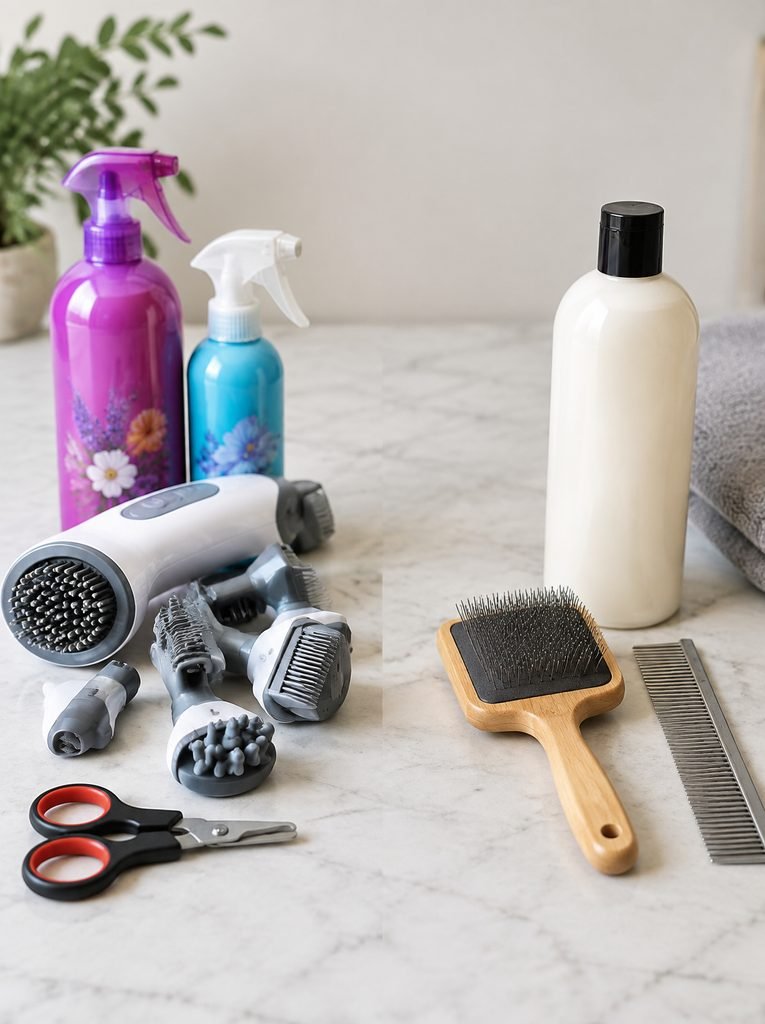
Perfumed sprays and colognes. They can irritate skin, and a clean dog doesn’t need them.
Human grooming products. Human shampoo, conditioner, and wipes aren’t designed for dog skin.
Harsh or “whitening” products. Check with your veterinarian before using anything strongly medicated.
Extra gadgets with many attachments. Many multi tools do several things poorly.
Super cheap clippers or scissors. Dull blades pull the hair and frighten dogs, so buy decent quality.
Dog shaving for cooling. For many breeds, particularly double coated ones, the coat helps regulate temperature and shaving can cause problems. Ask your veterinarian or groomer first.
How to Build a Starter Grooming Kit

Don’t buy everything at once. Start with the basics and add as you learn.
- A brush that suits your dog’s coat
- A metal comb
- Nail clippers or a grinder, plus styptic powder
- Dog shampoo
- Towels and a non slip mat
- Ear cleaner and cotton balls
- A dog toothbrush and toothpaste
Add clippers, a dematting tool, or a table later, if your dog’s coat and your skills call for them.
Making Grooming Calm and Positive

The best tools in the world won’t help if your dog hates grooming.
Start young, or start slowly. Handle paws, ears, and mouth often, followed by a tiny treat.
Keep sessions short. A few minutes at a time is better than a long, stressful session.
Use rewards. Small, soft treats make a big difference. My Cinnamon Roll Dog Treats and Applesauce Dog Treats make good grooming day rewards, in small pieces.
Let your dog sniff the tools. Introduce clippers, dryers, and brushes before using them.
Stay calm. Dogs read your mood. Slow, quiet movements help.
Stop if your dog is very stressed. Try again later, or ask a professional groomer or trainer for help. For common problems, see my Solve Dog Behavior Problems.
Make it a routine. Regular, predictable grooming sessions help dogs relax.
A Simple Grooming Schedule
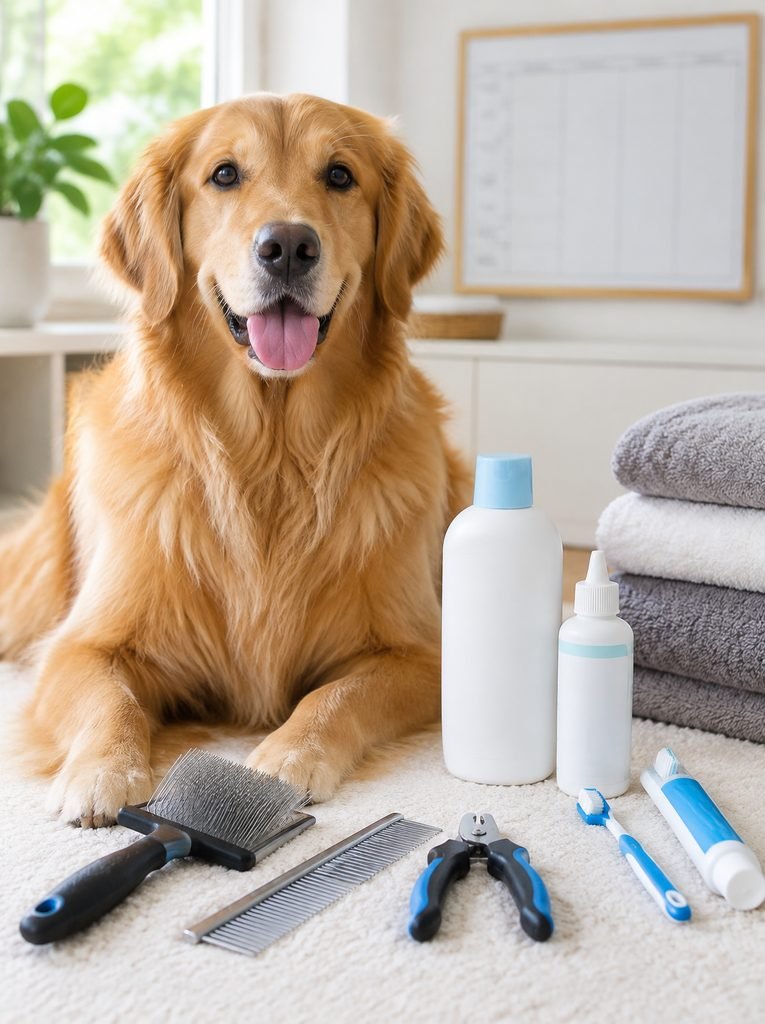
Adjust for your dog’s coat, lifestyle, and your veterinarian’s advice.
Brushing. Short coats weekly, long or curly coats daily or every other day.
Bathing. Only as needed, often every few weeks to a few months, since frequent bathing can dry the skin.
Nails. Every few weeks, or when you hear them clicking on the floor.
Ears. Check weekly and clean as needed.
Teeth. Daily is ideal, but a few times a week helps.
Professional grooming. Many dogs benefit from a visit every several weeks, especially breeds with continuously growing coats.
When to Call a Professional
Severe matting. Mats close to the skin can be painful and dangerous to cut.
Skin problems. Redness, sores, flaking, hot spots, or hair loss need veterinary attention.
Aggression or extreme fear. A groomer or trainer can help.
Anything that worries you. Lumps, wounds, heavy odors, or sudden changes in the coat need a veterinarian.
Common Mistakes to Avoid
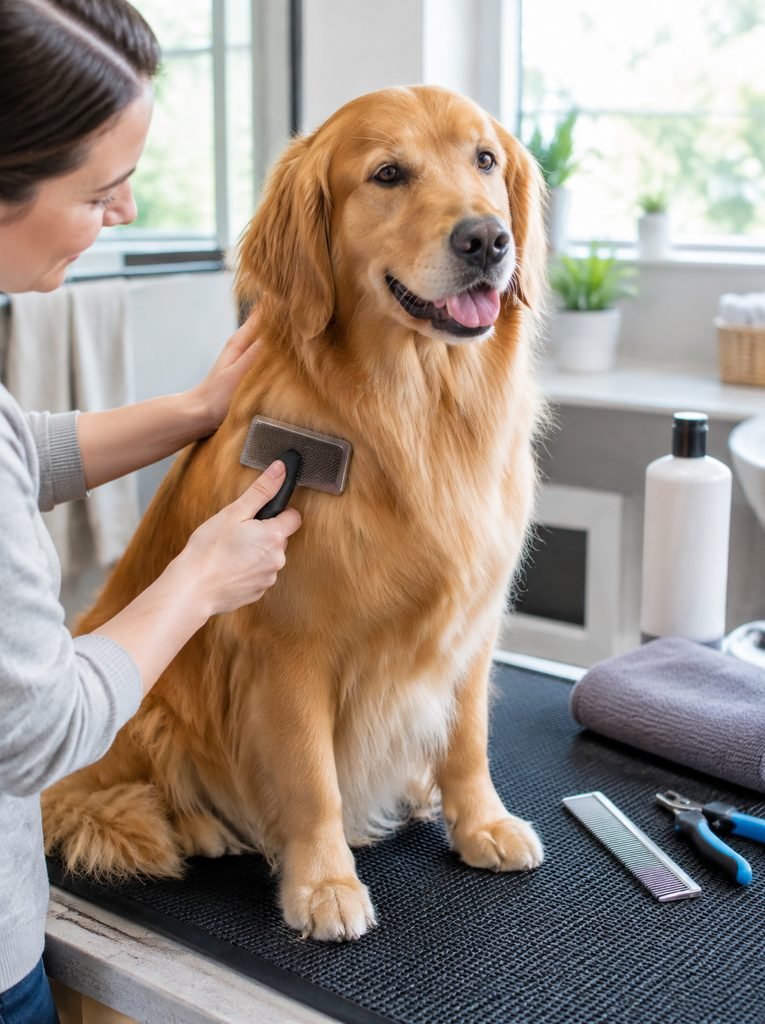
Brushing a dry, tangled coat too hard. Work gently from the ends upward.
Bathing before brushing out mats. Water tightens mats.
Using human products. Stick to dog formulas.
Clipping nails too short. Trim small amounts at a time.
Leaving shampoo in the coat. Rinse thoroughly.
Shaving double coated breeds. Ask a professional first.
Skipping ear and dental care. They’re easy to forget and important for health.
Rushing. A calm dog is easier and safer to groom.
Frequently Asked Questions
What are the most important grooming tools? A brush suited to the coat, a comb, nail clippers or a grinder, dog shampoo, and towels cover most dogs.
How often should I bathe my dog? It depends on the dog, coat, and lifestyle. Many dogs only need a bath every few weeks to months. Ask your veterinarian for advice.
Can I use human shampoo on my dog? It’s best not to. Dog skin has a different pH, and human shampoo can cause dryness or irritation.
Is a nail grinder better than clippers? Neither is better overall. Some dogs prefer the grinder, others tolerate clippers fine. Choose what you and your dog are comfortable with.
Should I shave my dog in summer? Usually not for double coated breeds, since their coats help regulate temperature. Ask your veterinarian or groomer.
Do I need clippers at home? Only if your dog’s coat needs regular trimming. Many dogs do fine with brushes, a comb, and occasional professional visits.
How do I stop my dog from hating grooming? Go slowly, keep sessions short, use treats, and make it a routine.
Are grooming tools worth buying for a short haired dog? Yes, though the kit is smaller. A rubber brush or mitt, nail tools, shampoo, and ear and dental care cover most needs.
A Final Note on At Home Grooming
A few well chosen tools, a calm approach, and a little consistency will do more for your dog than a closet full of gadgets. Start small, learn what your dog’s coat needs, and ask your veterinarian or groomer when you’re unsure. Grooming is also one of the best ways to notice small health changes early, which makes it worth the effort.
More Helpful Reads
- First Week with a New Puppy: A Day by Day Survival Schedule
- Essential Winter and Rainy Weather Gear Every Dog Owner Needs
- Best Orthopedic Dog Beds for Senior Dogs
- Solve Dog Behavior Problems
- Brain Games for a Smarter, Happier Dog
For a wider look at caring for your dog at home, check out 7 Healthiest Homemade Dog Foods.