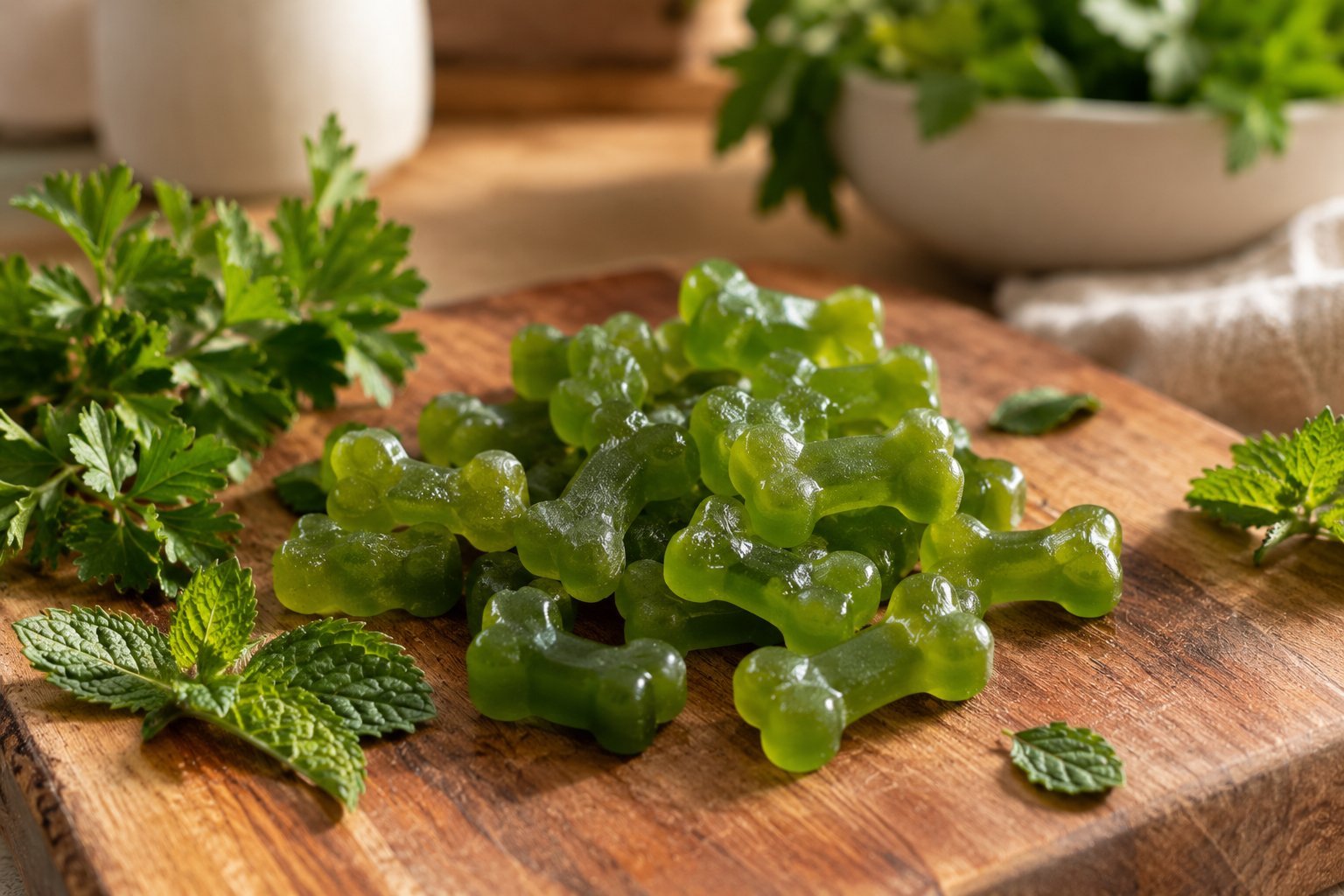
Homemade Frozen Fresh Breath Dog Treats
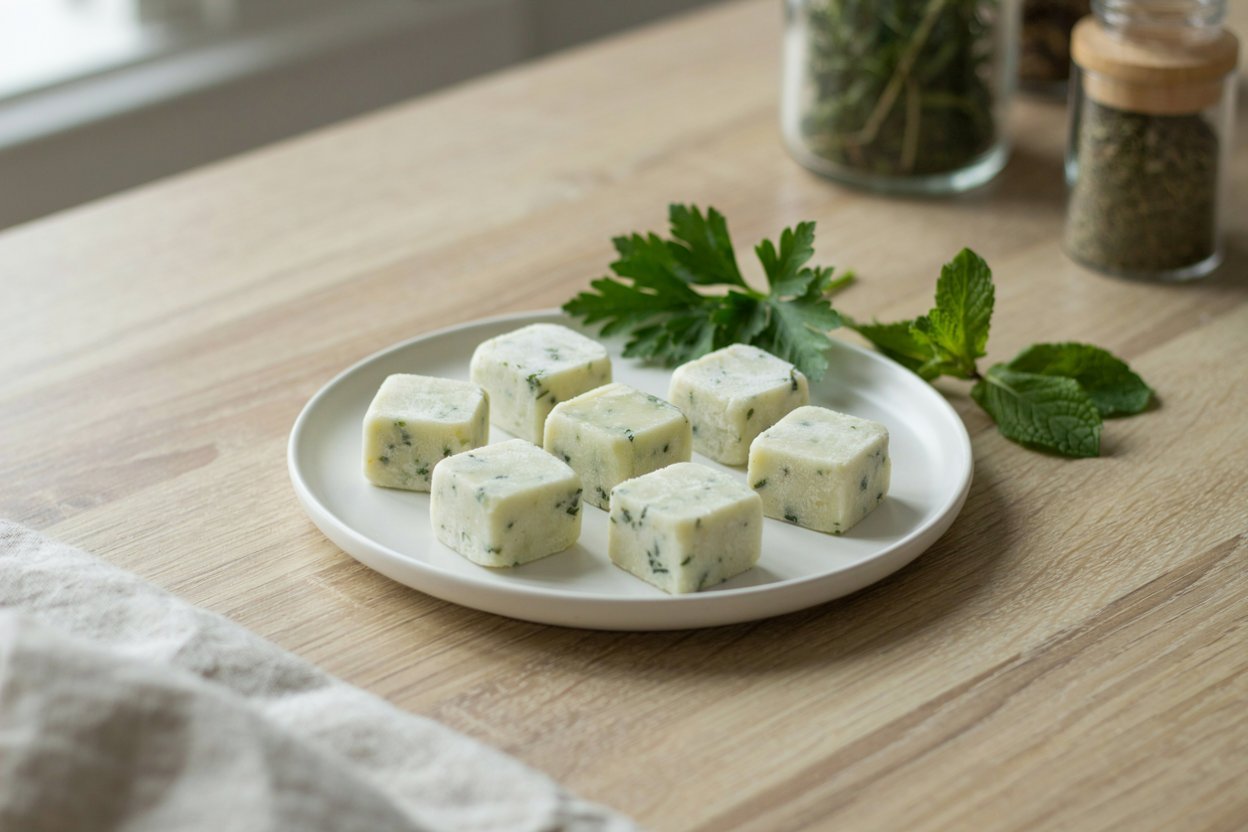
Bad breath in dogs gets written off as a normal, slightly funny quirk more often than it probably should, when in reality it’s frequently a sign that something in the mouth needs attention.
That said, a fresh breath treat genuinely can help freshen things up between proper dental care, using ingredients like parsley and a small amount of mint that have a real, if modest, effect on odor.
This guide walks through one simple frozen treat built around those ingredients, along with an honest look at what a treat like this can and can’t actually do for your dog’s dental health.
If you want to build out your treat rotation beyond this one recipe, a few related guides are worth having open alongside this one.
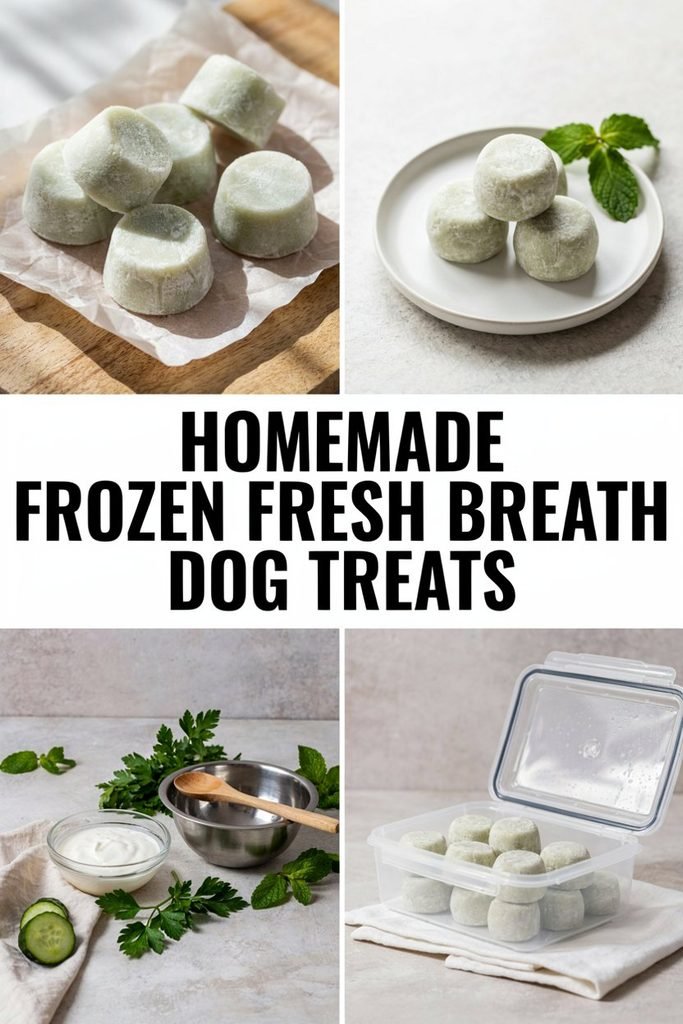
Cooling dog treats for summer days and cucumber frozen dog treats offer other refreshing frozen options, watermelon pupsicles and frozen pumpkin peanut butter dog treats round out your frozen treat rotation, vet friendly frozen dog treat recipes gives you a broader frozen treat framework, best DIY dog biscuits that last for weeks and homemade pumpkin and oatmeal dog snack sticks are worth a look if you’d rather bake, and human foods dogs can safely eat rounds out the bigger picture of safe food sharing.
What Bad Breath Actually Means
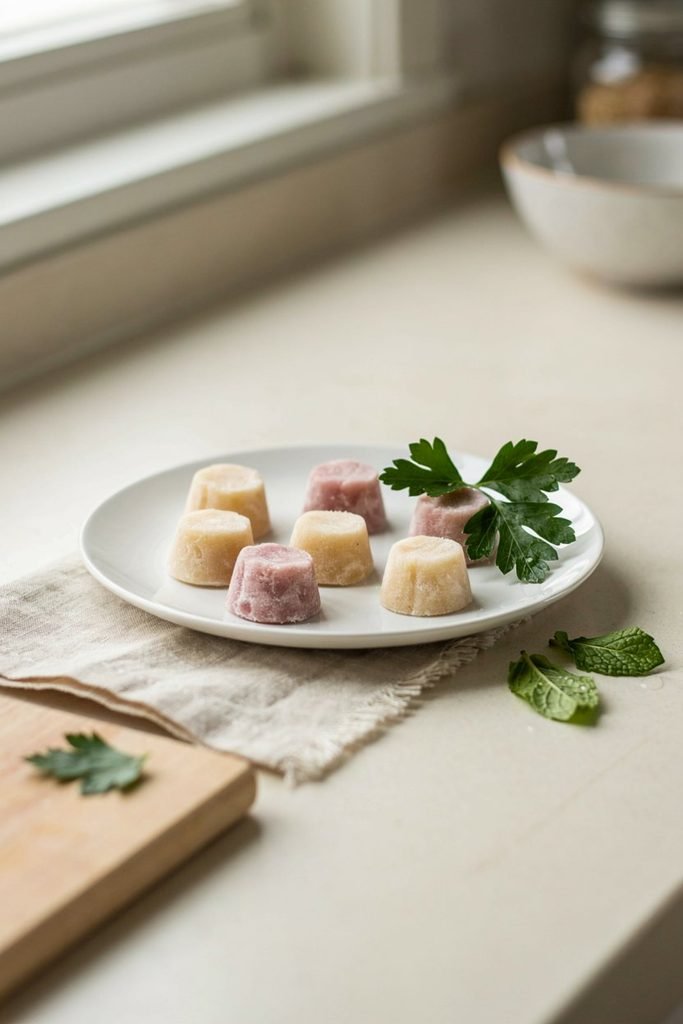
Persistent bad breath in a dog is frequently connected to dental disease, tartar buildup, gum inflammation, or in some cases something happening elsewhere in the body, rather than just being an unavoidable dog quality.
A fresh breath treat can genuinely help mask odor and contribute a small amount of natural freshening between meals, but it isn’t a substitute for actual dental care, regular brushing, professional cleanings when recommended, or a veterinary check if the smell is notably strong, sudden, or accompanied by other signs like visible tartar, red gums, or reluctance to chew.
Treating this recipe as a nice addition to a dental care routine, rather than a fix for an underlying problem, is the honest way to think about what it can offer.
What Actually Helps With Breath

Parsley contains chlorophyll, which has a mild, genuine deodorizing effect and is commonly used in commercial breath freshening products for exactly that reason. It’s gentle, safe for dogs in modest amounts, and easy to work into a treat without much preparation.
Mint, used sparingly, contributes a fresh scent and flavor, though it’s worth using a very small amount given how much more sensitive a dog’s sense of smell is than ours, and because concentrated mint in the form of an essential oil can actually be harmful rather than helpful.
Coconut oil, in a small amount, has some anecdotal support for supporting oral health, and it also helps this recipe hold together and freeze into a pleasant texture.
Before You Start
A few ground rules apply here as with any homemade treat. Use fresh parsley and mint, not an essential oil version of either, since essential oils are far more concentrated and can be genuinely harmful to dogs even in small amounts, unlike the fresh herb itself used in modest quantities.
Introduce this treat gradually the first time, watching for any signs of digestive upset, and don’t treat this recipe as a replacement for regular dental care or a veterinary visit if your dog’s breath seems unusually strong or has changed suddenly.
Understanding the Ingredients
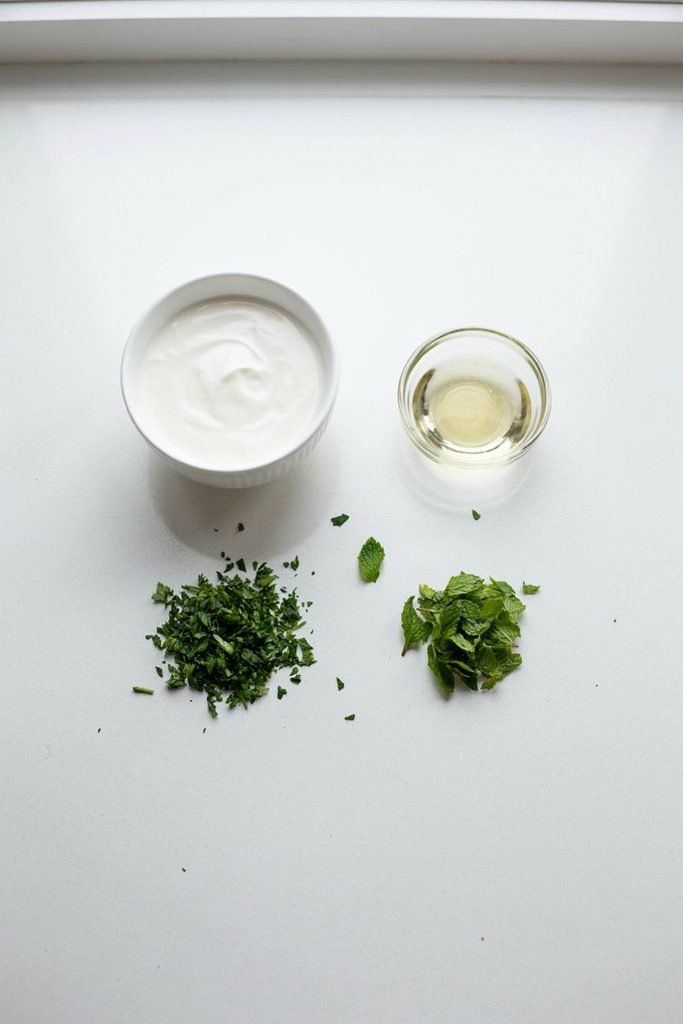
Fresh parsley, finely chopped. The primary ingredient responsible for this treat’s mild breath freshening effect, thanks to its natural chlorophyll content.
Fresh mint leaves, finely chopped, in a small amount. Adds a cooling, fresh scent, used sparingly given how much stronger a dog’s sense of smell is compared to a person’s.
Plain, unsweetened yogurt. Provides a creamy base that carries the parsley and mint well, while also adding a bit of protein and a cooling texture once frozen.
Coconut oil, melted, optional. Adds a small amount of richness and may offer some minor supportive benefit for oral health, while also helping the mixture freeze into a smooth, cohesive treat.
Ingredients I Avoid
Essential oils of any kind, including peppermint or spearmint oil, mouthwash or breath spray products made for humans, and any sweetened or flavored yogurt all have no place in this recipe.
Essential oils deserve particular emphasis here, since they’re far more concentrated than the fresh herb and can cause genuine harm, unlike the small amount of fresh mint used in this recipe.
Frozen Fresh Breath Dog Treats
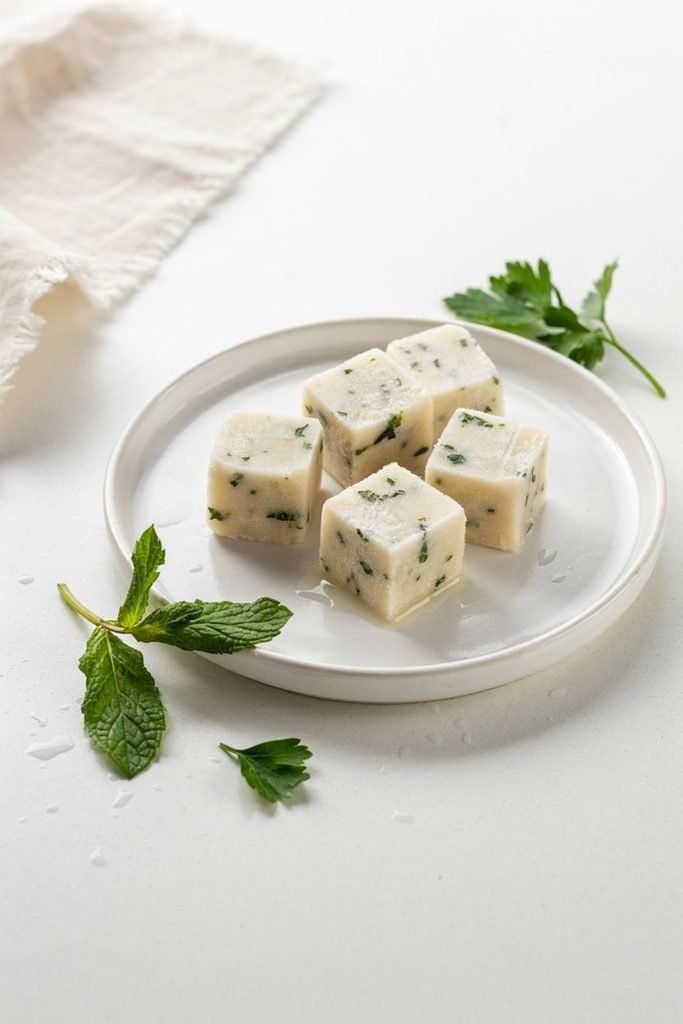
Yield: About 12 to 16 small treats, depending on mold size Prep Time: 10 minutes Freeze Time: At least 4 hours Storage: Freeze up to 2 months
Ingredients
- 1 cup plain, unsweetened yogurt. The creamy base that carries the parsley and mint.
- 2 tablespoons fresh parsley, finely chopped. The main ingredient responsible for this treat’s mild breath freshening effect.
- 1 teaspoon fresh mint leaves, finely chopped. Used sparingly for a fresh, cooling note.
- 1 teaspoon coconut oil, melted, optional. Adds a bit of richness and helps the mixture freeze smoothly.
How to Make It
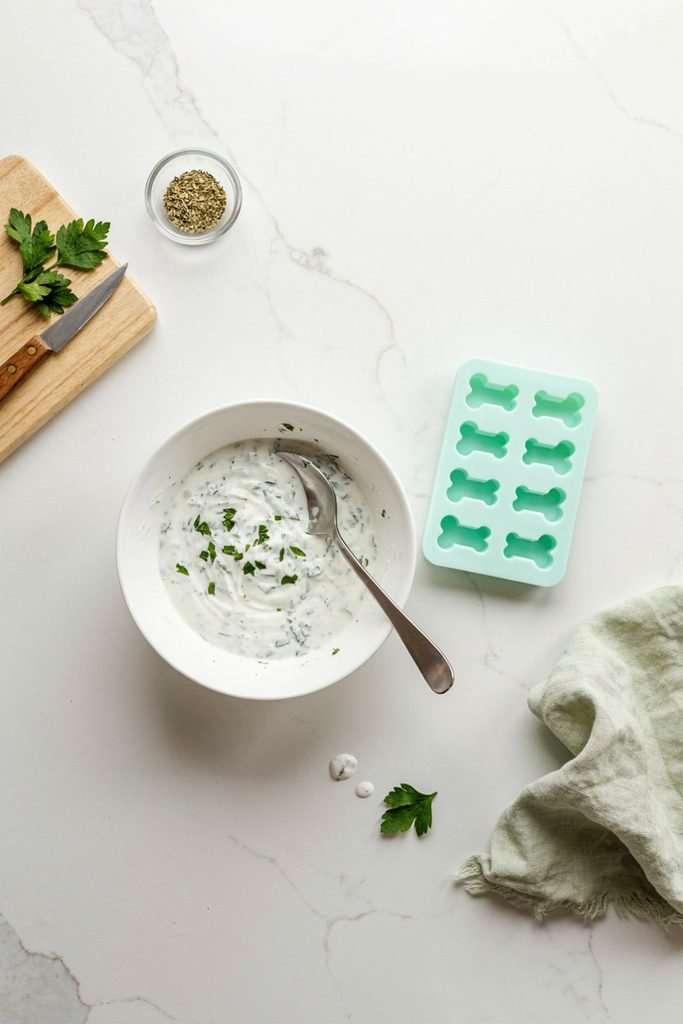
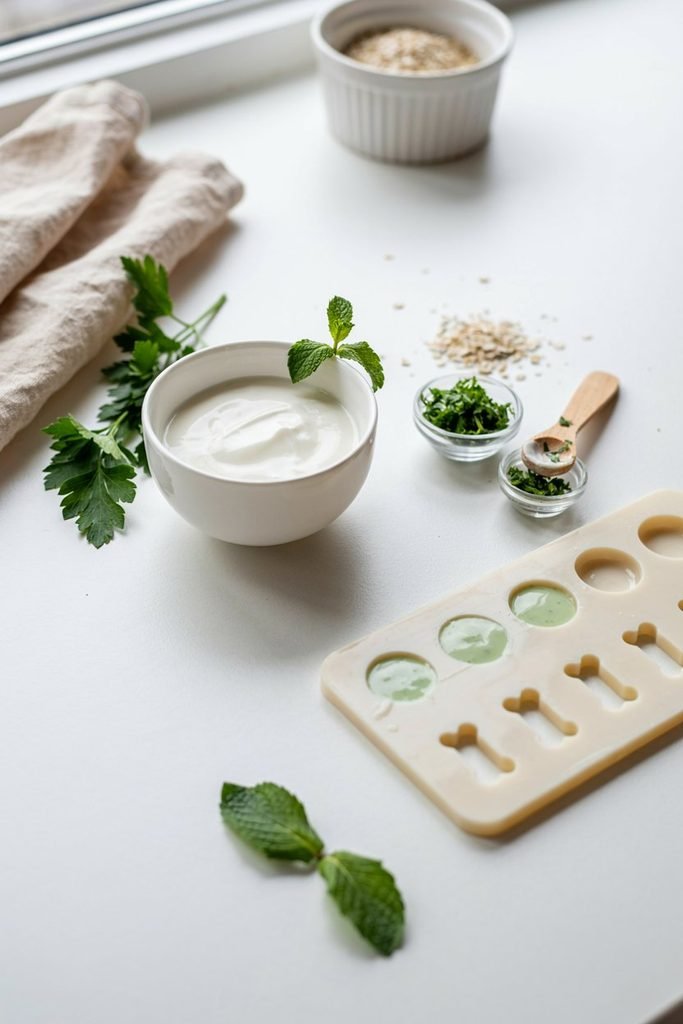
- In a mixing bowl, combine the yogurt, chopped parsley, and chopped mint, stirring until evenly distributed.
- If using coconut oil, stir it in until fully incorporated.
- Pour or spoon the mixture into small silicone molds or an ice cube tray.
- Freeze for at least 4 hours, until completely solid.
- Pop the treats out of the mold and serve, or transfer to a freezer safe container for later.
How to Adjust This Recipe
For a stronger breath freshening effect. Increase the parsley slightly, since it’s the gentler, more reliably safe ingredient of the two herbs used here.
For a milder mint flavor. Reduce the mint to a smaller pinch, or leave it out entirely and rely on parsley alone, which is a genuinely reasonable option if you’re unsure how your dog will respond to mint specifically.
For extra richness. A small amount of mashed banana can be blended in for natural sweetness, though this doesn’t add any breath freshening benefit, it’s purely for flavor appeal.
For a training sized treat. Use a smaller mold, like a mini ice cube tray, to portion the mixture into bite sized pieces.
How Many Treats Can a Dog Have?
Treats should stay a small part of your dog’s overall diet, generally no more than about 10 percent of their total daily calories.
One or two small treats make a reasonable serving for most dogs, and given that this recipe is built around a functional goal rather than pure indulgence, there’s no real benefit to offering more than a modest amount at a time.
Storage
Freezer. Store in an airtight container or freezer safe bag for up to 2 months.
Serving. Offer straight from the freezer, or let a treat sit for a minute or two if your dog prefers a slightly softer texture.
Common Problems When Making These Treats
Why does my treat taste too strongly of mint? Mint is potent even in small amounts. Reduce the quantity on your next batch, or skip it entirely and rely on parsley alone for a gentler version.
Why won’t the treats release from the mold? Let the mold sit at room temperature for a minute, or run the outside briefly under lukewarm water to loosen the treats without melting them entirely.
Can I use dried parsley or mint instead of fresh? Fresh is preferable here, since dried herbs are more concentrated by volume and can be harder to portion accurately in a small quantity, though a very small pinch of dried can work in a pinch if fresh isn’t available.
Why does my dog seem uninterested in this treat? Some dogs are less enthusiastic about herbal flavors compared to something sweeter like fruit or peanut butter. If your dog isn’t drawn to this one, that’s a reasonable, common reaction, and it doesn’t mean anything is wrong with the recipe.
Good Ingredients to Look For
Fresh parsley. The most reliably safe and genuinely useful ingredient in this recipe for its mild deodorizing effect.
Fresh mint, used sparingly. A complementary flavor, not the primary functional ingredient.
Plain, unsweetened yogurt. Nothing but yogurt and live cultures on the label, no added sugar or artificial sweeteners.
Nothing artificial. No essential oils, breath spray products, or added sugar belong in a treat meant to be simple and genuinely safe.
Common Mistakes to Avoid
Using essential oils instead of fresh herbs. This is the single most important safety distinction in this entire recipe. Essential oils are far more concentrated and can be genuinely harmful, while the fresh herb in a modest amount is safe.
Assuming this treat replaces dental care. A breath freshening treat can help mask odor between proper dental care, but it isn’t a substitute for brushing, professional cleanings, or a vet visit if something seems genuinely wrong.
Using too much mint. A little goes a long way, and overdoing it can make the treat unpleasantly strong for a dog’s much more sensitive sense of smell.
Ignoring persistent or sudden bad breath. If your dog’s breath changes suddenly or smells notably different than usual, that’s worth mentioning to your veterinarian rather than just reaching for a treat like this one.
Using flavored or sweetened yogurt. This introduces added sugar that has no place in a dog’s treat, even a functional one.
Frequently Asked Questions
Do fresh breath treats actually work for dogs? They can help mask odor and contribute a mild, temporary freshening effect, particularly with parsley’s natural chlorophyll content, though they don’t address an underlying dental issue if one exists.
Is bad breath in dogs always a sign of a dental problem? Not always, but persistent or strong bad breath is frequently connected to dental disease or other health issues, which makes it worth mentioning to your veterinarian rather than assuming it’s simply normal.
Is mint safe for dogs? Fresh mint in small amounts is generally considered safe, but concentrated forms like peppermint essential oil can be harmful and should never be used in place of the fresh herb.
Can I use parsley alone without the mint? Yes, and it’s a reasonable choice if you’re unsure how your dog will respond to mint specifically, since parsley is the gentler, more reliably tolerated of the two.
Can puppies have these treats? In small amounts, generally yes, though it’s worth introducing any new ingredient gradually regardless of age.
How long do these treats last in the freezer? Generally up to 2 months when stored in an airtight container or freezer safe bag.
Should I still brush my dog’s teeth if I give them this treat? Yes, regular brushing and professional dental care remain the most effective way to maintain your dog’s oral health, and this treat should be thought of as a small addition to that routine rather than a replacement for it.
Can this treat cure bad breath? No, and it shouldn’t be relied on as a fix if your dog has an underlying dental or health issue causing persistent bad breath. It’s best understood as a mild, temporary freshening treat.
Why shouldn’t I use essential oils in a homemade treat? Essential oils are highly concentrated and can be toxic to dogs even in small amounts, unlike the fresh herb used in this recipe, which is why they should never be substituted in.
What if my dog’s breath doesn’t improve at all after trying this treat? That’s a reasonable outcome given how mild the effect genuinely is, and it’s a good reason to have your dog’s mouth checked by a veterinarian rather than continuing to rely on treats alone.
Final Thoughts
A frozen treat built around parsley and a touch of mint can genuinely offer a small, temporary freshening effect, and it’s a pleasant, safe addition to a dog’s routine either way.
What it can’t do is replace actual dental care, so keep brushing, keep up with professional cleanings when recommended, and treat this recipe as exactly what it is, a nice extra rather than a solution to a problem that might need real attention.