
Simple Carrot-Based Dog Treat Recipes for Beginners
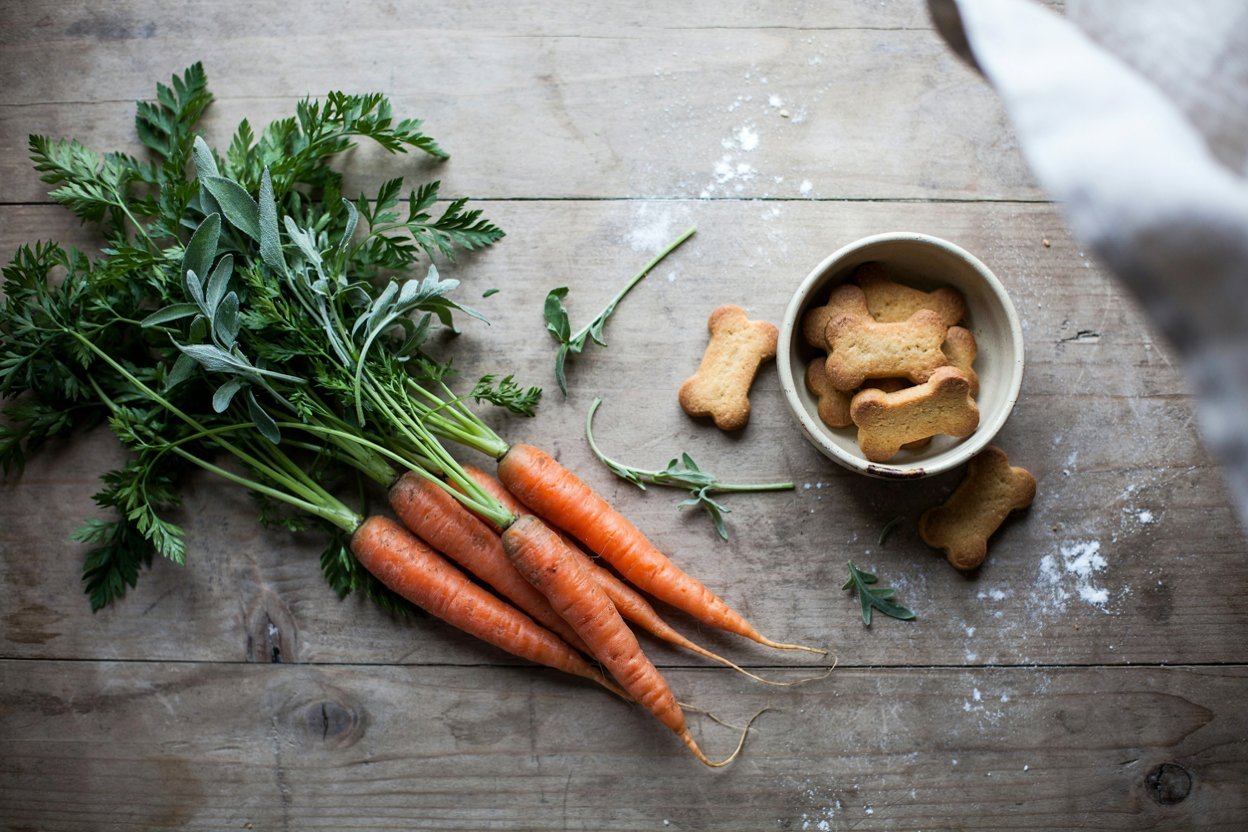
There is a particular kind of joy that comes from watching your dog’s ears perk up the moment a carrot hits the cutting board. Long before treat bags and freeze dried liver bites took over pet store shelves, dogs were happily crunching on raw carrots pulled straight from the garden. That simple, humble vegetable is still one of the best places to start if you have never baked a dog treat in your life.
This guide was written with total beginners in mind. You do not need fancy equipment, a background in baking, or a pantry full of specialty pet food ingredients.
Carrots are inexpensive, easy to find at any grocery store, and forgiving to work with, which makes them the perfect entry point into homemade treat making.
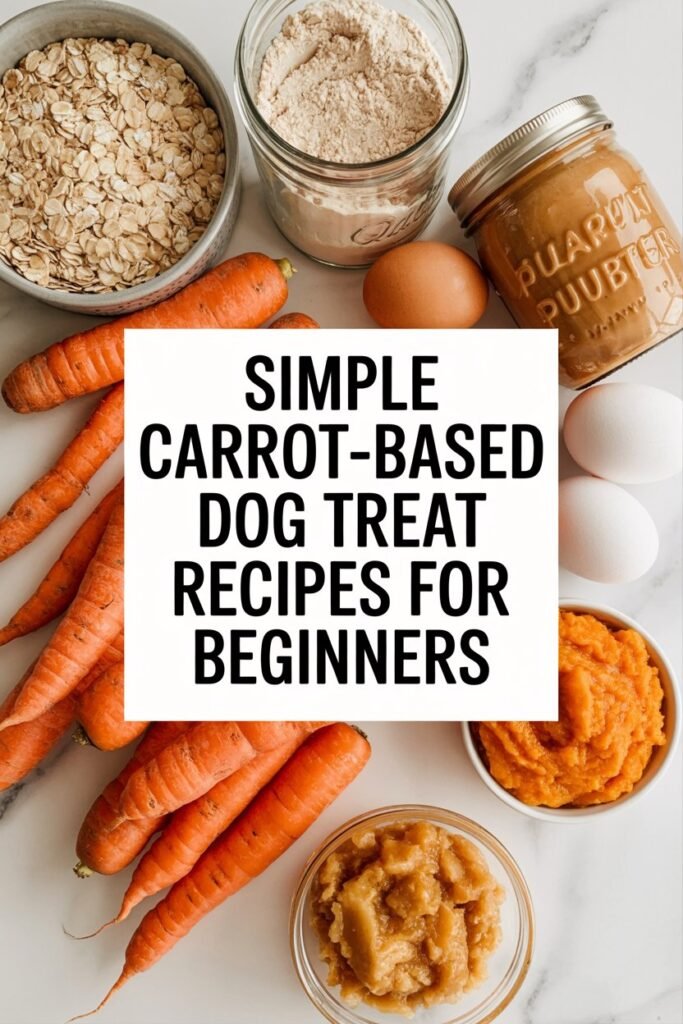
Whether your goal is to avoid the preservatives and fillers found in some commercial treats, to save money, or simply to bond with your dog in the kitchen, carrot based treats are a low risk, high reward place to begin.
By the end of this guide you will understand exactly why carrots are good for dogs, which ingredients pair well with them, which ones to avoid, and how to bake, dehydrate, or freeze a full lineup of treats using nothing more complicated than a mixing bowl and an oven. You will also find a feeding guide, storage tips, a list of common beginner mistakes, and answers to the questions new treat bakers ask most often.
Disclaimer: This post may contain affiliate links, which means I may earn a small commission at no extra cost to you. Always introduce new treats gradually and consult your veterinarian if your dog has allergies, dietary restrictions, or health concerns.
Amazon Shopping List You Need
- Dog-Safe Silicone Treat Molds (Bone or Paw Shapes)
- Fine Grater for Fresh Carrots
- Stainless Steel Mixing Bowl Set
- Measuring Cups and Spoons Set
- Nonstick Baking Sheet
- Silicone Baking Mat (Reusable)
- Airtight Dog Treat Storage Container
Why Carrots Are a Genuinely Healthy Treat for Dogs
Carrots are not just a filler ingredient tossed into treats for texture. They bring real nutritional value to the table, which is part of why veterinarians so often recommend them as a low calorie snack option.
Carrots are naturally low in calories and fat, which makes them a smart choice for dogs who are watching their weight or who simply get a lot of treats throughout the day. A medium raw carrot contains only a small handful of calories, so even a generous serving will not undo a day of careful portion control the way a fatty commercial treat might.
They are also rich in beta carotene, the plant compound that gives carrots their orange color and that the body converts into vitamin A. Vitamin A supports eye health, immune function, and skin condition. Alongside beta carotene, carrots provide fiber, which supports healthy digestion and can help dogs feel satisfied after a snack rather than immediately looking for more.
The natural crunch of a raw or lightly baked carrot also does double duty for dental health. The mechanical act of chewing a firm, fibrous vegetable can help scrape away some plaque buildup on the teeth, similar to the effect of a crunchy dental chew, though it is not a substitute for regular dental care or your veterinarian’s recommendations.
Carrots are also naturally sweet, which dogs tend to find appealing without the need for added sugar. That sweetness makes them an easy ingredient to pair with other dog safe foods like pumpkin, peanut butter, oats, and bananas, all of which show up in the recipes below.
Because carrots are so widely available and inexpensive year round, they are also one of the most budget friendly treat ingredients you can buy. A single bag of carrots can produce several batches of treats, which adds up to real savings compared to buying bags of commercial biscuits every month.
Before You Start Baking
Homemade treats are generally very safe, but a few basic guidelines will help you avoid common pitfalls, especially if this is your first time baking for your dog.
Always wash and peel carrots before using them, just as you would for your own cooking, to remove dirt and any residue from the skin. If your dog has never eaten carrots before, introduce a small amount first and watch for any signs of digestive upset over the next day, since every dog’s stomach reacts a little differently to new foods.
Treats should always be considered a supplement to a balanced diet, not a replacement for it. Even the healthiest homemade treat is still an extra source of calories, so portion control matters, which is covered in more detail in the feeding guide further down this page.
If your dog has a known health condition such as diabetes, pancreatitis, or a food allergy, check with your veterinarian before introducing new treats, even ones made from simple, whole ingredients. Puppies also have different nutritional needs than adult dogs, so ask your vet about appropriate treat sizes and frequency if you are baking for a young dog.
Finally, some ingredients that pair naturally with carrots in human cooking are not appropriate for dogs. Onion and garlic, in particular, are common additions to savory human recipes but are toxic to dogs even in small amounts. None of the recipes below include them, but it is worth keeping in mind if you start experimenting with your own variations later.
Ingredient Guide for Beginners
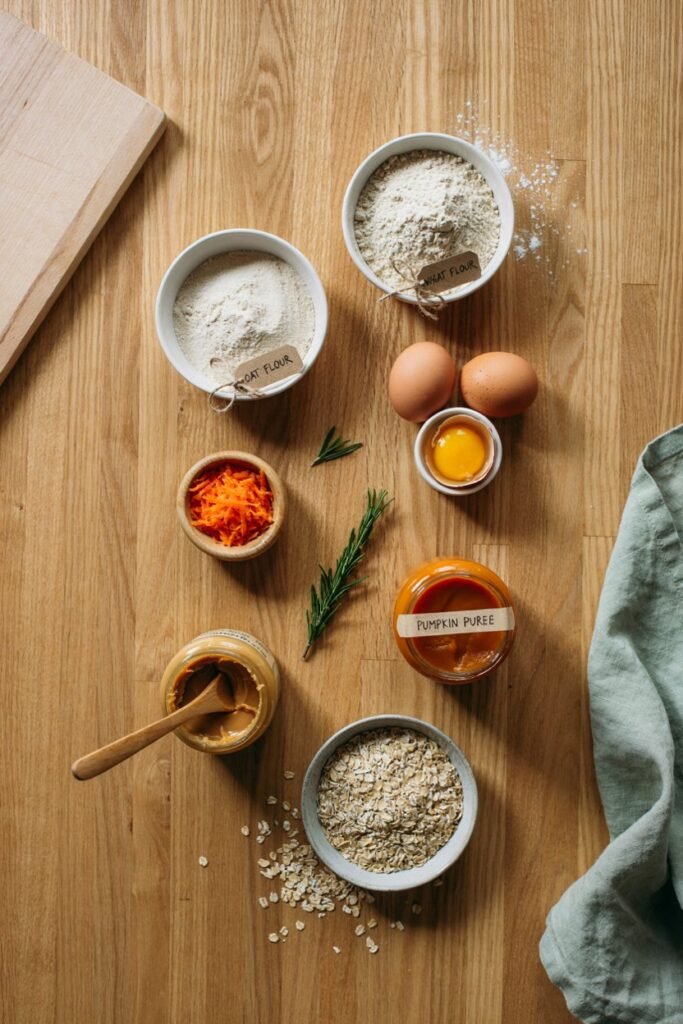
The Base: Carrots
Fresh carrots are the star of every recipe in this guide. You can use them raw, steamed, or roasted depending on the recipe, and you can grate, puree, or dice them depending on the texture you are going for.
Baby carrots work in a pinch, though whole carrots tend to have a slightly better texture once cooked and pureed.
Flours and Binders
Whole wheat flour is a classic, affordable base for baked dog biscuits and works well if your dog has no grain sensitivities. Oat flour, which you can make at home simply by blending rolled oats into a fine powder, is a gentle alternative for dogs who do better without wheat.
Coconut flour absorbs a lot of moisture, so it is usually used in smaller amounts alongside another flour rather than on its own. Eggs act as a natural binder in many of these recipes, helping hold the dough together while adding a bit of extra protein.
Healthy Add Ins
Rolled oats add fiber and a heartier texture to baked treats. Peanut butter, as long as it does not contain xylitol, adds flavor dogs love and a bit of healthy fat. Plain pumpkin puree, not pumpkin pie filling, pairs beautifully with carrots and adds extra fiber.
Unsweetened applesauce can replace some of the liquid in a recipe while adding natural sweetness. Plain unsweetened yogurt can be used in small amounts for probiotics and a creamy texture in no bake recipes.
What to Avoid
Never use xylitol, a sugar substitute found in some peanut butters, baked goods, and sugar free products, since it is highly toxic to dogs. Avoid added sugar, salt, and artificial sweeteners of any kind.
Skip onion and garlic powder, which are sometimes used in savory human recipes but are unsafe for dogs. Chocolate, raisins, and grapes should never appear in any dog treat recipe.
Kitchen Tools You Will Need
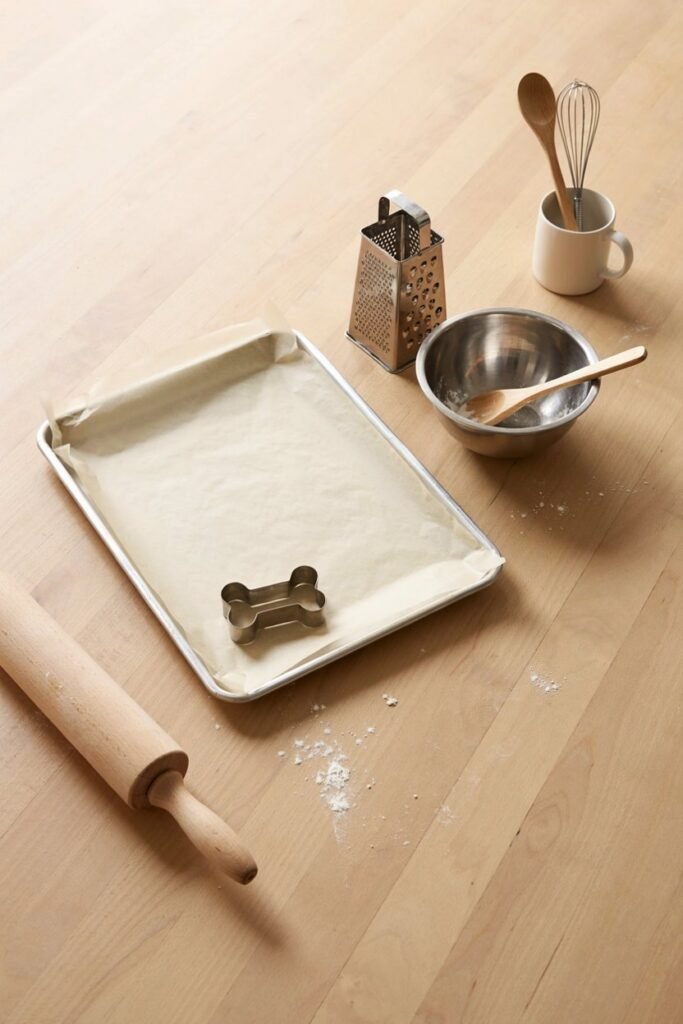
You likely already own everything required for these recipes. A mixing bowl, a baking sheet, parchment paper or a silicone baking mat, a food processor or box grater for the carrots, and a rolling pin if you plan to cut shapes are all you really need.
A cookie cutter is optional but makes the process more fun if you want treats in fun shapes. For the no bake and frozen recipes, an ice cube tray or small silicone mold works well for portioning.
The Recipes
Each recipe below is written for a beginner, uses simple pantry ingredients, and yields a batch you can store or freeze for later. Treat sizes and yields can easily be adjusted depending on your dog’s size.
Classic Baked Carrot Biscuits
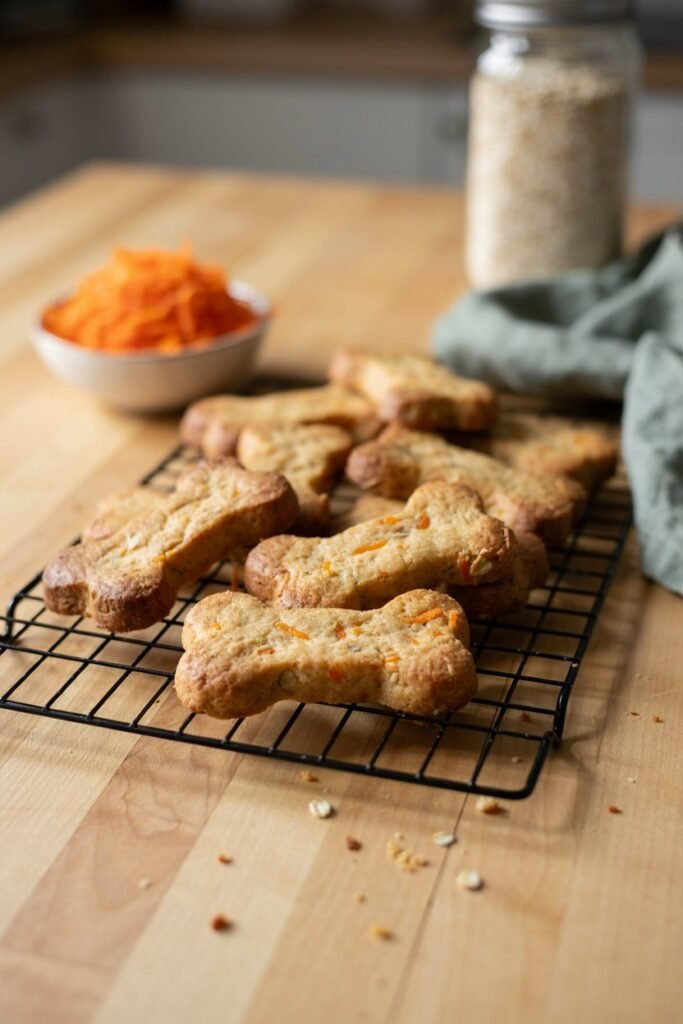
This is the recipe to start with if you have never baked a dog treat before. It uses only a handful of ingredients and comes together in one bowl.
Prep time: 15 minutes Cook time: 25 minutes Yield: About 30 small biscuits
Ingredients:
- 2 cups whole wheat flour: forms the structure of the biscuit and provides a steady source of energy and fiber
- 1 cup finely grated carrot: adds beta carotene, fiber, and natural sweetness while keeping the calorie count low
- 2 eggs: binds the dough together and adds an easily digestible source of protein
- 1/4 cup unsweetened applesauce: adds moisture and a touch of natural sweetness without any added sugar
- 1/4 cup water, as needed: helps adjust the dough to the right consistency without adding extra calories
Instructions: Preheat your oven to 350 degrees Fahrenheit and line a baking sheet with parchment paper. In a large bowl, whisk the eggs, then stir in the grated carrot and applesauce. Gradually add the flour, mixing until a stiff dough forms, adding water a tablespoon at a time if the dough feels too dry.
Roll the dough out to about a quarter inch thickness on a floured surface and cut into shapes using a cookie cutter or a knife. Place the biscuits on the prepared baking sheet and bake for 20 to 25 minutes, until firm and lightly golden. Allow to cool completely before serving, since they will firm up further as they cool.
Storage: Keeps at room temperature in an airtight container for about one week. Freezing: Freezes well for up to three months. Best for: First time bakers and dogs who enjoy a crunchy, biscuit style treat. Swap idea: Oat flour can replace whole wheat flour for a grain gentle option.
Carrot and Peanut Butter Bites
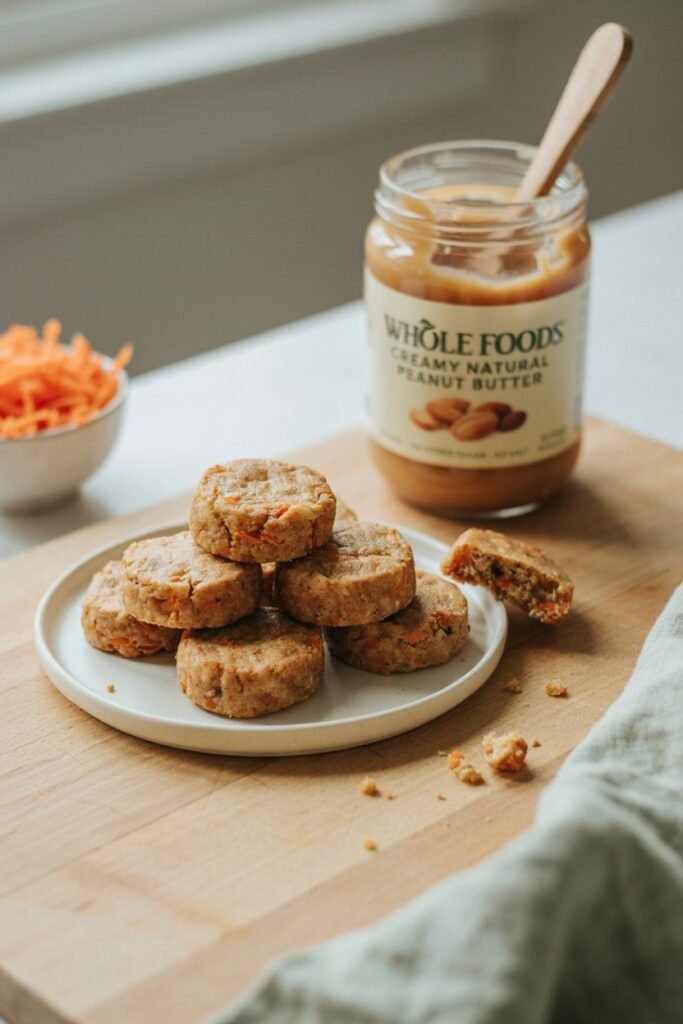
The combination of carrot and peanut butter is a proven favorite with most dogs, and this recipe comes together quickly.
Prep time: 10 minutes Cook time: 20 minutes Yield: About 24 small bites
Ingredients:
- 1 cup grated carrot: contributes fiber and beta carotene while keeping the overall calorie count of each bite low
- 1/2 cup natural peanut butter, xylitol free: adds a flavor most dogs find highly rewarding along with healthy fats and a bit of protein
- 1 egg: helps bind the dough and adds extra protein
- 1 1/2 cups oat flour: provides a gentle, easily digestible carbohydrate base that works well for dogs sensitive to wheat
Instructions: Preheat the oven to 350 degrees Fahrenheit and line a baking sheet with parchment paper. Whisk the egg and peanut butter together until smooth, then fold in the grated carrot. Add the oat flour gradually, stirring until a soft dough forms. Roll the dough into small balls, about one inch across, and flatten slightly with your palm or a fork. Bake for 18 to 20 minutes, until firm to the touch. Cool completely before storing.
Storage: Refrigerate up to one week in an airtight container. Freezing: Freezes well up to three months. Best for: Dogs who need extra motivation during training, since the peanut butter flavor is highly appealing. Swap idea: Sunflower seed butter can replace peanut butter for dogs with nut sensitivities.
Carrot and Pumpkin Soft Chews
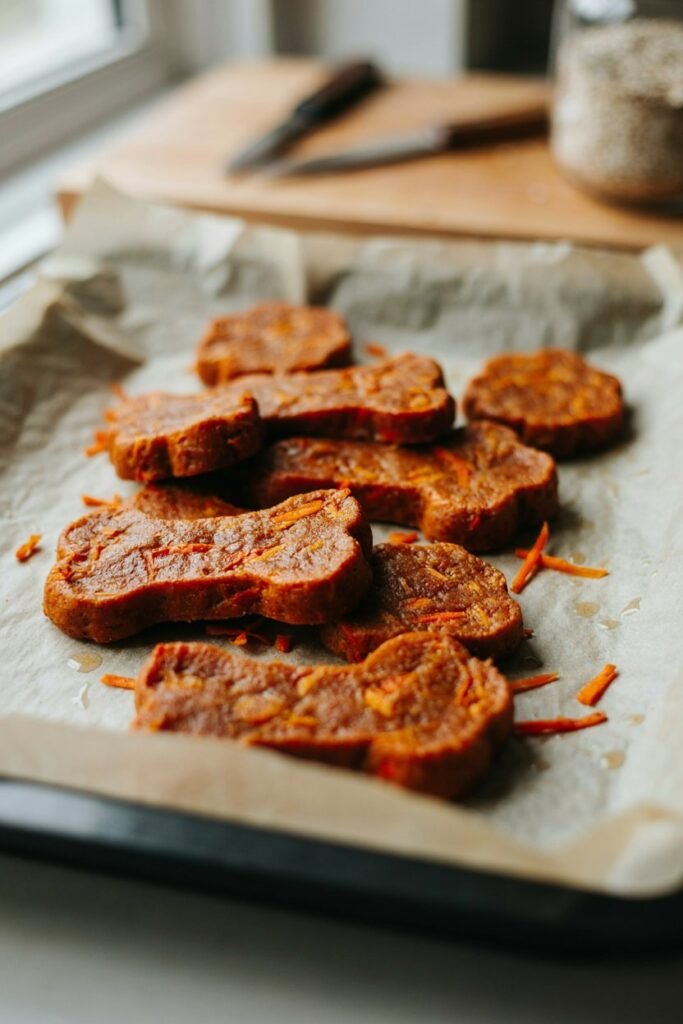
These treats are softer than a traditional biscuit, which makes them a good option for senior dogs or dogs with dental sensitivities.
Prep time: 10 minutes Cook time: 30 minutes Yield: About 20 soft chews
Ingredients:
- 1 cup pureed cooked carrot: cooking softens the fiber, making it easier to digest and gentler on sensitive stomachs
- 1/2 cup plain pumpkin puree: adds soluble fiber that supports healthy digestion and pairs naturally with the sweetness of carrot
- 2 eggs: binds the softer dough together and adds protein
- 1 1/2 cups oat flour: gives the chews enough structure to hold their shape while staying soft and easy to chew
Instructions: Preheat the oven to 325 degrees Fahrenheit and line a baking sheet with parchment paper. Whisk the eggs, then stir in the carrot puree and pumpkin puree until smooth. Add the oat flour and mix until fully combined. Spoon small mounds of the mixture onto the baking sheet, about a tablespoon each, and flatten slightly. Bake for 25 to 30 minutes, until set but still soft in the center. Cool fully before handling, since soft chews need extra time to firm up.
Storage: Refrigerate up to five days, since the higher moisture content shortens shelf life compared to a crunchy biscuit. Freezing: Freezes well up to two months. Best for: Senior dogs or dogs who struggle with harder treats. Swap idea: Sweet potato puree can replace pumpkin for a similar texture and flavor.
No Bake Carrot and Yogurt Bites
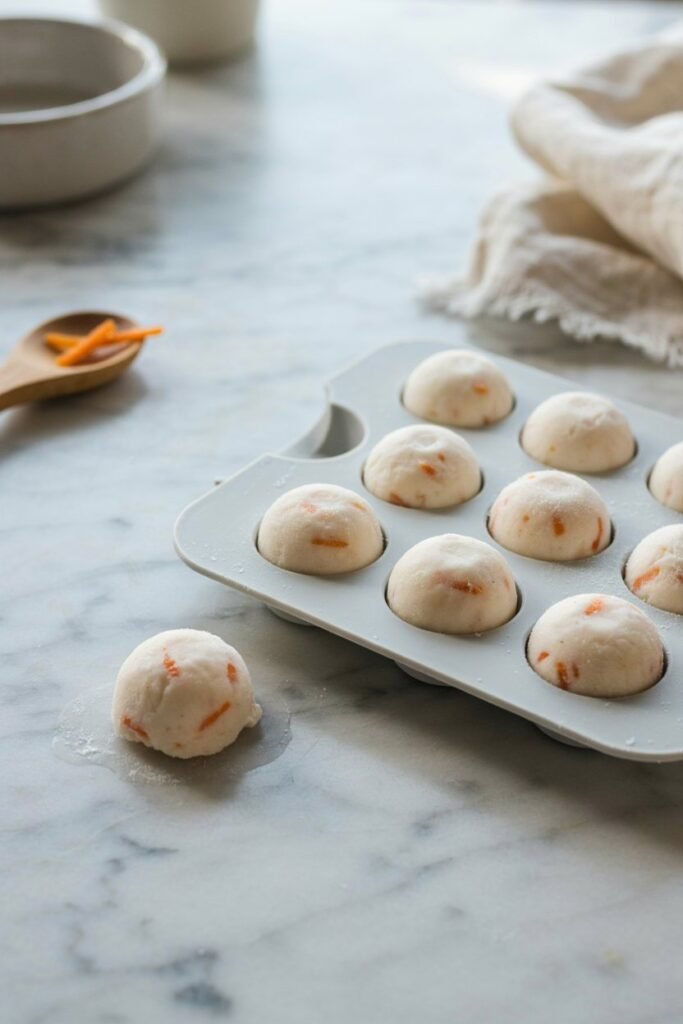
For days when you do not want to turn on the oven, this no bake recipe delivers the same flavor with a completely different texture.
Prep time: 10 minutes Chill time: 2 hours Yield: About 24 small bites
Ingredients:
- 1 cup finely grated carrot: adds crunch and nutrients while keeping the mixture light and low in calories
- 1 cup plain unsweetened yogurt: offers probiotics that can support gut health along with a creamy, cooling texture
- 2 tablespoons rolled oats: adds a bit of fiber and helps the mixture hold together once frozen
- 1 tablespoon peanut butter, xylitol free: adds flavor and healthy fat that makes this frozen treat feel extra special
Instructions: In a bowl, mix the yogurt, grated carrot, oats, and peanut butter until fully combined. Spoon the mixture into a small silicone mold or an ice cube tray. Freeze for at least two hours, until firm. Pop the bites out of the mold once solid and store in the freezer.
Storage: Best kept frozen, since these do not hold their shape well at room temperature. Freezing: Freezes well up to two months. Best for: Hot weather, when a cool treat is especially appealing. Swap idea: Cottage cheese can replace yogurt if your dog tolerates it well.
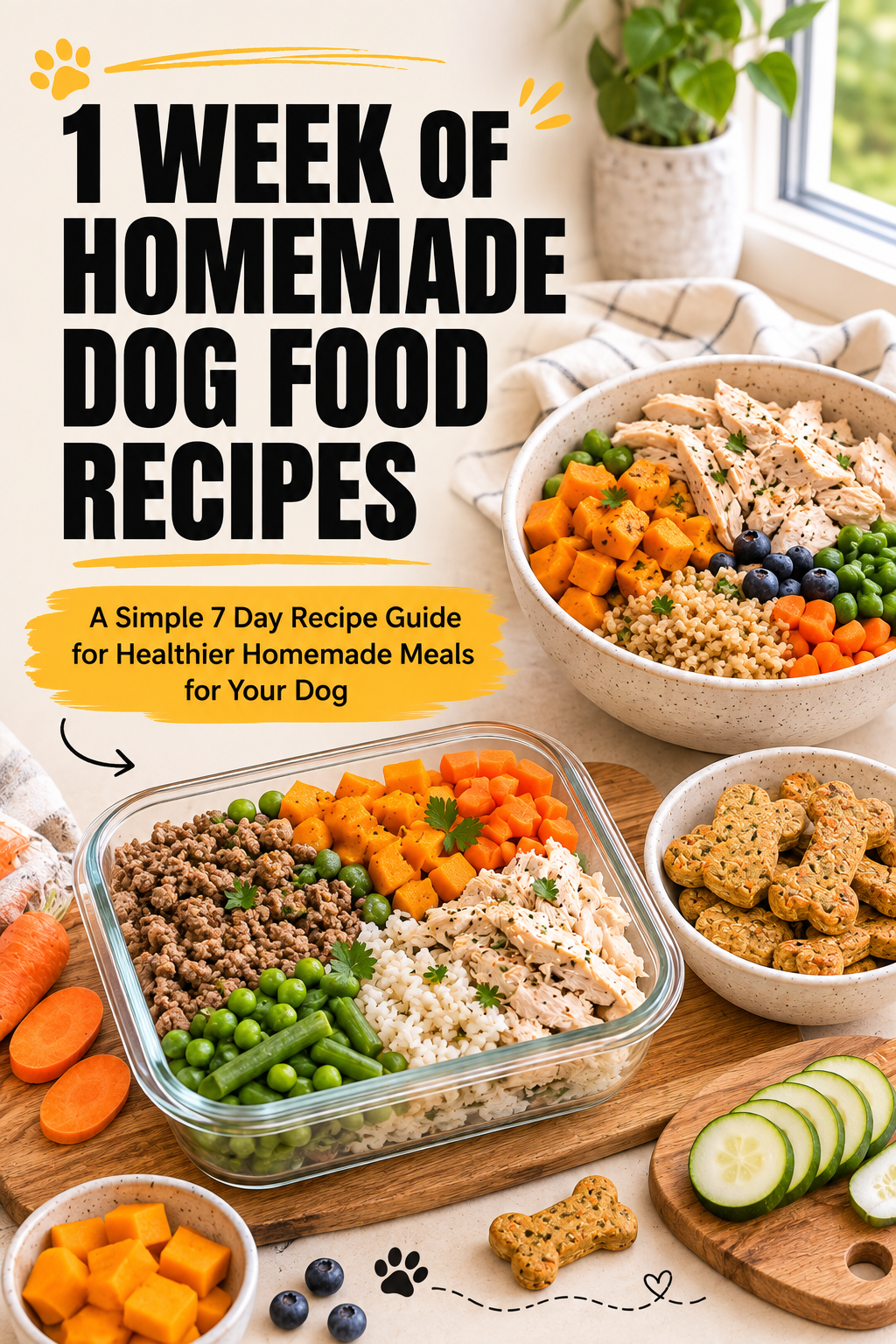
Carrot and Oat Training Treats
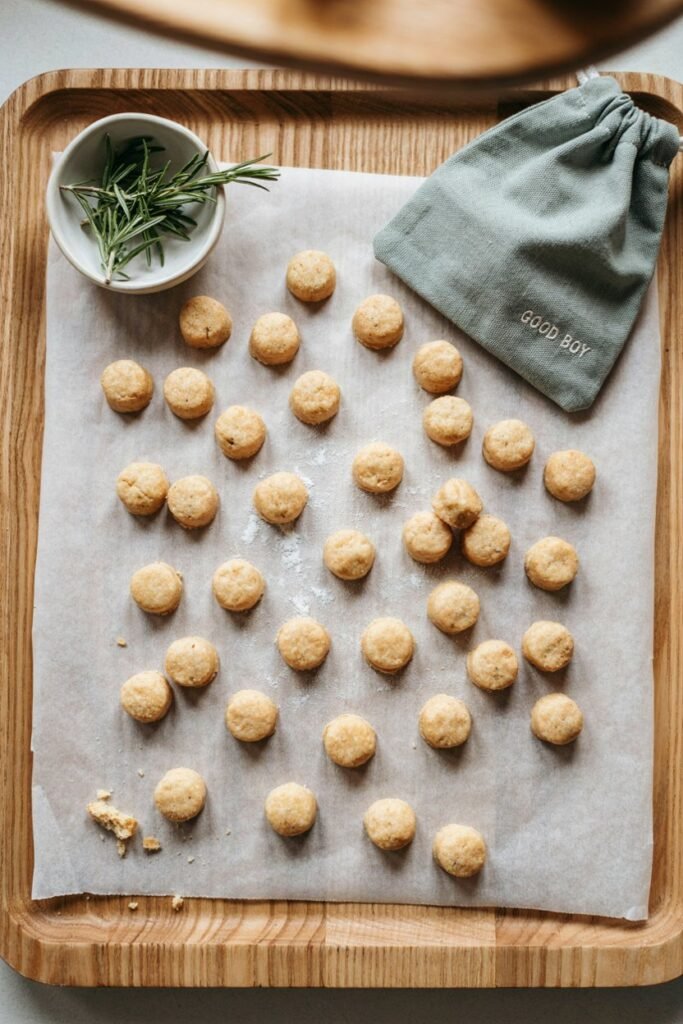
Small, low calorie, and easy to break apart, this recipe is designed specifically with training sessions in mind, where you might be giving out many tiny treats in a row.
Prep time: 10 minutes Cook time: 15 minutes Yield: About 60 very small treats
Ingredients:
- 1 cup finely grated carrot: keeps each tiny treat flavorful and nutrient dense despite its small size
- 1 cup rolled oats, blended into a rough flour: provides slow releasing energy and fiber in a form gentle on digestion
- 1 egg: binds the small pieces together so they hold up well during repeated handling
- 2 tablespoons water: helps bring the dough to a workable consistency without adding unnecessary ingredients
Instructions: Preheat the oven to 350 degrees Fahrenheit and line a baking sheet with parchment paper. Whisk the egg and water together, then stir in the grated carrot. Add the oat flour and mix into a thick, slightly sticky dough. Roll the dough into a long log about half an inch thick, then slice into very small coins. Bake for 12 to 15 minutes, until firm. Cool completely, since training treats are handled frequently and need to hold together well.
Storage: Keeps at room temperature for about five days in an airtight container. Freezing: Freezes well up to three months. Best for: Training sessions where small, low calorie rewards are needed. Swap idea: A pinch of cinnamon, which is safe for dogs in small amounts, can be added for extra aroma.
Carrot and Apple Crunch Treats
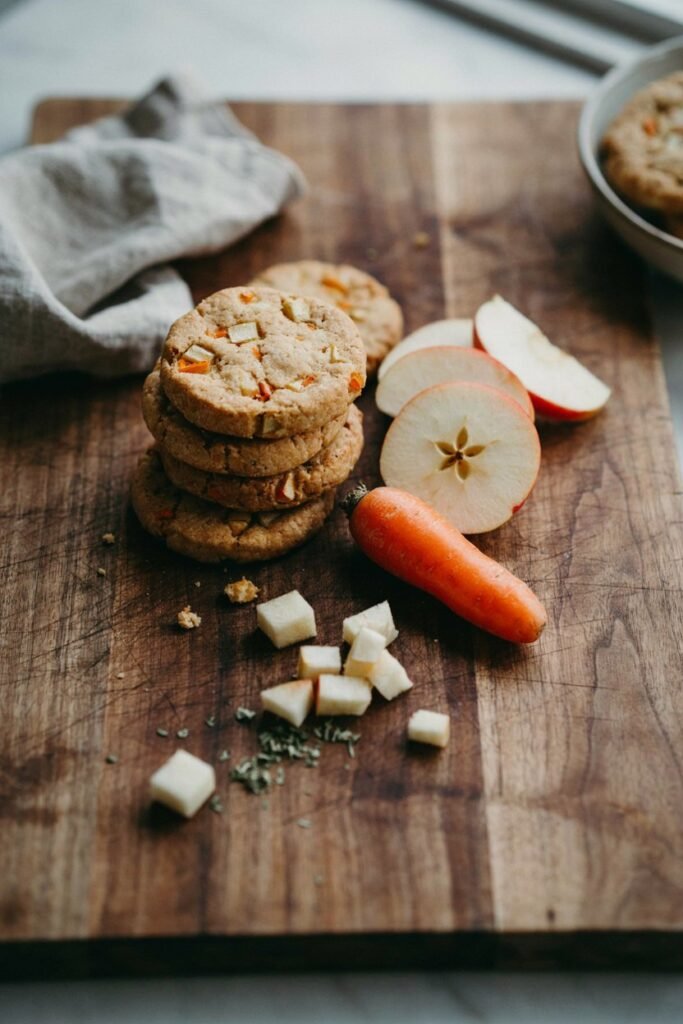
Apple adds natural sweetness and a bit of extra crunch to this variation, making it a favorite for dogs who enjoy fruity flavors.
Prep time: 15 minutes Cook time: 25 minutes Yield: About 28 small treats
Ingredients:
- 1 cup grated carrot: adds fiber and beta carotene while balancing the sweetness of the apple
- 1/2 cup finely diced apple, seeds and core removed: contributes natural sweetness along with vitamin C and additional fiber
- 1 egg: binds the dough and adds protein
- 1/4 cup unsweetened applesauce: reinforces the apple flavor while adding moisture without any added sugar
- 1 3/4 cups whole wheat flour: gives the dough enough structure to hold a crisp, crunchy shape once baked
Instructions: Preheat the oven to 350 degrees Fahrenheit and line a baking sheet with parchment paper. Whisk the egg with the applesauce, then stir in the grated carrot and diced apple. Add the flour gradually, mixing until a firm dough forms.
Roll the dough out and cut into small shapes. Bake for 20 to 25 minutes, until firm and lightly golden. Cool completely before serving.
Storage: Keeps at room temperature for about one week in an airtight container. Freezing: Freezes well up to three months. Best for: Dogs who enjoy fruit forward flavors alongside their vegetables. Swap idea: Diced pear can replace apple for a similar effect.
Frozen Carrot Coins
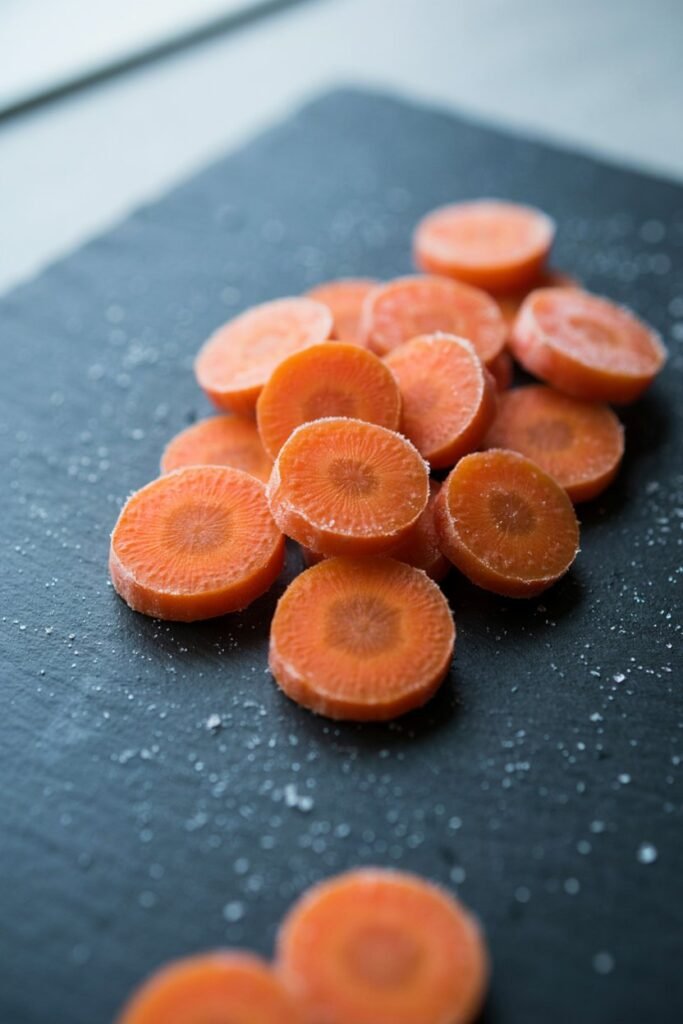
This is the simplest recipe in the entire guide and requires no cooking at all, which makes it a good first project for very young children helping in the kitchen under supervision.
Prep time: 5 minutes Freeze time: 3 hours Yield: Varies based on carrot size
Ingredients:
- 2 to 3 large carrots, peeled: the single ingredient provides fiber, beta carotene, and a satisfying, cooling crunch with virtually no added calories
Instructions: Slice the peeled carrots into coins about a quarter inch thick. Arrange the coins in a single layer on a baking sheet lined with parchment paper. Freeze for at least three hours, until solid. Transfer the frozen coins to a freezer safe bag or container for storage.
Storage: Best kept frozen. Freezing: Keeps well for up to three months. Best for: Hot summer days and dogs who enjoy a satisfying, cooling crunch. Swap idea: None needed, though a light dusting of cinnamon before freezing adds extra aroma.
Carrot and Chicken Broth Chews
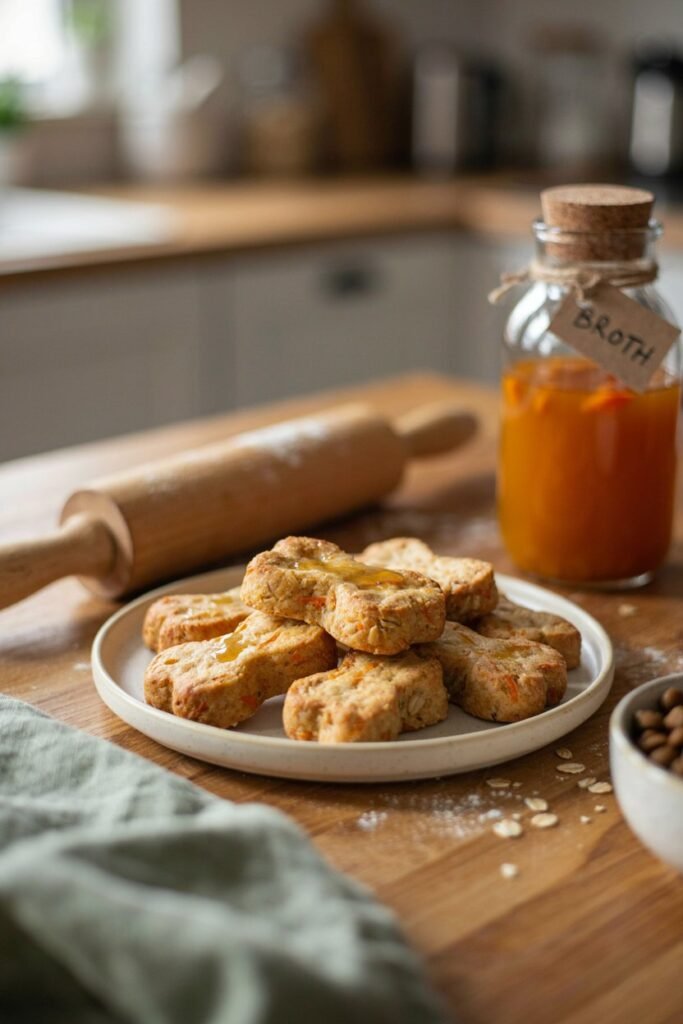
This savory variation uses low sodium chicken broth to add a flavor most dogs find irresistible, without relying on salt or seasoning blends.
Prep time: 15 minutes Cook time: 25 minutes Yield: About 30 small chews
Ingredients:
- 1 cup grated carrot: adds fiber and nutrients while balancing the richer, savory flavor of the broth
- 1/2 cup low sodium chicken broth, no onion or garlic added: adds a savory flavor dogs love and a bit of extra hydration without relying on added salt
- 1 egg: binds the dough together and adds protein
- 2 cups oat flour: creates a firm, crunchy texture while remaining gentle on digestion
Instructions: Preheat the oven to 350 degrees Fahrenheit and line a baking sheet with parchment paper. Whisk the egg with the chicken broth, then stir in the grated carrot. Add the oat flour gradually, mixing until a workable dough forms. Roll the dough out and cut into small shapes. Bake for 20 to 25 minutes, until firm. Cool completely before storing.
Storage: Keeps at room temperature for about five days. Freezing: Freezes well up to three months. Best for: Picky dogs who need extra flavor incentive to try a new treat. Swap idea: Low sodium beef broth can replace chicken broth for variety.
If your dog loves these savory, broth based flavors, our homemade beef bone broth gummies for dogs recipe is a natural next step once you have mastered these carrot treats.
Storage and Freezing Guidelines
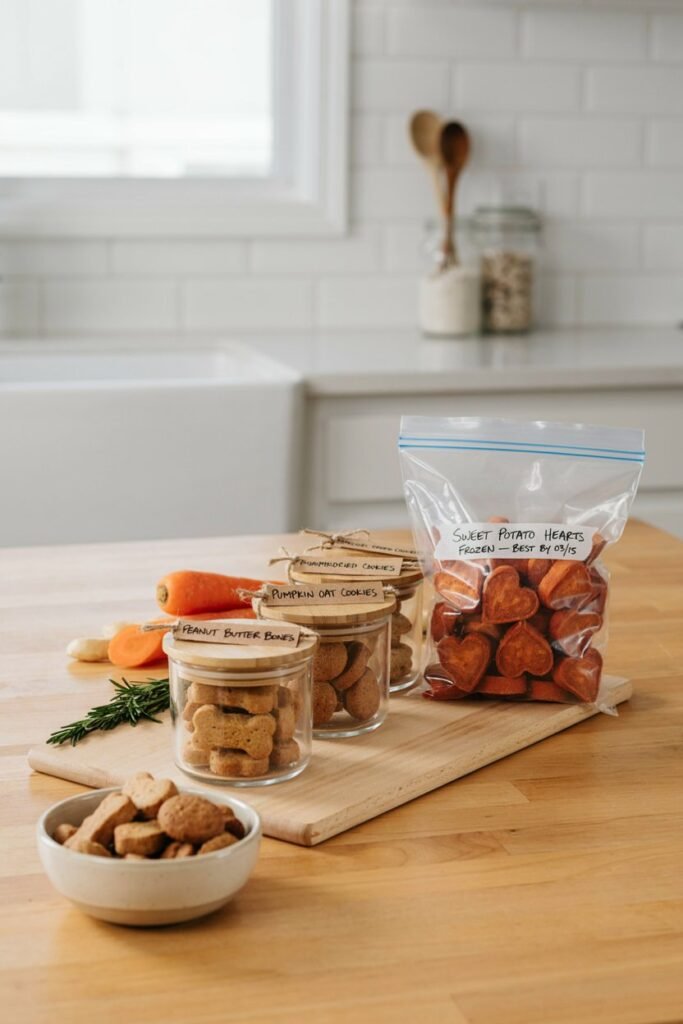
How you store your treats depends heavily on which recipe you make. Crunchy, fully baked biscuits like the classic carrot biscuits or the carrot and apple crunch treats have the lowest moisture content and hold up well at room temperature in an airtight container for about a week.
Softer recipes, including the pumpkin soft chews and the chicken broth chews, contain more moisture and should generally be refrigerated and used within five days to avoid spoilage.
Freezing is the best option if you make a large batch and want it to last. Nearly every recipe in this guide freezes well for two to three months. The easiest method is to freeze treats in a single layer on a baking sheet first, then transfer them to a labeled freezer bag once solid, which prevents them from clumping together into one large frozen mass.
When you are ready to serve frozen treats, thaw crunchy biscuits at room temperature for about twenty minutes, or serve frozen carrot coins and no bake yogurt bites directly from the freezer as a cooling snack.
Always label your containers with the recipe name and the date you made the batch. It is easy to lose track of how long something has been in the freezer, especially once you start making several different recipes at once.
How Many Treats Should Your Dog Have
Treats, no matter how healthy the ingredients, should generally make up no more than about ten percent of your dog’s total daily calorie intake, with the rest coming from a complete and balanced meal.
For most small dogs, this means one or two small biscuits a day is plenty. Medium sized dogs can typically handle two to four small treats without any issue, while larger, more active dogs have a bit more flexibility, especially if the treats are being used throughout a training session rather than all at once.
If you are using these treats specifically for training, where you might be rewarding your dog many times in a short session, the tiny carrot and oat training treats described above are sized specifically for that purpose.
Break larger treats into smaller pieces during training sessions so you are not accidentally overfeeding while working on obedience or new tricks.
Keep an eye on your dog’s overall weight and body condition over time. If you notice weight gain after introducing regular homemade treats, it is worth reducing the portion size or frequency and mentioning it at your next veterinary visit.
Common Beginner Mistakes to Avoid
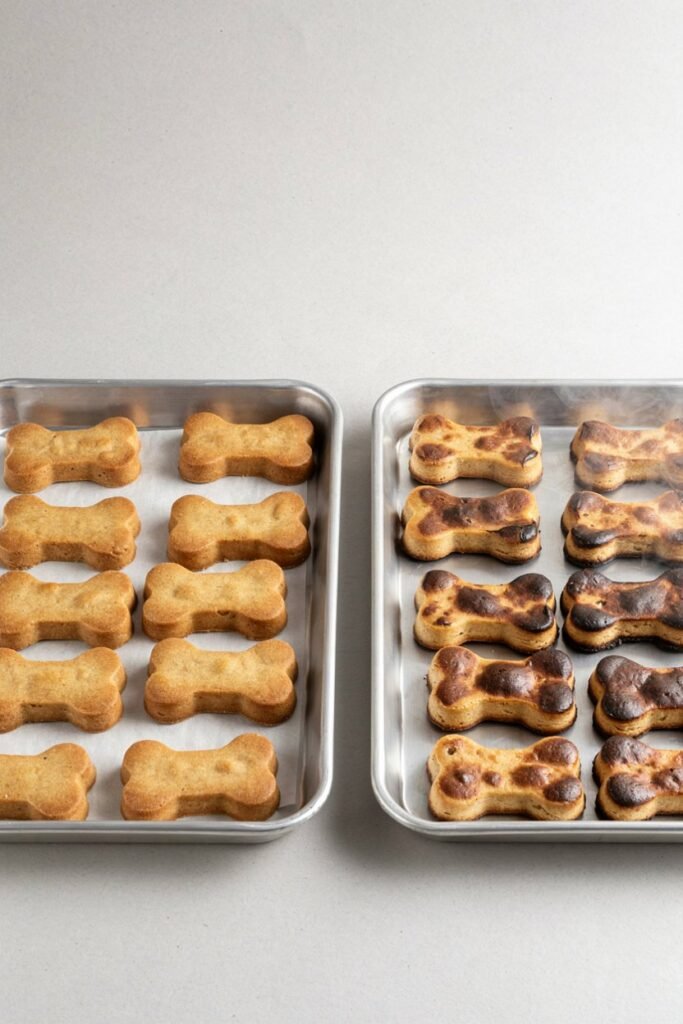
New treat bakers tend to run into the same handful of issues, and knowing about them ahead of time can save you a frustrating first batch.
Using pumpkin pie filling instead of plain pumpkin puree is one of the most common mistakes, since pie filling contains added sugar and spices that are not appropriate for dogs. Always double check the label and choose plain, unsweetened puree.
Skipping the cooling step is another frequent issue. Many of these treats, especially the softer chews, continue to firm up as they cool, so cutting into a batch too early can leave you with a mushy result even though the recipe was followed correctly.
Overloading the dough with too much liquid can produce treats that never fully crisp up. If your dough feels too wet, add flour a tablespoon at a time rather than trying to compensate later in the baking process.
Using peanut butter that contains xylitol is a serious and easy to make mistake, since some peanut butter brands, especially those marketed as low sugar, use this sugar substitute. Always read the ingredient label carefully before using peanut butter in any dog treat recipe.
Forgetting to remove seeds and cores from fruit like apple is another common oversight. While a small amount of apple flesh is perfectly safe, the seeds contain compounds that are best avoided.
Finally, baking a giant batch on your very first attempt is a mistake many beginners make out of enthusiasm. Start with a half batch of one recipe first to make sure your dog enjoys the flavor and tolerates the ingredients well before committing a large amount of time and ingredients to a full batch.
Troubleshooting Texture Problems
If your baked treats come out too hard, they were likely baked slightly too long or at too high a temperature. Try reducing the oven temperature by twenty five degrees and checking a few minutes earlier next time.
If your treats are too soft or crumbly, the dough may have needed more flour, or the treats may need more time in the oven before being removed. Soft chews in particular should feel just barely set when you take them out, since they continue to firm up as they cool.
If your dough is too sticky to roll out, dust your work surface and rolling pin generously with flour and work in small batches rather than trying to roll out the entire dough ball at once.
If your dough is too dry and crumbly to hold together, add water, applesauce, or broth a tablespoon at a time until it comes together into a workable dough.
Frequently Asked Questions
Are carrots actually good for dogs, or just a filler ingredient? Carrots offer real nutritional value, including fiber and beta carotene, which the body converts into vitamin A. They are low in calories, which makes them a smart choice for treats given regularly.
Can puppies eat carrot based treats? Small amounts of cooked or softened carrot are generally fine for puppies, but talk with your veterinarian about appropriate treat portions and textures for a young, still growing dog.
Can dogs eat raw carrots, or do they need to be cooked? Both raw and cooked carrots are safe for most dogs. Raw carrots offer a satisfying crunch, while cooked and pureed carrots are easier to digest and work better in soft chew recipes.
How long do homemade carrot treats last? Crunchy baked treats generally last about a week at room temperature, while softer recipes should be refrigerated and used within about five days. Nearly all of these recipes freeze well for two to three months.
Can I use baby carrots instead of whole carrots? Yes, baby carrots work in these recipes, though whole carrots tend to have a slightly better texture once grated or pureed.
My dog has a grain sensitivity. Can these recipes be adjusted? Yes. Oat flour is used in several recipes already and is generally well tolerated by dogs with wheat sensitivities. Always check with your veterinarian if your dog has a diagnosed food allergy.
Can I add cinnamon to these recipes? A small amount of cinnamon is considered safe for dogs and can be added to most of these recipes for extra aroma and flavor. Avoid large amounts, and never use nutmeg, which is not safe for dogs.
Why did my treats turn out too hard? This usually means they were baked a bit too long. Try shortening the bake time by a few minutes or lowering the oven temperature slightly on your next batch.
Can I substitute honey for the natural sweetness in these recipes? None of the recipes in this guide require added sweetener, since the carrots, applesauce, and pumpkin already provide natural sweetness. If you do choose to add a small amount of honey, use it sparingly, since it is still a source of added sugar.
Is it safe to give my dog carrot treats every single day? Yes, as part of a balanced diet and within the general guideline of keeping treats to about ten percent of daily calories. Rotate between a few different recipes so your dog gets some variety.
More Homemade Treats and Dog Food Recipes
Once you have a few batches of carrot treats under your belt, these related recipes are a natural next step if you want to keep expanding your homemade treat rotation.
- Homemade banana dog treat recipes
- Easy frozen coconut dog treats for summer
- 3 ingredient peanut butter dog gummies
- Homemade beef bone broth gummies for dogs
- Simple homemade dog food recipes for beginners
- Simple homemade dog food recipes
- 3 ingredient cooked dog food recipes
- Healthy homemade Farmer’s Dog food recipes
Final Thoughts
Carrots are proof that some of the best dog treats do not require a long ingredient list or advanced baking skills.
With a bag of carrots, a few pantry staples, and an afternoon in the kitchen, you can put together a full rotation of treats that are healthier, fresher, and often cheaper than what you would find on a store shelf.
Start with one recipe, see how your dog responds, and build from there. Keep portions reasonable, store your treats properly, and do not be afraid to experiment with the safe swaps mentioned throughout this guide once you feel comfortable with the basics.
Before long, baking for your dog will feel like second nature, and that first nervous batch of biscuits will be a distant memory compared to the stack of recipes you have mastered since.
15 Comments