Fluffy Banana Pancakes for Dogs (Easy Homemade Dog Treat Recipe)
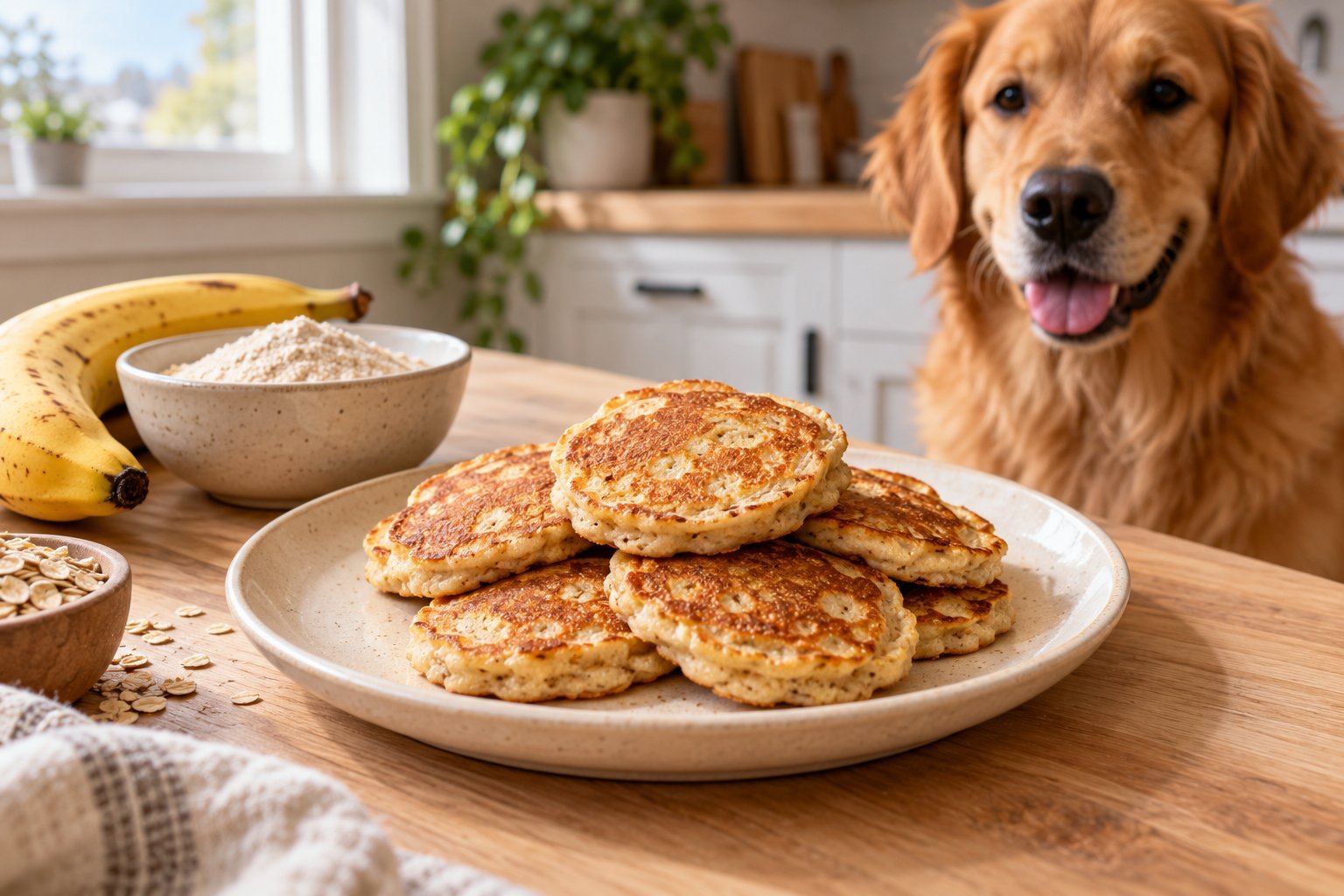
Weekend pancakes are a tradition in my house, and my dog has always made it very clear that he wants to be part of the routine.
Whenever I start mixing ingredients in the kitchen, he seems to know something delicious is coming.
That is what inspired me to make these fluffy banana pancakes for dogs, a simple homemade treat that lets him join in without the butter, syrup, and added sugar that usually come with human pancakes.
This recipe uses just a handful of everyday ingredients: ripe banana, oat flour, egg, and a little plain unsweetened yogurt or water.
The result is a batch of soft, golden mini pancakes that are easy to prepare on the stovetop. You do not need an oven, a waffle iron, a stand mixer, or any complicated equipment.

I also love how easy these pancakes are to customize. You can add a few blueberries, a little plain pumpkin puree, or a small amount of xylitol-free peanut butter to give your dog some variety.
The basic recipe is simple enough for an ordinary weekend but special enough to make your dog feel included in your breakfast routine.
If your dog loves my Carrot and Apple Waffle for Dogs or my Homemade Banana Dog Treat Recipes, this is the stovetop version, with no waffle iron or oven needed.
You can prepare the batter in minutes, cook the pancakes in a nonstick pan, and have a fresh batch ready after a short cooling period.
These homemade banana pancakes are intended as an occasional treat, not a replacement for your dog’s regular, complete, and balanced food.
Keep the portions appropriate for your dog’s size, introduce new ingredients gradually, and always let the pancakes cool completely before serving.
Why You’ll Love These Banana Pancakes for Dogs
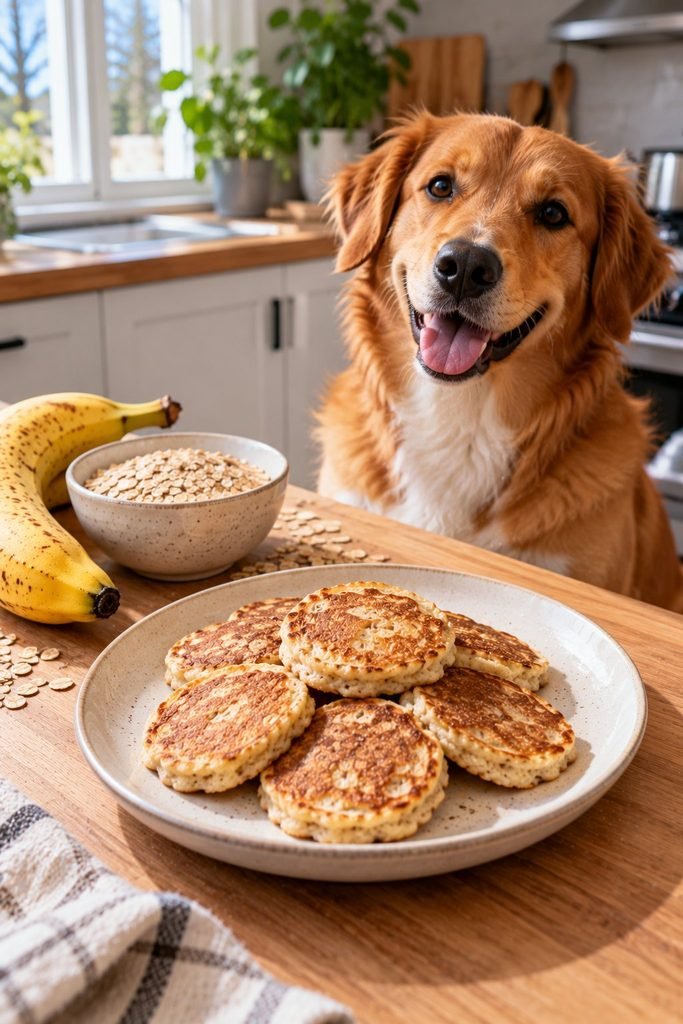
There are plenty of reasons to add this easy dog pancake recipe to your collection of homemade treats. You do not need expensive ingredients, and you can prepare a batch using things you may already have in your kitchen.
Only a few ingredients. You need a ripe banana, an egg, oat flour, and a little plain unsweetened yogurt or water. Optional baking powder helps create a lighter texture.
No added sugar. The natural sweetness of the ripe banana gives the pancakes their mild fruity flavor. There is no need to add sugar, honey, syrup, or artificial sweeteners.
Soft and easy to break apart. The finished pancakes are tender enough to tear into smaller pieces. This makes portioning easier for small dogs and dogs that prefer softer treats.
Quick to make. You can mix the batter in one bowl and cook the pancakes on the stovetop. There is no need to wait for an oven to preheat.
Easy to customize. Blueberries, strawberries, plain pumpkin puree, and a small amount of suitable peanut butter can add variety without making the recipe complicated.
Simple to portion. Making small pancakes helps you serve controlled portions and makes the pancakes easier to flip without breaking.
Freezer friendly. You can make a batch, refrigerate what you need for the next few days, and freeze the rest for another time.
Budget friendly. Oats and bananas are usually affordable, and you can make your own oat flour from plain rolled oats instead of buying a separate bag of flour.
Are Pancakes Safe for Dogs?
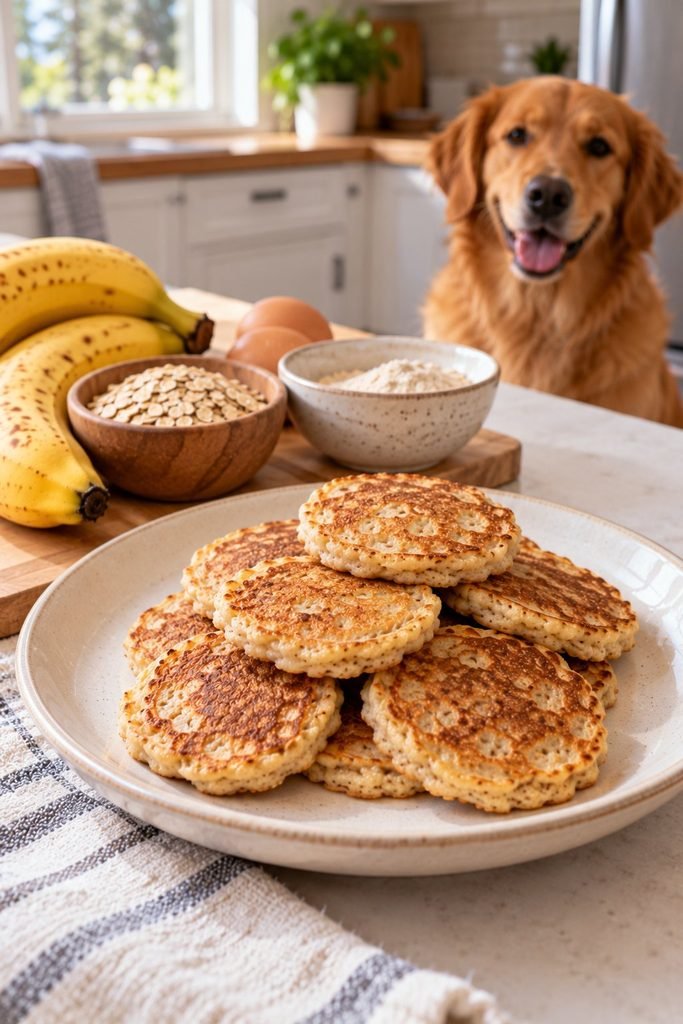
Yes, plain homemade pancakes made with dog-safe ingredients can be an occasional treat for many healthy dogs.
However, traditional human pancakes often contain added sugar, butter, syrup, chocolate chips, and other ingredients that are unnecessary or potentially dangerous for pets.
The important thing is to pay attention to the ingredients, preparation method, and portion size.
What Makes These Pancakes Different From Human Pancakes?
This recipe does not rely on the usual ingredients that make breakfast pancakes sweet and rich. Instead, the mashed banana adds moisture and natural sweetness, while the egg helps bind the batter.
Oat flour gives the pancakes structure, and a little water or plain unsweetened yogurt helps create a batter that spreads easily in the pan.
You do not need to add butter or cooking oil if you use a good-quality nonstick pan. Cooking the pancakes over medium-low heat also helps them cook through without burning on the outside.
Ingredients and Toppings to Avoid
Keep these precautions in mind whenever you make homemade treats for your dog.
- Chocolate: Chocolate can be toxic to dogs, so never add chocolate chips, cocoa powder, or chocolate spreads.
- Xylitol: This sweetener is highly toxic to dogs and may appear in some peanut butters, sugar-free products, and other packaged foods. Check ingredient labels carefully.
- Syrup and added sugar: These ingredients add unnecessary calories and can make it harder to manage your dog’s weight.
- Butter and excessive oil: These add extra fat that your dog does not need in an everyday treat.
- Macadamia nuts: Avoid adding macadamia nuts or products containing them.
- Flavored yogurt: Sweetened yogurt may contain added sugar or unsafe sweeteners. Use plain, unsweetened yogurt only if your dog tolerates dairy.
Bananas contain natural sugars, so even these simple pancakes should be offered in moderation.
Dogs with diabetes, pancreatitis, food allergies, weight-management needs, or sensitive stomachs may require different treats. Ask your veterinarian before introducing a new recipe if your dog has a medical condition or a prescribed diet.
Ingredients You’ll Need
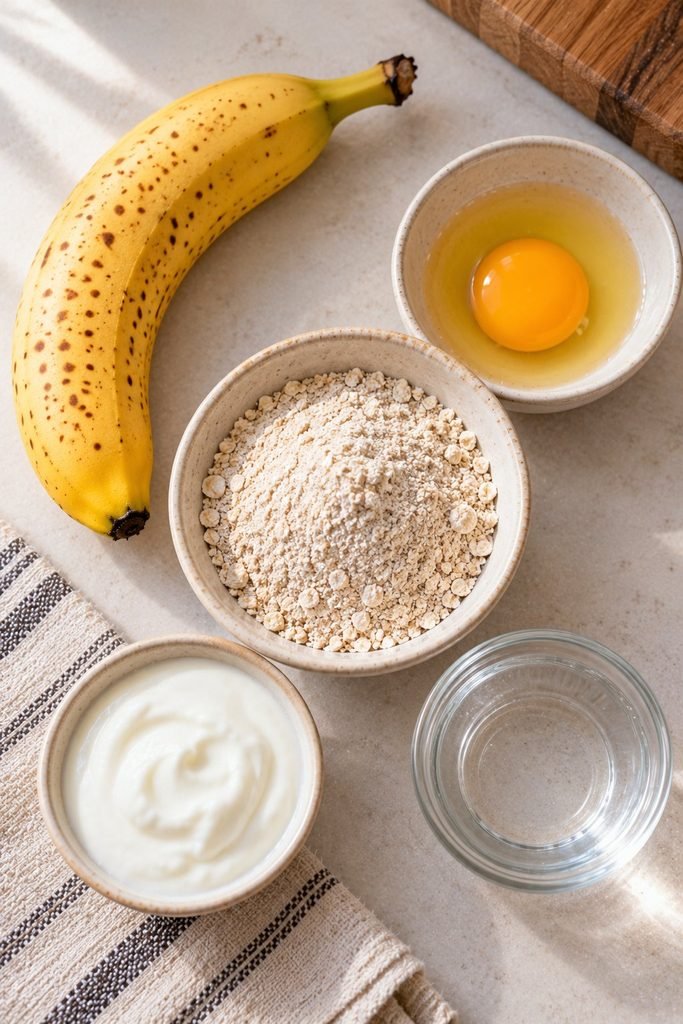
One of my favorite things about this recipe is that every ingredient has a practical purpose. You are not buying a long list of specialty products just to make a small batch of dog treats.
1. One Ripe Banana
A ripe banana provides moisture, natural sweetness, and a soft texture. It also helps hold the batter together, which is useful when making small pancakes without much added liquid.
Choose a banana that is yellow and ripe enough to mash easily. A few brown spots are fine. Avoid using a rotten banana or one that smells fermented.
You do not need to add the entire banana if it is unusually large. What matters most is achieving a batter that holds together and cooks properly.
2. One Large Egg
The egg helps bind the ingredients and gives the pancakes their structure. Without a binder, the batter may be more likely to fall apart when you flip the pancakes.
Cook the egg thoroughly as part of the pancake batter. Do not serve your dog raw batter containing egg.
If your dog has a known egg allergy or sensitivity, do not use this recipe as written. You can experiment with an appropriate alternative, but the texture and cooking time may change.
3. Oat Flour
Oat flour gives the pancakes a soft, tender texture. It is easy to find in many grocery stores, but you can also make it at home.
To make oat flour, blend plain rolled oats in a food processor or blender until they become a fine powder. Avoid flavored instant oatmeal packets because they may contain added sugar, sweeteners, or other unnecessary ingredients.
Oat flour is a useful alternative to wheat flour for many dogs, although it is not suitable for every dog with food sensitivities. If your dog has a specific dietary restriction, check with your veterinarian.
4. Plain Unsweetened Yogurt or Water
You need a little liquid to help the ingredients combine into a thick but pourable batter.
Plain unsweetened yogurt can provide a creamy consistency, but some dogs do not tolerate lactose well. If dairy tends to upset your dog’s stomach, use water instead.
Check the yogurt label to make sure it contains no xylitol or other unsafe ingredients. You do not need a flavored or sweetened variety.
5. Aluminum-Free Baking Powder (Optional)
A small amount of baking powder can help make the pancakes lighter and slightly puffier.
It is optional, so you can leave it out if you prefer a simpler recipe. If you use it, measure carefully and use only a small quantity. Do not substitute baking soda for baking powder without adjusting the recipe.
Ingredient List
This recipe makes approximately 10 to 12 small pancakes, depending on how much batter you use for each one.
- 1 ripe banana, mashed
- 1 large egg
- 1/2 cup oat flour
- 1/4 cup plain unsweetened yogurt or water, plus more if needed
- 1/4 teaspoon aluminum-free baking powder, optional
You will also need a mixing bowl, a fork, measuring cups and spoons, a nonstick pan, and a thin spatula.
How to Make Fluffy Banana Pancakes for Dogs
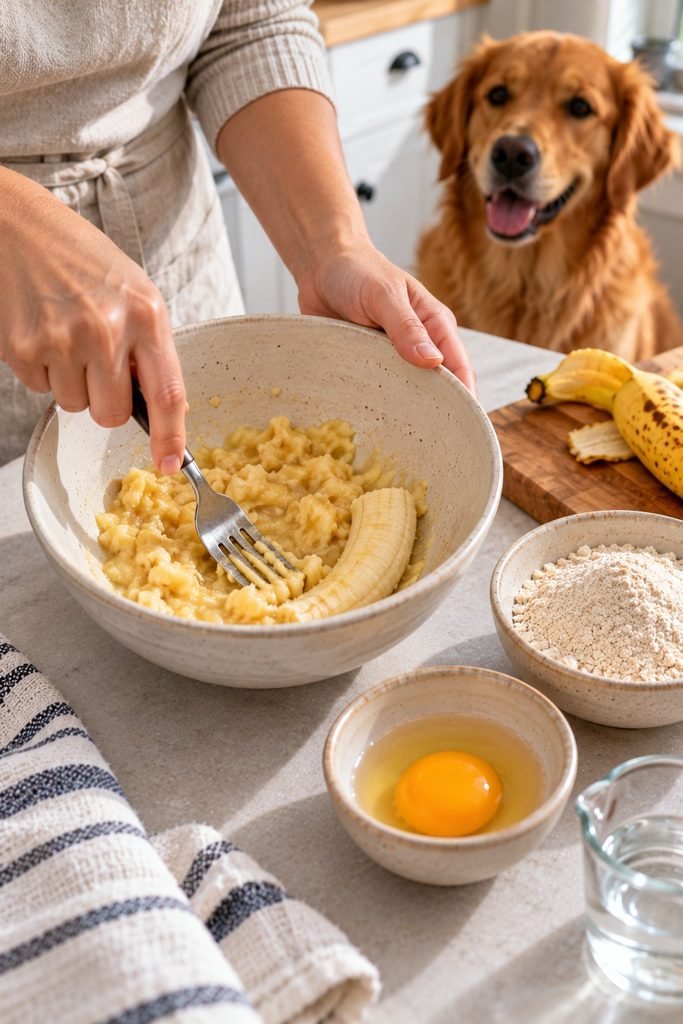
The process is straightforward, even if you have never made homemade dog pancakes before.
The biggest things to remember are to mix the batter thoroughly, keep the pancakes small, and cook them slowly enough for the centers to set.
Step 1: Mash the Banana
Peel the banana and place it in a mixing bowl. Mash it with a fork until most of the lumps disappear.
A few small pieces are fine, but a smoother banana mixture makes it easier to distribute the moisture throughout the batter.
If you are using a particularly large banana, you may not need all of it. Too much banana can make the batter wetter and the finished pancakes softer than expected.
Step 2: Add the Egg
Crack the egg into the bowl with the mashed banana. Whisk or stir until the egg is fully combined.
The mixture should look creamy and evenly blended. Take a moment to scrape the sides of the bowl so that no large pockets of egg remain.
Step 3: Add the Dry Ingredients and Liquid
Add the oat flour, plain unsweetened yogurt or water, and optional baking powder.
Stir until the ingredients form a thick batter. It should be soft enough to spoon into the pan but not so runny that the pancakes spread uncontrollably.
Let the batter rest for approximately five minutes. This gives the oat flour time to absorb some of the liquid and makes the batter easier to handle.
Step 4: Adjust the Batter
Check the consistency before cooking.
If the batter is too thick, add water or yogurt one tablespoon at a time until it becomes easier to spread.
If it is too thin, add a little more oat flour and allow it to rest briefly before checking again.
Banana size and the fineness of your oat flour can affect how much liquid the batter needs, so make small adjustments instead of adding large amounts at once.
Step 5: Heat the Pan
Place a nonstick pan or griddle over medium-low heat. Allow it to warm up before adding the batter.
You do not need to add butter or cooking oil when using a suitable nonstick surface. If your pan requires oil to prevent sticking, use a different pan or ask your veterinarian about an appropriate preparation method for your dog’s dietary needs.
Avoid heating the pan too much. Banana contains natural sugars that can brown quickly, and the pancakes need enough time to cook through.
Step 6: Spoon Small Pancakes Into the Pan
Spoon approximately two tablespoons of batter into the pan for each pancake.
Leave a little space between them so you can slide your spatula underneath without damaging the edges.
Smaller pancakes are easier to flip and more convenient to portion for dogs of different sizes. If your dog is very small, you can make even smaller rounds.
Step 7: Cook Until the Edges Set
Let the pancakes cook for approximately two to three minutes, depending on their thickness and the heat of your pan.
Look for edges that begin to set and a surface that appears less wet. Small bubbles may form, but banana-based batter does not always behave exactly like traditional pancake batter.
Gently slide a thin spatula underneath. If the pancake feels fragile, give it a little more time rather than forcing the flip.
Step 8: Flip and Finish Cooking
Carefully flip each pancake and cook the other side for another one to two minutes, or longer if needed.
The pancakes should be set in the middle and cooked all the way through. If the outside becomes too dark before the center is ready, reduce the heat.
Because these pancakes contain egg, make sure the centers are thoroughly cooked rather than leaving them wet or raw.
Step 9: Cool Completely Before Serving
Transfer the cooked pancakes to a wire rack or clean plate and allow them to cool completely.
Do not give your dog a pancake straight from the pan. The center can retain heat even when the outside feels cool.
Once the pancakes have cooled, tear one into an appropriate size for your dog and offer a small amount first. Watch for any digestive upset when introducing a new treat.
Getting the Right Texture
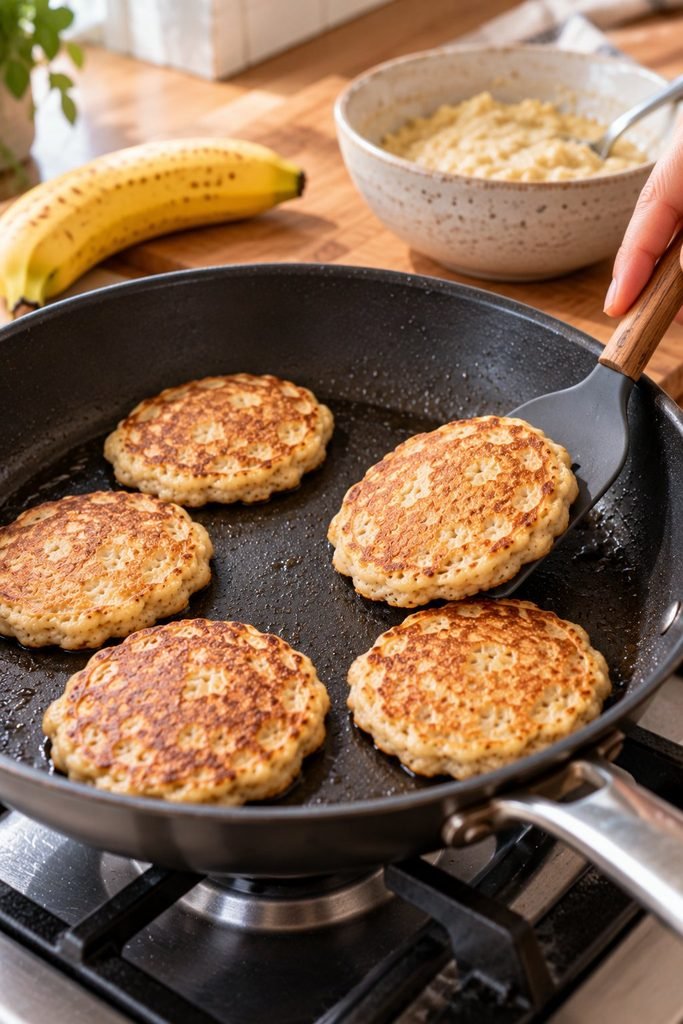
The goal is a soft, fluffy pancake that holds together when you pick it up. Homemade dog pancakes may be slightly denser than traditional breakfast pancakes because the recipe uses oat flour and banana rather than a large amount of wheat flour and other conventional ingredients.
A few small adjustments can make a noticeable difference.
Let the batter rest. Five minutes gives the oat flour time to absorb moisture and helps the pancakes hold their shape.
Keep the heat moderate. Medium-low heat helps the centers cook before the outsides become too dark.
Make smaller rounds. Smaller pancakes are easier to flip and less likely to break apart.
Avoid overmixing. Stir until the ingredients are combined. You do not need to beat the batter for a long time.
Use a thin spatula. Slide it underneath the pancake gently instead of pressing down on the top.
Adjust the liquid gradually. Add only a tablespoon at a time if the batter is too thick. This prevents you from accidentally making it watery.
What If the Pancakes Fall Apart?
If the pancakes crumble when you try to flip them, the batter may be too wet, the pancakes may be too large, or the first side may not have cooked long enough.
Let the batter rest for another few minutes and try making smaller pancakes. If the batter still seems loose, stir in a little additional oat flour.
What If the Pancakes Are Too Dense?
Check whether your batter is unusually thick. Adding a small amount of water or yogurt may help.
You can also use the optional baking powder to encourage a lighter texture. Make sure it is fresh and measured correctly.
Avoid expecting a cake-like texture. These are simple homemade dog treats, and their consistency will naturally differ from restaurant-style pancakes.
Recipe Variations
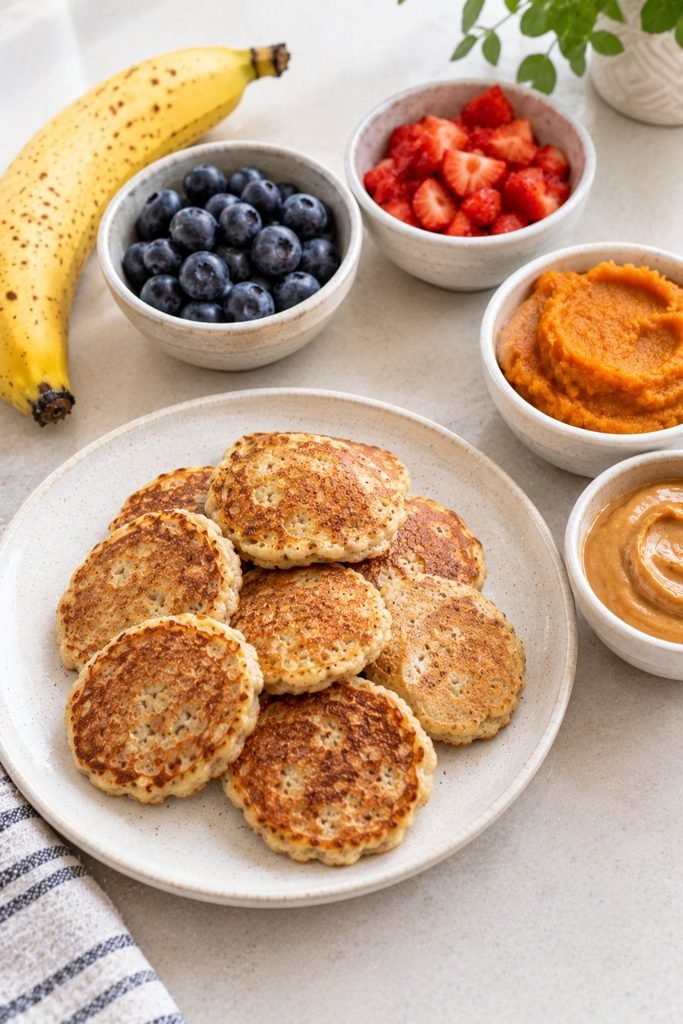
Once you are comfortable with the basic recipe, you can experiment with small additions. Introduce one variation at a time so you can identify which ingredients your dog tolerates well.
Banana and Strawberry Pancakes
Finely chop a small amount of fresh strawberry and fold it into the batter. Use plain, washed strawberries with the stems removed.
Keep the pieces small so they distribute evenly and do not make the pancakes difficult to flip.
If your dog enjoys fruity treats, you may also like my Strawberry Banana Cookies for Dogs.
Banana and Peanut Butter Pancakes
Add approximately one tablespoon of xylitol-free peanut butter to the batter if your dog tolerates peanuts.
Choose plain peanut butter without added sweeteners, chocolate, or excessive salt. Read the full ingredient label because some products contain xylitol, which is dangerous for dogs.
Peanut butter is calorie-dense, so use a small amount and consider the extra calories when deciding how much to serve.
Banana and Pumpkin Pancakes
Replace some of the yogurt or water with plain pumpkin puree to give the pancakes a different flavor and texture.
Use pure pumpkin rather than pumpkin pie filling, which may contain added sugar, spices, or other ingredients that are unsuitable for dogs.
For another pumpkin-inspired homemade treat, try my Pumpkin Pupcakes.
Banana and Blueberry Pancakes
Mash a few washed blueberries and stir them into the batter. Alternatively, leave the blueberries whole if they are small enough and appropriate for your dog’s size.
Blueberries add a little fruity variety, but you do not need many. Too much fruit can make the batter wetter and may contribute to digestive upset.
You can also explore my Blueberry Dog Treats for another homemade option.
Mini Training Pancakes
For tiny rewards, make pancakes using approximately one teaspoon of batter each.
Once cooked and cooled, break them into smaller pieces if necessary. Small pieces can be useful when you want to reward your dog without giving a large treat every time.
Remember that treats used during training still contribute to your dog’s daily calorie intake.
Common Mistakes to Avoid
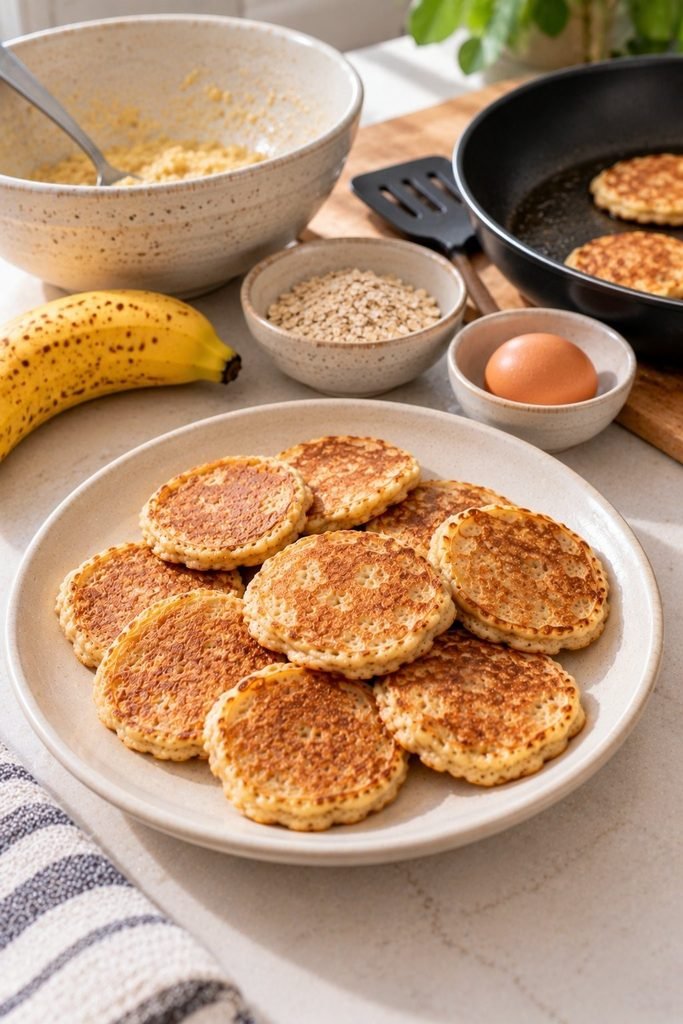
Homemade dog treats are generally simple to prepare, but a few common mistakes can affect their texture and suitability.
Adding syrup, butter, or sugar. These ingredients are unnecessary. Serve the pancakes plain, without the toppings commonly used for human breakfasts.
Using ordinary pancake mix without checking the ingredients. Boxed mixes may contain added sugar, flavorings, or other ingredients that are not needed in a dog treat. Making the batter from scratch gives you better control.
Cooking over high heat. The outside may become dark while the inside remains undercooked. Use medium-low heat and allow enough time for the center to cook.
Flipping too early. Banana-based pancakes can be delicate. Wait until the edges are set and the underside holds together before flipping.
Making the pancakes too large. Large pancakes are harder to handle and may break apart. Smaller portions are easier to cook evenly.
Using sweetened or flavored yogurt. Choose plain unsweetened yogurt or water, and check the label for unsafe ingredients.
Serving the pancakes hot. Allow them to cool completely before offering them to your dog.
Giving too many at once. Even homemade treats contribute calories. Start with a small portion and adjust the amount according to your dog’s size, diet, and individual needs.
How Many Banana Pancakes Can a Dog Have?
The appropriate amount depends on your dog’s size, age, activity level, health, and daily calorie needs. There is no single serving size that is right for every dog.
As a starting point, one small pancake may be enough for a small dog, while a larger dog may tolerate a few small pieces. These are only general examples, not guaranteed safe serving amounts.
The important thing is to consider the total calories rather than simply counting pancakes. A thick pancake made with peanut butter contains more calories than a tiny plain pancake.
Veterinary nutrition guidance commonly recommends keeping treats and other foods outside a dog’s complete and balanced diet to no more than about 10% of daily calories, with the remaining calories coming from nutritionally complete food. Some dogs need an even lower treat allowance.
If your dog is overweight, has diabetes, has a history of pancreatitis, or follows a therapeutic diet, ask your veterinarian whether banana pancakes are appropriate.
When trying this recipe for the first time, start with a small piece and monitor your dog for vomiting, diarrhea, itching, or other unusual symptoms. Stop feeding the treat if you notice a problem.
How to Store Banana Pancakes for Dogs
Proper storage helps maintain freshness and reduces the risk of spoilage. Because these pancakes contain banana, egg, and potentially yogurt, they should not be left at room temperature for extended periods.
Refrigerator Storage
Allow the pancakes to cool completely, then place them in a clean, airtight container.
Refrigerate promptly and use within three days. If your kitchen is warm, avoid leaving the pancakes out while you finish other tasks.
Keep them separate from raw ingredients and use clean utensils when handling the finished treats.
Freezer Storage
Freezing is a practical option if you make more pancakes than your dog can eat within a few days.
Arrange the cooled pancakes in a single layer on a tray and freeze until firm. Transfer them to a freezer-safe bag or airtight container, separating layers with parchment paper if needed.
Label the container with the date and store the pancakes for up to three months for best quality.
Discard any pancakes that show signs of mold, develop an unusual smell, or have been stored improperly. When in doubt, do not feed them to your dog.
For another soft, fruit-based treat that stores well, see my Yogurt Banana Dog Treats Recipe.
Can You Freeze Banana Pancakes for Dogs?
Yes. These pancakes freeze well, making them convenient for busy days when you want to give your dog a homemade treat without preparing a new batch.
Follow these steps:
- Cook the pancakes completely and let them cool.
- Arrange them in a single layer on a tray and freeze until firm.
- Place parchment paper between the pancakes if you want to stack them.
- Transfer them to a sealed freezer bag or freezer-safe container.
- Label the container with the preparation date.
- Thaw the number you need in the refrigerator or warm them gently until just warm, never hot.
Avoid repeatedly thawing and refreezing the same batch. Take out only what you expect to use and refrigerate thawed leftovers promptly.
You can also serve the pancakes at room temperature after thawing, provided they have been handled and stored safely.
Can You Make Banana Pancakes for Dogs Without an Egg?
Yes, you can experiment with an egg-free version if your dog cannot tolerate eggs. However, the egg plays an important role in holding this particular batter together, so the texture will be different.
Try replacing the egg with a small amount of additional mashed banana or plain pumpkin puree and adjusting the oat flour and liquid gradually. Cook a small test pancake first to see whether it holds together.
Do not assume an egg-free variation will have the same nutritional content or cooking behavior as the original recipe. If your dog has a diagnosed food allergy or needs a restricted diet, ask your veterinarian about suitable substitutions.
Can You Make These Pancakes Without Oat Flour?
Yes. Depending on your dog’s dietary needs, you may be able to use plain whole-wheat flour or another flour your dog tolerates.
Whole-wheat flour can create a slightly different texture and may require a different amount of liquid. Add the liquid gradually until the batter reaches the desired consistency.
If you use another flour, cook the pancakes thoroughly and check that all ingredients are safe for your dog.
For dogs with diagnosed grain allergies or multiple food sensitivities, consult your veterinarian before substituting ingredients. A homemade treat should fit your dog’s individual dietary needs rather than simply being made with whatever flour is available.
More Homemade Treat Ideas
If your dog enjoys banana pancakes, there are plenty of other simple homemade recipes to explore. Try changing the fruit, experimenting with a different texture, or preparing a batch of treats that can be stored for later.
- Carrot and Apple Waffle for Dogs
- Homemade Dog Waffles
- Strawberry Banana Cookies for Dogs
- Yogurt Banana Dog Treats Recipe
- Homemade Banana Dog Treat Recipes
For a wider look at feeding your dog well, check out 7 Healthiest Homemade Dog Foods.
Frequently Asked Questions
Can dogs eat pancakes?
Many healthy dogs can enjoy plain homemade pancakes made with dog-safe ingredients as an occasional treat. Avoid syrup, chocolate, excessive fat, added sugar, and unsafe sweeteners. Keep portions small and remember that treats should not replace balanced dog food.
Can dogs eat bananas?
Yes, plain banana is generally safe for most dogs when offered in moderation. Bananas contain natural sugars, so large portions are not ideal for dogs that need to manage their weight or blood glucose.
Can I use regular flour?
Plain whole-wheat flour can work in place of oat flour, although the texture may change. Use a flour that suits your dog’s dietary needs and avoid mixes with added sweeteners or other unsuitable ingredients.
Can I skip the egg?
Yes, you can experiment with an egg-free variation by using a little extra mashed banana or plain pumpkin and adjusting the flour and liquid. The pancakes may be more delicate, so make smaller test pancakes first.
Can I use a waffle iron?
Yes, a waffle iron may work with a suitably adjusted batter, although this recipe was developed for stovetop pancakes. Follow the appliance instructions and make sure the waffles cook through.
For a recipe specifically designed for a waffle maker, see my Homemade Dog Waffles.
How long do homemade banana pancakes last?
Store the pancakes in an airtight container in the refrigerator for up to three days. For longer storage, freeze them for up to three months for best quality.
Can puppies have banana pancakes?
Some puppies may tolerate a small amount of a plain, fully cooked banana pancake, but puppies have different nutritional needs from adult dogs. Ask your veterinarian before introducing homemade treats, particularly if your puppy is very young or has a sensitive stomach.
Can I give my dog banana pancakes every day?
It is better to think of these pancakes as an occasional treat rather than an everyday food. Frequent treats can add calories and displace nutritionally balanced food. If you want to give homemade treats regularly, discuss an appropriate portion and frequency with your veterinarian.
Do I need baking powder?
No. Baking powder is optional. It may help the pancakes become slightly lighter, but the recipe can still work without it. Use only a small measured amount if you choose to include it.
Why are my dog pancakes sticking to the pan?
The pan may not be suitable for cooking without fat, or the pancakes may be flipped before their undersides have set. Try a good-quality nonstick pan, moderate heat, smaller pancakes, and a little more cooking time before flipping.
Can I serve banana pancakes with toppings?
It is best to serve them plain. If you want to add something, choose a small amount of a dog-safe ingredient, such as plain pumpkin puree or a few blueberries, and account for the additional calories. Avoid syrup, chocolate, sweetened yogurt, and products containing xylitol.
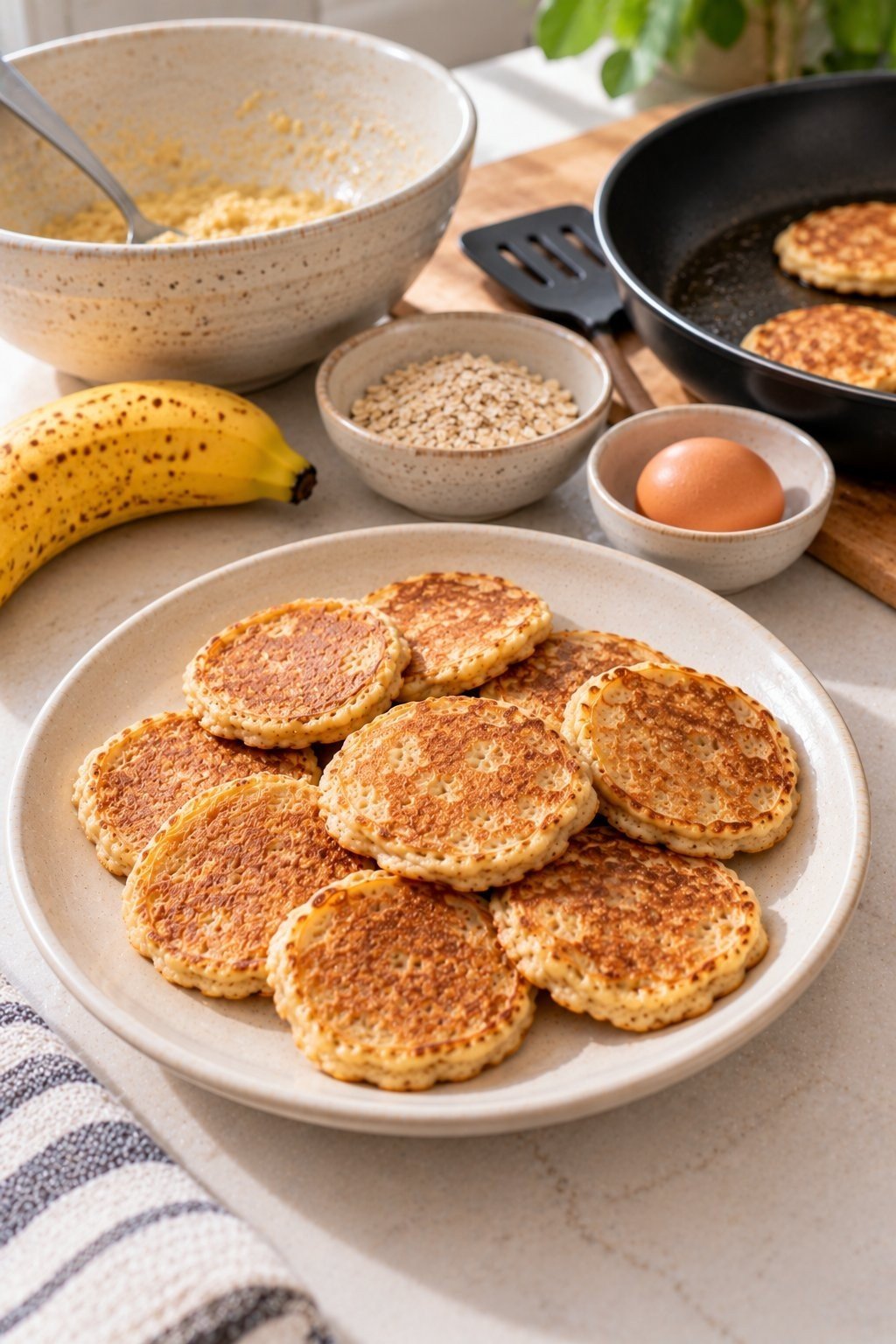
Fluffy Banana Pancakes for Dogs
Ingredients
Equipment
Method
- Mash the banana. Peel the ripe banana and place it in a mixing bowl. Mash with a fork until mostly smooth, removing any large lumps.
- Add the egg. Crack the egg into the bowl and whisk it into the mashed banana until evenly combined.
- Mix in the oat flour. Add the oat flour and stir until a thick batter forms. Gradually add the water, one tablespoon at a time, until the batter is thick but easy to spoon into the pan.
- Rest the batter. Let the mixture sit for 2–3 minutes so the oat flour can absorb some moisture. If it becomes too thick, add a little more water.
- Heat the pan. Place a nonstick frying pan over low to medium-low heat. Lightly grease it with a small amount of olive oil if necessary, wiping away any excess.
- Shape the mini pancakes. Spoon small rounds of batter into the pan. Keep them small and relatively thin so the centers cook thoroughly without the outsides burning.
- Cook the first side. Cook for approximately 2–3 minutes, until the edges look set and the bottoms are lightly golden.
- Flip and finish cooking. Gently flip each pancake and cook for another 2–3 minutes. Adjust the heat if the pancakes brown too quickly. Check that the centers are fully cooked and no wet batter remains.
- Cool completely. Transfer the pancakes to a wire rack and let them cool fully before offering them to your dog.
- Serve in small portions. Break a pancake into smaller pieces for small dogs, and serve only a few pieces as an occasional treat.
- Choose a ripe banana: I use a banana that is yellow and soft but not spoiled. It mashes easily and helps bind the batter without needing added sugar.
- Make your own oat flour: If you do not have oat flour, blend plain rolled oats into a fine powder. Avoid flavored instant oats or products containing added sweeteners.
- Keep the heat low: Banana can brown quickly in a hot pan. Low to medium-low heat helps the pancakes cook through without burning on the outside.
- Check the center: Thick pancakes may look golden before the inside is cooked. Make small pancakes, cook them on both sides, and make sure the centers are fully set before serving.
- Storage: Keep cooled pancakes in an airtight container in the refrigerator for up to 3 days. Freeze individual portions for up to 2 months for best quality. Thaw frozen pancakes in the refrigerator and serve at room temperature.
- Common mistake to avoid: Adding too much water at once can make the batter runny and the pancakes difficult to flip. Add water gradually until the batter holds its shape when spooned into the pan.
- Serving guidance: These pancakes are treats, not a complete meal. Keep treats to around 10% or less of your dog’s daily calorie intake, with the rest coming from a complete and balanced diet.
- Ingredient safety: Do not add chocolate, syrup, sugar, artificial sweeteners, or seasoning. If your dog has a known egg or oat sensitivity, check with your veterinarian before offering these pancakes.
A Final Note on Making Pancakes for Your Dog
Few things make my dog happier than being near the kitchen while pancakes cook, and I like the idea of having a simple treat that lets him join in without sharing the ingredients from my own breakfast.
What makes this recipe especially useful is how easy it is to prepare. You can mash the banana, mix the batter, and cook the pancakes in one pan without making a mess of the kitchen. The ingredients are familiar, the preparation is straightforward, and the finished pancakes are easy to break into smaller portions.
I would start with a small pancake, especially if your dog has never tried this recipe before. Keep the ingredients plain, let the pancakes cool completely, and store any leftovers properly. If you make a larger batch, freezing individual portions can save time the next time you want to prepare a homemade treat.
Most importantly, remember that homemade treats are meant to complement your dog’s regular diet, not replace it. With sensible portions and dog-safe ingredients, these fluffy banana pancakes can be a fun occasional addition to your dog’s treat collection.