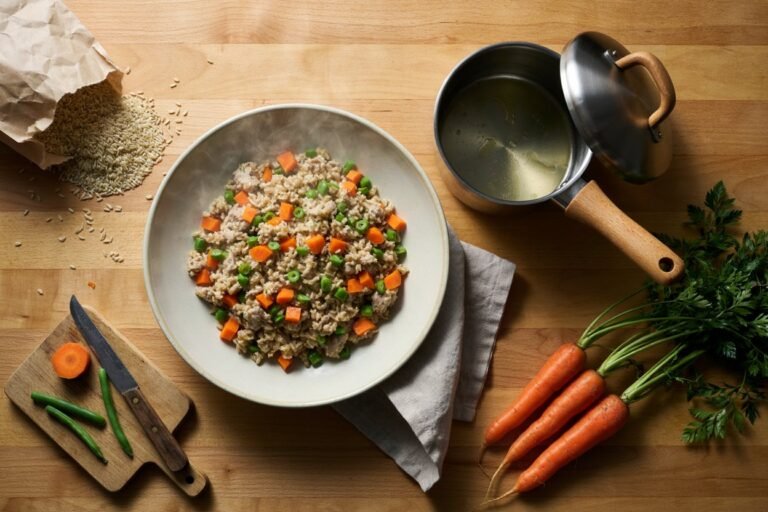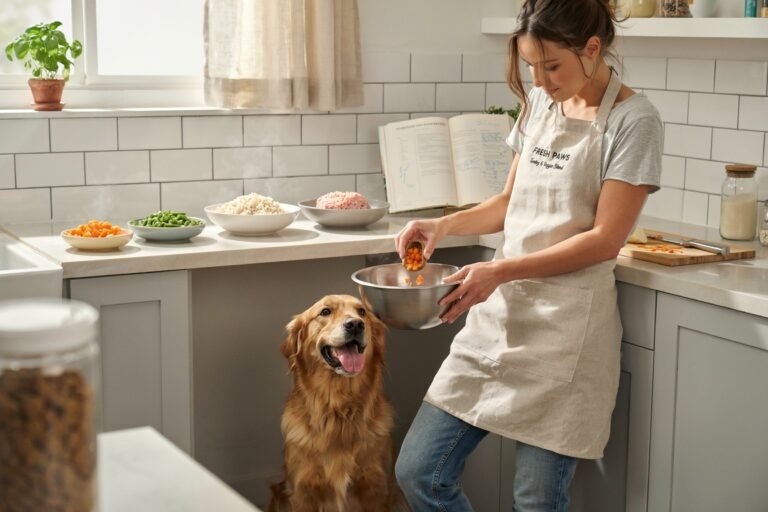
Homemade Dog Gravy Recipes: The Complete Guide to Safe, Nutritious Meal Toppers
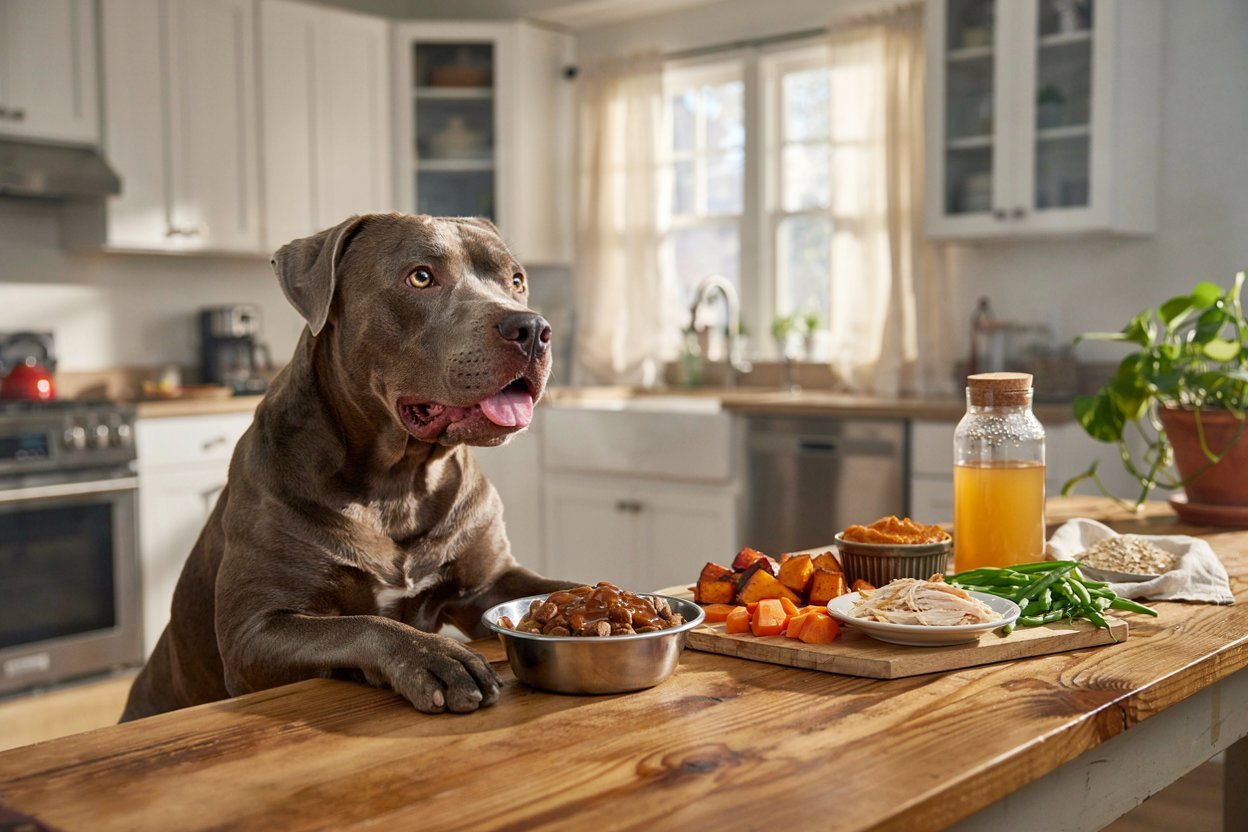
My Labrador, Cooper, used to inhale his dinner in under a minute. Then, almost overnight, he started sniffing his bowl and walking away.
He’d wander back an hour later and pick at it half-heartedly, like it was a chore instead of the best part of his day. I panicked a little, assumed something was wrong, and booked a vet visit.
The vet checked him over and found nothing concerning. Cooper was a healthy, active seven-year-old dog who had simply gotten bored of the same dry kibble, day after day, for years. She suggested something I hadn’t considered: a simple homemade gravy poured over his food.
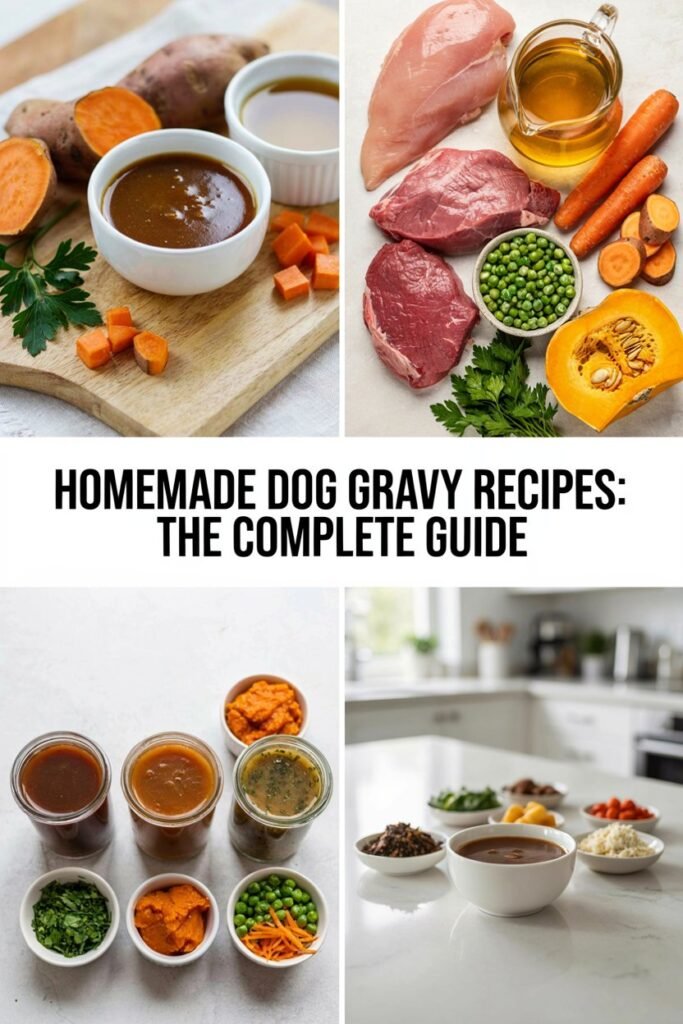
Nothing fancy, just warm broth, a few safe vegetables, and a little protein blended together. That night, Cooper finished his bowl in record time and looked up for more.
That was the start of a small kitchen habit that’s now a permanent part of how I feed him. This guide is everything I’ve learned since, what’s safe, what’s dangerous, how much to use, and a full set of recipes for different dogs and different needs.
Whether your dog is a picky eater, a senior who needs softer food, or a pup recovering from an illness, there’s a version of homemade gravy here that can help.
Disclaimer
This post may contain affiliate links. As an Amazon Associate, I earn from qualifying purchases at no additional cost to you. The information in this article is for general informational purposes only. Always use dog safe ingredients and consult your veterinarian before adding homemade gravy or meal toppers to your dog’s diet.
Amazon Shopping List You Need
- Immersion Blender – I use this to make smooth homemade gravy.
- Stainless Steel Mixing Bowls – I always use these for preparing gravy.
- Digital Kitchen Scale – I use one to measure ingredients accurately.
- Silicone Freezer Trays – I love freezing gravy into easy portions.
- Glass Food Storage Containers – I use these to keep leftover gravy fresh.
- Fine Mesh Strainer – I use this when I want a smoother gravy.
- Stainless Steel Dog Bowls – I always serve homemade meal toppers in these.
What Is Dog Gravy, Exactly?
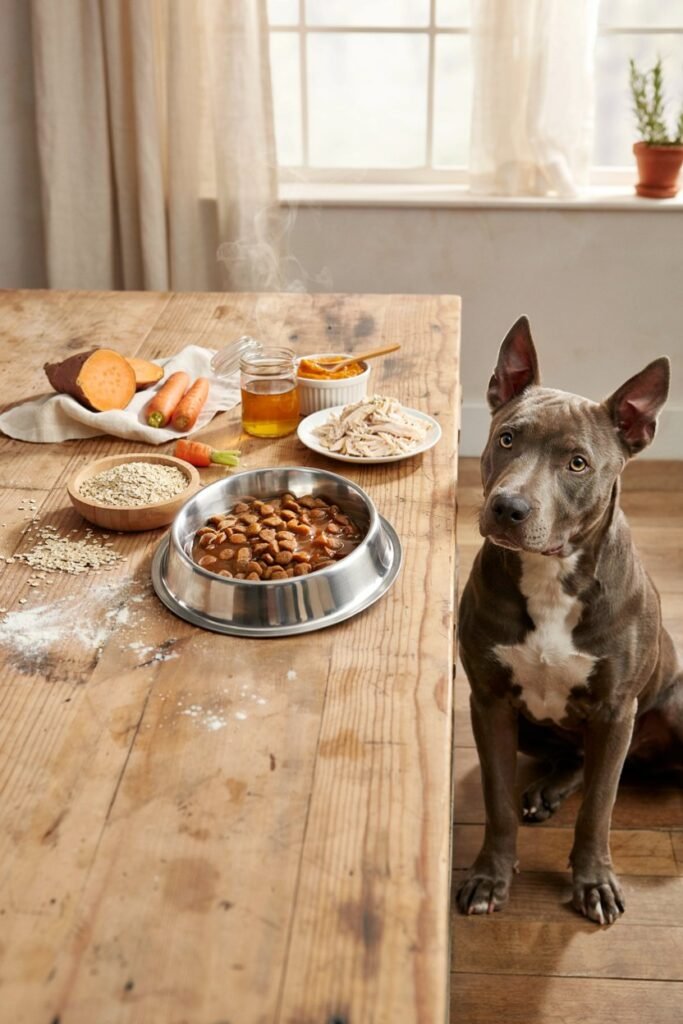
Dog gravy is a simple, dog-safe liquid or semi-liquid topper poured over kibble or mixed into meals. It’s not the same as the gravy you’d make for your own dinner table.
Human gravy typically relies on salt, butter, flour roux, onion, garlic, and heavy seasoning blends, almost all of which are either unhealthy or outright toxic for dogs.
Dog-safe gravy is built from a much shorter, much cleaner ingredient list: unsalted broths, pureed vegetables, small amounts of lean protein, and safe thickeners like plain oats or a little rice.
The goal isn’t flavor complexity. It’s aroma, moisture, and nutrition, three things that make a bowl of dry food dramatically more appealing to a dog without adding anything harmful.
Store-bought gravies and meal toppers marketed for dogs can work too, but many contain higher sodium levels, artificial flavoring, or preservatives than you’d expect. Making it yourself means you control exactly what goes into your dog’s bowl.
Is Homemade Dog Gravy Healthy?
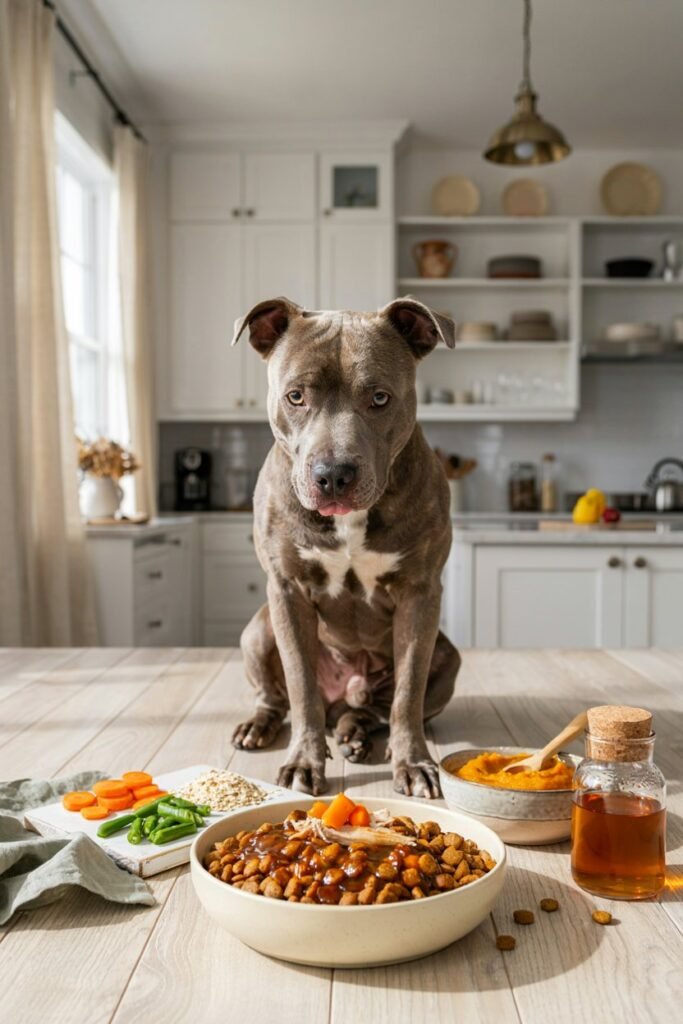
Used correctly, yes. Homemade gravy can:
- Add moisture to a diet that’s otherwise mostly dry kibble
- Introduce extra nutrients from bone broth, pumpkin, and vegetables
- Make meals more appealing to dogs going through a picky phase
- Soften food for dogs with dental issues or older dogs who struggle to chew
It becomes unhealthy only when made carelessly, using salted stock, butter, cream, or seasoning blends meant for human cooking. The recipes further down are built specifically to avoid those mistakes.
If your dog has an existing health condition, kidney disease, pancreatitis, diabetes, or a diagnosed food allergy, talk to your veterinarian before introducing any new food, including homemade gravy.
Ingredients that are safe for most healthy dogs, like certain proteins or higher-fat broths, may not be appropriate for a dog managing a specific condition.
When Should You Use Dog Gravy?
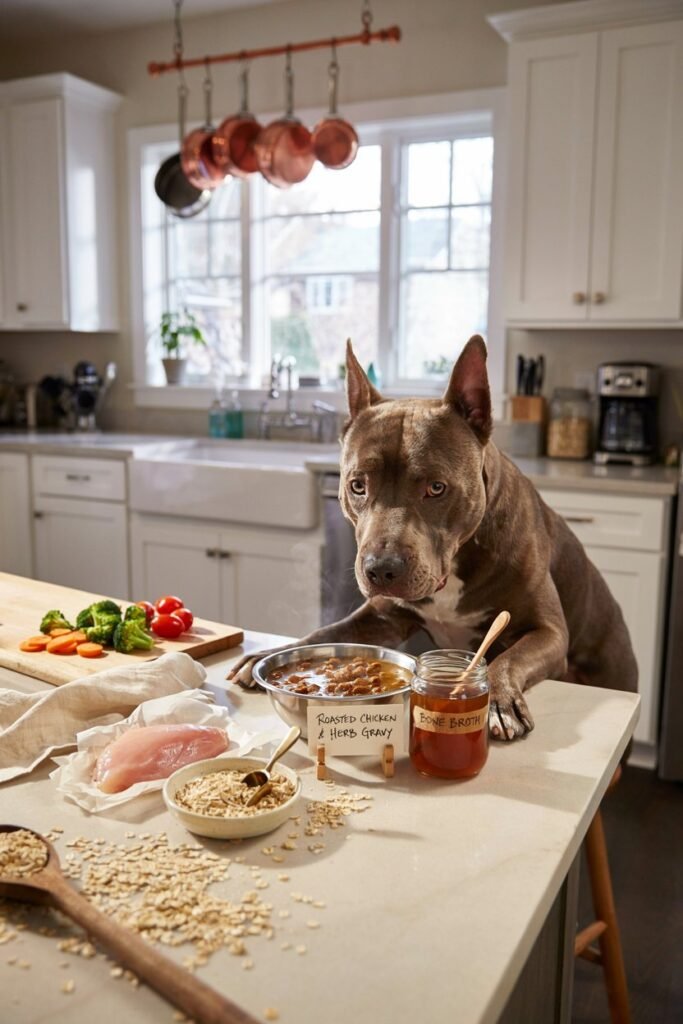
Homemade gravy isn’t something every dog needs every day, but it solves a handful of specific, common problems:
- Picky eating. A dog who’s lost interest in kibble often responds to the smell of warm broth or a savory topper.
- Low water intake. Dogs who don’t drink much on their own get extra hydration mixed right into their food.
- Aging or dental problems. Softened kibble is easier and more comfortable to chew.
- Medication time. Crushed pills hidden in a spoonful of thick gravy go down far more easily than a pill wrapped in a treat.
- Recovery periods. Dogs recovering from surgery, illness, or low appetite often need extra encouragement to eat.
- Weight management. Both underweight dogs needing extra calories and overweight dogs needing more volume without more calories can benefit from the right gravy recipe.
The Benefits of Homemade Dog Gravy, Explained
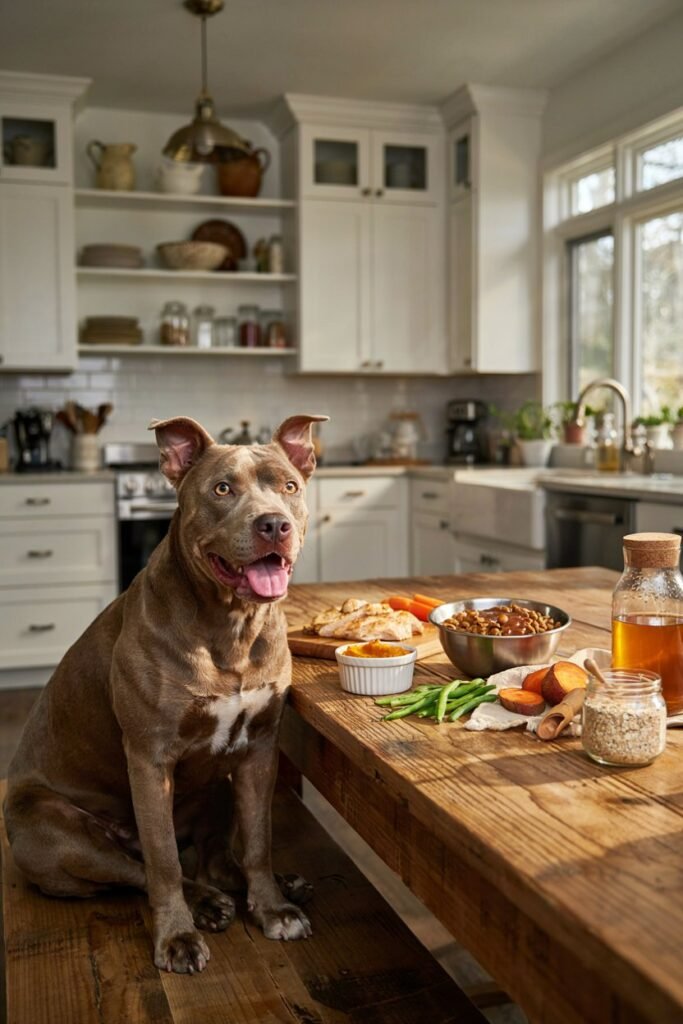
It’s easy to list benefits. It’s more useful to understand why each one actually works.
It Encourages Picky Eaters
A dog’s sense of smell is tens of thousands of times more sensitive than a human’s, and dogs decide whether food is worth eating largely through scent before taste even comes into play.
Warm broth releases far more aroma than cold, dry kibble sitting in a bowl.
That’s often the entire reason a “picky” dog suddenly finishes a meal, the food finally smells like something worth eating.
It Adds Moisture
Dry kibble contains very little water, typically under 10%.
Dogs that don’t drink enough on their own, especially in hot weather or as they age, can end up mildly dehydrated without any obvious symptoms. A gravy-soaked meal quietly closes that gap.
It Helps Senior Dogs
Older dogs frequently deal with worn teeth, sore gums, or reduced jaw strength.
Softening dry kibble with gravy makes chewing less painful and meals less stressful, which matters more than it sounds like it would for a dog who’s started avoiding food because eating hurts.
It Makes Medication Easier
Crushed medication mixed into a small amount of thick gravy is far easier to hide than a pill pushed into a treat, especially for dogs who’ve learned to spot and avoid pill-stuffed treats.
It Adds Extra Nutrition
Depending on the recipe, gravy can introduce:
- Bone broth, which contains collagen, glucosamine, and minerals that support joints
- Pumpkin, a source of fiber that supports digestion
- Vegetables like carrots and green beans, which add vitamins with very few calories
- Lean meat, which boosts protein content in small, controlled amounts
Safe Ingredients for Homemade Dog Gravy
| Ingredient | Benefit |
|---|---|
| Unsalted chicken broth | Base liquid, adds flavor without sodium |
| Bone broth (unsalted) | Joint support from collagen and minerals |
| Pumpkin puree (plain, not pie filling) | Fiber, supports digestion |
| Sweet potato (cooked, mashed) | Fiber, vitamin A, natural thickener |
| Carrots (cooked, pureed) | Low-calorie vitamins and fiber |
| Peas (cooked) | Protein and fiber in small amounts |
| Green beans (cooked, plain) | Low-calorie bulk, good for weight control |
| Turkey (cooked, unseasoned, shredded) | Lean protein |
| Chicken (cooked, unseasoned, shredded) | Lean protein |
| Beef (lean, cooked, unseasoned) | Higher-protein option |
| Plain Greek yogurt (unsweetened, no xylitol) | Probiotics, creaminess |
| Egg (fully cooked) | Protein and richness |
| Oats (plain, cooked) | Natural thickener, fiber |
| Rice (plain, cooked) | Natural thickener, easy to digest |
A good rule of thumb: if an ingredient needs to be checked against “safe for dogs” lists before use, it probably belongs in the section below instead.

Ingredients to Never Use
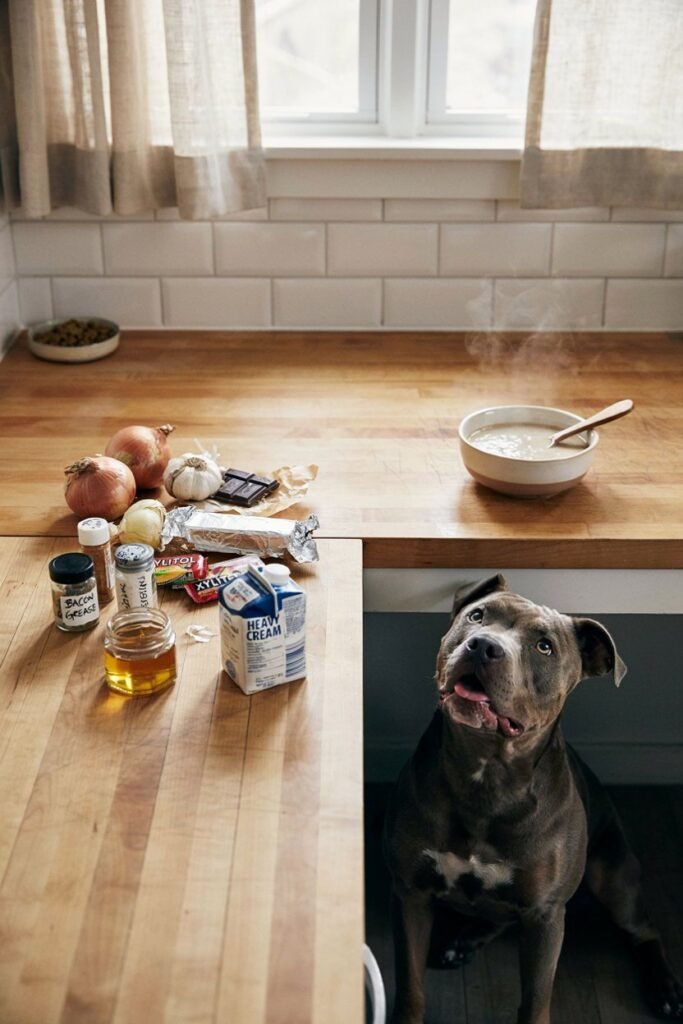
This is the section that matters most, and it’s worth reading closely even if you’re an experienced dog owner.
- Garlic — toxic to dogs in nearly any form, including powder
- Onions — damages red blood cells, even in small amounts
- Chives and leeks — part of the same toxic plant family as onion and garlic
- Nutmeg — can cause tremors and seizures in larger amounts
- Alcohol — never appropriate in any dog food
- Chocolate — toxic due to theobromine
- Xylitol — an artificial sweetener found in some yogurts and peanut butters; extremely toxic to dogs even in small doses
- Too much salt — can lead to sodium ion poisoning in severe cases, and contributes to long-term kidney strain
- Butter and cream — unnecessary fat that can trigger digestive upset or pancreatitis
- Heavy seasoning blends — many human seasoning mixes contain onion or garlic powder as a base ingredient
- Bacon grease — extremely high in fat and sodium; a common cause of pancreatitis flare-ups in dogs
Always double check store-bought broth labels. Many “low sodium” broths still contain onion or garlic powder, which makes them unsafe despite the healthier-sounding label.
Kitchen Tools That Make This Easier
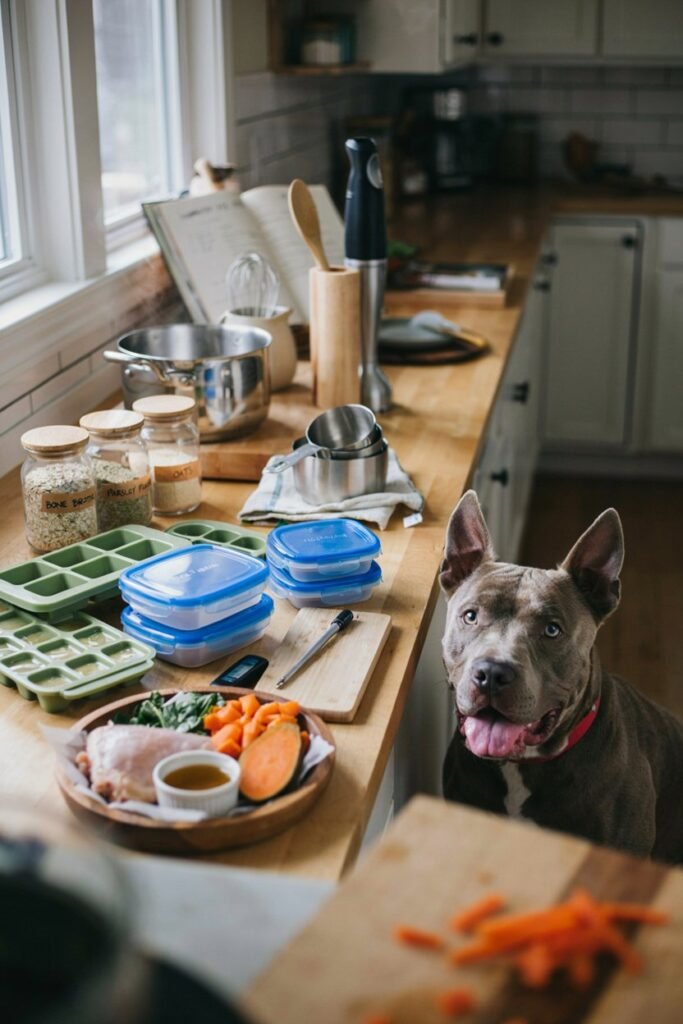
None of these are required, but they make the process faster and the results more consistent:
- Measuring cups and spoons, for accurate portioning
- A small saucepan, for stovetop recipes
- A whisk, for smoother, lump-free gravy
- An immersion blender, for pureeing vegetables directly in the pot
- Silicone freezer trays, for portioning gravy into single-serving cubes
- Glass storage jars, for refrigerated batches
- Airtight storage containers, for freezer batches
- A meat thermometer, for confirming meat is fully cooked before shredding
The Recipes
Every recipe below follows the same format: what it’s best for, how to make it, how to store it, and who it’s suitable for.
Portion sizes are approximate and should be adjusted based on your dog’s size, activity level, and any veterinary guidance you’ve received.
1. Chicken Bone Broth Gravy
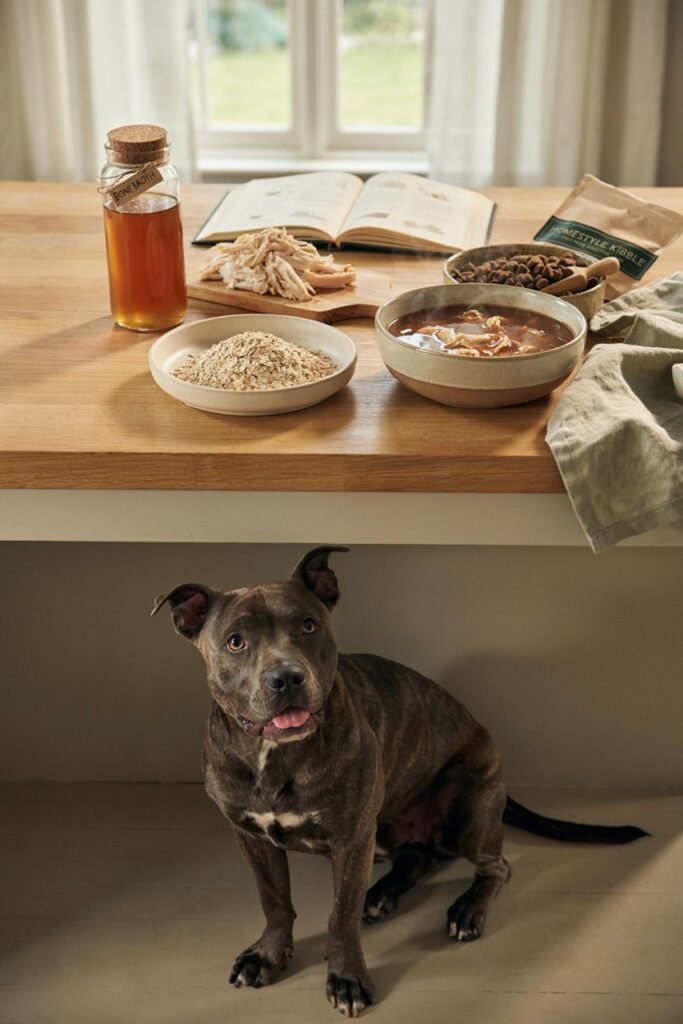
Best for: Senior dogs, joint support
Prep time: 10 minutes Cook time: 20 minutes
Ingredients
- 2 cups unsalted chicken bone broth
- 1/2 cup cooked, shredded chicken breast
- 1 tbsp plain cooked oats (as a thickener)
Instructions
- Warm the bone broth in a saucepan over low heat.
- Stir in the cooked oats and simmer for 5 minutes until slightly thickened.
- Add shredded chicken and simmer another 2 minutes.
- Cool to room temperature before serving.
Storage: Refrigerate up to 4 days in a sealed container. Freezing: Freeze in silicone trays for up to 2 months; thaw a cube at a time.
Estimated calories: ~25–30 per 2 tbsp serving When to serve: Poured warm over dry kibble at mealtime Suitable for: Small, medium, and large dogs Substitutions: Swap chicken for turkey if preferred Vet note: Bone broth is generally safe, but check with your vet before adding it regularly if your dog has kidney disease.
2. Turkey and Sweet Potato Gravy
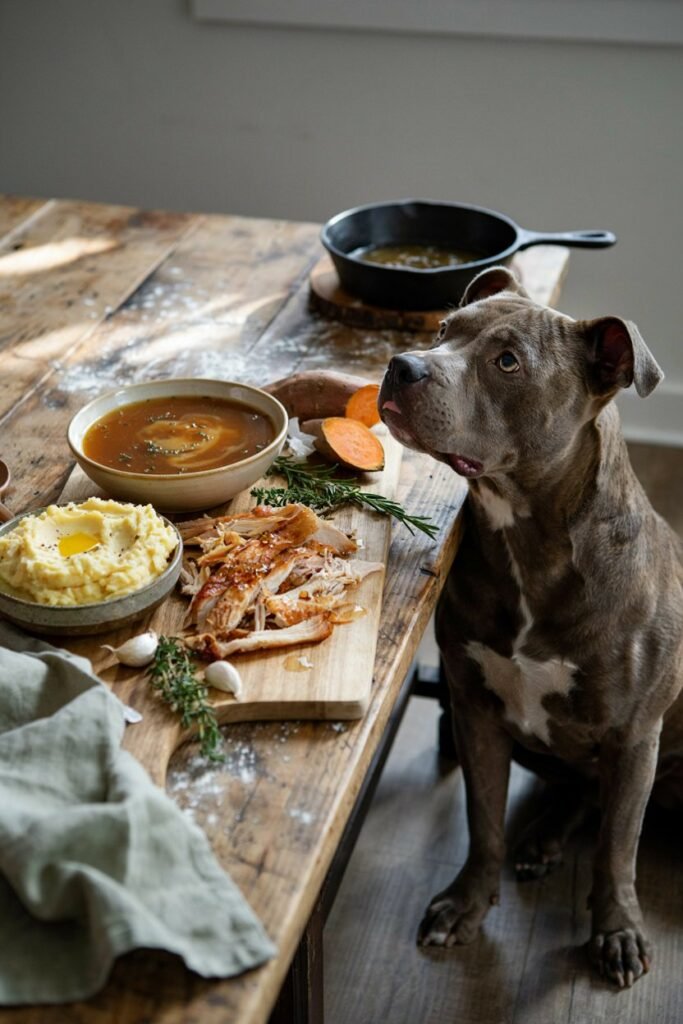
Best for: Everyday use, dogs needing extra fiber
Prep time: 10 minutes Cook time: 15 minutes
Ingredients
- 1 1/2 cups unsalted chicken or turkey broth
- 1/2 cup mashed cooked sweet potato
- 1/4 cup cooked, shredded turkey
Instructions
- Heat broth in a saucepan over medium-low heat.
- Whisk in mashed sweet potato until smooth.
- Stir in shredded turkey and simmer for 3–4 minutes.
- Let cool before serving.
Storage: Refrigerate up to 4 days. Freezing: Freeze in individual portions for up to 2 months.
Estimated calories: ~35 per 2 tbsp serving When to serve: Great as a daily topper Suitable for: Small, medium, and large dogs Substitutions: Pumpkin puree can replace sweet potato Vet note: A gentle, well-tolerated recipe suitable for most healthy dogs.
3. Pumpkin Gravy for Sensitive Stomachs
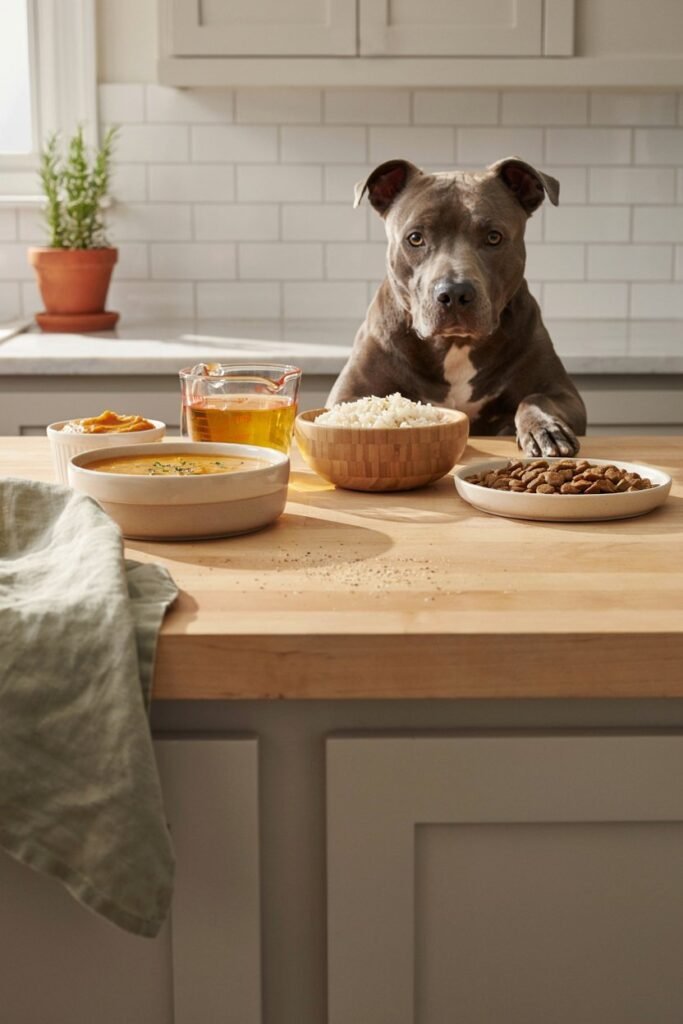
Best for: Dogs with sensitive digestion
Prep time: 5 minutes Cook time: 10 minutes
Ingredients
- 1 cup unsalted chicken broth
- 1/2 cup plain pumpkin puree (not pie filling)
- 1 tbsp plain cooked rice
Instructions
- Combine broth and pumpkin puree in a saucepan over low heat.
- Whisk until fully blended and smooth.
- Stir in cooked rice and simmer 3–4 minutes.
- Cool before serving.
Storage: Refrigerate up to 4 days. Freezing: Freezes well for up to 2 months. Estimated calories: ~20 per 2 tbsp serving When to serve: Especially useful after a bout of loose stool or digestive upset Suitable for: Small, medium, and large dogs Substitutions: None needed, this recipe is intentionally simple Vet note: Plain pumpkin is a commonly recommended home remedy for mild digestive upset, but persistent issues should always be checked by a vet.
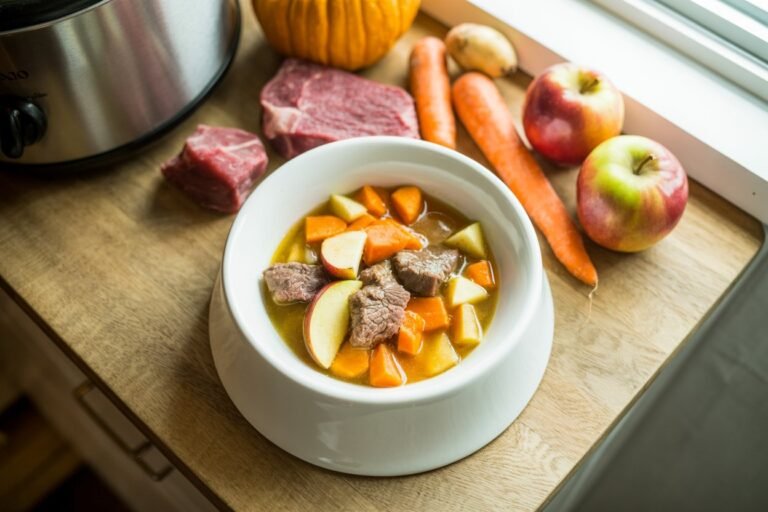
4. Beef and Vegetable Gravy
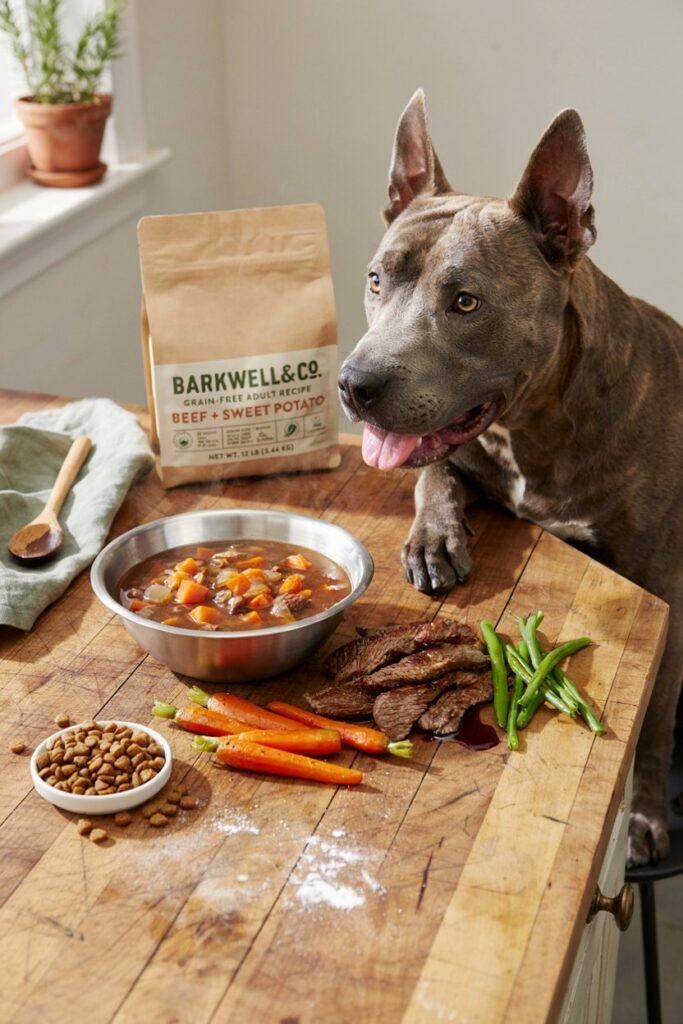
Best for: High-energy or working dogs needing extra protein
Prep time: 10 minutes Cook time: 20 minutes
Ingredients
- 1 1/2 cups unsalted beef broth
- 1/4 cup lean cooked ground beef, drained of fat
- 2 tbsp pureed cooked carrots
- 2 tbsp pureed cooked green beans
Instructions
- Heat broth over medium-low heat.
- Stir in pureed carrots and green beans.
- Add cooked beef and simmer 5 minutes.
- Cool before serving.
Storage: Refrigerate up to 4 days. Freezing: Freezes well for up to 2 months. Estimated calories: ~40 per 2 tbsp serving When to serve: Best for active dogs with higher calorie needs Suitable for: Medium and large dogs; use smaller portions for small breeds Substitutions: Lean ground turkey can replace beef for a lower-fat version Vet note: Beef is higher in fat than chicken or turkey; not ideal for dogs prone to pancreatitis.
5. Salmon Gravy for Skin and Coat
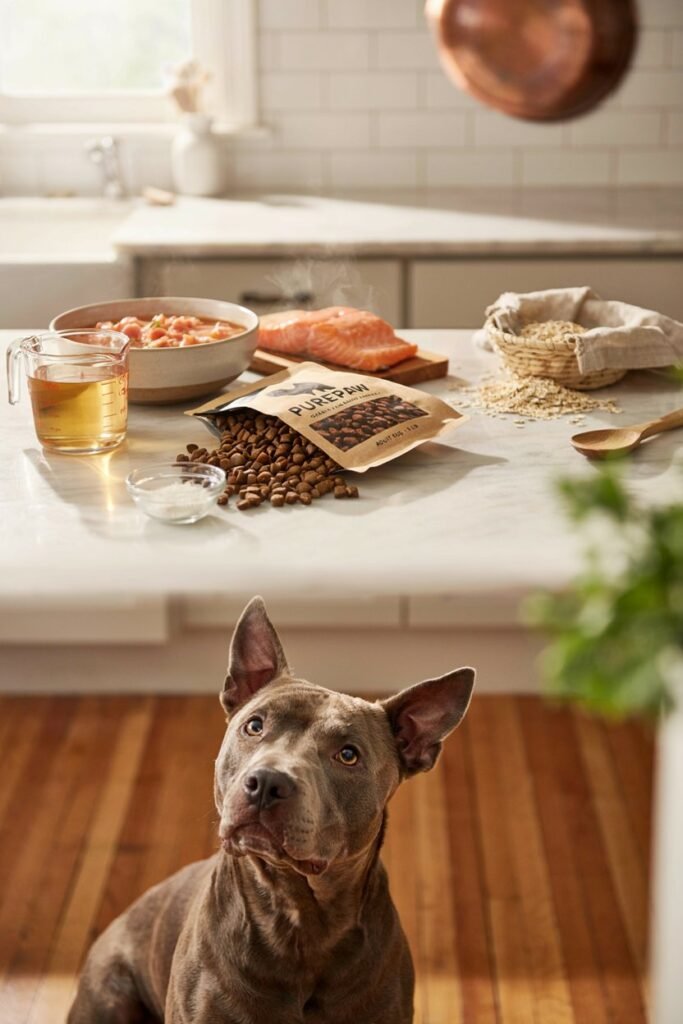
Best for: Dogs with dry skin or dull coats
Prep time: 10 minutes Cook time: 15 minutes
Ingredients
- 1 cup unsalted vegetable or chicken broth
- 1/4 cup cooked, flaked salmon (no bones, no seasoning)
- 1 tbsp plain cooked oats
Instructions
- Warm broth over low heat.
- Stir in oats and simmer until slightly thickened.
- Fold in flaked salmon and warm through for 2 minutes.
- Cool before serving.
Storage: Refrigerate up to 3 days (fish-based recipes spoil faster). Freezing: Freezes well for up to 6 weeks. Estimated calories: ~30 per 2 tbsp serving When to serve: A few times a week rather than daily, due to fish content Suitable for: Small, medium, and large dogs Substitutions: Canned salmon packed in water can be used in place of fresh Vet note: Always confirm salmon is fully cooked and completely bone-free.
6. Slow Cooker Chicken Gravy (Big Batch)
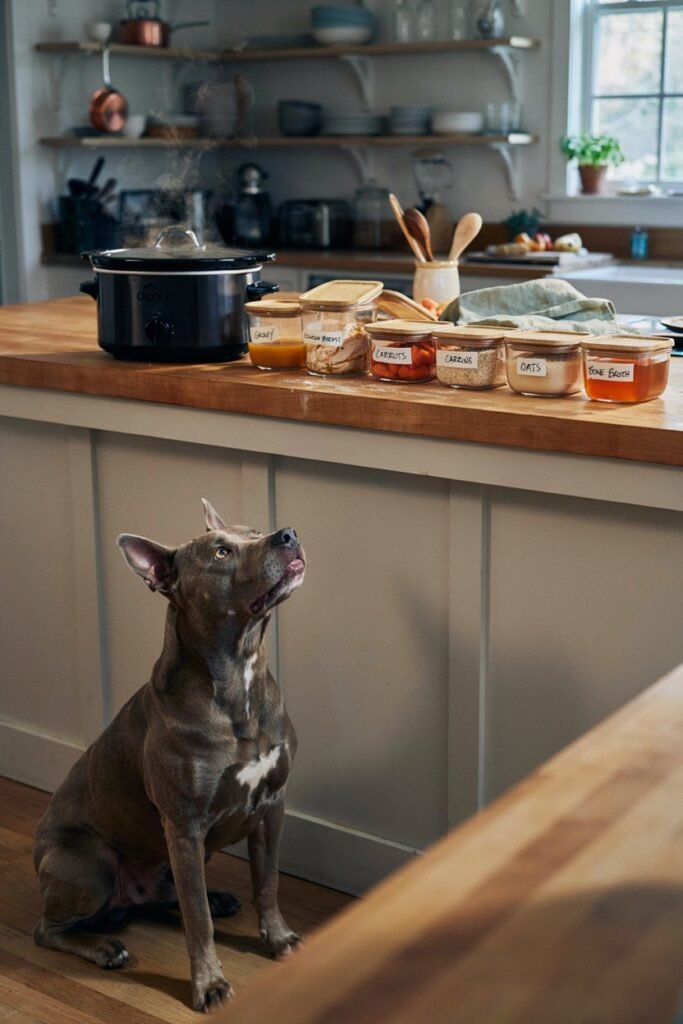
Best for: Households wanting to prepare a week’s worth at once
Prep time: 10 minutes Cook time: 4 hours (low)
Ingredients
- 4 cups unsalted chicken broth
- 1 lb boneless, skinless chicken breast
- 1/2 cup pureed cooked carrots
- 2 tbsp plain oats
Instructions
- Add broth and chicken to a slow cooker on low for 4 hours.
- Remove chicken, shred, and return to the pot.
- Stir in pureed carrots and oats.
- Cook uncovered for 15 more minutes to thicken slightly.
- Cool completely before portioning.
Storage: Refrigerate up to 4 days. Freezing: Freezes well for up to 2 months; ideal for batch freezing in trays. Estimated calories: ~30 per 2 tbsp serving When to serve: Daily topper, portioned from the freezer Suitable for: Small, medium, and large dogs Substitutions: Turkey breast works equally well Vet note: Great option for multi-dog households due to the larger yield.
7. Instant Pot Bone Broth Gravy
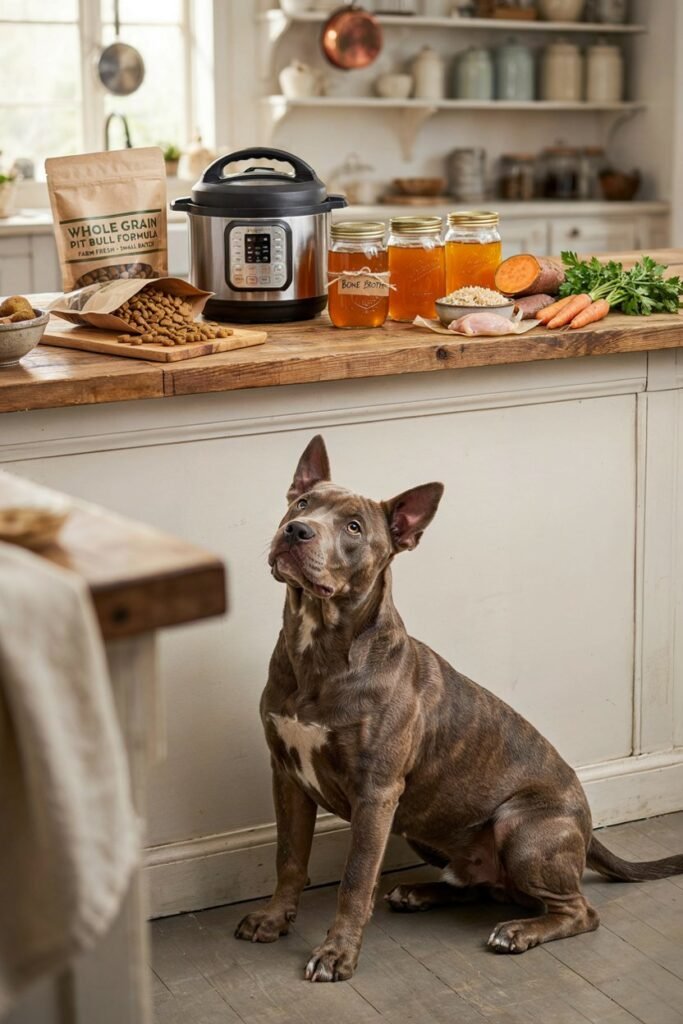
Best for: Fast prep with maximum nutrient extraction
Prep time: 10 minutes Cook time: 45 minutes (pressure cook) + natural release
Ingredients
- 2 lbs chicken bones (raw or cooked, no seasoning)
- 6 cups water
- 1 tbsp plain cooked rice per serving (added after)
Instructions
- Add bones and water to the Instant Pot.
- Pressure cook on high for 45 minutes, then allow a full natural release.
- Strain the broth and discard solids.
- Refrigerate broth; a layer of fat will rise to the top and can be skimmed off.
- Warm individual servings and stir in cooked rice as a thickener before serving.
Storage: Refrigerate up to 5 days. Freezing: Freezes exceptionally well for up to 3 months.
Estimated calories: ~15 per 2 tbsp serving (broth only, before additions) When to serve: As a base for any of the other recipes above Suitable for: Small, medium, and large dogs Substitutions: Turkey or beef bones can replace chicken bones Vet note: Skimming the fat layer is especially important for dogs prone to pancreatitis.
8. Weight Management Gravy (Low Calorie)
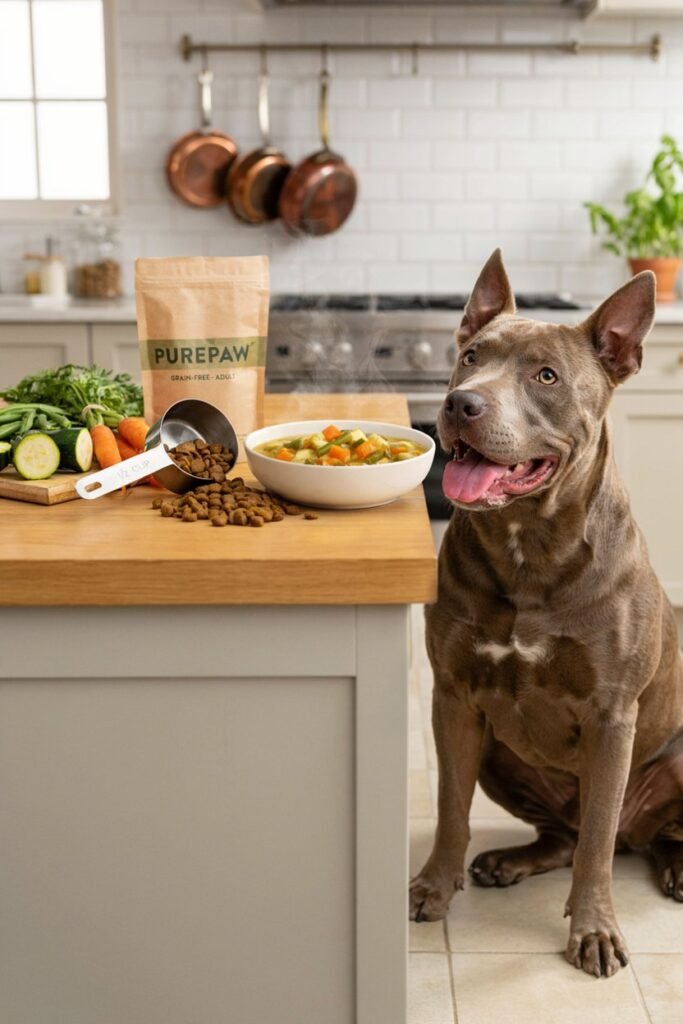
Best for: Overweight dogs needing meal volume without added calories
Prep time: 10 minutes Cook time: 10 minutes
Ingredients
- 1 1/2 cups unsalted vegetable broth
- 1/4 cup pureed cooked green beans
- 1/4 cup pureed cooked carrots
Instructions
- Warm broth over low heat.
- Stir in pureed green beans and carrots.
- Simmer 5 minutes, stirring occasionally.
- Cool before serving.
Storage: Refrigerate up to 4 days. Freezing: Freezes well for up to 2 months. Estimated calories: ~10 per 2 tbsp serving When to serve: Daily, as a low-calorie way to add volume and flavor Suitable for: Small, medium, and large dogs on a calorie-controlled diet Substitutions: Zucchini puree can be added for extra bulk Vet note: Pair with a vet-approved weight loss plan rather than using as a standalone solution.
9. Weight Gain Gravy (Calorie-Dense)
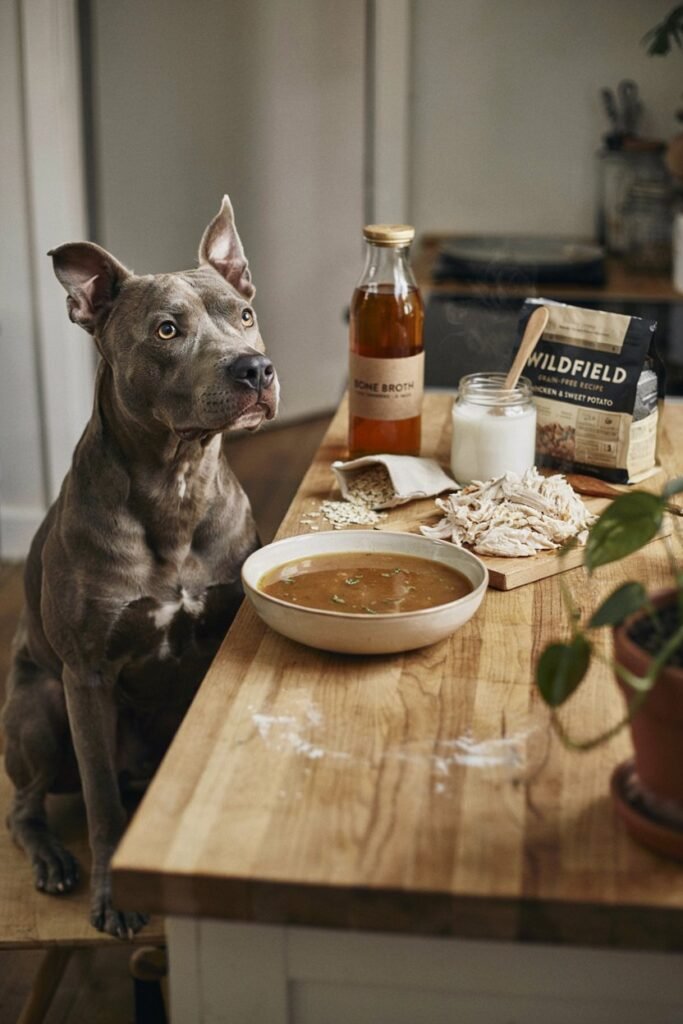
Best for: Underweight dogs or dogs recovering from illness
Prep time: 10 minutes Cook time: 15 minutes
Ingredients
- 1 cup unsalted chicken broth
- 1/2 cup cooked, shredded chicken thigh (skin removed)
- 2 tbsp plain Greek yogurt (unsweetened, no xylitol)
- 1 tbsp plain cooked oats
Instructions
- Warm broth over low heat.
- Stir in oats and simmer until slightly thickened.
- Remove from heat and stir in shredded chicken.
- Once cooled slightly, fold in Greek yogurt.
Storage: Refrigerate up to 3 days. Freezing: Not recommended due to the yogurt content; best made fresh. Estimated calories: ~45 per 2 tbsp serving When to serve: Daily, until healthy weight is reached Suitable for: Small, medium, and large dogs Substitutions: Cottage cheese (plain, low sodium) can replace yogurt Vet note: Weight gain plans should always be guided by a veterinarian, especially for dogs recovering from illness or surgery.
10. Dental Recovery Gravy (Extra Soft)
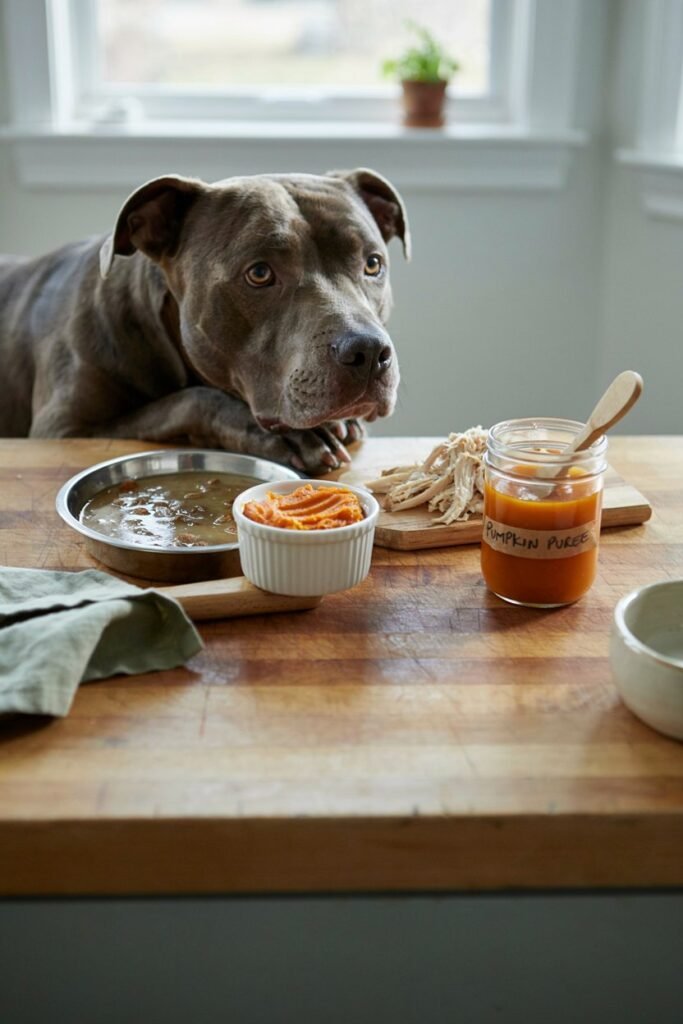
Best for: Dogs recovering from dental surgery or with limited chewing ability
Prep time: 10 minutes Cook time: 15 minutes
Ingredients
- 1 1/2 cups unsalted chicken broth
- 1/2 cup mashed cooked sweet potato
- 1/4 cup finely shredded, well-cooked chicken
Instructions
- Warm broth over low heat.
- Whisk in mashed sweet potato until fully smooth.
- Add finely shredded chicken and simmer 3 minutes.
- Blend with an immersion blender for an extra-smooth, easy-to-eat texture.
- Cool before serving.
Storage: Refrigerate up to 4 days. Freezing: Freezes well for up to 2 months. Estimated calories: ~30 per 2 tbsp serving When to serve: During dental recovery periods, poured generously over softened kibble Suitable for: Small, medium, and large dogs Substitutions: Pumpkin can replace sweet potato Vet note: Follow your vet’s specific post-surgery feeding instructions alongside this recipe.
How to Store Homemade Dog Gravy
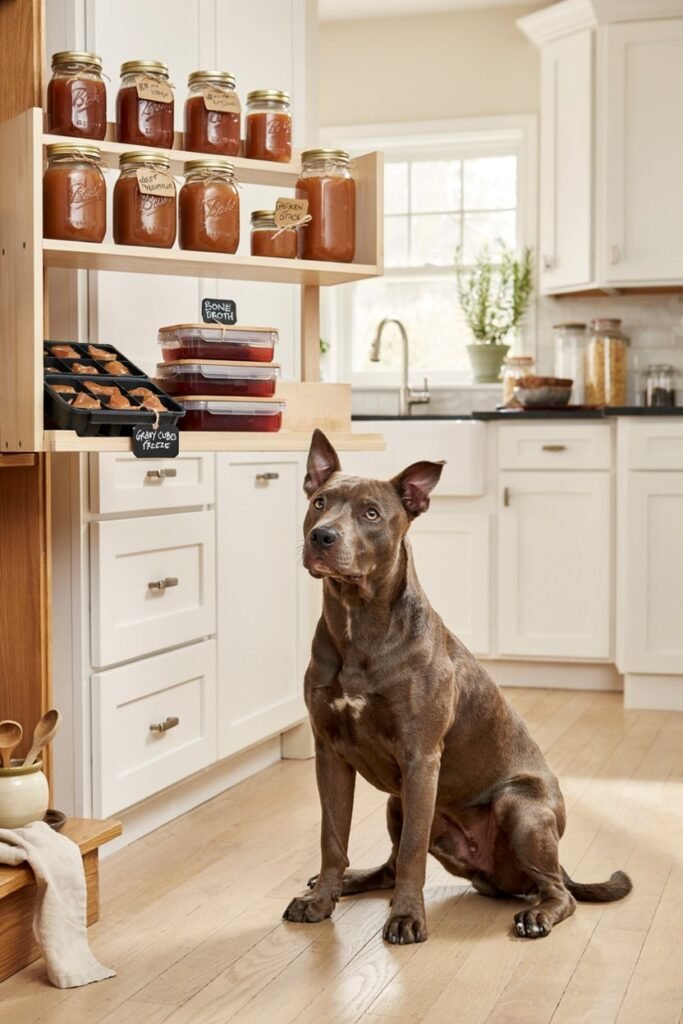
- Refrigerator: Most recipes stay fresh for 3–4 days in a sealed container. Fish-based recipes should be used within 3 days.
- Freezer: Most recipes freeze well for up to 2 months. Yogurt-based recipes don’t freeze well and are best made fresh.
- Best containers: Glass jars or airtight containers for the fridge; silicone freezer trays for portioned, freezer-ready cubes.
- Thawing: Thaw overnight in the refrigerator, or warm gently on the stove or in short microwave bursts, stirring to avoid hot spots.
- Signs it’s spoiled: A sour smell, visible mold, separation that doesn’t re-blend when stirred, or a slimy texture. When in doubt, throw it out.
How Much Gravy Should Dogs Eat?
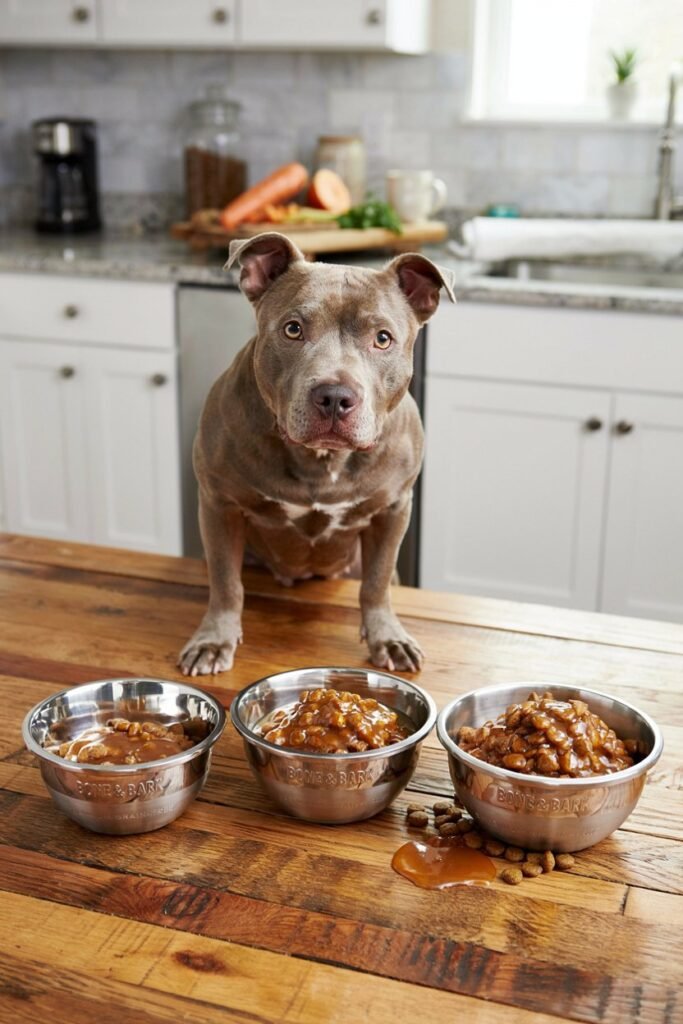
Portion sizes depend heavily on your dog’s size, activity level, and overall diet. As a general starting point:
- Small dogs (under 20 lbs): 1–2 tablespoons per meal
- Medium dogs (20–50 lbs): 2–4 tablespoons per meal
- Large dogs (50+ lbs): 1/4 to 1/2 cup per meal
- Puppies: Start with a very small amount, no more than 1 tablespoon, and only after checking with your vet, since puppies have different nutritional needs
- Senior dogs: Similar to adult portions, but adjust based on activity level and any prescribed diet
Gravy should be treated as a topper, not a meal replacement, unless a veterinarian has specifically recommended otherwise for a dog with low appetite or recovery needs.
Common Mistakes to Avoid
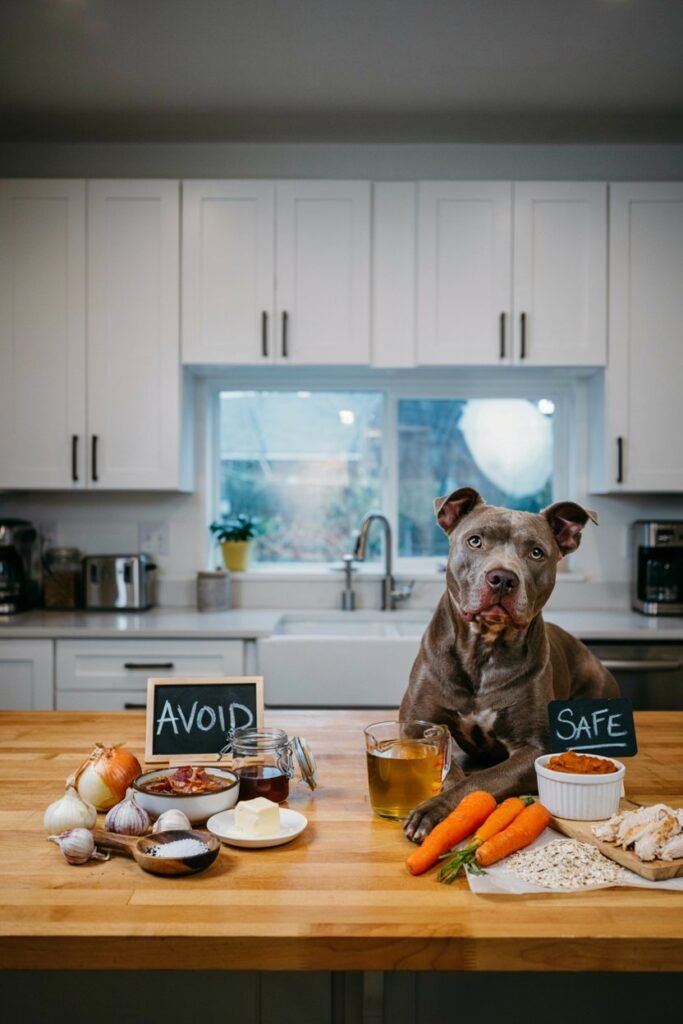
- Using salted or seasoned broth. Always choose unsalted, plain broth, and check the label for hidden onion or garlic powder.
- Adding onion or garlic “for flavor.” Both are toxic to dogs regardless of quantity.
- Making the gravy too thick. Overly thick gravy can be harder to mix evenly into kibble and may reduce the aroma benefit.
- Serving it too hot. Always cool gravy to a safe, warm-to-room temperature before serving.
- Overfeeding. Gravy adds calories; adjust regular meal portions slightly if you’re using gravy daily.
- Using leftovers from your own dinner. Human gravy almost always contains salt, butter, onion, or seasoning blends that aren’t safe for dogs.
Frequently Asked Questions
Can puppies eat homemade gravy? In small amounts, yes, but puppies have different caloric and nutritional needs than adult dogs. Check with your vet before introducing any homemade topper.
Can dogs eat beef gravy? Plain, unsalted, homemade beef gravy without onion, garlic, or seasoning is generally safe in moderation. Store-bought beef gravy is usually not safe due to sodium and seasoning content.
Can I freeze dog gravy? Most broth and vegetable-based recipes freeze well for up to two months. Yogurt-based recipes are best made fresh and not frozen.
Can dogs have cornstarch? Small amounts used as a thickener are generally considered safe, but plain oats or rice are gentler, more nutritious alternatives.
Can dogs eat flour? Plain flour in small amounts isn’t toxic, but it offers no nutritional benefit and can be harder to digest than oats or rice.
Can I use chicken stock instead of broth? Yes, as long as it’s unsalted and free of onion, garlic, and added seasoning. Stock and broth can generally be used interchangeably in these recipes.
Can diabetic dogs eat gravy? Only under veterinary guidance. Ingredients like sweet potato and pumpkin affect blood sugar differently than plain broth, so a vet should help tailor the recipe.
Can I use bone broth? Yes, bone broth is a great base for many of these recipes and offers additional joint-support benefits. Confirm it’s unsalted and free of onion or garlic.
How often should I feed gravy? Most healthy dogs can have gravy daily as a topper, in the portions outlined above. Dogs with specific health conditions should follow their vet’s guidance on frequency.
Can homemade gravy replace wet food? No. Gravy is designed to be a topper that adds moisture, aroma, and modest nutrition, not a replacement for a complete and balanced diet.
Final Thoughts
Homemade dog gravy doesn’t need to be complicated to make a real difference.
Even a simple batch of unsalted chicken broth with a few cooked vegetables can turn a bowl of dry kibble into something your dog actually looks forward to, while adding moisture and nutrition along the way.
Start with one recipe that fits your dog’s needs, watch how they respond over the first few days, and adjust the ingredients from there.
And if your dog has any ongoing health condition, loop in your veterinarian before making homemade gravy a regular part of their diet. A small change in the bowl can make a surprisingly big difference at dinnertime.