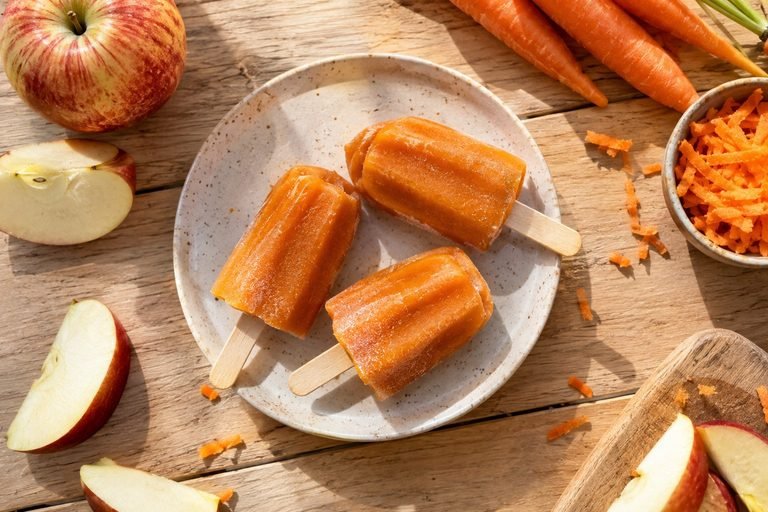
How to Make Carrot Frozen Bone Broth for Dogs
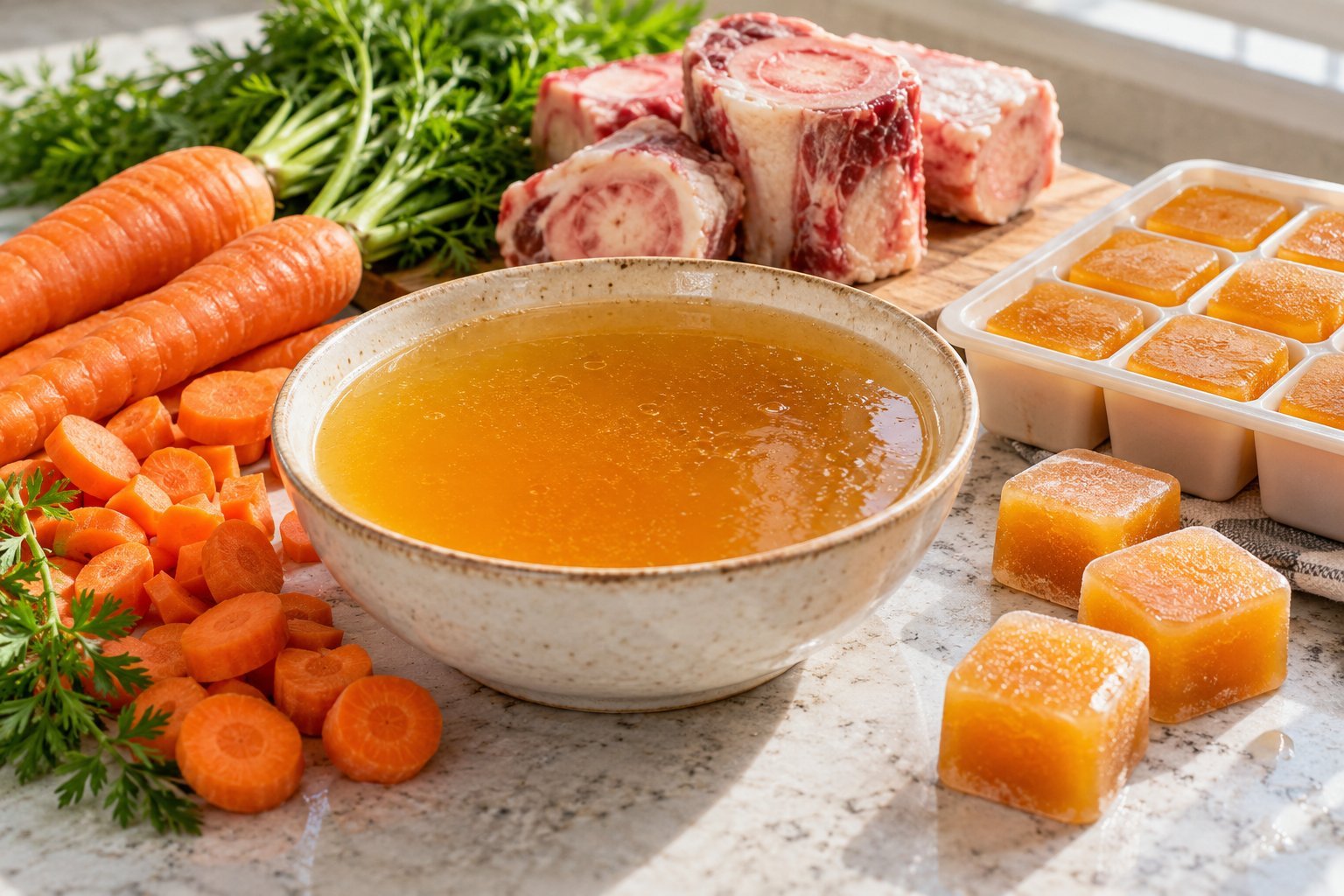
Bone broth is one of those kitchen staples that keeps earning its place in my freezer. It’s simple, inexpensive, and my dog treats it like liquid gold.
This version combines bones, sweet carrots, and a slow simmer to create a plain, flavorful broth that can be frozen into small cubes or pops.
I like having a batch ready because it gives me a simple way to add a little moisture to a meal or offer a cool treat on a warm day.
The recipe does take time, but most of that time is hands-off simmering and chilling. The key is keeping the ingredients dog-friendly, straining the finished broth carefully, and removing excess fat before freezing.
Once the broth is ready, you can portion it into molds that suit your dog’s size instead of freezing one large container that needs to be thawed all at once.
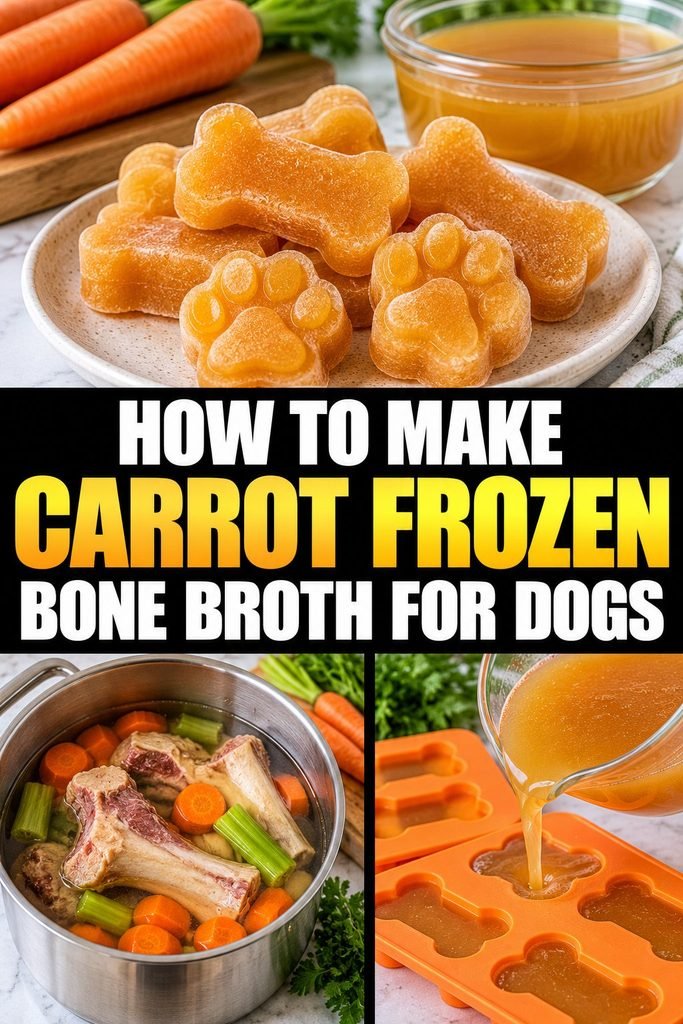
If you’ve already made my Carrot Brothsicle Frozen Dog Treats, think of this post as the from scratch version.
Instead of starting with store bought broth, you’ll make a rich, dog safe broth at home, which also gives you a base for recipes like my Best Homemade Dog Gravy and Homemade Beef Bone Broth Gummies for Dogs.
You can keep the finished broth plain and use it in several ways, which makes the long cooking time more worthwhile.
Just remember that it is an extra for your dog’s usual complete diet, not a substitute for balanced meals.
Why You’ll Love This Carrot Frozen Bone Broth
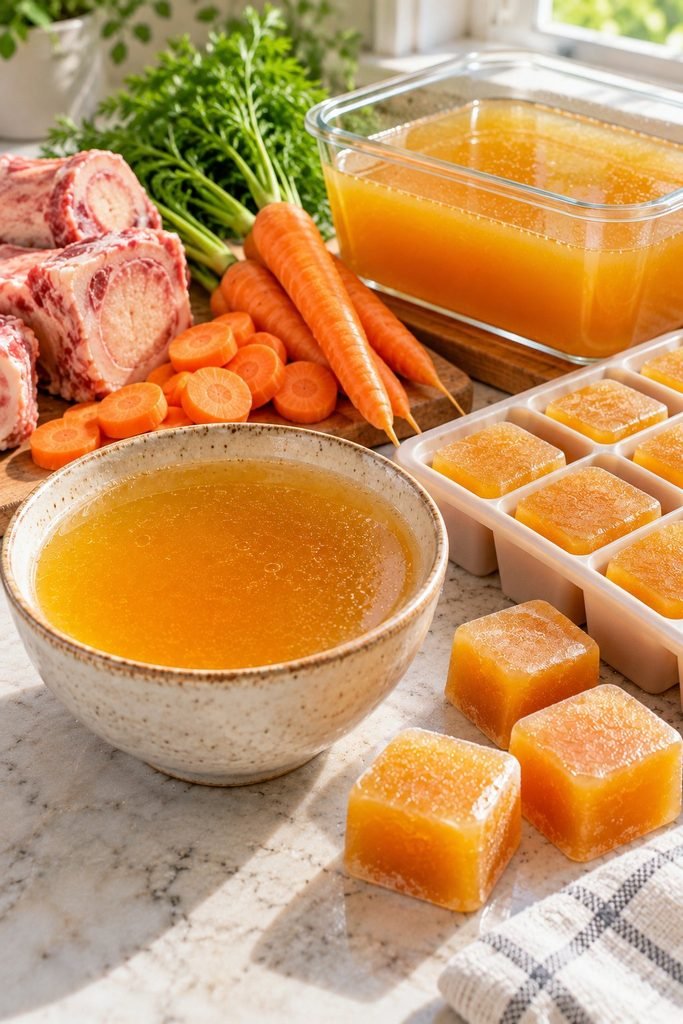
A few reasons this recipe is worth the simmer. The ingredient list is short, and you can make a larger batch when you already have the pot out.
After chilling and removing the fat, divide the broth into portions so you can thaw only what you need.
Made from scratch. You control every ingredient, with no onion, garlic, or added salt. That makes it easier to avoid ingredients that often appear in human broth recipes but are unsuitable for dogs.
Naturally sweet. Carrots add flavor and color without sugar. They bring a mild vegetable flavor that pairs well with either beef or chicken bones.
Hydrating. A fun way to add extra liquid to your dog’s routine. It should not replace fresh drinking water, but a small amount of broth can make a meal more appealing.
Hands off. Most of the work is just letting it simmer gently. Check the pot periodically and add water if needed to keep the bones covered.
Freezer friendly. One big batch gives you plenty of small portions. The exact number depends on the size of your molds and how much broth the bones yield.
Versatile. Serve it frozen in an appropriately sized portion, thawed over food, or as a base for other dog-friendly recipes. You can also freeze a few larger portions for meal toppers.
Is Bone Broth Safe for Dogs?
Homemade bone broth can be a safe, tasty addition for many dogs when it is prepared carefully and served in moderation.
Keep the recipe simple: bones, carrots, water, and optional apple cider vinegar. Do not add ingredients just because they are common in human soups, and remember that individual dogs may have different dietary needs.
No onion or garlic. Both are toxic to dogs and should not be added at any stage. Check labels if you use any prepared ingredient, and do not use leftover soup or seasoned stock as the base.
No salt or seasoning. Leave out salt, stock cubes, seasoning blends, and spicy ingredients. A plain broth is easier to portion and less likely to contain unnecessary additives.
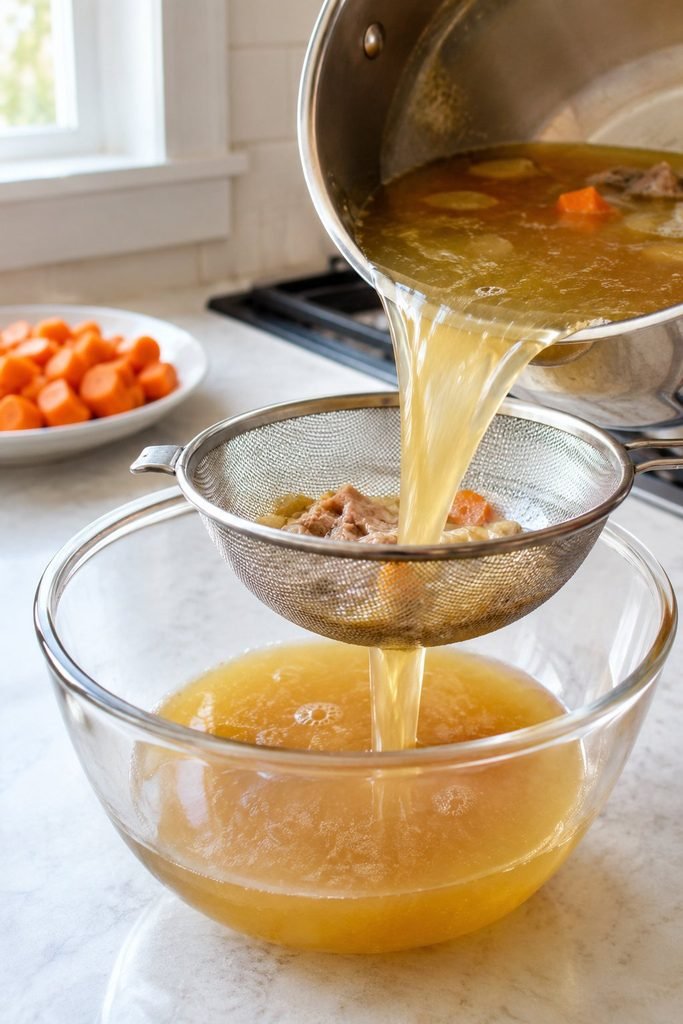
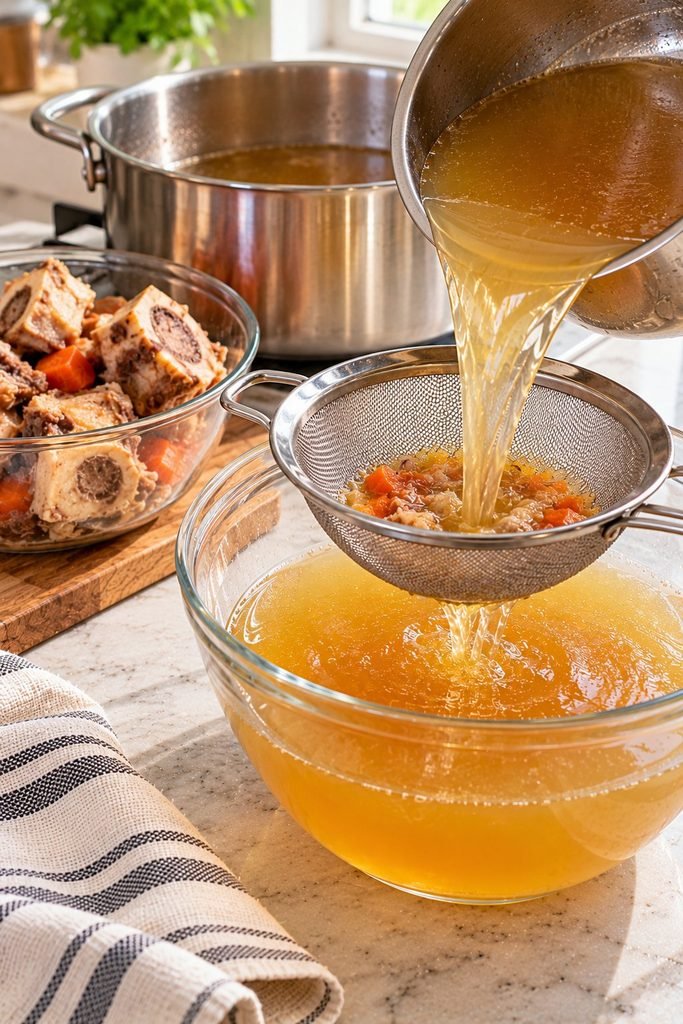
Strain everything. Cooked bones can splinter and must never be served to your dog. Use a fine mesh sieve, then cheesecloth if available, and inspect the strained liquid for any fragments. Discard every bone and any small hard pieces safely.
Skim the fat. Rich broth can contain substantial fat, which may upset digestion and can be a concern for dogs prone to pancreatitis. Chill the broth until the fat forms a firm layer on top, then lift it off before freezing.
Use in moderation. Treat bone broth as a topper or occasional treat, not a meal replacement. It is not a complete and balanced diet, even when made from wholesome ingredients.
If you’d like a lighter option, my Chicken Broth Dog Treats Recipe uses a milder base.
Ingredients You’ll Need
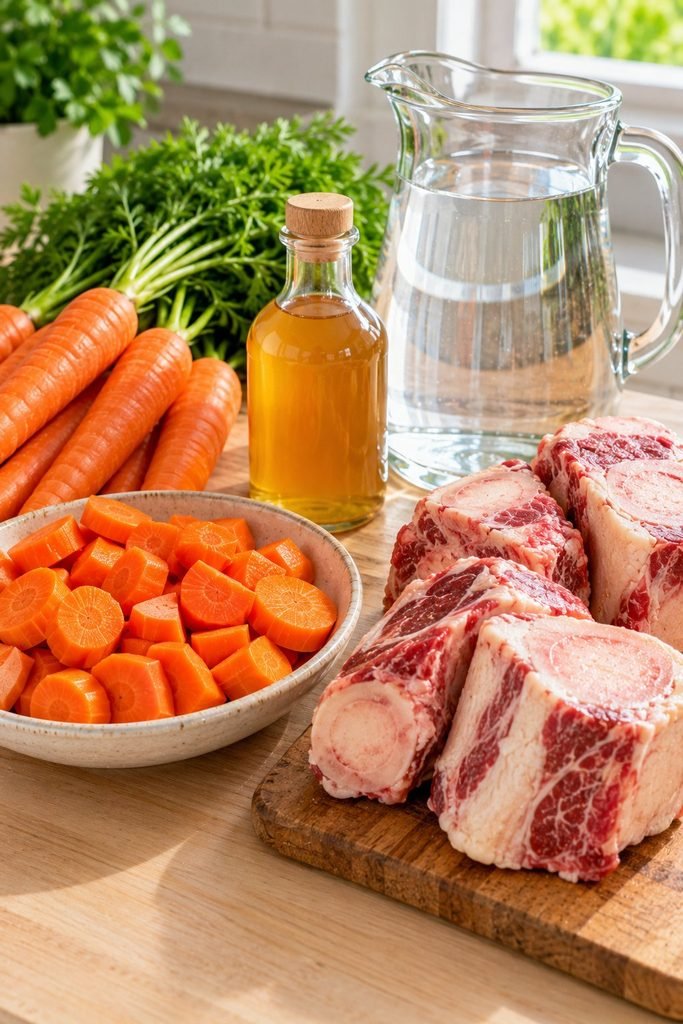
Here’s what goes into the pot and what each ingredient contributes. Choose bones from a reliable source and use a pot large enough to hold them with water covering the ingredients. Avoid bones that have been heavily seasoned or cooked with onion or garlic.
Beef or chicken bones form the base. Beef knuckle bones and marrow bones can provide body, while a chicken carcass or feet can make a lighter broth. Use a mixture if you like, but keep the finished broth plain and strain it thoroughly.
Carrots add natural sweetness, nutrients, and a warm orange tint. Chop them into manageable pieces so they fit easily in the pot and release their flavor during the simmer.
Apple cider vinegar, optional, adds acidity to the cooking water. It is not essential to the recipe, so you can leave it out if your dog does not tolerate it well.
Water covers everything and becomes the broth. Start with enough to cover the bones by about an inch, then top up if needed during a long stovetop simmer.
Ingredient List
- 2 to 3 pounds beef or chicken bones
- 2 cups chopped carrots
- 1 tablespoon apple cider vinegar, optional
- About 12 cups water, enough to cover the bones
How to Make Carrot Frozen Bone Broth for Dogs
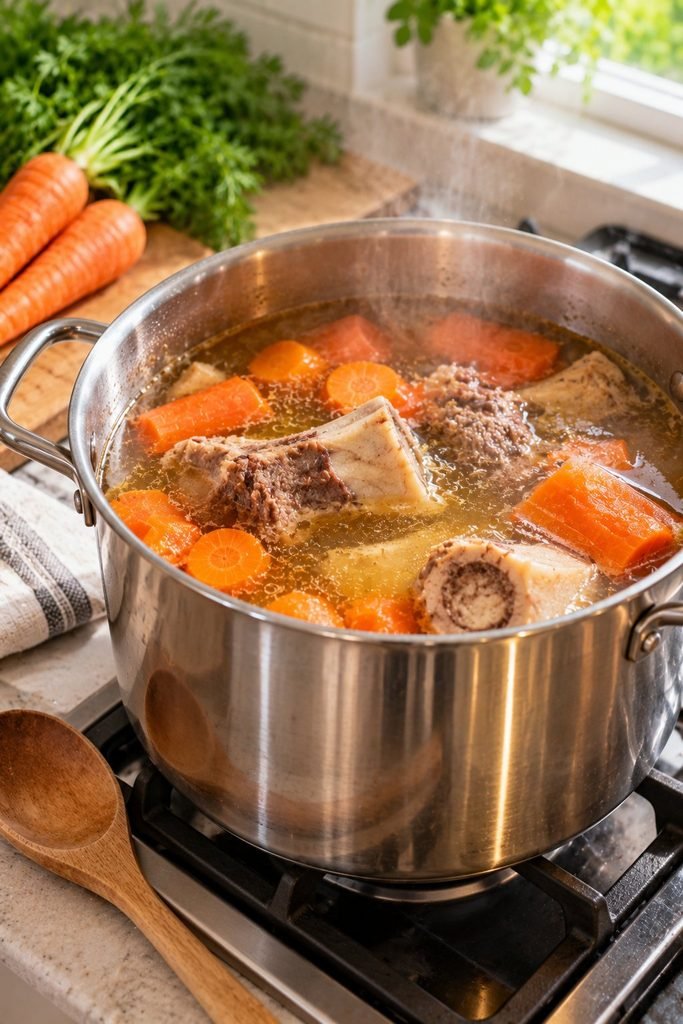
Set aside time for cooling, refrigeration, and freezing as well as cooking. Keep the pot at a gentle simmer rather than a rolling boil, and never leave a stovetop unattended for long periods.
- Place the bones in a large stockpot or slow cooker. For deeper flavor, roast beef bones at 400°F for 30 minutes first, then transfer them to the pot. Roasting is optional; skip it if you prefer a lighter broth or want to keep preparation simple.
- Add the carrots and vinegar, then cover everything with water by about an inch. Leave enough room at the top of the pot to prevent spills as the liquid heats.
- Bring to a gentle boil, then reduce to the lowest simmer. Skim off any foam from the surface during the early stages. The liquid should bubble lightly, not boil vigorously.
- Simmer, partially covered, for 12 to 24 hours for beef or 8 to 12 hours for chicken. In a pressure cooker, cook for about 2 hours, following the appliance manufacturer’s safety instructions. Cooking time varies with the bones and equipment, so focus on a gentle, steady cook and keep the bones covered with water when using a stovetop or slow cooker.
- Turn off the heat and let the broth cool briefly before handling. Do not leave a large pot sitting at room temperature for an extended period; divide it into smaller, shallow containers if needed to help it cool safely before refrigeration.
- Strain through a fine mesh sieve into a large bowl, then strain again through cheesecloth to catch any small bone fragments. Work carefully, because the liquid may still be hot. Discard all the bones and solids where your dog cannot reach them.
- Refrigerate the broth in shallow, covered containers for several hours, until it is cold and the fat rises and solidifies on top. Smaller containers chill faster than one deep, hot pot.
- Skim off the fat layer and discard it. If the broth still looks very greasy, you can chill it again and remove any remaining hardened fat before portioning.
- Pour the cooled broth into clean silicone molds or ice cube trays and freeze until solid, about 4 to 6 hours. Once frozen, transfer the cubes to a labeled freezer-safe bag or container to save space and keep track of the date.
Getting the Right Result
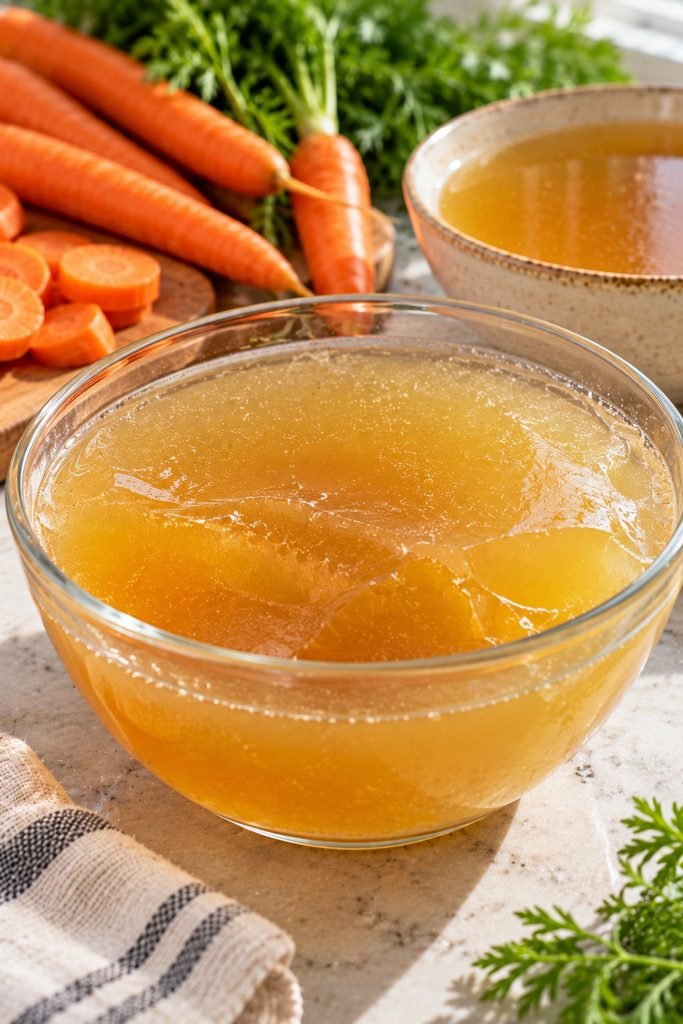
A properly made bone broth may gel when chilled because collagen from the bones has set.
If yours stays liquid, it can still be usable; the result depends on the bones, water ratio, and cooking time.
Gel formation is not a guarantee of nutritional quality, so do not worry if the texture is loose.
If the broth tastes weak, simmer it uncovered for another hour or two to reduce and concentrate it.
For a smoother frozen pop, blend a few of the cooked carrots into the broth before freezing. Make sure no bone fragments are in the blender.
For a clear broth, avoid stirring while it simmers and skim the foam early.
Recipe Variations
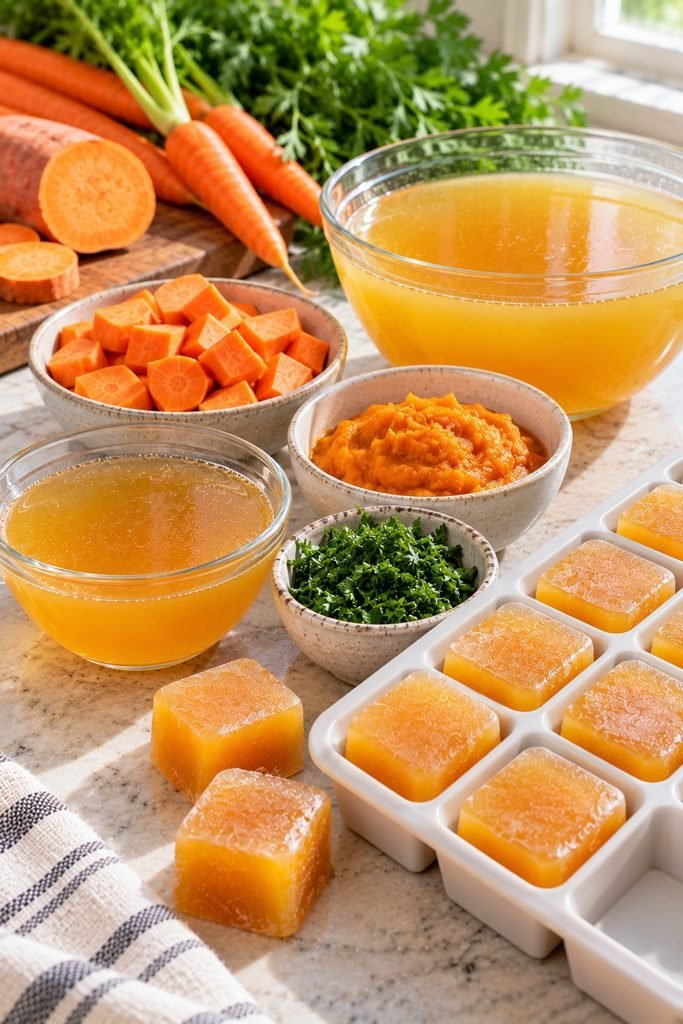
Once you’ve made the base recipe, these are easy to try. Add only plain, dog-appropriate ingredients, and introduce a new variation in a small amount to see how your dog handles it. Freeze variations separately so you can tell them apart.
Carrot and sweet potato. Add half a cup of diced sweet potato for extra sweetness.
Carrot and pumpkin. Stir in a spoonful of plain pumpkin puree before freezing.
Chicken feet broth. Use chicken feet for a gelatin rich, budget friendly option.
Fresh breath cubes. Add a pinch of finely chopped parsley to the molds, like in my Homemade Frozen Fresh Breath Dog Treats.
Crockpot version. Make the broth in a slow cooker, like in my Easy Crockpot Dog Food Recipes.
Common Mistakes to Avoid
A few small choices can make the broth easier to store and safer to serve. Keep these points in mind from the beginning rather than trying to fix the batch after it is finished.
Adding onion, garlic, or salt. Keep it plain.
Skipping the straining step. Always strain thoroughly and discard every bone.
Leaving the fat in. Chill and skim it off.
Boiling too hard. A hard boil makes the broth cloudy and less flavorful, so keep it at a gentle simmer.
Serving too much. Broth is a treat, not a meal.
Giving frozen treats without supervision. Watch your dog while they eat.
How Much Can a Dog Have?
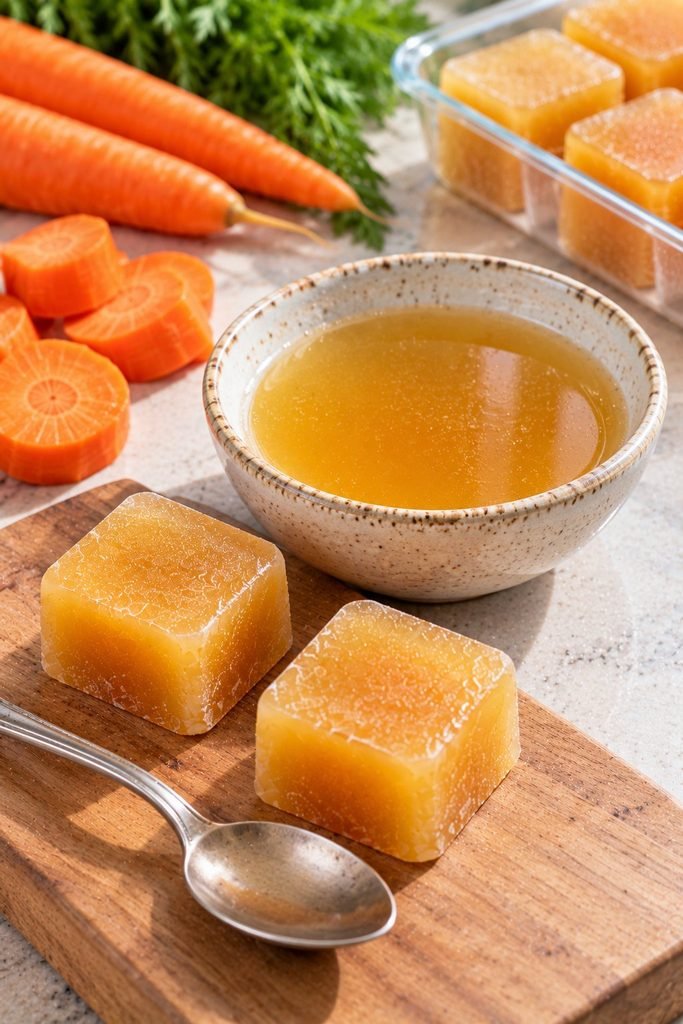
Start with a small portion and see how your dog responds. One or two small broth cubes may be enough for a small dog, while a larger dog may tolerate two to four, depending on cube size and the dog’s overall diet.
As a meal topper, begin with a few tablespoons of thawed broth rather than adding a large amount at once. These are general starting points, not a rule for every dog.
If your dog has a sensitive stomach, kidney or heart disease, pancreatitis history, food restrictions, or takes medication that affects diet, ask your veterinarian what amount is appropriate.
How to Store Frozen Bone Broth
Good storage helps preserve the broth and makes it easier to serve only what you need. Use clean containers, label the date, and avoid repeatedly thawing and refreezing the same batch.
Refrigerator. Store liquid broth in an airtight container for up to 4 days.
Freezer. Freeze in molds or trays, then store the cubes in a sealed bag for up to 3 months.
Always check before serving, and discard anything that smells off. For a handy snack that uses the same broth, see my Simple Carrot Based Dog Treat Recipes for Beginners.
Can You Freeze Bone Broth for Dogs?
Yes. Freezing is a convenient way to portion homemade broth, especially if you only use a little at a time. Small molds make it easy to thaw a single serving instead of opening a large container repeatedly.
- Let the strained, defatted broth cool completely.
- Pour into ice cube trays, silicone molds, or small paper cups.
- Freeze until solid, about 4 to 6 hours.
- Pop the cubes out and store in a labeled freezer bag.
- Serve straight from the freezer, or thaw a few in the fridge to pour over food.
More Homemade Treat Ideas
- Carrot Brothsicle Frozen Dog Treats
- Homemade Beef Bone Broth Gummies for Dogs
- Best Homemade Dog Gravy Recipe
- Homemade Frozen Fresh Breath Dog Treats
- Easy Crockpot Dog Food Recipes
For a wider look at feeding your dog well, check out 7 Healthiest Homemade Dog Foods.
Frequently Asked Questions
These quick answers cover common questions about making, freezing, and serving carrot bone broth. If your dog has a medical condition or a prescribed diet, use your veterinarian’s advice over general serving suggestions.
Is bone broth good for dogs?
Plain, homemade bone broth made without onion, garlic, or salt is generally safe in moderation and many dogs love it.
Can I use store bought bone broth?
Only if it’s low sodium and free of onion and garlic. Read the label carefully, since both show up often.
Can dogs eat the cooked bones?
No, never. Cooked bones can splinter. Discard them after simmering.
Can I use the cooked carrots?
Yes, plain cooked carrots are fine to mash and add to meals, as long as no bone fragments remain.
Why didn’t my broth gel?
Not every batch gels, and that’s okay. More joint rich bones like knuckles and feet produce a firmer gel.
How long does it last?
Up to 4 days in the fridge and up to 3 months in the freezer.
Can puppies have bone broth?
In small amounts, most puppies can have it, but check with your veterinarian first, especially for very young puppies.
A Final Note on Making Bone Broth for Your Dog
There’s something comforting about a pot of broth simmering away, especially when it becomes a batch of simple frozen treats for my dog.
I like portioning the broth into small molds because it makes serving easier and keeps the rest tucked away in the freezer.
Use it as an occasional topper or treat, keep fresh water available, and adjust the portion to your dog’s size and needs.
With careful straining, fat removal, and plain ingredients, this recipe can be a handy addition to your homemade dog-treat routine.