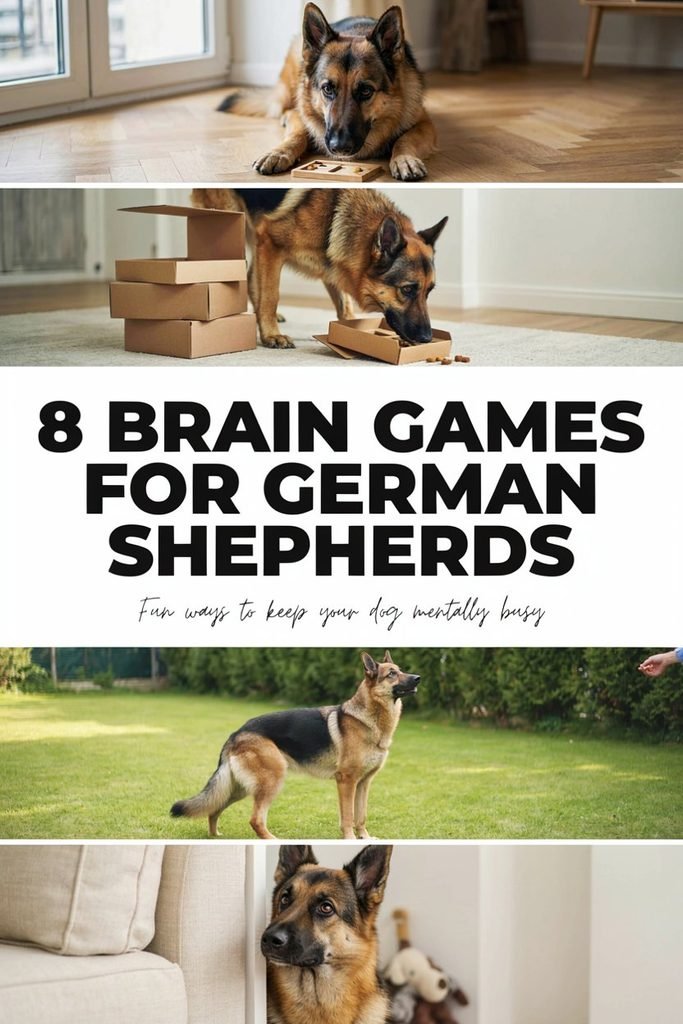
8 Brain Games Every German Shepherd Loves to Play
Your German Shepherd has had a walk, eaten dinner, and still seems ready to patrol the entire house. That’s a perfect opportunity for a brain game.
German Shepherds are intelligent working dogs, and a tired body doesn’t always mean a tired mind.
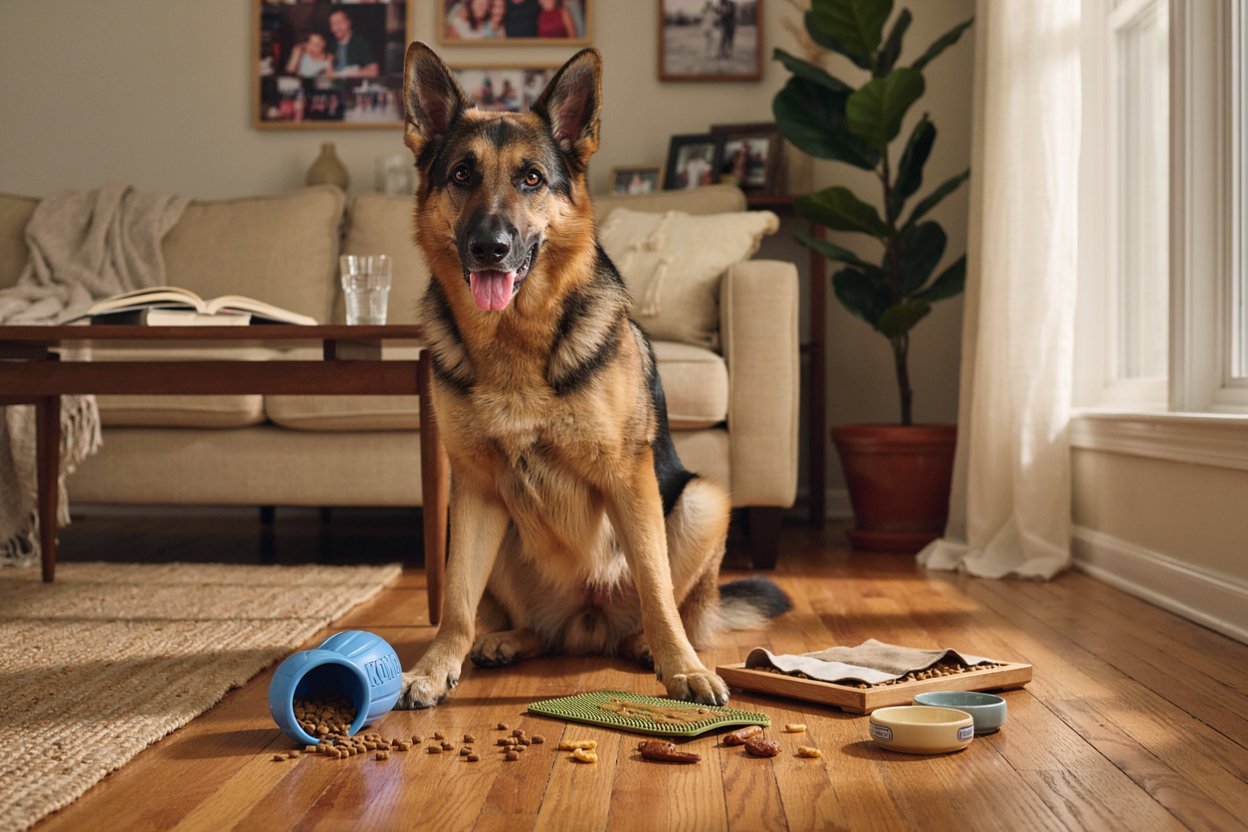
Mental stimulation gives them something productive to focus on, while interactive games encourage problem solving, patience, scent work, impulse control, and engagement with you.
The good news is you don’t need special equipment or a training background to tap into that — just a few household items and ten focused minutes.
Disclaimer
This post may contain affiliate links. As an Amazon Associate, I earn from qualifying purchases at no additional cost to you. I only recommend dog-safe toys and training products that I genuinely find useful for keeping dogs mentally engaged. Always choose toys appropriate for your dog’s size, chewing style, and activity level, supervise play when needed, and consult your veterinarian if you have concerns about your dog’s exercise or enrichment needs.
Shop on Amazon With 50% Discount On Your Orders
- Interactive Dog Puzzle Toy – I use puzzle toys to give dogs a fun way to work for treats and practice problem-solving skills.
- Snuffle Mat for Dogs – I use a snuffle mat to turn treat time into a scent-based activity that keeps dogs searching and engaged.
- Durable Treat-Dispensing Toy – I use treat-dispensing toys to encourage dogs to interact, think, and stay occupied while working for small rewards.
Why German Shepherds Need Mental Stimulation
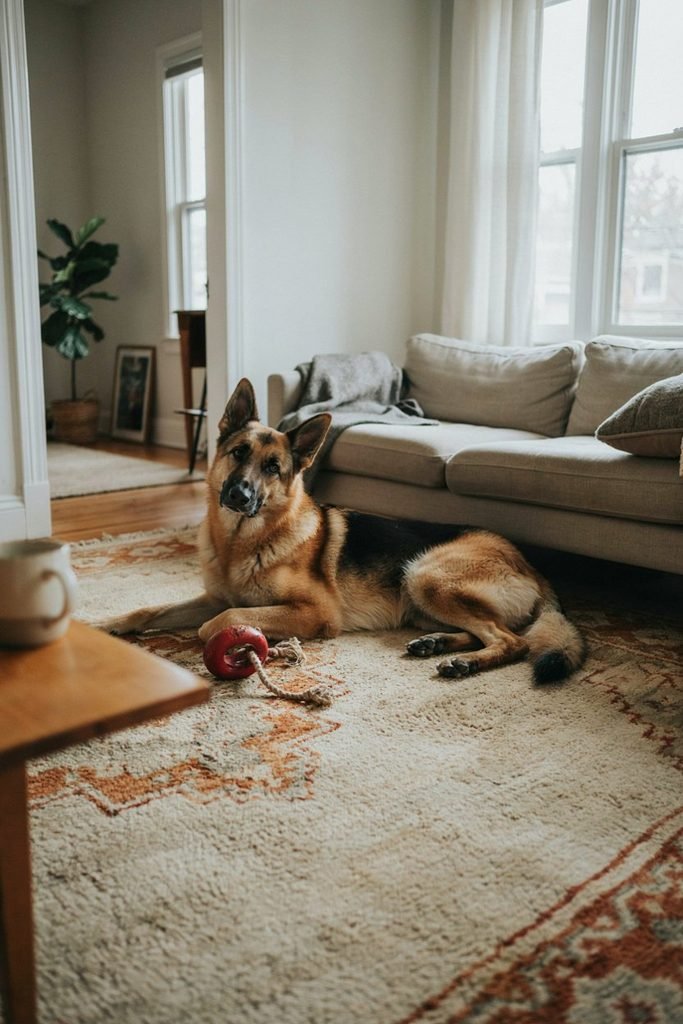
A German Shepherd can become bored even when getting plenty of physical activity. Brain games give that energy somewhere useful to go — think of them as a companion to your walks and training sessions, not a replacement for either.
Regular mental stimulation supports:
- Problem solving and confidence
- Scent exploration
- Impulse control
- Bonding between you and your dog
- Preventing destructive, boredom-driven behavior
- An appropriate outlet for high-energy dogs
Brain games aren’t a cure for behavioral problems, but they complement exercise, training, and a consistent routine. If your GSD’s boredom is showing up as chewing, barking, or other unwanted habits, it’s worth reading through our guide on how to solve dog behavior problems alongside adding these games to your routine — the two work well together.
8 Brain Games Every German Shepherd Can Enjoy
1. Find the Hidden Treat
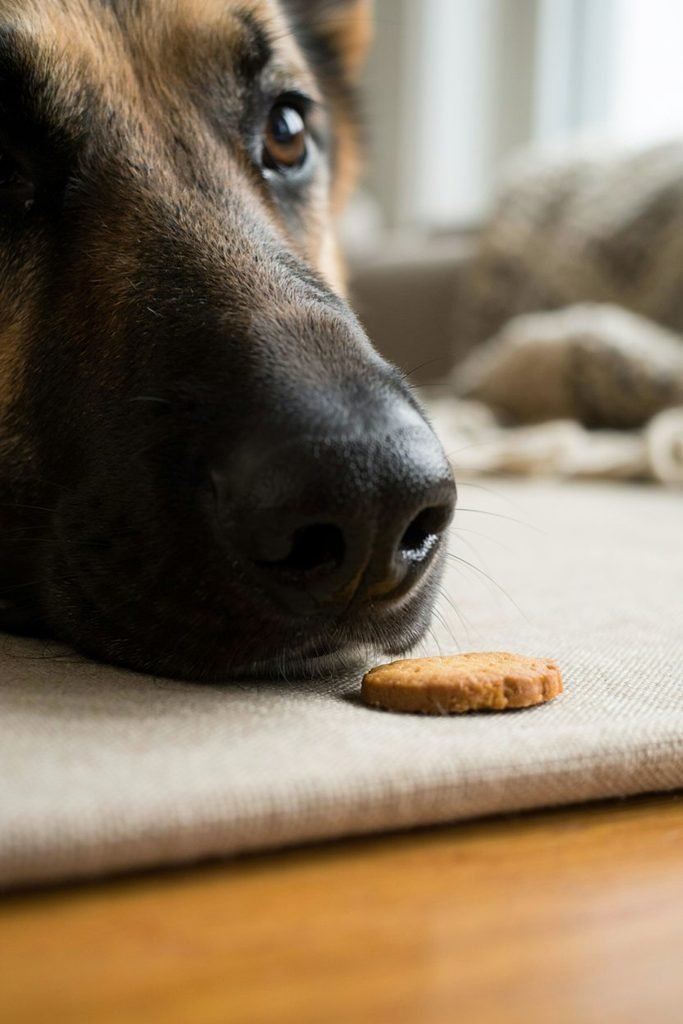
What you need: Small dog treats, or part of your dog’s normal daily food.
How to play: Start by hiding a treat somewhere easy to find. Encourage your German Shepherd to search for it. Once your dog understands the game, gradually make the hiding spots more challenging — behind a chair leg, under a folded towel, on a low shelf.
Why German Shepherds love it: It uses their nose and gives them a problem to solve, which is exactly the kind of “job” this breed was built for.
Make it harder: Use several hiding locations at once, and eventually ask your dog to wait in another room while you hide the treats.
If you want a treat that holds up well to being hidden and handled, our carrot-based dog treats are firm, low-mess, and easy to portion out for games like this.
2. The Muffin Tin Puzzle
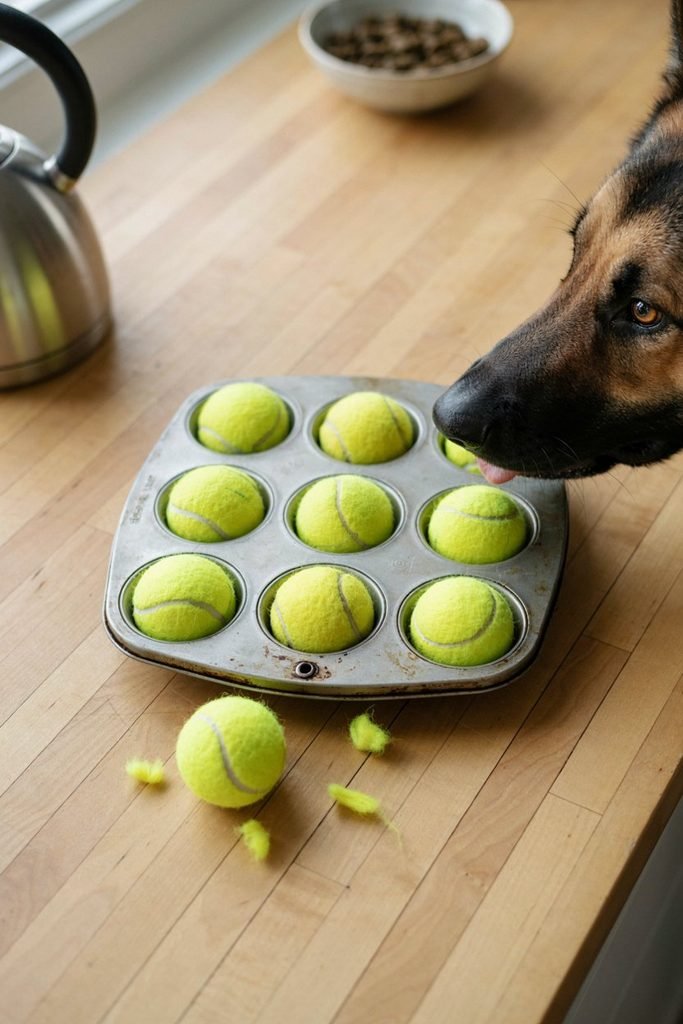
Place treats in the wells of a muffin tin, then cover each one with a tennis ball or another safe, dog-appropriate object. Your dog has to move the covers to get to the reward.
Start with just a few covered wells so your dog doesn’t get frustrated early on. If your dog simply grabs and destroys the covers rather than nudging them aside, switch to sturdier objects and supervise closely — anything that could be chewed into small pieces should come off the table.
As your dog improves, add more covered wells and mix in a few empty ones to keep them guessing.
3. Which Cup Has the Treat?
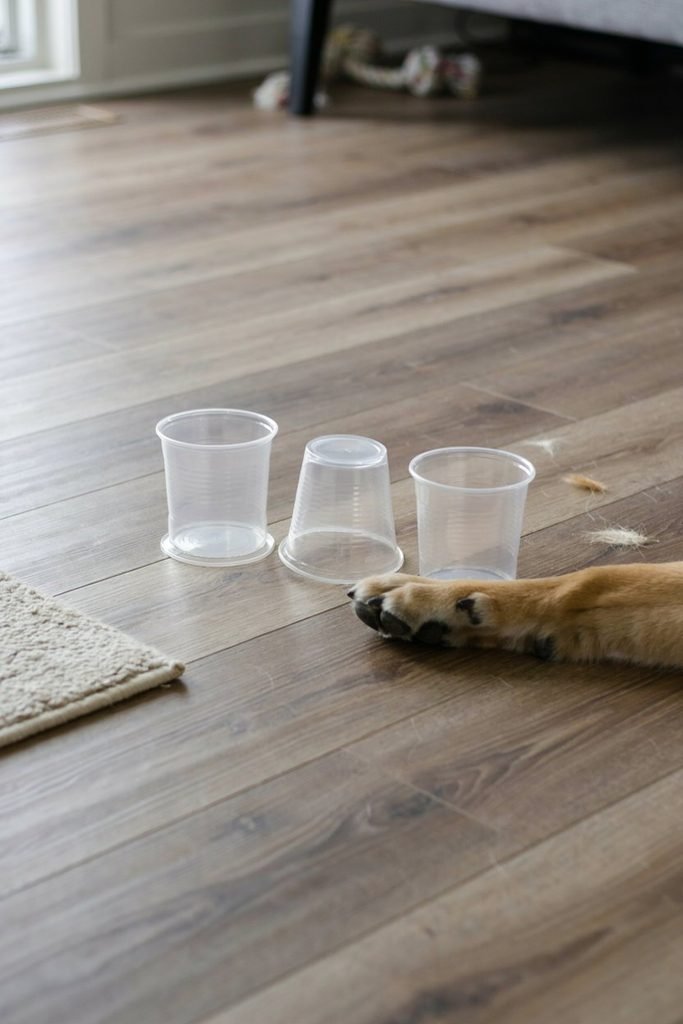
This game needs almost no equipment. Place a treat beneath one of several cups while your dog watches, then let them figure out which cup hides the reward.
Increase the challenge over time by:
- Adding more cups
- Moving the cups around after hiding the treat
- Increasing the distance between your dog and the cups
- Asking your dog to wait a few seconds before searching
It’s a game you can start playing immediately with items already in your kitchen.
4. DIY Snuffle Game
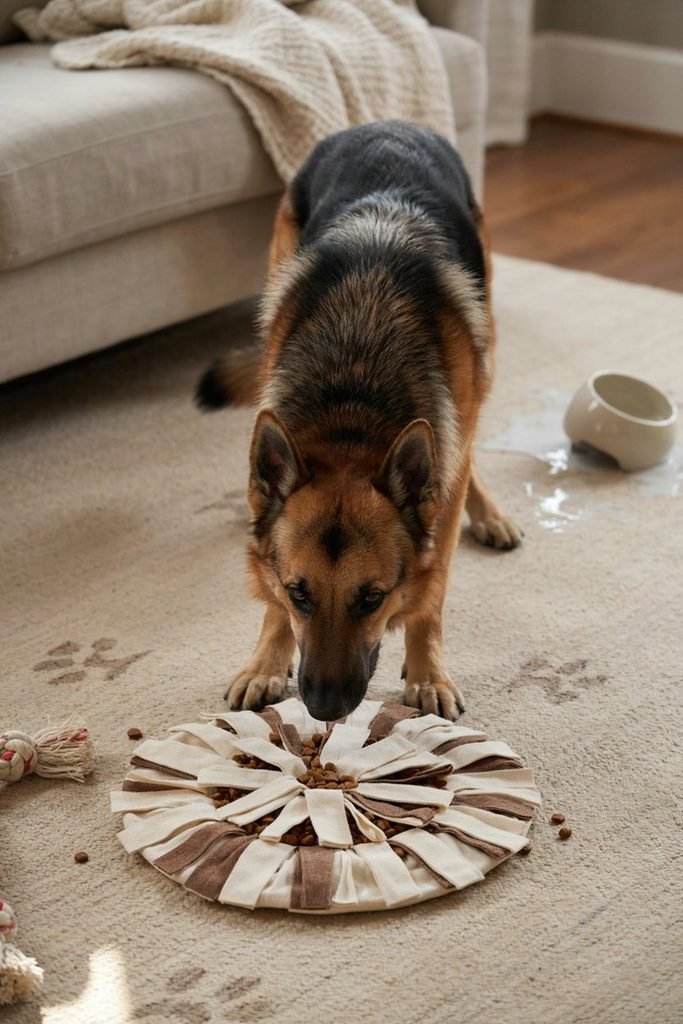
Scatter pieces of your dog’s regular food through a snuffle mat, a folded towel, or a shallow box of shredded paper. The goal is to encourage natural sniffing behavior rather than fast, mindless eating.
Sniffing is mentally tiring in a good way — it’s often more draining for a dog than a straightforward walk. This makes it a great option on days when you can’t provide a long outdoor adventure.
If you’re looking for treats that scatter and hold their shape well in a snuffle setup, banana dog treats or peanut butter banana gummies both work nicely.
5. Learn the Toy Names
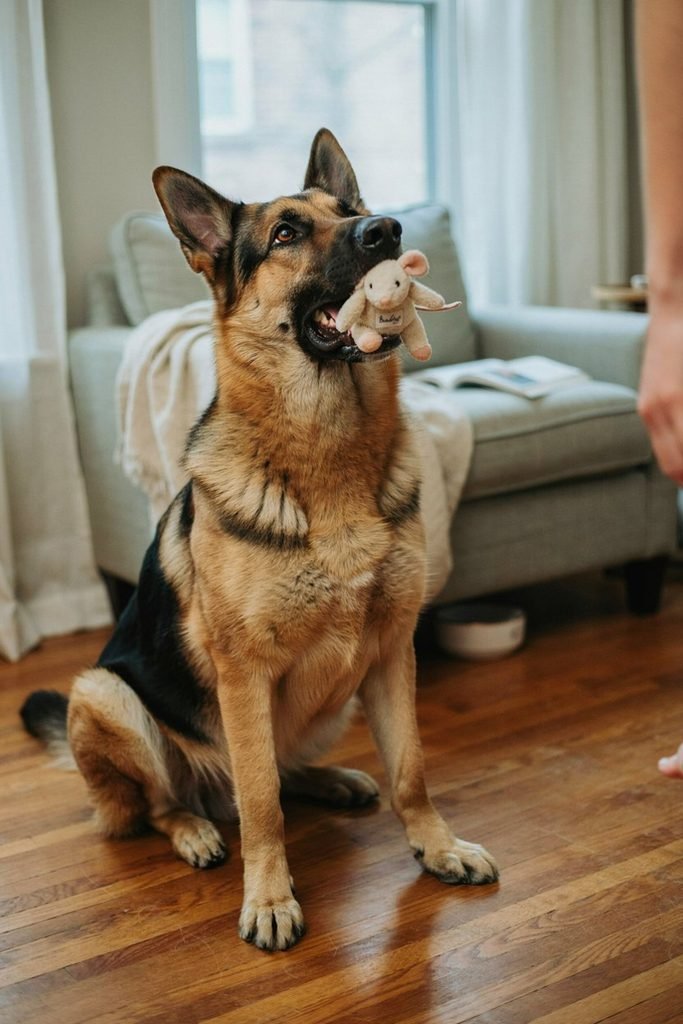
This game gives the list something different from the usual treat puzzles. Start with one toy, and teach your
German Shepherd to associate a specific word with it. Once your dog understands one name, introduce a second.
Eventually, ask your dog to retrieve a particular toy from several options laid out on the floor.
This combines memory, listening, object recognition, training, and play — and it’s a genuinely impressive party trick once your dog gets the hang of it.
6. The “Find Your Toy” Game
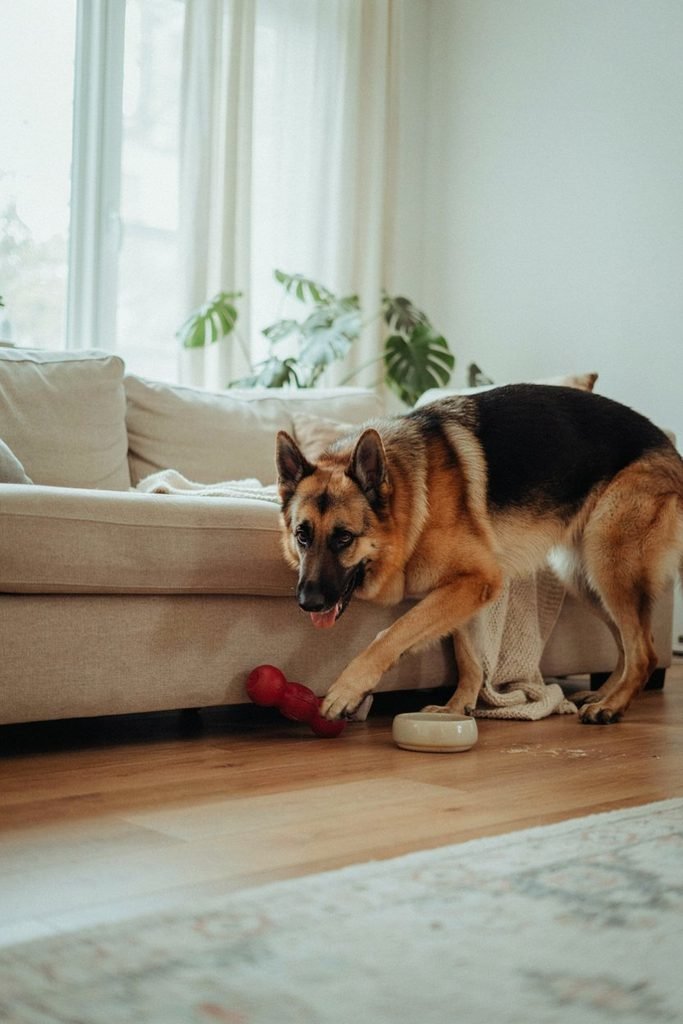
Hide a favorite toy somewhere nearby and encourage your German Shepherd to find it. Start with easy hiding places, then gradually increase the difficulty as your dog catches on.
This works well as a rainy-day indoor activity. One important note: don’t make every game food-based.
Some dogs get just as excited about finding a favorite toy, or simply getting praise and play, as they do about a treat.
7. Obstacle Course at Home
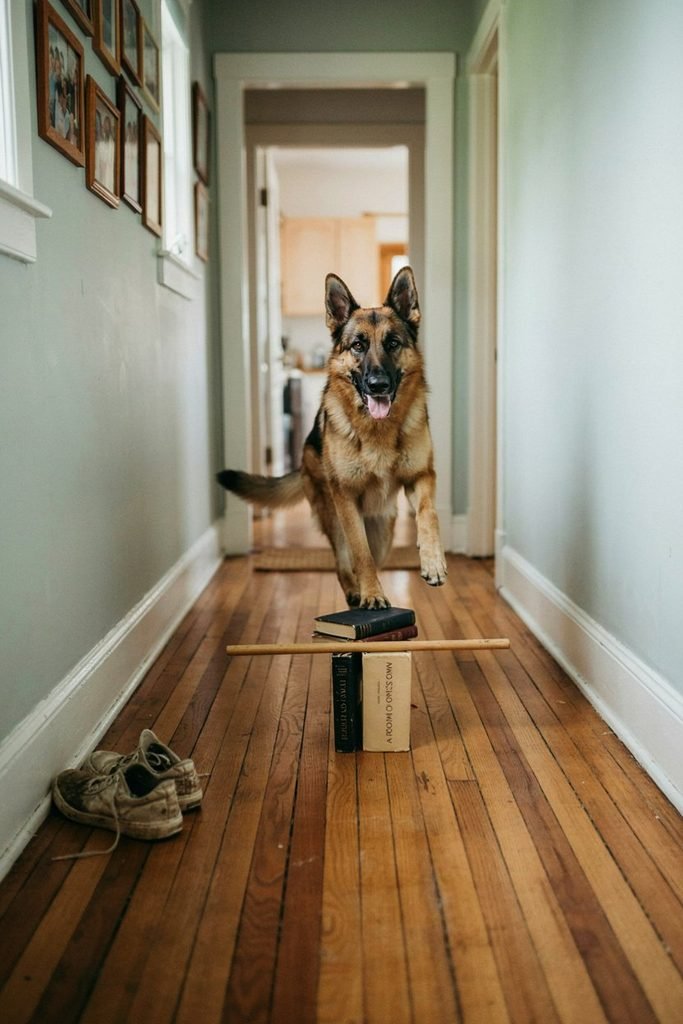
Build a simple course using safe household objects — walk around a few cones or chairs, step over a low obstacle, go through a doorway, touch a target, sit and wait, come when called.
The emphasis here is on controlled movement and problem solving, not dangerous jumping. Adapt the course to your dog’s age, fitness, confidence, and physical abilities.
If your German Shepherd tends to get overexcited around obstacles or visitors, working on focus first with our guide to teaching your dog to focus on you outdoors can make the course far more productive — a dog that can hold attention on you is much easier to guide through a sequence of stations.
8. “Which Hand?” Game
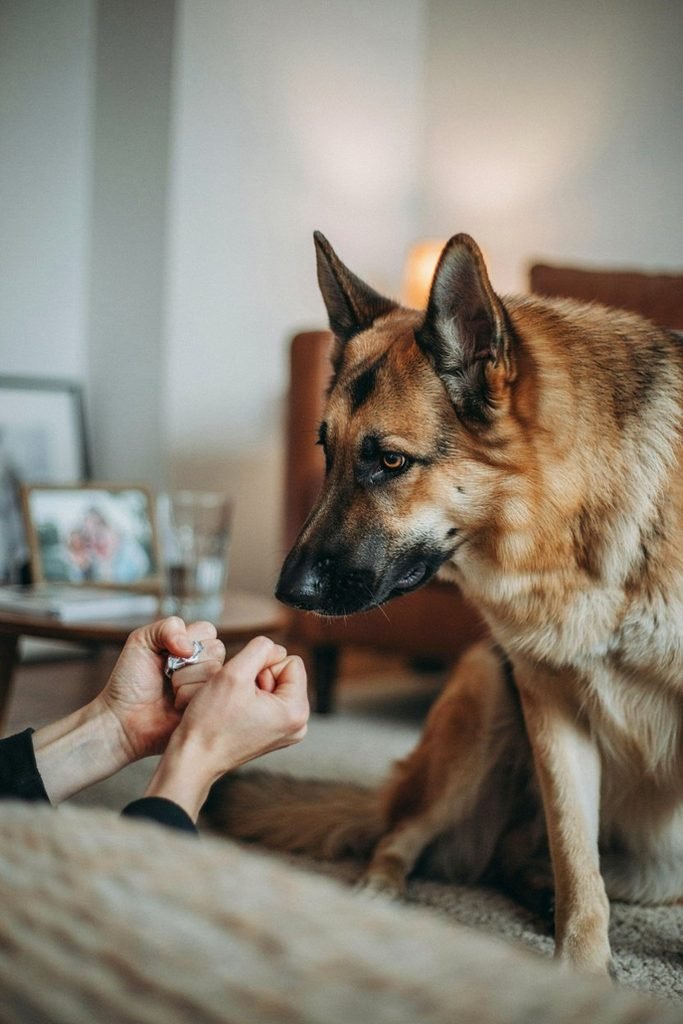
Hide a treat in one hand and let your dog choose. Once your German Shepherd understands the game, increase the difficulty by switching hands, using both hands, extending the waiting time, adding a verbal cue, or rewarding calm decision-making over an excited grab.
It’s a simple, low-setup game you can play from the couch — perfect for evenings when a bigger activity isn’t practical.
How Long Should You Play Brain Games With a German Shepherd?
Longer isn’t automatically better. Short, focused sessions are often more productive than making a dog work until they become frustrated or lose interest.
Start with brief sessions — five to ten minutes is plenty to begin with — and adjust based on your dog’s age, experience, motivation, and individual response.
Mental stimulation should complement, not replace, daily physical exercise, training, rest, socialization, free sniffing and exploration, and appropriate play.
How to Make Brain Games Harder
Level 1: Easy — Make the reward obvious and easy to find.
Level 2: Moderate — Increase the number of possible choices.
Level 3: Challenging — Add distractions, distance, waiting, or multiple steps.
Level 4: Advanced — Combine commands into a sequence, for example: Sit → Wait → Find → Bring → Drop.
This progression gives you an actual path forward instead of eight disconnected activities.
Brain Games for German Shepherd Puppies vs. Adults
For puppies, keep things simple: short sessions, basic scent games, name recognition, gentle problem solving, and basic impulse control. Puppies tire mentally much faster than physically, so watch for signs of frustration and stop before they get there.
Adult German Shepherds can usually handle more complicated scent searches, toy identification, multi-step tasks, and obedience-based games.
Older dogs may still enjoy mental stimulation too, but adapt the games to their mobility and comfort — a seated “which hand” game works just as well as a full obstacle course for a senior dog who’s slowing down physically but still sharp mentally.
Brain Game Safety Tips
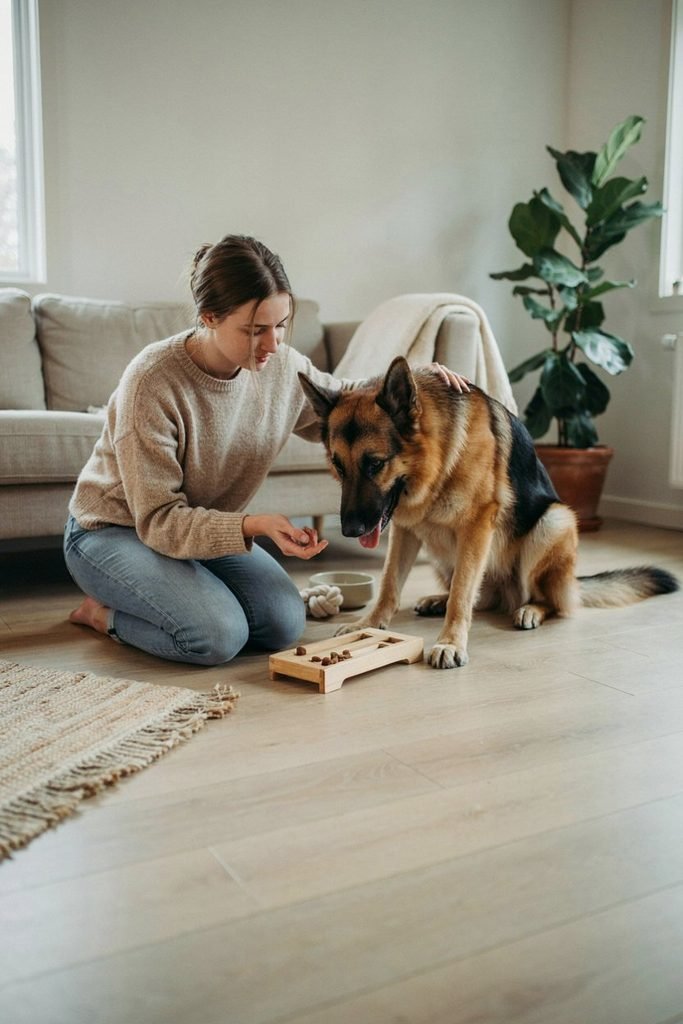
- Supervise DIY puzzle games, especially early on.
- Avoid objects small enough to swallow.
- Don’t use broken or splintered toys.
- Stop if your dog becomes frustrated or overly stressed.
- Introduce difficult puzzles gradually.
- Use part of your dog’s normal food allowance when appropriate, instead of continually adding extra treats on top of meals.
- Avoid making every game physically intense.
- Adjust games for puppies, seniors, and dogs with physical limitations.
What If My German Shepherd Doesn’t Like Puzzle Games?
Not every dog is motivated the same way. Some dogs prefer scent games over food puzzles. Others prefer retrieving toys over searching. Some enjoy training challenges more than independent puzzles.
The goal isn’t to force a dog to enjoy a particular game — it’s to experiment with different forms of mental stimulation and watch what naturally motivates your individual dog.
Frequently Asked Questions
What is the best brain game for a German Shepherd? There’s no single “best” game — it depends on your dog’s motivation. Scent-based games like the DIY snuffle game or Find the Hidden Treat tend to be a safe starting point for most German Shepherds, since this breed relies heavily on its nose.
How can I mentally stimulate my German Shepherd at home? Rotate between food puzzles, scent games, toy-based games, and short training challenges. Variety keeps your dog engaged and prevents any one game from becoming predictable.
How much mental stimulation does a German Shepherd need? Most dogs benefit from a short session once or twice a day, but this varies by age, energy level, and how much physical exercise they’re already getting.
Are puzzle toys good for German Shepherds? Yes, as long as they’re supervised and sized appropriately. German Shepherds are strong chewers, so choose durable puzzle toys and retire any that start to crack or splinter.
Can brain games help with boredom? Yes. Boredom is often behind unwanted behaviors like excessive chewing or barking. Brain games give that energy a constructive outlet, though they work best alongside consistent training and exercise.
What games can I play with my German Shepherd indoors? The muffin tin puzzle, which-cup game, snuffle mat, toy name game, and which-hand game all work well indoors with minimal space.
How do I make brain games more challenging? Increase the number of choices, add distance or waiting time, introduce distractions, or chain multiple commands together, as outlined in the difficulty levels above.
Final Thoughts
One thing I love about these games is that they don’t always require a big setup. A few treats, a favorite toy, and ten quiet minutes on the floor can turn an otherwise ordinary afternoon into something your dog actually has to think about.
If your German Shepherd’s energy tends to show up as jumping on guests or pulling hard on the leash, brain games alone won’t fix that — pair them with focused training like our guides on stopping a dog from jumping on guests and stopping a dog from pulling on the leash.
For more ways to keep your dog engaged day to day, take a look at our broader roundup of brain games for a smarter, happier dog.