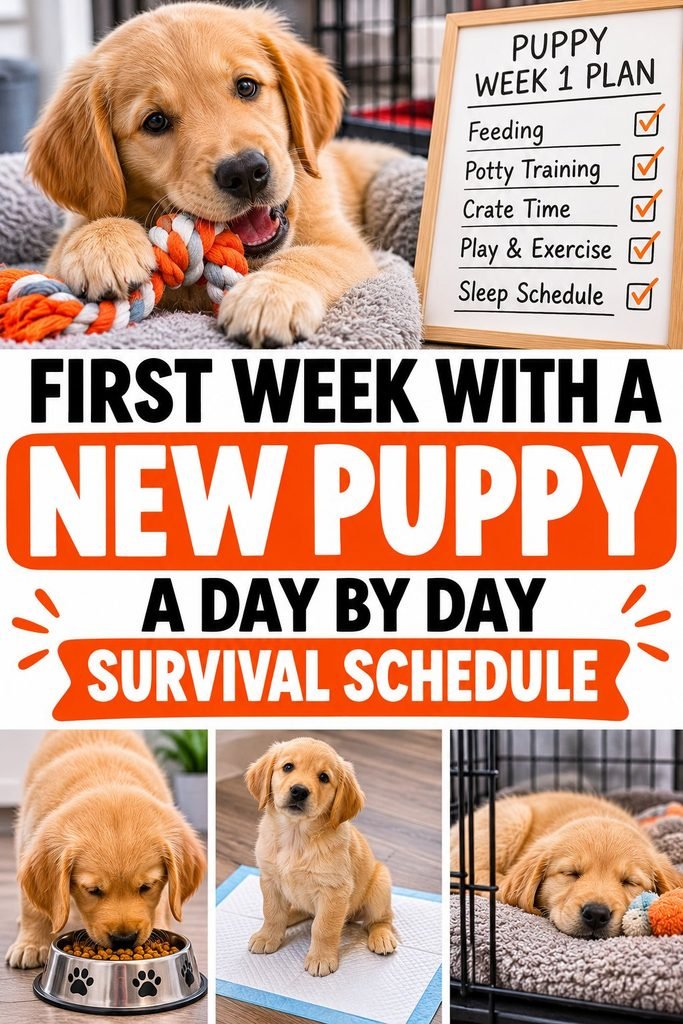
First Week with a New Puppy: A Day by Day Survival Schedule
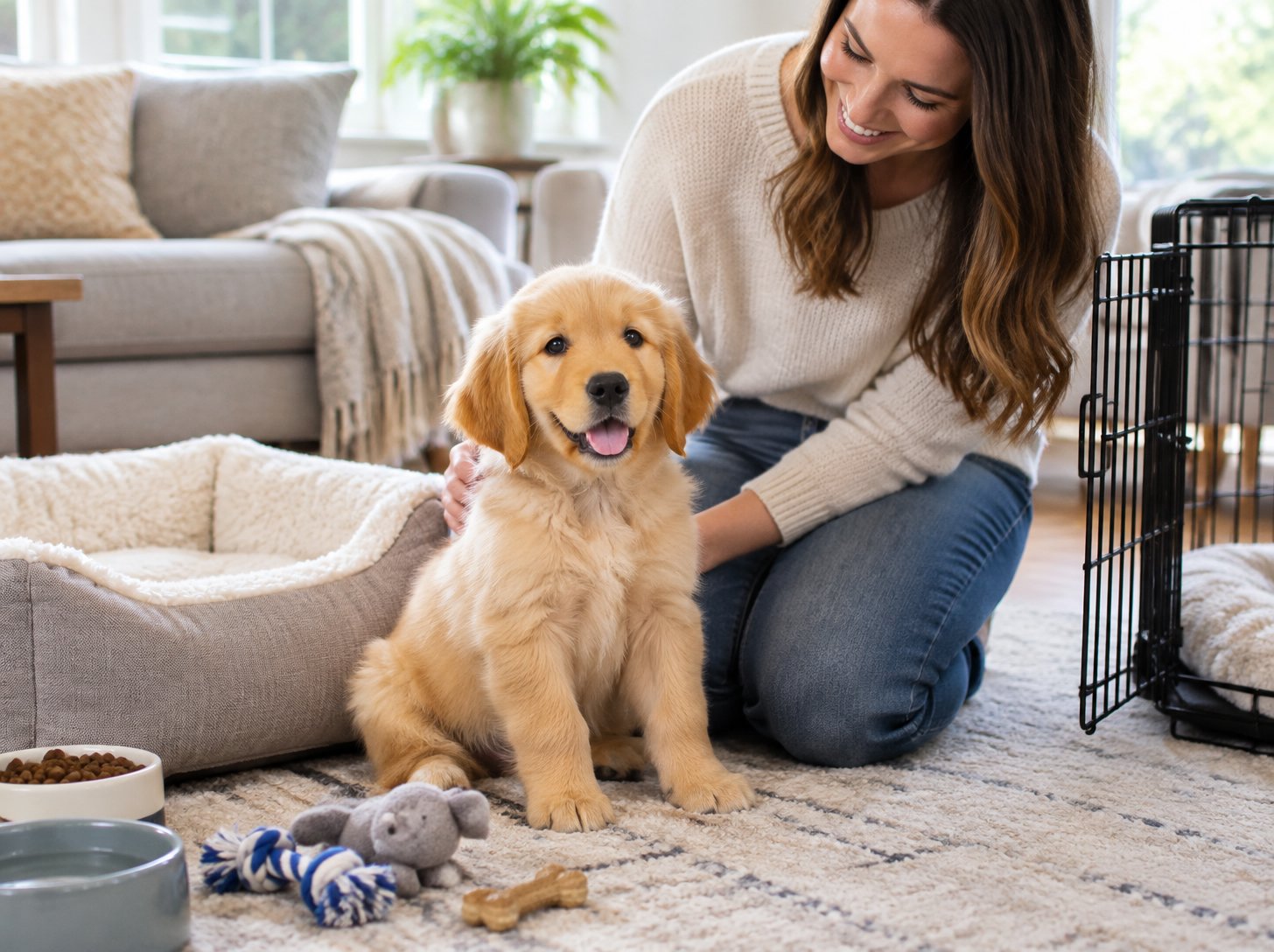
Bringing a puppy home is exciting, exhausting, and a little overwhelming. The first week sets the tone, but it doesn’t have to be chaotic. A simple routine, a few safety basics, and a lot of patience will get you through it.
This guide gives you a day by day plan for the first seven days, covering potty training, feeding, sleep, vet care, socialization, and the early training that matters most.
A quick note before we start. Every puppy is different, and your breeder, shelter, or veterinarian knows your puppy’s age, size, and health history.
Use this as a general framework and always follow your veterinarian’s advice, especially about vaccines, feeding, and anything that worries you.
Before Your Puppy Comes Home
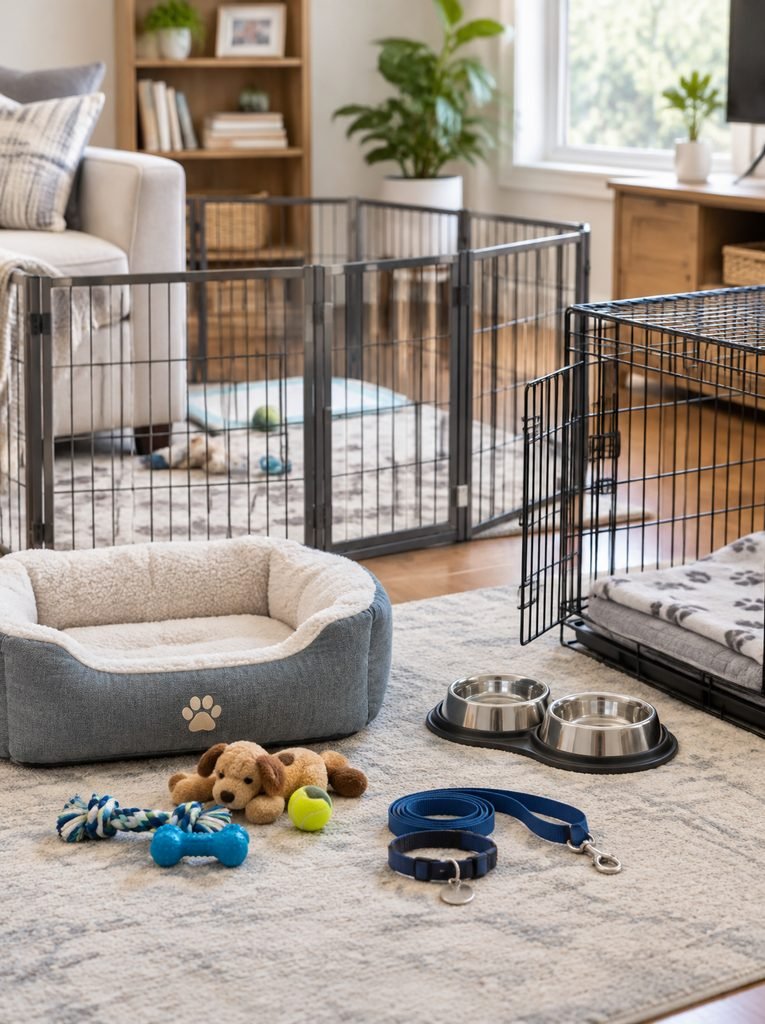
A little preparation makes day one much smoother.
Puppy proof the house. Pick up shoes, cords, and small objects, secure trash cans, and block off stairs and rooms you don’t want explored.
Remove hazards. Keep chocolate, grapes, raisins, onions, garlic, xylitol sweeteners, and human medications out of reach. Know the poison control number for your area.
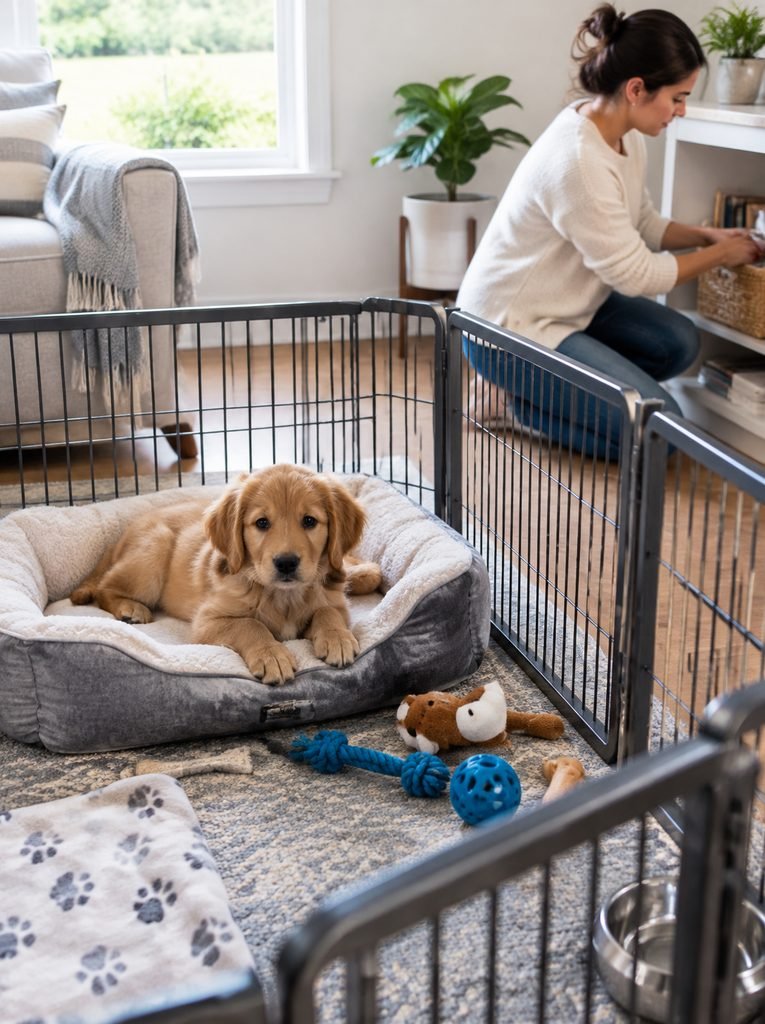
Set up a safe space. A crate or playpen in a quiet, central spot gives your puppy a secure place to rest.
Buy the basics. You’ll need a collar or harness with an ID tag, a leash, food and water bowls, a bed, chew toys, puppy food, and poop bags.
Find a veterinarian. Book an appointment within the first few days, and ask what vaccines your puppy has had.
Plan the first week. If you can, take time off work. Puppies need constant supervision, and the first days are intense.
Ask what your puppy was eating. Get the brand and feeding schedule so you can keep it consistent.
The Basics You’ll Use Every Day
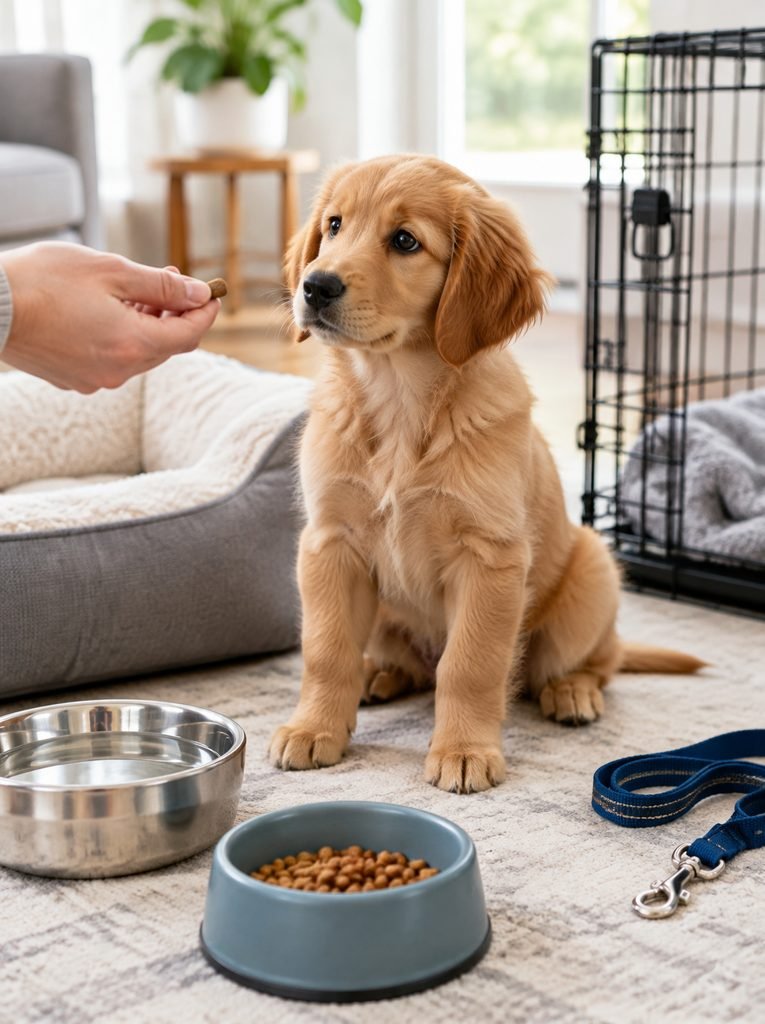
These rules apply all week.
Potty often. Young puppies have small bladders and little control. A common guideline is a trip outside every one to two hours, plus right after waking, eating, drinking, and playing. Your veterinarian can tell you what’s realistic for your puppy’s age.
Reward quickly. Praise and a tiny treat the moment your puppy finishes outside teaches the lesson fastest.
Expect lots of sleep. Young puppies often sleep around 18 to 20 hours a day in short bursts. Sleep is normal and necessary.
Feed on a schedule. Most young puppies eat three to four small meals a day, but follow your veterinarian’s guidance for your puppy’s age and breed.
Provide fresh water. Keep water available, and ask your vet how to handle water at night.
Never punish accidents. Clean them up with an enzyme cleaner and move on. Punishment teaches fear, not potty training.
Supervise or confine. When you can’t watch your puppy, use the crate or playpen.
Keep play gentle. Short play sessions followed by naps are ideal.
Day 1: Arrival and Settling In
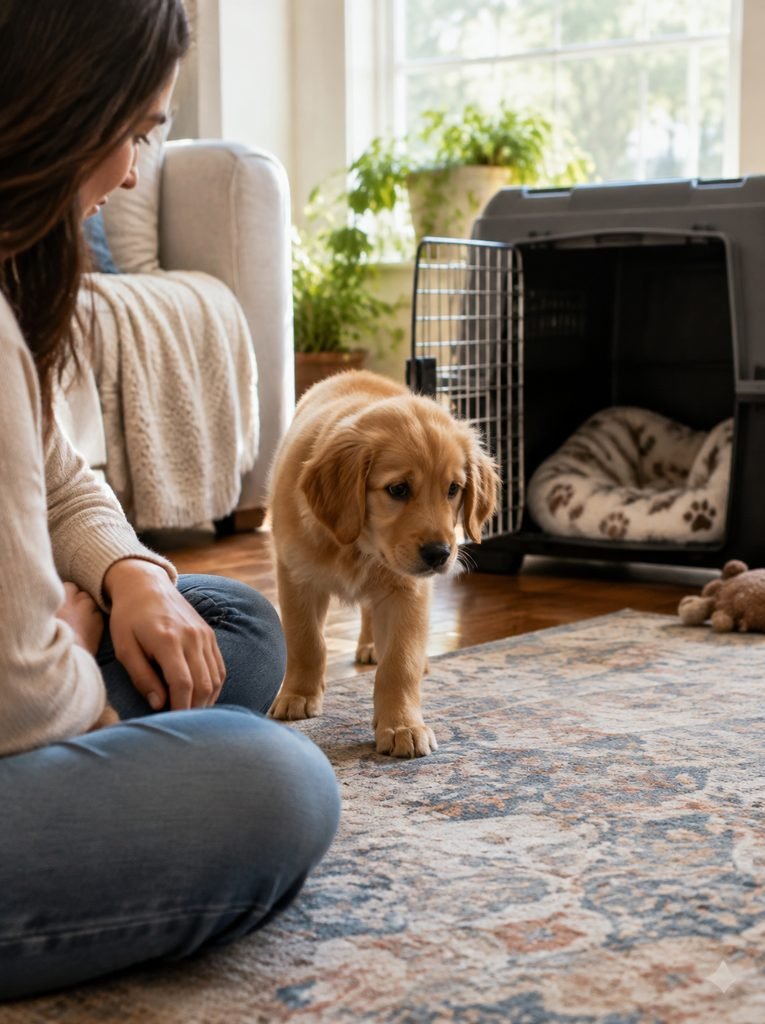
The goal for today is simple: help your puppy feel safe.
Morning. Bring your puppy straight outside to the potty spot before going in. Praise lavishly if they go. Let them explore one room, on leash or in a pen, rather than the whole house.
Midday. Offer a small meal on the same food they’ve been eating. Keep visitors to a minimum, since too much excitement overwhelms a new puppy.
Afternoon. Short naps in the crate or pen. Take your puppy out after every nap, meal, and play session.
Evening. A calm routine with a small meal, a quiet play session, and a last potty trip before bed.
First night. Put the crate near your bed so your puppy can hear you. Expect whining. Take your puppy out for a quick, quiet potty trip if they’ve been asleep for a few hours, and then return to bed with no play.
Tip. Don’t expect a full night of sleep. A puppy waking once or twice to pee is normal.
Day 2: Start the Routine
Morning. Out first thing, then breakfast. Take your puppy out again after eating.
Daytime. Keep the schedule of eat, potty, play, nap. Aim for a short, quiet play session between naps.
Introduce the name. Say your puppy’s name in a happy voice and reward when they look at you.
Start handling. Gently touch paws, ears, and mouth, followed by a tiny treat, so vet visits and grooming are easier later.
Evening. Keep the same bedtime routine as day one.
Tip. Write down potty times and meals. Patterns appear quickly, and they help you predict when your puppy needs to go.
Day 3: Vet Visit and Health Check
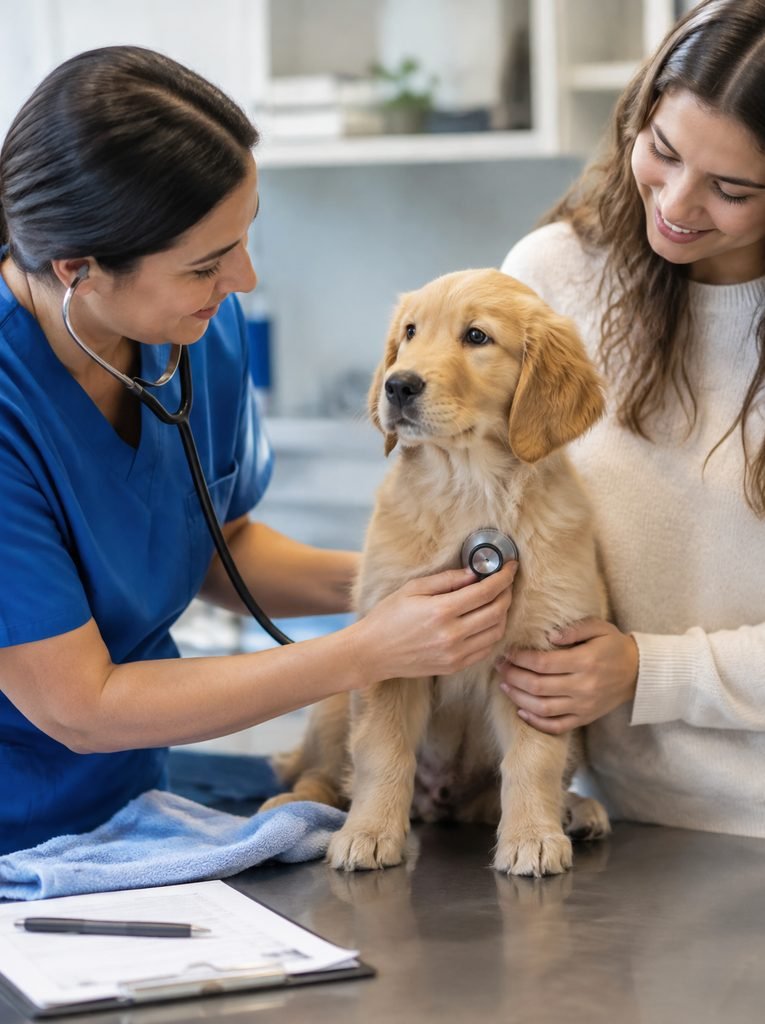
Vet visit. Many veterinarians recommend a first exam within a few days of bringing a puppy home. Bring any paperwork, vaccination records, and a stool sample if requested. Ask about vaccines, deworming, parasite prevention, microchipping, spaying or neutering, and feeding.
Ask about socialization. Puppies aren’t fully protected until their vaccines are complete, so ask your veterinarian where it’s safe to take your puppy and when.
Keep the visit positive. Bring tiny treats, and let your puppy meet the staff.
Back at home. Let your puppy rest. The vet visit can be tiring.
Tip. Never take an unvaccinated puppy to dog parks, pet stores, or places with lots of unfamiliar dogs unless your veterinarian says it’s safe.
Day 4: Build Confidence
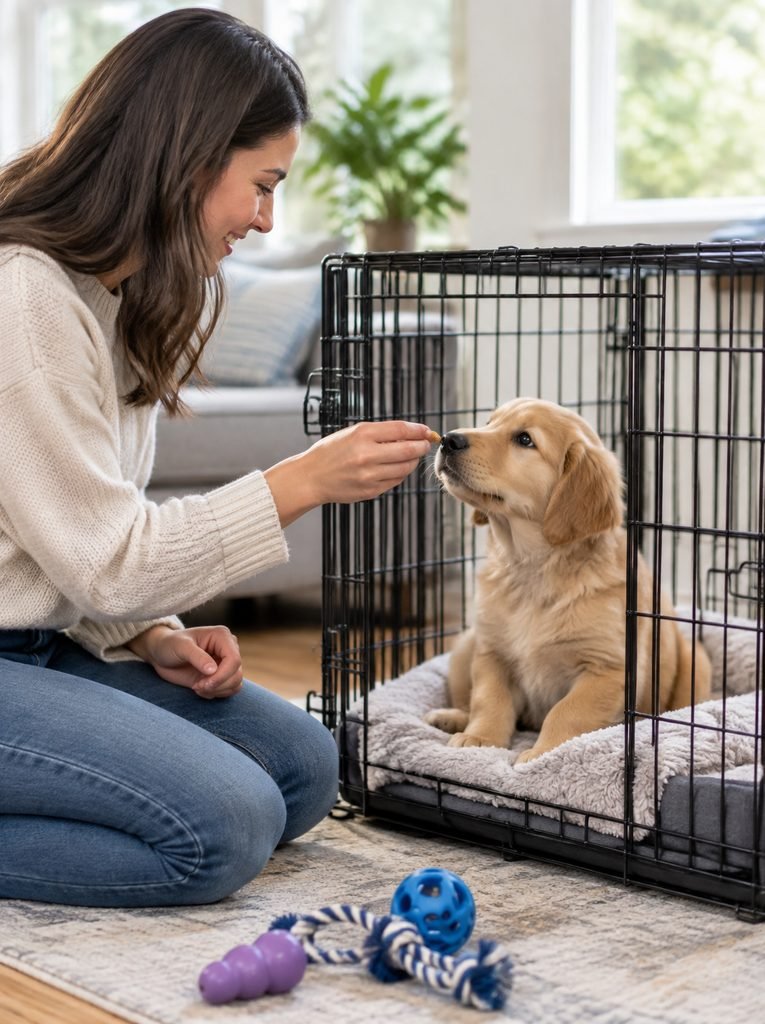
Morning. Practice short crate sessions, with the door open at first, then closed for a few minutes while you stay nearby. Reward calm behavior.
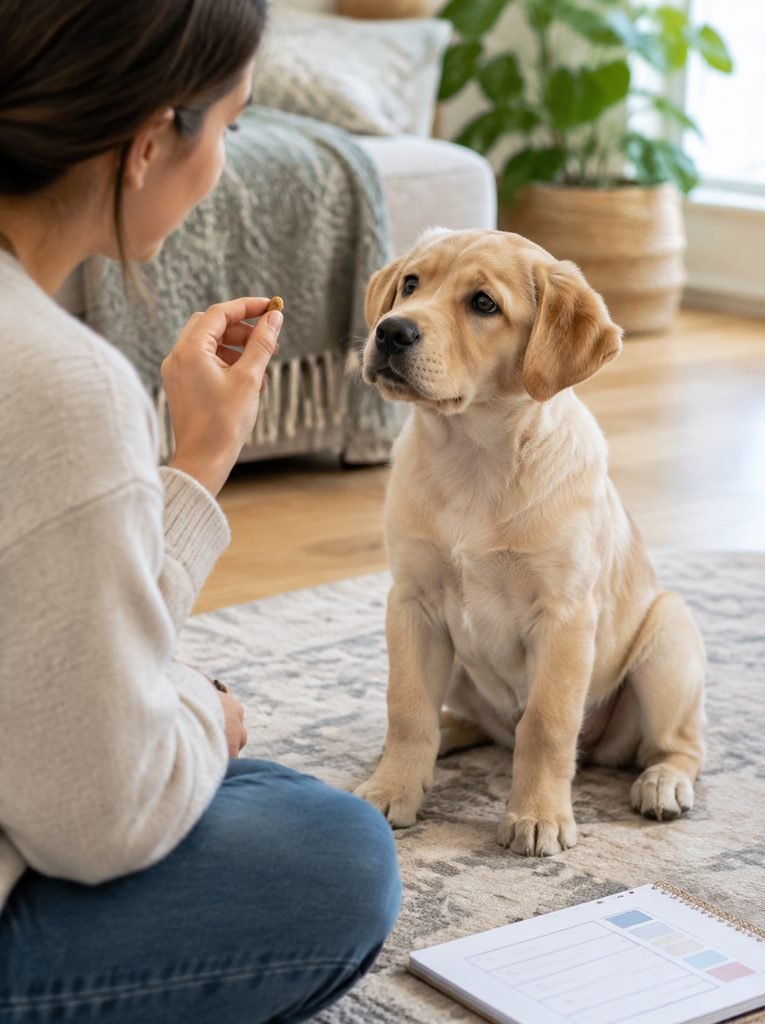
Midday. Begin simple training, such as sit. Use a tiny treat to guide the puppy’s head up so their bottom lowers, then reward.
Afternoon. Introduce new household sounds gradually, like the vacuum or the dishwasher, from a distance, with treats.
Evening. Practice calm greetings. Reward four paws on the floor and ignore jumping.
Tip. Training sessions should be a few minutes long. Puppies tire quickly.
Day 5: Chewing and Boundaries
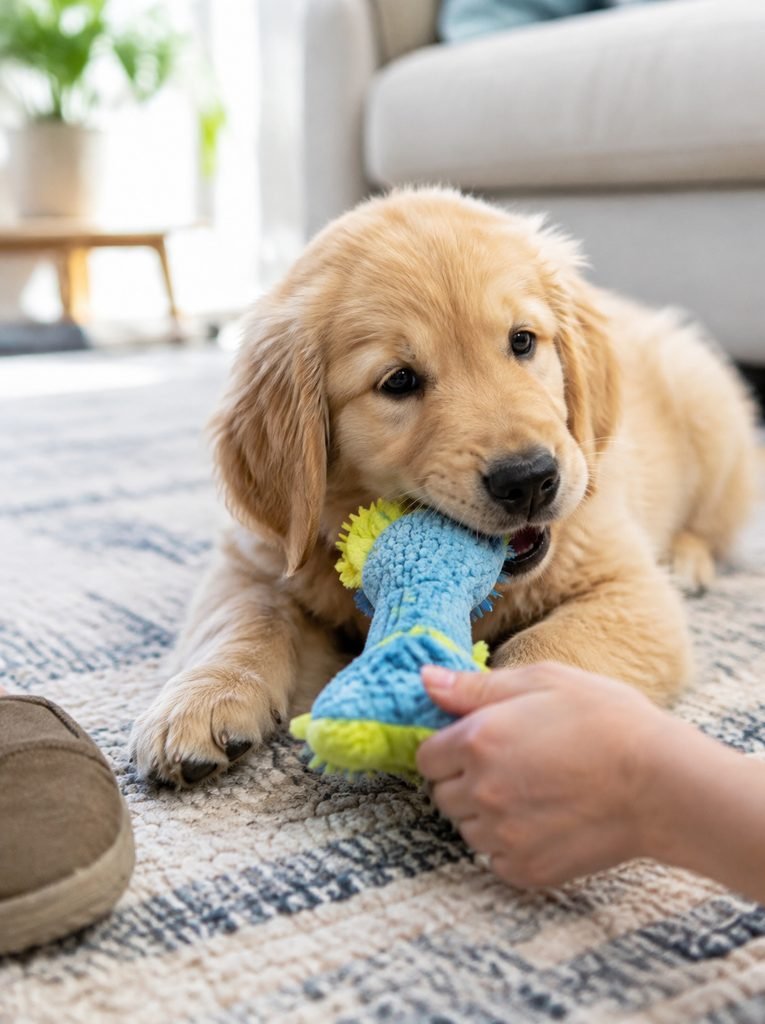
Teething and chewing are in full swing.
Offer safe chews. Give age appropriate puppy chew toys and swap them for shoes or furniture when needed.
Redirect, don’t scold. Trade the forbidden item for an approved toy and praise.
Supervise play. Check toys for damage and take away anything that breaks into pieces.
Introduce a puzzle toy. A simple food toy keeps a bored puppy busy. For more ideas, see my Brain Games for a Smarter, Happier Dog.
Tip. If your puppy is mouthy, end play calmly and give them a break rather than yelling.
Day 6: Short Outings and Gentle Socialization
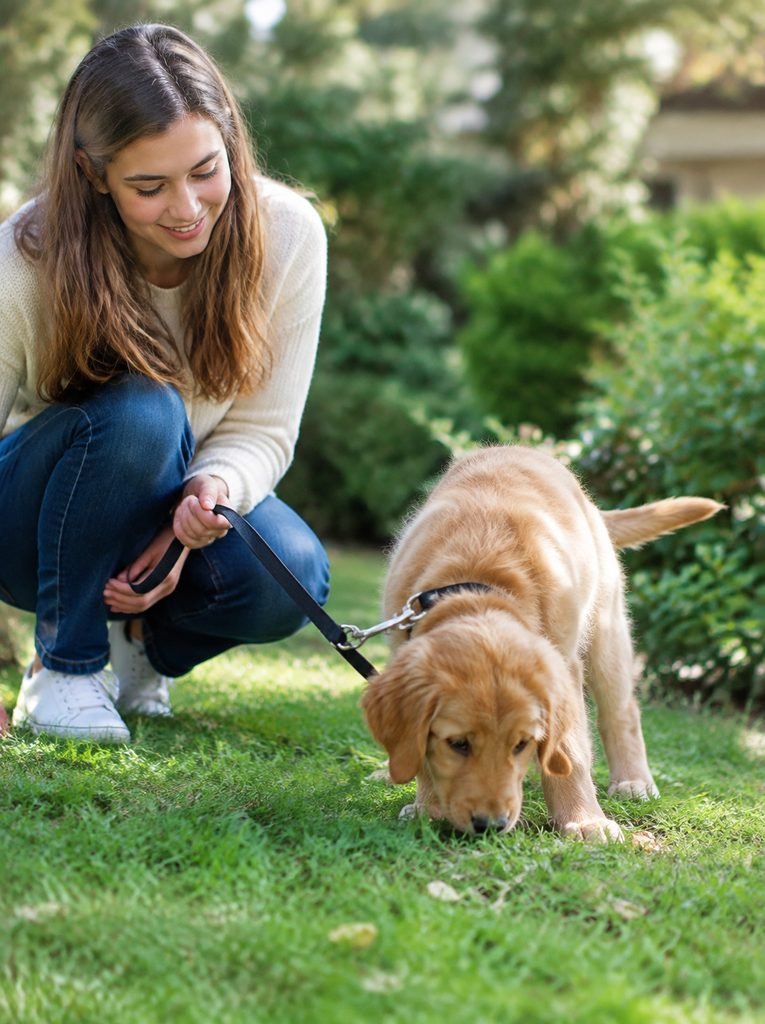
Morning. Practice a short walk in your own yard or on a clean, low traffic spot your vet approves.
Afternoon. Introduce one calm, vaccinated adult dog, if your veterinarian agrees, or invite a calm friend over.
Gentle exposure. Let your puppy experience new surfaces, like grass, tile, and blankets, along with different sounds and sights, at their own pace.
Evening. Keep things quiet. Overstimulation can cause crankiness and accidents.
Tip. Positive, low pressure exposure is better than lots of exposure. If your puppy seems scared, back up and make it easier.
Day 7: Review and Plan
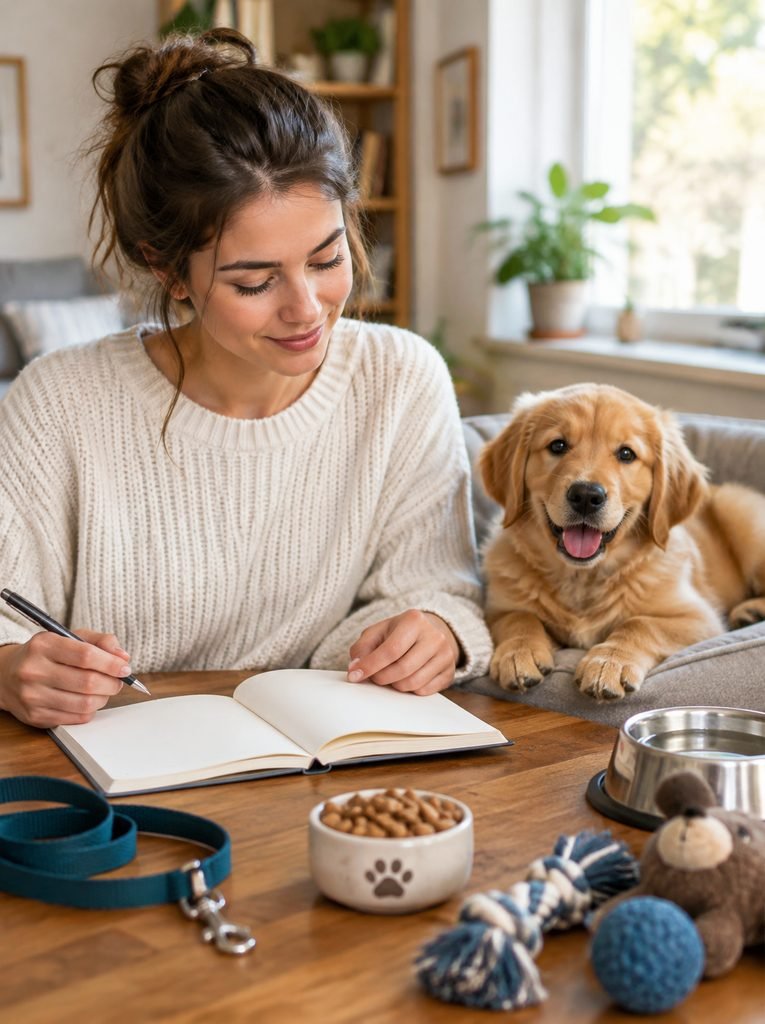
Look back. Check your potty log, feeding times, and naps. Adjust the schedule if needed.
Celebrate wins. Even small progress, like going to the door to pee, is worth rewarding.
Plan the next steps. Sign up for a puppy class, ask your vet about the next round of vaccines, and set a routine for the weeks ahead.
Think about long term training. Consistency matters. For guidance on common problems, see my Solve Dog Behavior Problems.
Rest. Make sure you get some rest too.
A Sample Daily Schedule
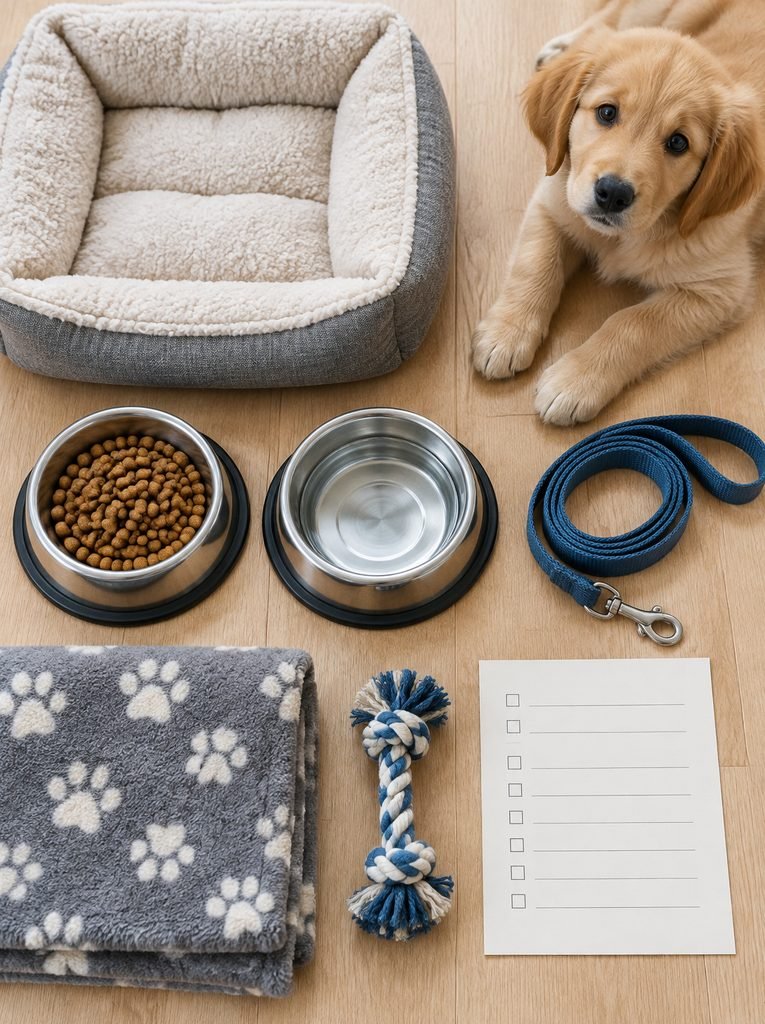
Here’s a simple template to adapt.
- 6:30 AM. Potty, then breakfast
- 7:00 AM. Potty, then short play
- 7:30 AM. Nap in crate
- 9:30 AM. Potty, then play and training
- 10:30 AM. Nap
- 12:00 PM. Potty, then lunch, then potty
- 1:00 PM. Nap
- 3:00 PM. Potty, then play
- 4:00 PM. Nap
- 5:30 PM. Potty, then dinner, then potty
- 7:00 PM. Gentle play and training
- 8:30 PM. Last potty trip before bed
- 9:00 PM. Bedtime in crate
Adjust times to fit your puppy and your day.
Feeding and Treats During the First Week
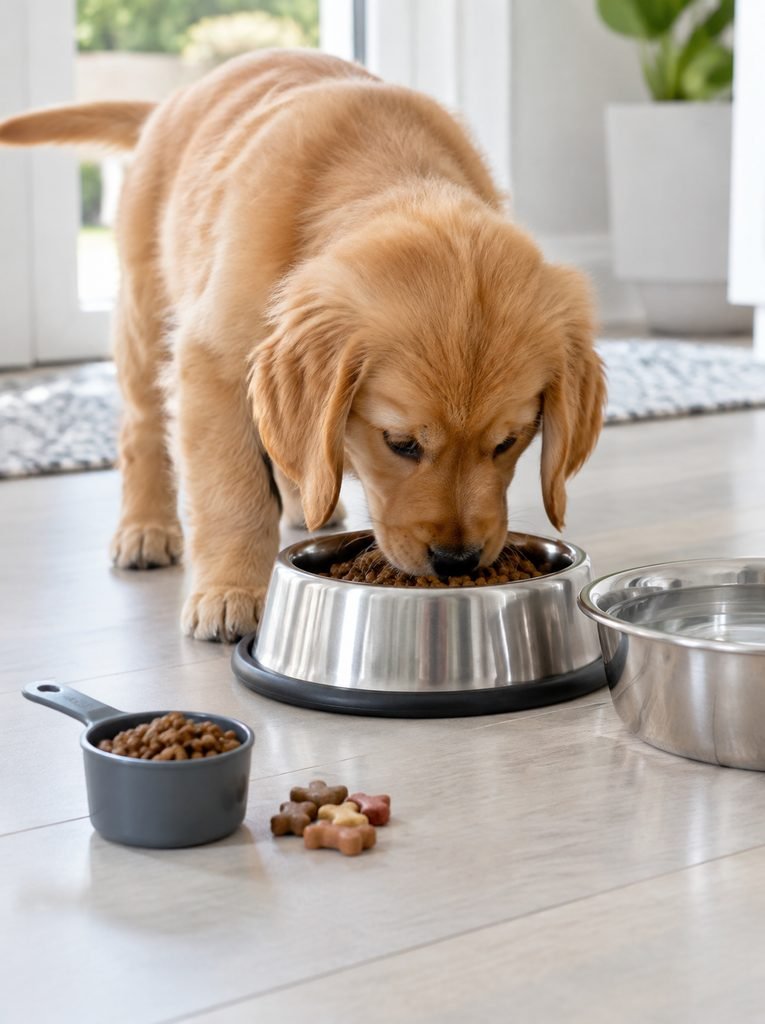
Keep food consistent. Stay on the food your puppy was already eating, and change it gradually over about a week if your veterinarian recommends a switch.
Measure meals. Use the feeding guide and your veterinarian’s advice, since overfeeding is easy to do.
Use tiny treats for training. Break treats into pea sized pieces.
Ask before homemade treats. Many homemade treats are fine in small amounts, but check with your veterinarian first for very young puppies. For soft, puppy friendly ideas once your vet approves, see my Cinnamon Roll Dog Treats (Easy Homemade Puppy Treat Recipe) and my Applesauce Dog Treats.
Avoid table scraps. Many human foods are dangerous for dogs.
When to Call the Vet Right Away
Call your veterinarian or an emergency clinic if you notice any of these.
Repeated vomiting or diarrhea. Puppies can dehydrate quickly.
Not eating or drinking. Especially in very small or very young puppies.
Lethargy or weakness. A puppy who’s hard to wake or unusually limp needs help.
Blood in vomit or stool.
Pale or bluish gums.
Difficulty breathing.
Swallowing something dangerous. Call right away if your puppy eats chocolate, xylitol, medication, or a non food object.
Coughing, sneezing, or discharge.
Seizures.
When in doubt, call. Puppies can get sick fast, and it’s always better to ask.
Common Mistakes to Avoid
Skipping the vet visit. Early checks catch problems and answer questions.
Taking an unvaccinated puppy to public places. Ask your veterinarian what’s safe.
Overdoing it. Too much play, handling, or visitors overwhelms puppies.
Punishing accidents. It slows training and creates fear.
Giving too much freedom. Supervise or confine.
Changing food suddenly. It can upset the stomach.
Skipping naps. Overtired puppies are cranky and mouthy.
More Helpful Reads
- Brain Games for a Smarter, Happier Dog
- Solve Dog Behavior Problems
- Cinnamon Roll Dog Treats (Easy Homemade Puppy Treat Recipe)
- Applesauce Dog Treats
- Homemade Dog Treats
For a wider look at feeding your dog well, check out 7 Healthiest Homemade Dog Foods.
Frequently Asked Questions
How often should a new puppy go outside? Very often, about every one to two hours and after sleeping, eating, drinking, and playing. Your veterinarian can give you a more specific schedule for your puppy’s age.
How much do puppies sleep? Young puppies often sleep 18 to 20 hours a day, in short stretches.
What should I do the first night? Keep the crate close, expect some whining, and take a quick, calm potty trip if needed.
When can my puppy meet other dogs? Ask your veterinarian. It depends on your puppy’s vaccines and the other dog’s health.
When should I start training? Right away. Start with name recognition, potty training, and simple cues, in short sessions.
Is it normal for my puppy to cry? Yes, especially at night. Most puppies settle as they get used to their new home.
A Final Note on the First Week
The first week with a puppy is a lot, but it’s also full of wonderful moments. Keep the routine simple, stay patient, and lean on your veterinarian whenever you’re unsure. Before long, the chaos turns into a rhythm, and you’ll have a happy dog who feels at home.