Carrot Brothsicle Frozen Dog Treats
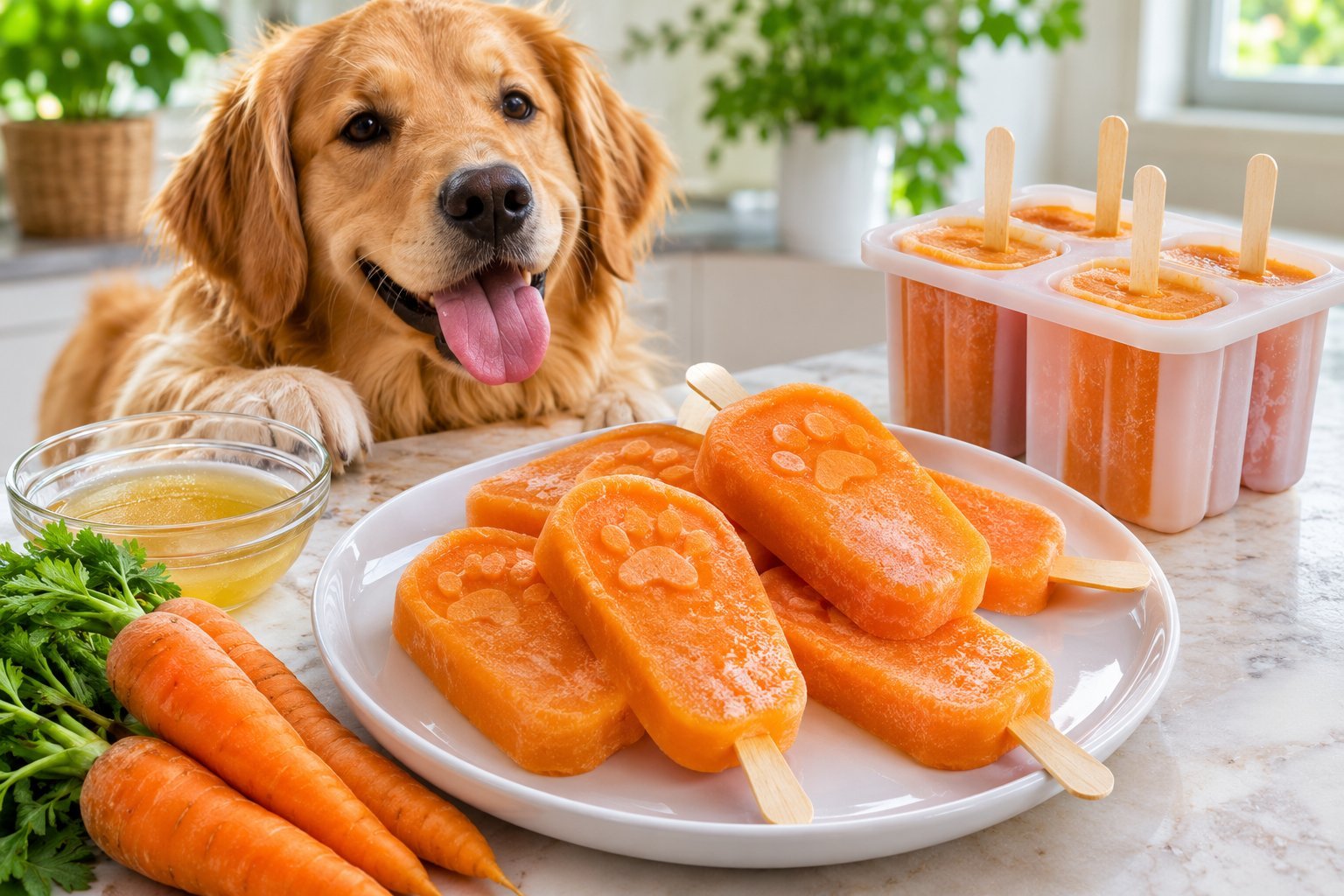
The first time I made these, I was standing in my kitchen at the end of a sticky August afternoon with half a bag of carrots that needed using and a carton of broth already open in the fridge.
My dog had spent most of the day flopped on the tile, barely touching his water bowl, and I wanted something that would get a little fluid into him without turning into a project.
I steamed the carrots, blended them with the broth, poured the whole thing into a popsicle mold, and called it an experiment.
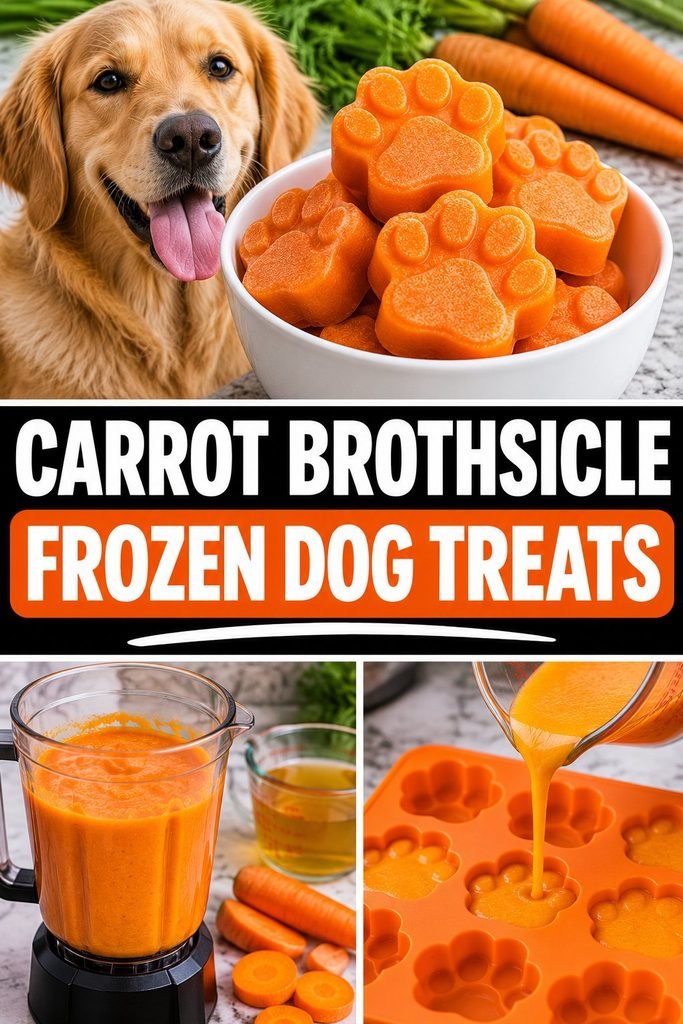
He had that first one finished in about ten minutes and spent the next five checking the floor for drips.
I’ve made a batch almost every summer since, and the name “brothsicle” stuck because it describes them perfectly: savory like broth, frozen like a popsicle, and colored like a sunset thanks to the carrots.
If you’re building out a collection of cooling snacks for hot days, 11 vet-friendly frozen dog treat recipes is a great place to find more options, and if frozen treats are completely new to you, 9 easy frozen dog snacks for first-time dog owners covers the basics before you dive into this specific recipe.
Why Carrots and Broth Work So Well Together
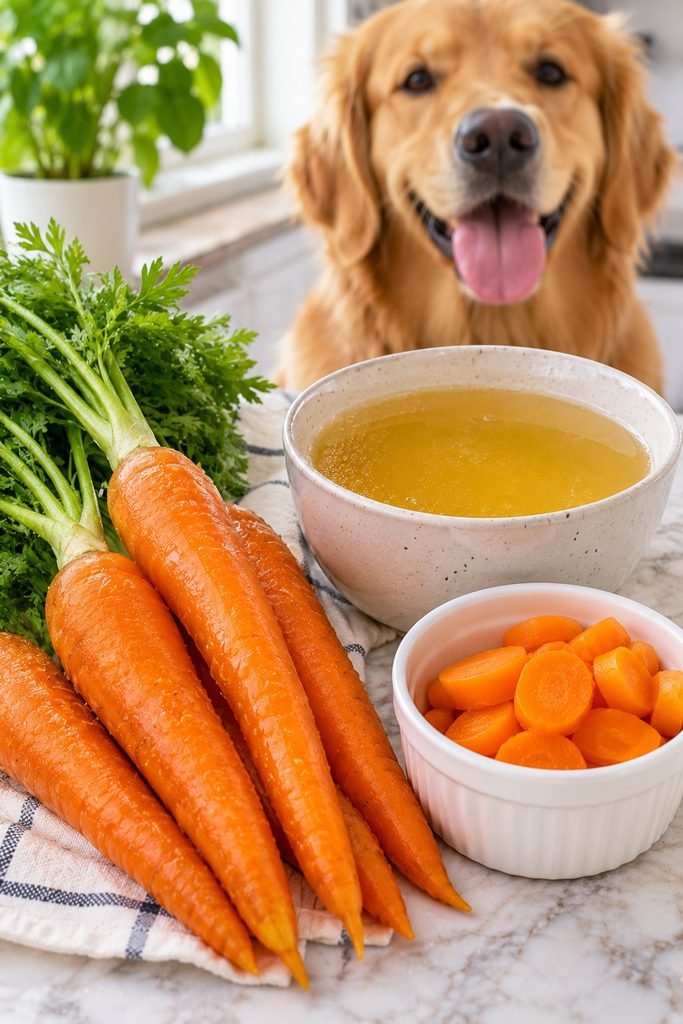
Carrots are one of the most dog-friendly vegetables you can cook with. They’re low in calories, naturally sweet, and full of fiber, and most dogs happily eat them raw or cooked.
Steaming and blending them into a smooth puree does two helpful things: it makes them easier to digest than raw chunks, and it lets the carrot flavor spread evenly through every bite of the finished treat.
Low sodium broth brings the savory side. It adds moisture and a meaty aroma that makes the treat far more tempting than a plain carrot ice cube, and because broth is mostly water, it contributes to the hydration side of the treat too.
Freezing the mixture slows your dog down, turning a quick snack into several minutes of licking, which is exactly what you want on a hot afternoon.
Ingredients I Feel Comfortable Using
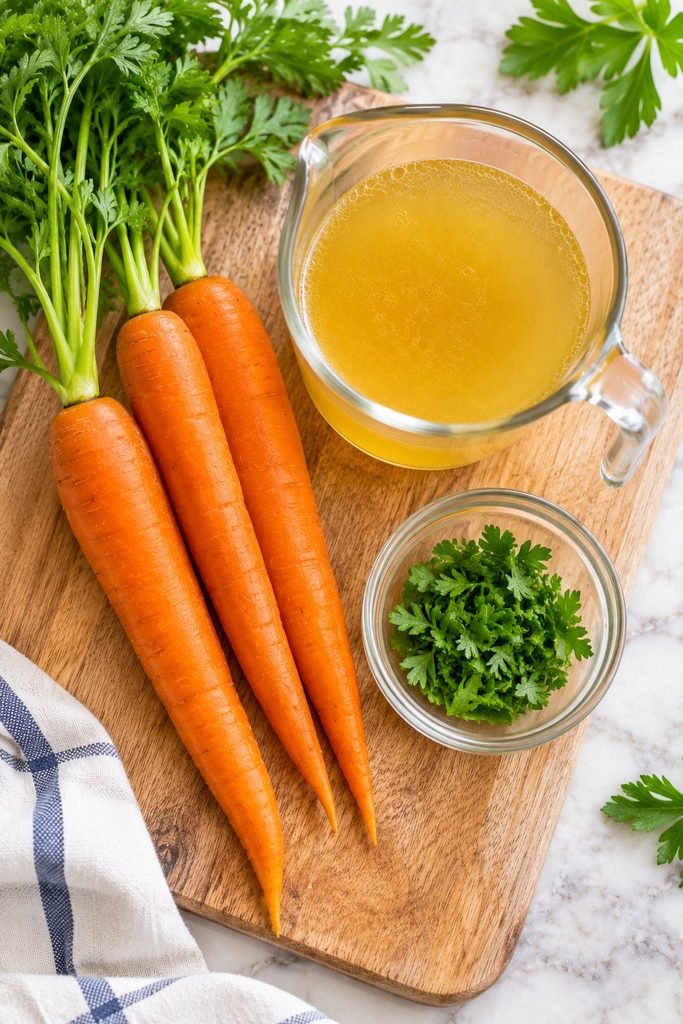
Fresh carrots. Choose firm, bright orange carrots with no soft spots. They’re the base of the recipe and provide the color, the natural sweetness, and most of the fiber.
Plain low sodium broth. Chicken, beef, or turkey broth all work, as long as the label shows no onion, no garlic, and as little added salt as possible. This is the one ingredient where reading the label carefully really matters, since “plain” broths sometimes include onion or garlic powder in the fine print.
Fresh parsley, optional. A small pinch of finely chopped plain parsley adds a fresh note, though it’s entirely optional if you’d rather keep the recipe to two ingredients.
For another take on carrots in homemade treats, simple carrot based dog treat recipes for beginners is a good companion read, especially if you want something baked to rotate in alongside these frozen ones.
Ingredients I Avoid
Any broth containing onion or garlic, including powders, is off the table, since both are toxic to dogs even in small amounts.
I also skip bouillon cubes and concentrates unless they’re specifically labeled sodium-free, since most contain far more salt than a dog needs.
Seasonings, spices, butter, oil, and sweeteners all stay out too, because the carrots and broth deliver plenty of flavor on their own.
Carrot Brothsicle Frozen Dog Treats
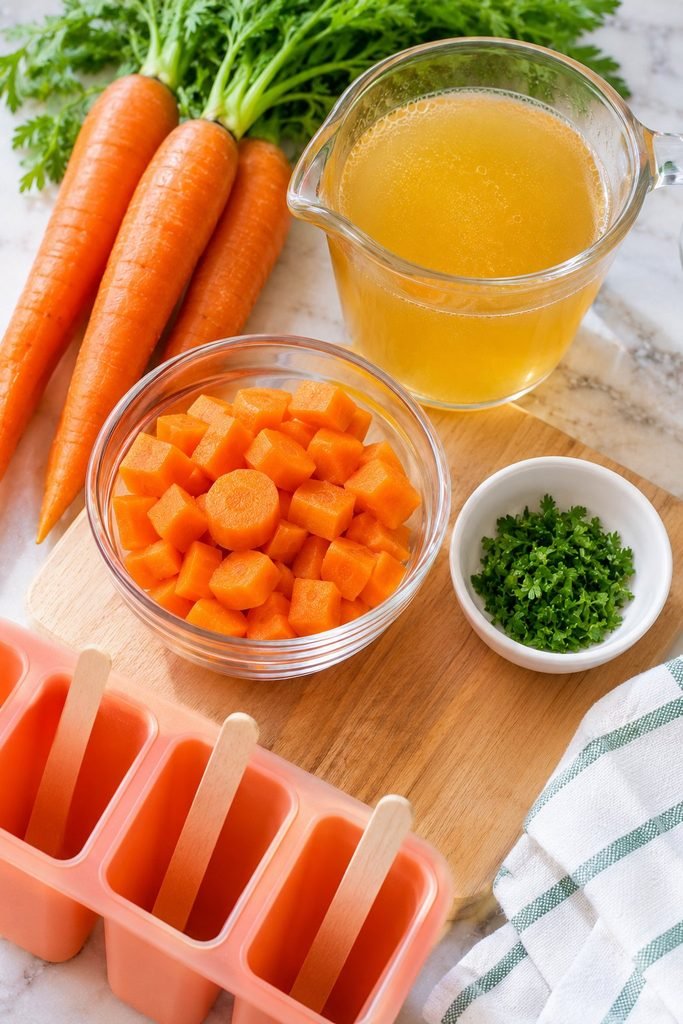
This is a simple recipe, but a few small techniques make the difference between a smooth, evenly colored brothsicle and one that separates into a pale layer on top and a clump of carrot at the bottom. The steps below go into detail on those parts.
Ingredients
- 3 medium carrots (about 1 1/2 cups chopped)
- 2 cups plain low sodium broth, onion and garlic free, divided
- 1 teaspoon finely chopped fresh parsley, optional
Instructions
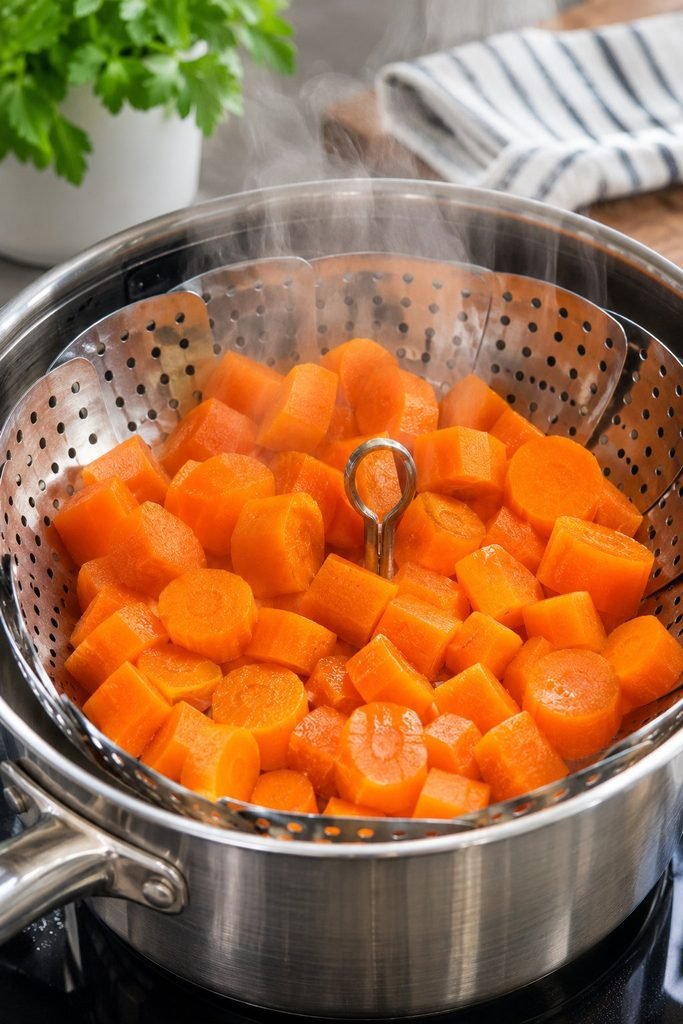
- Wash and prep the carrots. Scrub the carrots under cool running water, trim off the tops and tips, and peel them if the skins look thick or dirty. Chop them into pieces about 1/2 inch thick. Keeping the pieces roughly the same size means they all cook at the same rate, so you won’t end up with some chunks mushy and others still firm.
- Steam the carrots until fork-tender. Place the pieces in a steamer basket over simmering water, cover, and steam for 10 to 12 minutes. They’re done when a fork slides in with almost no resistance. If you don’t have a steamer, you can boil them in a small amount of water for the same time, then drain well. Undercooked carrots won’t blend smoothly and will leave gritty bits in the finished treat.
- Let the carrots cool for 10 minutes. Blending very hot vegetables in a closed blender can build up pressure, and hot carrots will also start to melt your freezer’s other contents once they go in. A short cooling time solves both problems.
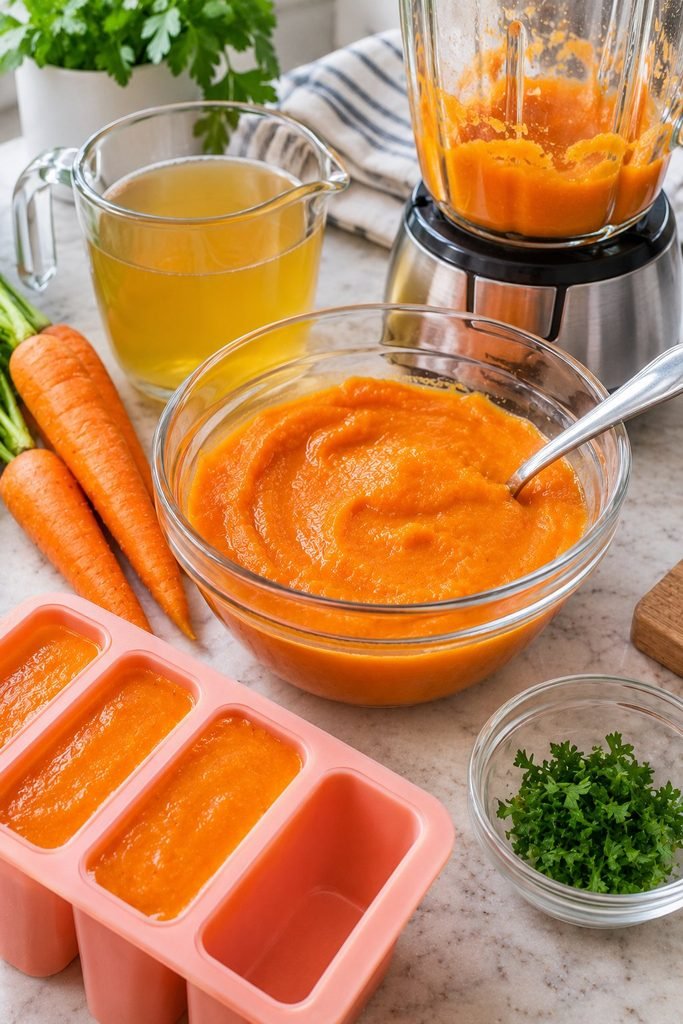
- Blend the carrots with half of the broth. Add the cooled carrots and 1 cup of the broth to a blender and blend on high for about 60 seconds, scraping down the sides once halfway through. The mixture should be completely smooth, like a thick orange soup, with no visible chunks or flecks. Starting with only half the broth keeps the blades working on a thick mixture, which blends much more smoothly than a thin one.
- Add the remaining broth and blend briefly. Pour in the other cup of broth and pulse for 10 to 15 seconds, just until combined. Add the parsley now, if using. The final mixture should be pourable, similar to a thin, smooth soup, and should coat the back of a spoon lightly. If it seems too thick to pour easily, add broth a tablespoon at a time until it flows.
- Prep your molds. Set a silicone popsicle mold, a small paper cup, or a silicone ice cube tray on a small baking sheet or tray. The tray keeps the molds level and makes it easy to carry them to the freezer without spilling.
- Pour the mixture into the molds. Fill each cavity to about 1/4 inch below the rim, since the mixture expands slightly as it freezes. Tap the tray firmly on the counter two or three times to release trapped air bubbles, which helps the brothsicles freeze evenly without hollow pockets.
- Freeze for 1 to 1 1/2 hours, then give each one a quick stir. Carrot puree can settle toward the bottom as it chills. If you’re using sticks or a mold with a handle, this is the moment to insert them, once the mixture is slushy enough to hold them upright. Give each cavity a gentle stir with a spoon or the stick itself to redistribute the carrot evenly, then return the tray to the freezer.
- Freeze until completely solid, at least 6 hours or overnight. Press gently on the center of one brothsicle to confirm it’s firm all the way through, not just frozen on top. If it still gives, freeze for another hour and check again.
- Release the brothsicles from the mold. Run the outside of the mold under warm water for about 10 seconds, or let it sit at room temperature for a minute or two, then gently pull or press each treat out. Forcing a stuck treat can crack it, so a little extra warming time is better than pulling hard.
How Much to Give Your Dog One brothsicle is plenty for most dogs, and smaller dogs may do best with half. Because broth contributes sodium and carrots contribute natural sugar, this is best treated as an occasional cooling treat rather than a daily staple, and it should never replace fresh water.
Storage Once frozen solid, transfer the brothsicles to a freezer-safe bag or airtight container, placing a small piece of parchment between layers so they don’t stick together. They’ll keep well for up to 2 months in the freezer.
My Tip I make these in a silicone bone-shaped mold as well as a standard popsicle mold. The smaller bone shapes are easier to portion for smaller dogs, and the popsicle versions are easier for larger dogs to lick without losing the whole treat at once.
If your dog loves the savory broth flavor, homemade beef bone broth gummies for dogs is another recipe worth trying, and easy frozen coconut dog treats for summer is a good option for a creamier, lighter flavor on another hot day.
Signs Your Dog Shouldn’t Have These
- Known allergy to carrots or to the type of broth used
- A vet-recommended low-sodium diet, such as for heart or kidney concerns
- Diabetes or another condition that calls for carefully controlled sugar intake
- A history of digestive upset after eating cold or frozen treats
If any of these apply to your dog, check with your vet before offering this recipe, or ask whether a no-salt-added broth would be a better fit.
Common Problems When Making These
Why is my brothsicle two different colors, pale on top and dark on the bottom? This is just the carrot puree settling as the mixture freezes. Giving each cavity a quick stir after the first hour of freezing, while it’s still slushy, keeps the carrot evenly distributed.
Why is my mixture gritty instead of smooth? The carrots were probably slightly undercooked, or the blending time was too short. Steam them until a fork slides in with no resistance, and blend for a full 60 seconds before adding the rest of the broth.
Why won’t my brothsicles come out of the mold? They likely need a few more seconds of warmth. Run the mold under warm water for 10 to 15 seconds, or let it sit at room temperature for a minute, and they should loosen without cracking.
Can I use a different vegetable instead of carrots? Plain cooked sweet potato or plain canned pumpkin can be swapped in using the same ratio, though the color and sweetness will change slightly.
Can I use homemade broth? Yes, as long as it’s made without onion, garlic, or salt, and cooled and skimmed of excess fat before use. Excess fat can make the finished treat greasy and harder for some dogs to digest.
How do I keep my dog from eating the whole thing too fast? Offer it on a mat or outdoors, or use a lick mat or a sturdy bowl to hold the brothsicle upright. A slower pace is easier on the stomach and makes the treat last longer.
More From The Pet Sphere
- 11 Vet-Friendly Frozen Dog Treat Recipes You Can Trust
- 9 Easy Frozen Dog Snacks for First-Time Dog Owners
- Simple Carrot Based Dog Treat Recipes for Beginners
- Homemade Beef Bone Broth Gummies for Dogs
- Easy Frozen Coconut Dog Treats for Summer
- Homemade Dog Treats
- Human Foods Dogs Can Safely Eat
Final Thoughts
These are one of the simplest ways I know to turn leftover carrots and a carton of broth into something my dog genuinely looks forward to on a hot day.
Steam, blend, pour, freeze, and let the freezer do the rest. If you’ve been looking for a first frozen treat that actually feels like a treat, start here.
📋 Recipe Card
Carrot Brothsicle Frozen Dog Treats
A savory, hydrating frozen treat made from steamed carrots and plain low sodium broth, blended smooth and frozen in popsicle molds.
| Prep Time | 15 minutes |
| Cook Time | 12 minutes |
| Freeze Time | 6 hours |
| Total Time | About 6 hours 30 minutes |
| Yield | 8 small brothsicles |
| Category | Dog Treats |
| Method | Steaming, Blending, Freezing |
| Suitable For | Adult dogs; ask your vet first for dogs on sodium-restricted or low-sugar diets |
Ingredients
- 3 medium carrots (about 1 1/2 cups chopped)
- 2 cups plain low sodium broth, onion and garlic free, divided
- 1 teaspoon finely chopped fresh parsley (optional)
Instructions
- Wash, peel if needed, and chop carrots into 1/2-inch pieces.
- Steam 10–12 minutes until fork-tender, then cool 10 minutes.
- Blend carrots with 1 cup broth for about 60 seconds until completely smooth.
- Add remaining broth and parsley, if using, and pulse briefly until pourable.
- Pour into molds, leaving 1/4 inch of space, and tap out air bubbles.
- Freeze 1–1 1/2 hours, then stir each mold gently and add sticks, if using.
- Freeze at least 6 hours or overnight, until solid all the way through.
- Run molds under warm water for about 10 seconds to release.
Notes
- Always confirm broth is free of onion, garlic, and added salt.
- Store frozen for up to 2 months, separated with parchment paper.
- Serve as an occasional treat, never as a replacement for fresh water.
Nutrition (per brothsicle, approximate) Calories: 10–15 | Fiber: from carrots | Fat: under 1g