30 Minute Stovetop Homemade Dog Food
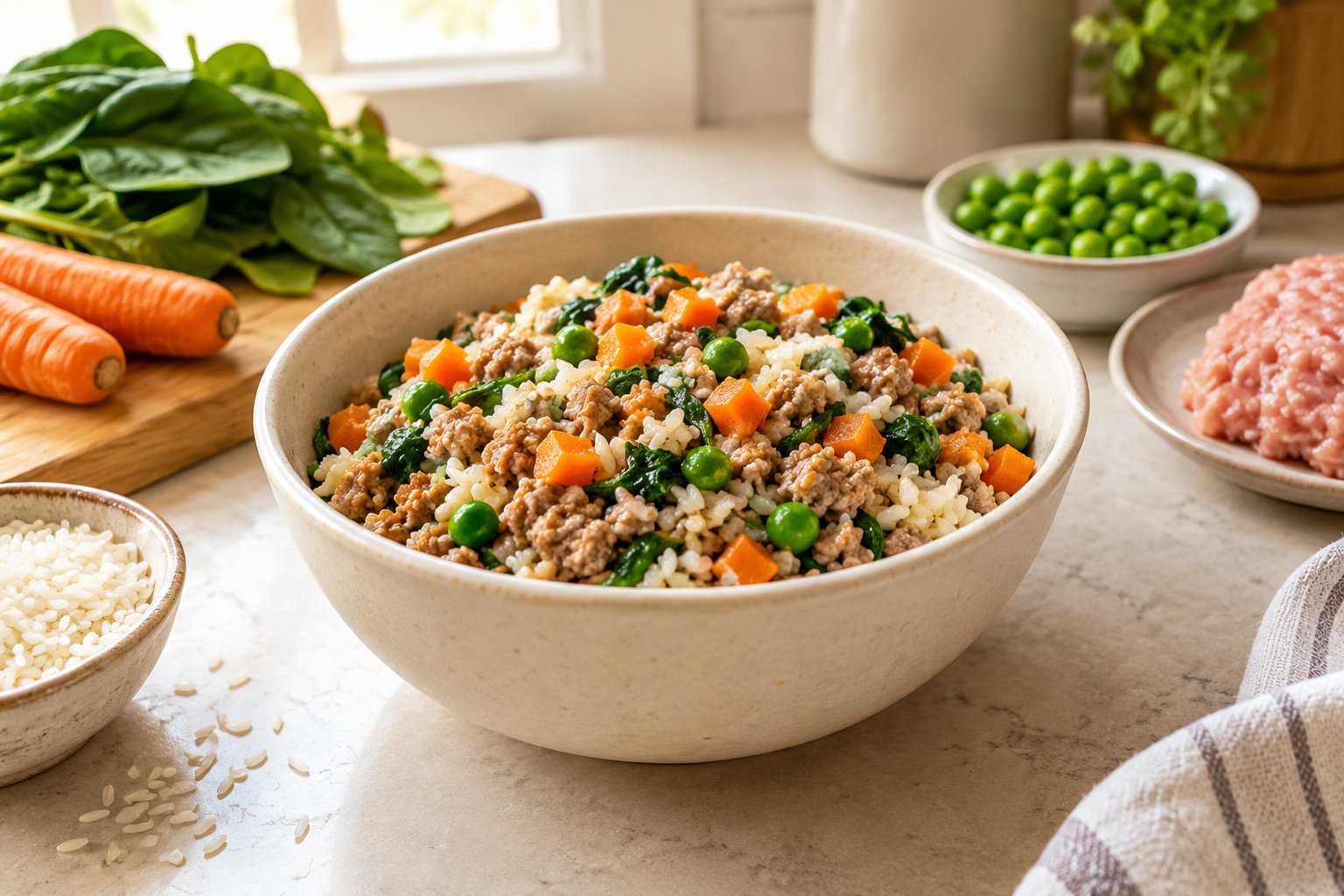
Not every homemade dog meal needs a slow cooker or hours of weekend preparation. On busy days, a simple one-pot recipe can make feeding time easier without leaving a mountain of dishes in the kitchen.
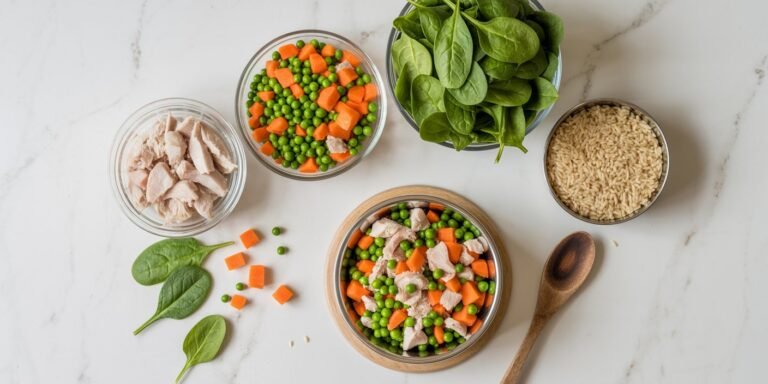
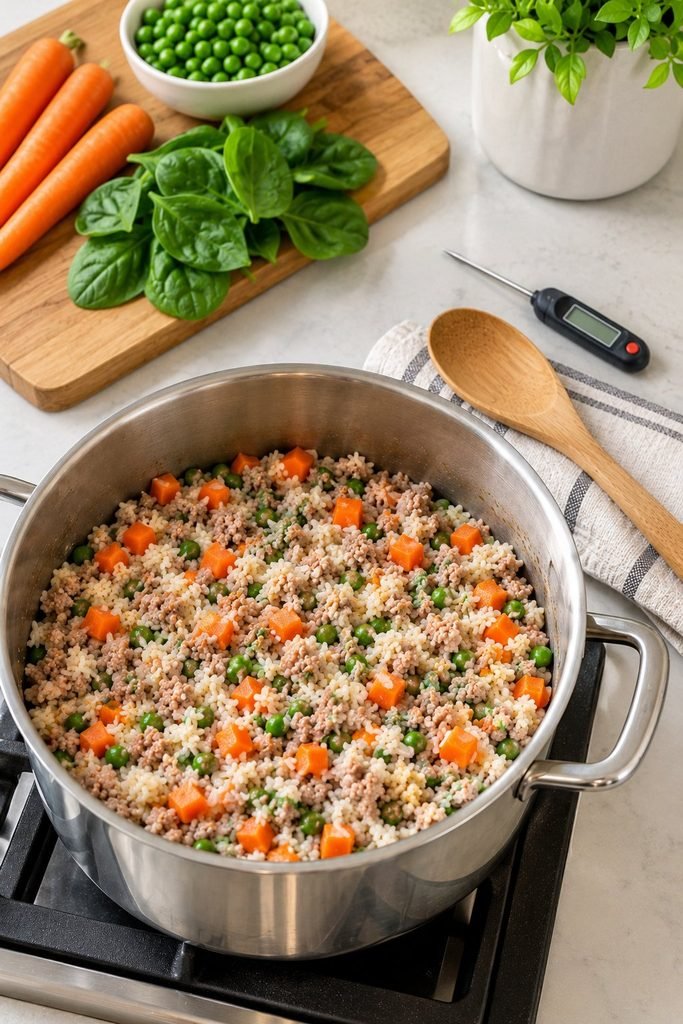
This 30 minute stovetop homemade dog food combines lean ground turkey, rice, carrots, peas, and spinach in one pot for a soft, moist meal you can prepare in about half an hour, plus cooling time.
I like the idea of having a quick recipe available for days when the freezer is running low on prepared portions or I want to add a little variety to my dog’s usual food.

The ingredients are straightforward, the cooking process is manageable, and the finished batch can be divided into portions for the refrigerator or freezer.
This recipe is intended as a food topper or occasional meal, not a complete daily diet. Homemade meat, rice, and vegetables do not automatically provide every nutrient a dog needs.
If you want to feed homemade food regularly, work with your veterinarian or a board-certified veterinary nutritionist to make sure the diet is balanced. For another fresh option, see my Homemade Fresh Dog Food Recipe. If you prefer a hands-off cooking method, my Easy Crockpot Dog Food Recipes offer a convenient alternative.
Why You’ll Love This Stovetop Dog Food
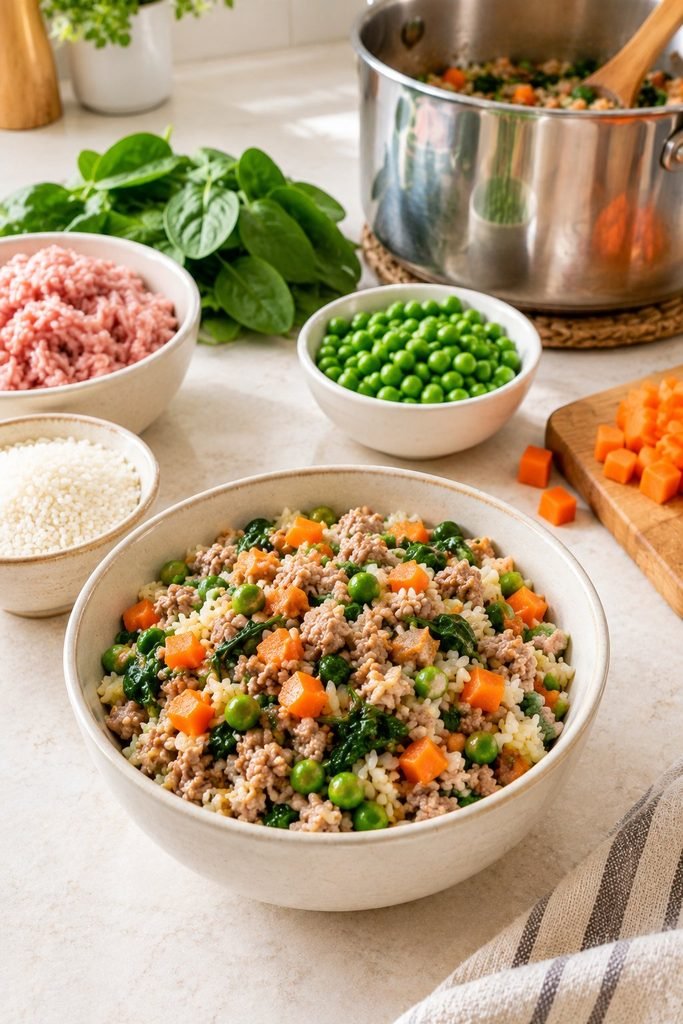
This recipe is useful when you want a straightforward homemade option without complicated preparation. A few simple ingredients go into one pot, and most of the cooking time does not require constant attention.
Ready in about 30 minutes. The turkey cooks quickly, and white rice needs less time than many other grains. Allow additional time for the food to cool completely before serving.
One-pot preparation. Cooking the turkey, rice, and vegetables in the same pot reduces the number of pans to wash afterward.
Easy-to-find ingredients. Lean ground turkey, rice, carrots, peas, and spinach are available at most grocery stores. You can also use plain frozen vegetables when needed.
Soft, moist texture. The rice absorbs water as it cooks, helping create a meal that is easy to portion and mix with your dog’s regular food.
Budget-conscious cooking. Ground turkey and rice can stretch across several portions, especially when the recipe is used as a topper alongside a complete and balanced dog food.
Convenient for meal preparation. The finished food can be divided into small containers and refrigerated or frozen, making it easier to serve measured portions later.
Important Nutrition Note Before You Start
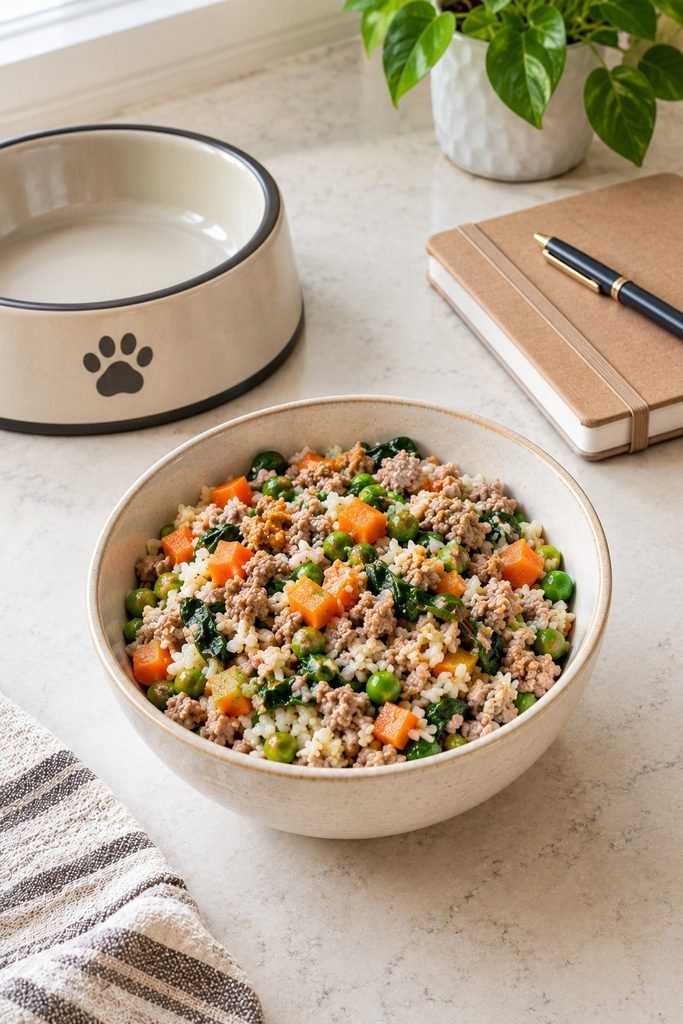
This stovetop dog food recipe contains protein, carbohydrates, and vegetables, but that does not make it nutritionally complete.
Dogs need appropriate amounts of calcium, essential fatty acids, vitamins, minerals, and other nutrients in proportions that meet their individual needs.
Meat, rice, and vegetables alone do not reliably supply everything required for long-term feeding.
Use this recipe as a topper or occasional meal unless a veterinarian or board-certified veterinary nutritionist has helped you formulate a complete version for your dog.
If you add it to your dog’s regular food, remember that toppers contribute calories and should not cause the overall diet to become unbalanced.
Puppies need carefully controlled nutrition for growth, and dogs with medical conditions may require specific dietary adjustments. Ask your veterinarian before using homemade food as a regular part of their diet.
For additional ideas and guidance, visit my Simple Homemade Dog Food Recipes guide.
Is Homemade Dog Food Safe?
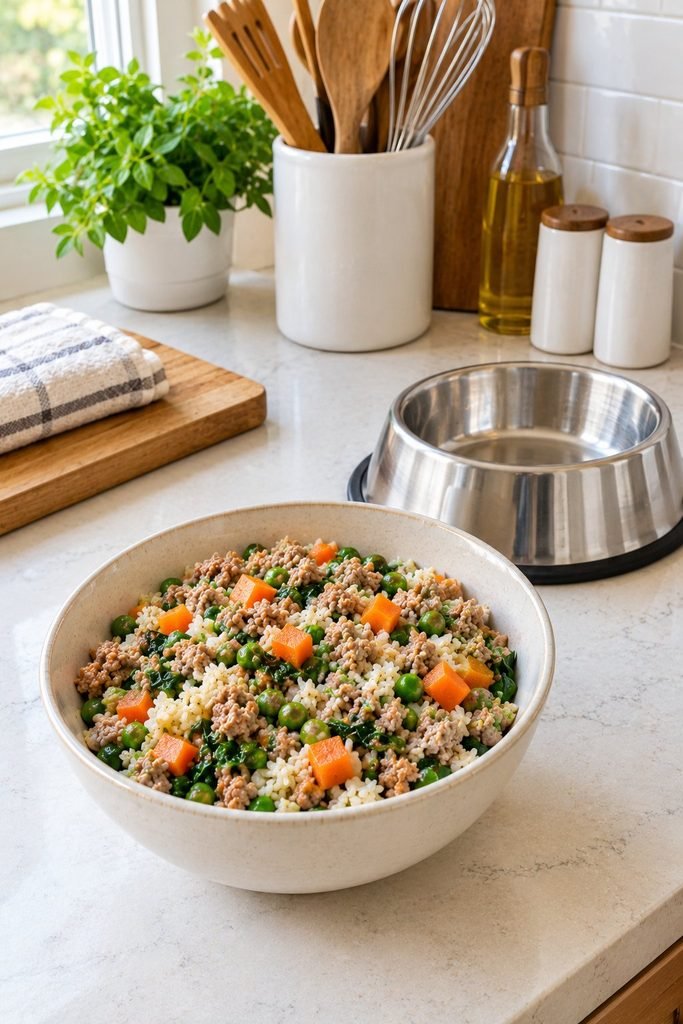
Homemade dog food can be prepared safely when you handle the ingredients correctly, cook them thoroughly, and store the finished batch properly.
The most important step is keeping the recipe plain and avoiding ingredients that can harm dogs.
Cook the turkey thoroughly. Ground turkey should reach an internal temperature of 165°F (74°C). Use a food thermometer to check the thickest portion rather than relying only on the color of the meat.
Avoid onion and garlic. Both can be toxic to dogs, including when used in powders, seasoning blends, sauces, or broth.
Skip added salt and seasoning. Dogs do not need seasoned food, and certain seasonings or seasoning mixes may contain unsafe ingredients.
Choose lean ground turkey. Excess fat can cause digestive upset and may increase the risk of pancreatitis in susceptible dogs. Drain excess fat after browning the meat.
Avoid known toxic foods. Never add chocolate, grapes, raisins, macadamia nuts, or xylitol-containing products to this recipe.
Keep food preparation hygienic. Wash your hands, utensils, and work surfaces after handling raw turkey. Use clean containers for the finished food, and refrigerate it promptly after cooling.
Ingredients You’ll Need
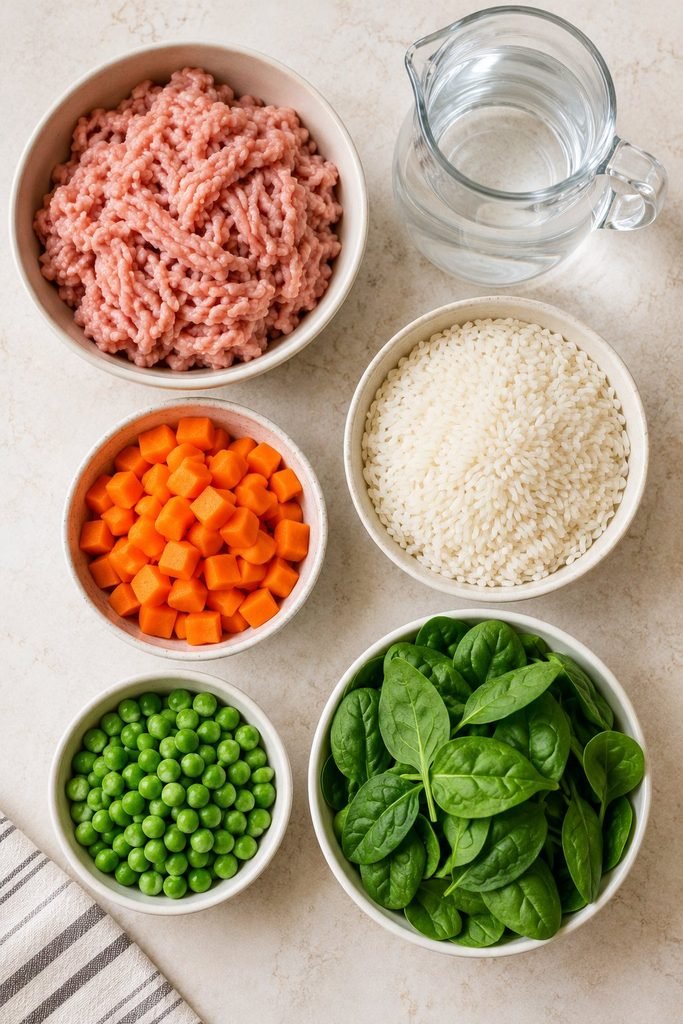
The recipe uses everyday ingredients, but each one serves a different purpose. Measure them before you begin so you can add everything at the appropriate stage of cooking.
Lean ground turkey
Turkey provides the main protein component. Choose plain, lean ground turkey without added seasonings, sauces, or flavoring ingredients. Brown it thoroughly before adding the rice and water.
White rice
Long-grain white rice cooks relatively quickly and creates a soft texture when simmered with enough water. Brown rice can also be used, but it generally requires more water and a longer cooking time.
Carrots
Finely diced carrots add color, fiber, and beta-carotene. Cut them into small, evenly sized pieces so they have enough time to soften while the rice cooks.
Peas
Plain fresh or frozen peas provide additional texture and fiber. Avoid peas prepared with salt, butter, sauces, or seasoning.
Spinach
A small amount of chopped spinach adds leafy greens to the recipe. Stir it in near the end of cooking so it wilts without becoming unnecessarily overcooked.
Fish oil or coconut oil
The original recipe includes one tablespoon of fish oil or coconut oil. These oils are not interchangeable from a nutritional standpoint, and the amount your dog needs depends on its overall diet and health.
Use only an appropriate product and check with your veterinarian before adding oil regularly. Do not use flavored products or supplements containing unsafe additives.
Water
Water cooks the rice and helps the ingredients form a moist mixture. Plain water is the simplest option. If you use broth to adjust the consistency later, confirm that it contains no onion or garlic and has no unnecessary seasoning.
Ingredient List
- 1 pound lean ground turkey
- 1 cup uncooked long-grain white rice
- 3 cups water
- 1 cup finely diced carrots
- 1/2 cup plain fresh or frozen peas
- 1/2 cup chopped fresh spinach
- 1 tablespoon fish oil or coconut oil, if appropriate for your dog
How to Make 30 Minute Stovetop Dog Food
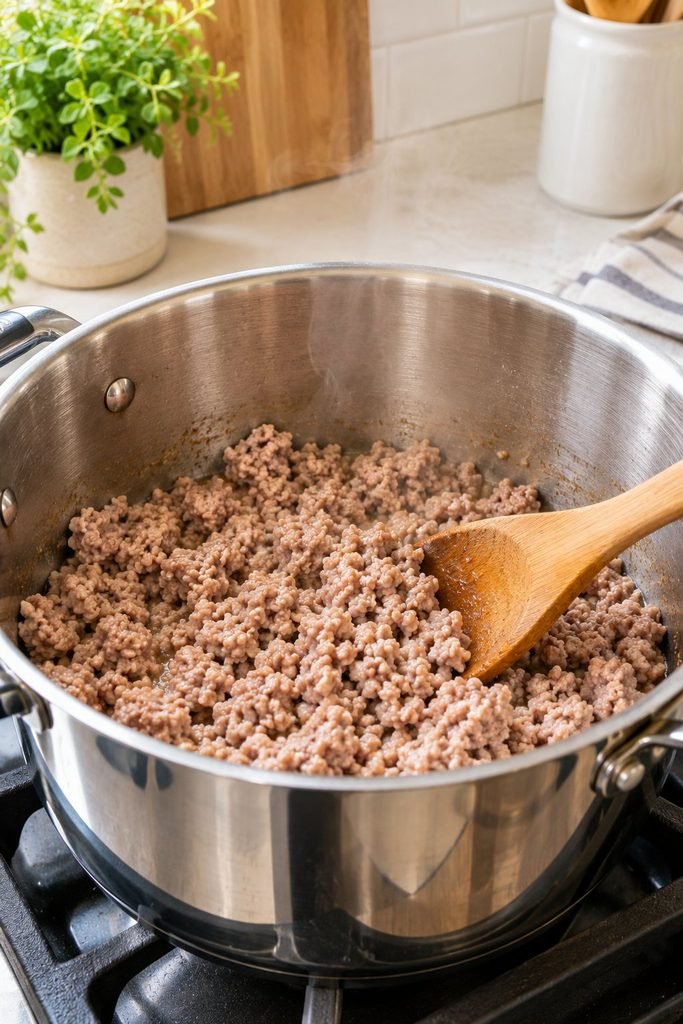
The key to making this recipe efficiently is preparing the carrots in small pieces and allowing the rice to cook covered.
Keep the heat low after the mixture reaches a boil so the rice cooks evenly without scorching on the bottom.
Step 1: Cook the Ground Turkey
Place a large, deep pot over medium heat. Add the ground turkey and break it into small pieces with a wooden spoon.
Cook for about 6 to 8 minutes, stirring regularly, until the meat is fully cooked and reaches an internal temperature of 165°F (74°C).
Drain excess fat if needed. Avoid rinsing cooked meat in the sink, as splashing can spread contamination around the kitchen.
Step 2: Add the Rice, Water, and Carrots
Add the uncooked rice, water, and finely diced carrots to the pot. Stir to distribute the ingredients and bring the mixture to a boil.
Once it boils, reduce the heat to low and cover the pot with a lid. Keeping the lid on helps retain steam, which is important for cooking the rice properly.
Step 3: Simmer Until the Rice Is Tender
Let the mixture simmer for approximately 15 minutes, checking the rice near the end of the cooking period. The grains should be tender, and most of the water should be absorbed.
Cooking time can vary depending on the pot, stove, rice brand, and size of the carrot pieces. If the rice is still firm, add a little hot water and continue cooking until it is tender. Do not serve the recipe with undercooked rice.
Step 4: Add the Peas and Spinach
Stir in the peas and chopped spinach. Cover the pot and cook for another 3 minutes, or until the vegetables are heated through and the spinach has wilted.
If you are using frozen vegetables, make sure the mixture becomes thoroughly hot before removing it from the stove.
Step 5: Let the Mixture Rest
Turn off the heat and leave the pot covered for 5 minutes. This gives the rice a little more time to absorb moisture and allows the ingredients to settle.
Stir in the oil only if you have confirmed that it is appropriate for your dog. Let the food cool completely before serving. The mixture should never be hot enough to burn your dog’s mouth.
Getting the Right Consistency
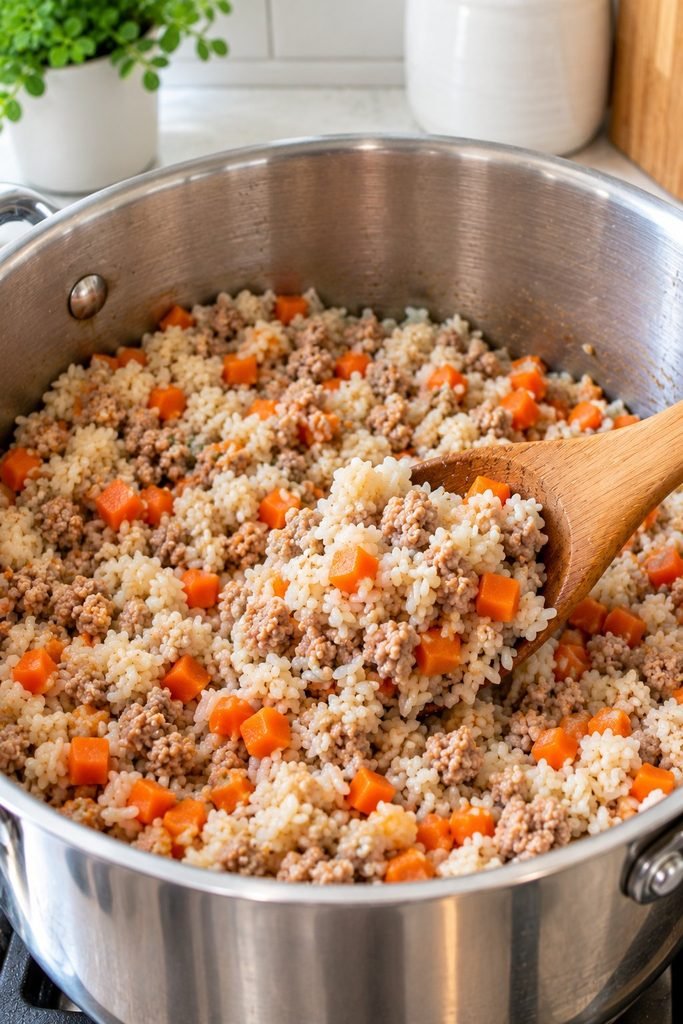
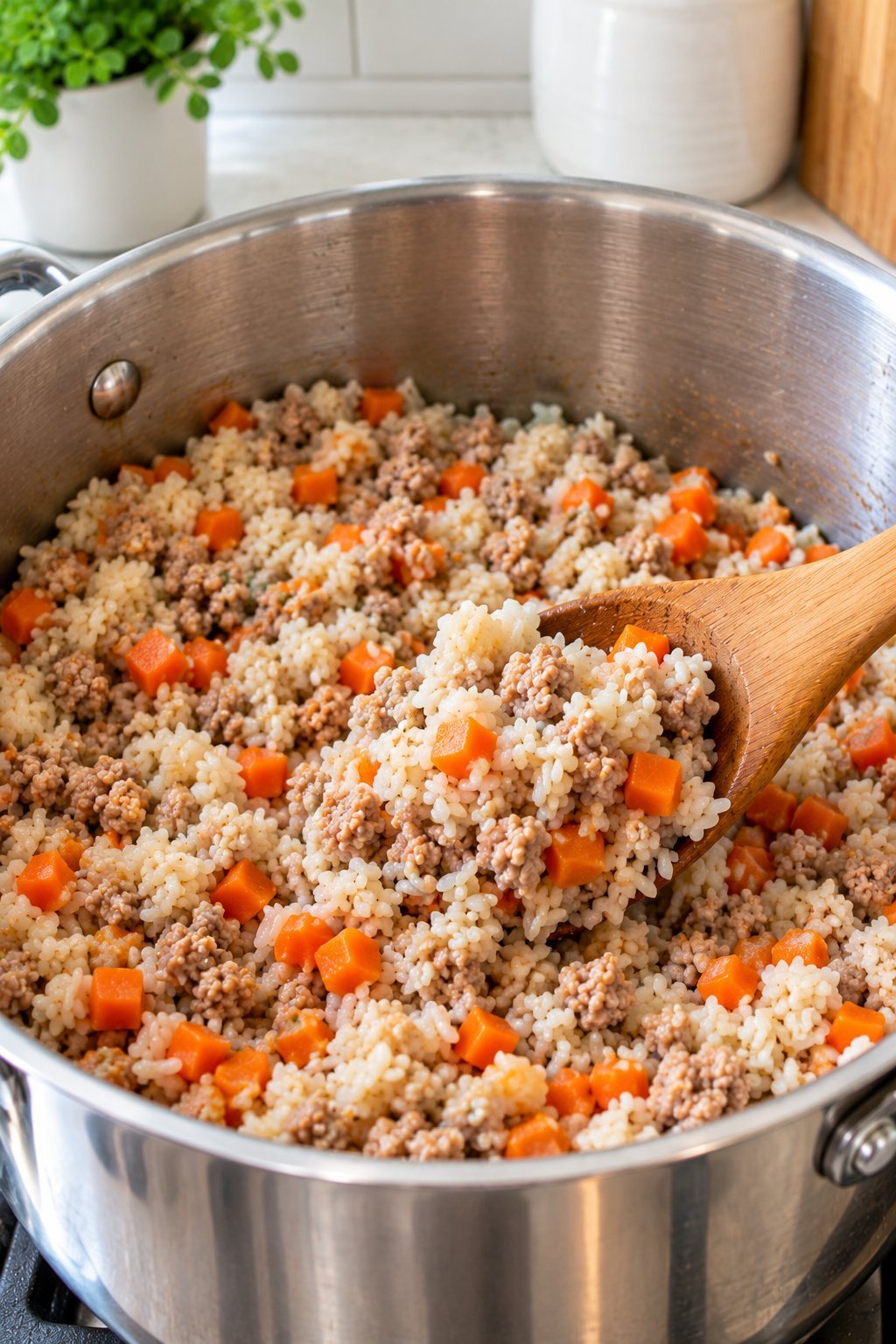
The finished food should be moist and soft, with tender rice, fully cooked vegetables, and small pieces of turkey. You can adjust the texture slightly to suit your dog’s preferences, but the ingredients must remain thoroughly cooked.
If the mixture looks too dry, stir in a small amount of warm water. You can also use a plain, low-sodium broth only if its ingredient list is safe for dogs and contains no onion or garlic.
If the mixture looks too wet, simmer it uncovered for a few extra minutes while stirring occasionally. Keep the heat low enough to prevent the rice from sticking or burning.
For smaller dogs, break up larger pieces of turkey and carrots before serving. A softer texture may make portioning easier, but adjust the size to your individual dog’s chewing ability.
For a smoother texture, mash a portion with a fork or briefly pulse it in a food processor. Avoid turning the entire batch into a puree if your dog prefers a little texture.
For evenly cooked carrots, dice them into small, uniform pieces before adding them to the pot. Large chunks may remain firm after the rice has finished cooking.
Recipe Variations
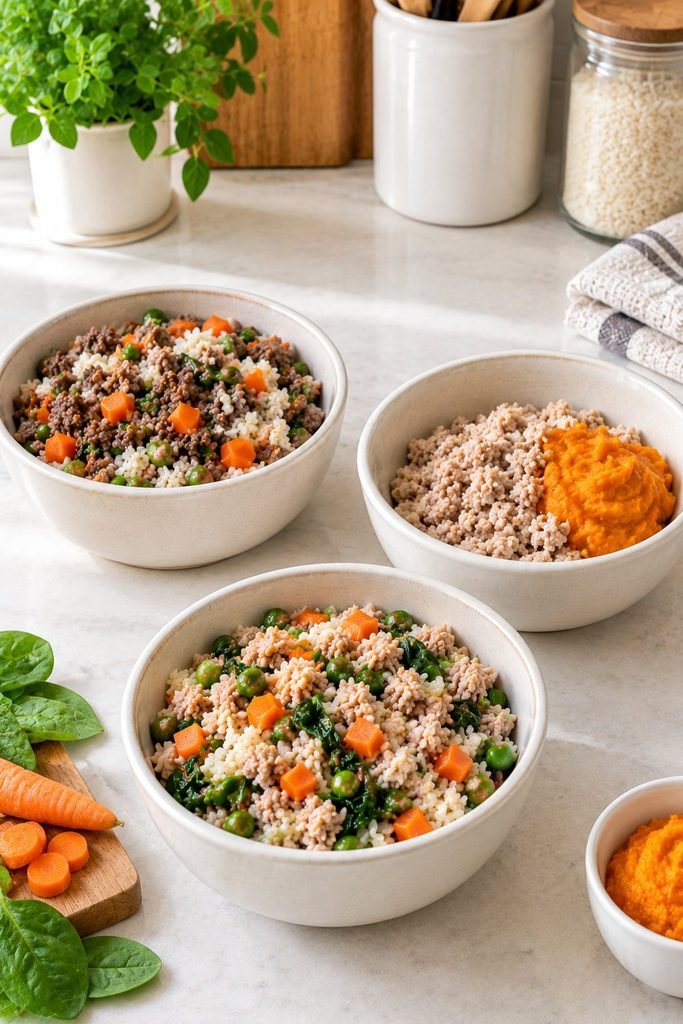
Once you have made the basic stovetop recipe, you can make a few simple changes to use ingredients you already have. Keep every variation plain and dog-safe, and remember that changing the protein or vegetables does not automatically make the recipe nutritionally complete.
Chicken version. Replace the ground turkey with lean ground chicken. Cook it thoroughly to an internal temperature of 165°F (74°C), and drain excess fat if necessary.
Beef version. Use lean ground beef and drain the excess fat after cooking. For another beef-based option, try my Ground Beef and Lentil Copycat Dog Food.
Sweet potato version. Replace the carrots with finely diced, peeled sweet potato. The pieces may need additional cooking time, so check that they are completely tender before serving.
Pumpkin addition. Stir in a small amount of plain pumpkin puree after cooking if it suits your dog’s diet. Choose pumpkin without added sugar, spices, or sweeteners. For another pumpkin-inspired idea, see my Homemade Pumpkin Dog Treats.
Gravy topper. Add a small spoonful of dog-safe gravy when serving if your dog enjoys a moister meal. My Best Homemade Dog Gravy recipe offers another option. Check all ingredients carefully and avoid onion, garlic, excess salt, and unsafe seasonings.
Brown rice version. Brown rice generally needs more water and a longer cooking period than white rice. Follow the package instructions and cook until the grains are completely tender. The original recipe’s 30-minute timing may not apply to this version.
Common Mistakes to Avoid
A few small adjustments can make this recipe easier to prepare and safer to serve.
Treating it as a complete daily diet. This is the most important mistake to avoid. The recipe does not provide a guaranteed balance of essential nutrients for long-term feeding. Use it as a topper or occasional meal unless your veterinarian or a veterinary nutritionist has formulated a balanced version.
Adding onion, garlic, or seasoning. Keep the ingredients plain. Check broth, gravy, and other additions for hidden ingredients that may be unsafe for dogs.
Using meat with too much fat. Choose lean ground turkey and drain excess fat after cooking. If your dog has a history of pancreatitis or digestive problems, ask your veterinarian whether the recipe is appropriate.
Lifting the lid too often. Steam helps the rice cook evenly. Keep the pot covered during simmering and check the texture near the end of the cooking time.
Leaving the rice undercooked. The exact cooking time can vary, so test the rice before adding the final vegetables. Continue cooking with a little extra water if the grains are still firm.
Switching foods too quickly. Introduce a new food gradually over several days, often around 5 to 7 days, if your veterinarian agrees. Watch for vomiting, diarrhea, or other signs of intolerance.
Serving the food too hot. Allow the mixture to cool completely before offering it to your dog.
How Much Should You Feed?
The appropriate serving depends on your dog’s weight, age, activity level, health, and usual diet.
There is no single portion size that works for every dog, and the recipe’s total yield does not tell you how many meals it should provide.
If you are using the food as a topper, start with a small amount mixed into your dog’s regular complete and balanced food.
Reduce the regular portion as appropriate to account for the extra calories, and keep toppers and treats within your dog’s overall calorie allowance.
For a full homemade meal, do not estimate the serving based only on your dog’s size. Ask your veterinarian to help determine daily calorie needs and whether the recipe can be safely adapted.
Puppies and dogs with medical conditions need particular care when their diets change.
How to Store Homemade Dog Food
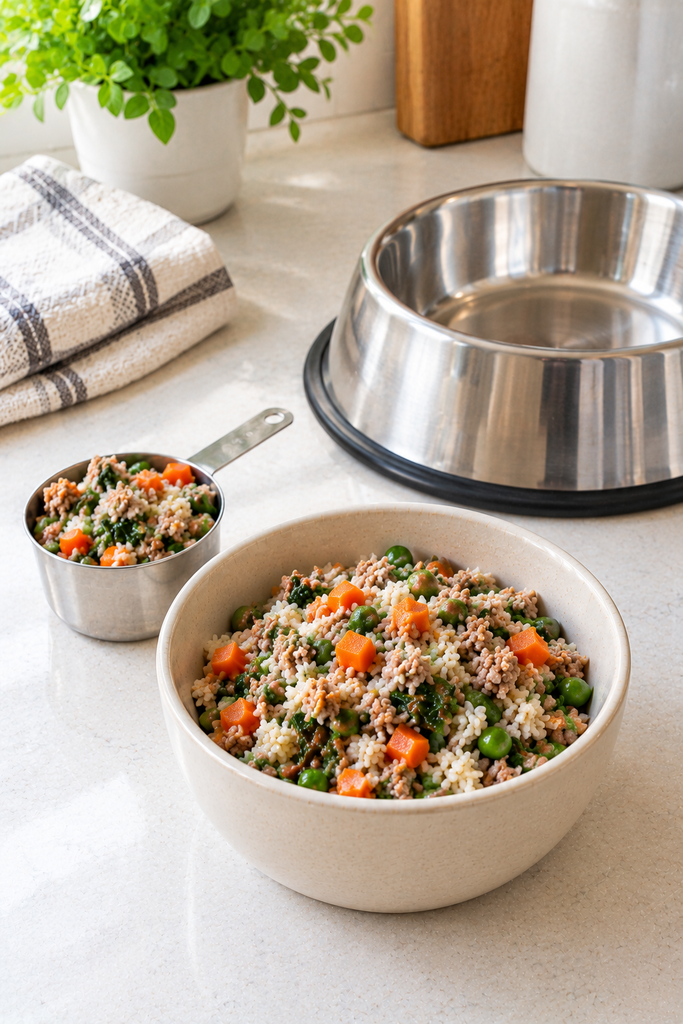
Because this recipe contains cooked meat, rice, and vegetables, proper cooling and refrigeration are important.
Refrigerator: Divide the food into shallow, clean containers and refrigerate promptly. Use refrigerated portions within 3 to 4 days.
Freezer: Freeze individual portions in airtight, freezer-safe containers or bags for up to 3 months for best quality.
Serving: Remove only the portion you need, and avoid repeatedly warming and cooling the entire batch. Discard food that has been left at room temperature for too long or shows signs of spoilage.
For a convenient portion-controlled alternative, see my Portion Perfect Meat Muffins for Dogs, which can also be divided into individual servings.
Can You Freeze This Dog Food?
Yes. Freezing is useful when you want to prepare a batch in advance and avoid cooking every day. Let the food cool promptly, then portion it before freezing so you can thaw only what you need.
- Allow the food to stop steaming and cool promptly in shallow containers.
- Divide it into portions appropriate for your feeding routine.
- Transfer the portions to airtight, freezer-safe containers or bags.
- Label each container with the preparation date.
- Freeze promptly.
- Thaw a portion in the refrigerator overnight, then serve it at a safe temperature.
Do not thaw the food on the counter for extended periods. If you warm a portion, stir it thoroughly and check the temperature before serving so there are no hot spots. Discard leftovers that have been in your dog’s bowl for too long.
More Homemade Recipes to Try
If you want to explore more homemade dog food ideas, these recipes and guides offer different ingredients and cooking methods:
- Homemade Fresh Dog Food Recipe (Farmer’s Dog Style)
- Ground Beef and Lentil Copycat Dog Food
- Portion Perfect Meat Muffins for Dogs
- Simple Homemade Dog Food Recipes
- Easy Crockpot Dog Food Recipes
For a wider look at homemade feeding ideas, visit 7 Healthiest Homemade Dog Foods.
Frequently Asked Questions
Is this a complete homemade dog food diet?
No. Ground turkey, rice, and vegetables do not supply every nutrient a dog needs in the correct proportions. Use this recipe as a topper or occasional meal unless a veterinarian or board-certified veterinary nutritionist has helped formulate a complete and balanced version.
Can I use brown rice instead of white rice?
Yes, but brown rice takes longer to cook and usually requires additional water. Follow the package instructions and check that the rice is tender before serving. The total cooking time will be longer than 30 minutes.
Can I use frozen vegetables?
Yes. Plain frozen peas and carrots can be convenient alternatives to fresh vegetables. Frozen spinach can also be used if it is plain and appropriate for your dog’s diet. Add the vegetables during cooking and make sure they are heated through.
Can I use raw turkey in this recipe?
The recipe begins by cooking the ground turkey in the pot. Do not skip that step. Ground turkey should reach 165°F (74°C). Raw meat can carry harmful bacteria, so discuss any raw-feeding plan with your veterinarian before considering it.
Can I make a larger batch?
Yes, provided you use a sufficiently large pot and adjust the cooking time as needed. Doubling the ingredients does not necessarily mean the rice will cook in the same amount of time, so check the texture and ensure the turkey is fully cooked. Divide the finished batch into shallow containers for prompt cooling and storage.
For another convenient batch-cooking option, try my Simple 5 Ingredient Crockpot Meals for Dogs on a Budget.
How long does homemade stovetop dog food last?
Store it in the refrigerator for 3 to 4 days or freeze individual portions for up to 3 months for best quality. Refrigerate promptly, use clean containers, and discard food if you suspect spoilage.
Can puppies eat this recipe?
Puppies have specific nutritional requirements for growth, and an unbalanced homemade diet can cause nutritional problems. Ask your veterinarian before feeding this recipe to a puppy, particularly if you are considering using it regularly.
30 Minute Stovetop Homemade Dog Food
Ingredients
Equipment
Method
- Prepare the ingredients. Wash and finely chop the carrots and green beans. Measure the rice, pumpkin puree, and water before starting.
- Cook the turkey. Place the ground turkey in a large saucepan over medium heat. Break it into small pieces with a wooden spoon and cook for about 5–7 minutes, stirring regularly.
- Add the rice and vegetables. Stir in the uncooked brown rice, chopped carrots, green beans, and water. Mix everything well.
- Bring the mixture to a boil. Allow the liquid to reach a gentle boil, then reduce the heat to low. Cover the pot and simmer for approximately 15–20 minutes, stirring occasionally.
- Check the rice and turkey. The rice should be tender, the vegetables should be soft, and the ground turkey must reach an internal temperature of 165°F (74°C). If the rice needs more time, add a little water and continue cooking until tender. The 30-minute timing may vary depending on your rice and pot.
- Stir in the pumpkin. Add the plain pumpkin puree and stir until evenly distributed. Let the mixture cook for another 1–2 minutes.
- Cool before serving. Remove the pot from the heat and let the food cool to a safe serving temperature. Break up any large pieces before feeding.
- Portion and store. Divide the food into suitable portions. Refrigerate what you will use within 3–4 days and freeze the remaining portions for longer storage.
- Choose lean turkey: I use plain, lean ground turkey without seasoning. Avoid onion, garlic, excess salt, and seasoning mixes because they are not appropriate additions to this dog food recipe.
- Keep the pieces small: Finely chopping the carrots and green beans helps them soften evenly and makes the finished food easier to portion.
- Adjust the consistency: Add a little warm water if the food becomes too thick. The finished mixture should be moist, with tender rice and soft vegetables.
- Storage: Refrigerate promptly in airtight containers and use within 3–4 days. Freeze individual portions for longer storage and thaw them in the refrigerator before reheating. Discard food left at room temperature for more than 2 hours.
- Common mistake to avoid: Adding the pumpkin too early can make the mixture thicker and harder to stir while the rice cooks. Stir it in near the end, once the rice and vegetables are tender.
- Serving guidance: Let the food cool before serving and introduce it gradually if your dog is not accustomed to these ingredients. Your dog’s portion depends on size, age, activity level, and health.
- Important nutrition note: This recipe is not complete and balanced for long-term feeding. Meat, rice, and vegetables alone do not provide every essential nutrient in the correct proportions, particularly calcium and certain vitamins and minerals. Before using it as your dog’s main daily food, ask a veterinarian or board-certified veterinary nutritionist to formulate a balanced recipe for your dog.
A Final Note on Cooking Quick Meals for Your Dog
A simple stovetop recipe can be useful when you need a homemade topper without spending hours in the kitchen. The turkey, rice, and vegetables are easy to prepare together, and dividing the finished batch into portions makes future meals more convenient.
Keep the ingredients plain, cook the turkey thoroughly, cool and store the food safely, and introduce it gradually if your veterinarian agrees.
Most importantly, remember that a quick homemade recipe is not automatically a complete diet. A little planning and professional nutritional guidance can help you make safer choices for your dog’s everyday meals.