
Essential Winter and Rainy Weather Gear Every Dog Owner Needs
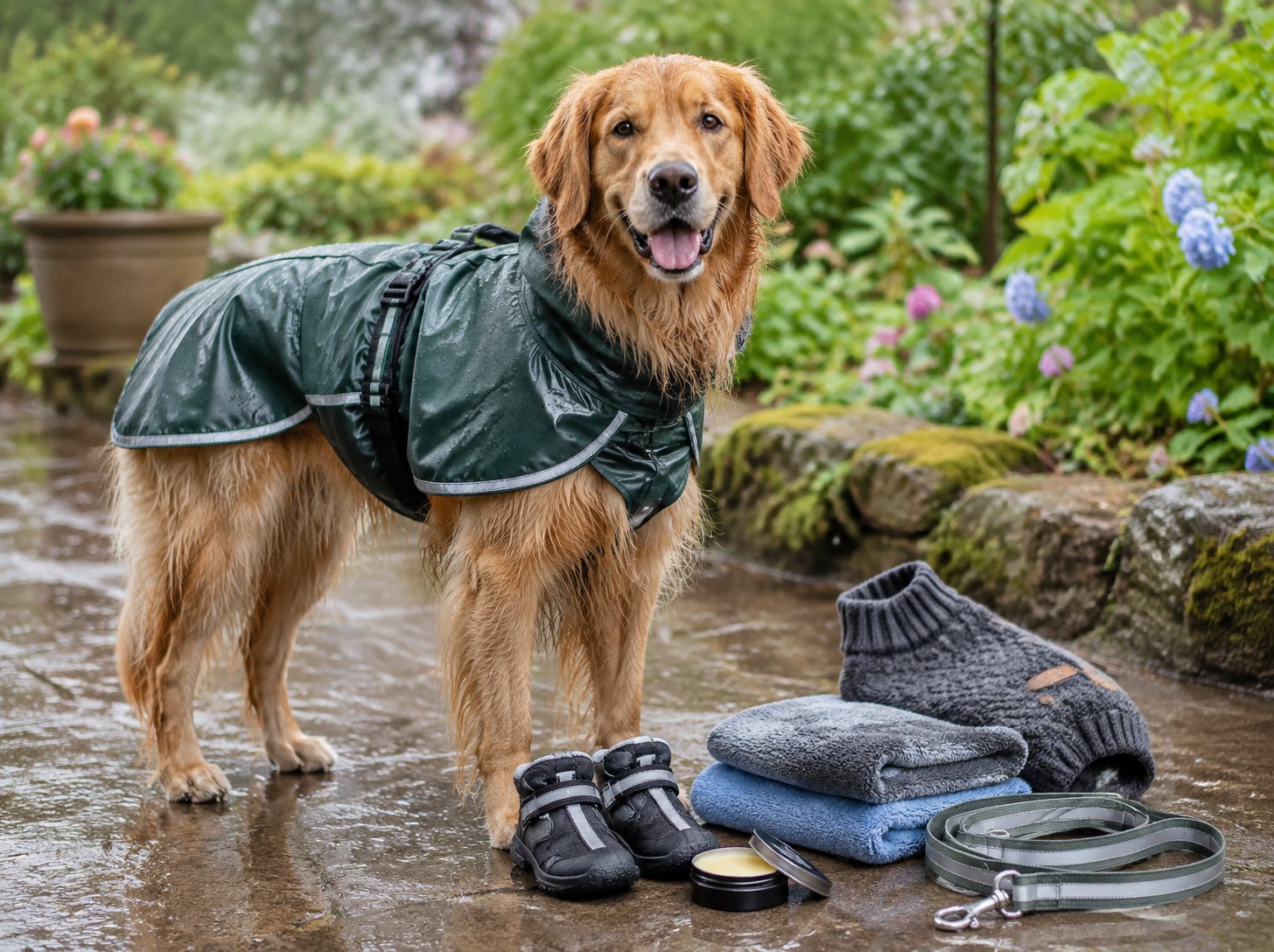
Cold, wet weather changes everything about walking a dog. Paws get icy and salty, coats get soaked, daylight disappears early, and some dogs simply refuse to go outside in a downpour.
The right gear makes these months safer and more comfortable for both of you, and it can turn a dreaded walk into something your dog actually enjoys.
This guide covers the essentials, from raincoats and boots to paw care, drying supplies, and visibility gear.
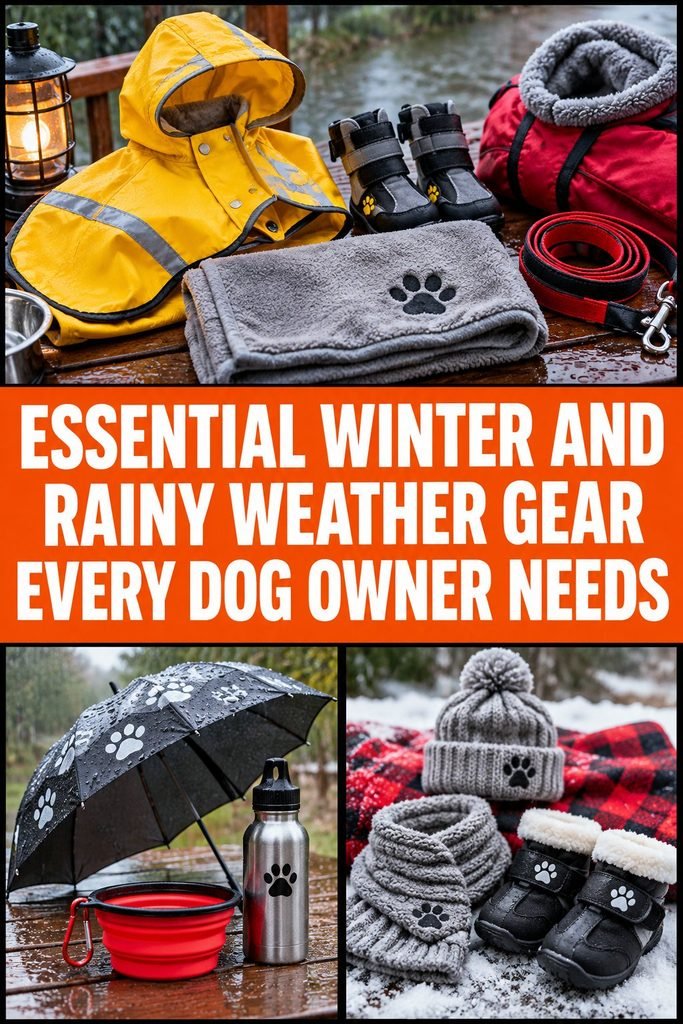
I’ll also cover the cold weather safety points that matter most, since not every dog handles winter the same way.
Every dog is different, so use this as a starting point and ask your veterinarian about your dog’s specific needs, especially for puppies, seniors, and dogs with health conditions.
First, Does Your Dog Actually Need Gear?
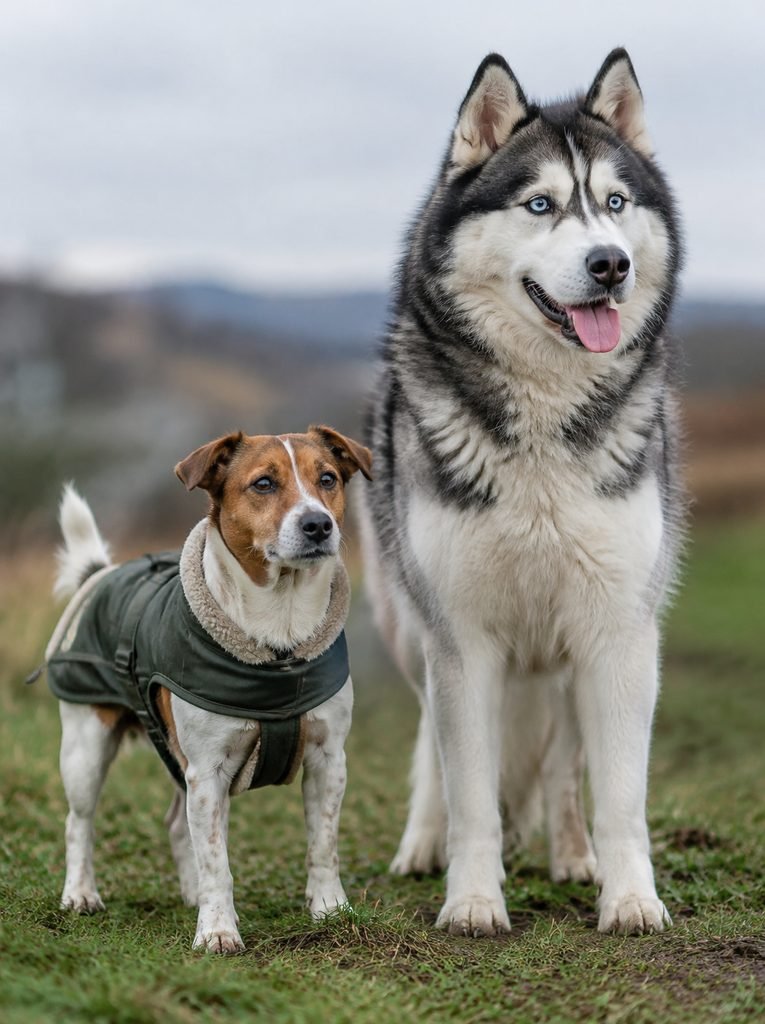
Not every dog needs a coat or boots. A few things influence how well a dog handles cold and wet weather.
Coat type. Thick double coated breeds often tolerate cold well, while short haired and thin coated dogs get chilled quickly.
Size. Small dogs lose body heat faster and sit closer to cold, wet ground.
Age. Puppies and senior dogs have a harder time regulating body temperature.
Health. Dogs with arthritis, heart disease, kidney disease, or other conditions may struggle in the cold.
Body condition. Lean dogs have less insulation than dogs with more body fat.
Acclimation. Dogs used to cold weather often handle it better than dogs who’ve lived mostly indoors.
Watch your dog. Shivering, lifting paws, slowing down, or trying to turn back toward home are all signs they’re uncomfortable.
Gear One: A Well Fitted Raincoat
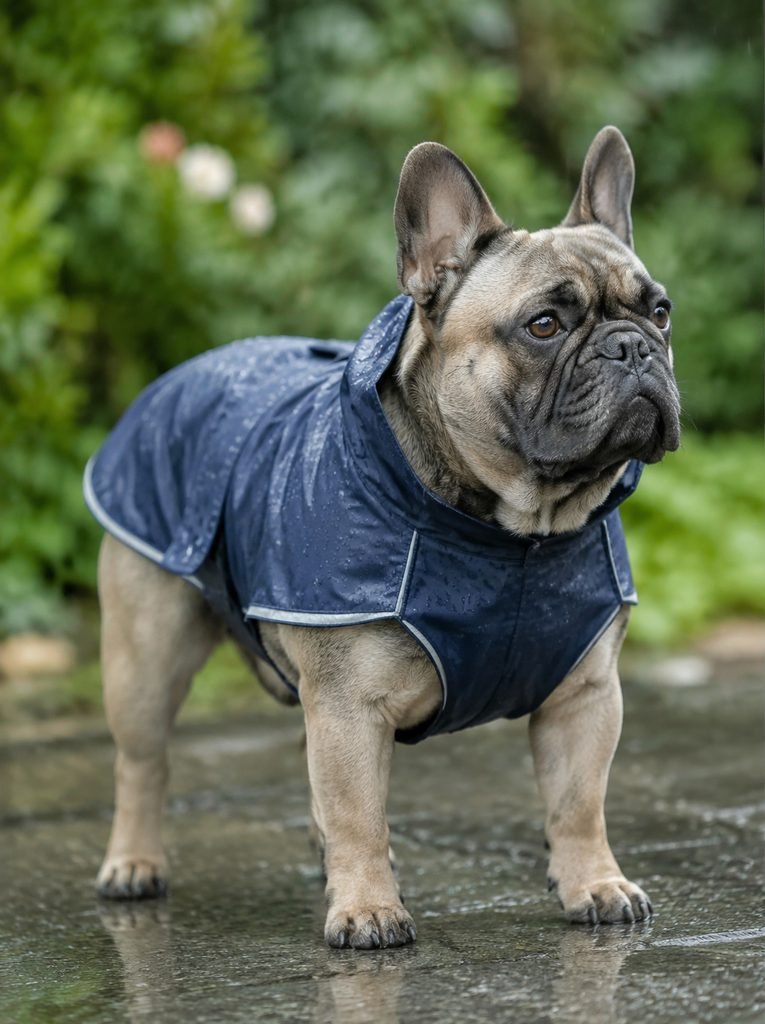
A good raincoat keeps your dog dry, which helps keep them warm.
What to look for. A waterproof or water resistant outer layer, full coverage of the back and chest, an adjustable fit, and openings for the leash clip and legs. A hood or high neck helps in heavy rain.
Fit matters. The coat should be snug but not tight, with room to walk, sit, and potty comfortably. It shouldn’t rub, restrict movement, or ride up.
Safety. Choose one without dangling cords, loose trim, or small parts a dog could chew off.
Best for. Dogs who hate getting wet, short haired dogs, and small dogs.
Gear Two: A Warm Coat or Sweater
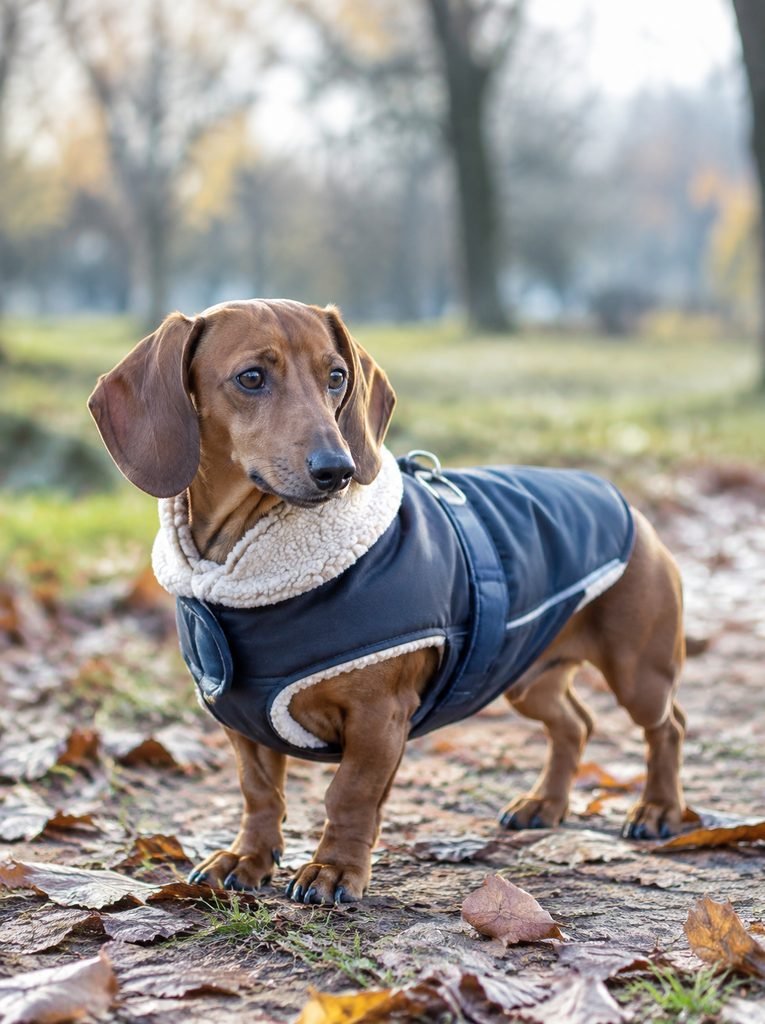
For cold temperatures, insulation matters more than waterproofing.
What to look for. A snug, insulated or fleece lined design that covers the chest and belly, with an easy closure.
Who needs one. Small breeds, short haired dogs, puppies, seniors, and dogs with health conditions.
Who doesn’t. Thick coated, cold loving breeds usually don’t need one, and a coat can cause overheating.
Safety. Make sure the coat isn’t too tight, doesn’t hide the collar, and doesn’t have parts your dog can chew. Take it off indoors, and never leave a dog unsupervised in clothing.
Gear Three: Dog Boots
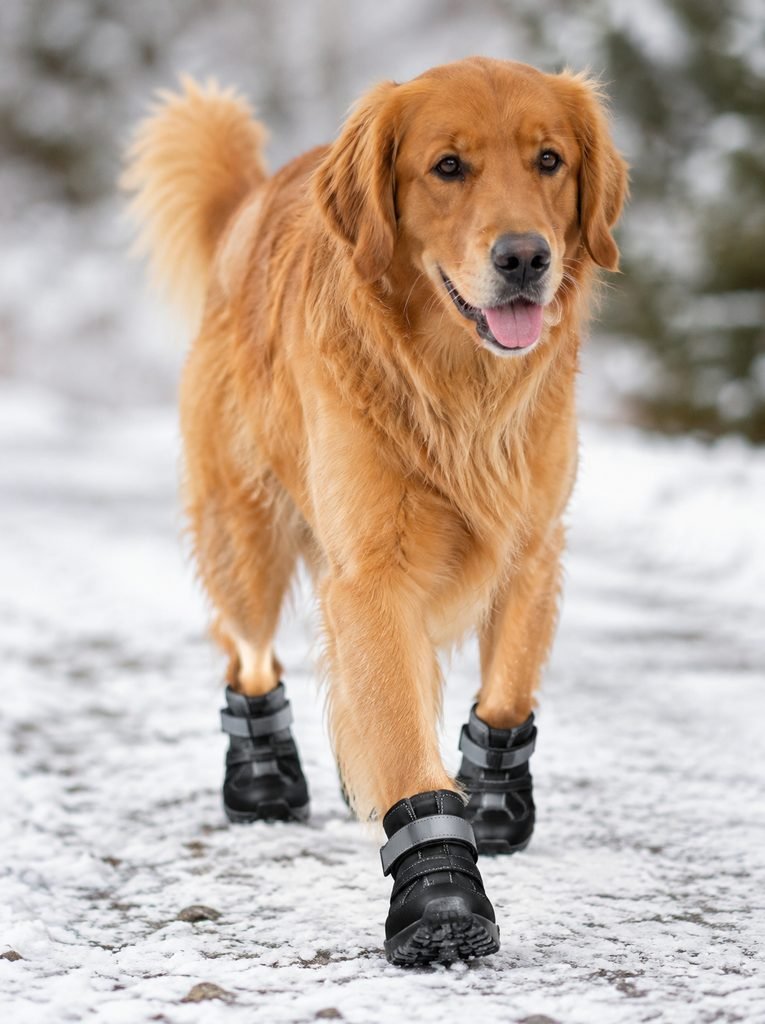
Boots protect paws from ice, salt, and cold ground.
What to look for. A flexible, non slip sole, a secure closure, and a snug fit around the leg.
Introduce them slowly. Many dogs dislike boots at first. Let your dog wear them indoors with treats before heading out.
Fit matters. Measure your dog’s paw width, and choose the size by the manufacturer’s chart.
Check often. Look at paws after every walk for irritation or rubbing.
Alternative. If your dog refuses boots, use paw balm and rinse paws after walks.
Gear Four: Paw Balm or Wax
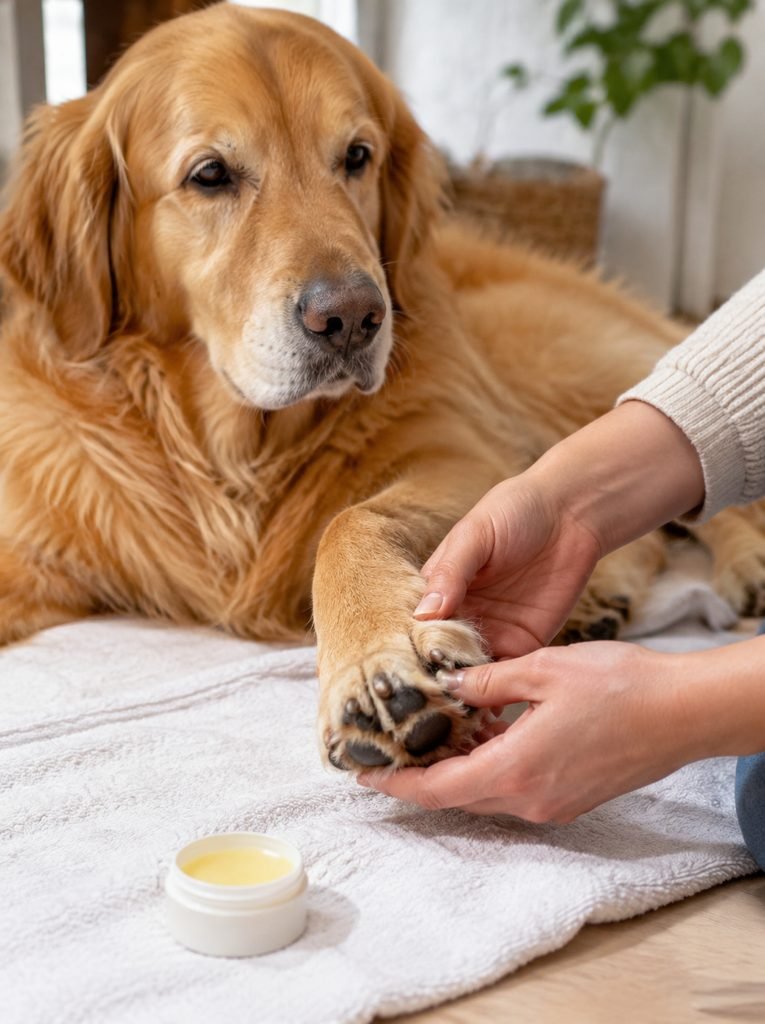
A balm protects paw pads from cracking, drying, and salt.
What to look for. A product made for dogs, with ingredients that are safe if licked.
How to use it. Apply a thin layer before walks, and wipe paws gently after.
Trim between the toes. Long hair between the toes collects ice and snow balls.
Check for cracks. Cracked or bleeding pads need veterinary attention.
Gear Five: Microfiber Towels and a Drying Station
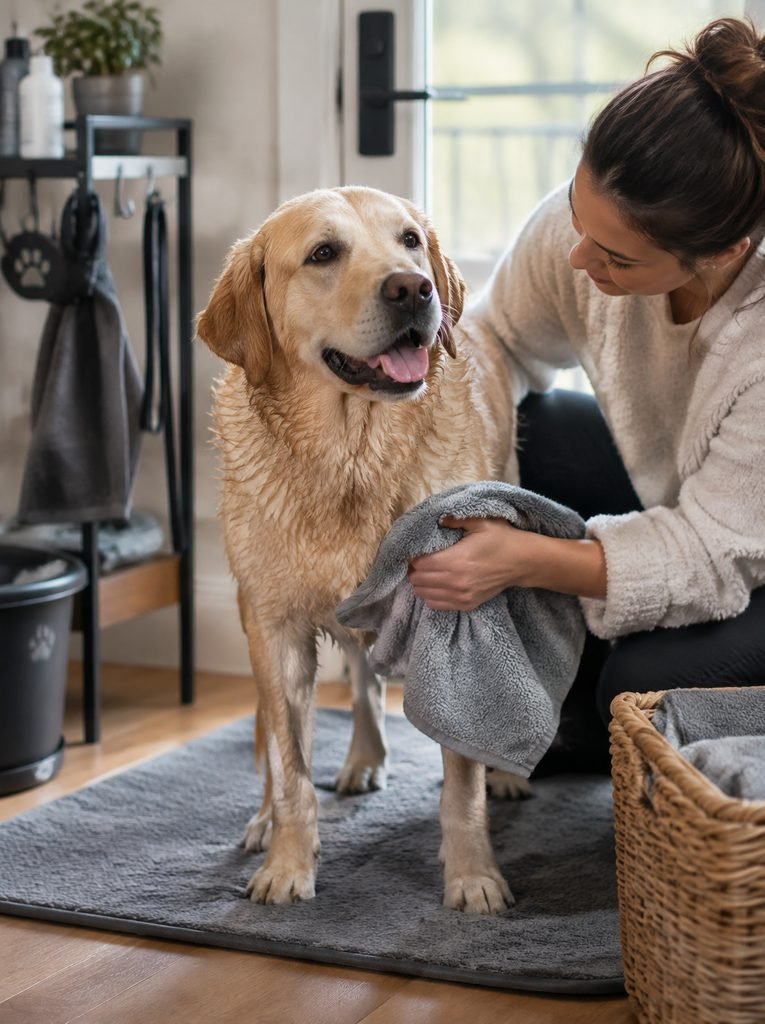
You’ll use these every day in wet weather.
Keep several towels by the door. Microfiber towels absorb a lot of water and dry quickly.
Dry paws, belly, and legs. Damp fur next to the skin can chill your dog and cause skin irritation.
Use a drying mat. An absorbent mat inside the door collects muddy paw prints.
Wipe paws thoroughly. This removes salt, de icers, and chemicals before your dog licks them off.
Consider a quick drying coat or robe. Some owners use absorbent dog robes after long, wet walks.
Gear Six: Reflective Gear and Lights
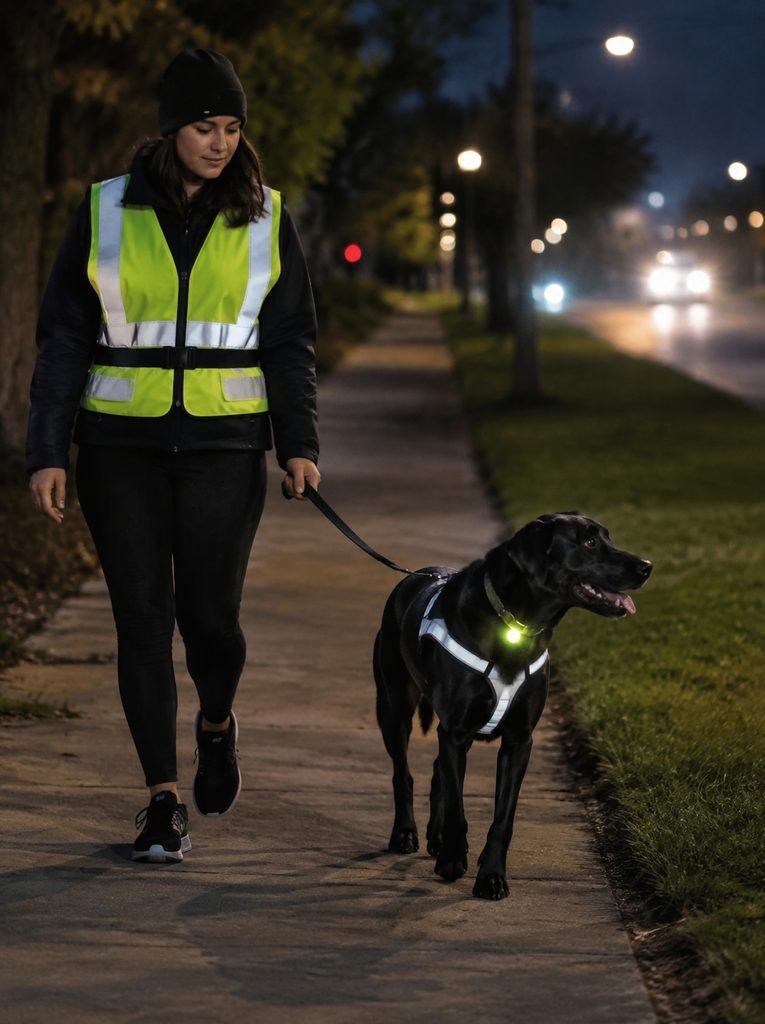
Dark, rainy days are harder for drivers to see you.
Reflective collars, leashes, and vests. They make your dog visible in headlights.
Clip on lights. A small LED light on the collar or harness adds visibility.
Wear reflective gear yourself. A vest or armband helps drivers see both of you.
Choose safe designs. Avoid anything with loose parts a dog could chew.
Walk in well lit areas. Stay on sidewalks and avoid dark roads when possible.
Gear Seven: A Waterproof Leash and Harness
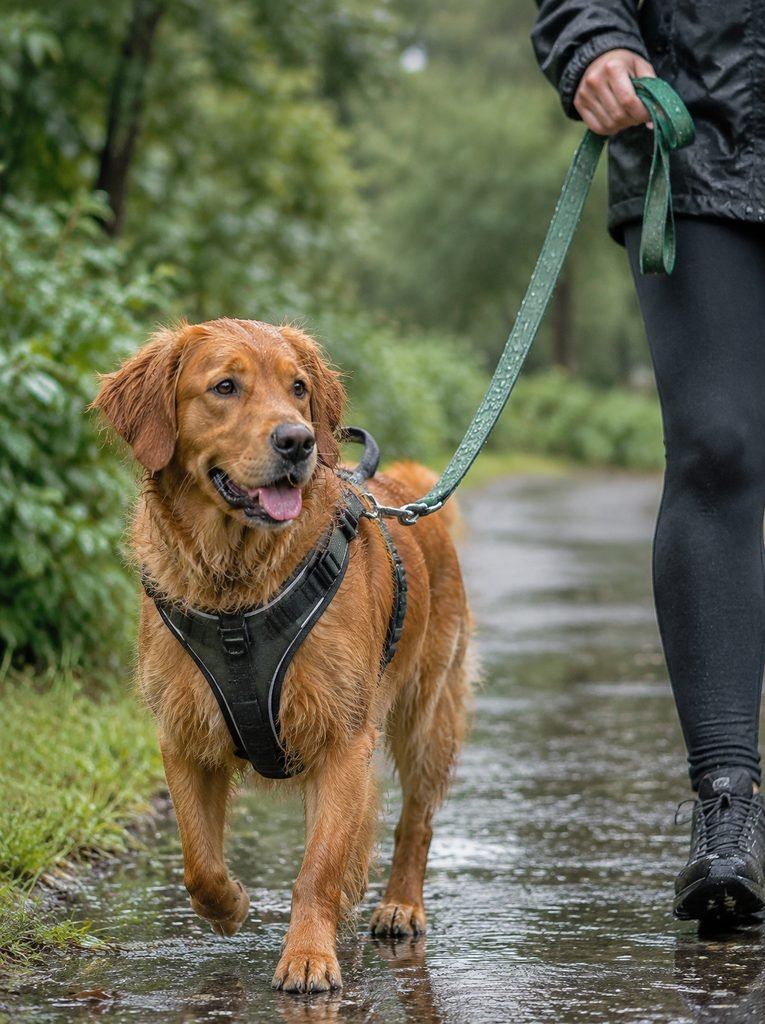
Wet leather and rope leashes are slippery and heavy.
Waterproof materials. Coated webbing or biothane dries fast and stays grippy.
A secure, well fitted harness. Wet, cold hands drop leashes, and a secure harness gives you more control.
Check the hardware. Make sure clips and buckles still work in the cold.
Carry a spare. A backup leash helps if one gets soaked or damaged.
Gear Eight: Pet Safe Ice Melt
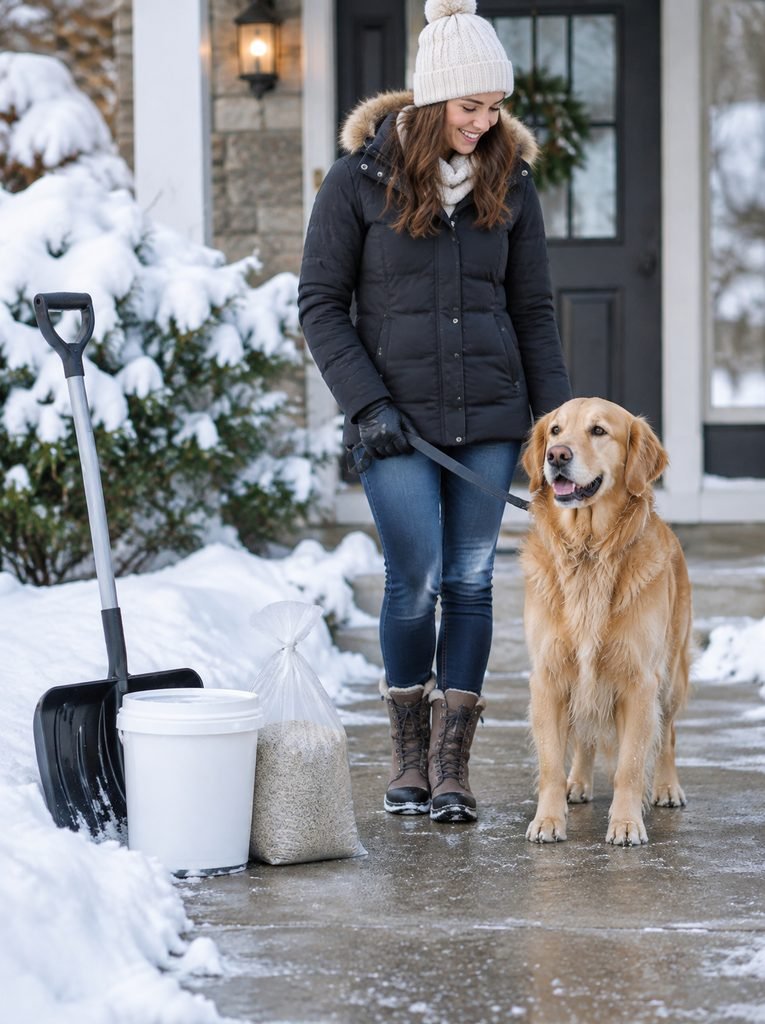
If you spread de icer at home, the type matters.
Why it matters. Rock salt can irritate paws and cause stomach upset if licked.
Choose pet safe products. Look for products labeled pet safe, and follow the directions.
Use sand or traction aids. These give grip without chemicals.
Rinse paws after walks. Street salt and unknown chemicals are everywhere.
Gear Nine: A Warm Bed and Indoor Setup
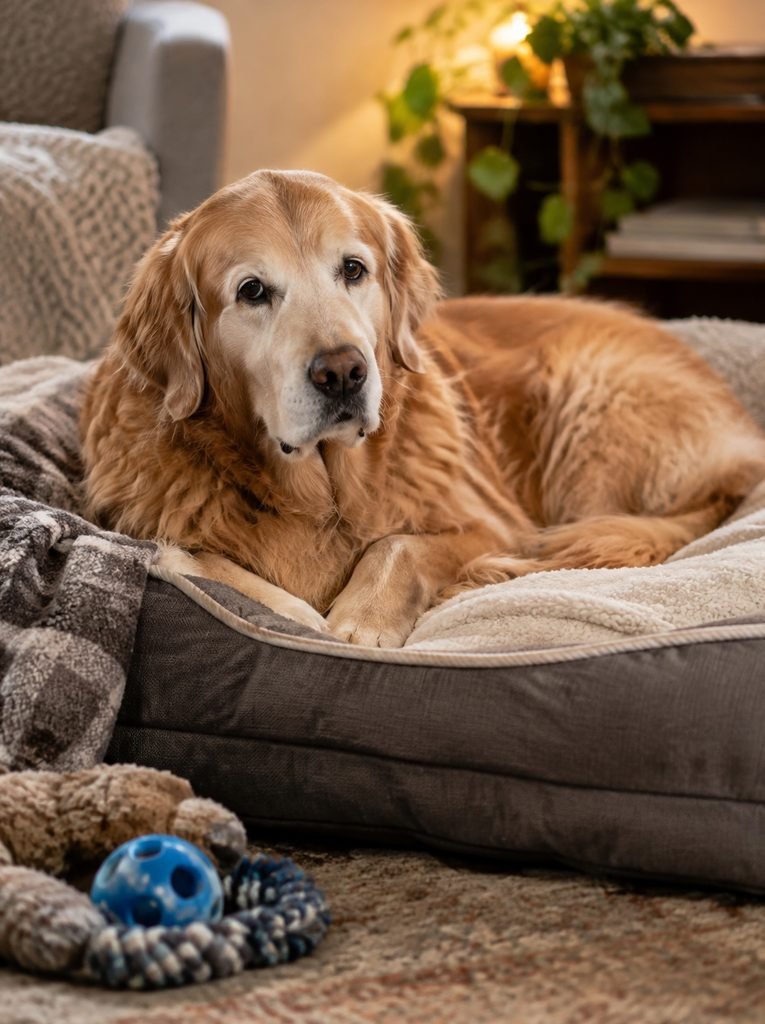
Cold weather means more time inside, and your dog needs a warm place to rest.
Elevated or insulated bed. It keeps your dog off cold floors, especially seniors and short haired dogs.
Blankets. Provide a few for burrowing.
Away from drafts. Place beds away from windows and doors.
Safe heat sources. Avoid heating pads or space heaters near your dog unless they’re specifically made for pets and used safely.
Mental enrichment. Short, cold walks can leave dogs with extra energy, so rainy day games help. See my Brain Games for a Smarter, Happier Dog for ideas.
Gear Ten: Car Protection
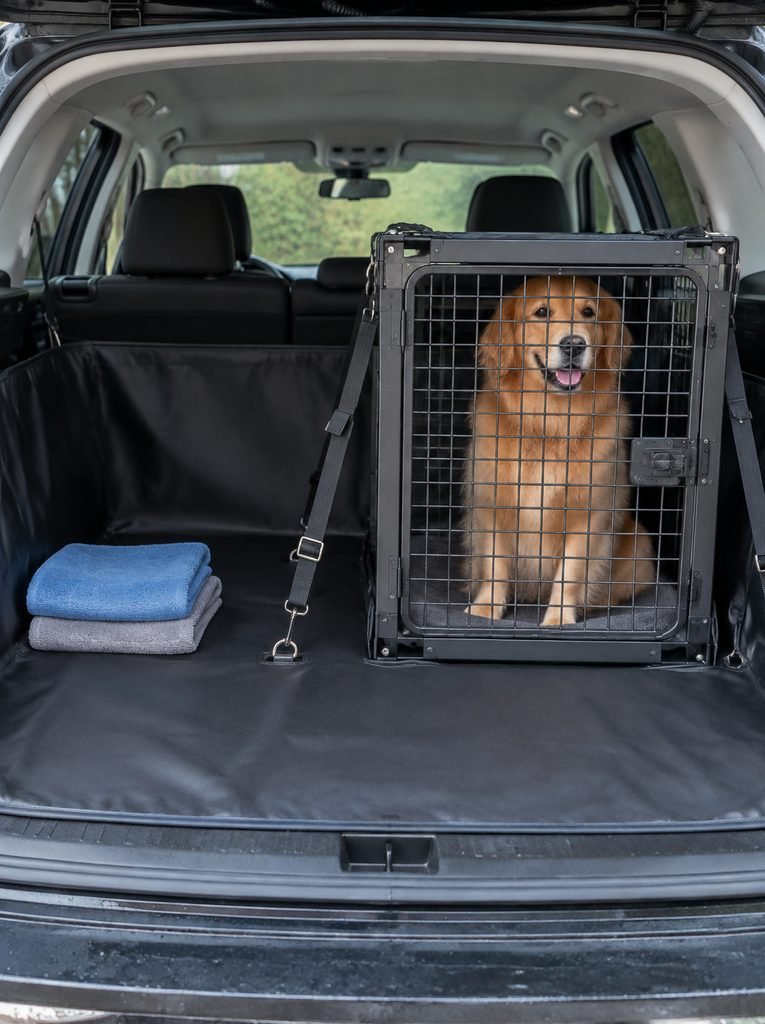
Wet dogs and car interiors don’t mix well.
Seat covers or cargo liners. They protect upholstery from mud and water.
A crash tested crate or harness. Safety comes first in any weather.
Towels in the car. Dry your dog before the ride home.
Never leave a dog in a parked car. Cold weather can be as dangerous as heat. A parked car can quickly become very cold.
Cold Weather Safety Basics
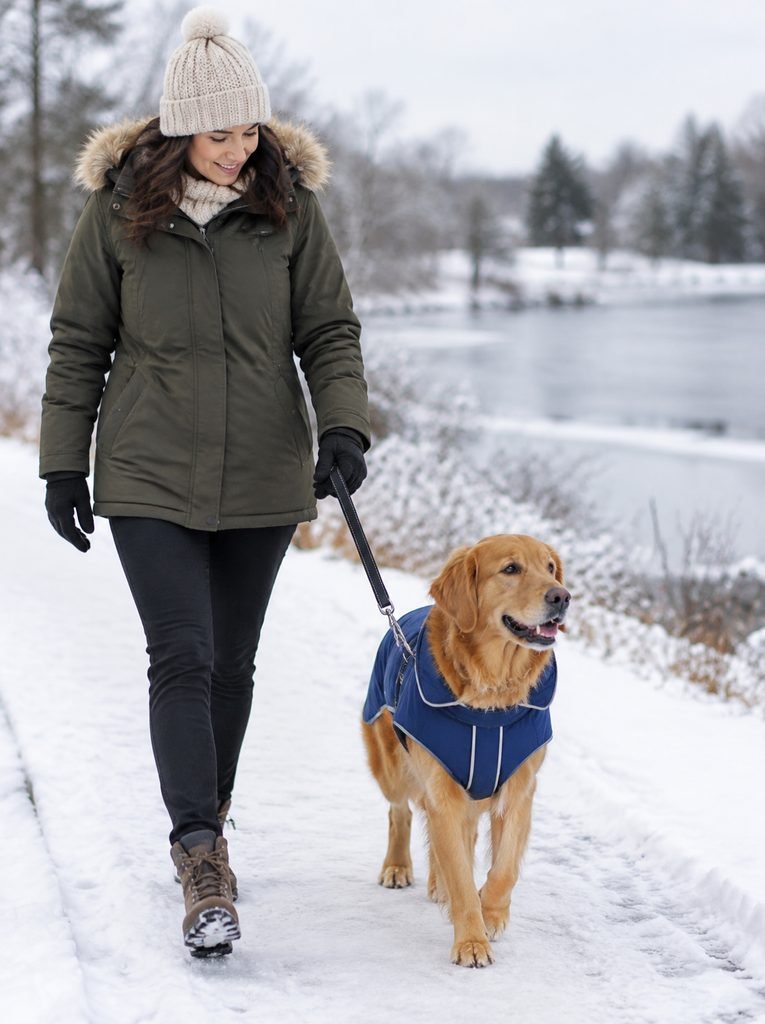
Gear helps, but these rules matter most.
Limit time outside. Short, frequent walks are better than one long walk in extreme cold.
Watch for signs of cold stress. Shivering, whining, slowing down, lifting paws, and seeking shelter are warning signs.
Know the signs of hypothermia and frostbite. Weakness, pale or gray skin, stiffness, and extreme lethargy need emergency care.
Be careful with antifreeze. Antifreeze, or ethylene glycol, tastes sweet but is highly toxic. Wipe up spills, store it securely, and call a veterinarian immediately if your dog may have licked any.
Beware thin ice. Keep dogs off frozen ponds and lakes.
Keep your dog leashed. Snow and ice hide hazards and scents, and dogs can get lost.
Check ID. Make sure your dog’s tags and microchip information are current.
Adjust for age and health. Puppies, seniors, and dogs with medical conditions need extra care.
Rainy Day Safety Basics
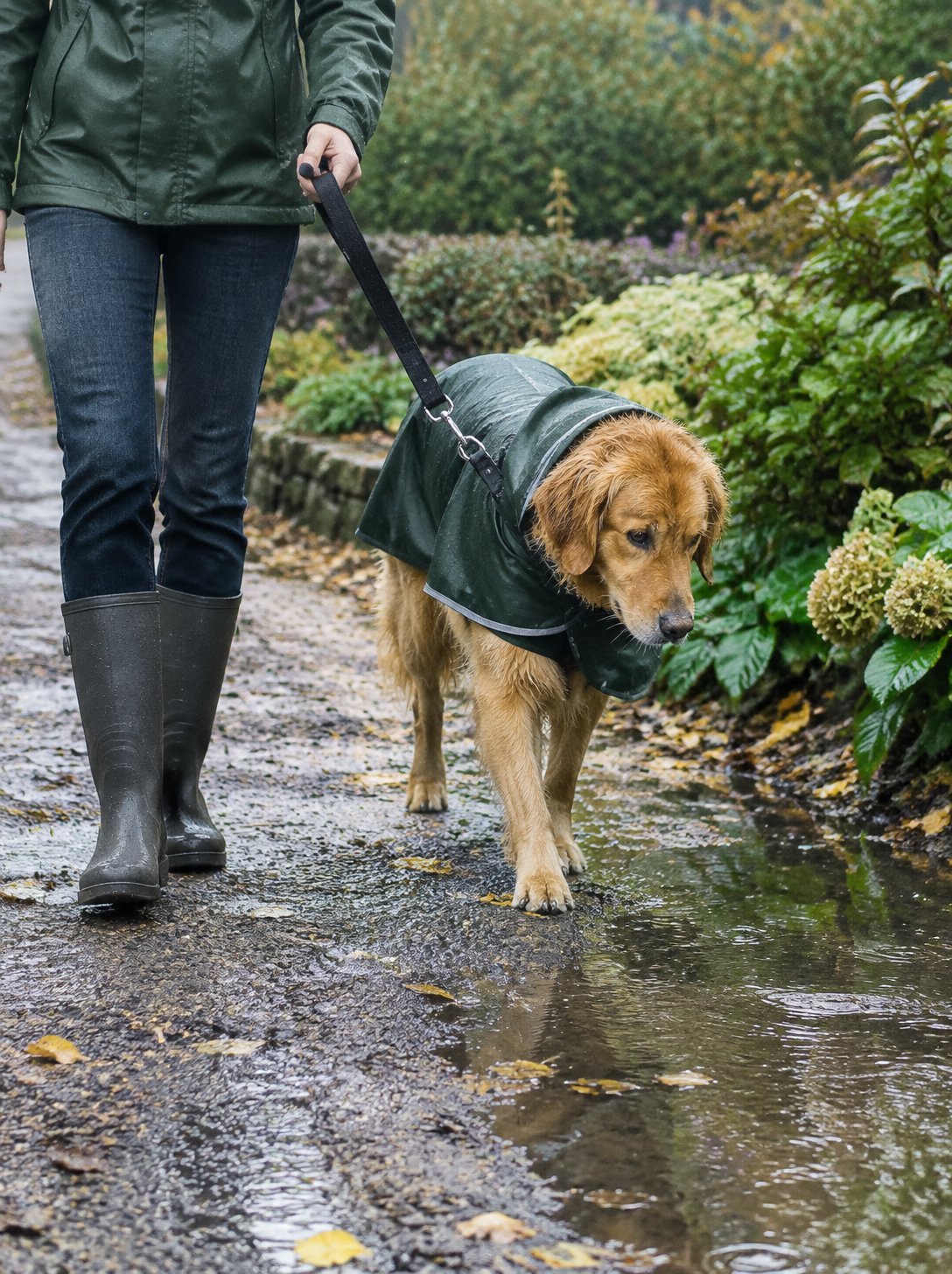
Watch for puddles. Standing water can contain bacteria and chemicals. Discourage drinking from puddles.
Dry thoroughly. Damp fur can lead to skin problems, especially in skin folds and between the toes.
Beware of mud. Mud can hide sharp objects.
Skip storms. Thunder and lightning scare many dogs, and lightning is dangerous.
Keep ears dry. Dogs prone to ear infections should have ears dried gently after wet walks.
Winter Comfort Food and Treats
A warm snack after a chilly walk is a lovely reward. Warm, plain bone broth over your dog’s meal is a popular treat, and my How to Make Carrot Frozen Bone Broth for Dogs shows how to make it safely, with no onion, garlic, or salt.
For a quick, warm homemade meal topper, my 30 Minute Stovetop Homemade Dog Food is another good option. Remember that treats and toppers should stay a small part of your dog’s diet.
Common Mistakes to Avoid
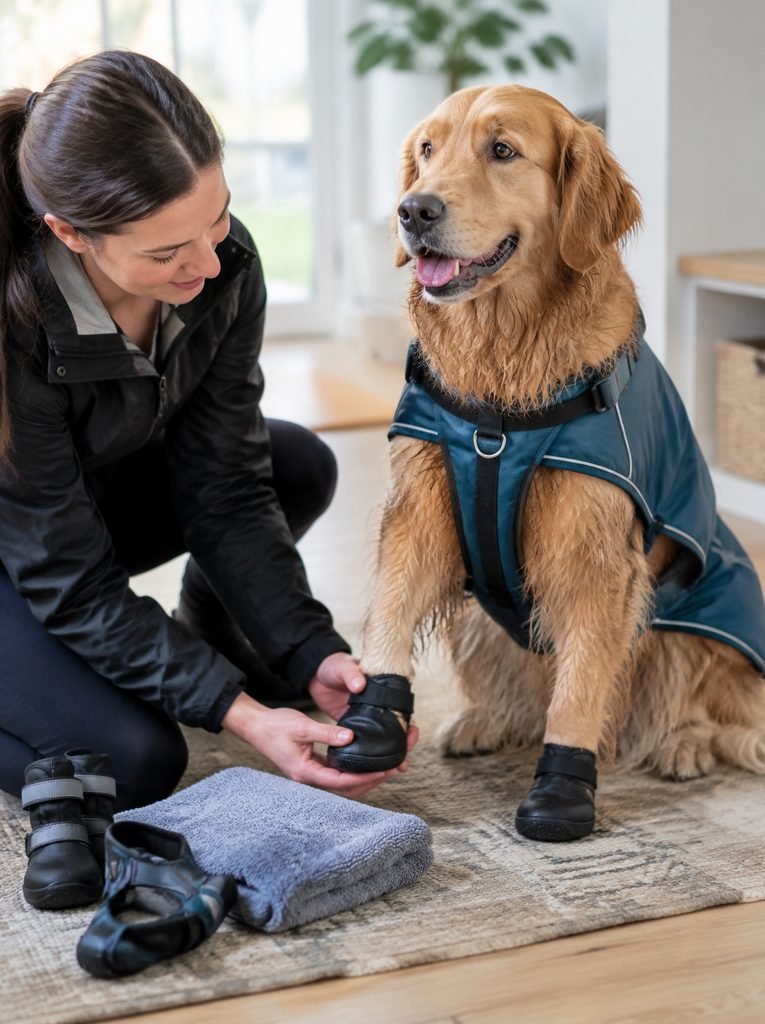
Ignoring paw care. Salt and ice can irritate paws.
Using ill fitting gear. Too tight or too loose causes problems.
Over dressing. Dogs can overheat in coats indoors or in mild weather.
Skipping the drying step. Damp fur chills and irritates.
Leaving a dog in a cold car. Never.
Forgetting about antifreeze. It’s a serious poison.
Pushing a reluctant dog. If your dog is miserable, shorten the walk.
More Helpful Reads
- Brain Games for a Smarter, Happier Dog
- How to Make Carrot Frozen Bone Broth for Dogs
- 30 Minute Stovetop Homemade Dog Food
- First Week with a New Puppy: A Day by Day Survival Schedule
- Solve Dog Behavior Problems
For a wider look at feeding your dog well, check out 7 Healthiest Homemade Dog Foods.
Frequently Asked Questions
What temperature is too cold for dogs? It depends on the dog. Small, short haired, young, and old dogs can struggle in cool temperatures, while thick coated breeds tolerate more. Watch your dog, and ask your veterinarian.
Do dogs need raincoats? Not always, but many dogs benefit, especially short haired and small dogs.
Are dog boots necessary? They’re helpful in ice, salt, and snow, but not essential for every dog.
How do I get my dog to wear boots? Introduce them slowly with treats and short sessions indoors.
Is it safe to use human paw products? Not always. Use products made for dogs, since dogs lick their paws.
How often should I wash my dog in winter? Only as needed. Frequent bathing can dry the skin. Wipe paws and belly after walks instead.
Can my dog get sick from cold weather? Yes. Cold and wet conditions can contribute to chilling, and extreme cold can cause hypothermia and frostbite. Call your veterinarian if you have concerns.
A Final Note on Winter and Rainy Weather Gear
The right gear turns a miserable walk into a manageable one, but the best tool is paying attention to your dog. Fit gear carefully, keep walks short when the weather turns, and give your dog a warm, dry place to come home to. If you ever feel unsure about how your dog is handling the cold, your veterinarian is the best guide.