Best Orthopedic Dog Beds for Senior Dogs: How to Choose the Right One
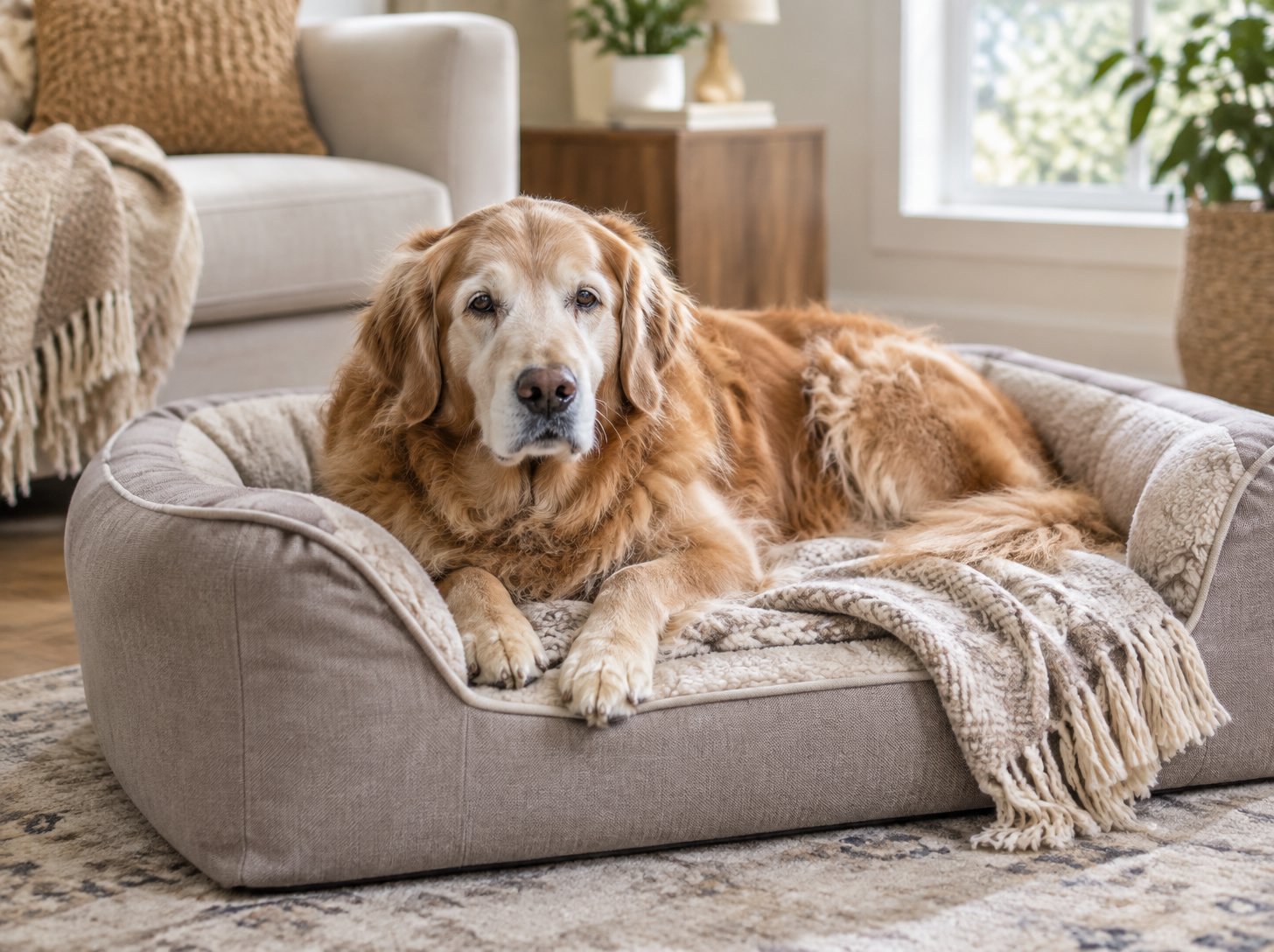
Senior dogs spend a lot of time sleeping, and the bed they sleep on matters more than most owners realize.
Aging joints, thinning muscle, and less natural padding mean hard floors and flat, worn out cushions can leave an older dog stiff and sore.
A supportive orthopedic bed won’t cure arthritis, but it can make rest more comfortable and make it easier for your dog to lie down and get up.

Instead of a list of brands that changes every season, this guide shows you how to choose the best orthopedic bed for your own senior dog.
You’ll learn what features matter, how to match the bed type to your dog’s needs, how to get the size right, and how to help your dog actually use the new bed.
Signs Your Senior Dog May Need More Support
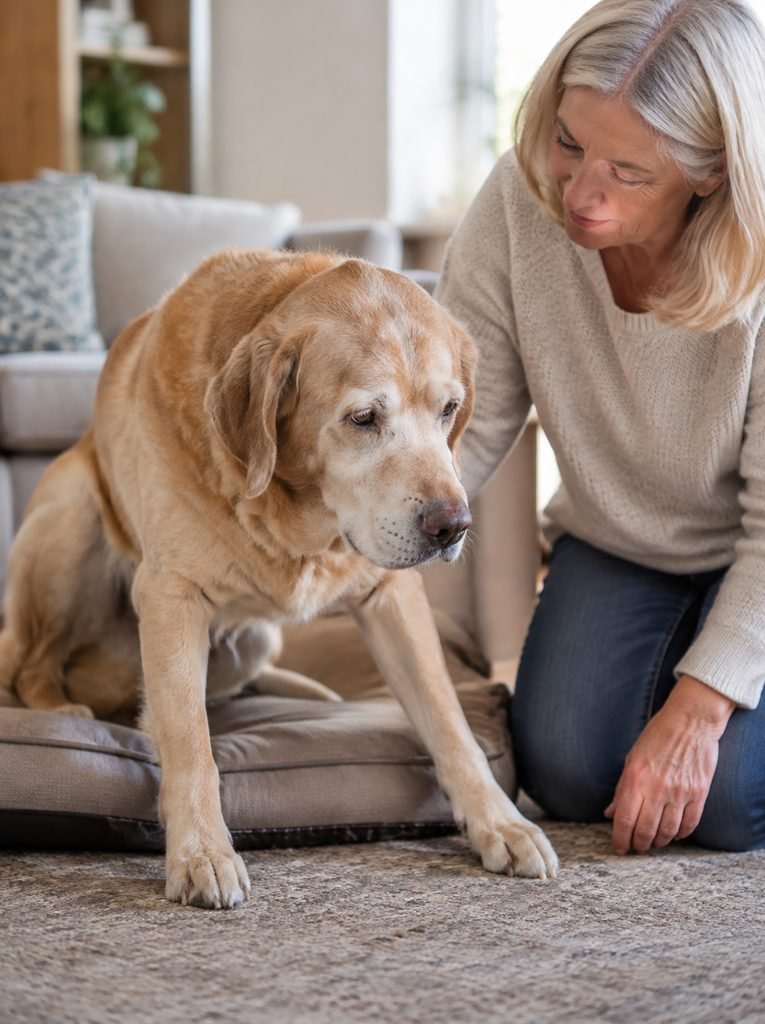
Many older dogs hide discomfort. Watch for these signs.
Stiffness. Slow to get up, especially after naps or in the morning.
Reluctance to jump. Hesitating to hop on the couch, the bed, or into the car.
Limping or favoring a leg. Especially after exercise.
Difficulty settling. Circling, shifting, or changing positions many times before lying down.
Licking joints. Frequent licking or chewing at the legs or hips.
Sleeping on the floor instead of the bed. Some dogs avoid soft beds that sink too deeply.
Behavior changes. Irritability, less interest in walks, or withdrawing.
These signs can have many causes, so please see your veterinarian. Joint pain can often be managed with treatments, weight management, and supplements, and a bed works best alongside veterinary care, not in place of it.
What Makes a Bed Orthopedic?
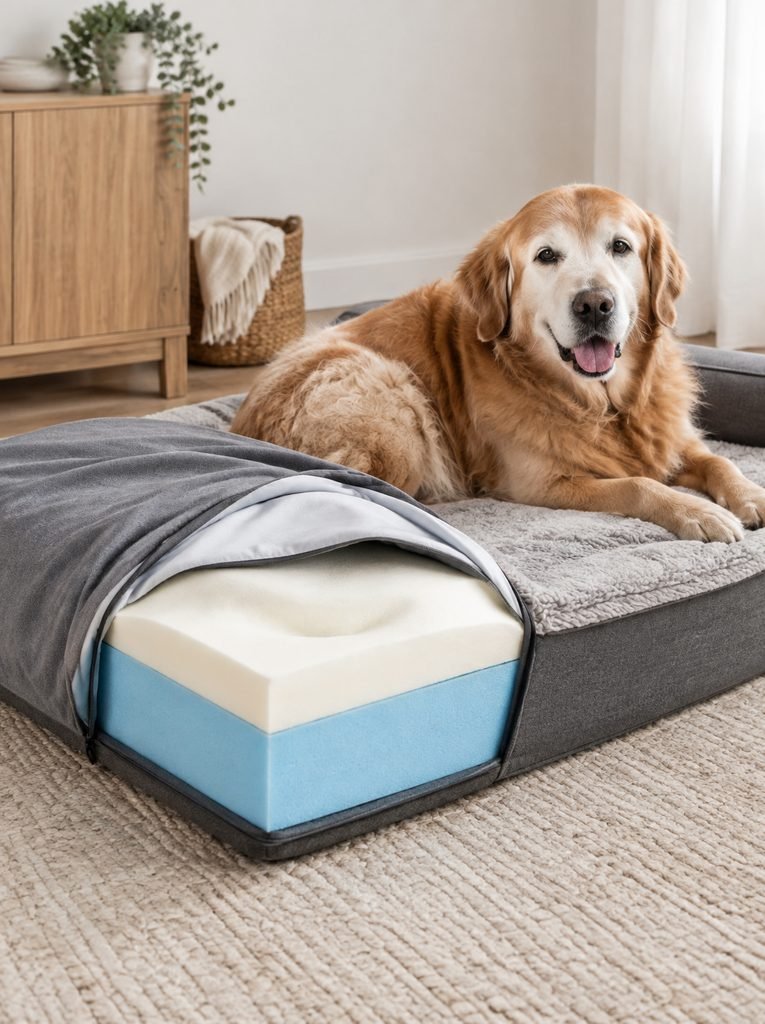
The term isn’t tightly regulated, so check what’s actually inside.
Supportive foam. The core is usually memory foam, high density foam, or a layered foam designed to hold its shape instead of compressing flat.
Pressure relief. The surface spreads weight so hips, elbows, and shoulders don’t press into the floor.
Enough thickness. The foam must be deep enough that a lying dog doesn’t bottom out. Larger and heavier dogs need thicker foam than small dogs.
A stable base. A firm, non slip bottom keeps the bed from sliding when a stiff dog steps on it.
Not every bed labeled orthopedic delivers real support, so judge by materials and construction, not the name.
Features to Look For
Foam Quality and Thickness
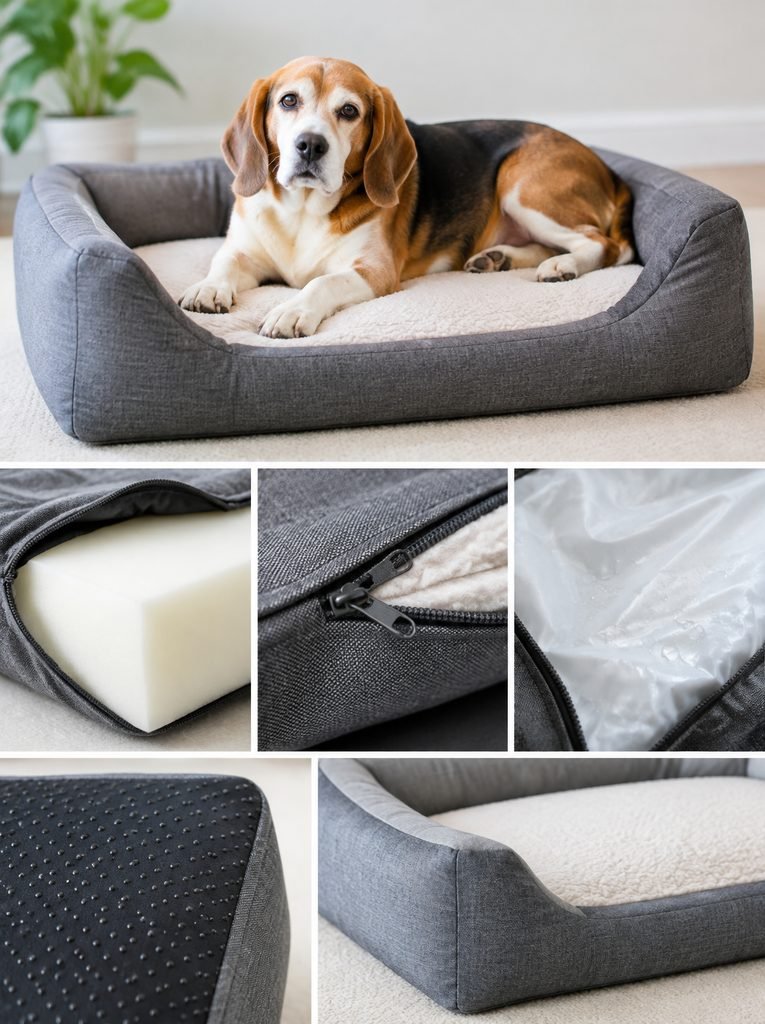
Press your hand firmly into the bed. Good foam pushes back and returns to shape slowly, while cheap filling collapses and stays flat. As a general rule, larger and heavier dogs need thicker, denser foam. If you’re unsure, size up in thickness and ask your veterinarian what’s right for your dog’s weight and condition.
Low Entry or Easy Access
A tall bolster or thick bed can be hard for a stiff dog to step over. Look for a low front edge or a cut out entry so your dog can walk on without climbing.
Bolsters
Raised sides give dogs something to lean against, which many seniors like. If your dog tends to sprawl, a bolster on only some sides, or a flat bed, may be better.
A Waterproof Liner
Older dogs may have accidents or leaks. A waterproof liner protects the foam from moisture and odor, and it extends the life of the bed.
A Washable Cover
Choose a cover that unzips and goes through the washing machine, since senior dogs shed, drool, and sometimes leak. Spare covers are a convenient addition.
A Non Slip Bottom
A grippy base keeps the bed from sliding on tile or hardwood.
Temperature Comfort
Some dogs run hot on memory foam, while others like the warmth. Cooling gel or breathable covers help hot sleepers, and a blanket adds warmth in winter. Avoid heating pads unless they’re made for pets, and ask your veterinarian first.
Durable Fabric
Choose sturdy, tightly woven fabric that handles claws and repeated washing. If your dog chews bedding, choose a chew resistant cover and supervise.
Types of Orthopedic Dog Beds
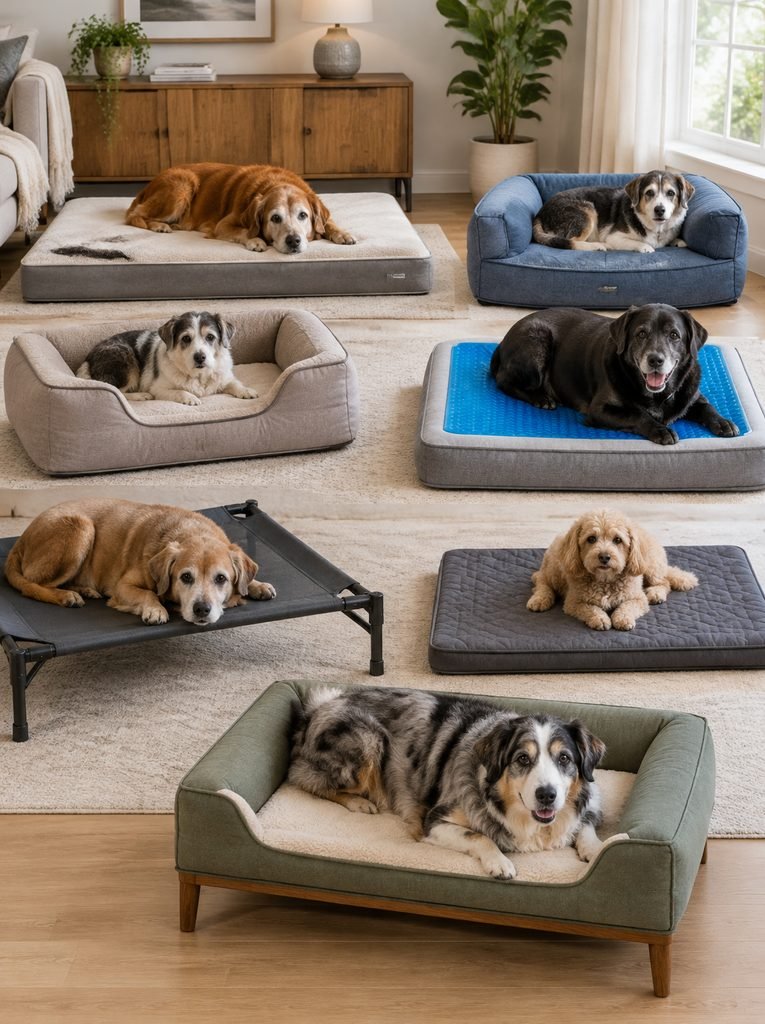
Different dogs need different styles. Here’s how to match them.
Flat Memory Foam Mattress
Best for. Large dogs, sprawlers, and dogs with hip or elbow pain.
Why. A flat, thick mattress offers even support and easy access.
Watch for. Make sure it’s thick enough, and consider a waterproof liner.
Bolster Bed
Best for. Dogs who like to curl up or rest their head.
Why. Raised sides offer support and a sense of security.
Watch for. Make sure the entry is low enough for a stiff dog to step in.
Low Entry or Ramp Style Bed
Best for. Dogs with severe arthritis, small dogs, and dogs with mobility problems.
Why. Easy access helps dogs who struggle with steps.
Watch for. The bed still needs real foam support underneath.
Cooling Gel Bed
Best for. Dogs who overheat, thick coated breeds, and warm climates.
Why. Cooling layers help regulate temperature on memory foam.
Watch for. Check that the cooling feature is part of the construction, not just a marketing claim.
Elevated Cot Style Bed
Best for. Hot dogs, outdoor use, and dogs who prefer firm support.
Why. Air circulates underneath, and the surface is firm.
Watch for. Many senior dogs with joint pain prefer a softer, cushioned surface, so test your dog’s preference.
Crate or Car Mat
Best for. Dogs who travel or sleep in crates.
Why. A properly sized, supportive mat protects joints in a small space.
Watch for. Make sure it fits the crate snugly and doesn’t bunch.
Couch Style or Raised Platform Bed
Best for. Dogs who like to sleep elevated, and for people with trouble bending.
Why. Easy for owners to reach.
Watch for. Make sure it’s stable and not too high for your dog to climb.
How to Size an Orthopedic Dog Bed
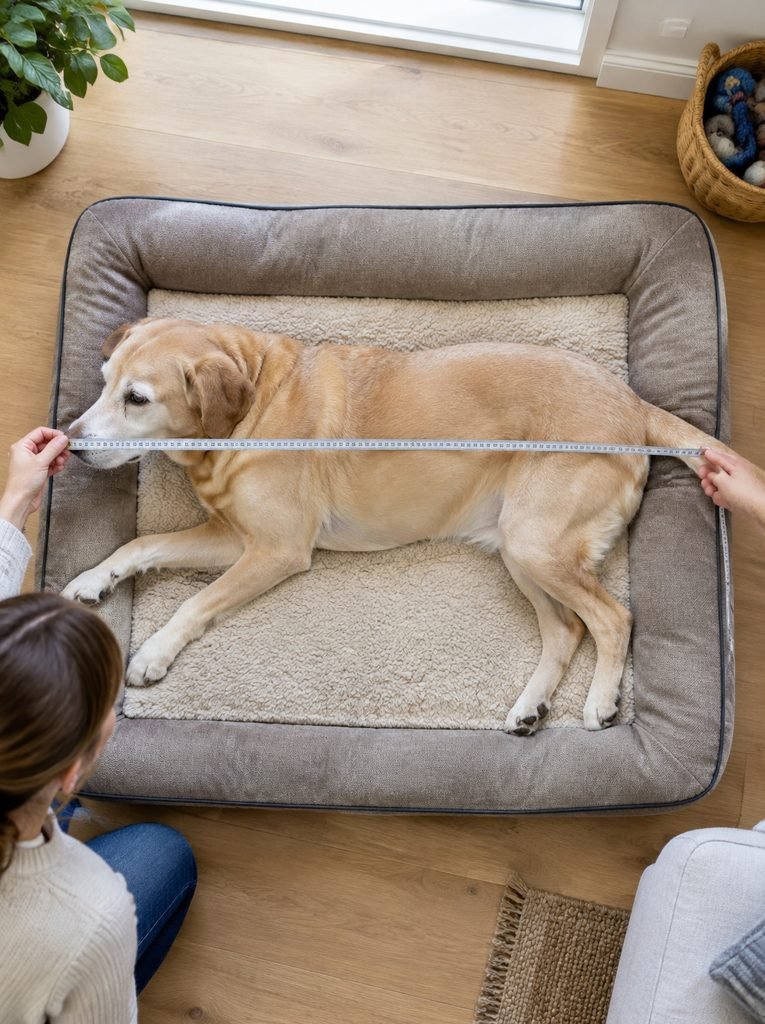
The right size matters more than most owners think.
- Measure your dog from nose to base of tail while they’re lying in their usual sleeping position.
- Add 6 to 12 inches, so they can stretch out.
- Check the bed’s interior sleeping area, not just the outer dimensions.
- Check the weight guidelines, since heavier dogs need denser, thicker foam.
- If your dog is between sizes, choose the larger one.
A bed that’s too small forces dogs to curl up tightly and defeats the purpose.
How to Help Your Dog Use the New Bed
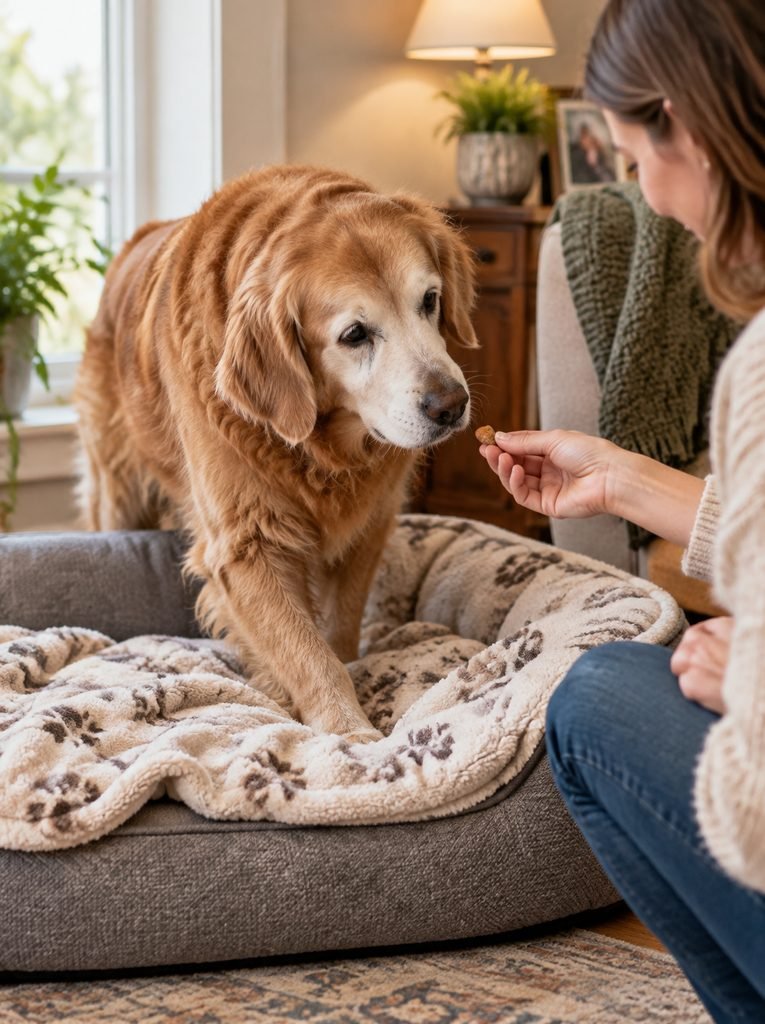
Many senior dogs ignore a new bed at first.
Place it in a familiar spot. Put it where your dog already likes to rest.
Add a familiar scent. A blanket or shirt that smells like you helps.
Use treats. Reward your dog for stepping onto the bed.
Keep it away from drafts. Choose a warm, quiet area away from doors and windows.
Give it time. Some dogs take days to adjust.
Provide a second bed. Put one in the room where your family spends the most time.
Other Ways to Help a Senior Dog Sleep and Move Comfortably
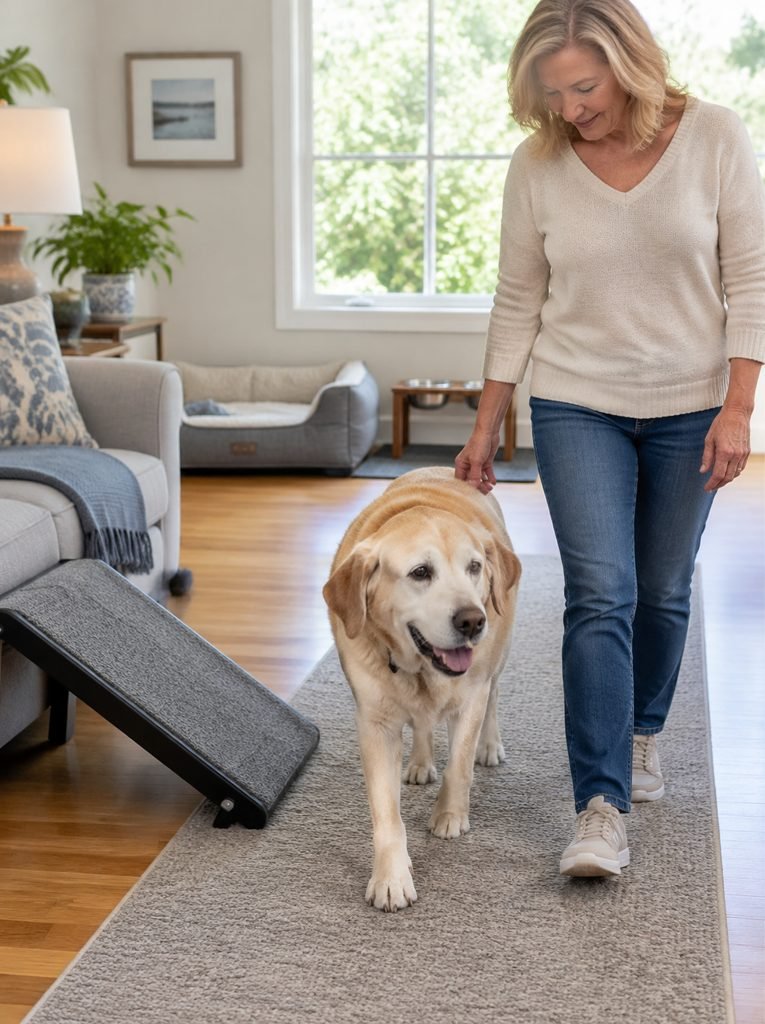
A good bed is one part of a comfortable routine.
Traction. Add rugs or runners on slippery floors so your dog doesn’t slide.
Ramps or stairs. These help dogs get onto couches and into cars.
Raised bowls. Some dogs find raised feeders more comfortable, though ask your veterinarian first.
Weight management. Extra weight puts more strain on joints.
Gentle exercise. Short, regular walks keep muscles strong.
Mental enrichment. Older dogs still need stimulation. See my Brain Games for a Smarter, Happier Dog.
Warmth in cold weather. Cold makes stiffness worse. See my Essential Winter and Rainy Weather Gear Every Dog Owner Needs.
Veterinary care. Regular checkups help catch problems early.
Common Mistakes to Avoid
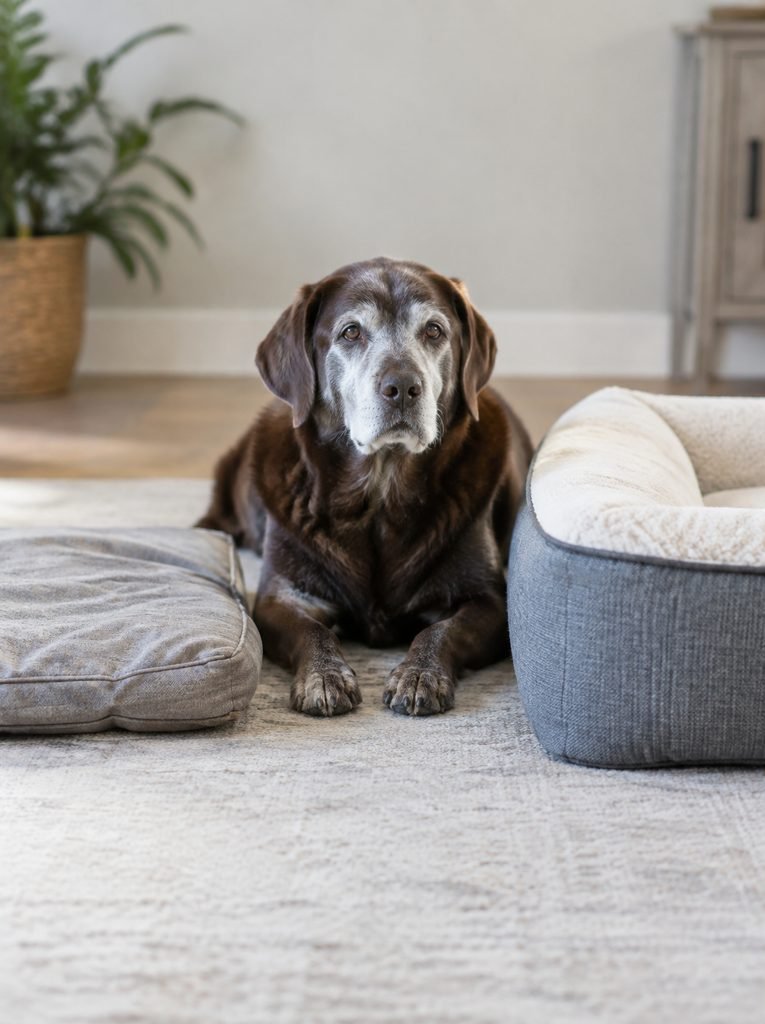
Buying by label alone. Check the foam, thickness, and construction.
Choosing too small a bed. Always size up.
Ignoring entry height. A high bolster can be a barrier.
Skipping the waterproof liner. Accidents are common in older dogs.
Using a bed with thin or worn out foam. Replace beds that have flattened.
Expecting the bed to treat arthritis. It supports comfort, but it isn’t a treatment.
Not washing the cover. Dirty beds smell and can irritate skin.
How to Care for an Orthopedic Dog Bed
Wash the cover regularly. Follow the care instructions, and dry completely.
Protect the foam. Use a waterproof liner or protector, and spot clean the foam gently if needed.
Fluff and rotate. Rotate the bed from time to time so the foam wears evenly.
Check for flattening. If your dog’s hips touch the floor when lying down, it’s time to replace the bed.
Keep it dry. Moisture ruins foam and invites mold.
More Helpful Reads
- Essential Winter and Rainy Weather Gear Every Dog Owner Needs
- Brain Games for a Smarter, Happier Dog
- 30 Minute Stovetop Homemade Dog Food
- How to Make Carrot Frozen Bone Broth for Dogs
- Solve Dog Behavior Problems
For a wider look at feeding your dog well, check out 7 Healthiest Homemade Dog Foods.
Frequently Asked Questions
Do all senior dogs need an orthopedic bed? Not all, but many benefit, especially large breeds, dogs with arthritis, and dogs who are thin or have sensitive joints. Ask your veterinarian what’s best for your dog.
Is memory foam better than regular foam? Memory foam conforms to the body and relieves pressure points, but good quality high density foam can also be supportive. Thickness and quality matter more than the name.
How thick should the foam be? It depends on your dog’s weight. Larger and heavier dogs need thicker foam, so a good test is whether your dog’s joints stay off the floor when lying down.
How often should I replace the bed? Replace it when the foam flattens, loses support, or develops odors that don’t wash out.
Are heated beds safe for senior dogs? Only products made for pets and used as directed. Ask your veterinarian first, especially for dogs with reduced sensation or health problems.
My dog won’t use the new bed. What should I do? Try a different location, add a familiar blanket, and use treats. If your dog still refuses, the style may not suit them.
Can an orthopedic bed help with arthritis? It can make resting more comfortable, but it doesn’t treat arthritis. Work with your veterinarian on a full plan.
A Final Note on Choosing a Senior Dog Bed
The best bed is the one your dog actually uses, supports their body, and fits your home.
Take your dog’s size, sleeping style, and health into account, and don’t be afraid to try a couple of styles.
If your senior dog seems uncomfortable, a veterinary visit is the best first step, and a good bed makes a lovely supporting player.