Salmon Dog Food Recipe with Spinach & Pumpkin
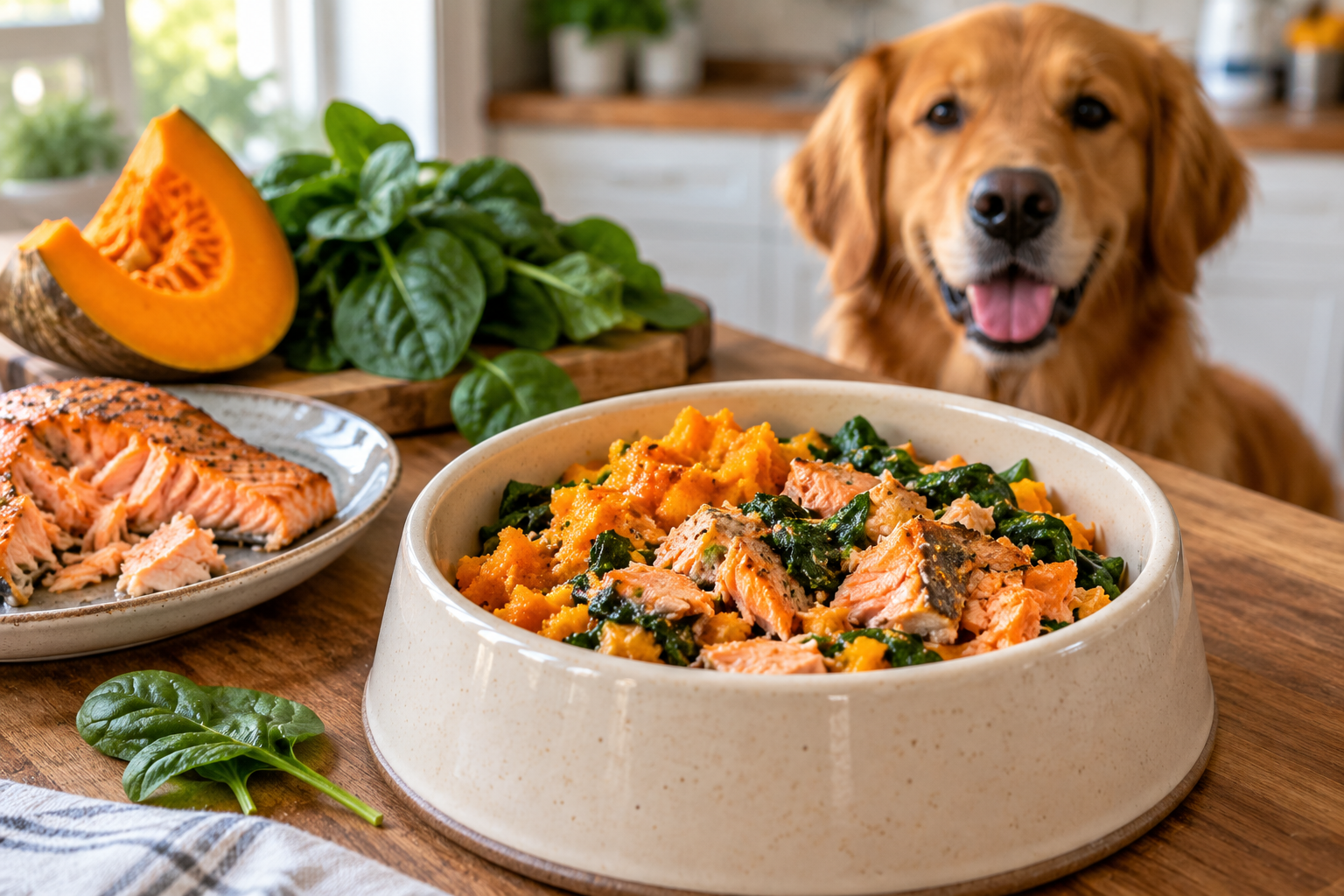
Making homemade dog food can be a practical way to introduce fresh ingredients into your dog’s meals, especially when you want to know exactly what goes into the bowl.
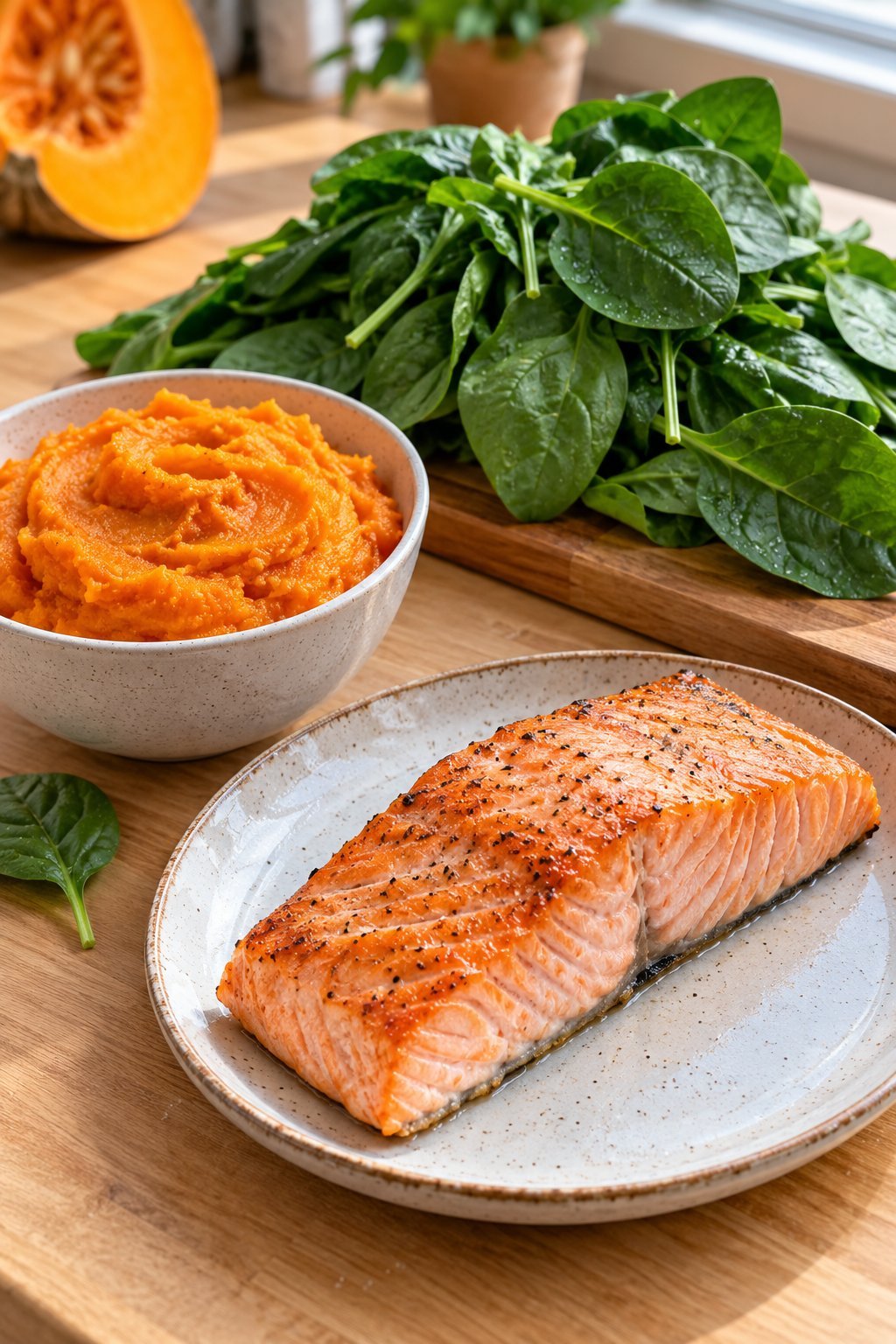
This salmon dog food recipe with spinach and pumpkin combines cooked salmon, soft pumpkin, and finely chopped spinach in a simple homemade meal that is easy to prepare in your own kitchen.
I like recipes that keep the ingredients straightforward because they make preparation less complicated and allow you to pay attention to your dog’s individual needs.
Salmon provides protein and beneficial omega 3 fatty acids, while pumpkin contributes fiber and spinach adds small amounts of vitamins and minerals.
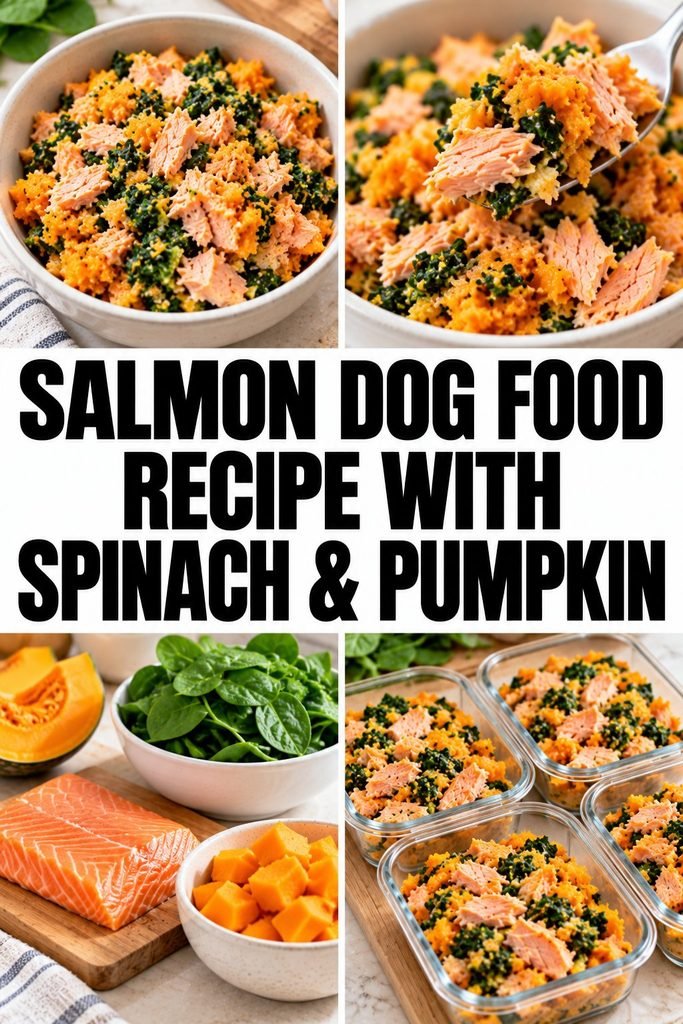
The ingredients work well together when prepared properly, without unnecessary seasonings or added sauces.
However, homemade meals need more than wholesome ingredients to provide complete nutrition, so this recipe is best treated as an occasional meal or a supplemental addition unless a veterinary nutrition professional has formulated it to meet your dog’s daily nutritional requirements.
In this guide, I will explain how to choose the ingredients, prepare them safely, and combine everything into a simple salmon meal your dog can enjoy.
Why Make Homemade Salmon Dog Food?
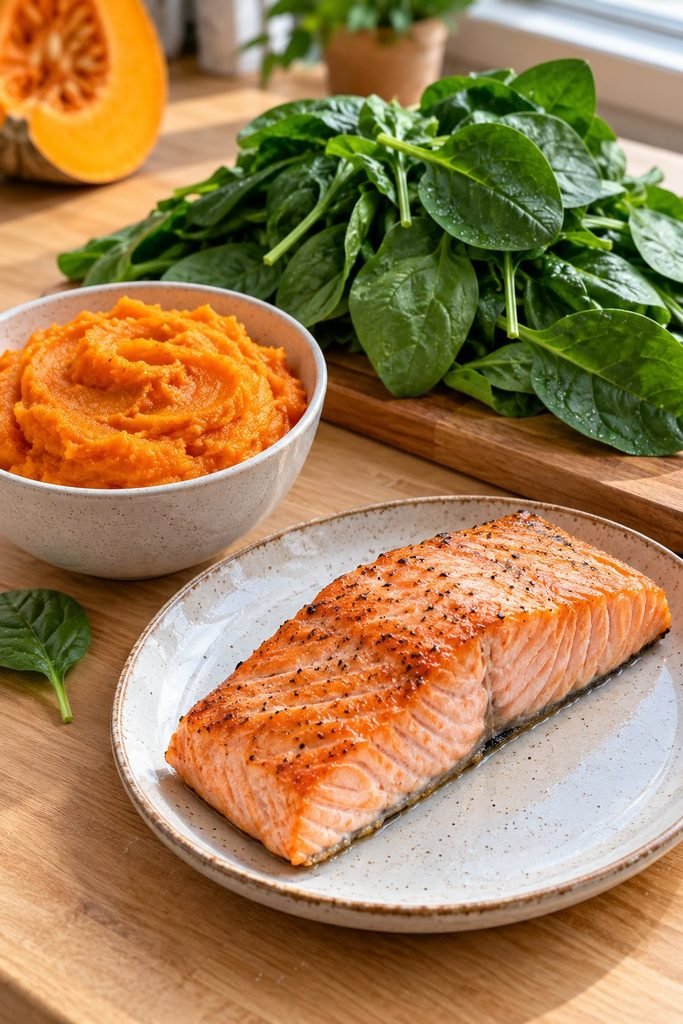
Salmon can be a useful protein source for dogs when it is cooked thoroughly and served without bones, seasoning, or added ingredients that are unsafe for pets.
I also like the flexibility of homemade recipes. You can prepare a small batch, control the texture, and adjust the serving size to suit your dog’s size and appetite.
The important thing is to remember that homemade does not automatically mean nutritionally complete.
Here is what each ingredient contributes to this recipe.
1. Salmon for Protein and Omega 3 Fatty Acids
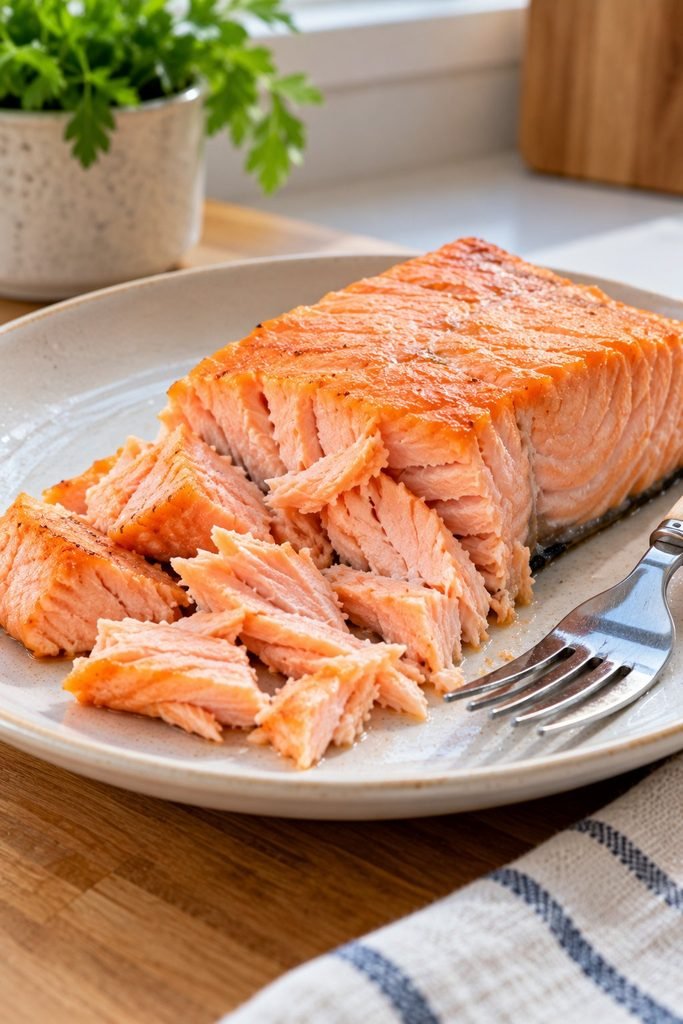
Salmon contains protein that supports normal muscle maintenance and provides omega 3 fatty acids, including EPA and DHA.
When preparing salmon for your dog, choose plain, fresh or appropriately thawed salmon. Cook it thoroughly, remove every bone, and avoid smoked, cured, salted, or heavily seasoned varieties.
I recommend checking the fish carefully after cooking because small bones can be difficult to spot.
2. Pumpkin for Fiber
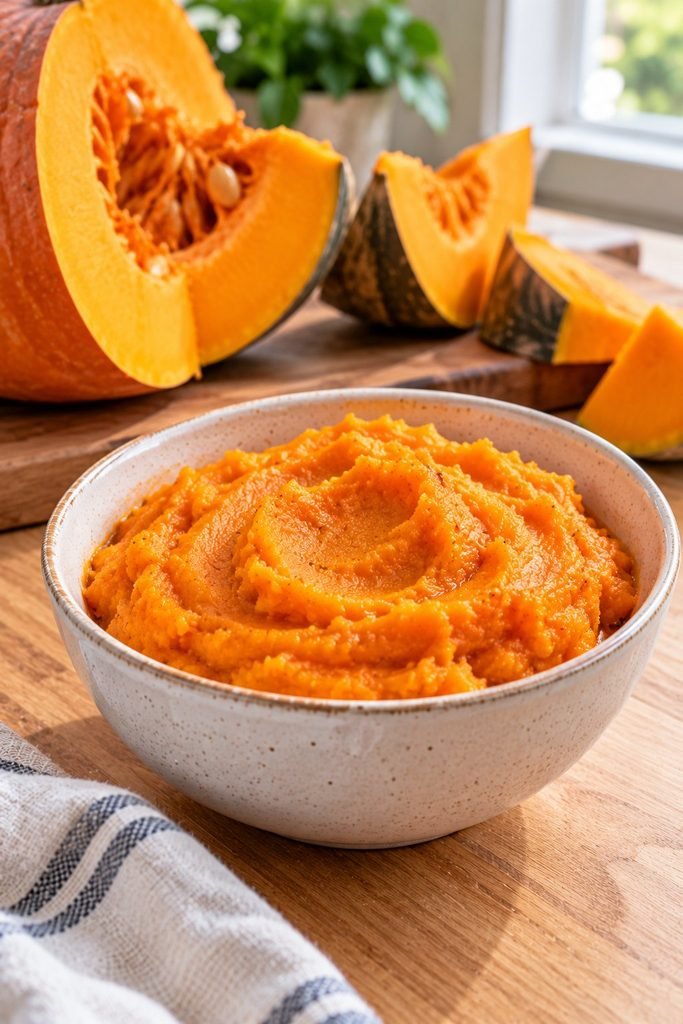
Plain pumpkin is a convenient ingredient to include in many homemade dog food recipes.
It provides fiber and moisture, and some dogs enjoy its soft texture when mixed with fish. Plain cooked pumpkin or pure pumpkin puree without added sugar, spices, or other ingredients is suitable for this recipe.
Do not confuse plain pumpkin puree with pumpkin pie filling, which may contain added sugar and spices.
3. Spinach for Additional Nutrients
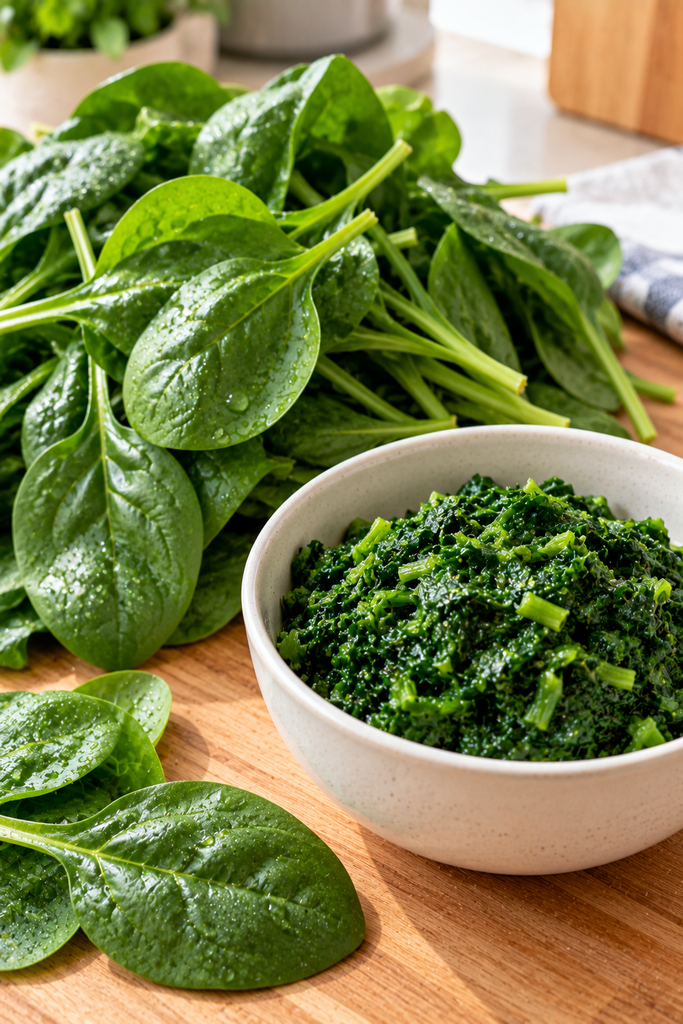
Spinach contains vitamins, minerals, and other plant compounds that can contribute to dietary variety.
For this recipe, I recommend washing the spinach thoroughly, cooking it until tender, and chopping it finely before mixing it with the other ingredients.
Spinach should be used in moderation rather than as the main ingredient. Dogs with certain medical conditions, including a history of calcium oxalate urinary stones or kidney problems, may need to avoid it or have their intake restricted by a veterinarian.
Ingredients for Salmon Dog Food With Spinach and Pumpkin
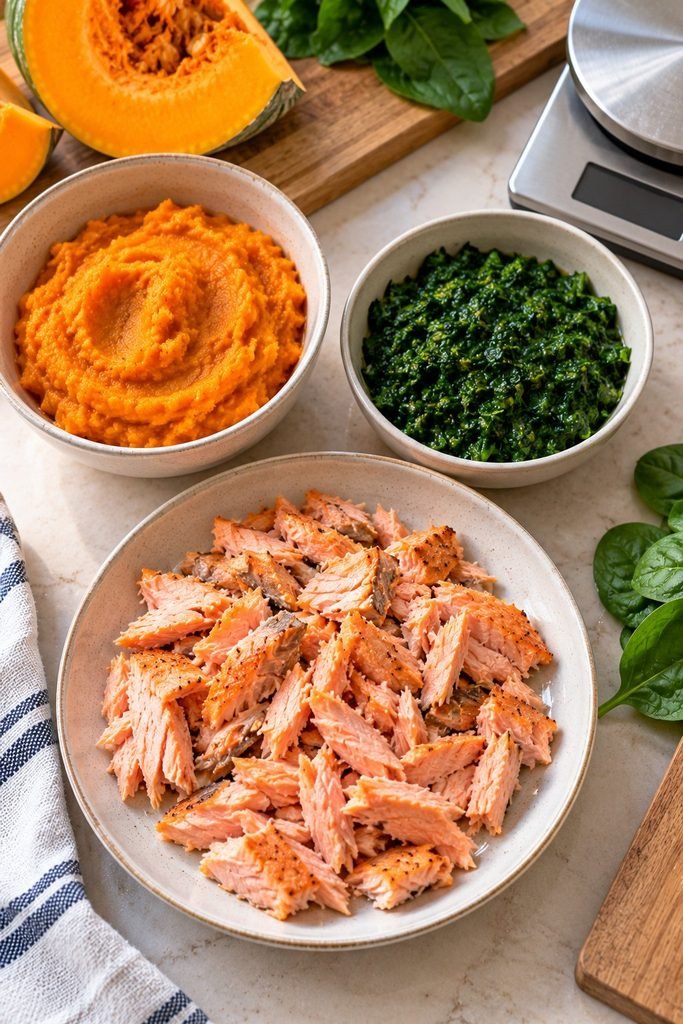
This simple recipe is intended as an occasional supplemental meal for a healthy adult dog, not a complete everyday diet.
Ingredients
- 150 g plain salmon fillet, weighed raw
- 100 g plain cooked pumpkin
- 20 g fresh spinach, washed thoroughly
- A small amount of water, if needed for texture
These quantities make a small batch, but the number of servings depends on your dog’s size, normal calorie requirements, and the rest of its diet.
Use boneless salmon where possible, but still inspect it carefully. Do not add salt, garlic, onions, butter, cooking wine, stock cubes, or seasoning blends.
Important nutritional note: This ingredient combination does not provide a verified complete balance of calcium, phosphorus, essential vitamins, trace minerals, and other nutrients dogs need for long term health.
Do not use it as your dog’s sole daily food without a recipe formulated for your dog by a veterinary nutrition professional.
How to Make Salmon Dog Food With Spinach and Pumpkin
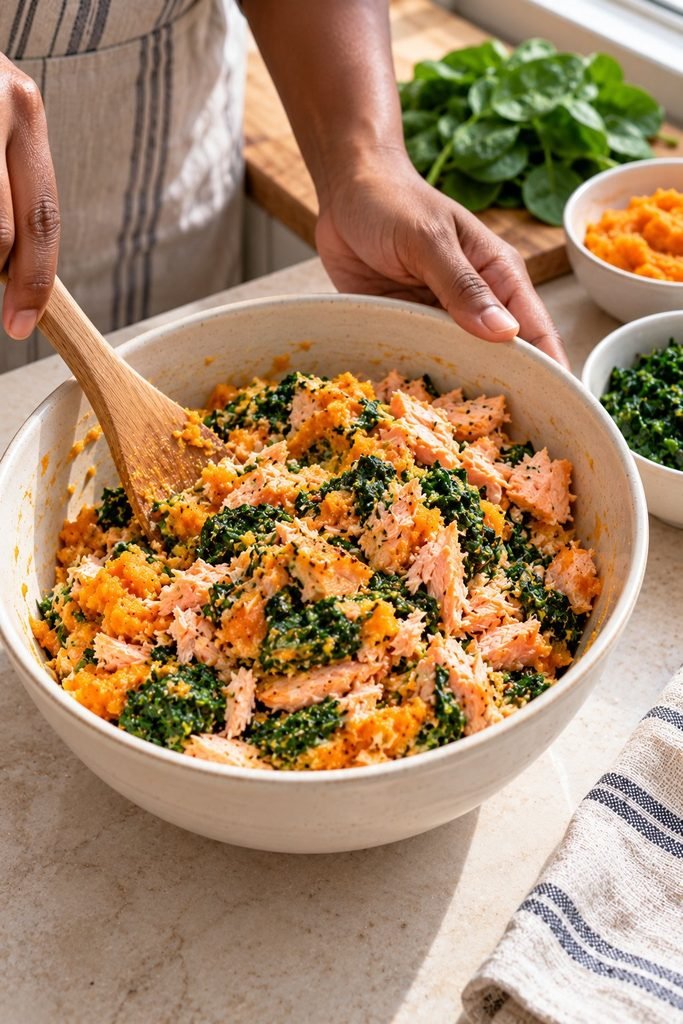
The preparation is straightforward, but safe cooking and careful removal of fish bones are essential.
Step 1: Cook the Salmon Thoroughly
Place the salmon in a suitable pan or baking dish and cook it without seasoning or added sauces. You can bake it or gently poach it in plain water.
Cook the fish until it reaches an internal temperature of 145°F (63°C). The flesh should be opaque and separate easily with a fork.
Allow it to cool before handling. Break it into small pieces and carefully inspect the flesh for any remaining bones.
Step 2: Prepare the Pumpkin
If you are using fresh pumpkin, remove the tough skin and seeds, cut the flesh into small pieces, and cook until soft.
Mash the cooked pumpkin with a fork until it reaches a smooth consistency. Add a little plain water if necessary.
Alternatively, use plain canned pumpkin puree that contains no added sugar, spices, or other ingredients.
Step 3: Cook the Spinach
Wash the spinach thoroughly to remove dirt and debris.
Steam it or cook it briefly in a small amount of water until tender. Avoid adding salt, oil, butter, or seasoning.
Allow the spinach to cool, then chop it finely so it mixes evenly with the salmon and pumpkin.
Step 4: Combine the Ingredients
Place the cooked salmon, mashed pumpkin, and chopped spinach in a clean bowl.
Gently mix everything together, breaking the salmon into small flakes and distributing the pumpkin evenly.
If the mixture seems too thick, add a small amount of plain water to soften it.
I prefer a soft, moist texture for this type of recipe because it is easy to portion and mix with a dog’s usual food when appropriate.
Step 5: Cool and Serve Safely
Allow the finished mixture to cool to a safe serving temperature before offering any to your dog.
Serve a small amount appropriate for your dog’s size and dietary needs. If your dog has never eaten salmon, pumpkin, or spinach before, introduce the ingredients gradually and watch for digestive upset or signs of an allergic reaction.
Refrigerate leftovers promptly in a clean, covered container and use within three to four days, or freeze individual portions for longer storage.
Discard food that has been left at room temperature for more than two hours, or one hour when temperatures exceed 90°F (32°C).
Always thaw frozen portions safely in the refrigerator and reheat gently if desired, allowing the food to cool before serving.
How Much Salmon Dog Food Should You Serve?

The appropriate serving size depends on your dog’s weight, activity level, usual diet, and overall health. There is no single portion that is suitable for every dog.
Because this salmon, spinach, and pumpkin recipe is not formulated as a complete and balanced diet, it is best used as an occasional supplemental food rather than replacing your dog’s regular meals.
General Serving Guidance
For a healthy adult dog that has previously tolerated these ingredients, you can start with a small taste mixed with its regular food.
For a very small dog, begin with approximately one teaspoon.
For a small to medium sized dog, begin with one or two teaspoons.
For a large dog, begin with a small tablespoon.
These are cautious introductory amounts, not complete meal recommendations. Adjustments should depend on your dog’s tolerance and veterinary guidance.
If your dog develops vomiting, diarrhea, unusual itching, or other concerning symptoms after eating the recipe, stop feeding it and contact your veterinarian if symptoms persist or are severe.
Remember the 10 Percent Treat Rule
A commonly used veterinary nutrition guideline is that treats and other foods that are not complete and balanced should generally provide no more than 10 percent of a dog’s daily calories, with at least 90 percent coming from a nutritionally complete and balanced diet.
This is a general guideline rather than a guarantee that every supplemental food is appropriate for every dog.
My practical tip: If you want to add this salmon mixture to your dog’s regular food, consider the calories it contributes and reduce other extras accordingly. Avoid making frequent additions that gradually unbalance your dog’s overall diet.
Can You Feed Salmon, Spinach, and Pumpkin to Dogs Every Day?

The individual ingredients can be appropriate for many healthy dogs when prepared correctly, but that does not mean this particular recipe should become a daily staple.
Salmon provides protein and omega 3 fatty acids. Pumpkin provides fiber, and spinach contributes some vitamins and minerals. However, the mixture does not contain verified amounts of every nutrient a dog needs.
For example, meat and fish based homemade meals can have an inappropriate calcium to phosphorus balance if they are not formulated carefully. Other nutrients may also be present in insufficient or excessive amounts.
If you want to feed homemade food regularly, ask your veterinarian to refer you to a board certified veterinary nutritionist or an appropriately qualified veterinary nutrition professional in your region.
They can formulate a diet that accounts for your dog’s age, weight, activity level, medical history, and nutritional requirements.
For occasional use, this recipe can provide variety for a dog that tolerates the ingredients. For everyday feeding, nutritional completeness matters more than the number of fresh ingredients in the bowl.
Ingredient Substitutions for This Salmon Dog Food Recipe
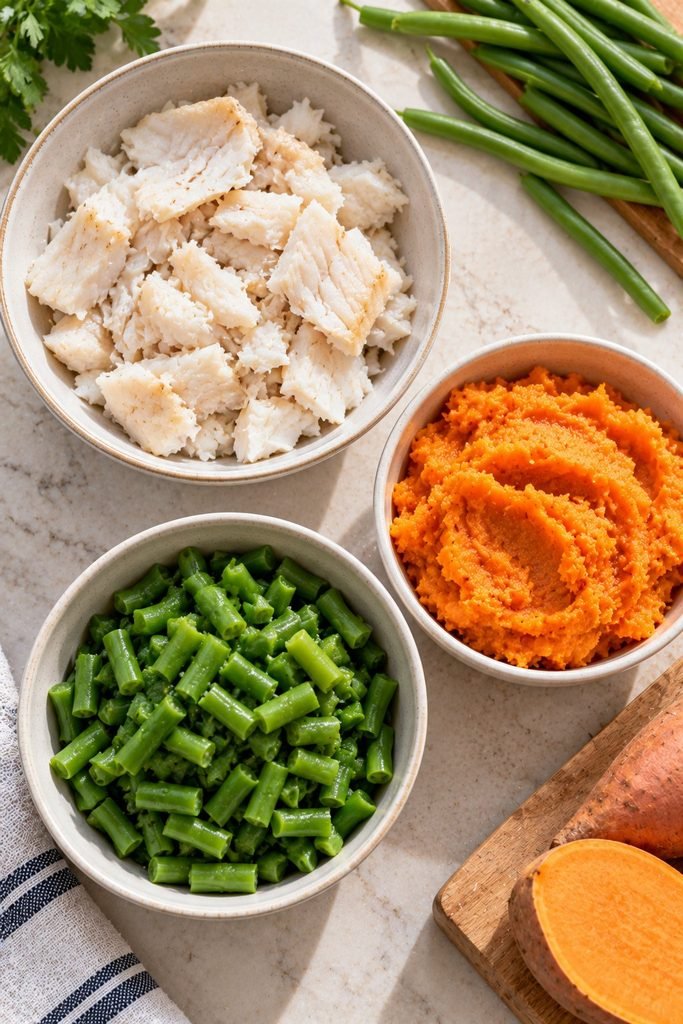
One advantage of preparing homemade food is being able to work with ingredients you already have. However, substitutions can change the nutritional composition of the recipe, so they should be made thoughtfully.
1. Substitute Plain Cooked Salmon With Another Fish
If salmon is unavailable, some dogs may tolerate plain, thoroughly cooked fish such as cod.
Remove all bones, avoid added seasoning, and cook the fish thoroughly. Choose fish from reputable sources and avoid raw fish, heavily salted fish, smoked fish, and products containing sauces.
Different fish have different fat and nutrient profiles, so a substitution does not make the overall recipe nutritionally complete.
2. Use Plain Sweet Potato Instead of Pumpkin
Plain cooked sweet potato can provide a soft texture and dietary fiber.
Peel it if appropriate, cook it until tender, and mash it without adding butter, salt, sugar, or seasoning.
Introduce it gradually because a change in fiber intake can affect your dog’s digestion.
3. Replace Spinach With Another Suitable Vegetable
Some dogs tolerate small amounts of cooked green beans or carrots.
Wash the vegetables, cook them until appropriately soft, and chop them into small pieces. Avoid onions, garlic, and other ingredients known to be unsafe for dogs.
If your dog has a medical condition or follows a veterinary prescribed diet, check with your veterinarian before changing ingredients.
My practical tip: Keep substitutions simple and introduce one new ingredient at a time. This makes it easier to identify which ingredient may be causing digestive upset if your dog reacts poorly.
How to Store Homemade Salmon Dog Food
Proper storage is important because cooked fish is perishable. Leaving the mixture out for too long can allow harmful bacteria to multiply.
I recommend dividing the recipe into small portions soon after it has cooled sufficiently, rather than repeatedly opening and handling one large container.
Refrigerating the Recipe
Place the salmon, spinach, and pumpkin mixture in a clean, covered container.
Refrigerate it promptly, within two hours of preparation, or within one hour if the surrounding temperature exceeds 90°F (32°C).
Keep the refrigerator at 40°F (4°C) or below and use the leftovers within three to four days.
If you are unsure how long the food has been sitting out, it is safer to discard it.
Freezing Individual Portions
Freezing is useful if you have prepared more than your dog can reasonably eat in the next few days.
Divide the mixture into small, meal appropriate portions and place them in freezer safe containers or bags. Label each container with the preparation date.
For best quality, use frozen portions within approximately two to three months.
Thaw a portion in the refrigerator and serve it once it has reached a safe temperature. Avoid thawing the food on the counter for extended periods, and do not refreeze portions that have been left out too long.
Signs That the Food Should Be Discarded
Discard the food if you notice an unusual smell, visible mold, unexpected discoloration, or a change in texture that suggests spoilage.
Remember that food can contain harmful bacteria even when it looks and smells normal. Follow safe storage times instead of relying on appearance alone.
Common Mistakes to Avoid When Making Salmon Dog Food
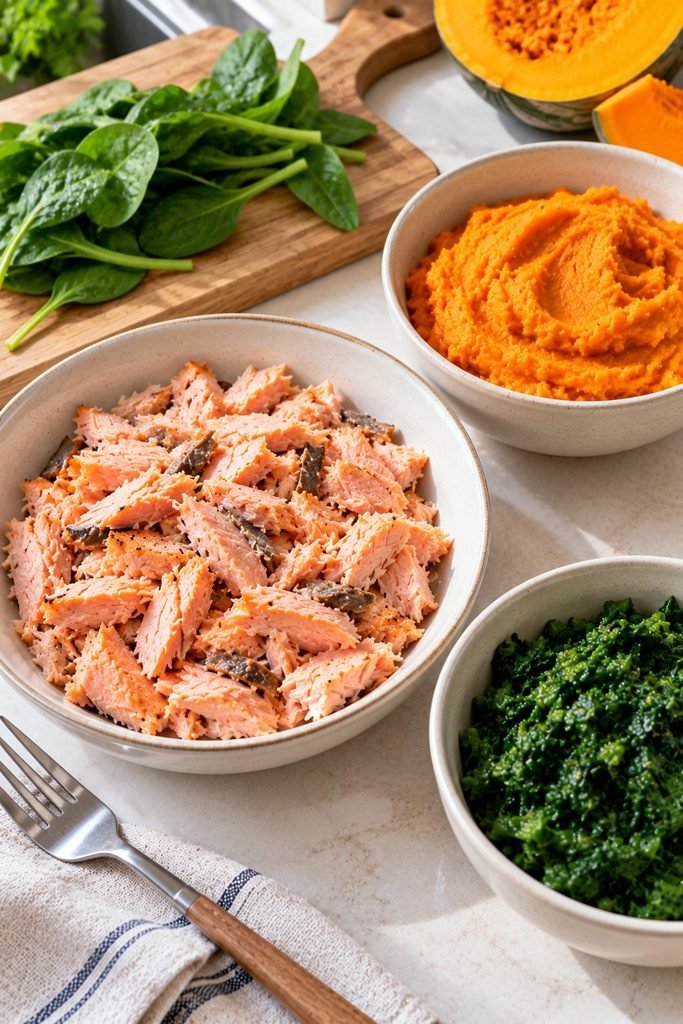
A simple recipe can still become unsuitable if the ingredients are prepared incorrectly. These are the mistakes I would pay particular attention to.
1. Leaving Fish Bones in the Salmon
Small bones can injure a dog’s mouth or digestive tract. Choose boneless salmon where possible and inspect it carefully after cooking.
2. Using Seasonings and Sauces
Onions and garlic can be toxic to dogs. Salt heavy seasonings, sauces, and some commercial marinades can also make the recipe unsuitable.
Keep the ingredients plain.
3. Using Pumpkin Pie Filling
Pumpkin pie filling may contain added sugar and spices. Use plain pumpkin puree or freshly cooked pumpkin instead.
4. Serving the Food While It Is Hot
Freshly cooked salmon and vegetables can retain heat longer than expected. Allow the mixture to cool before serving.
5. Feeding Too Much at Once
A large portion of an unfamiliar food can upset your dog’s stomach. Start with a small amount and observe how your dog responds.
6. Treating the Recipe as a Complete Daily Diet
Salmon, spinach, and pumpkin alone do not provide a verified balance of all essential nutrients.
Do not rely on this mixture as your dog’s only food unless a qualified veterinary nutrition professional has formulated it to meet your dog’s requirements.
7. Ignoring Your Dog’s Medical Needs
Dogs with kidney disease, a history of urinary stones, pancreatitis, food allergies, or other medical conditions may need specific dietary restrictions.
Check with your veterinarian before introducing this recipe if your dog has an existing health condition or follows a prescribed diet.
Frequently Asked Questions
Is salmon dog food with spinach and pumpkin healthy?
These ingredients can provide useful nutrients when prepared properly. Salmon supplies protein and omega 3 fatty acids, pumpkin provides fiber, and spinach contributes vitamins and minerals.
However, this particular recipe is not a complete and balanced dog food. It should be used as a supplemental meal unless it has been professionally formulated to meet your dog’s nutritional requirements.
Can puppies eat this salmon dog food recipe?
Puppies have specific nutritional requirements to support growth and development. An unbalanced homemade recipe can cause nutritional problems if it replaces their regular food.
Speak with your veterinarian before feeding this recipe to a puppy, especially if you intend to use it regularly.
Should I use fresh or canned pumpkin?
Both can be suitable when the ingredient is plain. Fresh pumpkin should be cooked until soft, while canned pumpkin should contain no added sugar, spices, or other unnecessary ingredients.
Avoid pumpkin pie filling.
Can I use canned salmon instead of fresh salmon?
Canned salmon may be suitable if it is plain, contains no unsafe seasonings, and has been checked carefully for bones. Choose a product without added salt when possible.
Because some canned products contain added sodium or other ingredients, read the label carefully. If you are unsure whether a product is appropriate for your dog, choose plain cooked salmon instead.
Can dogs eat raw salmon?
Do not use raw salmon for this recipe. Raw fish can carry parasites and harmful bacteria, and some fish can pose additional risks depending on their origin and handling.
Cook salmon thoroughly and remove all bones before serving.
Does pumpkin help with a dog’s digestion?
Pumpkin contains fiber, which may help support normal bowel function in some dogs. However, digestive symptoms can have many causes, and pumpkin is not a treatment for every case of diarrhea or constipation.
Contact your veterinarian if your dog has persistent diarrhea, repeated vomiting, blood in the stool, abdominal pain, or other concerning symptoms.
How often can I feed this recipe?
For a healthy adult dog, an occasional small serving may be appropriate if the ingredients are tolerated and the recipe fits within the dog’s overall dietary plan.
There is no universal feeding frequency for this particular mixture. If you want to feed it every day or use it as a meal replacement, have the diet formulated by a veterinary nutrition professional.
Important Homemade Dog Food Disclaimer
This recipe is provided for general informational purposes and is intended as an occasional supplemental food for dogs, not as a complete and balanced diet.
Every dog has different nutritional requirements. Puppies, pregnant or nursing dogs, senior dogs, and dogs with medical conditions may need specialized diets.
Consult your veterinarian before making significant dietary changes or using homemade food as a regular meal replacement.
Ensure salmon is thoroughly cooked, carefully deboned, and served without unsafe seasonings. Introduce new ingredients gradually and discontinue feeding if your dog develops a concerning reaction.
Salmon Dog Food Recipe with Spinach & Pumpkin
Ingredients
Equipment
Method
- Rinse the brown rice under cool running water.
- Add the rice and water to a large pot. Bring to a boil, then reduce the heat, cover, and simmer according to the package instructions until tender.
- Preheat the oven to 375°F (190°C) if baking the salmon, or prepare a clean skillet for cooking it on the stovetop.
- Place the salmon in a baking dish and cook until it is fully cooked and flakes easily with a fork. Alternatively, cook it in a skillet without salt, oil, or seasoning.
- Allow the salmon to cool slightly, then carefully check for and remove every bone. Flake the fish into small pieces.
- Wash the spinach thoroughly and chop it into small pieces.
- Briefly steam or cook the spinach until wilted and tender.
- Add the cooked rice, flaked salmon, spinach, and plain pumpkin puree to a mixing bowl.
- Stir until the ingredients are evenly combined. Add a little warm water if the mixture needs more moisture.
- Allow the food to cool completely before serving or dividing it into storage portions.
- Serve an appropriate portion based on your dog’s individual nutritional and calorie needs.
- Salmon Safety: Use fully cooked, plain salmon and carefully remove all bones. Do not use raw, smoked, salted, or seasoned salmon.
- Pumpkin Tip: Choose plain pumpkin puree without added sugar, spices, or pie filling ingredients.
- Spinach Tip: Wash the spinach thoroughly and cook it until tender. Dogs with kidney problems or a history of calcium oxalate stones may need to avoid spinach, so check with your veterinarian if this applies to your dog.
- Storage: Refrigerate cooled portions promptly in airtight containers and use within 3 to 4 days. Freeze individual portions for longer storage and thaw them in the refrigerator before serving.
- Common Mistake to Avoid: Do not assume salmon, rice, spinach, and pumpkin alone provide every nutrient a dog needs. This recipe has not been formulated to meet all requirements for calcium, essential fatty acids, vitamins, and minerals.
- Serving: This recipe is a homemade food mixture, not a verified complete and balanced diet. Before using it as your dog’s regular meals, ask a board-certified veterinary nutritionist to formulate or review it for your dog’s age, weight, health, and nutritional requirements. Until then, use it only as an occasional topper if your dog tolerates the ingredients.
Final Thoughts
This salmon dog food recipe with spinach and pumpkin is a straightforward way to offer your dog a little variety using recognizable ingredients.
The preparation is simple, and the combination of cooked salmon, soft pumpkin, and finely chopped spinach creates a moist mixture that can be served in a small portion alongside a suitable regular diet.
I recommend keeping the ingredients plain, checking the salmon carefully for bones, and storing leftovers safely. Start with a small amount if your dog has never tried the recipe before, and pay attention to how your dog responds.
Most importantly, remember that fresh ingredients alone do not guarantee balanced nutrition.
If you want to prepare homemade dog food regularly, work with a qualified veterinary nutrition professional to ensure your dog receives all the nutrients needed for long term health.
With sensible preparation and appropriate portions, this recipe can be an occasional addition to your dog’s menu without replacing the nutritional foundation of a complete and balanced diet.