
Simple 5-Ingredient Crockpot Meals for Dogs on a Budget
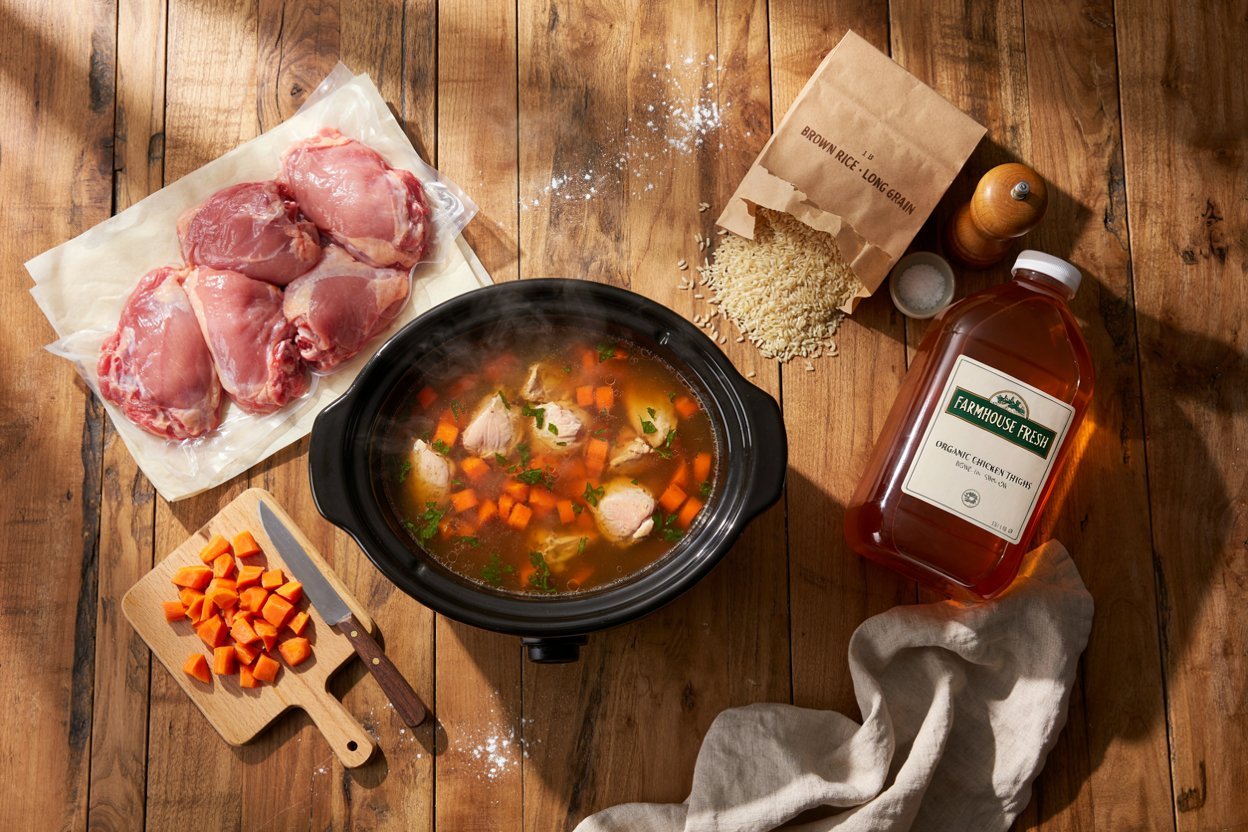
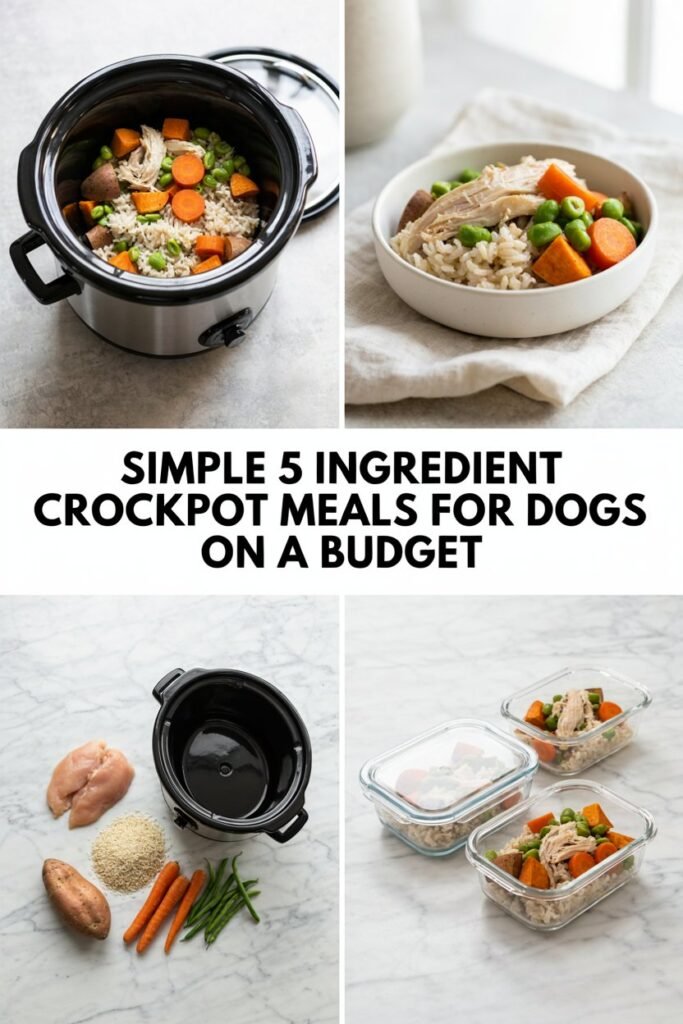
Homemade dog food has a reputation for being expensive and time consuming, and honestly, it can be if you’re buying specialty ingredients and standing over a stove every night. It doesn’t have to be.
A crockpot changes the math considerably, since it lets you use cheaper cuts of meat that need long, slow cooking to turn tender, and it does all of that without needing you in the kitchen the entire time.
Pair that with a genuinely short ingredient list, five items or fewer per recipe, and homemade feeding starts to look a lot more realistic for a regular budget and a regular schedule.
This guide covers six different five ingredient crockpot meals, along with real budget guidance, ingredient explanations, and everything else you need to actually make this a sustainable part of your routine rather than a one time experiment.
If you want to build out your homemade cooking rotation beyond these six meals, a few related guides are worth having open alongside this one.
Homemade dog food with vet approved ingredients covers what a fully balanced diet needs beyond just picking affordable ingredients, ground turkey dog food recipe for beginners and 3 ingredient cooked dog food offer more simple starting points, instant pot turkey dog food recipe is worth a look if you also have a pressure cooker and want to compare coo king methods, 3 simple farmer’s dog food recipes and fresh dog food recipes that dogs love round out the broader rotation, 7 high protein homemade dog food recipes and high protein chicken meals for dogs are good next steps once you want more variety, and human foods dogs can safely eat is a good reference for what’s safe to share from your own kitchen more broadly.
Disclaimer: This post may contain affiliate links, which means I may earn a small commission at no extra cost to you. Always consult your veterinarian before preparing or switching your dog to homemade meals, especially for balanced nutrition and safety.
Amazon Shopping List You Need
- Slow Cooker Crockpot (Large Capacity, Programmable)
- Digital Kitchen Food Scale
- Glass Meal Prep Containers with Lids
- Stainless Steel Dog Food Bowls
- Airtight Dog Food Storage Container
- Silicone Freezer Portion Trays
- Dog Multivitamin Supplement Powder
Why a Crockpot Is Genuinely Good for Budget Cooking
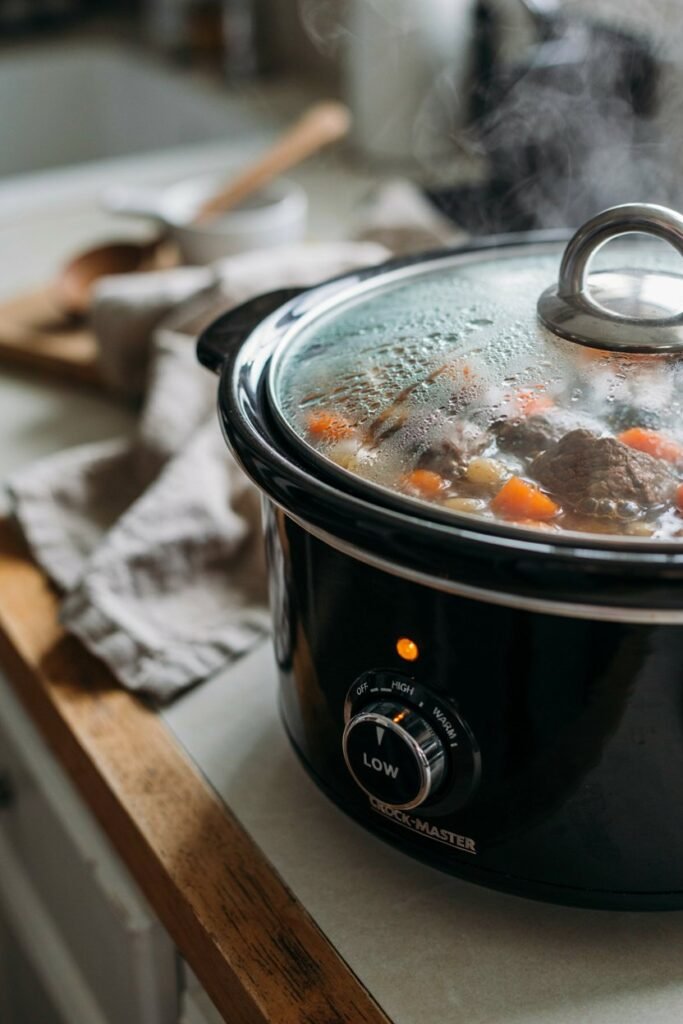
A slow cooker does two things particularly well for anyone trying to keep homemade dog food affordable. First, it makes tougher, cheaper cuts of meat genuinely tender, since the long, low, moist cooking process breaks down connective tissue that would stay chewy with a quick sear or boil.
That means you don’t need to reach for the leanest, priciest cut of meat at the store just to get a good texture. Second, it requires almost no active attention once everything is loaded in, which makes batch cooking a realistic weekly habit rather than something you only manage occasionally when you happen to have a free afternoon.
Before You Start
As with any homemade recipe, these five ingredient meals aren’t automatically a complete, nutritionally balanced diet suitable for daily, long term feeding just because they’re made from real, whole ingredients.
Dogs need appropriate amounts of protein, fat, carbohydrates, calcium, phosphorus, essential fatty acids, vitamins, minerals, and a range of trace nutrients, all in specific proportions that a simple five ingredient recipe doesn’t fully provide on its own.
These meals work well as regular additions, occasional full meals, or a foundation you build on with proper supplementation.
If you’re planning to replace your dog’s complete commercial diet entirely, working with a veterinarian or a board certified veterinary nutritionist is the most reliable way to make sure the final recipe is genuinely balanced for daily use.
Budget Shopping Tips for Homemade Dog Food
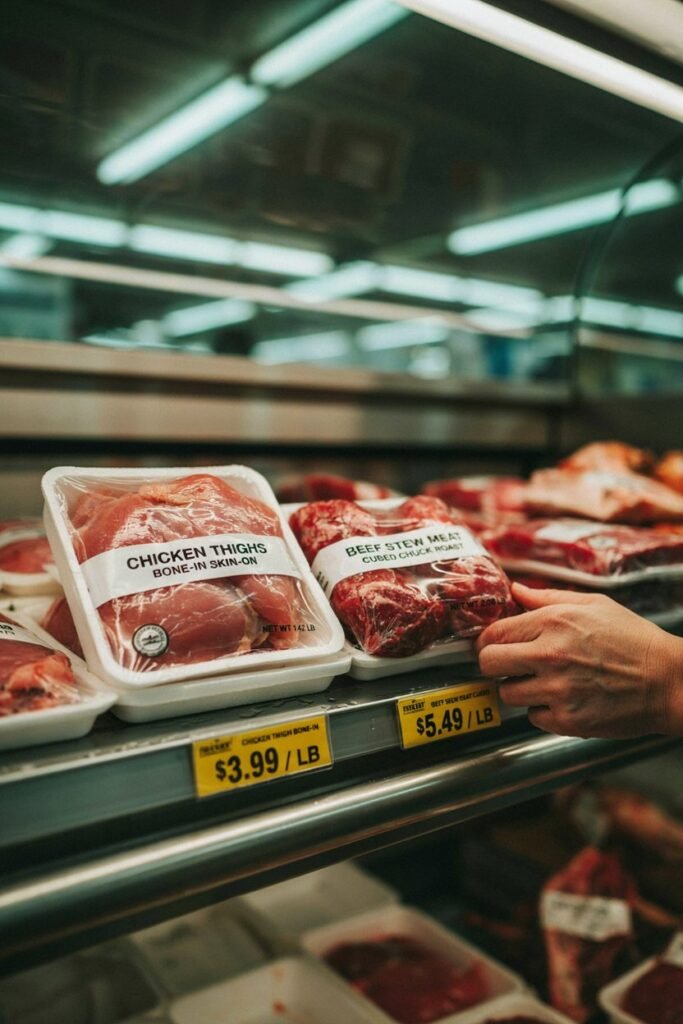
Buy tougher, cheaper cuts. Since the crockpot does the work of tenderizing, you don’t need to pay a premium for the leanest or most tender cut of meat available. Chuck roast, cheaper stew meat, and bone in cuts, once any bones are removed before serving, all work well.
Buy in bulk and portion for the freezer. A larger package of ground turkey or chicken thighs is almost always cheaper per pound than a small package, and freezing portions you won’t use immediately prevents any of it from going to waste.
Watch for sales on frozen vegetables. Frozen carrots, green beans, and peas are just as nutritionally useful as fresh in a slow cooked recipe, and they’re often considerably cheaper, especially outside of their peak growing season.
Cook a double batch whenever the crockpot has room. The active time to prepare a double batch is barely more than a single batch, and it stretches your grocery budget further per session of actual cooking effort.
Understanding the Ingredients
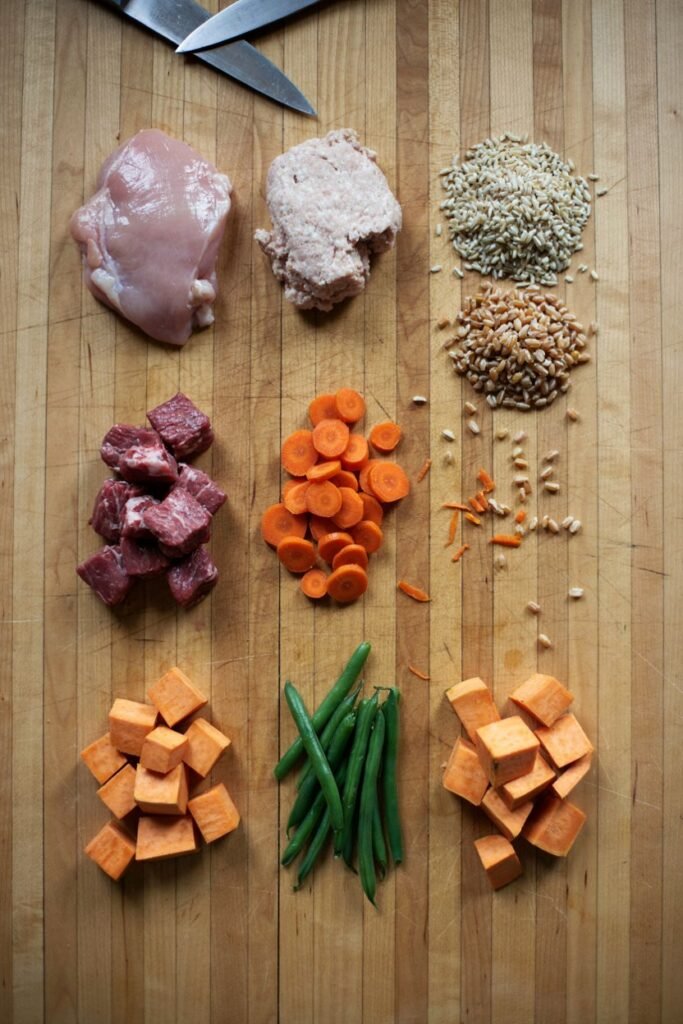
Chicken thighs. Bone in or boneless, chicken thighs are consistently one of the cheapest cuts of chicken available and hold up beautifully to slow cooking, staying moist and tender in a way leaner breast meat sometimes doesn’t over a long cook time. Bones must always be removed before serving.
Ground turkey. A budget friendly, lean protein that works well in a crockpot, though it benefits from being broken apart partway through cooking to avoid forming one dense clump.
Beef chuck or stew meat. These tougher, less expensive cuts are exactly what a slow cooker is built for, turning genuinely tender after several hours of low, moist heat despite starting out as one of the cheaper options at the counter.
Brown rice. An affordable, filling carbohydrate that cooks directly in the crockpot alongside the protein, absorbing flavor from the broth as it goes.
Barley. A hearty, inexpensive grain that holds up particularly well to a long cook time, offering a different texture from rice for variety across your rotation.
Carrots. Cheap, easy to store, and a reliable source of fiber and beta carotene in nearly any homemade dog meal.
Green beans. Affordable fresh or frozen, and a good source of fiber and volume without adding many calories.
Sweet potato. A filling, naturally sweet carbohydrate that holds its texture reasonably well through a long slow cook.
Plain pumpkin puree. Inexpensive, shelf stable, and a good source of fiber that pairs easily with almost any protein in this guide.
Low sodium chicken or beef broth. Used as the cooking liquid in most of these recipes, broth adds flavor and moisture, and a large container is genuinely cheap relative to how many batches it stretches across.
Ingredients I Avoid
Onion, garlic, chives, excessive salt, seasoning blends, rich sauces, xylitol, grapes, raisins, chocolate, and cooked bones have no place in any of these recipes.
It’s worth checking the broth label specifically before using it in the crockpot, since a surprising number of otherwise plain sounding broths include onion or garlic for flavor, even inexpensive store brands.

6 Simple 5-Ingredient Crockpot Meals for Dogs
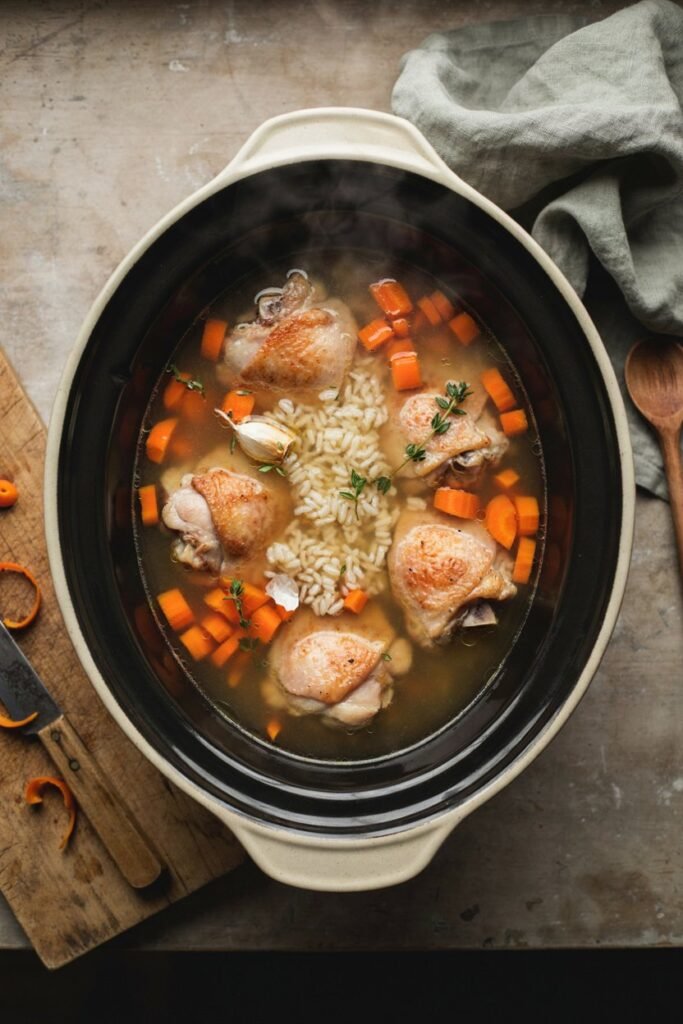
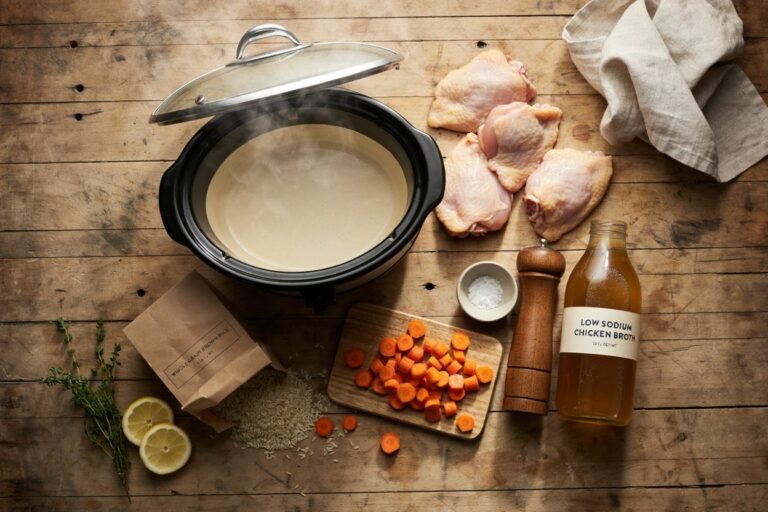
1. Chicken, Rice and Carrot Crockpot Dinner
Ingredients
- 2 pounds bone in chicken thighs, skin removed. Bone in thighs are one of the cheapest cuts of chicken you’ll find, and they turn out remarkably tender after a long, slow cook. The bones must be removed once cooking is finished and before serving.
- 1 cup brown rice, uncooked. Rice cooks directly in the crockpot, absorbing flavor from the broth as it simmers alongside the chicken.
- 1 cup carrots, chopped. Carrots add fiber and a bit of natural sweetness, and they hold their shape reasonably well through a long cook.
- 3 cups low sodium chicken broth, onion and garlic free. Broth serves as the cooking liquid, keeping everything moist throughout the several hour cook time.
- 1 egg, added after cooking. Stirred in once the mixture has cooled, the egg adds a bit of extra protein without needing to cook in the crockpot itself.
Instructions
- Add the chicken thighs, rice, and carrots to the crockpot.
- Pour in the broth, making sure everything is mostly submerged.
- Cook on low for 6 to 7 hours, or on high for 3 to 4 hours, until the chicken is fully cooked and falling apart easily.
- Remove the chicken, discard all bones, and shred the meat.
- Return the shredded chicken to the pot and stir everything together.
- Let cool, then stir in the scrambled egg.
- Portion into individual servings.
How Much to Serve Adjust based on your dog’s weight and activity level, using this as a solid everyday portion size.
Storage Refrigerate for up to 4 days, or freeze for up to 3 months.
My Tip Buying whole bone in thighs on sale and removing the skin yourself is almost always cheaper than pre trimmed boneless cuts, even accounting for the extra few minutes of prep.
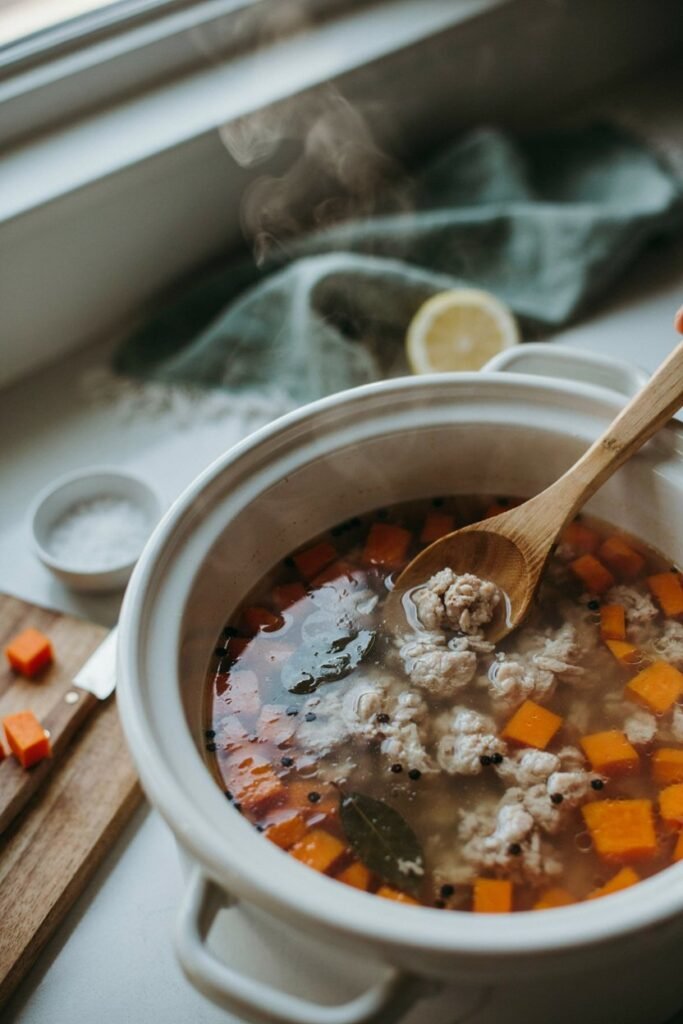
2. Ground Turkey and Sweet Potato Crockpot Meal
Ingredients
- 2 pounds ground turkey. A lean, budget friendly protein that cooks well in the crockpot, especially when broken apart partway through.
- 2 cups sweet potato, peeled and cubed. Sweet potato holds its shape reasonably well through a long, slow cook and adds a naturally sweet flavor most dogs enjoy.
- 1 cup green beans, chopped. Green beans add fiber and volume without contributing many extra calories.
- 2.5 cups low sodium broth, onion and garlic free. Broth keeps everything moist throughout the cook time.
Instructions
- Add the ground turkey, breaking it up slightly, along with the sweet potato and green beans to the crockpot.
- Pour in the broth.
- Cook on low for 6 hours, or on high for 3 to 4 hours.
- About halfway through, break the turkey apart further with a spoon to prevent large clumps from forming.
- Once finished, stir everything together thoroughly.
- Let cool before portioning.
How Much to Serve Turkey is leaner than chicken thigh, so portions may need slight adjustment if you’re switching between the two.
Storage Refrigerate for up to 4 days, or freeze for up to 3 months.
My Tip Buying a larger family sized package of ground turkey and freezing half raw, before cooking, is one of the easiest ways to stretch a single grocery trip across two separate batches.
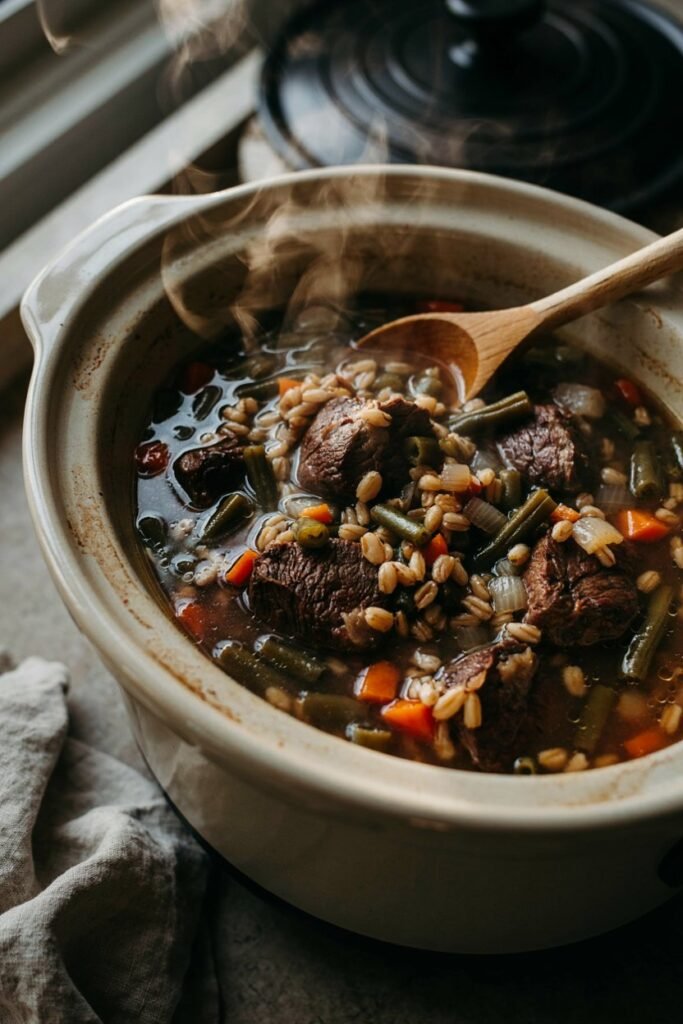
3. Beef, Barley and Green Bean Crockpot Stew
Ingredients
- 2 pounds beef chuck or stew meat, cut into small pieces. A tougher, inexpensive cut that turns genuinely tender after several hours of slow cooking, which is exactly what makes this recipe budget friendly in the first place.
- 1 cup barley. Barley holds up particularly well to a long cook time, offering a heartier texture than rice.
- 1 cup green beans, chopped. Green beans add fiber and volume to round out the stew.
- 3 cups low sodium beef broth, onion and garlic free. Broth provides the cooking liquid and ties the whole stew together.
Instructions
- Add the beef, barley, and green beans to the crockpot.
- Pour in the broth.
- Cook on low for 7 to 8 hours, or on high for 4 to 5 hours, until the beef is fully tender.
- Stir well once finished, breaking any larger pieces of beef apart if needed.
- Let cool before portioning.
How Much to Serve Beef is richer than chicken or turkey, so a slightly smaller portion than the other recipes in this guide is often appropriate.
Storage Refrigerate for up to 4 days, or freeze for up to 3 months.
My Tip Stew meat labeled specifically for slow cooking is usually one of the cheapest cuts in the meat case, and it’s exactly the right texture for a recipe like this one.
4. Chicken and Pumpkin Crockpot Bowl
Ingredients
- 2 pounds boneless, skinless chicken breast. A leaner option than thigh meat, still budget friendly when bought in a larger family pack.
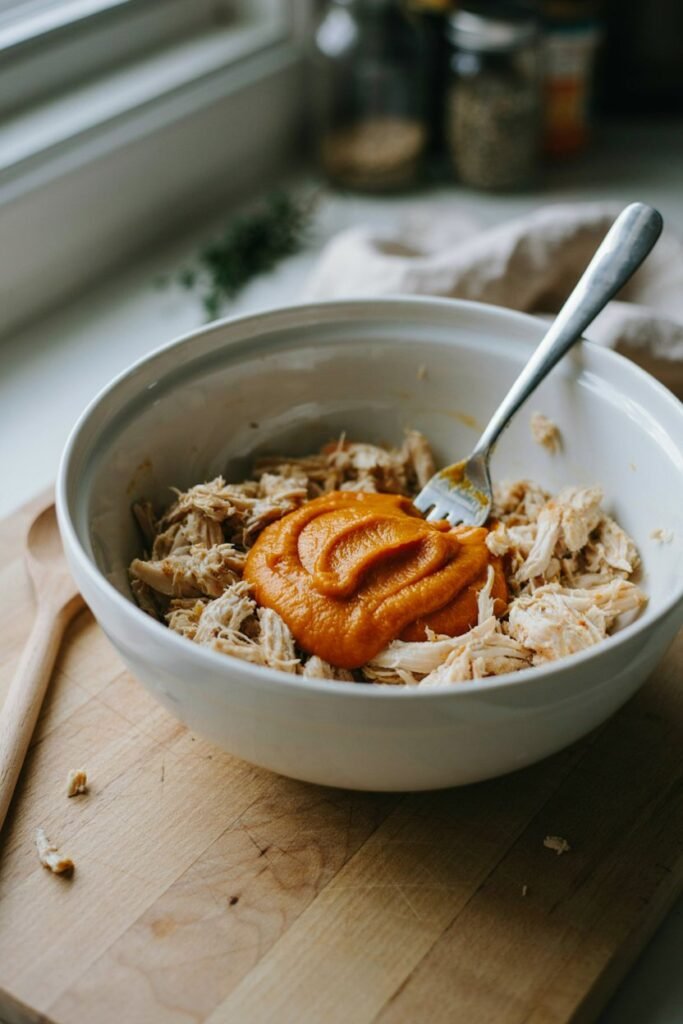
- 1 cup plain pumpkin puree, added after cooking. Pumpkin doesn’t need to cook in the crockpot itself, so it’s stirred in once the chicken is done and the mixture has cooled slightly, preserving its fiber and texture.
- 1 cup brown rice, uncooked. Rice cooks directly in the pot, absorbing flavor from the broth.
- 2.5 cups low sodium chicken broth, onion and garlic free. Broth keeps everything moist through the cook time.
Instructions
- Add the chicken breast and rice to the crockpot.
- Pour in the broth.
- Cook on low for 6 hours, or on high for 3 hours, until the chicken is fully cooked.
- Shred the chicken directly in the pot using two forks.
- Let the mixture cool, then stir in the pumpkin puree.
- Portion into individual servings.
How Much to Serve A standard everyday portion, adjusted for your dog’s size and activity level.
Storage Refrigerate for up to 4 days, or freeze for up to 3 months.
My Tip Buying a large chicken breast pack and portioning it into freezer bags right after the grocery trip keeps this one just as affordable as the thigh based recipes above.
5. Turkey and Brown Rice Budget Bowl
Ingredients
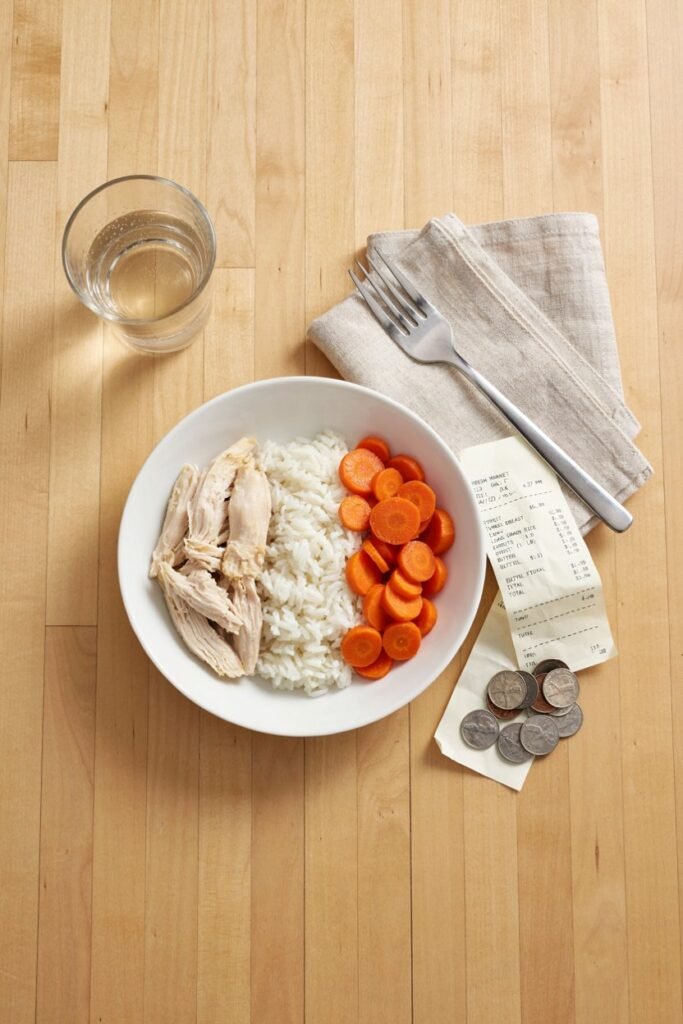
- 2 pounds ground turkey. The primary protein, chosen here specifically for affordability and ease of cooking in bulk.
- 1.5 cups brown rice, uncooked. A filling, inexpensive carbohydrate that cooks directly in the pot.
- 1 cup carrots, chopped. Carrots round out the meal with fiber and a bit of color.
- 3 cups low sodium broth, onion and garlic free. Broth provides the cooking liquid for the entire recipe.
Instructions
- Add the ground turkey, breaking it apart slightly, along with the rice and carrots to the crockpot.
- Pour in the broth.
- Cook on low for 6 hours, or on high for 3 to 4 hours.
- Stir well partway through to break up the turkey further.
- Once finished, stir everything together thoroughly.
- Let cool before portioning.
How Much to Serve A reliable everyday portion, adjusted for your dog’s weight and activity level.
Storage Refrigerate for up to 4 days, or freeze for up to 3 months.
My Tip This is the recipe I make most often specifically because every ingredient in it is something I can buy on sale almost every week without much planning.
6. Beef and Sweet Potato Slow Cooker Meal
Ingredients
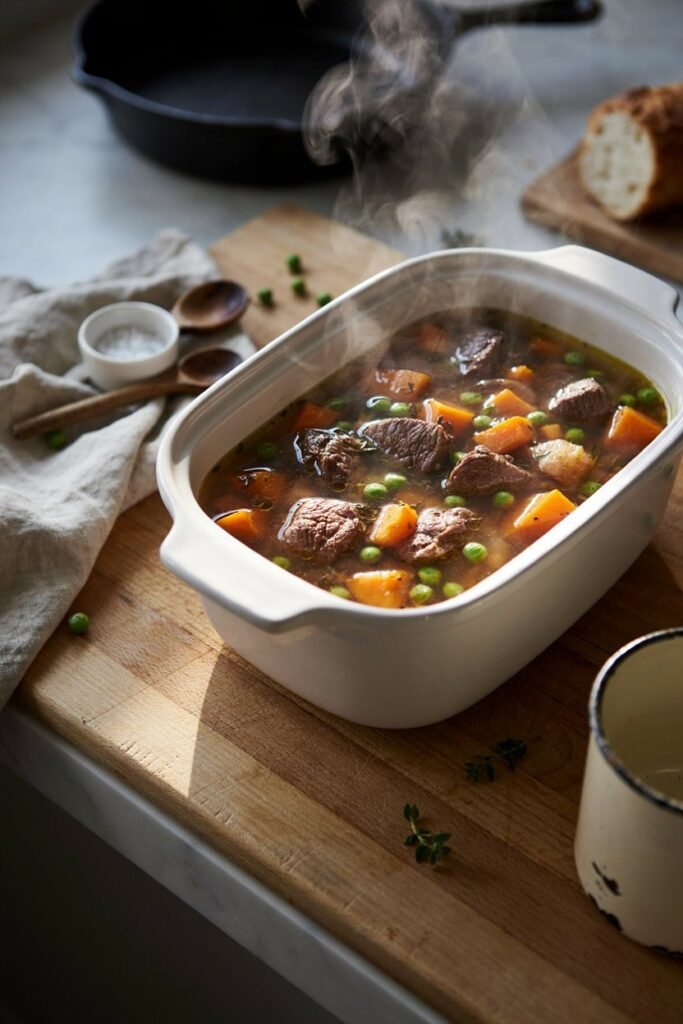
- 2 pounds beef chuck or stew meat, cut into small pieces. Another use for one of the cheapest cuts in the meat case, turning tender over a long, slow cook.
- 2 cups sweet potato, peeled and cubed. Sweet potato adds natural sweetness and holds its shape reasonably well through the cook time.
- 1 cup peas. An inexpensive, easy addition, especially when bought frozen.
- 3 cups low sodium beef broth, onion and garlic free. Broth keeps the stew moist and flavorful throughout.
Instructions
- Add the beef, sweet potato, and peas to the crockpot.
- Pour in the broth.
- Cook on low for 7 to 8 hours, or on high for 4 to 5 hours, until the beef is fully tender.
- Stir well once finished.
- Let cool before portioning.
How Much to Serve Given the richness of beef, a slightly smaller portion than the leaner recipes in this guide is often appropriate.
Storage Refrigerate for up to 4 days, or freeze for up to 3 months.
My Tip Frozen peas go directly into the pot straight from the freezer with no thawing needed, which makes this one of the fastest recipes in this guide to actually assemble.
Recipe Comparison at a Glance
| Recipe | Main Protein | Cook Time (Low) | Best For |
|---|---|---|---|
| Chicken, Rice and Carrot Crockpot Dinner | Chicken thigh | 6 to 7 hours | Everyday budget meal |
| Ground Turkey and Sweet Potato Crockpot Meal | Ground turkey | 6 hours | Leaner everyday option |
| Beef, Barley and Green Bean Crockpot Stew | Beef stew meat | 7 to 8 hours | Heartier, richer meal |
| Chicken and Pumpkin Crockpot Bowl | Chicken breast | 6 hours | Digestive friendly option |
| Turkey and Brown Rice Budget Bowl | Ground turkey | 6 hours | Most affordable rotation staple |
| Beef and Sweet Potato Slow Cooker Meal | Beef stew meat | 7 to 8 hours | Richer occasional meal |
Crockpot Tips for Cooking Dog Food
Remove all bones before serving, even soft ones. Slow cooking makes bones easier to remove, not safer to feed. Every bone needs to come out before the meal is served, regardless of how tender it seems.
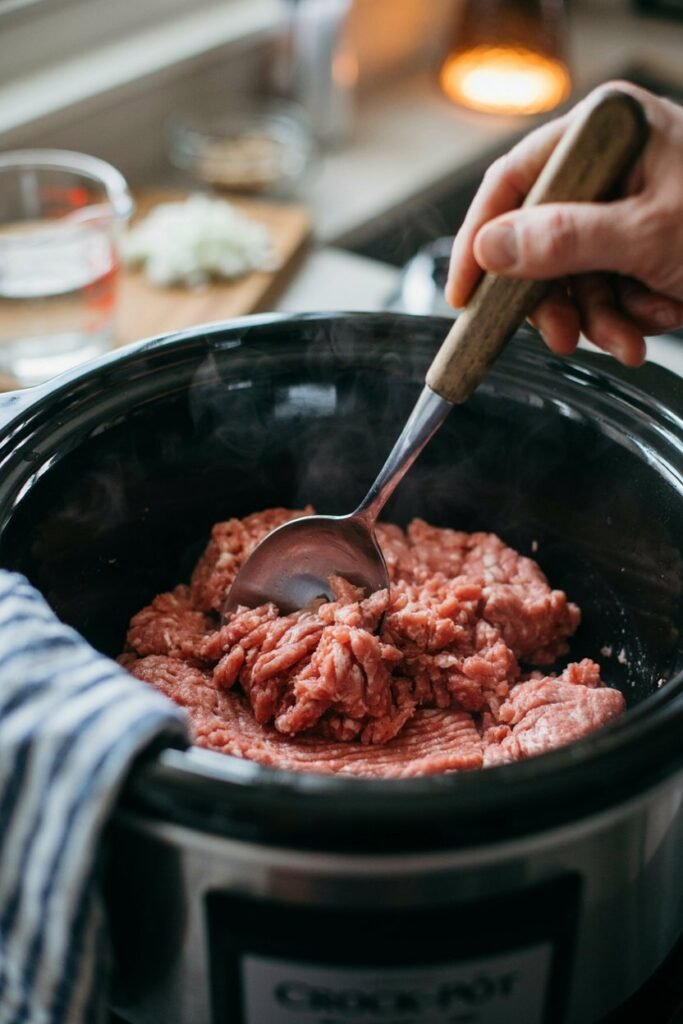
Break up ground meat partway through cooking. Ground turkey especially tends to clump together in a slow cooker, and stirring partway through helps it cook more evenly.
Don’t add dairy or eggs until after cooking. Ingredients like egg are best stirred in once the main mixture has cooled, rather than cooked for hours alongside everything else.
Check your specific crockpot’s timing. Slow cookers vary somewhat in how hot they actually run, so the first time you make a new recipe, check that the meat is fully cooked through at the low end of the suggested time range before assuming it’s done.
How to Transition Your Dog to These Recipes
Don’t replace your dog’s regular food with any of these recipes all at once. A gradual transition over about a week gives their digestive system time to adjust.
Start with a small amount mixed into their regular food, gradually increasing the proportion over several days while watching for loose stool, vomiting, excessive gas, or reduced appetite. If symptoms are significant or persistent, slow the process down or contact your veterinarian rather than pushing through.
Ingredients You Should Never Add
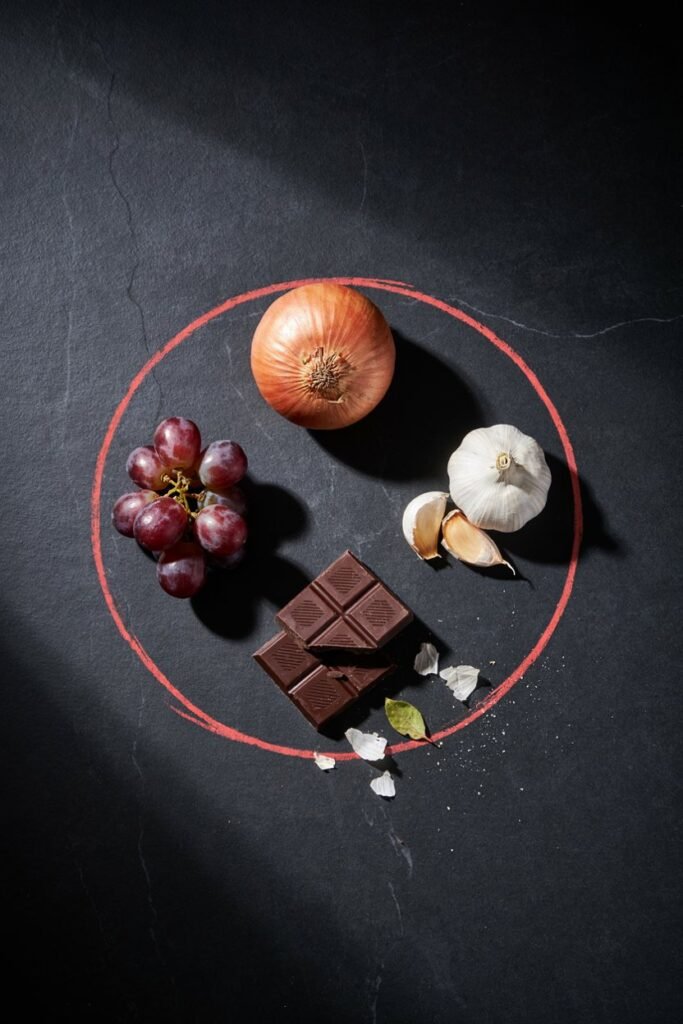
- Onion, garlic, and chives damage red blood cells and can cause anemia, even in small amounts.
- Excess salt and seasoning blends offer no benefit and can be genuinely harmful in larger quantities.
- Xylitol containing products cause a dangerous, rapid drop in blood sugar.
- Grapes and raisins can cause serious kidney problems, with no reliably safe amount.
- Chocolate is toxic even in modest amounts.
- Cooked bones, even ones softened by slow cooking, can still splinter and cause internal injury.
Common Mistakes to Avoid
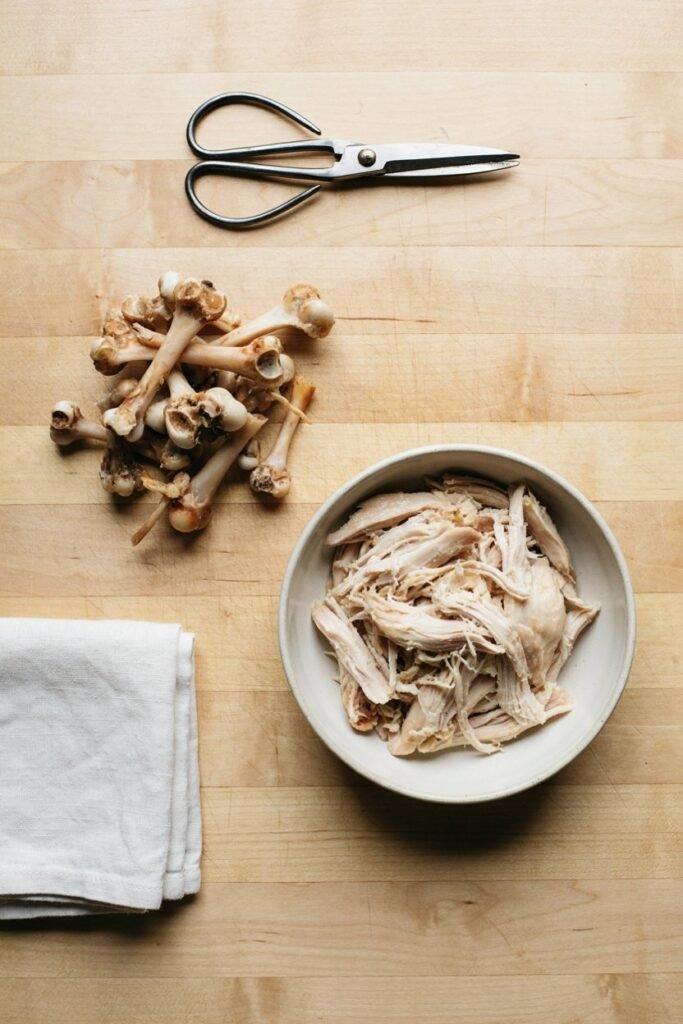
Leaving bones in the final meal. This is worth repeating specifically for crockpot cooking, since slow cooked bones can look deceptively soft while still posing a real risk.
Buying the leanest, most expensive cut out of habit. The entire advantage of crockpot cooking for a budget is that tougher, cheaper cuts turn out just as tender, so there’s no need to pay a premium for lean, tender meat.
Not checking the broth label. This remains one of the most common ways an otherwise careful recipe accidentally ends up with onion or garlic in it.
Skipping the transition period. Switching too quickly from a dog’s regular food to any of these recipes is one of the most common causes of digestive upset when starting homemade feeding.
Making single batches every time. Given how little extra effort a double batch takes in a crockpot, cooking smaller amounts more often is usually the less efficient use of both your time and your grocery budget.
Frequently Asked Questions
Can I feed these recipes every day? As occasional meals or toppers, yes, without much concern. As a sole, long term diet, they should be reviewed and properly formulated with a veterinarian’s input first.
Are cheaper cuts of meat safe for dogs? Yes, as long as they’re fully cooked and any bones are removed before serving. Tougher, less expensive cuts are exactly what a slow cooker is designed to make tender.
Can I use frozen meat directly in the crockpot? It’s generally safer to thaw meat first, since starting with frozen meat can leave it in the crockpot’s temperature danger zone for too long before reaching a safe cooking temperature.
How long does crockpot dog food last in the fridge? Generally about 4 days when stored in a clean, airtight container.
Can I freeze these meals? Yes, portioning them into individual servings before freezing makes future meals much easier to manage, and most hold up well for up to 3 months frozen.
Do I need to add a calcium supplement to these meals? If you’re using them as occasional meals or toppers, generally not. If you’re planning to feed them regularly as your dog’s primary diet, a vet recommended calcium supplement is usually necessary, since muscle meat alone doesn’t provide enough on its own.
Can puppies eat these recipes? Puppies have different nutritional requirements because they’re actively growing, so these recipes shouldn’t become a puppy’s regular diet without a veterinarian reviewing them first.
Is crockpot cooking actually cheaper than buying commercial dog food? It can be, particularly when you lean on budget cuts of meat and bulk purchased grains and vegetables, though the exact savings depend heavily on your local grocery prices and the specific commercial food you’re comparing against.
Can I double any of these recipes? Yes, as long as your crockpot has enough capacity. Check your specific model’s maximum fill line before assuming a doubled batch will fit the same way a standard one does.
What’s the easiest recipe in this guide for a total beginner? The turkey and brown rice budget bowl is about as simple as it gets, using ingredients most kitchens already have some familiarity with and requiring the least amount of prep before everything goes into the pot.
Final Thoughts
Homemade dog food doesn’t have to mean an expensive grocery list or hours of active cooking time.
A crockpot, a handful of affordable ingredients, and a bit of planning around what’s on sale that week can turn homemade feeding into something genuinely sustainable rather than an occasional splurge.
Start with whichever recipe matches what’s already in your kitchen or on sale at your regular grocery store, and build a rotation from there that fits your actual budget and schedule rather than an idealized version of either one.



2 Comments