
Foods That Are Toxic to Cats: Complete Guide
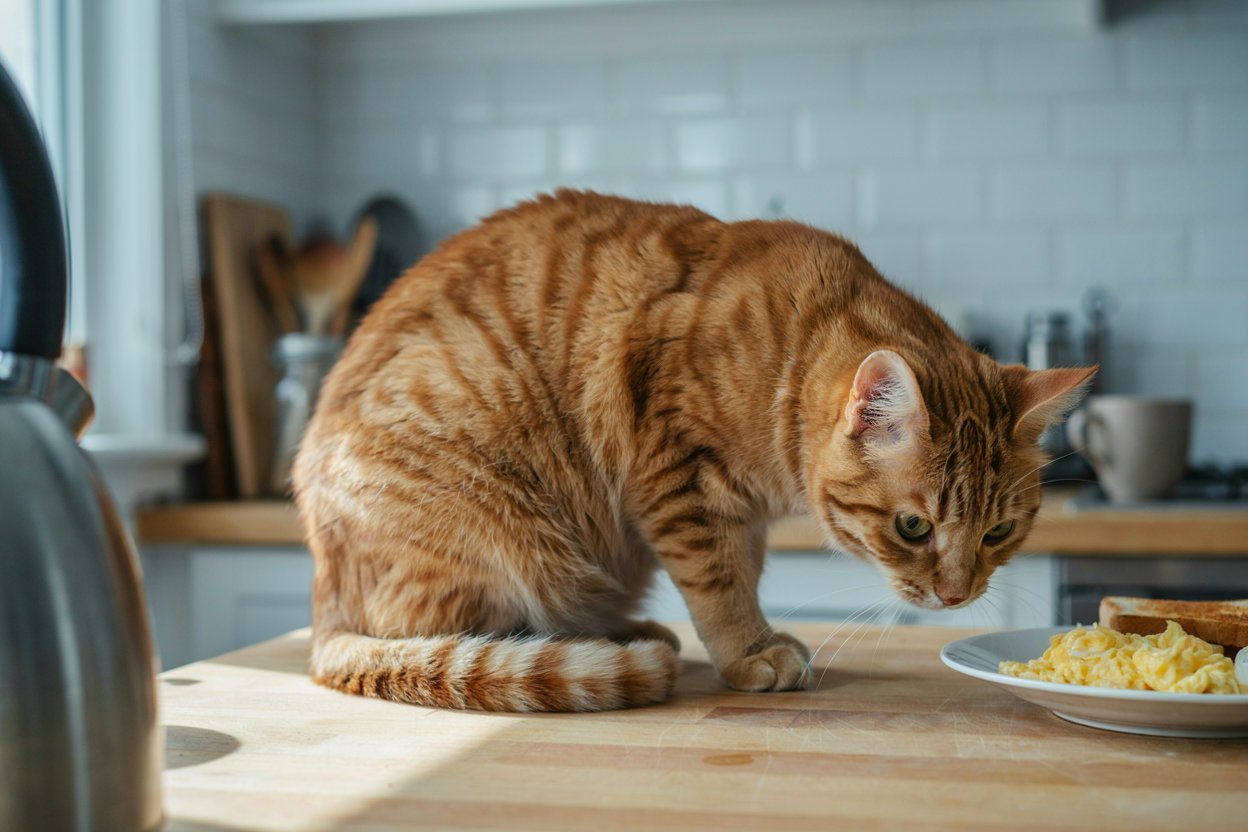
I still remember the night my cat knocked a chocolate bar off the counter and took one curious bite before I caught her.
My heart nearly stopped. That moment sent me down a rabbit hole of research, vet calls, and late night reading that turned into the guide you are about to read.
If you share your home with a cat, this is the kind of information that belongs on your fridge, not buried in a random forum post.
Cats are obligate carnivores with a metabolism that is very different from ours and from dogs too.
Their liver processes certain compounds far more slowly, which means foods that seem completely harmless to us can build up to dangerous levels in their small bodies.
Below is a full breakdown of the foods you need to keep far away from your feline, why they are dangerous, what symptoms to watch for, and what to do if the worst happens.
Why Cats React So Differently to Certain Foods
Cats lack specific liver enzymes that humans and even dogs use to break down certain plant compounds and sugars.
Their small body size also means it takes a much smaller amount of a toxin to cause serious harm.
On top of that, cats are naturally curious and will often sniff, lick, or nibble things out of pure investigation rather than hunger, which is why keeping toxic foods out of reach matters just as much as knowing what they are.
The Complete List of Toxic Foods for Cats
Onions
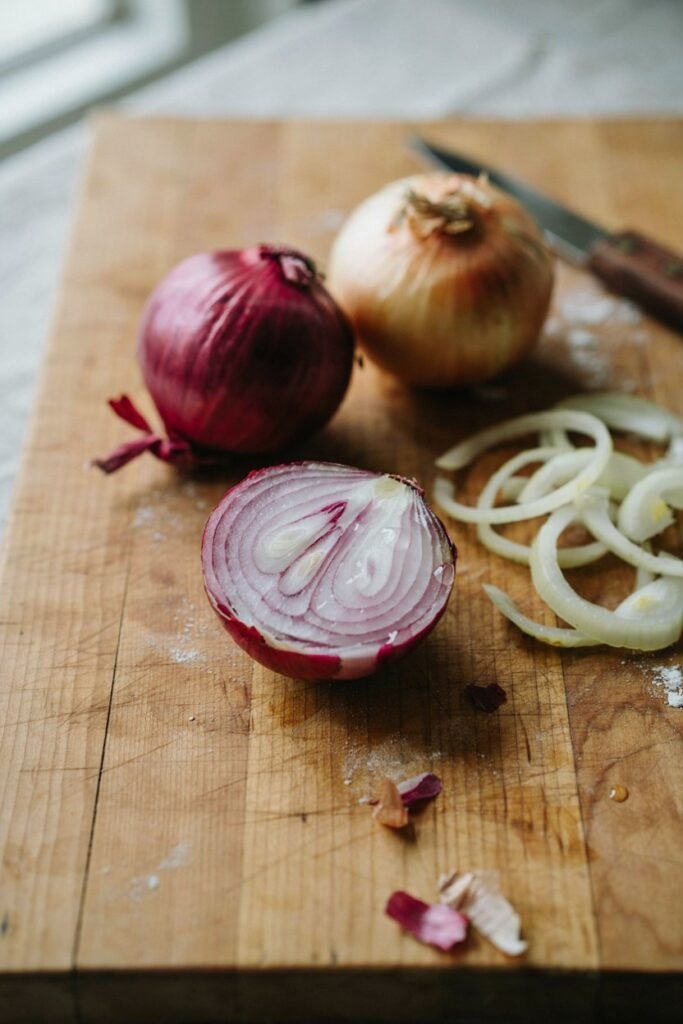
I learned the hard way that onions sneak into more dishes than you would expect.
Onions damage red blood cells and can cause serious anemia in cats.
This applies to onions in every form, raw, cooked, powdered, or dehydrated.
Even the onion powder found in baby food, broths, and seasoning blends counts.
Symptoms often do not show up right away, sometimes taking a few days to appear, which makes onion poisoning especially sneaky.
Watch for lethargy, pale gums, rapid breathing, and a noticeable drop in appetite.
Garlic

Garlic sat in my spice rack for years before I realized it was five times more potent than onion for cats.
It is far more concentrated in the same toxic compounds than onions.
Even small amounts of garlic bread, garlic butter, or garlic powder sprinkled on leftovers can be enough to trigger toxicity.
The damage builds slowly, attacking red blood cells and leading to hemolytic anemia if enough is ingested over time.
Chocolate

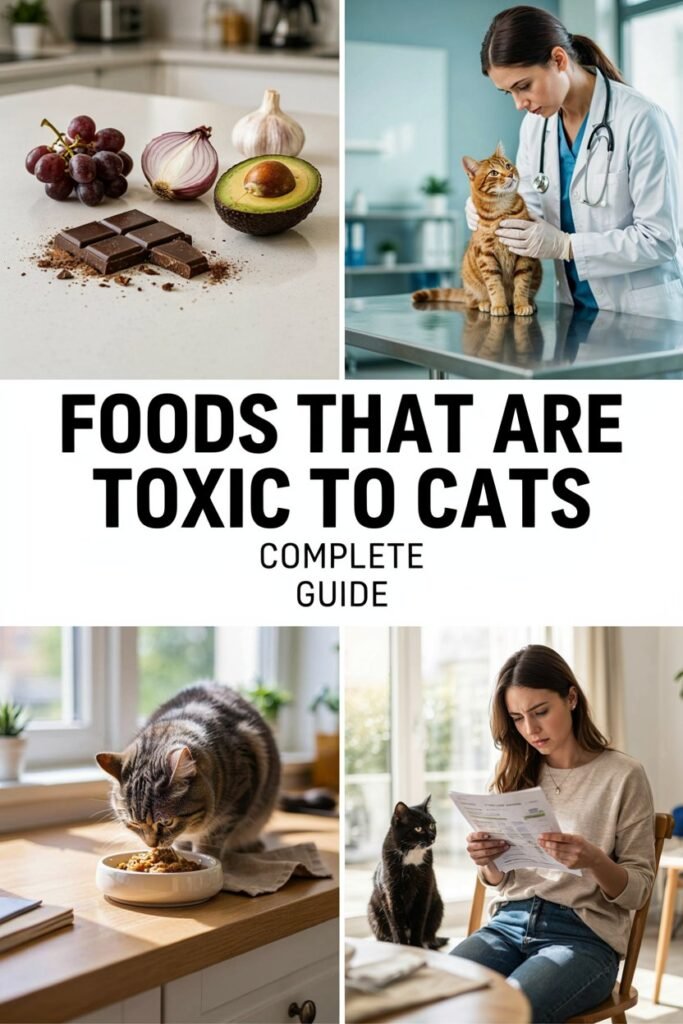
Chocolate is the one most people already know about, but I want to explain why it works the way it does.
Chocolate contains theobromine and caffeine, both of which cats cannot metabolize efficiently.
Dark chocolate and baking chocolate are the most dangerous because they carry the highest concentration of theobromine.
Symptoms include vomiting, diarrhea, restlessness, rapid heart rate, tremors, and in severe cases seizures.
Even a small nibble from a curious cat warrants a call to your vet.
Grapes and Raisins

Nobody quite knows why, but I always keep my fruit bowl covered because of this one.
The exact toxic compound in grapes and raisins remains unidentified by researchers today.
What we do know is that ingestion has been linked to sudden kidney failure in some cats and dogs.
Because the toxic dose is unpredictable, even one grape can be a genuine emergency.
Symptoms include vomiting, lethargy, decreased urination, and abdominal pain within hours of eating them.
Xylitol

This one caught my attention when I started reading ingredient labels more carefully.
Xylitol is an artificial sweetener that triggers a dangerous insulin surge in pets.
It hides in sugar free gum, some peanut butters, baked goods, and even certain toothpastes.
While the data is more extensively documented in dogs, cats are also considered at risk, and the resulting drop in blood sugar can cause weakness, vomiting, loss of coordination, and collapse.
Alcohol

I never leave a drink unattended around my cats after learning this.
Alcohol affects a cat’s liver and brain far more intensely than it affects ours.
Even a small taste of beer, wine, or a cocktail can cause vomiting, disorientation, difficulty breathing, tremors, and in severe cases coma.
Unbaked dough containing yeast is equally dangerous because the yeast continues to ferment inside the warm stomach, producing alcohol internally.
Caffeine

My morning coffee routine got a serious safety upgrade once I understood this risk.
Caffeine overstimulates a cat’s nervous system and heart at rapid speed.
Coffee, tea, energy drinks, and even some sodas contain enough caffeine to cause restlessness, rapid breathing, muscle tremors, and an irregular heartbeat.
There is no antidote, so prevention truly is the only cure here.
Raw Eggs

I used to think raw eggs were a wholesome treat until my vet corrected me.
Raw eggs carry salmonella risk and contain an enzyme that blocks biotin absorption.
Feeding raw eggs regularly can lead to skin and coat problems over time due to biotin deficiency, along with the more immediate risk of bacterial infection.
Cooked eggs, on the other hand, are generally safe in moderation.
Raw Fish
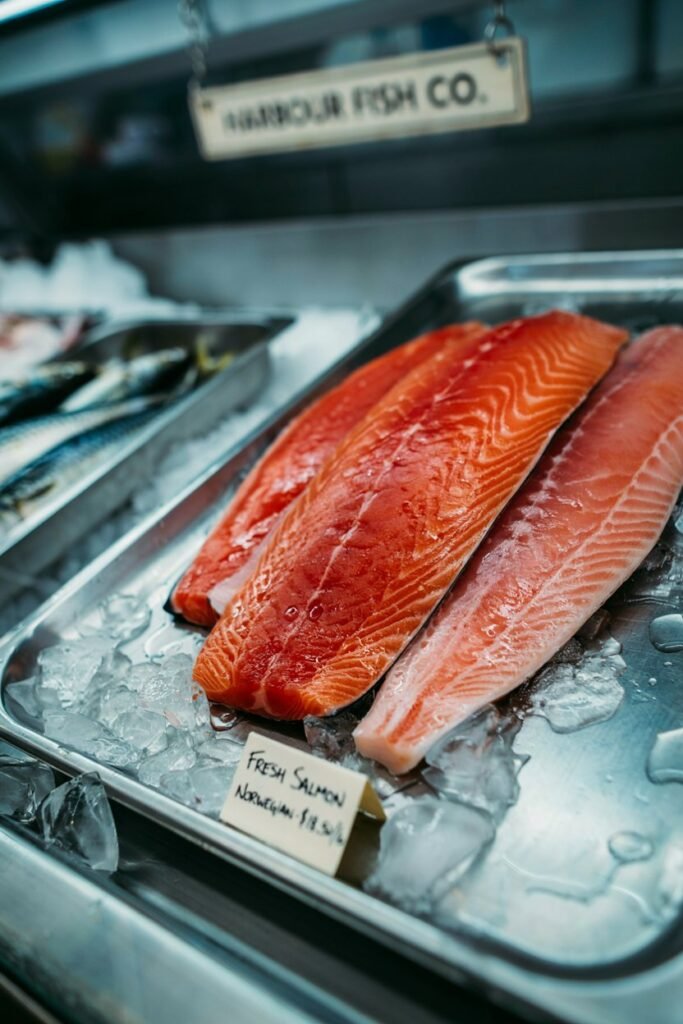
Sushi night taught me this lesson quickly when my cat begged for a piece.
Raw fish contains an enzyme called thiaminase that destroys vitamin B1.
A thiamine deficiency can lead to serious neurological problems over time, including loss of appetite, seizures, and coordination issues.
Cooking fish thoroughly deactivates the enzyme and removes the risk entirely.
Milk and Dairy
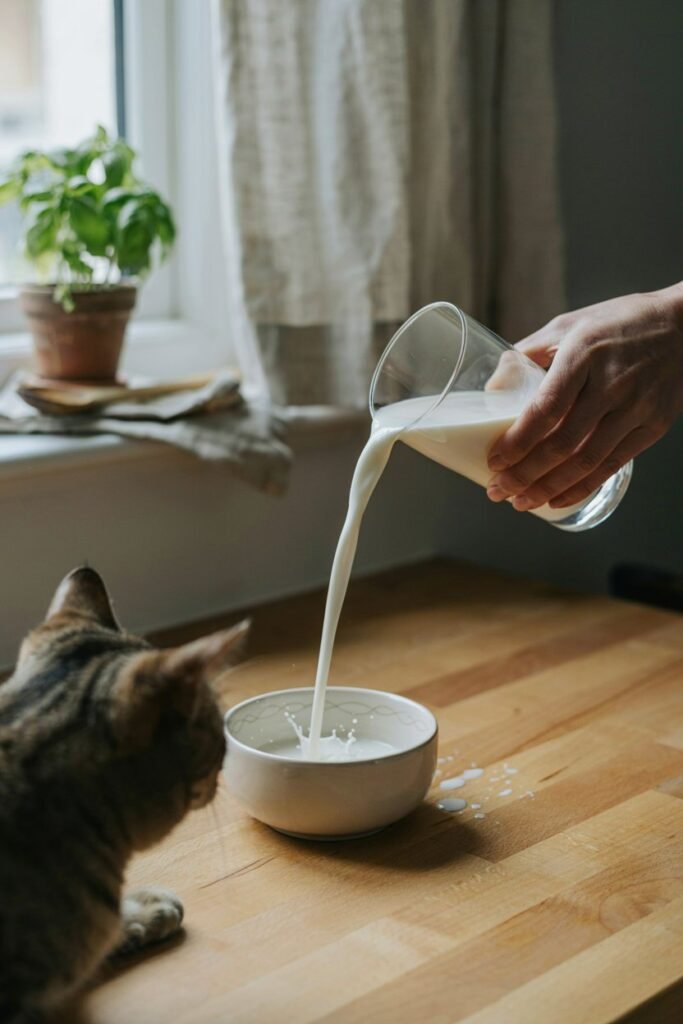
This myth took me the longest to unlearn because it is everywhere in cartoons and old family stories.
Most adult cats are actually lactose intolerant despite popular belief.
Kittens can digest their mother’s milk, but that ability fades with age for most cats.
Giving milk or cream to an adult cat often results in diarrhea, gas, and stomach upset rather than any nutritional benefit.
Raw Meat and Bones
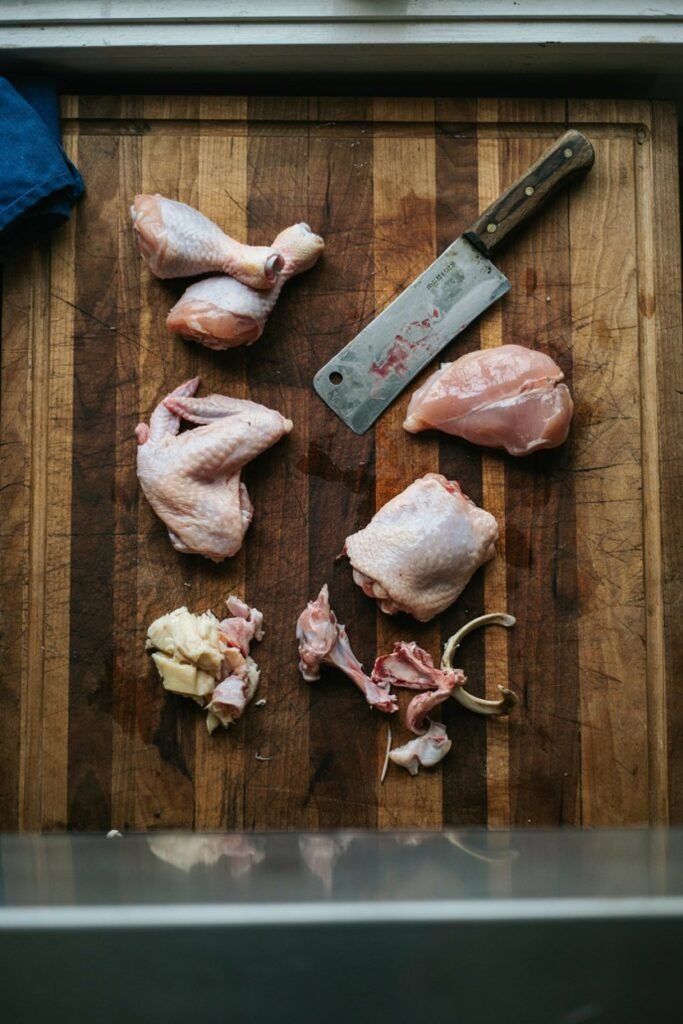
I used to think raw meat was closer to a cat’s natural diet, and in some ways it is, but the risks are real.
Raw meat can carry salmonella, E. coli, and other harmful bacteria.
Bones present a separate danger entirely, since they can splinter and cause choking or serious internal injuries.
If you want to feed a raw diet, that decision should always involve close guidance from a veterinarian.
Dog Food
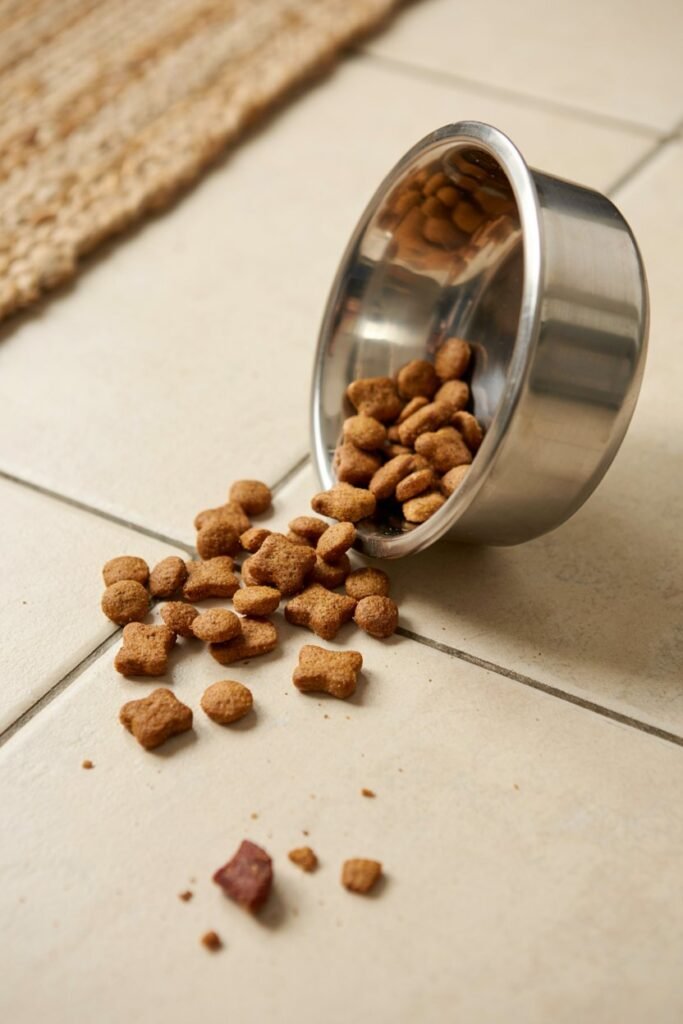
This one surprised me the most because it seems so harmless at first glance.
Dog food lacks the taurine and specific nutrients cats need daily.
An occasional bite will not hurt, but regular consumption can lead to serious nutritional deficiencies, including heart problems linked to low taurine levels.
Cats need a diet formulated specifically for their unique biology.
Liver in Large Amounts

I used to think more organ meat automatically meant more nutrition for my cat.
Too much liver can actually cause vitamin A toxicity over time.
Symptoms of vitamin A toxicity include bone deformities, joint pain, and stiffness, especially with prolonged overfeeding.
A small amount occasionally is fine, but liver should never become a dietary staple.
Salty Snacks

Chips and pretzels somehow always end up on the floor in my house.
Excess salt intake can lead to sodium ion poisoning in cats.
Symptoms include vomiting, diarrhea, tremors, elevated temperature, and in severe cases seizures.
Keep salty snacks well out of paw’s reach during movie nights and parties.
Citrus Fruits

I discovered this one when my cat sniffed an orange peel and sneezed immediately.
Citrus fruits contain essential oils and compounds that irritate a cat’s digestive system.
Lemons, limes, oranges, and grapefruits can all cause vomiting, diarrhea, and central nervous system depression if ingested in any meaningful quantity.
Most cats naturally avoid the smell, which works in their favor.
Mushrooms

Wild mushrooms in the backyard became a serious concern once I researched this topic.
Certain mushroom species are highly toxic and can cause organ failure.
Not every mushroom is dangerous, but since identifying safe varieties is difficult even for experts, it is safest to keep all mushrooms away from your cat entirely, whether store bought or found outdoors.
Onion and Garlic Flavored Broths

Bone broth became a trendy treat for pets recently, so I want to flag this specifically.
Many store bought broths contain onion or garlic powder as flavoring.
Always read the ingredient label carefully before sharing any broth, gravy, or soup with your cat, since these hidden seasonings are one of the most common accidental poisoning sources.
Symptoms of Food Poisoning in Cats

Every toxic food produces slightly different symptoms, but there are some universal warning signs every cat owner should recognize immediately.
Vomiting and diarrhea are usually the first indicators something is wrong.
Lethargy, weakness, and a sudden lack of interest in food or play often follow.
Pale or yellow tinted gums can signal anemia or liver stress.
Tremors, seizures, or unsteady walking point toward nervous system involvement.
Rapid or irregular breathing and heart rate changes are signs of a more advanced emergency.
Excessive drooling or difficulty swallowing can also appear depending on what was ingested.
What to Do If Your Cat Eats Something Toxic
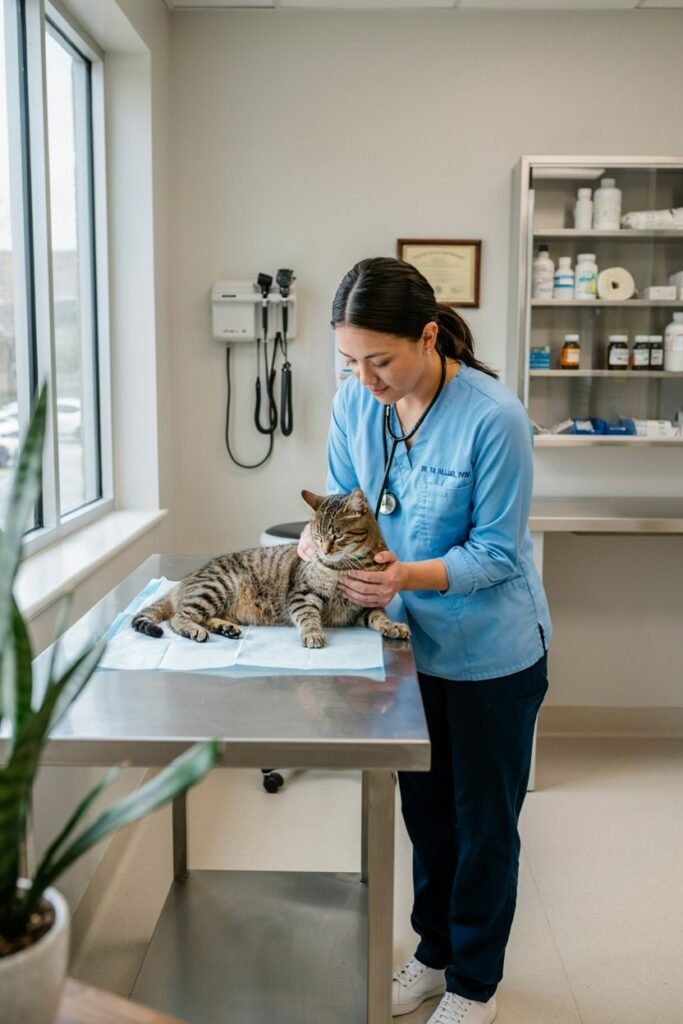
Staying calm is the hardest part, but it is also the most important.
Remove any remaining food immediately so your cat cannot eat more.
Note exactly what was eaten and roughly how much, since this information helps your vet act faster.
Call your veterinarian or an animal poison control hotline right away rather than waiting to see if symptoms appear.
Do not induce vomiting unless a professional specifically instructs you to, since some substances cause more damage coming back up.
Bring the packaging or a sample of the food with you if you head to the clinic, as it helps with identifying the exact toxin involved.
Building a Safer Kitchen for Your Cat
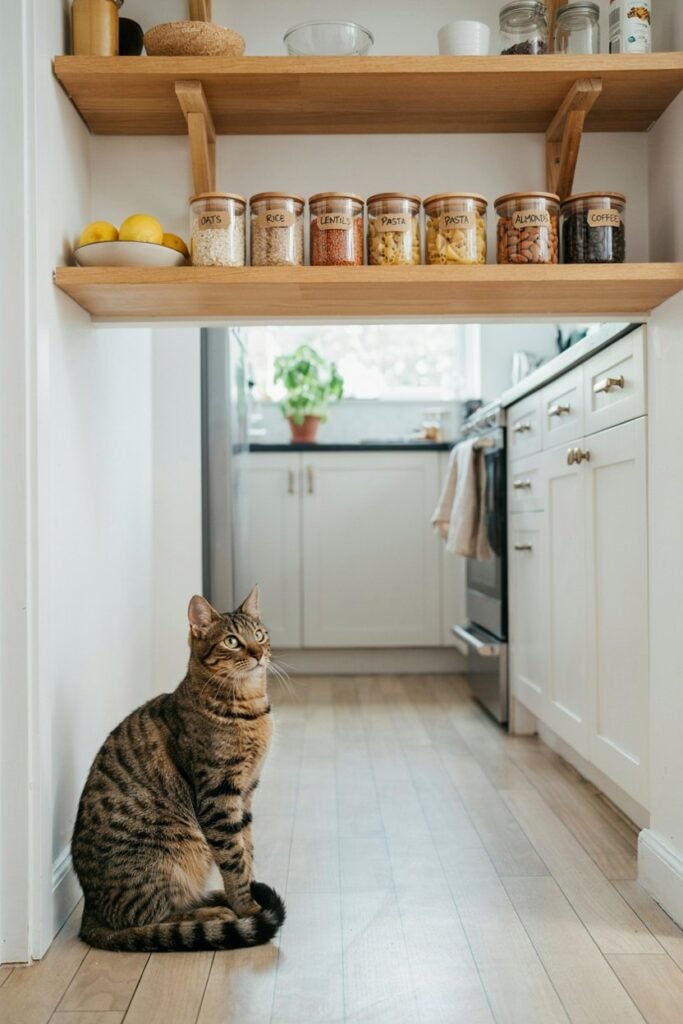
Once I understood how many everyday items posed a risk, I completely rearranged how I store food at home.
Keep all toxic foods in closed cabinets or the fridge rather than on open counters.
Never leave plates unattended during meals, especially if your cat has a habit of jumping on tables.
Educate every family member and guest about what not to feed the cat, since well meaning visitors are often the source of accidental treats.
Store trash in a covered bin, since food scraps in the garbage are just as tempting and dangerous as food on the counter.
Safe Treat Alternatives Your Cat Will Actually Enjoy
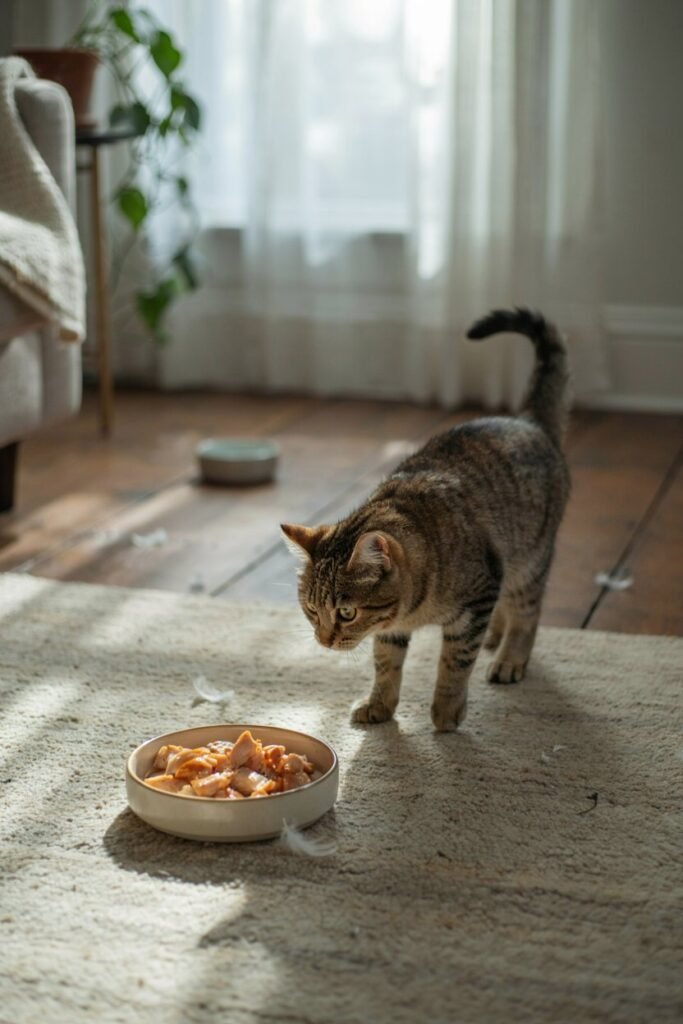
Cats do not need human food to feel included in family moments.
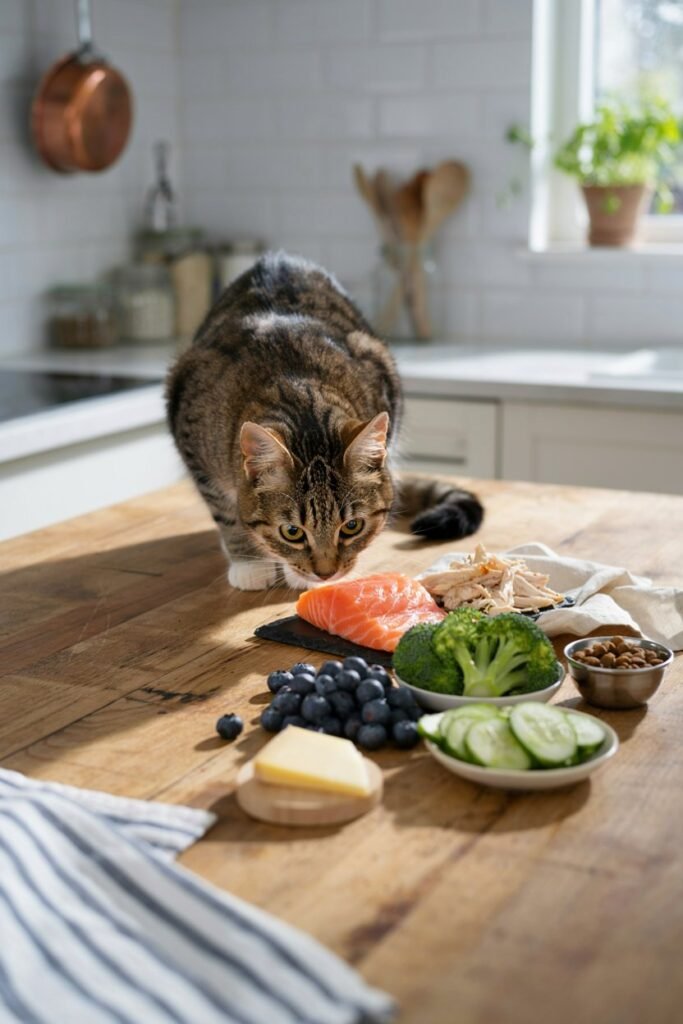
Small pieces of cooked, unseasoned chicken or turkey make a wonderful occasional treat.
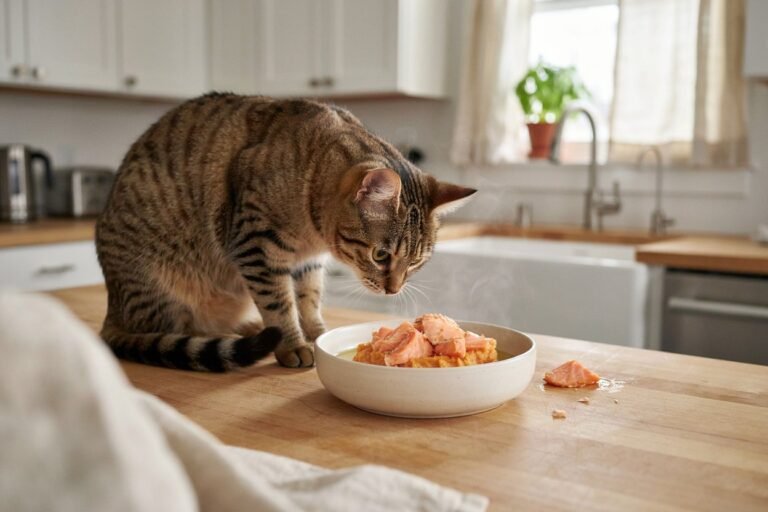
Plain cooked fish in small amounts works well too, as long as it is thoroughly cooked.
Commercial cat treats formulated specifically for feline nutrition are always the safest daily option.
A tiny bit of plain pumpkin puree can even support digestion in some cats.
When in doubt, your vet can recommend treats tailored to your cat’s specific health needs.
Frequently Asked Questions
Can a cat recover fully after eating something toxic?
In most cases, yes, especially when the exposure was small and treatment started quickly.
Recovery depends heavily on the type of food, the amount eaten, and how soon a vet gets involved, so speed matters far more than most owners realize.
Is it normal for cats to beg for human food?
Curiosity around new smells is completely normal cat behavior, but that does not mean their bodies can handle what they are begging for.
Redirecting that curiosity toward safe treats is usually the best long term solution.
How long after eating something toxic do symptoms appear?
This varies widely by substance.
Some toxins like alcohol act within minutes, while others like onion related anemia can take several days to become obvious, which is exactly why quick reporting to a vet matters even without visible symptoms yet.
Should I keep a pet poison hotline number saved?
Absolutely.
Having a poison control number saved in your phone before an emergency happens can save precious minutes when every second counts.
Are all human foods bad for cats? Not at all.
Plain cooked meats, small amounts of certain vegetables, and specially formulated treats can be perfectly safe.
The key is knowing which foods cross the line into dangerous territory and avoiding those completely.
Final Thoughts
Learning what foods are dangerous for cats felt overwhelming at first, but it quickly became second nature once I started paying closer attention to what was on my counters and in my cabinets.
Your cat depends entirely on you to make safe choices on their behalf, since they cannot read labels or understand the difference between a treat and a threat.
Keep this guide handy, share it with anyone who helps care for your cat, and when something feels off, always trust your instincts and call your vet.
A little bit of caution goes a long way toward a long, healthy life together.





One Comment