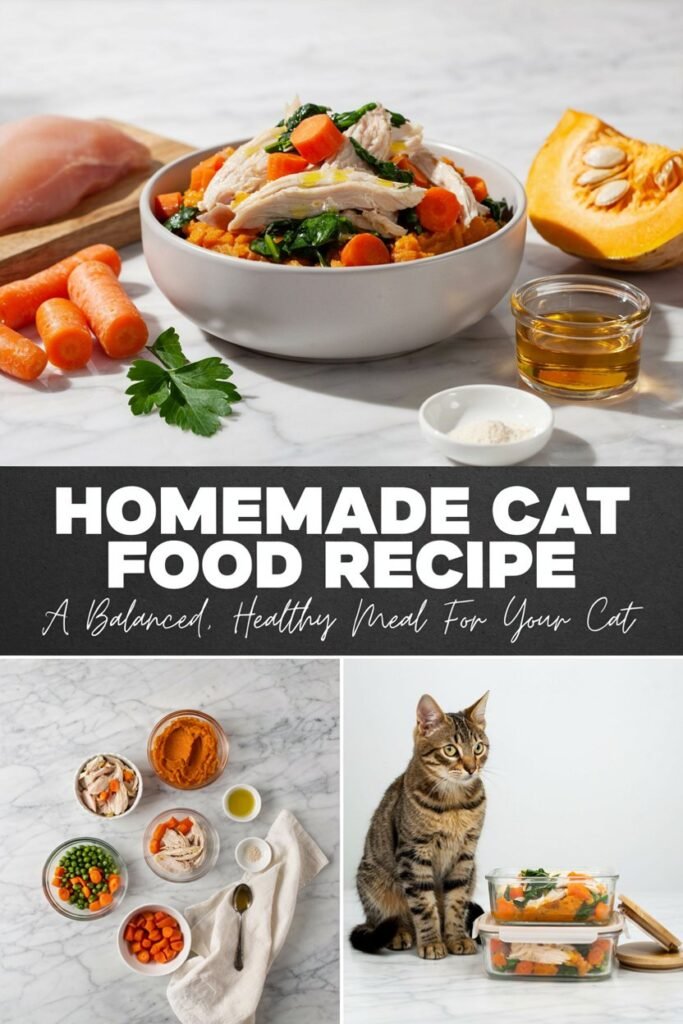
Homemade Cat Food Recipe: A Balanced, Healthy Meal for Your Cat
Learn how to make a balanced homemade cat food recipe with fresh ingredients, simple step by step instructions, feeding tips, and storage advice for a healthy meal your cat will enjoy.
Learn how to make a balanced homemade cat food recipe using fresh ingredients that support your cat’s health and nutrition.
In this guide, I will show you the recipe I enjoy making, explain why each ingredient is included, and share tips to help you prepare homemade cat food with confidence.
I started making homemade cat food because I wanted to know exactly what I was feeding my cat.
One afternoon while shopping for pet food, I found myself reading ingredient labels much more closely than usual.
Although there are many excellent commercial cat foods available, I liked the idea of preparing some meals myself with ingredients I could recognize and trust.
At first, I thought making homemade cat food would be as simple as cooking chicken and serving it.
The more I learned, the more I realized that cats have very specific nutritional needs.
They require the right balance of protein, healthy fats, vitamins, minerals, and essential nutrients like taurine to stay healthy.
That research completely changed the way I approached homemade meals.
Now I prepare this recipe every few weeks and freeze individual portions so I always have fresh food ready when I need it.
It has become one of my favorite ways to add variety to my cat’s diet while knowing exactly what goes into every meal.
Disclaimer: This post may contain affiliate links, which means I may earn a small commission at no extra cost to you. Always consult your veterinarian before preparing or switching your cat to homemade meals to ensure nutritional balance.
Amazon Shopping List You Need
- Digital Kitchen Food Scale
- Glass Meal Prep Containers with Lids
- Stainless Steel Cat Food Bowls
- Airtight Pet Food Storage Container
- Slow Cooker or Nonstick Cooking Pot
- Silicone Freezer Portion Trays
- Cat Multivitamin Supplement Powder
Why I Decided to Try Homemade Cat Food
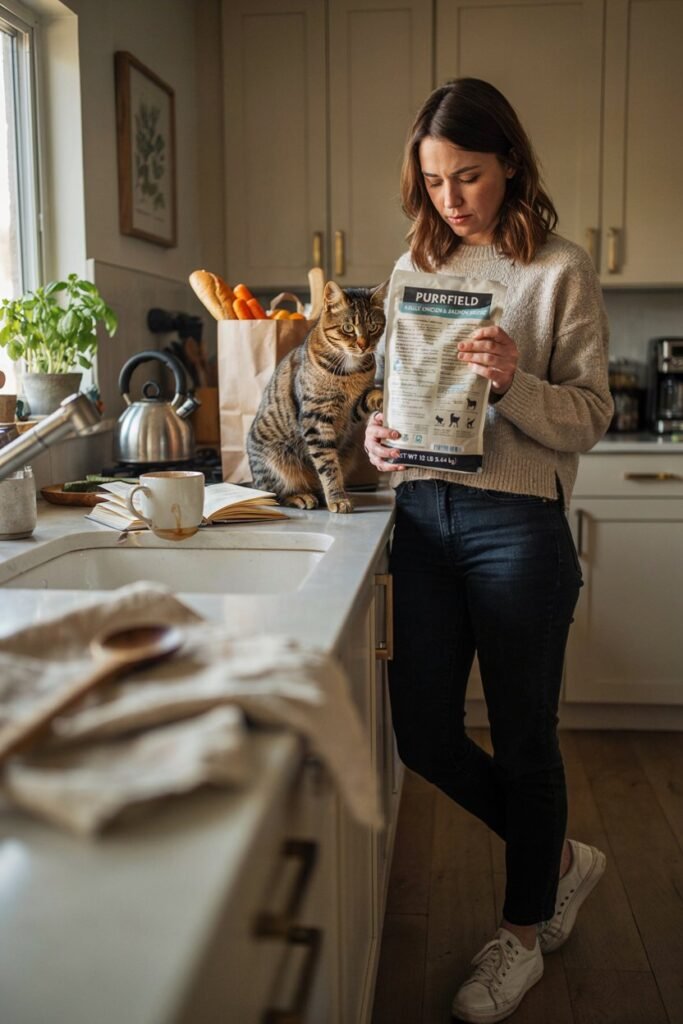
My interest in homemade pet food started the same way many of my favorite recipes do. It came from curiosity.
One afternoon while buying cat food, I picked up several different brands and compared the ingredient labels.
Some contained ingredients I recognized immediately, while others included long lists of additives and preservatives that left me with more questions than answers.
I knew commercial cat food has an important place and many high quality brands provide complete nutrition, but I also liked the idea of preparing some meals myself using ingredients I could see and understand.
The first homemade meal I made was far from perfect. I thought cooking plain chicken would be enough because cats are carnivores.
Thankfully, I decided to do more research before making homemade food a regular part of my cat’s diet. That research completely changed my perspective.
I learned that cats require nutrients like taurine, calcium, vitamins, and healthy fats in specific amounts.
Missing even one important nutrient over time could lead to serious health problems. That realization reminded me that homemade food should never be based on guesswork.
Since then, preparing homemade meals has become something I genuinely enjoy.
I usually set aside an afternoon every few weeks to prepare a larger batch, divide it into portions, and freeze individual containers.
It saves time during busy weeks and gives me peace of mind knowing there is always a fresh meal ready when I need it.
Is Homemade Cat Food Healthy?
The short answer is yes, but only when it is properly balanced.
Cats are obligate carnivores, which means they rely on animal based ingredients for most of their nutrition.
While fresh meat is an important part of their diet, it does not provide everything a cat needs on its own.
A balanced homemade recipe also includes important nutrients that support healthy muscles, bones, organs, skin, and overall wellbeing.
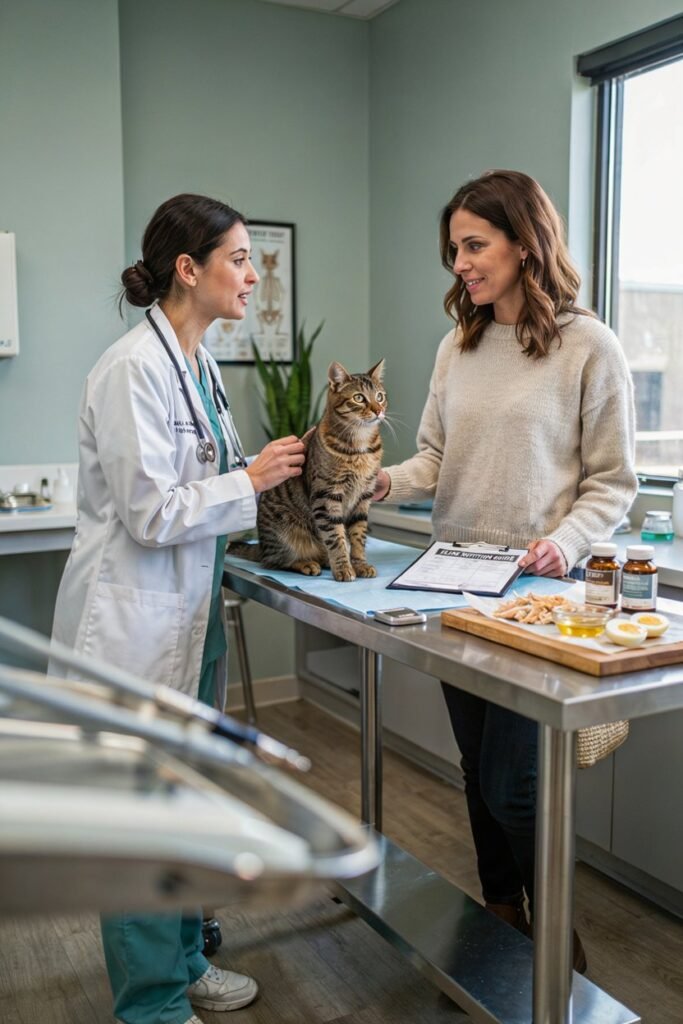
If you plan to feed homemade food regularly, it is always a good idea to speak with your veterinarian to make sure your cat’s nutritional needs are being met.
Why You Will Love This Recipe
There are plenty of homemade cat food recipes online, but I keep coming back to this one because it is simple, practical, and made with fresh ingredients.
Here is why I enjoy making it.
- Made with wholesome ingredients that are easy to find.
- High in quality animal protein.
- Rich in moisture to help support hydration.
- Easy to prepare in large batches.
- Stores well in the refrigerator and freezer.
- Perfect for adding fresh variety to your cat’s meals.
Understanding Your Cat’s Nutritional Needs
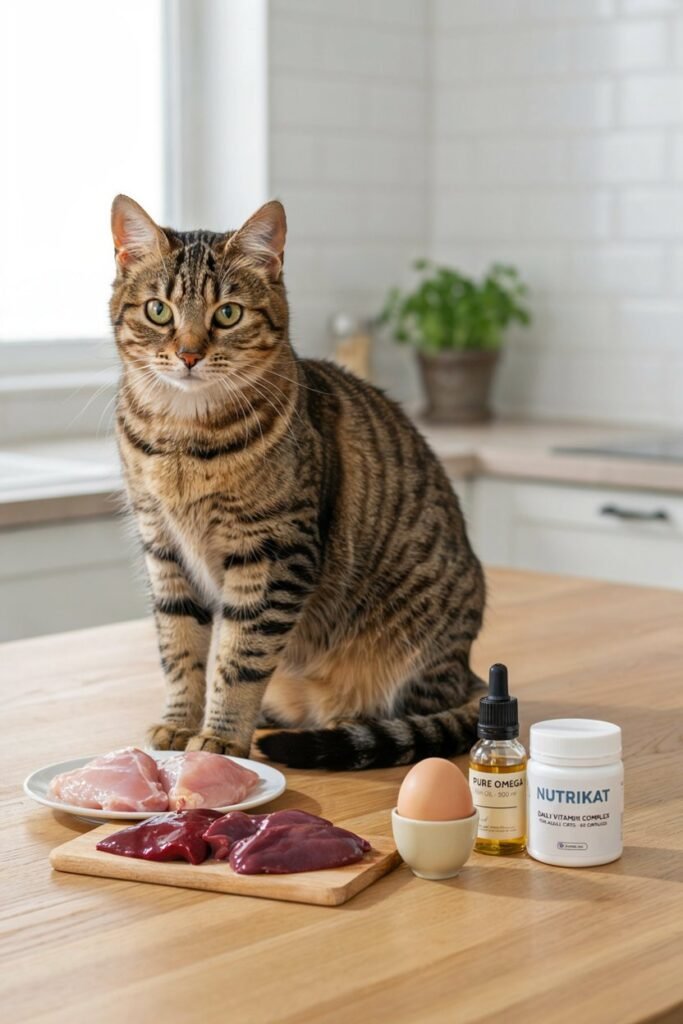
Before making homemade cat food, it helps to understand what your cat’s body needs to stay healthy.
Protein
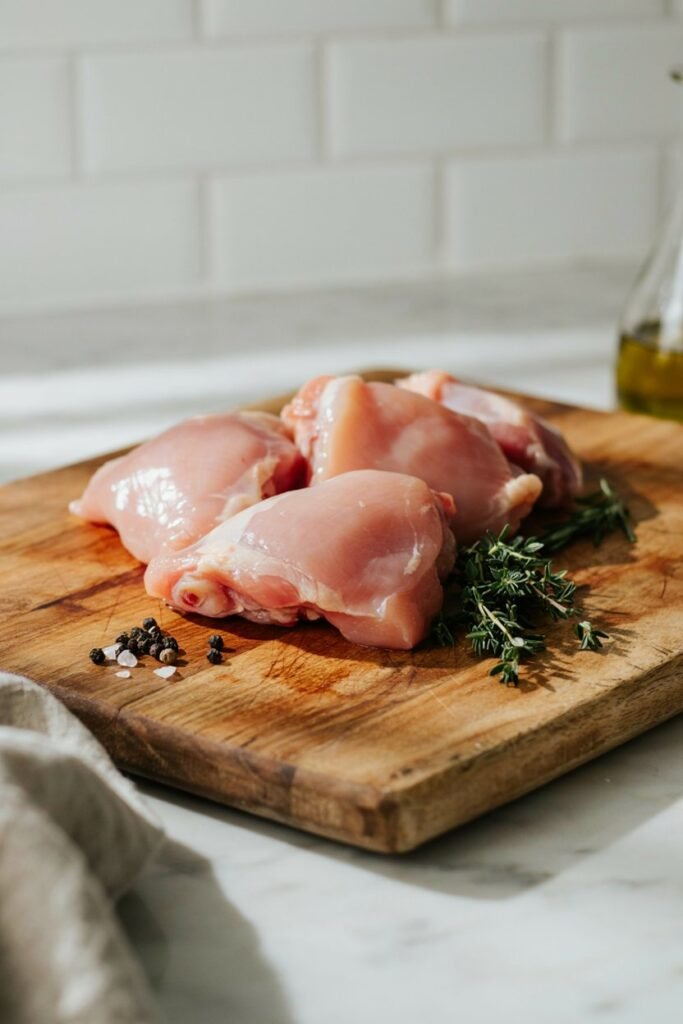
Protein is the most important part of a cat’s diet.
It helps build and maintain muscle, supports healthy organs, and provides energy for everyday activities.
This is why animal based protein is the foundation of every balanced homemade recipe.
Healthy Fats
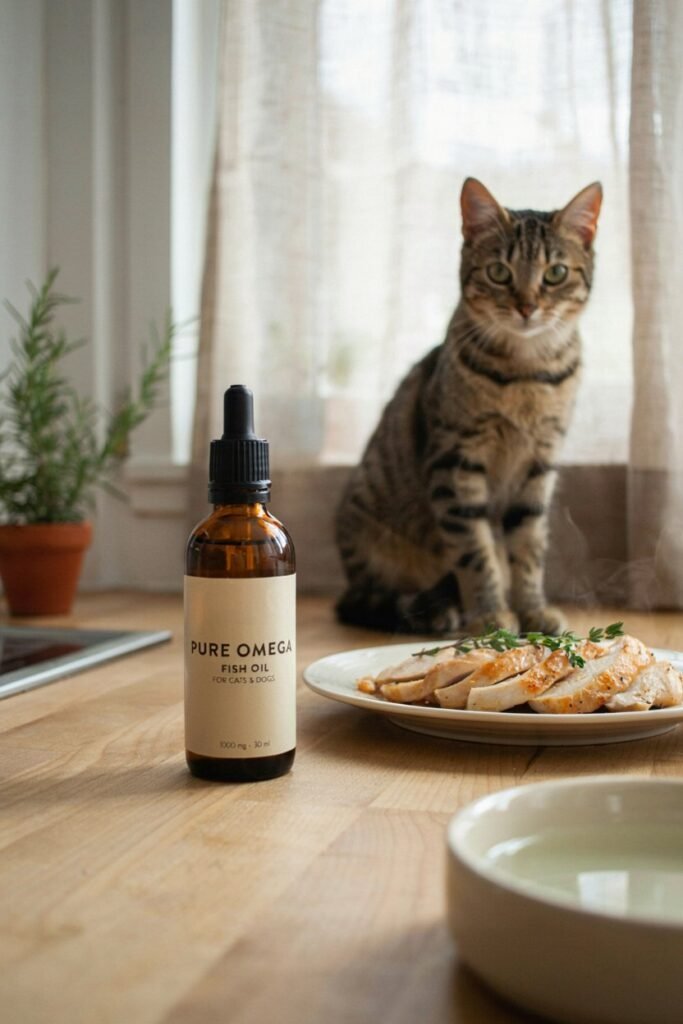
Healthy fats provide energy while supporting brain function, healthy skin, and a soft shiny coat.
They also make homemade meals more flavorful for many cats.
Taurine
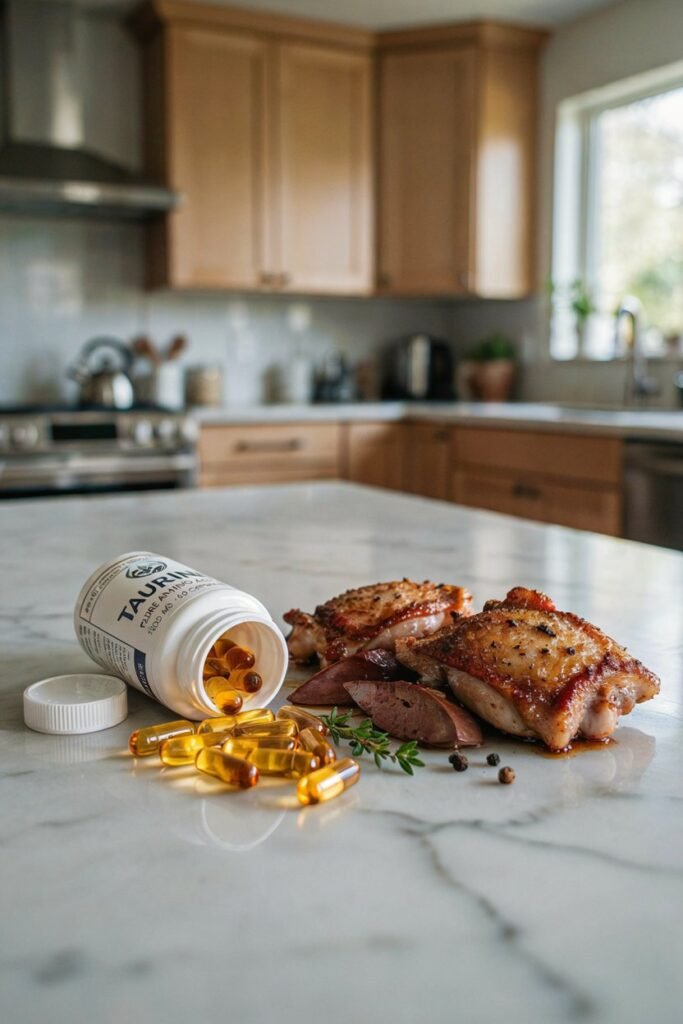
One of the biggest lessons I learned while researching homemade cat food was how important taurine is.
Cats cannot produce enough taurine on their own, so they must get it from their diet.
Without enough taurine, they can develop serious health problems involving their heart and eyesight.
Calcium
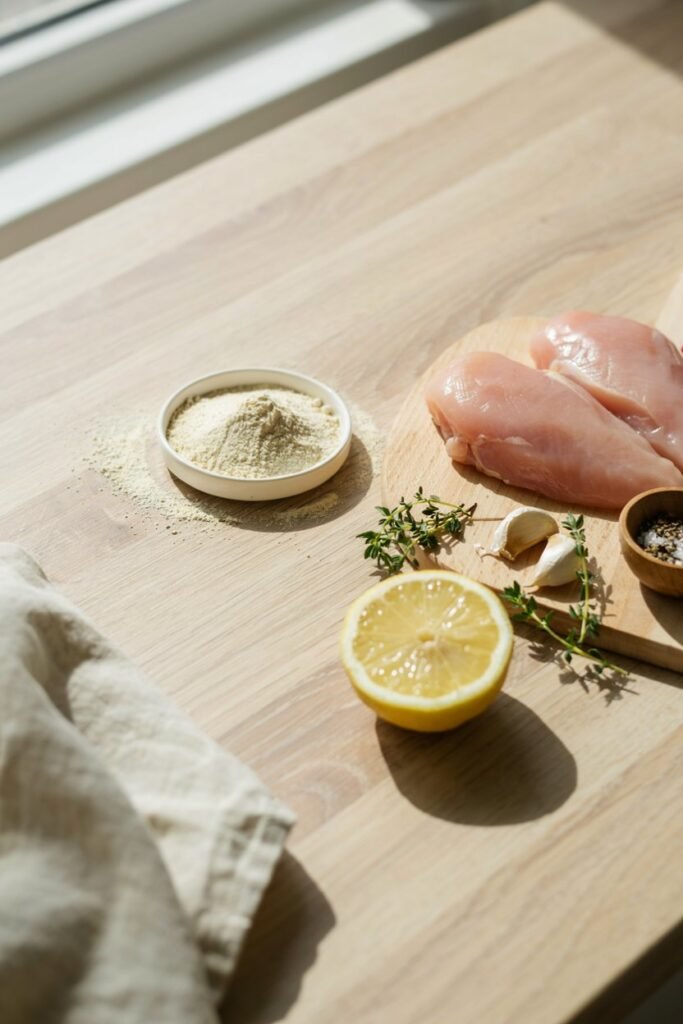
Calcium helps keep bones and teeth strong while supporting many important functions throughout the body.
Feeding only meat without enough calcium creates an imbalance that should be avoided in homemade diets.
Vitamins and Minerals
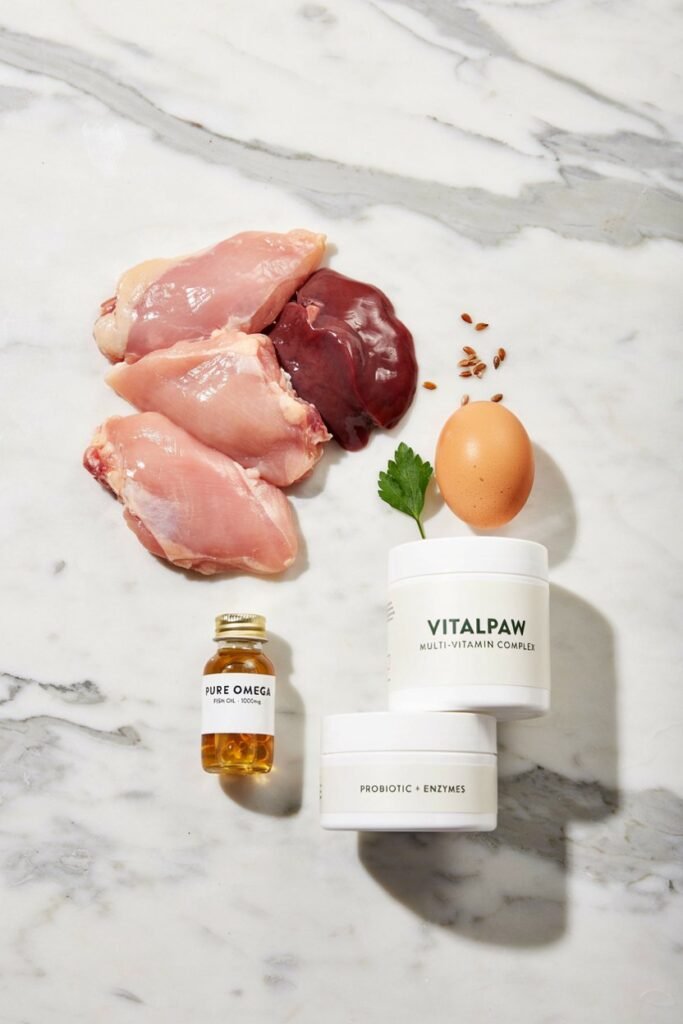
Fresh ingredients provide many valuable nutrients, but a balanced recipe also considers vitamins and minerals that help support the immune system, metabolism, and overall health.
Who This Recipe Is Best For
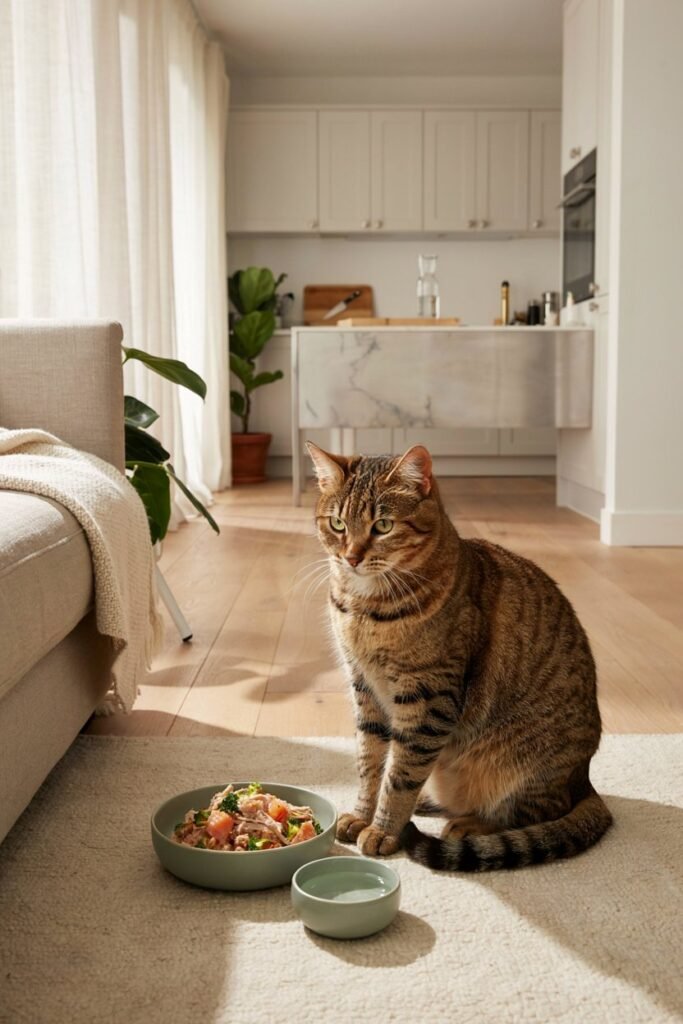
This recipe is designed for healthy adult cats that enjoy fresh food and can benefit from meals with plenty of moisture and high quality protein.
It is also a great choice for pet owners who enjoy meal prepping since you can prepare several servings at once and freeze individual portions for later.
If your cat has a medical condition, is pregnant, nursing, or is still a kitten, speak with your veterinarian before making significant changes to their diet.
Before We Start
One thing I have learned from making homemade cat food is that balance is just as important as fresh ingredients.
Taking a little extra time to prepare a complete recipe gives me peace of mind knowing my cat is enjoying a meal that is both nutritious and satisfying.
In the next section, I will share the complete ingredient list, explain why each ingredient is included, and walk you through the recipe step by step so you can make it with confidence.
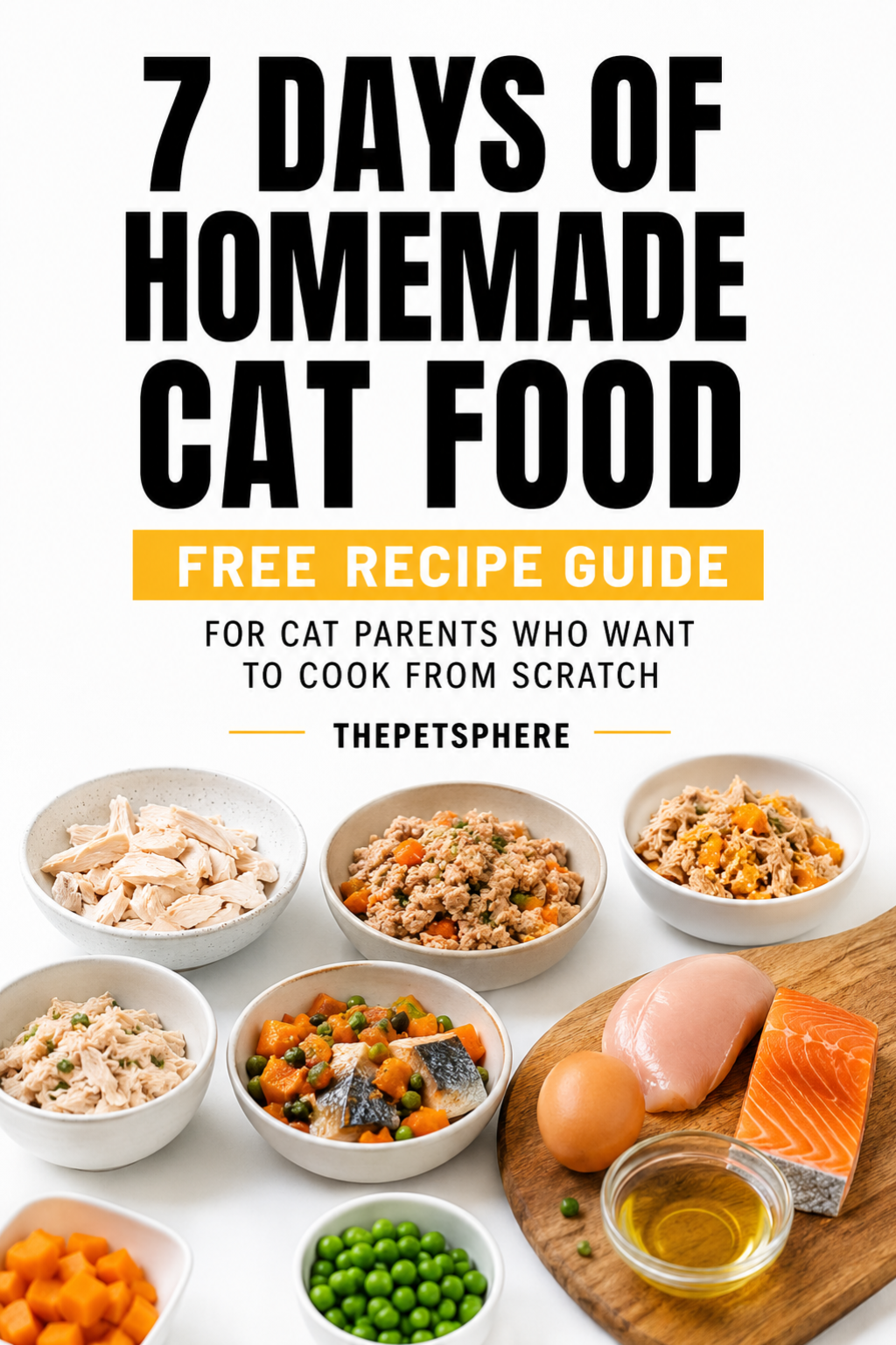
Ingredients You Will Need
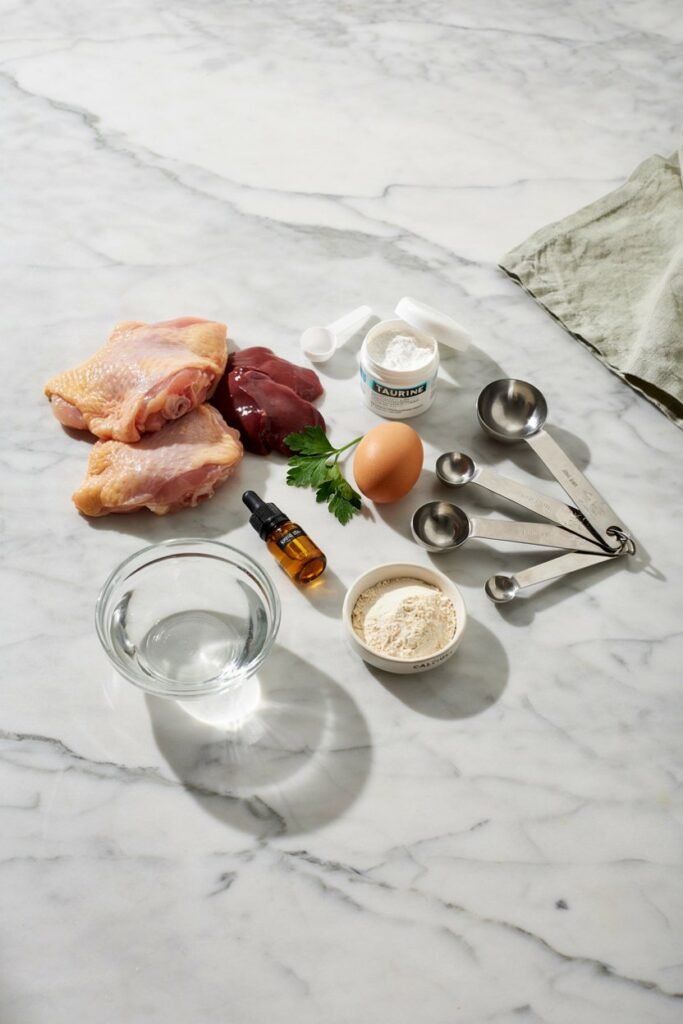
One of the things I enjoy most about this recipe is how simple the ingredient list is.
Every ingredient has a purpose, and together they create a meal that is packed with protein and important nutrients.
I always try to buy the freshest ingredients I can find because quality really does make a difference.
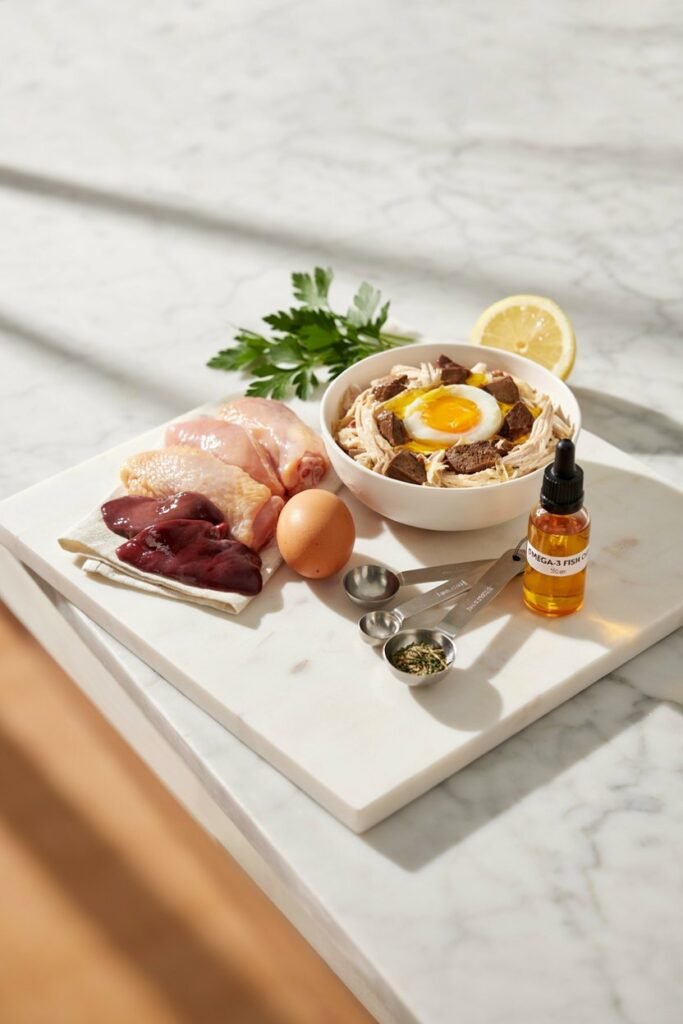
Chicken Thighs
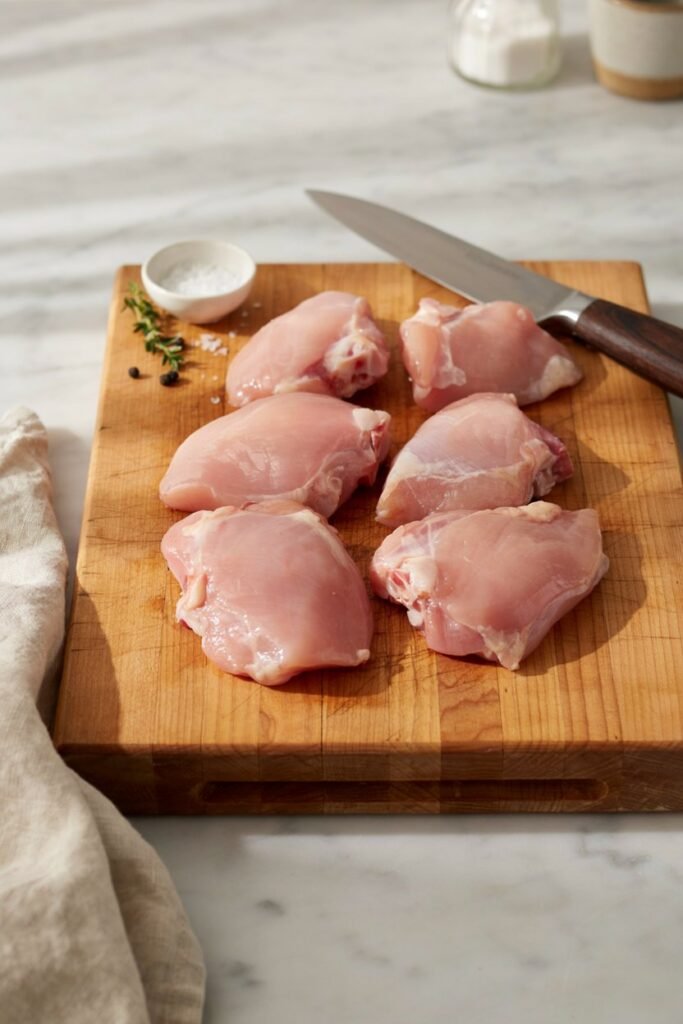
Chicken thighs are the main source of protein in this recipe.
I prefer using thighs because they contain a little more natural fat than chicken breast, which makes the finished meal more flavorful and satisfying for my cat.
They provide high quality protein that helps support healthy muscles while also supplying important vitamins and minerals.
Chicken Liver
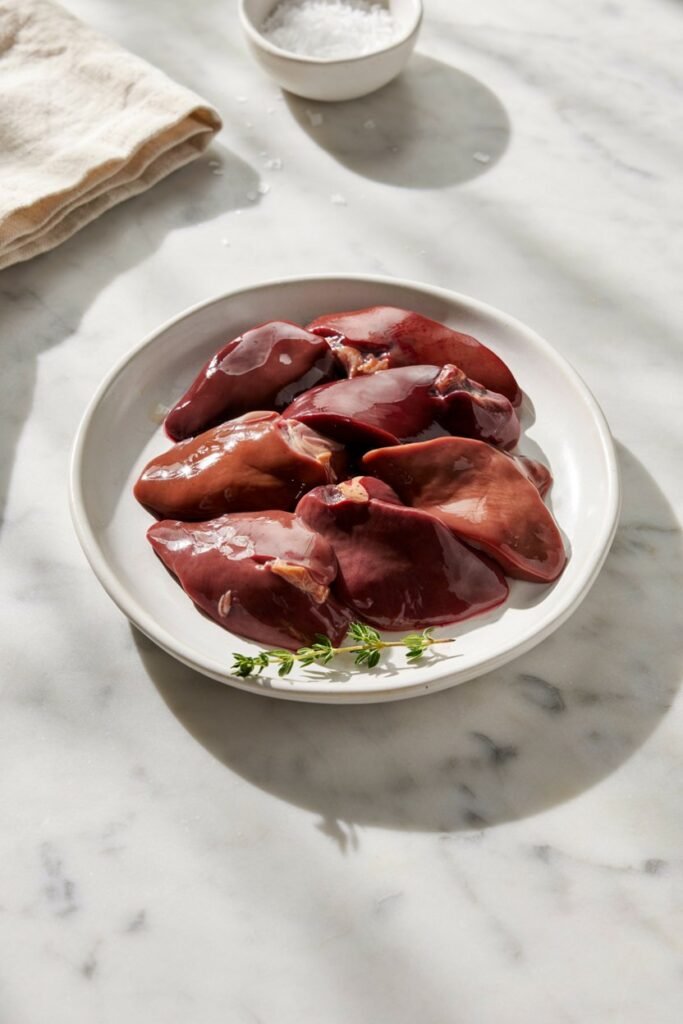
Chicken liver is included in a small amount because it is rich in nutrients that cats need. It provides vitamin A, several B vitamins, iron, and copper.
A little goes a long way, so it is important not to add extra liver beyond what the recipe calls for.
Egg
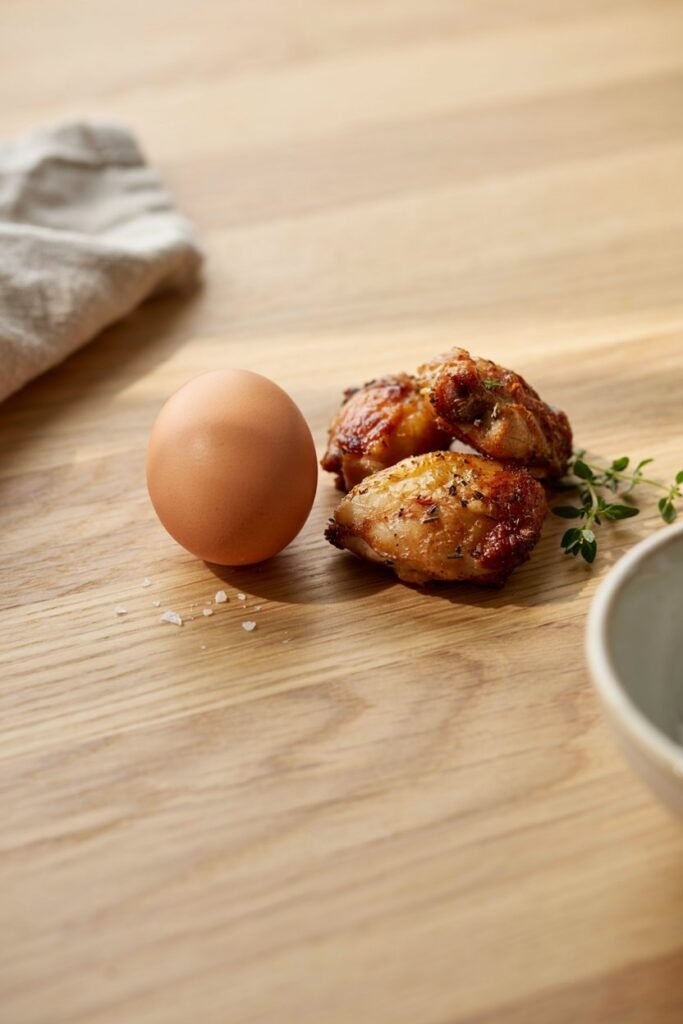
One whole egg adds another excellent source of protein along with healthy fats and essential amino acids.
It also helps bring the ingredients together into a smoother mixture once everything is blended.
Fish Oil
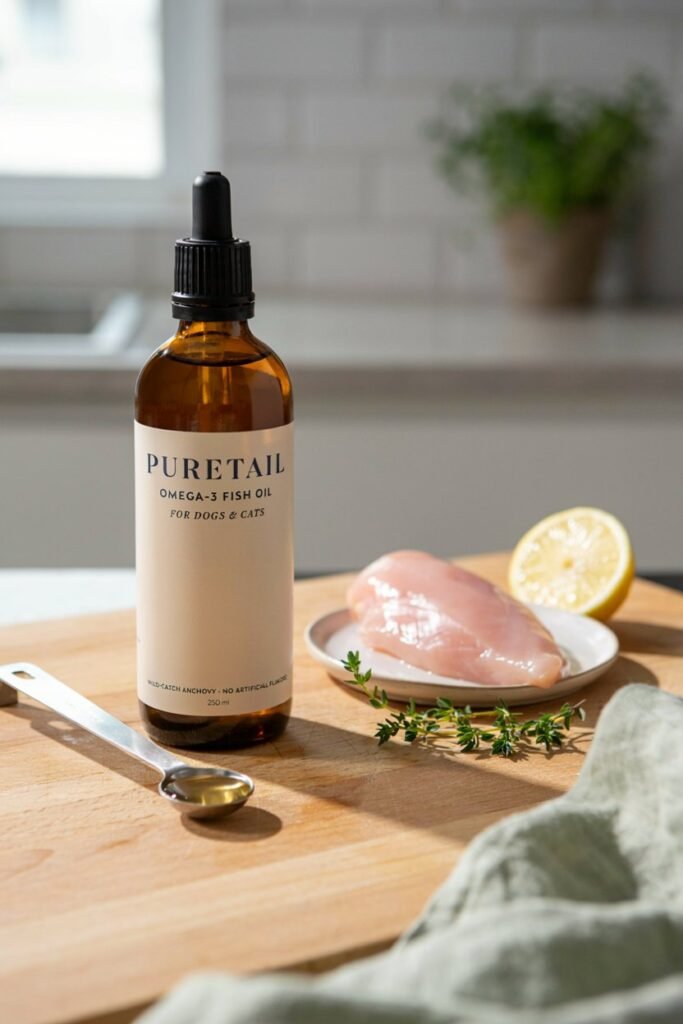
Fish oil provides omega 3 fatty acids, which support healthy skin, a shiny coat, brain function, and overall wellness.
I have noticed my cat’s coat looks softer whenever I regularly include fish oil in homemade meals.
Choose a fish oil made for pets whenever possible and follow the recommended serving amount.
Calcium Supplement
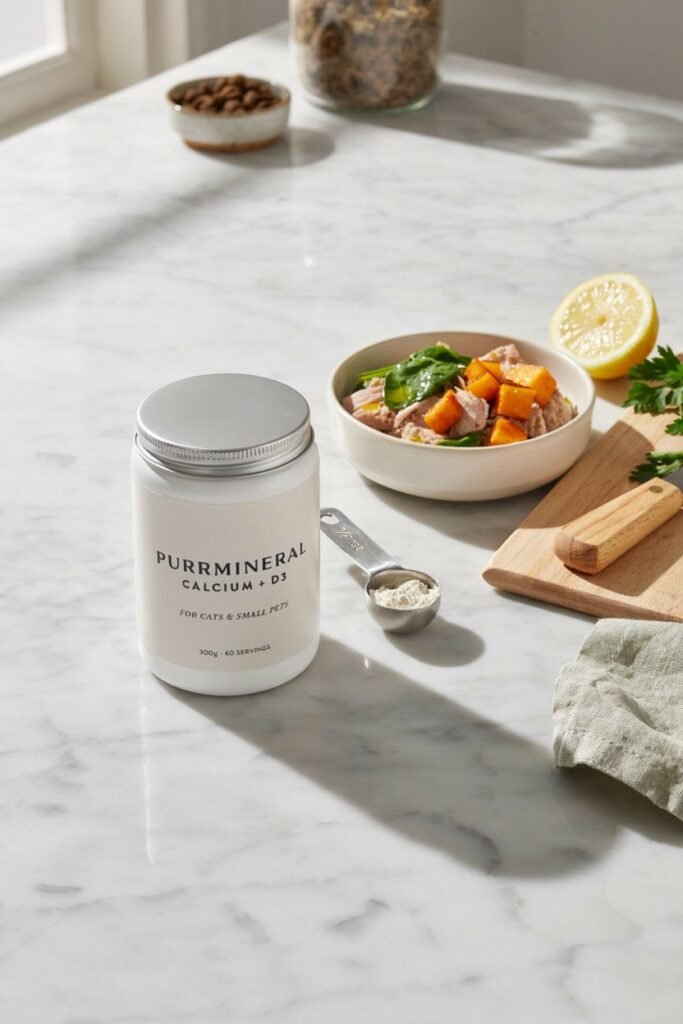
Meat alone does not provide enough calcium for a balanced homemade diet.
Adding a calcium supplement helps support healthy bones and teeth while creating a better balance between calcium and phosphorus.
This is one ingredient I never skip.
Taurine Supplement
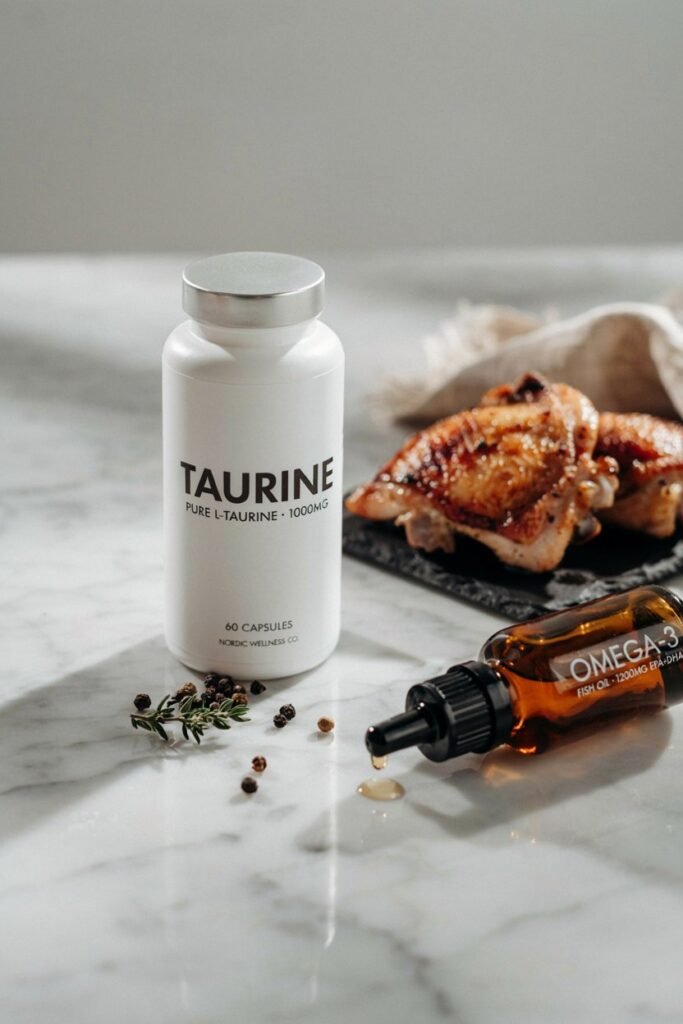
Taurine is one of the most important nutrients for cats.
Although dark meat naturally contains some taurine, cooking reduces the amount available.
Adding a taurine supplement helps ensure your cat receives enough of this essential nutrient to support healthy vision, heart function, and overall health.
Water or Unsalted Chicken Broth
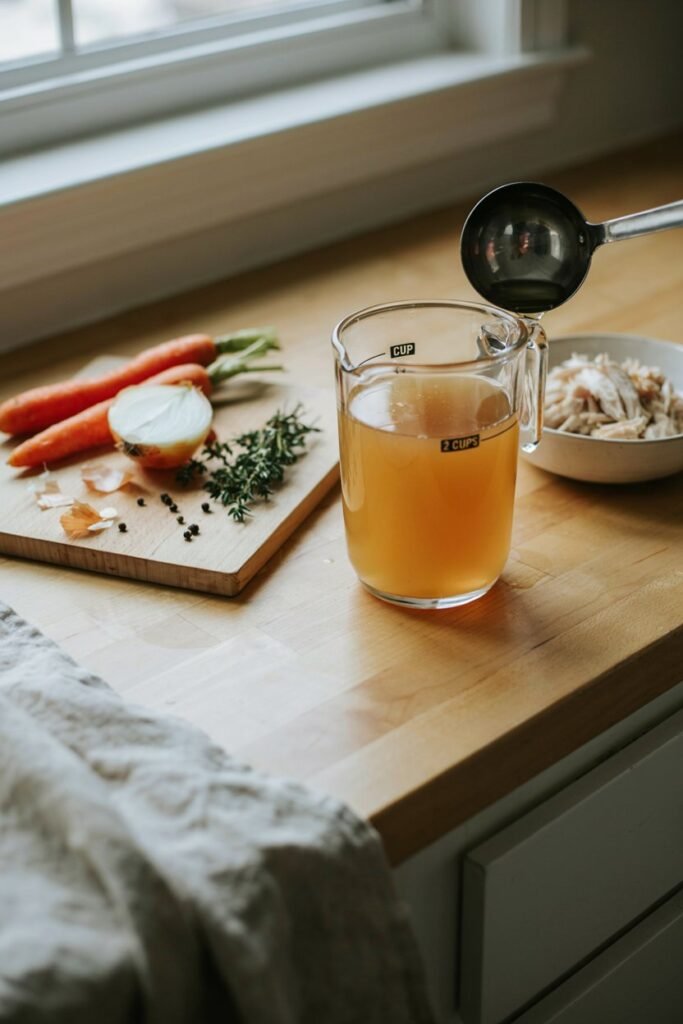
A little water or unsalted chicken broth helps create a softer texture while adding extra moisture.
Cats naturally get much of their hydration from food, so I like making homemade meals that are moist rather than dry.
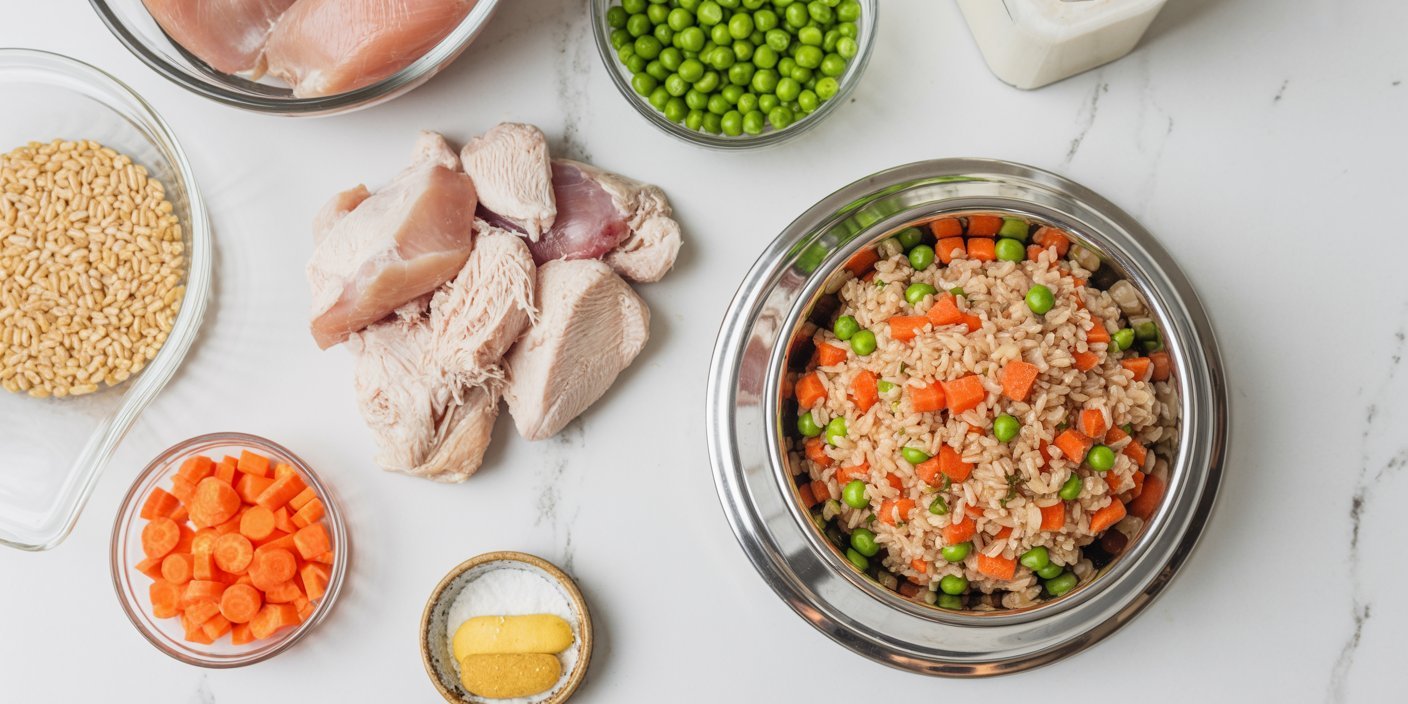
Ingredients
- 2 pounds boneless skinless chicken thighs
- 4 ounces chicken liver
- 1 large egg
- 1 teaspoon fish oil
- Calcium supplement according to the manufacturer’s directions
- Taurine supplement according to the manufacturer’s directions
- One half cup water or unsalted chicken broth
Kitchen Tools

You do not need any fancy equipment to make this recipe.
I usually gather everything before I begin so the process goes much more smoothly.
You will need:
- Sharp knife
- Cutting board
- Large pot
- Mixing bowl
- Food processor or blender
- Measuring cups and spoons
- Kitchen scale if available
- Airtight storage containers or freezer safe containers
How to Make Homemade Cat Food
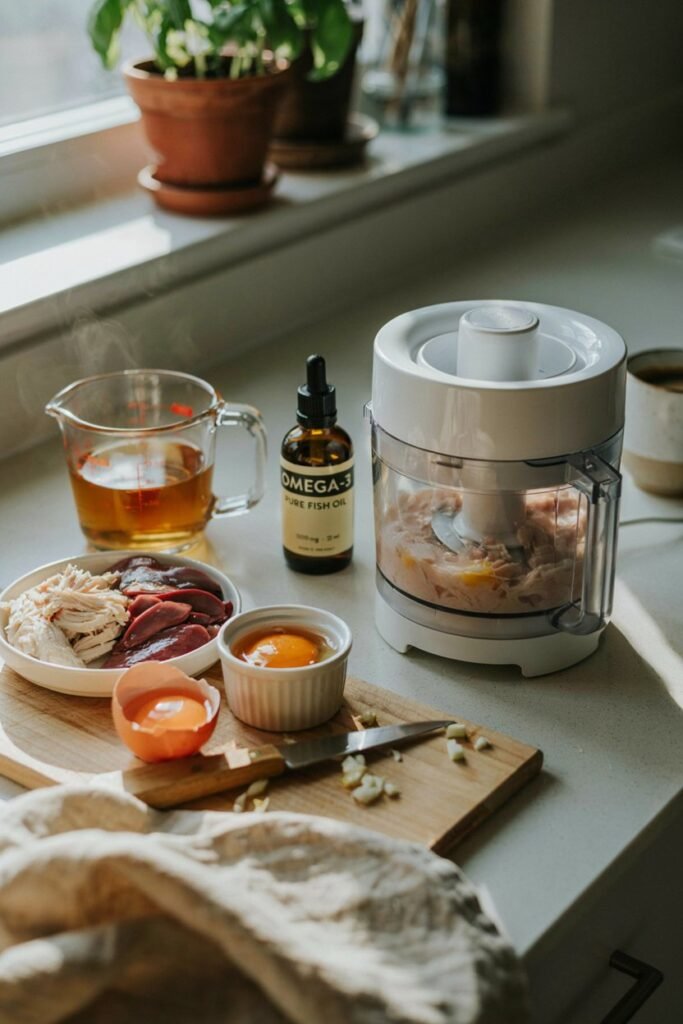
Whenever I make this recipe, I like preparing a large batch instead of just enough for a day or two.
It only takes a little extra time, and having homemade meals ready in the freezer makes feeding so much easier during the week.
Once everything is portioned out, all I have to do is thaw a container when I need it.
Step 1
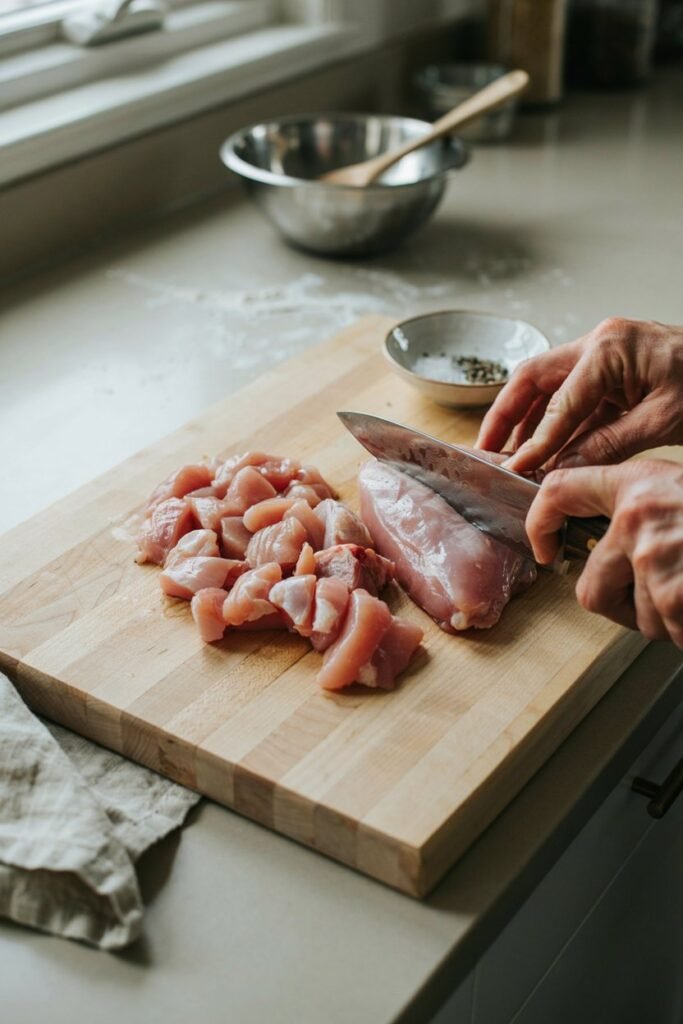
Start by trimming away any large pieces of excess fat from the chicken thighs, but leave the natural fat attached to the meat since it provides both flavor and nutrition.
Cut the chicken into smaller, evenly sized pieces so it cooks more quickly and evenly.
Place the chicken and chicken liver into a large pot, then add enough water to fully cover the meat.
Bring the water to a gentle simmer and cook until the chicken is completely cooked through and the liver is no longer pink in the center.
I avoid boiling everything too aggressively because gentle cooking helps keep the meat tender and juicy.
Step 2

Carefully remove the chicken and liver from the pot and let them cool until they are easy to handle.
Before pouring out the cooking liquid, save a small amount.
I like adding some of it back later because it helps create a moist texture and adds extra flavor that many cats enjoy.
Step 3
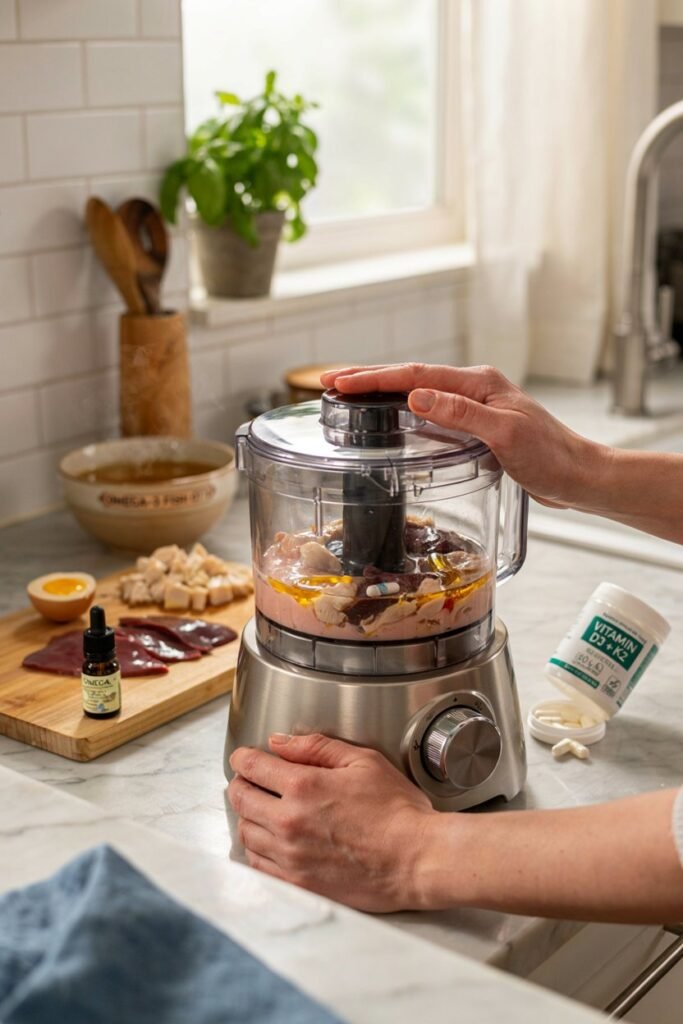
Add the cooked chicken, chicken liver, egg, fish oil, taurine supplement, calcium supplement, and a little of the reserved cooking liquid to a food processor.
Blend everything until the mixture reaches your preferred consistency.
My cat prefers a smooth, pâté style texture, but if your cat likes a little more texture, you can stop blending a bit earlier.
Step 4
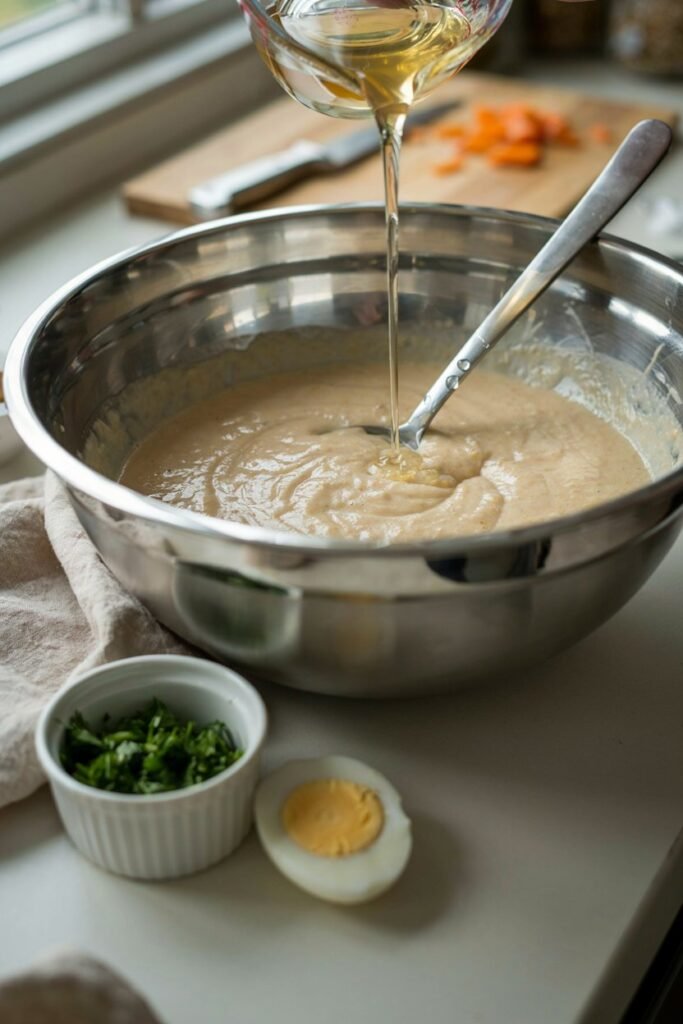
Check the consistency before serving.
If the mixture feels thicker than you would like, stir in a little more of the reserved cooking liquid or plain water until it becomes soft and moist.
Cats naturally prefer foods with higher moisture, so I always make sure the finished food is easy to eat and never dry.
Step 5
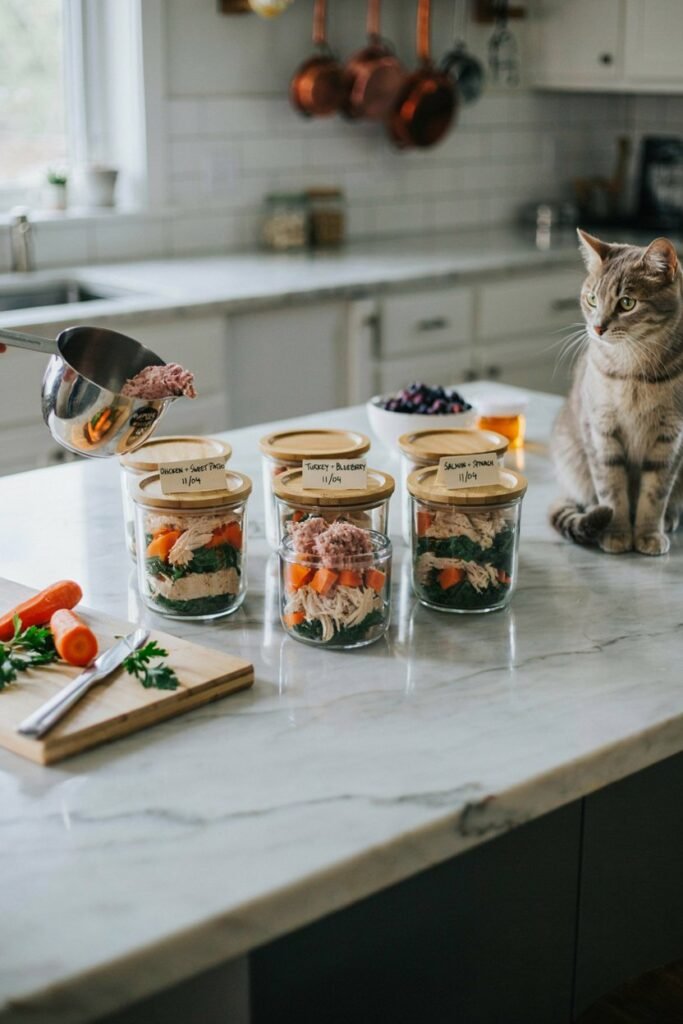
Allow the food to cool completely before portioning it into airtight containers.
I usually divide it into enough for one or two meals per container.
It makes feeding much more convenient, especially on busy mornings, and I only thaw what I need instead of defrosting the entire batch.
Helpful Tips for Success
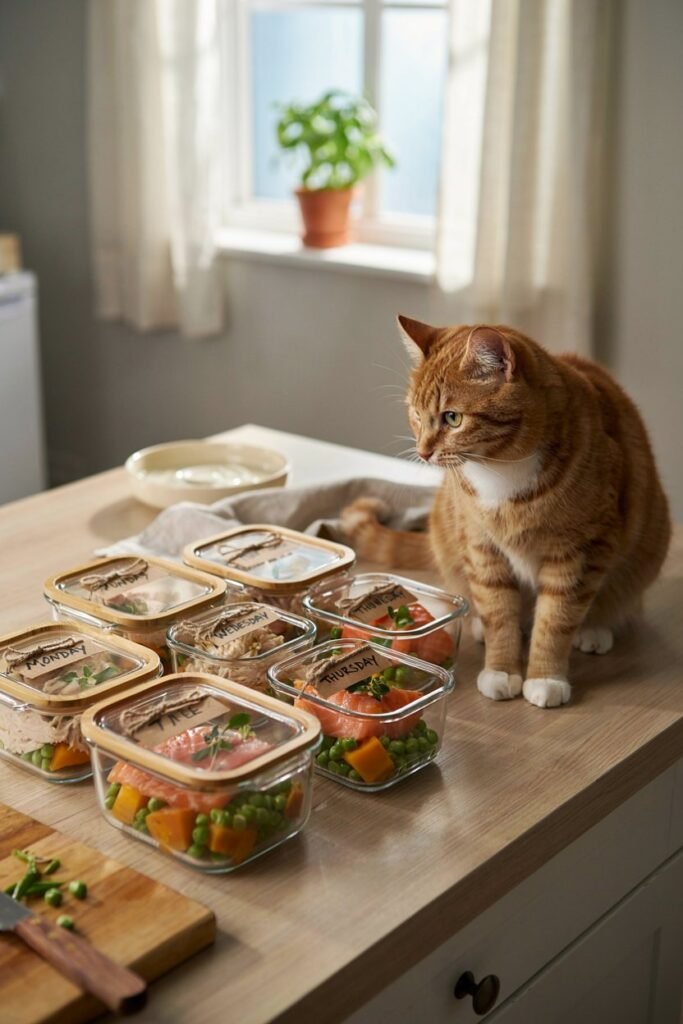
These simple habits have made preparing homemade cat food much easier for me.
- Use fresh ingredients every time.
- Measure supplements carefully.
- Prepare larger batches to save time.
- Label containers with the preparation date.
- Thaw frozen portions overnight in the refrigerator.
- Introduce homemade food gradually by mixing it with your cat’s current food over several days.
The first time I served homemade food, my cat spent a few minutes sniffing the bowl before taking the first bite.
After that first meal, the bowl was completely empty.
Since then, this recipe has become one of my favorite ways to prepare fresh food that I feel good about serving.
How Much Homemade Cat Food Should You Feed?
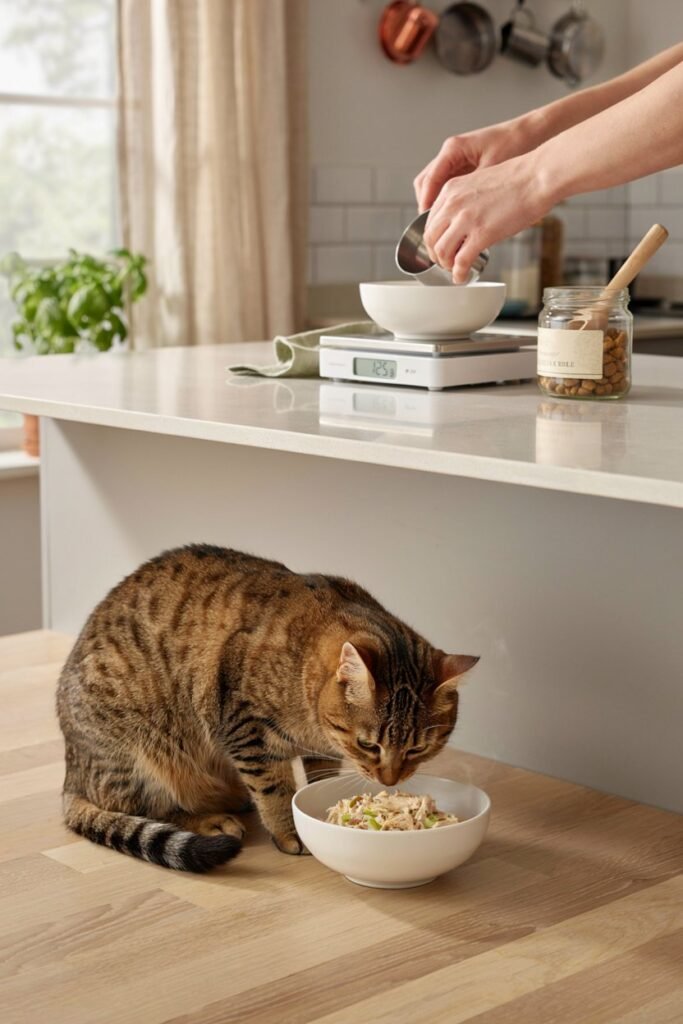
One question I had when I first started making homemade cat food was how much to serve.
Every cat is different, so there is no single amount that works for every pet.
Age, weight, activity level, and overall health all play a role.
As a general guide, an average healthy adult cat eats about 4 to 6 ounces of food each day, divided into two meals.
More active cats may need a little more, while less active indoor cats may need slightly smaller portions.
I always pay close attention to my cat’s weight and body condition.
If I notice weight gain or loss, I adjust the serving size gradually rather than making large changes all at once.
Fresh water should always be available, even though homemade food contains more moisture than dry kibble.
How to Store Homemade Cat Food
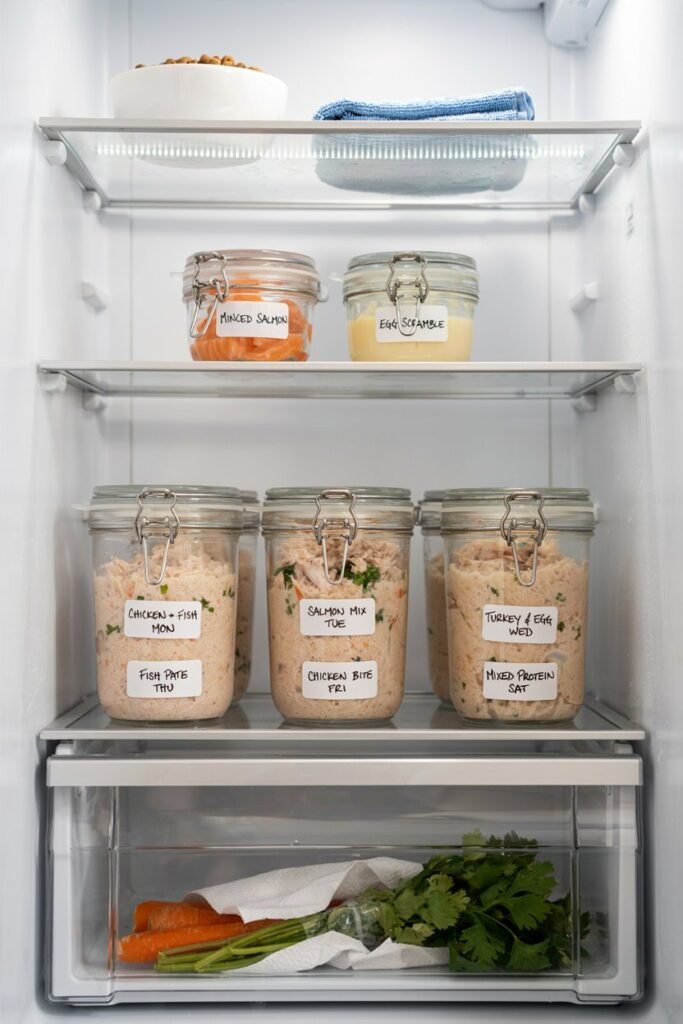
One of the reasons I enjoy making homemade cat food is that it is perfect for meal prep.
After the food has cooled completely, I divide it into individual portions before storing it.
This makes feeding time much quicker because I only need to thaw one container at a time.
Store homemade cat food in an airtight container in the refrigerator for up to three days.
For longer storage, freeze individual portions for up to three months.
When it is time to serve a frozen portion, I move it to the refrigerator the night before so it can thaw slowly.
I never leave homemade cat food sitting at room temperature for long periods.
Can You Customize This Recipe?
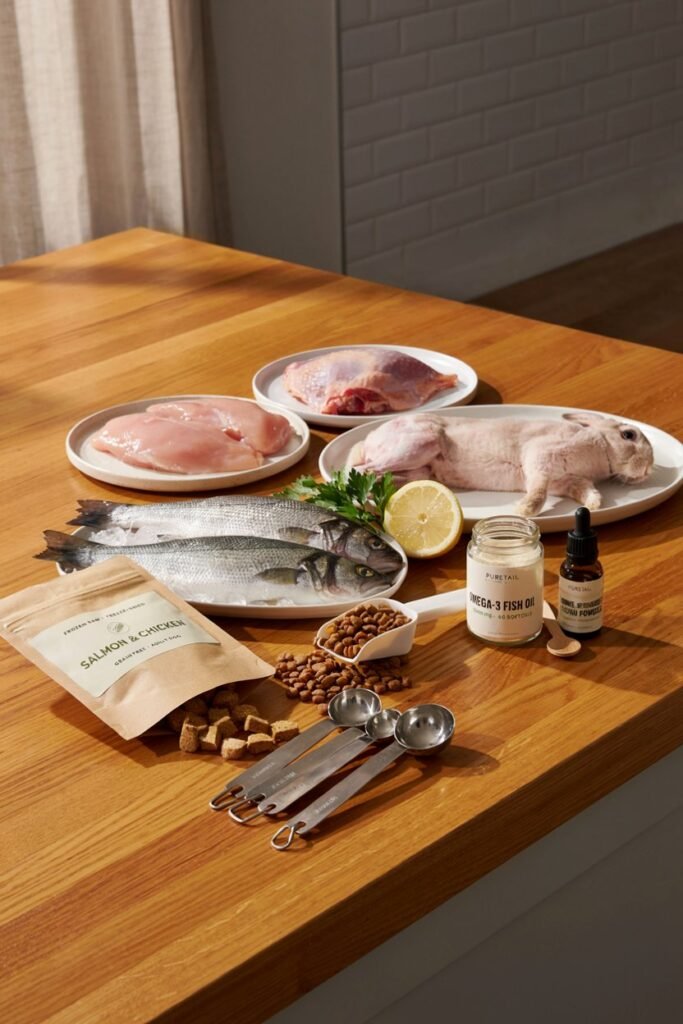
One thing I have learned is that every cat has different preferences.
Some love chicken, while others may prefer turkey or rabbit.
You can often substitute another lean protein, but any major change should still provide complete nutrition.
If you plan to feed homemade food as your cat’s regular diet, it is always best to discuss ingredient substitutions with your veterinarian or a veterinary nutritionist.
I also avoid adding ingredients simply because they sound healthy for people.
Cats have very different nutritional needs, and many foods that are popular in human recipes offer little benefit to them.
Common Mistakes to Avoid
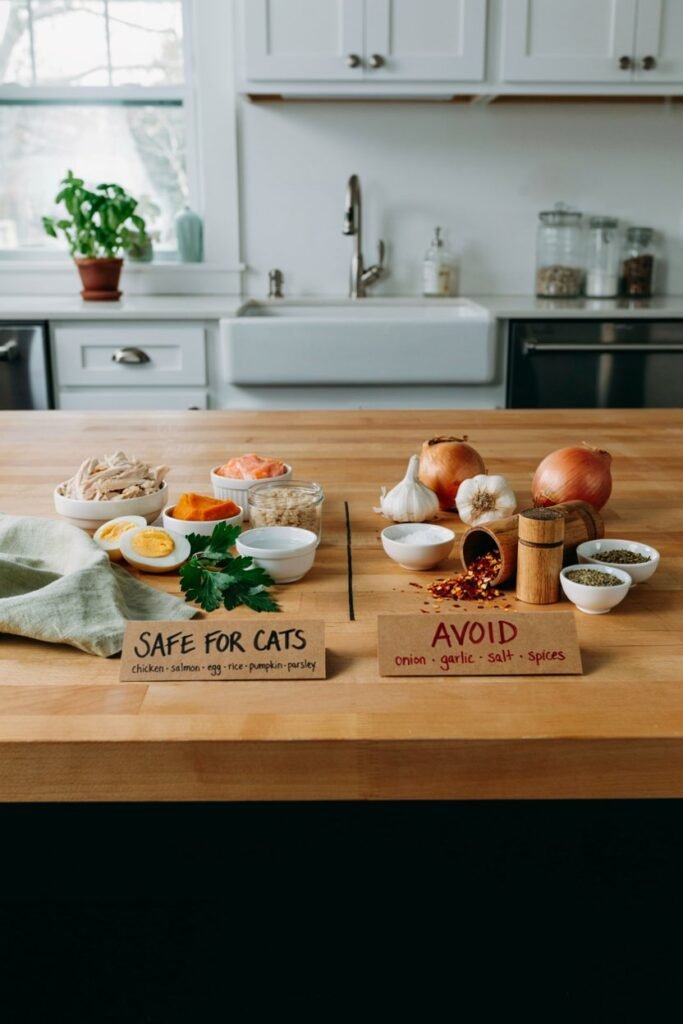
When I first started learning about homemade cat food, I realized there were several mistakes that could easily happen without realizing it.
Fortunately, they are all easy to avoid.
Feeding Only Cooked Meat
Many people think cooked chicken is a complete meal for cats, but it is missing important nutrients like calcium and taurine.
Skipping Supplements
Supplements are not added to make the recipe more complicated.
They help provide nutrients that may not be present in sufficient amounts after cooking.
Adding Seasonings
Cats do not need salt, onions, garlic, or spices in their food.
These ingredients can upset their stomach or even be harmful.
I always prepare homemade cat food completely plain.
Changing the Recipe Too Much
It can be tempting to swap ingredients based on what is already in the kitchen, but too many substitutions can affect the nutritional balance of the recipe.
Switching Foods Too Quickly
Whenever I introduce a new food, I do it gradually over several days.
Mixing a small amount with my cat’s current food helps make the transition much smoother.
Frequently Asked Questions
Can cats eat homemade food every day?
Yes, but only if the recipe provides complete and balanced nutrition for your cat’s life stage.
If homemade food will become your cat’s primary diet, work with your veterinarian to ensure all nutritional needs are met.
Can kittens eat this recipe?
Kittens have different nutritional requirements because they are still growing.
Always speak with your veterinarian before feeding homemade meals to kittens.
Can I freeze homemade cat food?
Yes. Freezing individual portions is one of the easiest ways to save time.
Properly stored portions can be kept in the freezer for up to three months.
Can I use chicken breast instead of chicken thighs?
You can, but chicken thighs contain more natural fat, which many cats find more appealing.
If you make substitutions, be sure the overall recipe remains nutritionally balanced.
Why is taurine so important?
Taurine supports healthy vision, heart function, and many other important processes.
Cats cannot produce enough taurine on their own, so it must come from their diet.
Can I add vegetables?
Cats do not require vegetables the way people do.
Small amounts may be acceptable in some recipes, but animal based ingredients should remain the main focus.
How do I know if my cat likes the recipe?
Most cats will show interest by eating readily and finishing their meal.
I also pay attention to energy levels, coat condition, healthy digestion, and maintaining a stable weight.
Final Thoughts
Making homemade cat food has given me a greater appreciation for how unique a cat’s nutritional needs really are.
It has also helped me feel more connected to my pet because I know exactly what goes into every meal I prepare.
While I still believe high quality commercial cat food has an important place, I enjoy making homemade meals as a fresh option that adds variety to my cat’s routine.
Seeing an empty bowl after each meal reminds me that the extra time in the kitchen is well worth it.
If you decide to make homemade cat food, focus on using fresh ingredients, following a balanced recipe, and introducing new foods gradually.
With a little preparation and careful attention to your cat’s nutritional needs, homemade meals can become a rewarding part of caring for your feline companion.
A happy, healthy cat starts with good nutrition, and taking the time to prepare a wholesome meal is one of the many ways we can show our pets just how much they mean to us.