Homemade Pumpkin Puree for Dogs
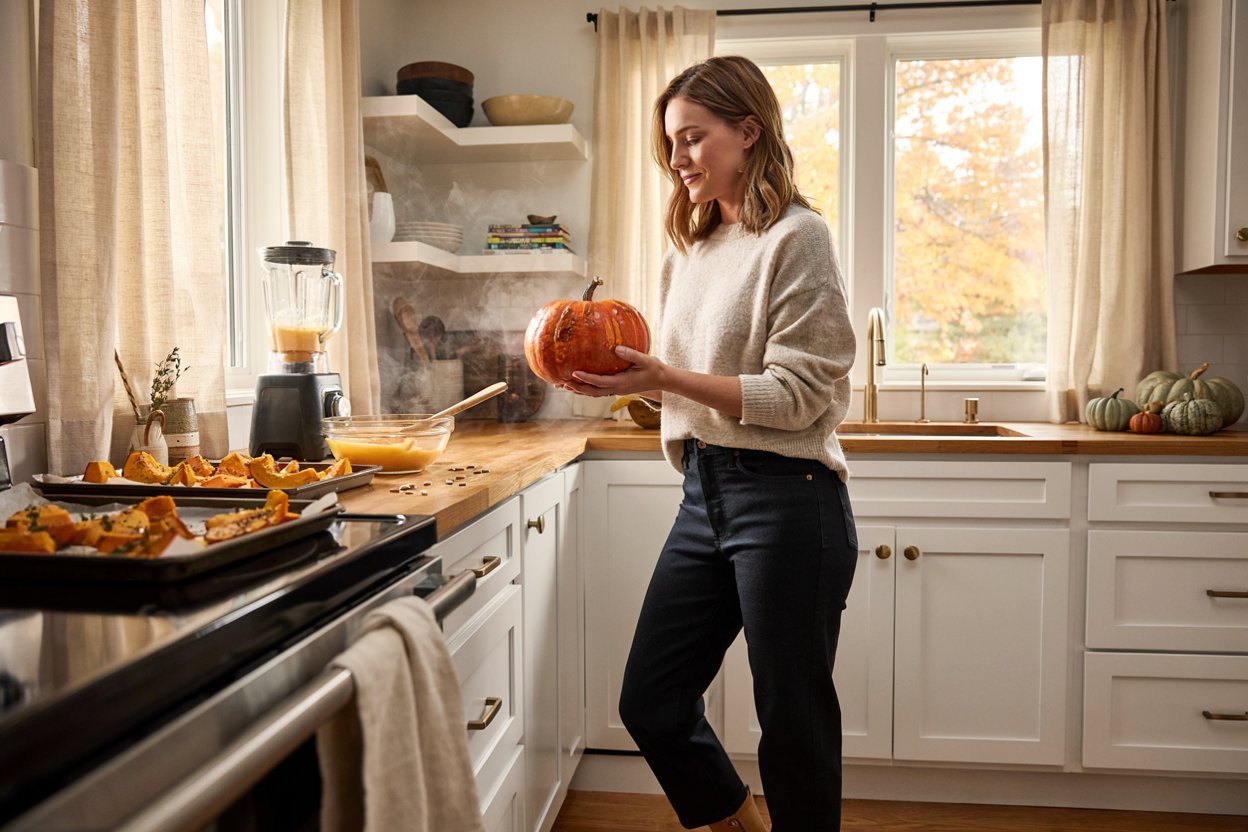
Pumpkin is one of those ingredients that earns a permanent spot in many dog owners’ kitchens. It is affordable, easy to prepare, naturally nutritious, and incredibly versatile.
Whether you want to add a little variety to your dog’s meals, make homemade treats, or simply keep a healthy ingredient on hand, homemade pumpkin puree is a wonderful recipe to learn.
Making pumpkin puree yourself also gives you complete control over what goes into your dog’s food.
Unlike pumpkin pie filling, which contains added sugar and spices that are not suitable for dogs, homemade pumpkin puree is made with just fresh pumpkin and nothing else.
That means every spoonful is simple, wholesome, and free from unnecessary ingredients.

Another reason many pet owners love homemade pumpkin puree is its flexibility.
It can be mixed into kibble, stirred into homemade dog food, frozen into enrichment treats, or used as a base for homemade biscuits and snacks.
A single batch can be portioned and stored for weeks, making it a convenient addition to your meal prep routine.
This guide covers everything you need to know, from choosing the right pumpkin and preparing it safely to serving suggestions, storage tips, and common mistakes to avoid.
By the end, you’ll have a smooth, flavorful pumpkin puree that your dog can enjoy in a variety of ways.
Why You’ll Love This Recipe
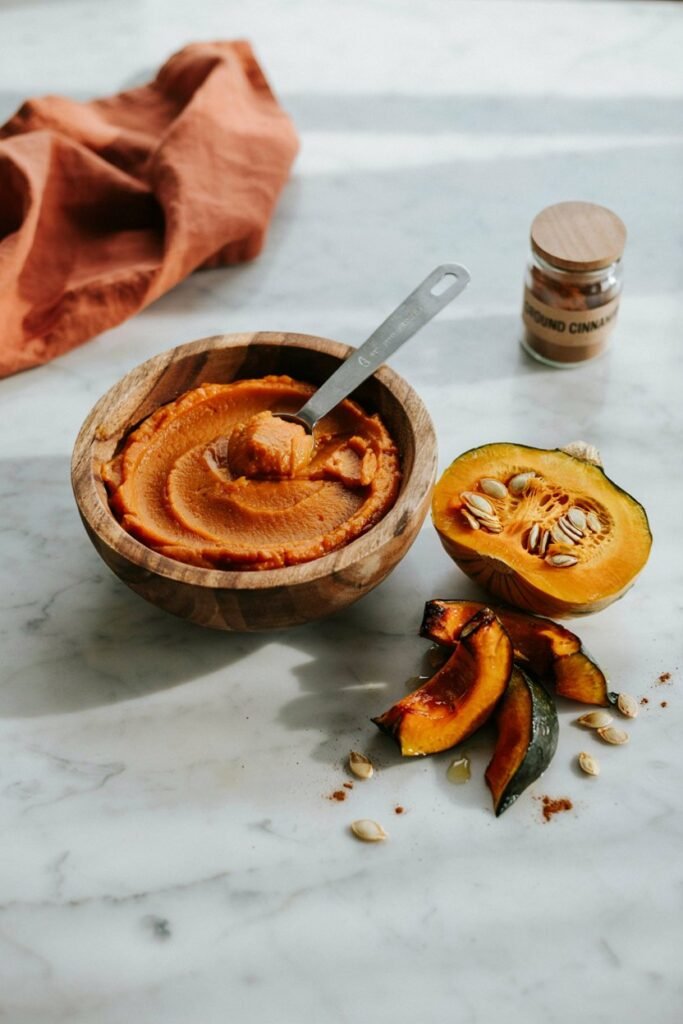
There are plenty of reasons to make pumpkin puree at home instead of relying on store bought options.
- Made with just one fresh ingredient
- No added sugar, salt, preservatives, or artificial flavors
- Budget friendly and easy to prepare
- Perfect for homemade dog treats and meals
- Easy to freeze into convenient portions
- Naturally rich in fiber and important nutrients
- Beginner friendly with simple kitchen equipment
- A versatile ingredient that can be used in many dog friendly recipes
Is Pumpkin Good for Dogs?
Plain pumpkin is a nutritious food that many dogs can enjoy as part of a balanced diet.
It is naturally low in fat and calories while providing beneficial vitamins, minerals, and dietary fiber.
When served in appropriate amounts, pumpkin can be an excellent addition to your dog’s regular meals.
Pumpkin is especially valued because it contains soluble and insoluble fiber.
These types of fiber help support normal digestion while also contributing to overall gut health.
Since every dog is different, it is always best to introduce pumpkin gradually and observe how your dog responds.
Nutritional Benefits of Pumpkin
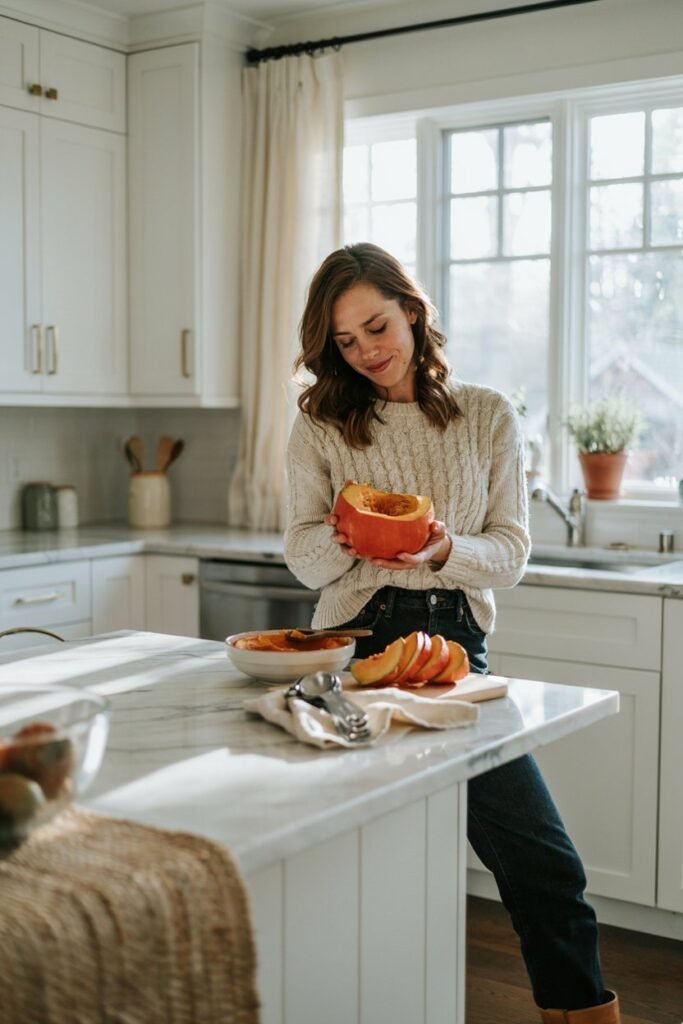
Rich in Dietary Fiber
Pumpkin contains a generous amount of natural fiber, making it a satisfying addition to meals.
Fiber supports healthy digestion and helps maintain normal bowel function.
Excellent Source of Vitamin A
Vitamin A plays an important role in supporting healthy vision, skin, immune function, and normal growth.
Contains Vitamin C
Although dogs naturally produce vitamin C, pumpkin provides additional antioxidants that help support healthy cells throughout the body.
Good Source of Potassium
Potassium helps support normal muscle function, healthy nerves, and proper hydration.
Naturally Low in Calories
Pumpkin adds flavor and texture without contributing excessive calories, making it a smart ingredient for dogs that need lighter meal additions.
Provides Natural Moisture
Fresh pumpkin contains water, helping create moist meals that many dogs find more appealing than dry food alone.
Homemade Pumpkin Puree vs Canned Pumpkin
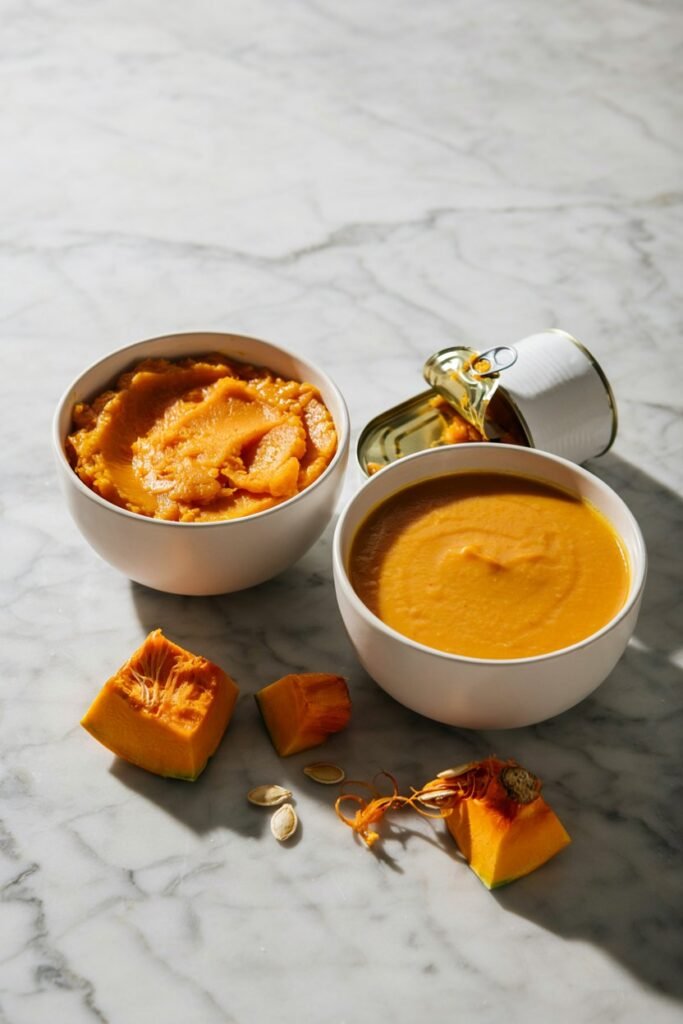
Many dog owners wonder whether homemade pumpkin puree is better than canned pumpkin.
The answer depends on your preferences, but both can be excellent choices when prepared correctly.
The most important difference is choosing the right product.
Homemade pumpkin puree contains only fresh pumpkin, while plain canned pumpkin should also contain only pumpkin.
Pumpkin pie filling is completely different and should never be fed to dogs because it contains sugar, spices, and other ingredients that are not appropriate for pets.
| Feature | Homemade Pumpkin Puree | Plain Canned Pumpkin |
|---|---|---|
| Ingredients | Fresh pumpkin only | Pumpkin only if labeled plain |
| Freshness | Freshly prepared | Processed but convenient |
| Cost | Often cheaper during pumpkin season | Convenient year round |
| Preservatives | None | Usually none if plain pumpkin |
| Flavor | Fresh, natural taste | Mild cooked pumpkin flavor |
| Texture | Adjustable while blending | Consistent smooth texture |
| Storage | Freeze extra portions | Refrigerate after opening |
Homemade pumpkin puree is ideal for pet owners who enjoy cooking and want complete control over ingredients.
Plain canned pumpkin remains an excellent alternative when you’re short on time, provided the ingredient list contains only pumpkin.
Ingredients
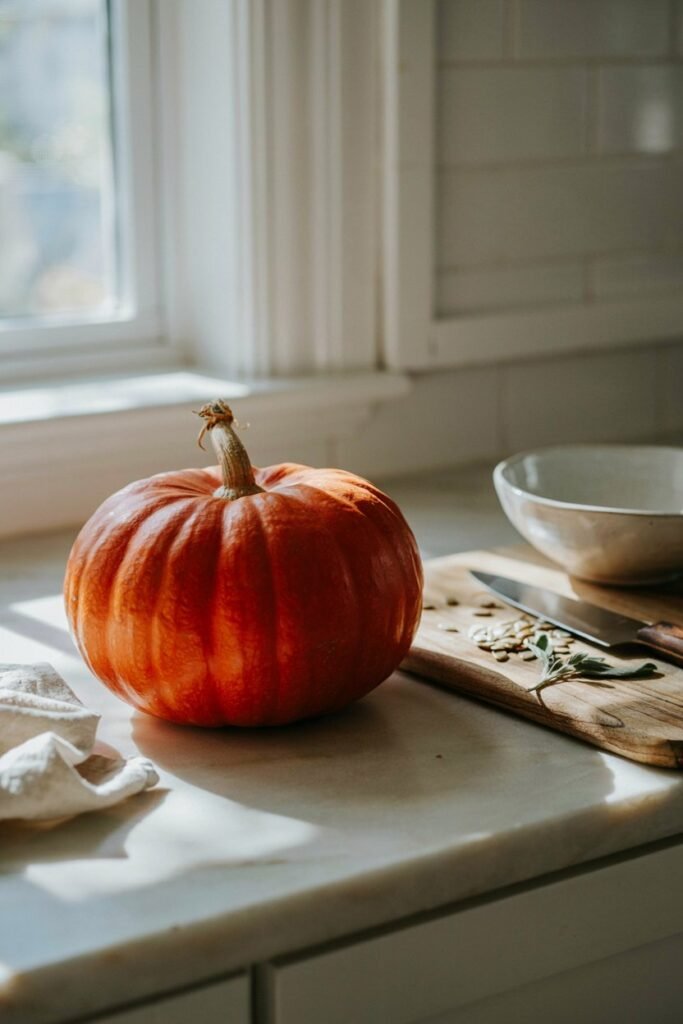
One of the best parts about this recipe is its simplicity.
You’ll Need
- 1 small sugar pumpkin or pie pumpkin
That is all.
Choosing the right pumpkin makes a noticeable difference in both flavor and texture.
Sugar pumpkins, sometimes called pie pumpkins, are naturally sweeter, less watery, and produce a smoother puree than large carving pumpkins.
Avoid decorative Halloween pumpkins whenever possible.
While they are technically edible, they tend to have stringy flesh, a watery texture, and a less pleasant flavor.
Always choose a pumpkin that feels heavy for its size, has firm skin, and is free from bruises, soft spots, cracks, or mold.
Kitchen Equipment
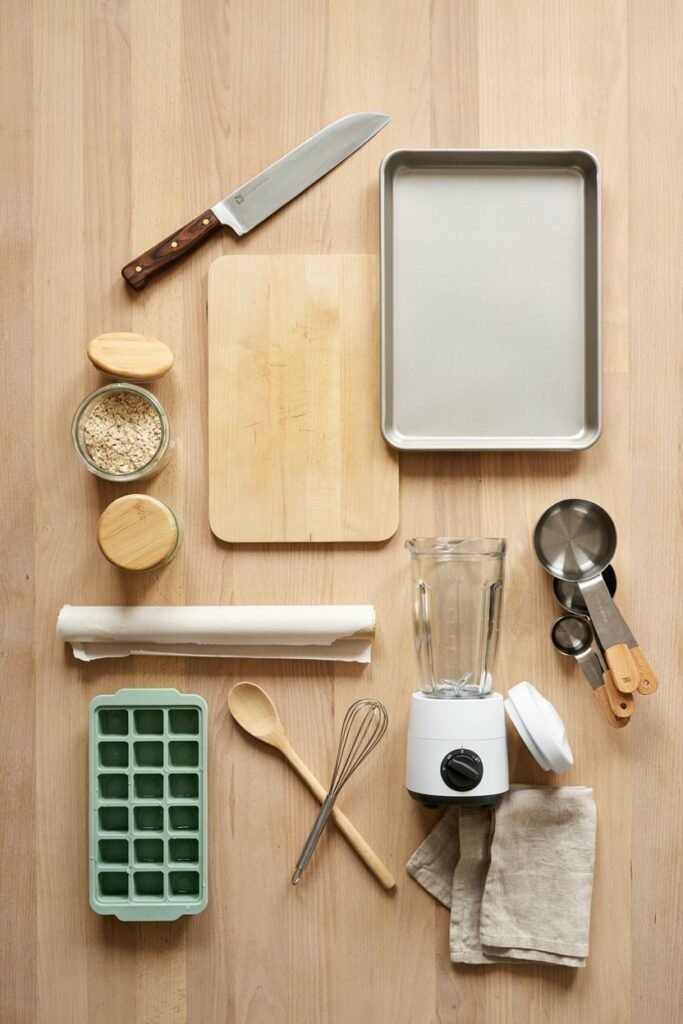
Having everything ready before you begin makes the process much easier.
You’ll need:
- Large sharp chef’s knife
- Stable cutting board
- Large spoon for scooping seeds
- Baking sheet
- Parchment paper or silicone baking mat
- Blender or food processor
- Large mixing bowl
- Fork for testing tenderness
- Measuring cups if portioning
- Airtight containers
- Ice cube trays for freezing individual servings
How to Choose the Best Pumpkin
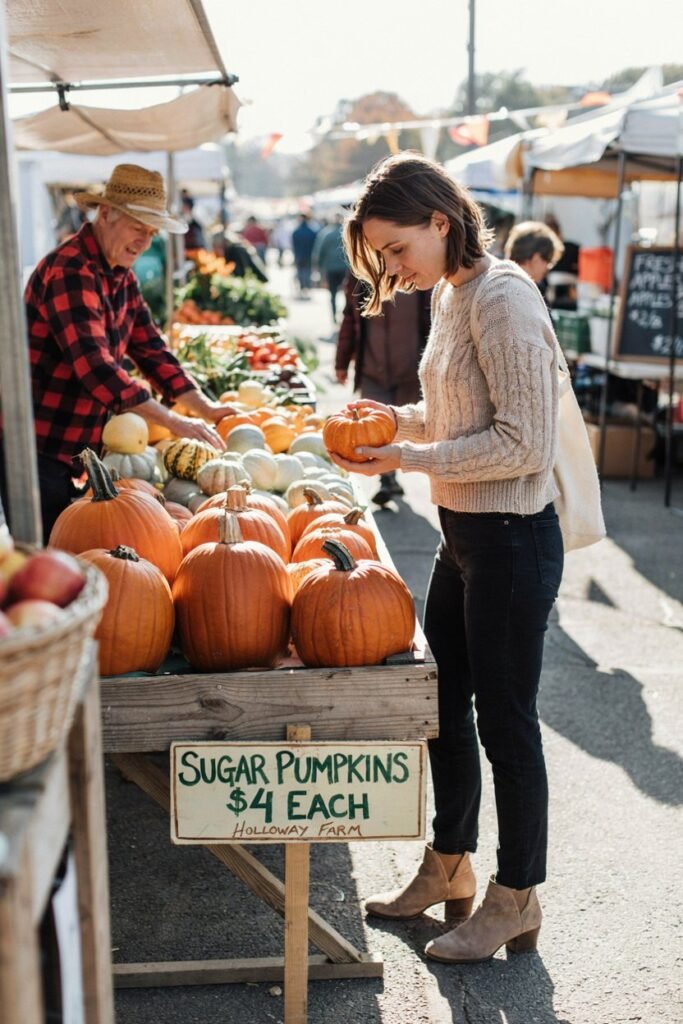
Not every pumpkin produces the same quality puree. Taking a few extra minutes to choose a good one will reward you with a smoother, naturally sweeter result.
Look for a pumpkin with deep orange skin that is evenly colored from top to bottom. The skin should feel firm with no soft areas or wrinkles.
A healthy stem is another sign of freshness, as pumpkins with broken or missing stems tend to spoil more quickly.
Lift several pumpkins if you have the option. The best one will usually feel heavier than it looks, indicating that the flesh is dense and full of moisture instead of dry or hollow.
Small sugar pumpkins generally weigh between two and five pounds, making them the perfect size for homemade puree.
They are easier to cut, roast more evenly, and produce a rich, creamy texture after blending.
In the next part, we’ll walk through the complete step by step instructions, along with expert tips to help you make perfectly smooth homemade pumpkin puree every time.
Step by Step Instructions
Making homemade pumpkin puree is easier than many people expect.
Roasting the pumpkin brings out its natural sweetness while creating a rich, smooth texture that blends beautifully.
Follow these simple steps for the best results.
Step 1: Wash the Pumpkin Thoroughly
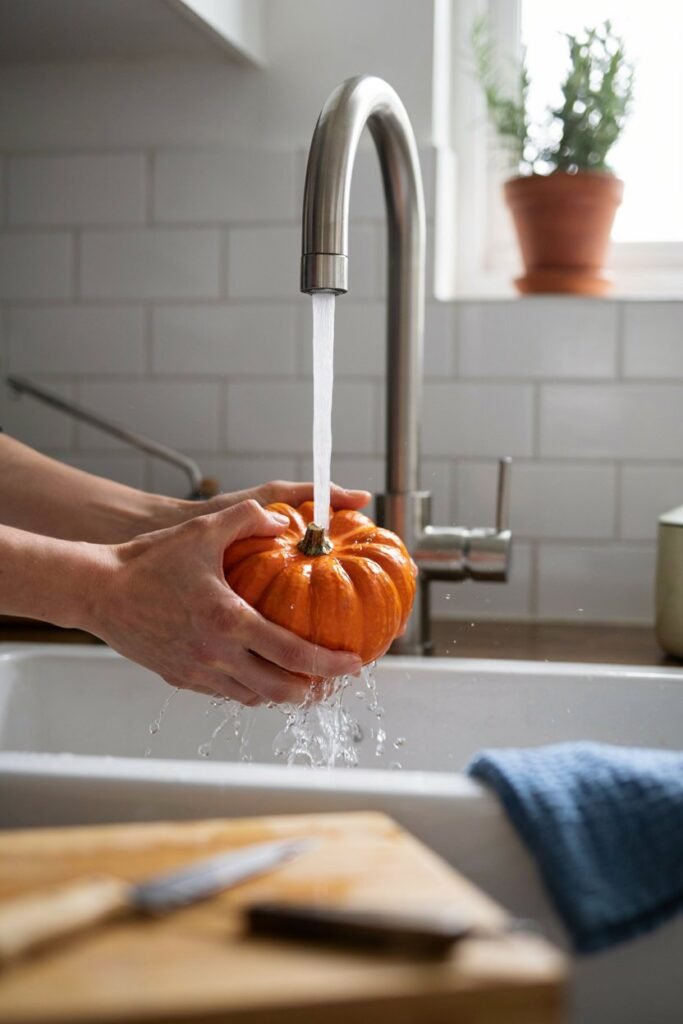
Even though the skin will be removed later, it’s important to wash the outside of the pumpkin under cool running water.
Dirt and bacteria on the skin can transfer to the flesh when you cut into it.
Pat the pumpkin dry with a clean kitchen towel before placing it on your cutting board.
Step 2: Cut the Pumpkin in Half
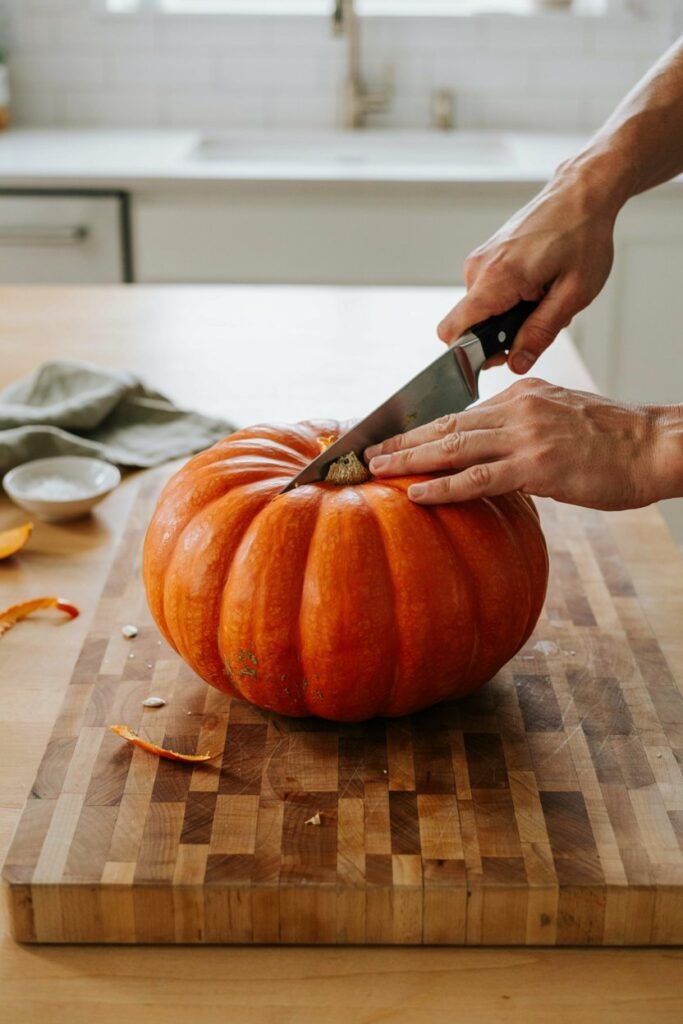
Place the pumpkin on a sturdy cutting board. Using a sharp chef’s knife, carefully cut it from the stem straight through to the bottom.
Pumpkins can be firm, so take your time and use slow, controlled pressure.
If needed, cut off a small slice from the bottom first to create a more stable base.
Step 3: Remove the Seeds and Stringy Center
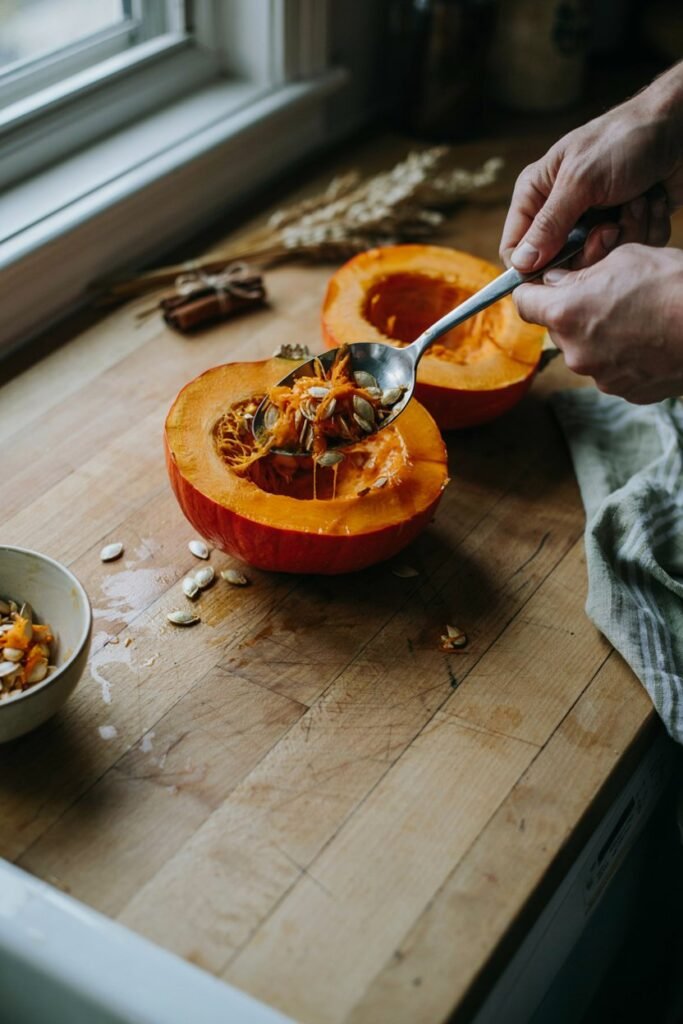
Use a large spoon to scoop out all the seeds and the fibrous strands from the center.
Continue scraping until the cavity is clean.
You can save the seeds for roasting as a snack for yourself, but do not season them if you plan to use them around your dog.
Step 4: Cut Into Smaller Pieces
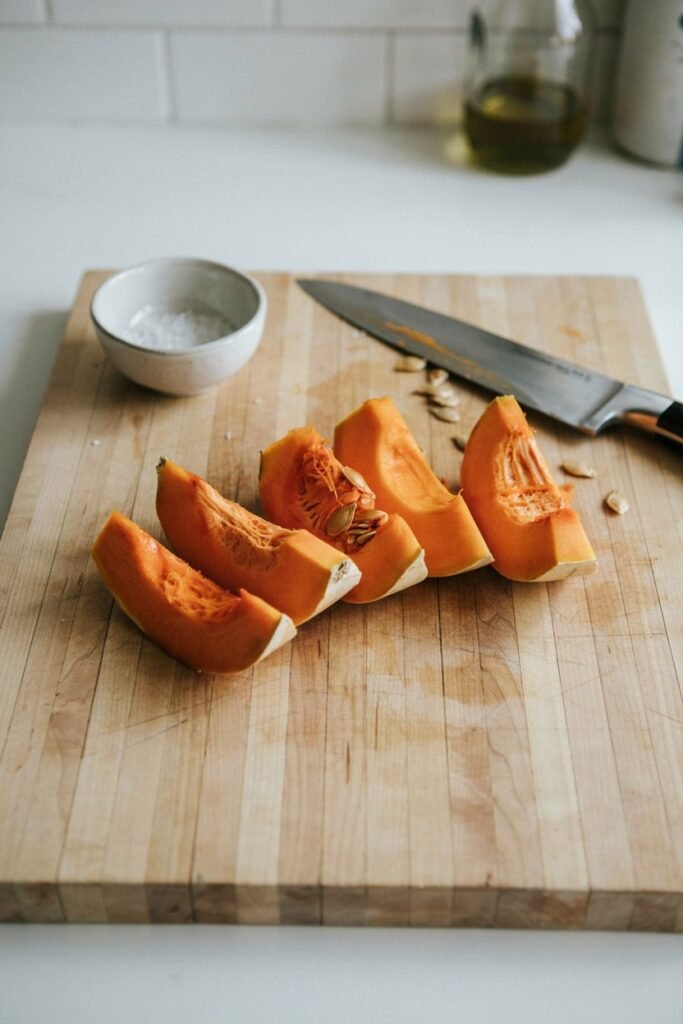
Cut each pumpkin half into several large wedges or chunks.
Smaller pieces roast more evenly and cool faster, making the blending process much easier later.
Step 5: Roast Until Tender
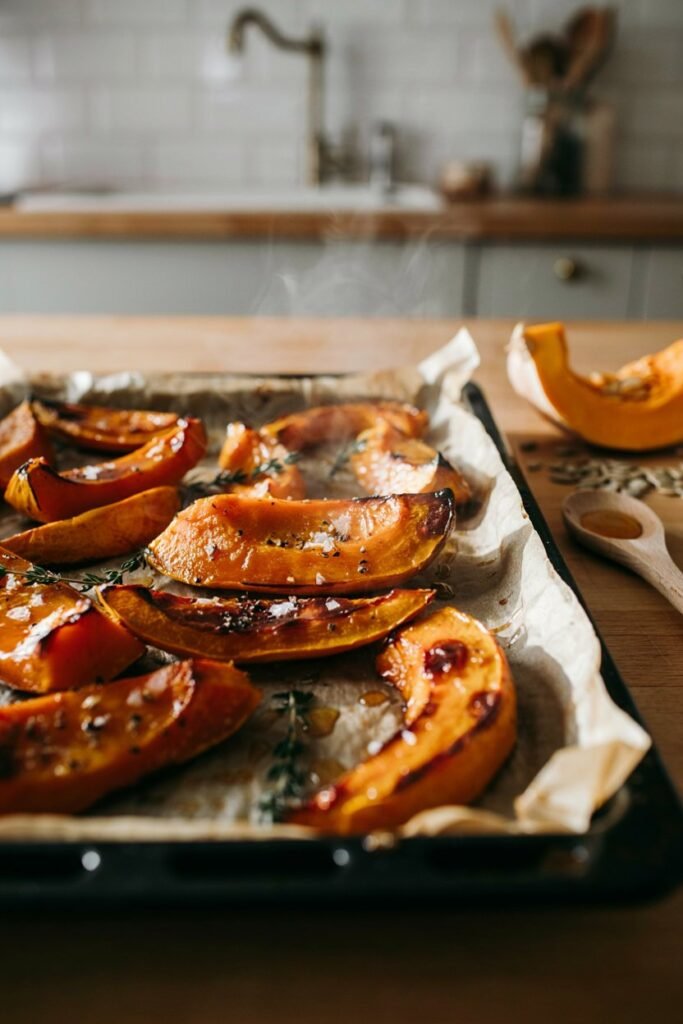
Preheat your oven to 400 degrees Fahrenheit.
Line a baking sheet with parchment paper and arrange the pumpkin pieces with the flesh facing upward or downward.
Either position works, although many people prefer flesh side down to help retain moisture.
Roast for about 35 to 50 minutes depending on the size of the pieces.
The pumpkin is ready when a fork slides easily into the flesh without resistance.
Avoid overcooking until the edges become dry or burnt.
Step 6: Cool Before Handling
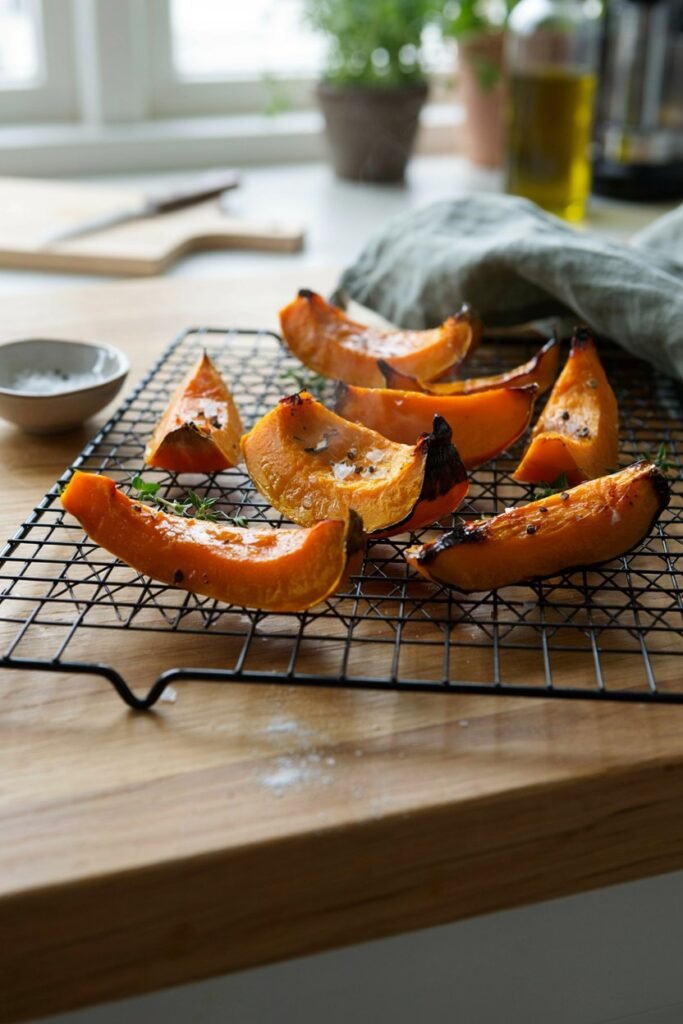
Remove the baking sheet from the oven and allow the pumpkin to cool until it is comfortable to handle.
This usually takes about 20 to 30 minutes.
Cooling also allows excess steam to escape, which helps produce a thicker puree.
Step 7: Remove the Skin
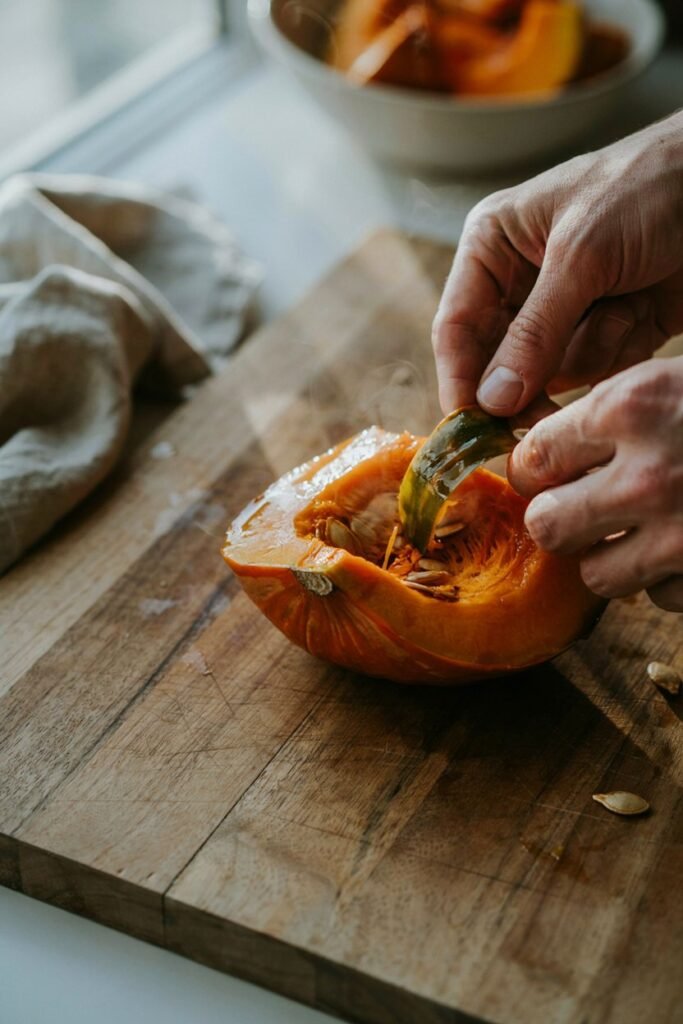
Once cooled, gently peel the skin away from the flesh using your hands or a spoon.
Properly roasted pumpkin skin should separate very easily.
Discard the skin and place only the soft pumpkin flesh into your blender or food processor.
Step 8: Blend Until Smooth
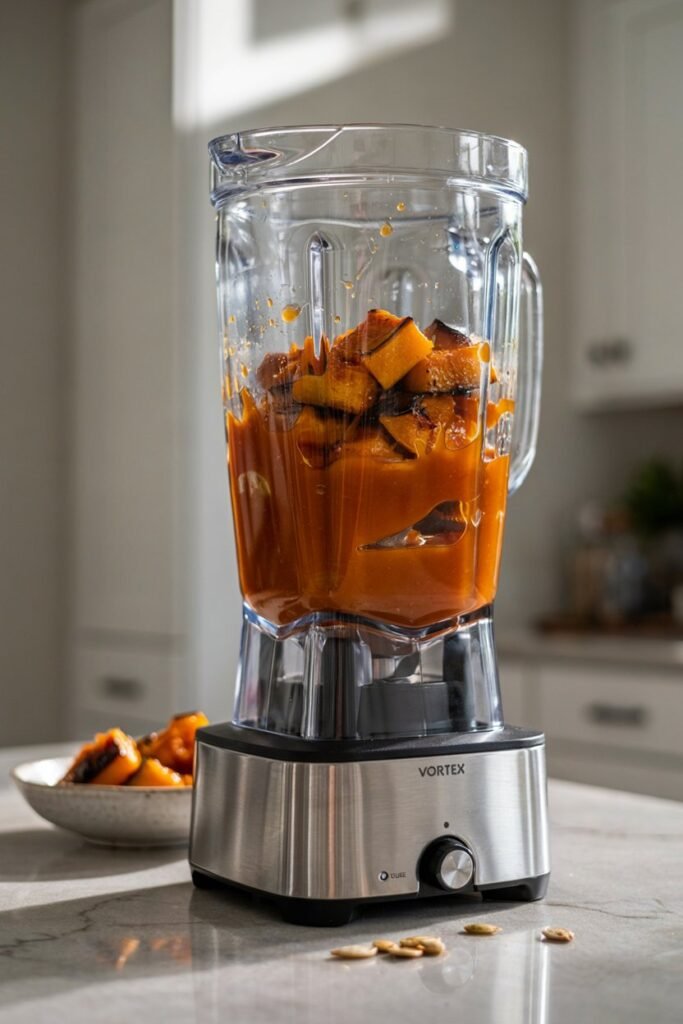
Blend the pumpkin until it becomes completely smooth and creamy.
Pause occasionally to scrape down the sides of the blender so every piece is evenly processed.
If the puree seems too thick for your blender to move, add a very small amount of water, just one tablespoon at a time.
Be careful not to add too much water, as overly thin puree is less convenient for freezing and recipes.
Step 9: Check the Texture
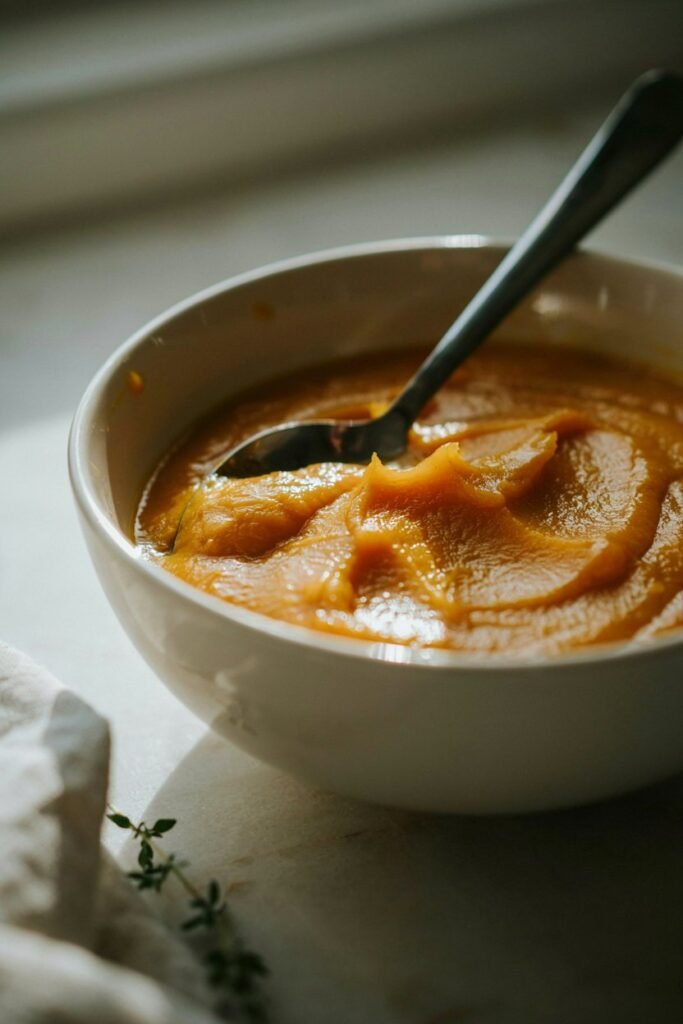
Your finished puree should have a silky, creamy consistency without lumps or fibrous pieces.
If necessary, continue blending for another minute or two.
A smooth puree mixes more evenly into dog food and works better in homemade treats.
Step 10: Cool Completely Before Storing
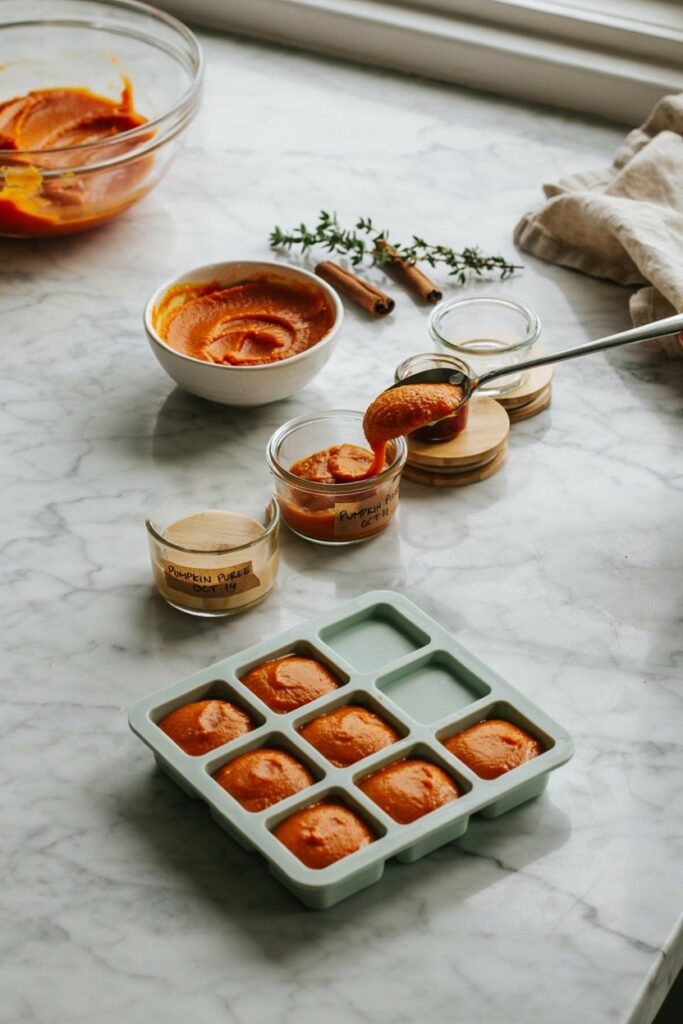
Transfer the finished puree into a clean bowl and allow it to cool completely to room temperature.
Never store warm puree in sealed containers because trapped heat creates excess moisture that can shorten its freshness.
Once cooled, portion it into airtight containers or freezer safe trays for storage.
Expert Tips for the Best Pumpkin Puree
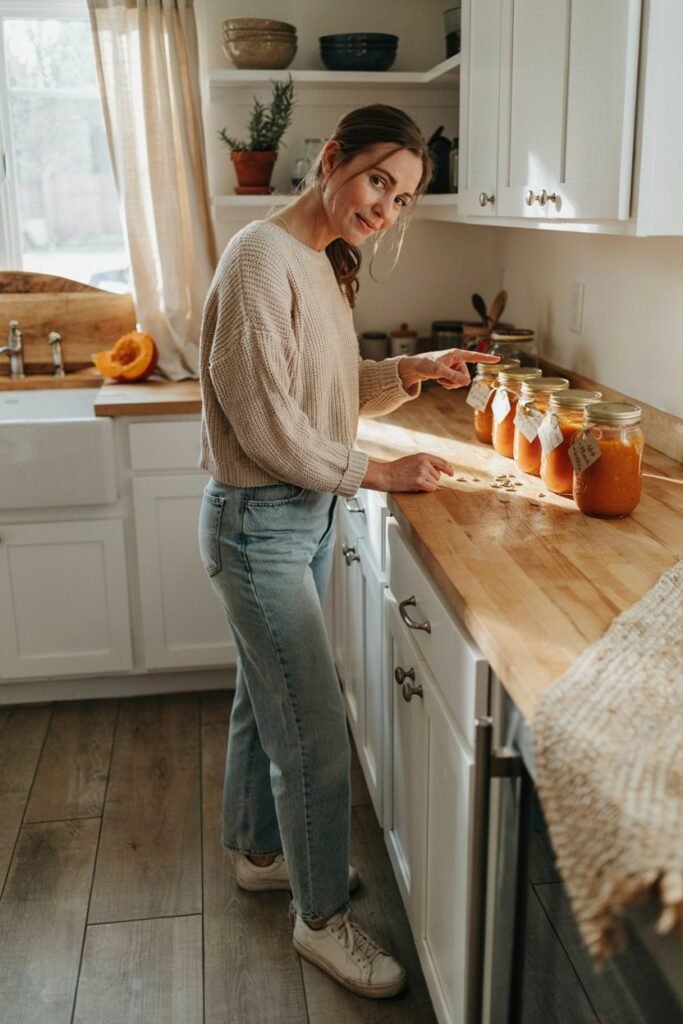
A few simple techniques can make your homemade pumpkin puree even better.
Choose small sugar pumpkins instead of large carving pumpkins for a naturally sweeter flavor and smoother texture.
Roasting usually produces a richer flavor than boiling because it removes excess moisture while concentrating the pumpkin’s natural taste.
Blend the pumpkin while it is still slightly warm, as it generally creates a smoother consistency than blending fully chilled pumpkin.
Never add sugar, salt, butter, spices, oils, or seasonings. Your dog only needs plain pumpkin.
If the puree feels watery after blending, let it sit in a fine mesh strainer for a few minutes to drain excess liquid.
Freeze leftover puree in ice cube trays for perfectly portioned servings that are easy to thaw later.
Always label storage containers with the preparation date so you know when they should be used.
Common Mistakes to Avoid
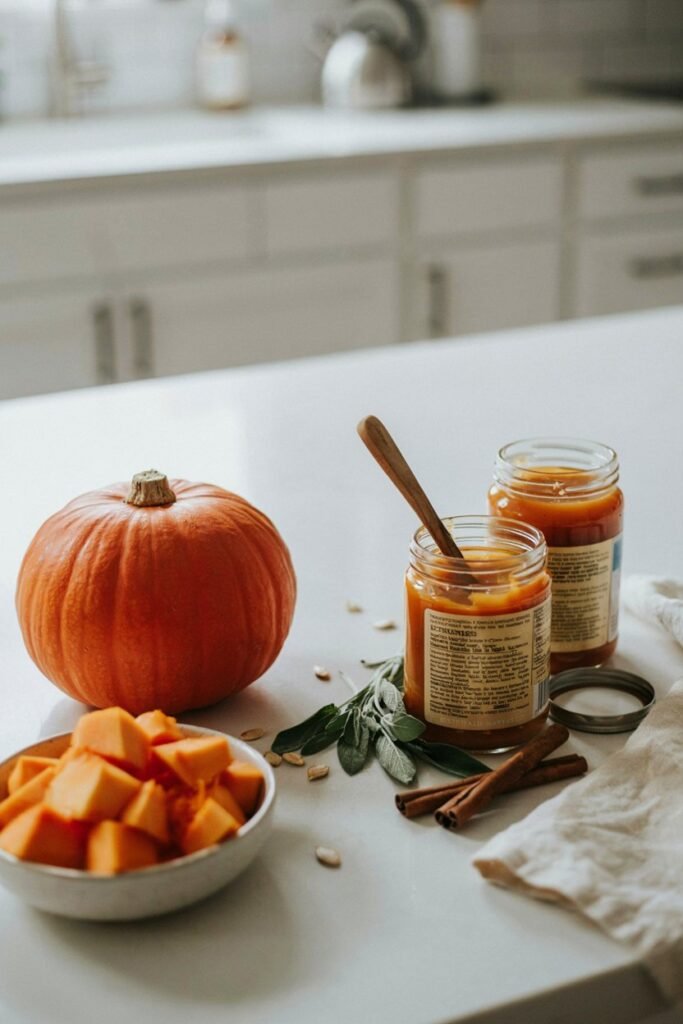
Even a simple recipe like pumpkin puree has a few mistakes that can affect the final result.
Using Pumpkin Pie Filling
Pumpkin pie filling is not the same as pumpkin puree.
It contains sugar, spices, and other ingredients that are not suitable for dogs.
Always choose fresh pumpkin or plain canned pumpkin with pumpkin listed as the only ingredient.
Choosing Large Carving Pumpkins
Large Halloween pumpkins often contain watery, stringy flesh that produces thinner puree.
Sugar pumpkins create a much creamier texture.
Under Cooking the Pumpkin
Firm pumpkin does not blend well.
Roast until the flesh is soft enough that a fork slides in effortlessly.
Adding Extra Ingredients
Many human pumpkin recipes include butter, cinnamon, nutmeg, sugar, or salt.
Skip all of them.
Plain pumpkin is the healthiest option for dogs.
Serving It While Hot
Always allow the puree to cool completely before offering it to your dog.
Warm food may be uncomfortable and could burn your dog’s mouth.
Making the Puree Too Thin
Adding too much water during blending can leave you with runny puree that is difficult to freeze and less useful in homemade treats.
Feeding Too Much at Once
Pumpkin should be served as a meal topper or occasional addition to a balanced diet, not as a replacement for your dog’s regular food.
In the next part, we’ll cover serving sizes, creative ways to use homemade pumpkin puree, storage and freezing tips, frequently asked questions, and the best ways to keep your puree fresh for weeks.
Serving Suggestions
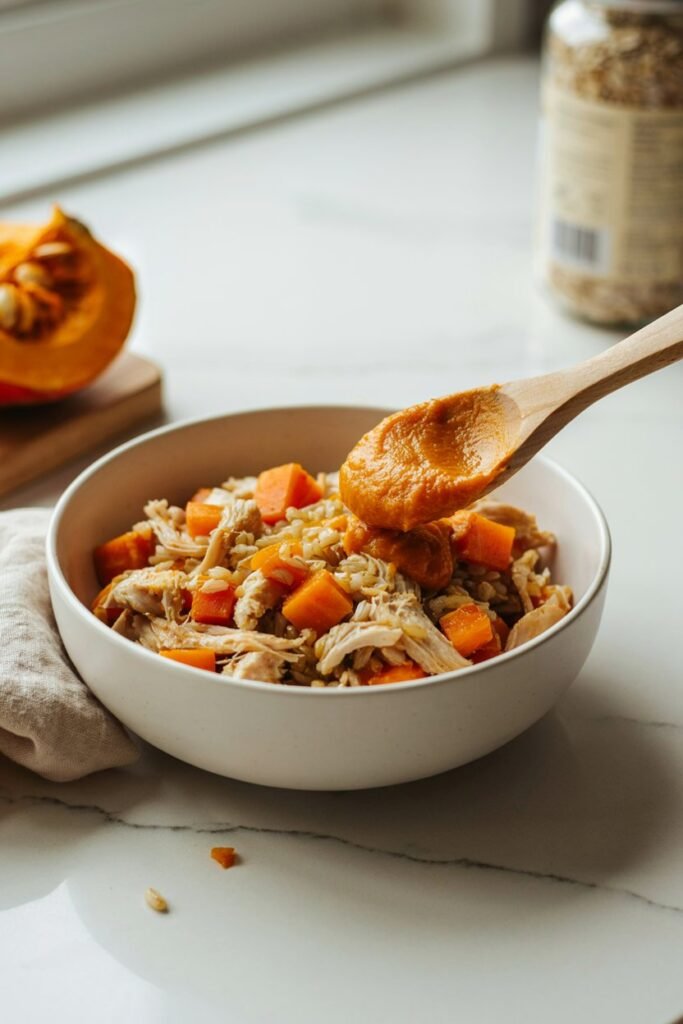
Homemade pumpkin puree is one of the most versatile ingredients you can keep in your refrigerator or freezer.
A small spoonful can add flavor, moisture, and variety to your dog’s meals without requiring extra preparation.
Here are some easy ways to serve it.
Mix It Into Dry Kibble
Stir a spoonful of pumpkin puree into your dog’s regular kibble to add moisture and create a more enjoyable texture.
Add It to Homemade Dog Food
If you prepare homemade meals for your dog, pumpkin puree blends well with cooked lean meats, vegetables, and grains.
Freeze Into Small Treats
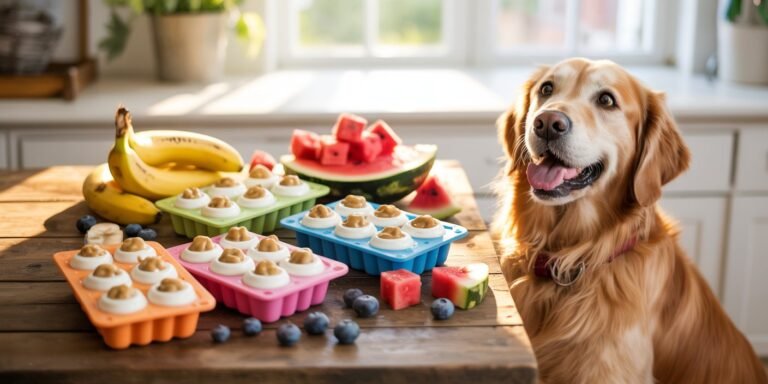
Pour the puree into silicone molds or ice cube trays and freeze. These frozen bites can be especially refreshing during warm weather.
Spread on a Lick Mat
A thin layer of pumpkin puree spread across a lick mat provides mental enrichment while encouraging slower licking.
Fill an Enrichment Toy
Stuff a small amount into your dog’s favorite enrichment toy and freeze it for a longer lasting activity.
Use It in Homemade Dog Treats
Pumpkin puree works wonderfully in homemade biscuits, soft chews, training treats, and frozen snacks.
Stir Into Plain Yogurt
Mix a little pumpkin puree with plain, unsweetened yogurt for an occasional treat if your dog tolerates dairy.
Recommended Serving Sizes
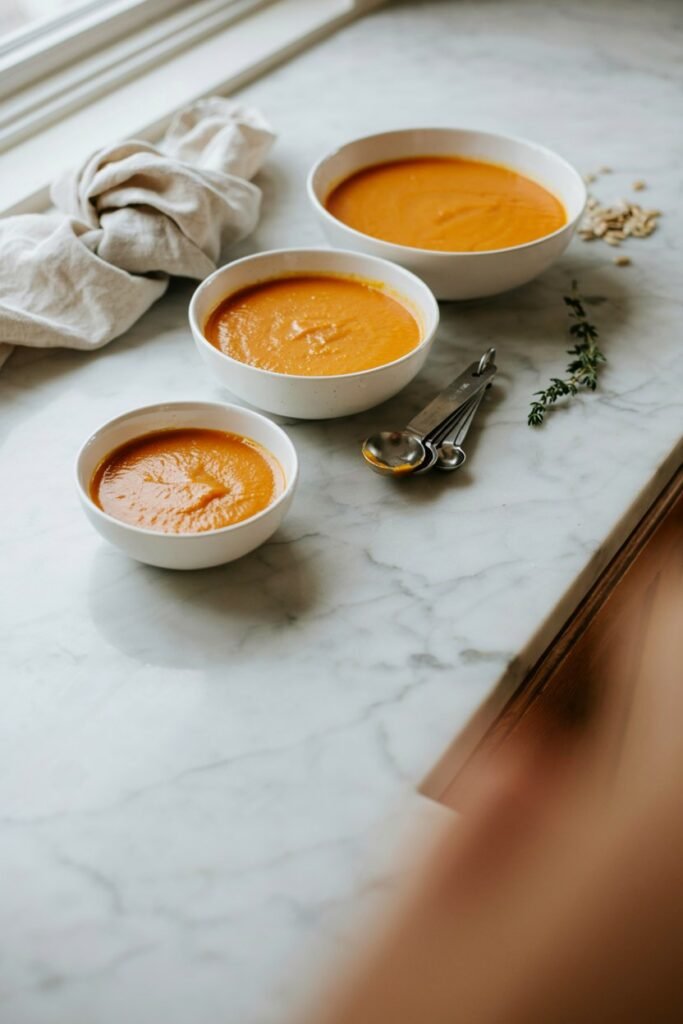
Pumpkin should be offered as a supplement to a balanced diet rather than a meal replacement. Introducing it gradually allows you to monitor how your dog responds.
| Dog Size | Suggested Serving |
|---|---|
| Extra small dogs | 1 to 2 teaspoons |
| Small dogs | 1 to 2 tablespoons |
| Medium dogs | 2 to 3 tablespoons |
| Large dogs | 3 to 4 tablespoons |
| Giant breeds | Up to 5 tablespoons if appropriate for their diet |
If your dog has a medical condition or follows a prescription diet, consult your veterinarian before adding new foods.
How to Store Homemade Pumpkin Puree
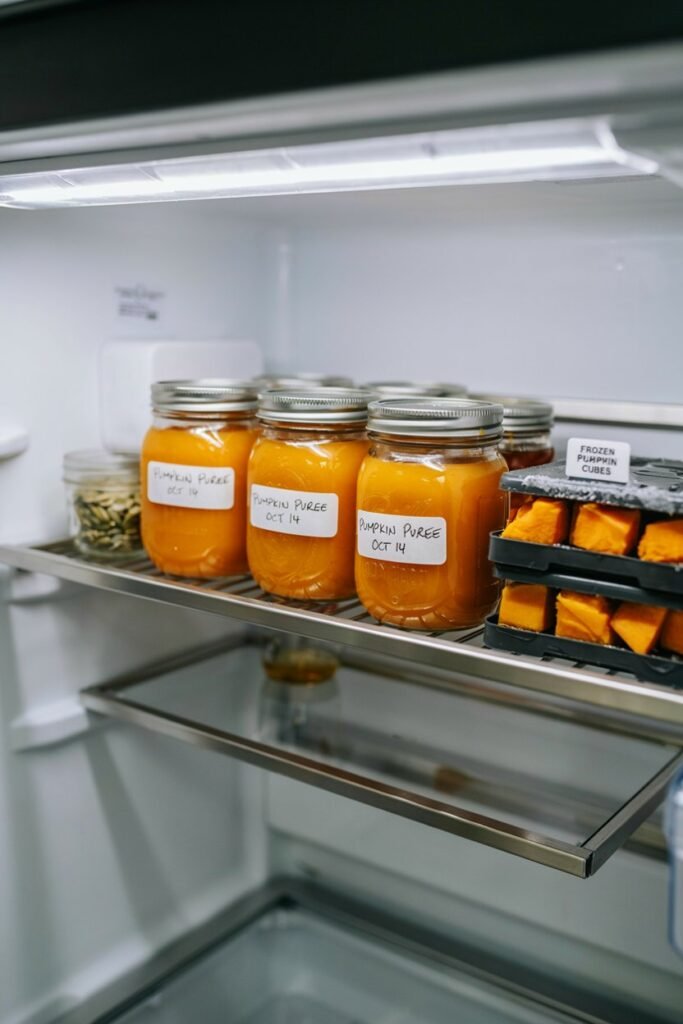
Proper storage keeps your puree fresh while making future meals quick and convenient.
Refrigerator
Allow the puree to cool completely before transferring it into airtight containers.
Store it in the refrigerator for up to five days.
Always use a clean spoon when serving to help prevent contamination.
Freezer
Pumpkin puree freezes exceptionally well.
Portion it into ice cube trays, silicone molds, or small freezer safe containers before freezing.
Once frozen, transfer the cubes into labeled freezer bags to save space.
Frozen pumpkin puree maintains its best quality for about three months.
How to Thaw
Move the desired portion into the refrigerator overnight.
If you need it sooner, place the sealed container in a bowl of cool water until thawed.
Avoid repeated freezing and thawing, as this reduces quality.
Signs It Has Spoiled
Discard the puree if you notice any of the following.
- Mold growth
- Sour or unpleasant smell
- Slimy texture
- Discoloration
- Bubbling or signs of fermentation
When in doubt, throw it away and prepare a fresh batch.
Can Humans Eat Homemade Pumpkin Puree?
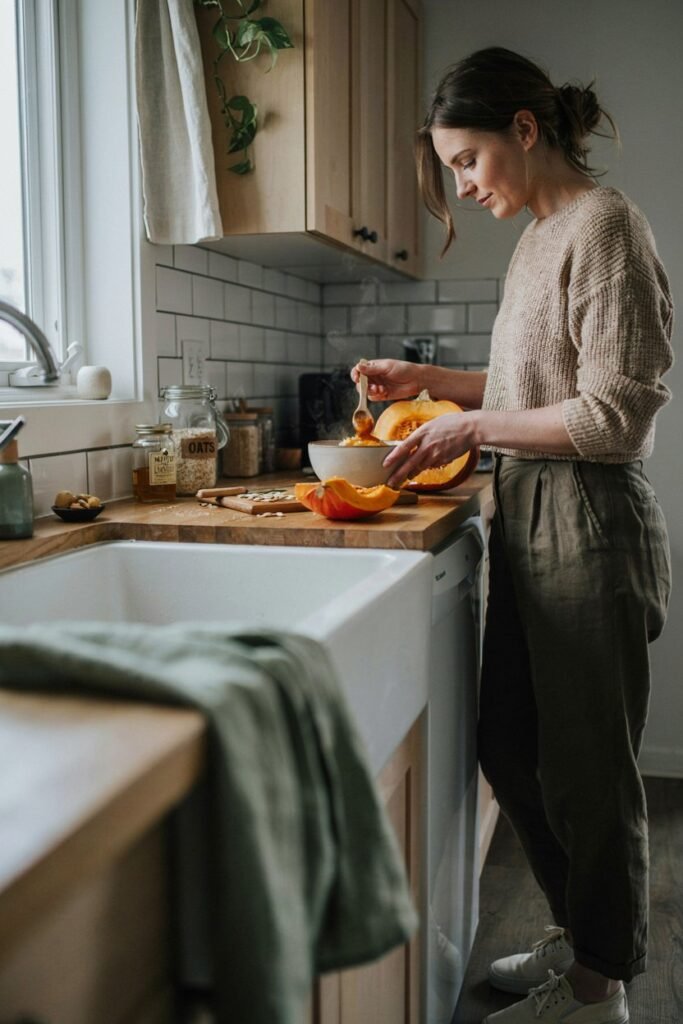
Absolutely.
Since this recipe contains only fresh pumpkin, it is perfectly suitable for people as well.
If you have leftovers, you can use them in many recipes, including:
- Smoothies
- Oatmeal
- Pancakes
- Muffins
- Soups
- Pasta sauces
Simply separate your portion before serving any to your dog so the remaining puree can be seasoned for your own recipes.
Easy Variations
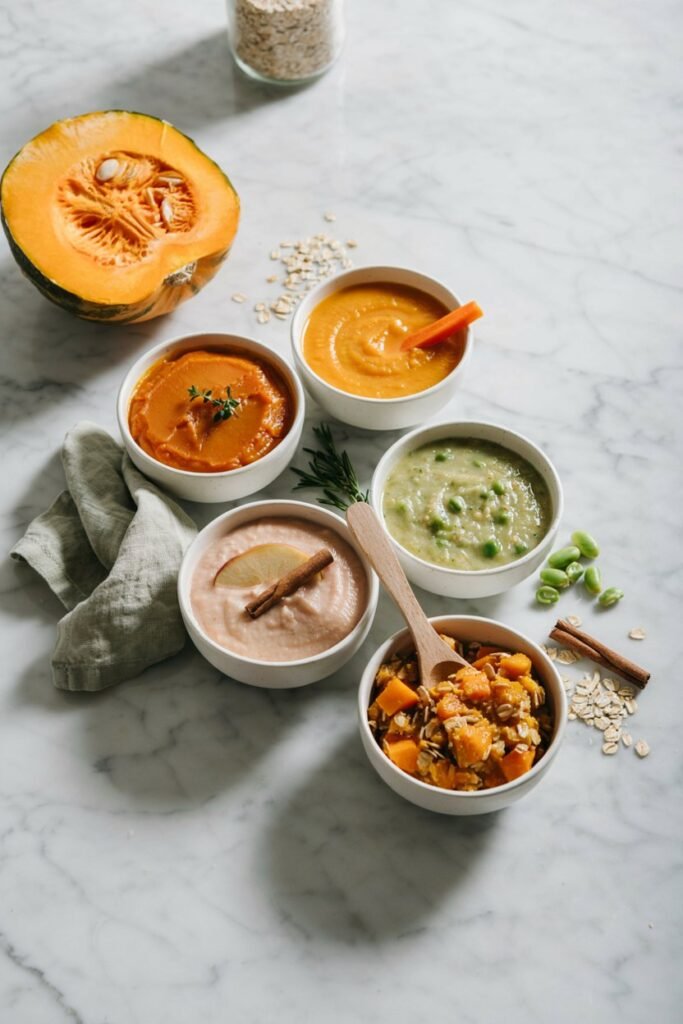
Once your dog enjoys plain pumpkin, you can occasionally use it in other homemade recipes that include dog safe ingredients.
Some popular combinations include:
- Pumpkin and sweet potato
- Pumpkin and carrot
- Pumpkin and green beans
- Pumpkin and cooked apple without seeds
- Pumpkin and plain oatmeal
Whenever introducing a new ingredient, start with a small amount and watch for any digestive changes.
Frequently Asked Questions
Can puppies eat pumpkin puree?
Yes. Plain pumpkin puree can be offered to puppies in small amounts once they are eating solid food.
Introduce it gradually and consult your veterinarian if you have questions about your puppy’s specific nutritional needs.
Can dogs eat raw pumpkin?
Dogs can eat raw pumpkin, but cooked pumpkin is generally easier to digest and creates a much smoother puree.
Can I use canned pumpkin?
Yes, provided it is plain canned pumpkin with pumpkin listed as the only ingredient.
Avoid pumpkin pie filling.
Can I microwave the pumpkin instead of roasting it?
Yes. Microwaving is an option, although roasting usually produces a thicker puree with a richer flavor because less moisture is retained.
Should I remove the skin?
Yes.
While pumpkin skin is technically edible, it becomes tough after cooking and does not blend as smoothly. Removing it creates a much creamier puree.
Can I freeze pumpkin puree?
Yes.
Freezing is one of the best ways to preserve homemade pumpkin puree for future use.
How long does homemade pumpkin puree last?
It stays fresh in the refrigerator for about five days and in the freezer for approximately three months when stored properly.
Can cats eat pumpkin puree?
Many cats can safely eat small amounts of plain pumpkin puree, but their nutritional needs differ from dogs.
Consult your veterinarian before adding pumpkin to your cat’s diet.
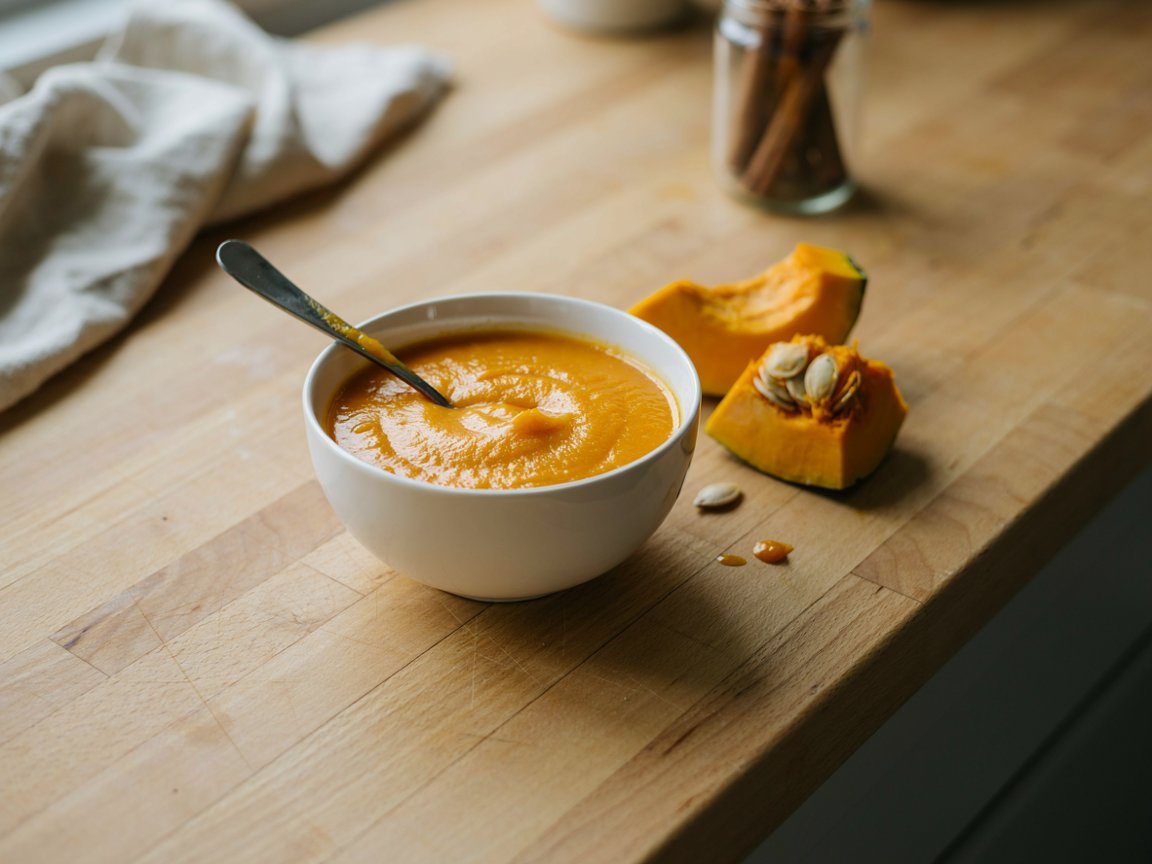
Homemade Pumpkin Puree for Dogs
Ingredients
Equipment
Method
- Step 1:Preheat the oven to 375°F.Step 2:Wash the pumpkin, cut it in half, and remove the seeds and stringy interior.Step 3:Peel the pumpkin and cut the flesh into evenly sized chunks.Step 4:Arrange the pumpkin pieces on a baking sheet and roast until completely tender when pierced with a fork, about 25 minutes.Step 5:Allow the cooked pumpkin to cool until safe to handle.Step 6:Transfer the pumpkin to a blender or food processor and blend until smooth. Add a small amount of water as needed to reach your preferred consistency.Step 7:Allow the puree to cool completely before serving or storing.
Recipe Notes
Use plain pumpkin only. Do not add sugar, salt, spices, butter, or other seasonings. Store the puree in an airtight container in the refrigerator and use within a few days, or freeze individual portions for longer storage.
Final Thoughts
Homemade pumpkin puree is one of the easiest recipes you can make for your dog, yet it offers impressive versatility.
With only one ingredient and a little preparation, you can create a fresh, wholesome addition to meals, homemade treats, and enrichment activities.
By choosing a quality sugar pumpkin, roasting it until tender, and blending it into a smooth puree, you’ll have a nutritious ingredient ready whenever your dog needs a little extra variety.
Freezing individual portions also makes it simple to keep homemade pumpkin puree on hand throughout the year.
Whether you use it as a meal topper, a frozen snack, or the foundation for homemade dog treats, this simple recipe is an excellent way to add fresh pumpkin to your dog’s routine while knowing exactly what is in every spoonful.