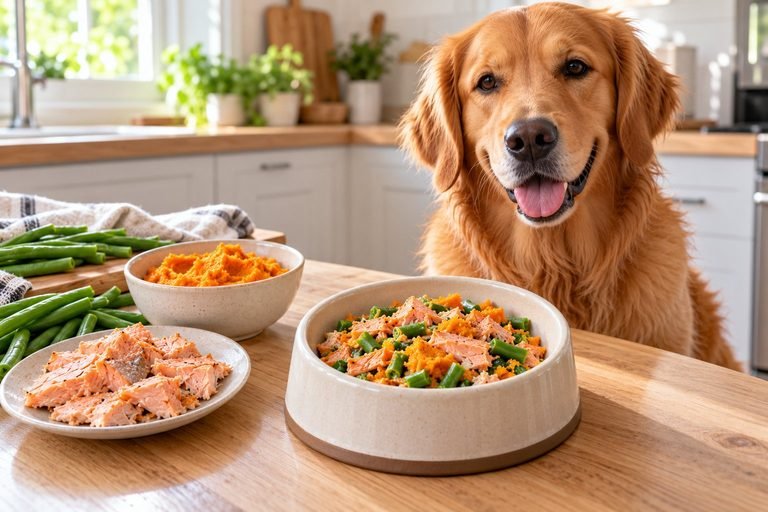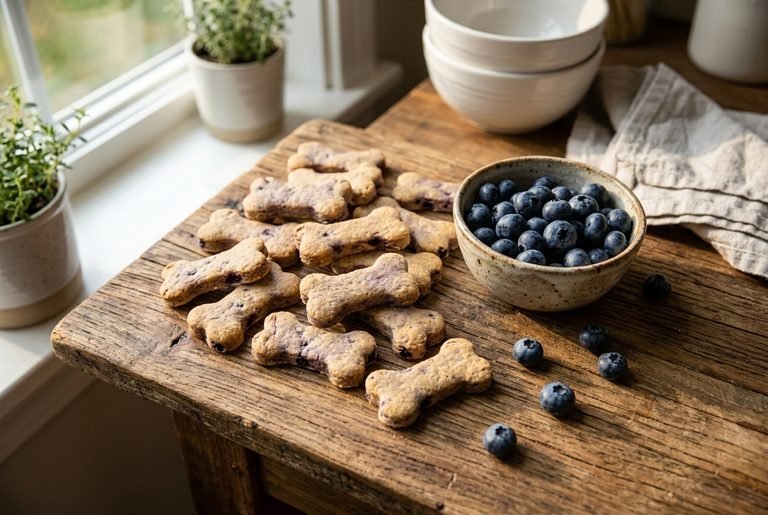
Homemade Dog Food with Vet Approved Ingredients: The Complete Guide
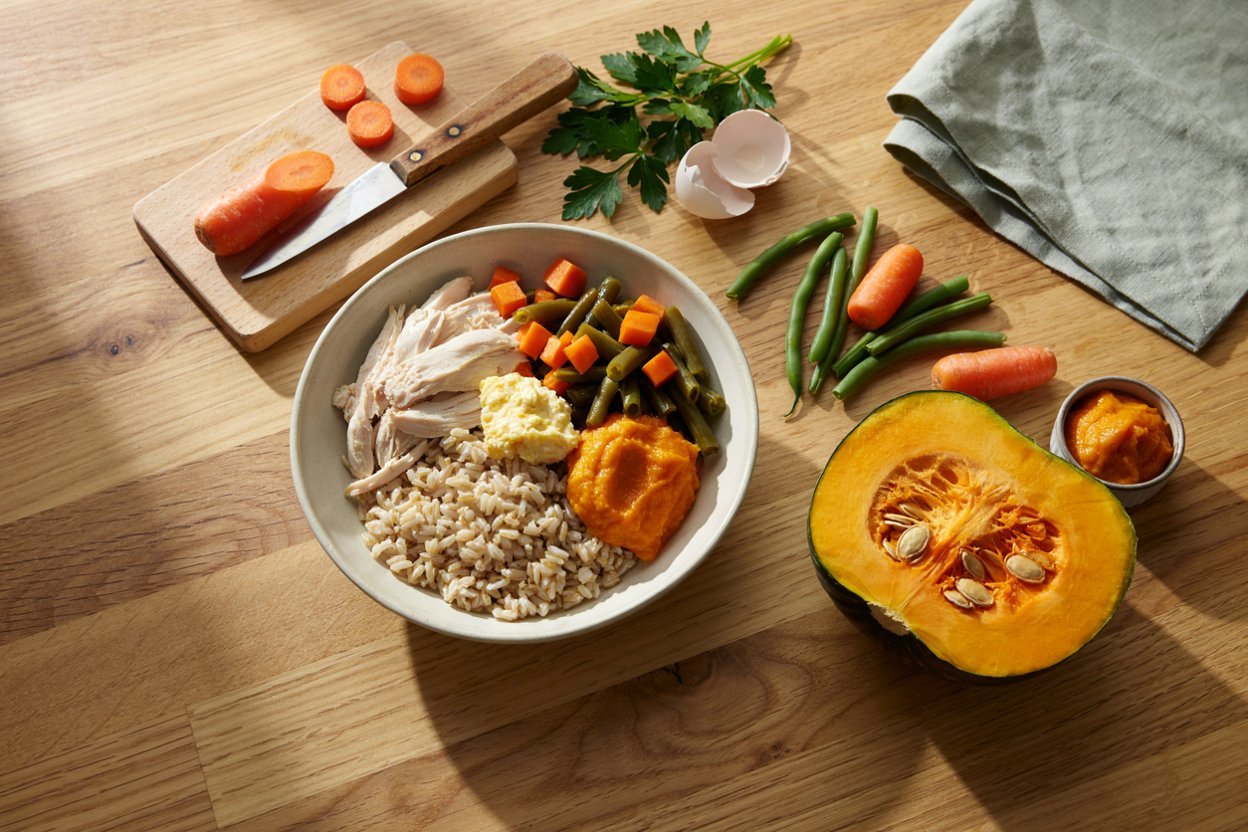
Feeding your dog homemade meals is one of the best ways to control exactly what goes into their bowl.
Whether you’re trying to avoid unnecessary fillers, support your dog’s digestion, or simply want fresher ingredients, homemade dog food gives you complete control over nutrition you simply don’t get from a bag.
Instead of guessing what’s hiding in a long ingredient list, you decide every protein, vegetable, and grain that ends up in the pot.
The key is making sure every meal is balanced and includes ingredients that veterinarians commonly recommend for long term health, since good intentions alone don’t guarantee complete nutrition.
This guide covers everything you need to know, including safe ingredients, foods to avoid, one flexible recipe you can adjust to your dog’s needs, storage tips, and mistakes many dog owners make along the way.
If you want to keep building your homemade cooking rotation beyond this guide, a few related resources are worth having open alongside this one.
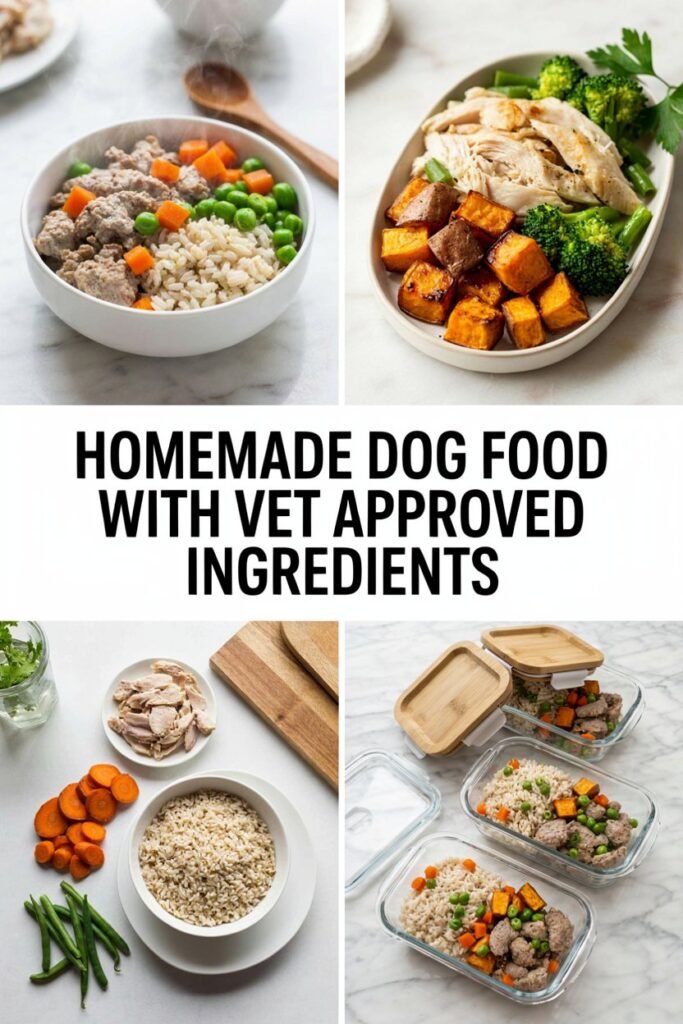
7 high protein homemade dog food recipes and ground turkey dog food recipe for beginners offer more starting points, 3 simple farmer’s dog food recipes and 3 ingredient cooked dog food round out the basics, healthy homemade dog meals you can make at home covers how to adjust a meal for specific health goals, budget friendly homemade dog food for busy pet parents and easy crockpot dog food recipe your dog will love are worth a look if time or budget are a bigger concern than variety, and human foods dogs can safely eat is a good reference for what’s safe to share from your own kitchen more broadly.
Why People Switch to Homemade Dog Food
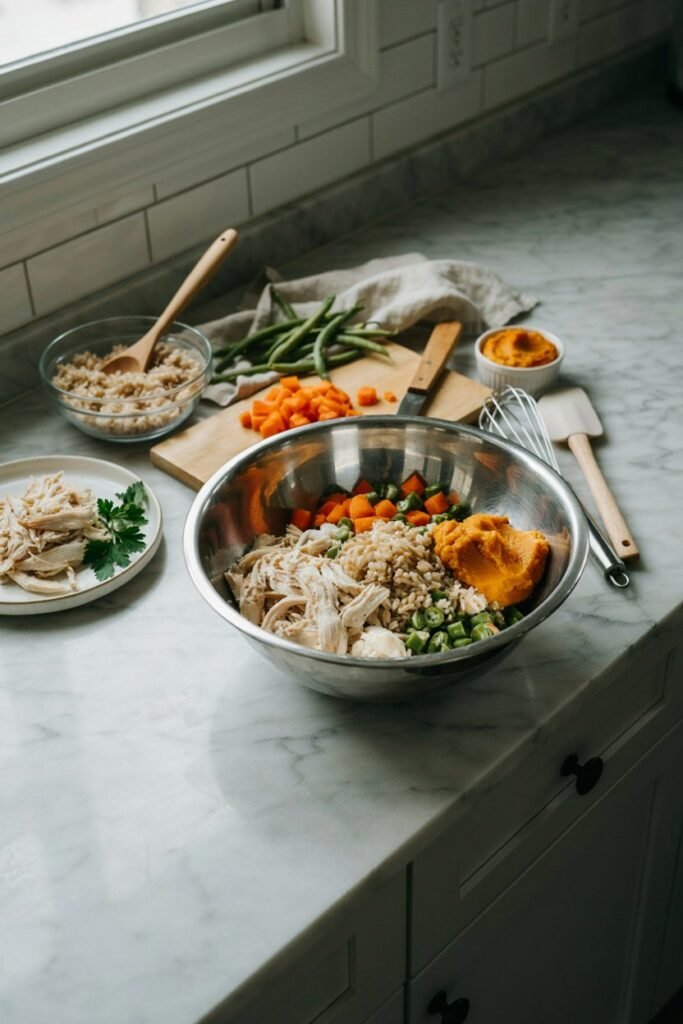
Most owners don’t wake up one day and decide to start cooking for their dog on a whim.
It usually comes from a specific concern: an allergy that won’t resolve, a picky eater who refuses kibble, or simply wanting to know what’s actually in the bowl. Some of the most common reasons owners make the switch include:
Better ingredient quality. You choose every item that goes into the pot, down to where it was sourced.
Fewer preservatives. Commercial kibble relies on preservatives for shelf stability. Fresh cooked meals skip that entirely.
Easier allergy management. When a dog reacts to a specific protein or grain, homemade meals let you eliminate that one ingredient without hunting for a specialty bag that may still contain trace amounts.
Supports healthy digestion. Many owners report firmer stools and less gas once dogs transition to whole food meals.
Control over protein sources. You can rotate between chicken, turkey, beef, fish, and lamb rather than relying on a single processed protein source.
Custom meals for picky eaters. A dog who turns their nose up at kibble often eats homemade food eagerly, since the aroma and texture of real food is naturally more appealing.
Fresh ingredients. No shelf life to worry about since everything is cooked and stored properly, typically within days of preparation.
Portion control. You can precisely measure and adjust meals based on your dog’s weight, age, and activity level, which is harder to do with pre portioned commercial products.
That said, homemade feeding only delivers these benefits when the meals are actually balanced. That’s where “vet approved” comes in, and it’s worth understanding what that phrase really means before you start cooking.
What Makes a Recipe Vet Approved
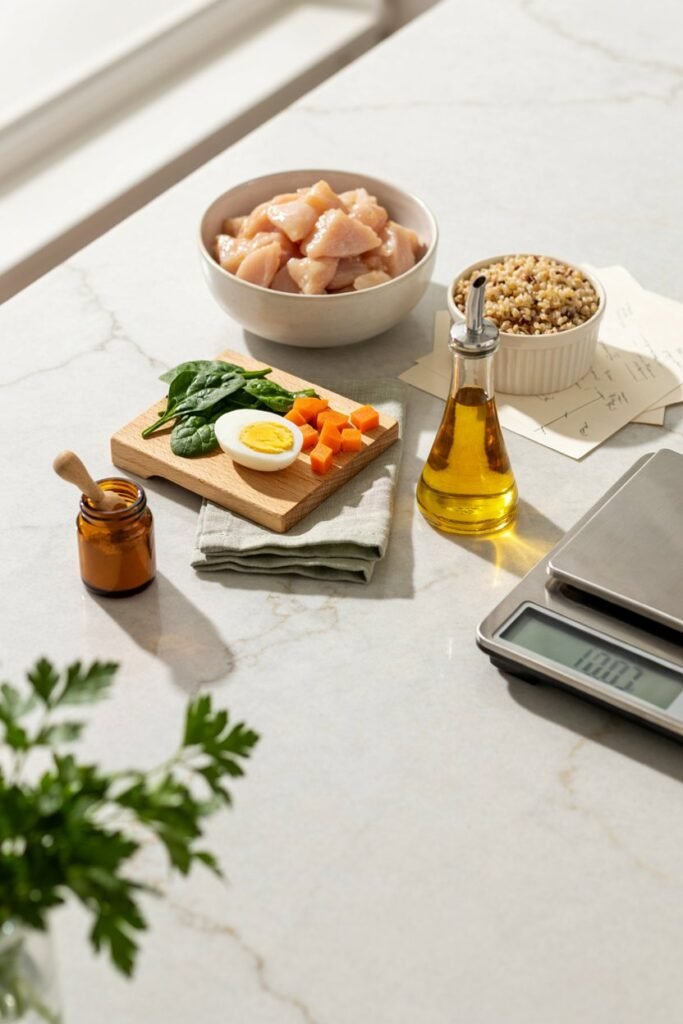
A recipe being “vet approved” isn’t a marketing label. It means the meal has been checked against your dog’s actual nutritional requirements, not just built around ingredients that sound healthy. A truly balanced homemade diet needs to account for:
- Protein, for muscle maintenance and repair
- Healthy fats, for energy, coat health, and hormone function
- Carbohydrates, for digestible energy and fiber
- Fiber, for digestive regularity
- Vitamins and minerals, especially the ones dogs can’t synthesize on their own
- Calcium, which is frequently missing in homemade diets built around muscle meat alone
- Omega 3 fatty acids, for skin, coat, and joint support
Most veterinarians recommend following recipes developed by veterinary nutritionists, or discussing any homemade diet plan with your own vet before feeding it long term.
This isn’t about discouraging home cooking. It’s about avoiding the most common pitfall: meals that look nutritious but are quietly missing calcium, iodine, or a full amino acid profile because the recipe was built around what looked good rather than what was actually balanced.
Best Vet Approved Ingredients
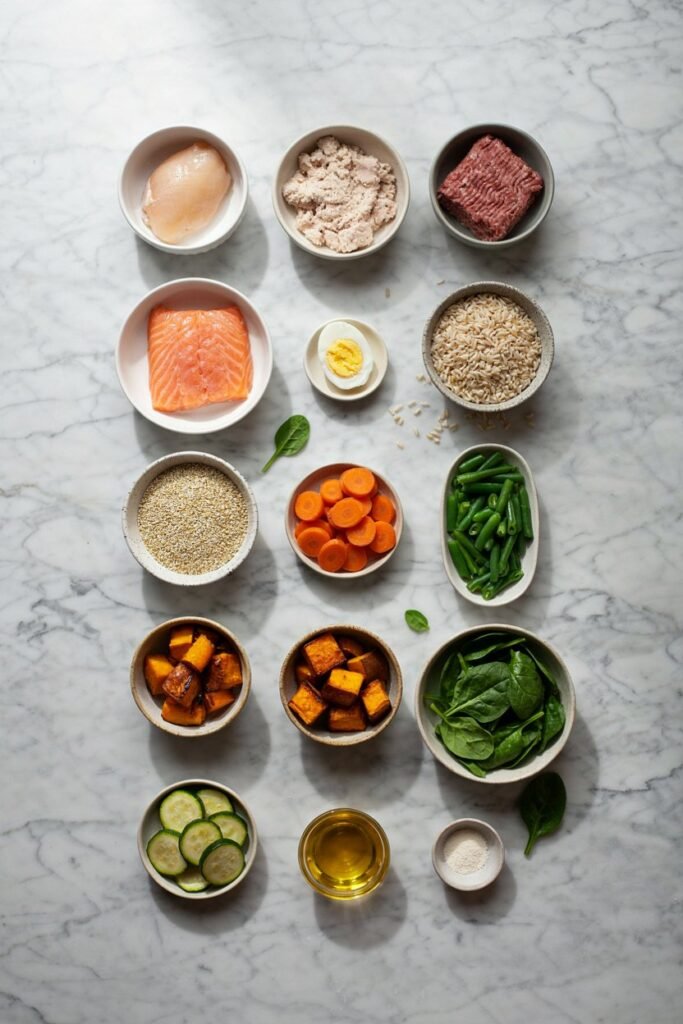
This is the foundation of any homemade dog food plan. Below are the ingredient categories vets most commonly recommend, along with how to prepare each one and how much to use.
Lean Proteins
Chicken is affordable, easy to digest, and a strong source of lean protein. Boil or bake it plain with no seasoning, shred or dice it, and mix it into the base of most meals.
Turkey offers a similar protein profile to chicken with slightly less fat, making it a good option for dogs who need to manage their weight.
Lean beef provides iron and B vitamins in addition to protein. Trim visible fat before cooking and drain any excess after browning.
Salmon delivers omega 3 fatty acids alongside protein. Always cook it fully; raw or undercooked salmon can carry parasites that are dangerous to dogs.
Sardines are a small but powerful addition, rich in omega 3s and easy to mix into a meal in small amounts. Choose ones packed in water, not oil or sauce.
Eggs are a complete protein source and can be scrambled or hard boiled. They’re an easy way to boost protein without adding another meat.
For each of these, cook the protein plain, without salt, garlic, onion, or seasoning blends, then let it cool before mixing it with the rest of the meal.
Healthy Vegetables
Carrots provide beta carotene and fiber. Steam or boil until soft, then chop finely or grate for easier digestion.
Green beans are low calorie and high fiber, often used in weight management recipes. Steam them until tender.
Pumpkin (plain, not pie filling) is one of the most commonly recommended additions for digestive support. A spoonful mixed into a meal can help firm up loose stools.
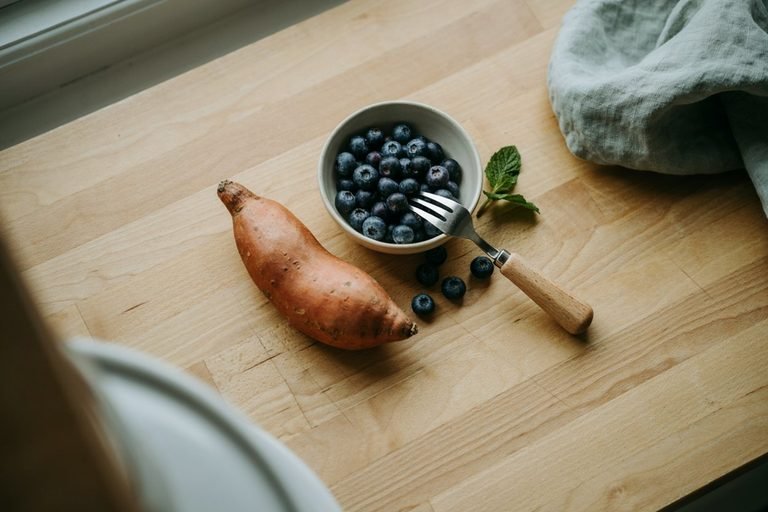
Sweet potato offers fiber, vitamin A, and natural sweetness dogs tend to enjoy. Bake or boil until soft, then mash.
Spinach adds iron and antioxidants in small amounts. Lightly steam it, since raw spinach in large quantities can interfere with calcium absorption.
Broccoli is nutrient dense but should be fed in small quantities, as large amounts can cause gastrointestinal upset in some dogs.
Peas are a good source of vitamins and mix easily into any meal.
Zucchini is low calorie and gentle on digestion; steam and dice before serving.
As a general guideline, vegetables should make up a smaller portion of the meal than protein, roughly 20 to 25 percent of total volume.
Healthy Carbohydrates
Brown rice is a common base for homemade dog meals and provides steady energy along with fiber.
White rice is easier to digest and often recommended during recovery from digestive upset.
Oats offer soluble fiber and are a good option for dogs with grain sensitivities to other cereals.
Quinoa is a complete protein in its own right and a good grain alternative, though it should be rinsed thoroughly before cooking to remove its natural bitter coating.
Barley provides fiber and B vitamins, and works well in slow cooked meals.
Healthy Fats
Fish oil is one of the most commonly recommended supplements for coat, skin, and joint health, and it’s an easy way to add omega 3s without another protein source.
Olive oil in small amounts adds healthy monounsaturated fat.
Coconut oil is popular among owners, though it should be used sparingly since it’s high in saturated fat.
Fruits
Blueberries are antioxidant rich and small enough to serve whole as a topping.
Apples (cored and seedless) offer fiber and vitamin C. Apple seeds contain trace cyanide compounds, so always remove them first.
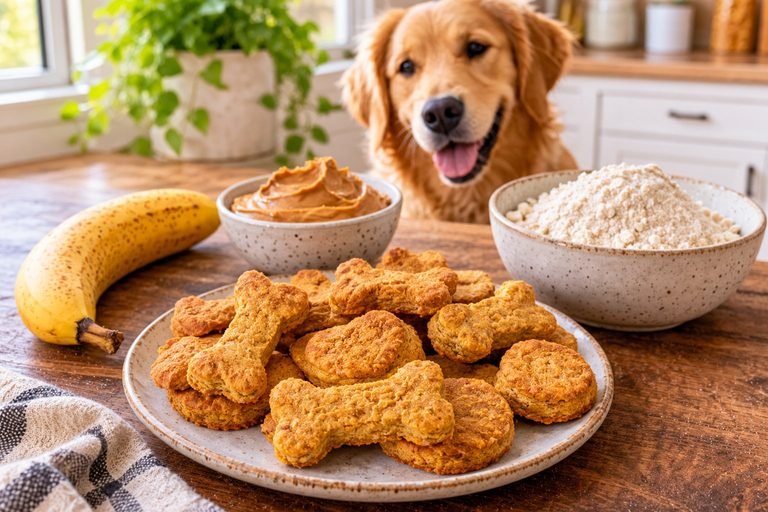
Bananas are a good source of potassium, though they’re higher in sugar, so they should be used sparingly.
Cranberries are sometimes added for their association with urinary tract health, typically in small, unsweetened amounts.
Ingredients to Avoid
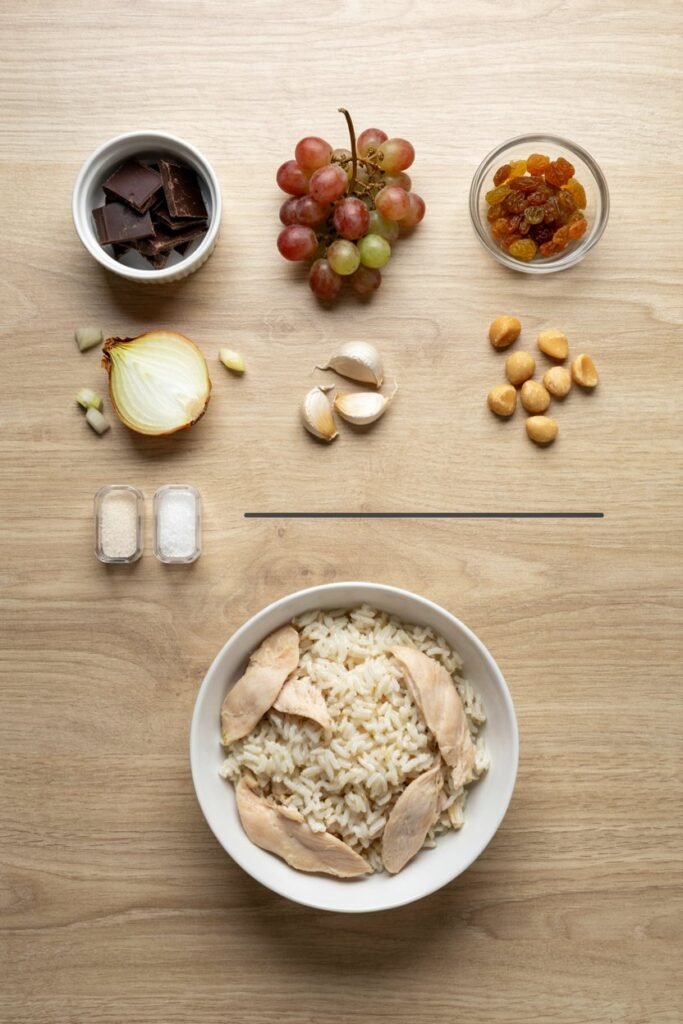
This section might be the single most valuable part of this guide. Some foods that seem harmless are genuinely dangerous for dogs, and it’s worth knowing exactly why.
- Chocolate contains theobromine, which dogs metabolize far more slowly than humans, leading to toxicity even in small amounts.
- Grapes and raisins can cause acute kidney failure in dogs, and the exact toxic mechanism still isn’t fully understood, which makes them worth avoiding entirely.
- Onions and garlic damage red blood cells and can cause anemia, whether raw, cooked, or powdered.
- Xylitol, a sugar substitute found in some peanut butters and baked goods, causes a rapid, dangerous drop in blood sugar in dogs.
- Alcohol affects dogs far more severely than humans, even in small quantities.
- Macadamia nuts can cause weakness, tremors, and elevated body temperature.
- Avocado (specifically the pit and skin) contains persin, which can cause gastrointestinal upset and, in the case of the pit, a serious choking or blockage hazard.
- Raw dough containing yeast can expand in a dog’s stomach and produce alcohol as it ferments, both of which are dangerous.
- Excess salt can lead to sodium ion poisoning in large quantities and should always be avoided in homemade meals.
- Caffeine affects the heart and nervous system similarly to chocolate and should never be given to dogs.
- Cooked bones can splinter and cause internal injury, unlike raw bones which are more pliable (though raw bones bring their own risks and should be discussed with a vet).
Keeping a printed version of this list on your fridge or inside a kitchen cabinet is a simple habit that prevents a lot of accidental exposure, especially in multi person households.
Essential Kitchen Equipment
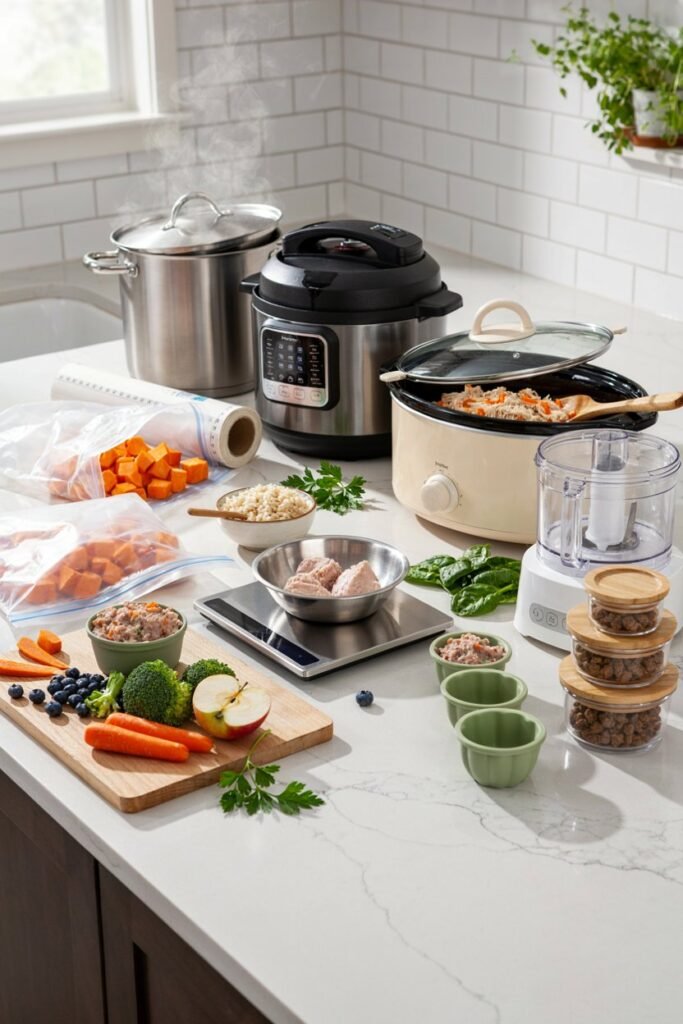
Having the right tools makes homemade dog food dramatically easier to keep up with long term.
- Large stock pot, for batch cooking proteins and grains together
- Instant Pot, which cuts cooking time significantly and works well for tougher cuts of meat
- Slow cooker, ideal for hands off meals you can start in the morning and portion that evening
- Food processor, for finely chopping vegetables or blending meals for smaller dogs
- Kitchen scale, for accurate portioning, especially important for dogs with strict calorie needs
- Meal prep containers, for refrigerator storage through the week
- Freezer bags, for longer term storage of batch cooked meals
- Silicone molds, useful for portioning individual servings or making treats
Homemade Dog Food Recipe
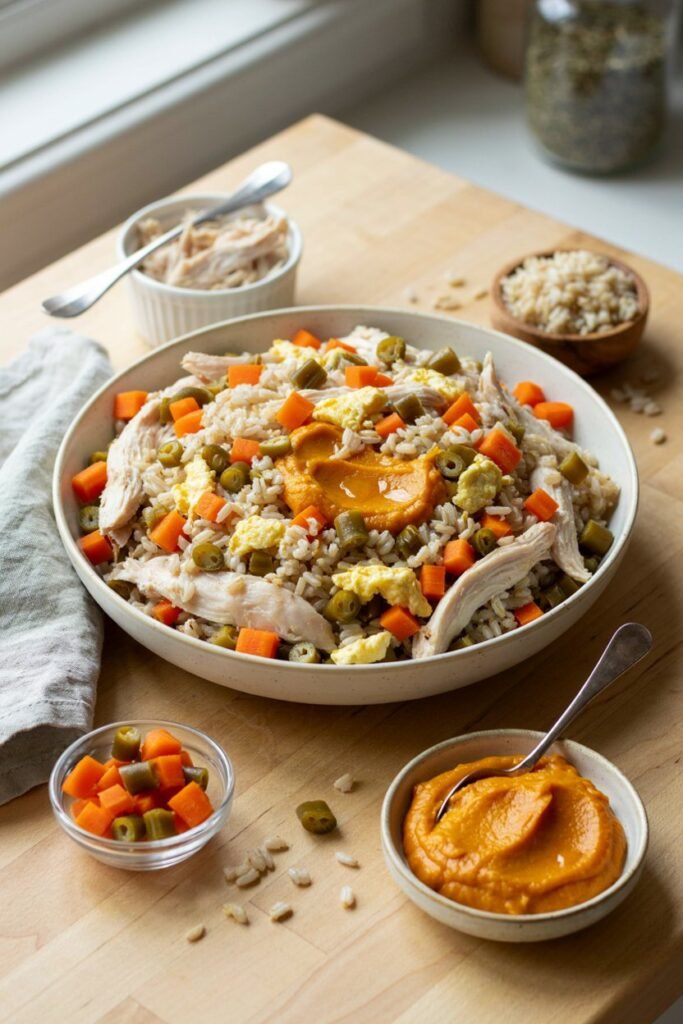
Yield: About 8 to 10 servings, depending on your dog’s size Prep Time: 10 minutes Cook Time: 25 to 30 minutes Total Time: About 40 minutes Storage: Refrigerate up to 4 days, freeze up to 3 months
Ingredients
- 2 pounds protein of your choice, cooked and diced or shredded. Chicken or turkey work as gentle, everyday options, lean beef adds iron and richness for a more active dog, and salmon rounds out the fatty acid profile with omega 3s, though fish based versions have a shorter shelf life than poultry or beef.
- 1.5 cups carbohydrate of your choice, cooked. Brown rice, quinoa, or oats all work well, with quinoa offering the added benefit of contributing its own complete protein.
- 1 to 1.5 cups vegetables of your choice, chopped and cooked. Carrots and green beans are reliable staples, pumpkin supports digestion in smaller amounts, and sweet potato adds fiber and natural sweetness.
- 1 egg, added after cooking. Stirred in once the mixture has cooled, egg boosts the protein content of the finished meal.
- 1 teaspoon fish oil, optional. Added at the very end once everything has cooled, fish oil rounds out the omega 3 content of any version that doesn’t already include a fatty fish.
- A vet recommended calcium supplement, if using this recipe as a regular meal. Muscle meat alone doesn’t provide adequate calcium, so a proper supplement is essential for daily, long term feeding.
How to Make It
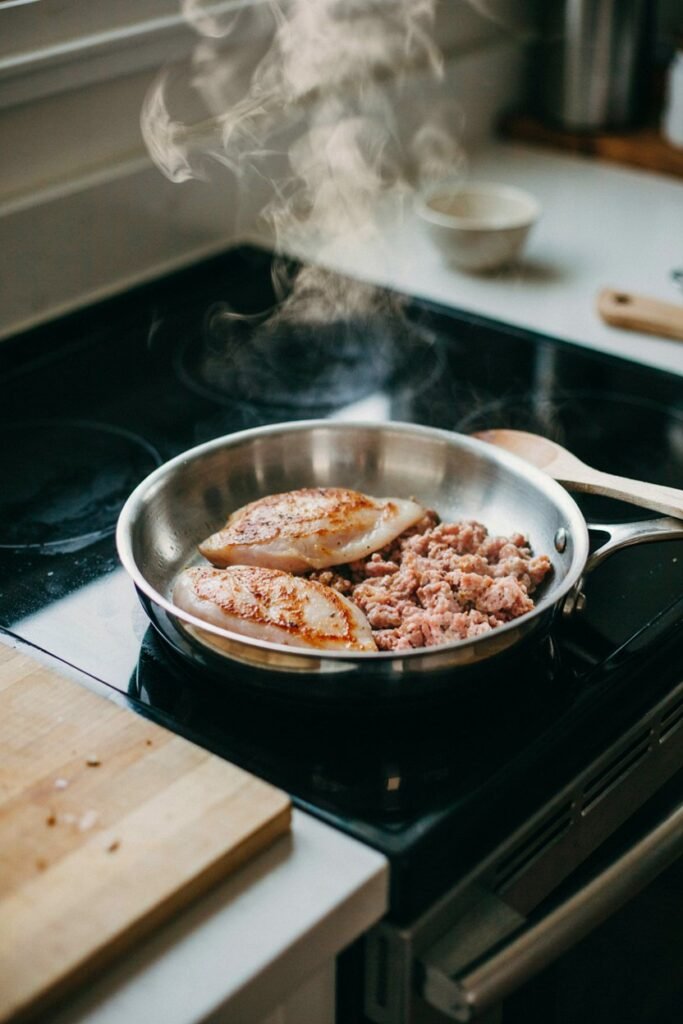
- Cook your chosen protein thoroughly with nothing added, no oil, salt, or seasoning of any kind.
- Cook your chosen carbohydrate separately according to its own instructions, using plain water with nothing added.
- Steam or boil your chosen vegetables until tender, then chop into manageable pieces.
- Once everything has cooled to room temperature, combine the protein, carbohydrate, and vegetables in a large bowl.
- Stir in the egg, fish oil if using, and calcium supplement if using, once the mixture has fully cooled.
- Portion into individual servings before refrigerating or freezing.
How Much Should You Serve?
There’s no single serving size that works for every dog, and it’s worth resisting the urge to look for one universal number.
Feeding amounts depend on your dog’s weight, age, activity level, body condition, existing diet, treat intake, and individual nutritional needs. A helpful starting framework:
| Dog | What Affects Feeding Needs |
|---|---|
| Small adult dog | Smaller meals and higher calorie density may be appropriate |
| Medium adult dog | Portion depends heavily on activity and body condition |
| Large adult dog | Larger total calorie requirement, but individual needs vary |
| Senior dog | Activity and health status can change calorie needs |
| Puppy | Growth requirements make professional nutritional guidance especially important |
Start with your veterinarian’s recommended daily calorie intake and determine how much of the homemade food fits within that amount, rather than relying on a generic estimate.
Storage
Refrigerator. Cool cooked homemade dog food promptly and store it in airtight containers, generally using it within 4 days.
Freezer. Divide the finished batch into individual meal portions before freezing, which makes homemade dog food much easier to manage over time.
Thawing. Thaw in the refrigerator rather than leaving food sitting at room temperature for extended periods.
Reheating. Warm gently if desired, but make sure the food isn’t hot before serving.
How to Transition Your Dog to Homemade Food
A gradual transition over about a week is much easier on a dog’s digestive system than an abrupt switch.
Days 1 to 2. Mostly current food, with a small amount of the new homemade recipe mixed in.
Days 3 to 4. Increase the homemade portion while continuing to reduce the old food.
Days 5 to 6. Continue increasing if stools remain normal throughout.
Day 7. Complete the switch, or continue further, if your dog has tolerated the process well.
Watch for loose stool, vomiting, excessive gas, reduced appetite, constipation, or itching and other unusual reactions throughout the process. If symptoms are significant or persistent, stop and contact a veterinarian.
Common Mistakes to Avoid
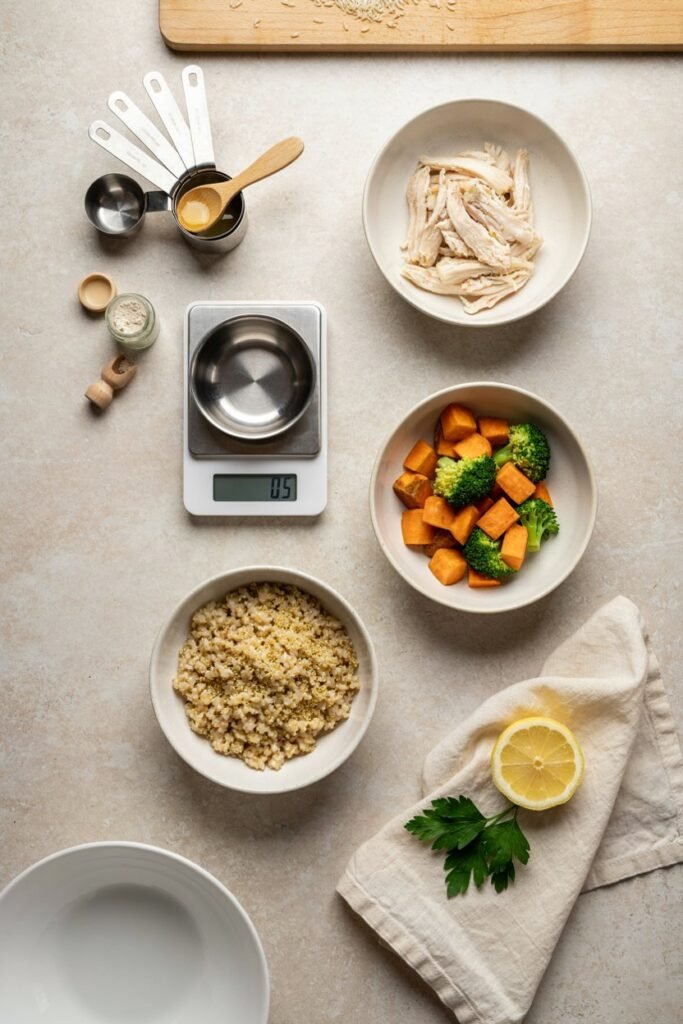
Feeding only meat. Muscle meat alone is missing calcium, certain vitamins, and a balanced fatty acid profile.
Forgetting calcium. This is one of the most frequent gaps in homemade diets and one of the easiest to fix with a vet recommended supplement.
Using too much liver. Liver is nutrient dense, especially in vitamin A, and overfeeding it can lead to toxicity over time. It should be a small addition, not a primary ingredient.
Adding too much salt. Home cooked meals don’t need seasoning the way meals for humans do.
Overfeeding treats. Treats should stay under about 10 percent of total daily calories, even homemade ones.
Not rotating proteins. Sticking to a single protein source long term can increase the risk of developing a sensitivity to it over time.
Skipping vegetables. Vegetables aren’t just filler; they contribute fiber and micronutrients that support digestion.
Ignoring portion sizes. Homemade meals are calorically dense, and overfeeding is a common and often unnoticed cause of gradual weight gain.
Using unsafe ingredients. Always double check new ingredients against a trusted list before adding them to a recipe, even ones that seem harmless.
Frequently Asked Questions
Is homemade dog food healthier than kibble? It can be, but only when it’s properly balanced. Homemade food gives you more control over ingredient quality, but an unbalanced homemade diet can actually be less healthy than a complete and balanced commercial food.
Can dogs eat homemade food every day? Yes, as long as the recipe is nutritionally complete and reviewed with your veterinarian, particularly regarding calcium and vitamin levels.
Can I freeze homemade dog food? Yes. Most homemade dog food recipes freeze well for up to 3 months when portioned and sealed properly.
How long does homemade dog food last? Refrigerated meals typically last 3 to 4 days. Frozen portions last up to 3 months, though quality is best within the first 2 months.
Is rice good for dogs? Yes, both white and brown rice are commonly used and generally well tolerated, with white rice being gentler for dogs with sensitive stomachs.
Do dogs need supplements on a homemade diet? In most cases, yes. Calcium and often a complete vitamin and mineral supplement are needed to fill gaps that whole food ingredients alone don’t cover.
Can puppies eat homemade food? Puppies can eat homemade food, but their nutritional needs during growth are more specific than an adult dog’s, so any puppy recipe should be reviewed by a veterinarian before regular use.
What vegetables should dogs avoid? Onions, garlic, and any allium family vegetables should always be avoided. Most other common vegetables are safe when properly prepared.
Can homemade food help with allergies? Often, yes. Homemade meals let you eliminate a specific protein or ingredient your dog reacts to, which is harder to do with many commercial formulas that contain multiple protein sources.
Is chicken or beef better for dogs? Neither is universally better. Chicken is leaner and often easier to digest, while beef offers more iron. Many owners rotate between both to provide variety and reduce the risk of developing a sensitivity to a single protein.

Homemade Dog Food With Vet Approved Ingredients
Ingredients
Equipment
Method
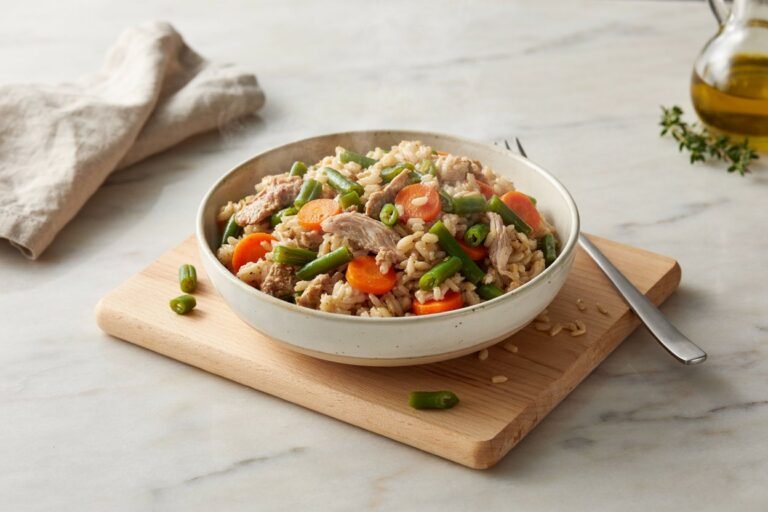
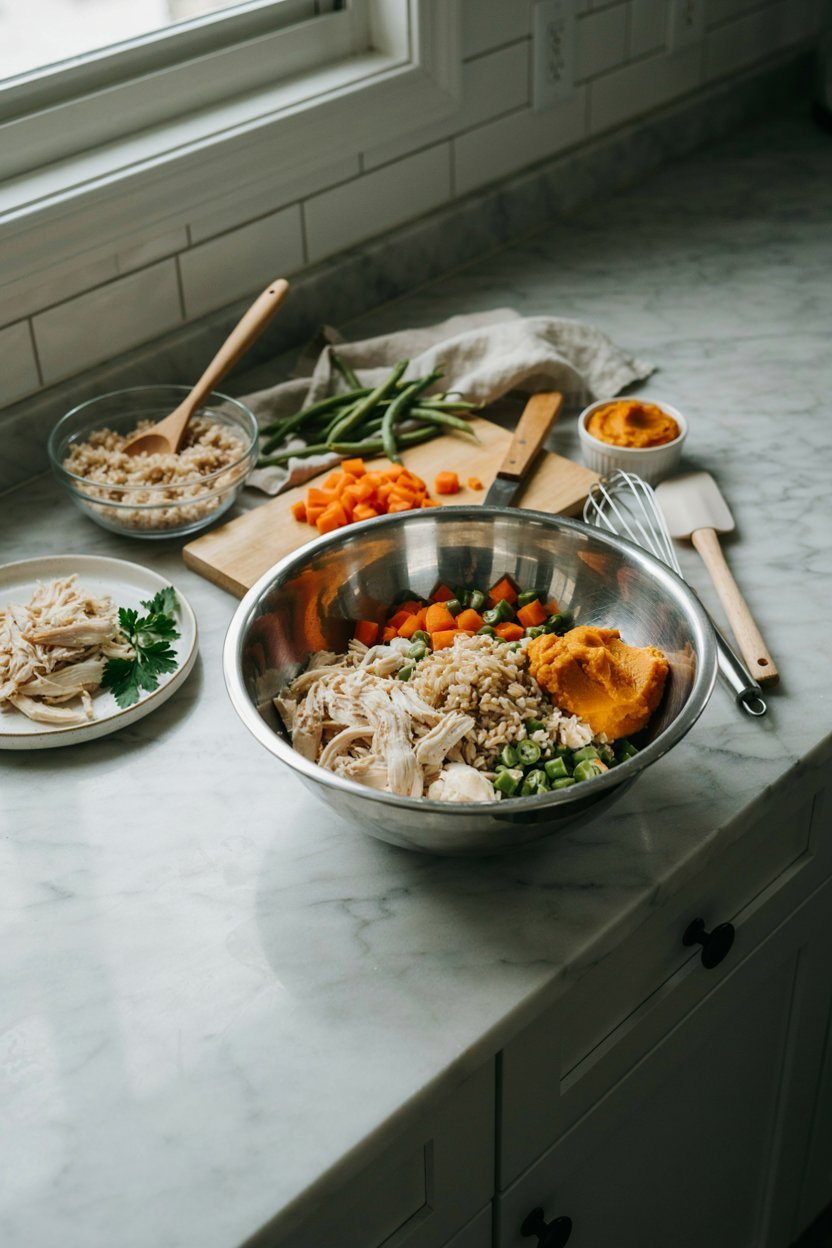
- Cook the chicken thoroughly in a large pot without adding salt, onion, garlic, oil, or seasonings.
- Allow the chicken to cool slightly, then remove any bones, skin, and excess fat.
- Shred or finely chop the cooked chicken into small pieces.
- Prepare the brown rice according to the package directions until tender.
- Cook the carrots and green beans until soft.
- Add the chicken, rice, carrots, green beans, and pumpkin puree to a large mixing bowl.
- Add the water and gently stir until everything is evenly combined.
- Allow the food to cool completely before portioning and serving.
- Use plain, unseasoned ingredients and avoid onion, garlic, excessive salt, seasoning blends, and cooked bones.
- The ingredients used here are commonly included in dog friendly homemade meals, but “vet approved” should not imply that this exact recipe has been approved by a veterinarian unless you have had the recipe reviewed by one.
- This recipe should not automatically be considered a complete and balanced long term diet. If you plan to feed homemade food regularly, have the recipe formulated or reviewed by a veterinarian or board certified veterinary nutritionist to ensure your dog receives all required nutrients.
Final Thoughts
Homemade dog food can be a rewarding way to provide fresh, wholesome meals for your dog, but balance is just as important as ingredient quality.
Using lean proteins, dog safe vegetables, healthy carbohydrates, and appropriate supplements helps create meals that support your dog’s long term health.
Start with this simple recipe, monitor your dog’s weight and energy levels, and work with your veterinarian whenever you’re making significant dietary changes.