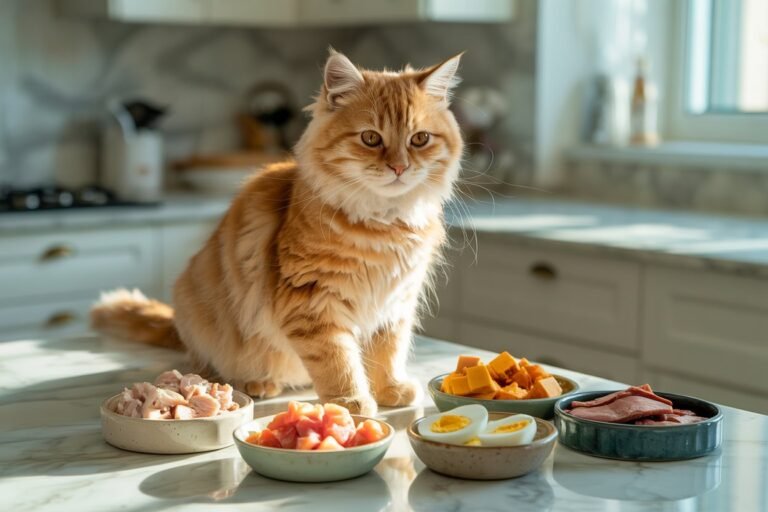
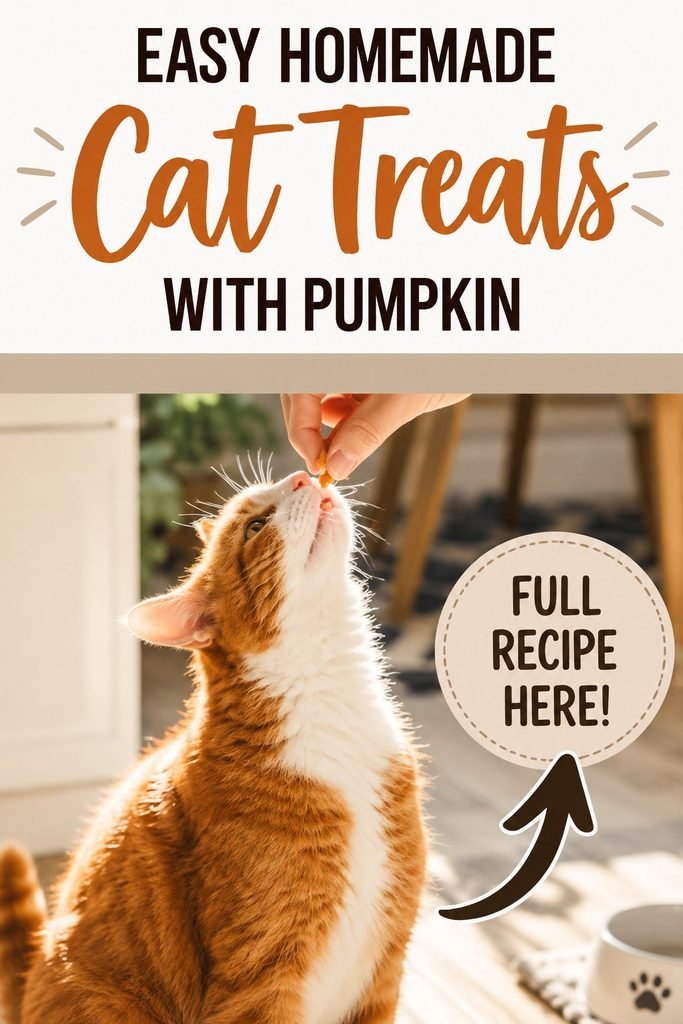
Easy Homemade Cat Treats with Pumpkin
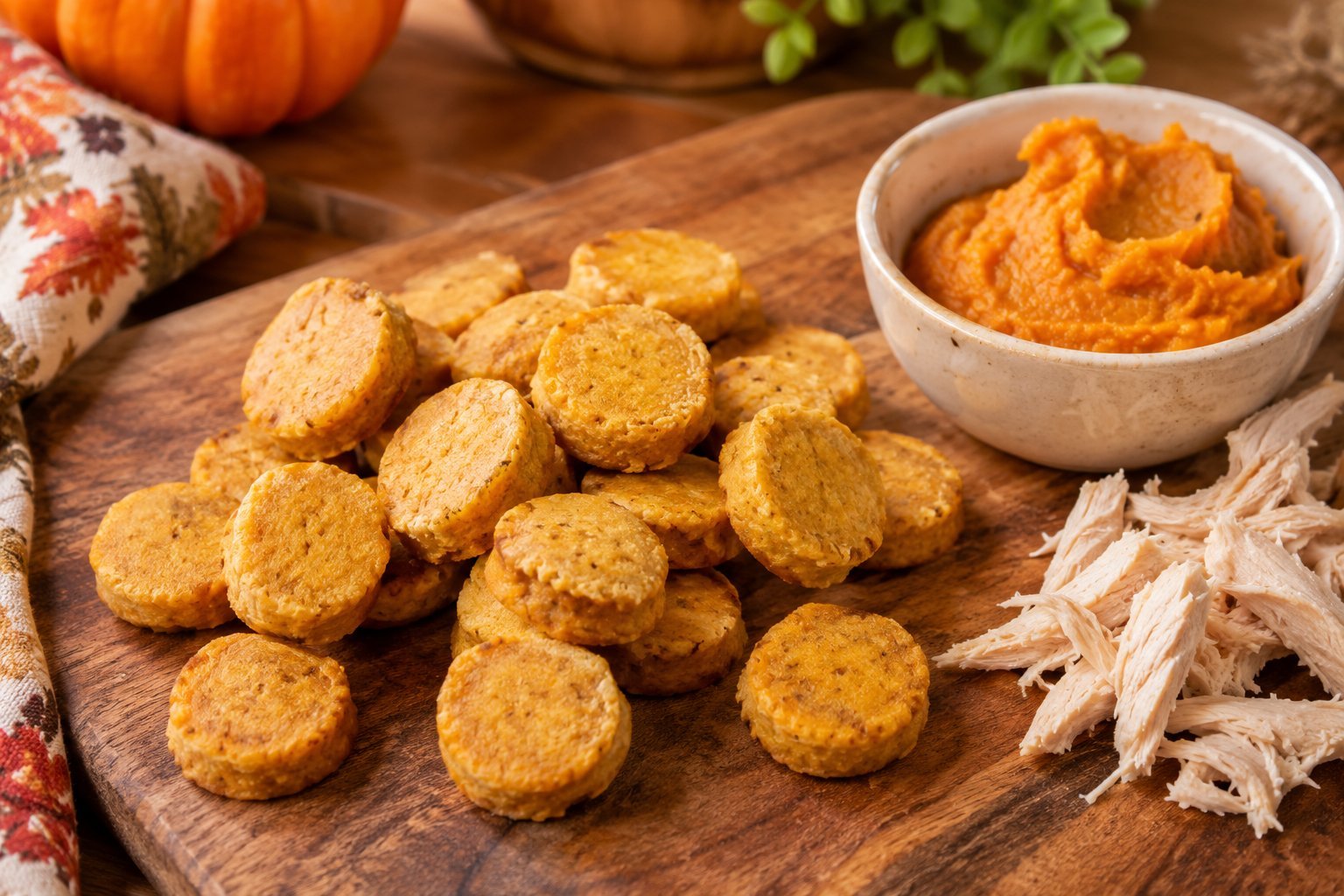
Pumpkin isn’t just a dog treat staple, it turns out cats can enjoy a small amount too, and this simple recipe combines it with plain chicken to create a treat that’s both easy on digestion and appealing enough for even a picky cat.
The pumpkin adds a bit of fiber and a mild, slightly sweet flavor that pairs well with the savory chicken base.
Since cats need their diet built primarily around animal protein, this recipe keeps pumpkin as a supporting ingredient rather than the main event, giving you a treat that still fits a cat’s nutritional needs while getting a little extra benefit from the pumpkin.
Why You’ll Love These Easy Homemade Cat Treats with Pumpkin
A few reasons these are worth adding to your cat’s treat rotation.
Gentle on digestion. Pumpkin is often used to help support a cat’s digestive system in small amounts.
Meat forward recipe. Built around plain chicken, keeping this appropriate for a cat’s protein needs.
Simple ingredients. A short list of basics that come together quickly.
Small, bite sized pieces. Sized appropriately for a cat’s smaller portions.
Freezer friendly. A batch keeps well, so you can bake once and have treats ready for weeks.
Is Pumpkin Safe for Cats?
Pumpkin is generally considered safe for cats in small amounts, but a few points are worth understanding.
Plain canned pumpkin puree is the right choice, not pumpkin pie filling, which contains added sugar and spices not appropriate for cats.
Keep the amount modest, since pumpkin is a supplemental ingredient here rather than a main part of a cat’s diet. Cats are obligate carnivores, meaning their diet needs to be built primarily around animal protein, so this recipe uses chicken as the main ingredient with pumpkin playing a smaller, supporting role.
Onion and garlic should never be included in any cat recipe, since both are toxic to cats, even more so than they are for dogs.
Ingredients You’ll Need
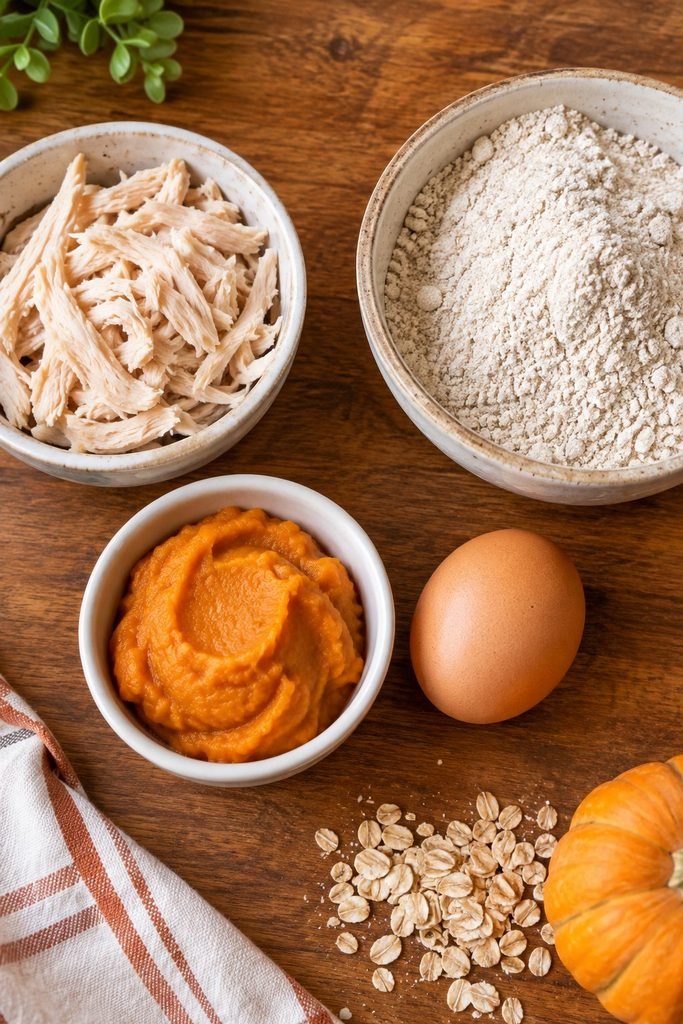
Here’s what goes into this simple, meat forward recipe.
Plain cooked chicken, shredded or finely chopped, forms the base of the treat and provides the protein cats need.
Plain canned pumpkin puree adds a bit of fiber and a mild flavor.
An egg helps bind the mixture together.
A small amount of oat flour helps hold everything into a firm, bite sized shape.
Ingredient List
- 1 cup plain cooked chicken, shredded or finely chopped
- 2 tablespoons plain canned pumpkin puree
- 1 egg
- 1/2 cup oat flour
How to Make Easy Homemade Cat Treats with Pumpkin
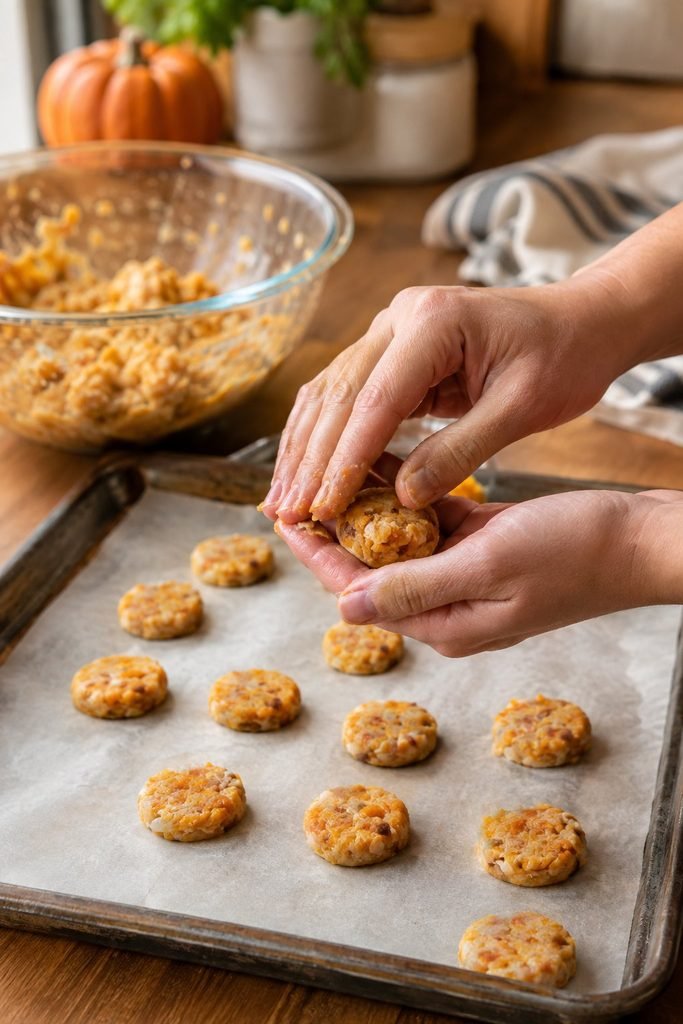
- Preheat your oven to 350°F and line a baking sheet with parchment paper.
- In a food processor, pulse the cooked chicken until finely shredded, almost paste like in texture.
- Transfer the chicken to a bowl and stir in the pumpkin puree and egg until well combined.
- Add the oat flour and mix until a firm mixture forms.
- Using a small spoon or your hands, shape the mixture into small, bite sized rounds, about the size of a coin.
- Place the shaped treats on the prepared baking sheet, spacing them a bit apart.
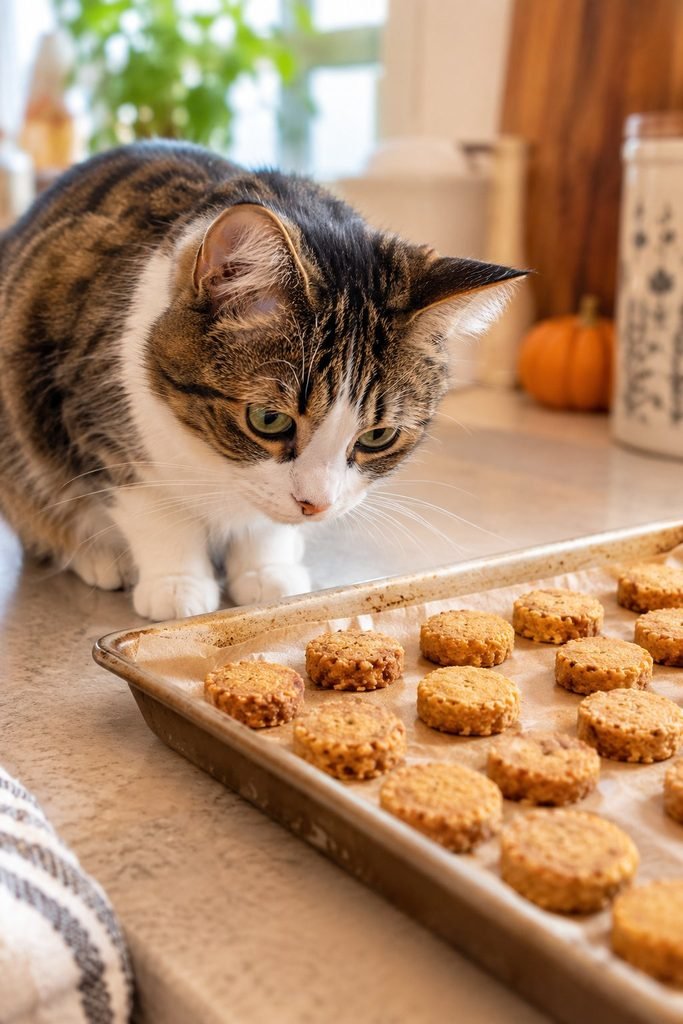
- Bake for 15 to 18 minutes, until the treats are firm and lightly golden.
- Let the treats cool completely on a wire rack before serving or storing.
Getting the Right Texture
A few notes on texture for this recipe.
If the mixture feels too wet to shape, add a bit more oat flour a tablespoon at a time until it holds together.
If it feels too dry and crumbly, add a small extra spoonful of pumpkin puree.
Keep the treats small and thin, since cats generally prefer a treat they can eat in one or two bites rather than a larger biscuit.
Recipe Variations
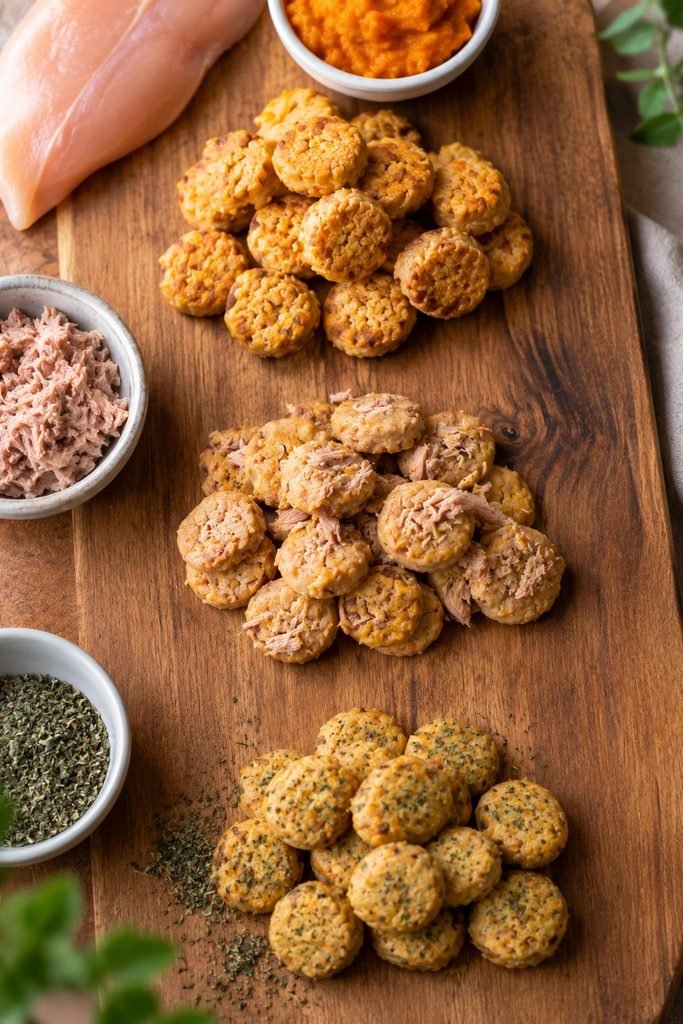
Once you’ve made the base recipe, these variations are worth trying.
Chicken, pumpkin, and catnip treats. Add a small pinch of dried catnip for cats who enjoy it.
Tuna and pumpkin treats. Replace half the chicken with plain, drained canned tuna packed in water for a fishy twist.
Salmon and pumpkin treats. Use plain, cooked, boneless salmon in place of chicken for a different flavor.
Freeze dried topper. Crumble a finished treat over your cat’s regular food as a flavorful topper instead of serving it whole.
Common Mistakes to Avoid
Using pumpkin pie filling instead of plain pumpkin. Stick to plain canned pumpkin for this recipe.
Using too much pumpkin. Keep it as a supporting ingredient rather than the main part of the recipe, since cats need a diet built primarily around protein.
Making the treats too large. Cats generally do best with small, bite sized pieces rather than a bigger biscuit.
Using seasoned chicken. Keep the chicken entirely plain, with no salt, garlic, onion, or seasoning blends.
Offering too many at once. Cats need small treat portions, so a couple of pieces is plenty.
How Many Treats Can a Cat Have?
Cats need treats to make up a small portion of their daily calories, generally staying under about ten percent of daily caloric intake. A couple of small, bite sized pieces is a reasonable serving for most cats on a given day.
If your cat has any health conditions, particularly related to digestion or kidney function, check with your veterinarian before introducing a new treat.
How to Store Easy Homemade Cat Treats with Pumpkin
Refrigerator. Since these are made with real chicken, store them in an airtight container in the fridge for up to five days.
Freezer. For longer storage, freeze the treats in a sealed bag or container for up to three months.
Always check treats before serving, and discard anything that shows signs of spoilage.
Can You Freeze These Treats?
Yes, and freezing is a convenient way to keep a batch on hand.
- Let the treats cool completely before freezing.
- Arrange them in a single layer in a freezer safe container or bag.
- Label the container with the date.
- Thaw a few in the fridge for a couple of hours before serving.
Frequently Asked Questions
Can cats eat pumpkin? Yes, plain pumpkin is generally considered safe for cats in small amounts and is sometimes used to help support digestion.
Can I use fresh pumpkin instead of canned? Yes, as long as it’s fully cooked and pureed with no skin, seeds, or added seasoning.
Why is there more chicken than pumpkin in this recipe? Cats need a diet built primarily around animal protein, so this recipe uses pumpkin as a supporting ingredient rather than the main one.
Can I add catnip to this recipe? Yes, a small pinch of dried catnip is a fun optional addition for cats who enjoy it.
How long do these treats last? Up to five days in the fridge and up to three months in the freezer.
Can kittens have these treats? In very small amounts, most kittens can try a bit of plain chicken and pumpkin, but check with your veterinarian first regarding appropriate treats for a kitten’s age.
Can I use tuna instead of chicken? Yes, plain tuna packed in water works well as a substitute or addition to the chicken.
Easy Homemade Cat Treats with Pumpkin
Ingredients
Equipment
Method
- Preheat the oven to 350°F (175°C) and line a baking sheet with parchment paper.
- Add the pumpkin puree and egg to a mixing bowl. Stir until smooth and well combined.
- Finely chop the cooked chicken and add it to the bowl. Mix until the chicken is evenly distributed.
- Add the oat flour gradually and stir until a soft dough forms.
- If the dough feels too dry or crumbly, add the water a little at a time until it holds together.
- Place the dough between two pieces of parchment paper and roll it to approximately 1/4 inch thick.
- Use a small cookie cutter to cut the dough into bite sized treats. Gather the leftover dough, roll it again, and continue cutting.
- Place the treats on the prepared baking sheet with a little space between each piece.
- Bake for 12 to 15 minutes, or until the treats are firm and lightly golden around the edges.
- Remove from the oven and allow the treats to cool completely before serving.
- Pumpkin Tip: Use plain 100% pumpkin puree. Avoid pumpkin pie filling because it can contain sugar, spices, and other ingredients that are not appropriate for cats.
- Chicken Tip: Use plain cooked chicken without salt, onion, garlic, sauces, or seasoning.
- Storage: Keep cooled treats in an airtight container in the refrigerator for up to 5 days. You can freeze extra treats for longer storage.
- Serving: These treats should be offered in small portions as an occasional addition to your cat’s regular complete and balanced food.
- Common Mistake to Avoid: Avoid adding milk, sugar, salt, garlic, onion, spices, or artificial sweeteners.
- Texture Tip: For a softer treat, avoid overbaking. If your cat prefers a firmer texture, allow the treats to bake until they are completely set before cooling.
A Final Note on Serving These Treats
These have become an easy way to offer my cat something a little different from his usual routine, and there’s something satisfying about a treat made from simple, real ingredients rather than something out of a bag.
Keep a batch in the freezer, and you’ll always have a small, meaningful reward ready whenever your cat earns one.
More Homemade Recipes to Try
If your cat enjoyed these, these recipes are worth trying next.
For more ideas on feeding your pets well beyond treats, check out 7 Healthiest Homemade Dog Foods.