
Cat Food Ingredients You Should Avoid: What to Look for on a Cat Food Label
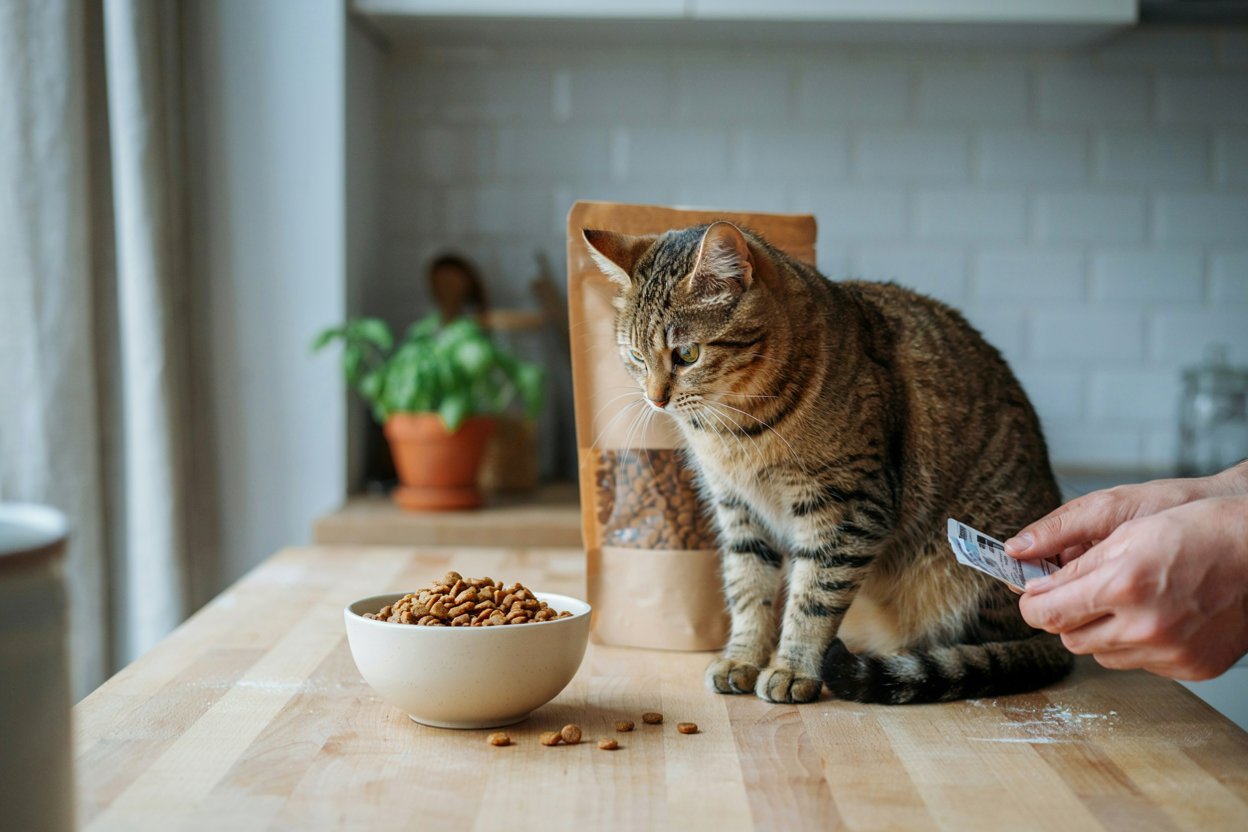
Standing in the pet food aisle, it doesn’t take long to notice that a cat food label can contain a surprisingly long list of ingredients, some familiar, some not.
I started paying closer attention to those labels because I wanted to know exactly what my cats were actually eating, rather than just trusting whatever packaging looked the most reassuring.
What I found along the way is that reading a label well isn’t about memorizing a list of scary sounding chemical names. You don’t need to recognize every ingredient or panic when you see a long scientific term.
You simply need to know which ingredients deserve a closer look, which ones are commonly misunderstood, and which ones genuinely depend on your individual cat.
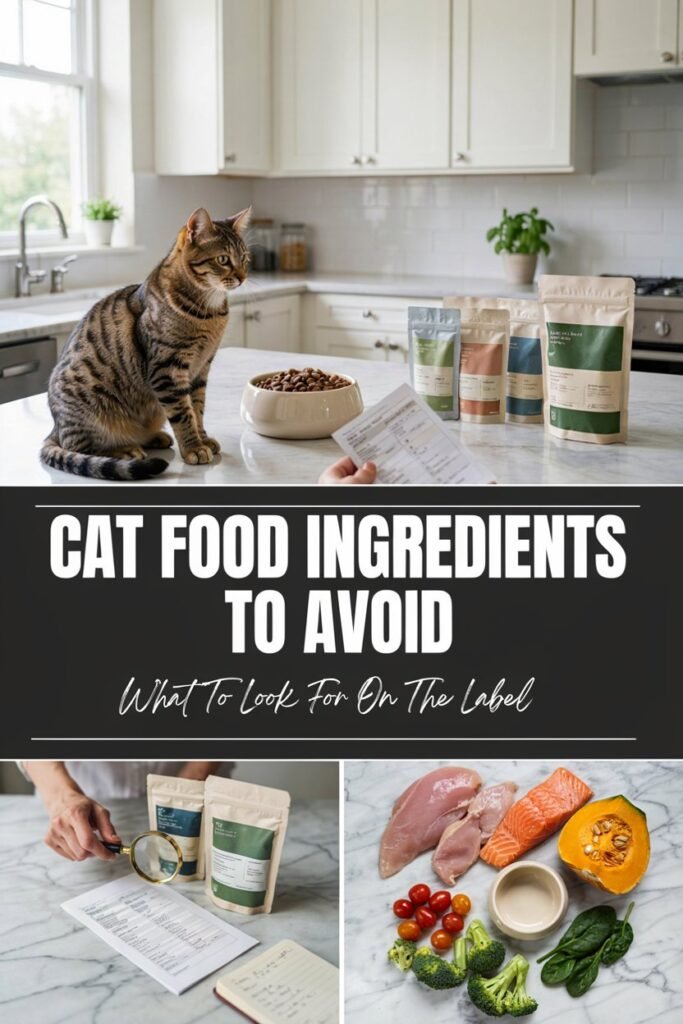
If you’re also cooking at home and want to compare homemade ingredients against what’s typically found on a commercial label, a few related guides are worth having open alongside this one.
Homemade chicken cat food recipe and beginner friendly raw inspired cat food ideas walk through building a meal with fully known ingredients, easy chicken based homemade cat recipes and homemade cat food recipes offer more variety, homemade cat food for senior cats and cat weight gain meals cover feeding for specific life stages and needs, and daily cat care routine and happy healthy cat tips round out the broader picture of feeding and caring for a cat well.
Before You Start

It’s worth saying clearly upfront: “avoid” doesn’t mean every cat will become sick from eating a food containing one of these ingredients a single time.
Some of what follows is genuinely controversial, some ingredients are simply unnecessary in certain formulations, and some can be problematic specifically for individual cats rather than cats as a whole.
Cats have different nutritional needs and medical histories, so if your cat has allergies, kidney disease, urinary problems, diabetes, digestive issues, or another diagnosed condition, it’s worth talking with your veterinarian about their specific diet rather than relying only on a general guide like this one.
Cat Food Ingredients You Should Avoid or Question
Artificial Colors in Cat Food
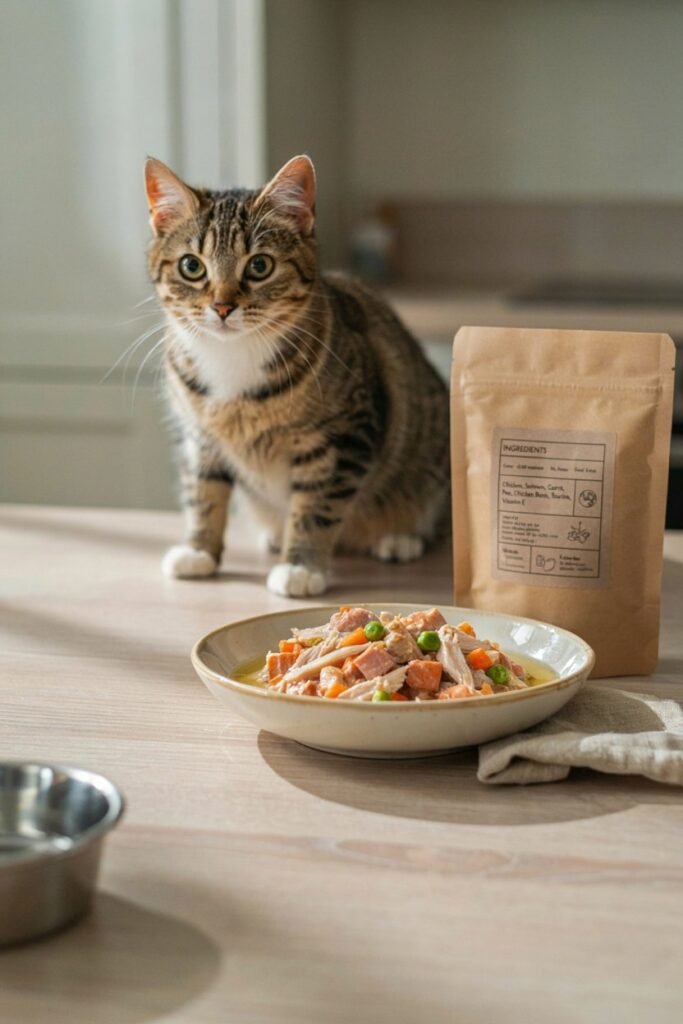
Cats don’t care whether their food is bright red, yellow, or brown. Color additives exist almost entirely for the benefit of the human looking at the bag or can, not for any nutritional purpose the cat would notice.
That said, seeing a color additive listed on a label doesn’t automatically mean the food is dangerous. It’s more accurate to say it’s an unnecessary ingredient from the cat’s perspective than a genuinely harmful one in most cases.
Artificial Preservatives
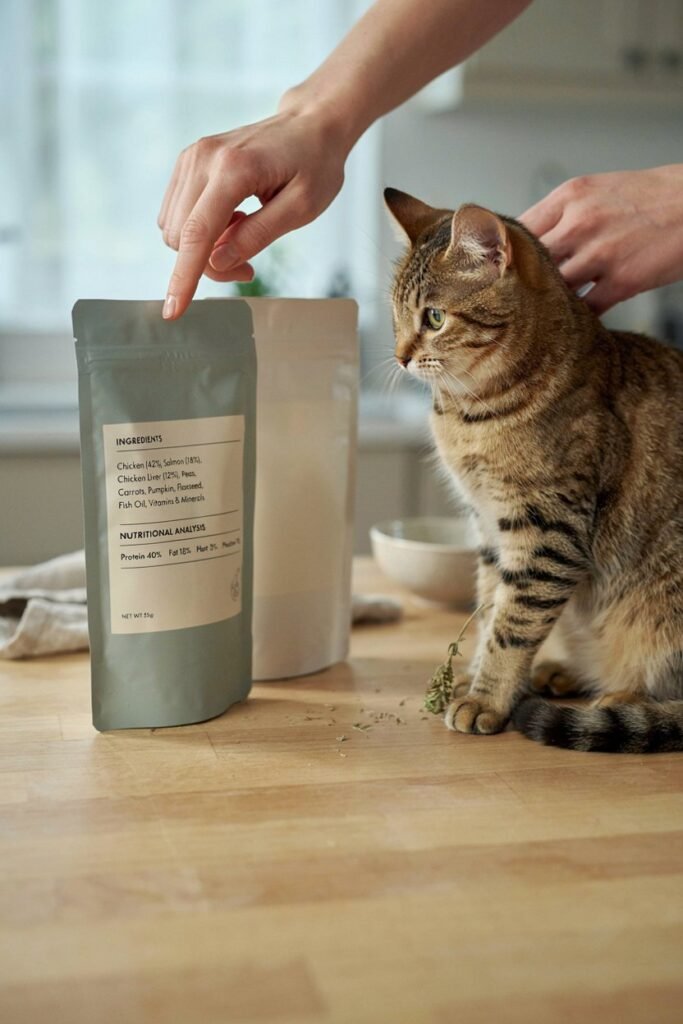
Preservatives like BHA, BHT, and ethoxyquin come up often in online warnings, and it’s worth being precise here rather than alarmist.
Some preservatives have generated genuine safety concerns and ongoing debate, which is exactly why many cat owners prefer foods preserved with alternatives such as mixed tocopherols instead.
That’s a more accurate way to think about it than a blanket statement that these preservatives are simply toxic and should never be eaten under any circumstances.
Propylene Glycol
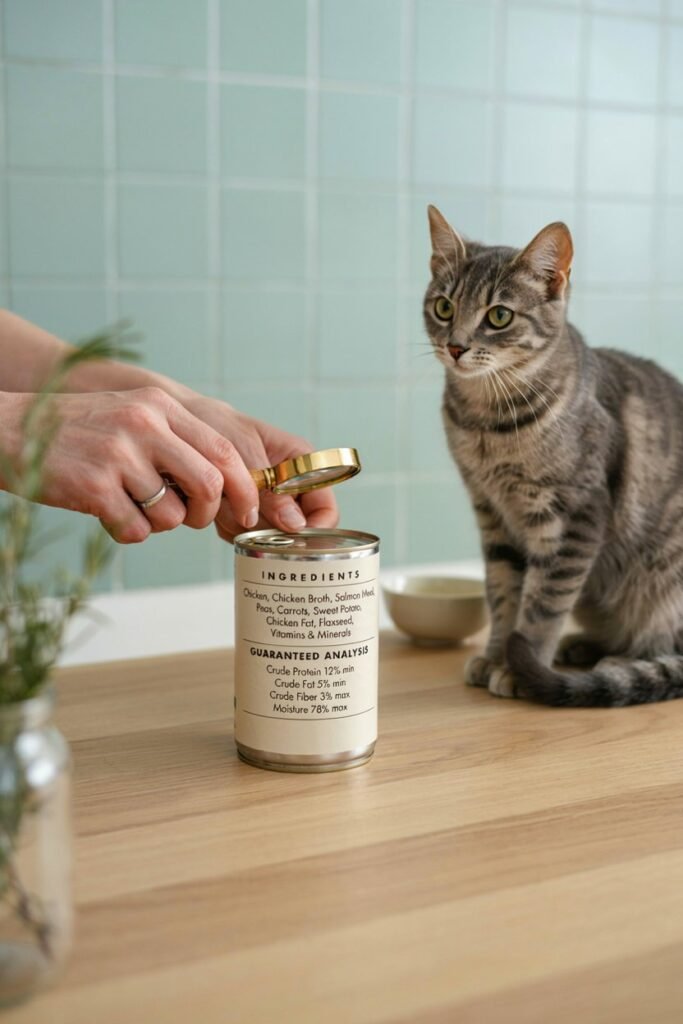
This one deserves its own section because it gets confused with something far more dangerous surprisingly often.
Propylene glycol should never be confused with ethylene glycol, the highly toxic substance found in antifreeze. They are chemically different compounds.
Propylene glycol has historically appeared in some pet food formulations, though it isn’t permitted in cat food in the United States specifically because cats are particularly sensitive to its effects.
Knowing that distinction matters more than reacting to the name alone.
Added Sugars and Sweeteners
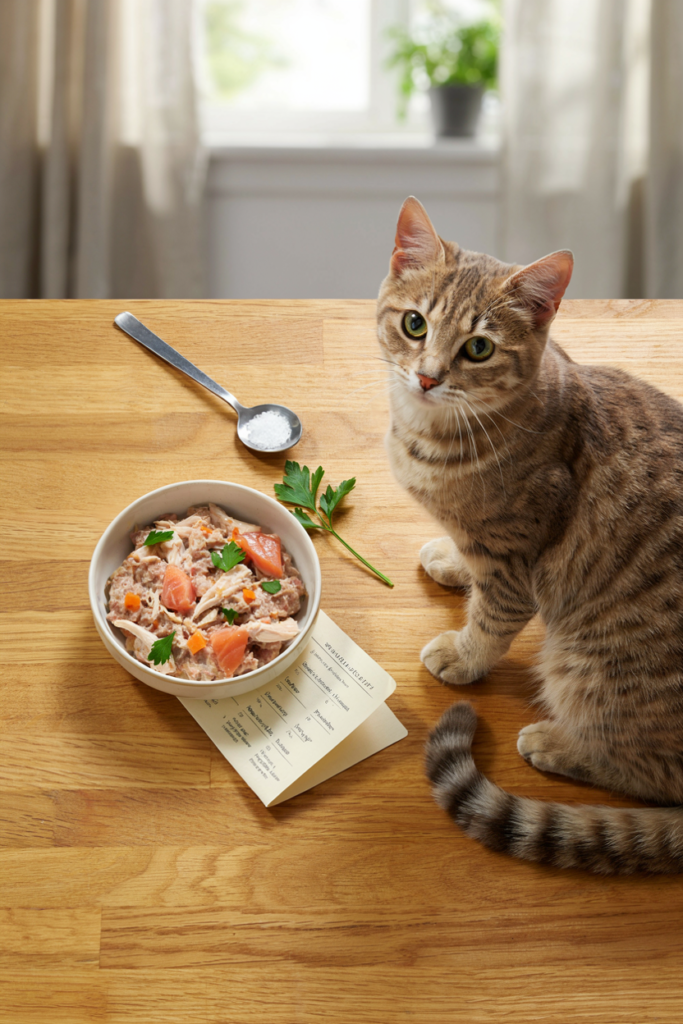
Cats simply don’t need added sugar in their diet. You might see it listed under names like sugar, cane molasses, corn syrup, or sucrose.
Since cats are obligate carnivores, sugary ingredients don’t serve any real nutritional purpose for them, and their presence usually points toward palatability rather than nutrition.
Unnecessary Additives
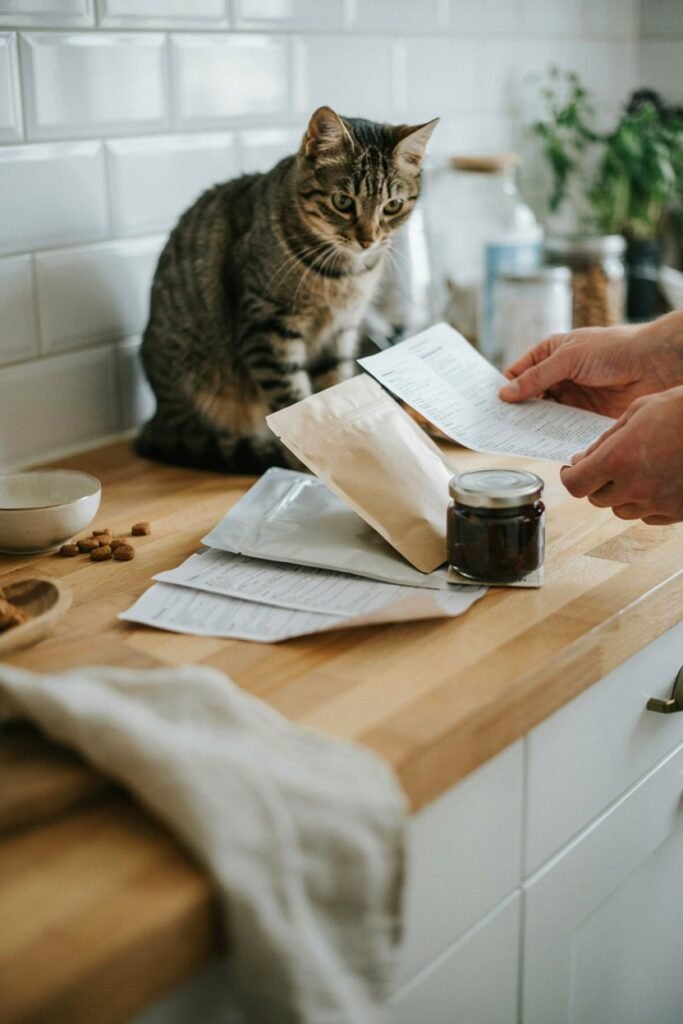
Beyond colors and sweeteners, some formulations include additional additives that exist mainly for shelf stability, texture, or appearance rather than nutrition.
None of these are automatically dangerous in isolation, but a shorter, more purposeful ingredient list is usually a reasonable thing to look for.
Vague or Unspecified Animal Ingredients
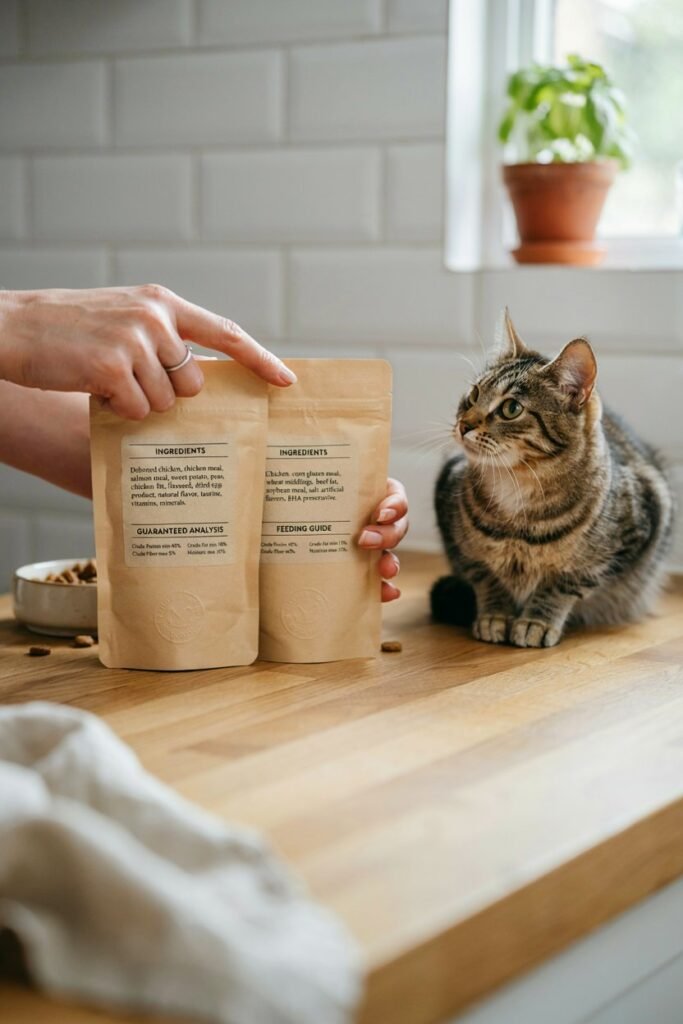
This is where you can pick up a genuinely useful label reading habit.
There’s a real difference between a specific ingredient name like “chicken” and a vaguer description like “animal fat” or “meat meal” without further detail.
A less specific ingredient name doesn’t automatically mean the food is unsafe, but clearer labeling generally makes it easier to actually understand what you’re feeding your cat, which is valuable in its own right.
What About Corn and Other Grains?
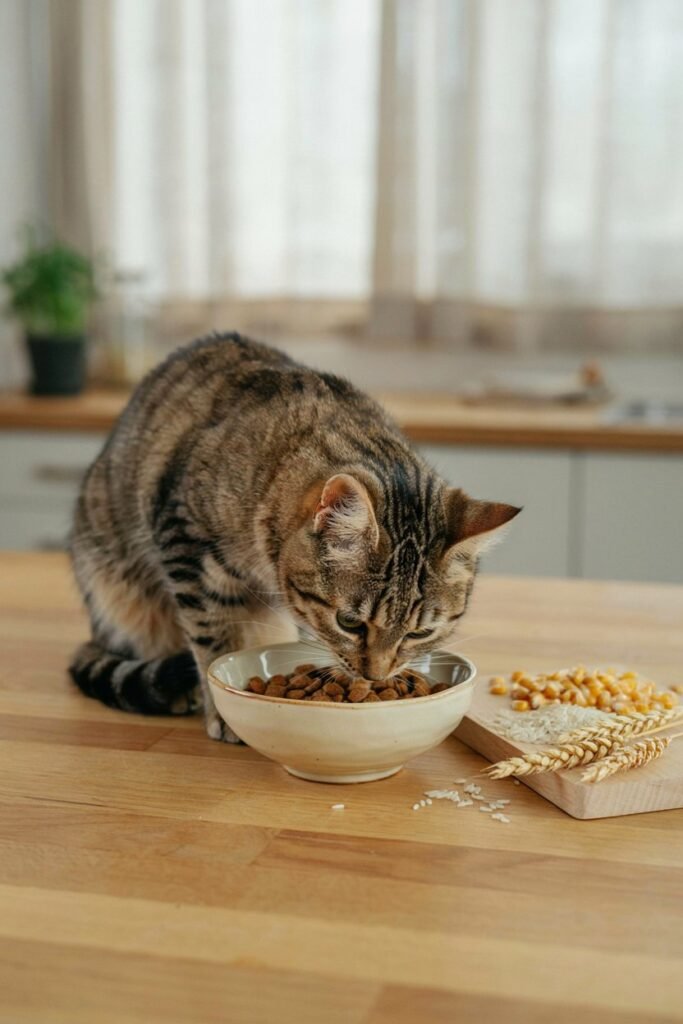
It’s easy to see “corn” on an ingredient list and assume it’s a cheap filler with no purpose, but that’s an oversimplification.
Corn, wheat, rice, and other carbohydrate sources can serve legitimate nutritional or functional purposes in a properly formulated food.
Grain free doesn’t automatically mean healthier either, since grain free formulas simply substitute a different carbohydrate source rather than eliminating carbohydrates altogether.
The better question isn’t whether one particular plant ingredient shows up on the label. It’s whether the complete food provides appropriate nutrition for your individual cat.
Are Meat By Products Bad for Cats?
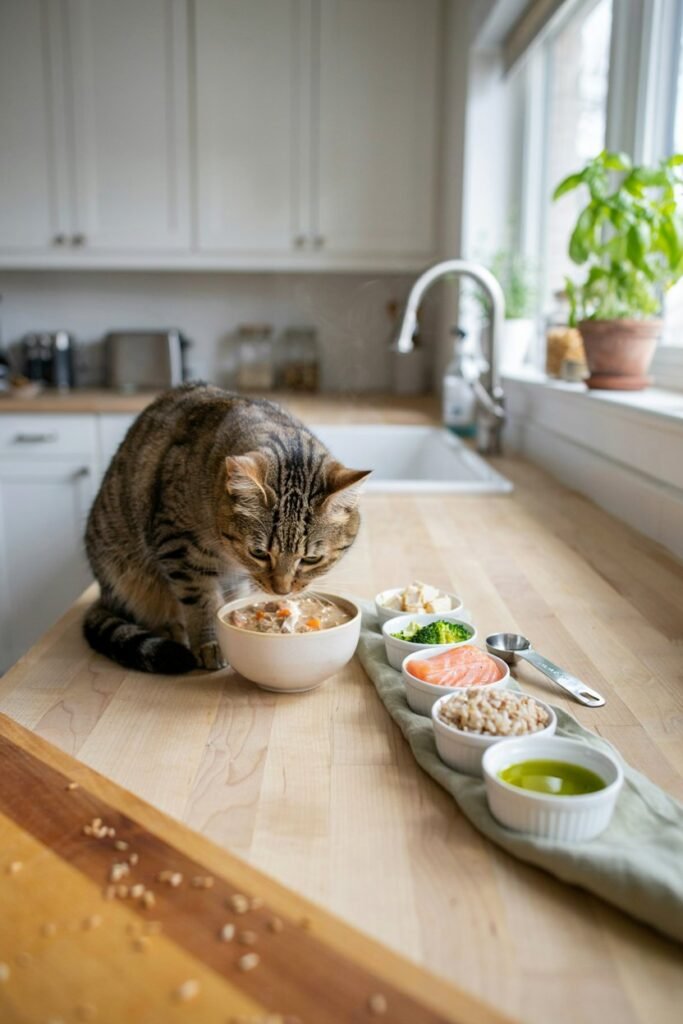
“By products are bad” is a common claim, but it’s overly simplistic.
Animal by products generally include organ meats and other animal tissues beyond muscle meat, and some of those organ tissues can actually provide valuable nutrients cats benefit from.
The more useful question isn’t whether by products appear on the label at all.
It’s the overall formulation, quality control, and nutritional adequacy of the finished food, and whether it’s complete and balanced for your cat’s life stage.
Ingredients Cat Owners Often Avoid for the Wrong Reasons
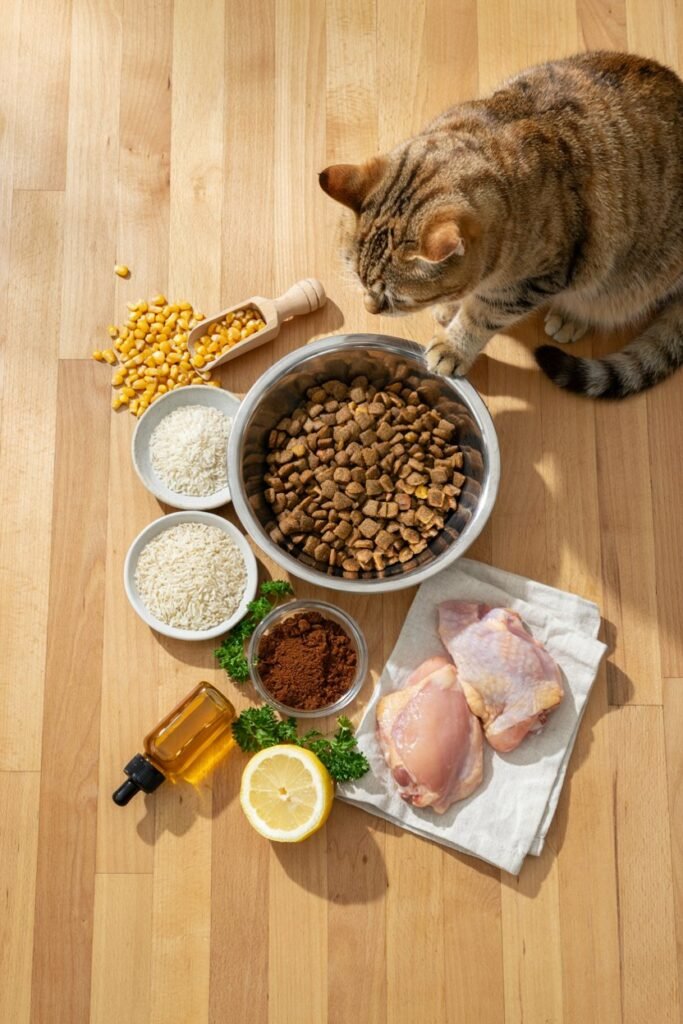
Corn. Not automatically a harmful filler, and it can serve a real nutritional purpose depending on the formulation.
Grains. Grain free marketing has convinced a lot of owners that grains are inherently bad, but that isn’t well supported. Grain free doesn’t automatically mean healthier.
By products. Some organ tissues included under this label are genuinely nutritionally valuable, not simply low quality filler.
Meat meals. Despite sounding vague, concentrated meat meals can actually provide significant protein, sometimes more per weight than fresh meat before processing.
Carrageenan. Some owners prefer to avoid it, and that’s a reasonable personal choice, but it’s worth avoiding exaggerated claims that it automatically causes disease in cats, since the evidence isn’t that clear cut.
How I Read a Cat Food Ingredient Label
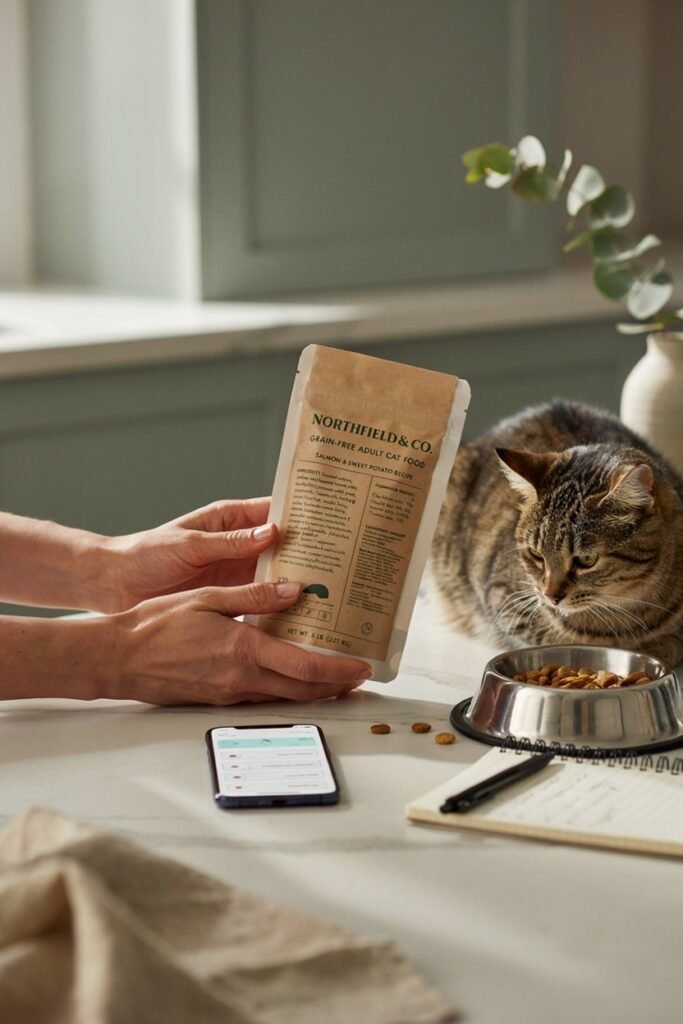
1. The nutritional adequacy statement. This is one of the most important things to check, since it tells you whether the food is formulated to meet a cat’s nutritional needs and for which life stage.
2. The guaranteed analysis. This section breaks down protein, fat, fiber, and moisture content, giving you a quick sense of the food’s overall composition.
3. The ingredient list. Ingredients are generally listed by weight before processing, which is worth keeping in mind since it can make water heavy ingredients appear higher on the list than their actual nutritional contribution would suggest.
4. The named animal protein. Look for clearly identified animal sources rather than vague descriptions, since specificity generally makes it easier to evaluate what you’re actually feeding.
5. The calorie information. Particularly useful if your cat needs to gain, lose, or maintain weight carefully.
6. The intended life stage. Kitten, adult maintenance, gestation and lactation, or all life stages all have different nutritional targets, so matching the food to your cat’s actual stage of life matters.
What I Look for When Choosing Cat Food

Rather than chasing a perfect ingredient list, here’s what I actually prioritize when choosing a food:
- A complete and balanced nutritional profile
- Clearly identified animal protein sources
- Appropriate protein and fat levels for my specific cat
- A food suited to my cat’s current life stage
- Appropriate calorie density
- Reliable manufacturing and quality control
- Ingredients my particular cat tolerates well, since not every cat reacts to ingredients the same way
Ingredient Comparison at a Glance
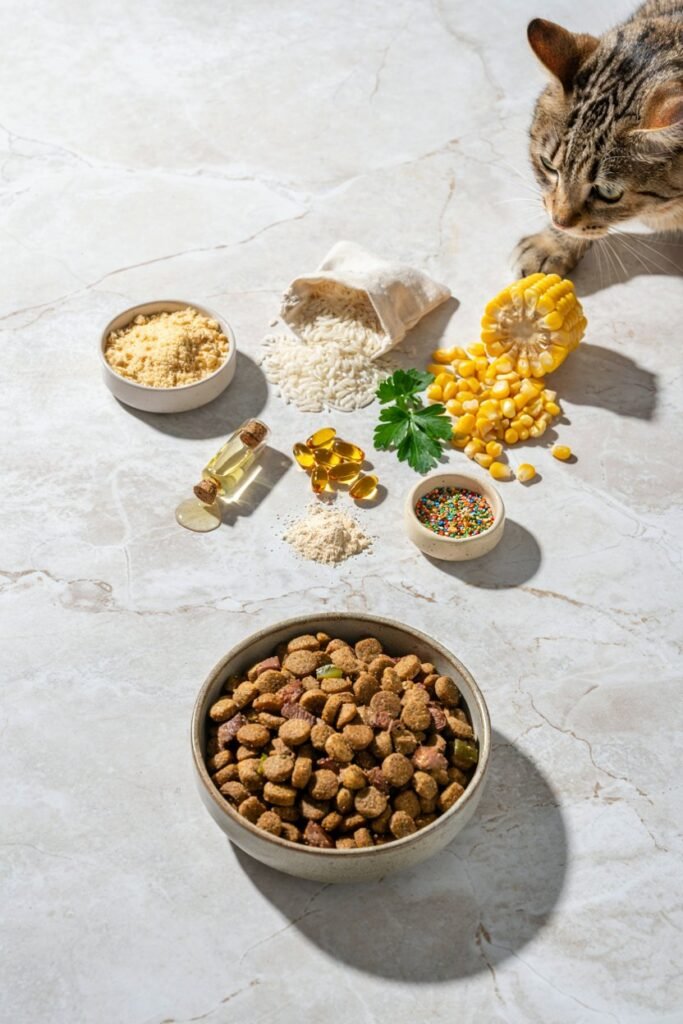
| Ingredient or Category | Why Owners Question It | What to Know |
|---|---|---|
| Artificial colors | Usually unnecessary | Cats do not need colorful food |
| BHA and BHT | Preservative concerns | Research and regulations matter |
| Added sugar | Cats do not need it | Usually unnecessary |
| Propylene glycol | Cats are particularly sensitive | Not permitted in cat food in the U.S. |
| Corn | Often called a filler | Not automatically harmful |
| Grains | Associated with grain free marketing | Not automatically bad |
| Meat by products | Often misunderstood | Can provide valuable nutrients |
| Unspecified animal ingredients | Less transparency | Specific ingredient names can be easier to evaluate |
When an Ingredient Really Matters

Ingredients matter far more when your cat has a diagnosed food allergy, a history of digestive problems, urinary issues, kidney disease, diabetes, obesity, or a known food intolerance.
In those cases, dietary changes should be discussed with a veterinarian rather than handled solely by reading ingredient lists on your own, since a condition like kidney disease often calls for a specifically formulated therapeutic diet rather than simply avoiding a general list of ingredients.
A Realistic Label Reading Example
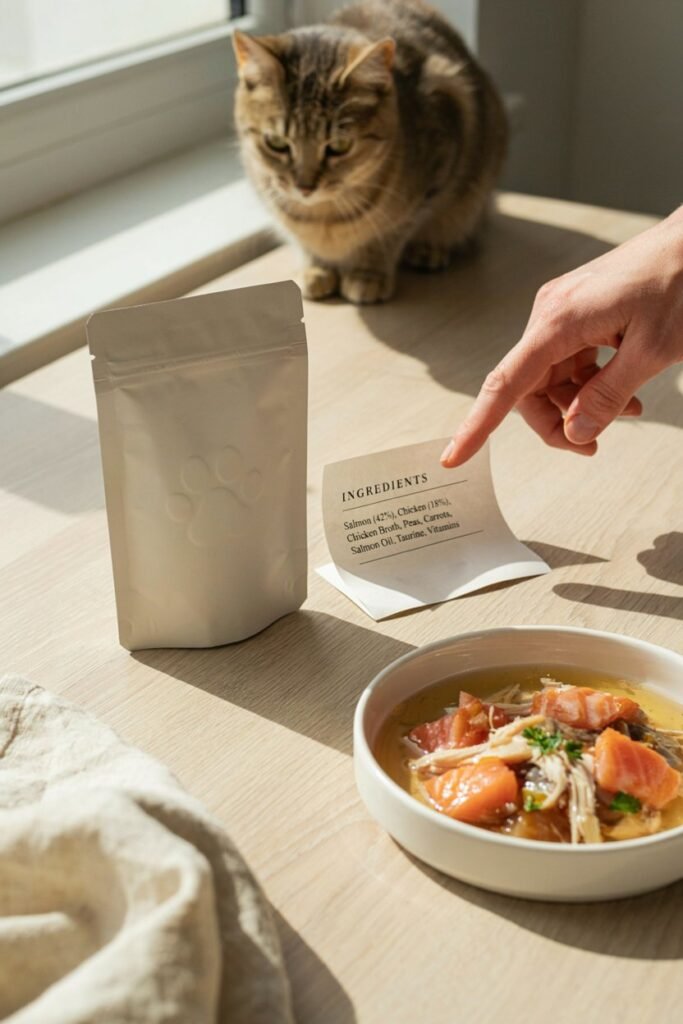
Here’s a label that reads well:
Chicken, chicken meal, brown rice, chicken fat preserved with mixed tocopherols, pumpkin, vitamins and minerals.
Chicken and chicken meal both give you clearly named animal protein sources near the top of the list. Brown rice serves as a functional carbohydrate.
Chicken fat preserved with mixed tocopherols shows a specific fat source using a natural preservative rather than an artificial one.
Pumpkin and a standard vitamin and mineral pack round things out.
Compare that with a label like this one:
Meat by-products, animal fat, corn syrup, artificial color, BHA, unspecified flavor.
Here, “meat by-products” and “animal fat” aren’t tied to a specific named animal source, corn syrup is an unnecessary added sugar, artificial color serves no nutritional purpose, BHA is a preservative some owners prefer to avoid, and “unspecified flavor” gives you no real information at all.
Neither example is necessarily unsafe on its own, but the first gives you far more actual information to evaluate than the second.
Simple Cat Food Label Checklist

- Does the label include a nutritional adequacy statement for your cat’s life stage?
- Are the top ingredients specific, named animal proteins?
- Is the guaranteed analysis appropriate for your cat’s needs?
- Are preservatives natural, such as mixed tocopherols, or artificial, such as BHA or BHT?
- Does the ingredient list include unnecessary added sugar or artificial color?
- Is calorie information available if your cat needs weight management?
- Does the food match your cat’s current life stage?
Good Cat Food Ingredients to Look For
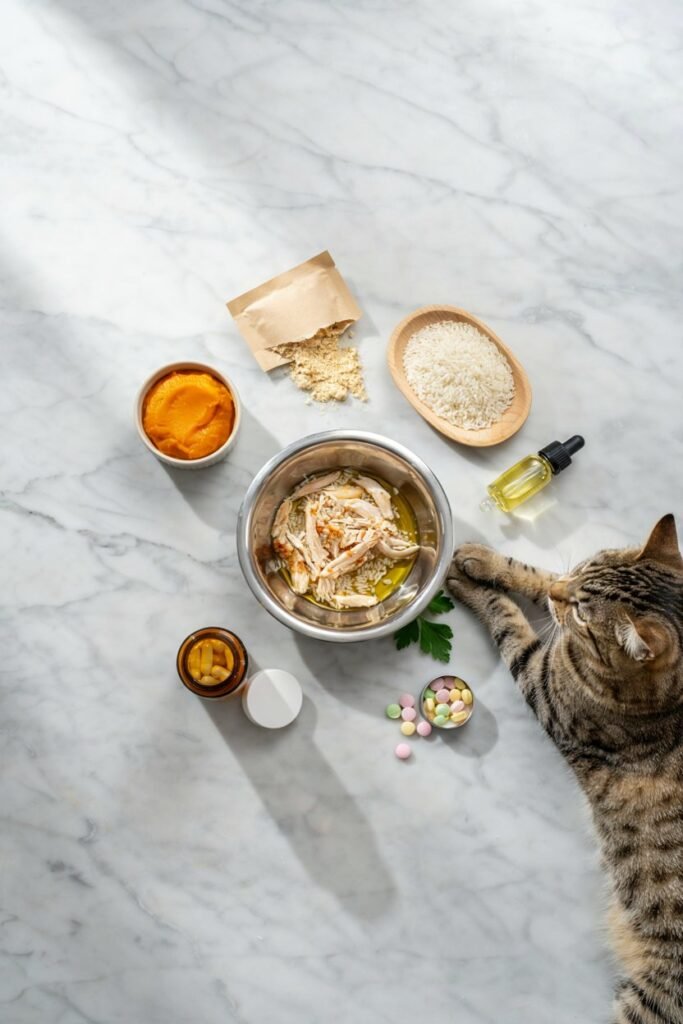
Just as it helps to know what to question, it helps just as much to know what a genuinely solid ingredient list looks like. These are the ingredients I’m actually glad to see near the top of a label.
Named animal proteins. Chicken, turkey, salmon, chicken meal, or turkey meal all tell you exactly what animal source the protein is coming from, which is a good sign of transparency.
Animal based fats. Chicken fat or fish oil provide essential fatty acids that support skin and coat health, and they’re a meaningful source of energy for an obligate carnivore.
Taurine. This amino acid is essential for cats specifically, supporting heart and eye health, and it’s commonly added to commercial formulas since it isn’t always present in sufficient amounts otherwise.
Natural preservatives. Mixed tocopherols, which are essentially a form of vitamin E, are commonly used as a natural alternative to artificial preservatives like BHA or BHT.
Named organ meats. Liver or heart, specifically identified rather than lumped into a vague “by-product” term, can provide valuable nutrients like vitamin A and iron.
Fiber sources like pumpkin or beet pulp. These support digestive health in modest amounts, without needing to dominate the ingredient list.
Vitamins and minerals. A complete vitamin and mineral package, often listed toward the end of the ingredient list, is what actually makes a food nutritionally complete rather than just protein and fat alone.
Water or broth, for wet foods. This isn’t a red flag the way it might seem. Moisture is genuinely beneficial for cats, many of whom don’t drink enough water on their own, and wet food is one of the more reliable ways to help with that.
None of these ingredients guarantee a perfect food on their own, but seeing several of them together, especially named animal proteins near the top of the list, is generally a good sign that the formulation was put together thoughtfully.
Frequently Asked Questions
Are cat food ingredient lists ordered by importance? Not exactly. Ingredients are listed by weight before processing, which means water heavy ingredients can appear higher on the list than their actual nutritional contribution would suggest.
Is grain free cat food healthier than food with grains? Not automatically. Grain free formulas simply substitute a different carbohydrate source, and grains themselves aren’t inherently harmful to most cats.
Are meat by-products bad for cats? Not necessarily. By-products often include organ meats that can provide valuable nutrients, and the more important question is the overall quality and completeness of the finished food.
Is propylene glycol the same as antifreeze? No. Propylene glycol is a different compound from ethylene glycol, the toxic substance found in antifreeze, and propylene glycol isn’t permitted in cat food in the United States regardless.
Should I avoid all artificial preservatives? Some cat owners prefer to avoid preservatives like BHA and BHT due to ongoing safety debate, choosing foods preserved with alternatives like mixed tocopherols instead. Neither choice is unreasonable.
Does a shorter ingredient list mean a better food? Not necessarily. A shorter list can reflect simplicity, but a nutritionally complete food often needs a range of ingredients to meet a cat’s full nutritional needs, including vitamins and minerals.
What’s the most important thing to check on a label? The nutritional adequacy statement, since it tells you whether the food is formulated to meet your cat’s needs for their specific life stage.
Can healthy cats eat foods containing corn or wheat? Generally, yes. Most healthy cats tolerate grains without any issue, and grains can serve a legitimate nutritional or functional role in a properly formulated food.
When should I avoid an ingredient entirely, rather than just questioning it? If your cat has a diagnosed allergy, sensitivity, or medical condition tied to a specific ingredient, that’s when avoidance becomes a firm rule rather than a general preference, ideally guided by your veterinarian.
Is homemade cat food automatically free of these concerning ingredients? Yes, since you control every ingredient that goes in, though homemade food still needs to be properly balanced to meet your cat’s full nutritional needs.
Final Thoughts
The goal isn’t to find a perfect, completely ingredient free cat food, since no such thing really exists in a meaningful way.
The goal is to choose a nutritionally complete food from a reputable manufacturer that genuinely fits your cat’s individual needs, life stage, and any specific health considerations they have.
Reading a label carefully doesn’t mean treating every unfamiliar word as a red flag.
It means knowing which ingredients are worth a second look, which ones are commonly misunderstood, and when it’s time to bring your veterinarian into the decision rather than trying to work it out from the ingredient list alone.



4 Comments