Easy Frozen Dog Treats (5 Flavors!)
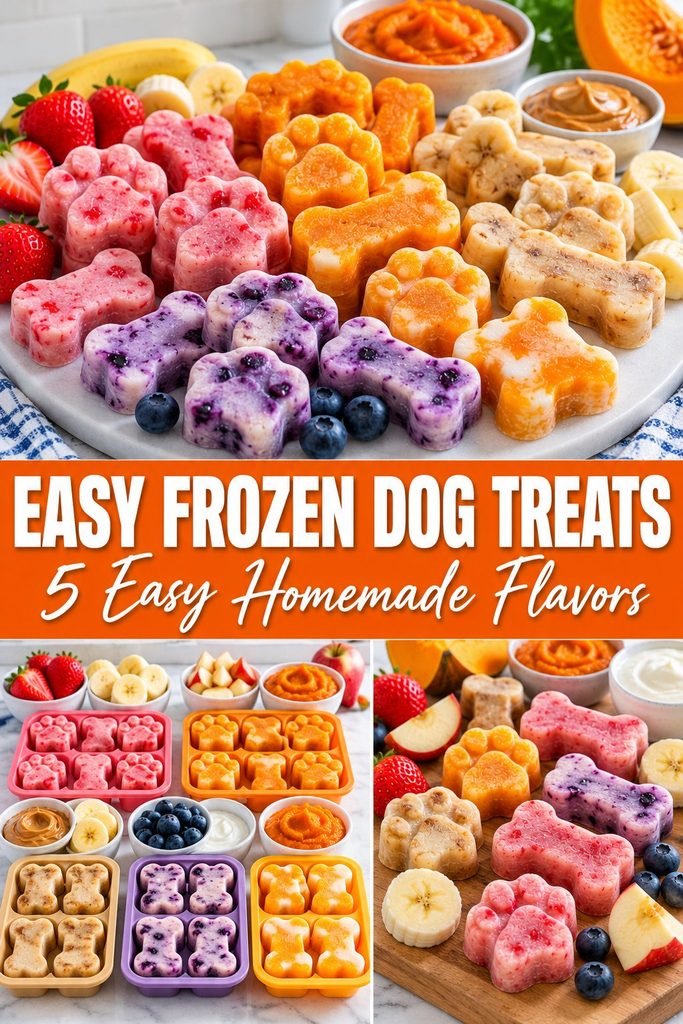
Frozen dog treats are a simple way to give your dog a refreshing homemade snack on warm days or after outdoor play.
With a few dog-friendly ingredients, you can prepare several flavors at home, freeze them in small portions, and keep them ready for your dog to enjoy.
The best part is that these treats do not require complicated preparation or special equipment. An ice cube tray, silicone mold, or small freezer-safe container is enough to get started.
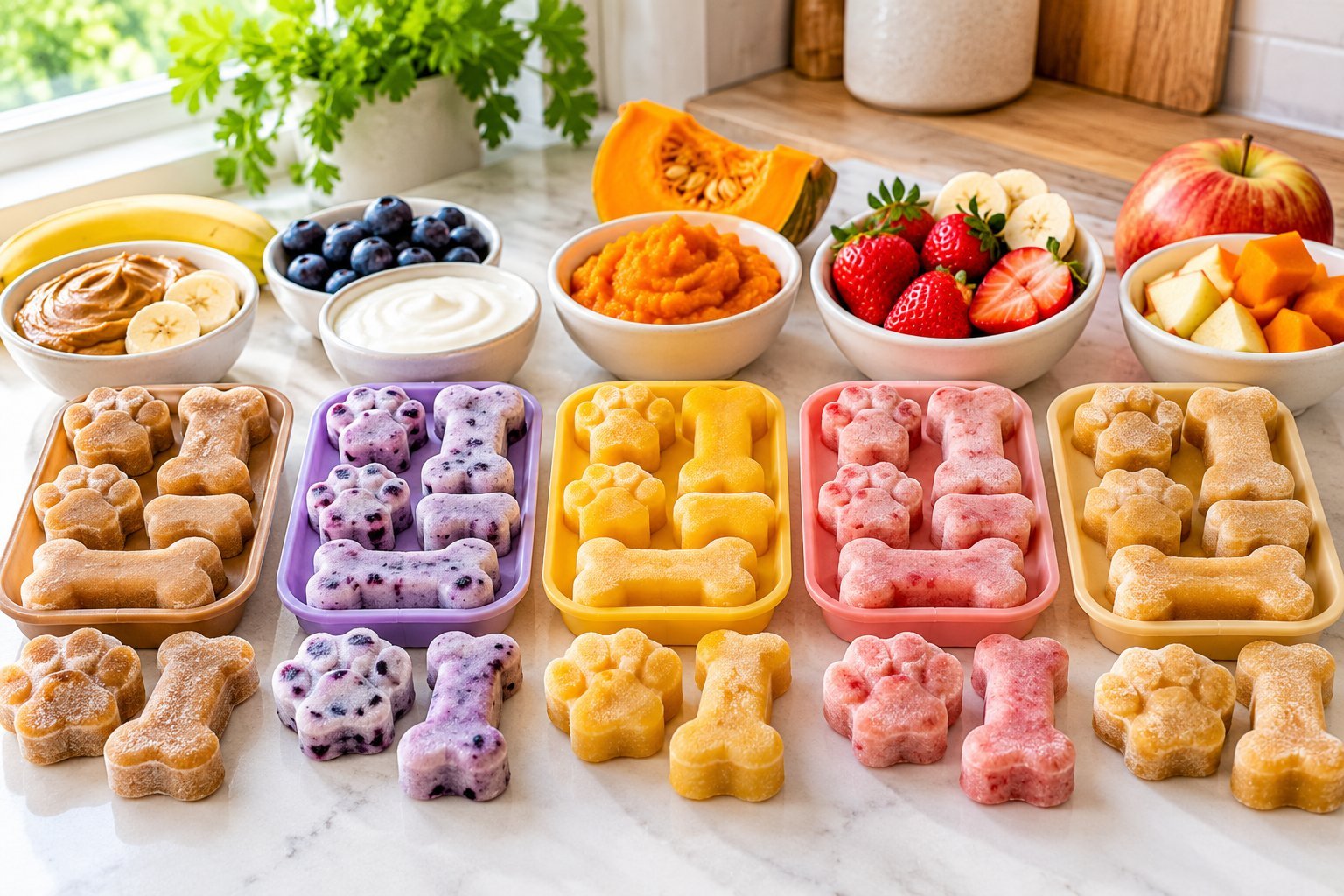
Ingredients such as banana, blueberries, strawberries, plain pumpkin puree, and xylitol-free peanut butter offer plenty of ways to create different flavors.
Making frozen treats at home also gives you control over what goes into your dog’s snacks.
You can avoid added sugar, artificial sweeteners, and unnecessary ingredients while adjusting each recipe to suit your dog’s preferences.
However, homemade treats should complement a balanced diet rather than replace regular meals.
In this guide, you’ll find five easy frozen dog treat flavors, along with preparation instructions and practical tips for making them safely.
Always introduce new ingredients gradually, keep portions appropriate for your dog’s size, and check with your veterinarian if your dog has allergies, dietary restrictions, or an ongoing health concern.
Why Make Frozen Dog Treats at Home?
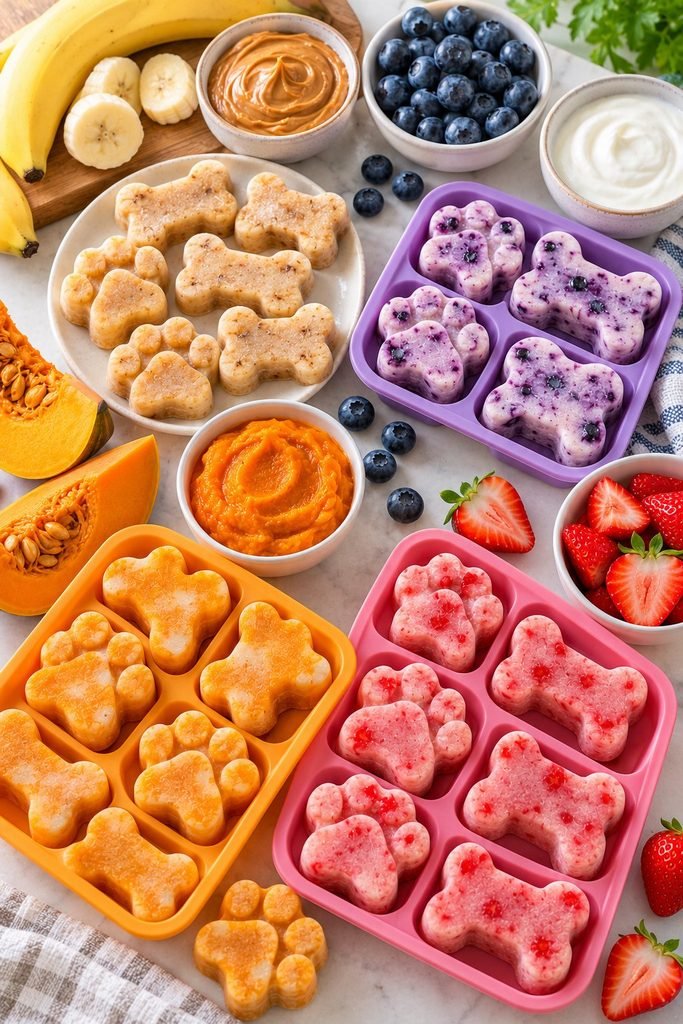
Homemade frozen dog treats are convenient, customizable, and easy to prepare in batches. You can use ingredients already available in your kitchen and adjust the recipes to create smaller portions for dogs of different sizes.
Frozen snacks can also provide a refreshing change from ordinary treats, particularly during hot weather. The cool texture makes them enjoyable for many dogs, although very hard treats may be uncomfortable for dogs with sensitive teeth. Supervise your dog while eating and choose a size that reduces the risk of choking.
Another benefit is knowing exactly what your dog is eating. Commercial treats can contain added sugars, flavorings, or other ingredients you may prefer to avoid. Homemade recipes make it easier to select simple ingredients and leave out unnecessary additives.
Before preparing a batch, remember a few important safety rules. Use plain, unsweetened yogurt only if your dog tolerates dairy. Choose peanut butter that contains no xylitol, which is toxic to dogs. Use plain pumpkin puree rather than pumpkin pie filling, and avoid sweetened fruit products.
Treats should account for only a small portion of your dog’s daily calorie intake. If your dog has a sensitive stomach, food allergies, diabetes, pancreatitis, or another medical condition, ask your veterinarian which ingredients and portion sizes are appropriate.
1. Frozen Peanut Butter and Banana Dog Treats
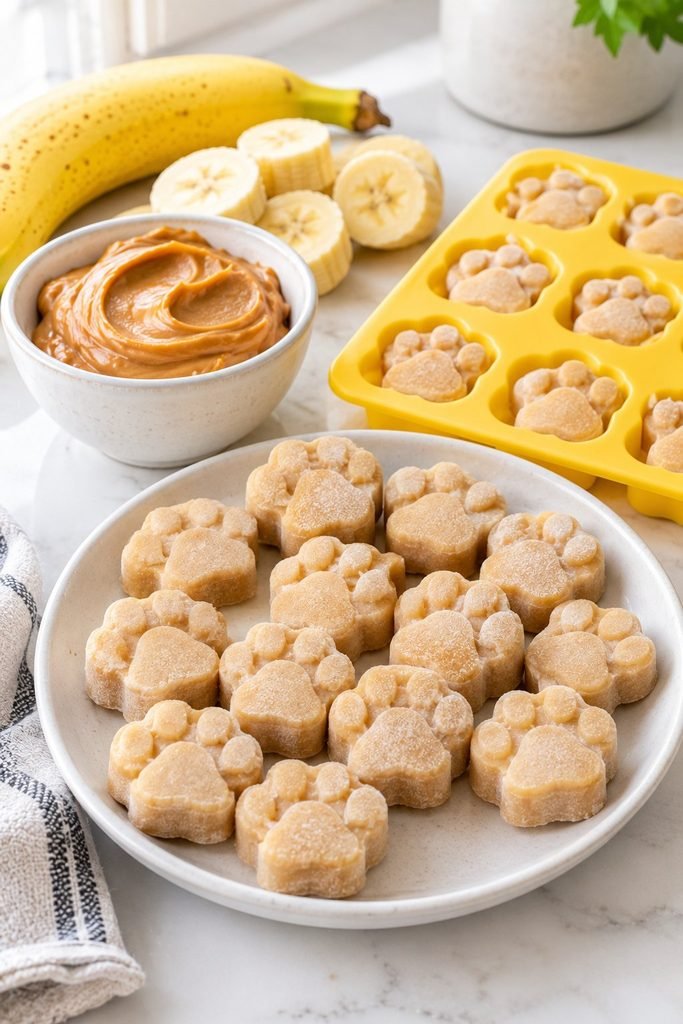
Prep time: 5 minutes
Freezing time: 3 to 4 hours
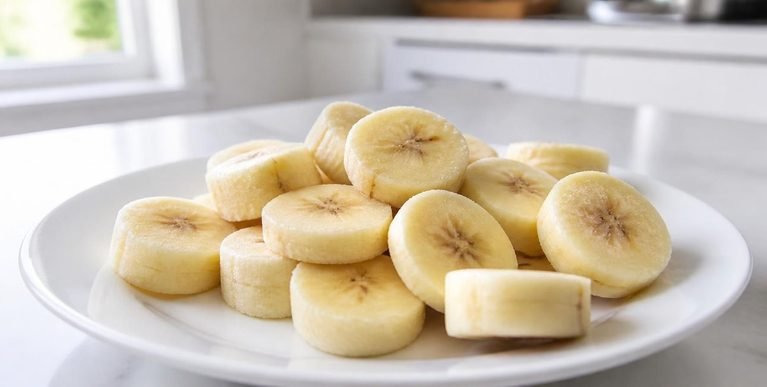
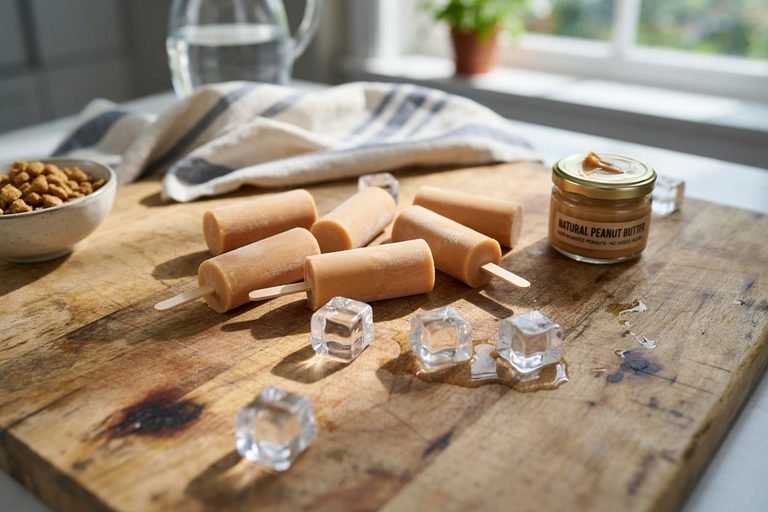
Peanut butter and banana make a creamy combination for dogs that enjoy rich, naturally sweet flavors. Banana helps soften the mixture, while peanut butter adds an appealing aroma and smooth texture.
This recipe is especially easy to prepare because the ingredients can be mashed together without a blender. You can freeze the mixture in small silicone molds or an ice cube tray, making it convenient to serve one portion at a time.
Ingredients
- 1 ripe banana
- 2 tablespoons plain, xylitol-free peanut butter
- 1 to 2 tablespoons water, if needed
Instructions
- Peel the banana and mash it in a small bowl until mostly smooth.
- Add the peanut butter and stir until the mixture is evenly combined.
- Add a little water if the mixture is too thick to spoon into molds.
- Divide the mixture among small silicone molds or an ice cube tray.
- Place the tray flat in the freezer for 3 to 4 hours, or until the treats are completely firm.
- Remove one treat at a time and serve an appropriately sized portion.
Helpful Tips
Use a ripe banana because it is easier to mash and blends smoothly with the peanut butter. If your peanut butter is thick, mix it thoroughly with the banana before adding water.
Always check the peanut butter label before using it. Avoid products containing xylitol, also known as birch sugar, because even small amounts can cause serious poisoning in dogs.
Peanut butter is also high in calories and fat, so keep these treats small. If your dog needs a low-fat diet or has a history of pancreatitis, consult your veterinarian before offering peanut butter.
2. Frozen Blueberry and Yogurt Dog Treats
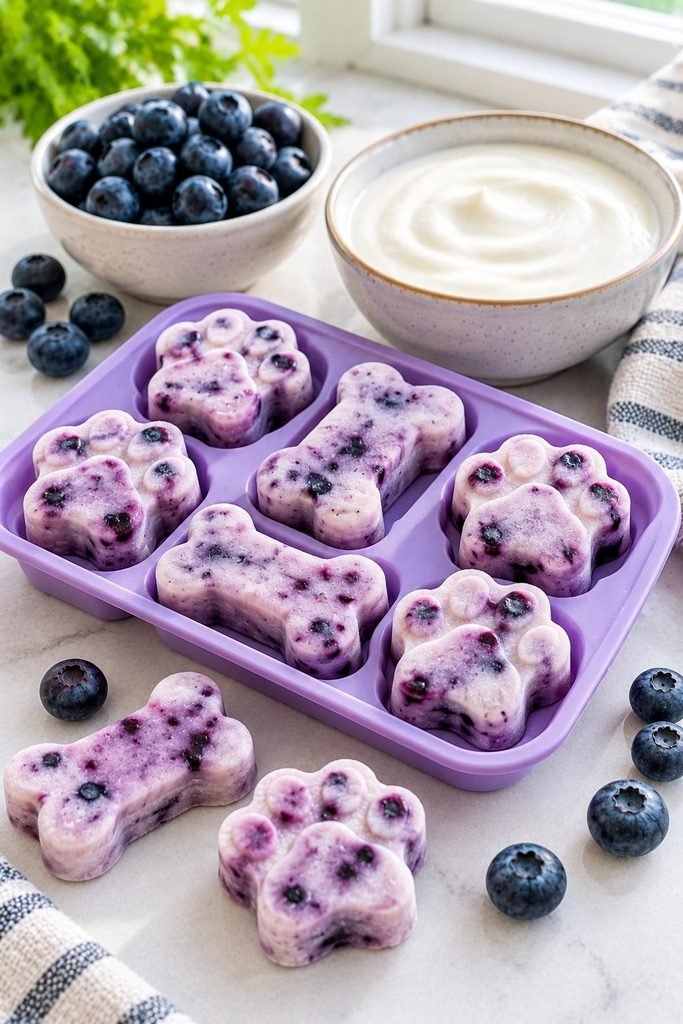
Prep time: 5 minutes
Freezing time: 3 to 4 hours
Blueberry and yogurt treats provide a fruity alternative to peanut butter. The berries add natural flavor, while plain yogurt creates a creamy mixture that freezes into small, easy-to-portion snacks.
You can mash the blueberries by hand for a little texture or blend them into a puree for a smoother result. Both methods work well, so you can choose whichever is easier with the equipment you have.
Ingredients
- ½ cup plain, unsweetened yogurt
- ¼ cup fresh or thawed blueberries
- 1 to 2 teaspoons water, if needed
Instructions
- Rinse fresh blueberries thoroughly. If using frozen berries, allow them to thaw first.
- Mash the blueberries with a fork or blend them briefly until broken down.
- Add the plain yogurt and stir until combined.
- Add a small amount of water if the mixture is too thick to spoon easily.
- Divide the mixture into small silicone molds or an ice cube tray.
- Freeze for 3 to 4 hours, or until firm.
- Remove a small portion from the tray and supervise your dog while eating.
Helpful Tips
Choose plain yogurt without added sugar, sweeteners, chocolate, or fruit syrup. Some dogs have difficulty digesting lactose, so introduce yogurt in a small amount and watch for digestive upset.
If dairy does not agree with your dog, skip this recipe or ask your veterinarian about a suitable alternative. You can also mash the blueberries with a little water and freeze them without yogurt.
For a stronger blueberry flavor, mash the berries thoroughly before mixing them with the yogurt. Keep the portions small, especially when introducing this treat for the first time.
3. Frozen Pumpkin and Yogurt Dog Treats
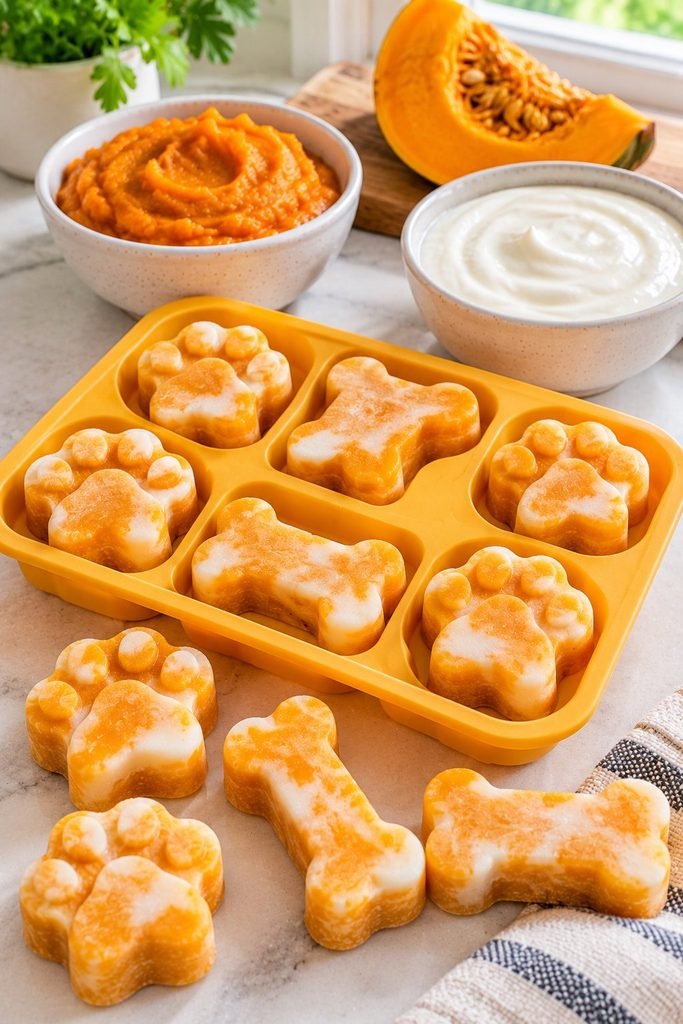
Prep time: 5 minutes
Freezing time: 3 to 4 hours
Pumpkin gives frozen dog treats a naturally mild flavor and a soft texture. Combined with plain yogurt, it creates a creamy mixture that is easy to portion and freeze.
This recipe is a useful option for dogs that enjoy pumpkin. However, pumpkin treats should not be considered a treatment for digestive illness, and they are not a substitute for veterinary advice when a dog has persistent diarrhea or vomiting.
Ingredients
- ½ cup plain pumpkin puree
- ¼ cup plain, unsweetened yogurt, if tolerated
- 1 to 2 teaspoons water, if needed
Instructions
- Place the pumpkin puree in a small mixing bowl.
- Add the plain yogurt and stir until the mixture is smooth and evenly combined.
- Add a little water if needed to make the mixture easier to spoon.
- Divide the mixture among small silicone molds or an ice cube tray.
- Place the tray flat in the freezer for 3 to 4 hours, or until completely firm.
- Remove individual treats as needed.
- Allow the treat to soften slightly before serving if it is too hard for your dog to chew comfortably.
Helpful Tips
Use plain pumpkin puree rather than pumpkin pie filling. Pie filling may contain added sugar and spices that are not appropriate for this recipe. Check the ingredient label carefully, especially when using canned pumpkin.
If your dog does not tolerate dairy, leave out the yogurt and add a small amount of water to adjust the consistency. The pumpkin can still provide the main flavor.
Start with a small portion when offering pumpkin for the first time. Too much of any new ingredient can upset your dog’s stomach. Contact your veterinarian if digestive symptoms persist, worsen, or occur alongside vomiting, blood in the stool, weakness, or loss of appetite.
4. Frozen Strawberry and Banana Dog Treats
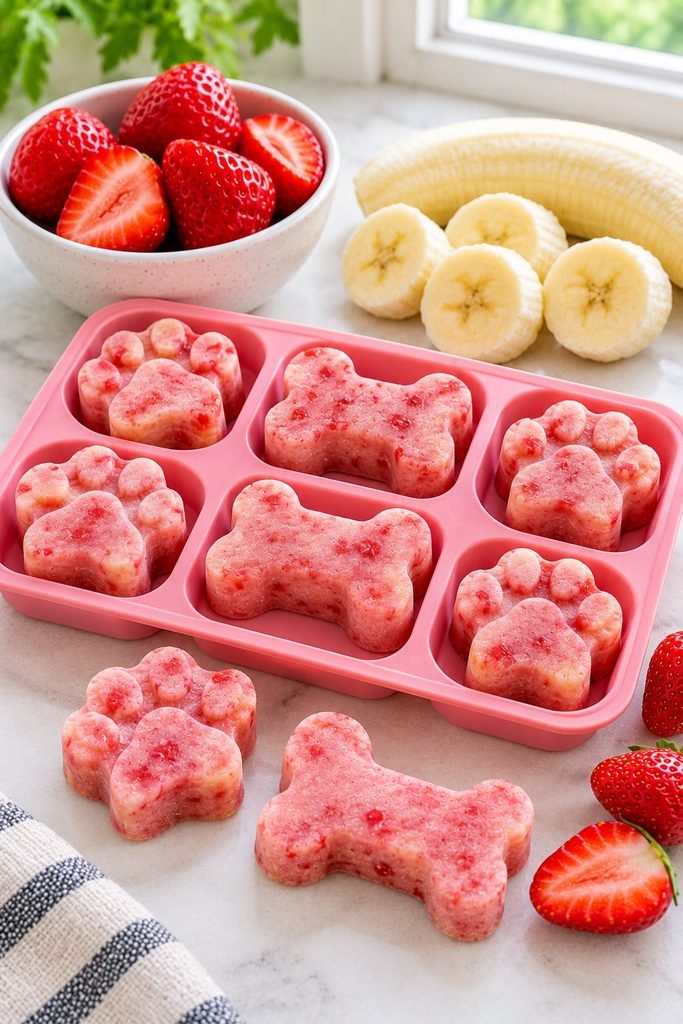
Prep time: 5 to 7 minutes
Freezing time: 3 to 4 hours
Strawberries and bananas create a naturally fruity frozen treat without the need for added sugar. The banana helps thicken the mixture, while strawberries add fresh flavor and a soft pink color.
This recipe is easy to prepare with fresh or unsweetened frozen strawberries. It is also a useful way to offer a different flavor when your dog has already tried banana and peanut butter treats.
Ingredients
- ½ ripe banana
- ¼ cup fresh or thawed strawberries
- 1 to 2 tablespoons water, if needed
Instructions
- Wash the strawberries thoroughly and remove their green tops.
- Peel the banana and mash it in a bowl.
- Mash the strawberries separately or blend them into a puree.
- Mix the banana and strawberries until evenly combined.
- Add a little water if the mixture is too thick.
- Spoon the mixture into small silicone molds or an ice cube tray.
- Freeze for 3 to 4 hours, or until solid.
- Remove a small treat and serve it under supervision.
Helpful Tips
Use plain fruit rather than strawberry jam, syrup, sweetened fruit cups, or products containing artificial sweeteners. Fresh ingredients are all you need for this recipe.
For a smoother texture, blend the strawberries and banana together before freezing. If you prefer a little texture, mash them with a fork instead.
Keep portions modest because fruit contains natural sugars, and too much can cause digestive upset. Cut or break the frozen treat into a suitable size for your dog, and avoid serving pieces that are so hard or large that they may be difficult to chew.
5. Frozen Apple and Pumpkin Dog Treats
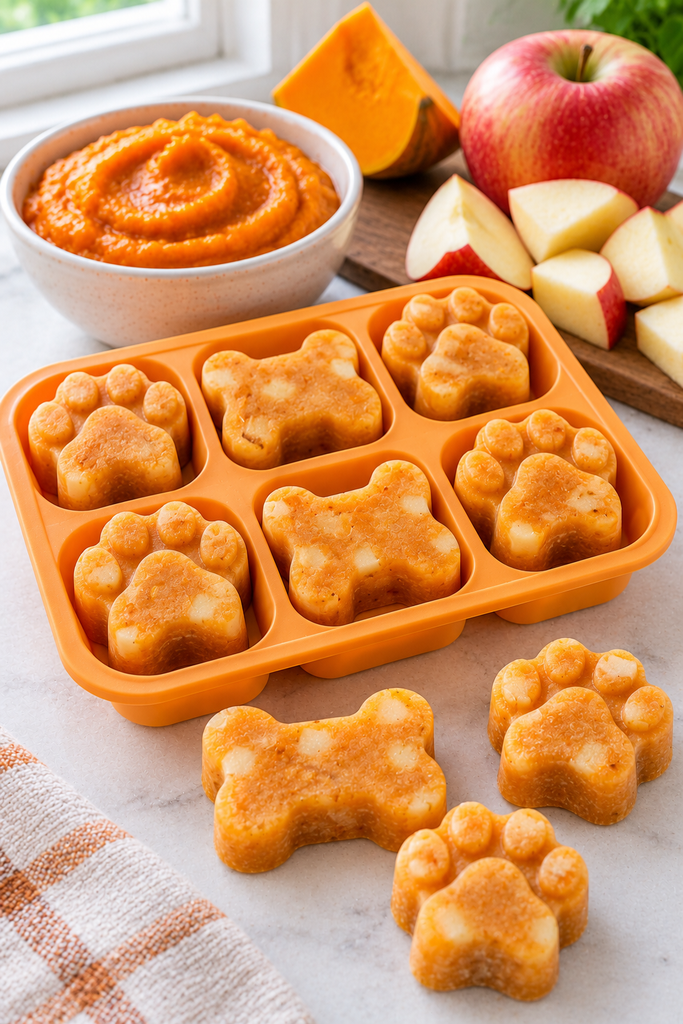
Prep time: 7 minutes
Freezing time: 3 to 4 hours
Apple and pumpkin make a flavorful combination for dogs that enjoy fruit-based snacks. Pumpkin gives the mixture a thick, smooth consistency, while apple adds a little natural sweetness and crunch before blending.
This recipe is a good option when you want to prepare something different from the usual banana or berry treats. Use plain pumpkin puree and fresh apple, and skip added sweeteners or spices.
Ingredients
- ½ cup plain pumpkin puree
- ¼ cup peeled apple, with the core and seeds removed
- 1 to 2 tablespoons water, if needed
Instructions
- Wash the apple thoroughly, then remove the core, seeds, and stem.
- Peel the apple and cut the flesh into small pieces.
- Mash or blend the apple until finely chopped or smooth.
- Add the pumpkin puree and mix until evenly combined.
- Add a little water if the mixture is too thick to spoon into molds.
- Divide the mixture among small silicone molds or an ice cube tray.
- Freeze for 3 to 4 hours, or until the treats are firm.
- Remove a small treat from the freezer and let it soften slightly if needed before serving.
Helpful Tips
Always remove the apple core and seeds before preparing this recipe. Apple seeds contain compounds that can release cyanide when chewed or digested, so they should not be included in homemade dog treats.
Choose plain pumpkin puree rather than pumpkin pie filling, which may contain added sugar and spices. If your dog has never eaten apple or pumpkin before, offer a small portion first and watch for digestive upset.
You can also blend the apple and pumpkin together for a smoother consistency that fits neatly into small molds.
How to Store Frozen Dog Treats
Proper storage helps homemade frozen treats maintain their quality and prevents them from picking up odors or flavors from other foods in the freezer.
Once the treats are completely frozen, remove them from the molds and transfer them to a clean, airtight freezer-safe container or bag. Label the container with the flavor and preparation date so you can keep track of each batch.
For best quality, aim to use homemade frozen dog treats within about one month. Discard any treats that develop an unusual smell, visible contamination, or signs of freezer damage.
Keep these storage tips in mind:
- Freeze the treats flat. Place the mold on a level freezer shelf so the mixture does not spill before it sets.
- Use airtight storage. A sealed container helps protect the treats from freezer odors and moisture.
- Take out only what you need. Avoid repeatedly thawing and refreezing the entire batch.
- Discard leftovers that have been sitting out too long. Treats containing yogurt or fruit should not be left at room temperature for extended periods.
- Keep them away from children and other pets. Store the container securely so treats are not eaten in excessive quantities.
You can prepare different flavors in one session and store each batch separately. This makes it easier to offer variety without needing to make a fresh recipe every day.
How Many Frozen Treats Can You Give Your Dog?
The right serving size depends on your dog’s weight, activity level, overall diet, and health needs. A small dog generally needs a smaller treat than a large dog, and calorie-dense ingredients such as peanut butter require extra care with portions.
As a general guideline, treats should make up no more than 10% of a dog’s daily calorie intake, with the remaining calories coming from a complete and balanced diet. Smaller portions are often the better choice when you are introducing a new recipe.
Follow these practical guidelines:
For small dogs: Offer a small bite or a portion from a mini mold. Avoid large frozen cubes that may be difficult to chew.
For medium-sized dogs: Start with a small treat and adjust the portion according to the ingredients and your dog’s daily calorie needs.
For large dogs: A slightly larger portion may be suitable, but size alone does not determine how many treats a dog should eat. Keep the overall calorie content in mind.
For puppies: Check with your veterinarian before regularly adding homemade treats, particularly if your puppy is still developing and relies on a carefully balanced diet.
Supervise your dog while eating. If a treat is too hard, allow it to soften slightly before serving. Dogs that gulp food, have dental problems, or have difficulty chewing may need softer treats or a different snack altogether.
Common Mistakes to Avoid When Making Frozen Dog Treats
Homemade frozen treats are simple, but a few mistakes can make them unsuitable for your dog.
Using Peanut Butter With Xylitol
Some peanut butter products contain xylitol, a sweetener that can cause a dangerous drop in blood sugar and liver injury in dogs. Always read the label and avoid any product containing xylitol or birch sugar.
If your dog eats a product containing xylitol, seek emergency veterinary advice immediately rather than waiting for symptoms.
Adding Sugar or Sweetened Ingredients
Fruit already provides natural sweetness. Honey, syrup, sweetened yogurt, and sugary fruit products are unnecessary additions to these recipes.
Choose plain ingredients and avoid products containing artificial sweeteners.
Using Pumpkin Pie Filling
Pumpkin pie filling is not interchangeable with plain pumpkin puree. It may contain added sugar and spices, making it unsuitable for these simple dog treat recipes.
Read the label before adding canned pumpkin to your mixture.
Making the Treats Too Large or Hard
Large frozen cubes can be difficult to chew and may create a choking risk, particularly for dogs that swallow food quickly. Use small molds and supervise your dog while eating.
If your dog struggles with hard treats, let the portion soften before serving or choose a softer snack.
Giving Too Many Treats
Even dog-safe ingredients can cause problems when eaten in excessive amounts. Too much fruit may upset the stomach, while peanut butter can add considerable fat and calories.
Start with small portions, introduce new ingredients gradually, and reduce other treats if necessary to keep your dog’s diet balanced.
Frequently Asked Questions
Can I make frozen dog treats without yogurt?
Yes. Yogurt is optional in many frozen treat recipes. You can blend dog-safe fruits with a little water or combine pumpkin with water to create a mixture that freezes well.
If you are considering a plant-based yogurt alternative, check the ingredient list carefully and avoid added sweeteners, xylitol, chocolate, and other unsuitable ingredients.
Are frozen dog treats safe for puppies?
They may be suitable for some puppies when made with appropriate ingredients and served in a safe size and texture. However, puppies have different nutritional needs from adult dogs, so treats should remain limited.
Avoid very hard pieces that may be uncomfortable to chew, supervise every serving, and consult your veterinarian if you are unsure which ingredients are appropriate.
Can dogs eat frozen fruit?
Many dogs can enjoy small portions of dog-safe fruits, including blueberries, strawberries, and banana. Wash fruit thoroughly, remove unsuitable parts, and avoid products with added sugar or sweeteners.
Apples should be prepared without the core and seeds. Introduce new fruits gradually because a sudden change in diet can cause digestive upset.
How long do homemade frozen dog treats last?
For best quality, aim to use them within about one month when stored in a clean, airtight, freezer-safe container. Storage conditions and ingredients can affect quality, so discard treats that show signs of contamination or spoilage.
Can I use ice cube trays instead of silicone molds?
Yes. A clean ice cube tray works well for these recipes. Choose a size that produces small portions appropriate for your dog, and make sure the treats can be removed without breaking into hard, sharp pieces.
Can frozen dog treats help cool my dog down?
A small frozen treat can provide a refreshing snack, but it cannot prevent or treat heatstroke. Always provide fresh drinking water, shade, and a cool resting area during hot weather.
If your dog shows signs of heatstroke, such as heavy panting, excessive drooling, weakness, confusion, or collapse, seek emergency veterinary care immediately.
Final Thoughts
Making frozen dog treats at home is an easy way to add variety to your dog’s snack routine. With five flavors featuring peanut butter and banana, blueberry and yogurt, pumpkin and yogurt, strawberry and banana, and apple and pumpkin, you can prepare different options using straightforward ingredients.
The key is to keep the recipes simple, check every ingredient, and serve small portions that suit your dog’s size and chewing ability. Avoid xylitol, added sugars, apple seeds, and pumpkin pie filling, and introduce new ingredients gradually.
Prepare a batch, store the treats in an airtight container in the freezer, and take out one portion whenever you want to offer your dog a refreshing snack. Homemade treats can be a fun addition to your dog’s routine as long as they remain a small part of a balanced diet.