How to Stop a Dog From Jumping When Excited
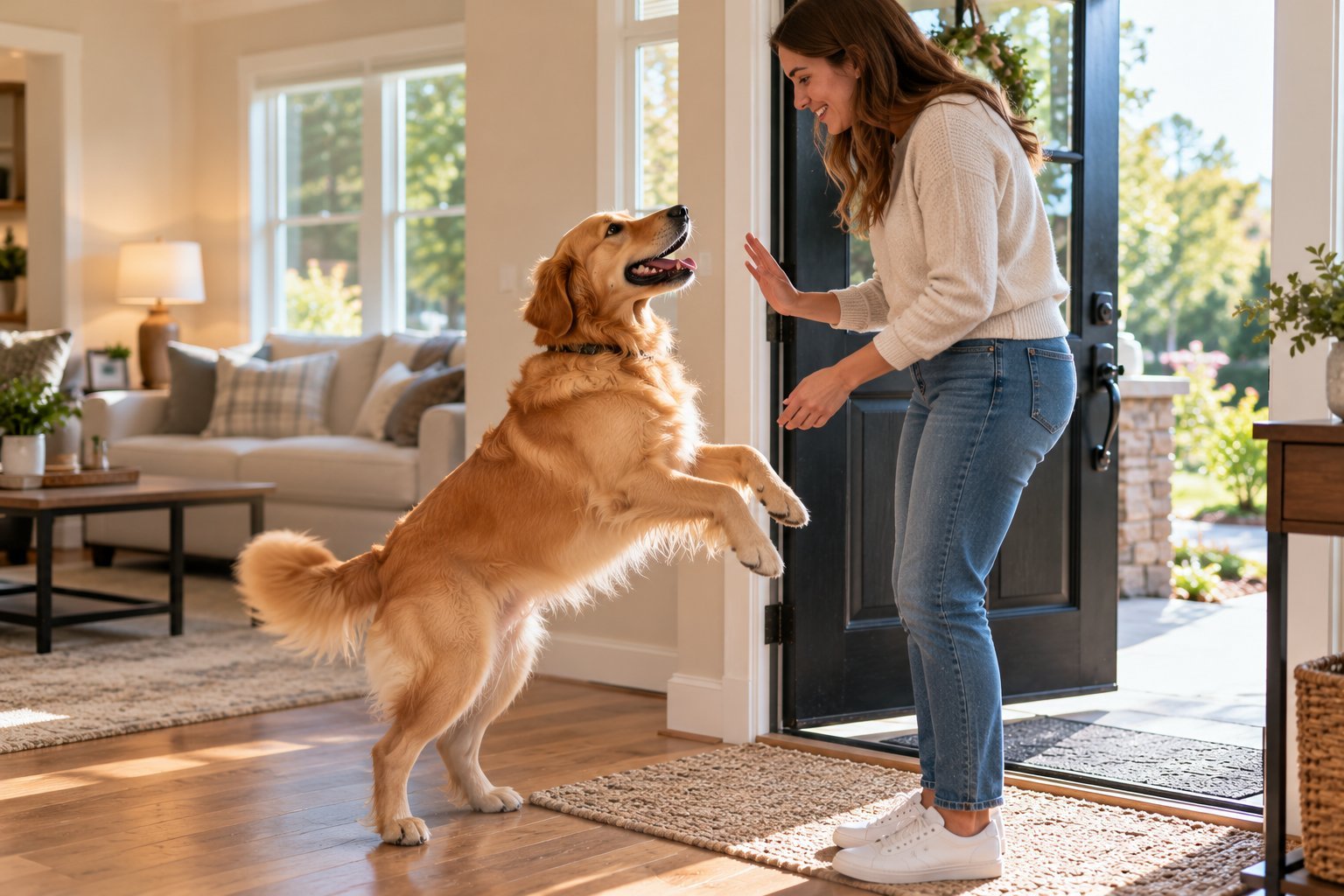
A dog that jumps up whenever someone walks through the door can be adorable at first, but the habit can quickly become difficult to manage.
Your dog might leap against your legs when you come home, bounce toward visitors, or jump on you when you reach for the leash.
Even when the behavior comes from happiness rather than aggression, it can scratch skin, knock over children, dirty clothes, and make greetings stressful.
The good news is that you can teach your dog a calmer way to say hello. Dogs often jump because the behavior gets them attention, physical contact, or an excited reaction from people.
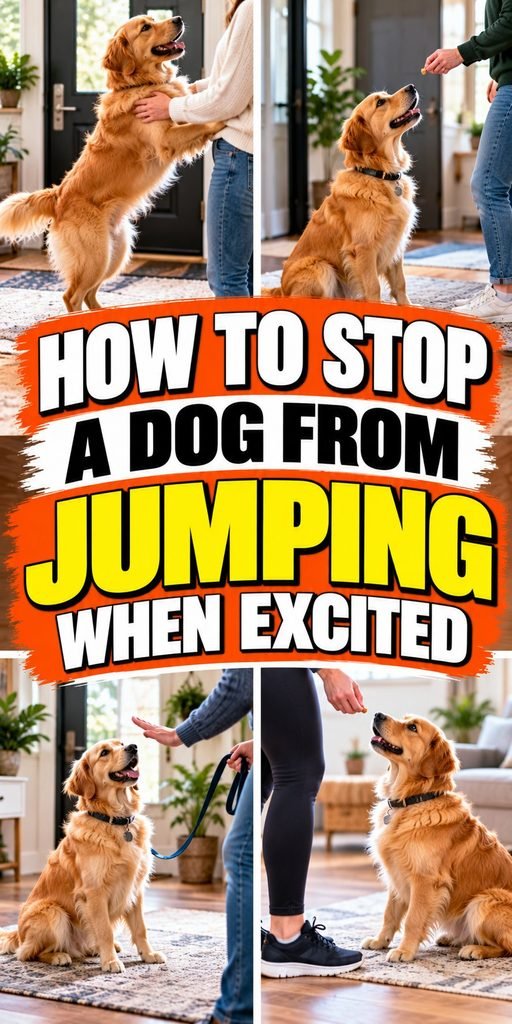
If jumping repeatedly produces the response they want, they may continue doing it without realizing that it is unwanted.
I find it helpful to approach this behavior as a training opportunity rather than a reason to scold your dog.
The goal is to show your dog what to do instead, reward that behavior consistently, and make greetings easier to manage.
These practical tips will help you understand why dogs jump when excited and how to teach better manners at home, around visitors, and during walks.
Why Do Dogs Jump When They Get Excited?
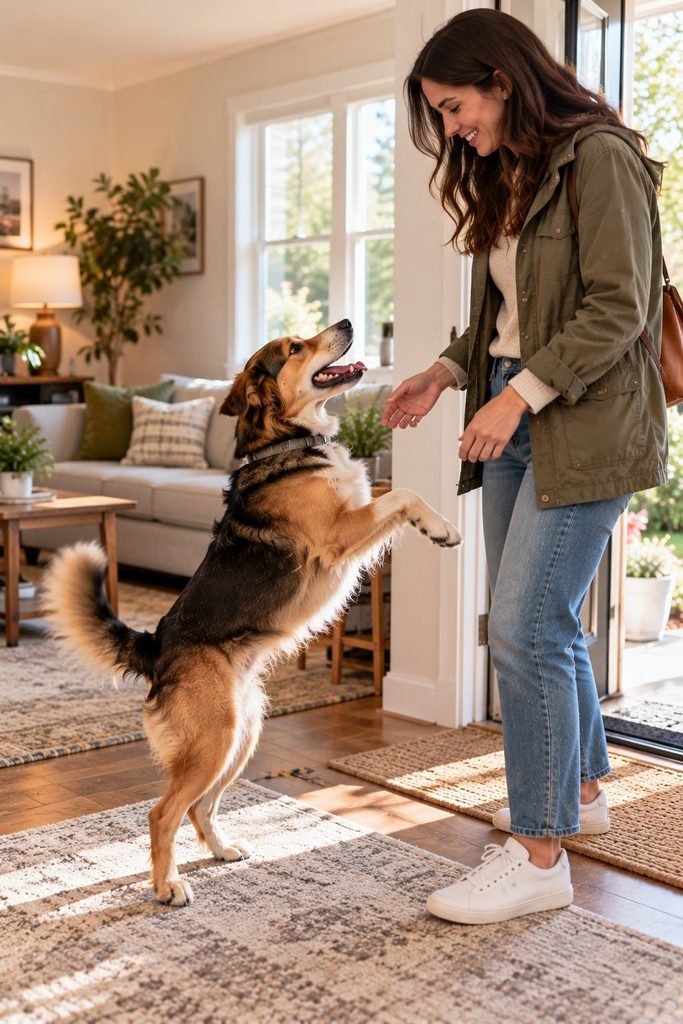
Before working on the behavior, it helps to understand what motivates it. Dogs jump for different reasons, and identifying the situation that triggers your dog’s excitement can make training more effective.
1. They Want Your Attention
Dogs quickly learn which behaviors make people look at them, speak to them, or touch them. When your dog jumps and you immediately respond by petting, talking, or pushing them away, your dog may interpret the interaction as attention.
Even telling your dog to stop can sometimes reinforce the behavior if your dog enjoys the interaction. This does not mean you should ignore every behavior your dog displays, but it does mean you should be deliberate about which actions receive attention.
2. They Are Excited to See You
Many dogs become overwhelmed with excitement when their owners return home. They may wag their tails, bark, run around, and jump because they have learned to associate your arrival with affection and activity.
Your dog is not necessarily trying to challenge you or behave badly. The excitement may simply be stronger than their ability to control their impulses in that moment.
Teaching your dog to greet you calmly requires practice, especially when the excitement is intense.
3. Jumping Has Worked in the Past
Think about how people usually react when a dog jumps. Some laugh, some pet the dog, and others push the dog away while speaking excitedly. Although these reactions are different, they can all provide attention.
If jumping has helped your dog get what they want, the behavior may become a habit. Changing it means making calm behavior more rewarding and preventing jumping from repeatedly producing the desired result.
4. They Have Not Learned an Alternative Greeting
Simply telling a dog not to jump does not explain what the dog should do instead. Your dog needs a clear, achievable behavior that earns attention.
For example, you can teach your dog to keep all four paws on the floor, sit before receiving affection, or go to a designated mat when visitors arrive. These behaviors give your dog a practical way to greet people without leaping onto them.
1. Stop Rewarding Jumping With Attention
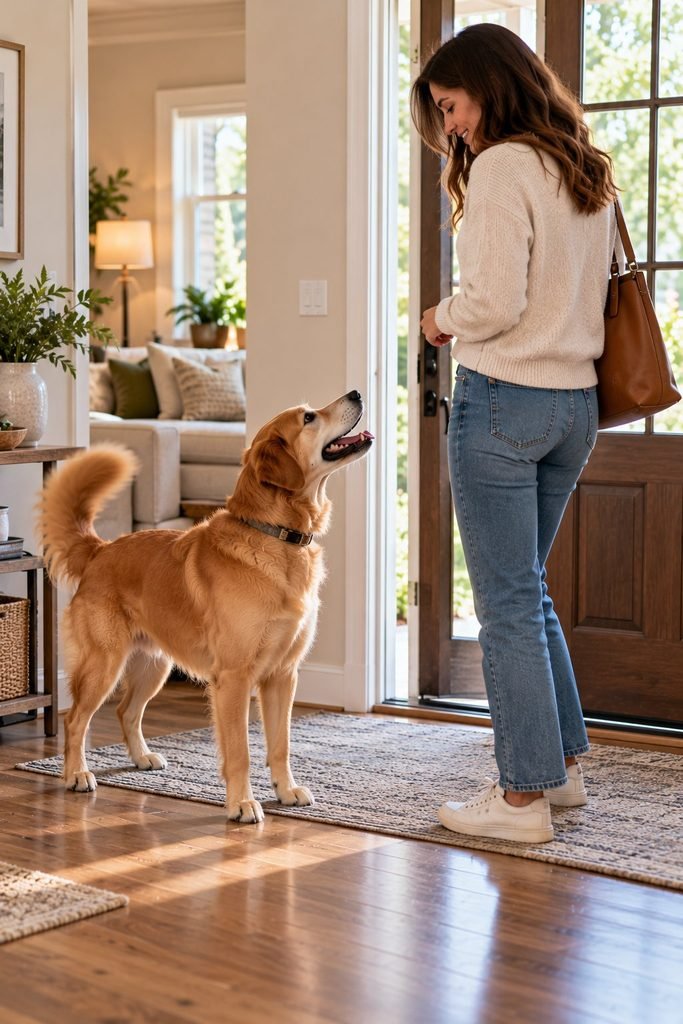
One of the first steps in teaching your dog not to jump is to change how you respond when it happens. If your dog jumps and immediately receives petting, conversation, or an exciting reaction, the behavior may continue.
When your dog jumps during a greeting, calmly turn your body away or step out of reach if it is safe to do so. Avoid shouting, waving your arms, or repeatedly pushing your dog down. These reactions can increase excitement or turn the greeting into a game.
Wait for your dog to return to the floor. The moment all four paws are down, calmly offer attention or a small treat if your dog can accept it without jumping again.
Consistency matters. If you ignore jumping one day but reward it with enthusiastic petting the next, your dog may continue trying because the behavior sometimes works.
Everyone in your household should follow the same approach. Visitors can also help by keeping greetings calm and giving attention when your dog is standing politely or sitting.
If your dog is large, persistent, or difficult to control, use a suitable barrier or leash to manage greetings safely while you train. Do not allow your dog to jump on children, older adults, or anyone who may be injured by the contact.
The aim is not to punish your dog for being happy. It is to teach that calm greetings are the reliable way to receive attention.
2. Teach Your Dog to Sit Before Greeting People
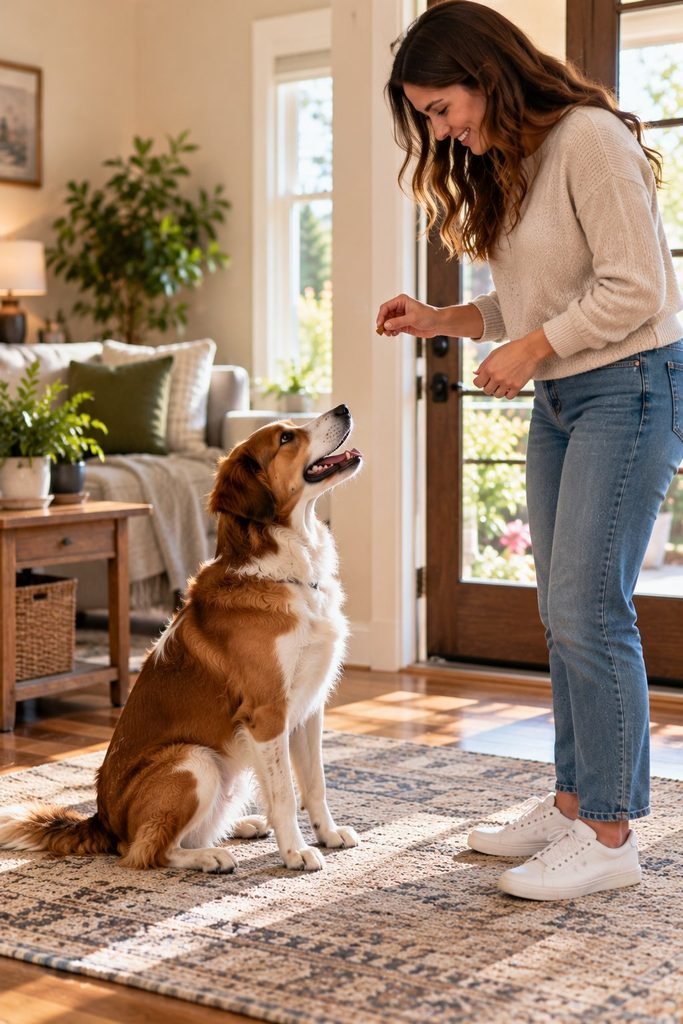
Teaching a reliable sit is one of the simplest ways to give your dog an alternative to jumping. Sitting is incompatible with leaping at the same moment, and it provides a clear behavior that you can reward.
Start somewhere quiet where your dog can focus without becoming overwhelmed. Hold a small treat near your dog’s nose, then move it gently upward and slightly backward. Many dogs will naturally lower their hindquarters as they follow the treat.
As soon as your dog sits, say a marker word such as “yes” and reward them. If you use a clicker, you can click at the moment the behavior occurs and then give the treat.
Repeat several short practice sessions until your dog begins sitting reliably. Once the behavior is familiar, introduce a verbal cue such as “sit” just before your dog is likely to perform it.
Next, practice with a calm greeting. Approach your dog, ask for a sit, and reward the behavior. Gradually make the exercise more realistic by having another household member approach, enter the room, or offer a greeting.
If your dog jumps, reduce the excitement and try again at an easier level. Avoid repeating the cue over and over when your dog is too excited to respond.
My practical tip: Make greetings the reward. Ask your dog to sit, then offer gentle attention while all four paws remain on the floor. If your dog gets up and jumps, pause the greeting and try again when they are calmer.
3. Keep Your Own Greeting Calm When You Get Home
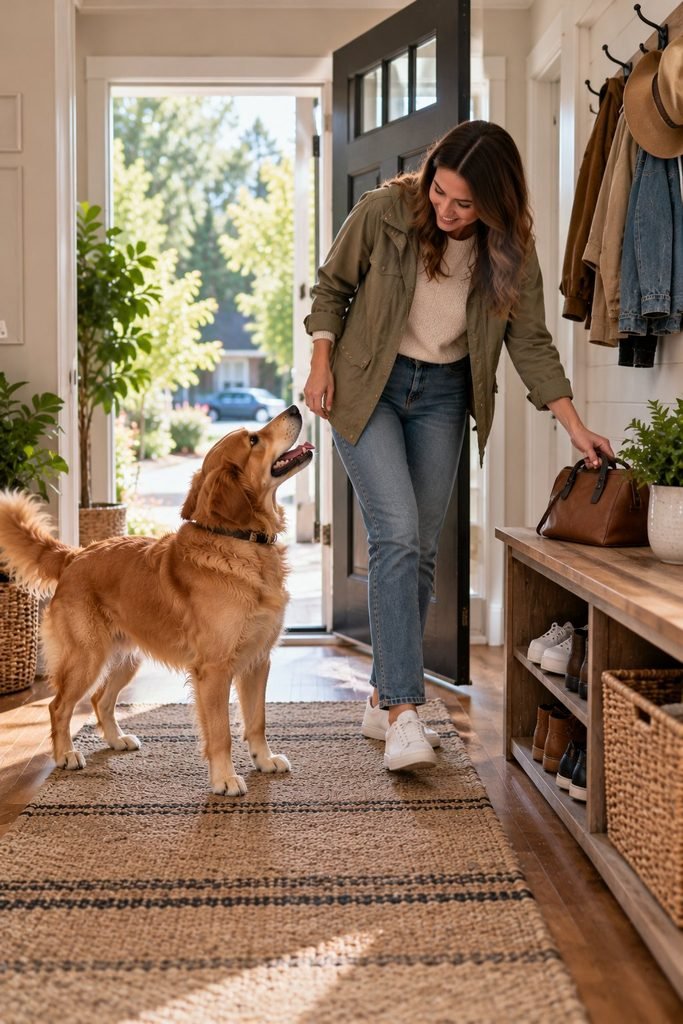
Dogs often match the energy of the people around them. If you walk through the door speaking loudly, bending over your dog, and immediately rubbing their head, you may make it harder for them to control their excitement.
Try making your arrival less stimulating. Enter calmly, put down your belongings, and give your dog a moment to settle before offering attention.
If your dog jumps, avoid turning the interaction into a dramatic event. Keep your movements steady and wait for a brief moment of calm. When your dog has all four paws on the floor, reward that behavior with a quiet greeting.
For dogs that become extremely excited, it may help to prepare before entering the house. Ask someone at home to keep the dog behind a suitable barrier until you are ready. You can then enter, wait for calmer behavior, and invite the dog to greet you when they are more settled.
Do not expect your dog to remain perfectly calm immediately. Returning home can be one of the most exciting parts of the day, so start by rewarding small improvements. A few seconds without jumping can be a useful first step.
You can also practice short departures and returns when convenient, making the exercise easier than a full reunion after several hours away.
Over time, your dog can learn that your arrival does not mean they need to leap around to get attention. Calm behavior becomes a familiar part of the routine.
4. Reward Your Dog for Keeping All Four Paws on the Floor
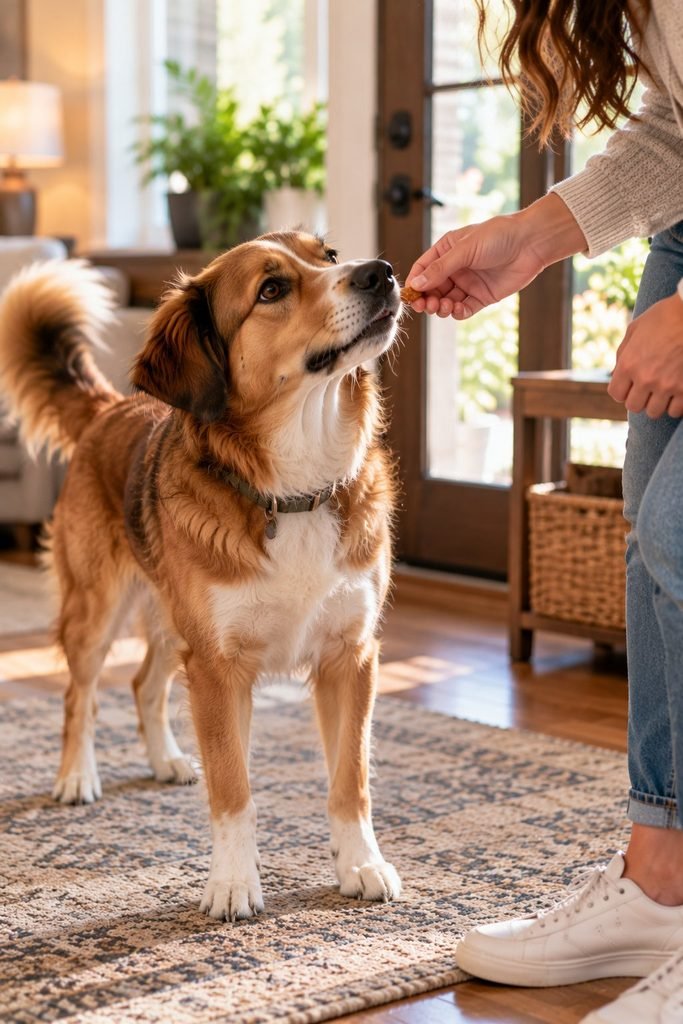
Your dog needs to understand exactly which behavior earns a reward. One useful exercise is to reinforce moments when your dog stands calmly instead of jumping.
Keep a few small treats nearby during training. When your dog approaches you and keeps all four paws on the ground, mark the behavior with “yes” and offer a treat. You can also reward calm behavior with gentle petting if your dog finds that rewarding.
Practice in different situations, such as when you enter a room, pick up the leash, or approach your dog’s resting area. Start when your dog is relatively relaxed before trying the exercise during more exciting greetings.
Timing is important. Deliver the reward while your dog is standing calmly, rather than waiting until they have already jumped again. If your dog becomes too excited to take treats gently, increase your distance or reduce the intensity of the greeting.
Avoid holding a treat above your dog’s head while encouraging them to stay down. That can tempt them to reach upward. Keep rewards low and close to your body, and give them when your dog is in the position you want.
Be patient if your dog has been jumping for a long time. You may need to reward several small moments of calm before expecting a full greeting without jumping.
With repeated practice, your dog learns that staying on the floor is not a missed opportunity. It is the behavior that makes attention, treats, and interaction happen.
5. Practice With a Leash to Make Greetings Easier to Manage
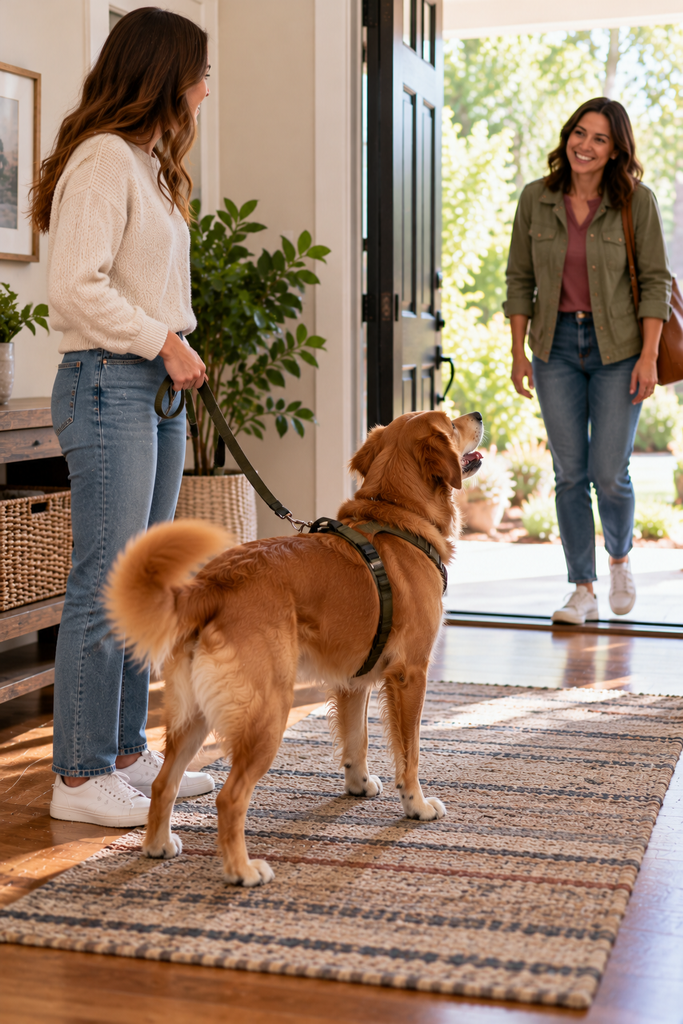
A leash can help you manage greetings while your dog learns better manners. It provides a way to prevent your dog from rushing toward someone, but it should be used for guidance and safety rather than jerking or punishing your dog.
Begin in a familiar area with a properly fitted harness or collar and a standard leash. Ask your dog to sit or stand calmly while another person approaches from a comfortable distance.
If your dog remains calm, reward the behavior and allow the person to move closer. If your dog starts jumping, have the person pause or step back while you help your dog settle. Resume the greeting when your dog can respond calmly again.
Keep the leash loose whenever possible. Constant tension can make some dogs more frustrated, and pulling hard on the leash may increase excitement rather than teach a calm greeting.
Choose a helper who understands the exercise and is willing to follow your instructions. Begin with someone your dog knows before practicing with unfamiliar visitors.
For a dog that is very strong or difficult to control, seek help from a qualified reward-based trainer. Do not use a leash to drag a dog down or hold them in a position that causes distress.
The goal is to create a predictable greeting where calm behavior allows the interaction to continue. Your dog gradually learns that moving toward people politely is more successful than jumping on them.
6. Ask Visitors to Ignore Jumping and Reward Calm Behavior
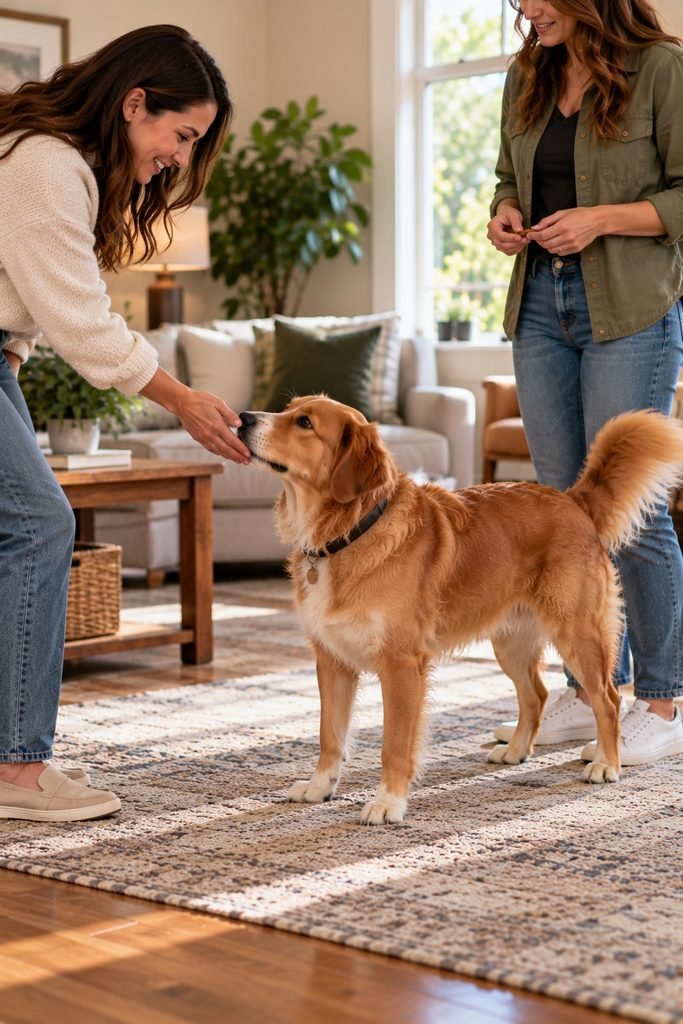
Training becomes much harder when you teach your dog not to jump, but visitors continue encouraging the habit. A guest who laughs, pets your dog, or excitedly calls their name while the dog is jumping may unintentionally reinforce the behavior.
Before visitors arrive, explain your greeting routine. Ask them to avoid petting, talking excitedly to, or leaning toward your dog while the dog is jumping. Once your dog has all four paws on the floor or sits calmly, the visitor can offer attention.
If your dog becomes too excited to respond, use a baby gate, exercise pen, or another suitable barrier to manage the greeting. Give your dog a chance to settle before allowing closer contact. This is particularly important when children, older adults, or people with mobility difficulties are visiting.
Start with short, controlled greetings rather than expecting your dog to handle a busy gathering immediately. Invite one calm person to help you practice, then gradually introduce more challenging situations.
Remember that not every visitor will follow your instructions perfectly. Keep your dog on a suitable leash or behind a barrier when necessary, and do not rely on strangers to manage your dog’s behavior.
The more consistent everyone becomes, the easier it is for your dog to understand that jumping does not lead to attention, while calm behavior does.
7. Teach Your Dog to Go to a Mat When Someone Arrives
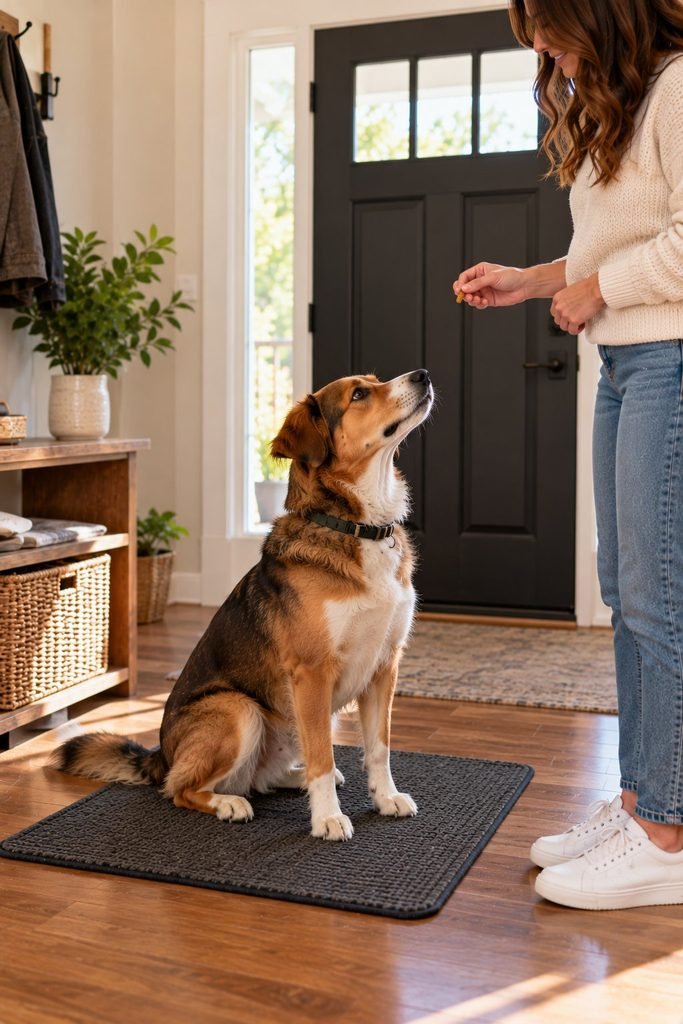
For dogs that become extremely excited at the door, teaching a designated mat behavior can provide a helpful alternative to jumping. Instead of rushing toward every visitor, your dog learns to move to a specific spot and wait for a reward.
Choose a nonslip mat or dog bed in a location away from the doorway. Begin when the house is quiet and your dog is relaxed.
Toss a small treat onto the mat. When your dog steps onto it, mark the behavior with a word such as “yes” and offer another treat. Repeat until your dog begins moving toward the mat willingly.
Once your dog understands the exercise, introduce a cue such as “place” or “mat” just before they move toward it. Reward your dog for remaining there briefly, then gradually increase the time before releasing them.
Next, practice with a gentle knock on the door or a household member entering the room. Reward your dog for going to the mat rather than rushing forward. Keep the practice easy enough that your dog can succeed.
For highly excitable dogs, a baby gate or leash may help prevent them from reaching visitors while you work on the skill. Do not expect the mat to solve every greeting problem immediately. Build the behavior gradually, then practice in different situations.
This approach gives your dog a clear job to do when something exciting happens. With repetition, going to the mat can become part of a calmer greeting routine.
8. Give Your Dog Enough Exercise and Mental Stimulation
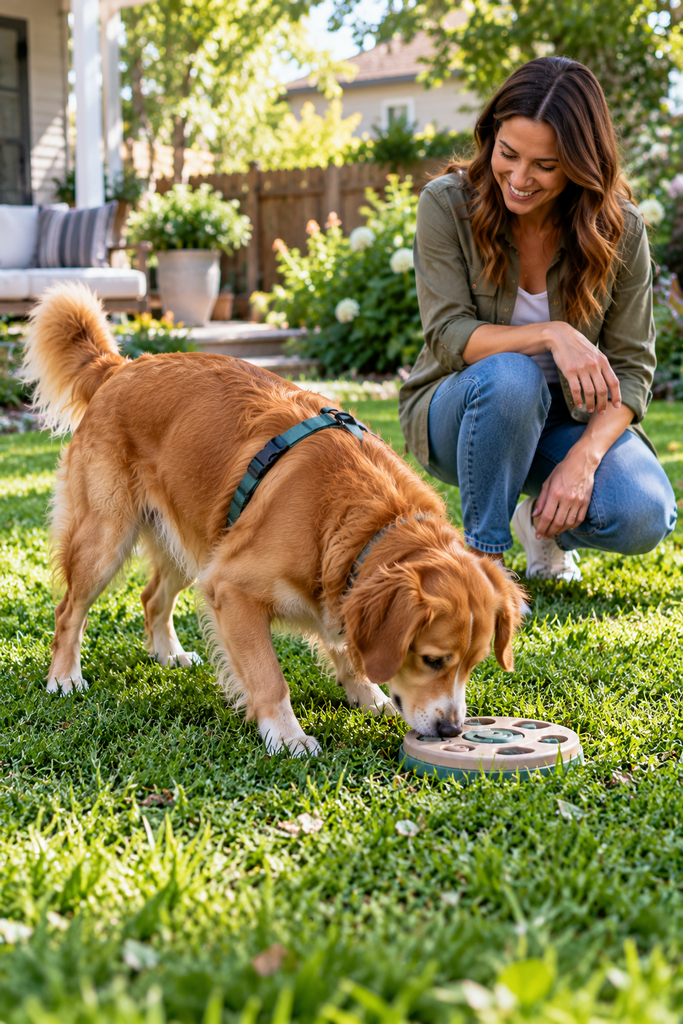
Sometimes jumping becomes more noticeable when a dog has excess energy or limited opportunities to explore, play, and use their brain. Exercise alone will not eliminate jumping, but an appropriate daily routine can help your dog settle more easily.
The right amount of activity depends on your dog’s age, breed, health, and individual needs. Some dogs benefit from several walks throughout the day, while others need shorter outings combined with gentle play and enrichment.
Sniffing walks can be especially useful because they allow dogs to explore their surroundings at their own pace. Instead of focusing only on distance, give your dog opportunities to investigate scents, explore safe areas, and interact with the environment.
Mental activities can also help. Try food puzzles, supervised scent games, reward-based training, or simple exercises such as finding a hidden toy. These activities provide an outlet for curiosity without requiring constant high-intensity exercise.
Avoid trying to exhaust your dog with excessive activity. Puppies, older dogs, and dogs with certain medical conditions may need modified exercise routines. Consult your veterinarian if you are unsure what level of activity is appropriate.
Most importantly, combine enrichment with direct training. A dog can have plenty of exercise and still jump because the behavior has been rewarded in the past. Continue reinforcing calm greetings so your dog learns what you expect.
9. Teach Children and Family Members How to Respond
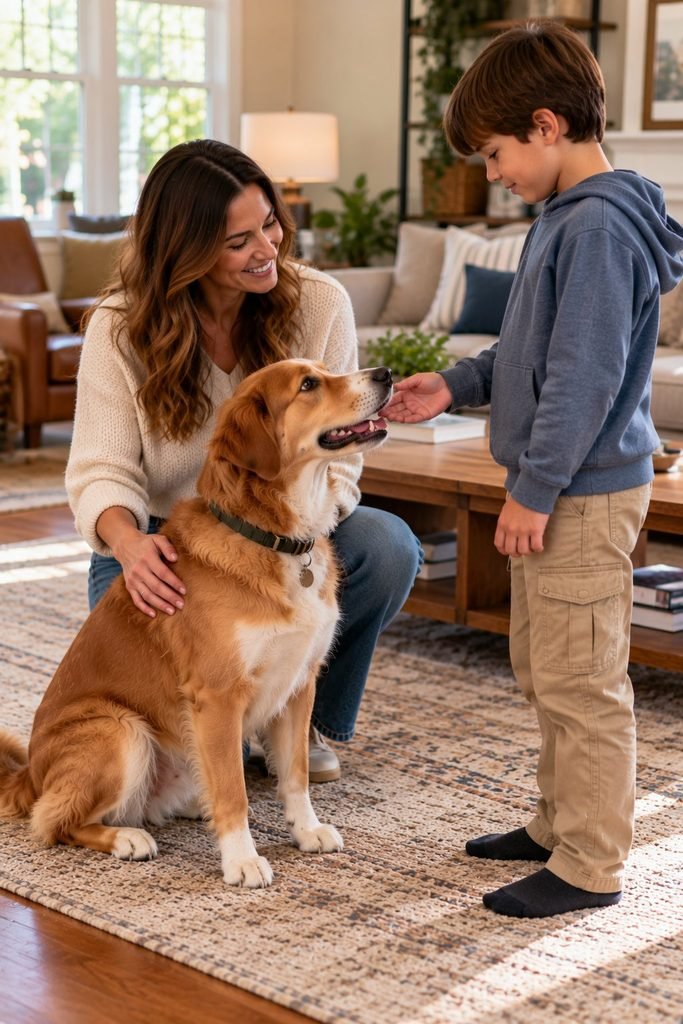
Children often find an excited, jumping dog entertaining, but the behavior can quickly become unsafe. Even a friendly dog can knock over a young child or scratch someone while trying to greet them.
Teach children to stand calmly, keep their hands close to their bodies, and avoid screaming, running, or waving their arms when a dog becomes excited. However, children should not be responsible for training a dog that is jumping forcefully or difficult to control.
An adult should manage the interaction. Use a suitable barrier or leash when needed, and reward the dog for calm behavior before allowing a greeting. If the dog continues jumping, calmly separate them and try again later.
Never ask a child to push a dog down, grab its collar, or physically restrain it. These actions can cause frustration or increase the risk of accidental injury.
The same rules should apply to everyone in the household. If one person rewards jumping while another ignores it, the dog receives mixed messages. Agree on a simple greeting routine and use the same cues and rewards.
Always supervise interactions between dogs and young children, even when the dog is familiar and generally friendly. Give the dog a quiet place to rest where children will not disturb them.
Teaching calm greetings protects everyone while helping your dog develop better manners.
10. Practice Calm Greetings in Different Places
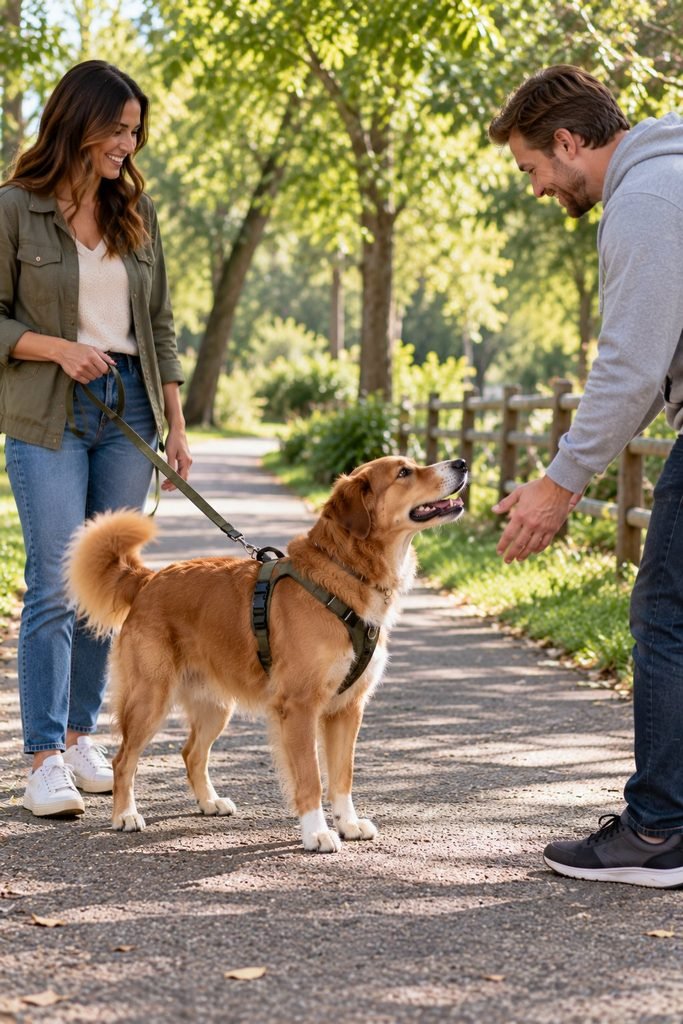
A dog that stops jumping at home may still jump when meeting people at the park, outside a pet-friendly store, or during a walk. This happens because dogs do not automatically understand that a behavior learned in one location applies everywhere.
Once your dog can greet familiar people calmly at home, begin practicing in other low-distraction environments. Ask a friend to approach while you keep your dog at a comfortable distance. Reward your dog for keeping all four paws on the ground or responding to a sit cue.
If your dog remains calm, allow the person to approach gradually. If your dog starts jumping, increase the distance and give them a chance to settle before trying again.
Do not begin training in the busiest environment available. Crowded sidewalks, dog parks, and gatherings can be too stimulating for a dog that is still learning impulse control.
Use a secure leash and suitable equipment, and respect other people’s space. Not everyone wants to greet your dog, and some people may be nervous around animals.
Keep sessions short and finish while your dog is still able to respond to you. Over time, increase the difficulty by practicing with different people, locations, and levels of distraction.
Consistency across settings helps your dog understand that polite greetings are expected whether they are at home or out in public.
How Long Does It Take to Stop a Dog From Jumping?
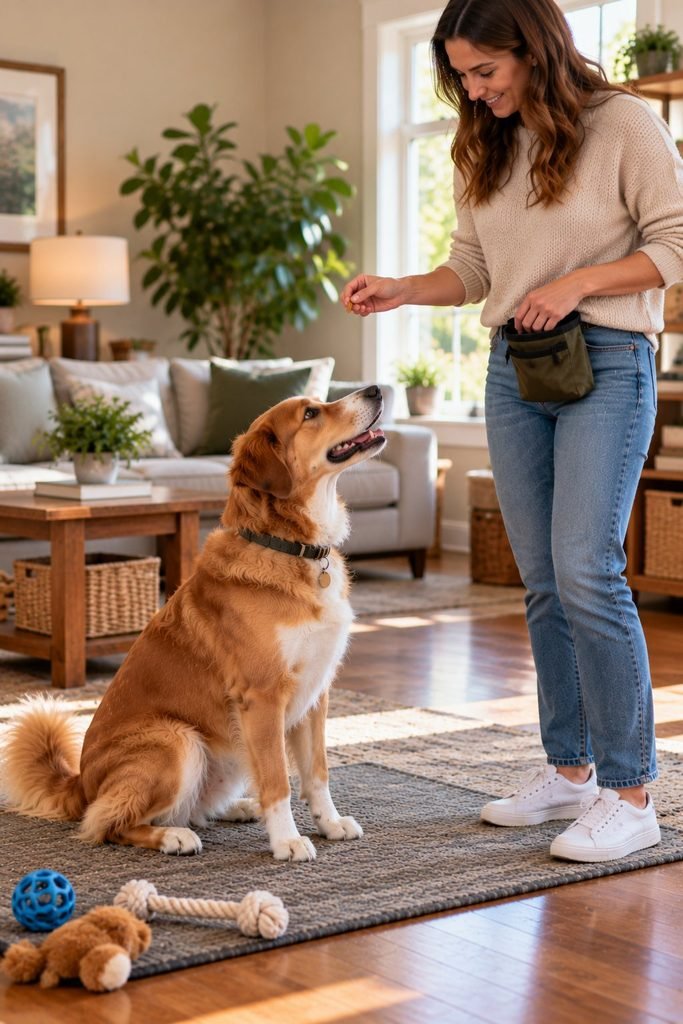
The time it takes to reduce jumping depends on your dog’s age, temperament, previous training, and how often the behavior has been rewarded. Some dogs begin improving within a few consistent training sessions, while others need several weeks or longer to develop reliable habits.
Start by choosing one or two situations that happen regularly, such as greeting you at the door or meeting a familiar visitor. Practice those situations daily and reward the behavior you want.
Keep sessions short and manageable. A few minutes of successful practice can be more useful than a long session in which your dog becomes increasingly excited.
Look for gradual improvements. Your dog might initially jump less forcefully, recover more quickly, or keep all four paws on the floor for a few seconds before getting excited again. Reward these steps while continuing to work toward calm, consistent greetings.
Avoid changing your approach every day. Everyone involved should use the same basic rules, cues, and rewards so your dog receives a clear message.
If jumping persists despite consistent training, or if it is accompanied by growling, snapping, fear, or other concerning behavior, consider consulting a qualified reward-based trainer or veterinary behavior professional. A professional can help identify the cause and create a plan suited to your dog.
Common Mistakes to Avoid When Training a Dog Not to Jump
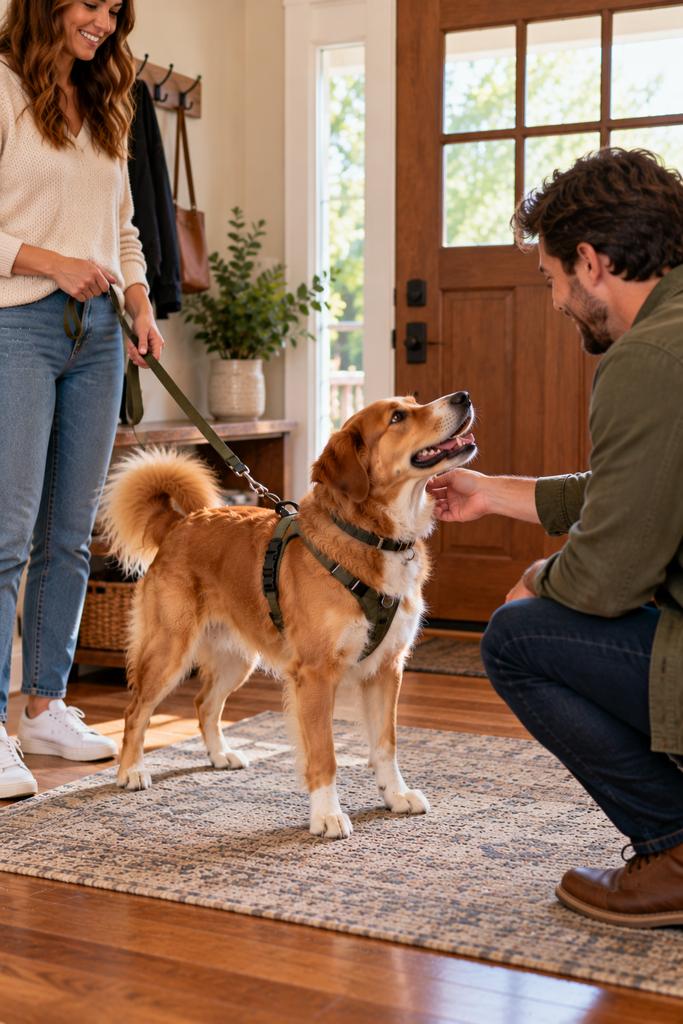
Even well-meaning owners can accidentally make jumping harder to change. A few adjustments can make your training more effective.
Pushing your dog down. Physical pushing may feel like a correction, but some dogs interpret it as play or attention. Calmly interrupt the greeting and reward an appropriate alternative instead.
Shouting or becoming overly excited. Loud reactions can increase arousal. Use a calm voice and predictable movements.
Rewarding jumping sometimes. Petting your dog when they jump because you are in a hurry can make the behavior more persistent. Keep your greeting rules consistent.
Expecting immediate results around visitors. People arriving at the door can be extremely exciting. Begin with controlled practice and use barriers or a leash when necessary.
Repeating commands when your dog cannot focus. If your dog is too excited to respond, reduce the difficulty or increase the distance from the trigger.
Forgetting to reward calm behavior. Your dog needs to know what works. Reward four paws on the floor, a calm sit, or going to a designated mat.
Allowing unsafe greetings. Prevent jumping on children, older adults, or anyone who could be injured. Manage the situation while continuing training.
Frequently Asked Questions
Why does my dog jump on me when I come home?
Your dog may be excited to see you and may have learned that jumping produces attention, petting, or conversation. Keep your arrival calm and reward your dog when all four paws are on the floor.
Should I ignore my dog when it jumps?
You can briefly withhold attention when your dog jumps, provided the situation is safe. Turn away or pause the greeting, then reward calm behavior. For dogs that could injure someone, use a leash or barrier instead of relying on ignoring alone.
Is it okay to tell my dog to sit when visitors arrive?
Yes. Teaching a reliable sit can give your dog an alternative to jumping. Practice when your dog is calm first, then gradually introduce greetings with familiar people.
Why does my dog jump on strangers but not family members?
Strangers may create a different level of excitement, uncertainty, or anticipation. Practice at a comfortable distance, reward calm behavior, and prevent strangers from approaching closely while your dog is jumping.
Can exercise stop a dog from jumping?
Appropriate exercise and mental enrichment may help some dogs settle, but they do not replace direct training. You still need to teach and reward a polite greeting.
Should I punish my dog for jumping?
Physical punishment, yelling, and harsh corrections are not recommended. They may increase excitement or fear without teaching your dog what to do instead. Reward-based training provides a clearer and safer alternative.
Final Thoughts
Learning how to stop a dog from jumping when excited is mostly about teaching a better greeting and making that behavior rewarding.
Your dog needs to understand that keeping all four paws on the floor, sitting politely, or going to a mat is a reliable way to receive attention.
Start with manageable situations, keep your reactions calm, and reward the behavior you want to see. Ask family members and visitors to follow the same routine, and use a leash or suitable barrier whenever you need additional control.
Progress may not happen overnight, particularly if jumping has been a habit for a long time. Stay consistent, recognize small improvements, and avoid physical punishment that can increase excitement or fear.
With patient, reward-based training, many dogs can learn to greet people more politely. The result is a calmer home, safer interactions, and a happier way for your dog to show excitement.