Magic Scrambled Egg for Dogs: Easy, Fluffy, and Safe
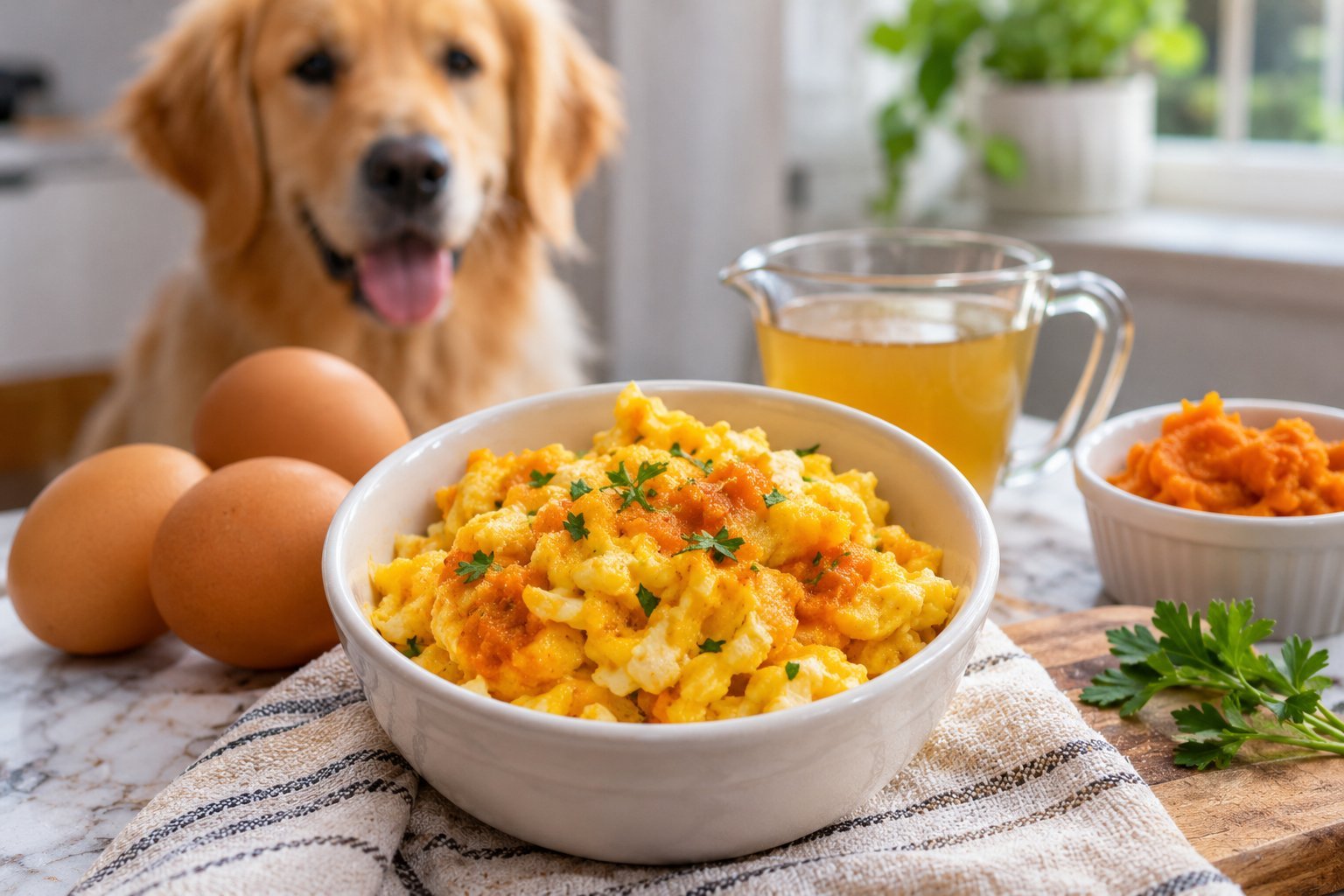
Ask a dog owner what the fastest way to get a picky eater excited about a bowl is, and a surprising number of them say the same thing: a scrambled egg.
It cooks in minutes, the smell is irresistible, and it’s easy to dress up with a few dog friendly extras.
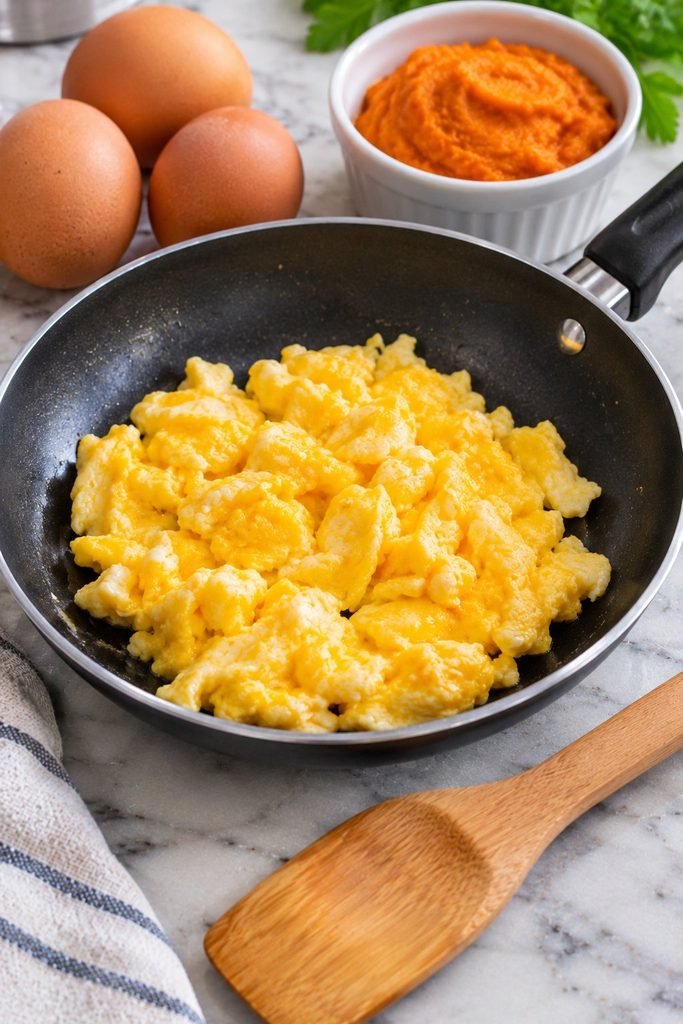
This version earns its “magic” nickname by adding a spoonful of plain pumpkin for gentle digestion and a little broth for extra fluff, all without butter, salt, or the seasonings that make human scrambled eggs a bad idea for dogs.
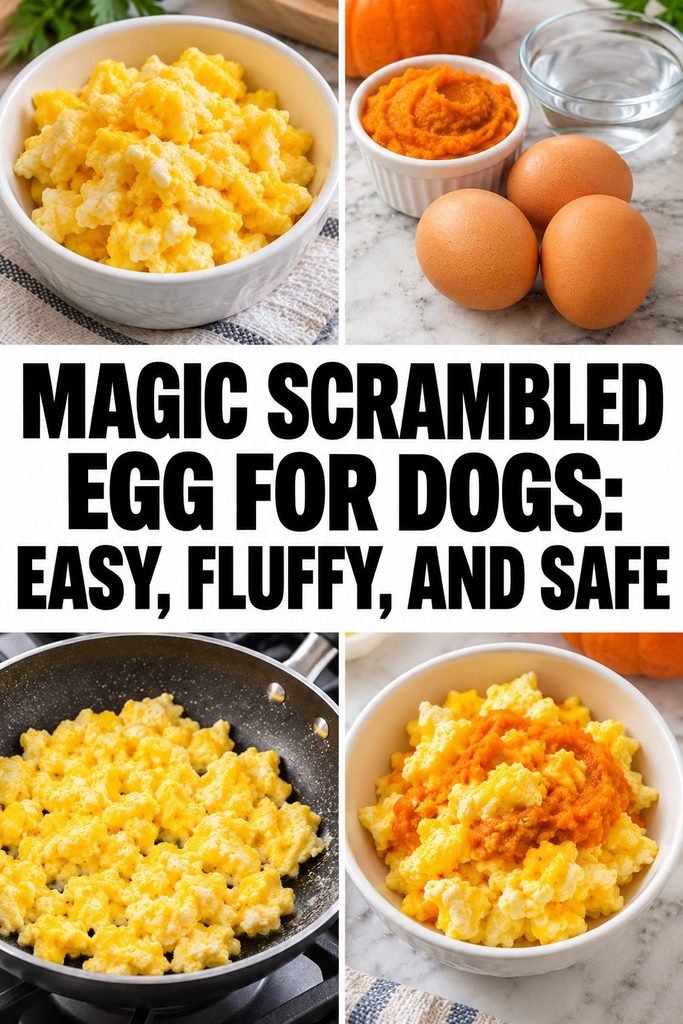
This guide covers how to make it, why each ingredient is there, how much to serve, and the safety points worth knowing, since eggs are healthy for most dogs but not for every dog in every situation.
Always check with your veterinarian if your dog has a medical condition, a history of pancreatitis, a weight problem, or a food allergy.
If your dog loves homemade extras, my banana and honey dog biscuits and bone broth gummy treats are good next stops.
Recipe Snapshot
| Detail | Info |
|---|---|
| Prep time | 3 minutes |
| Cook time | 4 to 5 minutes |
| Total time | About 8 minutes |
| Yield | 1 to 2 servings, depending on dog size |
| Difficulty | Very easy |
| Storage | Refrigerate up to 2 to 3 days |
Are Scrambled Eggs Safe for Dogs?
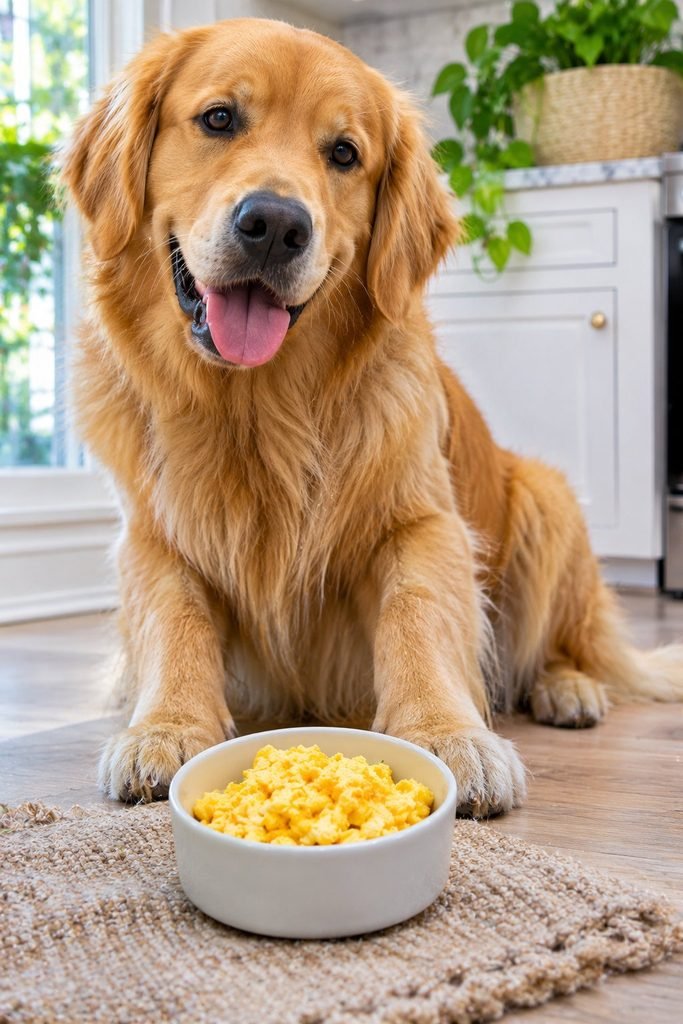
Fully cooked eggs are generally considered safe for most healthy dogs when served plain and in moderation.
They’re a source of protein, along with vitamins and minerals such as riboflavin and selenium, and they’re easy to digest for many dogs. Eggs also make a handy topper or a training reward.
There are a few important cautions. Raw eggs carry a risk of bacteria like salmonella, so always cook eggs thoroughly. Dogs with pancreatitis or a history of it often need low fat diets, so ask your vet before offering eggs.
Dogs prone to weight gain should have eggs counted as part of their treat calories. And some dogs are allergic to eggs, so introduce them slowly and watch for itching, digestive upset, or other changes.
Why This Recipe Is “Magic”
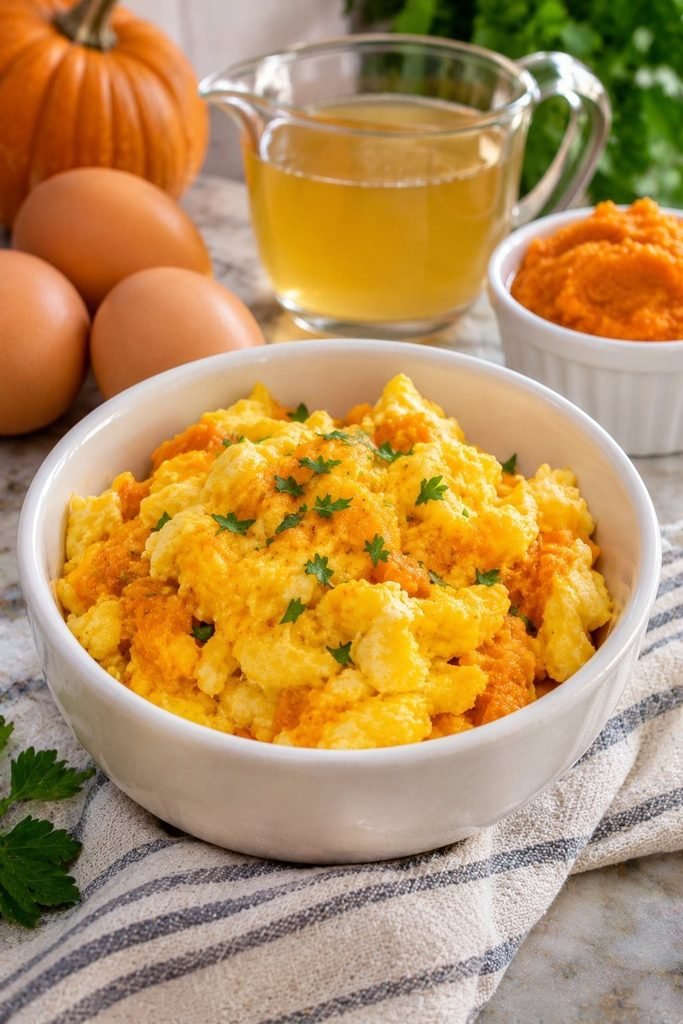
It’s fast. The whole recipe takes less than ten minutes and uses one pan.
It’s fluffy and appealing. A splash of unsalted broth or water keeps the eggs tender and soft, which many dogs prefer.
It’s gentle. Plain pumpkin adds fiber and a mild flavor that many dogs tolerate well.
It’s flexible. You can use it as a meal topper, a high value treat, or a quick breakfast for a dog with a small appetite.
Ingredients
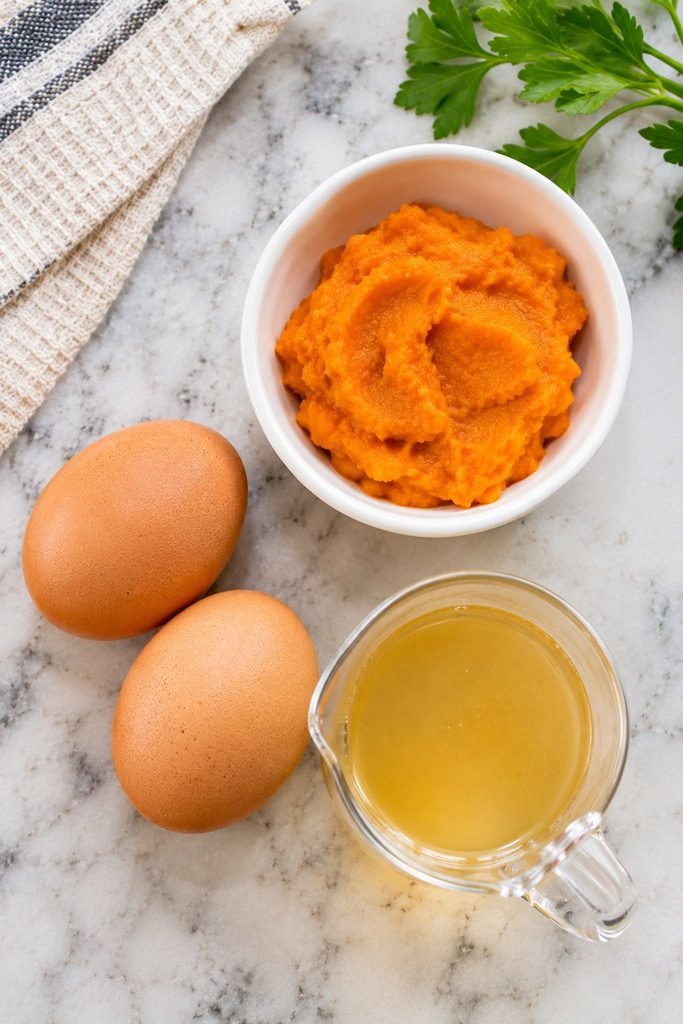
Eggs
Two large eggs give you enough for one large dog or two smaller servings. Choose fresh eggs, and cook them completely. There’s no need for butter or oil, since a non-stick pan and a splash of liquid do the job.
Unsalted Broth or Water
About a tablespoon of water or unsalted, onion free, garlic free broth helps create fluffy curds and prevents sticking.
Check labels carefully, since many store bought broths contain salt, onion, or garlic, which aren’t safe for dogs. My bone broth gummy treats for dogs post covers choosing a dog friendly broth.
Plain Pumpkin Puree
One tablespoon of plain, canned pumpkin puree adds fiber and gentle flavor. Make sure it’s pure pumpkin and not pumpkin pie filling, which contains sugar and spices.
Optional Extras
A teaspoon of finely chopped fresh parsley or cooked spinach adds a pop of green. A spoonful of cooked, mashed sweet potato adds sweetness and fiber.
Keep extras simple and dog safe, and skip anything with onion, garlic, chives, or heavy seasoning.
Equipment
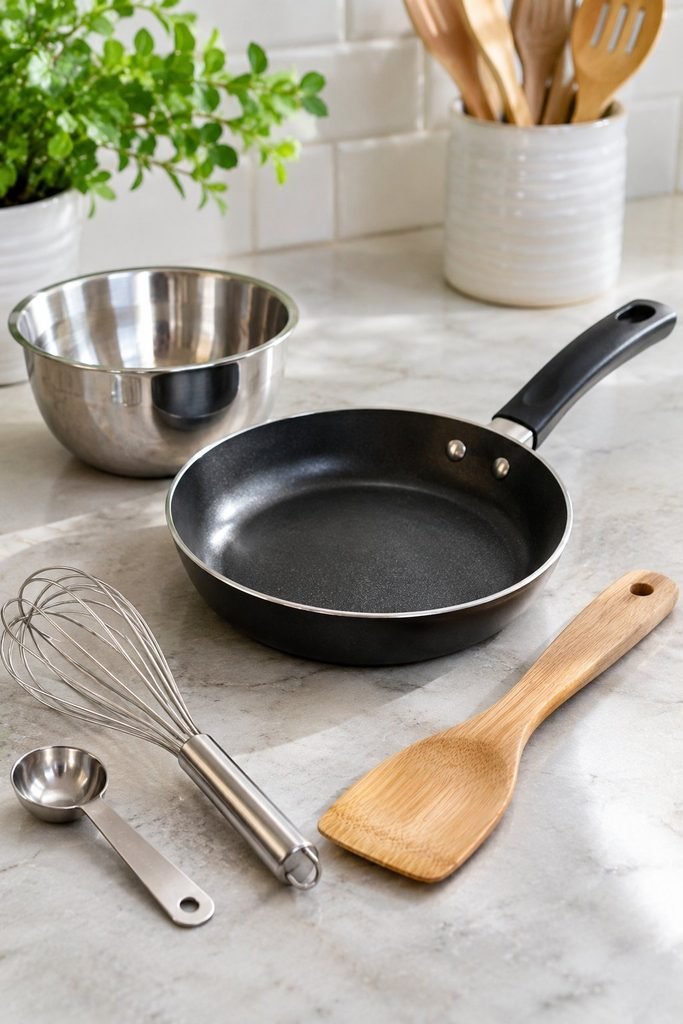
A small non-stick skillet, a whisk or fork, a bowl, and a spatula.
Step by Step Instructions
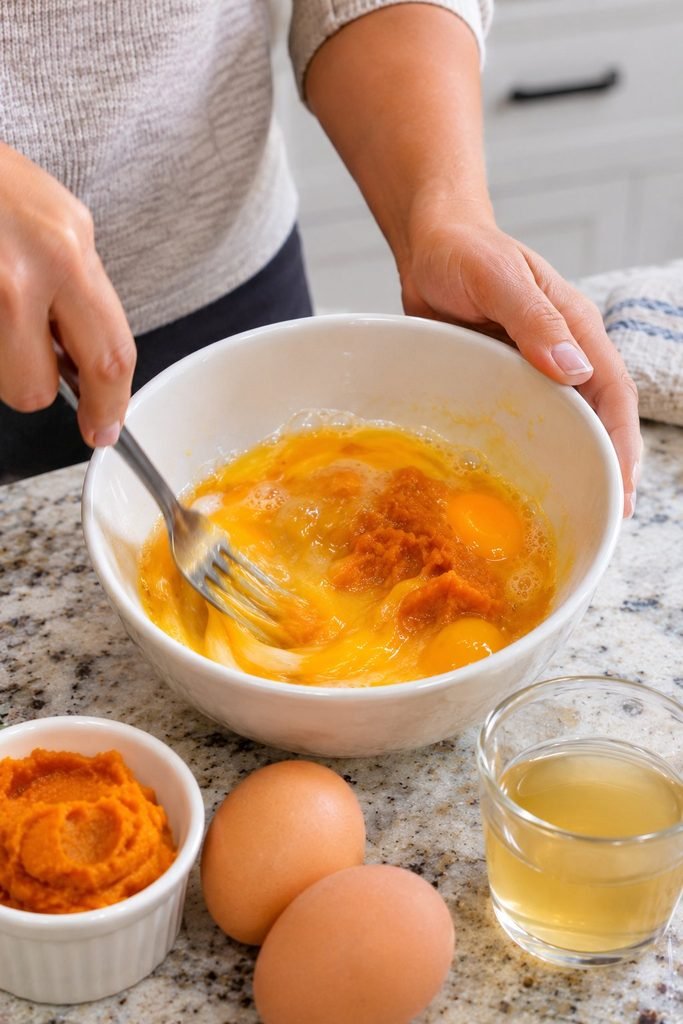
Step 1: Whisk the eggs. Crack the eggs into a bowl, add the water or broth, and whisk until fully combined, with no streaks of white.
Step 2: Add the pumpkin. Stir in the pumpkin puree and any optional extras, mixing until the color is even.
Step 3: Heat the pan. Warm a non-stick skillet over low to medium heat. You don’t need oil or butter, but make sure the pan is dry and clean.
Step 4: Cook gently. Pour in the egg mixture and let it sit for a few seconds, then gently push the eggs from the edges to the center with a spatula, forming soft curds.
Step 5: Cook through. Keep stirring gently until the eggs are fully cooked, with no runny parts. Fully cooked eggs should look set and slightly dry.
Step 6: Cool completely. Remove from the pan and let the eggs cool to room temperature before serving. Hot food can burn your dog’s mouth.
Serving Size Guide
Eggs should be treated as part of your dog’s overall diet and treat allowance, not as a free for all.
As a rough guideline, small dogs might get a spoonful or up to about a quarter to half an egg, medium dogs up to about one egg, and large dogs up to about one egg, a few times a week at most.
Treats in general should stay within about 10 percent of daily calories, with the rest coming from a balanced diet. Your vet can tailor portions to your dog’s size, age, and health.
| Dog Size | Rough Serving |
|---|---|
| Small | 1 to 2 tablespoons, occasionally |
| Medium | About half to one egg, occasionally |
| Large | About one egg, occasionally |
How to Serve It
Spoon it over your dog’s regular food as a topper, mix a small amount into kibble for a picky eater, or serve it as a special breakfast. You can also use tiny bits as high value training rewards.
If you want more meal ideas, my simple homemade dog food recipes for beginners post and 3 ingredient cooked dog food recipes post cover simple meals.
Variations
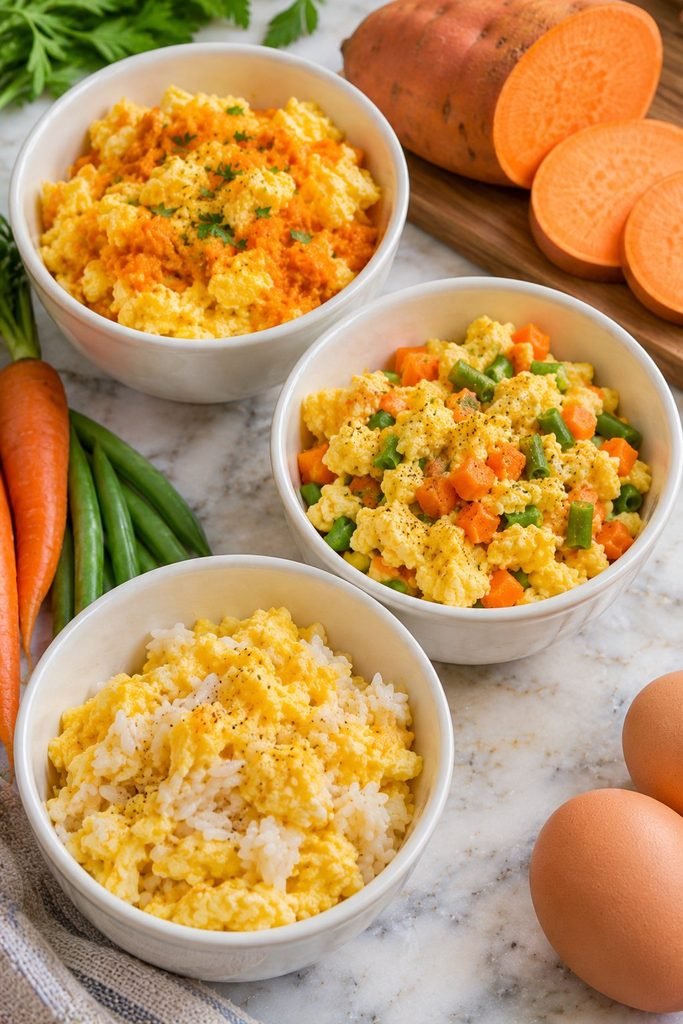
Egg and sweet potato. Stir in a spoonful of mashed, cooked sweet potato for extra fiber and flavor.
Egg and veggie scramble. Add finely chopped, cooked carrots or green beans for texture.
Egg and rice. Mix a small amount of plain cooked rice with the egg for a simple, bland meal.
If your dog has digestive upset that lasts more than a day or two, or has other symptoms, contact your vet rather than relying on home remedies.
Egg and broth bowl. Serve cooled, chopped scrambled egg with a splash of dog safe broth for a soupy topper.
Storage
Store leftovers in an airtight container in the refrigerator for up to two to three days, and discard anything that smells off.
You can also freeze small portions for later, though the texture may change, and thaw them in the refrigerator before serving. Reheat gently and always cool before serving.
Common Mistakes to Avoid
Adding salt, butter, or oil. These add unnecessary salt and fat, which can upset your dog’s stomach and aren’t good for dogs prone to pancreatitis.
Using onion, garlic, or chives. These are toxic to dogs, even in small amounts.
Serving undercooked eggs. Raw or runny eggs can carry bacteria.
Using pumpkin pie filling. It contains sugar and spices, unlike plain pumpkin puree.
Overfeeding. Too many eggs can add calories and cause digestive upset.
Serving it hot. Always cool the eggs completely first.
When to Skip Eggs or Ask Your Vet
Check with your veterinarian before feeding eggs if your dog has pancreatitis, kidney disease, obesity, diabetes, or a food allergy, or is on a prescription diet.
Stop feeding and contact your vet if you see vomiting, diarrhea, itching, swelling, or other unusual signs after eating eggs.
Frequently Asked Questions
Can dogs eat scrambled eggs every day? Some dogs can have a small amount regularly, but daily feeding can add up in calories and may not suit every dog, so ask your vet about frequency.
Can puppies eat scrambled eggs? Many puppies can have small amounts of fully cooked egg, but puppies have specific nutritional needs, so check with your vet first.
Can dogs eat raw eggs? It’s generally not recommended because of the risk of bacteria, so cook eggs thoroughly.
Can I add cheese or butter? It’s best to skip them, since they add fat and salt, and some dogs are sensitive to dairy.
Are eggshells okay? Eggshells aren’t necessary, and adding them for calcium should be discussed with your vet first.
Can scrambled egg help an upset stomach? Plain, cooked egg is sometimes included in a bland diet, but persistent symptoms need a vet’s attention.
What if my dog is allergic to eggs? Avoid eggs and talk to your vet about safe alternatives.
Final Thoughts
A plain, fully cooked scrambled egg is one of the simplest ways to treat your dog to a homemade meal.
Keep it free of seasoning, serve a sensible portion, and let your dog’s reaction guide you.
If you’re looking to expand your dog’s menu, my 7 healthiest homemade dog foods post and vet approved homemade dog foods post are good places to continue.