High Protein Balanced Meals for Dogs
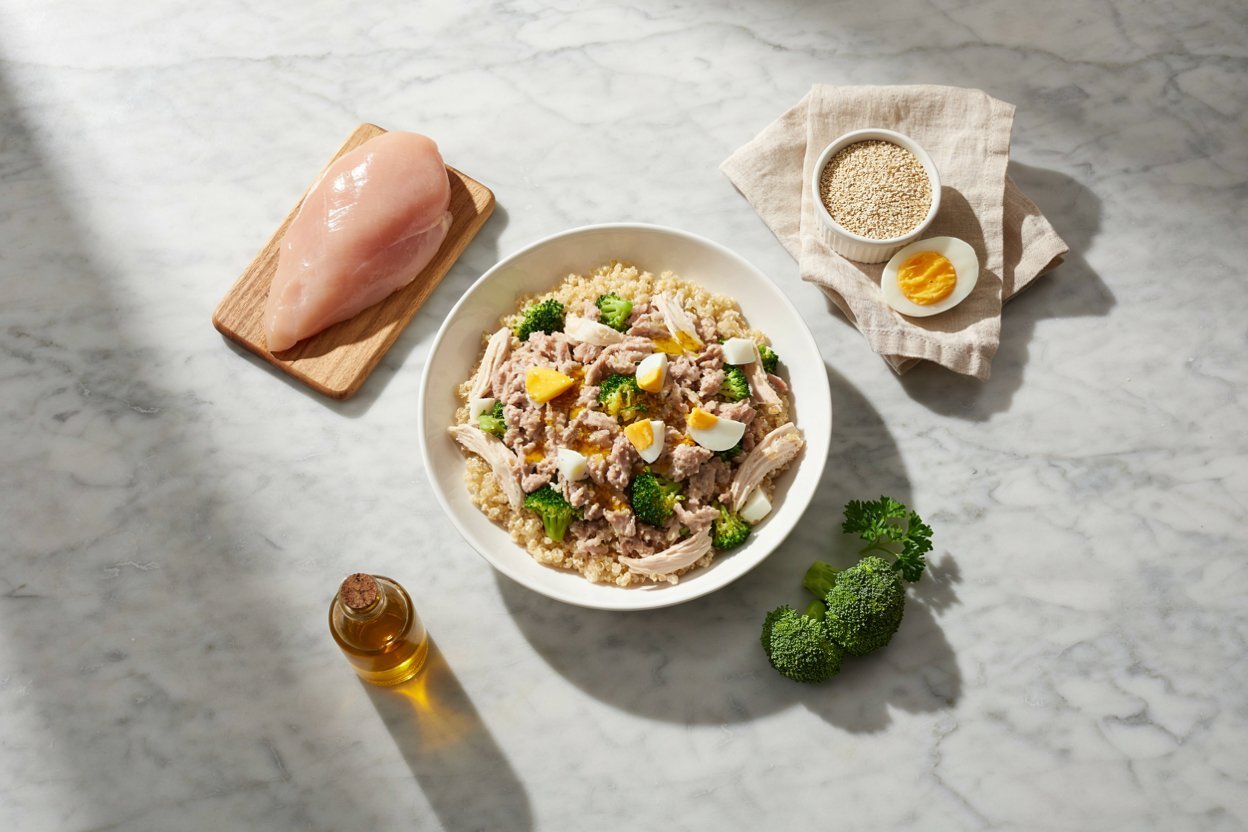
Anyone who has watched a working dog, an active herding breed, or a young, energetic pup burn through a bowl of food in seconds knows that not every dog does well on a standard, moderate protein diet.
Dogs with high activity levels, dogs working to build or maintain lean muscle, and dogs recovering from illness or surgery often benefit from a meal built around a higher proportion of protein than a typical maintenance recipe provides.
The trick is doing it in a way that stays balanced rather than simply piling on meat.

This guide walks through what a genuinely high protein, balanced meal looks like for a dog, who tends to benefit most from this style of feeding, what to know before you start, a full ingredient guide explaining the reasoning behind each choice, one complete recipe built around a strong protein to carbohydrate ratio, a few ways to vary it, storage guidance, a feeding guide, ingredients to avoid, common mistakes, and answers to the questions dog owners ask most often about feeding a higher protein diet.
Disclaimer: This post may contain affiliate links, which means I may earn a small commission at no extra cost to you. Always consult your veterinarian before changing your dog’s diet or introducing homemade high-protein meals.
Amazon Shopping List You Need
- Large Nonstick Cooking Pot with Lid
- Digital Kitchen Food Scale
- Glass Meal Prep Containers with Lids
- Stainless Steel Dog Food Bowls
- Airtight Dog Food Storage Container
- Slow Cooker Crockpot (Large Capacity)
- Dog Multivitamin Supplement Powder
Who Benefits From a Higher Protein Meal
Protein needs vary significantly from one dog to the next, and there is no single number that applies to every dog equally.
Highly active dogs, including working breeds, dogs in regular training, and dogs who get significant daily exercise, generally need more protein to support and repair muscle than a sedentary dog does.
Growing puppies also have higher protein needs relative to their body weight, though puppy specific formulas require more precise balancing than a general recipe like this one provides.
Dogs recovering from surgery, illness, or an injury often benefit from extra protein to support tissue repair, and senior dogs, despite outdated assumptions to the contrary, frequently need continued high quality protein to help maintain the muscle mass that naturally declines with age.
A higher protein meal is not automatically right for every dog, however. Dogs with certain kidney conditions may need protein managed more carefully under veterinary guidance, so this style of feeding works best for generally healthy, active dogs rather than as a default for every dog regardless of health status.
Before You Start
A few guidelines are worth keeping in mind before shifting toward a higher protein homemade meal.
- Talk with your veterinarian before making a significant change to your dog’s diet, especially if your dog has any kidney, liver, or other condition that involves protein management.
- Introduce a new recipe gradually alongside your dog’s current food, watching for digestive upset over the following day or two, since a notable increase in protein can take some adjustment for a dog’s system.
- Balance protein with appropriate fat and carbohydrate content rather than relying on meat alone, since a truly balanced meal needs more than just a high protein number to be healthy long term.
- Work with your veterinarian or a veterinary nutritionist if this recipe is going to become a regular part of your dog’s diet, to confirm it meets your dog’s full nutritional needs, not just their calorie and protein targets.
Ingredient Guide
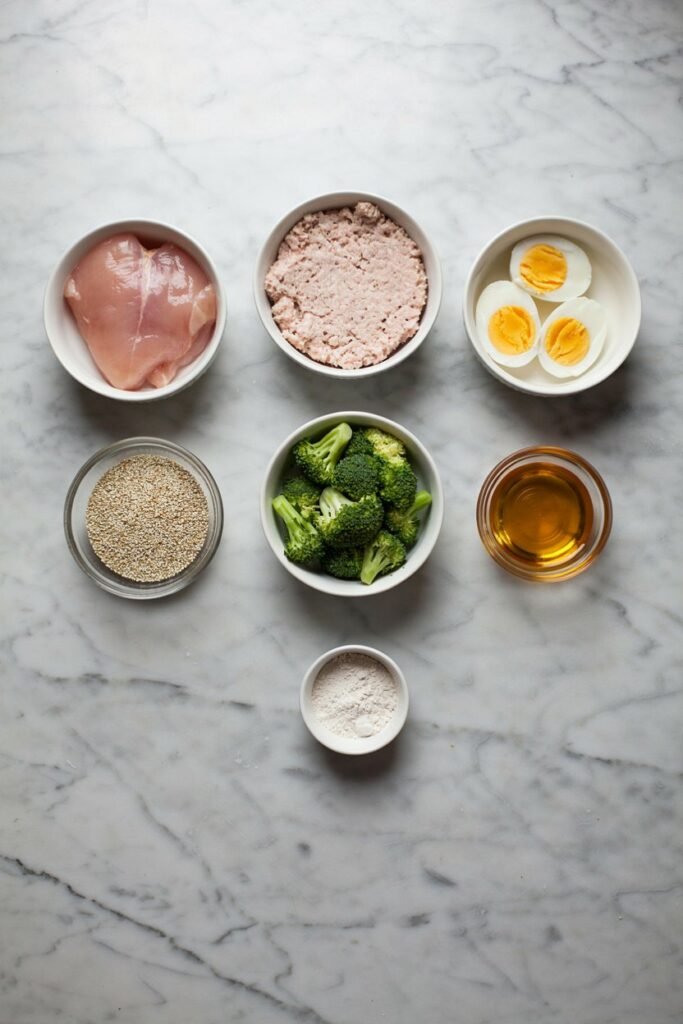
Every ingredient in the recipe below is chosen specifically to build a meal with a strong protein foundation while still staying balanced overall.
Ingredients
- 1.5 pounds boneless, skinless chicken breast: a very lean, protein dense cut that forms the foundation of this recipe, providing high quality, easily digestible protein without excess fat.
- 1/2 pound lean ground turkey: adds a second protein source for variety and a slightly different amino acid profile, while keeping the overall fat content of the meal in check.
- 2 fully cooked eggs: adds a complete, easily digestible protein source and a bit of healthy fat, rounding out the amino acid profile of the meal.
- 1/2 cup quinoa: a carbohydrate source that is unusually high in protein for a grain, helping reinforce the overall protein content of the meal while still providing fiber and energy.
- 1 cup chopped broccoli: adds fiber, vitamin C, and volume to the meal without significantly increasing the calorie count.
- 1 tablespoon salmon oil: adds omega 3 fatty acids to support skin, coat, and joint health, balancing out the leanness of the chicken and turkey with a source of healthy fat.
- 1/2 teaspoon ground eggshell, finely powdered: contributes calcium, which becomes especially important in a protein heavy homemade recipe fed regularly, since muscle meat alone does not provide enough calcium on its own.
How to Make It
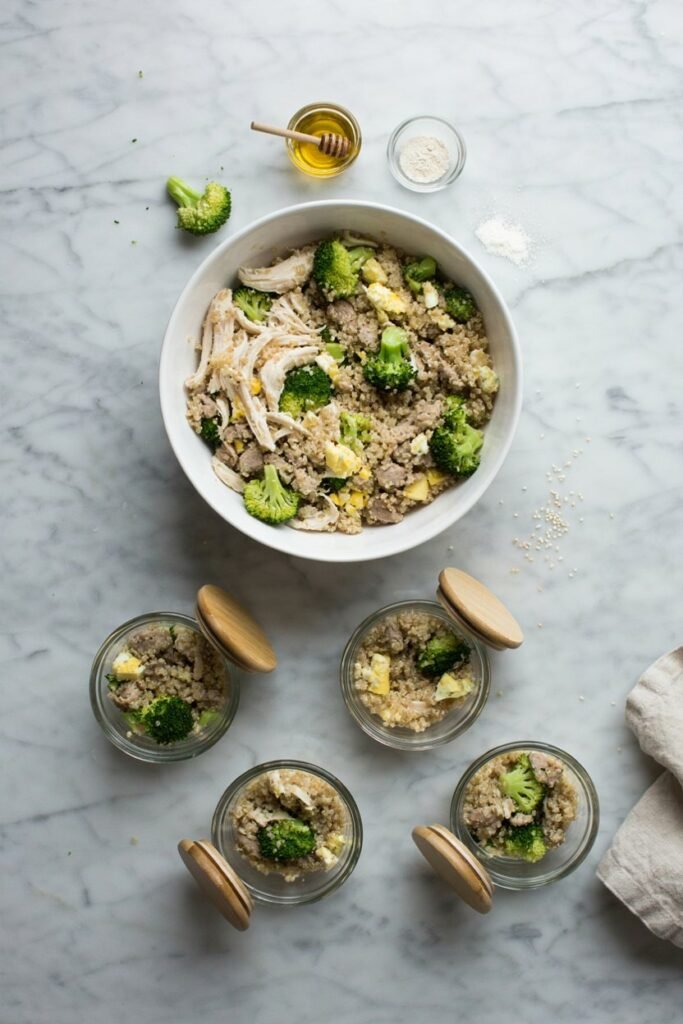
- Poach or bake the chicken breast until fully cooked through, then set it aside to cool slightly before shredding or dicing it into small, bite sized pieces.
- Brown the ground turkey in a separate pan, breaking it into small pieces as it cooks, until no pink remains.
- Rinse the quinoa thoroughly, then cook it according to package directions using water, since rinsing removes a natural coating that can taste bitter and cause mild stomach upset in some dogs.
- Steam the broccoli until just tender, then chop it into small pieces so it is easy for your dog to eat and digest.
- Chop the hard boiled eggs finely.
- Combine the chicken, turkey, quinoa, broccoli, and eggs in a large bowl, mixing thoroughly so every portion contains a bit of each ingredient.
- Stir in the salmon oil and ground eggshell once the mixture has cooled to room temperature, since adding them at the end preserves more of their nutritional value than cooking them for an extended time would.
- Portion the finished meal into individual servings sized for your dog before refrigerating or freezing.
This recipe yields several days of meals for a medium sized, active dog and scales up easily for a larger dog or a bigger batch.
A Few Easy Variations
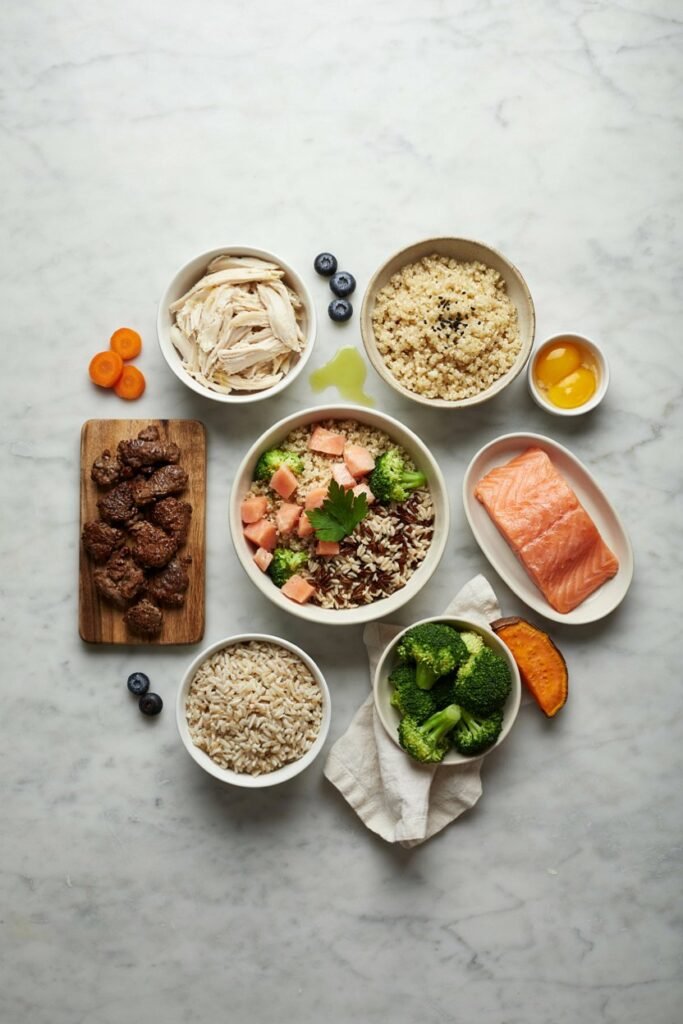
Once you have made this recipe a few times, it is simple to rotate in different proteins without changing the overall method.
Lean ground beef or salmon can replace the turkey for variety, and brown rice can replace the quinoa if your dog does particularly well on that carbohydrate instead.
For dogs who need even more protein density relative to their size, increasing the proportion of chicken and turkey slightly while reducing the quinoa can shift the ratio further in that direction, though any significant adjustment like that is worth discussing with your veterinarian first to make sure the meal stays properly balanced.
If your dog is highly active and you want another protein forward option to rotate in, our healthiest homemade dog foods roundup includes a few additional ideas built around similar principles.
Storage and Freezing
This meal keeps well refrigerated for about four days in an airtight container, and it freezes well for up to three months when portioned into individual servings.
Freeze in flat, labeled bags or small containers so you can thaw exactly the amount you need without defrosting the entire batch.
Thaw frozen portions in the refrigerator overnight rather than at room temperature, and let the meal come back closer to room temperature before serving.
Feeding Guide
How much of this meal to feed depends on your dog’s weight, activity level, and overall body condition.
Because this recipe is more calorie and protein dense than a standard maintenance meal, active or working dogs generally do well with roughly two and a half to three and a half percent of their body weight in food per day, split across two meals, while less active dogs should stay closer to two percent to avoid excess weight gain.
Watch your dog’s body condition over the first few weeks on this recipe and adjust portions with guidance from your veterinarian, especially if your dog’s activity level changes from week to week.
Ingredients to Avoid
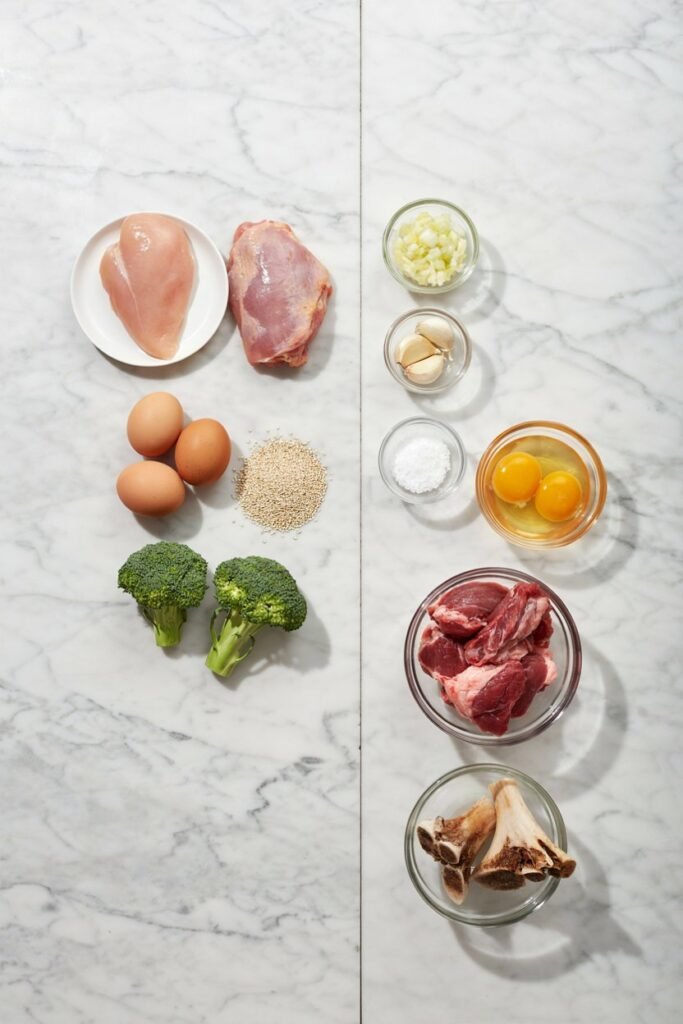
- Onion and garlic, in any form, including onion or garlic powder: both are toxic to dogs and should never be used in any homemade recipe.
- Excess organ meat used as a shortcut for extra protein: while a small amount of liver is fine occasionally, using large amounts to boost protein content can lead to vitamin A toxicity over time.
- Added salt or seasoning blends: unnecessary for flavor and can add more sodium than appropriate for a dog’s diet.
- Raw eggs: eggs should always be fully cooked before serving, since raw eggs carry a higher risk of bacterial contamination and can interfere with biotin absorption.
- Fatty cuts or skin left on in large amounts: too much added fat can undo the lean, balanced nature of this recipe and may be hard on digestion for some dogs.
Common Mistakes to Avoid
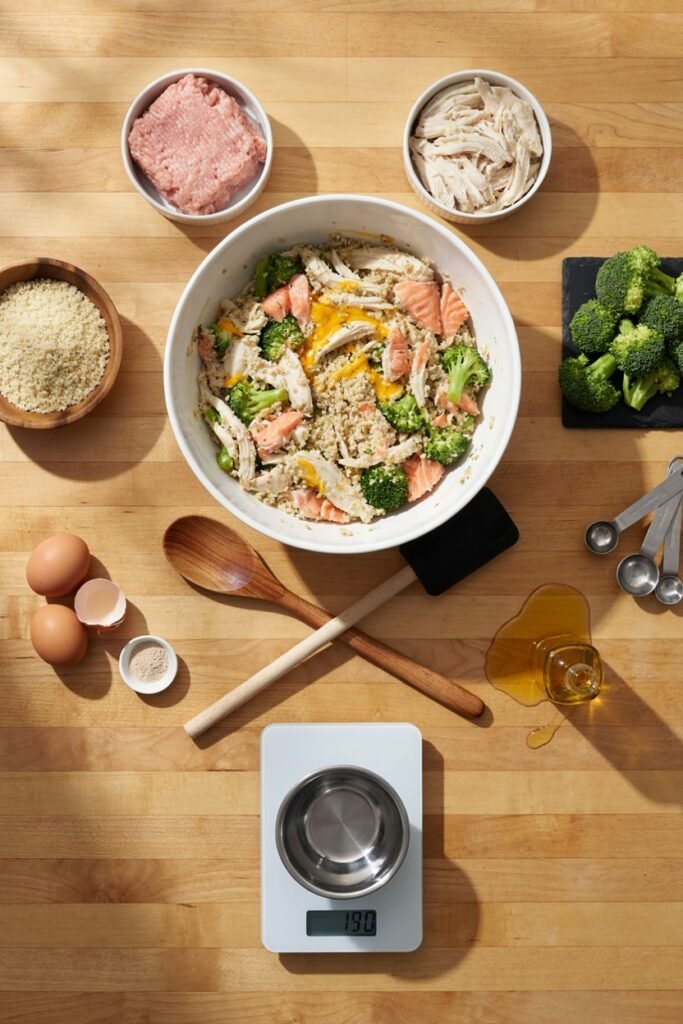
- Assuming more protein automatically means a better meal, without considering whether the fat, carbohydrate, and micronutrient content is actually balanced alongside it.
- Skipping a calcium source, which becomes a more significant gap in a protein heavy homemade recipe than in a lower protein one, since muscle meat alone is low in calcium.
- Feeding a very high protein recipe to a dog with an undiagnosed kidney or liver issue without veterinary guidance, since these conditions often require protein to be managed carefully rather than maximized.
- Not rinsing quinoa before cooking, which can leave a bitter coating that some dogs find unappealing or that causes mild stomach upset.
- Increasing protein too quickly for a dog who is used to a more moderate diet, rather than transitioning gradually and watching how their digestion responds.
Frequently Asked Questions
Is a high protein diet safe for all dogs? Not automatically. Most healthy, active dogs do well with a higher protein meal, but dogs with certain kidney or liver conditions may need protein managed differently, so check with your veterinarian if your dog has any diagnosed health condition.
How much protein should an active dog actually get? This varies by individual dog, activity level, and life stage, so there is no single universal number. Your veterinarian can help determine an appropriate target based on your dog’s specific needs.
Can puppies eat this recipe? Puppies have different, more specific nutritional requirements than adult dogs, particularly around calcium and phosphorus balance for growing bones, so talk with your veterinarian before feeding a recipe like this one to a puppy.
Will a higher protein diet help my dog build muscle? Protein is an important part of supporting muscle maintenance and repair, especially alongside regular exercise, but it works together with overall calorie balance and activity level rather than as a standalone solution.
Can I feed this every day long term? Yes, as long as the recipe is part of a nutritionally complete plan, ideally reviewed by your veterinarian or a veterinary nutritionist if it is going to replace a significant portion of your dog’s regular diet over time.
High Protein Balanced Dog Food
Ingredients
Equipment
Method
- Cook the ground turkey thoroughly in a large skillet over medium heat. Do not add salt, onion, garlic, oil, or seasonings.
- Cook the eggs separately until fully set. Allow them to cool slightly and chop them into small pieces.
- Prepare the brown rice until tender.
- Cook the carrots and green beans until soft.
- Add the cooked turkey, eggs, rice, carrots, green beans, and pumpkin puree to a large mixing bowl.
- Add the water and gently mix until the ingredients are evenly combined.
- Allow the meal to cool completely before serving or portioning.
- The turkey and eggs provide a higher proportion of protein than many simple homemade dog food recipes. However, high protein does not automatically mean nutritionally balanced.
- This recipe should not be presented as a complete and balanced long term diet unless it has been properly formulated to meet your dog’s nutritional requirements. Dogs with kidney disease or other medical conditions may also have different nutritional needs, so consult your veterinarian before significantly increasing protein.
- Use plain, unseasoned ingredients and avoid onion, garlic, excessive salt, seasoning blends, and cooked bones.
Final Thoughts
A well built high protein meal is about more than just piling extra meat into the bowl. It means choosing quality protein sources, balancing them with appropriate fat, carbohydrate, and calcium, and adjusting portions to match your dog’s actual activity level.
Start with the recipe above, watch how your dog responds in terms of energy, digestion, and body condition, and keep your veterinarian involved if this style of feeding is going to become a regular part of your dog’s routine.
If you’re ready to expand your recipe rotation even further, our guides to simple homemade dog food recipes for beginners, the 7 healthiest homemade dog foods, and the DIY farmer style dog food recipe are great next stops.
For slow cooked, hearty options, take a look at simple farmers dog food recipes, healthy homemade farmers dog food recipes, and the DIY farmers dog food Instant Pot recipe.
And if your dog also has a sensitive stomach that needs extra support, the healthy homemade beef and apple stew for dogs is worth adding to the rotation, alongside simple treats like 3 ingredient peanut butter dog gummies, homemade beef bone broth gummies, simple carrot based dog treats, and homemade banana dog treats.