Bone Broth Recipe for Cats That Boosts Hydration and Joint Health
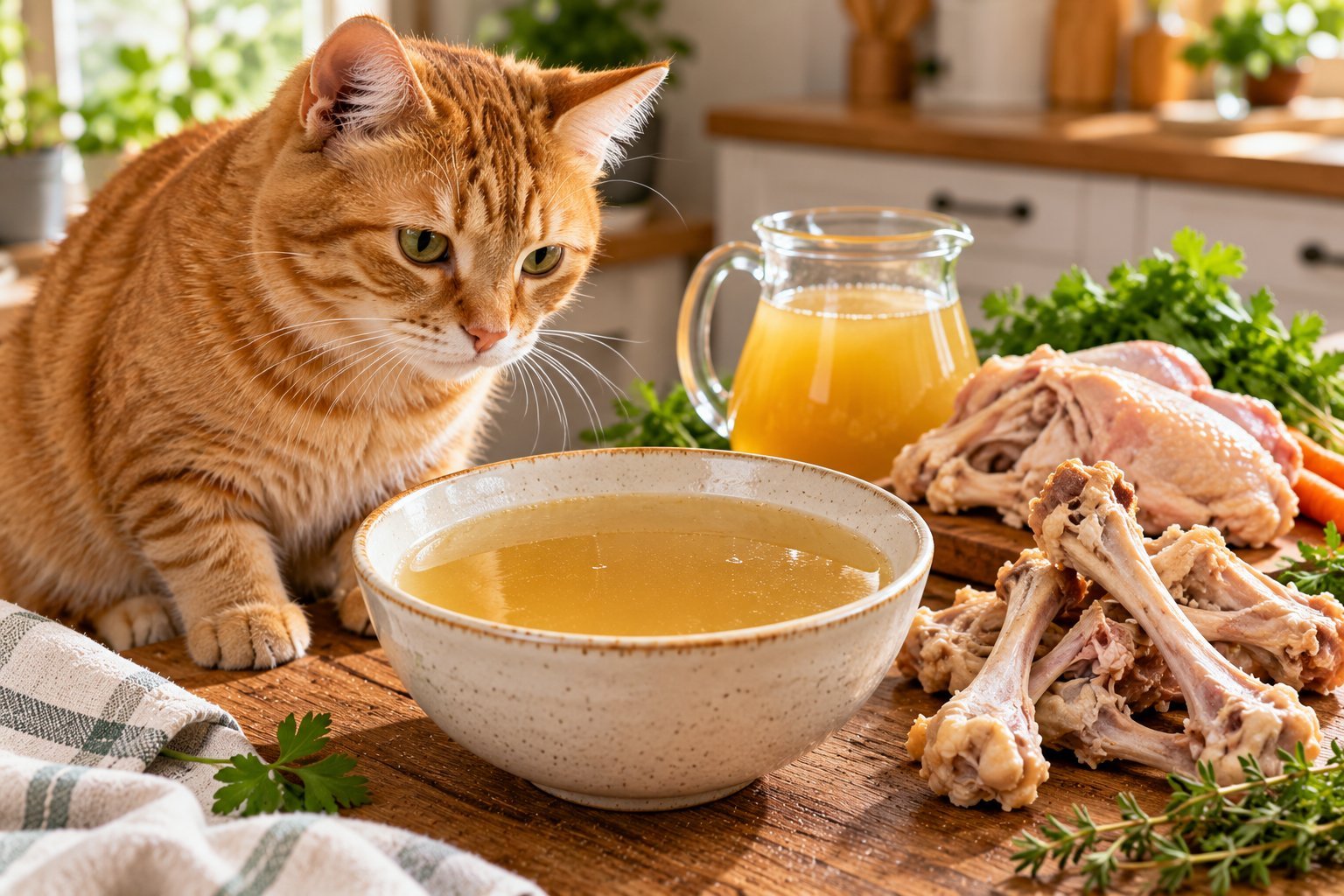
Cats are famously bad at drinking enough water. Their ancestors got most of their moisture from prey, and plenty of modern house cats still have a low thirst drive, especially if they eat mostly dry food.
A warm, savory spoonful of homemade bone broth is one of the easiest ways I’ve found to sneak extra fluid into my cat’s day, and she treats it like a gourmet appetizer.

This recipe uses plain chicken bones, water, and nothing else, simmered slowly and strained very carefully.
It pairs nicely with my Homemade Cat Gravy Chicken Broth Recipes and Homemade Cat Gravy Cubes, and you can freeze it in small portions so you always have some ready.
Why You’ll Love This Cat Bone Broth
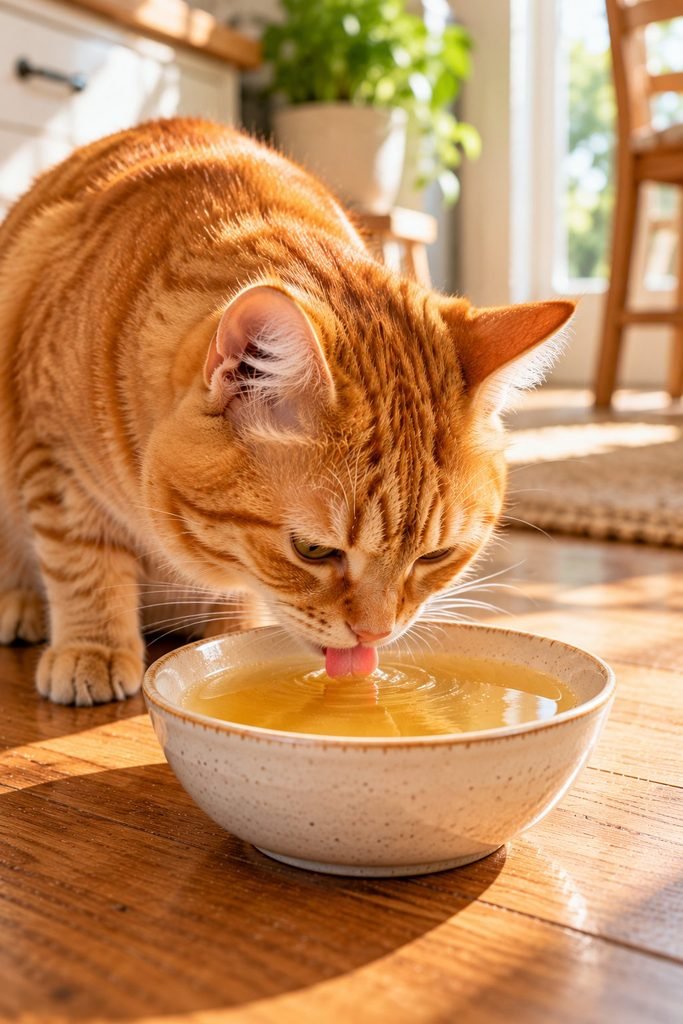
A few reasons this recipe is worth the simmer.
Boosts hydration. A tasty way to get extra water into cats who don’t drink much.
Only two ingredients. Chicken bones and water, with an optional splash of vinegar.
No onion, garlic, or salt. Safe and simple for your cat.
Great for picky eaters. Warm broth makes food smell and taste more appealing.
Easy to portion. Freeze it in ice cube trays and thaw just what you need.
Gentle on older cats. A soft, easy to lap treat for seniors.
What to Know About Bone Broth and Joint Health
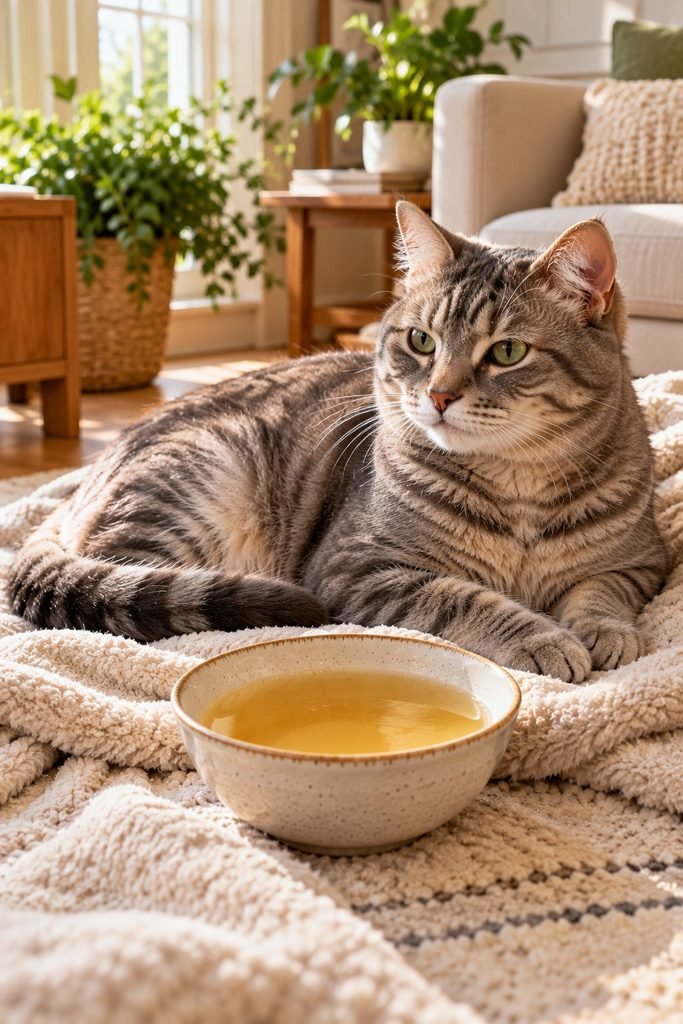
Bone broth is often praised for supporting joints because it contains collagen and gelatin from cartilage and connective tissue. It’s a reasonable thing to offer, but it’s worth being realistic.
The evidence is limited. There isn’t strong research showing that homemade bone broth treats or prevents joint problems in cats. Think of it as a hydrating, nutritious extra, not a treatment.
Joint issues need a vet. If your cat is limping, stiff, hesitant to jump, or less active, schedule a veterinary visit. Cats hide pain well, and there are proven options for arthritis and mobility.
Broth is a supplement, not a meal. It doesn’t provide the complete nutrition cats need, especially taurine and other essentials. Keep your cat on a complete and balanced diet and use broth as a topper or treat.
Is Bone Broth Safe for Cats?
Homemade bone broth can be a safe, occasional treat when made correctly.
No onion or garlic. Both are toxic to cats, and cats are even more sensitive than dogs. They’re common in store bought broth, so check labels or make your own.
No salt or seasoning. Cats are very sensitive to sodium.
Strain thoroughly. Cooked bones can splinter. Strain the broth well and throw away every bone and solid bit.
Skim the fat. Rich fat can cause an upset stomach or trigger pancreatitis in sensitive cats.
Use plain chicken. Skip bones that were cooked with seasonings or sauces.
Check with your vet for medical conditions. Cats with kidney disease, heart disease, or special diets may need specific sodium and phosphorus levels, so ask first.
Ingredients You’ll Need
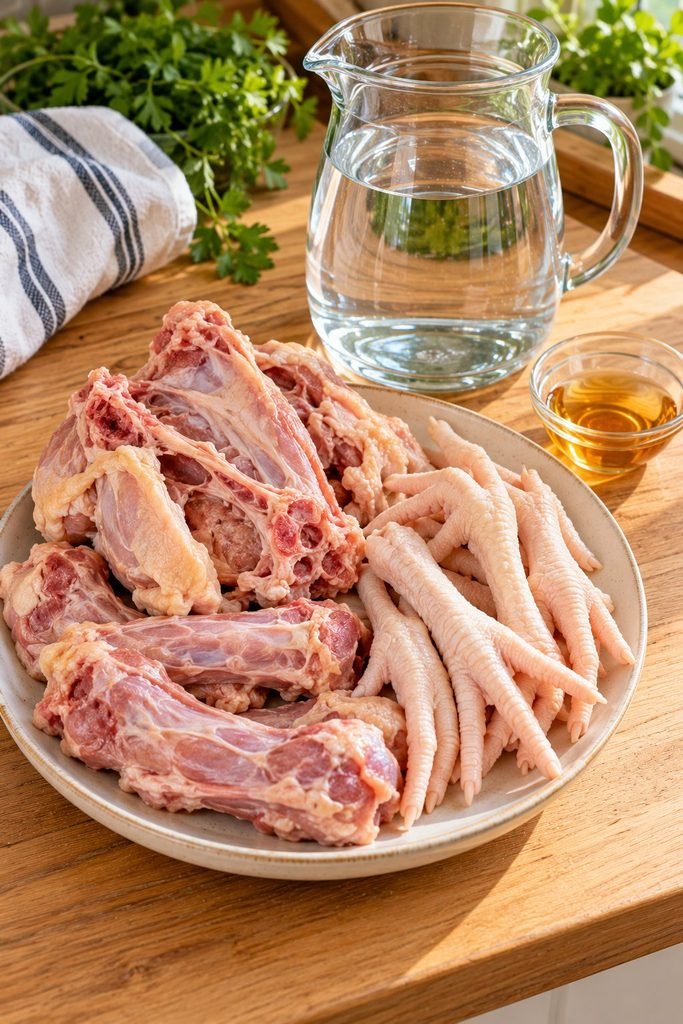
Here’s what goes into the pot.
Chicken bones form the base. Chicken backs, necks, wings, feet, or a leftover plain roasted chicken carcass all work well. Chicken feet are especially rich in collagen.
Water covers everything and becomes the broth.
Apple cider vinegar, optional, may help draw minerals from the bones during the long simmer.
Ingredient List
- 2 pounds chicken bones, such as backs, necks, wings, or feet
- About 8 cups water, enough to cover the bones
- 1 tablespoon apple cider vinegar, optional
How to Make Bone Broth for Cats
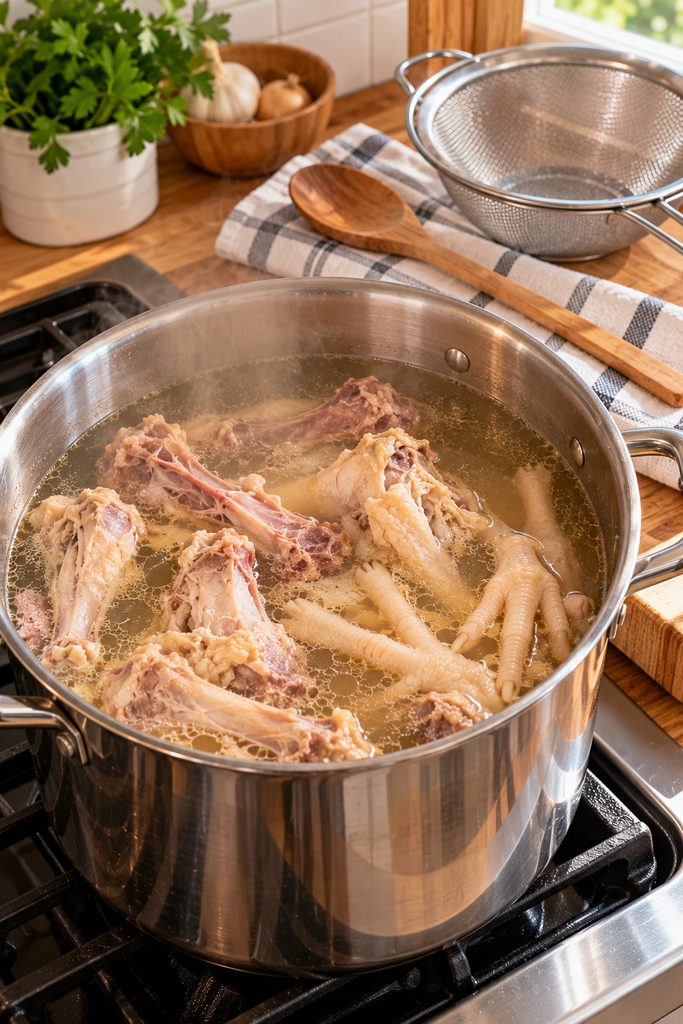
- Place the chicken bones in a large stockpot or slow cooker.
- Add the vinegar, if using, and cover with water by about an inch.
- Bring to a gentle boil, then reduce to the lowest simmer. Skim off any foam from the surface.
- Simmer, partially covered, for 12 to 24 hours. In a pressure cooker, cook for about 2 hours.
- Turn off the heat and let the broth cool for about an hour.
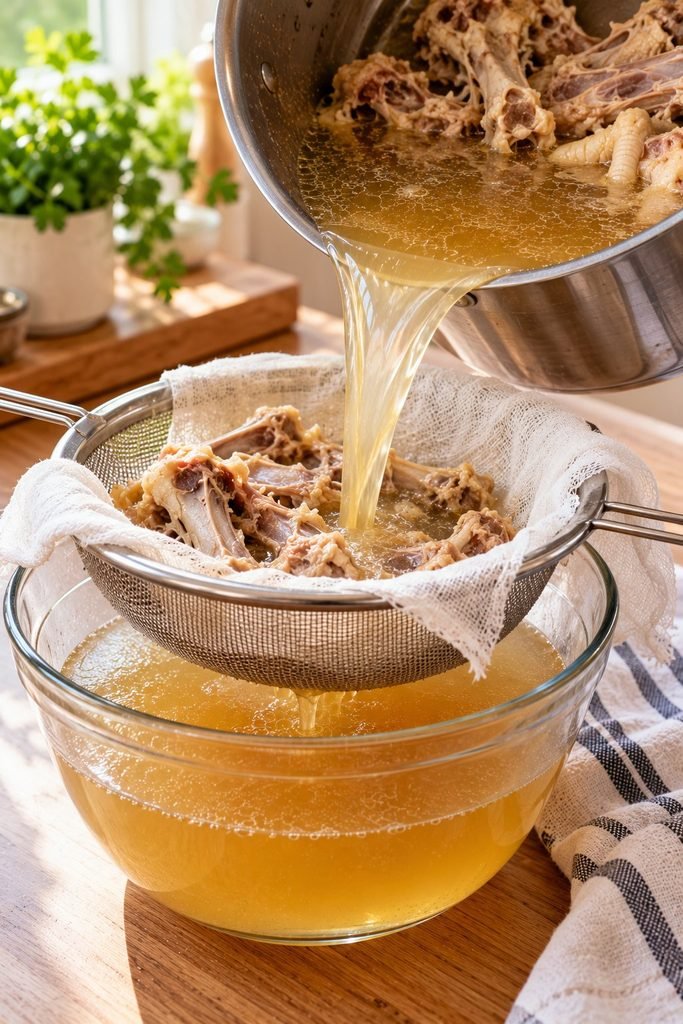
- Strain through a fine mesh sieve, then strain again through cheesecloth to catch any small bone fragments. Discard all bones.
- Refrigerate the broth for several hours, until the fat rises and solidifies on top.
- Skim off the fat layer and discard it.
- Warm a small portion slightly before serving, so it’s lukewarm, not hot.
Getting the Right Result
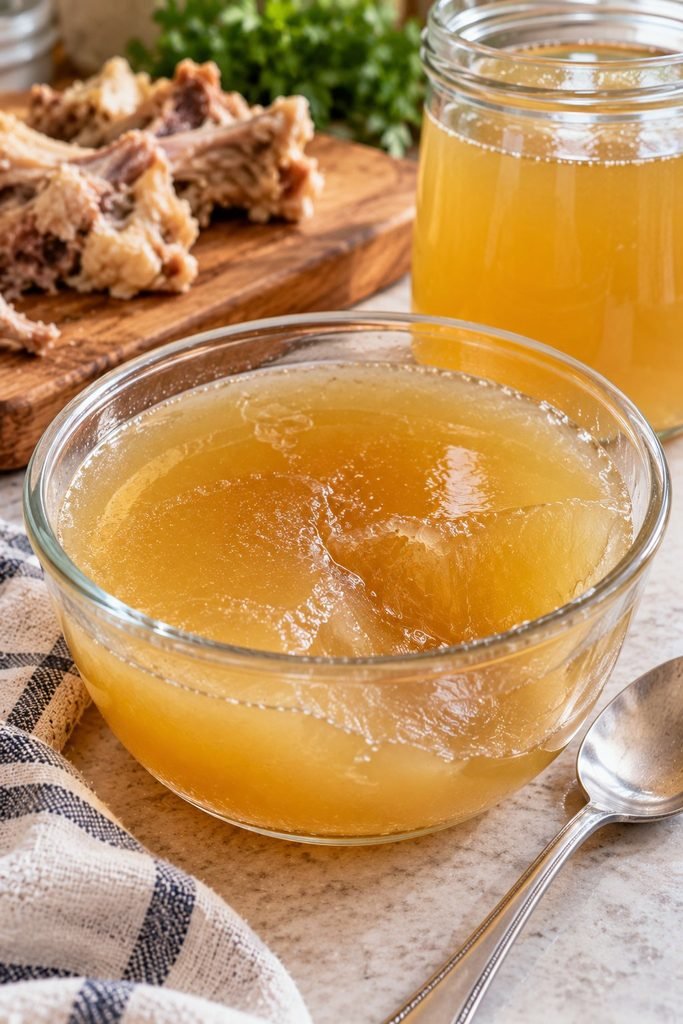
A well made broth often gels when chilled. If yours stays liquid, it’s still fine, just lighter in collagen.
If the flavor seems weak, simmer it uncovered for another hour or so to concentrate it.
For a cleaner broth, avoid stirring and skim the foam early on.
Serve it lukewarm, since many cats prefer it near body temperature.
Recipe Variations
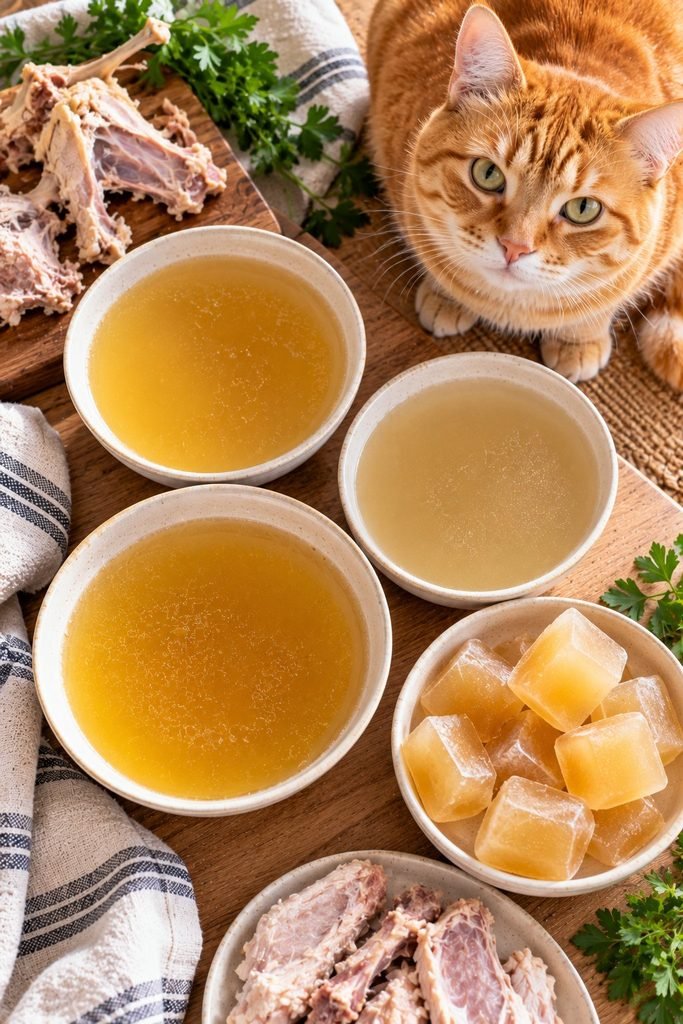
Once you’ve made the base recipe, these are easy to try.
Chicken feet broth. Use mostly chicken feet for extra collagen and a budget friendly pot.
Turkey broth. Use plain turkey necks or wings.
Fish flavored topper. Add a spoonful of the water from plain, unsalted canned fish for aroma.
Broth cubes. Freeze in ice cube trays for easy single servings.
Broth topped treats. Pour a little over my Easy Homemade Cat Treats with Pumpkin for a savory twist.
Common Mistakes to Avoid
Adding onion, garlic, or salt. Keep it completely plain.
Skipping the straining step. Always strain thoroughly and discard every bone.
Leaving the fat in. Skim it off after chilling.
Serving it too hot. Cool it to lukewarm.
Replacing meals with broth. It’s a supplement, not complete nutrition.
Using store bought broth without checking. Many contain onion, garlic, and high sodium.
How Much Broth Can a Cat Have?
A tablespoon or two, a few times a week, is plenty for most adult cats.
You can pour it over wet or dry food, or serve it in a small bowl on its own. Introduce it slowly, and stop if you notice loose stools or any stomach upset.
Ask your veterinarian before offering broth regularly, especially if your cat has kidney disease, heart disease, a sensitive stomach, or a history of pancreatitis.
How to Store Cat Bone Broth
Refrigerator. Store in an airtight container for up to 4 days.
Freezer. Freeze in ice cube trays, then store the cubes in a sealed bag for up to 3 months.
Check before serving, and discard anything that smells off. For another easy way to use up extra broth, see my Healthy Homemade Cat Treat post.
Can You Freeze Cat Bone Broth?
Yes, and freezing makes portioning easy.
- Let the strained, defatted broth cool completely.
- Pour it into ice cube trays.
- Freeze until solid, about 4 hours.
- Transfer the cubes to a labeled freezer bag.
- Thaw one or two cubes in the fridge, then warm slightly before serving.
More Homemade Cat Ideas
- Homemade Cat Gravy Chicken Broth Recipes
- Homemade Cat Gravy Cubes
- Easy Homemade Cat Treats with Pumpkin
- Healthy Homemade Cat Treat
Have a dog at home too? Try my Carrot Frozen Bone Broth for Dogs.
Frequently Asked Questions
Is bone broth good for cats? Plain, homemade bone broth can be a hydrating, tasty treat for most cats when made without onion, garlic, or salt.
Does bone broth help cats with joint pain? It contains collagen and gelatin, but there isn’t strong evidence that it treats joint problems. See your veterinarian for any signs of pain or stiffness.
Can I use store bought bone broth? Only if it’s low sodium and free of onion and garlic. Many are not, so reading the label is essential.
Can cats eat the cooked bones? No, never. Cooked bones can splinter. Discard them after simmering.
Is broth good for cats who don’t drink water? It can help add moisture, but wet food is also an excellent way to increase hydration. Talk to your veterinarian if you’re concerned about your cat’s water intake.
How long does it last? Up to 4 days in the fridge and up to 3 months in the freezer.
Can kittens have bone broth? Kittens have specific nutritional needs, so check with your veterinarian first.
Recipe Card
Recipe name: Bone Broth for Cats
Summary: A plain, homemade chicken bone broth simmered slowly, strained carefully, and served as a hydrating topper or treat.
Servings: About 6 cups of broth
Prep time: 10 minutes
Cook time: 12 to 24 hours
Total time: About 14 to 28 hours, including chilling
Estimated cost: Budget friendly
Course: Cat treat or meal topper
Cuisine: Homemade pet food
Keywords: bone broth for cats, homemade cat bone broth, cat hydration, cat broth recipe, bone broth recipe for cats
Equipment: Large stockpot or slow cooker, fine mesh sieve, cheesecloth, ice cube trays
Ingredients:
- 2 pounds chicken bones
- About 8 cups water
- 1 tablespoon apple cider vinegar, optional
Instructions:
- Combine bones, vinegar, and water in a large pot.
- Simmer on low for 12 to 24 hours.
- Cool, then strain thoroughly and discard all bones.
- Chill and skim off the fat.
- Serve lukewarm or freeze in cubes.
A Final Note on Making Broth for Your Cat
Watching my cat lap up a little bowl of warm broth is one of my favorite small pleasures, and I like knowing it’s adding a bit more moisture to her day.
Keep it plain, keep portions small, and lean on your veterinarian for anything related to joints, kidneys, or long term nutrition.