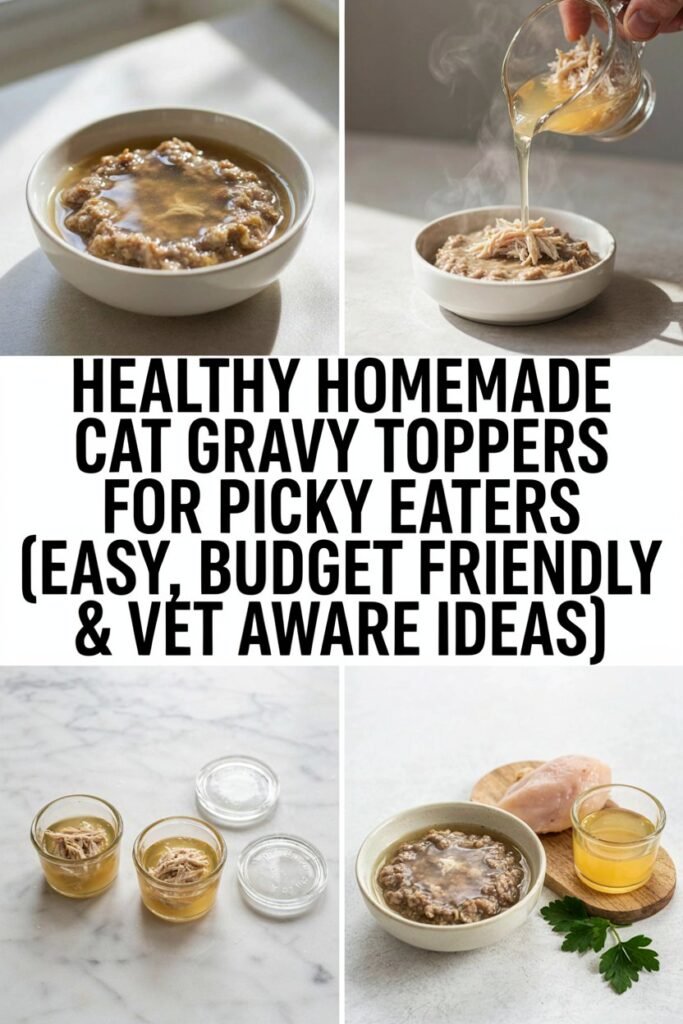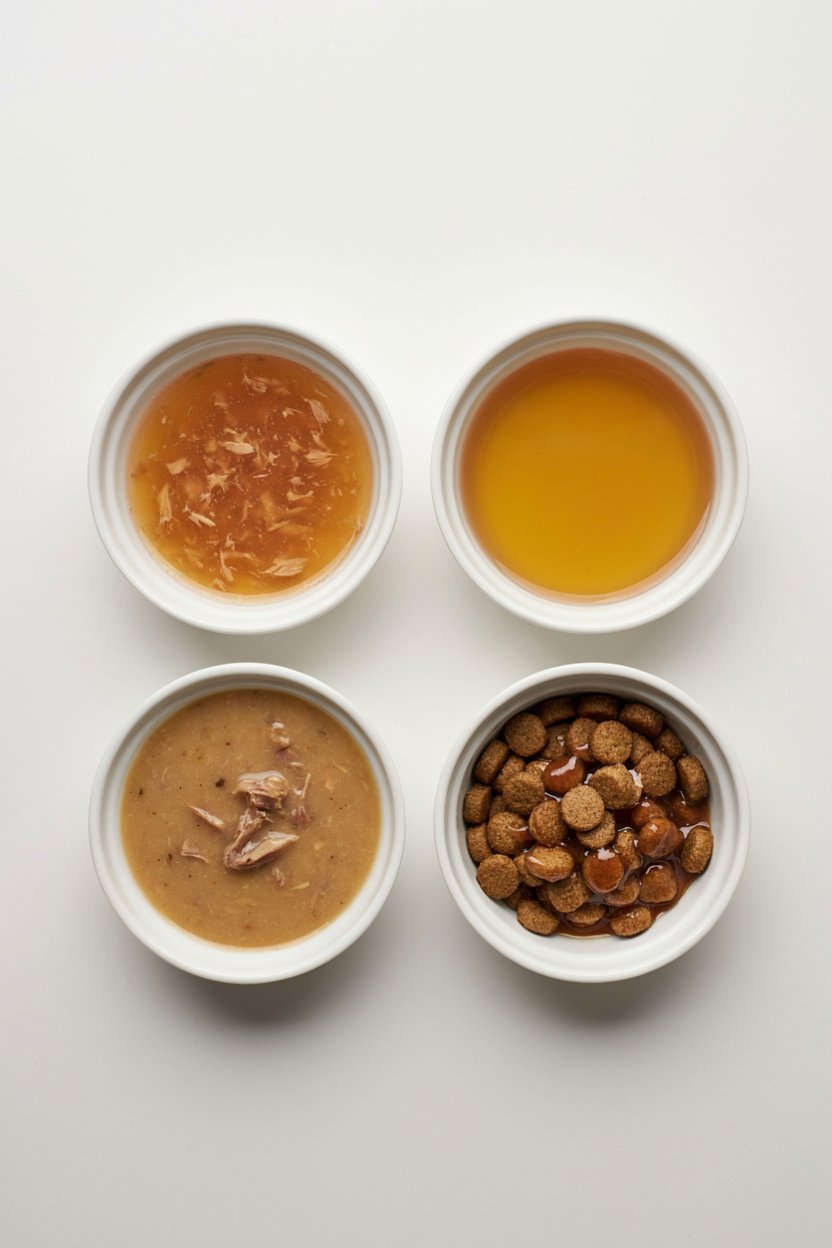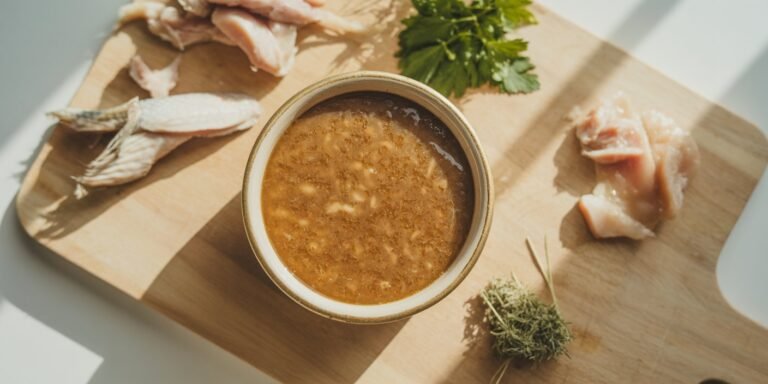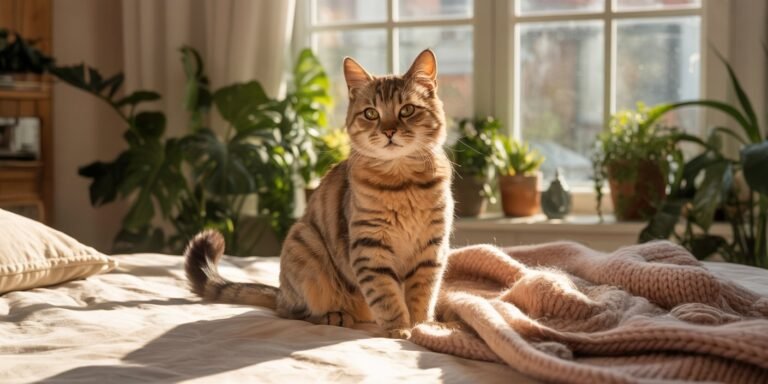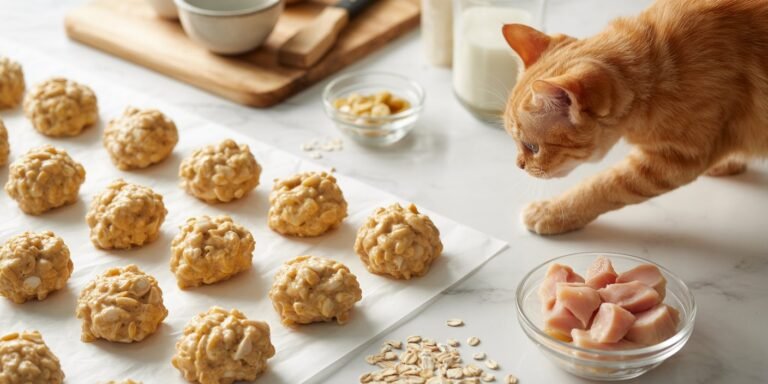
Healthy Homemade Cat Gravy Toppers for Picky Eaters (Easy, Budget-Friendly & Vet-Aware Ideas)
If you have a picky cat at home, you already know how frustrating mealtime can become. One day they love a certain food, and the next day they suddenly refuse to touch it.

I started looking for simple ways to make meals more appealing without constantly buying expensive toppers or changing foods every week, and homemade cat gravy toppers quickly became one of the easiest solutions.

A small spoonful of warm gravy can completely change how interested a cat feels about their food.

The extra moisture, smell, and flavor often encourage picky eaters to finish meals more comfortably, especially older cats or cats that prefer softer textures.

What I personally like about homemade gravy toppers is that you can control the ingredients, avoid unnecessary fillers, and make small batches using simple kitchen staples.

In this post, I’m sharing healthy homemade cat gravy topper ideas that are easy to prepare, budget-friendly, and helpful for encouraging picky eaters to enjoy their meals again.

Amazon Shopping List You Need

Why Cats Can Become Picky With Food

Before making homemade toppers, it helps to understand why a cat may suddenly become selective about food.

I have found that it is easy to assume a cat is simply being fussy when there can actually be a practical reason behind the change.

Cats can be very particular about smell, texture, temperature, and even the way food is presented.

A small change that seems insignificant to us can sometimes make a familiar meal much less appealing to them.

Some common reasons include:

  • Texture preferences: Some cats strongly prefer wet food, while others want a little more texture or crunch. A cat may also reject food if its consistency changes from what she is accustomed to.
  • Food becoming less interesting: Cats can develop strong preferences for familiar flavors. If your cat has been eating the same food for a long time, changing the texture or adding a small amount of an appropriate topper may make the meal more interesting.
  • Sensitivity to smell or temperature: Smell plays an important role in how cats approach food. Food served straight from the refrigerator may be less appealing to some cats, while gently warming it can make the aroma more noticeable.
  • Age: Older cats can experience changes that affect appetite, smell, taste, or their ability to eat comfortably. A noticeable change in eating habits should not automatically be dismissed as normal aging.
  • Dental discomfort: A cat that suddenly avoids crunchy food or seems interested in eating but backs away from the bowl may have discomfort in the mouth or teeth. This is one reason I would not rely on toppers alone when a cat’s eating habits change suddenly.
  • Stress or changes in routine: Moving furniture, introducing another pet, traveling, changing feeding locations, or other disruptions can affect some cats. Keeping meals and feeding times predictable can sometimes help.
  • Low moisture intake: Cats naturally tend to have a relatively low thirst drive, so adding moisture to appropriate meals can be a useful way to increase water intake. A little warm water mixed into wet food can also change the texture and aroma.

A flavorful gravy topper can sometimes help because it adds moisture and makes the meal smell more noticeable.

I prefer starting with a very small amount and mixing it into food my cat already knows rather than completely changing the meal.

However, a cat that suddenly stops eating should not simply be labeled picky. Loss of appetite can be associated with illness, pain, dental problems, stress, or other health concerns.

If your cat is eating significantly less than usual, refuses food, or shows other changes in behavior, it is important to contact your veterinarian rather than trying to solve the problem with increasingly elaborate toppers.

Important Safety Reminder

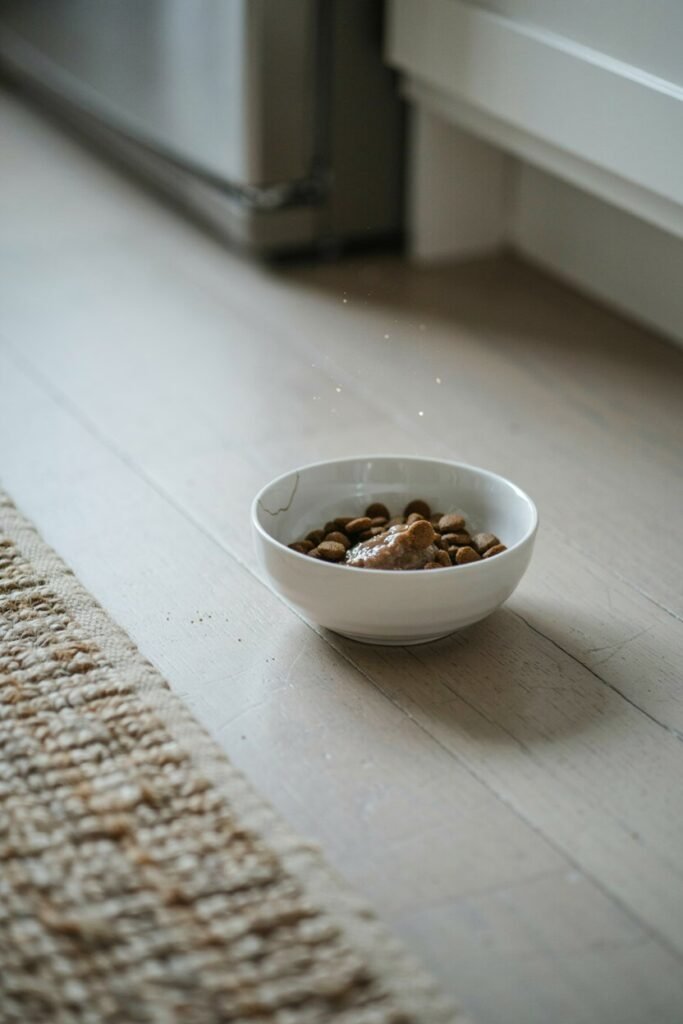
Homemade gravy toppers should be used as meal enhancers rather than complete meals.

They can add moisture, aroma, and variety to your cat’s regular food, but they are not automatically nutritionally complete.

If you want to feed a homemade diet as your cat’s primary food, it should be properly formulated with guidance from a veterinarian or qualified veterinary nutrition professional.

When making homemade gravy, I keep the ingredients as simple as possible and avoid common human cooking ingredients that can be harmful to cats.

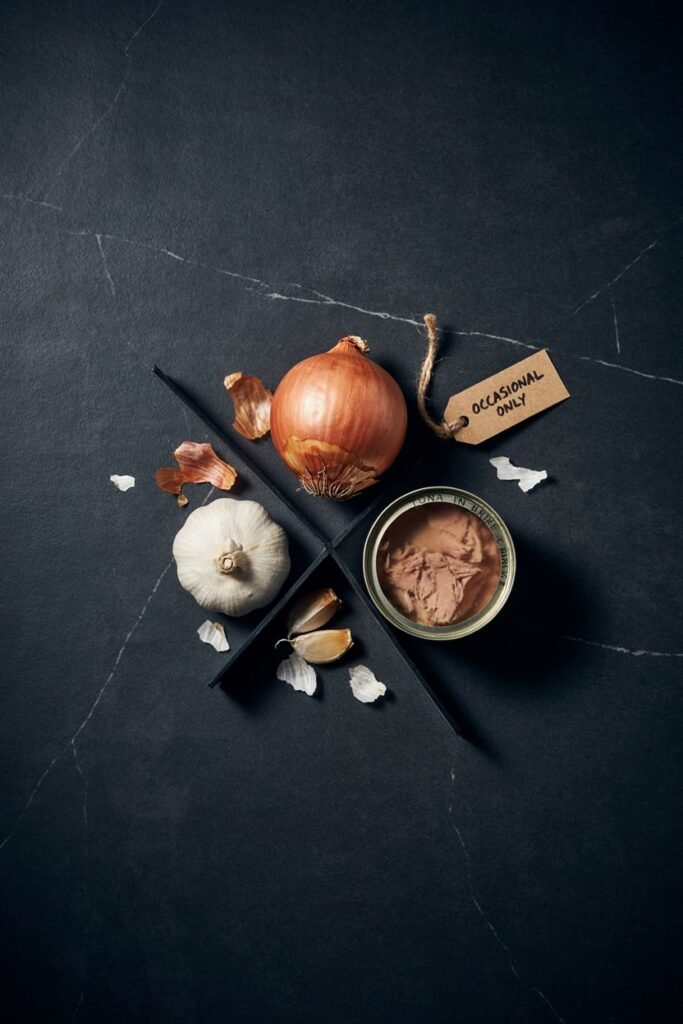
  • Onion: Onion is unsafe for cats and should never be added to homemade gravy, whether fresh, cooked, dried, or powdered.
  • Garlic: Garlic is also unsafe for cats. Garlic powder is particularly easy to overlook because it is commonly included in packaged broths, sauces, and seasoning mixes.
  • Too much salt: Cats need appropriate amounts of sodium as part of a balanced diet, but salty human foods and broths can provide far more than they need. I prefer unsalted ingredients whenever possible.
  • Heavy seasoning: Cats do not need the herbs, spice blends, sauces, and seasoning mixes commonly used in human cooking. Keeping the gravy plain makes it easier to control exactly what your cat is eating.
  • Artificial sweeteners: Avoid products containing artificial sweeteners, particularly xylitol, which can be dangerous for pets.
  • Spicy ingredients: Spicy sauces and heavily seasoned foods are unnecessary for cats and can cause digestive upset.
  • Thick packaged gravies made for humans: Human gravy can contain excessive salt, onion, garlic, seasonings, fats, and other ingredients that are not appropriate for cats. A simple homemade gravy made from cat safe ingredients is a better choice.

The safest approach is to keep homemade cat gravy simple. Use ingredients you recognize, check packaged products carefully, and remember that the topper should remain a small addition to your cat’s normal complete and balanced food.

WHAT MAKES A GOOD CAT GRAVY TOPPER?

When I make a gravy topper for my cat, I keep the ingredients simple and focus on adding moisture without turning the meal into something heavy.

I have found that cats can be surprisingly particular about texture and smell, so a topper that looks good to us may not necessarily be appealing to them.

A good homemade cat gravy topper usually includes:

  • Moisture rich broth: A simple, cat safe broth creates the liquid base and adds extra moisture to the meal.
  • Gentle protein: Small amounts of plain cooked chicken or tuna can add flavor without requiring heavy seasoning.
  • A soft texture: Cats generally do better with a smooth or lightly textured topper that mixes easily with their regular food.
  • A smell they enjoy: The aroma can make a big difference, especially for a cat that has suddenly become less interested in its usual food.
  • No heavy seasoning: I keep salt, spices, onion, garlic, and other unnecessary additions out of homemade cat toppers.

I also prefer using just enough gravy to lightly coat the food.

Completely soaking the meal can change the texture too much, and some cats will simply walk away from it.

Starting with a small spoonful lets you see how your cat responds before adding more.

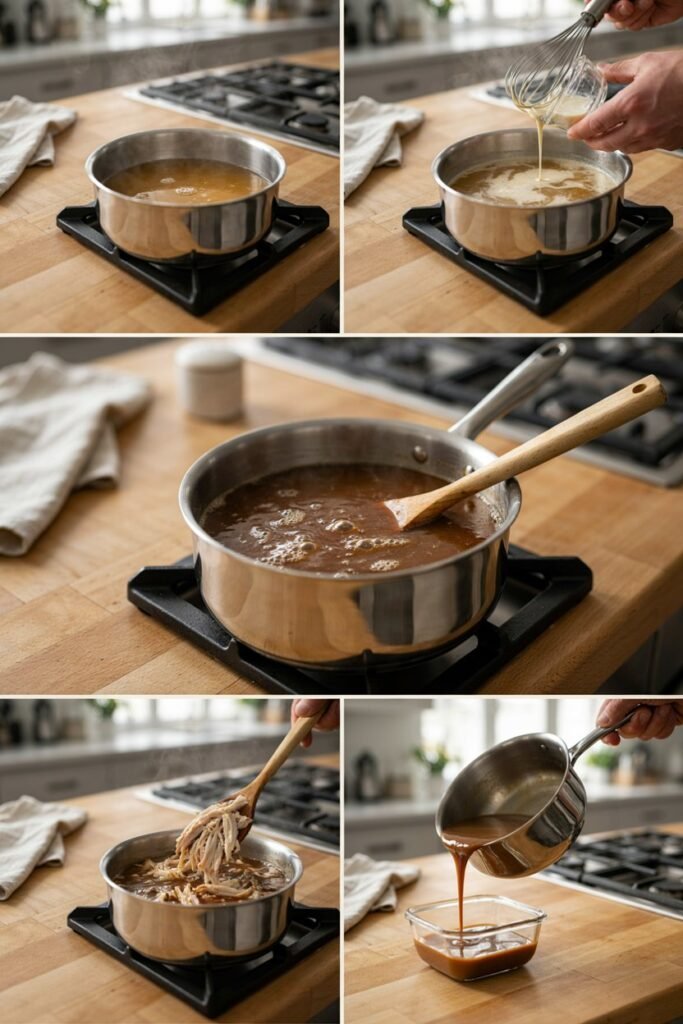
HOW TO MAKE BASIC HOMEMADE CAT GRAVY

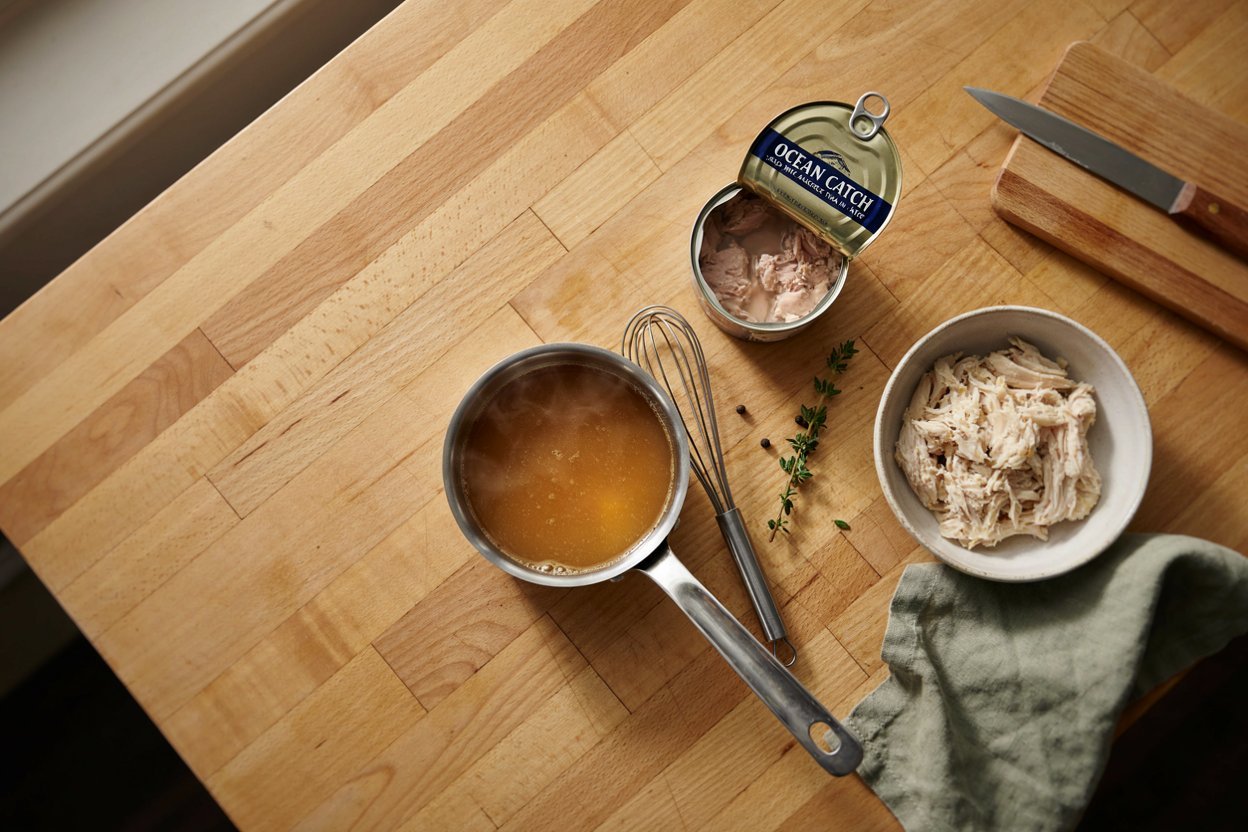
This basic homemade cat gravy is the recipe I would start with when I want a simple topper that can be mixed into my cat’s regular food.

I keep the consistency light and the ingredient list short because there is no need to make a cat gravy as rich or heavily seasoned as the kind we prepare for ourselves.

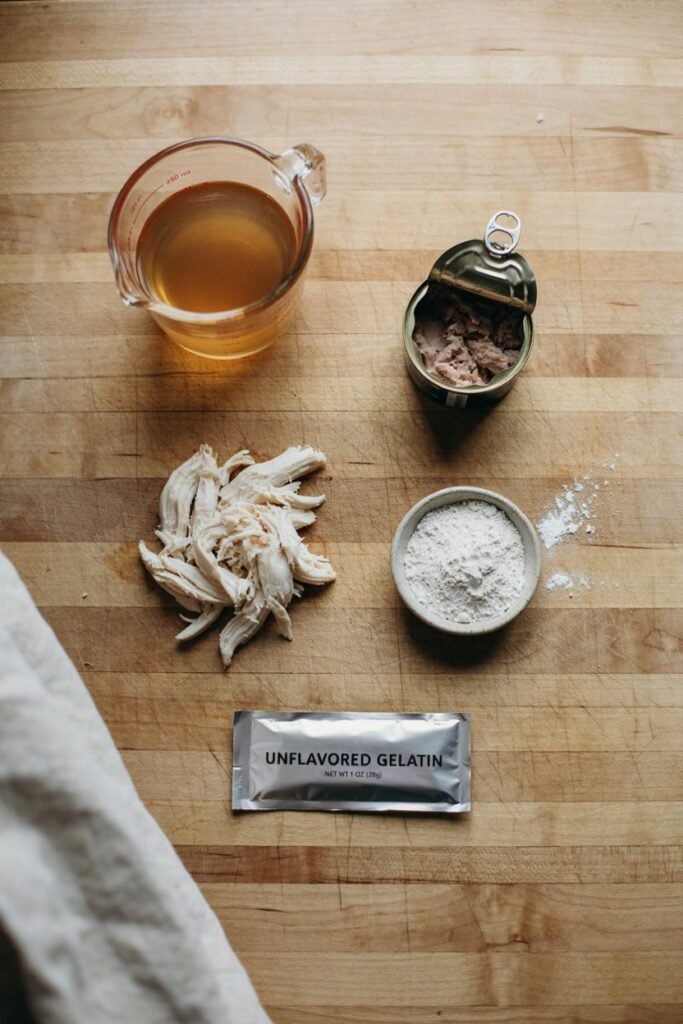
Ingredients

  • 1 cup unsalted chicken broth or plain water: I prefer an unsalted broth with a very simple ingredient list. If I am not completely comfortable with the broth ingredients, I use plain water instead.
  • 1 teaspoon cornstarch or plain pumpkin puree: A small amount helps give the gravy a little body without making it thick. If using pumpkin, choose plain pumpkin puree rather than pumpkin pie filling.
  • A small amount of plain cooked chicken or tuna: I use finely shredded or flaked chicken or tuna to add extra flavor and make the topper more appealing.
  • 1 to 2 teaspoons cool water: Use this only if you are using cornstarch, as it helps create a smooth slurry before it goes into the warm broth.

How I Make It

  1. I start by gently warming the chicken broth or plain water in a small saucepan over low heat. I do not bring it to a rolling boil.
  2. If I am using cornstarch, I mix the teaspoon of cornstarch with 1 to 2 teaspoons of cool water in a small bowl. I stir it until completely smooth.
  3. I slowly pour the cornstarch mixture into the warm broth while stirring continuously. After a short time, the liquid should become just slightly thicker.
  4. I add a small amount of finely shredded plain cooked chicken or flaked tuna and stir it through the gravy.
  5. I remove the saucepan from the heat and allow the gravy to cool completely before adding it to my cat’s food.

Getting the Right Texture

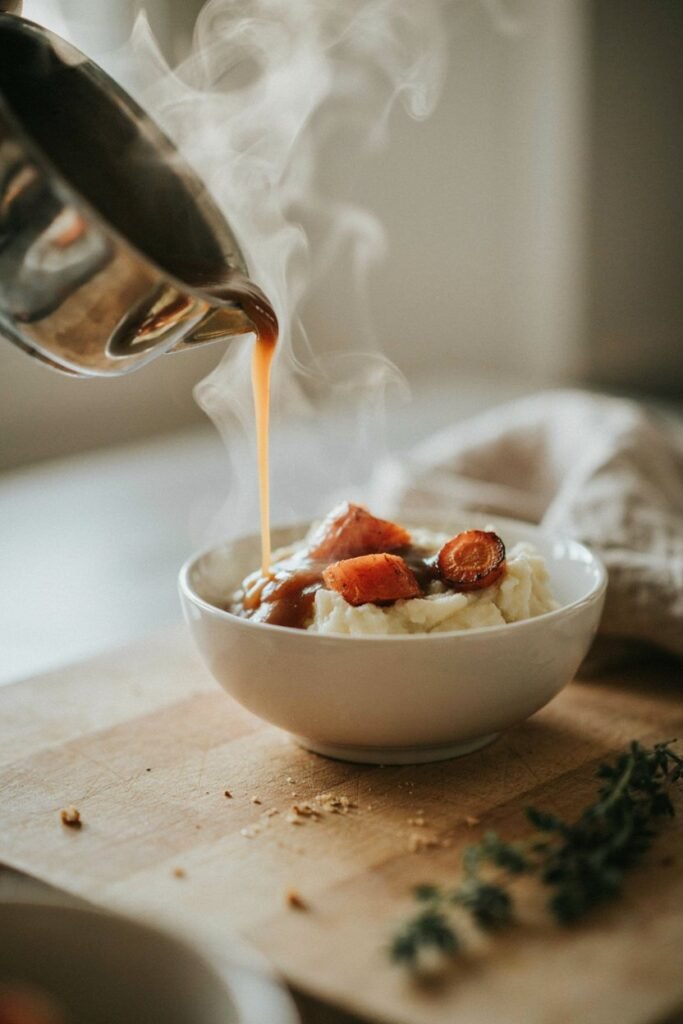
I prefer this gravy to remain thin, smooth, and easy to pour. It should lightly coat the cat food rather than sit on top like a thick human gravy.

If the gravy becomes too thick, I simply add a little more warm water and stir until it reaches the consistency I want.

If it is too thin, I use a very small amount of the thickening mixture rather than adding a large amount at once.

I have found that starting with a small spoonful is also better than covering an entire bowl of food.

It lets me see whether my cat likes the new texture and flavor before I add more.

A Quick Ingredient Check

Before making this recipe, I always check packaged ingredients carefully.

Chicken broth should not contain onion, garlic, heavy seasoning, or unnecessary additives. The chicken or tuna should also be plain and unseasoned.

This is meant to be a simple food topper, not a replacement for your cat’s complete and balanced regular diet.

11 HEALTHY HOMEMADE CAT GRAVY TOPPERS FOR PICKY EATERS

Some cats can be incredibly selective at mealtime, which is why a simple homemade gravy topper can make such a big difference.

The extra moisture, warmth, and flavor often help make food more appealing without needing complicated ingredients.

These healthy homemade cat gravy toppers are easy to prepare, budget-friendly, and designed to encourage picky eaters to enjoy their meals more comfortably.

1. Simple Chicken Broth Gravy Topper

Many cats are naturally drawn to the smell of chicken, and I have found that warming a homemade topper gently can make the aroma much more noticeable.

This is one of the recipes I like when I want to add a little extra moisture and flavor without making my cat’s meal complicated.

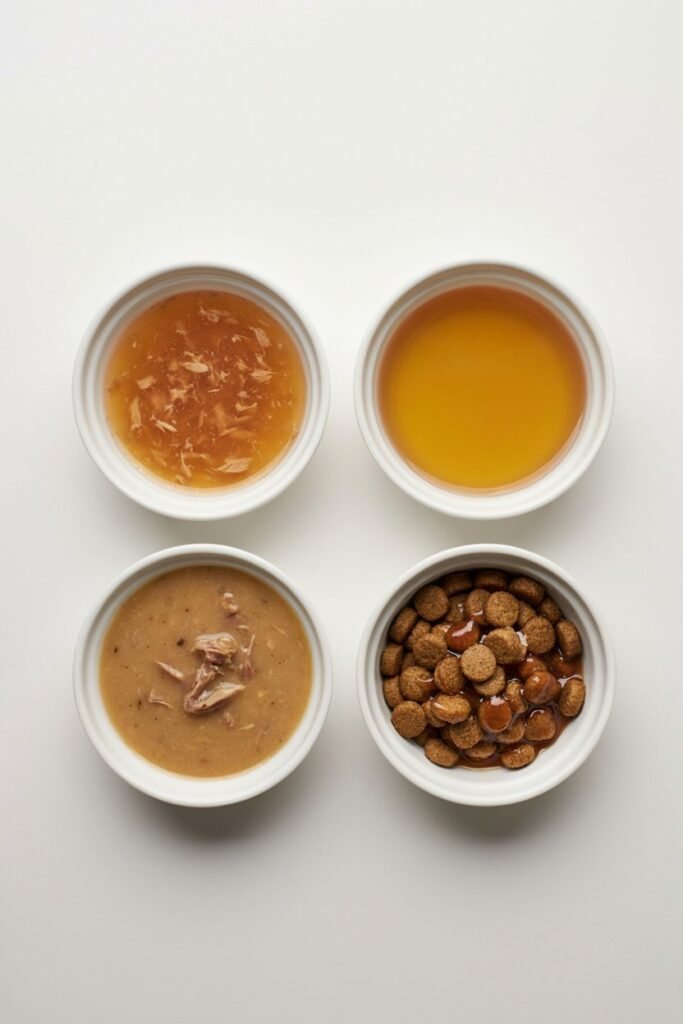
I also like this recipe because it works well with both wet food and dry kibble.

It only takes a few minutes to prepare, and I can make a small batch ahead of time and keep individual portions in the freezer.

Ingredients

  • 1 cup unsalted plain chicken broth: Choose a broth with a simple ingredient list and make sure it does not contain onion, garlic, heavy seasoning, or unnecessary additives.
  • ¼ cup plain shredded boiled chicken: Use fully cooked chicken with no salt, spices, sauces, butter, or oil. I prefer shredding it very finely so it blends easily into the gravy.
  • 1 teaspoon cornstarch: This gives the broth a slightly thicker texture. Mix it with a little cool water before adding it to the warm broth to prevent lumps.
  • A small amount of cool water: This is used to make the cornstarch slurry before it goes into the saucepan.

How I Make It

  1. I pour the chicken broth into a small saucepan and warm it gently over low heat. I avoid bringing it to a rapid boil.
  2. In a separate small bowl, I mix the cornstarch with a little cool water until it forms a completely smooth mixture.
  3. I slowly add the cornstarch mixture to the warm broth while stirring continuously.
  4. I add the finely shredded cooked chicken and let everything warm gently for a few minutes. I do not heavily cook the chicken again because it is already fully cooked.
  5. Once the gravy has reached a light, pourable consistency, I remove it from the heat and let it cool completely before serving.

Why Picky Cats May Like It

The smell is one of the things I like most about this recipe. Gently warming the gravy can make the chicken aroma more noticeable, which may make the meal more interesting to a cat that has become less enthusiastic about its usual food.

The added moisture can also soften dry kibble, changing its texture without requiring you to replace the food completely.

Of course, every cat is different. A topper that works well for one cat may be completely ignored by another, so I prefer starting with a small amount rather than covering an entire meal.

How I Serve It

I usually start with a small spoonful mixed into my cat’s regular food. If my cat enjoys it, I can add a little more the next time.

The gravy should lightly coat the food rather than turn the entire bowl into soup. I find that this gives me more control over the texture and makes it easier to adjust the amount.

Helpful Storage Tip

If I make more gravy than I need for one meal, I portion the cooled gravy into a clean ice cube tray and freeze it.

Once the portions are frozen, I transfer them to a freezer safe container. This makes it easy to thaw one small portion when needed instead of preparing fresh gravy every time.

I would label the container with the preparation date and use sensible food storage practices.

The gravy should be thawed safely and served at an appropriate temperature before adding it to your cat’s food.

2. Tuna Water Gravy Topper

This is one of the simplest homemade toppers I like when I need something with a stronger smell to make a meal more interesting.

Tuna has a distinctive fishy aroma that many cats find appealing, so even a small amount can make their regular food more enticing.

I especially like this idea when my cat suddenly seems less interested in a familiar meal.

Instead of changing the entire diet, I can add a small amount of a flavorful topper and see whether the extra aroma makes a difference.

Ingredients

  • 2 tablespoons tuna water from canned tuna packed in water: Choose tuna packed in water rather than oil, and check the label for added salt or seasonings. I prefer using a small amount rather than pouring the entire can liquid over a meal.
  • 2 tablespoons warm water: This dilutes the tuna water and creates a lighter consistency that is easier to mix with cat food.
  • 1 teaspoon plain pumpkin puree: I use plain pumpkin puree without sugar, spices, or other additions. It gives the topper a little more body while keeping the recipe simple.

How I Make It

  1. I pour 2 tablespoons of the tuna water into a small bowl.
  2. I add the warm water and stir well to dilute the mixture.
  3. I add the pumpkin puree and mix everything until it is smooth and evenly combined.
  4. I spoon a small amount over my cat’s regular food and mix it lightly so the aroma spreads through the meal.

I prefer serving this topper slightly warm or at room temperature rather than hot. If the mixture has been refrigerated, I let it come closer to room temperature before serving.

Why Picky Cats May Like It

The strong fish aroma is the main reason I reach for this topper. Cats rely heavily on their sense of smell when deciding whether food is appealing, and tuna can make an otherwise familiar meal smell noticeably different.

I also like that I can use a very small amount. I do not need to completely cover the food with tuna water to get the aroma.

If my cat still ignores the meal after adding a small amount, I would not keep adding more and more topper. A sudden change in appetite can have many causes, and persistent refusal to eat should be discussed with a veterinarian.

My Helpful Tip

I make this in a small amount rather than preparing a large batch. That way, I can use only what I need and avoid keeping homemade tuna based toppers around longer than necessary.

I also treat this as an occasional topper rather than something I would add to every meal. Tuna should not replace a complete and balanced cat food, and cats with specific dietary or medical needs may need different options.

Important Note

If your cat suddenly stops eating, is eating much less than usual, or shows other signs of illness, do not rely on a homemade topper to solve the problem.

Cats can become seriously unwell when they stop eating, so a persistent change in appetite deserves veterinary attention.

3. Turkey and Pumpkin Cat Gravy

This turkey and pumpkin gravy is one I like when I want a softer, creamier topper that mixes easily into my cat’s regular food.

The combination has a mild flavor and smooth texture, which can be useful for cats that prefer moist meals or are not interested in dry food on its own.

I especially like recipes like this because I can control the consistency. If my cat prefers a thinner gravy, I simply add a little more water or broth. If I want something with more texture, I keep the turkey slightly less blended.

Ingredients

  • ¼ cup plain cooked turkey: Use fully cooked turkey without salt, butter, oil, onion, garlic, gravy, or other seasonings. I remove any bones, skin, and excess fat before using it.
  • 1 tablespoon plain pumpkin puree: Choose 100 percent plain pumpkin puree without sugar, spices, or other added ingredients. I avoid pumpkin pie filling because it is made for human desserts rather than a simple cat food topper.
  • ½ cup warm water or cat safe broth: This creates the liquid base and helps turn the turkey and pumpkin into a smooth, pourable topper. If using broth, check the ingredient list carefully and avoid products containing onion, garlic, or heavy seasoning.

How I Make It

  1. I make sure the cooked turkey has cooled enough to handle and remove any bones, skin, or pieces of excess fat.
  2. I add the turkey and warm water or appropriate broth to a blender and blend until the mixture becomes smooth. I do not need it to be completely pureed if my cat prefers a little texture.
  3. I transfer the mixture to a small saucepan and stir in the pumpkin puree gradually.
  4. I warm the mixture gently over low heat. I do not bring it to a boil because I only want it warmed enough to serve comfortably.
  5. I let the gravy cool to a safe temperature before spooning a small amount over my cat’s regular food.

Why I Like This Texture

The softer consistency makes this topper easy to mix through dry kibble, and adding a little moisture can change the texture of the meal without requiring a complete change of food.

I also like being able to adjust the consistency depending on what my cat prefers.

Some cats enjoy a very smooth gravy, while others seem happier when there are tiny pieces of turkey mixed through it.

I would not describe pumpkin as a treatment for a sensitive stomach, though.

Every cat responds differently to new foods, and cats with digestive problems or other health conditions should have their diet discussed with a veterinarian.

Helpful Tip

Always use plain pumpkin puree, not pumpkin pie filling. Pumpkin pie filling can contain sugar, spices, and other ingredients that you do not need in a simple homemade cat topper.

I also recommend starting with a small amount the first time you offer this recipe. That gives you a chance to see how your cat responds before making it a regular addition to their meals.

4. Salmon Gravy Topper

Some picky cats seem to respond much more enthusiastically to fish based meals than chicken based recipes.

I have found that salmon is particularly useful when I want a topper with a noticeable aroma and a soft texture that mixes easily into regular cat food.

This is also a simple way to add moisture to dry kibble.

I like keeping the recipe light rather than turning it into a thick sauce, because a little gravy is usually enough to coat the food and make it more interesting.

Ingredients

  • A small piece of fully cooked salmon: Use plain salmon without salt, butter, oil, garlic, onion, spices, sauces, or other seasonings. I carefully check for bones before using it.
  • ½ cup plain water or appropriate unsalted broth: This creates the liquid base and helps blend the salmon into a pourable gravy. If using broth, always check the ingredient list for unsafe seasonings.
  • 1 teaspoon plain pumpkin puree: I use 100 percent plain pumpkin puree without sugar, spices, or other additions. This gives the gravy a slightly smoother consistency.
  • A little extra water if needed: Depending on the salmon, you may need a small amount more liquid to achieve a thin, spoonable texture.

How I Make It

  1. I start by making sure the salmon is completely cooked and cooled enough to handle.
  2. I carefully flake the salmon with a fork and check through it for any bones. I take extra time with this step because even a small bone should not be left in the mixture.
  3. I add the salmon and water or appropriate broth to a blender and pulse lightly. I want the salmon broken down without necessarily turning everything into a completely smooth puree.
  4. I transfer the mixture to a small saucepan and stir in the pumpkin puree.
  5. I warm the mixture gently over low heat, adding a little more water if it looks too thick.
  6. I remove it from the heat and allow it to cool to a safe temperature before adding a small amount to my cat’s regular food.

Why Cats May Like It

Salmon has a naturally strong aroma, which can make it appealing to cats that are less interested in plain meals. The soft texture also makes it easy to mix through dry kibble or wet food.

I like starting with a small spoonful rather than covering the entire meal with gravy. That lets me see whether my cat actually enjoys the salmon flavor before I add more.

My Helpful Tip

I would keep this as an occasional topper rather than making salmon the main feature of every meal. Homemade toppers should complement a complete and balanced cat food rather than replace it.

I also avoid using leftover salmon that has been prepared for the family if it contains salt, butter, sauces, garlic, onion, or other seasonings. Plain cooked salmon is a much simpler choice for this type of recipe.

If your cat has a specific medical condition, food allergy, or prescribed diet, check with your veterinarian before adding homemade toppers to their meals.

5. Creamy Chicken and Oat Gravy

This oat and chicken gravy is a good option when I want to give my cat something soft and easy to mix through regular food.

Some cats are more interested in meals when the texture is moist and the food has a warm, savory aroma, especially when dry kibble has become less appealing.

I like this recipe because the oats help give the gravy a little body without making it as thick as traditional human gravy.

The chicken adds a familiar flavor, while the warm broth creates a soft consistency that can coat the kibble evenly.

Ingredients

  • 1 cup unsalted chicken broth: I use a broth with a simple ingredient list and check carefully that it does not contain onion, garlic, heavy seasoning, or unnecessary additives.
  • 1 tablespoon plain oats: Use plain oats without sugar, flavorings, sweeteners, or added seasoning. I blend them into a fine powder so they incorporate more smoothly into the gravy.
  • ¼ cup plain shredded boiled chicken: The chicken should be fully cooked and completely unseasoned. I remove the skin, bones, and excess fat before shredding it.
  • A small amount of water if needed: This helps loosen the gravy if the oats make the mixture thicker than you want.

How I Make It

  1. I pour the chicken broth into a small saucepan and warm it gently over low heat. I do not let it reach a rapid boil.
  2. I blend the plain oats into a fine powder. This small step helps the oats mix into the broth more evenly and reduces the chance of large pieces remaining in the finished gravy.
  3. I gradually sprinkle the blended oats into the warm broth while stirring continuously.
  4. I add the shredded cooked chicken and continue warming the mixture gently for a few minutes.
  5. If the gravy becomes thicker than I want, I add a small amount of water and stir until it reaches a lighter consistency.
  6. I remove the saucepan from the heat and allow the gravy to cool to a safe temperature before serving.

Why Picky Cats May Like It

The combination of a soft texture and warm chicken aroma can make a familiar meal more interesting.

I especially like using a small amount with dry kibble because the gravy can soften the food and spread the chicken flavor throughout the bowl.

I would not assume that every older cat or picky eater will prefer this recipe, though.

Cats have individual preferences, and a change in appetite can also be a sign that something is wrong.

If a cat consistently refuses food or has a noticeable change in eating habits, it is better to speak with a veterinarian rather than relying on toppers alone.

My Helpful Tip

If your cat prefers very smooth food, I blend the cooked chicken into smaller pieces before adding it to the gravy. For cats that enjoy a little texture, I leave the chicken finely shredded.

I also prefer serving a small amount of gravy rather than completely soaking the food.

You can always add another spoonful if your cat enjoys it, but starting with less gives you much better control over the final texture.

6. Beef Broth Cat Gravy

If your cat has become less interested in chicken based toppers, switching to a different protein can sometimes make mealtime feel more interesting.

I like having a few different options available rather than relying on the same flavor every time.

This beef gravy has a stronger aroma than some of the lighter chicken recipes, which can be appealing to cats that pay close attention to the smell of their food.

I also keep the recipe fairly light because there is no reason for a homemade topper to be greasy or heavily seasoned.

Ingredients

  • 1 cup homemade lean beef broth: I prefer making the broth myself so I can control exactly what goes into it. Keep it plain and avoid onion, garlic, salt, spices, and other seasonings.
  • A small amount of soft cooked beef: Use lean beef that is fully cooked and unseasoned. I remove visible fat and cut or shred the meat into very small pieces so it mixes easily into the gravy.
  • 1 teaspoon cornstarch: This gives the broth a slightly thicker consistency without making it heavy. Mix the cornstarch with a little cool water before adding it to the warm broth.
  • A small amount of cool water: Use this to create the cornstarch slurry and add a little more if the finished gravy becomes too thick.

How I Make It

  1. I pour the homemade beef broth into a small saucepan and warm it gently over low heat.
  2. In a separate bowl, I mix the cornstarch with a little cool water until completely smooth.
  3. I slowly stir the cornstarch mixture into the warm broth, continuing to stir so it blends evenly.
  4. I add the finely shredded cooked beef and allow everything to warm gently for a few minutes.
  5. I remove the gravy from the heat once it has reached a light, pourable consistency.
  6. I let it cool completely before adding a small amount to my cat’s regular food.

Why Picky Cats May Like It

Beef has a naturally stronger aroma, so this topper can make a familiar meal smell noticeably different. That may be enough to encourage a selective cat to investigate the bowl.

I prefer mixing a small spoonful through the food rather than completely covering the meal.

This gives my cat the opportunity to enjoy the new flavor without changing the entire texture of the meal.

Of course, a cat refusing food should not automatically be treated as simple boredom.

If your cat suddenly eats much less than usual or refuses food altogether, especially alongside other symptoms, contact your veterinarian rather than relying on a homemade topper.

My Helpful Tip

I always choose lean beef and trim away visible fat before cooking it.

I also avoid using leftover family beef if it has been prepared with salt, gravy, garlic, onion, butter, or other seasonings.

For the smoothest gravy, shred the cooked beef very finely. If your cat prefers a completely smooth texture, you can blend the beef into the broth instead.

The finished gravy should be light and easy to pour. If it becomes too thick, stir in a little water until it reaches the consistency your cat prefers.

7. Sardine Flavor Gravy

Sardines are one of the stronger smelling options I like to keep for cats that seem completely uninterested in milder toppers.

Even a small amount can change the aroma of a familiar meal, which may be enough to get a particularly selective cat interested in the food again.

The key with this recipe is moderation. Sardines have a naturally rich flavor, so I do not need much to make a noticeable difference.

I prefer using a small amount as an occasional topper rather than making a strong fish based gravy part of every meal.

Ingredients

  • Sardine water: Use the liquid from sardines packed in water rather than oil. Check the label carefully and avoid products containing added seasonings, sauces, onion, or garlic.
  • ½ cup warm water or appropriate unsalted broth: This dilutes the sardine water and gives the topper a lighter consistency. If using broth, make sure the ingredients are appropriate for cats.
  • 1 teaspoon plain pumpkin puree: Use 100 percent plain pumpkin puree without sugar, spices, or other additions. A small amount helps give the topper a smoother consistency.

How I Make It

  1. I pour a small amount of sardine water into a clean bowl.
  2. I add the warm water or appropriate broth and stir gently to dilute the strong flavor.
  3. I add the pumpkin puree and mix until the gravy is smooth and evenly combined.
  4. I let the mixture cool to a comfortable serving temperature before adding a small amount to my cat’s regular food.
  5. I spoon the topper lightly over the meal rather than completely covering the food.

Why Cats May Like It

The strong fish aroma is the main reason I would reach for this recipe when dealing with an extremely selective eater.

Sardines have a much more noticeable smell than many mild proteins, so a small amount can make an ordinary bowl of food smell completely different.

I prefer starting with just a little. If my cat responds well to it, there is no reason to keep increasing the amount simply because the smell is appealing.

My Helpful Tip

I use this topper occasionally rather than every day. Strong flavors can become less useful if they are constantly added to every meal, and homemade toppers should remain a small addition to a cat’s complete and balanced diet.

I also pay close attention to the sardine label. I avoid sardines packed in sauces, heavily salted liquid, oil, or seasoned mixtures and choose the simplest option available.

If your cat has suddenly become extremely picky or refuses food rather than simply showing a preference for one flavor, I would not assume the problem is boredom.

A significant or persistent change in appetite deserves attention from a veterinarian.

8. Egg Protein Gravy Topper

This is one of the easiest homemade toppers you can make when you want something quick and do not have many ingredients available.

I like this recipe because the egg creates a soft texture that mixes easily into both wet food and dry kibble.

It is also useful when I want to add a little extra protein without preparing a complicated recipe.

I keep everything completely plain because cats do not need the butter, salt, spices, or seasonings that we might normally add when cooking eggs for ourselves.

Ingredients

  • 1 soft scrambled egg: Use a fresh egg and cook it completely without oil, butter, salt, pepper, milk, or seasoning. I let it cool slightly before adding it to the other ingredients.
  • ½ cup warm water or appropriate unsalted broth: This creates the liquid base and helps turn the cooked egg into a soft, spoonable topper. If using broth, check the ingredient list carefully and avoid onion, garlic, or heavy seasoning.
  • A tiny amount of cornstarch, optional: If you prefer a slightly thicker consistency, you can use a very small amount mixed with cool water first. I usually leave this out when I want the simplest version.

How I Make It

  1. I scramble the egg in a clean pan without adding oil, butter, salt, milk, or seasoning. I make sure the egg is fully cooked rather than leaving it runny.
  2. Once the egg has cooled slightly, I place it in a small bowl and mash it into very small pieces.
  3. I gradually add the warm water or appropriate broth while mixing. For a smoother topper, I can blend the mixture briefly until the egg is broken down further.
  4. If I want the gravy slightly thicker, I prepare a tiny amount of cornstarch mixed with cool water and stir it into the warm liquid before combining everything.
  5. I allow the finished topper to cool to a safe temperature before adding a small amount to my cat’s regular food.

Why Picky Cats May Enjoy It

The mild flavor and soft texture make scrambled egg easy to mix through both wet and dry food.

When added to kibble, the warm liquid can soften the pieces slightly and spread the egg flavor throughout the bowl.

I prefer starting with a small amount because some cats are much more particular about eggs than others. If my cat enjoys it, I can adjust the amount the next time I make it.

My Helpful Tip

Always cook the egg completely before giving it to your cat.

I also avoid using leftover scrambled eggs prepared for the family because they often contain butter, oil, salt, pepper, cheese, or other ingredients that are unnecessary for a simple cat topper.

For the smoothest texture, break the cooked egg into very small pieces before mixing it with the warm liquid.

If your cat prefers a completely smooth gravy, blend it briefly rather than leaving larger pieces throughout the mixture.

9. Bone Broth Cat Topper

Many picky cats seem more interested in food when it has a noticeable aroma and a softer, moister texture.

This is one reason I like using a simple bone broth topper when my cat is becoming less interested in dry food.

I also like this option because it is easy to work into different meals.

I can add a small amount to dry kibble, mix it through wet food, or use it with a combination of both. There is no need to make a complicated gravy when a simple broth based topper can do the job.

Ingredients

  • 1 cup plain homemade bone broth: I prefer homemade broth because I can control the ingredients. The broth should be completely plain and free from onion, garlic, excess salt, spices, and heavy seasoning.
  • A small amount of plain shredded chicken or turkey: Use fully cooked, unseasoned meat. I remove bones, skin, and excess fat before shredding it into very small pieces.
  • A little extra water, if needed: If the broth is concentrated or stronger than you want, you can dilute it with a little plain water before serving.

How I Make It

  1. I pour the plain bone broth into a small saucepan and warm it gently over low heat. I do not bring it to a rapid boil because I only want it comfortably warm.
  2. I add a small amount of finely shredded cooked chicken or turkey and stir gently.
  3. I let everything warm together for a few minutes so the meat can add a little extra aroma to the broth.
  4. I remove the saucepan from the heat and allow the mixture to cool to a safe serving temperature.
  5. I spoon a small amount over my cat’s regular food and mix it lightly through the meal.

Why Picky Cats May Like It

The warm aroma can make a familiar meal smell more interesting, while the added moisture changes the texture of dry kibble.

I particularly like this approach when my cat is ignoring plain kibble but still seems interested in foods with a stronger smell.

I start with a small amount of broth rather than soaking the entire bowl. That way, I can adjust the texture without completely changing the meal.

My Helpful Tip

If I have leftover homemade broth, I freeze it in small portions using an ice cube tray.

Once the cubes are frozen, I transfer them to a freezer safe container so I can thaw one small portion whenever I need it.

I prefer making small portions because it keeps the process convenient and means I am not repeatedly reheating and cooling the same batch.

Important Ingredient Check

This is the part I would never skip when making broth for a cat. Homemade broth should be very simple.

Avoid broth containing:

  • Onion
  • Garlic
  • Excess salt
  • Strong spices
  • Seasoning blends
  • Sauces or flavoring mixes

I also make sure there are no cooked bones left in the finished broth or meat.

This topper should be used as an addition to your cat’s regular complete and balanced food, not as a replacement for their normal diet.

If your cat has a prescribed diet, medical condition, or persistent change in appetite, check with your veterinarian before introducing homemade toppers.

10. Chicken Liver Flavor Gravy

Chicken liver gravy is a strong smelling topper that can work surprisingly well for highly selective cats.

I like this option when a cat seems interested in food but keeps walking away from the bowl.

Liver has a much richer aroma than plain chicken, so even a small amount can make a familiar meal smell more interesting.

I would not use this as an everyday topper. The flavor is concentrated, and liver is also very rich in vitamin A, so a little goes a long way.

Ingredients

Small cooked chicken liver: Chicken liver provides the rich flavor and aroma that makes this topper different from a regular chicken based gravy. Use only a small amount and cook it thoroughly without oil, salt, garlic, onion, or other seasonings.

1/2 cup warm broth: Broth helps blend the liver into a smooth gravy while adding moisture to your cat’s food.

Use plain, unsalted broth with no onion, garlic, chives, or other unsafe ingredients.

A simple homemade broth is ideal when you know exactly what is in it.

Small amount of water: Water helps thin the mixture and gives you more control over the final consistency.

Add it gradually because you only need enough to make the gravy easy to pour.

How to Make It

  1. Cook the chicken liver thoroughly without oil, salt, garlic, onion, or seasoning.
  2. Allow the liver to cool slightly.
  3. Place the cooked liver in a blender or food processor.
  4. Add the warm broth and blend until smooth.
  5. Add a small amount of water until the mixture reaches a thin, gravy like consistency.
  6. Allow it to cool until comfortably warm before serving.
  7. Spoon a small amount over your cat’s regular meal and mix it gently into the food.

Why Cats May Like It

The rich aroma of liver can make a familiar meal smell much more noticeable.

This can be useful when you are dealing with a cat that has become uninterested in the same food she normally eats.

The warm gravy also adds moisture and spreads the flavor throughout the meal.

I find that using just enough to coat some of the food works better than completely covering the bowl.

Of course, every cat is different. Some cats love the strong smell of liver, while others may prefer something much milder.

Helpful Tip

Start with a very small amount.

Liver has a strong flavor, so there is no need to pour a large quantity over your cat’s food. I would begin with a spoonful or even less and see how your cat responds.

If your cat likes it, you can use it occasionally as a topper rather than making it a regular part of every meal.

Important Note

Chicken liver should be offered in moderation. Liver is particularly high in vitamin A, and feeding excessive amounts regularly can contribute to vitamin A toxicity and nutritional imbalance.

The broth is also important. Never use broth containing onion, garlic, chives, excessive salt, or other ingredients that are unsafe for cats.

If your cat suddenly refuses food altogether or has other symptoms such as vomiting, diarrhea, unusual tiredness, or changes in behavior, do not rely on a topper to solve the problem.

A sudden loss of appetite can have an underlying medical cause and should be discussed with a veterinarian.

11. Simple Warm Water and Wet Food Gravy

This is one of the easiest meal toppers I use when I do not have time to prepare anything complicated. It takes only a minute or two and does not require extra ingredients, cooking, or a blender.

Sometimes a cat is not actually rejecting the food itself. The texture may have changed, the food may be too cold, or the smell may not be strong enough to get their attention. Adding a little warm water can change all three.

I especially like this method for dry kibble because it softens the pieces while helping spread the smell throughout the bowl.

It can also make wet food easier to eat for cats that prefer a softer consistency.

Ingredients

Wet cat food: Use your cat’s regular complete and balanced wet food. There is no need to introduce a new food just to make this gravy.

Using a food your cat already enjoys can make the transition much easier, especially if your cat is selective.

Warm water: Warm water loosens the wet food and creates the gravy consistency.

It also adds moisture to the meal. I add it gradually because too much water at once can make the food thinner than my cat prefers.

How to Make It

  1. Scoop your cat’s normal wet food into a clean bowl.
  2. Add a small amount of warm water.
  3. Stir the food thoroughly with a spoon.
  4. Continue adding small amounts of water until you reach the consistency your cat prefers.
  5. If you are serving it with dry kibble, pour the mixture over the kibble and allow it to soften slightly before serving.
  6. Check the temperature before giving it to your cat.

Why It Works

Adding warm water can change the smell and texture of the meal without changing the basic food your cat is already accustomed to.

I find this particularly useful when a cat seems interested in food but walks away after sniffing the bowl.

The warmth can make the meal smell more noticeable, while the added moisture creates a softer texture.

Some cats prefer their food almost like a thin gravy, while others still want plenty of texture.

That is why I recommend adding the water gradually rather than following a strict measurement.

Helpful Tip

Start with less water than you think you need.

It is much easier to add another teaspoon than to try to fix food that has become excessively watery.

I usually stir after each small addition and check the texture before adding more.

If your cat prefers thicker food, keep the mixture relatively dense. If your cat enjoys softer meals, you can gradually add more water.

Important Note

Use warm water rather than hot water.

Food that is too hot can burn your cat’s mouth, so always check the temperature before serving.

The goal is simply to make the food slightly warm and aromatic, not hot.

Also, prepare only the amount your cat is going to eat. Once water has been mixed into wet cat food, do not leave the mixture sitting out for extended periods.

Refrigerate unused portions appropriately according to the food manufacturer’s storage guidance.

If your cat repeatedly refuses food despite changes in texture, temperature, or toppers, do not assume that pickiness is the only explanation.

A persistent change in appetite can sometimes indicate an underlying health problem and is worth discussing with your veterinarian.

SIMPLE FEEDING TIPS THAT HELPED ME

Over time, I noticed a few small habits made a difference:

  • Slightly warming the food: I noticed that gently warming my cat’s meal made the smell much more noticeable and often made the food more tempting.
  • Serving smaller portions: Smaller servings helped reduce waste, especially on days when my cat was being particularly selective. I could always add a little more if she finished everything.
  • Rotating flavors: I found that switching between familiar flavors occasionally helped keep meals interesting without constantly introducing completely new foods.
  • Introducing toppers gradually: Adding a small amount of a new topper and mixing it into the regular food worked much better for me than suddenly changing the entire meal.
  • Keeping fresh water nearby: I always make sure fresh water is available near the feeding area. Keeping hydration easy and accessible is a simple habit that I find worth maintaining alongside regular meals.

Mistakes I Try to Avoid

  • Using salty packaged broth: I always check the ingredients before adding broth to my cat’s food. Some packaged broths contain a surprising amount of sodium, along with seasonings that are not appropriate for cats. I prefer plain, unsalted broth made with cat safe ingredients.
  • Adding onion or garlic powder: These ingredients should never be added to homemade cat food toppers or gravies. Even though they are common in human cooking, they are unsafe for cats. I keep all seasoning out of my cat’s meals.
  • Making the gravy too thick: A topper should complement the food rather than turn into a heavy paste. I usually add liquid gradually until the mixture is easy to stir through the food and has a texture my cat enjoys.
  • Overfeeding fish based toppers: Fish can be useful for adding variety, but I would not rely on fish based toppers every day. I prefer rotating different suitable options and keeping toppers as a small addition to my cat’s normal complete and balanced diet.
  • Changing foods too suddenly: I have found that gradual changes are much easier on a cat than completely replacing a familiar meal overnight. When introducing a new topper, I start with a small amount mixed into food my cat already knows.

How I Store Homemade Gravy Toppers

I prefer making homemade gravy toppers in small batches so I am not keeping a large amount in the refrigerator for too long.

Once the gravy has cooled, I transfer it to a clean airtight container and refrigerate it promptly.

For convenience, you can also freeze small portions in an ice cube tray.

Once the cubes are frozen, transfer them to a freezer safe container or bag and take out only what you need for each meal.

  • Refrigerator: Store homemade meat based toppers in an airtight container and use them within a short period. Two to three days is a reasonable general target for many cooked homemade toppers when they have been handled and refrigerated properly, but follow the storage guidance for any specific ingredients you use.
  • Freezer: Small frozen portions make it easier to serve just a little at a time and reduce food waste. Label the container with the date so you can keep track of how long it has been stored.
  • Serving: Thaw frozen portions appropriately before serving. If you warm refrigerated food or a thawed topper, make sure it is only slightly warm rather than hot. Always test the temperature before giving it to your cat.

I also avoid repeatedly warming and cooling the same batch. Taking out only the portion I need makes storage much easier and helps keep the rest of the food fresh.

Frequently Asked Questions About Homemade Gravy Toppers for Cats

Are homemade gravy toppers safe for cats?

Homemade gravy toppers can be safe when they are made with cat safe ingredients, prepared properly, and served in moderation.

Avoid onion, garlic, excessive salt, seasonings, sauces, and other ingredients that are unsafe for cats.

Toppers should complement a complete and balanced diet rather than replace your cat’s regular food.

Can gravy toppers help picky cats eat more?

They can help some cats because adding moisture and a stronger aroma may make a familiar meal more appealing.

Gently warming the topper can also make the smell more noticeable.

However, persistent loss of appetite should not simply be treated as pickiness because it can sometimes indicate an underlying health problem.

Can I use store bought broth for cat gravy?

You can use broth only if the ingredients are appropriate for cats.

Check the label carefully and avoid products containing onion, garlic, chives, excessive sodium, or heavy seasonings.

Plain homemade broth can be easier because you have complete control over the ingredients.

How much gravy should I add to my cat’s food?

There is no single amount that works for every cat. I usually start with a small spoonful and add more only if needed.

For many meals, around 1 to 2 tablespoons may be enough to lightly coat the food, but the amount should depend on your cat’s size, normal diet, and how much additional food the topper contributes.

Can I put gravy on dry cat food?

Yes. A small amount of homemade gravy can be mixed with dry kibble to add moisture and change the texture. I prefer adding it gradually so the kibble does not become excessively soggy if your cat prefers some crunch.

Should homemade cat gravy be served warm?

It can be served slightly warm or at room temperature. Warm food may have a stronger aroma, which some cats find appealing.

Never serve gravy that is hot, and always check the temperature before giving it to your cat.

Can I give my cat gravy every day?

It depends on what is in the gravy and how much you are giving.

Simple toppers made from appropriate ingredients may be used regularly in some cats, but they should not displace a nutritionally complete diet or contribute excessive calories.

If you are using a rich ingredient such as liver, moderation is particularly important.

Can I freeze homemade cat gravy?

Yes. Freezing homemade gravy in small portions can be convenient and helps reduce waste. Ice cube trays work well for portioning.

Once frozen, transfer the portions to a freezer safe container and label them with the date.

What should I do if my cat suddenly stops eating?

Do not rely on gravy toppers alone if your cat suddenly refuses food. A significant or persistent change in appetite can have a medical cause.

If your cat is refusing food or showing other concerning symptoms, contact your veterinarian for advice.

Final Thoughts

Picky eating can be frustrating, especially when you prepare a meal you are sure your cat will enjoy only to watch her sniff it and walk away.

I have found that it is often better to make small, thoughtful changes instead of constantly replacing the food or introducing something completely different.

Sometimes a little warm water, a simple homemade gravy, or a small amount of an appropriate topper is enough to make a familiar meal more interesting.

The extra moisture can change the texture, while gently warming the food can make its natural aroma more noticeable.

I also try not to make every meal complicated. Smaller portions, gradual changes, fresh water, and simple ingredients can make feeding much easier to manage.

The most important thing is to remember that a topper is there to complement your cat’s regular complete and balanced food, not replace it.

Keep portions sensible, avoid unsafe ingredients, and pay attention to changes in your cat’s appetite or behavior.

If your cat suddenly stops eating or repeatedly refuses food, I would not assume that she is simply being picky.

Cats can hide illness surprisingly well, and a noticeable change in eating habits deserves attention.

For everyday feeding, I have found that keeping things simple works best.

A familiar meal with a little extra warmth, moisture, or aroma can sometimes be all that is needed to make mealtime more inviting.

Leave a Comment

Your email address will not be published. Required fields are marked *

Scroll to Top