
Homemade Cat Food for Senior Cats: A Complete Guide to Keeping Aging Cats Healthy, Happy, and Well-Fed
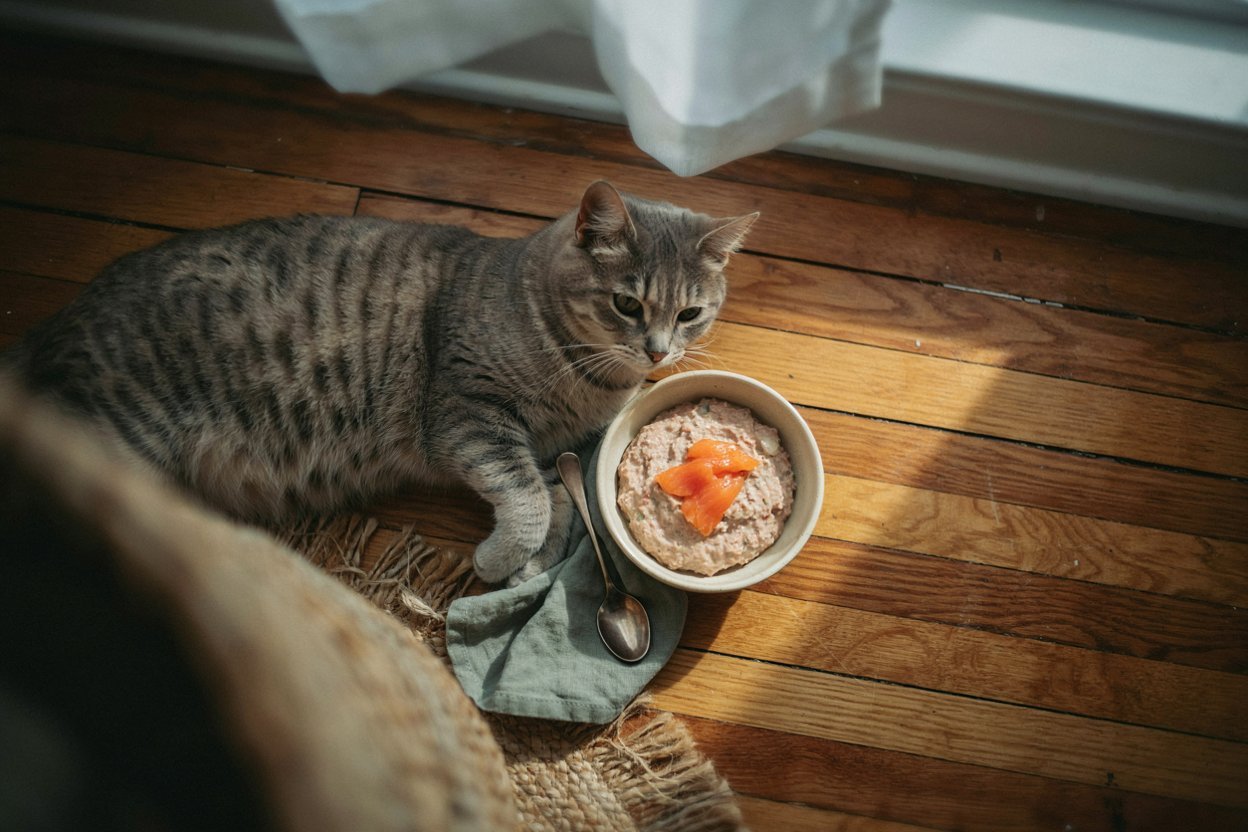
There is a quiet moment every cat owner eventually notices. The jump onto the counter takes a little longer. The bowl that used to be emptied in seconds now gets picked at throughout the day.
The once relentless appetite softens into something more selective. These small shifts are simply part of what it means to share your life with a cat who is growing older, and they are also a signal that what goes into the food bowl may need to change along with everything else.
Senior cats are not just smaller, slower versions of their younger selves. Their kidneys, digestive systems, muscles, and metabolism all shift with age, and those shifts change what a healthy diet actually looks like.
Homemade meals give you the ability to respond directly to those changes, adjusting texture, moisture, protein quality, and specific nutrients in a way that a one size fits all bag of kibble simply cannot match.
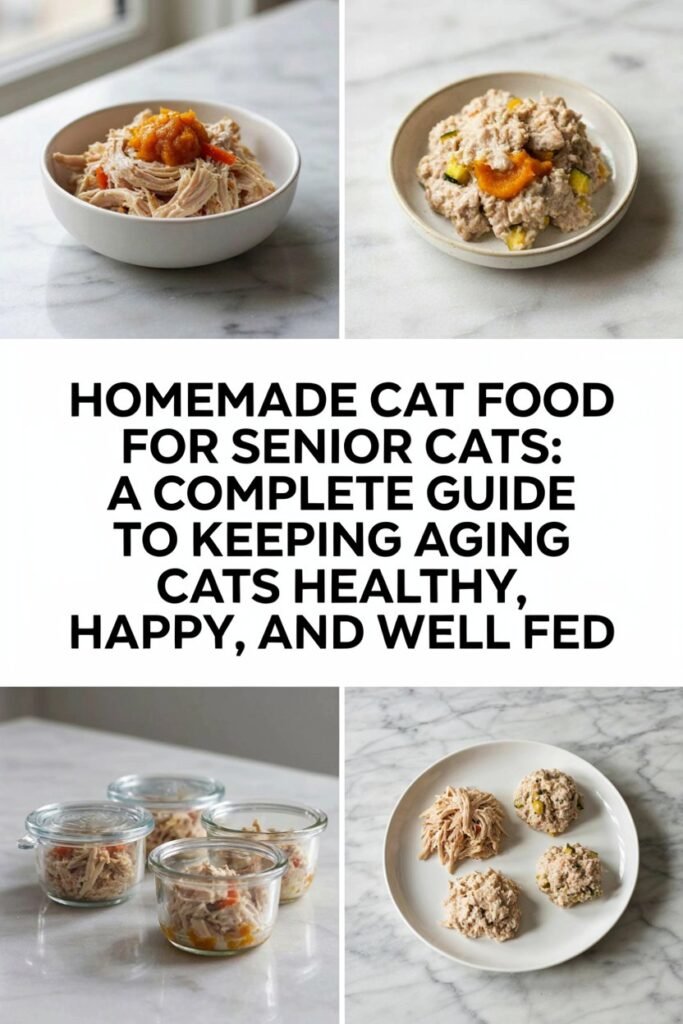
This guide was written specifically for owners of aging cats who want to understand what senior nutrition actually requires, not just a collection of recipes borrowed from adult cat cooking.
You will find an explanation of how a senior cat’s needs differ from a younger cat’s, a full breakdown of the nutrients that matter most in later life, ingredient guidance with the reasoning behind each choice, a list of foods to avoid, seven complete recipes built with senior cats in mind, and answers to the questions owners ask most often as their cats enter their golden years.
Disclaimer: This post may contain affiliate links, which means I may earn a small commission at no extra cost to you. Senior cats often have unique nutritional and health needs. Always consult your veterinarian before preparing homemade meals or changing your cat’s diet to ensure it remains complete and balanced.
Amazon Shopping List You Need
- Digital Kitchen Food Scale
- Nonstick Cooking Pot with Lid
- Immersion Hand Blender (For Softer Textures)
- Glass Meal Prep Containers with Lids
- Stainless Steel Cat Food Bowls
- Silicone Freezer Portion Trays
- Cat Multivitamin Supplement Powder (Veterinarian Approved)
How a Senior Cat’s Needs Are Different
Most veterinarians consider cats to be entering their senior years somewhere around age eleven, with cats over fifteen often described as geriatric. What happens internally during this stage explains why a senior specific approach to feeding matters so much.
Kidney function tends to decline gradually as cats age, which is one of the most common health concerns in older cats. This makes hydration and moderate, high quality protein especially important, since fresh, moisture rich meals put less strain on the kidneys than dry food does.
Muscle mass naturally decreases with age in a process similar to what happens in aging humans. This makes protein quality, not just protein quantity, especially important, since a senior cat needs highly digestible protein to help maintain the muscle they have left.
Digestion often becomes less efficient in older cats, meaning nutrients are not absorbed as effectively as they once were. This is part of why nutrient dense, easily digestible ingredients matter more in a senior recipe than they might in a recipe built for a younger, more resilient cat.
Dental issues become more common with age as well, which can make some textures difficult or uncomfortable to eat. Many of the recipes in this guide are designed with a soft, easily chewed texture in mind for exactly this reason.
Finally, senior cats are more prone to a gradual decrease in appetite, sometimes related to a diminished sense of smell or taste. Warm, aromatic, freshly cooked meals tend to be far more appealing to a cat with a reduced appetite than cold food straight from the refrigerator, which is one of the simplest advantages homemade cooking has over commercial options.
Before You Change Your Cat’s Diet
This section matters more for senior cats than it does for any other life stage, so please read it carefully before trying any recipe in this guide.
Talk with your veterinarian before making any significant change to an older cat’s diet, especially if your cat has been diagnosed with kidney disease, hyperthyroidism, diabetes, or any other chronic condition. Each of these conditions comes with its own specific dietary considerations, and a general senior recipe is not a substitute for a plan tailored to your cat’s individual bloodwork and health history.
If your cat has never eaten homemade food before, introduce it gradually alongside their current diet rather than switching all at once. A gradual transition over one to two weeks gives their digestive system time to adjust and makes it easier to spot any ingredient that does not agree with them.
Homemade meals intended to be a cat’s primary, long term diet need to be nutritionally complete, which typically means working with your veterinarian or a veterinary nutritionist to ensure the recipes include appropriate levels of taurine, calcium, and other nutrients that cats cannot produce on their own in sufficient amounts.
Cats are obligate carnivores with very specific nutritional requirements that differ meaningfully from a dog’s, so recipes built for dogs are never appropriate substitutes for cat food.
Weigh your cat regularly during any diet transition. Unexplained weight loss in a senior cat should always be discussed with your veterinarian, since it can be an early sign of several treatable conditions.
Key Nutrients Senior Cats Need Most
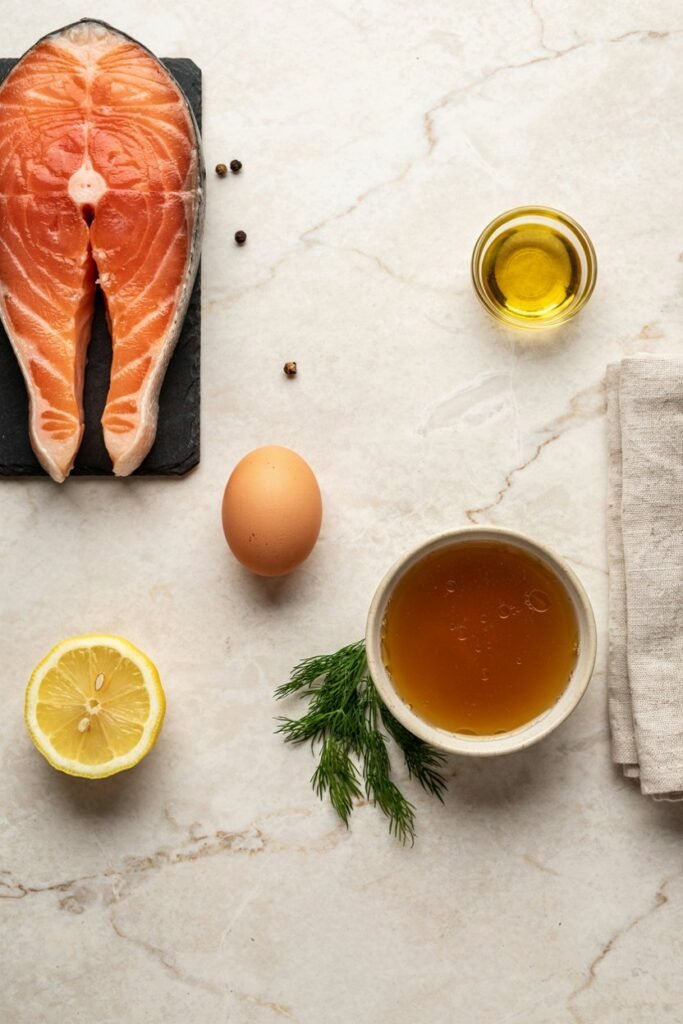
Taurine
Taurine is an amino acid that cats cannot synthesize on their own in adequate amounts, and it is essential for heart and eye health.
It must come from animal based protein sources or a supplement, since plant based ingredients do not provide it. Any homemade cat food recipe, senior or otherwise, needs a reliable taurine source.
High Quality, Moderate Protein
Contrary to older assumptions, most senior cats without kidney disease still need a substantial amount of high quality protein to help maintain muscle mass.
The key word is quality. Highly digestible animal proteins like chicken, turkey, and fish put less metabolic strain on the body than lower quality protein sources.
Moisture
Cats have a naturally low thirst drive, and many do not drink enough water on their own, particularly as they age.
Fresh, home cooked meals are naturally high in moisture compared to dry kibble, which supports kidney function and overall hydration.
Omega 3 Fatty Acids
Omega 3s, particularly from fish sources, support joint health, which becomes increasingly important as arthritis and general joint stiffness become more common in aging cats. They also support skin and coat condition, which can decline with age.
Fiber in Moderation
A modest amount of fiber can support healthy digestion and help manage hairballs, which some senior cats experience more frequently as their grooming habits and digestion change.
Ingredient Guide
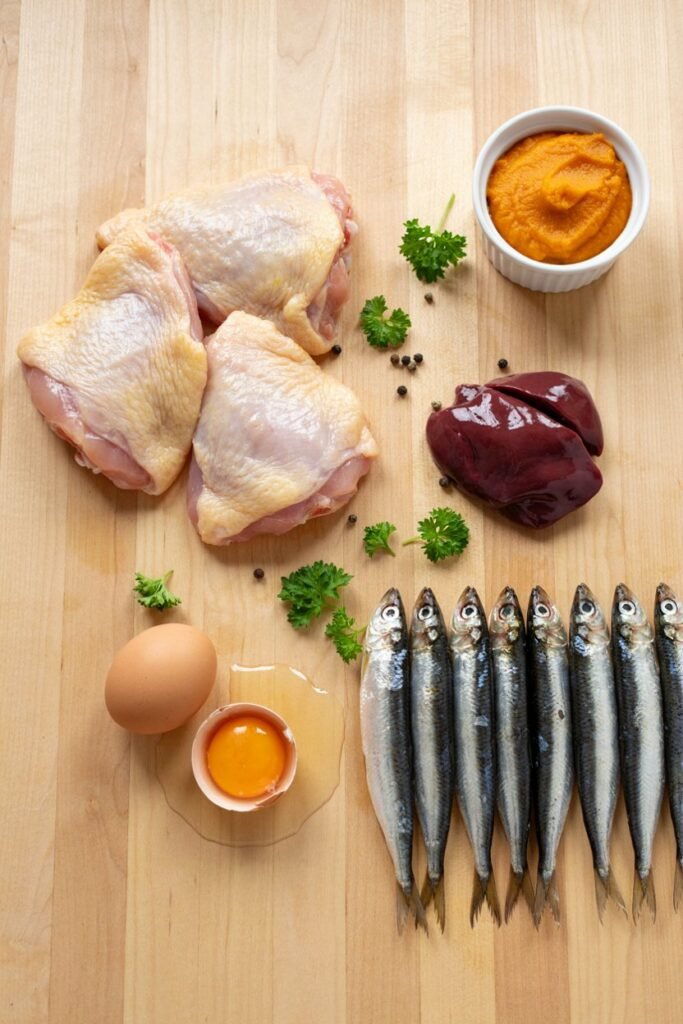
Proteins
Chicken thighs are a gentle, easily digestible protein that forms a good base for many senior recipes, and the slightly higher fat content compared to chicken breast can help cats who need extra calories.
Turkey offers a similar digestibility profile with a different flavor, which is useful for rotating proteins. Salmon and sardines provide those valuable omega 3 fatty acids that support joints, skin, and coat.
Eggs, when fully cooked, offer an easily digestible source of complete protein and can be a gentle addition for cats with a reduced appetite.
Beef liver, used in small amounts, is extremely nutrient dense and provides natural taurine along with vitamin A and iron, though it should never make up more than a small portion of a recipe due to its concentrated vitamin A content.
Healthy Fats
Salmon oil is one of the easiest ways to add omega 3 fatty acids directly to a homemade meal.
A small amount of chicken fat, naturally present in thighs, provides calories that can help underweight senior cats maintain a healthy body condition.
Gentle Additions
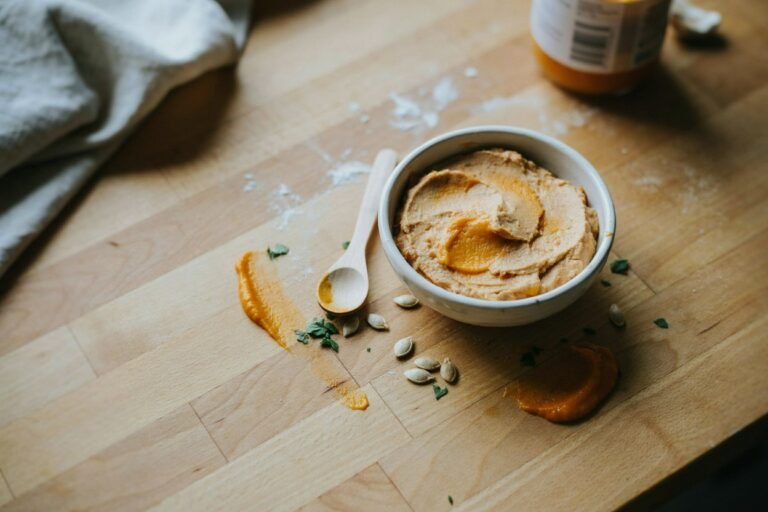
Plain pumpkin puree, used in small amounts, can support digestion and help manage occasional soft stool.
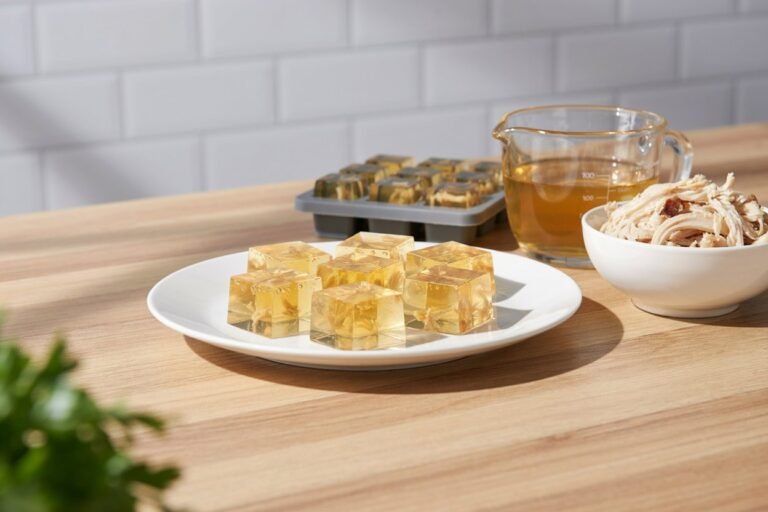
Bone broth, made without onion or garlic, adds moisture, flavor, and a bit of collagen, and can be especially helpful for encouraging a cat with a reduced appetite to eat.
A small amount of catnip or freeze dried meat topper can help make a new recipe more appealing during the transition period.
What to Avoid
Onion and garlic, in any form, are toxic to cats and should never be used, even in small seasoning amounts. Excess liver or other organ meat can lead to vitamin A toxicity if fed too frequently or in too large a portion. Raw fish should generally be avoided since it can contain an enzyme that destroys thiamine, an essential nutrient for cats.
Added salt, sugar, and any dairy beyond a very occasional small taste should be avoided, since many adult cats have limited ability to digest dairy. Grapes, raisins, chocolate, and xylitol are dangerous for cats just as they are for dogs and should never appear in any recipe.
If you want to explore general homemade cat cooking before focusing specifically on senior needs, our homemade cat food recipes guide is a helpful companion resource, and our piece on superfoods for cats goes deeper into some of the nutrient dense ingredients mentioned above.
Kitchen Tools You Will Need
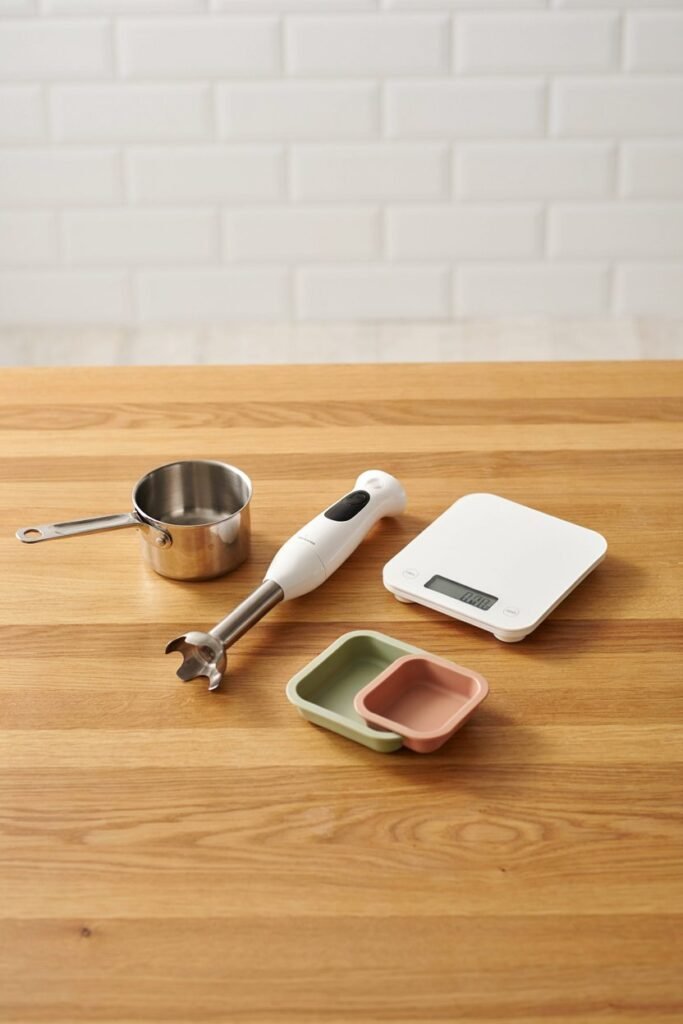
A small saucepan, a food processor or immersion blender for creating smooth or minced textures, a kitchen scale for portioning, silicone ice cube trays or small freezer safe containers, and a meat thermometer to confirm proteins are fully cooked are all you need to get started. None of these recipes require specialty equipment.
The Recipes
Each recipe below is designed with a senior cat’s needs in mind, favoring soft textures, gentle ingredients, and high moisture content. Portion sizes should always be adjusted to your individual cat’s weight and appetite using the feeding guide further down this page.
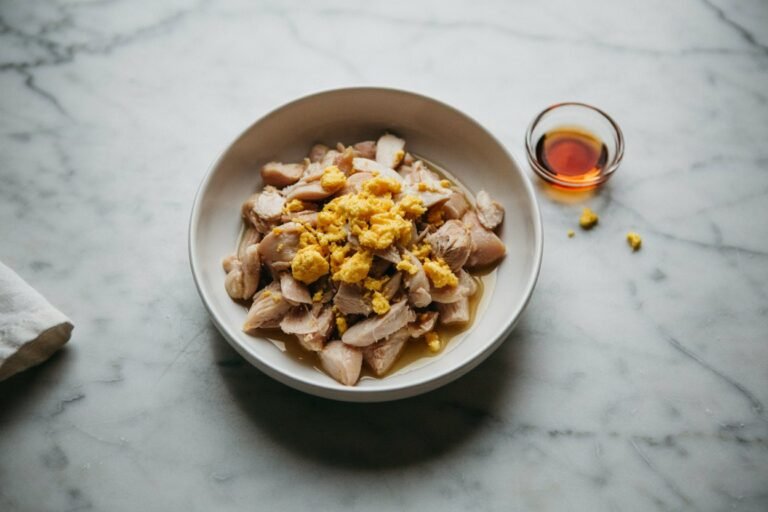
Gentle Chicken and Egg Puree
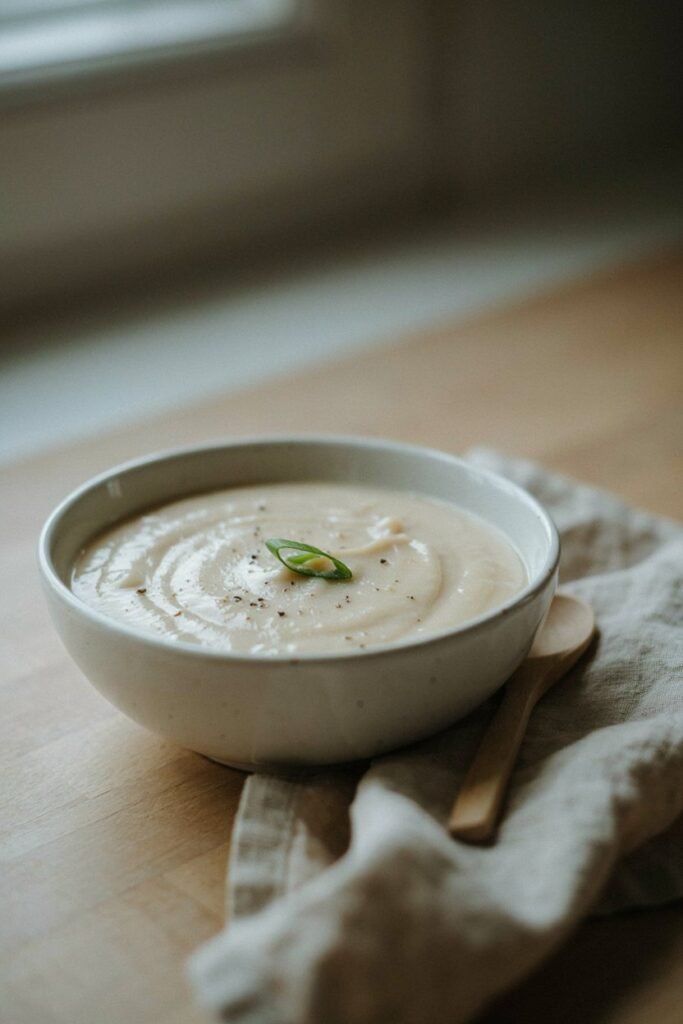
This ultra soft recipe is ideal for cats with dental discomfort or a very reduced appetite.
Prep time: 10 minutes Cook time: 20 minutes Yield: About 3 cups
Ingredients:
- 1 pound boneless, skinless chicken thighs: an easily digestible protein with enough natural fat to support a senior cat who needs extra calories
- 2 fully cooked eggs: adds gentle, complete protein that is especially easy on a sensitive digestive system
- 1/2 cup low sodium chicken broth, no onion or garlic added: adds moisture and a savory aroma that can help tempt a reduced appetite
- 1 teaspoon salmon oil: provides omega 3 fatty acids to support joint comfort and skin health
Instructions: Poach the chicken thighs in water or broth until fully cooked, then let cool slightly. Combine the cooked chicken, hard boiled eggs, and broth in a food processor and blend until smooth, adding more broth as needed to reach a soft, easily lapped consistency. Stir in the salmon oil once the mixture has cooled to a safe serving temperature.
Storage: Refrigerate up to three days. Freezing: Freezes well up to two months in small portions. Best for: Cats with dental discomfort or a notably reduced appetite. Swap idea: Turkey can replace chicken for variety.
Turkey and Pumpkin Soft Meal
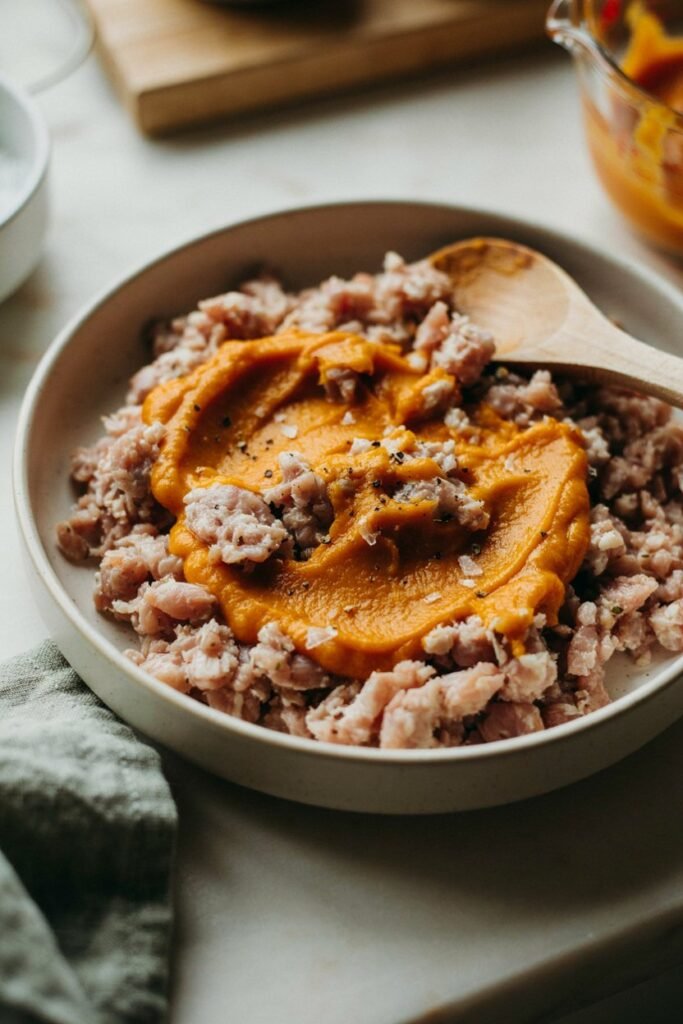
A gently textured recipe that supports digestion thanks to the pumpkin.
Prep time: 10 minutes Cook time: 20 minutes Yield: About 3 cups
Ingredients:
- 1 pound ground turkey: a lean, easily digestible protein source that is gentle on an aging digestive system
- 1/4 cup plain pumpkin puree: adds soluble fiber that can support healthy digestion and help manage occasional soft stool
- 1/4 cup water or low sodium broth: adjusts the texture to a soft, moist consistency appropriate for senior cats
- 1/2 teaspoon salmon oil: contributes omega 3 fatty acids for joint and skin support
Instructions: Cook the ground turkey thoroughly in a skillet, breaking it into very small pieces as it cooks. Once cooked, transfer to a food processor with the pumpkin puree and water, and pulse until finely minced but not fully pureed, unless your cat prefers a smoother texture. Stir in the salmon oil once cooled.
Storage: Refrigerate up to three days. Freezing: Freezes well up to two months. Best for: Cats who benefit from a bit of extra fiber for digestive support. Swap idea: Chicken can replace turkey.
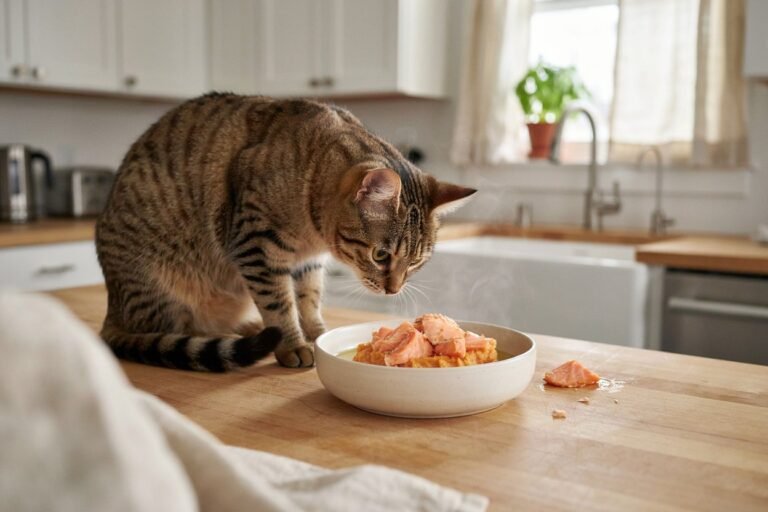
Salmon and Bone Broth Bowl
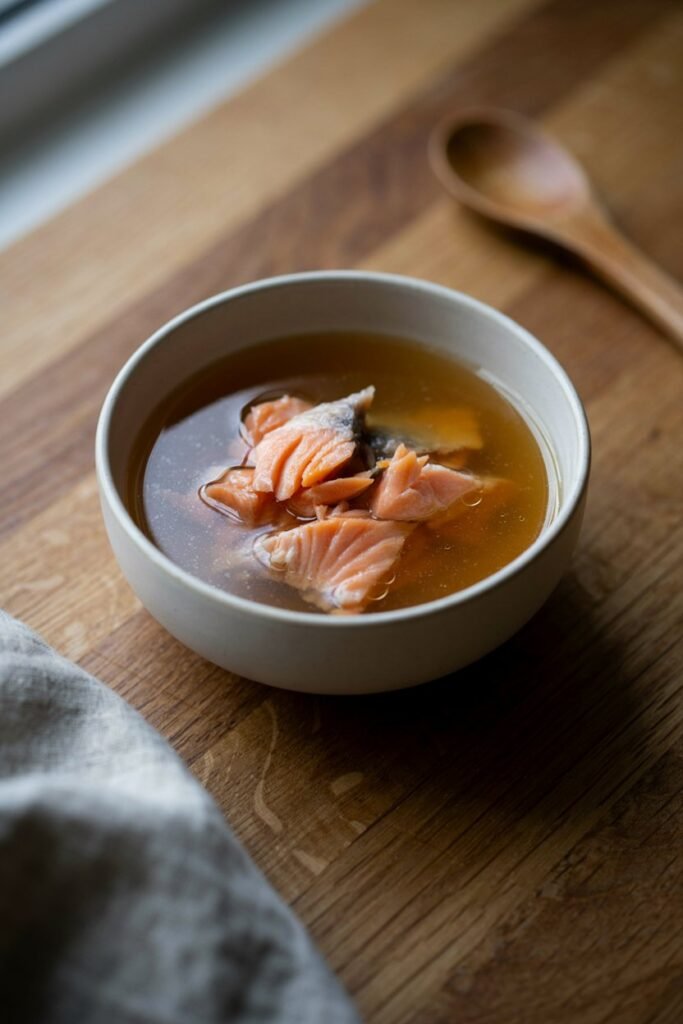
Built around the omega 3 rich benefits of salmon, this recipe is especially useful for cats showing signs of stiffness or joint discomfort.
Prep time: 10 minutes Cook time: 15 minutes Yield: About 2.5 cups
Ingredients:
- 1 pound boneless, skinless salmon, fully cooked and checked carefully for bones: delivers a concentrated source of omega 3 fatty acids that support joint comfort and coat condition
- 1/2 cup bone broth, no onion or garlic added: adds moisture, flavor, and a small amount of collagen
- 1 fully cooked egg: adds gentle, complete protein
- 1/4 teaspoon salmon oil: reinforces the omega 3 content for cats who need extra joint support
Instructions: Bake or poach the salmon until fully cooked, then flake it carefully, checking thoroughly for any remaining bones. Combine the salmon, bone broth, and hard boiled egg in a food processor and blend to your cat’s preferred consistency. Stir in the salmon oil once cooled to a safe serving temperature.
Storage: Refrigerate up to two days, since fish based meals have a shorter fresh shelf life. Freezing: Freezes well up to two months. Best for: Cats showing signs of joint stiffness or a dull coat. Swap idea: Sardines packed in water can replace salmon.
Beef and Liver Nutrient Boost
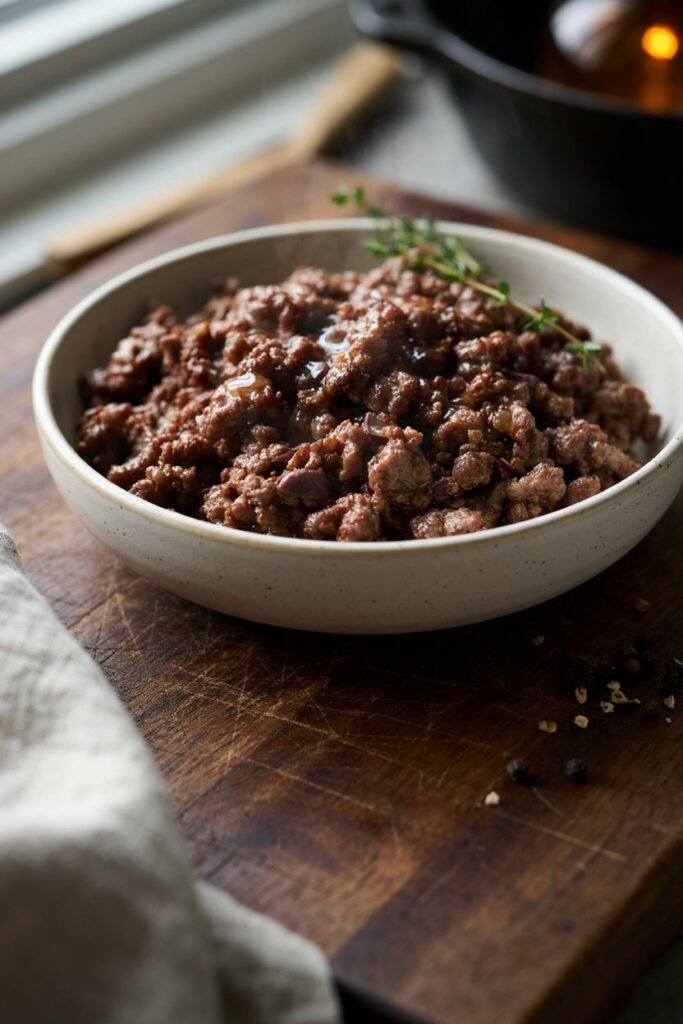
Used occasionally rather than as a daily staple, this recipe adds a concentrated dose of nutrients thanks to the small amount of liver.
Prep time: 10 minutes Cook time: 20 minutes Yield: About 3 cups
Ingredients:
- 1 pound lean ground beef: provides iron and B vitamins along with easily digestible protein
- 2 ounces beef liver, finely chopped: an extremely nutrient dense addition that provides natural taurine, vitamin A, and iron, used in a small amount to avoid excess vitamin A
- 1/4 cup water: adjusts the mixture to a soft, moist texture
- 1/2 teaspoon salmon oil: rounds out the recipe with omega 3 fatty acids
Instructions: Cook the ground beef and finely chopped liver together in a skillet until both are fully cooked through, breaking the mixture into small pieces as it cooks. Drain any excess fat. Transfer to a food processor with the water and pulse to your cat’s preferred texture. Stir in the salmon oil once cooled.
Storage: Refrigerate up to three days. Freezing: Freezes well up to two months. Best for: An occasional nutrient boost rather than an everyday staple, due to the concentrated liver content. Swap idea: Chicken liver can replace beef liver in the same small quantity.
Chicken and Bone Broth Sipping Soup
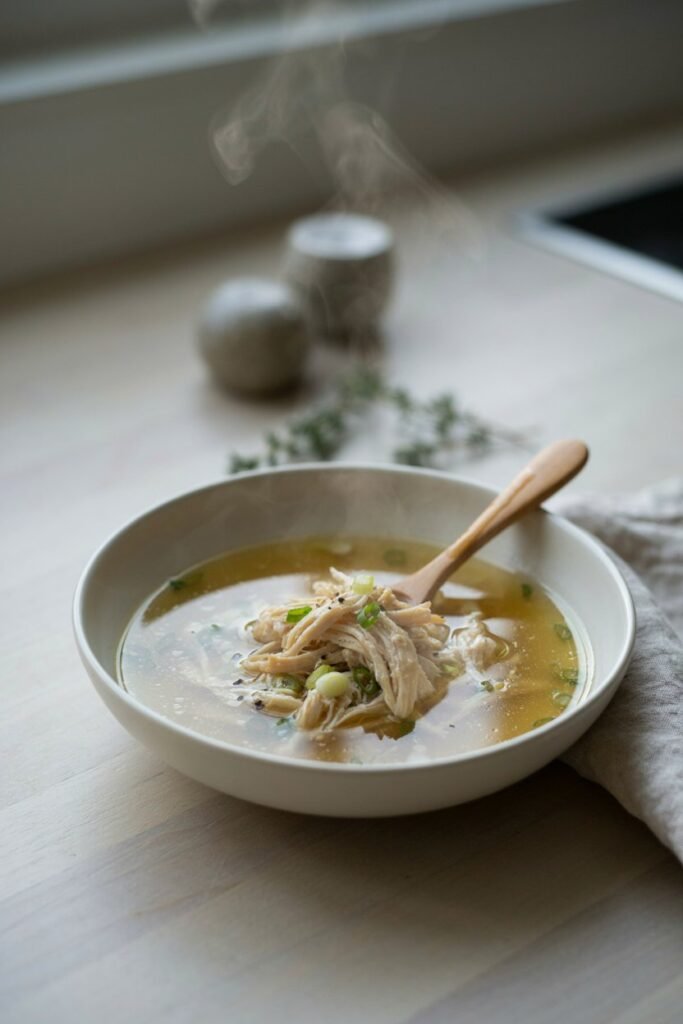
Designed specifically to encourage hydration, this recipe is closer to a soup than a solid meal and can be offered alongside regular food.
Prep time: 10 minutes Cook time: 15 minutes Yield: About 2 cups
Ingredients:
- 1/2 pound boneless, skinless chicken breast: a very lean protein that keeps this recipe light, since it is meant to supplement rather than replace a full meal
- 1 1/2 cups low sodium chicken broth, no onion or garlic added: the primary ingredient in this recipe, delivering significant extra moisture to support hydration and kidney health
- 1/4 teaspoon salmon oil: adds a small amount of omega 3s without overwhelming the light broth base
Instructions: Poach the chicken breast in the broth until fully cooked, then shred it into very fine pieces and return it to the broth. Simmer for a few additional minutes to let the flavors combine. Cool to a safe serving temperature and stir in the salmon oil before serving. Offer in a shallow bowl alongside your cat’s regular meal.
Storage: Refrigerate up to three days. Freezing: Freezes well up to two months in small portions. Best for: Cats who need extra encouragement to stay hydrated, particularly those managing kidney concerns under veterinary guidance. Swap idea: Turkey breast can replace chicken breast.
Sardine and Egg Soft Mash
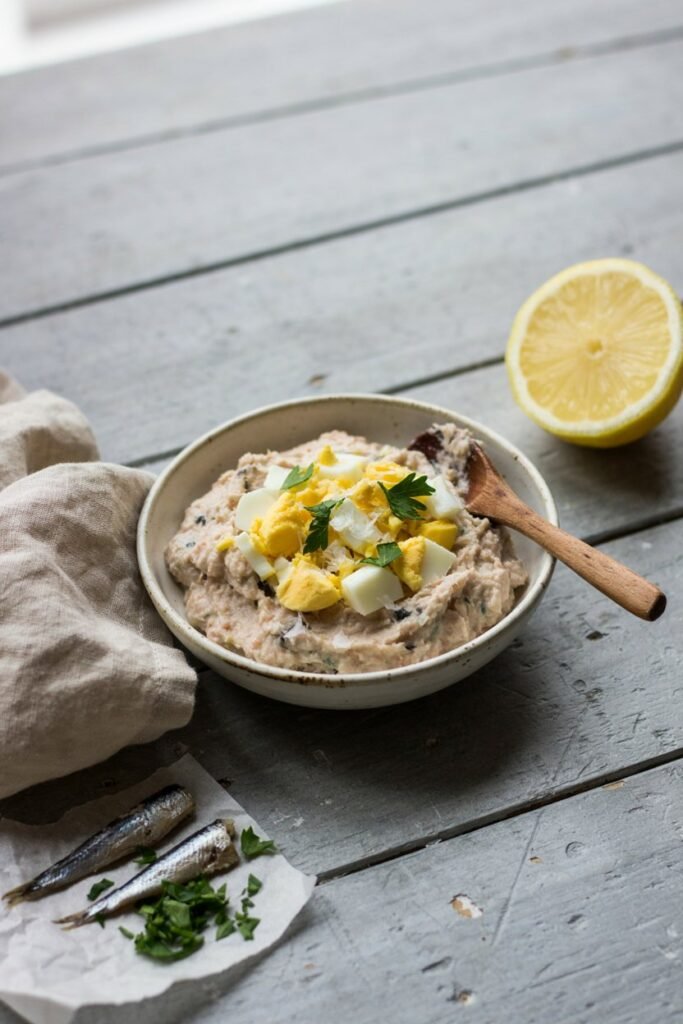
A budget friendly, nutrient dense recipe built around canned sardines, which are one of the most accessible sources of omega 3s for home cooking.
Prep time: 10 minutes Yield: About 1.5 cups
Ingredients:
- 1 can sardines packed in water, drained: an affordable, calcium rich source of omega 3 fatty acids that most cats find highly appealing
- 1 fully cooked egg: adds gentle protein and helps balance the richness of the sardines
- 1 tablespoon water or broth: softens the mixture to an easily eaten consistency
Instructions: Mash the drained sardines with a fork until finely broken apart. Chop the hard boiled egg finely and combine with the sardines and water, mixing until evenly blended.
Storage: Refrigerate up to two days, since this recipe uses no cooking step and has a shorter shelf life. Freezing: Not recommended due to the texture change that occurs when thawed. Best for: A quick, no cook option on busy days or as an appetite stimulating topper. Swap idea: Canned salmon in water can replace sardines.
Turkey and Egg Recovery Meal
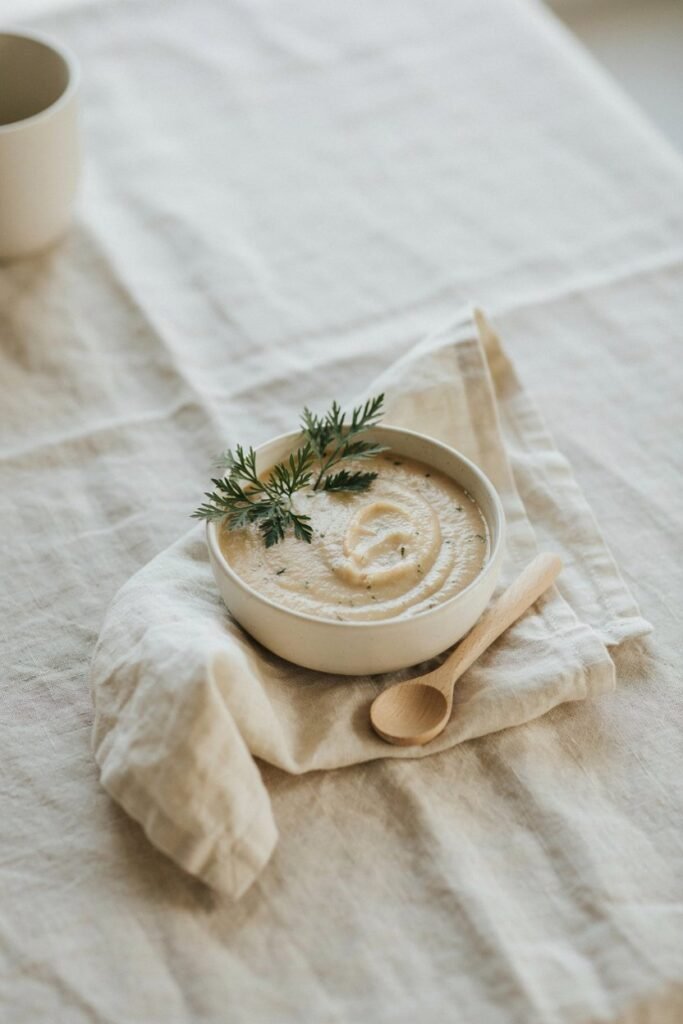
This soft, mild recipe is a good option for a senior cat recovering from illness or a dental procedure, when a very gentle meal is needed.
Prep time: 10 minutes Cook time: 15 minutes Yield: About 2.5 cups
Ingredients:
- 1 pound ground turkey: a lean, mild protein that is easy on a recovering digestive system
- 2 fully cooked eggs: adds gentle, easily digestible protein without any strong flavors that might discourage an already reduced appetite
- 1/2 cup water: creates a very soft, easily swallowed texture
- 1/4 teaspoon salmon oil: supports overall recovery with a small amount of omega 3s
Instructions: Cook the ground turkey thoroughly in a skillet, breaking it into very small pieces. Combine the cooked turkey, hard boiled eggs, and water in a food processor and blend until completely smooth. Stir in the salmon oil once the mixture has cooled to a safe serving temperature.
Storage: Refrigerate up to three days. Freezing: Freezes well up to two months. Best for: Cats recovering from illness, surgery, or a dental procedure. Swap idea: Chicken can replace turkey for variety once your cat is back to full health.
If your senior cat tends to be a picky eater even with fresh food, our guide to healthy homemade cat gravy toppers for picky eaters offers additional ideas for making meals more appealing without changing the whole recipe.
Feeding Guide
How much to feed a senior cat depends on their current weight, activity level, and any health conditions your veterinarian is monitoring. As a general starting point, most senior cats need approximately 20 to 25 calories per pound of body weight per day, though this can vary meaningfully based on individual metabolism and health status.
| Cat Weight | Approximate Daily Amount |
|---|---|
| 6 pounds | 1/3 to 1/2 cup |
| 8 pounds | 1/2 to 2/3 cup |
| 10 pounds | 2/3 to 3/4 cup |
| 12 pounds | 3/4 to 1 cup |
| 15 pounds | 1 to 1.25 cups |
Split the daily amount across two to four smaller meals rather than one or two large ones, since many senior cats do better with smaller, more frequent portions, particularly if they have a reduced appetite or any digestive sensitivity.
These numbers are a general starting reference, not a prescription, so monitor your cat’s body condition and weight over time and adjust with guidance from your veterinarian.
Storage and Meal Prep
Batch cooking one or two recipes at the start of the week makes homemade feeding far more manageable. Portion the finished food into small containers or silicone trays sized for a single meal, then refrigerate what you will use within the next two to three days and freeze the rest. Label every container with the recipe name and date, since it is easy to lose track once you have a few different recipes in rotation.
Thaw frozen portions in the refrigerator overnight rather than at room temperature. Warm each portion gently before serving, since senior cats often respond much better to food that is closer to room temperature or slightly warm than to food straight from the refrigerator, both because it smells more appealing and because it is more comfortable to eat.
Never microwave food in a way that creates hot spots, and always test the temperature before offering it.
Common Mistakes to Avoid
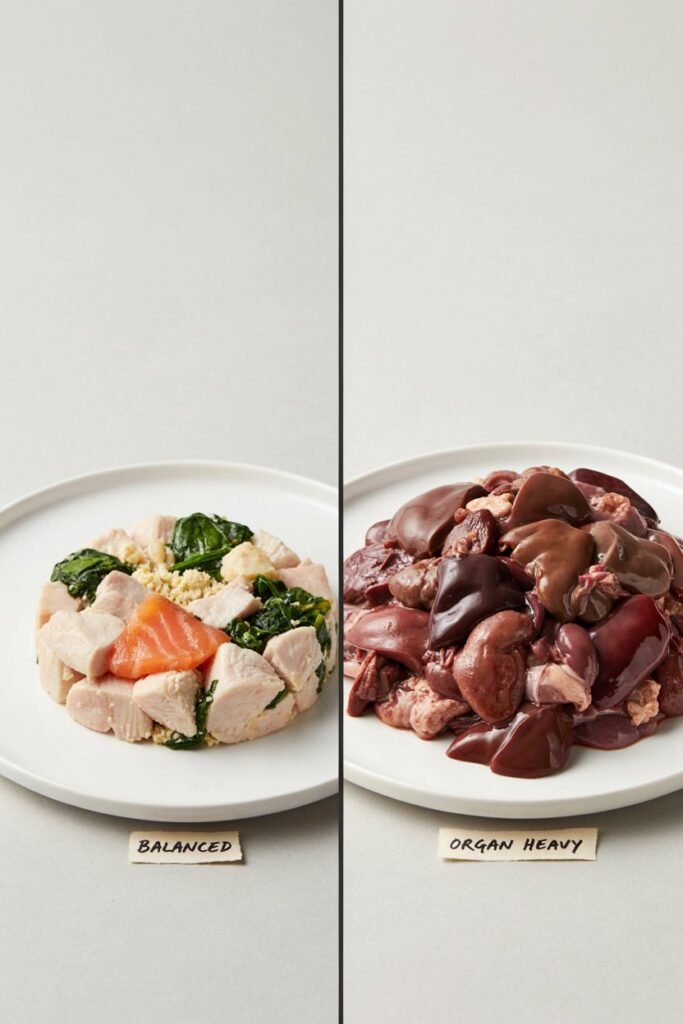
Feeding liver or other organ meat too frequently is one of the most common mistakes, since it can lead to vitamin A toxicity over time even though a small, occasional amount is beneficial.
Skipping a taurine source is a serious oversight, since taurine deficiency can lead to serious heart and eye problems in cats over time. Switching a senior cat’s diet too abruptly, without a gradual transition period, often leads to digestive upset and a cat who refuses the new food altogether.
Feeding cold food straight from the refrigerator without warming it slightly can make meals less appealing to a cat with a diminished sense of smell. Ignoring unexplained weight loss, thinking it is simply a normal part of aging, can delay diagnosis of a treatable condition.
Forgetting to check with a veterinarian before starting a homemade diet for a cat with an existing health condition is one of the most important mistakes to avoid altogether.
Signs Worth Discussing With Your Veterinarian
While this guide focuses on nutrition, it is worth knowing which signs in a senior cat warrant a veterinary conversation rather than just a dietary adjustment. Increased thirst or urination, noticeable weight loss despite a normal or increased appetite, vomiting or diarrhea that lasts more than a day, a sudden refusal to eat, noticeable stiffness or reluctance to jump, and bad breath or visible dental issues are all worth mentioning at your next appointment.
Homemade food can support your cat’s overall wellness, but it is not a substitute for regular veterinary care, especially in the senior years when health changes can happen gradually and quietly.
More Homemade Cat Food Guides
If this guide has you interested in cooking for your cat more regularly, these related posts offer more recipes and ideas to explore next.
- Homemade cat food recipes
- More homemade cat food recipes
- Easy chicken based homemade cat recipes
- Beginner friendly raw inspired cat food ideas
- Affordable homemade cat gravy food budget recipes
- Healthy homemade cat gravy toppers for picky eaters
- Cat weight gain meals
- Superfoods for cats
- Happy healthy cat tips
- Daily cat care routine
Frequently Asked Questions
At what age is a cat considered a senior? Most veterinarians consider cats senior starting around age eleven, with cats over fifteen often described as geriatric. Individual cats age differently, so your veterinarian’s assessment matters more than age alone.
Can homemade food help with my senior cat’s kidney disease? Fresh, moisture rich food can be part of supporting a cat with kidney disease, but the specific protein and phosphorus levels need to be tailored to your cat’s individual bloodwork under veterinary guidance. Do not assume a general senior recipe is appropriate for a cat with diagnosed kidney disease without professional input.
My senior cat has become a picky eater. Will homemade food help? Many owners find that warm, aromatic, freshly cooked food is more appealing to a cat with a reduced appetite than dry kibble or cold refrigerated food, though every cat is different, and a persistent loss of appetite should always be mentioned to your veterinarian.
Do senior cats need less protein than younger cats? Not necessarily. Many senior cats without kidney disease still need substantial, high quality protein to help maintain muscle mass. The idea that all older cats need less protein is outdated and does not apply universally, which is another reason veterinary guidance matters.
Can I add supplements to homemade senior cat food? Many senior cats benefit from additional support such as joint supplements or specific vitamins, but any supplement should be discussed with your veterinarian first, since needs vary significantly based on individual health status.
How do I transition my senior cat to homemade food safely? Introduce the new food gradually over one to two weeks, mixing a small amount in with their current food and slowly increasing the proportion, while watching for any digestive upset.
Can homemade cat food be frozen? Yes. Most of the recipes above freeze well for up to two months, though fish based and raw egg containing recipes generally have a shorter recommended freezer life than cooked poultry or beef recipes.
Is it safe to feed my senior cat liver regularly? Liver is highly nutrient dense but should be fed only occasionally and in small amounts, since regular large amounts can lead to vitamin A toxicity over time.
What if my senior cat refuses to eat homemade food? Try warming the food slightly, adding a small amount of low sodium broth to increase aroma, or offering it alongside their familiar food during the transition. Persistent appetite loss should always be discussed with your veterinarian rather than addressed through diet changes alone.
Should I ask my vet before switching my senior cat to homemade food? Yes. This is especially important for senior cats, since age related conditions like kidney disease, hyperthyroidism, and diabetes each come with specific dietary needs that a general recipe cannot account for on its own.
Final Thoughts
Feeding a senior cat well is less about following a single perfect recipe and more about paying close attention. Watch how your cat responds to texture, temperature, and flavor.
Notice changes in appetite, weight, and energy, and treat those changes as information rather than something to simply accept as inevitable aging.
Homemade cooking gives you the flexibility to respond to all of it in real time, adjusting moisture, protein source, and texture as your cat’s needs shift over the years.
Start with one recipe, introduce it slowly, and keep your veterinarian involved as your cat’s needs evolve. The goal is not perfection in the kitchen.
It is a bowl of food your senior cat actually looks forward to, built from ingredients you trust, adjusted specifically for the cat in front of you rather than a generic idea of what a cat should eat. That kind of attentive, responsive care is exactly what the later years deserve.
8 Comments