Adorable Handmade Pet Gifts You Can Create Yourself
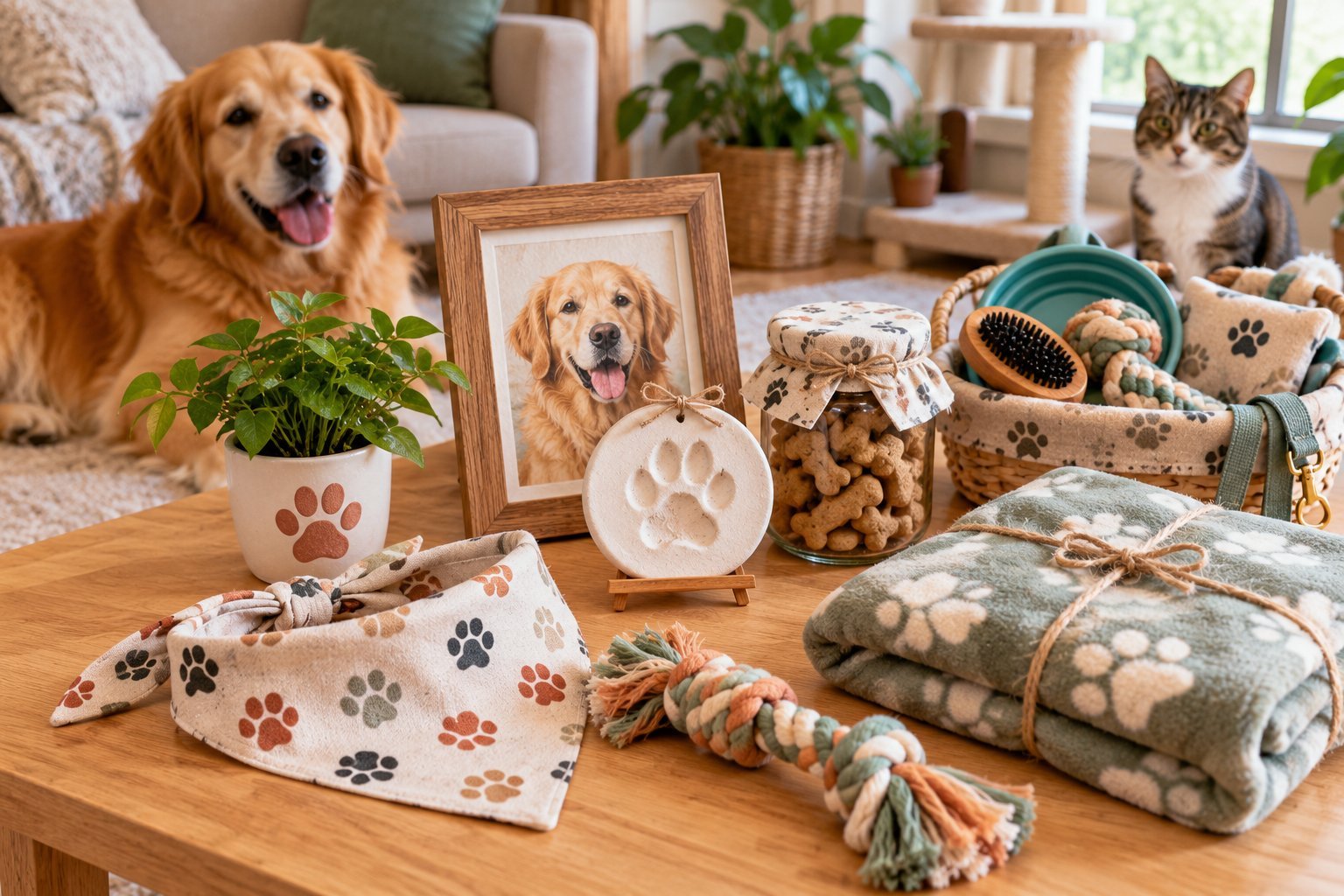
Handmade pet gifts are a lovely way to celebrate the animals that make our lives happier.
Whether you are shopping for a friend’s new puppy, preparing a birthday surprise for a cat lover, or looking for a thoughtful Christmas present, a gift made by hand can feel much more personal than something picked up at the last minute.
What I especially like about DIY pet gifts is how many possibilities there are. You can create personalized pet portraits, sew a soft bandana, make a decorative paw print keepsake, or put together a useful gift basket filled with pet themed goodies.
Some projects require only basic craft supplies, while others are perfect for anyone who enjoys sewing, painting, or working with their hands.
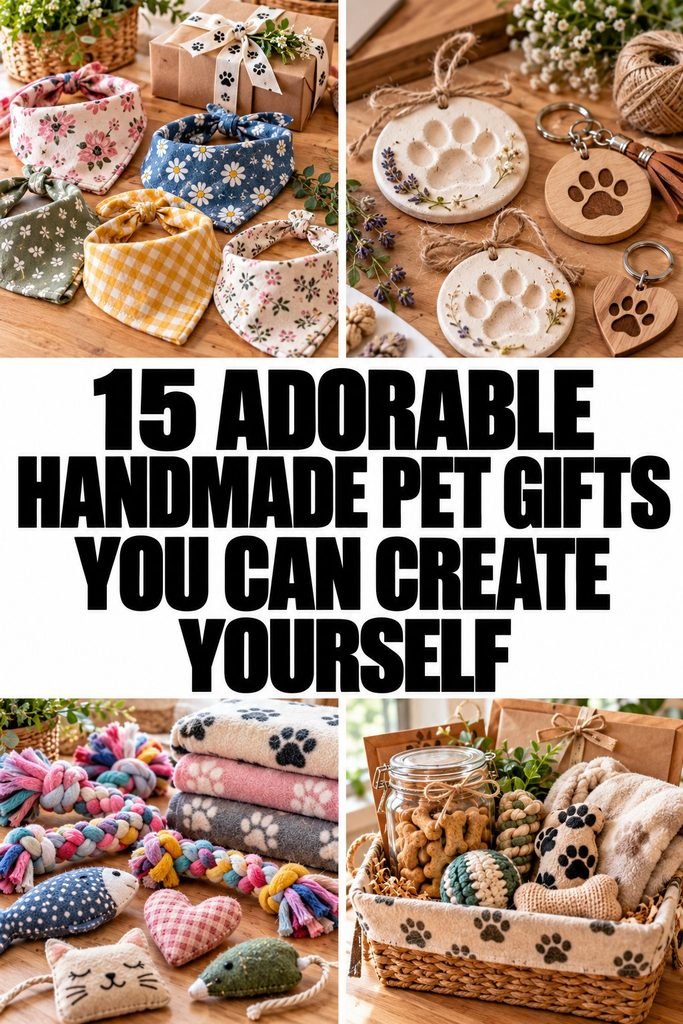
You do not need an expensive craft room or professional equipment to get started. With a little creativity and a few affordable materials, you can make beautiful gifts for dogs, cats, and the people who adore them.
These handmade projects are also worth considering if you enjoy selling crafts at local markets or through an online shop.
In this guide, I am sharing adorable handmade pet gift ideas that combine personality, practicality, and creativity.
You will find options for different skill levels, occasions, and budgets, including projects that can be customized with a pet’s name, colors, or favorite things.
1. Personalized Pet Bandanas
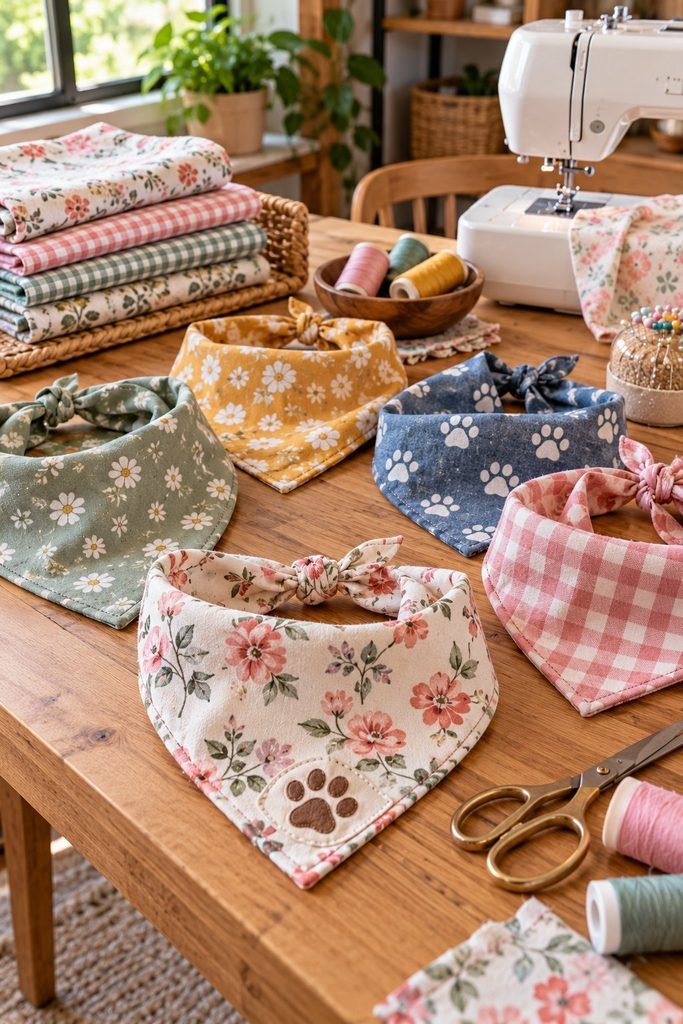
A personalized pet bandana is one of the simplest handmade gifts you can create, and it is easy to customize for different pets and occasions.
With a few pieces of fabric, basic sewing supplies, and a little creativity, you can turn an ordinary accessory into something special.
Bandanas make thoughtful gifts for dog owners who enjoy dressing up their pets for family photographs, holidays, birthday celebrations, or everyday outings.
You can also create matching designs for multiple pets in the same household.
What you will need:
- Cotton fabric in a color or pattern you love
- Fabric scissors
- Measuring tape
- Sewing machine or needle and thread
- Fabric chalk or a washable marking pen
- Optional fabric lettering or embroidery supplies
How to make it
Start by measuring the pet’s neck and deciding how large the finished bandana should be. Cut your fabric into an appropriate triangle or create a folded design that fits comfortably around the neck.
Fold and stitch the raw edges for a neat finish. If you prefer a no sew project, you can use a suitable fabric adhesive according to its instructions, although stitched seams are generally more durable.
Personalize the bandana with the pet’s name, a small embroidered paw print, or a seasonal design. For example, red and green fabric works well for Christmas, while pastel florals are lovely for spring.
You can also coordinate the fabric with the owner’s favorite colors to make the gift feel more thoughtful.
Gift giving tip: Present the finished bandana in a small gift box with a handwritten card explaining that it was made especially for their pet.
Always make sure the bandana fits comfortably and cannot tighten around the neck. It should be supervised while worn and removed if the pet chews it or becomes tangled. Never leave a bandana on an unattended pet if it could catch on something.
2. DIY Paw Print Keepsakes
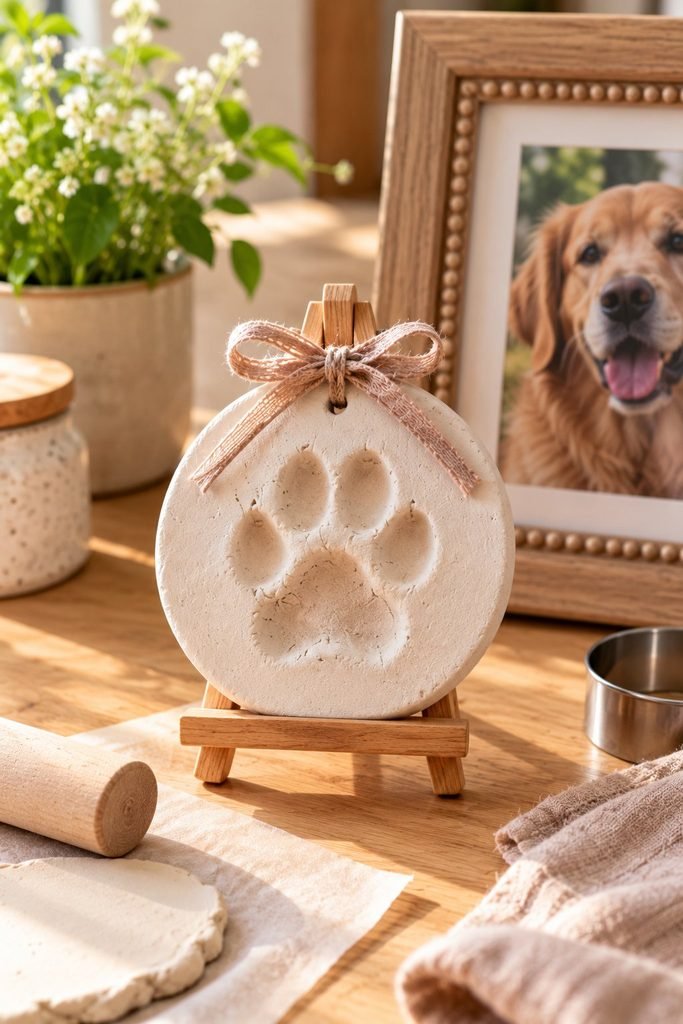
A paw print keepsake is a sentimental gift that allows pet owners to preserve a small reminder of an animal they love.
It can be especially meaningful for a pet’s birthday, a new puppy celebration, or a holiday gift for someone who considers their animal part of the family.
Unlike many pet accessories, this project is mainly decorative. That means you can focus on making the finished piece attractive enough to display on a shelf, desk, or wall.
Materials to gather:
- Pet safe, non toxic air dry clay or a suitable craft kit
- Rolling pin
- A clean flat surface
- Ribbon or a display frame, depending on the design
- Optional letter stamps or decorative details
How to make it
Begin by preparing the clay according to the product instructions. Roll it into an even shape that is large enough to accommodate the pet’s paw without forcing the animal into an uncomfortable position.
If the pet is comfortable with the process, gently press the paw into the clay to create an impression. Do not force the paw down, and stop if the animal becomes anxious. Clean the paw afterward and follow the clay manufacturer’s curing instructions.
Once the keepsake has dried or cured completely, you can add the pet’s name or the year. A simple neutral finish looks elegant, while soft colors can make the piece feel more playful.
If the pet does not tolerate paw impressions, consider making a decorative paw print by hand instead. You can use a stamp or shape the design from clay without involving the animal.
Ways to personalize the gift
- Add the pet’s name and adoption year.
- Use a small frame with a photograph.
- Create matching keepsakes for multiple pets.
- Choose a color that complements the recipient’s home.
Keep the finished keepsake out of reach of pets, particularly if it contains small decorations, ribbon, or materials that could break apart.
Use only materials suitable for the intended project and never allow an animal to lick or eat craft supplies.
3. Handmade Pet Portraits
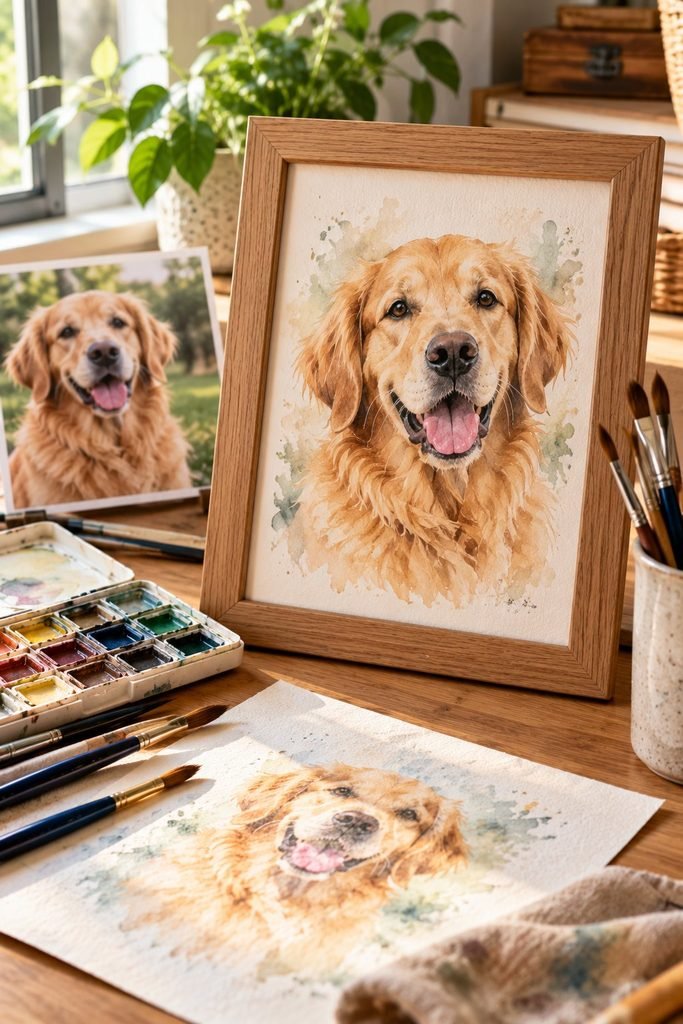
If you enjoy drawing, painting, or digital design, a handmade pet portrait can become a truly memorable gift.
It captures the appearance and personality of a particular animal, making it much more personal than a generic pet themed decoration.
You do not have to be a professional artist to create something meaningful. Simple illustrations, minimalist line drawings, and colorful painted portraits can all look beautiful when thoughtfully presented.
Supplies you might need:
- A clear photograph of the pet
- Sketching pencils
- Drawing paper or a small canvas
- Watercolor paints, acrylic paints, or colored pencils
- An eraser and suitable brushes
- A frame for the finished artwork
How to create your portrait
Choose a photograph with good lighting and a clear view of the pet’s face. A picture that shows distinctive features, such as floppy ears, unusual markings, or bright eyes, will make the portrait more recognizable.
Lightly sketch the main shapes before adding details. Focus on the animal’s overall expression and characteristic markings rather than trying to reproduce every individual hair.
If you are painting, build up the colors gradually. Allow each layer to dry as needed, then add the finer details around the eyes, nose, and ears.
For a simpler project, create a minimalist outline of the pet’s head and write its name underneath. You could also add a small date or a short dedication to make the gift more meaningful.
Creative presentation ideas
- Frame the portrait in a simple wooden frame.
- Paint the pet’s name beneath the illustration.
- Create a matching portrait of two pets.
- Use a favorite photograph as inspiration for a seasonal artwork.
A handmade portrait is also a promising craft product because customers often look for personalized gifts for pet birthdays, adoption anniversaries, and memorial occasions.
If you plan to sell portraits, establish clear expectations about the style, size, turnaround time, and number of revisions included in each order. This helps customers understand exactly what they are purchasing.
4. DIY Pet Toy Gift Sets
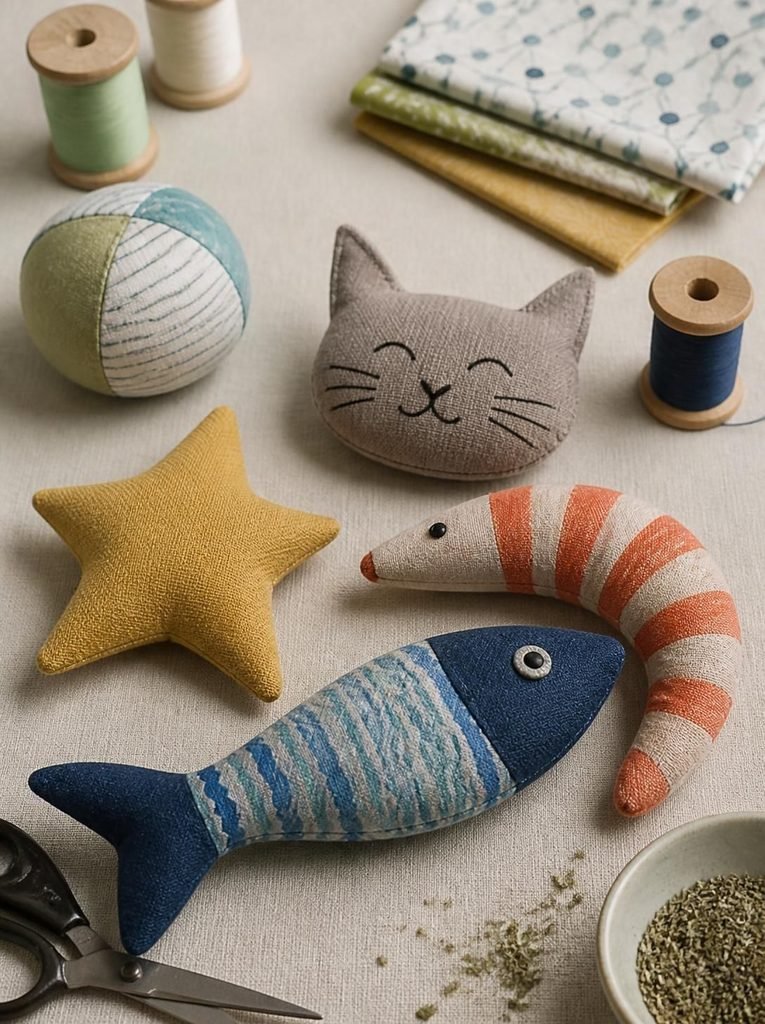
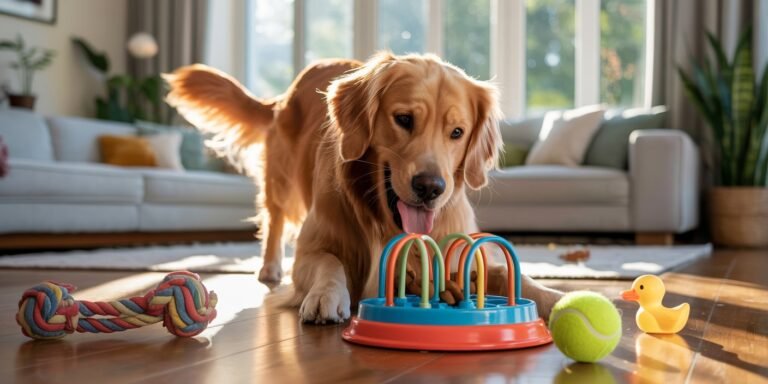
A small handmade pet toy set can be a cheerful gift for a dog or cat owner. Instead of giving one item, you can create a coordinated collection with different colors, textures, and designs.
For dogs, a simple fabric toy may be appropriate for supervised play, depending on the dog’s size and chewing habits. For cats, you could make soft fabric toys designed for interactive play with their owner.
The most important consideration is safety. Pets have different play styles, and a toy that is suitable for one animal may be dangerous for another.
Materials to consider:
- Durable, pet appropriate fabric
- Suitable thread and sewing supplies
- Catnip specifically intended for cat toys, if appropriate
- Plain cotton fabric for certain supervised toys
- A small reusable gift bag or box
How to put together a gift set
Choose a theme, such as woodland colors, bright primary colors, or a seasonal collection. Make two or three simple items that complement each other rather than producing a large number of complicated toys.
For a cat owner, you might create a soft fabric toy with securely enclosed catnip, provided the design is suitable for that cat. For a dog owner, you could make a simple fabric toy intended for gentle, supervised play.
Inspect every seam carefully. Avoid loose threads, exposed stuffing, small detachable decorations, bells, buttons, beads, ribbons, and other components that could be swallowed or cause entanglement.
Do not assume that a homemade fabric toy is suitable for aggressive chewers. Dogs that tear toys apart may need professionally designed, appropriately sized products instead.
How to make the gift look special
Place the toys in a small reusable fabric pouch or a gift box decorated with paw print paper. Include a card with the intended use and a reminder that the toys should be inspected regularly and removed if damaged.
A thoughtfully presented set can feel generous without requiring expensive materials. Just remember that pet safety should always come before appearance.
5. Personalized Pet Treat Jars
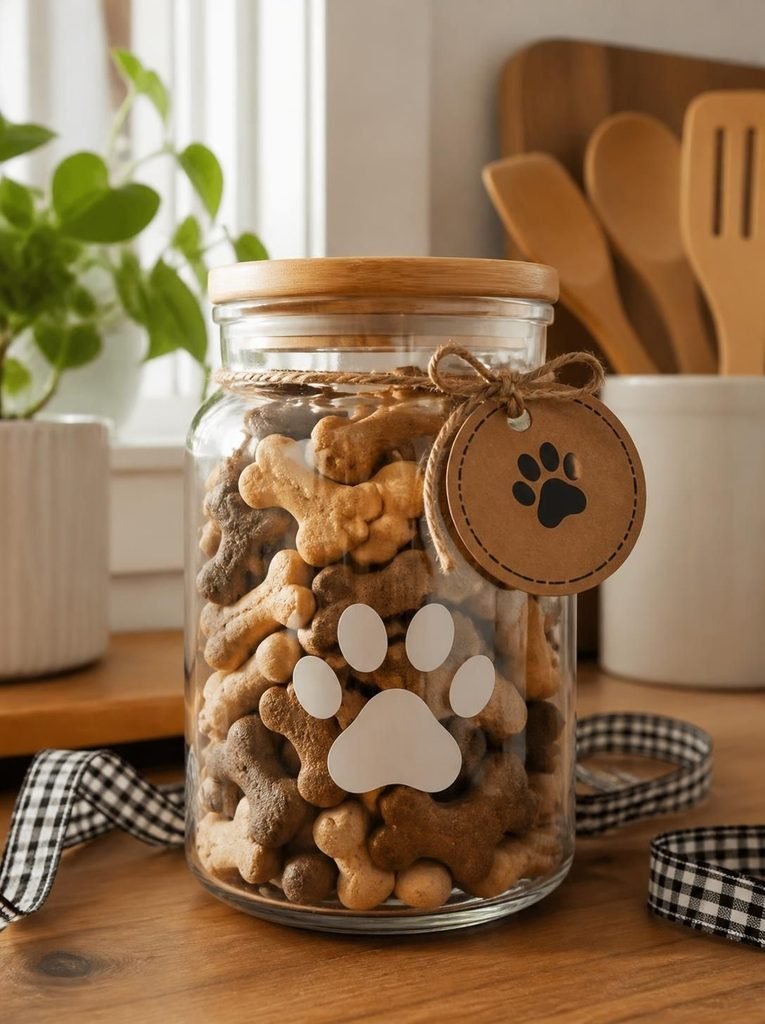
A decorated treat jar is a practical handmade gift for someone who loves spoiling their pet. It can sit neatly on a kitchen counter or in a pet feeding area while keeping treats organized.
The best part is that you can personalize the outside of the jar without making the container itself difficult to clean.
What you will need:
- A clean food safe jar with a secure lid
- Decorative vinyl lettering or suitable paint for the exterior
- A small brush, if needed
- Ribbon or a decorative tag
- A name label
- Optional pet themed stickers suitable for the surface
How to create it
Choose a jar that is sturdy, easy to open, and large enough for the recipient’s usual supply of treats. Glass can look elegant, but a durable food safe plastic container may be more practical in homes with curious pets or young children.
Clean and dry the container before decorating it. Add the pet’s name, a simple paw print, or a short phrase such as “Treat Time.”
Keep all paint, adhesive, and decorative materials on the outside, away from food contact surfaces. Allow them to cure completely according to the manufacturer’s instructions before using the jar.
If you want to include treats, choose commercially prepared treats appropriate for the recipient’s pet or provide a separate sealed package. Make sure the treat packaging remains intact and the ingredients are suitable for the animal.
Personalization ideas
- Match the jar to the recipient’s kitchen colors.
- Add the pet’s name in a clean, easy to read font.
- Use a seasonal tag for Christmas or birthdays.
- Pair the jar with a small bag of suitable treats.
One useful detail is to make sure the lid closes securely and the jar can be stored somewhere the pet cannot knock it over or access the contents unsupervised.
A personalized treat jar is a simple project, but it combines decoration and everyday usefulness, which makes it an appealing gift for many pet owners.
6. Personalized Pet Blankets
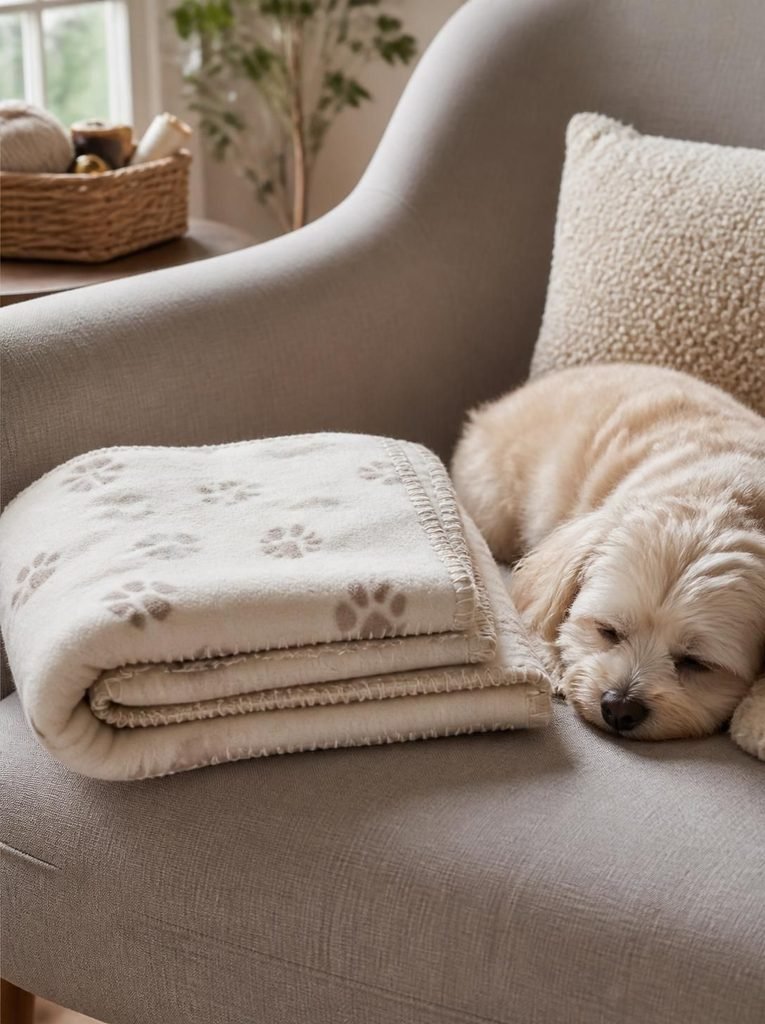
A personalized pet blanket is a thoughtful handmade gift for dogs and cats that enjoy having a comfortable place to rest.
It is also a lovely option for welcoming a newly adopted pet into a home or celebrating a pet’s birthday.
You can create a simple fleece blanket with finished edges or sew two pieces of soft fabric together for a more polished look.
If you want to make the gift extra special, choose colors that match the recipient’s home or add the pet’s name to a corner.
What you will need:
- Soft fleece or another suitable washable fabric
- Fabric scissors
- Measuring tape
- Sewing machine and thread, if stitching the edges
- Fabric suitable for personalization
- Optional embroidery supplies
How to make it
Start by deciding how the blanket will be used. A small blanket for a cat’s favorite resting spot will need less fabric than one intended for a large dog.
Cut the fabric to your desired dimensions, then finish the edges to prevent fraying. You can sew a simple hem, use a suitable blanket stitch, or choose fleece designed for a no sew finish.
For personalization, embroider the pet’s name in one corner or add a decorative fabric panel. Keep the design simple so the blanket remains comfortable and easy to wash.
Before wrapping the gift, wash the blanket according to the fabric care instructions and make sure it is completely dry.
Make it more special: Fold the blanket neatly and tie it with a reusable fabric ribbon. You could also pair it with a personalized treat jar or another small pet accessory.
Choose durable, washable materials and avoid loose embellishments, long ribbons, and detachable decorations that could be chewed or swallowed. Check the blanket regularly for damage, especially if the pet likes to chew bedding.
7. DIY Pet Beds From Repurposed Materials
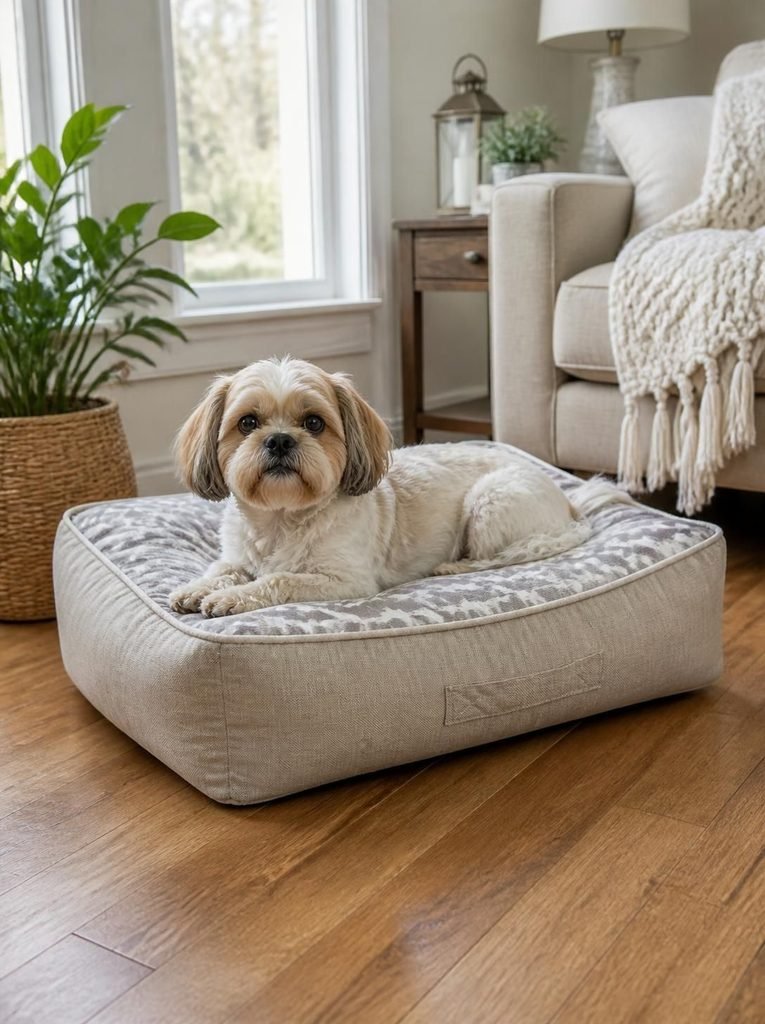
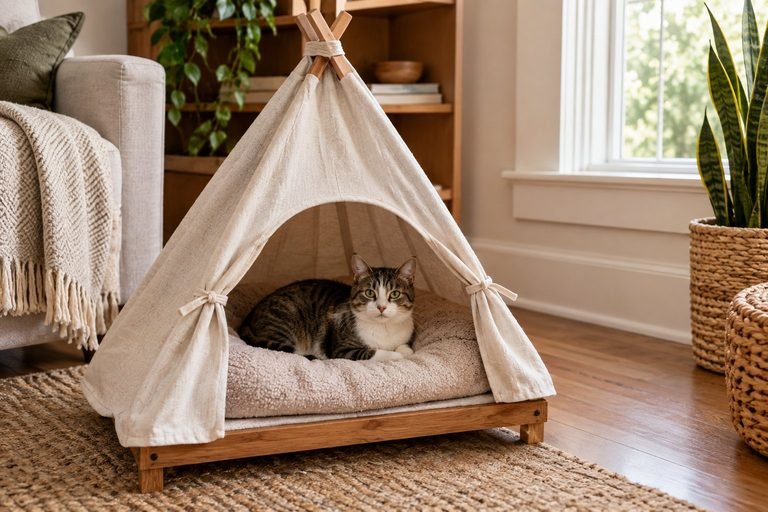
A handmade pet bed is a wonderful gift for someone who appreciates practical crafts and creative reuse. With suitable materials, you can turn a sturdy fabric cushion cover or an existing textile into a comfortable resting place for a dog or cat.
This project requires a little more planning than smaller gifts, but you can customize the dimensions, colors, and overall style to suit the animal and its home.
Materials to gather:
- Durable, washable fabric
- Pet appropriate cushion filling or a suitable washable insert
- Measuring tape
- Fabric scissors
- Needle and thread or a sewing machine
- Optional removable zipper, if you have the skills to install one securely
How to make it
First, measure the pet’s usual sleeping position and decide how much room it needs to stretch out comfortably. A bed that looks attractive but is too small will not be very useful.
Cut two matching fabric panels to the desired dimensions, allowing extra material for the seams. Sew the panels together with the right sides facing inward, leaving an opening for the filling or insert.
Turn the cover right side out, add the filling, and close the opening securely. Alternatively, create a removable cover with a properly fitted closure so it can be washed more easily.
For a more finished appearance, use coordinating fabric for the top and sides. A neutral base with a patterned top can complement many home interiors.
If you are repurposing old materials, make sure they are clean, structurally sound, and free from sharp components, loose threads, or damaged fasteners.
Important safety consideration: Avoid using shredded foam, loose stuffing, or small filling materials if the pet is likely to chew through the bed. Inspect the finished product regularly and replace it if the cover tears or the filling becomes accessible.
For pets that chew bedding, a homemade fabric bed may not be the safest choice. Consider a more durable, professionally made option instead.
8. Handmade Pet Name Keychains
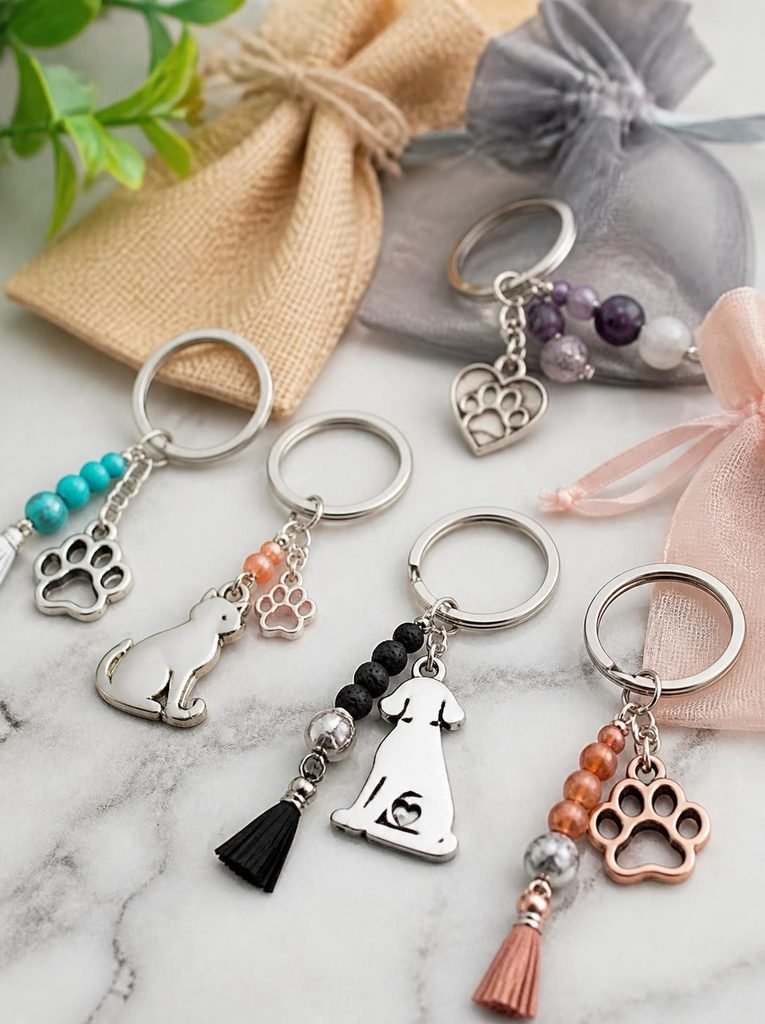
If you are looking for a small, affordable gift, a personalized pet keychain is an excellent option. It can feature a pet’s name, a paw print, or a miniature illustration of the animal.
This project is especially suitable for gift exchanges, stocking fillers, adoption celebrations, and customers who want a small personalized item without paying for a larger custom product.
Supplies you may need:
- A blank keychain base or suitable craft material
- Letter beads or a name tag
- Key rings and connectors
- Craft tools appropriate for your chosen material
- Optional decorative elements
- Small gift packaging
How to make it
Choose a design that reflects the recipient’s pet. For example, you could use a paw print charm for a dog owner, a cat silhouette for a cat lover, or a simple name tag featuring the pet’s name.
Arrange the letters before assembling the keychain so you can check the spelling and spacing. Attach the components securely and inspect the finished piece to ensure that the connectors do not come apart easily.
If you work with polymer clay, follow the manufacturer’s baking and curing instructions. Allow the piece to cool completely before attaching any metal hardware.
You can create matching keychains for several pets in the same household or use different colors to distinguish between them.
Personalization ideas:
- Add the pet’s name.
- Include a paw print or breed inspired silhouette.
- Use colors that match the owner’s favorite accessories.
- Create a matching keychain for each pet in a multi pet household.
Package the finished item in a small pouch or gift box with a handwritten note.
Keep keychains and their small components away from pets and young children. These accessories are intended for people, not as toys or collars for animals.
9. Custom Pet Themed Mugs
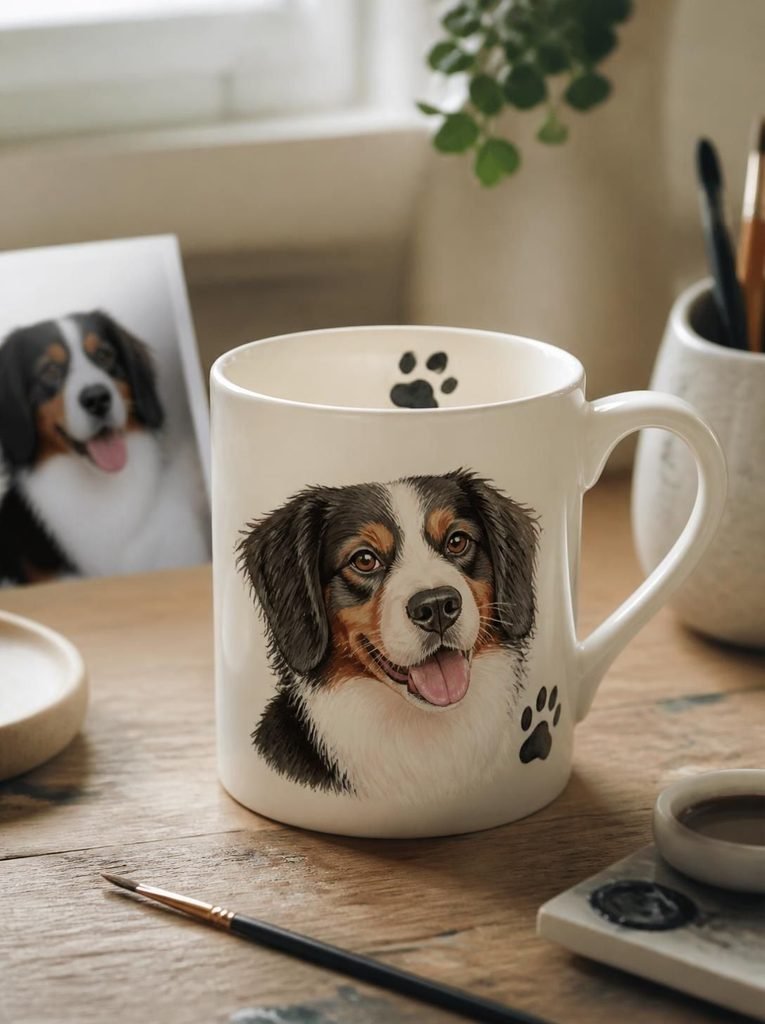
A custom pet mug is a charming handmade gift for someone who enjoys starting the morning with coffee or tea and a reminder of their favorite animal.
You can personalize a plain mug with a pet illustration, paw print design, or the animal’s name. This project is also suitable for people who enjoy painting, drawing, or creating customized gifts for an online shop.
What you will need:
- A plain ceramic mug
- Suitable ceramic paint or markers
- A pencil for planning the design, if appropriate
- A reference photograph of the pet
- Optional packaging materials
How to make it
Start with a clean, dry mug and plan your design on paper before decorating the surface. A simple illustration is often easier to execute neatly than a highly detailed portrait.
You could paint a small paw print on one side and add the pet’s name on the other. If you have experience drawing animals, try a simplified outline of the pet’s face.
Use only products specifically designed for decorating ceramic items, and follow all instructions for curing or setting the design.
Pay close attention to food contact areas. Unless the materials and finished design are specifically rated for that use, keep paint away from the inside of the mug and the rim where the lips touch.
Do not assume that a decorative mug is dishwasher safe or microwave safe unless the product instructions confirm it.
For a gift, pair the mug with a handwritten card or a small packet of tea or coffee for the human recipient.
Selling tip: Custom pet mugs can work well as gifts for pet parents, but be clear about whether each design is hand painted, printed, or produced using another method.
Customers appreciate knowing how their personalized item is made and how to care for it.
10. DIY Pet Gift Baskets
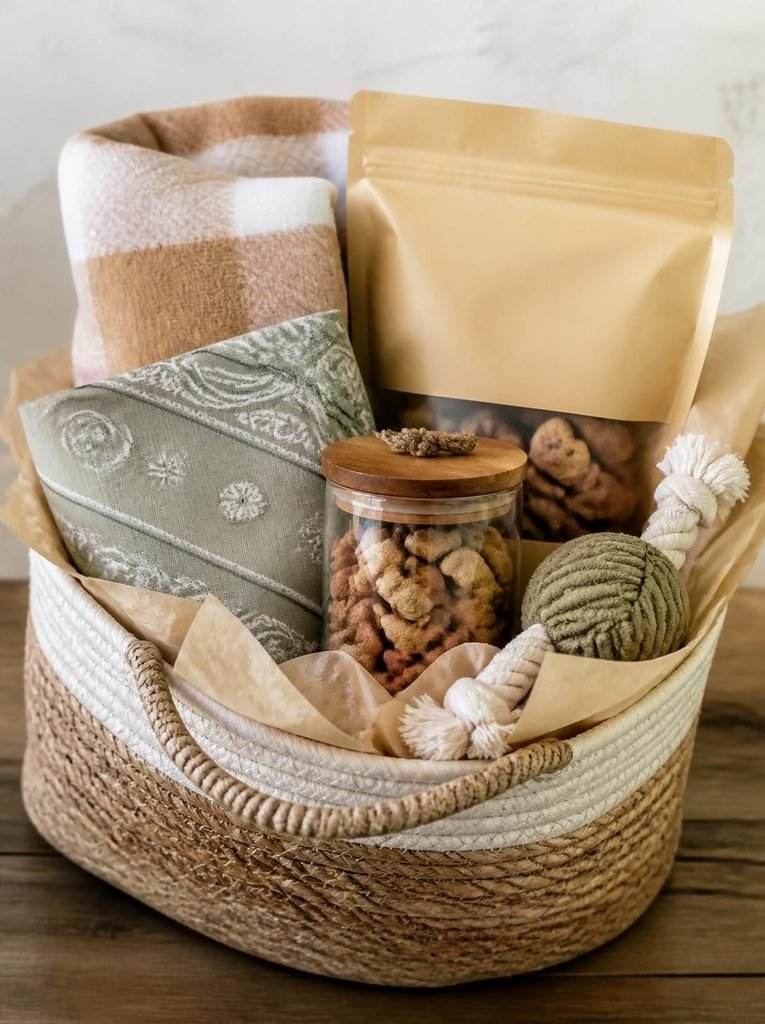
Sometimes the loveliest gift is a collection of small items arranged around a single theme. A handmade pet gift basket allows you to combine practical supplies, personalized accessories, and a few treats in one attractive package.
This idea works for many occasions, including bringing home a new puppy, celebrating a pet’s birthday, welcoming an adopted cat, or preparing a Christmas present for a pet loving friend.
Items you could include:
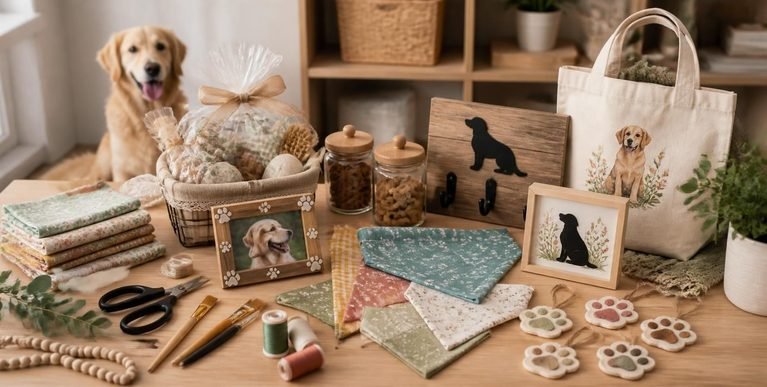
- A personalized bandana
- A handmade pet blanket
- A decorated treat jar
- Appropriate commercially prepared treats
- A suitable pet toy
- A handwritten card for the owner
- A small pet themed accessory
You do not have to include every item. Choose three or four useful products that suit the recipient’s animal and fit comfortably inside the container.
How to assemble the basket
Begin with a reusable basket, fabric storage bin, or sturdy gift box. Choose a size that accommodates the items without forcing them together.
Place larger, lightweight items at the back and smaller accessories toward the front. Fold blankets and bandanas neatly, position the treat jar upright, and arrange the remaining products so each one is visible.
If you include food or treats, keep them in their original sealed packaging and check that they are appropriate for the intended species. Do not place loose treats directly against decorative paper or other materials that are not intended for food contact.
Finish the package with a simple gift tag and a short message explaining that the items were selected especially for the pet.
Gift basket themes to try:
- New puppy basket: A washable blanket, suitable toy, and practical accessories.
- Cat lover basket: A personalized cat themed item, a safe toy, and a decorative keepsake for the owner.
- Pet birthday basket: A personalized bandana, a treat jar, and suitable packaged treats.
- Christmas pet basket: Seasonal fabric accessories and useful items presented in festive packaging.
Avoid including products that could be unsafe for the animal. Keep ribbons, plastic wrapping, small decorations, and packaging materials out of reach once the gift is opened.
11. Personalized Pet Photo Frames
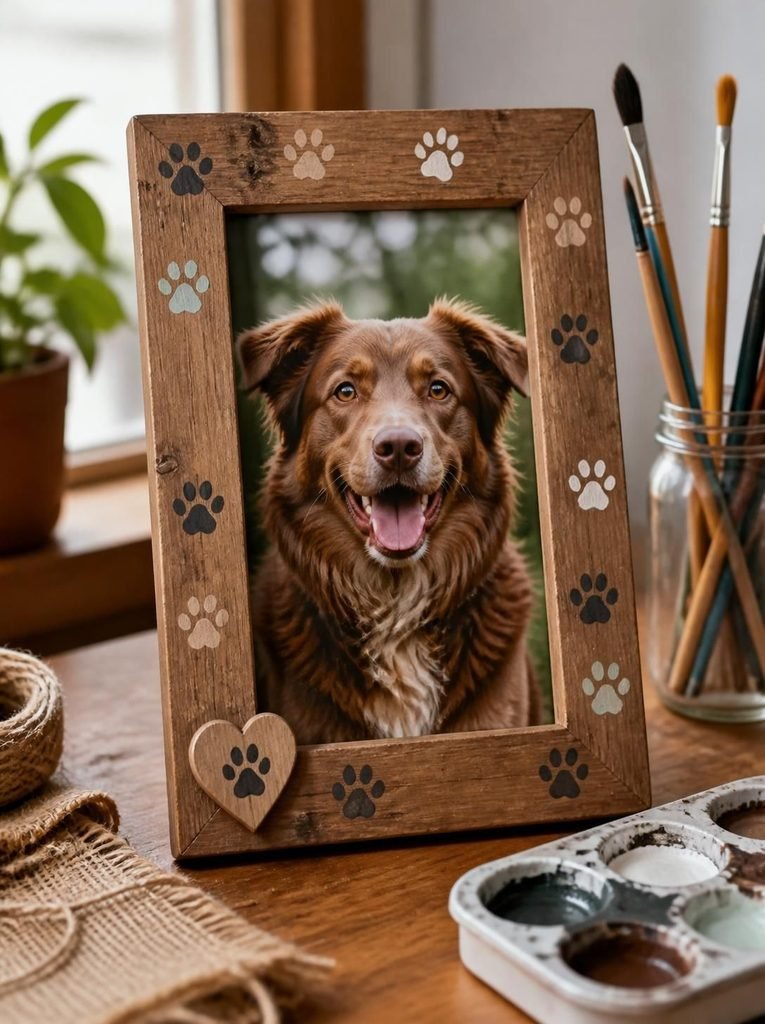
A personalized photo frame is a sentimental gift that allows pet owners to display a favorite memory.
It is particularly suitable for adoption anniversaries, birthdays, holidays, or simply celebrating the bond between an animal and its family.
The project can be as simple or elaborate as you like. You could decorate a plain wooden frame with a painted paw print or create a more detailed design featuring the pet’s name and a special date.
Materials to gather:
- A plain photo frame
- Suitable paint or decorative paper
- A printed photograph
- Craft adhesive appropriate for the frame material
- A small brush
- Optional letter stamps or other decorative details
How to make it
Choose a frame that fits the photograph and complements the recipient’s home. Wooden frames are particularly versatile because they can be painted, stained, or decorated with paper.
Before applying any decorations, plan the layout. Leave enough space around the photograph so the finished frame does not feel overcrowded.
Paint the frame in a neutral shade or use a color associated with the pet. Add a small paw print, the pet’s name, or a date that marks an important occasion.
Allow all paint and adhesives to dry or cure fully according to their instructions before inserting the photograph.
For a coordinated gift, create a matching frame and personalized keychain or include the framed photograph in a larger pet gift basket.
A thoughtful alternative: If you do not have a suitable photograph, give the recipient a decorated frame with space for them to add their own favorite picture.
Keep small embellishments securely attached and use a frame that can stand or hang safely. If the recipient has curious pets, avoid placing the finished frame where it could easily be knocked over.
12. Handmade Pet Memorial Keepsakes
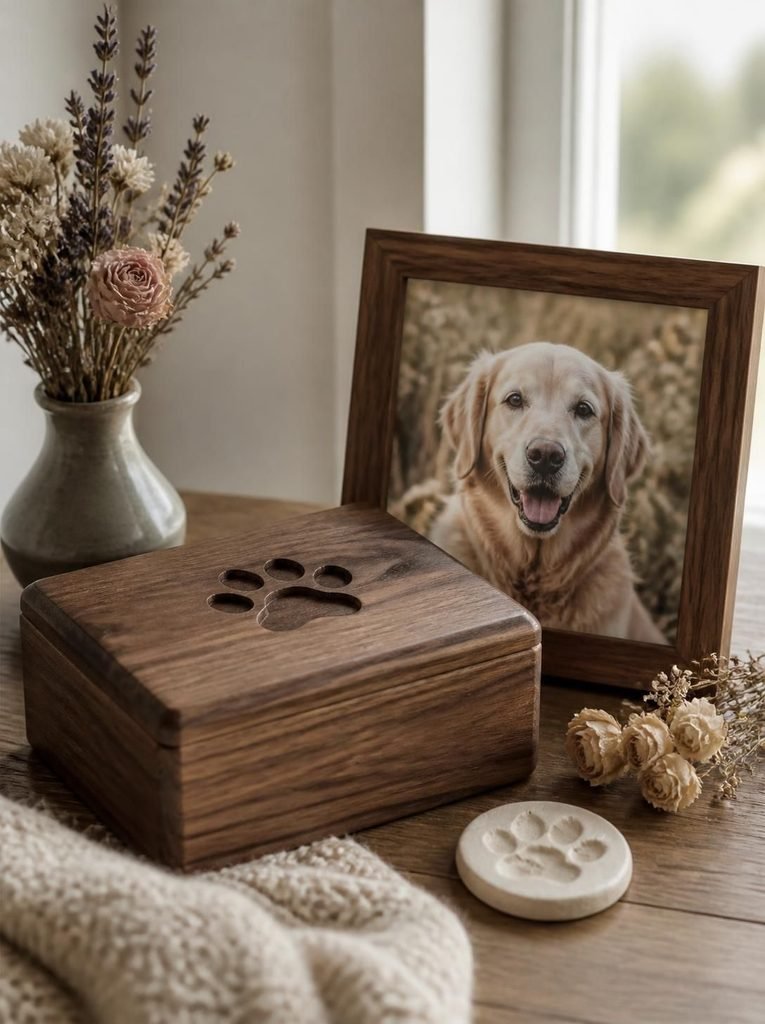
Some of the most meaningful handmade pet gifts are designed to preserve memories.
A memorial keepsake can offer comfort to someone who has lost a beloved animal, especially when the gift is personal, understated, and created with care.
This type of gift calls for a gentle approach. Not everyone wants a memorial item immediately after losing a pet, so consider the recipient’s preferences before making or presenting one.
Ideas for a memorial keepsake include:
- A framed illustration based on a favorite photograph
- A personalized wooden plaque
- A small memory box for photographs and keepsakes
- A custom paw print design created by hand
- A handmade ornament featuring the pet’s name
How to create a simple memory box
Choose a sturdy box that can hold photographs, a collar, a tag, or other small mementos. Decorate the exterior with a subtle color or a simple paw print motif.
You could add the pet’s name to the lid or include a short dedication. Keep the design clean rather than adding too many decorative elements.
Inside, place acid free paper or another suitable protective lining if the recipient intends to store photographs and paper keepsakes. If you include a message, make it personal and sincere without assuming how the person feels about their loss.
A small handwritten note can be just as meaningful as the object itself.
Presentation tip: Use simple wrapping and give the gift privately if you are unsure how the recipient would feel about receiving a memorial item in front of others.
The purpose of a memorial keepsake is to preserve a meaningful memory, not to make grief feel easier on a schedule. A thoughtful, personalized gift can simply let someone know that their pet mattered.
13. DIY Paw Print Flower Pots
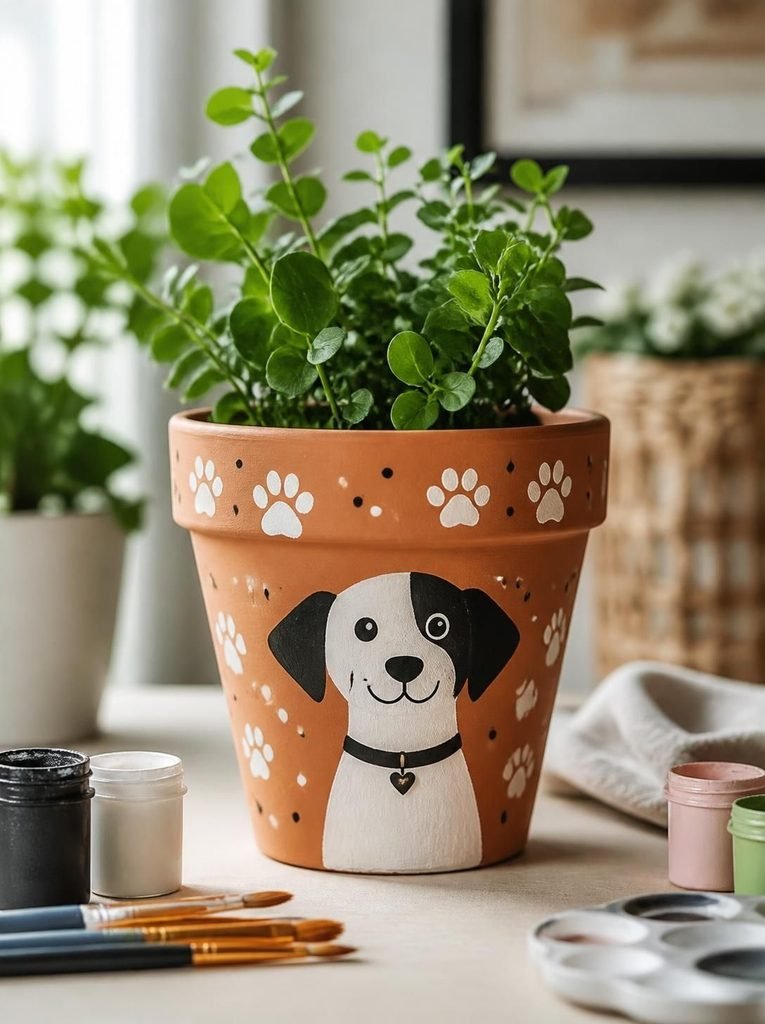
If you are looking for a handmade pet gift that combines creativity with home décor, a personalized flower pot is a lovely option.
It can be customized for a dog lover, cat owner, or anyone who enjoys decorating their home with meaningful pieces.
A simple terracotta pot can become a thoughtful gift with a little paint, a paw print design, and the pet’s name.
What you will need:
- A plain terracotta or ceramic flower pot
- Suitable paint for the pot’s material
- Paintbrushes
- A pencil for sketching the design
- A suitable protective finish, if needed
- A small plant or artificial flowers for presentation
How to make it
Start by cleaning the pot and allowing it to dry completely. Paint the exterior in a color that suits the recipient’s style. Neutral shades, soft pastels, and classic white are all versatile options.
Once the base coat is dry, add small paw prints around the pot. You can paint them by hand or use a stencil for a more consistent design.
Write the pet’s name on the front if you want to make the gift more personal. Allow the paint to dry fully, then follow the manufacturer’s instructions for any protective finish.
For an easy presentation, place a small plant inside a suitable liner or include the decorated pot on its own so the recipient can choose what to grow.
A useful tip: If the pot will hold a real plant, make sure it has appropriate drainage and that the paint or finish is suitable for the intended use. Keep decorative materials away from pets that might chew or lick them.
This project is ideal for birthdays, housewarming gifts, and holidays because the finished piece can become a permanent part of the recipient’s home décor.
14. Handmade Pet Collar Accessories
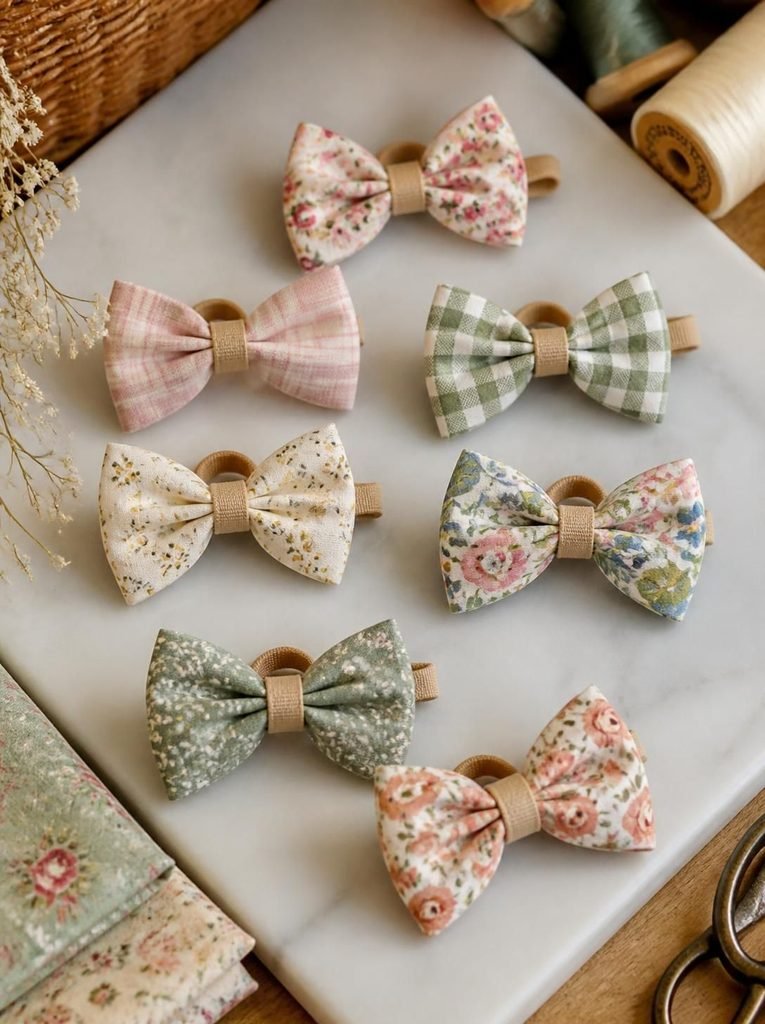
Small collar accessories can make thoughtful gifts for pet owners who enjoy personalized details. You could create a decorative fabric bow, a simple seasonal accessory, or a lightweight floral accent designed specifically for a suitable collar.
These projects use relatively little material, making them useful for anyone who wants to try a smaller craft before moving on to more complicated products.
Materials to consider:
- Soft, durable fabric
- Needle and thread or a sewing machine
- Fabric scissors
- A suitable attachment designed for the intended collar
- Optional embroidery supplies
How to make a simple fabric bow
Cut a small rectangle of fabric and fold it into a neat bow shape. Secure the center with stitching, then finish the edges so the material does not fray.
Attach the bow using a secure method suitable for the specific collar design. Check that it does not interfere with the collar’s fit, buckle, or identification tag.
You can make several coordinating designs using floral fabric, seasonal patterns, or simple solid colors.
Safety comes first: Collar accessories should be lightweight, securely attached, and free from small detachable parts. They must not restrict movement or interfere with the collar’s intended function.
Do not use long ribbons, loose elastic, dangling decorations, or accessories that could catch on furniture. Remove the accessory if the pet chews it or becomes uncomfortable.
For cats, avoid adding anything that could compromise the safe release function of a breakaway collar. Always prioritize a properly fitted collar and suitable identification over decorative features.
15. DIY Pet-Themed Tote Bags
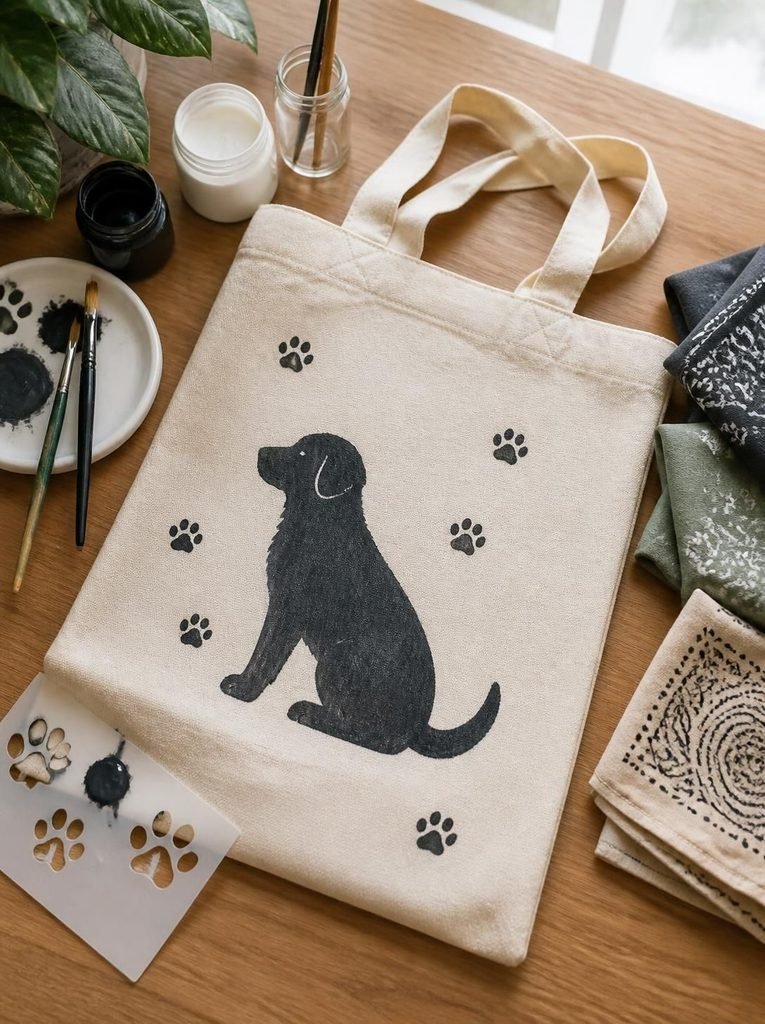
A handmade tote bag is a useful gift for pet owners who regularly carry treats, waste bags, grooming supplies, or other everyday essentials.
Unlike many pet accessories, the tote is designed for the owner, so you have more freedom to experiment with patterns and decorative details.
You can personalize a plain canvas bag with paw prints, a simple pet illustration, or the name of the recipient’s favorite animal.
Supplies you may need:
- A plain canvas tote bag
- Fabric paint or suitable fabric markers
- Paintbrushes or stencils
- A piece of cardboard to place inside the bag
- Optional lettering stencils
How to create it
Place a piece of cardboard inside the tote to prevent paint from transferring through the fabric.
Plan your design before painting. A row of small paw prints, a minimalist cat silhouette, or a simple dog illustration can look attractive without requiring advanced artistic skills.
Apply the paint according to the product instructions and allow the design to dry completely. Follow any curing instructions before washing or using the bag.
You could also add an inside pocket for small items if you are comfortable sewing.
Gift presentation idea: Fill the finished tote with a personalized bandana, a sealed package of appropriate pet treats, and a handwritten card. This turns a simple bag into a practical gift set.
If you plan to sell tote bags, consider offering several design options, such as dog lover, cat lover, and personalized pet portrait styles.
How to Package Handmade Pet Gifts Beautifully
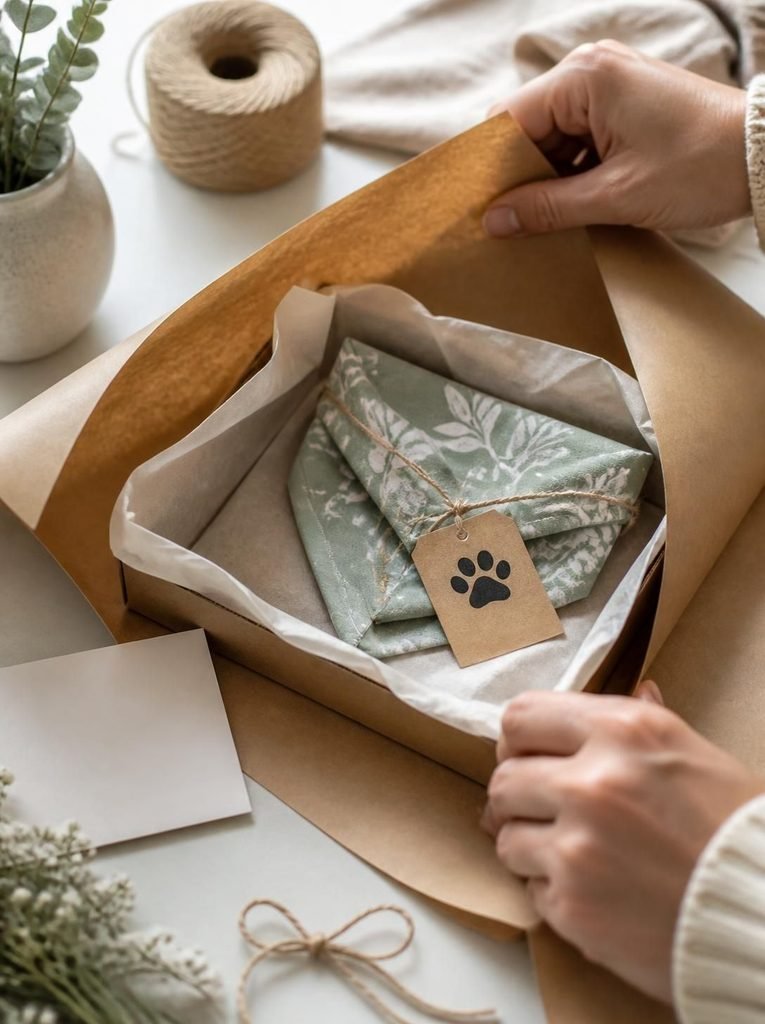
Presentation can make even a simple handmade project feel thoughtful and special. You do not need expensive packaging to achieve a polished result.
A few coordinated materials and a little attention to detail can make your gift look professionally finished.
Choose a Consistent Color Scheme
Pick two or three complementary colors for your wrapping paper, gift tags, and ribbon.
Neutral shades paired with one accent color can create an elegant appearance, while brighter colors may suit playful birthday gifts.
For example, a personalized pet blanket could be wrapped in kraft paper with a simple paw print tag. A custom portrait might look best in a protective box with minimal decoration.
Include a Personal Note
A short handwritten message adds warmth to a handmade gift. Mention the pet by name, explain why you chose the gift, or wish the recipient a happy birthday or adoption anniversary.
If the gift is intended for someone who has lost a pet, keep the message gentle and considerate.
Use Reusable Packaging
Fabric pouches, small storage baskets, and sturdy gift boxes can be useful long after the gift has been opened.
Reusable packaging is especially practical for pet owners because it can later hold grooming supplies, toys, accessories, or other small items.
Keep Pet Safety in Mind
Avoid leaving loose ribbon, plastic wrapping, decorative string, or small packaging components where pets can chew or swallow them. Remove all packaging before allowing the animal to interact with the gift.
If your gift includes food, keep treats in their original sealed packaging where possible and verify that they are suitable for the intended pet.
How to Turn Handmade Pet Gifts Into a Small Business
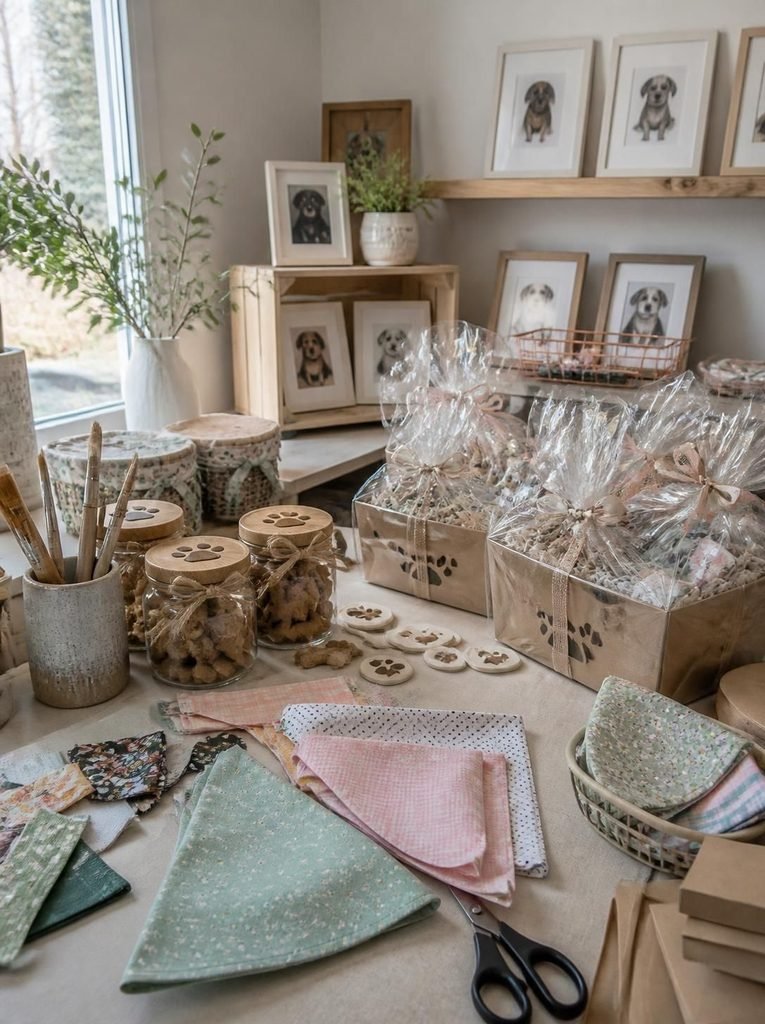
If you enjoy making crafts, some of these projects could become products to sell at craft fairs, local markets, or through an online shop.
Personalized pet gifts appeal to customers because they combine practical use with an emotional connection. However, the best products to start with are usually the ones you can make consistently, package efficiently, and price fairly.
Start With Three or Four Products
Instead of trying to sell every idea at once, choose a small collection.
For example, you could begin with personalized pet bandanas, pet portrait frames, decorated treat jars, and pet-themed tote bags.
These products offer different price points and let customers choose between practical accessories and decorative gifts.
Calculate Your Costs Carefully
Before setting a price, account for:
- Materials and supplies
- Packaging
- Your time spent making each item
- Payment processing or marketplace fees
- Shipping materials and delivery costs, where applicable
- Allowance for mistakes, damaged materials, or replacements
A product that sells frequently is not necessarily profitable if you underestimate the cost of producing it.
Photograph Your Products Clearly
Use natural light, uncluttered backgrounds, and close-up photographs that show the quality of your work.
For personalized products, include examples of different colors or design options. Make sure customers understand which elements can be customized and which are fixed.
Offer Simple Personalization Options
Allow customers to choose from a manageable range of colors, names, or patterns. Too many options can make production complicated and increase the likelihood of mistakes.
Provide clear ordering instructions and confirm the spelling of names before making customized items.
Make Safety Part of Your Brand
Pet products require particular care because animals may chew, lick, or pull at the items they encounter.
Clearly distinguish decorative gifts for owners from products intended for animal use. For pet toys, bedding, and accessories, choose appropriate materials, inspect construction carefully, and avoid making unsupported claims about safety or durability.
If you sell food or treats, research the applicable pet food requirements, ingredient rules, labeling obligations, and business regulations in your market before offering them for sale.
A Simple Checklist Before Giving Your Handmade Pet Gift
Use this checklist to make sure your finished project is ready.
- Choose a project suited to your crafting skills and available budget.
- Select materials appropriate for the intended use.
- Measure carefully before cutting or assembling anything.
- Check stitching, seams, attachments, and edges.
- Allow paint, glue, and other finishes to cure fully.
- Remove loose threads and unnecessary small decorations.
- Make sure the finished product can be cleaned or maintained as intended.
- Personalize the gift with the correct name or design.
- Package it neatly and include a thoughtful card.
- Keep small parts and packaging materials away from pets.
Taking a few extra minutes to inspect your work can make the gift look better and help prevent avoidable problems.
Final Thoughts
Handmade pet gifts are a wonderful way to combine creativity with something meaningful. Whether you sew a personalized bandana, paint a pet portrait, decorate a treat jar, or assemble a themed gift basket, the result can feel much more personal than a generic present.
You do not have to complete an elaborate project to make someone happy. A small item featuring their pet’s name or a thoughtful design inspired by their favorite animal can be enough to make the occasion memorable.
If you are new to crafting, start with a project that uses a few inexpensive materials and does not require specialized equipment. Once you become comfortable with the process, experiment with new colors, patterns, and personalization options.
And if you are considering selling your creations, begin with a small collection, pay attention to quality, and learn which products customers respond to most positively.
The best handmade pet gifts balance creativity, usefulness, and care. Choose a project that suits the recipient, make it thoughtfully, and present it in a way that shows how much you appreciate both the person and their beloved companion.