Homemade Dog Food on a Budget
The idea of homemade dog food sounds great right up until you start pricing out the ingredients some recipes call for. Salmon, specialty organ meats, imported grains, it can start to feel like feeding your dog is turning into a bigger grocery bill than feeding yourself.
The good news is that homemade doesn’t have to mean expensive. Some of the most nutritionally solid meals you can make at home rely on ingredients that are already among the cheapest things in the store.

This post walks through one complete, budget friendly recipe from start to finish, a chicken leg quarter and rice meal that costs a fraction of what most fresh food subscriptions charge, while still covering the basics your dog needs.
If you want to build out a bigger rotation once you’ve got this one down, my full Farmer’s Dog copycat recipes guide has more ideas, and my homemade dog meals post covers a range of options at different price points.
Why Chicken Leg Quarters Are the Budget MVP
Chicken leg quarters are consistently one of the cheapest cuts of meat at almost any grocery store, often selling for a fraction of the price per pound compared to boneless breast or thighs.
They’re also nutritionally solid for dogs, providing plenty of protein along with fat that adds flavor and calories without needing extra additions.
Buying in bulk when leg quarters go on sale, which happens often, and portioning them into the freezer is one of the easiest ways to keep a homemade rotation affordable long term.
Pairing that protein with rice, a cheap and shelf stable carbohydrate, and a bag of frozen mixed vegetables rounds out a meal that costs meaningfully less than most store bought fresh food options, while still giving you full control over what’s in the bowl.
A Realistic Cost Comparison
It’s worth putting some real numbers next to this idea rather than just claiming it’s cheaper. Chicken leg quarters often run somewhere between one and two dollars per pound, depending on your region and whether they’re on sale.
A large bag of rice costs only a few dollars and stretches across many batches. Frozen mixed vegetables are similarly inexpensive and require no prep beyond opening the bag.
Compare that to a lot of fresh food subscription services, which frequently run anywhere from two to ten dollars or more per day depending on your dog’s size, and the savings become clear fairly quickly, especially for a larger dog who eats more per day.
Homemade isn’t always the cheapest possible way to feed a dog, dry kibble can sometimes come in lower, but for anyone who wants fresh, whole food ingredients without the subscription price tag, this is one of the more realistic paths to get there.
Ingredients You’ll Need
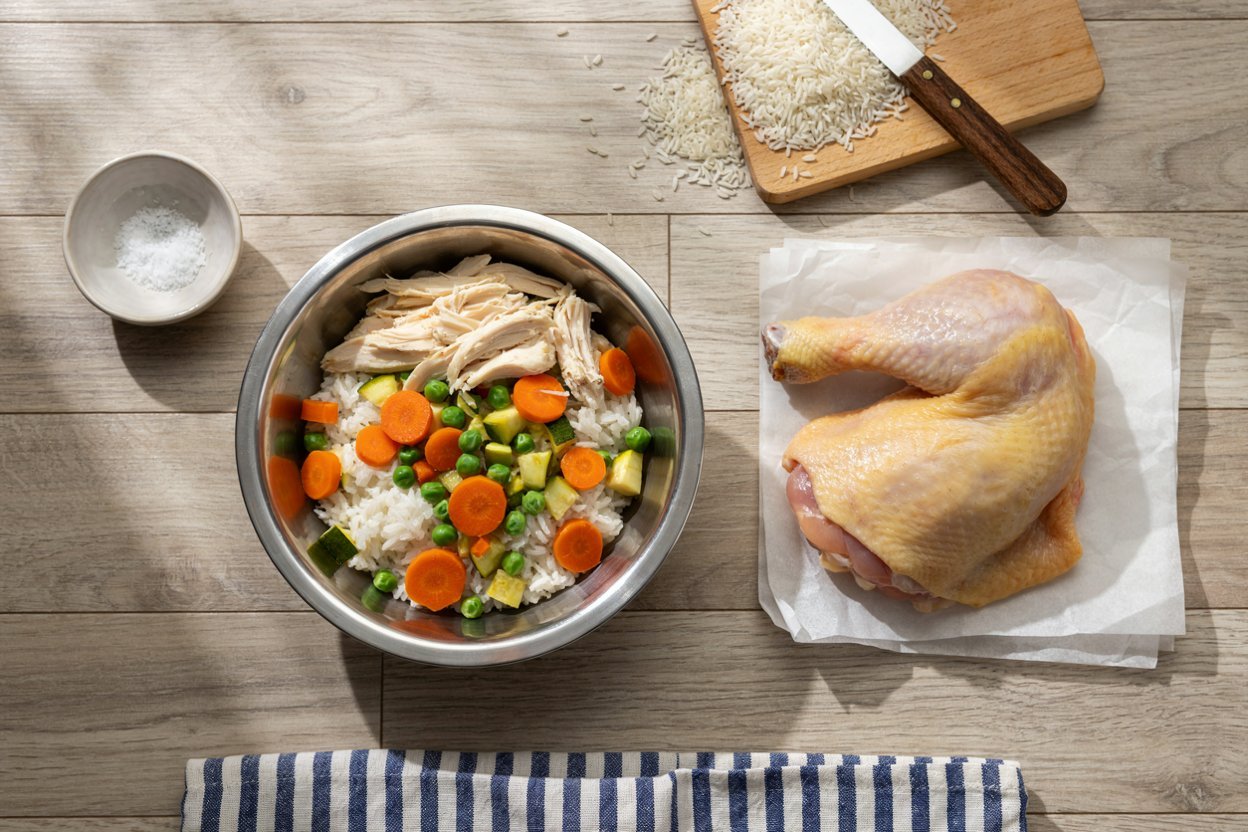
3 lbs chicken leg quarters, skin on 2 cups white or brown rice, uncooked 2 cups frozen mixed vegetables, such as carrots, peas, and green beans 1 teaspoon ground eggshell, finely powdered, for calcium
Chicken leg quarters do the heavy lifting here, providing both protein and a reasonable amount of fat for very little cost.
The bones need to be removed after cooking, since cooked chicken bones can splinter and are not safe for dogs to eat, but the meat itself is easy to shred off once cooked through.
Frozen mixed vegetables are a genuinely underrated budget ingredient, since they’re pre chopped, keep for months in the freezer, and cost far less than fresh produce that can spoil before you use it all.
The ground eggshell rounds out the calcium that muscle meat alone doesn’t fully provide, and it costs next to nothing if you’re already using eggs regularly in your own kitchen.
How to Make It: Step by Step
Step 1. Cook the chicken. Place the chicken leg quarters in a large stockpot and cover with water. Bring to a gentle simmer and cook until fully cooked through, about 30 to 35 minutes.
Step 2. Cook the rice separately. While the chicken cooks, prepare the rice in a separate pot according to the package instructions, using plain water with no salt or seasoning.
Step 3. Remove the bones. Once the chicken is cool enough to handle, remove and discard the skin and all bones carefully, since cooked bones can splinter and are dangerous for dogs.
Step 4. Shred the chicken. Shred the deboned chicken meat into bite sized pieces using two forks.
Step 5. Cook the vegetables. Add the frozen mixed vegetables to a portion of the reserved chicken cooking liquid and simmer for 5 to 7 minutes, until tender.
Step 6. Combine everything. In a large bowl, combine the shredded chicken, cooked rice, and cooked vegetables.
Step 7. Add the calcium. Stir in the ground eggshell once the mixture has cooled slightly.
Step 8. Cool and portion. Let the full mixture cool to room temperature before dividing it into meal sized portions based on your dog’s size and daily calorie needs.
Step 9. Serve or store. Serve a portion right away, or refrigerate and freeze the rest for later use.
Storage and Feeding Tips
Refrigerate portions in an airtight container for up to four days, or freeze individual servings for up to three months.
Buying leg quarters in bulk when they’re on sale and cooking a large batch at once is one of the easiest ways to save both time and money, since you can portion and freeze several weeks worth of meals in one session.
Portion sizes depend on your dog’s weight, age, and activity level, so it’s worth using a calorie calculator specific to your dog or checking with your veterinarian rather than guessing.
As a general starting point, many adult dogs need somewhere around 25 to 30 calories per pound of body weight each day, split across one or two meals.
Easy Ways to Stretch Your Budget Even Further
Buy in bulk and freeze raw. Chicken leg quarters freeze well uncooked, so stocking up when they’re on sale and freezing individual portions ahead of time can save even more over the course of a month.
Rotate in ground meat when it’s cheaper. Ground turkey or ground beef sometimes goes on sale for less than leg quarters, and either works well as a protein swap using a similar method.
Simplify further. If you want to strip the ingredient list down even more, my 3 ingredient cooked dog food recipes post has some of the most minimal, budget friendly options on the site.
Batch cook and freeze. My simple homemade dog meals you can freeze guide has more tips on portioning and storing larger batches efficiently.
Adjust for your dog’s size. Smaller dogs naturally cost less to feed per meal. My homemade dog food recipes for small dogs guide has portion notes worth reading, while the large dog recipes guide covers scaling up for bigger breeds.
Try a hands off cooking method. If you want to save time along with money, my easy crockpot dog food recipe walks through a similar budget friendly meal made in a slow cooker.
Common Mistakes to Avoid
Leaving bones in the finished meal. Always remove every bone carefully, since cooked chicken bones can splinter and pose a serious choking or internal injury risk.
Skipping the calcium source. Muscle meat and vegetables alone are not a complete meal without a reliable calcium source added consistently.
Buying leg quarters at full price. Watch for sales and buy in bulk when the price drops, since this is where the real savings in a budget recipe come from.
Guessing at portion sizes. Take the time to calculate an appropriate daily amount for your dog’s size rather than estimating.
Treating this as a fully balanced long term diet without professional input. It’s a genuinely healthy, budget friendly meal, but ongoing use should be reviewed with your vet.
Frequently Asked Questions
Is homemade dog food actually cheaper than kibble? It depends on the ingredients and the kibble you’re comparing against. Budget cuts like chicken leg quarters combined with rice and frozen vegetables can be comparable to or cheaper than mid range kibble, though premium dry food and homemade food can land at similar price points depending on your choices.
Can I use chicken thighs instead of leg quarters? Yes, though leg quarters are usually the cheaper option per pound. Thighs work well too if that’s what’s on sale.
Is this recipe safe for puppies? Puppies have different, often higher, nutritional needs than adult dogs. Talk to your veterinarian before feeding this to a puppy.
How much can I really save by making this at home? Savings vary by region and current sale prices, but many people find homemade meals built around budget cuts like leg quarters cost noticeably less per pound than fresh food subscription services, especially for larger dogs who eat more per day.
My dog isn’t interested, what should I try? Warm the portion slightly, or stir in a small amount of low sodium broth right before serving to boost the aroma.

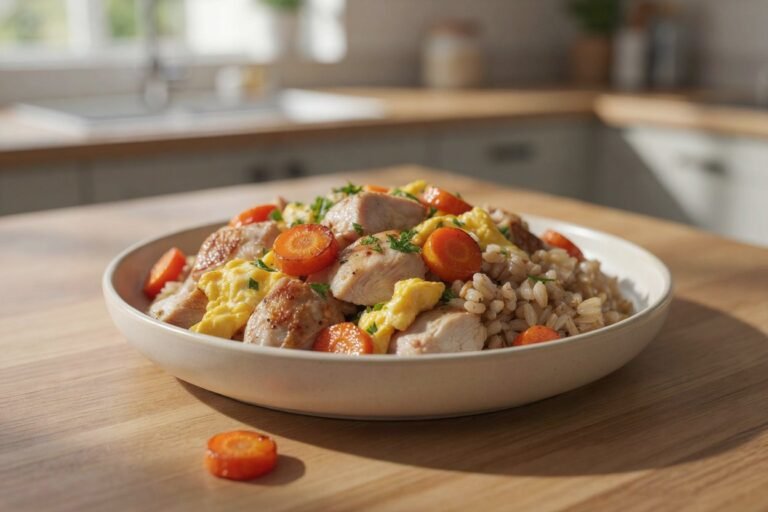
Homemade Dog Food on a Budget
Ingredients
Equipment
Method
- Cook the rice.
- Rinse the brown rice and cook it according to the package directions until tender. Set aside once finished.
- Cook the turkey.
- Place the ground turkey in a large skillet over medium heat. Break it apart with a wooden spoon and cook until completely cooked through with no pink remaining. Drain excess fat if necessary.
- Cook the vegetables.
- Add the carrots and green beans to a large pot with enough water to soften them. Cook until the vegetables are tender.
- Cook the eggs.
- Scramble the eggs in a separate skillet until fully cooked. Do not add salt, butter, garlic, onion, or other seasonings.
- Combine everything.
- Add the cooked rice, turkey, vegetables, and scrambled eggs to a large pot or mixing bowl. Stir thoroughly until evenly combined.
- Cool the food.
- Allow the mixture to cool completely before serving it to your dog.
- Portion and store.
- Divide the food into individual portions. Refrigerate portions you plan to use within a few days and freeze the rest for longer storage.
- Serve appropriately.
- Serve a portion appropriate for your dog’s size, age, activity level, and overall diet. If this recipe will make up a substantial portion of your dog’s regular diet, ask your veterinarian or a veterinary nutritionist about balancing it for your dog’s specific nutritional needs.
- This homemade dog food is designed as a simple budget friendly meal using affordable ingredients that are easy to find at most grocery stores. Avoid adding salt, onion, garlic, sauces, seasoning blends, butter, or other ingredients that may be unsafe for dogs.
- Homemade diets can become nutritionally incomplete when fed as a dog’s primary diet for an extended period. For long term feeding, have the recipe reviewed by your veterinarian or a board certified veterinary nutritionist so it can be appropriately balanced for your dog’s individual nutritional needs.
- Always introduce a new food gradually and stop feeding it if your dog develops digestive upset or other concerning symptoms.
Final Thoughts
Homemade dog food doesn’t have to come with a premium price tag to be genuinely good for your dog.
This chicken leg quarter and rice recipe proves that fresh, whole food ingredients and an affordable grocery bill aren’t mutually exclusive, and it gives you a solid foundation to build a full rotation from as your budget and schedule allow.
Start here, watch how your dog responds, and use it as your entry point into the other budget friendly recipes linked throughout this post.