
11 easy homemade dog food recipes for large dogs
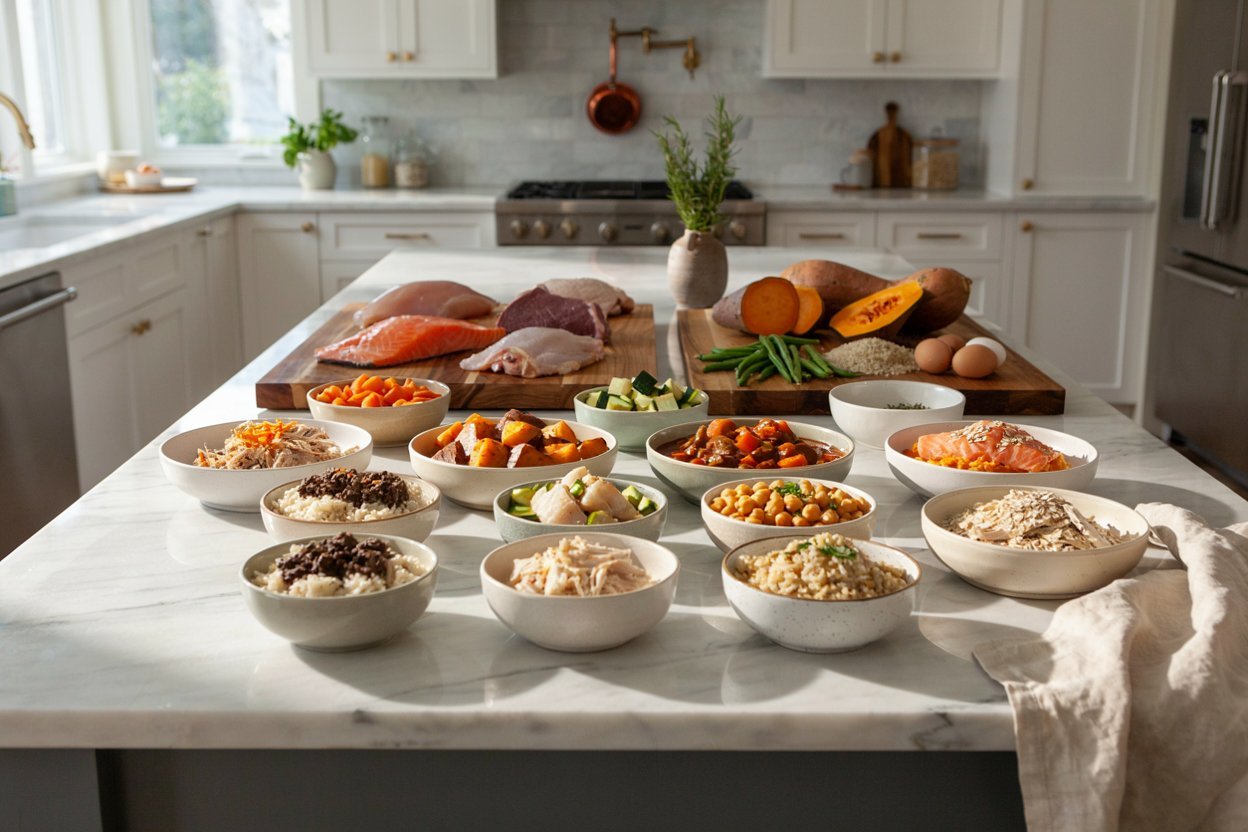
Feeding a large dog is not cheap, and finding food that provides enough protein, healthy fats, and nutrients without unnecessary fillers can be frustrating.
Bigger breeds have different nutritional needs than smaller dogs, and preparing homemade meals gives you complete control over the ingredients going into your dog’s bowl.
Whether you are looking for budget friendly meals, recipes for picky eaters, or simply want healthier alternatives to commercial food, these homemade recipes are filling, easy to prepare, and packed with wholesome ingredients your large dog will enjoy.

If you have already tried my vet approved homemade dog foods or the seven healthiest homemade dog foods, several of the recipes below build on those same principles while being scaled and adjusted specifically with larger breeds in mind.
In this guide, you will find eleven easy homemade dog food recipes made with simple ingredients, plus feeding tips, storage advice, ingredient substitutions, and important nutrition information to help you prepare balanced meals confidently.
Amazon Shopping List You Need
- Boneless, Skinless Chicken Breast – Perfect for shredding in recipes like Chicken & Brown Rice Delight and Chicken, Quinoa & Veggie Power Bowl.
Buy Now on Amazon - Lean Ground Beef – Essential for Beef & Vegetable Stew, Beef, Pumpkin & Rice Medley, and Beef Oats Patties.
Buy Now on Amazon - Ground Turkey – Great for Turkey & Sweet Potato Mash, Turkey, Spinach & Brown Rice Mix, and Turkey & Veggie Casserole.
Buy Now on Amazon - Salmon Fillets (Skinless & Boneless) – For Salmon & Quinoa Bowl and Salmon Sweet Potato Patties.
Buy Now on Amazon
Is Homemade Dog Food Good for Large Dogs?
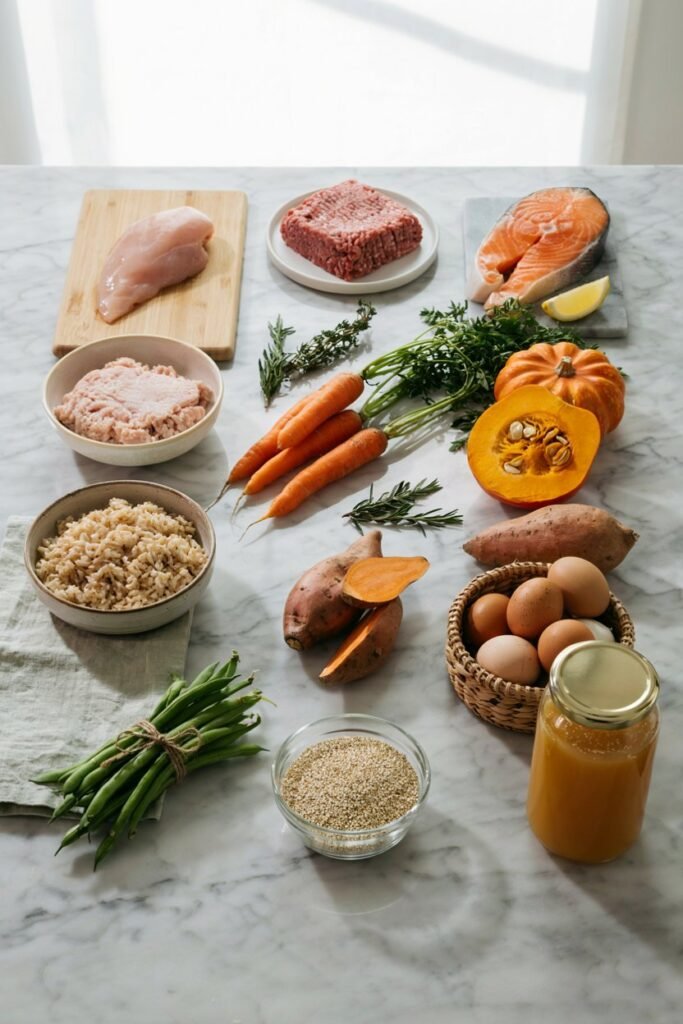
Homemade dog food can be a genuinely good option for large breeds when it is prepared thoughtfully.
One of the biggest advantages is better ingredient quality, since you know exactly what is going into every meal rather than relying on a lengthy commercial ingredient label.
It also gives you far more control over allergens, which matters a great deal for large breeds that are prone to food sensitivities, and it allows you to use fresh ingredients rather than heavily processed ones.
Cost savings are another real benefit, since large dogs eat significantly more than smaller breeds, and buying proteins and vegetables in bulk for home cooking is often more economical than premium large breed commercial food over time.
Homemade meals also make portion control easier, since you can adjust exact amounts based on your dog’s weight, activity level, and body condition rather than relying on a fixed bag size.
That said, homemade meals should be nutritionally balanced, especially if they are meant to replace commercial food entirely rather than serve as an occasional addition.
Dogs with medical conditions, along with puppies who have very specific growth related nutritional needs, should have any homemade recipe reviewed by a veterinarian before switching completely.
Nutritional Needs of Large Breed Dogs
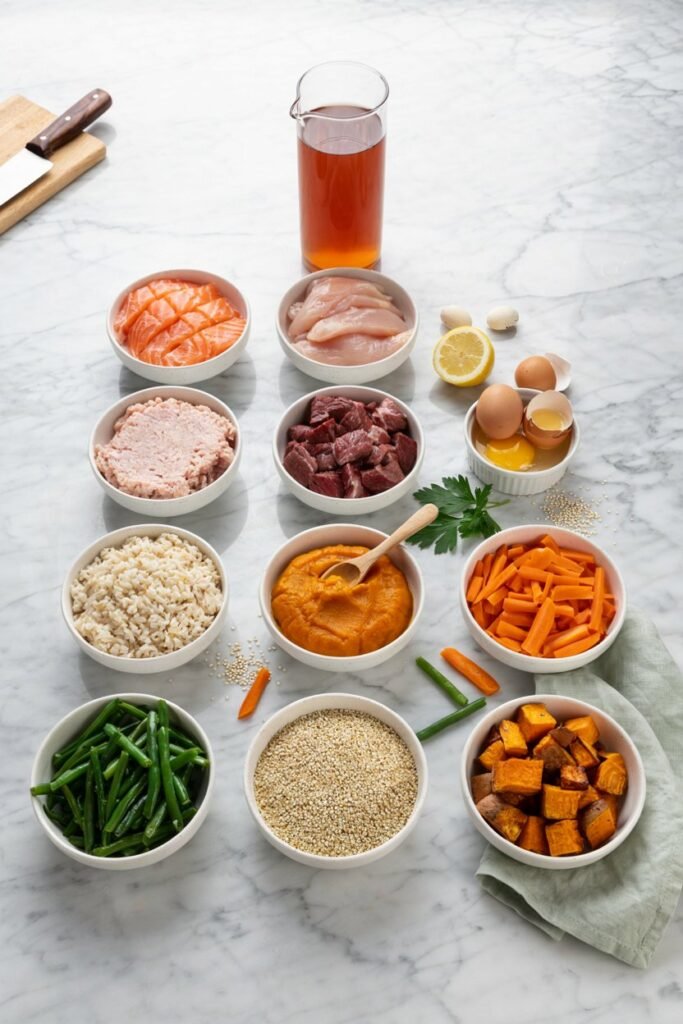
Large breed dogs have some nutritional considerations that differ from smaller dogs, largely because of their size, growth rate, and the physical stress placed on their joints over a lifetime.
Protein is essential for maintaining the substantial muscle mass large dogs carry, and it should make up a significant portion of every meal.
Healthy fats provide a concentrated source of energy and support skin and coat health, though portions need to be watched carefully since large dogs are also more prone to weight related joint stress.
Calcium and phosphorus need to be kept in an appropriate ratio, particularly for large breed puppies, since imbalances during growth have been linked to skeletal development issues later in life.
Fiber supports healthy digestion and helps maintain consistent stool quality, especially important for larger dogs who tend to eat bigger meal volumes.
Omega three fatty acids are commonly associated with supporting joint comfort and a healthy inflammatory response, which matters a great deal for larger breeds who carry more body weight on their joints throughout their life.
Glucosamine and chondroitin, naturally found in ingredients like bone broth and certain cartilage rich cuts, are often included in large breed diets to help support long term joint health.
Water intake matters more than owners often realize, and moisture rich homemade meals can help support better overall hydration compared to dry kibble alone.
Safe Ingredients to Use
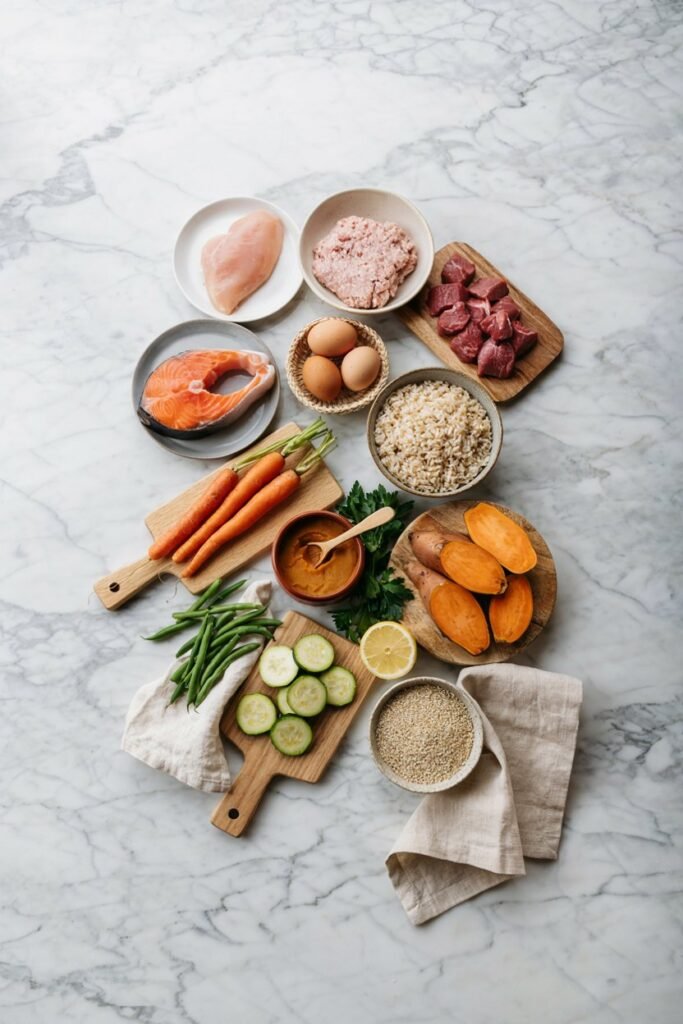
Chicken
Chicken supports muscle maintenance thanks to its high quality, lean protein content, making it one of the most reliable base proteins for homemade meals.
Beef
Beef is rich in iron and B vitamins, both of which play an important role in energy production and overall vitality.
Turkey
Turkey offers a lean protein option that works particularly well for large dogs who need to manage their weight without sacrificing protein intake.
Brown Rice
Brown rice provides slow releasing carbohydrates that offer sustained energy, along with more fiber than white rice thanks to its retained bran layer.
Sweet Potatoes
Sweet potatoes are high in fiber and vitamin A, and their natural sweetness makes them an easy vegetable to introduce even to picky eaters.
Pumpkin
Pumpkin is well known for supporting healthy digestion, making it a popular addition for dogs prone to occasional digestive upset.
Carrots
Carrots are rich in beta carotene, which the body converts into vitamin A, supporting healthy eyesight and immune function.
Green Beans
Green beans are a low calorie vegetable that adds fiber and volume to a meal without contributing significant calories, which is especially useful for large dogs managing their weight.
Eggs
Eggs are a complete protein source, meaning they provide all the essential amino acids a dog needs, along with healthy fats and a range of vitamins.
Salmon
Salmon is an excellent source of omega three fatty acids, making it a valuable addition for dogs who could benefit from extra joint or skin and coat support.
Ingredients to Avoid
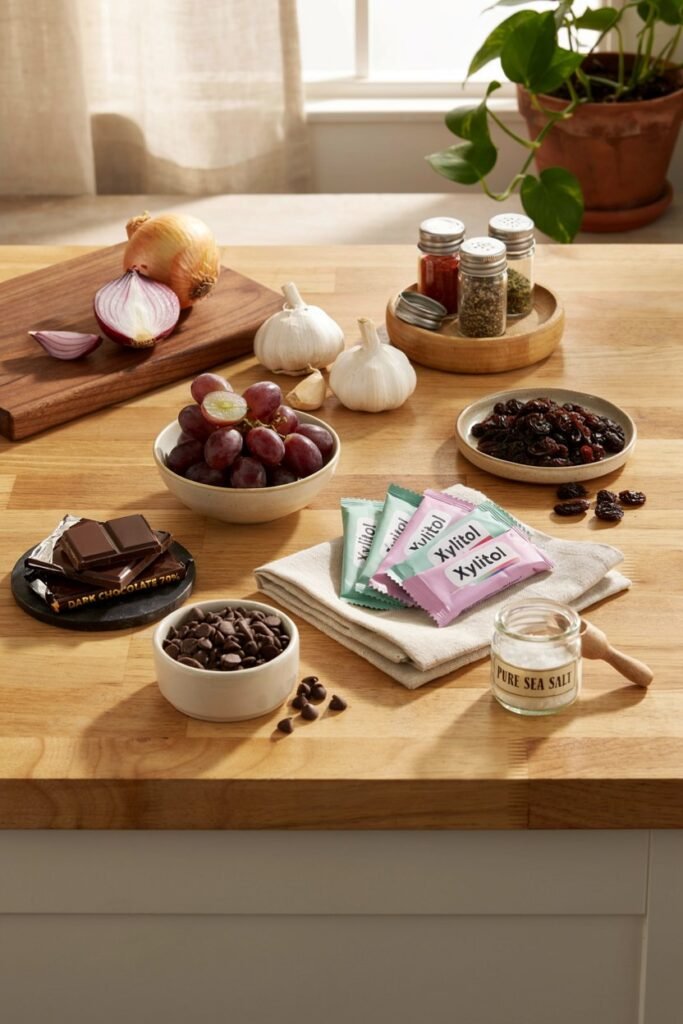
Onions and garlic, in any form, are toxic to dogs and should never appear in a homemade recipe, even in small amounts.
Added salt should generally be avoided, since dogs require far less sodium than people do.
Grapes and raisins are toxic and should never be included. Chocolate is highly toxic and should never be anywhere near a homemade dog meal. Xylitol, a common sugar substitute, is extremely dangerous even in tiny quantities.
Excess seasoning, including many herbs and spice blends made for human cooking, should be left out entirely, since simple, unseasoned preparation is safest for dogs.
The Eleven Recipes
1. Chicken and Brown Rice Dinner
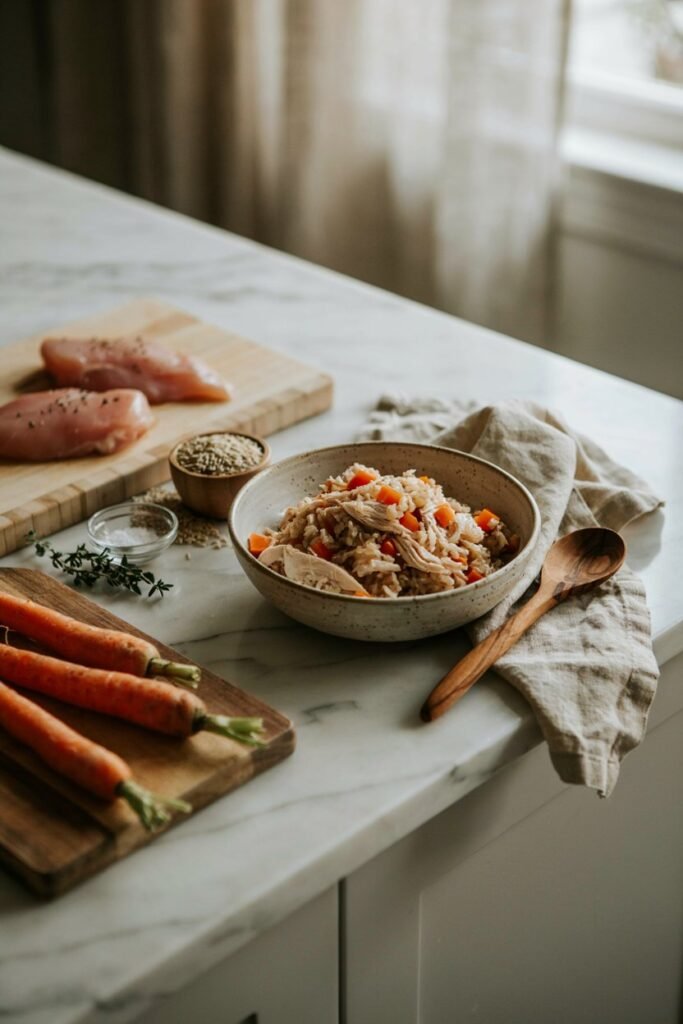
This classic combination is a reliable, easy to digest meal that works well as a foundational recipe for almost any large dog.
Why your dog will love it. The mild, familiar flavor of chicken paired with hearty brown rice creates a filling, comforting meal that most dogs take to immediately, even picky eaters.
Ingredients. Two pounds of diced, boneless chicken breast, two cups of brown rice, one cup of diced carrots, water as needed.
Instructions. Simmer the chicken in water until fully cooked through, then add the brown rice and enough additional water to cover.
Simmer until the rice is tender, about 35 to 45 minutes, adding the carrots during the final 15 minutes of cooking.
Storage. Refrigerate for up to 4 days or freeze portions for up to 3 months.
Feeding tips. Start with a small portion alongside your dog’s current food and gradually increase over several days.
Ingredient swaps. Turkey can be used in place of chicken, and quinoa can replace the brown rice for a slightly higher protein grain option.
2. Turkey and Sweet Potato Bowl
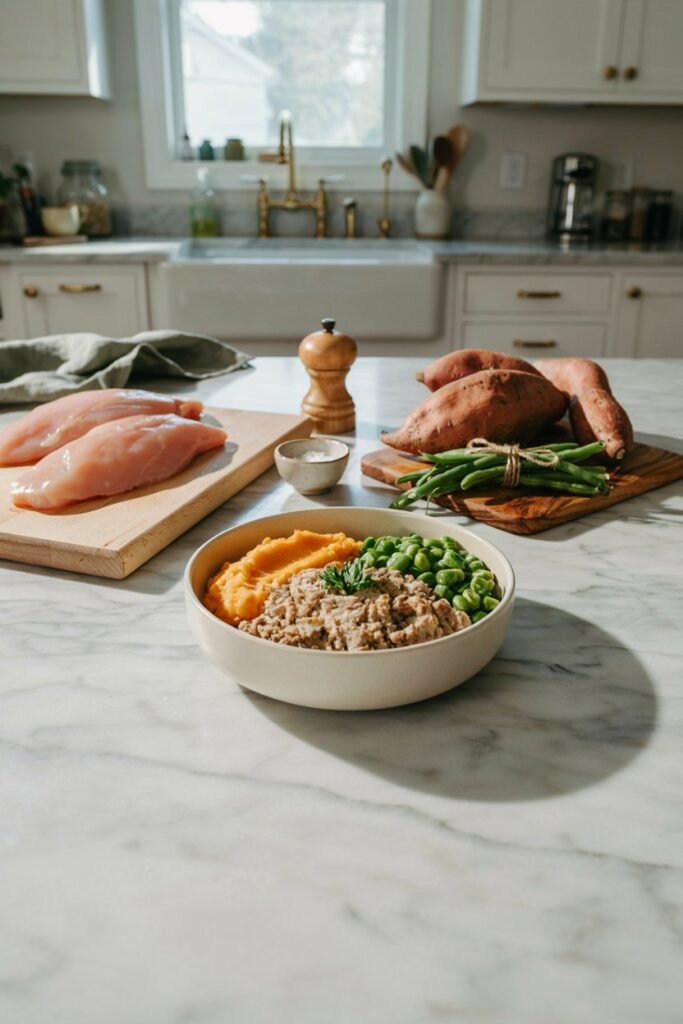
A slightly leaner recipe that works especially well for large dogs who need to manage their weight without sacrificing satisfying portion sizes.
Why your dog will love it. The natural sweetness of the sweet potato pairs nicely with the milder flavor of turkey, creating a meal that feels indulgent while still being lean.
Ingredients. Two pounds of ground or diced turkey, two cups of cubed, cooked sweet potato, one cup of chopped green beans.
Instructions. Cook the turkey thoroughly in a large pot, draining any excess fat.
Stir in the cooked sweet potato and green beans, and simmer together for a few minutes until evenly combined and heated through.
Storage. Refrigerate for up to 4 days or freeze for up to 3 months.
Feeding tips. This recipe works particularly well for dogs on a weight management plan, given its leaner protein and fiber rich vegetables.
Ingredient swaps. Pumpkin can be used in place of sweet potato for a lower calorie alternative.
3. Beef Vegetable Stew
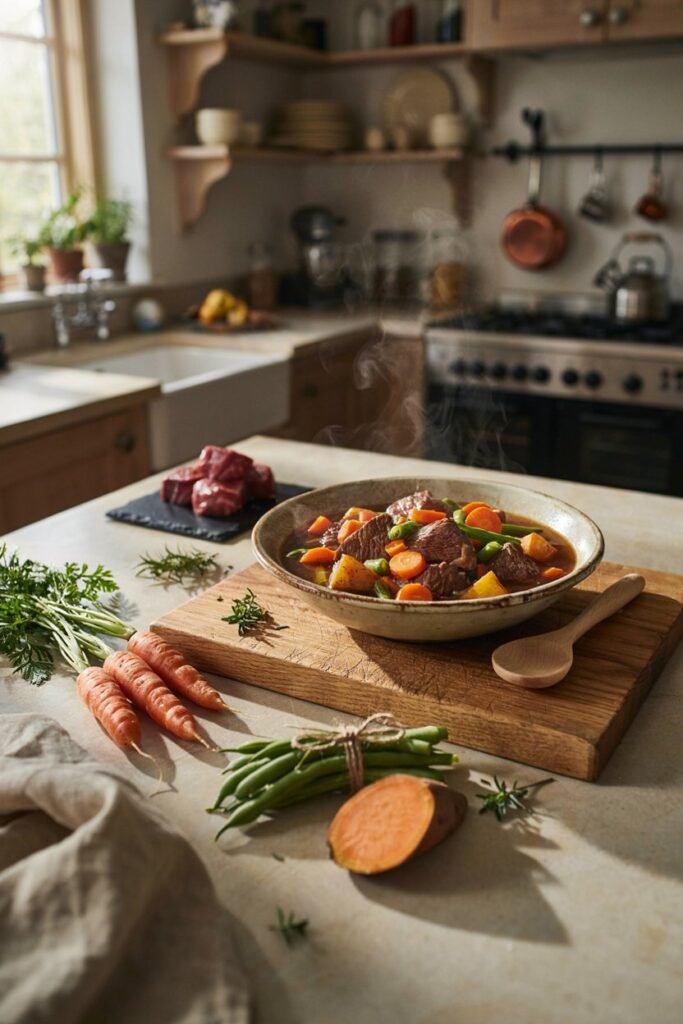
A hearty, stew style recipe that is especially satisfying for very active large breeds who burn through calories quickly.
Why your dog will love it. The rich flavor of beef combined with a variety of vegetables creates a filling, aromatic meal that many dogs find especially appealing.
Ingredients. Two pounds of lean ground beef, one cup of diced carrots, one cup of chopped green beans, one cup of diced sweet potato, water as needed.
Instructions. Brown the beef in a large pot, draining excess fat thoroughly. Add the vegetables along with enough water to create a stew like consistency, then simmer until the vegetables are fully tender, about 20 minutes.
Storage. Refrigerate for up to 4 days or freeze for up to 3 months.
Feeding tips. Because beef is richer than chicken or turkey, this recipe is best suited for very active dogs or as an occasional rotation rather than a daily staple for less active dogs.
Ingredient swaps. Lamb can be used in place of beef for dogs who need a novel protein.
4. Salmon and Pumpkin Meal
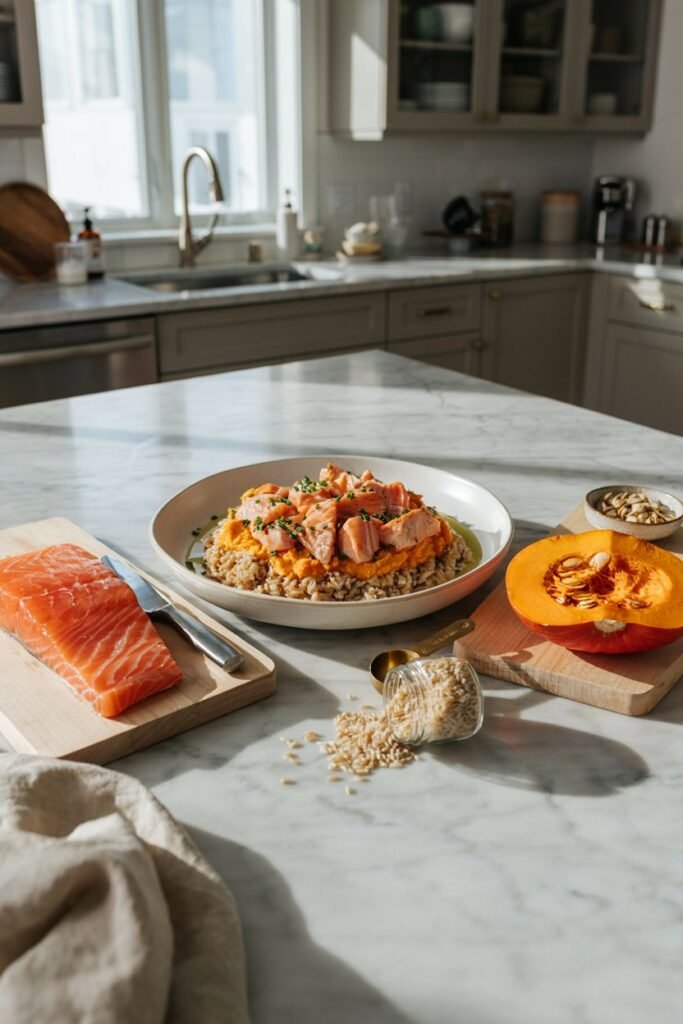
A fish based recipe built specifically to support skin, coat, and joint health thanks to its omega three content.
Why your dog will love it. The rich flavor of salmon is a favorite for many dogs, and the added pumpkin gives the meal a comforting, slightly creamy texture.
Ingredients. Two pounds of cooked, deboned salmon, one cup of plain pumpkin puree, one cup of cooked brown rice.
Instructions. Flake the cooked salmon into small pieces, checking carefully for any remaining bones. Combine with the pumpkin puree and cooked rice, stirring until evenly mixed.
Storage. Refrigerate for up to 3 days, since fish based meals spoil faster than poultry or beef, or freeze for up to 6 weeks.
Feeding tips. This recipe is especially useful for large dogs showing signs of dry skin or a dull coat, though results take consistent feeding over time to notice.
Ingredient swaps. Any plain, cooked white fish can be substituted for salmon if needed.
5. Slow Cooker Chicken Dinner

A hands off recipe designed for busy owners who still want to prepare fresh, homemade meals without standing over the stove.
Why your dog will love it. The slow cooking process creates an especially tender, flavorful meal, and the aroma alone tends to get large dogs excited well before mealtime.
Ingredients. Two pounds of boneless chicken thighs, two cups of brown rice, one cup of diced carrots, one cup of chopped green beans, water as needed.
Instructions. Combine all ingredients in a slow cooker with enough water to cover everything generously. Cook on low for 6 to 8 hours, then shred the chicken directly in the pot once fully cooked.
Storage. Refrigerate for up to 4 days or freeze for up to 3 months.
Feeding tips. This recipe pairs well with the approach in my vet approved crockpot dog food recipes, especially for owners who want to prep a large batch with minimal active cooking time.
Ingredient swaps. Chicken breast can be used instead of thighs for a leaner version.
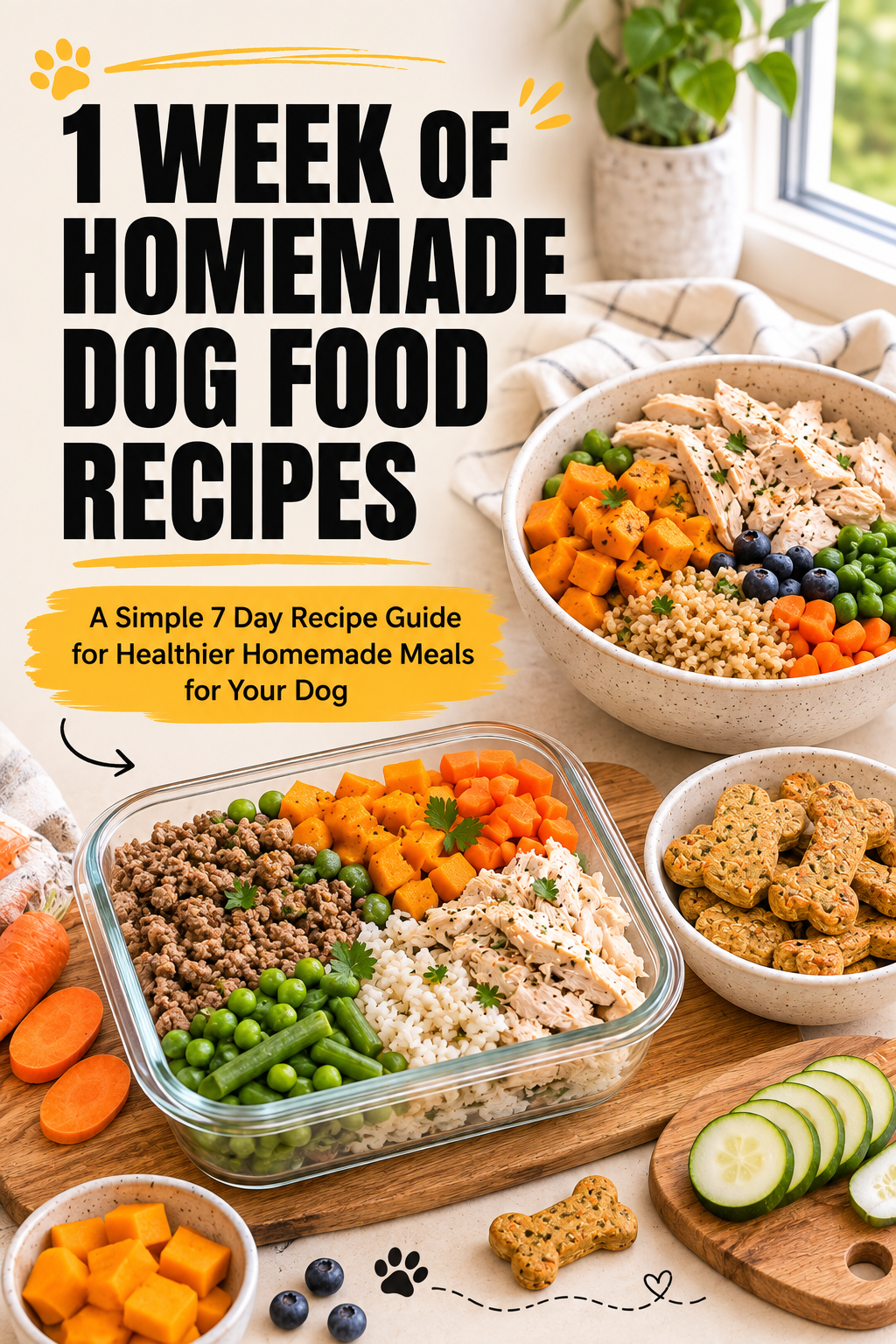
6. Ground Turkey and Oats
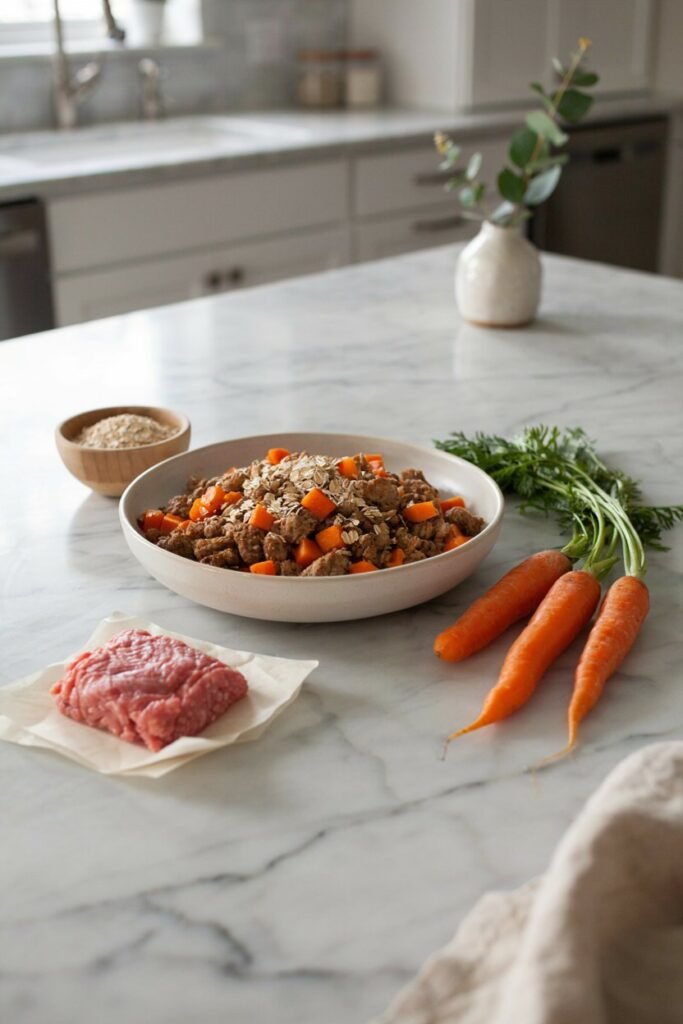
A gentle, easily digestible recipe that works especially well for large dogs with sensitive stomachs.
Why your dog will love it. Oats create a soft, comforting texture that many dogs with digestive sensitivities tolerate especially well, and the mild flavor of turkey rounds it out nicely.
Ingredients. Two pounds of ground turkey, one and a half cups of rolled oats, one cup of diced carrots, water as needed.
Instructions. Cook the ground turkey thoroughly, draining excess fat. Add the oats along with enough water to cook them through, about 10 minutes, then stir in the carrots and continue cooking until tender.
Storage. Refrigerate for up to 4 days or freeze for up to 3 months.
Feeding tips. This recipe is a good option to try if your dog has recently had digestive upset and needs a gentler transition back to a full meal.
Ingredient swaps. Ground chicken can replace turkey with very similar results.
7. Chicken Liver and Rice Meal
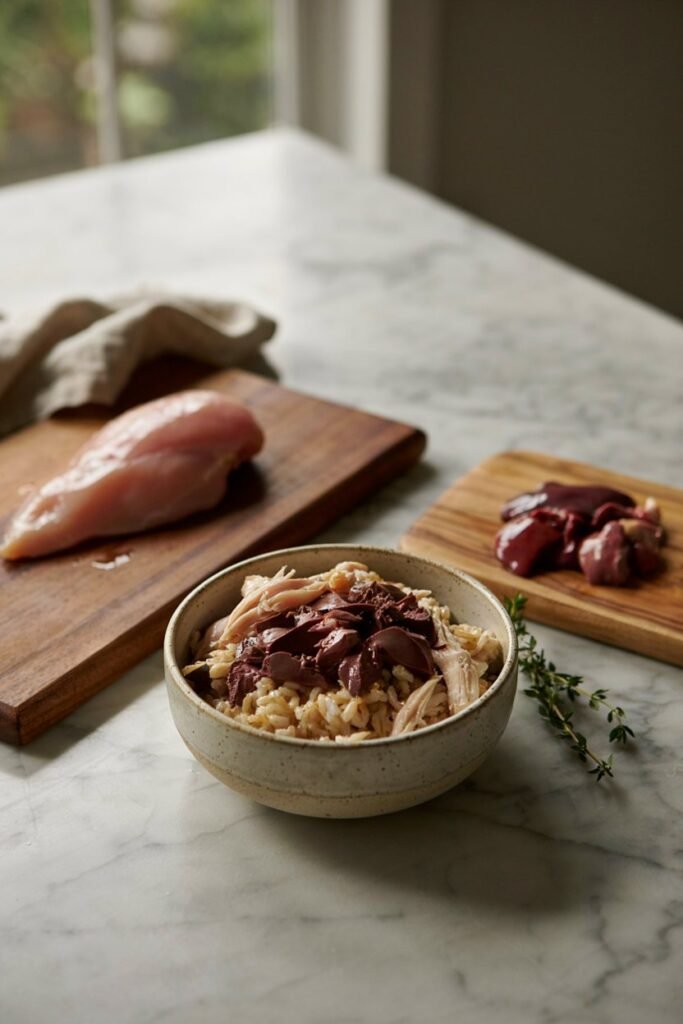
An organ meat rich recipe that adds valuable nutrients often missing from muscle meat only diets.
Why your dog will love it. The strong aroma of liver is extremely appealing to most dogs, making this a great option for picky eaters who need a little extra encouragement.
Ingredients. One pound of chicken liver, one pound of chicken breast, two cups of brown rice, water as needed.
Instructions. Cook the liver and chicken breast together in a pot of water until fully cooked through, then dice or shred finely. Add the brown rice along with additional water and simmer until tender.
Storage. Refrigerate for up to 4 days or freeze for up to 3 months.
Feeding tips. Because organ meat is very rich, liver should make up a smaller proportion of the overall recipe rather than the primary protein, generally no more than about 10 percent of the total meat content.
Ingredient swaps. Beef liver can be used in place of chicken liver if preferred.
8. Beef and Quinoa Bowl
A protein forward recipe that swaps traditional rice for quinoa, which offers a slightly higher protein content.
Why your dog will love it. The heartier texture of quinoa combined with rich beef makes this a particularly filling option for very large, active breeds.
Ingredients. Two pounds of lean ground beef, one and a half cups of quinoa, one cup of chopped green beans.
Instructions. Brown the beef thoroughly, draining excess fat. Cook the quinoa separately according to package instructions, then combine with the beef and green beans, stirring until evenly mixed.
Storage. Refrigerate for up to 4 days or freeze for up to 3 months.
Feeding tips. Quinoa should always be rinsed thoroughly before cooking to remove its natural coating, which can otherwise cause mild digestive upset.
Ingredient swaps. Brown rice can replace quinoa if your dog has not previously eaten quinoa and you would prefer a more familiar grain.
9. Lamb and Rice Dinner
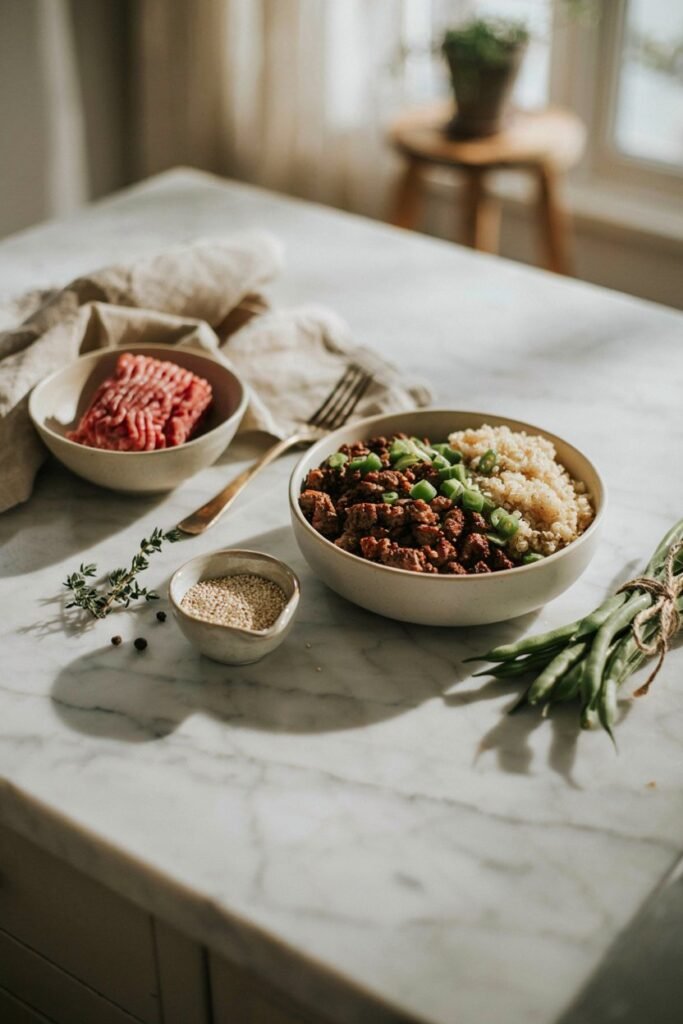
A novel protein option that works especially well for large dogs with known sensitivities to more common proteins like chicken or beef.
Why your dog will love it. Lamb has a distinct, rich flavor that many dogs find highly appealing, and its novelty can make it easier to identify or avoid food sensitivities during an elimination approach.
Ingredients. Two pounds of lean ground lamb, two cups of brown rice, one cup of diced carrots.
Instructions. Brown the lamb thoroughly, draining excess fat carefully since lamb tends to be fattier than chicken or turkey. Add the rice along with water and simmer until tender, stirring in the carrots during the final 15 minutes.
Storage. Refrigerate for up to 4 days or freeze for up to 3 months.
Feeding tips. Because lamb is naturally fattier, this recipe is best suited for very active large dogs or as an occasional rotation rather than a daily staple.
Ingredient swaps. Venison can be used as another novel protein alternative if lamb is unavailable.
10. Fish and Vegetable Medley
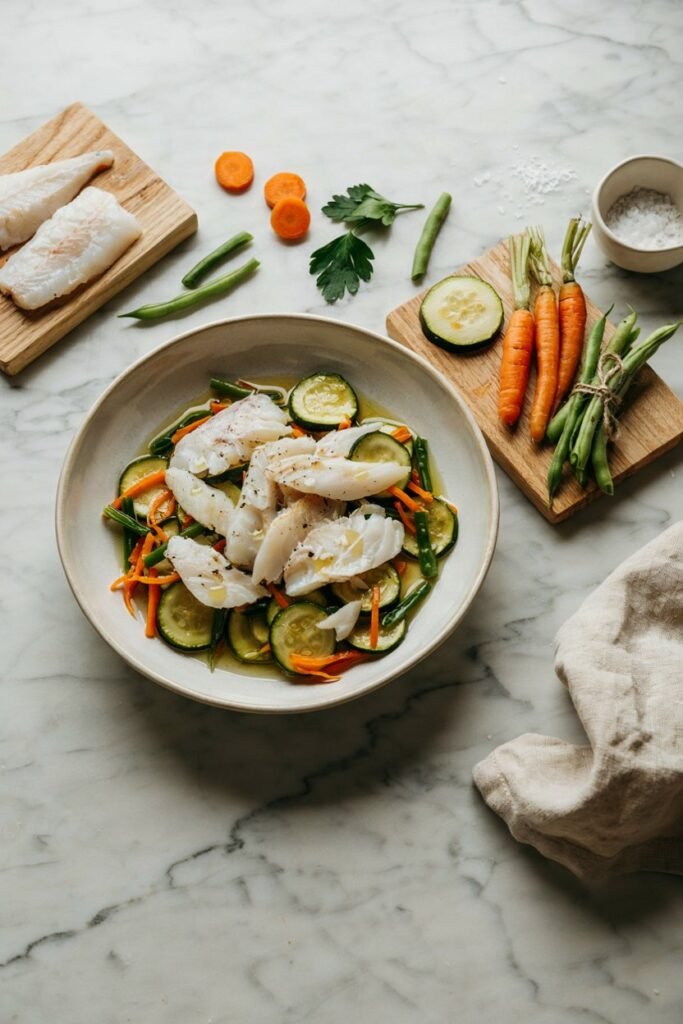
A lighter, vegetable forward recipe built around white fish, ideal for large dogs who need a lower fat option.
Why your dog will love it. The mild flavor of white fish paired with a variety of vegetables creates a lighter meal that still feels substantial thanks to its volume.
Ingredients. Two pounds of plain, cooked white fish, one cup of diced carrots, one cup of chopped green beans, one cup of diced zucchini.
Instructions. Flake the cooked fish into small pieces, removing any bones carefully. Steam the vegetables until fully tender, then combine everything together in a large bowl.
Storage. Refrigerate for up to 3 days or freeze for up to 6 weeks.
Feeding tips. This recipe works particularly well for large dogs managing their weight, given its lower fat content compared to red meat based recipes.
Ingredient swaps. Salmon can be used in place of white fish for added omega three content.
11. Budget Friendly Chicken Meal
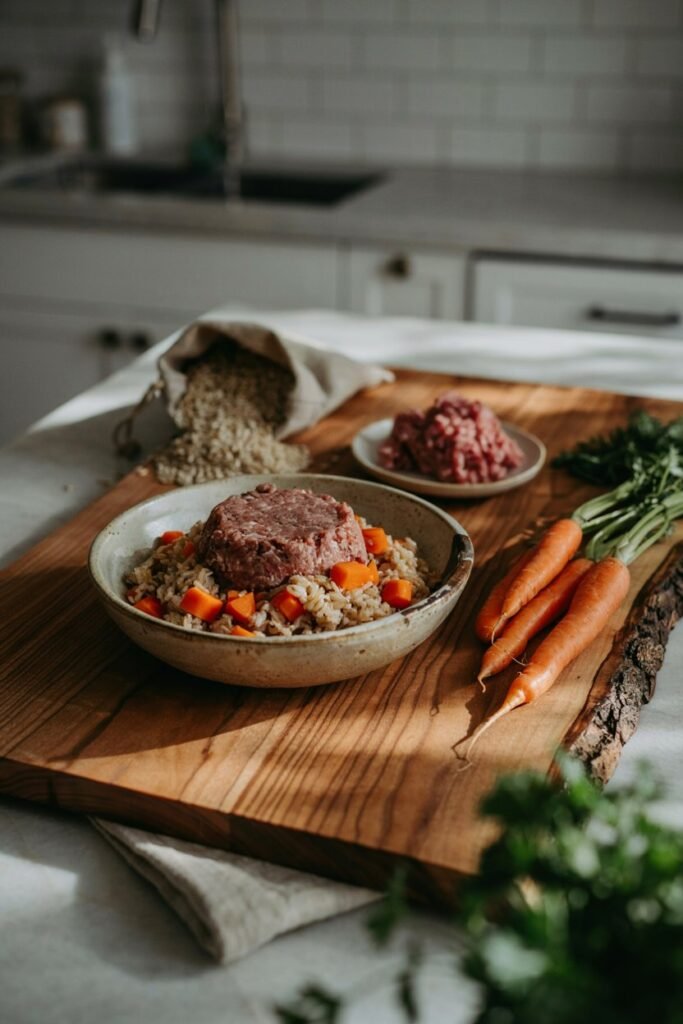
A simplified, cost effective recipe designed for owners feeding multiple large dogs or looking to stretch their grocery budget as far as possible.
Why your dog will love it. This straightforward recipe still delivers the familiar flavor of chicken and rice while keeping ingredient costs as low as possible, making it easy to prepare in large batches.
Ingredients. Two pounds of chicken thighs, skin removed, two cups of brown rice, one cup of frozen mixed vegetables.
Instructions. Simmer the chicken thighs in water until fully cooked, then shred.
Add the rice along with additional water and simmer until tender, stirring in the frozen vegetables during the final 10 minutes of cooking.
Storage. Refrigerate for up to 4 days or freeze for up to 3 months.
Feeding tips. Buying chicken thighs and frozen vegetables in bulk keeps this recipe especially budget friendly for households feeding one or more large dogs regularly, similar in spirit to my easy five ingredient crockpot dog food recipe.
Ingredient swaps. Chicken breast can replace thighs for a leaner, though slightly more expensive, version.
Serving Size Guide
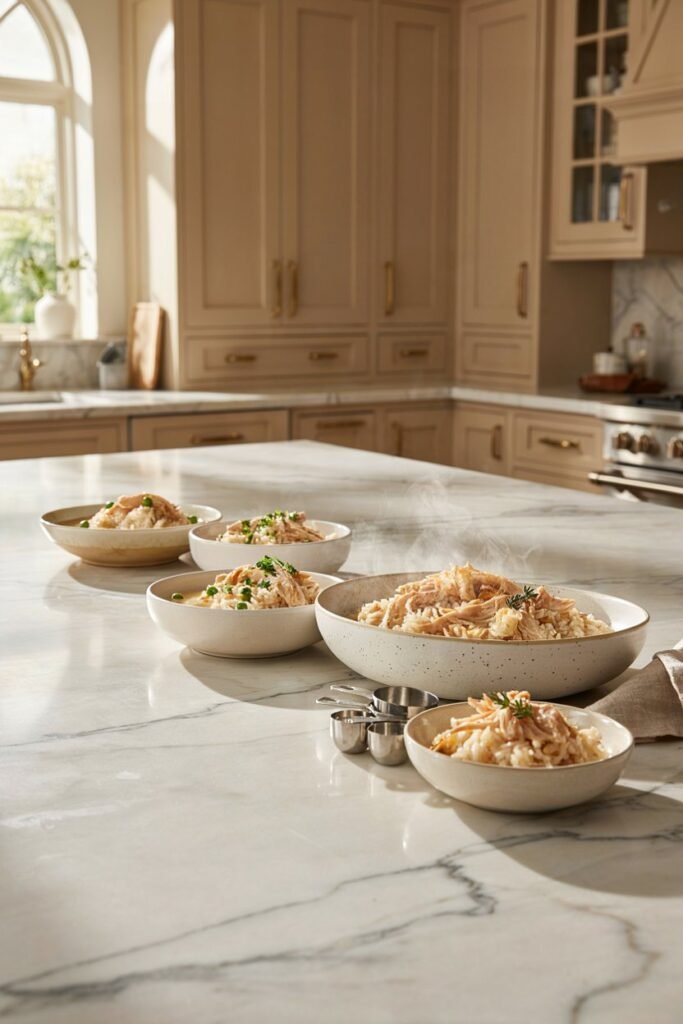
| Dog Weight | Approximate Daily Food |
|---|---|
| 50 to 60 lbs | 2.5 to 3 cups |
| 60 to 80 lbs | 3 to 3.5 cups |
| 80 to 100 lbs | 3.5 to 4.5 cups |
| 100+ lbs | 4.5 cups or more |
These amounts are general starting points and should be divided across two meals per day for most adult dogs.
Activity level changes portions significantly, since a highly active working dog will need noticeably more food than a large but relatively sedentary companion.
Always monitor your dog’s weight and body condition over time and adjust portions accordingly, and check in with your veterinarian if you are unsure where to start.
Meal Prep and Storage Tips
Refrigerator Storage
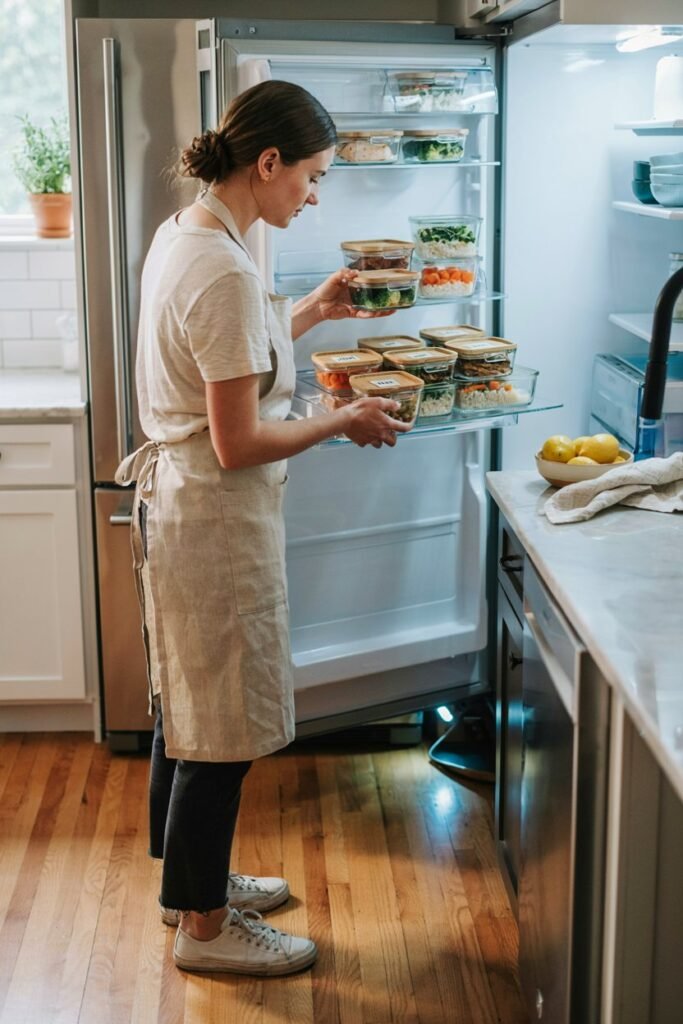
Most of these recipes keep well in the refrigerator for up to 4 days when stored in an airtight container, with fish based recipes on the shorter end of that range at around 3 days.
Freezer Storage
Portioned into daily or meal sized servings, these recipes generally freeze well for up to 3 months, with fish based versions best used within about 6 weeks for optimal quality.
Meal Prep
Cooking a large batch every one to two weeks and freezing individual portions turns homemade feeding into a manageable routine rather than a daily task, especially important for large dogs who go through food quickly.
Portion Containers
Using flat, stackable freezer safe containers or large silicone portion trays makes thawing faster and more space efficient than one enormous frozen block.
Safe Reheating
If you prefer to serve meals slightly warmed, a brief reheat is fine, but always check the temperature carefully before serving to avoid burning your dog’s mouth, and never microwave food inside a metal container.
Common Homemade Dog Food Mistakes
Providing too little protein relative to your dog’s size and activity level can leave large, active dogs under fueled over time.
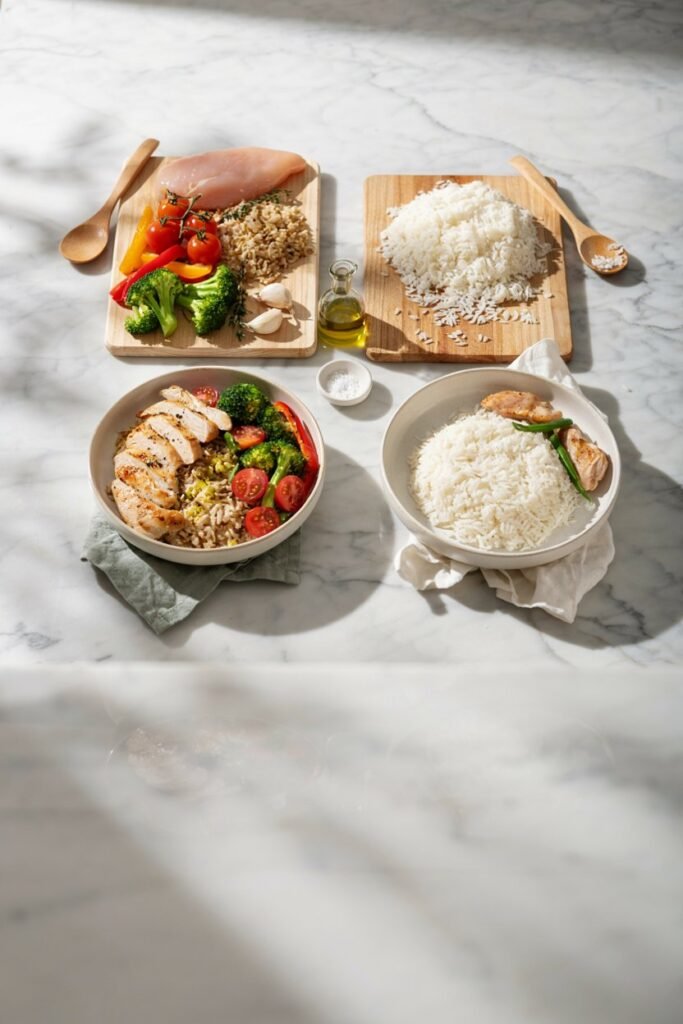
Using too much rice or grain relative to protein and vegetables can dilute the overall nutritional value of a meal.
Missing vitamins and minerals is a common issue when homemade meals are fed exclusively over the long term without proper balancing, which is part of why veterinary guidance matters for full time homemade diets.
Including unsafe ingredients, whether by accident or unfamiliarity, is one of the most serious mistakes an owner can make.
Too much fat, particularly from fattier cuts like beef or lamb, can contribute to unwanted weight gain or digestive upset in some dogs.
Adding seasonings meant for human cooking is unnecessary and sometimes unsafe.
Onions, garlic, grapes, chocolate, and xylitol should never appear in any recipe, regardless of how small the amount.
Frequently Asked Questions
Can large dogs eat homemade food every day? Yes, as long as the recipes are properly balanced or reviewed by a veterinarian, homemade food can be fed daily as a dog’s primary diet.
Is rice good for large dogs? Yes, brown rice in particular offers fiber and sustained energy, and most large dogs digest it well as part of a balanced meal.
Can I freeze homemade dog food? Yes, nearly all of these recipes freeze well when portioned appropriately, generally for up to 3 months.
What vegetables are safe? Carrots, green beans, sweet potato, pumpkin, and zucchini are all commonly used, safe vegetables for homemade dog meals.
Can puppies eat these recipes? Large breed puppies have very specific calcium and phosphorus needs during growth, so these recipes should be reviewed by a veterinarian before being fed to a growing puppy.
How long does homemade dog food last? Generally around 3 to 4 days refrigerated and up to 3 months frozen, depending on the specific protein used.
Can I use frozen vegetables? Yes, frozen vegetables work well in all of these recipes and can typically be added directly without thawing first.
How do I know if my dog likes the recipe? Watch for enthusiasm at mealtime, a clean bowl, and consistent stool quality over the following days, which are all good signs that a recipe agrees with your dog.
Final Thoughts
Preparing homemade meals for your large dog does not have to be complicated.
Starting with simple recipes made from fresh, wholesome ingredients allows you to provide meals tailored to your dog’s needs while avoiding unnecessary fillers found in many commercial foods.
Rotate proteins, include a variety of dog safe vegetables, and monitor your dog’s weight and energy levels as you introduce new recipes.
With a little planning, homemade dog food can become an affordable and rewarding part of keeping your large companion healthy and happy.
For more ideas to keep the rotation varied, take a look at my diy farmer’s dog food instant pot recipe, the healthy homemade beef and apple stew for dogs, and simple homemade dog food recipes for beginners for even more options to build out a full meal rotation for your large dog.





3 Comments