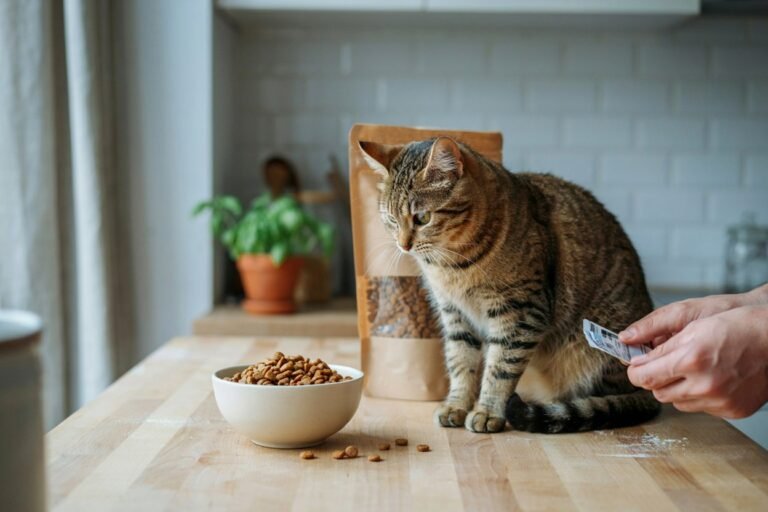
Homemade Lickable Cat Treats (Churu Style)
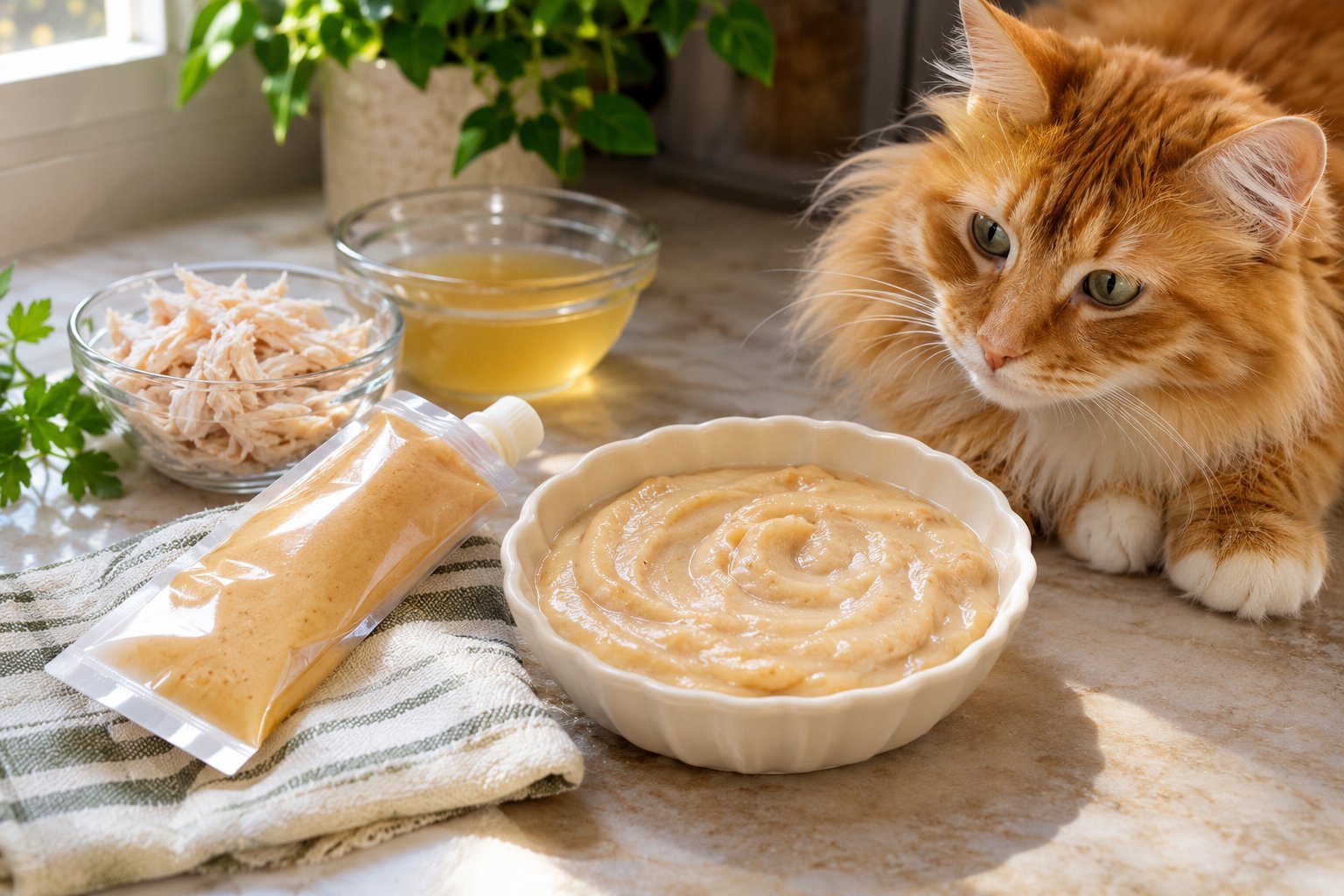
If you’ve ever watched a cat go absolutely wild for a squeeze tube of creamy treat, you know the appeal. It’s smooth, savory, and easy to lick right off a spoon or your finger.
The good news is that you can make a very similar lickable treat at home with just a couple of ingredients, a blender, and a squeeze bottle.
You’ll know exactly what’s inside, and it costs a fraction of the store bought version.
These lickable cat treats are made from plain cooked chicken blended with a little broth into a silky puree.
They’re great for bonding, for coaxing a cat to take a pill or visit a carrier, and for adding moisture to a cat’s day.
They pair nicely with my Homemade Cat Gravy Chicken Broth Recipes and my Bone Broth Recipe for Cats.
Why You’ll Love These Homemade Lickable Cat Treats
A few reasons this recipe is worth making.
Only two ingredients. Plain chicken and broth, with nothing artificial.
Silky and lickable. The perfect texture for cats who love creamy treats.
Adds moisture. A tasty way to sneak extra fluid into your cat’s day.
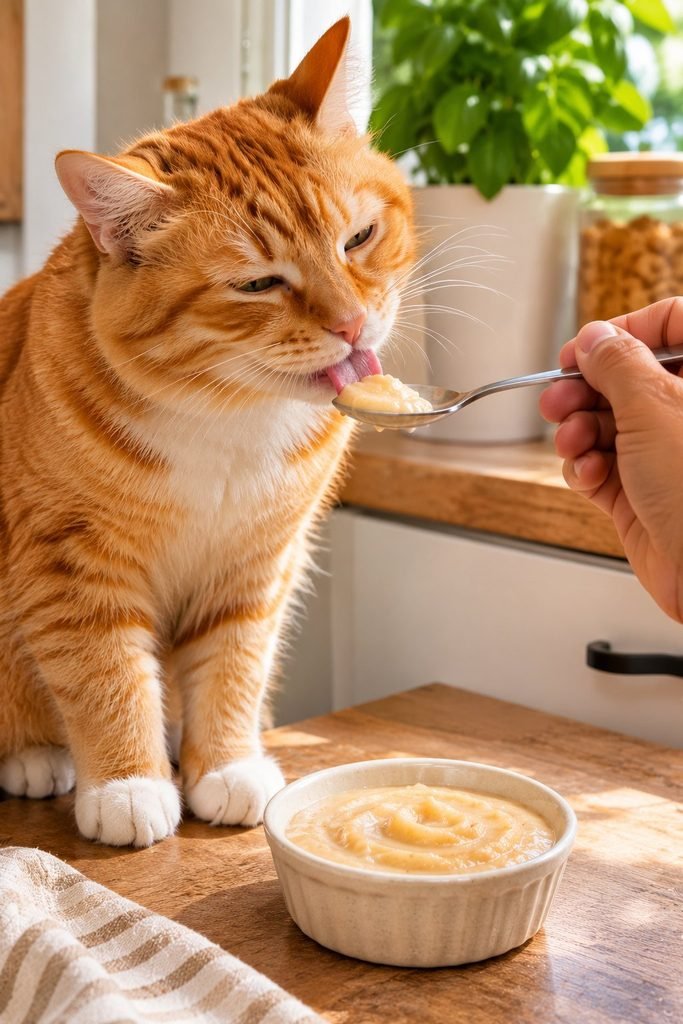
Great for bonding. Hand feeding a lickable treat builds trust.
Helpful for medications. Many cats will accept a pill hidden in a dab of puree, if your veterinarian approves.
Budget friendly. One chicken breast makes a big batch.
Are Homemade Lickable Treats Safe for Cats?
They can be a safe, occasional treat when made with the right ingredients.
Use plain, fully cooked meat. No seasoning, marinades, or sauces.
No onion, garlic, or salt. Onion and garlic are toxic to cats, and cats are very sensitive to sodium. Check any broth label carefully, or use my homemade broth.
No bones or skin. Remove all bones, and trim off skin and excess fat.
Keep treats small. Treats should make up only a small part of your cat’s daily calories. Cats need a complete and balanced diet, including nutrients like taurine, that a plain puree doesn’t provide on its own.
Watch the tuna. If you use canned tuna, choose tuna packed in water with no added salt, and offer it only occasionally because of mercury and the risk of an unbalanced diet.
Ask your vet about health conditions. Cats with kidney disease, heart disease, or special diets may need specific guidance.
Ingredients You’ll Need
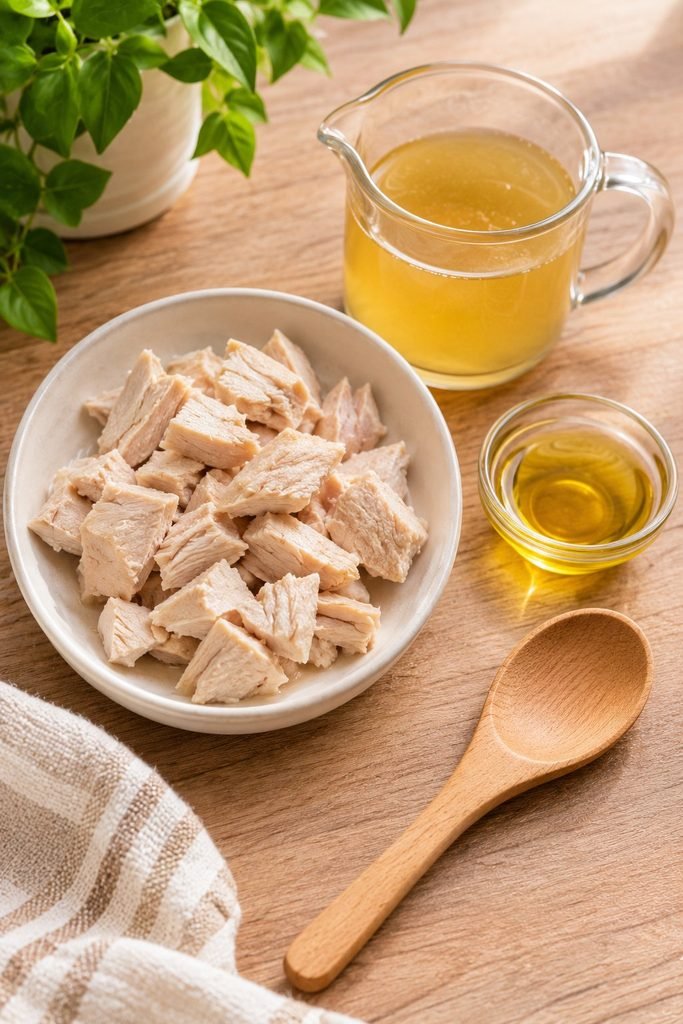
Here’s what goes into the blender.
Cooked chicken breast is the base. It’s lean, mild, and easy to blend smooth. Chicken thigh works too, but trim the fat.
Low sodium, onion free, garlic free broth, or the water the chicken cooked in, loosens the puree to a lickable consistency.
A pinch of fish oil, optional, adds aroma and healthy fats. Use a small amount of a pet safe fish oil.
Ingredient List
- 1 cup cooked, boneless, skinless chicken breast, cooled
- 1/2 cup low sodium broth with no onion or garlic, or reserved cooking water, plus more if needed
- A few drops of pet safe fish oil, optional
How to Make Homemade Lickable Cat Treats
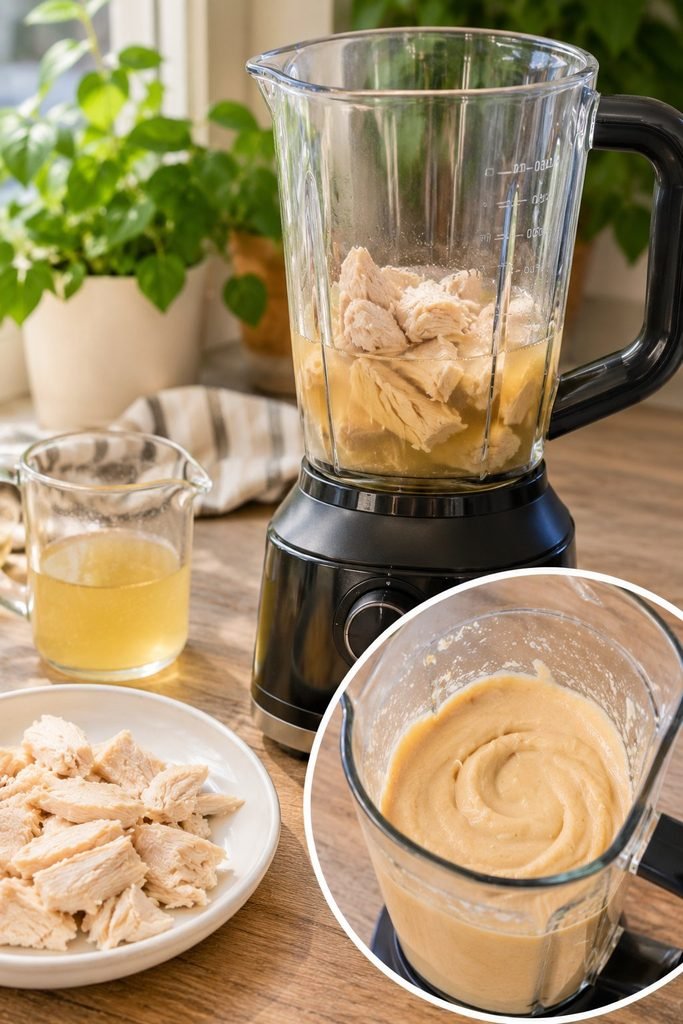
- Poach the chicken breast in plain water for 15 to 20 minutes, until fully cooked and no pink remains. Let it cool, and save a little of the cooking water.
- Chop the chicken into small pieces and place it in a blender or food processor.
- Add the broth and fish oil, if using.
- Blend on high, stopping to scrape the sides, until the mixture is completely smooth.
- Add more broth a tablespoon at a time until the puree is silky and just thick enough to stick to a spoon.
- For extra smoothness, press the puree through a fine mesh sieve.
- Spoon the puree into a squeeze bottle, a piping bag, or a small zip bag with a corner snipped off.
- Serve a small amount on a spoon, a saucer, or straight from the bag.
Getting the Right Texture
The ideal puree is thick enough to hold on a spoon but loose enough to lick easily. Think of the texture of a smooth yogurt.
If it’s too thick to squeeze, add warm broth a tablespoon at a time.
If it’s too thin, blend in a little more cooked chicken.
For the smoothest result, blend for longer than you think you need, and strain it.
Serve it lukewarm or at room temperature. Many cats prefer it slightly warmed, which brings out the aroma.
Recipe Variations
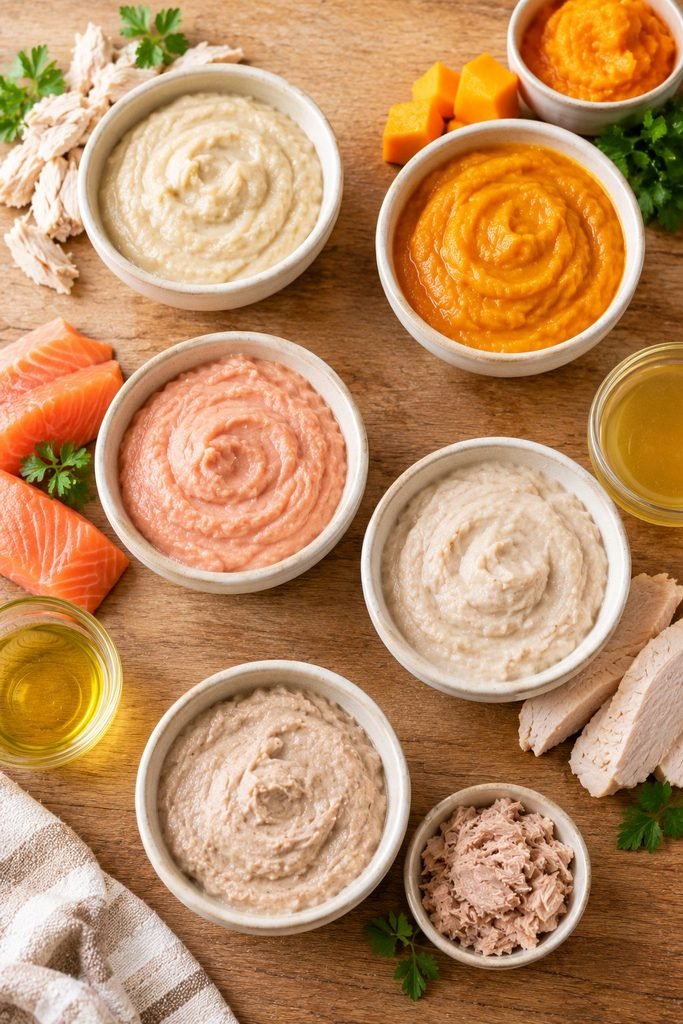
Once you’ve made the base recipe, these are easy to try.
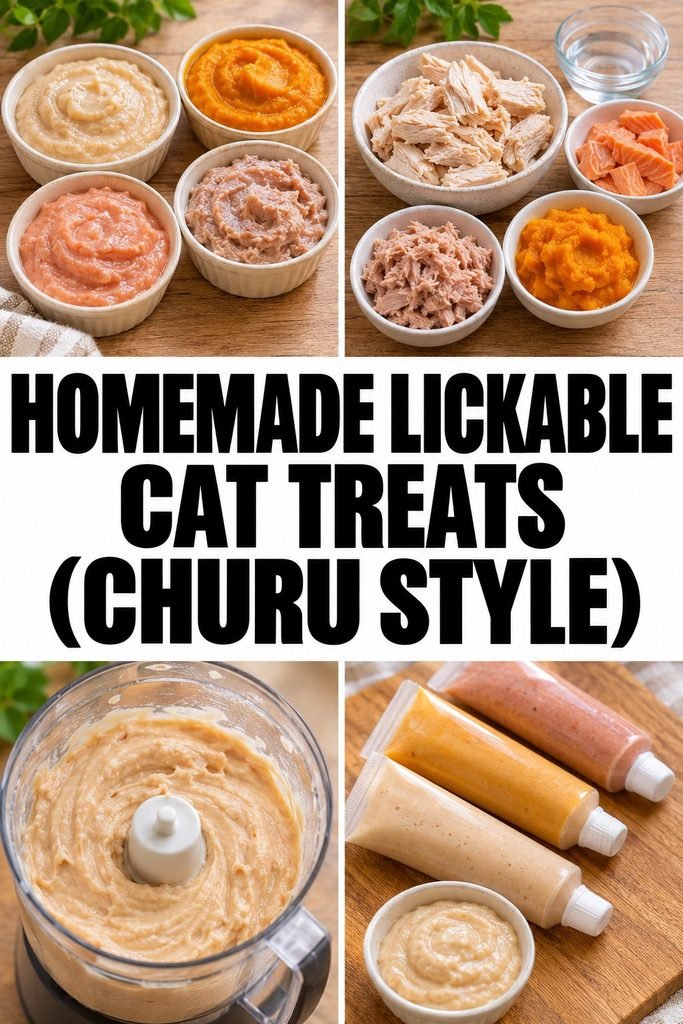
Chicken and pumpkin. Blend in a spoonful of plain pumpkin puree, inspired by my Easy Homemade Cat Treats with Pumpkin.
Salmon puree. Use plain, fully cooked, boneless salmon in place of chicken, served only occasionally.
Tuna puree. Use tuna packed in water with no added salt, and offer it only now and then.
Turkey puree. Use plain cooked turkey breast.
Frozen lickable cubes. Freeze the puree in ice cube trays, similar to my Homemade Cat Gravy Cubes.
Common Mistakes to Avoid
Adding onion, garlic, or salt. Keep it completely plain.
Leaving in bones or skin. Remove all of them before blending.
Making it too thick. It should be smooth and easy to lick.
Serving too much. A teaspoon or two is plenty.
Using a broth without checking the label. Many contain onion, garlic, and high sodium.
Leaving it out too long. Fresh puree spoils quickly at room temperature.
How Much Can a Cat Have?
A small lick, about half a teaspoon to a teaspoon at a time, is plenty for most cats.
Limit lickable treats to a couple of times a day at most, and count them as part of your cat’s daily treat allowance.
If you’re unsure how much fits into your cat’s diet, or your cat has a medical condition, ask your veterinarian.
How to Store Homemade Lickable Cat Treats
Because this is a fresh puree with no preservatives, store it carefully.
Refrigerator. Store in an airtight container or sealed squeeze bottle for up to 3 days.
Freezer. Freeze in ice cube trays or small portions, then transfer to a sealed bag for up to 2 months.
Check before serving, and discard anything that smells off. For another easy cat treat to keep on hand, see my Healthy Homemade Cat Treat recipe.
Can You Freeze Lickable Cat Treats?
Yes, and freezing is the best way to keep a batch fresh.
- Spoon the puree into ice cube trays or small silicone molds.
- Freeze until solid, about 3 to 4 hours.
- Transfer the cubes to a labeled freezer bag.
- Thaw a cube in the fridge, then stir to loosen and serve lukewarm.
More Homemade Cat Ideas
- Homemade Cat Gravy Chicken Broth Recipes
- Homemade Cat Gravy Cubes
- Bone Broth Recipe for Cats
- Easy Homemade Cat Treats with Pumpkin
- Healthy Homemade Cat Treat
Frequently Asked Questions
Is this like Churu? It’s a similar idea, a smooth, lickable puree, but it’s a simple homemade version and isn’t formulated to be complete and balanced, so it’s a treat only.
Can cats eat pureed chicken? Yes, plain cooked chicken is a safe, popular treat for most cats.
Can I use canned chicken? Only if it’s packed in water with no added salt or seasoning. Rinse it well.
Can I use a pouch or squeeze bottle? Yes, a squeeze bottle or piping bag makes serving easy and mess free.
Can I hide medicine in it? Many cats will take a pill in a small dab of puree, but always ask your veterinarian first, since some medications shouldn’t be given with food.
How long does it last? Up to 3 days in the fridge and up to 2 months in the freezer.
Can kittens have lickable treats? Kittens have specific nutritional needs, so check with your veterinarian first.
Recipe Card
Recipe name: Homemade Lickable Cat Treats
Summary: A smooth, lickable chicken puree for cats, made with just plain cooked chicken and broth.
Servings: About 1 cup of puree, or 20 or more small servings
Prep time: 10 minutes
Cook time: 20 minutes
Total time: 30 minutes
Estimated cost: Budget friendly
Course: Cat treat
Cuisine: Homemade pet food
Keywords: homemade lickable cat treats, cat treats like Churu, homemade cat treats, pureed cat treats, cat treat recipe
Equipment: Blender or food processor, fine mesh sieve, squeeze bottle or piping bag
Ingredients:
- 1 cup cooked, boneless, skinless chicken breast
- 1/2 cup low sodium broth with no onion or garlic
- A few drops of pet safe fish oil, optional
Instructions:
- Poach and cool the chicken.
- Blend with broth until completely smooth.
- Strain for extra smoothness, if desired.
- Spoon into a squeeze bottle.
- Serve a small amount, or freeze in cubes.
A Final Note on Making Lickable Treats for Your Cat
There’s something delightful about a cat who knows the sound of the squeeze bottle and comes running.
Keep portions small, keep the recipe plain, and enjoy the extra bonding time. For anything involving your cat’s health or diet, your veterinarian is the best guide.