
Easy Homemade Cat Food Recipes
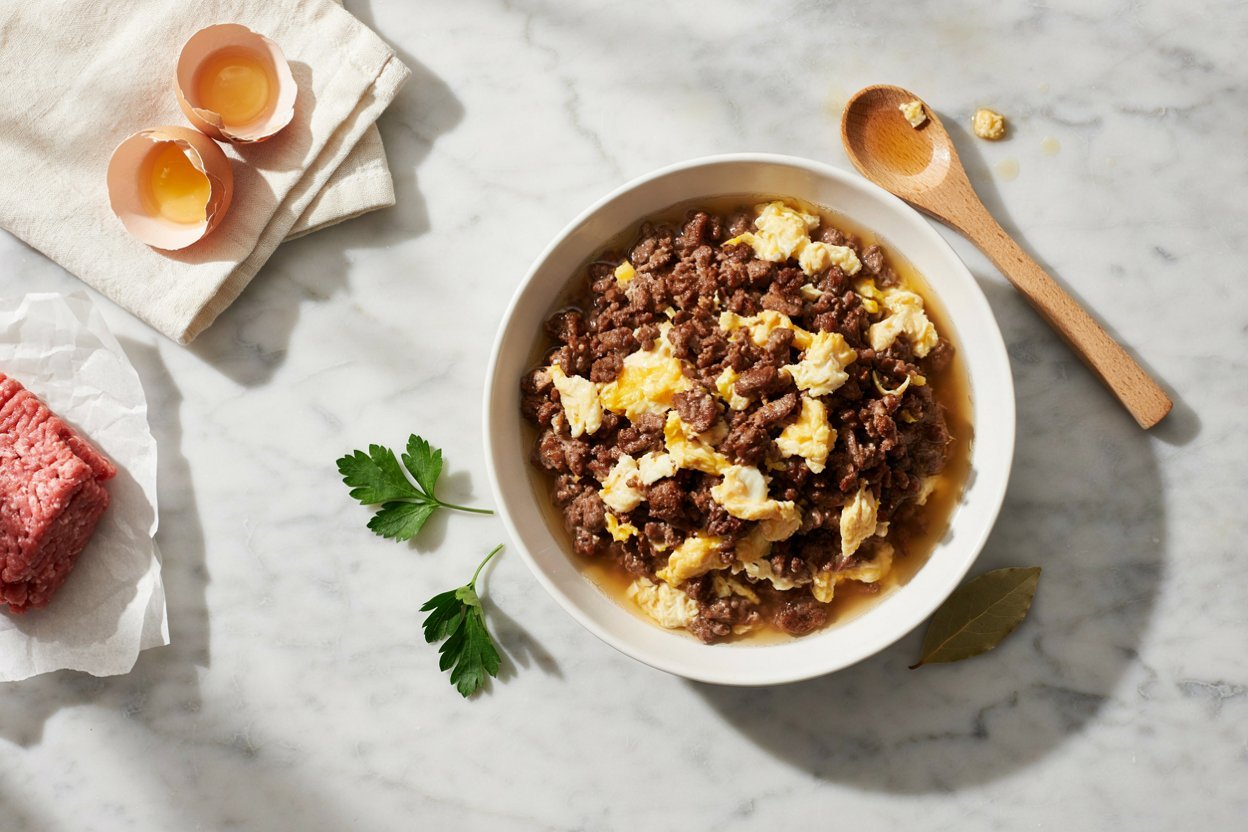
There is a moment almost every cat owner reaches eventually, standing in the kitchen with a can opener in hand, wondering what is actually in the food they are about to serve.
That single moment of curiosity is usually where homemade cat food starts, not with a grand plan to overhaul everything overnight, just a small want to know exactly what is going into the bowl.
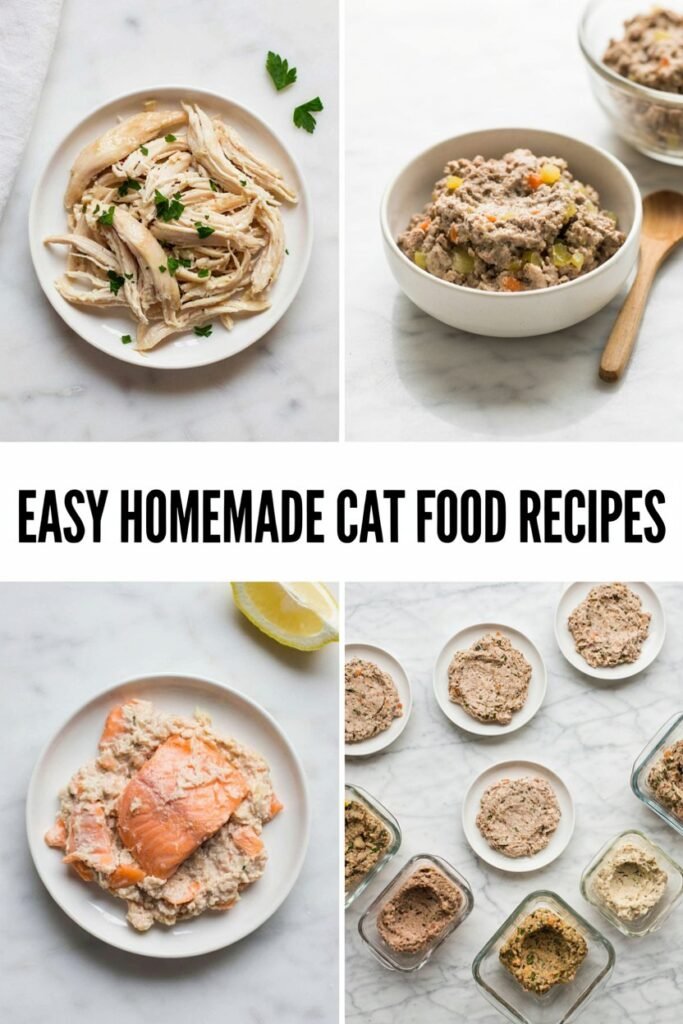
This post focuses on one simple, beginner friendly recipe from start to finish, a ground beef and egg meal that comes together quickly and covers the basics most homemade cat meals need.
If you want to explore a wider library of options after this one, my full homemade cat food recipes guide is a great next stop, along with my chicken based homemade cat recipes post if poultry is more your cat’s style.
Disclaimer: This post may contain affiliate links, which means I may earn a small commission at no extra cost to you. Always consult your veterinarian before changing your cat’s diet or introducing homemade meals.
Amazon Shopping List You Need
- Nonstick Cooking Pot with Lid
- Digital Kitchen Food Scale
- Glass Meal Prep Containers with Lids
- Stainless Steel Cat Food Bowls
- Airtight Pet Food Storage Container
- Silicone Freezer Portion Trays
- Cat Multivitamin Supplement Powder
Why Homemade Cat Food Is Worth Trying
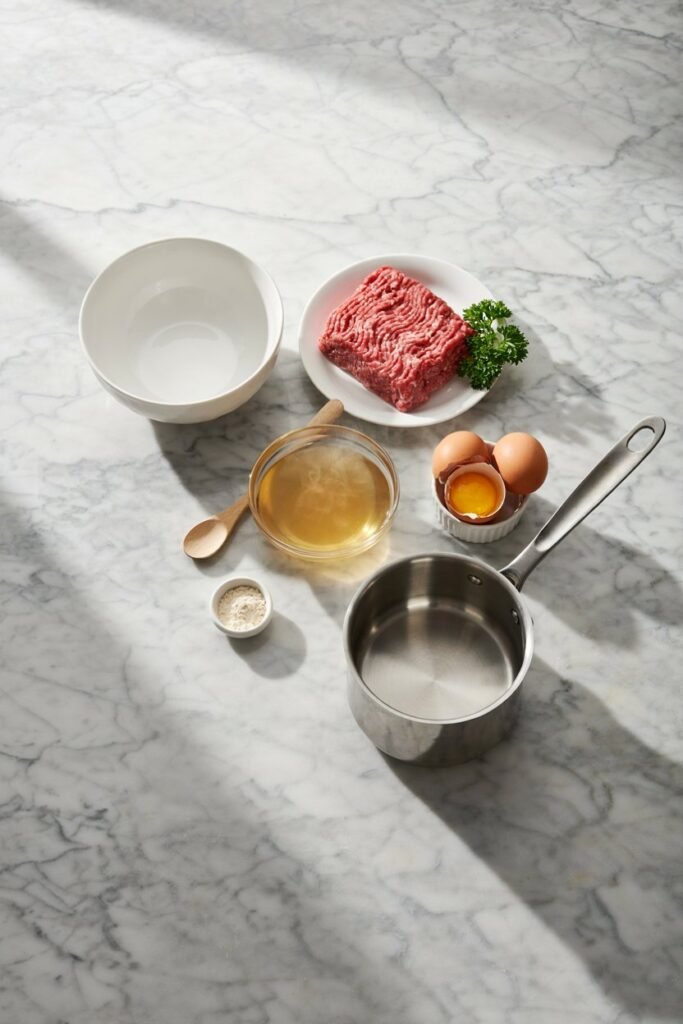
Cats are obligate carnivores, which means their bodies are built to run almost entirely on animal protein, unlike dogs, who can handle a broader mix of ingredients.
That makes homemade cat food a little more particular to get right, but it also means the payoff can be significant when a recipe is built with that biology in mind.
Homemade meals also tend to have far more moisture than dry kibble, which matters because most cats don’t drink enough water on their own to make up the difference.
A recipe like the one below sits close to 70 to 75 percent moisture, compared to roughly 10 percent in typical dry food, which can meaningfully support hydration and urinary health over time.
If your cat needs a little extra encouragement to try something new, pouring a spoonful of something saucier over the top can help. My cat gravy recipes post has a few simple versions that pair well with the recipe below.
Ingredients You’ll Need
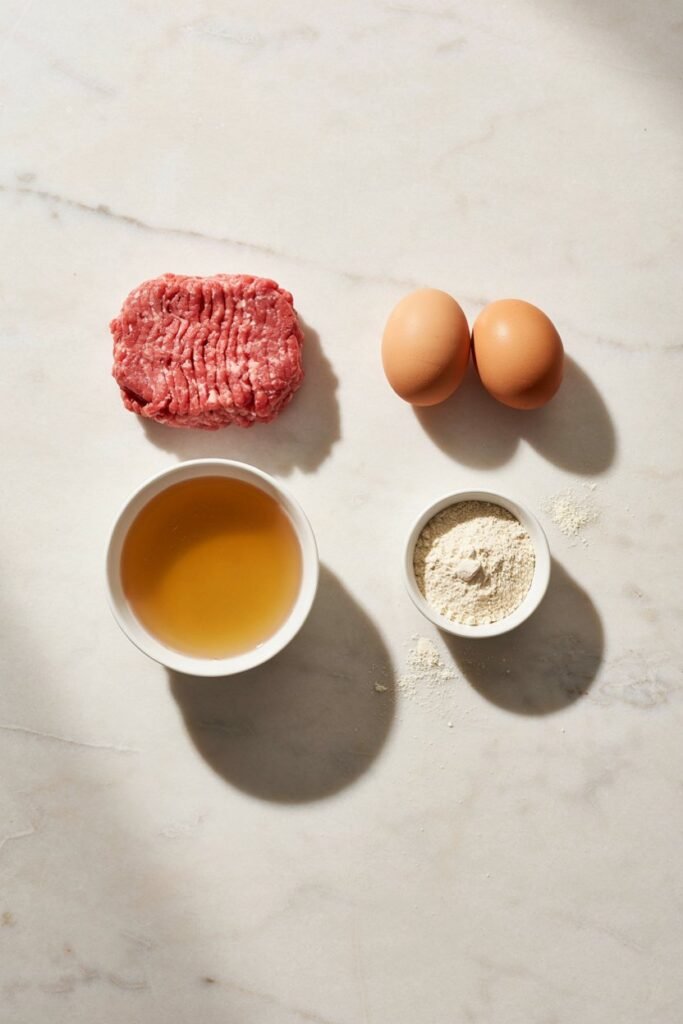
1 lb lean ground beef 1 egg, fully cooked 1 cup low sodium beef or chicken broth, no onion or garlic 1/4 teaspoon ground eggshell, finely powdered Optional: a small splash of fish oil for extra omega 3s
Lean ground beef is used here because it is widely available, affordable, and a protein most cats take to quickly.
Choosing a leaner blend helps avoid an overly greasy texture once everything is combined.
The egg adds extra protein and helps bind the mixture together, and the broth keeps everything moist enough to qualify as a true wet food rather than a dry, crumbly topper.
As with any homemade recipe fed regularly, the ground eggshell matters quite a bit here.
Muscle meat alone is naturally low in calcium relative to what a cat needs, so this small addition helps close that gap in a simple, affordable way.
How to Make It: Step by Step
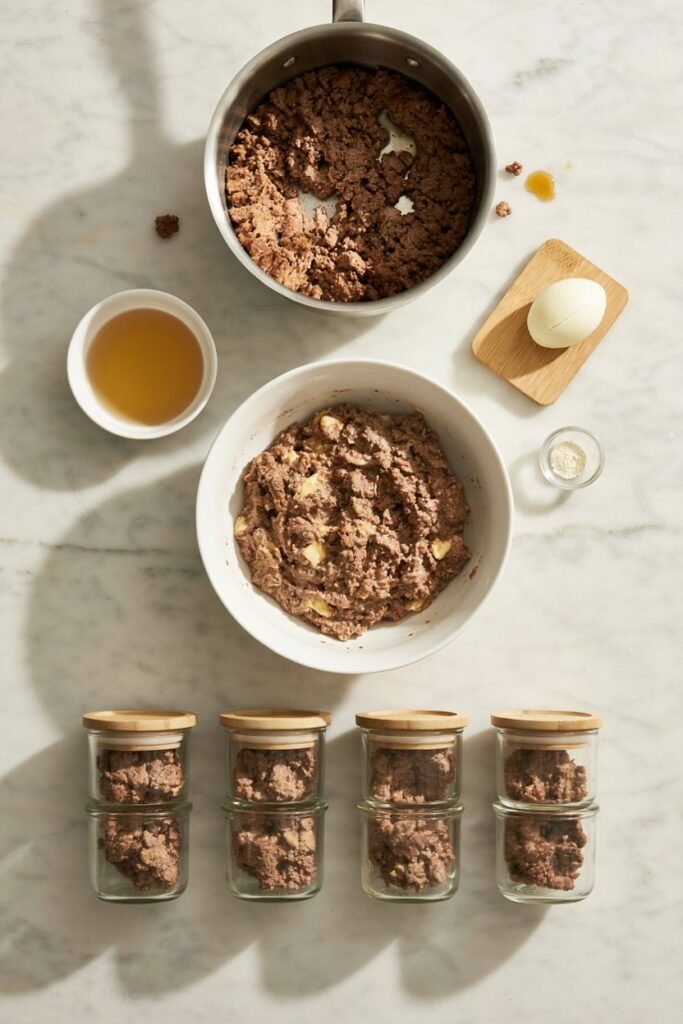
Step 1: Cook the Beef
Add the ground beef to a saucepan over medium heat. Cook thoroughly, breaking it into small crumbles as it cooks. Drain any excess fat once the beef is fully cooked.
Step 2: Add the Broth
Pour the broth into the pan with the cooked beef. Stir well and let the mixture simmer gently for a minute or two. Keep the heat low rather than bringing it to a hard boil.
Step 3: Add the Egg
Transfer the beef and broth mixture to a bowl or food processor. Add the fully cooked egg and blend or mash everything together. You can make the mixture smooth or leave it slightly chunky depending on your cat’s preference.
Step 4: Add the Calcium
Allow the mixture to cool slightly, then add the finely ground eggshell or veterinarian recommended calcium supplement. Stir thoroughly so it is distributed evenly.
Step 5: Cool and Portion
Let the finished mixture cool to room temperature. Divide it into small, single serving portions so you only need to thaw what your cat will eat.
Step 6: Serve or Store
Serve a portion immediately, or refrigerate leftovers promptly. Freeze additional portions for longer storage and thaw them in the refrigerator before serving.
Storage and Feeding Tips
Refrigerate for up to three days, or freeze individual portions in a silicone tray for up to two months.
Thaw overnight in the fridge and always warm gently before serving, since food that smells warm and fresh tends to get a much better reaction than something served cold.
Most adult cats need roughly 24 to 35 calories per pound of body weight each day, divided across two to four meals.
If your cat is underweight or needs to gain a bit of healthy weight, my cat weight gain meals guide has portioning notes specifically for that situation.
If your cat is older, my homemade cat food for senior cats post is worth reading before making this a regular part of the rotation.
Easy Ways to Change This Recipe Up
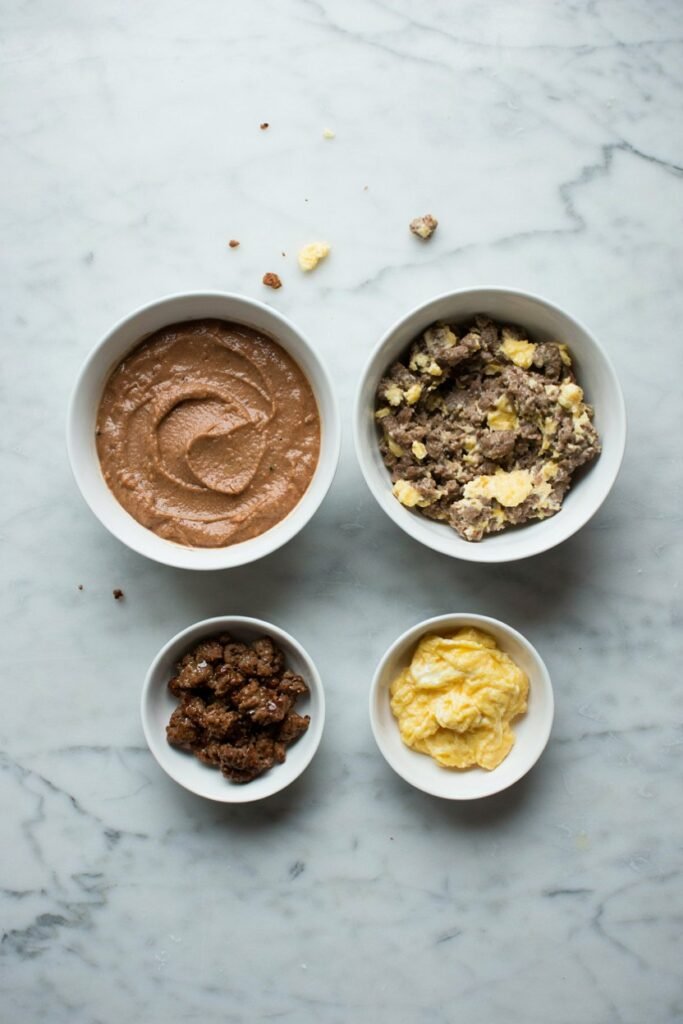
Swap the protein. If your cat prefers poultry, my ground turkey cat food recipe uses a similar method with a lighter flavor profile.
Try fish instead. For cats who respond better to a stronger smelling meal, my easy fish meals for cats post has a few good options to rotate in alongside this one.
Adjust the texture. If your cat prefers a chunkier bite instead of a smooth blend, skip the food processor and simply mash everything by hand with a fork.
Common Mistakes to Avoid
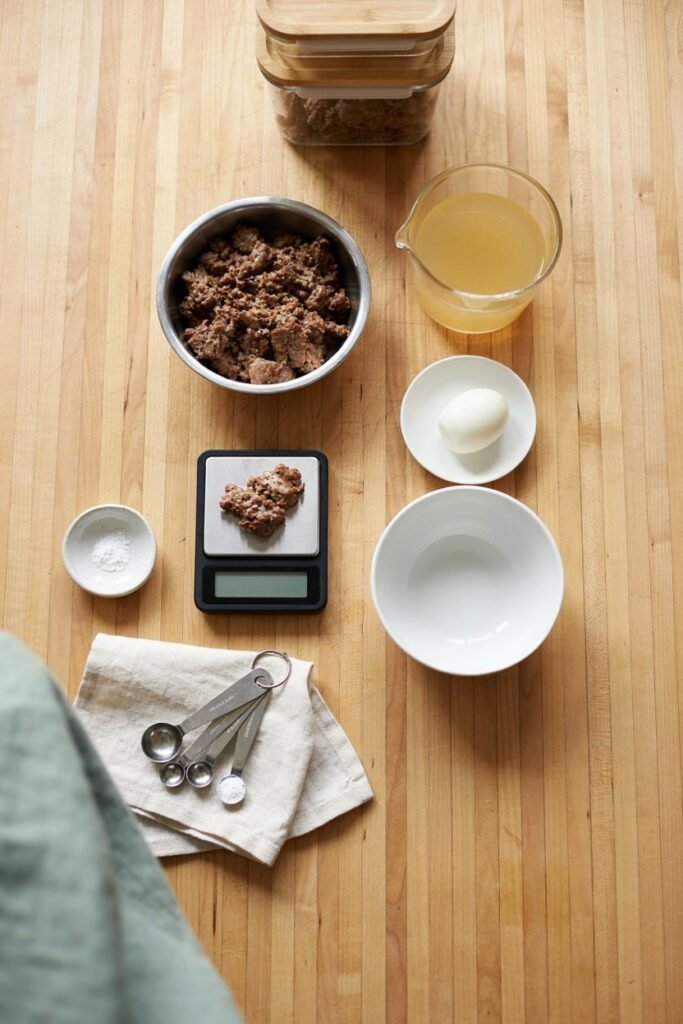
Skipping the calcium source. Beef and egg alone are not a complete meal without a reliable calcium source added consistently.
Using fatty ground beef. A leaner blend keeps the texture appealing and avoids an overly greasy finished dish. Using seasoned or salted broth. Always check the label for onion or garlic, both of which are toxic to cats. Serving it cold.
A cold meal is far less aromatic and much less likely to be eaten enthusiastically. Switching too quickly. Introduce this gradually alongside your cat’s current food over one to two weeks.
Frequently Asked Questions
Can I use ground turkey instead of beef? Yes, ground turkey works well as a substitute if your cat prefers a lighter protein. My turkey cat food recipe has ratios built specifically around that version.
Is raw egg safe to use instead of cooked? A fully cooked egg is the safer choice for regular homemade meals, since it reduces the risk of bacterial contamination. Talk to your vet if you’re considering a raw diet more broadly.
Is this recipe nutritionally complete on its own? It works well as a regular meal or topper, but for long term daily feeding, it is worth confirming the balance of taurine, calcium, and other nutrients with your veterinarian.
My cat isn’t interested, what should I try? Warm the portion slightly more, or stir in a spoonful of extra broth right before serving to boost the aroma.
Can kittens eat this? Kittens have more intensive nutritional needs than adult cats. Talk to your vet about appropriate portions and any adjustments before feeding this to a kitten.
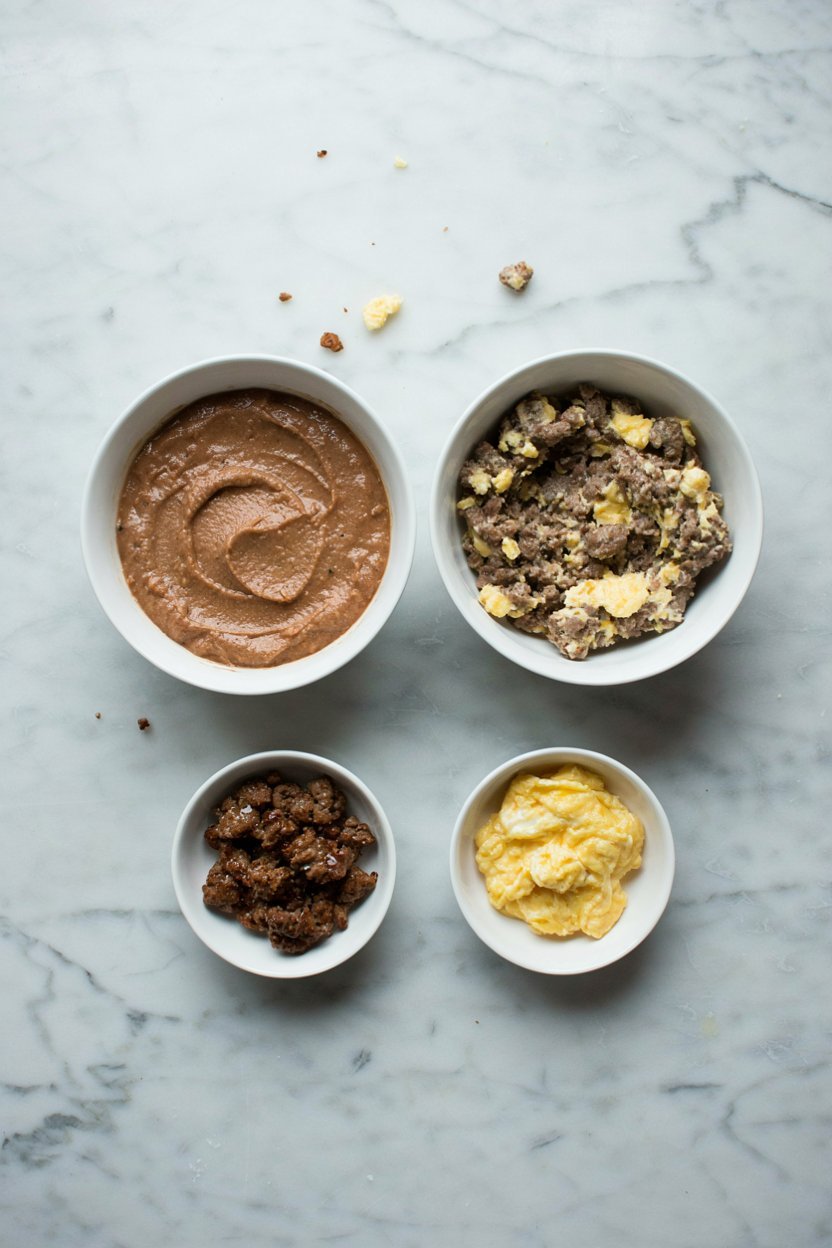
Easy Homemade Cat Food
Ingredients
Equipment
Method
- Cook the chicken thoroughly without adding salt, onion, garlic, oil, or seasonings.
- Allow the chicken to cool slightly and remove any skin, bones, or excess fat.
- Shred or finely chop the chicken into small pieces.
- Add the chicken, pumpkin, and cooked rice to a clean mixing bowl.
- Add the warm water and gently stir until the ingredients are evenly combined.
- Allow the mixture to cool completely before serving.
- Keep all ingredients plain and unseasoned. Never add onion, garlic, excessive salt, seasoning blends, or cooked bones.
- This recipe is best used as an occasional meal or topper and should not be considered a complete and balanced long term diet unless it has been specifically formulated to meet feline nutritional requirements.
Final Thoughts
Homemade cat food does not need to be complicated to make a real difference in what ends up in the bowl.
This ground beef and egg recipe is a simple, affordable place to start, and it gives you a solid foundation to build from as you explore other proteins and textures across the rest of the recipes linked throughout this post.



One Comment