Chicken Broth Gel Cubes for Cats
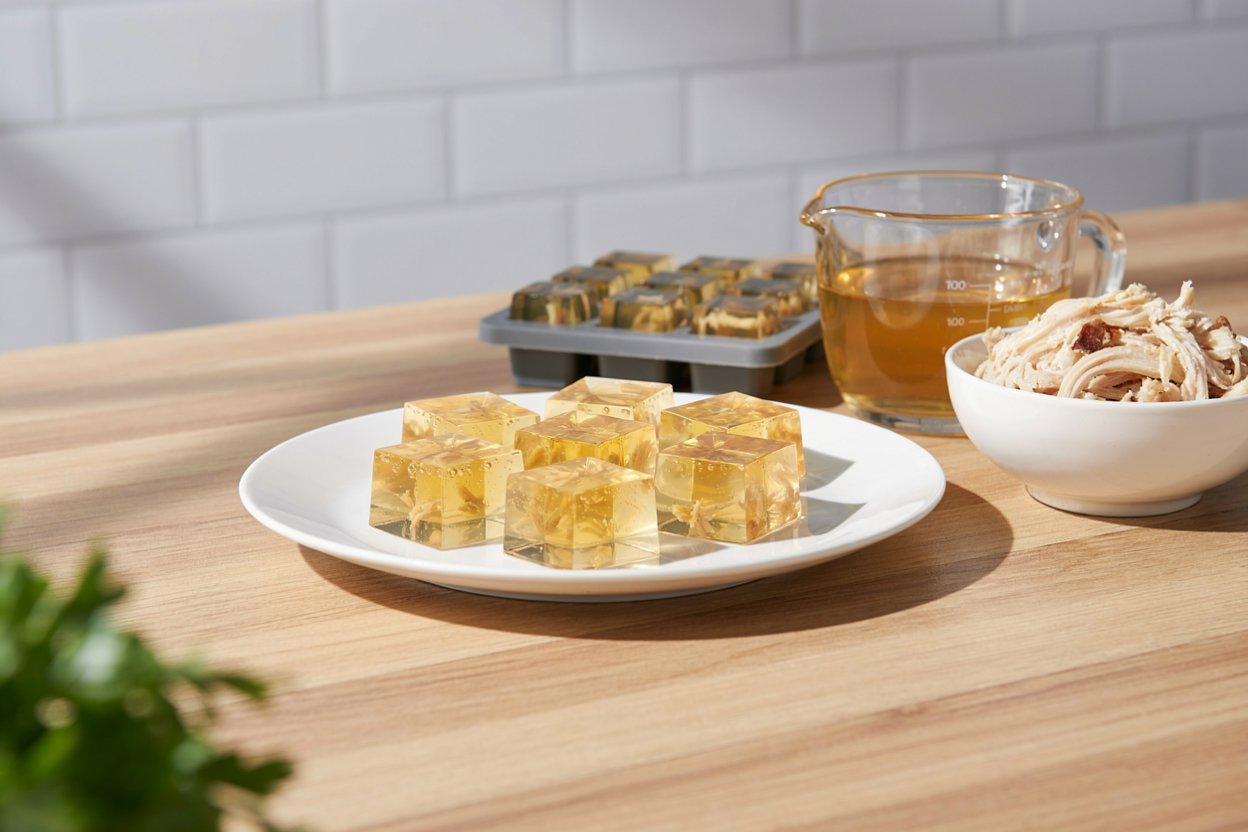
There is something surprisingly satisfying about making simple homemade treats for a cat, especially when I know exactly what went into the bowl.
These chicken broth gel cubes are one of those little recipes that can make feeding time more interesting without requiring a complicated list of ingredients or a lot of preparation.
I like that I can make a batch, freeze it in small portions, and have an easy cat friendly topper ready whenever I need it.
The most important part of this recipe is keeping everything simple. Cats do not need the same seasonings and ingredients that make human broth taste good, and some common ingredients found in our kitchens are not appropriate for them.
I always pay close attention to the ingredient list before making anything intended for a cat.
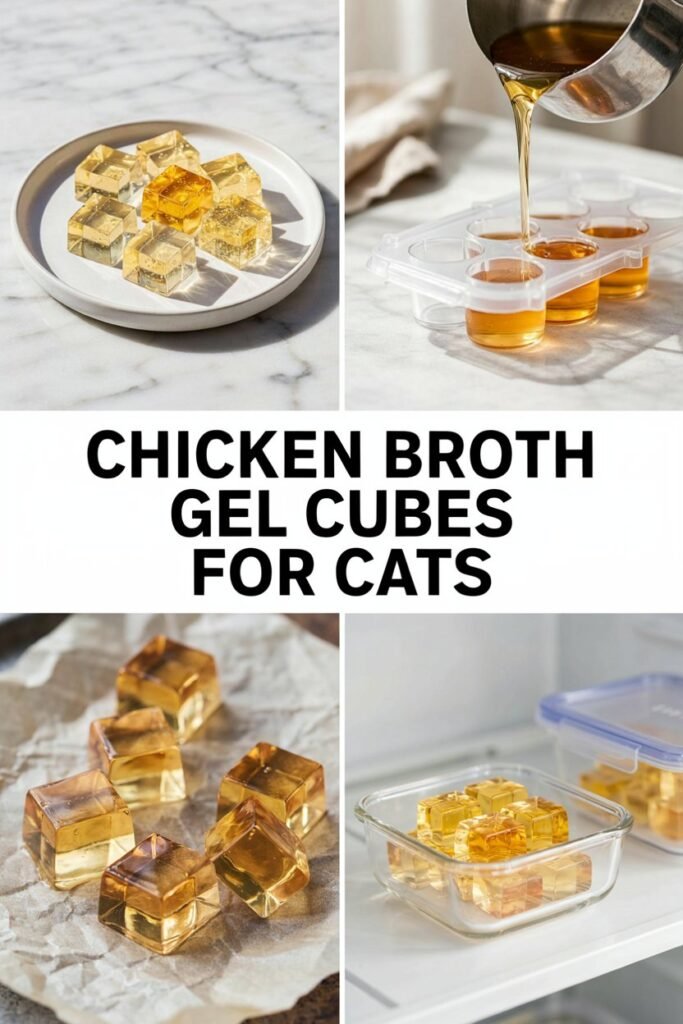
These cubes are made with plain chicken broth and unflavored gelatin, then portioned into small molds and frozen.
They can be served thawed, partially frozen, or used as a small topper over your cat’s regular food. In this post, I will show you how I make them, what ingredients I avoid, how I store them, and a few simple ways to serve them safely.
What Are Chicken Broth Gel Cubes for Cats?
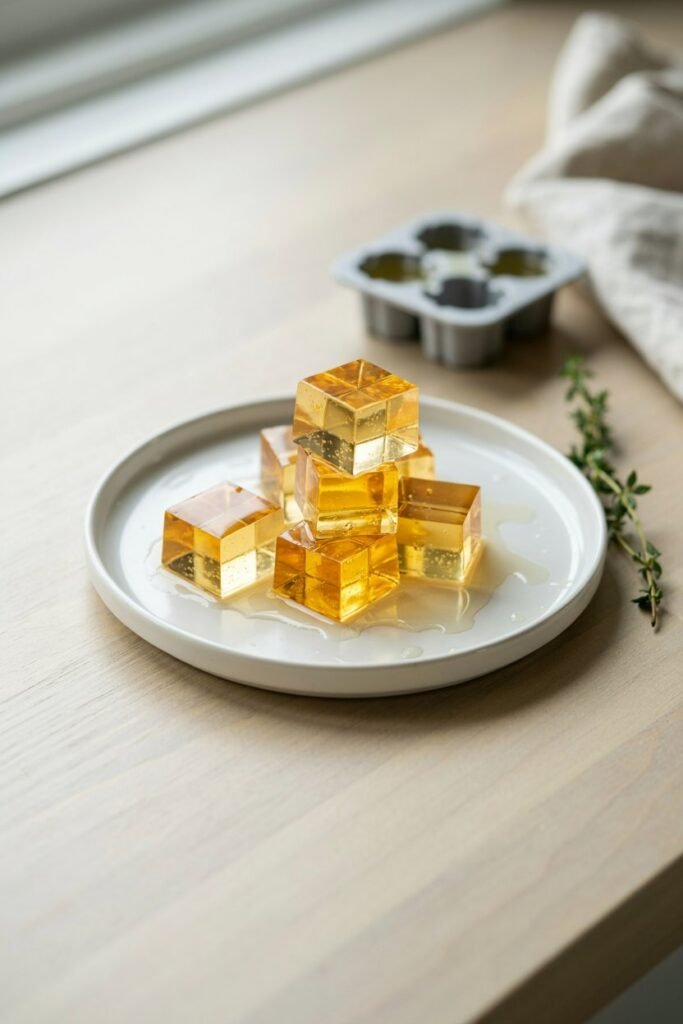
Chicken broth gel cubes are small frozen portions of homemade chicken broth that have been combined with plain, unflavored gelatin.
Once chilled, the gelatin gives the broth a soft gel texture. Freezing the mixture turns it into convenient little portions that are easy to store and serve.
What I particularly like about making them this way is the portion control. Instead of keeping a container of broth in the refrigerator and wondering how much to pour into the bowl, I can take out one small cube when I want to give my cat a little extra moisture or flavor.
They are not intended to replace a complete and balanced cat food. I think of them more as an occasional treat or topper that can be added alongside the food my cat already eats.
The small size also makes these much more practical than preparing a large serving every time. Once the cubes are frozen, I can simply take out what I need.
Why I Like Making Homemade Broth Cubes
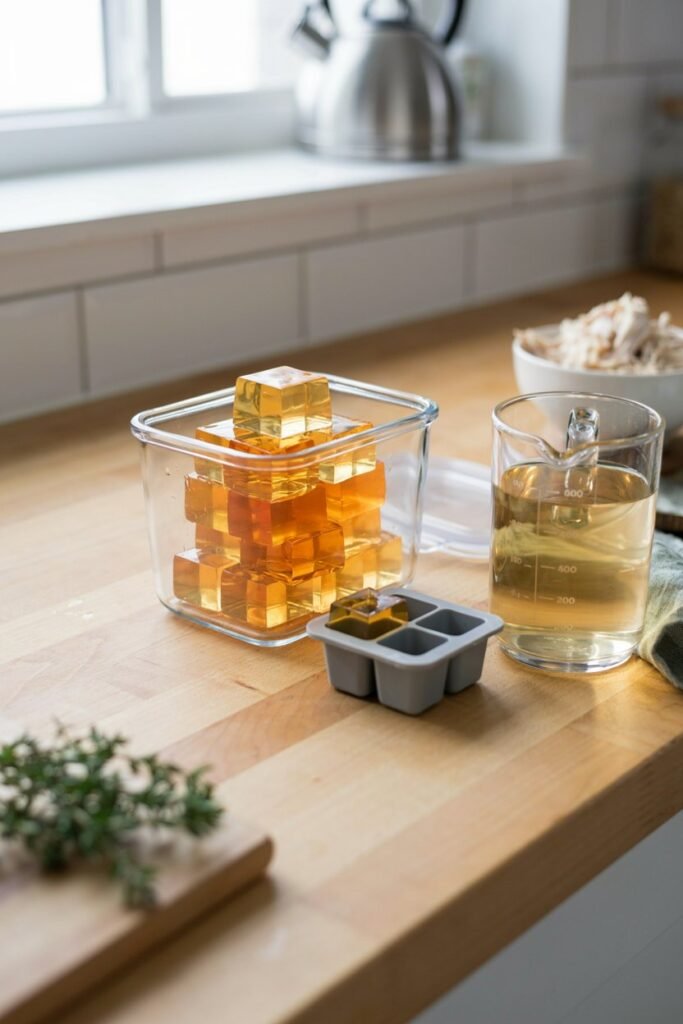
Homemade treats do not have to be complicated to be useful. In fact, I usually prefer recipes with only a handful of ingredients because they are easier to prepare and much easier to keep track of.
One of my favorite things about these broth cubes is knowing exactly what is in them. When I make the broth myself, I am not relying on a seasoning blend or guessing what might be hiding in a prepared product.
I also like the convenience. Preparing the cubes takes a little time upfront, but once they are frozen, they are ready whenever I need them.
There is also something nice about having several small portions instead of one large container. If my cat only wants a little, I can offer a little. If I am using the broth as a food topper, I can thaw a small amount without wasting the rest.
Another reason I like this recipe is that it can be adjusted to suit different cats. Some cats prefer their food completely smooth, while others enjoy little pieces of plain chicken. The basic broth cube gives me a simple starting point without making the recipe unnecessarily complicated.
The Most Important Ingredient Safety Rules
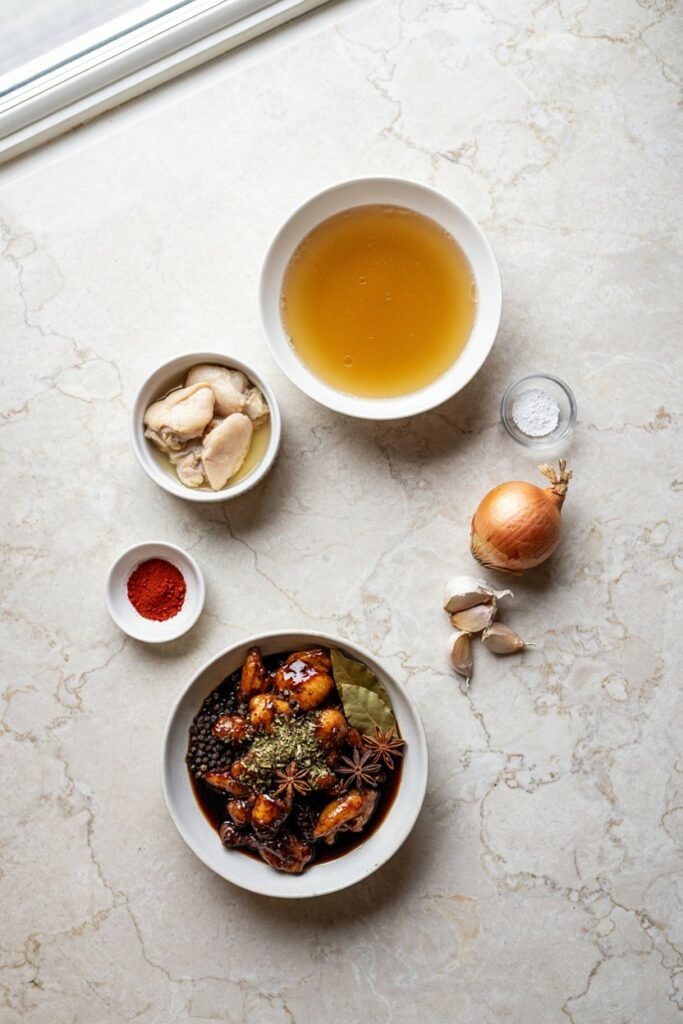
This is the part I would never skip when making homemade food or treats for a cat.
Cats have very different nutritional needs from people, so ingredients that seem completely normal in a human recipe should not automatically make their way into a cat recipe.
The broth needs to be plain.
I do not add onion, garlic, leeks, chives, shallots, or heavily seasoned ingredients. These are common ingredients in human cooking, but they have no place in a simple cat broth recipe.
I also avoid heavily salted broth. There is simply no reason to make a cat treat heavily seasoned when plain chicken already provides plenty of flavor.
This is also why I am careful with store bought chicken broth. The word chicken on the front of the package does not tell me everything I need to know. I always check the ingredient list before considering a prepared broth.
If I see onion, garlic, or other ingredients that are unsuitable for cats, I leave it on the shelf.
I also never use cooked chicken bones in the finished recipe. If I am preparing chicken myself, I make sure the meat and broth are completely free from bones before anything reaches the cat’s bowl.
Keeping the recipe simple makes the process easier and gives me much more control over what I am feeding.
Ingredients You Will Need
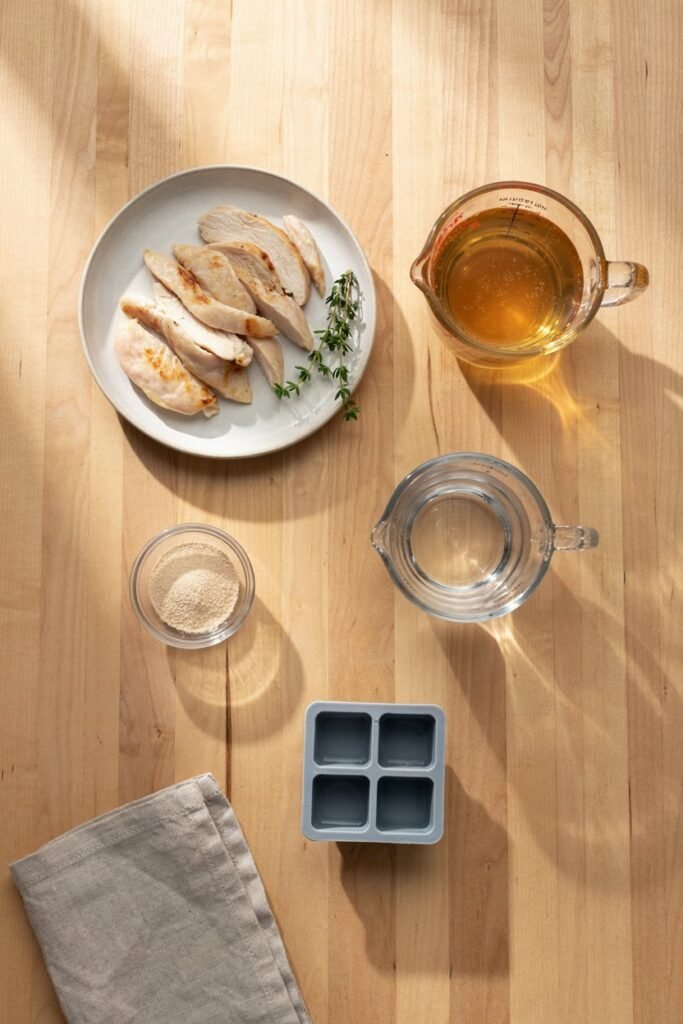
The ingredient list is intentionally short.
Plain chicken broth
Use a simple, unseasoned chicken broth made with ingredients that are appropriate for cats. If you are using prepared broth, read the ingredient label carefully.
Unflavored gelatin
Use plain, unflavored gelatin without added sweeteners, flavors, or dessert ingredients. The gelatin is what gives these cubes their soft gel texture once they are chilled.
Plain cooked chicken
This is optional. If you want to add chicken to the cubes, use fully cooked, boneless, unseasoned chicken. I prefer to keep the pieces very small so they are easy for a cat to eat.
Water
Depending on how you prepare your broth, you may need water to create the right consistency.
That is really all you need for the basic version. I do not think this recipe benefits from adding a long list of herbs, vegetables, spices, or other ingredients just to make it sound more interesting.
Simple is better here.
How I Make Chicken Broth Gel Cubes for Cats
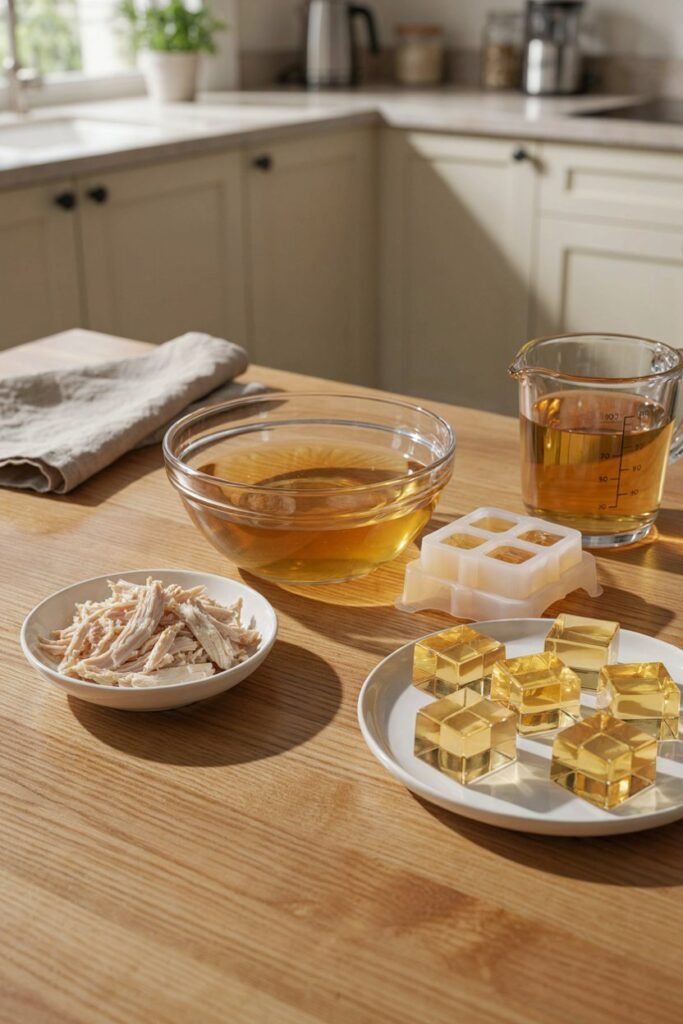
I start by making sure the broth is completely plain. If I am preparing it myself, I keep the ingredients very basic and make sure there are no bones, onion, garlic, or seasonings that could make the finished broth unsuitable for my cat.
Step 1: Prepare the Chicken Broth
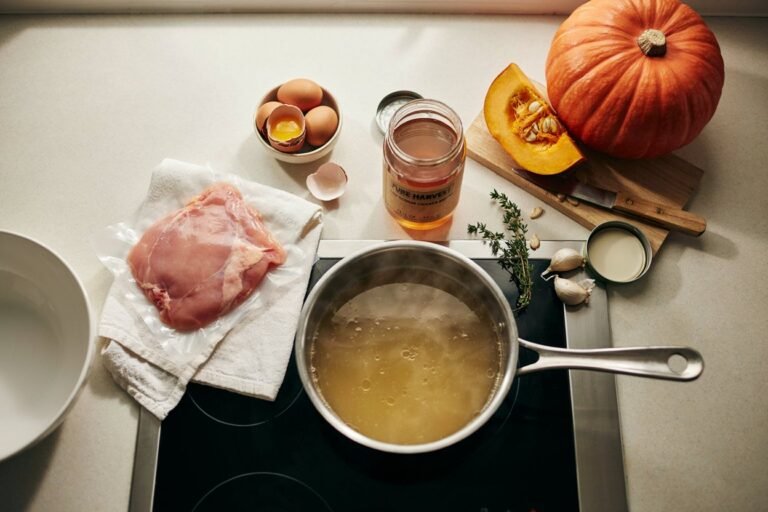
Place your plain chicken and water into a suitable pot and prepare the broth without adding salt, onion, garlic, spices, or seasoning blends.
Once the chicken is fully cooked, remove it from the liquid.
If you want to use some of the chicken in the finished cubes, set aside a small amount and make sure it is completely boneless before shredding it very finely.
Step 2: Strain the Broth
I always take the extra step of straining homemade broth before using it for this recipe.
Pour the broth through a fine strainer to remove any small pieces, particles, or unwanted bits that may remain in the liquid.
This is especially important if you prepared the broth using chicken pieces.
The finished broth should be clean and free from bones.
Step 3: Allow the Broth to Cool
Let the broth cool before adding the gelatin.
I do not want to pour extremely hot broth into a small container and immediately start handling it. Allowing it to cool also makes the next part of the preparation much easier.
At this stage, I check the broth again to make sure it is completely plain.
Step 4: Add the Unflavored Gelatin
Prepare the unflavored gelatin according to the instructions for the product you are using.
The exact amount can vary depending on the gelatin and the amount of liquid, so I prefer following the package directions rather than guessing.
Stir the gelatin thoroughly into the broth until it is completely incorporated and there are no obvious clumps.
The mixture should look smooth before moving on to the next step.
Step 5: Add Tiny Pieces of Chicken if Desired
If I am adding chicken, I keep the pieces very small.
The chicken should be fully cooked, completely boneless, and completely unseasoned.
You can leave the chicken out altogether if you prefer a smooth broth cube. The recipe works perfectly well without it.
For a cat that enjoys texture, though, a tiny amount of finely shredded chicken can make the cubes more interesting.
Step 6: Pour the Mixture Into Small Molds
Carefully pour the broth mixture into small silicone molds or a clean ice cube tray.
I prefer smaller molds for cat treats because they make portioning easier.
There is no need to fill the molds all the way to the top. Leave enough room to handle the tray without spilling the liquid.
Once the molds are filled, carefully transfer them to the refrigerator or freezer.
How I Freeze the Broth Cubes
Once the molds are filled, I carefully place the tray in the freezer where it can sit flat.
I have found that this little step matters more than it sounds. If the tray is tilted while the broth is still liquid, the cubes can freeze unevenly and make a mess inside the freezer. I always make sure the tray has a stable spot before leaving it alone.
The freezing time will depend on the size of your molds and the temperature of your freezer. Smaller cubes usually freeze more quickly than larger ones.
I prefer letting them freeze completely before removing them from the molds.
Once they are solid, I pop the cubes out and transfer them to a clean freezer safe container or freezer bag. I label the container with the date so I know when the batch was prepared.
That makes it much easier to keep track of what is in the freezer instead of finding an old container several weeks later and wondering when I made it.
Choosing the Right Cube Size
I would not make these cubes overly large.
Cats generally do not need a large serving of a homemade broth treat, and smaller portions give you much more flexibility.
Small silicone molds are particularly convenient because you can take out one portion at a time.
If you already have a large standard ice cube tray, you can still use it, but you may want to thaw part of a cube and save the remaining portion rather than automatically giving your cat the entire thing.
The right size also depends on how you plan to serve the broth.
If I am using it as a topper, I want a small amount that can be mixed into the regular meal.
If I am offering it as a treat, I want a portion that makes sense alongside everything else my cat is eating that day.
How to Serve Chicken Broth Gel Cubes to Your Cat
There are several simple ways to serve these, and I usually let my cat’s preference determine which one I use.
Thawed Over Regular Food
This is probably the easiest way to use the cubes.
Take one cube from the freezer and allow it to thaw in the refrigerator or soften enough to serve safely. Once it is ready, spoon a small amount over your cat’s regular food.
The broth adds moisture and flavor without requiring you to change the main meal.
I especially like this option when I want to make an ordinary meal feel a little different without introducing an entirely new food.
Partially Thawed
Some cats enjoy a softer, slushy texture.
Instead of waiting until the cube has completely melted, you can allow it to soften and then offer a small amount.
I would always check the texture before serving. The goal is not to give your cat something rock hard that could be uncomfortable to eat.
Fully Frozen
A small frozen broth cube can also be offered frozen if your cat is comfortable with that texture.
However, I would not assume every cat will enjoy chewing or licking something frozen. Some cats will be interested immediately, while others will look at it as if you have completely lost your mind.
If your cat does not like the frozen texture, there is no reason to force it. Simply thaw the cube and use it as a topper instead.
Mixed Into Wet Food
Another easy option is to allow the cube to thaw and stir a small amount into wet food.
This can be especially useful when your cat likes the flavor of chicken but is not interested in eating a frozen treat.
I would start with a small amount rather than adding a large quantity to the entire meal.
That way, you can see how your cat responds before preparing a bigger serving.
How Much Chicken Broth Can a Cat Have?
This is one area where I prefer not to give every cat the exact same number of cubes.
Cats differ in size, age, diet, activity level, and individual needs. A homemade broth cube should also be considered an extra rather than the foundation of the diet.
I use the cubes as a small addition to regular food rather than treating them as a meal replacement.
If you are introducing them for the first time, start with a small amount and see how your cat handles it.
Pay attention to any changes in appetite, digestion, or general behavior.
If your cat has a medical condition, is on a prescription diet, or your veterinarian has given you specific dietary instructions, I would check with your veterinarian before adding homemade treats or toppers.
That is particularly important because even a simple recipe can change the overall diet when it is given frequently.
Can Kittens Have Chicken Broth Gel Cubes?
Kittens have different nutritional requirements from adult cats, so I would be more cautious about adding homemade extras to a young kitten’s diet.
Their primary food should provide the nutrition they need for growth and development.
I would not use these broth cubes as a replacement for appropriate kitten food or milk replacer when a kitten still requires it.
If you have a very young kitten or a kitten with special dietary needs, ask your veterinarian before introducing homemade treats.
For older kittens that are already eating an appropriate complete kitten diet, your veterinarian can also help you decide whether a small amount of homemade broth is suitable.
Can Senior Cats Have Chicken Broth Cubes?
Older cats can have different dietary considerations too.
Some senior cats are perfectly happy with a little plain broth added to their regular food, while others may have dietary restrictions that make homemade extras less appropriate.
This is one reason I would not automatically assume that a recipe that works for one cat is suitable for every cat.
If your senior cat has been placed on a specific diet by a veterinarian, follow that diet rather than adding new ingredients without checking first.
For a healthy senior cat without special dietary restrictions, a small amount of plain, appropriately prepared broth may be something you can discuss with your veterinarian.
Can I Use Store Bought Chicken Broth?
You can use a prepared broth only if the ingredients are appropriate for cats.
This is one of the easiest places to make a mistake.
A carton labeled chicken broth can contain several additional ingredients that you would never intentionally add to a homemade cat treat.
Before using a store bought broth, I check the ingredient list carefully.
I avoid products containing onion, garlic, leeks, chives, shallots, heavy seasoning, or unnecessary amounts of salt.
I also do not assume that a product is safe simply because it is marketed as natural, organic, low sodium, or made with real chicken.
The ingredient list is what matters.
If I am unsure about a particular product, I would rather make a very simple homemade broth than take a chance.
Can I Add Chicken Meat to the Cubes?
Yes, you can add a small amount of plain cooked chicken if you want to give the cubes a little more texture.
When I do this, I make sure the chicken is fully cooked and completely free from bones.
I also keep it unseasoned.
The chicken should be shredded into very small pieces rather than left in large chunks.
There is no need to add a lot. These are still broth cubes, so I want the broth to remain the main component.
If your cat prefers smooth food, simply leave the chicken out.
What I Would Not Add to These Cubes
I know how tempting it can be to look at a simple recipe and start adding ingredients because they sound nutritious.
I resist that temptation with cat recipes.
I do not add onion or garlic.
I do not add spicy seasonings.
I do not add sauces.
I do not add salty seasoning mixes.
I do not add ingredients just because they are considered healthy for people.
I also avoid turning the recipe into a complicated homemade meal.
The beauty of these cubes is that they are simple.
When I am making something for a cat, I would rather have a short ingredient list that I understand than a long list of ingredients that adds complexity without providing a clear reason.
How I Store the Frozen Cubes
After the cubes are completely frozen, I remove them from the molds and transfer them into a freezer safe container.
A freezer bag works too, but I prefer a container when I have enough room because it keeps the cubes from getting crushed.
I label the container with the date and try to use the oldest batch first.
I also avoid repeatedly taking the entire container out of the freezer for long periods. I take out what I need and put the rest back as quickly as possible.
This keeps the routine simple and helps prevent unnecessary thawing and refreezing.
For the best quality, I would make reasonably sized batches rather than filling the entire freezer with months worth of homemade treats.
How to Thaw a Cube
My preferred method is simple.
Take out the amount you plan to use and let it thaw in the refrigerator.
If you need it more quickly, you can allow a small portion to soften while preparing your cat’s meal.
The important thing is to check the temperature before serving.
I never want to give my cat something that is extremely hot.
If you warm a thawed portion, stir it well and make sure it is comfortably cool or lukewarm before it reaches the bowl.
I also do not repeatedly thaw and refreeze the same portion.
It is much easier to take out one small cube at a time.
What If My Cat Does Not Like Them?
Do not take it personally.
Cats have opinions about everything, and homemade food is no exception.
One cat may smell a chicken broth cube and immediately act as though you have prepared a five star meal. Another may sniff it once and walk away.
If your cat does not like the cube frozen, try thawing it.
If the texture is not appealing, try using a small amount of the broth as a topper over regular food.
If your cat still refuses it, there is no reason to keep pushing.
The goal is to offer an optional treat or topper, not to convince your cat that your recipe is a culinary masterpiece.
A Few Things I Have Learned From Making Homemade Cat Treats
The biggest lesson for me is that simple recipes are often the easiest to manage.
There is no need to make these cubes complicated.
I would rather prepare a small batch of plain broth that I know my cat can have than spend time creating a recipe with ingredients that are difficult to evaluate.
I also find that small portions make everything easier.
They freeze quickly, they are easy to store, and I can use exactly what I need.
Another thing I pay attention to is how my cat reacts.
Even when an ingredient is generally appropriate, every cat is an individual. I introduce anything new gradually and watch for changes rather than immediately giving a large portion.
That small amount of extra attention makes homemade treats much less stressful.
Common Problems With Chicken Broth Gel Cubes
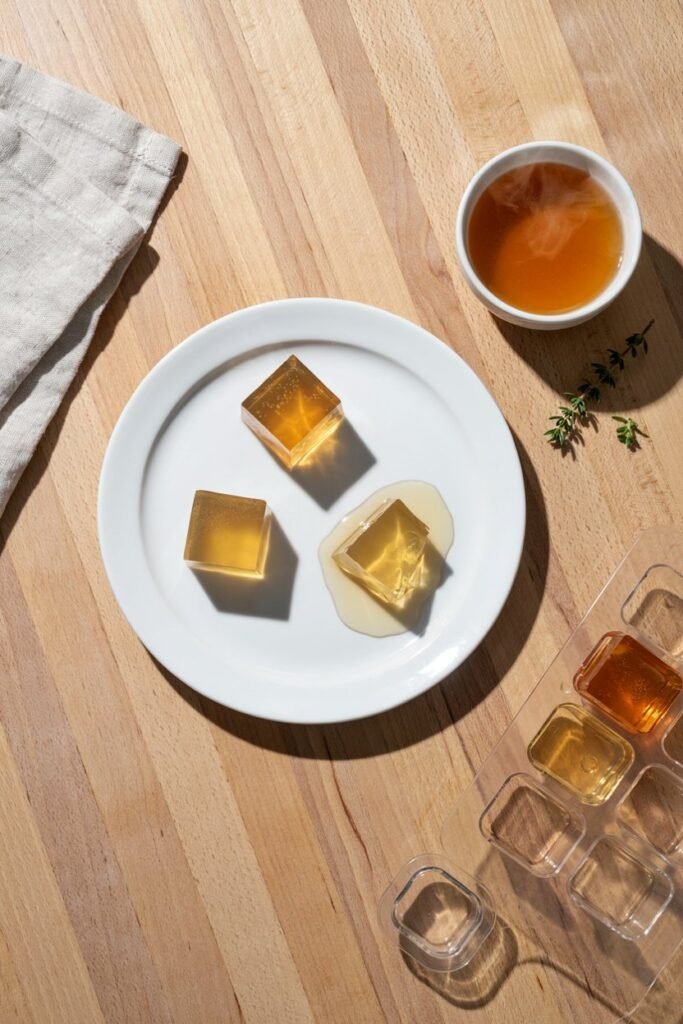
Even though this recipe is simple, there are a few things that can go differently than expected. I would much rather explain those little issues here than have you wonder what happened when your cubes do not turn out exactly as planned.
Why Did My Broth Cubes Not Set?
The most common reason is that there was not enough gelatin for the amount of liquid used.
Different gelatin products can also have different instructions, which is why I always recommend checking the directions on the package rather than assuming every brand works the same way.
If the cubes are softer than expected but still hold together, that is not necessarily a problem. You can simply thaw them and use the mixture as a broth topper.
The texture does not have to be perfectly firm for your cat to enjoy it.
Why Are My Cubes Cloudy?
Homemade broth can sometimes look cloudy, especially if it contains tiny particles from the cooking process.
This does not automatically mean something went wrong.
Straining the broth carefully before adding the gelatin can give you a cleaner finished product.
If you want very clear cubes, use a fine strainer and allow the broth to settle before carefully transferring the liquid.
I personally do not worry too much about whether they look perfectly clear. My cat is certainly not judging the presentation.
Why Did My Gelatin Clump?
Gelatin can form small clumps when it is not incorporated properly.
Following the preparation instructions on the gelatin package is the easiest way to avoid this.
I also make sure I stir thoroughly rather than simply sprinkling gelatin into the liquid and assuming it will dissolve on its own.
If the mixture is smooth before it goes into the molds, the finished cubes will usually have a much nicer texture.
What If the Cubes Are Too Firm?
If your cubes turn out firmer than you expected, you can simply allow one to thaw before serving.
You can also use a smaller amount of the finished cube as a topper rather than serving the whole portion at once.
I would not try to make the cubes complicated just to achieve a particular texture. The important thing is that the ingredients are appropriate and the portion is sensible.
Can Cats Eat Gelatin?
Plain, unflavored gelatin is commonly used in homemade pet recipes, but that does not mean every gelatin product is appropriate.
For this recipe, I would stick with plain unflavored gelatin and avoid products containing added flavors, sweeteners, or dessert ingredients.
The gelatin is being used to create the gel texture. It is not meant to turn the broth into a sweet treat.
As with any homemade addition to a cat’s diet, moderation matters.
Can I Make These Without Gelatin?
Absolutely.
If you do not want to use gelatin, you can make plain chicken broth ice cubes instead.
The main difference is the texture.
Without gelatin, the broth will simply freeze into a solid cube and become liquid again as it thaws.
That can actually be useful if your main goal is to have convenient frozen portions of plain broth.
I like the gelatin version because it gives the cubes a different texture, but it is not essential to making a simple frozen broth treat.
Can I Use Bone Broth?
Bone broth can be used only if the finished product is appropriate for cats and does not contain ingredients that are unsuitable for them.
This is another situation where I would check the entire ingredient list rather than relying on the name of the product.
Some commercial bone broths are heavily seasoned or contain ingredients that I would not want in a cat treat.
If you are making your own, keep it simple and make sure there are no cooked bones or bone fragments in the finished liquid.
I also would not assume that something marketed as a wellness food for humans automatically provides a special health benefit for cats.
Are These Chicken Broth Cubes a Meal Replacement?
No.
This is one of the most important things I want to make clear.
These cubes are an optional treat or topper. They should not replace your cat’s regular complete and balanced food.
A cat needs a properly formulated diet to provide the nutrients required for everyday health.
I use homemade extras as exactly that.
Extras.
That distinction keeps a simple homemade recipe from turning into something it was never intended to be.
Can I Give These to a Cat With a Sensitive Stomach?
I would be cautious when introducing any new food to a cat with digestive sensitivities.
Even a simple homemade treat may not agree with every individual cat.
If your cat already has digestive problems or is following a special diet, speak with your veterinarian before adding homemade treats.
For a cat without known dietary problems, start with a very small amount when introducing the recipe and pay attention to how your cat responds.
There is no advantage to giving a large serving the first time.
Can I Add Cat Food to the Broth Cubes?
You can make a variation by mixing a small amount of your cat’s usual wet food into the broth before freezing it.
I would only do this if I already know that food agrees with my cat.
This can create a useful little frozen topper, especially if your cat likes the flavor of its regular food.
I would still keep the recipe simple and avoid adding several different ingredients at once.
When I introduce something new, I like knowing exactly what caused a reaction if my cat does not tolerate it well.
Can I Use Chicken From My Dinner?
I would not use leftover chicken from a typical seasoned dinner.
Chicken prepared for people often contains salt, butter, sauces, onion, garlic, spices, or other ingredients that are not appropriate for a simple cat treat.
If I want to add chicken to these cubes, I set aside plain chicken before adding any seasoning.
That way I know exactly what my cat is getting.
Can I Make a Large Batch?
You can, but I prefer making a manageable batch.
There is no reason to fill your freezer with more homemade treats than you are likely to use.
A smaller batch also lets you see whether your cat actually likes the recipe.
This is particularly useful if you are making the cubes for the first time.
I would rather make a small tray, see how it goes, and prepare more later than spend time making a huge batch that my cat completely ignores.
My Favorite Way to Use These Cubes
For me, the easiest use is as a small topper over regular food.
I let one cube thaw, then add a little of the broth over the meal.
It makes the food smell more interesting without requiring me to prepare a separate meal.
I also like having the frozen cubes available when I want a small homemade treat without pulling out a saucepan and making something from scratch.
That convenience is really the reason I keep coming back to this type of recipe.
My Tips for Making Better Chicken Broth Cubes
Keep the broth plain.
Read the ingredient label carefully if you use prepared broth.
Never add onion or garlic.
Use completely cooked and boneless chicken if you decide to add meat.
Use plain unflavored gelatin.
Make small portions.
Strain homemade broth carefully.
Let the cubes freeze completely before transferring them to a storage container.
Label your container with the preparation date.
Thaw only the amount you intend to serve.
Introduce new treats gradually.
Keep your cat’s regular complete and balanced food as the foundation of the diet.
These little habits make the recipe much easier to prepare and much easier to fit into normal feeding routines.
Chicken Broth Gel Cubes for Cats FAQ
Are chicken broth gel cubes safe for cats?
They can be appropriate as an occasional treat when made with cat suitable ingredients. The broth should be plain and free from onion, garlic, excessive salt, and other unsuitable ingredients.
Can I use regular chicken broth from the grocery store?
Only if the ingredient list is appropriate for cats. Always check the label rather than assuming ordinary chicken broth is safe.
Can cats eat frozen chicken broth?
Some cats can enjoy a small frozen broth treat, but others may prefer it thawed. Always consider the size and texture of the serving.
How long can I keep the cubes frozen?
Keep them in a clean, airtight freezer safe container and label the preparation date. For the best quality, I prefer making manageable batches rather than storing homemade treats indefinitely.
Should I thaw the cubes before giving them to my cat?
Not necessarily. They can be served frozen if your cat is comfortable with the texture, or thawed and used as a topper.
Can I add salt to the broth?
I would leave it out. Cats do not need a heavily salted broth treat.
Can I add vegetables?
I prefer not to add vegetables simply for the sake of making the recipe more complicated. If you are considering adding any additional ingredient, make sure it is specifically appropriate for cats first.
Can I use chicken skin?
I prefer using plain chicken meat and keeping the recipe simple rather than adding extra fatty ingredients.
Can I give my cat these cubes every day?
That depends on the individual cat, the rest of the diet, and the ingredients and portion size. Homemade treats should remain a small addition rather than replacing nutritionally complete food.
Are these suitable for cats with medical conditions?
Not automatically. Cats with medical conditions or prescribed diets may have very specific nutritional requirements. Ask your veterinarian before introducing homemade treats or toppers.
Recipe Notes
The best thing about this recipe is how easy it is to keep under control.
I do not need a cupboard full of specialty ingredients, and I do not have to spend an entire afternoon preparing something elaborate. A simple broth, plain gelatin, and a small mold are enough to create convenient portions that can stay in the freezer.
I also think smaller batches are the way to go.
When I make something new for my cat, I want to see whether it is actually going to be enjoyed before I commit to making a large amount. Cats can be wonderfully unpredictable that way.
One day they may act completely obsessed with something, and the next day they may decide it is beneath them.
That is another reason I like the cube format. I can make a small batch and take out one portion whenever I need it.
If your cat prefers food at room temperature, thaw the cube before serving. If your cat likes a softer texture, let it partially thaw. If your cat enjoys licking something cold, you can offer a small frozen portion.
There is no need to force one serving style.
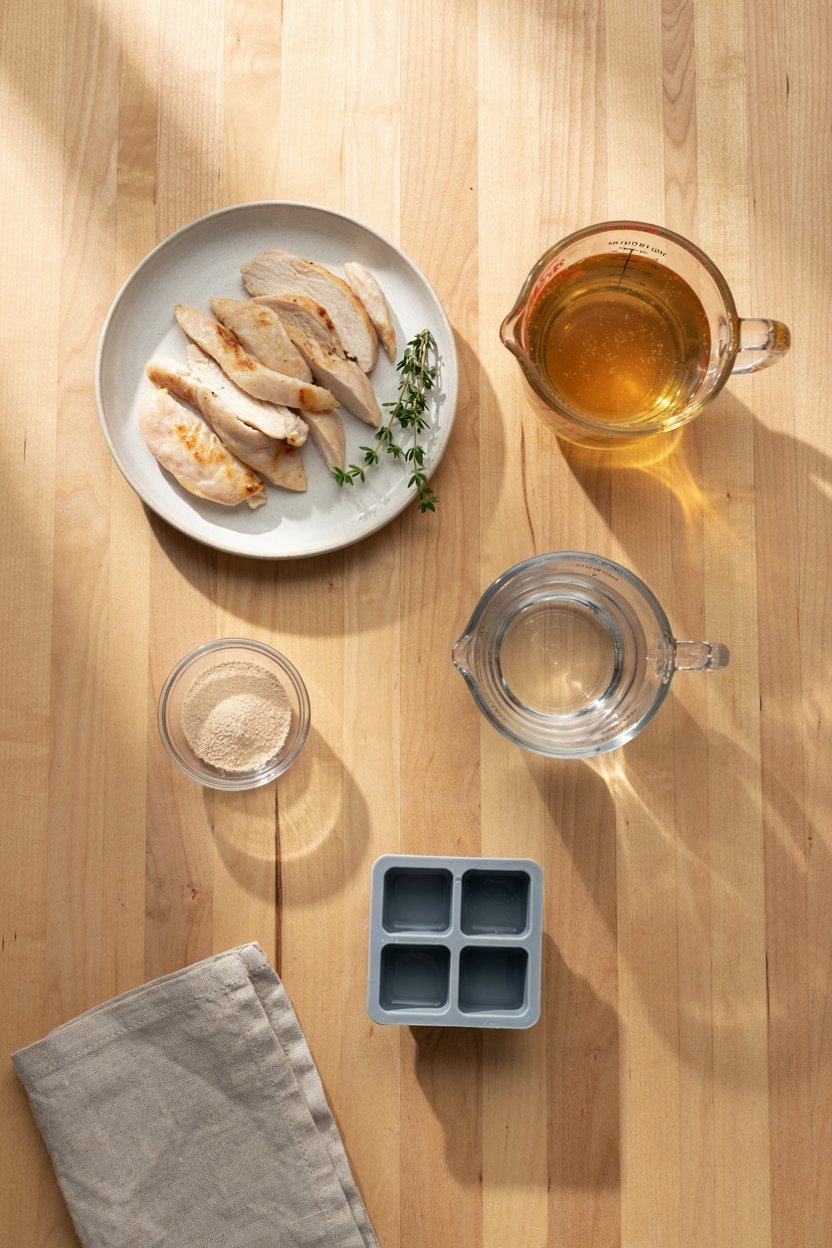
Chicken Broth Gel Cubes for Cats
Ingredients
Equipment
Method
- Pour the chicken broth into a small saucepan and warm it gently over low heat. Do not bring it to a rolling boil.
- Sprinkle the unflavored gelatin over the warm broth.
- Stir continuously until the gelatin has completely dissolved and the mixture is smooth.
- Carefully pour the mixture into a clean silicone ice cube tray.
- Refrigerate for at least 2 hours, or until the cubes are completely set.
- Remove one cube from the tray and allow it to soften slightly before offering it to your cat.
- Choose a chicken broth that contains no onion, garlic, heavy seasoning, or excessive sodium. Always check the ingredient label carefully.
- These gel cubes are intended as an occasional treat or food topper, not a replacement for complete and balanced cat food.
- For easier serving, you can cut larger cubes into smaller portions appropriate for your cat.
Final Thoughts
Homemade cat treats do not need to be complicated to be useful.
These chicken broth gel cubes are a simple way to turn plain broth into convenient little portions that can be stored in the freezer and used as an occasional treat or food topper.
What matters most to me is not making the recipe fancy. It is keeping the ingredients simple, checking everything carefully, making sensible portions, and remembering that homemade extras are meant to complement a cat’s regular diet rather than replace it.
Once the cubes are prepared and frozen, the whole process becomes incredibly easy. I can take out a small portion when I need it, let it thaw or soften, and add it to my cat’s normal meal.
And if your cat takes one sniff and walks away, do not worry.
You are not the first person to prepare something with love only to have a cat completely reject it.
That is simply part of living with cats.
Important Note
This recipe is intended as an occasional treat or topper and is not a replacement for complete and balanced cat food. If your cat has a medical condition, food allergy, dietary restriction, or veterinarian prescribed diet, check with your veterinarian before introducing homemade treats or new ingredients.