
Homemade Farmer’s Dog Food Recipe
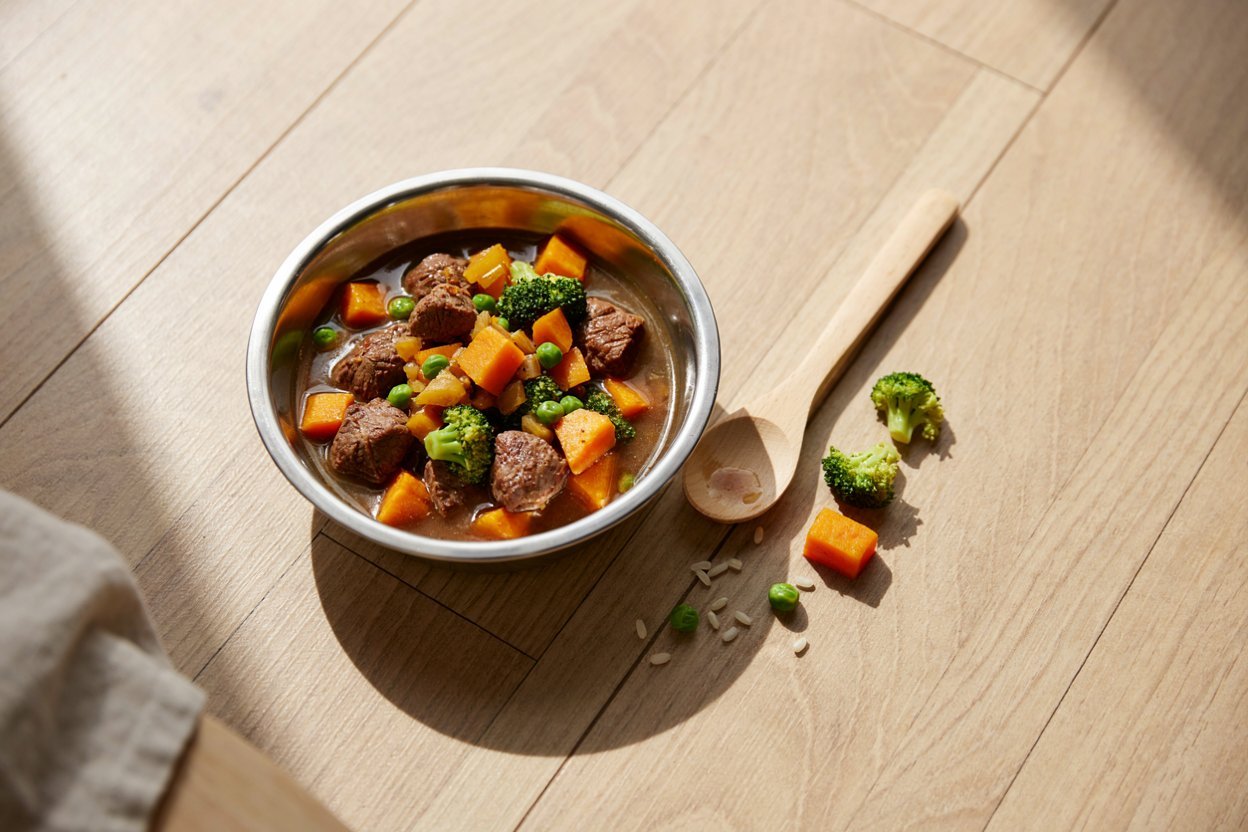
Fresh dog food subscriptions like The Farmer’s Dog have made a real case for what dog food can look like. Real cuts of meat, real vegetables, and meals that actually resemble something you’d recognize in your own kitchen.
That case is convincing, right up until the monthly bill shows up, which is usually the moment people start wondering if they can make something similar themselves.
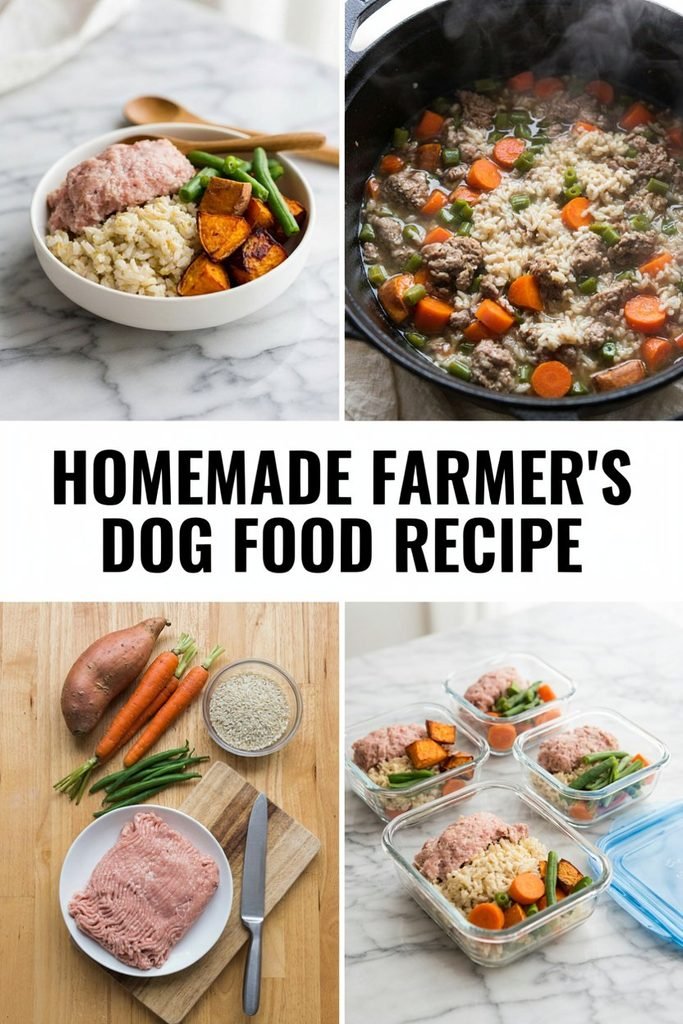
This post walks through one complete, whole food style recipe built to copy that fresh, gently cooked approach, a beef and sweet potato meal made entirely on the stovetop with no special equipment required.
If you want a wider set of Farmer’s Dog inspired ideas to build a full rotation from, my Farmer’s Dog copycat recipes guide has several more variations, including a chicken based Instant Pot version if you’d rather use a pressure cooker instead of a stovetop.
Disclaimer
This post may contain affiliate links. As an Amazon Associate, I earn from qualifying purchases at no additional cost to you. I only recommend dog-safe ingredients and kitchen tools that I genuinely find useful for preparing homemade dog food. Homemade diets need to be nutritionally balanced for your dog’s individual needs, especially when fed long term. Consult your veterinarian or a qualified veterinary nutritionist before making homemade dog food a regular part of your dog’s diet.
Shop on Amazon With 50% Discount On Your Orders
- Digital Kitchen Scale – I use this to measure meat, vegetables, grains, and other ingredients accurately so each batch stays consistent.
- Freezer-Safe Meal Prep Containers – I use these to portion homemade dog food into individual servings and keep larger batches organized in the freezer.
- Stainless Steel Mixing Bowls – I use these whenever I prepare homemade dog food because they are durable, easy to clean, and useful for mixing larger batches.
What Makes Farmer’s Dog Style Food Different
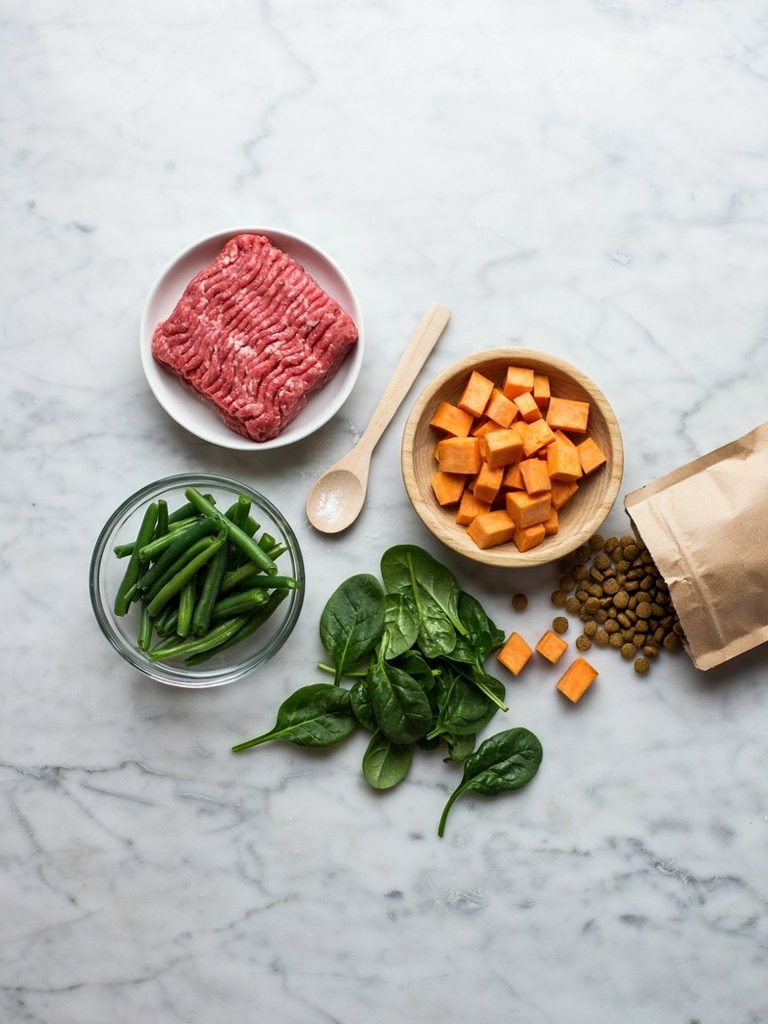
The appeal of fresh dog food companies isn’t just marketing. Gently cooked meals preserve more nutrients than heavily processed kibble, use recognizable whole ingredients instead of by products and fillers, and tend to be more digestible for dogs with sensitive stomachs.
The recipes are also formulated with a specific ratio of protein, vegetables, and healthy fat in mind, rather than a random mix. That last part is worth paying attention to when making something similar at home.
It’s easy to throw meat and vegetables in a pot, but getting the ratio right, and thinking about calcium and other nutrients that muscle meat alone doesn’t provide, is what actually makes a homemade meal comparable to what a fresh food company sends. This recipe is built with that ratio in mind, not just as a rough approximation.
A Quick Word on Long Term Feeding
One homemade recipe, however well designed, is not automatically a complete and balanced diet in the way a properly formulated commercial food is over the long run.
If this is going to become an everyday meal rather than an occasional addition, it’s worth having your veterinarian or a veterinary nutritionist review your overall rotation to make sure it covers everything your dog needs consistently, not just in one sitting.
Ingredients You’ll Need
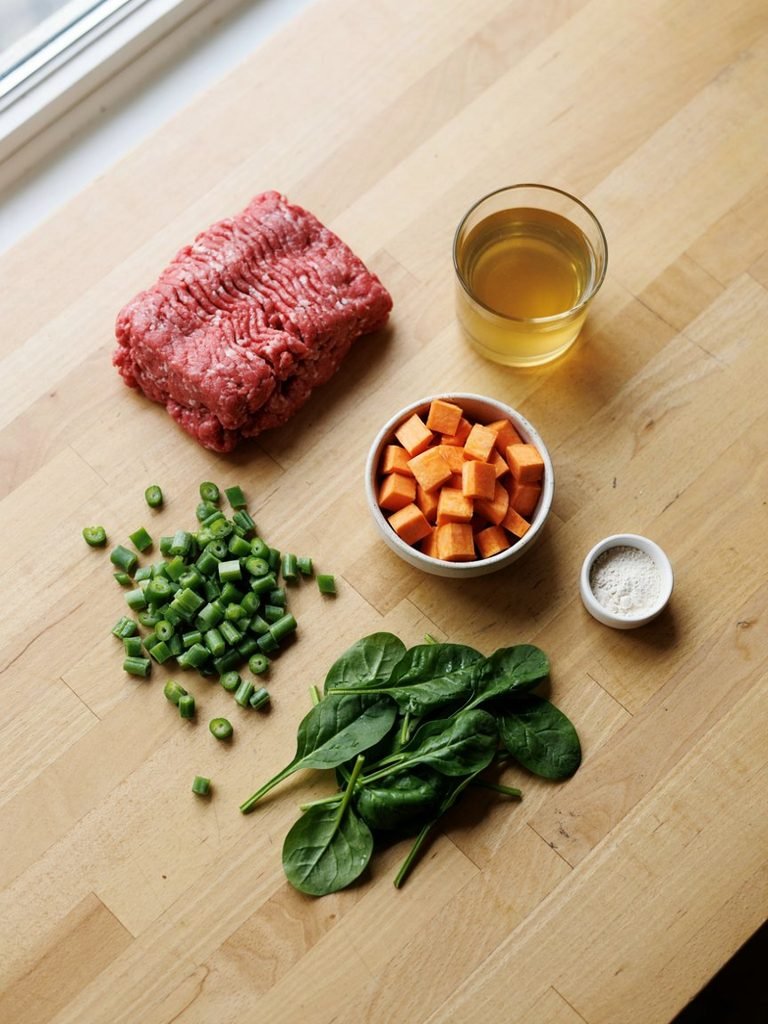
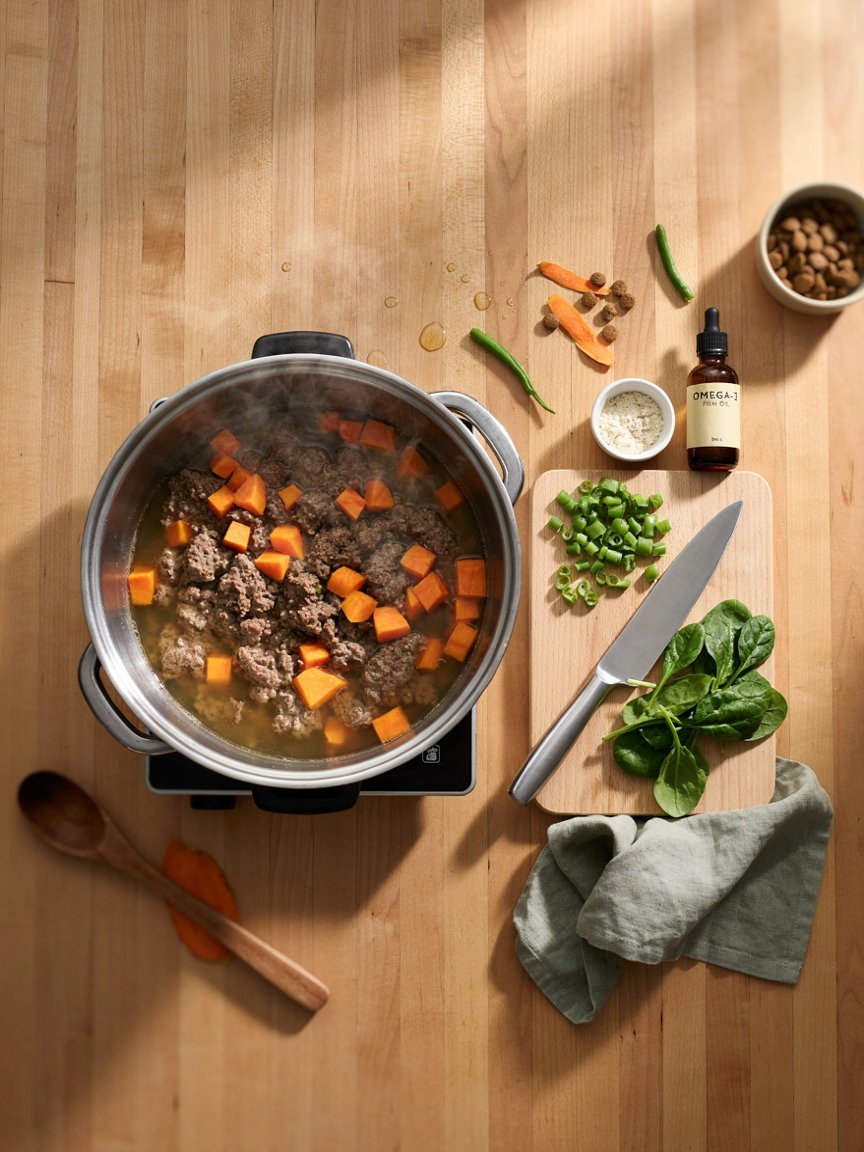
2 lbs lean ground beef 2 cups sweet potato, peeled and diced 1 cup green beans, chopped 1 cup spinach, roughly chopped 2 cups low sodium beef broth, no onion or garlic 1 tablespoon fish oil, added after cooking 1 teaspoon ground eggshell, finely powdered, for calcium
Lean ground beef keeps this recipe budget friendly and widely available, and cooking it directly in the broth helps the meat stay tender rather than drying out.
Sweet potato and green beans add fiber and a range of vitamins, while spinach contributes iron and is added at the very end so it wilts gently instead of overcooking.
As with the chicken version of this recipe, fish oil is stirred in after cooking rather than during, since heat can break down some of its beneficial omega 3 content, and the ground eggshell provides a simple, affordable calcium source that muscle meat and vegetables alone don’t fully cover.
How to Make It: Step by Step
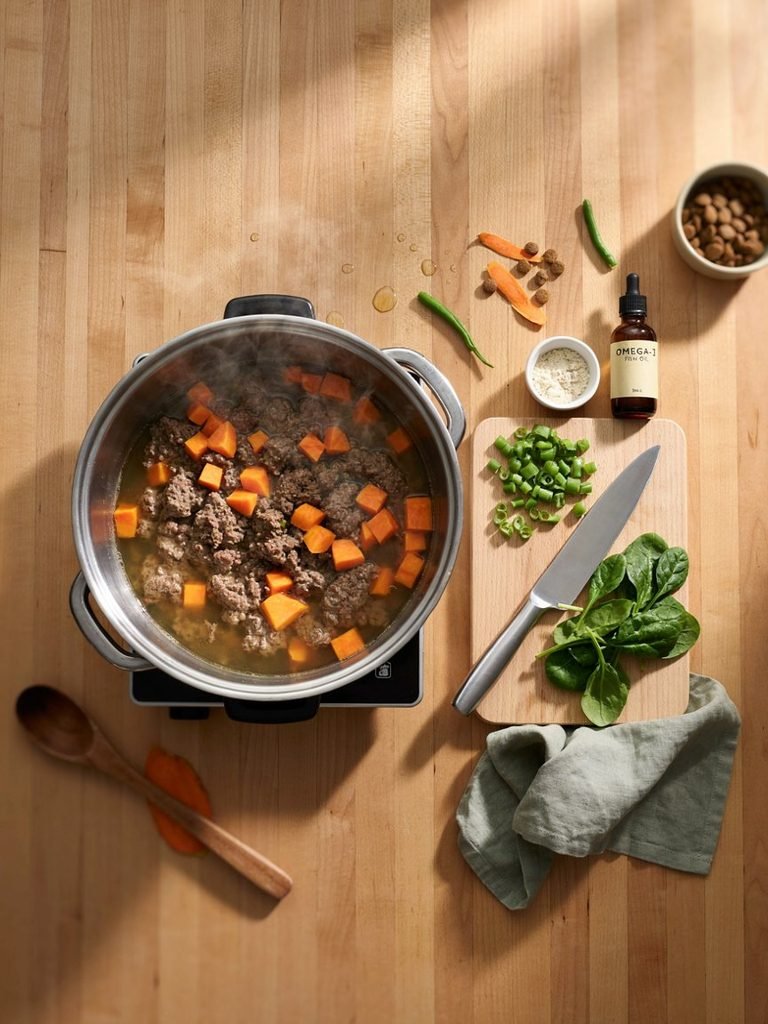
Step 1. Brown the beef. In a large stockpot or Dutch oven, cook the ground beef over medium heat until fully browned, breaking it into small crumbles as it cooks. Drain any excess fat.
Step 2. Add the broth and sweet potato. Pour in the beef broth and add the diced sweet potato. Bring to a gentle simmer.
Step 3. Simmer until tender. Cover and simmer for 12 to 15 minutes, until the sweet potato is fork tender.
Step 4. Add the green beans. Stir in the chopped green beans and continue simmering for another 5 minutes.
Step 5. Add the spinach. Stir in the spinach during the last minute or two of cooking, just until it wilts.
Step 6. Add the finishing touches. Remove the pot from heat and let it cool slightly before stirring in the fish oil and ground eggshell.
Step 7. Cool and portion. Allow the full mixture to cool to room temperature before dividing it into meal sized portions based on your dog’s size and daily calorie needs.
Step 8. Serve or store. Serve a portion right away, or refrigerate and freeze the rest for later use.
Storage and Feeding Tips
Refrigerate portions in an airtight container for up to four days, or freeze individual servings for up to three months.
Thaw frozen portions overnight in the refrigerator, and warm gently before serving if your dog prefers food closer to room temperature.
Portion sizes depend heavily on your dog’s weight, age, and activity level, so it’s worth using a calorie calculator specific to your dog or checking with your veterinarian rather than guessing.
As a general starting point, many adult dogs need somewhere around 25 to 30 calories per pound of body weight each day, split across one or two meals, though active or working dogs often need more.
Easy Ways to Change This Recipe Up
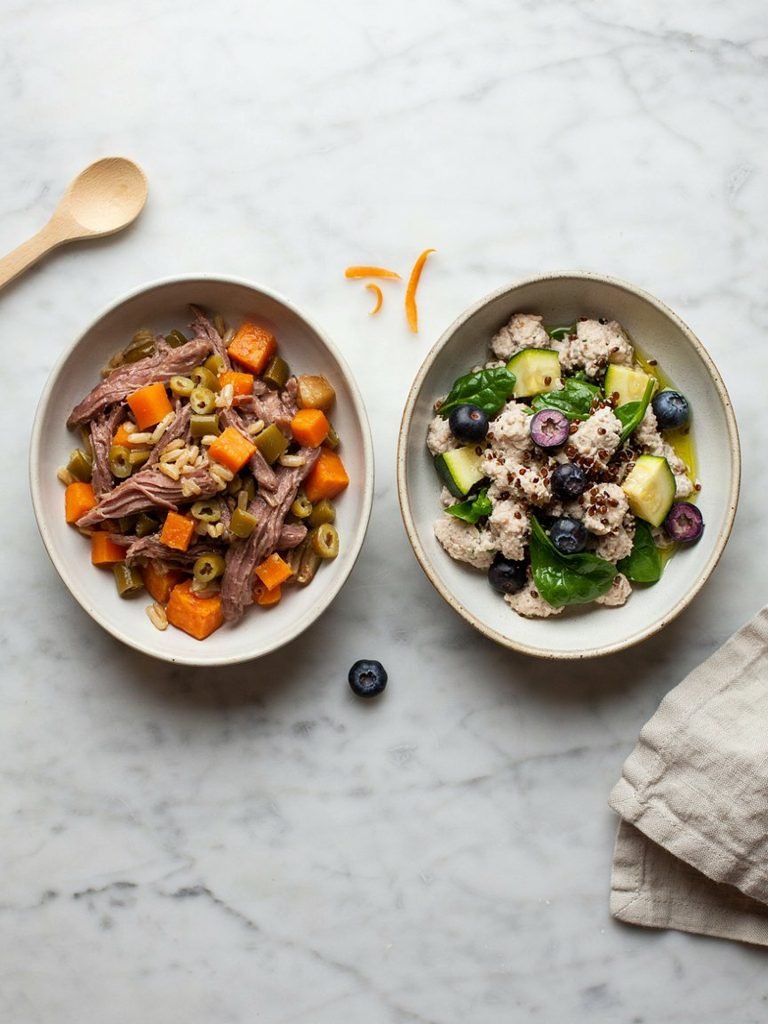
Try a different protein. If your dog does better with poultry, my instant pot turkey dog food recipe uses a similar nutrient balanced approach with a lighter protein.
Scale it up for a bigger dog. If you’re feeding a larger breed, my homemade dog food recipes for large dogs guide has portion and ingredient scaling tips that pair well with this recipe.
Make it freezer friendly. If batch cooking is the goal, my simple homemade dog meals you can freeze guide has more tips on portioning and storing larger batches.
Adjust for a smaller dog. If you have a smaller breed, my homemade dog food recipes for small dogs post covers portion sizing worth reading alongside this one.
Try a hands off method instead. If you’d rather not stand over the stove, my easy crockpot dog food recipe walks through a similar meal made entirely in a slow cooker.
Common Mistakes to Avoid
Skipping the calcium source. Muscle meat and vegetables alone are not a complete meal without a reliable calcium source added consistently. Using seasoned or store bought broth with onion or garlic.
Both are toxic to dogs, so always check the label carefully. Overcooking the spinach. Adding it too early turns it mushy and reduces its nutritional value, so it should go in near the very end.
Guessing at portion sizes. Take the time to calculate an appropriate daily amount for your dog’s size rather than estimating. Treating this as a fully balanced long term diet without professional input.
It’s a genuinely healthy homemade meal, but ongoing use should be reviewed with your vet.
Frequently Asked Questions
Can I use ground turkey instead of beef? Yes, ground turkey works well as a substitute and cooks in roughly the same amount of time, though you may need slightly less broth since turkey releases less fat than beef.
Is this recipe safe for puppies? Puppies have different, often higher, nutritional needs than adult dogs, particularly around calcium and phosphorus for bone development. Talk to your veterinarian before feeding this to a puppy.
How is this different from what Farmer’s Dog actually delivers? Fresh food companies work with veterinary nutritionists to formulate recipes that meet specific nutritional standards over time. This homemade version follows a similar whole food philosophy, but for regular long term feeding, it’s worth having your own rotation reviewed by a professional.
Can I add rice or another carbohydrate? Yes, a small amount of cooked white or brown rice can be added if your dog tolerates grains well and you want extra bulk in the meal.
My dog isn’t interested, what should I try? Warm the portion slightly, or stir in a spoonful of extra broth right before serving to boost the aroma, which often makes a bigger difference than people expect.
Homemade Farmer’s Dog Food Recipe
Ingredients
Equipment
Method
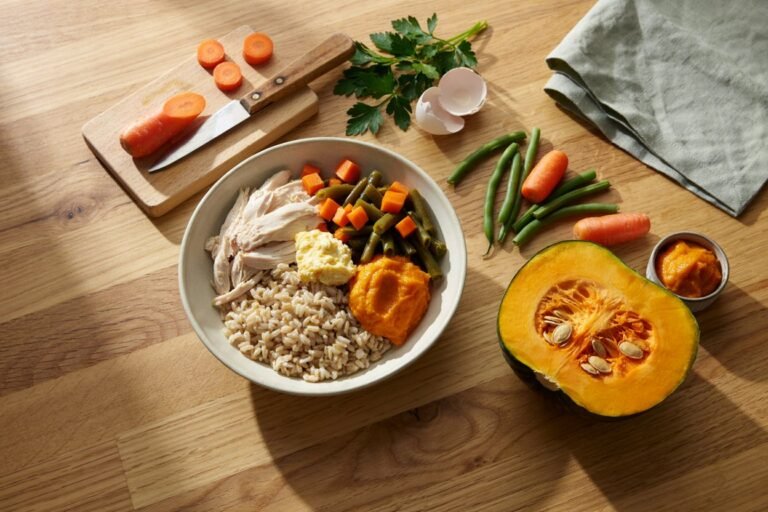
- Cook the ground turkey thoroughly in a large skillet over medium heat. Do not add salt, onion, garlic, oil, or seasonings.
- Cook the eggs separately until fully set. Allow them to cool and chop them into small pieces.
- Cook the brown rice until tender.
- Steam or boil the carrots and green beans until soft.
- Add the cooked turkey, rice, carrots, green beans, pumpkin, and eggs to a large mixing bowl.
- Gently stir until all the ingredients are evenly distributed.
- Allow the food to cool completely before serving.
- Divide the food into individual portions based on your dog’s size and nutritional needs.
- This is a homemade fresh dog food recipe inspired by the style of fresh prepared dog food. It is not an official Farmer’s Dog recipe.
- While these ingredients can provide protein, carbohydrates, vegetables, and other nutrients, this simple recipe should not be assumed to be complete and balanced for long term feeding.
- If homemade food will make up a significant portion of your dog’s diet, have the recipe formulated or reviewed by a veterinarian or veterinary nutritionist.
- Use only plain ingredients. Avoid onion, garlic, excessive salt, seasoning blends, and cooked bones.
Final Thoughts
You don’t need a subscription box to give your dog fresh, whole food style meals.
This beef and sweet potato recipe delivers that same gently cooked, real ingredient approach using nothing more than a stockpot and a handful of ingredients, and it gives you a solid foundation to build a full rotation from as you explore other proteins and vegetable combinations.
Start here, check in with your vet about making it a regular part of your dog’s diet, and use it as your entry point into the other homemade recipes linked throughout this post.


One Comment