
How To Raise A Kitten To Be Affectionate: Tips From Personal Experience
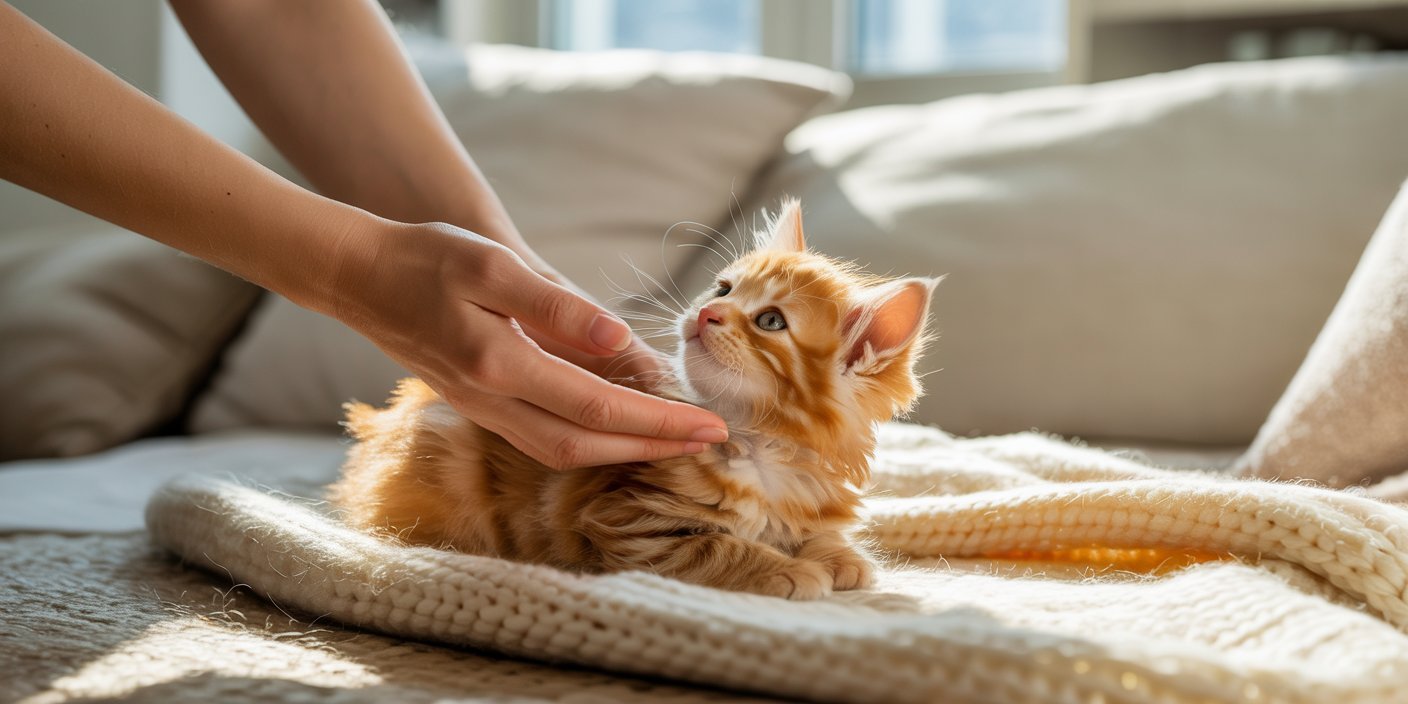
The feeling of making your cat understand you hits differently. That first moment when your kitten slowly curls up on your lap, purrs softly, and looks at you like “I trust you”—it’s unlike anything else.
As a cat owner, I’ve experienced that with my own little furball, and it’s a feeling that makes every minute of patience worth it.
Raising a kitten to be affectionate isn’t about forcing cuddles or demanding attention.
It’s about building trust, understanding their language, and creating positive experiences that make your kitten want to seek you out.
Over the years, I’ve learned that with the right approach, even the shyest kittens can grow into loving companions.
In this post, I’m going to share everything I’ve learned—from handling and socialization to play, routines, and subtle techniques that encourage closeness.
By the end, you’ll have a roadmap for raising a kitten that’s not only healthy and happy but also affectionate and loving.
Disclaimer: This post contains affiliate links. If you make a purchase through these links, we may earn a small commission at no extra cost to you.
Amazon Shopping List: How To Raise A Kitten To Be Affectionate
- Interactive Feather Wand Toy
Perfect for building trust through gentle, positive play sessions with your kitten.
BUY NOW ON AMAZON - Soft Plush Kitten Bed
Helps your kitten feel safe, secure, and comfortable while bonding with you.
BUY NOW ON AMAZON - Treat Training Rewards (Soft Cat Treats)
Encourages positive reinforcement and helps build affectionate behavior.
BUY NOW ON AMAZON - Cat Grooming Brush (Soft Bristles)
Helps your kitten get used to touch and strengthens bonding through gentle grooming.
BUY NOW ON AMAZON - Cat Tunnel or Play Tent
Encourages playful interaction and builds confidence in a safe environment.
BUY NOW ON AMAZON
Understanding Your Kitten’s Personality
Every kitten is unique. Some are naturally outgoing and cuddly, while others are more reserved and independent.
Understanding your kitten’s personality is the first step in encouraging affection.
- Shy or timid kittens: May hide, run, or resist being held initially. They need patience and gentle interaction.
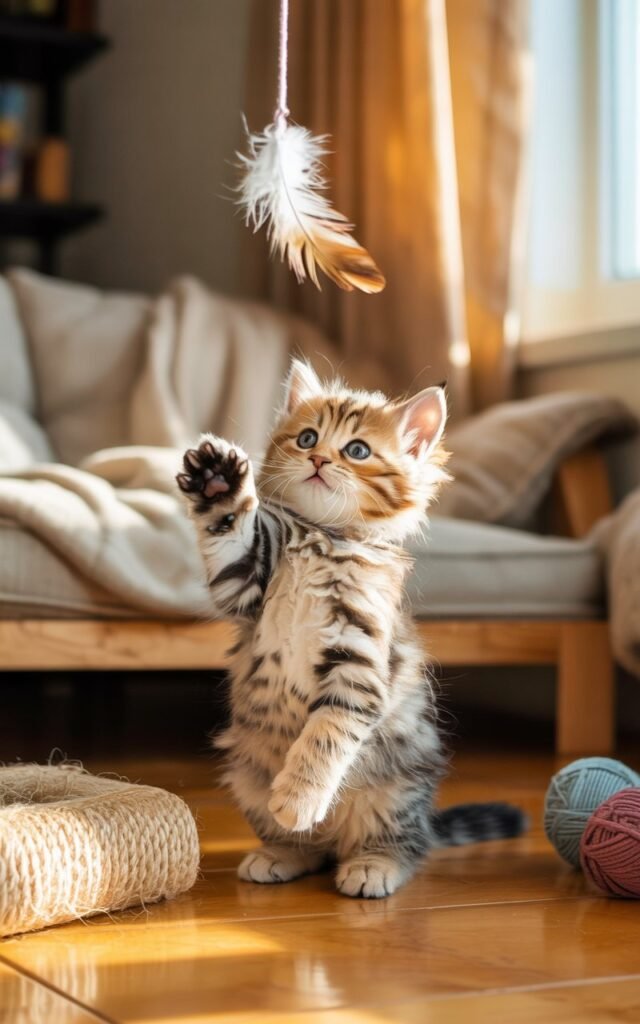
- Playful kittens: Often use their energy to explore and interact. Play sessions can become bonding moments that build trust.
- Confident kittens: More likely to approach humans, seek attention, and cuddle voluntarily.
The key is to observe and adapt. My own kitten was initially shy and hesitant to be held.
By letting her approach me on her terms and rewarding calm behavior, I slowly built trust and encouraged her affectionate side.
Gentle Handling: The Foundation of Affection
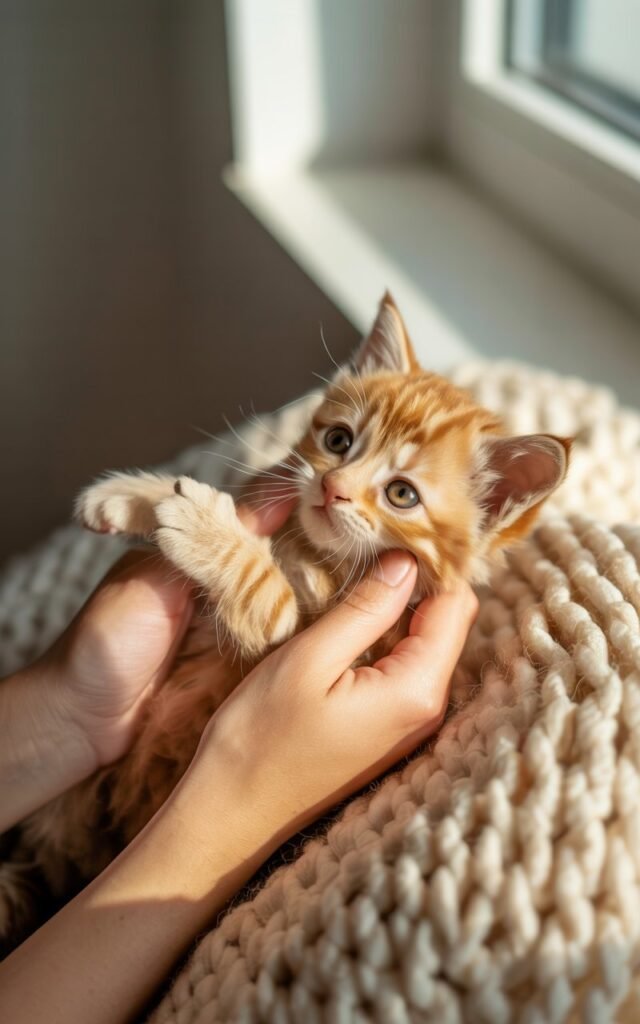
One of the most important lessons I learned is that affection is earned, not forced. Forcing a kitten to sit in your lap or tolerate petting can backfire and create fear instead of closeness.
Here’s what worked for me:
- Start with short, gentle touches: Pet behind the ears, under the chin, and along the back. Avoid grabbing or squeezing.
- Let your kitten approach you: Allowing them to initiate contact builds trust.
- Use soft, calm tones: Talking gently while petting or interacting makes your presence comforting.
- Pick up gradually: When your kitten is comfortable being touched, slowly lift them for short periods. Always put them down if they seem tense.
Consistency is key. Daily gentle handling—even just a few minutes—helps kittens associate humans with safety and comfort.
Playtime: Turning Fun Into Trust
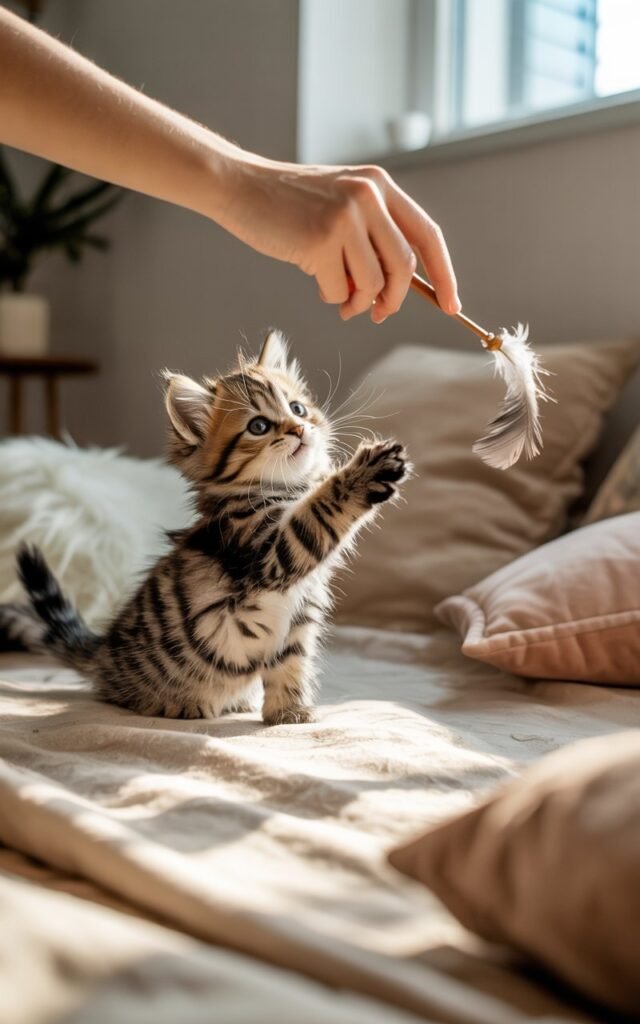
Play is not just entertainment—it’s a bonding tool. Kittens use play to explore, learn, and socialize.
When I first brought my kitten home, I noticed she was more willing to approach me after interactive play sessions.
- Interactive toys: Use wand toys, feather toys, or small balls to engage your kitten.
- Short sessions: 5–10 minutes multiple times a day works better than one long session.
- Follow their lead: If your kitten walks away or loses interest, respect their boundaries.
Over time, play creates positive associations with your presence. My kitten began seeking me out for both play and cuddles because she associated me with fun and comfort.
Positive Reinforcement for Affection
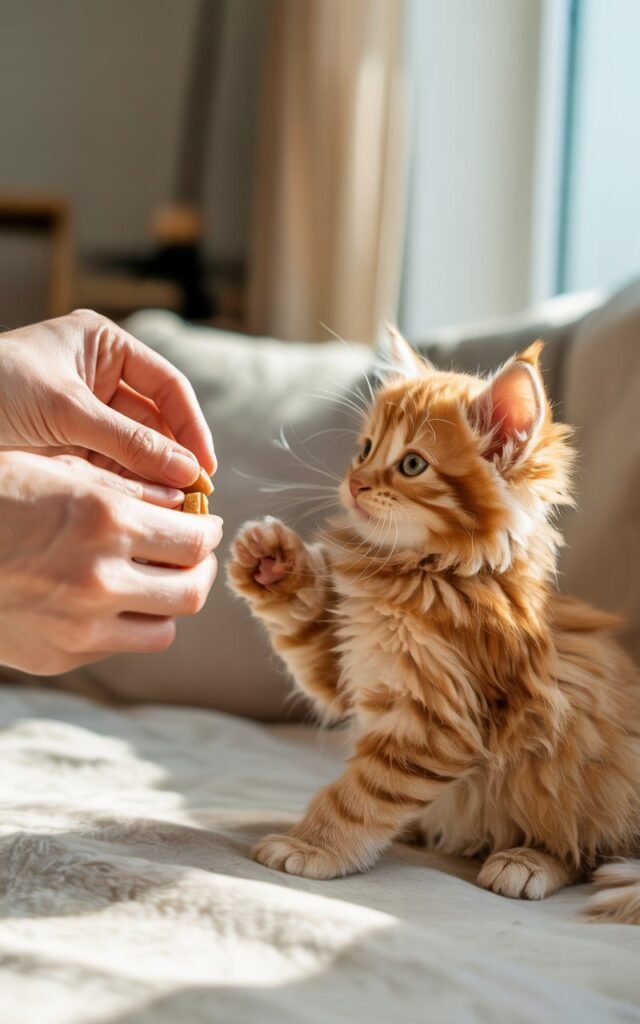
One of the most effective ways I’ve learned to raise a loving kitten is through positive reinforcement for cats and kittens.
Instead of forcing affection, I reward calm, gentle, and friendly behavior so they naturally start associating people with safety and comfort.
In my experience, small rewards like soft praise, gentle petting, or a tiny treat help reinforce good kitten behavior and bonding habits.
Over time, this encourages more affectionate cat behavior, trust building, and human–cat connection.
I also make sure timing is right—rewarding them immediately after calm interaction or when they choose to come closer on their own.
This helps strengthen positive kitten socialization and emotional bonding in a natural way.
For me, it’s about consistency and patience. Using positive reinforcement techniques for kittens creates a strong foundation for a confident, affectionate cat that feels safe and connected in their environment.
Creating a Safe and Comfortable Environment
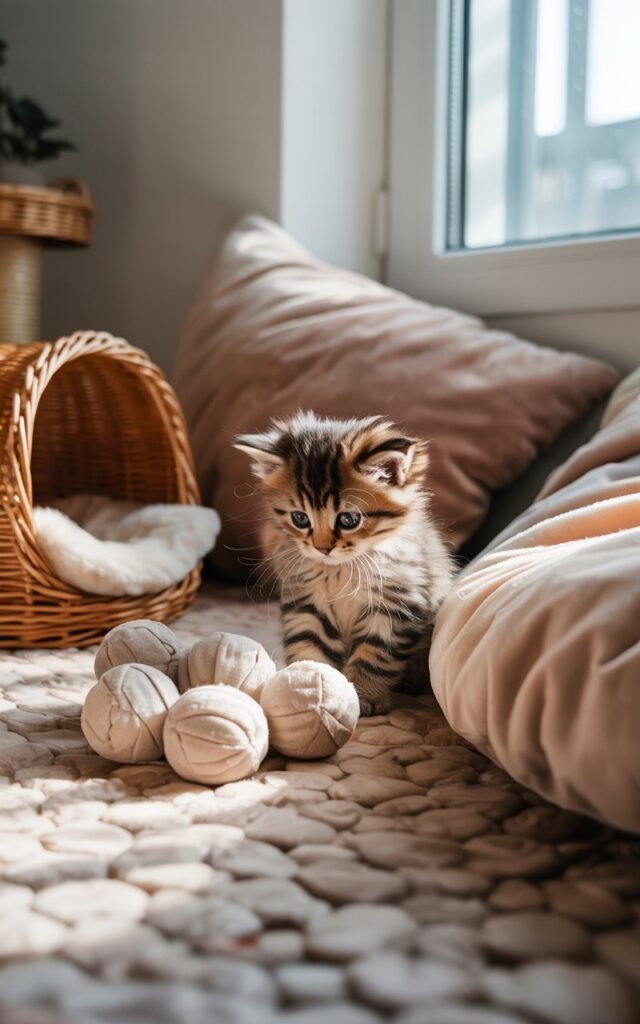
A big part of raising an affectionate kitten is building a space where they feel safe and relaxed.
From my experience, kitten comfort and safety plays a huge role in how quickly they learn to trust and bond.
I always make sure there’s a quiet, cozy area they can retreat to when they feel overwhelmed.
Soft bedding, a warm corner, and familiar scents help support stress-free kitten adjustment and emotional security.
Keeping the home calm also matters. Avoiding loud noises, sudden movements, and chaotic spaces helps encourage healthy kitten behavior, confidence, and positive social bonding.
Over time, they start exploring more freely and interacting with trust instead of fear.
For me, creating a safe environment is one of the simplest but most powerful parts of raising an affectionate and well-adjusted cat. When a kitten feels secure, affection naturally follows.
Reading Your Kitten’s Body Language
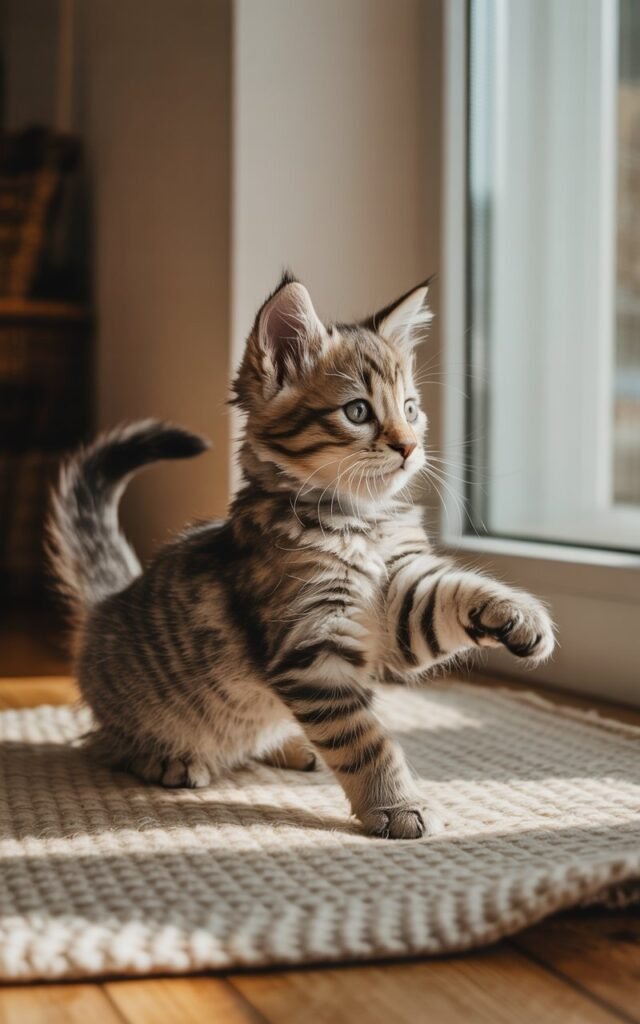
Understanding kitten body language and behavior is one of the most important parts of building a strong bond.
From my experience, kittens communicate a lot through small signals—you just need to slow down and observe.
A relaxed posture, slow blinking, and a gently raised tail usually show comfort and trust. These are signs of positive kitten communication, emotional safety, and growing affection.
When I notice these, I know my kitten is feeling secure and open to interaction.
On the other hand, flattened ears, hiding, or a twitching tail often mean they need space.
Respecting those moments helps build trust, respect, and healthy human–cat bonding over time.
For me, learning to read these signals made a big difference.
It helped me respond in a calmer, more understanding way, which naturally supports kitten socialization, confidence, and affectionate behavior development.
Gradually Increasing Physical Affection
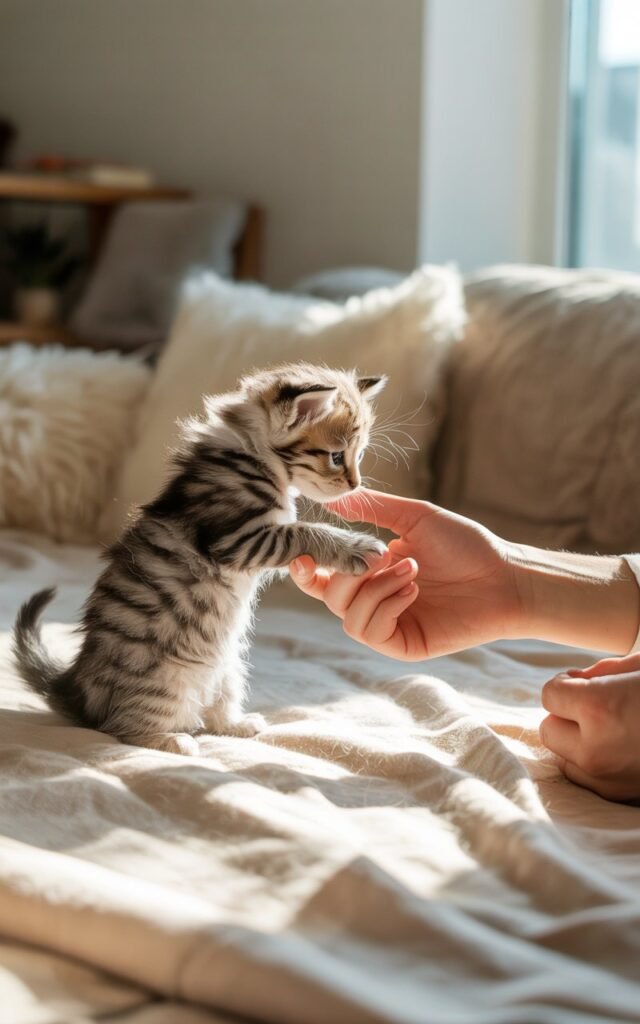
Building kitten affection and trust takes time, and I’ve learned that slow, gentle steps work best.
Instead of rushing into constant handling, I let my kitten set the pace and gradually introduce more touch as they become comfortable.
At first, I start with short moments of gentle petting—usually when they are already relaxed or approaching on their own.
This helps build positive human–cat bonding and emotional trust without overwhelming them.
Over time, I slowly increase the duration of physical interaction, always paying attention to their reactions.
If they stay calm and receptive, I continue. If they move away, I respect that space. This balance supports healthy kitten socialization and confidence building.
For me, this gradual approach is what truly creates an affectionate cat.
When a kitten learns that touch is safe, calm, and never forced, it naturally leads to long-term bonding, comfort, and loving behavior.
Socializing With Other Pets
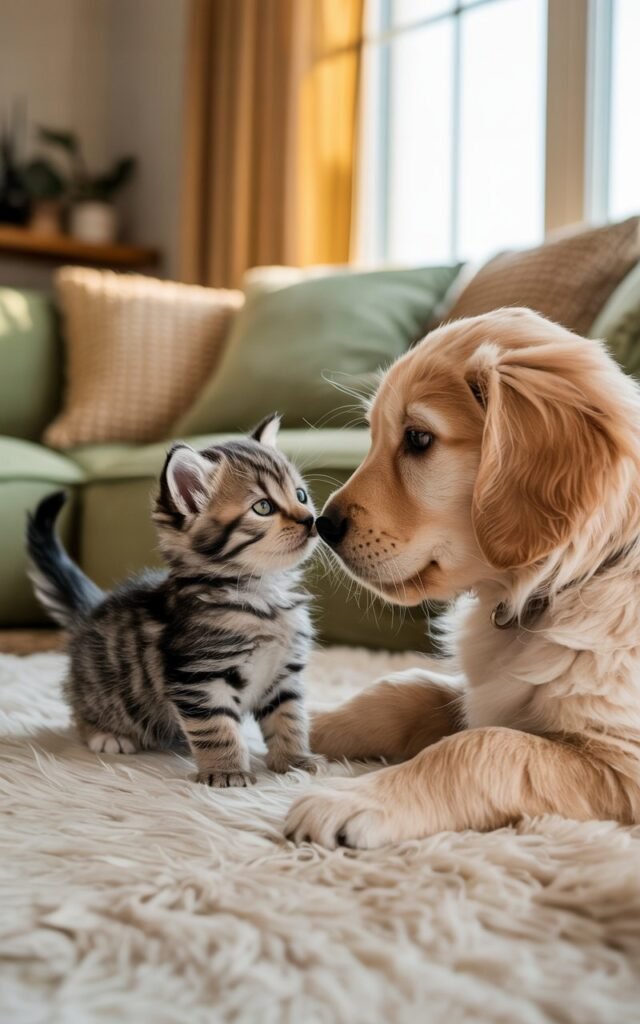
Introducing a kitten to other pets is a key part of kitten socialization and behavior development, and it always works best when done slowly and calmly.
From my experience, rushing this step can create stress, so patience is really important.
I usually start with controlled introductions where they can see or smell each other first without direct contact.
This helps build safe animal interaction and gradual trust between pets in a low-pressure way.
Over time, I increase their time together while closely watching their reactions.
Relaxed posture, curiosity, and calm behavior are signs of healthy social bonding and positive adjustment in kittens. If I notice tension or fear, I simply slow things down again.
For me, the goal is always to create a peaceful environment where both pets feel secure.
This approach supports long-term harmony, confidence, and affectionate behavior in multi-pet households.
Avoiding Common Mistakes
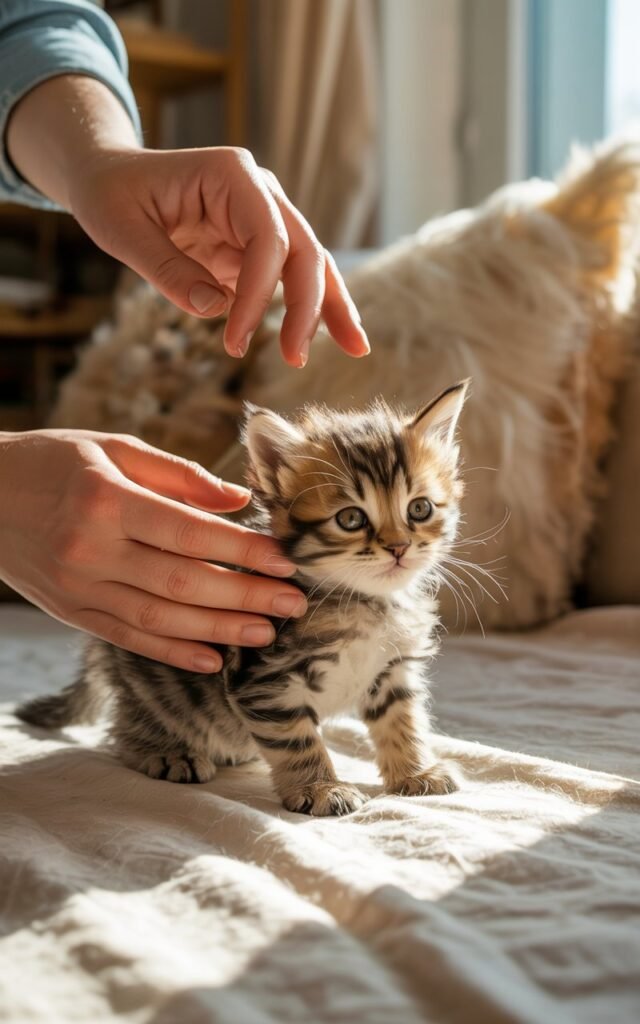
- Forcing affection: Can create fear and resistance.
- Overstimulation: Too much petting or rough play can discourage closeness.
- Ignoring shy behavior: Patience is essential. Respect boundaries.
- Inconsistent routines: Cats thrive on predictability.
By keeping these in mind, you can avoid setbacks and build a trusting, affectionate bond.
My Personal Experience
When I first brought my kitten home, she would dart under the couch whenever I tried to hold her.
But with patience, gentle handling, and short, playful sessions, she began to trust me.
She now curls up on my lap at least twice a day, kneads my hands, and even greets me with soft meows when I come home.
The journey of raising an affectionate kitten is not instant—it requires observation, patience, and love—but the rewards are incomparable.
Final Thoughts: Building a Lifelong Bond
Raising a kitten to be affectionate is about trust, patience, and understanding. Gentle handling, interactive play, positive reinforcement, and respecting boundaries gradually turn even the most timid kittens into loving, cuddly companions.
Remember, each kitten is unique. Some may take longer to warm up, and that’s okay.
By creating a safe, loving environment and responding to their cues, you’ll foster a bond that lasts a lifetime.
The feeling of having your kitten understand, trust, and love you truly hits differently—and it’s worth every minute of patience.