14 Obedience Training Lessons For Any Dog
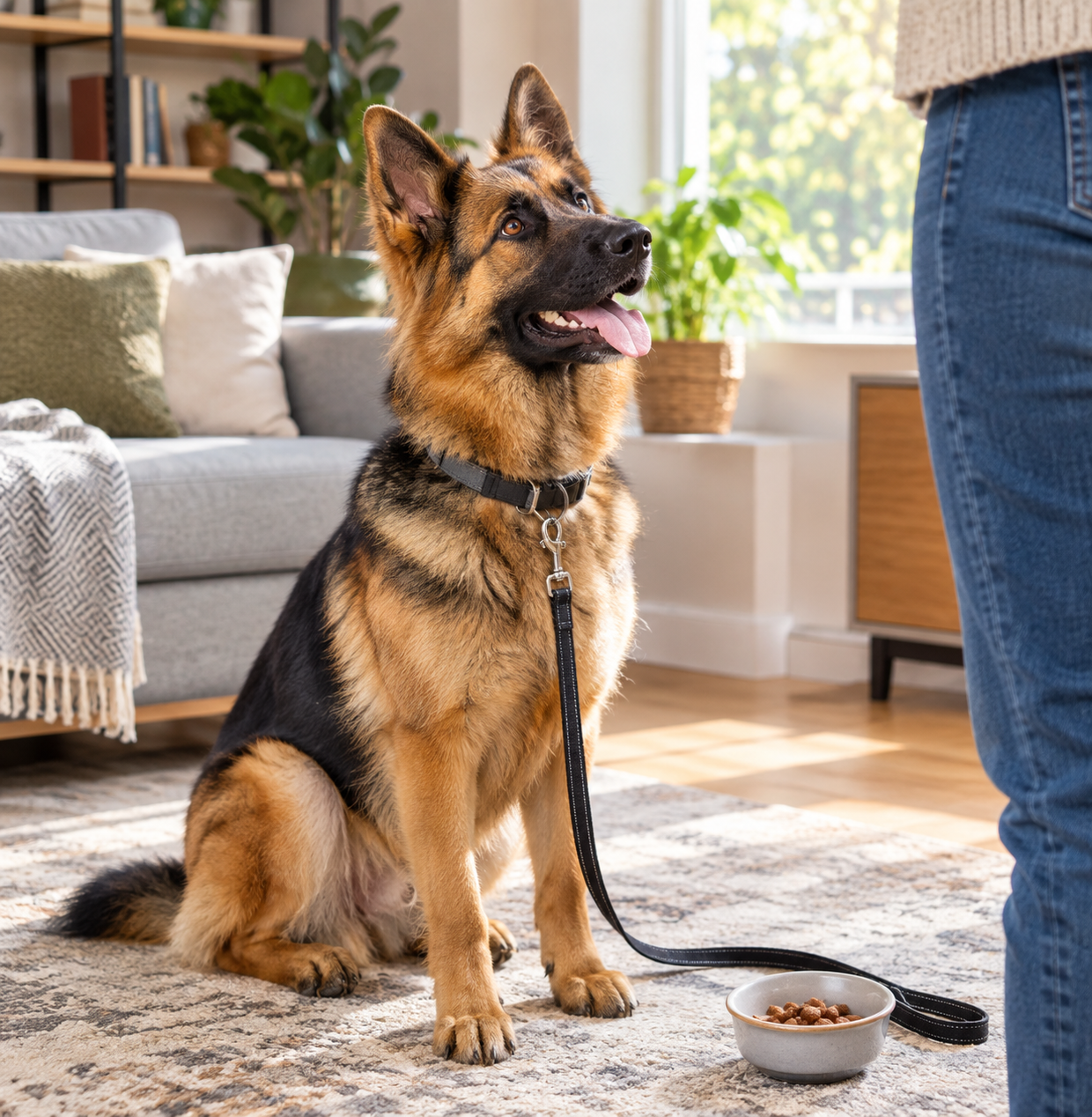
Obedience training is not about making a dog perfectly behaved. It is about creating real communication between you and your dog and making everyday life easier and safer for both of you.
A dog that understands a handful of reliable cues is calmer, more confident, and easier to include in daily activities, whether that means greeting guests, walking through a busy neighborhood, or simply settling down while you eat dinner.
Short, consistent sessions almost always work better than one long overwhelming session.
The lessons below can be adjusted for puppies, adult dogs, and dogs who already know a few basic commands.
What You Need Before Starting Dog Obedience Training
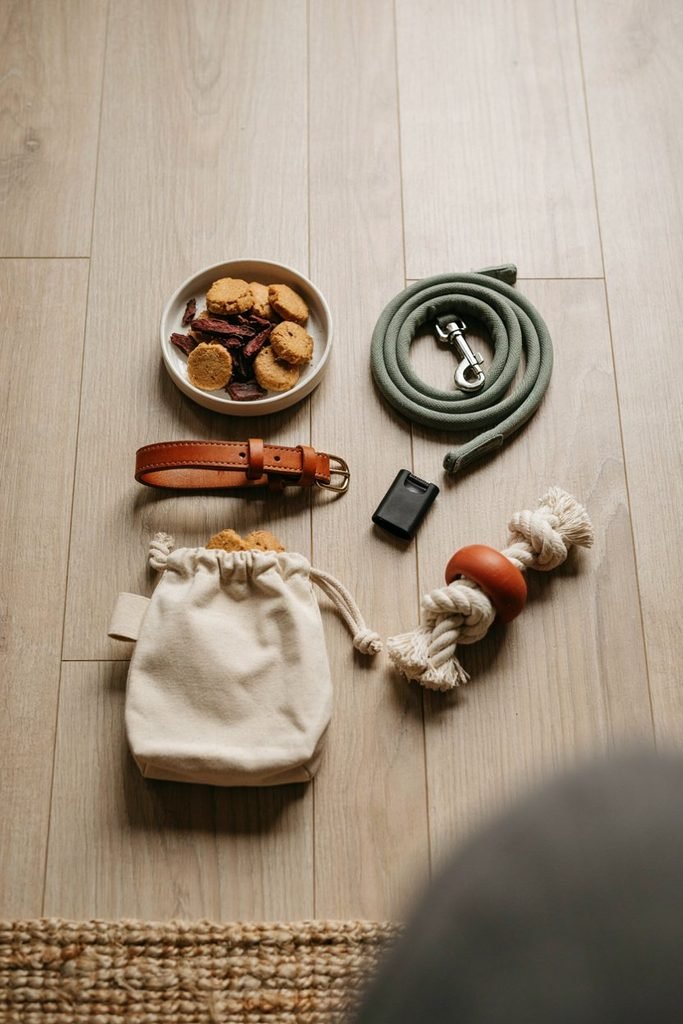
Before you begin, gather a few simple things so your sessions run smoothly.
- High value training treats your dog does not get at any other time
- A comfortable leash and a collar or harness that fits well
- A quiet area with minimal distractions
- A clicker, if you prefer marker based training
- A few minutes of uninterrupted time
- Patience and consistency, since progress builds gradually
One of the most important things a beginner can learn is reward timing. The treat or praise should come immediately after the desired behavior so your dog can connect the action with the reward.
The 14 Lessons
Each lesson below follows the same simple format: what you are teaching, why it matters, how to teach it, how to practice it, a common mistake to avoid, and when to move on.
1. Respond to Their Name
This is the foundation for everything else. Say your dog’s name in a happy tone and reward any glance toward you. Practice in the living room first, then somewhere busier. A common mistake is repeating the name over and over instead of rewarding the first response.
2. Teach Sit
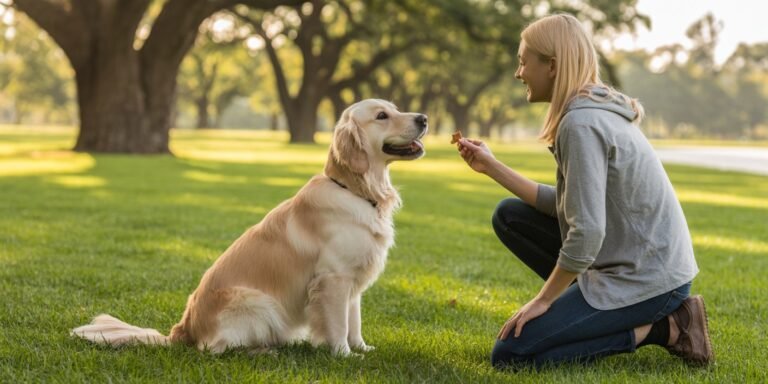
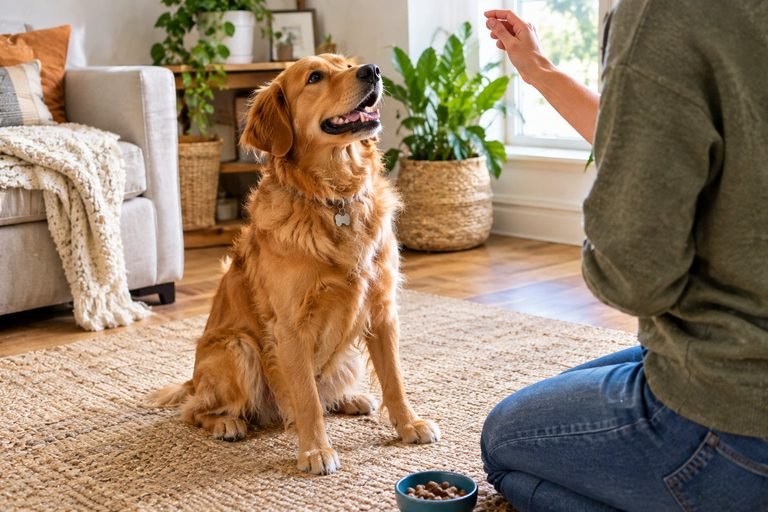
Hold a treat near your dog’s nose and slowly raise it so their head follows and their bottom naturally lowers. Say sit the moment it happens, then reward. Avoid pushing your dog into position physically. Move on once your dog sits from the cue alone, without needing the treat as a lure.
3. Teach Down
Down builds on sit and helps with calm behavior around the house. From a sit, lower a treat slowly toward the floor between your dog’s paws so their body follows it down. Mark and reward the moment they lie down. Never force your dog into position by pushing on their back, since this can create anxiety around the cue.
4. Teach Stay
Stay covers three separate skills: duration, distance, and distractions. Start with just a second or two of stillness before rewarding, then gradually add time, then distance, then mild distractions. A common mistake is increasing all three at once, which usually causes the dog to break position.
5. Teach Come
Recall is one of the most important safety skills your dog can learn, so it deserves extra attention. Begin indoors with no distractions, using an enthusiastic voice and a high value treat every time your dog arrives. Gradually increase distance. Avoid calling your dog when you know they will likely ignore you, since repeated failures weaken the cue over time.
6. Teach Leave It
Leave it means do not touch or pick up an item at all. Start with a treat in a closed fist. Wait for your dog to pull away, then reward from your other hand. Gradually progress to items on the floor. This is different from drop it, which applies to something already in your dog’s mouth.
7. Teach Drop It
Drop it teaches your dog to release something they are already holding. Practice with toys rather than anything valuable or dangerous. Offer a trade, such as a treat or a second toy, the moment your dog releases the object. Avoid pulling items out of your dog’s mouth, since this can encourage guarding.
8. Teach Loose Leash Walking
This lesson rewards your dog for staying near your side rather than simply correcting pulling. Start indoors where distractions are low, rewarding your dog frequently for walking near you. Stop moving the moment the leash goes tight, and continue once it loosens again.
9. Teach Waiting at Doors
Waiting at doors, gates, and car doors prevents your dog from bolting into unsafe situations. Ask for a sit, then open the door slightly. If your dog rushes forward, close it and reset. Reward calm waiting before releasing your dog with a cue such as okay.
10. Teach Polite Greetings
Jumping and overexcitement around visitors can be managed like any other behavior, by rewarding the version you want to see more of. Reward four paws on the floor and calm posture, and ask visitors to ignore your dog until they settle.
11. Teach Focus on You
Voluntary eye contact is a foundation skill that makes many other exercises easier. Reward your dog any time they choose to look at your face without being asked, then gradually practice with distractions nearby. This lesson pays off across nearly every other command on this list.
12. Teach Place or Mat Training
Teaching your dog to go to a designated bed or mat and stay there gives you a practical tool for daily life. Lure your dog onto the mat, reward for staying, and gradually build duration. This is especially useful during meals, when guests arrive, or any time you need a few minutes of quiet.
13. Teach Calm Behavior Around Distractions
Rather than expecting instant obedience everywhere, gradually expose your dog to more challenging environments. A useful progression looks like a quiet room, then the backyard, then a quiet sidewalk, then a busier area.
14. Practice a Full Obedience Routine
Finish by weaving the lessons together into a short daily routine, such as name, sit, stay, come, leave it, place, and release. The goal is not to drill commands endlessly but to fold obedience naturally into everyday moments like walks, mealtimes, and visitors arriving.
How Long Should You Train a Dog Each Day?
Several short sessions tend to work better than one long one. Five to ten minutes at a time is usually plenty. Stop while your dog is still engaged and having fun rather than pushing through frustration on either end of the leash.
How Often Should You Practice Obedience Training?
A simple and realistic routine looks like this.
- Morning: about 5 minutes
- Afternoon: about 5 minutes
- Evening: 5 to 10 minutes
Adjust the exact timing based on your individual dog’s attention span and energy level.
Common Dog Training Mistakes to Avoid
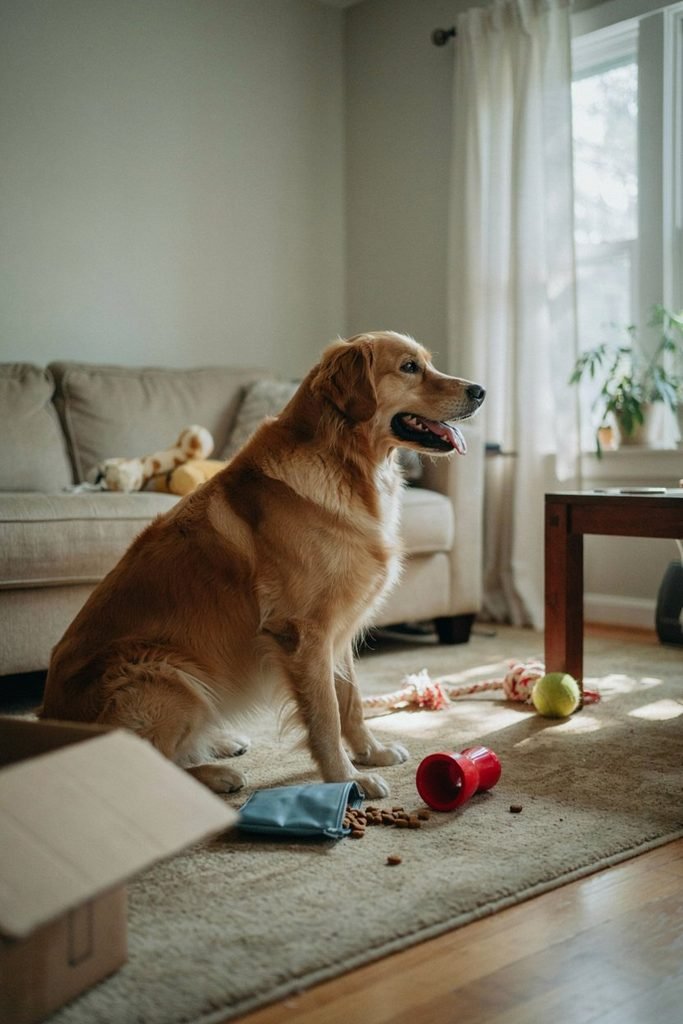
- Repeating a command over and over instead of rewarding the first response
- Training for too long in a single session
- Rewarding too late for the reward to connect with the behavior
- Increasing distractions too quickly
- Expecting immediate reliability in new environments
- Using inconsistent wording for the same command
- Only practicing indoors
- Calling your dog only for unpleasant things, like bath time
- Becoming frustrated when your dog struggles with a new skill
How to Make Obedience Training More Difficult
Once your dog understands a command, you can raise the challenge in three separate ways.
Duration. How long your dog performs the behavior.
Distance. How far away you move while your dog holds the behavior.
Distraction. How challenging the surrounding environment becomes.
Adjusting only one of these at a time gives your dog the best chance of success.
Puppy vs Adult Dog Obedience Training
Adult dogs can absolutely learn new behaviors, and it is a myth that training only works on puppies. Puppies often have shorter attention spans and need more frequent, shorter sessions, while adult dogs may already have established habits that take a bit more patience to reshape. Both groups respond well to the same reward based approach.
What If My Dog Won’t Listen?
Rather than assuming your dog is being stubborn, ask a few troubleshooting questions first.
- Is the environment too distracting for this stage of training?
- Is the reward valuable enough to compete with what is happening around your dog?
- Does your dog actually understand the command, or have they only practiced it in one setting?
- Are you asking for too much too quickly?
- Has the session gone on too long?
Going back to an easier version of the exercise is almost always more productive than repeating the same command louder.
Frequently Asked Questions
What are the most important obedience commands for a dog? Sit, stay, come, and leave it cover most everyday situations and form the foundation for everything else on this list.
How long does it take to obedience train a dog? Many dogs learn the basics within a few weeks of short daily practice, though full reliability around distractions takes longer.
Can an older dog learn obedience commands? Yes. Adult and senior dogs can learn new commands at any age, though they may need a bit more patience if they are unlearning an old habit.
How many minutes should I train my dog each day? Aim for fifteen to twenty minutes total, split across two or three short sessions.
What should I do if my dog ignores commands? Check whether the environment is too distracting, the reward is valuable enough, and the command has actually been practiced in that setting before assuming your dog is being disobedient.
Are treats necessary for obedience training? Treats make early learning faster and clearer, though praise and play can gradually take their place.
How do I train my dog around distractions? Increase difficulty gradually using the duration, distance, and distraction framework, adding one new challenge at a time.
Related Reads
If you are working on positive reinforcement at home, a good stash of rewards makes a real difference. Take a look at our guide to 11 vet friendly frozen dog treat recipes for healthy, homemade training treats your dog will actually work for.
If you share your home with a cat as well, our post on how to make cat gravy is a simple way to give your feline something special too.